Corals in crisis: A hidden chemical shift is reshaping Hawaiian reefs

Summary:Hawaiian coral reefs may face unprecedented ocean acidification within 30 years, driven by carbon emissions. A new study by University of Hawai‘i researchers shows that even under conservative climate scenarios, nearshore waters will change more drastically than reefs have experienced in thousands of years. Some coral species may adapt, offering a glimmer of hope, but others may face critical stress.Share:


FULL STORY


Can Hawai‘i’s Reefs Survive What’s Coming?
Coral and red urchin in Maui, Hawai’i. Credit: Andre Seale

Across the globe, oceans are acidifying as they absorb carbon dioxide from the atmosphere, threatening coral reefs and many other marine organisms. A new study, led by oceanographers at the University of Hawai’i at Mānoa, revealed that unprecedented levels of ocean acidification are expected around the main Hawaiian Islands within the next three decades.

Increased ocean acidification has the potential to harm marine life by weakening the shells and skeletons of organisms such as corals and clams, amplifying the effects of existing stressors, and threatening ocean-based ecosystems. However, researchers have hope, as some organisms have shown signs of adapting to the changing waters. The study helps researchers, conservationists and policymakers understand the future challenges facing Hawaiian coral reefs and provides information for preserving these critical ecosystems for future generations.

Researchers within the laboratory group of Brian Powell, professor in the Department of Oceanography at the UH Mānoa School of Ocean and Earth Science and Technology (SOEST), used advanced, fine-scale computer models to project how ocean chemistry around the main Hawaiian Islands might change over the 21st century under different climate scenarios based on how much carbon dioxide societies continue to emit.

“We found that ocean acidification is projected to increase significantly in the surface waters around the main Hawaiian Islands, even if carbon emissions flatline by mid-century in the low emission scenario,” said Lucia Hošeková, lead author of the paper and research scientist in SOEST. “In all nearshore areas these increases will be unprecedented compared to what reef organisms have experienced in many thousands of years.”

Emissions shape coral reef future

The extent and timing of these changes vary depending on the amount of carbon added to the atmosphere. In the high‐emission scenario, the team found that ocean chemistry will become dramatically different from what corals have experienced historically, potentially posing challenges to their ability to adapt. Even in the low‐emission scenario, some changes are inevitable, but they are less extreme and occur more gradually.

The team calculated the difference between projected ocean acidification and acidification that corals in a given location have experienced in recent history. They refer to this as ‘novelty’ and discovered that various areas of the Hawaiian Islands may experience acidification differently. Windward coastlines consistently exhibited higher novelty, that is, future conditions deviate more dramatically from what coral reefs have experienced in recent history.

“We did not expect future levels of ocean acidification to be so far outside the envelope of natural variations in ocean chemistry that an ecosystem is used to,” said Tobias Friedrich, study co-author and research scientist in the Department of Oceanography. “This is the first ocean acidification projection specifically for Hawaiian waters to document that.”

Coral’s potential to adapt

Previous studies have shown that a coral that is exposed to slightly elevated ocean acidity can acclimatize to those conditions, thereby enhancing the coral’s adaptability.

“The results show the potential conditions of acidification that corals may experience; however, the extremity of the conditions varies based on the climate scenario that the world follows. In the best case, corals will be impacted, but it could be manageable. This is why we continue new research to examine the combined effects of stresses on corals,” said Powell. “This study is a big first step to examine the totality of changes that will impact corals and other marine organisms and how it varies around the islands.”

CLICK HERE FOR MORE INFORMATION

https://www.sciencedaily.com/releases/2025/07/250716000851.htm

18x more floods, 105% bigger storms — all from a single clear-cut

New research finds long-term impacts on flood size and frequency decades after trees are removed

Clear-cutting forests doesn’t just raise flood risk — it can supercharge it. UBC researchers found that in certain watersheds, floods became up to 18 times more frequent and over twice as severe after clear-cutting, with these effects lasting more than four decades. The surprise? Terrain details like which direction a slope faces played a huge role in flood behavior. Conventional models miss these dynamics, which could mean we’ve been underestimating the danger for decades — especially as climate change accelerates extreme weather.Share:


FULL STORY


Clear-Cutting Triggers 18x More Floods
Clear-cutting can make extreme floods dramatically more frequent and severe, especially depending on subtle terrain features. The effects can last more than 40 years, far longer than expected. Credit: Shutterstock

Clear-cutting can make catastrophic floods 18 times more frequent with effects lasting more than 40 years, according to a new UBC study.

In one watershed, these extreme floods also became more than twice as large, turning a once-in-70-years event into something that now happens every nine.

“This research challenges conventional thinking about forest management’s impact on flooding,” said senior author Dr. Younes Alila, a hydrologist in the UBC faculty of forestry. “We hope the industry and policymakers will take note of the findings, which show that it matters not only how much forest you remove but also where, how and under what conditions.”

Same treatment, different floods 

The UBC-led study draws on one of the world’s longest-running forest experiments at the Coweeta Hydrologic Laboratory in North Carolina and is published in the Journal of Hydrology.

The research team analyzed two adjacent watersheds, one north-facing, the other south-facing, that were both clear-cut in the late 1950s.

“We found seemingly minor landscape factors — like the direction a slope faces — can make or break a watershed’s response to treatment,” said first author Henry Pham, a doctoral student in the faculty of forestry.

In the north-facing watershed, which receives less direct sunlight and retains more moisture, floods became four to 18 times more frequent. Average flood sizes increased by 47 percent compared to pre-treatment levels, and the biggest floods grew by as much as 105 percent.

In the south-facing watershed, the same treatment had virtually no impact on flood behavior.

Old flood models inadequate 

Most conventional flood models use simplified assumptions: cut X percent of trees, expect Y percent more water runoff. But this study found that such models fail to account for extreme and erratic flood patterns that emerge after landscape disturbances.

“This experimental evidence validates our longstanding call for better analysis methods,” said Dr. Alila. “When we apply proper probabilistic tools to long-term data, we find much stronger and more variable impacts than older models suggest.”

In short, he adds, forest treatments don’t just raise average flood levels — they can fundamentally reshape a watershed’s entire flood regime, making rare and catastrophic events much more common.

The most concerning finding was that flood effects in the north-facing watershed persisted for over 40 years, confirming that forestry treatments can lead to long-term changes in a watershed’s flood response, especially as climate change brings more extreme weather, putting downstream communities at greater risk.

Policy implications

The findings have immediate relevance for forest management practices, particularly in B.C. where there are similar terrain types and forestry operations in the form of clear-cut logging.

Dr. Alila noted that the model used in this study can be used to predict which parts of B.C. are currently more at risk of extreme flooding. It can also be used to investigate how much of the severity of Sumas Prairie floods in 2021 and the more recent Texas floods can be attributed to global warming and/or land use and forest cover changes.

“Our findings highlight how multiple landscape factors interact in complex ways. As climate conditions shift, understanding those dynamics is becoming increasingly important for forest and water management.”

CLICK HERE FOR MORE INFORMATION

https://www.sciencedaily.com/releases/2025/07/250718031220.htm

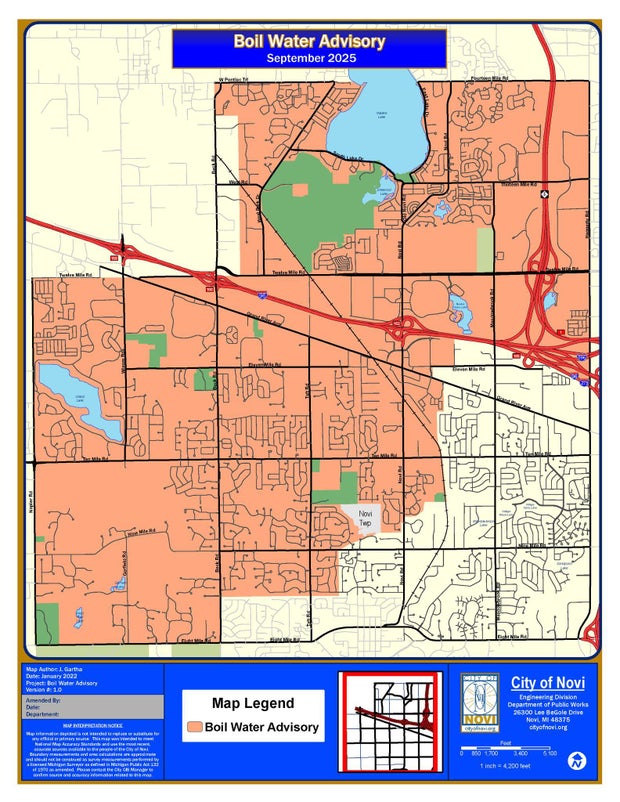
Michigan officials say there are “significant deficiencies” in Wyandotte’s water system

The Michigan Department of Environment, Great Lakes and Energy has issued a report that there are “significant deficiencies” in the management of Wyandotte’s water system. 

But the city says the water is safe, adding “it consistently meets or exceeds all state and federal water quality standards.” 

“There is no known current risk to public health from the City’s drinking water, and we are fully committed to maintaining that record,” the city said on its website

The respective statements spin out of a notice that Michigan EGLE issued April 30, citing “significant deficiencies” in the areas of treatment, distribution system, finished water storage and management/operations. The letter was also sent to the Wayne County Health Department. 

“The most significant observations during the Survey are the need for adequate 
investment in capital improvement projects, completion of maintenance activities, and 
adequate investment in staffing,” EGLE said in its letter. “There are several indications the City is not keeping up with capital investments, especially in the distribution system and future operational and maintenance needs may overwhelm the available budget and resources.”  

https://cds.connatix.com/p/plugins/cnx.bridge-1.0.9-compressed.htmlThe video player is currently playing an ad. You can skip the ad in 5 sec with a mouse or keyboard

The four matters listed as significant deficiencies were: 

  • Failure to keep up with an inspection schedule for backflow prevention and cross-connections. 
  • Damage to the vents at one reservoir. 
  • Assorted debris, such as tennis balls and beverage containers, was found at another reservoir. 
  • A water treatment process that didn’t include a specified method of mixing the treatment chemical into the raw water. 

The city was given 120 days to either correct the significant deficiencies noted or submit a “corrective action plan” that EGLE will review. 

There were also other matters noted as deficiencies, such as an inspection report that showed zebra mussels found near an entrance to a water intake pipe, and routine maintenance schedules, such as hydrant flushing that was not implemented “due to inadequate staffing.” 

In addition, the city of Wyandotte has not included fluoride treatment for several years. “If fluoride treatment is not continued, the appropriate local procedures need to be followed,” the letter says. “It is imperative for the water supply to notify the public so residents can make informed decisions about their oral health.” 

On that detail, the city has replied, “Fluoridation of drinking water is not required by law. The City discontinued fluoride treatment in 2015 during a treatment plant rehabilitation project. Fluoride levels are monitored and disclosed in the City’s annual Consumer Confidence Reports, and residents are encouraged to consult with their dental professionals about supplemental fluoride needs.” 

Wyandotte officials say after the April report was issued, the city’s Municipal Services took steps toward “actively addressing all recommendations.” This includes a series of repairs at the reservoirs and evaluation of its filtration method. 

In the meantime, the EGLE staff noted that during the three years before its report was issued, the city had taken a number of steps to address water facility operations and improvements. 

CLICK HERE FOR MORE INFORMATION

https://www.cbsnews.com/detroit/news/egle-wyandotte-municipal-water-system/?intcid=CNM-00-10abd1h

Scientists thought the Arctic was sealed in ice — they were wrong

By analyzing ancient ocean seafloor sediments and running detailed climate simulations, the research team found no evidence for the presence of a thick ice shelf. Instead, this study paints a picture of an Arctic that, despite being cold and icy, still had open water areas that allowed for biological activity and ocean circulation. Credit: Morven Muilwijk

For years, scientists have debated whether a giant thick ice shelf once covered the entire Arctic Ocean during the coldest ice ages. Now a new study published in Science Advances, challenges this idea as the research team found no evidence for the presence of a massive ~1km ice shelf. Instead, the Arctic Ocean appears to have been covered by seasonal sea ice — leaving open water and life-sustaining conditions even during the harshest periods of cold periods during the last 750,000 years. This discovery gives insights crucial for our understanding of how the Arctic has responded to climate change in the past — and how it might behave in the future.

Tiny traces of life in ancient mud

Led by the European Research Council Synergy Grant project Into the Blue — i2B, the research team studied sediment cores collected from the seafloor of the central Nordic Seas and Yermak Plateau, north of Svalbard. These cores hold tiny chemical fingerprints from algae that lived in the ocean long ago. Some of these algae only grow in open water, while others thrive under seasonal sea ice that forms and melts each year.

“Our sediment cores show that marine life was active even during the coldest times,” said Jochen Knies, lead author of the study, based at UiT The Arctic University of Norway and co-lead of the Into The Blue — i2B project. “That tells us there must have been light and open water at the surface. You wouldn’t see that if the entire Arctic was locked under a kilometre-thick slab of ice.”

One of the key indicators the team looked for was a molecule called IP25, which is produced by algae that live in seasonal sea ice. Its regular appearance in the sediments shows that sea ice came and went with the seasons, rather than staying frozen solid all year round.

Simulating ancient Arctic climates

To test the findings based on the geological records, the research team used the AWI Earth System Model — a high-resolution computer model — to simulate Arctic conditions during two especially cold periods: the Last Glacial Maximum around 21,000 years ago, and a deeper freeze about 140,000 years ago when large ice sheets covered a lot of the Arctic.

“The models support what we found in the sediments,” said Knies. “Even during these extreme glaciations, warm Atlantic water still flowed into the Arctic gateway. This helped keep some parts of the ocean from freezing over completely.”

The models also showed that the ice wasn’t static. Instead, it shifted with the seasons, creating openings in the ice where light could reach the water — and where life could continue to thrive. This research not only reshapes our view of past Arctic climates but also has implications for future climate predictions. Understanding how sea ice and ocean circulation responded to past climate extremes can improve models that project future changes in a warming world.

“These reconstructions help us understand what’s possible — and what’s not — when it comes to ice cover and ocean dynamics,” said Gerrit Lohmann, co-author of this study, based at Alfred Wegener Institute, Helmholtz Centre for Polar and Marine Research (AWI) and co-lead of Into The Blue — i2B. “That matters when trying to anticipate how ice sheets and sea ice might behave in the future.”

Re-thinking the giant ice shelf theory

Some scientists have argued that features on the Arctic seafloor suggest that a huge, grounded ice shelf once covered the entire ocean. But this new study offers another explanation.

“There may have been short-lived ice shelves in some parts of the Arctic during especially severe cold phases,” said Knies. “But we don’t see any sign of a single, massive ice shelf that covered everything for thousands of years.”

One possible exception could have occurred about 650,000 years ago, when biological activity in the sediment record dropped sharply. But even then, the evidence points to a temporary event, not a long-lasting frozen lid over the Arctic.

Understanding the Arctic’s future

The study sheds new light on how the Arctic has behaved under extreme conditions in the past. This matters because the Arctic is changing rapidly today. Knowing how sea ice and ocean circulation responded to past climate shifts helps scientists understand what might lie ahead.

“These past patterns help us understand what’s possible in future scenarios,” said Knies. “We need to know how the Arctic behaves under stress — and what tipping points to watch for — as the Arctic responds to a warming world.”

The full paper, “Seasonal sea ice characterized the glacial Arctic-Atlantic gateway over the past 750,000 years,” is available in Science Advances.

This research is part of the European Research Council Synergy Grant project Into the Blue — i2B and the Research Council of Norway Centre of Excellence, iC3: Centre for ice, Cryosphere, Carbon, and Climate.

CLICK HERE FOR MORE INFORMATION

https://www.sciencedaily.com/releases/2025/07/250704235554.htm

The Oceans Are Getting Darker

Colorado River Basin Suffers from a Warm and Dry Spring

Officials, farmers, and others who depend on the Colorado River received a grim prediction last week that Lake Powell, the second largest reservoir in the basin, will receive less than half of the yearly median amount of water over the next three months, which could mean cutbacks in the future. 

The Colorado River carves through the Grand Canyon  |  Credit: Grand Canyon NPS

The snowpack at the beginning of April was less than normal, and the spring has been very warm and dry in the Rocky Mountains, which has led to low runoff.  

Currently, Lake Powell is at 31 percent capacity, and Lake Mead, the largest reservoir in the country, is at 32 percent after about 25 years of severe drought. A study done three years ago showed that the drought in the Western U.S. was the driest two decades in the last 1,200 years.

Officials in the seven states of the Colorado River Basin, including Utah, Wyoming, Colorado, New Mexico, Arizona, Nevada, and California, met last week and have yet to come to an agreement on how they will share water in the coming years after the existing guidelines expire at the end of 2026. If no agreement is reached, the federal government will likely impose its own plan, which could lead to much litigation.

Meanwhile, a new study is showing that ground and surface water in the Colorado River Basin have been depleted during the last 20 years by an amount that is equivalent to the total capacity of Lake Mead. NASA satellite imagery shows the severity of the region’s crisis. Jay Famiglietti, the senior author of the study and a professor at Arizona State University, toldthe Guardian that groundwater is disappearing nearly 2.5 times faster than surface water. He added that everyone in the U.S. should be worried about the crisis in the Southwest, because much of the country’s food is grown there. In addition, the river provides drinking water to 40 million people in the U.S. and Mexico.

The study was published in the journal Geophysical Research Letters.

High Court Decision Could Allow Oil Trains along the Colorado River 

A controversial plan to transport crude oil by rail along portions of the Colorado River is much closer to becoming a reality after the U.S. Supreme Court overturned a lower court’s decision blocking it. 

Amtrak’s California Zephyr train travels along the Colorado River near McCoy, Colorado. |  Credit: Tony Webster/Creative Commons

Environmental groups and Eagle County, Colorado, home of Vail Ski Resort, had challenged an agency decision that permitted the two-mile-long trains to ship crude oil from Utah’s Uintah Basin to the Gulf Coast. They argued that the Surface Transportation Board did not weigh the downstream effects should a tanker derail and pollute the Colorado River, threatening the environment and communities. Additionally, they said the agency had not considered how refining five billion gallons of additional oil per year would exacerbate global warming.

An appellate court agreed, but the Supreme Court, in a unanimous decision, with Justice Gorsuch recusing himself, decided that some judges have incorrectly reviewed an agency decision under the National Environmental Policy Act (NEPA) and used it to block or slow down many projects. All three of the Court’s liberal justices agreed with the decision, which has a much broader effect than just the potential of endangering people and the environment by oil tankers that could derail. 

Justice Kavanaugh, writing for the Court, said that overly intrusive judicial review has led to delay upon delay and higher costs. NEPA, he continued, is to inform decision-making, not paralyze it. NEPA requires federal agencies to assess the environmental effects of proposed major actions prior to making decisions. However, this case narrows the scope of all environmental reviews of major infrastructure projects like highways and pipelines.

Earlier, the Supreme Court severely reduced environmental regulation by limiting rules on water pollution and runoff and allowing long-standing agency actions to be challenged in court, according to the Washington Post. The Court has also cut away at the ability of the EPA to regulate greenhouse gas emissions and air pollution.

Darkening Oceans Raises Concerns about Food Webs and Fisheries

The world’s oceans are getting darker. That’s the conclusion of a new study out last week that says there’s cause for concern. 

According to researchers from the University of Plymouth, 21 percent of the global ocean—an area spanning more than 75 million sq km—has darkened over the past two decades.  |  Credit: Naja Bertolt Jensen / Unsplash

“Ocean darkening” occurs when sunlight and moonlight can’t penetrate the upper layers of the ocean called the “photic zone,” which is home to 90 percent of all marine life and one of the most productive habitats on Earth. According to researchers from the University of Plymouth in the UK, over one-fifth (21 percent) of the global ocean—around 75 million square kilometers—has darkened over the past two decades.

Typically, darkening can occur near coastlines because of agricultural runoff and increased rainfall making the waters murkier. However, this new research shows that it’s happening in the open ocean, which they suggest could be from hotter temperatures causing increased algal blooms that reduce light penetration below the surface. It could also be the result of changes in ocean circulation patterns driven by global warming.

The researchers used data from NASA’s Ocean Color Web, which breaks the global ocean down into a series of 9km pixels, to assess the changes and found that the most prominent shifts in photic zone depth in the open ocean were at the top of the Gulf Stream and around both the Arctic and Antarctic—areas of the planet experiencing the most pronounced shifts as a result of climate change. Conversely, the team also found around ten percent of the ocean had become lighter during the same study period.

The authors suggest that a shrinking photic zone in the upper ocean where marine organisms grow, hunt, reproduce, and photosynthesize, would create intense competition for resources and negatively affect food webs and global fisheries.

The study was published in Global Change Biology.

A New Tax in Hawai’i That You Can Feel Good About

The word kuleana in the Hawai‘an language means a responsibility, right, or privilege to take care of one another—and to take care of the āina—the land. Those terms were invoked when, on May 27, Governor Josh Green, MD, signed into law Act 96 (Senate Bill 1396) that establishes a “Green Fee” that will add a tax on hotel stays to protect the environment in the face of climate change. It’s a first for the state—and for the country.

On May 27, Hawai‘i Governor Josh Green signed into law Act 96 (Senate Bill 1396) that establishes a “Green Fee” that will add a tax on hotel stays to protect the environment in the face of climate change. |  Credit: Hawai‘i Governor Josh Green, M.D./Flickr

The new “climate impact fee” is a response to the increased risk of natural disasters driven by global warming, like the wildfires on Maui in 2023. The revenue will provide a stable source of funding for environmental stewardship, hazard mitigation, and sustainable tourism, which together will enhance the islands’ resiliency.

The new law raises the amount of the current transient accommodations tax or TAT by 0.75 percent, or roughly $3 on a $400 hotel room per night. It will also apply to short-term rentals as well as to cruise ships—a sector that has long gone untaxed. The Green Fee is projected to generate $100 million annually, when it goes into effect in January 2026. 

As the online publication Travel And Tour World reports, Hawai‘i joins a list of places around the globe like Greece, Bali, and the Galápagos Islands, where fees are being implemented in recognition that tourism, while economically vital, must be managed responsibly to protect the fragile ecosystems—that many people come to see—from the growing impacts of climate change.

Water Stress: A Global Problem That’s Getting Worse

Water scarcity threatens the health and development of communities around the globe. Climate change is intensifying the problem, pushing governments to find more innovative, collaborative ways to address water stress.

New Delhi residents fill containers with drinking water from a municipal tanker in June 2018.
New Delhi residents fill containers with drinking water from a municipal tanker in June 2018. Adnan Abidi/Reuters

WRITTEN BY

Claire Klobucista and Kali Robinson

UPDATED

Last updated April 3, 2023 10:35 am (EST)

Summary

  • Water scarcity happens when communities can’t fulfill their water needs, either because supplies are insufficient or infrastructure is inadequate. Today, billions of people face some form of water stress.
  • Countries have often cooperated on water management. Still, there are a handful of places where transboundary waters are driving tensions, such as the Nile Basin.
  • Climate change will likely exacerbate water stress worldwide, as rising temperatures lead to more unpredictable weather and extreme weather events, including floods and droughts.

Introduction

Billions of people around the world lack adequate access to one of the essential elements of life: clean water. Although governments and aid groups have helped many living in water-stressed regions gain access in recent years, the problem is projected to get worse due to global warming and population growth. Meanwhile, a paucity of international coordination on water security has slowed the search for solutions.

Water stress can differ dramatically from one place to another, in some cases causing wide-reaching damage, including to public health, economic development, and global trade. It can also drive mass migrations and spark conflict. Now, pressure is mounting on countries to implement more sustainable and innovative practices and to improve international cooperation on water management.

RELATED

Navigating Rough Waters: The Limitations of International Watercourse Governance

by Guest Blogger for the Internationalist

Let’s Talk About Toilets

by Gabrielle SierraTom SlaymakerSangita VyasBrooke YamakoshiAsher RossMarkus ZakariaRafaela Siewert and Jeremy Sherlick

How U.S. Water Infrastructure Works

by James McBride and Noah Berman

What is water stress?

Water stress or scarcity occurs when demand for safe, usable water in a given area exceeds the supply. On the demand side, the vast majority—roughly 70 percent—of the world’s freshwater is used for agriculture, while the rest is divided between industrial (19 percent) and domestic uses (11 percent), including for drinking. On the supply side, sources include surface waters, such as rivers, lakes, and reservoirs, as well as groundwater, accessed through aquifers.

Daily News Brief

A summary of global news developments with CFR analysis delivered to your inbox each morning. Weekdays.

View all newsletters >

But scientists have different ways of defining and measuring water stress, taking into account a variety of factors including seasonal changes, water quality, and accessibility. Meanwhile, measurements of water stress can be imprecise, particularly in the case of groundwater. “Any numbers out there have to be taken with a grain of salt,” says Upmanu Lall, a Columbia University professor and water expert. “None of these definitions are typically accounting for groundwater usage, or groundwater stock.”

What causes water scarcity?

Water scarcity is often divided into two categories: physical scarcity, when there is a shortage of water because of local ecological conditions; and economic scarcity, when there is inadequate water infrastructure.

The two frequently come together to cause water stress. For instance, a stressed area can have both a shortage of rainfall as well as a lack of adequate water storage and sanitation facilities. Experts say that even when there are significant natural causes for a region’s water stress, human factors are often central to the problem, particularly with regard to access to clean water and safe sanitation. Most recently, for example, the war in Ukraine damaged critical infrastructure, leaving six million people with limited or no access to safe water in 2022.

“Almost always the drinking water problem has nothing to do with physical water scarcity,” says Georgetown University’s Mark Giordano, an expert on water management. “It has to do with the scarcity of financial and political wherewithal to put in the infrastructure to get people clean water. It’s separate.”

Hear More

Preparing for a Dryer Future

Why It Matters

At the same time, some areas that suffer physical water scarcity have the infrastructure that has allowed life there to thrive, such as in Oman and the southwestern United States.

A variety of authorities, from the national level down to local jurisdictions, govern or otherwise influence the water supply. In the United States, more than half a dozen federal agencies deal with different aspects of water: the Environmental Protection Agency (EPA) enforces regulations on clean water, while the Federal Emergency Management Agency (FEMA) prepares for and responds to water disasters. Similar authorities exist at the state and local levels to protect and oversee the use of water resources, including through zoning and rehabilitation projects.

Which regions are most water-stressed?

The Middle East and North Africa (MENA) is the worst off in terms of physical water stress, according to most experts. MENA receives less rainfall than other regions, and its countries tend to have fast-growing, densely populated urban centers that require more water. But many countries in these regions, especially wealthier ones, still meet their water needs. For example, the United Arab Emirates (UAE) imports nearly all of its food, alleviating the need to use water for agriculture. The UAE and other wealthy MENA countries also rely heavily on the desalination of abundant ocean water, albeit this process is an expensive, energy-intensive one.

Water Stress Is a Global Challenge

Darker shaded areas have more physical water stress; but myriad factors, including infrastructure, governance, and population, all contribute to water availability.

Physical water stress in 2014, defined as withdrawals as a share of renewable surface and groundwater supplies> 80%40–80%20–40%10–20%< 10%Arid and low water useDCABE

+-

One in three members of the Navajo Nation lacks running water, while non-Navajos nearby generally have indoor plumbing.A

For centuries, Italy’s aquifers provided easy access to clean water, but the now outdated infrastructure is putting pressure on the country.B

The DRC has over half of Africa’s water reserves, but millions of Congolese don’t have access to clean water, contributing to disease and malnutrition.C

On top of Yemen’s physical water scarcity, years of war have wiped out water services, leaving millions without basic water supplies.D

India is among the most water-stressed countries, in part due to its population, pollution, and the exploitation of groundwater.E

SourcesNational Geographic; Navajo Water Project; UNICEF; World Resources Institute; WRI Aqueduct.

Meanwhile, places experiencing significant economic scarcity include Central African countries such as the Democratic Republic of Congo, which receives a lot of rain but lacks proper infrastructure and suffers from high levels of mismanagement.

Even high-income countries experience water stress. Factors including outdated infrastructure and rapid population growth have put tremendous stress on some U.S. water systems, causing crises in cities including Flint, Michigan, and Newark, New Jersey.

How is climate change affecting water stress?

For every 1°C (1.8°F) increase in the global average temperature, UN experts project a 20 percent dropin renewable water resources. Global warming is expected to increase the number of water-stressed areas and heighten water stress in already affected regions. Subtropical areas, such as Australia, the southern United States, and North African countries, are expected to warm and suffer more frequent and longer droughts; however, when rainfall does occur in these regions, it is projected to be more intense. Weather in tropical regions will likewise become more variable, climate scientists say.

Agriculture could become a particular challenge. Farming suffers as rainfall becomes more unpredictable and rising temperatures accelerate the evaporation of water from soil. A more erratic climate is also expected to bring more floods, which can wipe out crops an overwhelm storage systems. Furthermore, rainfall runoff can sweep up sediment that can clog treatment facilities and contaminate other water sources.

In a 2018 report, a panel consisting of many of the world’s top climate researchers showed that limiting global warming to a maximum 1.5°C (2.7°F) above preindustrial levels—the aim of the Paris Agreement on climate—could substantially reduce the likelihood of water stress in some regions, such as the Mediterranean and southern Africa, compared to an unchecked increase in temperature. However, most experts say the Paris accord will not be enough to prevent the most devastating effects of climate change.

What are its impacts on public health and development?

Prolonged water stress can have devastating effects on public health and economic development. More than two billion people worldwide lack access to safe drinking water; and nearly double that number—more than half the world’s population—are without adequate sanitation services. These deprivations can spur the transmission of diseases such as cholera, typhoid, polio, hepatitis A, and diarrhea.

At the same time, because water scarcity makes agriculture much more difficult, it threatens a community’s access to food. Food-insecure communities can face both acute and chronic hunger, where children are more at risk of conditions stemming from malnutrition, such as stunting and wasting, and chronic illnesses due to poor diet, such as diabetes.

Dive Deeper

Rising Hunger: Facing a Food-Insecure World

Even if a water-stressed community has stable access to potable water, people can travel great lengths or wait in long lines to get it—time that could otherwise be spent at work or at school. Economists note these all combine [PDF] to take a heavy toll on productivity and development.

Living in a Water-Stressed World

A housing development lies on the edge of Cathedral City, a desert resort town in southern California, in April 2015.Damon Winter/New York Times/Redux

The COVID-19 pandemic heightened the need for safe water access. Handwashing is one of the most effective tools for combating the coronavirus, but health experts noted that three in ten individuals—2.3 billion people globally—could not wash their hands at home at the pandemic’s onset.

How has water factored into international relations?

Many freshwater sources transcend international borders, and, for the most part, national governments have been able to manage these resources cooperatively. Roughly three hundred international water agreements have been signed since 1948. Finland and Russia, for example, have long cooperated on water-management challenges, including floods, fisheries, and pollution. Water-sharing agreements have even persisted through cross-border conflicts about other issues, as has been the case with South Asia’s Indus River and the Jordan River in the Middle East.

However, there are a handful of hot spots where transboundary waters are a source of tension, either because there is no agreement in place or an existing water regime is disputed. One of these is the Nile Basin, where the White and Blue Nile Rivers flow from lakes in East Africa northward to the Mediterranean Sea. Egypt claims the rights to most of the Nile’s water based on several treaties, the first dating back to the colonial era; but other riparian states say they are not bound to the accords because they were never party to them. The dispute has flared in recent years after Ethiopia began construction of a massive hydroelectric dam that Egypt says drastically cuts its share of water.

Ethiopian Dam Ignites Tensions With Egypt, Sudan Over Nile Waters

A map of the Nile and its sources, showing the importance of the Blue Nile in Ethiopia as a source of river water in Egypt

Flow

direction

Cairo

Sources of Nile

River water in Egypt

EGYPT

Blue Nile: 57%

White Nile: 31%

Other: 12%

Lake

Nasser

RED

SEA

Nile

SUDAN

Khartoum

White Nile

Blue Nile

ETHIOPIA

SOUTH

SUDAN

Grand Ethiopian 

Renaissance Dam

Lake Victoria

Sources:  Mada Masr; UN Food and Agriculture Organization. 

Transboundary water disputes can also fuel intrastate conflict; some observers note this has increased in recent years, particularly in the hot spots where there are fears of cross-border conflict. For example, a new hydropower project could benefit elites but do little to improve the well-being of the communities who rely on those resources.

Moreover, water stress can affect global flows of goods and people. For instance, wildfires and drought in 2010 wiped out Russian crops, which resulted in a spike in commodities prices and food riots in Egypt and Tunisia at the start of the Arab uprisings. Climate stress is also pushing some to migrate across borders. The United Nations predicts that without interventions in climate change, water scarcity in arid and semi-arid regions will displace hundreds of millions of people by 2030.

What are international organizations and governments doing to alleviate water stress?

There has been some international mobilization around water security. Ensuring the availability and sustainable management of water and sanitation for all is one of the UN Sustainable Development Goals (SDGs), a sweeping fifteen-year development agenda adopted by member states in 2015. Smart water management is also vital to many of the other SDGs, such as eliminating hunger and ensuring good health and well-being. And while the Paris Agreement on climate does not refer to water explicitly, the United Nations calls [PDF] water management an “essential component of nearly all the mitigation and adaptation strategies.” The organization warns of the increasing vulnerability of conventional water infrastructure, and points to many climate-focused alternatives, such as coastal reservoirs and solar-powered water systems.

However, there is no global framework for addressing water stress, like there is for fighting climate change or preserving biodiversity. The most recent UN summit on water, held in March 2023, was the first such conference since 1977 and didn’t aim to produce an international framework. It instead created a UN envoy on water and saw hundreds of governments, nonprofits, and businesses sign on to a voluntary Water Action Agenda, which analysts called an important but insufficient step compared to a binding agreement among world governments.

Some governments and partner organizations have made progress in increasing access to water services: Between 2000 and 2017, the number of people using safely managed drinking water and safely managed sanitation services rose by 10 percent and 17 percent, respectively. In 2022, the Joe Biden administration announced an action planto elevate global water security as a critical component of its efforts to achieve U.S. foreign policy objectives. But the pace of climate change and the COVID-19 pandemic have presented new challenges. Now, many countries say they are unlikely to implement integrated water management systems by 2030, the target date for fulfilling the SDGs. 

Still, some governments are taking ambitious and creative steps to improve their water security that could serve as models for others:

Green infrastructure. Peruvian law mandates that water utilities reinvest a portion of their profits into green infrastructure (the use of plant, soil, and other natural systems to manage stormwater), and Canada and the United States have provided tens of millions of dollars in recent years to support Peru’s efforts [PDF]. Vietnam has taken similar steps to integrate natural and more traditional built water infrastructure.

Wastewater recycling. More and more cities around the globe are recycling sewage water into drinking water, something Namibia’s desert capital has been doing for decades. Facilities in countries including China and the United States turn byproducts from wastewater treatment into fertilizer.

Smarter agriculture. Innovations in areas such as artificial intelligence and genome editing are also driving progress. China has become a world leader in bioengineering crops to make them more productive and resilient.

Recommended Resources

The Wilson Center’s Lauren Risi writes that water wars between countries have not come to pass, but subnational conflicts over the resource are already taking a toll.

CFR’s Why It Matters podcast talks to Georgetown University’s Mark Giordano and the Global Water Policy Project’s Sandra Postel about water scarcity.

The World Economic Forum describes the growing water crisis in the Horn of Africa, while National Geographic looks at how the prolonged drought is pushing wildlife closer to towns.

The World Resources Institute’s Aqueduct maps the areas facing extremely high water stress.

The United Nations shares facts about water and its role in all aspects of life.

BuzzFeed News interviews residents of Jackson, Mississippi, who lost access to safe water after freezing temperatures wreaked havoc on the city’s decaying infrastructure.

CLICK HERE FOR MORE INFORMATION

What is World Water Day? 

This year's World Water Day on 22 March is focused on preserving the world's glaciers.

This year’s World Water Day on 22 March is focused on preserving the world’s glaciers. Image: United Nations

Joe Myers

Writer, Forum Stories

This article is part of:Centre for Nature and Climate

This article has been updated.

  • World Water Day is held every year on 22 March to raise awareness of global freshwater challenges and solutions.
  • This year’s theme is Glacier Preservation, highlighting how their rapid melting threatens water security and livelihoods.

World Water Day is held every year on 22 March, and is a United Nations (UN) day focused on raising awareness of the importance of freshwater. 

This year’s World Water Day theme, Glacier Preservation, highlights the urgent need to protect glaciers, as their rapid melting threatens water security, ecosystems and livelihoods, requiring collective global and local action.

“Glaciers may be shrinking, but we cannot shrink from our responsibilities … Action this year is critical. Every country must deliver strong national climate action plans aligned with limiting global temperature rise to 1.5 degrees Celsius,” reminds UN Secretary-General, António Guterres. 

World Water Day 2025 banner - save our glaciers.

This year’s theme is Glacier Preservation. Image: United Nations

DISCOVER

Why does World Water Day matter? 

The stats around freshwater speak for themselves:

And so World Water Day has been observed since 1993 to highlight the work that remains to ensure everyone on Earth has access to clean drinking water. And while it’s a high-profile issue – check out our podcast with Matt Damon below – the figures above emphasize the challenges that remain, especially with freshwater usage increasing each year.

The World Health Organization warns that “historical rates of progress would need to double” for the world to achieve universal coverage of basic drinking water services by the end of the decade.

Only 0.5% of water on Earth is useable and available freshwater – and climate change is dangerously affecting that supply, says the World Meteorological Association. Over the past 20 years, terrestrial water storage – including soil moisture, snow and ice – has dropped at a rate of 1cm per year, with major ramifications for water security.

Global risks report 2- and 10-year risk scenarios

Natural resource shortages, including water insecurity, is a major risk over the next decade. Image: World Economic Forum

From climate change to urbanization and demographic changes, water supply systems face numerous risks. Indeed, the World Economic Forum’s Global Risks Report 2025lists “natural resource shortages” as the 4th biggest risk over the next decade. 

That’s why raising awareness on conserving and protecting freshwater for everyone on Earth is vital, especially as the world looks to find – and implement – solutions.

https://open.spotify.com/embed/episode/3Nfxa8Cz9QyspdddBfXUPP

Glacial melt and the water-climate crisis

Water and climate change are inextricably linked, with glaciers playing a critical role in maintaining freshwater availability. Rising global temperatures are accelerating glacial melt, disrupting the seasonal flow of meltwater that feeds major river systems. These rivers support agriculture, drinking water supply, and hydropower for millions of people, particularly in lowland regions. 

As glaciers recede, water sources become less predictable, leading to prolonged droughts, reduced soil moisture, and declining groundwater levels. At the same time, excessive glacial melting can contribute to flooding, landslides and glacial lake outburst floods, endangering communities and infrastructure. These disruptions affect ecosystems, food security and livelihoods, making glacial melt a key driver of water-related challenges in a changing climate.

Find out more about the challenges in the session below from our Annual Meeting in 2024  Out of Balance with Water.

Innovation to help improve water security

Innovation and entrepreneurial thinking can also help conserve and protect freshwater sources. The World Economic Forum’s UpLink platform supports purpose-driven entrepreneurs by building ecosystems to help scale their businesses, focusing on solutions for global challenges such as climate change, ecosystem degradation and inequality.

One of its Top Innovators is a Latin American Climatech company connecting farmers seeking to improve irrigation practices with companies focused on water security. Kilimo implements measurable, auditable actions that deliver water volumetric benefits through partnerships between farmers and companies. With this business model, it aims to promote climate adaptation and ensure water availability for communities, ecosystems and economic development.

Meanwhile, the video below shows how sustainable water management practices, including conservation techniques like Ice Stupas and Glacial Grafting, can help mitigate some of these challenges by supporting water storage and availability in vulnerable regions. 

Collaboration between public and private sectors has a significant role to play in providing clean water for all, and ensuring a sustainable, resilient global water system. The Forum’s Water Futures Community is a collaborative platform driving solutions and finance to address emerging water challenges, advancing the global water agenda through dialogue and partnerships.

CLICK HERE FOR MORE INFORMATION

https://www.weforum.org/stories/2025/03/world-water-day-march-2025/?

PRESS RELEASE FRESH WATER

Half the world’s countries have degraded freshwater systems, UN finds

Photo credit:Pixabay

Nairobi, 28 August 2024 – In half the world’s countries one or more types of freshwater ecosystems are degraded, including rivers, lakes and aquifers. River flow has significantly decreased, surface water bodies are shrinking or being lost, ambient water is growing more polluted, and water management is off-track. These are some of the findings of three reports tracking progress on freshwater, published today by UN-Water and the UN Environment Programme (UNEP).

The triennial series of reports is focused on progress towards achieving the goal of “clean water and sanitation for all” (SDG 6) through protecting and restoring freshwater sources. Based on greater data sets than ever before, the reports reiterate the call to scale up support for Member States in tackling challenges through the UN System-wide strategy for water and sanitation and the accompanying upcoming Collaborative Implementation Plan.

“Our blue planet is being rapidly deprived of healthy freshwater bodies and resources, with dire prospects for food security, climate change and biodiversity,” said Dianna Kopansky, Head of the Freshwater and Wetlands Unit, Ecosystems Division at UNEP. “At this critical point, global political commitments for sustainable water management have never been higher, including through the passing of a water resolution at the last UN Environment Assembly in February, but they are not being matched by required finance or action. Protection and restoration policies, tailored for different regions, are halting further loss and show that reversing degradation is within reach. We absolutely need more of them.”


Widespread degradation

A reported 90 countries, most in Africa, Central- and Southeast Asia, are experiencing the degradation of one or more freshwater ecosystems. Other regions, such as Oceania, mark improvements. Pollution, dams, land conversion, over-abstraction and climate change contribute to degradation of freshwater ecosystems.

Influenced by climate change and land use, river flow has decreased in 402 basins worldwide – a fivefold increase since 2000. A much smaller number is gaining in river flow.

Loss of mangroves due to human activities (e.g., aquaculture and agriculture) poses a risk to coastal communities, freshwater resources, biodiversity, and climate due to their water filtration and carbon sequestering properties. Significant decreases of mangroves were reported in Southeast Asia, though the overall net rate of deforestation has leveled off in the last decade.

Lakes and other surface water bodies are shrinking or being lost entirely in 364 basins worldwide. A continued high level of particles and nutrients in many large lakes can lead to algal blooms and low-oxygen waters, primarily caused by land clearance and urbanization, and certain weather events.

Nevertheless, the construction of reservoirs contributes to a global net-gain in permanent water, mainly in regions like North America, Europe, and Asia.


Low levels of water quality monitoring

The poorest half of the world contributes under 3 per cent of global water quality data points, including only 4,500 lake quality measurements out of almost 250,000. This reveals an urgent need to improve monitoring capacity.

Lack of data on this scale means that by 2030 over half of humanity will live in countries that have inadequate water quality data to inform management decisions related to address drought, floods, impacts from wastewater effluents and agricultural runoff.

Where good data are available, it shows that freshwater quality has been degrading since 2017. Where data are lacking, the signs are not promising.

Report authors recommend the expansion and development of routine government-funded monitoring programmes, as well as incorporating citizen science into such national programmes, and exploring the potential of satellite-based Earth observation and modelled data products to help fill the data gap.


Inadequate progress on water resources management in over 100 countries

Balancing competing needs for sustainable water use from society and the economy requires the implementation of integrated water resources management (IWRM) across sectors, at all levels and across borders by 2030.

47 countries have fully reached or almost reached IWRM, 63 countries need to accelerate implementation, while 73 countries have only limited capacity for IWRM. At the current rate of reported progress, the world will only achieve sustainable water management by 2049. This means that by 2030 at least 3.3 billion people in over 100 countries are likely to have ineffective governance frameworks to balance competing water demands.

Solutions include unlocking finance through revenue raising and cost recovery arrangements, investments in infrastructure and management, as well as coordinated action, greater institutional capacity and better monitoring networks.


NOTES TO EDITORS 

About the UN Environment Programme (UNEP) 
UNEP is the leading global voice on the environment. It provides leadership and encourages partnership in caring for the environment by inspiring, informing and
enabling nations and peoples to improve their quality of life without compromising that of future generations. 

About UN-Water
 UN-Water coordinates the UN’s work on water and sanitation. It is comprised of UN Members States and international organizations working on water and sanitation issues. UN-Water’s role is to ensure that Members and Partners ‘deliver as one’ in response to water-related challenges.

CLICK HERE FOR MORE INFORMATION https://www.unep.org/news-and-stories/press-release/half-worlds-countries-have-degraded-freshwater-systems-un-finds?

How does the Printing Industry Contribute to Pollution?

As an industry largely based on paper, the industry produces around 400 million tons of paper per year (Environmental Paper Network, 2018). Additionally, take into account the ink and water that goes along with the processing of said paper in factories, offices, and even our own homes. The use of such a volume of natural resources, combined with the energy needed to process it makes the printing industry “the fourth largest user of industrial energy worldwide” (Laurijssen, 2013). Naturally, these processes are bound to affect the environment.

Thomas Millot (2018). Cooling Tower’s Fumes[Photograph]. Retrieved from https://unsplash.com/photos/q5jKHtV4hWc/info.

One result of this energy usage from printing plants and paper mills are volatile organic compounds (VOCs), which are chemicals that evaporate at room temperature. VOCs in small amounts may be found in our homes, which can “irritate the eyes, throat, and nose, as well as cause headaches, dizziness, and potentially lead to memory loss or visual impairment” (Lafond, n.d). However, VOCs emitted at larger amounts have an effect not just us, but our environment as well. According to the Government of Canada, VOCs from the printing industry are “one of the principal stationary sources of volatile organic compound”, which stems from the use of solvents in ink and cleaning (Environment Canada, 2016). VOCs on this scale are detrimental to our environment, contributing to acid rain and the formation of ozone. Acid rain can cause damage to ecosystems, seeping into the ground destroying nutrients, and releasing aluminum into water streams, making them toxic. Ozone is a pollutant that when at ground level, is hazardous to our health and can cause smog.

Global news (2016). Wastewater[Photograph]. Retrieved from https://globalnews.ca/news/2940478/federal-ontario-governments-provide-1-1b-for-clean-water-and-wastewater-projects/.

Another byproduct of the printing industry is effluent, also known as wastewater. Water is essential to printing, as ink is oil-based and water repels ink, which is how offset lithographic printing, the most common form of large scale printing today works. This water comes in contact with the ink, contaminating it. Water is also required to clean printing presses. Disposal of the wastewater and various solvents and cleansers is a procedure where the utmost care must be taken, as the pollutants from the effluent can quickly seep in and harm the surrounding environment. Waste management is necessary to safely dispose of the various chemicals used in printing processes. Recycling these chemicals instead of disposing of it saves the environmental and financial costs of producing these chemicals.

Having up to date technology is a crucial aspect of being sustainable in the print industry. For example, a printer that still uses traditional inks when vegetable-based inks are available, or printers that dispose of their solvents instead of recovering and recycling it are leaving behind a larger carbon footprint. Understanding and applying the latest tactics are key when it comes to reducing pollution and being sustainable in the printing industry.

References

Environment Canada. (2016). Printing industry and volatile organic compounds. Retrieved from https://www.canada.ca/en/environment-climate-change/services/managing-pollution/sources-industry/volatile-organic-compounds-consumer-commercial/printing.html

Lafond, A. (n.d.). How does volatile organic compounds concentration affect the environment. Retrieved from Foobot website: https://foobot.io/guides/how-does-volatile-organic-compounds-affect-the-environment.php

Laurijssen, J. (2013). Energy use in the paper industry. Retrieved from https://vnp.nl/wp-content/uploads/2014/01/8-Energy-use-in-the-paper-industry.-An-assessment-of-improvement-potentials-at-different-levels.pdf

CLICK FOR MORE INFORMATION https://medium.com/%40christianliau/how-does-the-printing-industry-contribute-to-pollution-758d05909eac

Unraveling Waste: How Planned Obsolescence Tangles Up the Hair Accessory Market

The Question That Confirmed Our Beliefs 

During a recent visit to Japan, we found ourselves in the offices of our esteemed supplier—a fourth-generation family business that’s been crafting hair accessories since the 1920s. As we presented an overview of the North American hair accessories market to their senior team, a particular slide sparked an unexpected yet enlightening conversation.

The slide displayed the top 10 best-selling hair tie packs in the USA, revealing that the average number of hair ties per pack was 55. We’ve long advocated for quality over quantity, so this statistic wasn’t news to us. But what happened next resonated deeply.

The operations manager raised his hand and asked, “Why would anyone ever need 55 hair ties at a time?” It was a question we’d often pondered ourselves. His curiosity wasn’t just a cultural difference; it was a shared bewilderment over a wasteful norm.

“In Japan,” he continued, “the average pack size of hair ties is two.”

At that moment, we realized we weren’t alone in questioning the status quo. It wasn’t just us—it was an entire country that valued durability and sustainability over disposability. And we believed millions of Americans would agree, given the facts.

Understanding Planned Obsolescence

What Is Planned Obsolescence?

Planned obsolescence is a business strategy where products are intentionally designed with a limited lifespan. The goal is to encourage consumers to purchase replacements more frequently, fueling a cycle of continuous consumption.

Why Is It Harmful?

  • Environmental Impact: Products designed to fail contribute to waste and pollution. Disposable items often end up in landfills or oceans, where they take centuries to decompose and break down into harmful microplastics.
  • Consumer Exploitation: It forces consumers to spend more money over time on low-quality items that need constant replacing.
  • Resource Depletion: The manufacturing of disposable products consumes valuable natural resources unnecessarily.

Everyday Examples of Planned Obsolescence

  • Smartphones: New models are released annually with minor upgrades, pushing consumers to replace perfectly good devices.
  • Fast Fashion: Low-quality clothing that wears out quickly, encouraging more frequent purchases.
  • Printers: Inexpensive printers that require costly ink cartridges, which run out rapidly.

The Hidden Cost of Bulk Hair Ties

More Than Just Wasteful

Those packs of 55 hair ties aren’t just excessive—they’re a hidden environmental hazard. Predominantly made from synthetic plastics, each hair tie contributes to the growing problem of microplastics contaminating our ecosystems. In fact, 25,000 lbs of plastic hair ties are lost or tossed daily in the USA because of planned obsolescence. 

Microplastics: An Invisible Threat

As these plastic hair ties degrade, they break down into tiny particles known as microplastics. These particles infiltrate our waterways, soil, and even enter the food chain, posing severe risks to wildlife and human health.

A Tale of Quality: Japan vs. North America

The Japanese Commitment to Durability

Our Japanese partner tests every single hair tie three times during production to ensure strength and integrity. This meticulous attention to quality means consumers only need to purchase a pack of two hair ties—not 55.

The Proof Is in the Testing

Before leaving Japan, we provided our partner with samples of the top-selling American hair ties. They sent these, along with our own Organic Cotton Round Hair Ties—the Mondos and Minis—to a third-party lab for strength testing.

The results were staggering:

  • Our Round hair ties are 2.5 to 3 times stronger than the major U.S. brands.
  • Our Flat Hair Ties, ethically made by hand in India, tested to be 6 times stronger. Hand-sewn with care, they offer a stronger, longer-lasting option for everyone.

Breaking the Cycle of Planned Obsolescence

Quality Over Quantity

It’s time to challenge the notion that more is better. A single, well-crafted hair tie can outlast dozens of disposable ones, saving you money and reducing environmental impact.

Making Sustainable Choices

  • Choose Natural Materials: Opt for hair ties made from biodegradable materials that won’t harm the planet.
  • Support Ethical Brands: Companies that prioritize sustainability and fair labor practices deserve your support.
  • Educate Yourself: Understanding the impact of your purchases empowers you to make better choices.

Discover the Strongest Hair Ties

Looking for hair ties that combine strength, durability, and sustainability? Explore our:

The Environmental Impact of Disposable Hair Ties

Reducing Hair Accessory Pollution

Every year, countless plastic hair ties contribute to hair accessory pollution. By choosing durable, eco-friendly options, we can significantly reduce this number.

Joining a Global Movement

Our experience in Japan affirmed that we’re part of a global community that values sustainability. By making conscious choices, we align ourselves with millions who believe in protecting our planet.

Conclusion: Time to Rethink Our Choices

The question from our Japanese colleague wasn’t just about cultural differences; it was a mirror reflecting our consumption habits. “Why would anyone ever need 55 hair ties at a time?”

We realized we’re not alone in questioning this norm. It’s time to embrace products designed to last, breaking free from the wasteful cycle of planned obsolescence. Together, we can make a difference—one hair tie at a time.

A very special thank you to our incredible team in Japan. 

CLICK HERE FOR MORE INFORMATION. https://kooshoo.com/blogs/zero-waste-sustainable-business-eco-fashion-blog/unraveling-waste-how-planned-obsolescence-tangles-up-the-hair-accessory-market