Residents demand action over ‘Plymouth pongs’

BBC A man wearing a gilet and a cap stands near a sewage treatment works in Plympton and looks at the camera.
Michael Hanks is concerned about the health implications surrounding the smells in Plympton

by Britta Zeltmann and John Henderson

September 21, 2026

Residents living near two of a city’s sewage treatment works are calling for action over smells they say fill their homes and prevent them from using their gardens.

People in Plympton and Cattedown are among those who said the “eggy” sewage-like pongs, which residents said had been plaguing parts of Plymouth, Devon, for years.

Locals living near South West Water’s Marsh Mills wastewater treatment works claimed the smells had become worse since the development of a nearby new town, Sherford, which also uses the facility.

South West Water has set up an online tool for residents to report the odours and said it took the matter “seriously”.

It said it was carrying out work at its Marsh Mills site in Plympton to “rectify operational issues”, but stressed it had “sufficient capacity to treat flows from the Sherford development”.

A group of residents stand and talk to Cllr Terri Beer outside a South West Water waste water treatment works
Residents in Plympton want South West Water to address the persistent smells

The water company added it was in “regular contact with the Sherford Consortium regarding odour concerns”.

Residents, however, said more needed to be done.

Michael Hanks, 72, has lived near the Marsh Mills site since 2018. He said there were occasions when the smell was so bad his wife had “almost been physically sick”.

“We’re getting to the stage where we don’t want to invite people to our house because they smell it and it’s terrible,” he said.

“Are these treatment works capable of coping with everything? I don’t think they are.”

Cllr Terri Beer wears a floral suit and looks at the camera while standing outside a sign at the entrance of the treatment works. It reads: South West Water, Marsh Mills Wastewater Treatment Works
Councillor Terri Beer said residents were unable to keep their windows open or use their gardens

Paige Williams, 17, said: “It’s just disgusting. The other night I was woken up by the smell.

“Before, it used to be every now and again. Now it’s every single day. It’s really hard to ignore.”

Cathy Loft, 76, lives a mile (1.6km) from the Marsh Mills site and said the smell had “got enormously worse, particularly over the last three or four years”.

She said: “I don’t want to feel as though I’m living in sewer.

“Surely in this day and age they can make a sewerage farm that is big enough to take the sewage not only from Plympton, which is growing in size, but the nearby new town of Sherford, which has no sewerage facility.

“How can it possibly deal with all that excrement?”

Sherford has a pumping station to collect wastewater which is then pumped under pressure to the Marsh Mills site.

The Sherford Consortium said it commissioned independent specialists to carry out testing after odour mitigation works in July and stressed the work had been “entirely successful”.

It added the results “factually demonstrate that Sherford is not contributing to the ongoing odour issues affecting the Plympton area”.

Independent city councillor for Plympton Erle Terri Beer said: “People are really suffering.

“House prices will start to plummet in time and people are worried, they’re selling up and moving away.”

She added: “If you sleep with your bedroom window open, the smell permeates into your bedroom, gets into your soft furnishings, your curtains, your bedding.

“People can’t enjoy their gardens, they can’t hang the washing out, they can’t let their children play.

“We don’t know what damage this is doing to our health here in Plympton.”

She added Rebecca Smith, the Conservative MP for South West Devon, was aware of the situation.

‘Very rotten’

In Cattedown, closer to Plymouth city centre, residents living near the wastewater treatment works on Finnigan Road said they were facing similar issues.

Colleagues Stella Scallon and Poppy Beer said the area regularly smelt like “sewage” or “dead fish”, often smelling the odour on their way home from work.

Samuel Lakey, 27, said the whiff was “unbearable” and “something should really be done about it”.

“It’s very eggy, very rotten,” he said.

“Me and my dad walk down here every evening – it stinks.”

a woman wearing a fluffy black jacket stands on the pavement and looks directly at the camera.
Mother-of-three Jennifer Japhet said the smell in Cattedown was at its worst in the morning

Mother-of-three Jennifer Japhet, who has lived in Cattedown for the last year, added: “It’s awful. It’s usually every day in the morning. This is the first time I’m experiencing something like this.”

Plymouth City Council has launched a separate survey asking residents and businesses across Plymouth to share their experiences of the persistent odours, helping them to “better understand the location, frequency and impact”.

Once the survey closed, the findings would be presented to the council’s Natural Infrastructure and Growth Scrutiny Panel, with South West Water invited to attend a scrutiny meeting on the subject, the council said.

Luke Pollard, the Labour MP for Plymouth Sutton and Devonport, said: “The more reports that are submitted, the stronger the evidence and the greater the pressure on South West Water to deliver a lasting solution.”

Two women stand together by the road and smile at the camera.
Stella Scallon and Poppy Beer said the smell was like sewage

A spokesperson for South West Water said it took complaints about odour seriously and its “customers and the environment are important to us”.

They said work to rectify “operational issues” at Marsh Mills were focused on “protecting the environment, reducing odours, and preventing similar issues occurring in the future”.

This involved removing sludge from the site for treatment elsewhere, the company said.

It added: “Our site at Marsh Mills has sufficient capacity to treat flows from the Sherford development.

“We remain in regular contact with the Sherford Consortium regarding odour concerns and continue to review progress and effectiveness of measures being implemented by them on their site.

“We are also aware of reports from other parts of Plymouth, including around Cattedown. As smells can originate from a range of sources, we have contacted nearby residents with details of how they can report odours to help us investigate what residents are experiencing across the area.

“We encourage anyone experiencing persistent odour issues to use our online reporting tool, as this helps us identify patterns and target our investigations.

“We understand the frustration this is causing and remain committed to understanding the causes and taking action where required.”

Sherford Consortium said it “appointed specialists to run tests in July and August,” placing gas monitoring equipment, taking samples, and carrying out analysis at “both Sherford’s pumping station and at the chamber by Merafield Road”.

It added: “The report confirms that the changes made to the foul water pump station are performing as intended. Septicity is being successfully controlled through chemical dosing, and the treatment being applied is effective without being excessive.”

It went on to note its pumping station was being monitored “around the clock by a specialist maintenance contractor” and the consortium would “continue to monitor septicity levels, altering the dosing volumes if required, and maintain the facilities until South West Water takes over responsibility for the pumping station”.

Follow BBC Devon on X, Facebook and Instagram. Send your story ideas to spotlight@bbc.co.uk.

EPA stalls long-planned nitrate cancer review as pollution crisis grows

by Brian Bienkowski, The New Lede
August 4, 2026

The US Environmental Protection Agency (EPA) has backed off its re-assessment of cancer-causing nitrates despite decades of research suggesting the contaminant is more harmful than previously thought and that nitrate pollution is at crisis levels in US drinking water. 

The agency would not confirm the assessment was cancelled, but the work has been stagnant for more than two years and the department responsible for it was eliminated. And scientists and health advocates say regardless of whether it has been cancelled or is locked in a lengthy delay — Americans are paying the price with their health. 

The EPA set a threshold for nitrates in drinking water more than 30 years ago at a level designed to avoid harming babies after research showed that ingesting nitrates could trigger dangerously low oxygen in babies’ blood, what’s known as “blue baby syndrome.” The EPA announced it would re-assess nitrates — and nitrites — in 2017 to look at other potential health impacts, including cancer,  but the work was suspended in 2019 by the first Trump administration. 

The Biden administration re-started the work, and the EPA accepted public comments on the planned assessment in 2023 but the agency hasn’t provided an update since. Earlier this year, the Trump administration eliminated the EPA’s Office of Research and Development, which housed the Integrated Risk Information System (IRIS) and was responsible for such health assessments.

“The assessment was intended to do the hard science to support appropriate human health protections,” said Tyler Lobdell, a senior staff attorney with Food & Water Watch. “It’s alarming that the Trump administration has decided to undermine that process.”

“It’s alarming that the Trump administration has decided to undermine that process.” -Tyler Lobdell, Food & Water Watch

Independent research has significantly advanced since the EPA set its drinking water threshold in 1991. Nitrates can be naturally occurring, but nitrate pollution in waterways has been tied to heavy use of nitrogen-based fertilizers and the spreading of large amounts of livestock manure on farm fields as fertilizer. Nitrate contamination has been linked to cancer and other health problems, particularly in prominent farm states.

The current EPA nitrate threshold for nitrates under the Safe Drinking Water Act is 10 parts per million (ppm) — a level that researchers and health advocates say is far too high to protect health. Studies have linked nitrate exposure below 10 ppm to increased risk of colorectal cancer, bladder cancer, thyroid disease and other health problems. 

“We need IRIS to go and do another health assessment on nitrates because links to cancer and birth defects keep popping up in the scientific literature,” said David Cwiertny, a researcher and director of the University of Iowa’s Center for Health Effects of Environmental Contamination.

IRIS assessments don’t create legal standards but inform the EPA when it sets drinking water limits. 

The EPA’s delayed assessment is particularly troubling because the agency itself has acknowledged increasing evidence that nitrates contribute to cancers and birth defects, Cwiertny said. The EPA cited new science on cancer and birth defects in the 2010 drinking water standards review as well as in its 2017 scoping review. 

“That’s the EPA saying ‘this is science worth paying attention to,’” Cwiertny said. “They’ve opened the door acknowledging the need for more assessment and then just left it ajar.” 

Brigit Hirsch, press secretary for the EPA, did not comment on the status of the assessment, but said that research on nitrate in drinking water was “largely transitioned to the Office of Water … as part of the agency’s strategic reorganization to better align scientific research with policy development and program implementation.” 

Hirsch also pointed to the agency’s six-year review of nitrate completed in 2024 that concluded the current health threshold did not need to be revised. 

Nitrates pervasive in US drinking water 

The stalled assessment comes as nitrate pollution becomes more pervasive: an April report from the Environmental Working Group (EWG) found more than 60 million Americans get their water from sources contaminated with elevated levels of nitrate pollution. The report found that the majority of the pollution is likely coming from agricultural manure or fertilizer runoff. 

“They’ve opened the door acknowledging the need for more assessment and then just left it ajar.” -David Cwiertny, University of Iowa

The water systems with the highest and most frequent nitrate levels were in heavy agricultural states. And federal research is key to bolstering drinking water protections in those states, said Nancy Stoner, a senior attorney at the Environmental Law & Policy Center. 

“States rely upon the EPA to be able to do deep science. Whether it’s drinking water standards or water quality standards, most of that is done at the federal level,” Stoner said.  

The nitrate problem is particularly bad in Iowa, which is the nation’s top corn and hog producer and has loads of nitrates washing into waterways from manure and fertilizer. Iowa also has the second-highest rate of cancer in the nation and is only one of three states where cancer is rising, according to the National Institutes of Health. For many types of cancer, the state’s numbers dwarf national averages — and nitrates are a key culprit. 

“In science, we’re unfortunately not going to get something very definitive that this contaminant is causing this,” Cwiertny said. “The point is that there are now enough converging lines of evidence out there.” 

The Des Moines water utility has frequently asked residents to cut back on water use over the past few years because nitrate levels are so high in drinking water supplies that the utility is having a hard time treating the nitrates in the water. The Des Moines and Raccoon rivers in Iowa are in the top 1% of rivers nationwide for nitrate concentration, with an estimated 80% of the contamination coming from agriculture.

“Even for places like this where the current nitrate drinking water standard applies … we’ve seen such high levels of nitrate in source water that municipal water utilities are struggling to remove it,” said Stacy Woods, a research director for the Food & Environment program at the Union of Concerned Scientists. 

Woods added that nitrates’ health impacts extend beyond farming states. 

“Nitrate pollution can travel hundreds of miles through streams and rivers and groundwater and other connected water bodies,” she said. “That water-to-water pathway is how fertilizer in the Midwest creates pollution all the way down in the Gulf of Mexico.” 

Pressing the EPA for information  

In May, Stoner and Woods co-authored a letter, which was signed by more than 80 health and environmental groups, sent to Health and Human Services (HHS) Secretary Robert F. Kennedy Jr. and EPA administrator Lee Zeldin urging the officials to protect Americans from a “public health emergency” driven by nitrate pollution.

“It is imperative that EPA and HHS act now to address this public health emergency in Iowa and across the country,” the letter states. “Your agencies should immediately identify and eliminate sources of nitrate pollution in drinking water and provide funds to communities to reduce nitrate to safe levels.”

Stoner said she and others met with some officials at the EPA about the letter, but haven’t received an official response from the agency, nor have they heard from HHS. 

Food & Water Watch sued the EPA in June alleging the agency has failed to release records under Freedom of Information Act (FOIA) requests about the stalled nitrate assessment. Food & Water Watch requested such records in August 2025 after the EPA had cut staffing and announced plans to eliminate the Office of Research and Development.  

Lobdell said he worked with EPA staffers for several months to get the records and they told him “scientists were being reassigned.” 

“That’s pretty vague but it’s clear that the teams, the department, and the organizational structure that supported this kind of work is gone,” he said. 

Featured image: Administrator of the Environmental Protection Agency Lee Zeldin. (Credit: Gage Skidmore/flickr) 

FOR MORE INFORMATION GO TO: https://www.thenewlede.org/2026/08/epa-nitrates-cancer-drinking-water/

New EPA data shows 165M people exposed to ‘forever chemicals’ in U.S. drinking water

WASHINGTON – New data released by the Environmental Protection Agency shows an additional 6.5 million Americans have drinking water contaminated by the toxic “forever chemicals” known as PFAS. It brings the total number of people at risk of drinking this contaminated tap water to about 165 million across the U.S. 

That’s a 4% increase in the number of Americans with verified PFAS-polluted water in just the last few months. Exposure to PFAS is linked to cancer, reproductive harm, immune system damage and other serious health problems, even at low levels. 

“It is impossible to ignore the growing public health crisis of PFAS exposure. It’s detectable in nearly everyone and it’s found nearly everywhere, including the drinking water for a huge segment of the population,” said David Andrews, Ph.D., acting chief science officer at the Environmental Working Group.

“The documented extent of PFAS contamination of the country’s water supply highlights the enormous scale of contamination,” he added.  

The EPA’s new findings come from tests of the nation’s drinking water supply conducted as part of the Fifth Unregulated Contaminant Monitoring Rule, or UCMR 5, which requires U.S. water utilities to test drinking water for 29 individual PFAS compounds.

Protections under threat

In 2024, the EPA finalized first-time limits on six PFAS in drinking water, which help tackle forever chemicals contamination – but these standards are now at risk.

The EPA has said it will roll back limits on four PFAS in drinking water, leaving those chemicals unregulated. It plans to only retain standards for the  two most notorious chemicals, PFOA and PFOS. These maximum contaminant levels or MCLs, set enforceable standards for the amount of contaminants allowed in drinking water. 

Even with keeping the PFOA and PFOS MCLs in place, rolling back the four other limits will make it harder to hold polluters responsible and ensure clean drinking water.

In addition, the EPA’s plan to reverse the four science-based MCLs likely contradicts an anti-backsliding provision in the Safe Drinking Water Act. That law requires any revision to a federal drinking water standard “maintain, or provide for greater, protection of the health of persons.”

“It’s worrying to see the EPA renege on its commitments to making America cleaner and safer, especially as it ignores its own guidelines to do so,” said Melanie Benesh, EWG’s vice president for government affairs.

Widespread PFAS pollution 

The Trump administration’s PFAS standards rollback could grant polluters unchecked freedom to release toxic forever chemicals into U.S. waterways, endangering millions of Americans.

EWG estimates nearly 30,000 industrial polluters could be discharging PFAS into the environment, including into sources of drinking water. Restrictions on industrial discharges would lower the amount of PFAS ending up in drinking water sources.

“Addressing the problem means going to the source. For PFAS, that’s industrial sites, chemical plants and the unnecessary use of these chemicals in consumer products,” said Andrews. 

Health risks of PFAS exposure

PFAS are toxic at extremely low levels. They are known as forever chemicals because once released into the environment, they do not break down and can build up in the body. The Centers for Disease Control and Prevention has detected PFAS in the blood of 99 percent of Americans, including newborn babies. 

Very low doses of PFAS have been linked to suppression of the immune system. Studies show exposure to PFAS can also increase the risk of cancer, harm fetal development and reduce vaccine effectiveness. 

For over 30 years, EWG has been dedicated to safeguarding families from harmful environmental exposures, holding polluters accountable and advocating for clean, safe water.

“Clean water should be the baseline,” Andrews said, “The burden shouldn’t fall on consumers to make their water PFAS-free. While there are water filters that can help, making water safer begins with ending the unnecessary use of PFAS and holding polluters accountable for cleanup.” 

For people who know of or suspect the presence of PFAS in their tap water, a home filtration system is the most efficient way to reduce exposure. Reverse osmosis and activated carbon water filters can be extremely effective at removing PFAS. 

EWG researchers tested the performance of 10 popular water filters to evaluate how well each reduced PFAS levels detected in home tap water. 

###

The Environmental Working Group is a nonprofit, non-partisan organization that empowers people to live healthier lives in a healthier environment. Through research, advocacy and unique education tools, EWG drives consumer choice and civic action.

CLICK HERE FOR MORE INFORMATION

https://www.ewg.org/news-insights/news-release/2025/06/new-epa-data-shows-165m-people-exposed-forever-chemicals-us

Integrating water quality and water quantity to diagnose the health of water metabolism systems in multi-core multi-level urban agglomerations

Author links open overlay panelYing Yang a1

, Jing Wen a1

, Meirong Su b

, Qionghong Chen cShow moreAdd to MendeleyShareCite

https://doi.org/10.1016/j.watres.2025.123899Get rights and content

Highlights

  • •The MRIO table was compiled for a multi-core multi-level urban agglomeration.
  • •A diagnostic framework was established by coupling ENA and MRIO approaches.
  • •Water quantity-water quality linkage was considered in the diagnostic framework.
  • •The IWMN was less vigorous and less organized than the QWMN.
  • •The IWMN tended slightly towards mutualism but had more negative collaborations.

Abstract

Urban agglomerations (UAs) are compelled to scrutinize the health of their water systems as the frequency of water crises increases. An urban water system’s health is closely related to metabolism processes. To date, water systems in multi-core multi-level UAs have not been analyzed using water quantity and water quality because of methodological constraints. To address this research gap, we developed an integrated water quality–water quantity model for diagnosing water metabolism systems that could process nested multi-region input-output (MRIO) tables. We coupled the MRIO tables and established two networks, an integrated water quantity–quality metabolism network (IWMN) and a water quantity metabolism network (QWMN). We tested the two networks with data from the Guangdong-Hong Kong-Macao UA and assessed four aspects of the networks’ health, namely vigor, organization, resilience, and collaboration, using ecological network analysis. We discovered that IWMN exhibited lower vigor (internal circulation 10.4 %) and organization dominated by dependency (total contribution intensity σ = -23) compared to the QWMN. Polity-driven disparities shaped the robustness distribution, while a mutualism tendency coexisted with a complex exploitation relationship (52.4 %), particularly in the core large-sized city of Hong Kong, where 58 new competitive pairs emerged. Thus, we recommend prioritizing Guangdong-Hong Kong-Macao trade optimization for high-water-content products to enhance system health.

Graphical abstract

Image, graphical abstract

Introduction

The surface water deficit experienced in 482 of the world’s largest cities is projected to reach 6.75 million tons by 2050 because of an imbalance between the water supply and the demand (Flörke et al., 2018). This trend has prompted growing interest in resource allocation and environmental protection within urban agglomerations (UAs). UAs are composed of multiple geographically adjacent cities with diverse sizes and characteristics (Fang et al., 2015). Diverse UAs with multi-core structures (classified by comprehensive urban engine functions) and multi-level systems (quantified by social indicators) face challenges due to high heterogeneity in population size and spatial resource allocation (Han et al., 2019; Chirigati, 2022; Zhao et al., 2021). Water quantity and water quality are important attributes of water resources. Changes in the water quantity caused by a lack of rainfall or heavy rainfall events affect the water quality by concentrating pollutants or diluting. Conversely, degraded water quality diminishes the availability of water resources (Li et al., 2023) and has direct effects on urban aquatic ecosystems (Liu and Yang, 2012). Therefore, to optimize water management in multi-core multi-level UAs, we need to know more about the combined effects of water quality and water quantity on the water resources.

When optimizing water management in urban areas, the water metabolism mechanism of the system should be analyzed, and key issues should be identified (Cao et al., 2021; He et al., 2020b; Liu et al., 2022). The concept of water metabolism originates from urban metabolism (Wolman, 1965), which describes water cycle processes (e.g., water input, output, and storage) driven by social activities in different cities (Wang and Chen, 2010). This concept can effectively identify hidden risks resulting from the allocation of social resources—such as population, industry and environment within UAs, thus challenging the traditional multilevel paradigm of urban water management. In assessing the health of water systems based on water metabolism mechanisms, processes analogous to those in natural ecosystems, such as vigor and collaboration (Y.J. Yang et al., 2020; Zhu et al., 2020), sustained and stable organization, and adaptability to external pressures (Yan et al., 2014), are employed. However, to date, most research has primarily focused on the efficiency of consumptive activities (Nishimura et al., 2021; Qi et al., 2021; Xu et al., 2020), while ignoring the underlying water metabolism processes.

Network methods are effective for characterizing critical resource metabolism processes (Liang et al., 2020). Ecological Network Analysis (ENA) (Hannon B, 1973) quantifies metabolic features via resource fluxes (Fath, 2004; Ulanowicz et al., 2009), offering insights into system health. For example, resource footprint circulation rates reflect node vigor; balanced control-dependency relationships enhance organizational capacity; maintaining metabolic orderliness optimizes resilience thresholds; and niche complementarity indices help analyze co-evolutionary collaboration. There is concern about the approaches used to quantitatively assess the resource flows within a network. A bottom-up approach uses industrial processes to track water flows (Vanham and Bidoglio, 2013), but a top-down approach quantitatively assesses the resource flows within a network (Feng et al., 2011). For example, input-output analysis (IOA), an accepted method for quantifying water flows in a water metabolism system, is preferred over bottom-up approaches because it can link industrial economic data to water consumption using input-output tables and produce a high-resolution view of the networked water flow transactions, helping us to address issues caused within UAs by economic trade, such as water-related resource flows, ecosystem services, and health status (Hubacek and Feng, 2016). However, our ability to carry out a comprehensive and accurate assessment of water system health within UAs is hampered by a lack of high-resolution MRIO data for multi-core multi-level UAs, which has resulted from the poor alignment of statistical standards used for trade data across cities of different levels.

To date, there is little clarity about how the combination of water quantity and water quality influences the health of water metabolism systems in UAs. Cao et al. (2021) were the first to evaluate the health of water networks using an assessment model that focused on water quantity, but excluded water quality. Adequate water quantity and sufficient water quality are essential for the sustainable use of urban water resources (Cai et al., 2023). A water footprint, which incorporates both water quantity and water quality, can be used to assess water flows (Hoekstra and Mekonnen, 2012). Various water footprints have been defined, and the blue water footprint (BWF) and grey water footprint (GWF) have been used to quantify both water quantity and water quality (Chapagain and Hoekstra, 2011; Yu et al., 2022). In previous studies, researchers have focused on either water quantity or water quality when assessing the intensity of resource transfers (Cai et al., 2023; Zhao et al., 2016) and the factors that influenced them (Cai and Guo, 2023; Guan et al., 2014). Some researchers have also simulated and evaluated the performance of metabolism systems using either water quantity or water quality as the independent metabolism medium (He et al., 2020b, 2020a; Liu et al., 2022). The conventional separation of water quantity and quality in current research paradigms makes it difficult to reveal the cascading effects of their synergistic interactions on multiscale metabolism systems, which may lead to ecological cognitive bias in system health assessments. As synergistic variables within regional metabolism system, the mechanisms underlying the interactions between water quantity and water quality remain underexplored. It is imperative to conceptualize water quantity and quality as an integrated metabolism medium and develop a corresponding theoretical framework to elucidate how their synergistic metabolic processes influence system health.

The diagnoses of water metabolism system health at the UA scale are constrained by a) a lack of MRIO tables, which hinders the accurate assessment of water flow within UAs with multi-core and multi-level cities, and b) a limited understanding of how the health of metabolism systems is influenced when water quantity and water quality are combined into a single metabolism medium. To address these issues, we proposed a method for compiling MRIO tables for multi-core multi-level UAs that resolved the methodological limitations associated with assessments of water flow. We created two networks based on MRIO and ENA, one that integrated water quantity and water quality and another for water quantity only, and assessed four attributes of the health of the two networks, namely vigor, organization, resilience, and collaboration. We then tested the method with data from the Guangdong-Hong Kong-Macao Greater Bay Area UA (GBA).

CLICK HERE FOR MORE INFORMATION

https://www.sciencedirect.com/science/article/abs/pii/S0043135425008073?via%3Dihub

New research reveals what’s really hiding in bottled water

Scientists estimate that bottled water drinkers swallow up to 90,000 more microplastic particles per year than those who stick to tap water.

Source:Concordia University

Summary:A chance encounter with plastic waste on a tropical beach sparked a deep investigation into what those fragments mean for human health. The research reveals that bottled water isn’t as pure as it seems—each sip may contain invisible microplastics that can slip through the body’s defenses and lodge in vital organs. These tiny pollutants are linked to inflammation, hormonal disruption, and even neurological damage, yet remain dangerously understudied.Share:


FULL STORY


What’s Really Hiding in Bottled Water
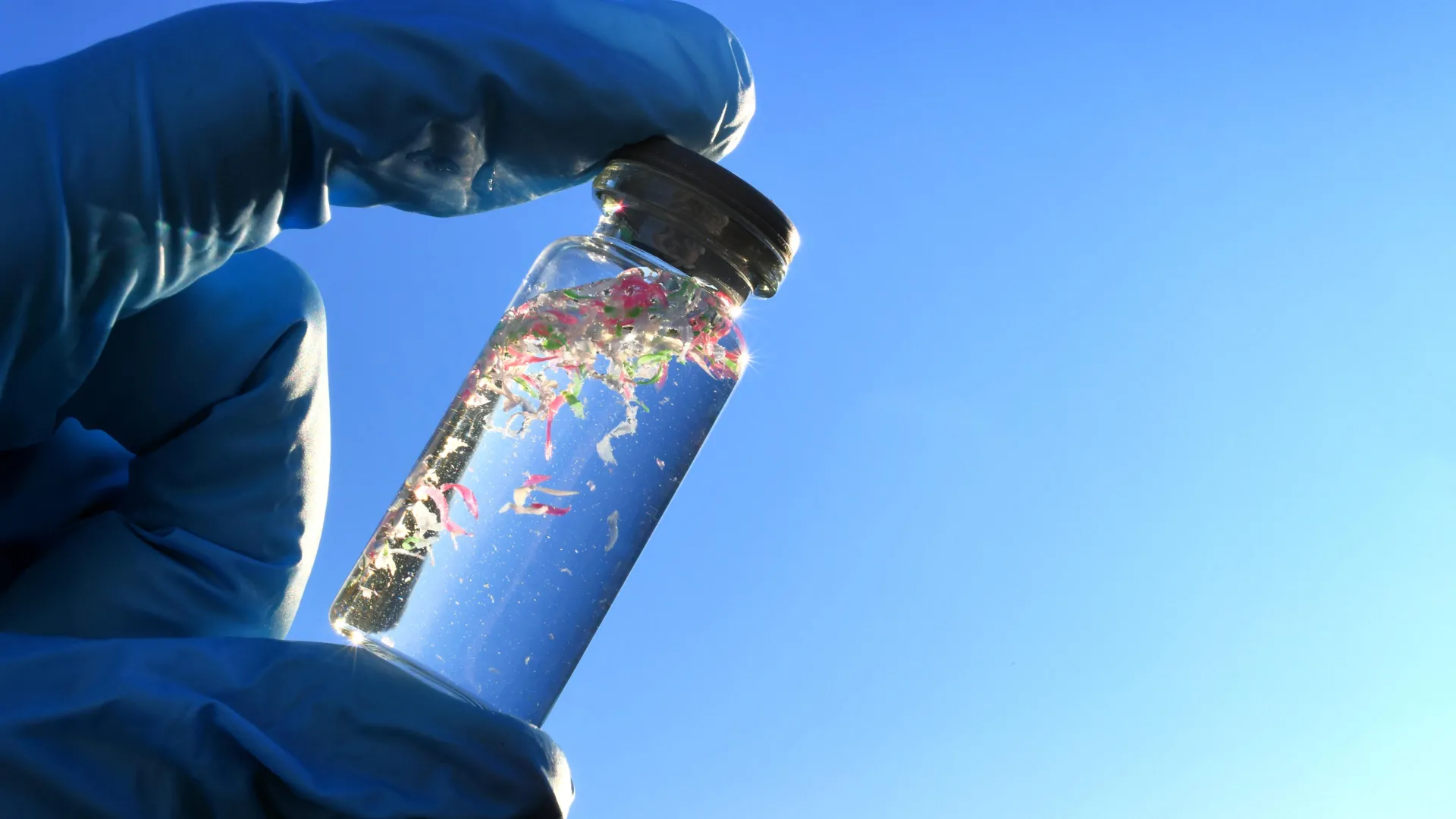
Recent research has revealed that people may be unknowingly ingesting tens of thousands of microplastic particles every year. On average, individuals consume between 39,000 and 52,000 particles annually, with bottled water drinkers taking in an additional 90,000 microplastic fragments compared to those who drink tap water. Credit: Shutterstock

Thailand’s Phi Phi Islands are known for their crystal-clear waters and white sand, not for launching advanced scientific research. Yet for one environmental scientist, the contrast between natural beauty and pollution sparked a major career shift from business to environmental science.

“I was standing there looking out at this gorgeous view of the Andaman Sea, and then I looked down and beneath my feet were all these pieces of plastic, most of them water bottles,” she says.

“I’ve always had a passion for waste reduction, but I realized that this was a problem with consumption.”

Armed with years of experience as co-founder of ERA Environmental Management Solutions, a company specializing in environmental, health and safety software, she returned to Concordia University to pursue a PhD on plastic waste. Her recent paper in the Journal of Hazardous Materials explores how single-use plastic water bottles pose potential health risks that remain largely overlooked in scientific research.

Hidden Hazards of Bottled Water

In an extensive review of more than 140 studies, the research reveals that people consume between 39,000 and 52,000 microplastic particles every year, and those who drink bottled water take in roughly 90,000 more than tap water users.

These microplastics are tiny fragments, often invisible to the eye. A typical particle measures between one micron (a thousandth of a millimeter) and five millimeters, while nanoplastics are even smaller. The contamination begins during manufacturing, transportation, and storage, when low-quality plastics release microscopic fragments — especially when exposed to sunlight and fluctuating temperatures. Unlike microplastics from food sources, those in bottled water are ingested directly.

Inside the Human Body

Once consumed, these particles can travel throughout the body. Studies indicate that microplastics can cross biological barriers, enter the bloodstream, and accumulate in organs. This may cause chronic inflammation, oxidative stress, hormonal disruption, reproductive impairment, neurological issues, and even some cancers. However, the long-term impact remains uncertain due to limited standardized testing and measurement techniques.

The researcher highlights that current detection tools vary in precision and capability. Some methods can spot smaller particles but cannot identify their composition, while others analyze chemical makeup but miss the tiniest plastics. The most advanced systems are both expensive and difficult to access, hindering consistent global study.

Rethinking Plastic Use Through Education

Despite growing environmental laws aimed at reducing plastic pollution, most regulations target items like shopping bags, straws, and packaging. Single-use water bottles often escape similar scrutiny.

“Education is the most important action we can take,” she says. “Drinking water from plastic bottles is fine in an emergency but it is not something that should be used in daily life. People need to understand that the issue is not acute toxicity — it is chronic toxicity.”

Chunjiang An, associate professor, and Zhi Chen, professor, in the Department of Building, Civil and Environmental Engineering at the Gina Cody School of Engineering and Computer Science contributed to this paper.

This research was supported by the Natural Sciences and Engineering Research Council of Canada and Concordia University.

CLICK HERE FOR MORE INFORMATION

https://www.sciencedaily.com/releases/2025/10/251006051131.htm

Assessing exposure and health consequences of chemicals in drinking water in the 21st Century

Journal of Exposure Science & Environmental Epidemiology volume 34, pages1–2 (2024)Cite this article

Populations worldwide are exposed to a myriad of chemicals via drinking water, yet only a handful of chemicals have been extensively evaluated with regard to human exposures and health impacts [1, 2]. Many chemicals are generally “invisible” in that they do not alter the color or odor of drinking water, and many of the associated effects are not observable for decades, making linkages between exposure and disease difficult. The articles included in the Journal of Exposure Science and Environmental Epidemiology Special Topic “Assessing Exposure and Health Consequences of Chemicals in Drinking Water in the 21st Century” cover a range of topics, including: (i) new exposure and health research for regulated and emerging chemicals, (ii) new methods and tools for assessing exposure to drinking water contaminants, (iii) issues of equity and environmental justice, (iv) drinking water issues within the context of a changing climate. This Special Topic includes articles authored by experts across multiple disciplines including environmental engineering, hydrology, exposure science, epidemiology, toxicology, climate science, and others. Many of these papers emerged from an international symposium organized by ISGlobal and Yale scientists held in Barcelona in September 2022 [3].

Regulated chemicals

Chemicals that have been the focus of environmental health research include disinfection by-products (DBPs), nitrate, and metals. Although many of these chemicals are regulated, there is concern about low-dose exposures at concentrations below standards and guidelines, and risks of health endpoints not yet studied. Kaufman et al. explore new ways to assess DBP exposure, considering concentrations and specific toxicity potential in relation to birth defects risk [4]. Long-term exposure to DBPs and nitrate is addressed by Donat-Vargas et al. in relation to chronic lymphocytic leukaemia in Spain [5]. Friedman et al. examine temporal and spatial variability of manganese concentrations in a case study in the United States (US) [6]. Hefferon et al. evaluated sociodemographic inequalities in fluoride concentrations across the US [7]. Spaur et al. evaluate the contribution of water arsenic to biomarker levels in a prospective study in the US [8].

Chemicals of emerging concern

Many emerging chemicals, such as per- and polyfluoroalkyl substances (PFAS), microplastics, and 1,4-dioxane, have drinking water as the dominant exposure pathway for many populations. Yet, these remain largely unregulated or have standards and guidelines that vary widely across states and countries. Because only small percentages of the universe of contaminants are regulated in drinking water, routine monitoring data for many chemicals of emerging concern is frequently absent or very limited. To advance understanding of drinking water exposures to PFAS, Cserbik et al. [9]. and Kotlarz et al. [10]. evaluate and compare PFAS in drinking water and blood serum samples in two different settings: an urban setting not impacted by PFAS pollution in Spain [9] and among well water users living near a fluorochemical facility in the US [10], respectively.

New methods and tools for exposure assessment

There is a need for improved tools, methods, and data to evaluate drinking water related exposures. These tools and techniques remain somewhat limited and lag behind those of other stressors (e.g., air pollution). Also, despite water contaminants occurring in mixtures, most of the evaluations (and policies and regulations) are conducted chemical by chemical, ignoring potential interactions. Schullehner et al. present case studies of three approaches of exposure assessment of drinking water quality: use of country-wide routine monitoring databases, wide-scope chemical analysis, and effect-based bioassay methods [11]. Luben et al. elaborate and compare different exposure assessment metrics to trihalomethanes in epidemiological analyses of reproductive and developmental outcomes [12]. Escher et al. present in vitro assays to evaluate biological responses of including neurotoxicity, oxidative stress, and cytotoxicity in different types of drinking water samples (tap, bottled, filtered) [13] Isaacs et al. present newly developed automated workflows to screen contaminants of concern based on toxicity and exposure potential [14]. Dorevitch et al. develop a novel method to improve detection of particulate lead spikes [15].

Issues of equity, environmental justice, and vulnerable populations

A substantial portion of the population (e.g., 20% in the United States) have private water supplies (e.g., a household domestic drinking water well), which are not subject to any federal regulatory oversight or monitoring [16]. This presents an equity issue in access to data on drinking water quality, as discussed in Levin et al. [2]. and heterogeneity in state-based policies for drinking water prevention, as discussed by Schmitt et al. [17]. Spaur et al. [8], observed that water from unregulated private wells and regulated municipal water supplies contributes substantially to overall exposures (as measured by urinary arsenic and uranium concentrations) in both rural, American Indian populations and urban, racially/ethnically diverse populations nationwide. Hefferon et al. evaluated environmental justice issues with respect to fluoride and found that 2.9 million US residents are served by public water systems with average fluoride concentrations exceeding the World Health Organization’s guidance limit [7]. Friedman et al. show that manganese in drinking water frequently exceeds current guidelines in the US, and occur at concentrations shown to be associated with adverse health outcomes, especially for vulnerable and susceptible populations like children [6].

Chemical contamination may also pose a serious threat in the developing world. Today, around 2.2 billion people – or 1 in 4 – still lack safely managed drinking water at home [18]. In most of the world, microbial contamination is the biggest challenge. Because it has been understudied, the chemical risks remain obscure [19], and regulators often require local data to take action. Praveena et al. reviews the quality of different drinking water types in Malaysia (tap water, ground water, gravity feed system) and its implications on policy, human health, management, and future research [20].

Water quality in a changing climate

There is an urgent need to anticipate and prepare for current and future challenges in a rapidly changing world. We also need to foresee new challenges to address issues of water scarcity (e.g., increasing desalination, use of treated wastewater in densely populated urban areas to meet water use demands), and aging infrastructure for many middle- and high-income countries constructed in the nineteenth and twentieth centuries. The impacts of climate change on the water cycle are direct and observable, such as more frequent droughts and floods, sea level rise, and ice/snow melt. These events will challenge drinking water quality and availability through direct and indirect mechanisms [21]. There is still very limited knowledge on how climate events will affect the quality of finished drinking water. In our special issue, Oliveras et al. conducts a new analysis on the impacts of drought and heavy rain surrogates on the quality of drinking water in Barcelona, Spain [22].

Conclusion

Chemical contamination of drinking water is widespread. Although our knowledge on chemical risks in drinking water is increasing, there are knowledge gaps that make a slow translation to public health protection. We hope this issue highlights, elevates, and motivates research on chemical exposures via drinking water.

CLICK HERE FOR MORE INFORMATION

https://www.nature.com/articles/s41370-024-00639-0

Drinking water contaminated with Pfas probably increases risk of infant mortality, study finds

This article is more than 2 months old

Study of 11,000 births in New Hampshire shows residents’ reproductive outcomes near contaminated sites

Tom Perkins 15.00 ESTShare

Prefer the Guardian on Google

Drinking water contaminated with Pfas chemicals probably increases the risk of infant mortality and other harm to newborns, a new peer-reviewed study of 11,000 births in New Hampshire finds.

The first-of-its-kind University of Arizona research found drinking well water down gradient from a Pfas-contaminated site was tied to an increase in infant mortality of 191%, pre-term birth of 20%, and low-weight birth of 43%.

It was also tied to an increase in extremely premature birth and extremely low-weight birth by 168% and 180%, respectively.

The findings caught authors by surprise, said Derek Lemoine, a study co-author and economics professor at the University of Arizona who focuses on environmental policymaking and pricing climate risks.

“I don’t know if we expected to find effects this big and this detectable, especially given that there isn’t that much infant mortality, and there aren’t that many extremely low weight or pre-term births,” Lemoine said. “But it was there in the data.”

The study also weighed the cost of societal harms in drinking contaminated water against up-front cleanup costs, and found it to be much cheaper to address Pfas water pollution.

Extrapolating the findings to the entire US population, the authors estimate a nearly $8bn negative annual economic impact just in increased healthcare costs and lost productivity. The cost of complying with current regulations for removing Pfas in drinking water is estimated at about $3.8bn.

“We are trying to put numbers on this and that’s important because when you want to clean up and regulate Pfas, there’s a real cost to it,” Lemoine said.

Pfas are a class of at least 16,000 compounds often used to help products resist water, stains and heat. They are called “forever chemicals” because they do not naturally break down and accumulate in the environment, and they are linked to serious health problems such as cancer, kidney disease, liver problems, immune disorders and birth defects.

Pfas are widely used across the economy, and industrial sites that utilize them in high volume often pollute groundwater. Military bases and airports are among major sources of Pfas pollution because the chemicals are used in firefighting foam. The federal government estimated that about 95 million people across the country drink contaminated water from public or private wells.

Previous research has raised concern about the impact of Pfas exposure on fetuses and newborns.

Among those are toxicological studies in which researchers examine the chemicals’ impact on lab animals, but that leaves some question about whether humans experience the same harms, Lemoine said.

Other studies are correlative and look at the levels of Pfas in umbilical cord blood or in newborns in relation to levels of disease. Lemoine said those findings are not always conclusive, in part because many variables can contribute to reproductive harm.

The new natural study is unique because it gets close to “isolating the effect of the Pfas itself, and not anything around it”, Lemoine said.

Researchers achieved this by identifying 41 New Hampshire sites contaminated with Pfoa and Pfos, two common Pfas compounds, then using topography data to determine groundwater flow direction. The authors then examined reproductive outcomes among residents down gradient from the sites.

Researchers chose New Hampshire because it is the only state where Pfas and reproductive data is available, Lemoine said. Well locations are confidential, so mothers were unaware of whether their water source was down gradient from a Pfas-contaminated site. That created a randomization that allows for causal inference, the authors noted.

The study’s methodology is rigorous and unique, and underscores “that Pfas is no joke, and is toxic at very low concentrations”, said Sydney Evans, a senior science analyst with the Environmental Working Group non-profit. The group studies Pfas exposures and advocates for tighter regulations.

The study is in part effective because mothers did not know whether they were exposed, which created the randomization, Evans said, but she noted that the state has the information. The findings raise questions about whether the state should be doing a similar analysis and alerting mothers who are at risk, Evans said.

Lemoine said the study had some limitations, including that authors don’t know the mothers’ exact exposure levels to Pfas, nor does the research account for other contaminants that may be in the water. But he added that the findings still give a strong picture of the chemicals’ effects.

Granular activated carbon or reverse osmosis systems can be used by water treatment plants and consumers at home to remove many kinds of Pfas, and those systems also remove other contaminants.

The Biden administration last year put in place limits in drinking water for six types of Pfas, and gave water utilities several years to install systems.

The Trump administration is moving to undo the limits for some compounds. That would probably cost the public more in the long run. Utility customers pay the cost of removing Pfas, but the public “also pays the cost of drinking contaminated water, which is bigger”, Lemoine said.

CLICK HERE FOR MORE INFORMATION

https://www.theguardian.com/us-news/2025/dec/08/drinking-water-pfas-infant-mortality-study

Tap vs. Bottled Water: Scientists Reveal Which Contained More Chemical Byproducts

Researchers tested spring, groundwater, and purified bottled waters against local tap to see how treatment shapes the byproducts that emerge — and the differences were striking.

By 

Stacey Leasca

How to Make Lemony White Bean DipClose

A plastic bottle of water placed on a surface in sunlight
Credit: Ekaterina Goncharova / Getty Images
  • A new study found that bottled water contains lower levels of disinfection byproducts (DBPs) than chloraminated tap water, averaging less than half the amount found in typical U.S. tap samples.
  • Researchers detected DBPs—including trihalomethanes and haloacetic acids—in all 10 bottled water brands tested, though levels remained relatively low.
  • Spring and groundwater brands tended to have fewer DBPs than purified bottled waters, making them the better choice for minimizing chemical byproducts.

The news hasn’t been great for bottled water fans lately. In January, Food & Wine reported on a new study showing that the more bottled water you drink, the more microplastics you consume, and another study showing that bottled water may contain more bacteria than you might expect. And don’t even get us started on what happens when you leave bottled water in a hot car for too long.

Now, a new study published in the journal Water Research is giving bottled water the silver lining it desperately needs. 

In the new March issue, researchers from the University of South Carolina published findings measuring levels of disinfection byproducts (DBPs) in bottled water compared to chloraminated tap water. The study noted that bottled water often begins as municipal tap water, which is sometimes further disinfected. This process, the researchers added, can form DBPs, chemical compounds created when disinfectants react with natural organic matter.

This Is the Bottled Water Brand Americans Reach for Most, According to New Data

The researchers noted that some of these DBPs are already regulated in bottled water by the U.S. Food and Drug Administration (FDA); however, many more fly under the unregulated radar. To find out which ones may be lurking in your water, the researchers purchased 10 popular brands of bottled water from local stores, including lower-cost “grocery” brands, mid-tier “name” brands, and higher-end “designer” brands. Some of the water was labeled as “purified” (often just code for treated tap water), while others were labeled as spring or groundwater. They also collected a sample of local tap water (treated with chloramine) for comparison with the bottled brands.

The researchers then tested for 64 different DBPs, including 50 unregulated DBPs that had not previously been measured in bottled water. They found that every bottled water sample they tested contained some level of disinfection byproducts, but at relatively low levels, ranging from 0.01 to 22.4 micrograms per liter, or up to about 22 millionths of a gram in roughly 34 ounces of water. By comparison, the tap water sample they analyzed contained 47.3 micrograms per liter, and previous studies suggest U.S. tap water averages closer to 52 micrograms per liter, about double the highest bottled water level measured in this study.

Bottled water vs. tap water: How do DBP levels compare?
Water Type DBP Levels in This Study How It’s Treated What to Know 
Purified bottled water 0.01–22.4 µg/L (some samples near the higher end of the bottled range) Often municipal tap water that has been further treated (e.g., reverse osmosis, distillation, or carbon filtration) May still contain DBPs formed during disinfection. Levels varied by lot. 
Spring/groundwater bottled water Generally lower overall DBPs than purified brands Sourced from underground aquifers; may be disinfected but often undergoes less treatment than purified water Showed lower DBP levels in this study, but not DBP-free. 
Chloraminated tap water (sample) 47.3 µg/L Treated with chloramine to kill pathogens Higher DBPs than any bottled sample tested, but within federal regulatory limits. 
Average U.S. tap water (prior research) ~52 µg/L Typically chlorinated or chloraminated Federal EPA limit for total trihalomethanes is 80 µg/L. 

Here’s how disinfection byproduct (DBP) levels in bottled water brands stack up against chloraminated tap water samples and prior U.S. averages.

And a hot tip: If you’re hoping to score the bottled water with the lowest levels of DBPs, go for spring and groundwater, which showed lower overall DBPs than purified brands.

As for which byproducts they identified, the team reported that trihalomethanes and haloacetic acids had the highest concentrations. Both are common DBPs that form when chlorine reacts with organic matter in water. (However, some studies have linked long-term exposure at high levels to an increased risk of certain cancers.) The researchers also found several unregulated DBPs, including dibromoacetonitrile, which is carcinogenic. 

https://www.foodandwine.com/embed?url=https%3A%2F%2Fwww.youtube.com%2Fwatch%3Fv%3DL7qnquywcZU&id=mntl-sc-block_20-0-iframe&options=e30%3D&docId=11909742

The one thing the team couldn’t do was say with certainty that there is a “safest” brand of water, because DBP levels varied from lot to lot, making brand-level comparisons impossible. As for what’s next, the team hopes their work can inform future studies tracking these DBPs over time to see how they develop as water sits on the shelf.

Tap Water Disinfection May Form Far More Chemical Byproducts Than Regulators Track, Study Finds

Bottom line: Bottled water isn’t DBP-free — but it may contain lower levels than some tap water. If you’re concerned, spring water and proper storage are your best bets. And as always, balance convenience, cost, and environmental impact before stocking up.

CLICK HERE FOR MORE INFORMATION

https://www.foodandwine.com/tap-vs-bottled-water-disinfection-byproducts-usc-study-2026-11909742

County-level associations between drinking water PFAS contamination and COVID-19 mortality in the United States

Journal of Exposure Science & Environmental Epidemiology volume 35, pages478–485 (2025)Cite this article

Abstract

Background

Epidemiologic and animal studies both support relationships between exposures to per- and polyfluoroalkyl substances (PFAS) and harmful effects on the immune system. Accordingly, PFAS have been identified as potential environmental risk factors for adverse COVID-19 outcomes.

Objective

Here, we examine associations between PFAS contamination of U.S. community water systems (CWS) and county-level COVID-19 mortality records. Our analyses leverage two datasets: one at the subnational scale (5371 CWS serving 621 counties) and one at the national scale (4798 CWS serving 1677 counties). The subnational monitoring dataset was obtained from statewide drinking monitoring of PFAS (2016–2020) and the national monitoring dataset was obtained from a survey of unregulated contaminants (2013–2015).

Methods

We conducted parallel analyses using multilevel quasi-Poisson regressions to estimate cumulative incidence ratios for the association between county-level measures of PFAS drinking water contamination and COVID-19 mortality prior to vaccination onset (Jan-Dec 2020). In the primary analyses, these regressions were adjusted for several county-level sociodemographic factors, days after the first reported case in the county, and total hospital beds.

Results

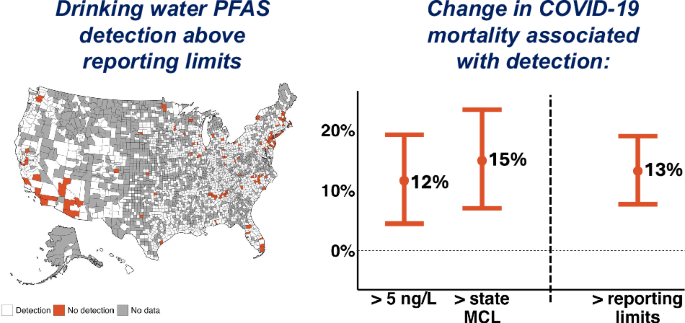
In the subnational analysis, detection of at least one PFAS over 5 ng/L was associated with 12% higher [95% CI: 4%, 19%] COVID-19 mortality. In the national analysis, detection of at least one PFAS above the reporting limits (20–90 ng/L) was associated with 13% higher [95% CI: 8%, 19%] COVID-19 mortality.

Impact Statement

  • Our findings provide evidence for an association between area-level drinking water PFAS contamination and higher COVID-19 mortality in the United States. These findings reinforce the importance of ongoing state and federal monitoring efforts supporting the U.S. Environmental Protection Agency’s 2024 drinking water regulations for PFAS. More broadly, this example suggests that drinking water quality could play a role in infectious disease severity. Future research would benefit from study designs that combine area-level exposure measures with individual-level outcome data.

CLICK HERE FOR MORE INFORMATION

https://www.nature.com/articles/s41370-024-00723-5?

New solutions to keep drinking water safe as pesticide use skyrockets worldwide

Source:University of South Australia

Summary:Water scientists have proposed a more effective method of removing organic pesticides from drinking water, reducing the risk of contamination and potential health problems.Share:


FULL STORY


Water scientists from Australia and China have proposed a more effective method of removing organic pesticides from drinking water, reducing the risk of contamination and potential health problems.

A 62% rise in global pesticide use in the past 20 years has escalated fears that many of these chemicals could end up in our waterways, causing cancer.

Powdered activated carbon (PAC) is currently used to remove organic pesticides from drinking water, but the process is costly, time consuming and not 100% effective.

University of South Australia water researcher Professor Jinming Duan has collaborated with his former PhD student, Dr Wei Li of Xi’an University of Architecture & Technology and Chinese colleagues in a series of experiments to improve the process.

The researchers found that reducing the PAC particles from the existing commercial size of 38 μm (one millionth of a metre) to 6 μm, up to 75% less powder was needed to remove six common pesticides, achieving significant water treatment savings.

At 6 μm, the PAC particles are still large enough to be filtered out after the adsorption process, ensuring they do not end up in the drinking water after toxic pesticides are removed.

Prof Duan says pollutants in our waterways are projected to increase in coming decades as the world’s population and industrial development grows.

“It’s therefore critical that we develop cost-effective treatment processes to ensure our waterways remain safe,” he says.

Their findings have been published in the journal Chemosphere.

“Pesticides cannot be removed using conventional water treatment processes such as flocculation, sedimentation and filtration. Powdered activated carbon does the job, but the existing methods have limitations. Our study has identified how we can make this process more efficient.”

Approximately 3.54 million metric tons of pesticides were applied to agricultural crops worldwide in 2021, according to the Statista Research Department.

Worryingly, despite efforts to increase their efficiency, it is estimated that only 10% of pesticides reach their target pests, with most of the chemicals remaining on plant surfaces or entering the environment, including the soil, waterways and atmosphere.

Toxicological studies have suggested that long-term exposure to low levels of pesticides — primarily through diet or drinking water — could increase the risks of cancer and other diseases.

“This is why it is important to reduce their levels to as low as feasibly possible,” Prof Duan says.

The researchers also hope to explore how super-fine activated carbon could be used to remove toxic polyfluoroalkyl substances (PFAS) and perfluorinated compounds (PFCs) found in many consumer products, which have been linked to adverse health impacts.

CLICK HERE FOR MORE INFORMATION

https://www.sciencedaily.com/releases/2024/07/240711111526.htm