Water – at the center of the climate crisis

Photocomposition: a faceut with a drop coming out of it, with a red circle behing the drop.

Climate change is exacerbating both water scarcity and water-related hazards (such as floods and droughts), as rising temperatures disrupt precipitation patterns and the entire water cycle.

Water and climate change are inextricably linked. Climate change affects the world’s water in complex ways. From unpredictable rainfall patterns to shrinking ice sheets, rising sea levels, floods and droughts – most impacts of climate change come down to water.

Climate change is exacerbating both water scarcity and water-related hazards (such as floods and droughts), as rising temperatures disrupt precipitation patterns and the entire water cycle.

Get more facts on climate and water below.
 

Water scarcity
 

  • Over two billion people worldwide don’t have access to safe drinking water today, and roughly half of the world’s population is experiencing severe water scarcity for at least part of the year. These numbers are expected to increase, exacerbated by climate change and population growth.
  • Only 0.5 per cent of water on Earth is useable and available freshwater – and climate change is dangerously affecting that supply. Over the past twenty years, terrestrial water storage – including soil moisture, snow and ice – has dropped at a rate of 1 cm per year, with major ramifications for water security.
  • Melting glaciers, snow and permafrost are affecting humans and ecosystems in mid-to-high latitudes and the high-mountain regions. These changes are already impacting irrigation, hydropower, water supply, and populations depending on ice, snow and permafrost.
  • Climate change is one of the key drivers of the loss and degradation of freshwater ecosystems and the unprecedented decline and extinction of many freshwater-dependent populations, particularly due to land use and pollution.
  • Limiting global warming to 1.5°C compared to 2°C would approximately halve the proportion of the world population expected to suffer water scarcity, although there is considerable variability between regions.
  • Water quality is also affected by climate change, as higher water temperatures and more frequent floods and droughts are projected to exacerbate many forms of water pollution – from sediments to pathogens and pesticides.
  • Climate change, population growth and increasing water scarcity will put pressure on food supply as most of the freshwater used, about 70 per cent on average, is used for agriculture (it takes between 2000 and 5000 liters of water to produce a person’s daily food).
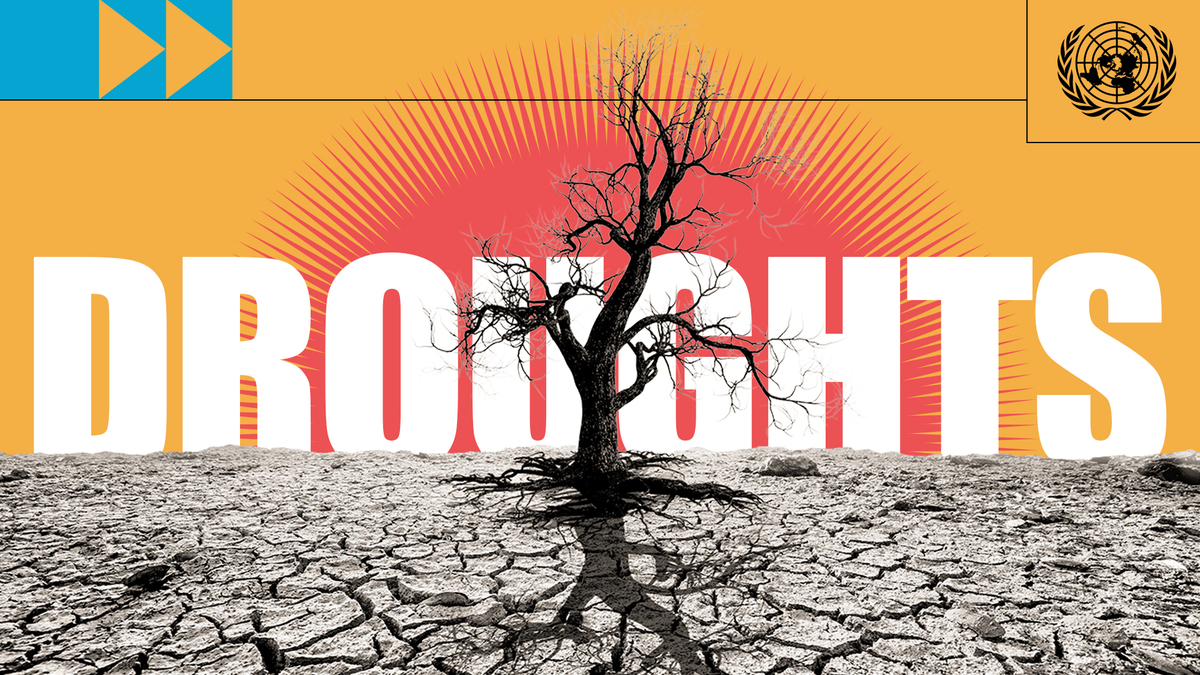
 Photocomposition: a dry tree in a dry soil, with the word drought written in bold big letters at the background.

Water-related hazards
 

  • Climate change has made extreme weather events such as floods and droughts more likely and more severe.
  • Rising global temperatures increase the moisture the atmosphere can hold, resulting in more storms and heavy rains, but paradoxically also more intense dry spells as more water evaporates from the land and global weather patterns change.
  • Annual mean precipitation is increasing in many regions worldwide and decreasing over a smaller area, particularly in the tropics.
  • Climate change has increased the likelihood of extreme precipitation events and the associated increase in the frequency and magnitude of river floods.
  • Climate change has also increased the likelihood or severity of drought events in many parts of the world, causing reduced agricultural yields, drinking water shortages, increased wildfire risk, loss of lives and economic damages.
  • Drought and flood risks, and associated societal damages, are projected to further increase with every degree of global warming.
  • Water-related disasters have dominated the list of disasters over the past 50 years and account for 70 per cent of all deaths related to natural disasters.
  • Since 2000, flood-related disasters have risen by 134 per cent compared with the two previous decades. Most of the flood-related deaths and economic losses were recorded in Asia. The number and duration of droughts also increased by 29 per cent over this same period. Most drought-related deaths occurred in Africa.
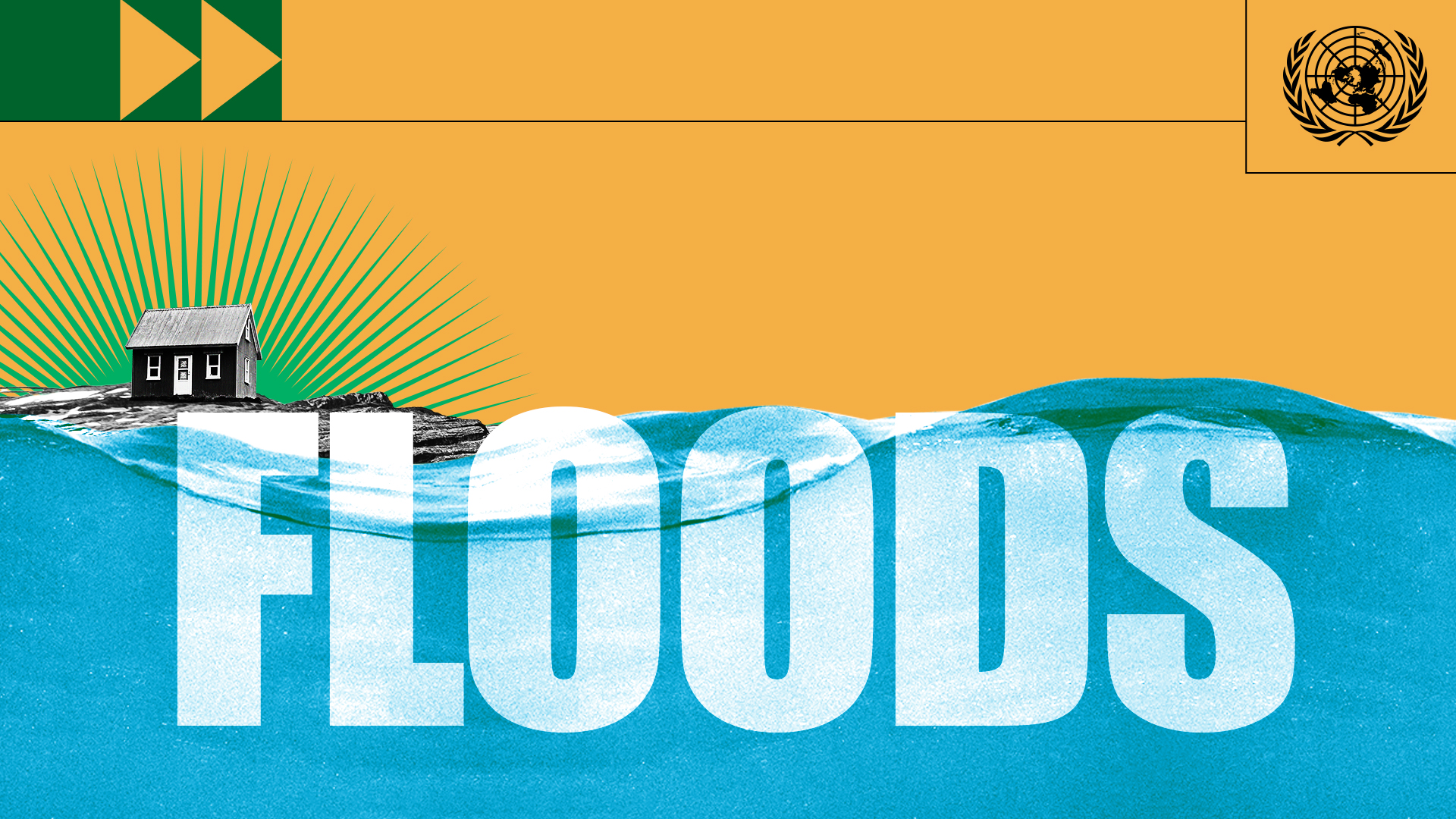
 Photocomposition: a house on the left, with a lot of water in the bottom of the image. The word floods is written in big bold white letters at the front of both illustrations.

Water solutions
 

  • Healthy aquatic ecosystems and improved water management can lower greenhouse gas emissions and provide protection against climate hazards.
  • Wetlands such as mangroves, seagrasses, marshes and swamps are highly effective carbon sinks that absorb and store CO2, helping to reduce greenhouse gas emissions.
  • Wetlands also serve as a buffer against extreme weather events. They provide a natural shield against storm surges and absorb excess water and precipitation. Through the plants and microorganisms that they house, wetlands also provide water storage and purification.
  • Early warning systems for floods, droughts and other water-related hazards provide a more than tenfold return on investment and can significantly reduce disaster risk: a 24-hour warning of a coming storm can cut the ensuing damage by 30 per cent.
  • Water supply and sanitation systems that can withstand climate change could save the lives of more than 360,000 infants every year.
  • Climate-smart agriculture using drip irrigation and other means of using water more efficiently can help reduce demand on freshwater supplies.

CLICK HERE FOR MORE INFORMATION

https://www.un.org/en/climatechange/science/climate-issues/water?

Water scarcity

Addressing the growing lack of available water to meet children’s needs.

In Djibouti, water is as precious as it is scarce. Since the drought started in 2007, rainfall has dramatically reduced and water levels in traditional wells have dropped forcing women and children to walk long distances for water.
UNICEF/UN0199521/Noorani

Jump to

Even in countries with adequate water resources, water scarcity is not uncommon. Although this may be due to a number of factors — collapsed infrastructure and distribution systems, contamination, conflict, or poor management of water resources — it is clear that climate change, as well as human factors, are increasingly denying children their right to safe water and sanitation.

Water scarcity limits access to safe water for drinking and for practising basic hygiene at home, in schools and in health-care facilities. When water is scarce, sewage systems can fail and the threat of contracting diseases like cholera surges. Scarce water also becomes more expensive.

Water scarcity takes a greater toll on women and children because they are often the ones responsible for collecting it. When water is further away, it requires more time to collect, which often means less time at school. Particularly for girls, a shortage of water in schools impacts student enrolment, attendance and performance. Carrying water long distances is also an enormous physical burden and can expose children to safety risks and exploitation.

Early in the morning, children go to fetch water at the nearest water point, 15 kilometres away from their home in Tchadi village.
UNICEF/UNI315914/Haro Niger, 2020. Early in the morning, children go to the nearest water point to fetch water, 15 kilometres away from their home in Tchadi village.

Key facts

  • Four billion people — almost two thirds of the world’s population —  experience severe water scarcity for at least one month each year.
  • Over two billion people live in countries where water supply is inadequate.
  • Half of the world’s population could be living in areas facing water scarcity by as early as 2025.
  • Some 700 million people could be displaced by intense water scarcity by 2030.
  • By 2040, roughly 1 in 4 children worldwide will be living in areas of extremely high water stress.

UNICEF’s response

As the factors driving water scarcity are complex and vary widely across countries and regions, UNICEF works at multiple levels to introduce context-specific technologies that increase access to safe water and address the impacts of water scarcity. We focus on:

Identifying new water resources: We assess the availability of water resources using various technologies, including remote sensing and geophysical surveys and field investigations.

Improving the efficiency of water resources: We rehabilitate urban water distribution networks and treatment systems to reduce water leakage and contamination, promoting wastewater reuse for agriculture to protect groundwater.

Planning for urban scarcity: We plan for future water needs by identifying available resources to reduce the risk of cities running out of water.

Expanding technologies to ensure climate resilience: We support and develop climate-resilient water sources, including the use of deeper groundwater reserves through solar-powered water networks. We also advance water storage through small-scale retention structures, managed aquifer recharge (where water is pumped into underground reserves to improve its quality), and rainwater harvesting.

Changing behaviours: We work with schools and communities to promote an understanding of the value of water and the importance of its protection, including by supporting environmental clubs in schools.

Planning national water needs: We work with key stakeholders at national and sub-national levels to understand the water requirements for domestic use and for health and sanitation, and advocate to ensure that this is reflected in national planning considerations.

Supporting the WASH sector: We develop technical guidance, manuals and online training programmes for WASH practitioners to improve standards for water access.

CLICK HERE FOR MORE INFORMATION

https://www.unicef.org/wash/water-scarcity?

The Stream, November 11, 2025: America’s Water Infrastructure Needs $3.4 Trillion Investment, Report Warns

by Christian Thorsberg

Give Water a Voice

Your support helps inform the world’s most important decisions about water and all that it touches.One-timeMonthlyAnnually$7$15$30OtherDonate Now

Circle of Blue
Fishermen cast their nets at sunrise on the Mekong River south of Phnom Penh, capital of Cambodia. Photo © J. Carl Ganter/Circle of Blue

Global Rundown

  • A new report on the economic importance of a strong water sector forecasts that America will need to invest $3.4 trillion over the next 20 years to modernize its infrastructure. 
  • As Iran’s water crisis continues, dams in the country’s second-largest city, Mashhad, have dwindled to less than 3 percent capacity.
  • Millions of people in NigerNigeria, and Ghana are at high risk of surface water contamination and loss as a result of deforestation, a new report indicates. 
  • The over-extraction of sand from Cambodia’s Tonle Sap, Asia’s largest lake and a crucial Mekong River source, threatens to shrink its wet-season size by up to 40 percent.

The Lead

For every 1,000 hectares of forest cleared in Niger and Nigeria, almost 10 hectares of surface water disappear, according to a study released this month from Water Aid and Tree Aid, two international NGOs.

The links between deforestation and worsening water crises in West Africa are clear, the report shows. Across Ghana, Niger, and Nigeria, 122 million people live in areas of high surface water risk as a direct result of deforestation — a 5 million-person increase in five years. Nigeria alone, which loses 27,000 hectares of vegetation cover annually, accounts for 70 percent of this vulnerable population. 

In Niger, the impacts of deforestation are particularly dire. Tree loss imperils nearly all the country’s available freshwater sources. In the primarily arid and semi-arid country, climate change is giving rise to a pronounced “more drought, more flood” phenomenon. Without forests to filter and absorb excess water, storms – when they do arrive – are falling increasingly in extreme bursts, resulting in runoff, contamination, and infrastructure damage. But there is also hope. Of the three countries studied, Niger is the only one to achieve a net gain in forest cover since 2013, adding more than 100,000 hectares.

Recent WaterNews from Circle of Blue

This Week’s Top Water Stories, Told In Numbers

$1 million

When invested into water infrastructure in America, it yields $2.5 million in economic output, according to a report released last week by the nonprofit U.S. Water Alliance. What’s more, that $1 million provides 10 jobs, $837,000 in labor income, and $1.4 million in GDP.

The publication, a centerpiece of the organization’s Value of Water campaign, links the country’s financial health with sound water investments — a relationship that is strained by widespread underinvestment, it warns. Over the next 20 years, the report estimates that America will need to spend roughly $3.4 trillion to modernize and repair its aging wastewater, treatment, and stormwater facilities. The problem is comparatively worse in rural communities, which face greater needs per-capita than urban areas in 80 percent of states. 

Per capita, these investments would have the greatest impact in North Dakota, Iowa, Louisiana, West Virginia, Vermont, and New Hampshire. 

“Clean water utilities are on the frontlines of protecting public health and the environment. This report affirms what we have long known — that closing the investment gap will not only safeguard clean water, but also strengthen the entire U.S. economy,” Adam Krantz, CEO of the National Association of Clean Water Agencies, said in the report.

In context: After Decades of Neglect, Bill Coming Due for Michigan’s Water Infrastructure

40 percent

Amount by which the wet season-size of Tonle Sap, the largest lake in Asia, will shrink by 2038 if local mining continues at its current pace, according to a study published this week in the journal Nature SustainabilityA rising demand for sand, used to make concrete and glass, has led to increased dredging in the Cambodian lake, which drains for half of the year into the Mekong River, supporting its southern flow. But during the rainy summer months of May through October, rising water levels in the Mekong reverse this trend, and Tonle Sap pulses, “expanding the lake’s surface area by 4 to 6 times and swelling its water volume to 80 cubic kilometers,” Science reports. This dynamic supports some of the world’s most biodiverse riparian, lake, and wetland habitat, and the livelihoods and cultural identities of some 60 million people who live along the Mekong’s shores. In the absence of strong, nutrient-rich pulses, fisheries and water supplies are at risk of collapse.

According to Science, sand is the world’s second most-exploited resource, “often extracted from riverbeds or shores.” Water is the most exploited. Both Cambodia and Vietnam have banned sand export, though its mining from the Mekong watershed continues, to the detriment of its health and local human communities, flora, and fauna.

In Context: Can the Mekong, the World’s Most Productive River, Endure Relentless Strain?

On the Radar

As the Tehran metropolitan area — home to nearly 18 million people — nears a potential Day Zero scenario within two weeks, Iran’s second-largest city is also facing acute water shortages amid widespread drought, exacerbated by mismanagement. 

The water levels in dams in Mashhad, population 4 million, have dwindled to less than 3 percent capacity, Agence France-Presse (AFP) reports. The city’s water consumption has been measured at roughly 8,000 liters per second, “of which about 1,000 to 1,500 litres per second is supplied from the dams,” Hossein Esmaeilian, the chief executive of Mashhad’s water company, told AFP. Residents are urged to reduce their water consumption by 20 percent, he said. 

Tehran officials admitted this week that water rationing began too late in the capital, a failure that may now lead to forced evacuations, according to Iran International. The country’s central plateau may be depopulated as a result of “a chronic disconnect between scientists, industry, and government agencies.” Already, residents of villages and rural regions have abandoned their land amid shortages and migrated toward city centers, further straining limited reservoir supplies.

Wetland Watch

MARSH Project: Near the historic downtown of Charleston, South Carolina, a grassroots effort to preserve important salt marshes along the Ashley River — installed amid rollbacks to the Clean Water Act — has proved successful in mitigating floods, the Associated Press reports

CLICK HERE FOR MORE INFORMATION

MEDIA ADVISORY: DC Water To Launch Pure Water DC, A Major Initiative To Develop A Second Source Of Drinking Water

Pure Water DC Logo with DC Water Logo and the text Pure Water DC Launch over graphic image of water

On November 19, DC Water will launch an ambitious effort – Pure Water DC – to reduce the District’s reliance on the Potomac River as its only water source. We’ll be hosting an event to outline our vision and strategy for resilience and host an expert panel to address one of the most critical challenges facing the nation’s capital.

Any disruption to the Potomac or Washington Aqueduct—whether from contamination, drought, or infrastructure failure—would have catastrophic consequences for public health, the economy, and national security.

Pure Water DC seeks to mitigate that risk through a comprehensive program to strengthen water supply resilience and explore a second source of water for the District. This initiative represents a major investment and a regional call to action, inviting collaboration among utilities, agencies, and stakeholders to secure a drought-proof future.

EVENT DETAILS

What: 
Launch of Pure Water DC Program, unveiling the vision and strategy for water supply resilience, followed by an expert panel discussion.

When: 
Wednesday, November 19, 2025 
10:00 a.m. – 12:00 p.m.

Where: 
DC Water Headquarters 
1385 Canal Street SE 
Washington, DC 20003

Who: 
DC Water leadership, regional water utilities, environmental agencies, and federal partners including:

  • U.S. Environmental Protection Agency (EPA)
  • District Department of Energy & Environment (DOEE)
  • Water Environment Federation (WEF)
  • Interstate Commission on the Potomac River Basin (ICPRB)
  • WSSC Water
  • Greater Washington Board of Trade

Pure Water DC is DC Water’s commitment to lead the region toward a more resilient water future. The program will explore several options, including:

  • Safeguard our existing source and optimize the distribution system.
  • Add local storage and align with regional emergency storage efforts.
  • Explore advanced water reuse from Blue Plains as a drought-proof, cost-effective second source.

DC Water has committed $21 million over three years to fund studies, pilot projects, and public engagement, including the creation of the Pure Water DC Discovery Center at Blue Plains. This facility will test purification technologies, support regulatory research, and educate the public about water resilience.

The stakes are high: a major disruption could cost the region $15 billion in the first month alone.

Media should RSVP by Tuesday, November 18, at noon to Sherri Lewis at sherri.lewis@dcwater.com to attend and learn more about the new initiative, and next steps to create a more resilient water supply.

CLICK HERE FOR MORE INFORMATION

https://www.dcwater.com/about-dc-water/media/news/media-advisory-dc-water-launch-pure-water-dc-major-initiative-develop?

Pitt researchers reveal hidden impacts of drinking-water treatment on urban streams

Peer-Reviewed Publication

UNIVERSITY OF PITTSBURGH

FacebookXLinkedInWeChatBlueskyMessageWhatsAppEmail

Urban water phosphorus subsidies
IMAGE: IMAGE SHOWING FLOW OF WATER AND TREATED WATER.view more CREDIT: PLOS WATER, ET. AL.

University of Pittsburgh Researchers Reveal Hidden Impacts of Drinking Water Treatment on Urban Streams

Aging lead-pipe drinking water systems, along with the public health measures implemented to reduce their risks, are reshaping the chemistry and health of nearby urban streams. New research from University of Pittsburgh biogeochemists, hydrologists, and environmental engineers uncovered previously overlooked environmental impacts of a common water treatment practice: adding orthophosphate to drinking water systems to prevent lead pipe corrosion. Published in PLOS Water, the study reveals that phosphate used in drinking water treatment can leak into urban streams, altering their chemistry and potentially accelerating eutrophication, the process where such nutrients lead to excessive growth of algae and aquatic plants..

And such lead-pipe networks are widespread throughout the Northeast, Great Lakes region and Midwest — meaning as many as 20 million Americans and their nearby streams may face similar challenges.

In collaboration with local water authorities, the scientists studied five urban streams to look for changes in the pre- and post-implementation of orthophosphate-based corrosion control on stream chemistry. Their findings show statistically significant increases in phosphorus and metal concentrations in streamwater following the treatment, indicating that subsurface infrastructure is not a closed system. Phosphorus concentrations in urban streams increased by over 600% following orthophosphate dosing, while trace metals such as copper, iron, and manganese also rose by nearly 3,500%, suggesting co-transport of corrosion byproducts.  

“We were surprised by how clearly the effects of drinking water treatment appeared in stream chemistry. This finding suggests that our underground infrastructure isn’t as sealed off from the environment as we often assume,” said first author Dr. Anusha Balangoda, Assistant Teaching Professor in Geology and Environmental Science in the Kenneth P. Dietrich School of Arts & Sciences. “Our study is the first to examine urban stream chemistry and the influence of drinking-water additives.”

“We absolutely need to protect people from lead in drinking water,” said co-author Dr. Emily Elliott, co-founder and chair of the Pittsburgh Water Collaboratory and professor in Geology and Environmental Science. “But we also need to understand how these treatments affect our rivers and ecosystems.” Elliott collaborated with co-authors Sarah-Jane-Haig, an associate professor, and Isaiah Spencer-Williams, a doctoral student, both also in Civil and Environmental Engineering. Their paper, titled “From Pipes to Streams: The Hidden Influence of Orthophosphate Additions on Urban Waterways,” was published November 13 in PLOS Water.

Public-health emergencies arising from corroded, lead-water pipes are nothing new— contaminations have made the news in the past decade in Flint, MichiganWashington, D.C., and more recently in the study area of Pittsburgh. Phosphate corrosion inhibitors are used in water systems across North America, the United Kingdom, and parts of Europe. The researchers noted that the potential ecological consequences of this dosing of drinking-water system pipes does to streams, rivers, and groundwater remain “largely unexplored, particularly in the U.S.”

The study examined a pathway of phosphorus pollution that has received little attention: leakage from drinking water pipes rather than traditional sources like wastewater discharge or industrial runoff. The researchers monitored five above-ground urban stream reaches, selecting these because most Pittsburgh streams are buried in an underground pipe network, and collected detailed water chemistry samples monthly over a two-year period spanning before, during, and after orthophosphate treatment implementation (February 2019 to June 2020). They also conducted nutrient addition bioassays at three key time points, using both streamwater and tap water controls, to assess the ecological impacts on algal growth.

The scientists offer four corrective actions to address phosphate leakage from buried water infrastructure systems: 

1. Repair Aging Infrastructure. Urgently address the issue of drinking water pipe networks losing 40-50% of treated water through leaks and breaks, thereby preventing phosphate-enriched water from reaching urban streams and groundwater.

2. Upgrade Wastewater Treatment. Implement tertiary treatment processes at wastewater treatment plants to remove excess phosphorus. The study shows effluent phosphorus increased 26% after dosing began, yet many plants lack phosphorus removal capabilities that can achieve an 80-99% reduction.

3. Optimize Dosing Concentrations. Determine the minimum effective orthophosphate concentration that protects human health from lead exposure while minimizing ecological harm to receiving waters.

4. Develop Innovative Approaches to Monitor Infrastructure-Ecosystem Interactions. Create new monitoring and assessment methods to understand how additives in drinking water systems reach and affect urban streams through subsurface connections. 

“Pittsburgh isn’t unique—millions of Americans are served by water systems with lead pipes and aging infrastructure,” Elliott said. “Our findings suggest this issue extends far beyond one city, particularly in the Midwest and Northeast where both lead pipes and phosphate treatment are common. We need a national conversation about infrastructure and water quality.”

This research was supported by the National Science Foundation RAPID funding program (grant NSF No. 1929843), as well as the Pittsburgh Water Collaboratory. The Pittsburgh Water and Sewer Authority contributed drinking water sample collection, chemical analysis and water treatment information.

# # #

JOURNAL

PLOS Water

METHOD OF RESEARCH

Data/statistical analysis

SUBJECT OF RESEARCH

Not applicable

ARTICLE TITLE

From Pipes to Streams: The Hidden Influence of 2 Orthophosphate Additions on Urban Waterways

ARTICLE PUBLICATION DATE

13-Nov-2025

COI STATEMENT

None

Disclaimer: AAAS and EurekAlert! are not responsible for the accuracy of news releases posted to EurekAlert! by contributing institutions or for the use of any information through the EurekAlert system.

CLICK HERE FOR MORE INFORMATION

https://www.eurekalert.org/news-releases/1105929?

Extreme floods are slashing global rice yields faster than expected

Flooding is emerging as a silent but powerful destroyer of global rice supplies—and the danger is accelerating.

Source:Stanford UniversitySummary:Scientists discovered that a week of full submergence is enough to kill most rice plants, making flooding a far greater threat than previously understood. Intensifying extreme rainfall events may amplify these losses unless vulnerable regions adopt more resilient rice varieties.Share:


FULL STORY


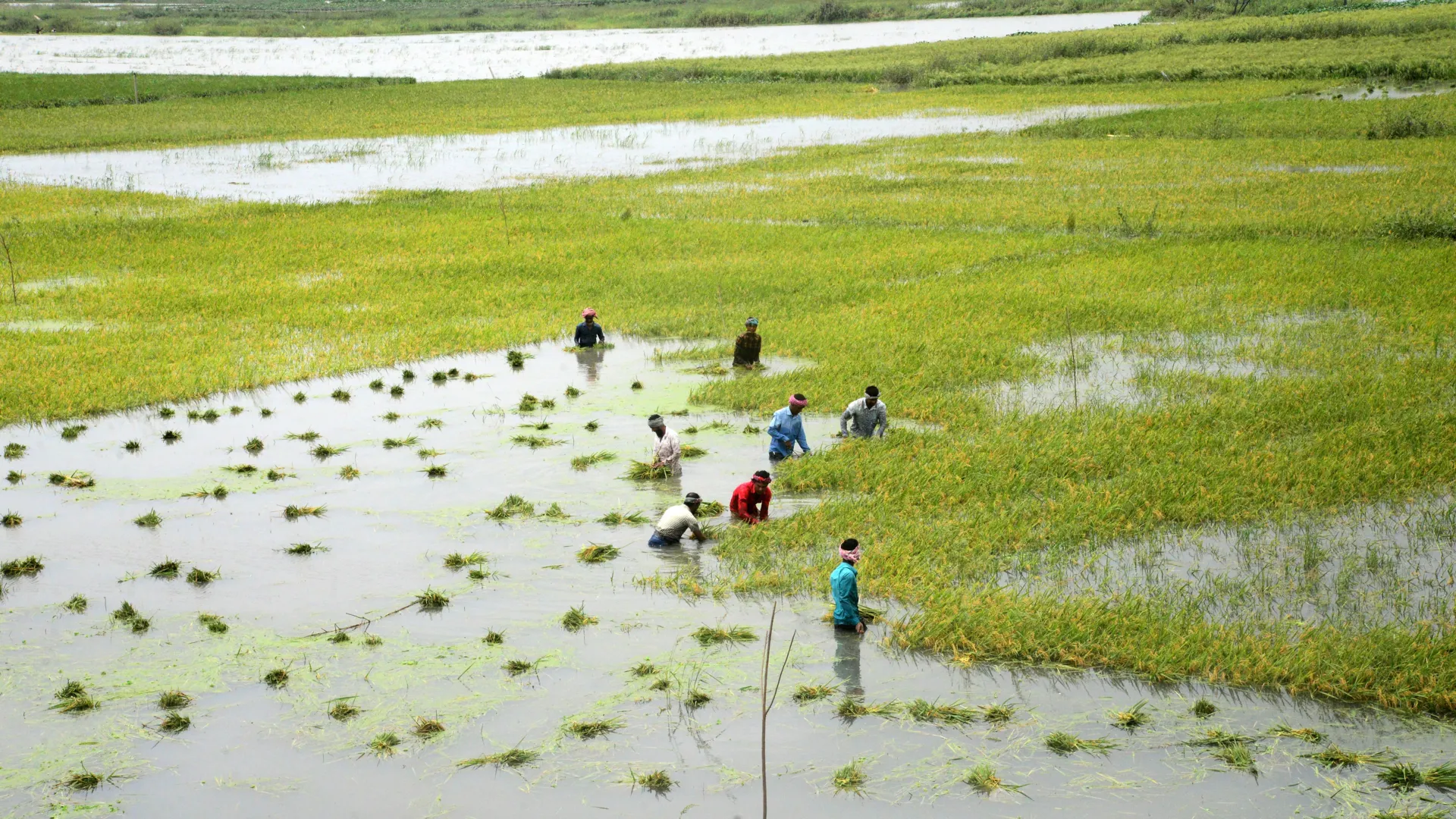
Rising Floods Threaten the World’s Rice
Severe flooding is increasingly damaging global rice yields, slashing production by millions of tons and threatening food security for billions. Credit: Shutterstock

Intense flooding has significantly reduced rice harvests around the world in recent decades, putting at risk the food supply of billions of people who rely on the grain as a dietary staple. Between 1980 and 2015, annual losses averaged about 4.3%, or roughly 18 million tons of rice each year, according to Stanford University research published November 14 in Science Advances.

The researchers found that the damage has grown worse since 2000 as extreme floods have become more common in many of the planet’s main rice-growing regions. They report that climate change is likely to further increase the frequency and severity of these destructive floods in the coming decades.

Droughts, Floods, and a Delicate Balance for Rice

Scientists and farmers have long known that rice yields fall during droughts. The new study adds fresh detail to this picture, estimating that droughts reduced rice yields by an average of 8.1% per year during the 35-year study window. At the same time, the work draws attention to a related but less examined danger from too much water. Rice plants benefit from shallow standing water during early growth, yet prolonged or deep flooding can severely damage or kill the crop.

“While the scientific community has focused on damage to rice yield due to droughts, the impacts of floods have not received enough attention,” said Steven Gorelick, the study’s senior co-author and a professor of Earth system science in the Stanford Doerr School of Sustainability. “Our research documents not only areas where rice yields have suffered due to past flooding, but also where we can anticipate and prepare for this threat in the future.”

What Counts as a ‘Rice-Killing’ Flood

The research team clearly spells out, for the first time, the conditions that turn a flood into a lethal event for rice, said lead study author Zhi Li, who worked on the project as a postdoctoral fellow in Gorelick’s lab at Stanford and recently joined the faculty of the University of Colorado Boulder.

They found that a full week of complete submergence during the plant’s growth cycle is the critical tipping point. “When crops are fully submerged for at least seven days, most rice plants die,” Li said. “By defining ‘rice-killing floods,’ we were able to quantify for the first time how these specific floods are consistently destroying one of the most important staple foods for more than half of the global population.”

How the Researchers Measured Flood and Drought Damage

To estimate how much past droughts and floods have harmed rice production, the scientists combined several lines of evidence. They drew on information about rice growth stages, annual global rice yields, a worldwide database of droughts and floods dating back to 1950, a model of how floods behave across landscapes, and a simulation of soil moisture levels over time in major rice-growing river basins.

Their analysis indicates that, in the coming decades, the most intense week of rainfall in key rice-growing basins around the world could deliver 13% more rain than the average for those regions during the 1980 to 2015 baseline period. This projected increase suggests that rice-killing flood conditions may become more common as the climate continues to warm.

Flood-Resistant Rice Varieties and High-Risk Regions

Wider use of flood-resistant rice varieties could help reduce future losses, especially in the areas that face the highest risk. The study highlights the Sabarmati Basin in India, which experiences the longest rice-killing floods, along with North Korea, Indonesia, China, the Philippines, and Nepal, where the impact of such floods on rice yields has grown the most in recent decades. The greatest total losses have occurred in North Korea, East China, and India’s West Bengal.

The researchers also identified exceptions, such as India’s Pennar Basin, where flooding appears to boost rice yields. They suggest that in these locations, hot and dry conditions may allow standing floodwater to evaporate quickly, reducing long-term damage and sometimes even creating favorable moisture conditions for the crop.

Compounding Climate Stresses on Rice

For Gorelick and Li, the new findings reinforce the need to understand how rice responds not only to floods and droughts, but also to heat waves and cold stress, both individually and when they occur in succession. Earlier research has shown that rapid swings from drought to flood and back again can nearly double rice yield losses compared with single flood or drought events on their own. According to the authors, “How these combined effects can be mitigated remains a major challenge.”

Additional co-authors not mentioned above include Lorenzo Rosa, who is affiliated with the Department of Earth System Science in the Stanford Doerr School of Sustainability and the Department of Global Ecology at the Carnegie Institution for Science. The research was supported by a Dean’s Postdoctoral Fellowship awarded to Li by the Stanford Doerr School of Sustainability.

CLICK HERE FOR MORE INFORMATION

https://www.sciencedaily.com/releases/2025/11/251115095918.htm

Floating device turns raindrops into electricity

A lightweight, floating system turns raindrops into renewable power using water itself as the key component.

ource:Science China PressSummary:A new floating droplet electricity generator is redefining how rain can be harvested as a clean power source by using water itself as both structural support and an electrode. This nature-integrated design dramatically reduces weight and cost compared to traditional solid-based generators while still producing high-voltage outputs from each falling drop. It remains stable in harsh natural conditions, scales to large functional devices, and has the potential to power sensors, off-grid electronics, and distributed energy systems on lakes and coastal waters.Share:


FULL STORY


Floating Device Turns Raindrops Into Electricity
A water-integrated generator can float on lakes or reservoirs and convert raindrop impacts into strong electrical pulses with minimal materials. Credit: Shutterstock

Raindrops are more than a source of fresh water. They also carry mechanical energy that reaches the ground for free, and scientists have been exploring how to turn that energy into electricity for years. Traditional droplet electricity generators, however, often struggle with low efficiency, heavy components, and limited potential for scaling up. A research team from Nanjing University of Aeronautics and Astronautics has now developed a new solution: a floating droplet electricity generator that uses natural water as part of its structure. The result is a lighter, more affordable, and more sustainable way to collect clean energy. The work is described in National Science Review.

Most droplet electricity generators use a solid platform and a metal bottom electrode. When a raindrop hits the dielectric film on top, the impact produces an electrical signal. Although this approach can generate hundreds of volts, it relies on rigid, costly materials that limit widespread deployment. The new design takes a different approach by allowing the device to float on a water surface. In this setup, the water itself acts as the supporting base and also serves as the conductive electrode. This nature-integrated configuration cuts the device’s weight by about 80 percent and lowers cost by about 50 percent while maintaining similar electrical output compared to conventional systems.

How Water Improves Energy Generation

When a raindrop lands on the floating dielectric film, the water beneath it provides the strength needed to absorb the impact because of its incompressibility and surface tension. This lets the droplet spread more effectively across the surface. At the same time, ions in the water act as charge carriers, allowing the water layer to operate as a dependable electrode. These combined effects enable the floating generator to deliver high peak voltages of around 250 volts per droplet, a performance level comparable to devices that rely on metal components and solid substrates.

Durability is a major advantage of the new system. Tests showed that the W-DEG continued to function under a wide range of temperatures and salt levels, and even when exposed to natural lake water containing biofouling. Many energy-harvesting devices degrade in such environments, but this generator remained stable because its dielectric layer is chemically inert and its water-based structure is naturally resilient. To improve reliability further, the team used water’s strong surface tension to design drainage holes that let water move downward but not upward. This creates a self-regulating way to remove excess droplets and helps prevent water buildup that could interfere with performance.

Scalable Design for Large-Area Energy Collection

Scalability is a promising aspect of this technology. The researchers created an integrated device measuring 0.3 square meters, which is much larger than most previous droplet generators, and demonstrated that it could power 50 light-emitting diodes (LEDs) at the same time. The system also charged capacitors to useful voltages within minutes, showing its potential for powering small electronics and wireless sensors. With continued development, similar systems could be deployed on lakes, reservoirs, or coastal waters, providing renewable electricity without using any land-based space.

“By letting water itself play both structural and electrical roles, we’ve unlocked a new strategy for droplet electricity generation that is lightweight, cost-effective, and scalable,” said Prof. Wanlin Guo, a corresponding author of the study. “This opens the door to land-free hydrovoltaic systems that can complement other renewable technologies like solar and wind.”

Broader Applications and Future Possibilities

The impact of this research goes beyond capturing energy from rainfall. Because the generator floats naturally on water, it could support environmental monitoring systems in diverse aquatic settings, including sensors for water quality, salinity, or pollution. In areas with frequent rain, the technology could offer a distributed source of clean power for local grids or act as a resource for off-grid needs. The “nature-integrated design” approach, which uses abundant natural materials like water as essential working components, may also inspire future advances in sustainable technology.

Although the laboratory results are encouraging, the researchers emphasize that additional work is necessary before the technology can be deployed at large scales. Real raindrops vary in both size and speed, and these differences could influence power generation. Maintaining the durability of large dielectric films in dynamic outdoor conditions will also require further engineering. Even so, the successful demonstration of a stable, efficient, and scalable prototype represents an important step toward practical applications.

CLICK HERE FOR MORE INFORMATION

https://www.sciencedaily.com/releases/2025/11/251114041228.htm

Earth is slowly peeling its continents from below, fueling ocean volcanoes

New research challenges long-held ideas about how volcanic islands form and how Earth’s interior stays dynamic.

Source:University of Southampton

Summary:Researchers discovered that continents don’t just split at the surface—they also peel from below, feeding volcanic activity in the oceans. Simulations reveal that slow mantle waves strip continental roots and push them deep into the oceanic mantle. Data from the Indian Ocean confirms this hidden recycling process, which can last tens of millions of years.Share:


FULL STORY


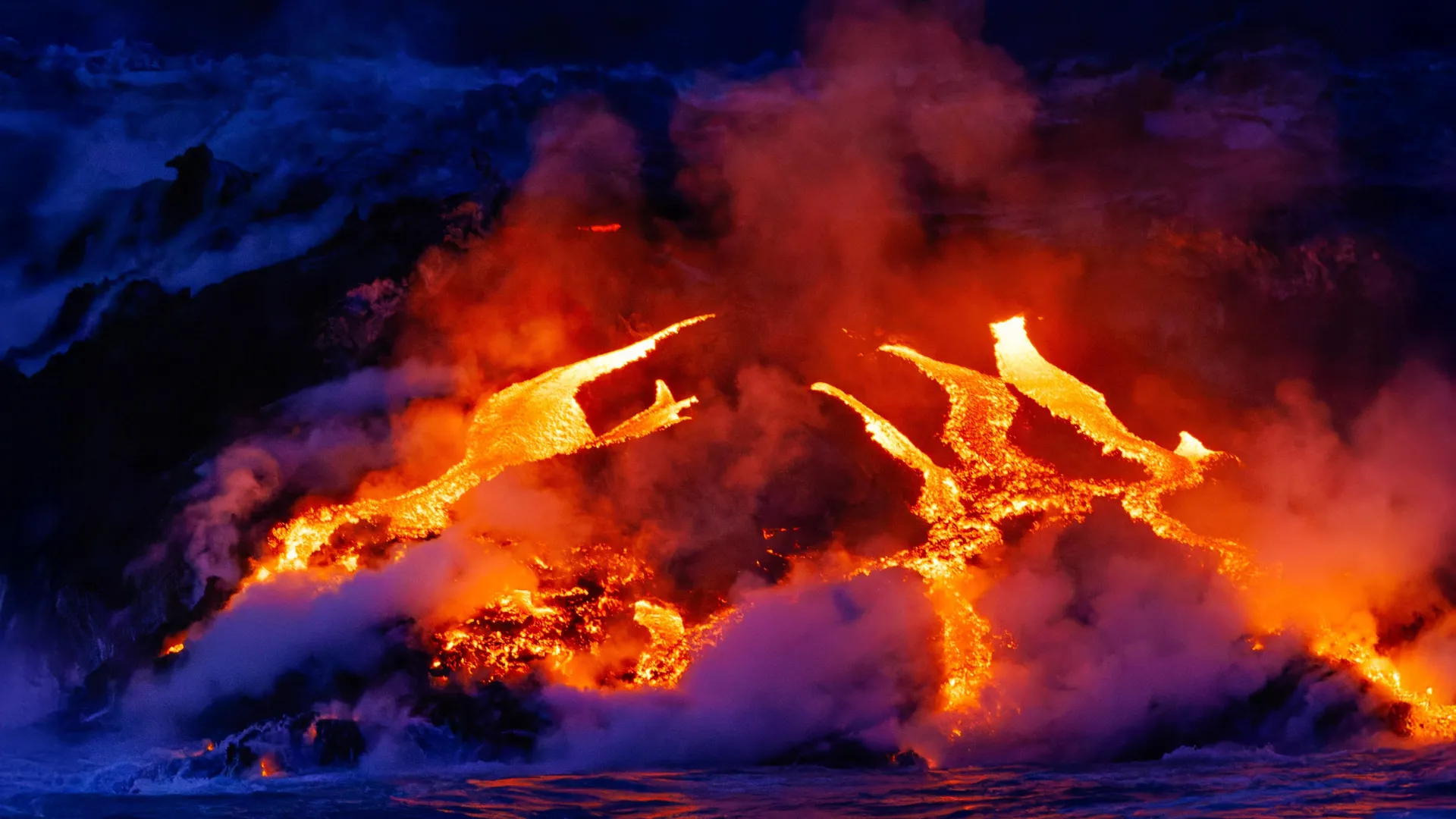
Hidden Forces Fuel Ocean Volcanoes
Continents slowly peel away from below, sending slivers deep into the oceanic mantle that fuel volcanic activity far from tectonic edges. This newfound process, traced through the Indian Ocean, reshapes how scientists understand Earth’s hidden geological engine. Credit: Shutterstock

Earth scientists have uncovered a slow and surprising process beneath our planet’s surface that helps fuel volcanic activity in the oceans.

Researchers from the University of Southampton found that fragments of continents are gradually stripped away from below and drawn into the oceanic mantle — the hot, mostly solid layer beneath the sea floor that slowly circulates. Once there, this continental material can power volcanic eruptions for tens of millions of years.

This discovery resolves a long-standing geological puzzle: why certain ocean islands located far from tectonic plate boundaries contain chemical signatures that look distinctly continental, even though they lie in the middle of vast oceans.

The study, published in Nature Geoscience, was conducted by an international team from the University of Southampton, GFZ Helmholtz Centre for Geosciences in Potsdam, the University of Potsdam, Queen’s University (Canada), and Swansea University.

Ancient chemical clues deep within the mantle

Ocean islands such as Christmas Island in the northeast Indian Ocean often contain unusually high concentrations of certain “enriched” elements that typically come from continents. Scientists have compared this mixing process to the motion of a cake mixer folding in older, recycled ingredients from deep within the Earth.

For years, geologists assumed these enriched elements came from ocean sediments pulled into the mantle when tectonic plates sink, or from columns of rising hot rock known as mantle plumes.

However, those explanations have limits. Some volcanic regions lack evidence of recycled crust, while others seem too shallow and cool to be driven by deep mantle plumes.

“We’ve known for decades that parts of the mantle beneath the oceans look strangely contaminated, as if pieces of ancient continents somehow ended up in there,” said Thomas Gernon, Professor of Earth Science at the University of Southampton and the study’s lead author. “But we haven’t been able to adequately explain how all that continental material got there.”

Continents are peeling from below

The researchers propose a new mechanism: continents not only split apart at the surface but also peel away from below, and across far greater distances than scientists once believed possible.

To test this, the team built computer simulations that recreated how the mantle and continental crust behave when stretched by tectonic forces.

Their results show that when continents begin to break apart, powerful stresses deep within the Earth trigger a slow-moving “mantle wave.” This rolling motion travels along the base of the continents at depths of 150 to 200 kilometers, disturbing and gradually stripping material from their deep roots.

The process happens at an incredibly slow rate — roughly a millionth the speed of a snail. Over time, these detached fragments are carried sideways for more than 1,000 kilometers into the oceanic mantle, where they feed volcanic activity for tens of millions of years.

Study co-author Professor Sascha Brune of GFZ in Potsdam explained, “We found that the mantle is still feeling the effects of continental breakup long after the continents themselves have separated. The system doesn’t switch off when a new ocean basin forms — the mantle keeps moving, reorganizing, and transporting enriched material far from where it originated.”

Clues from the Indian Ocean

To support their model, the team analyzed chemical and geological data from regions such as the Indian Ocean Seamount Province — a chain of volcanic formations that appeared after the breakup of the supercontinent Gondwana over 100 million years ago.

Their findings show that soon after Gondwana split apart, a pulse of magma unusually rich in continental material erupted to the surface. Over time, this chemical signature gradually faded as the flow of material from beneath the continents diminished. Notably, this happened without the presence of a deep mantle plume, challenging long-held assumptions about the source of such volcanism.

Professor Gernon added: “We’re not ruling out mantle plumes, but this discovery points to a completely new mechanism that also shapes the composition of the Earth’s mantle. Mantle waves can carry blobs of continental material far into the oceanic mantle, leaving behind a chemical signature that endures long after the continents have broken apart.”

The research also builds on the team’s earlier work showing that these slow, rolling mantle waves can have dramatic effects deep inside continents. Their previous studies suggest that such waves may help trigger diamond eruptions and even reshape landscapes thousands of kilometers away from tectonic boundaries.

CLICK HERE FOR MORE INFORMATION

https://www.sciencedaily.com/releases/2025/11/251112011806.htm

Microbes that breathe rust could help save Earth’s oceans

Microbes that breathe iron and eat sulfide could be quietly saving Earth’s oceans.

Source:University of Vienna

Summary:Researchers from the University of Vienna discovered MISO bacteria that use iron minerals to oxidize toxic sulfide, creating energy and producing sulfate. This biological process reshapes how scientists understand global sulfur and iron cycles. By outpacing chemical reactions, these microbes could help stop the spread of oceanic dead zones and maintain ecological balance.Share:


FULL STORY


Microbes That Breathe Rust
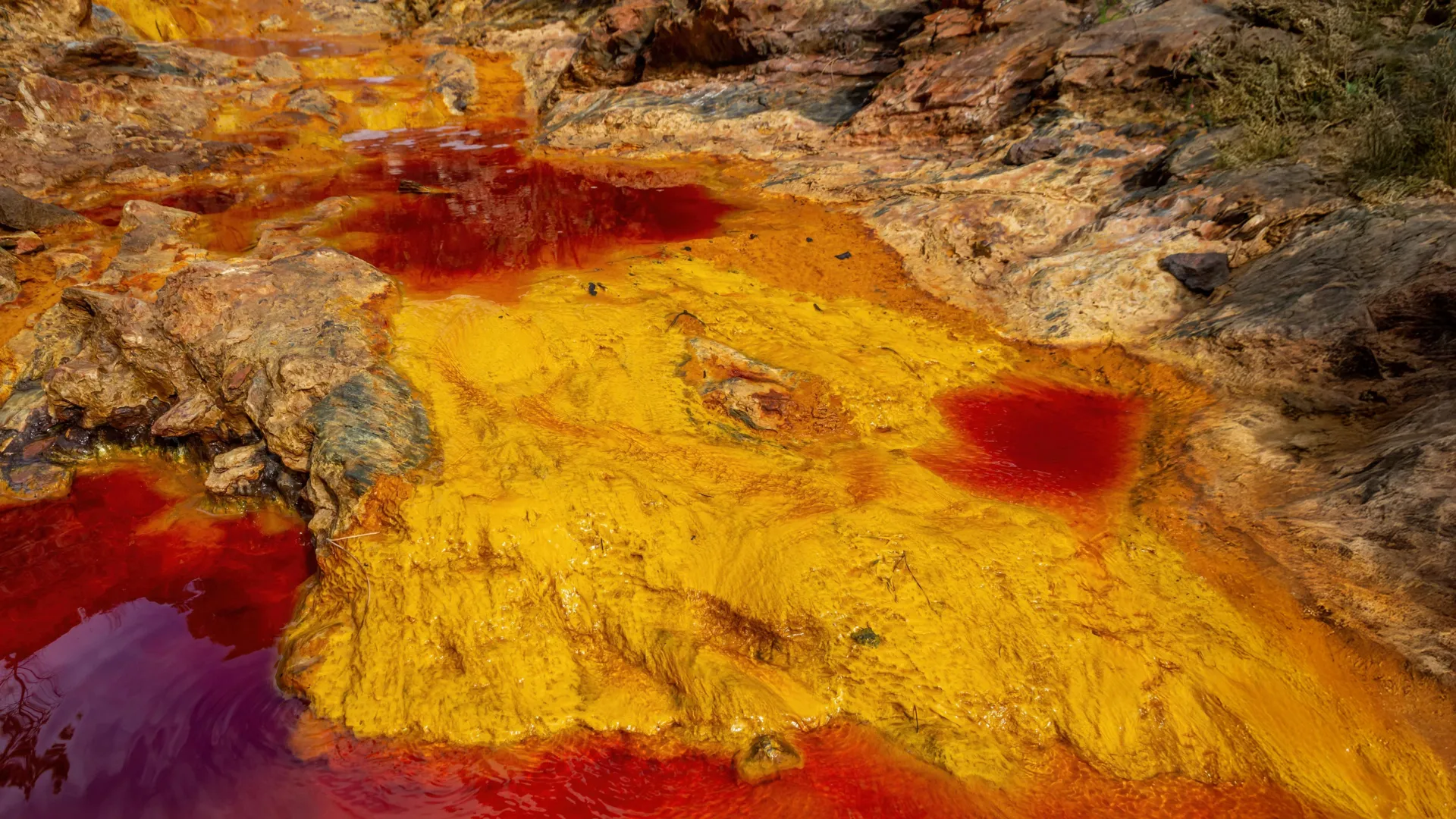
MISO bacteria “breathe” iron minerals while detoxifying sulfide, driving a newly discovered biological process that connects global sulfur, iron, and carbon cycles. Credit: Shutterstock

An international research team led by microbiologists Marc Mussmann and Alexander Loy at the University of Vienna has uncovered a completely new type of microbial metabolism. The newly identified microorganisms, known as MISO bacteria, are able to “breathe” iron minerals by oxidizing toxic sulfide. The scientists discovered that the reaction between hydrogen sulfide — a poisonous gas — and solid iron minerals is not only a chemical process, but also a biological one. In this newly revealed pathway, adaptable microbes living in marine sediments and wetland soils remove toxic sulfide and use it as an energy source for growth. These bacteria may also play an important role in preventing the expansion of oxygen-depleted “dead zones” in aquatic ecosystems.

The findings were recently published in Nature.

How Microbes Power Earth’s Element Cycles

The movement of key elements such as carbon, nitrogen, sulfur, and iron through the environment occurs through what are known as biogeochemical cycles. These transformations take place through reduction and oxidation (redox) reactions that move elements between air, water, soil, rocks, and living things. Because these cycles regulate greenhouse gases, they have a direct influence on Earth’s climate and temperature balance. Microorganisms drive nearly every step of these processes, using substances like sulfur and iron for respiration in much the same way humans rely on oxygen to metabolize food.

Sulfur and iron are particularly essential for microbial communities that live in oxygen-deprived habitats such as ocean floors, wetlands, and sediments. Sulfur can exist as a gas in the atmosphere, as sulfate dissolved in seawater, or locked within mineral deposits. Iron, on the other hand, shifts between different chemical forms depending on the availability of oxygen. When microbes process sulfur, they frequently change the form of iron at the same time, creating a tightly linked relationship between the two elements. This coupling affects nutrient cycling and influences the production or consumption of greenhouse gases like carbon dioxide and methane. Understanding these connections helps scientists predict how natural systems respond to environmental changes, including pollution and global warming.

Microbes That Use Iron to Eliminate Toxic Sulfide

“We show that this environmentally important redox reaction is not solely chemical,” says Alexander Loy, research group leader at CeMESS, the Centre for Microbiology and Environmental Systems Science at the University of Vienna. “Microorganisms can also harness it for growth.”

The team’s discovery reveals a new form of microbial energy production called MISO. This process connects the reduction of iron(III) oxide with the oxidation of sulfide. Unlike a purely chemical reaction, MISO directly generates sulfate, skipping intermediate steps in the sulfur cycle. “MISO bacteria remove toxic sulfide and may help prevent the expansion of so-called ‘dead zones’ in aquatic environments, while fixing carbon dioxide for growth — similar to plants,” adds Marc Mussmann, senior scientist at CeMESS.

A Fast, Widespread Process That Shapes the Planet

In laboratory experiments, the researchers found that the MISO reaction carried out by microbes happens faster than the same reaction when it occurs chemically. This indicates that microorganisms are likely the main force behind this transformation in natural environments. “Diverse bacteria and archaea possess the genetic capacity for MISO,” explains lead author Song-Can Chen, “and they are found in a wide range of natural and human-made environments.”

According to the study, MISO activity in marine sediments could be responsible for as much as 7% of all global sulfide oxidation to sulfate. This process is fueled by the steady flow of reactive iron entering the oceans from rivers and melting glaciers. The research, supported by the Austrian Science Fund (FWF) as part of the ‘Microbiomes Drive Planetary Health’ Cluster of Excellence, identifies a new biological mechanism linking the cycling of sulfur, iron, and carbon in oxygen-free environments.

“This discovery demonstrates the metabolic ingenuity of microorganisms and highlights their indispensable role in shaping Earth’s global element cycles,” concludes Alexander Loy.

CLICK HERE FOR MORE INFORMATION

https://www.sciencedaily.com/releases/2025/11/251109013252.htm

Deep-sea mining starves life in the ocean’s twilight zone

New research reveals that deep-sea mining waste could disrupt one of Earth’s most vital but least understood ecosystems.

Source:University of Hawaii at Manoa

Summary:Scientists have discovered that deep-sea mining plumes can strip vital nutrition from the ocean’s twilight zone, replacing natural food with nutrient-poor sediment. The resulting “junk food” effect could starve life across entire marine ecosystems.Share:


FULL STORY


Deep-Sea Mining Starves Life in the Ocean
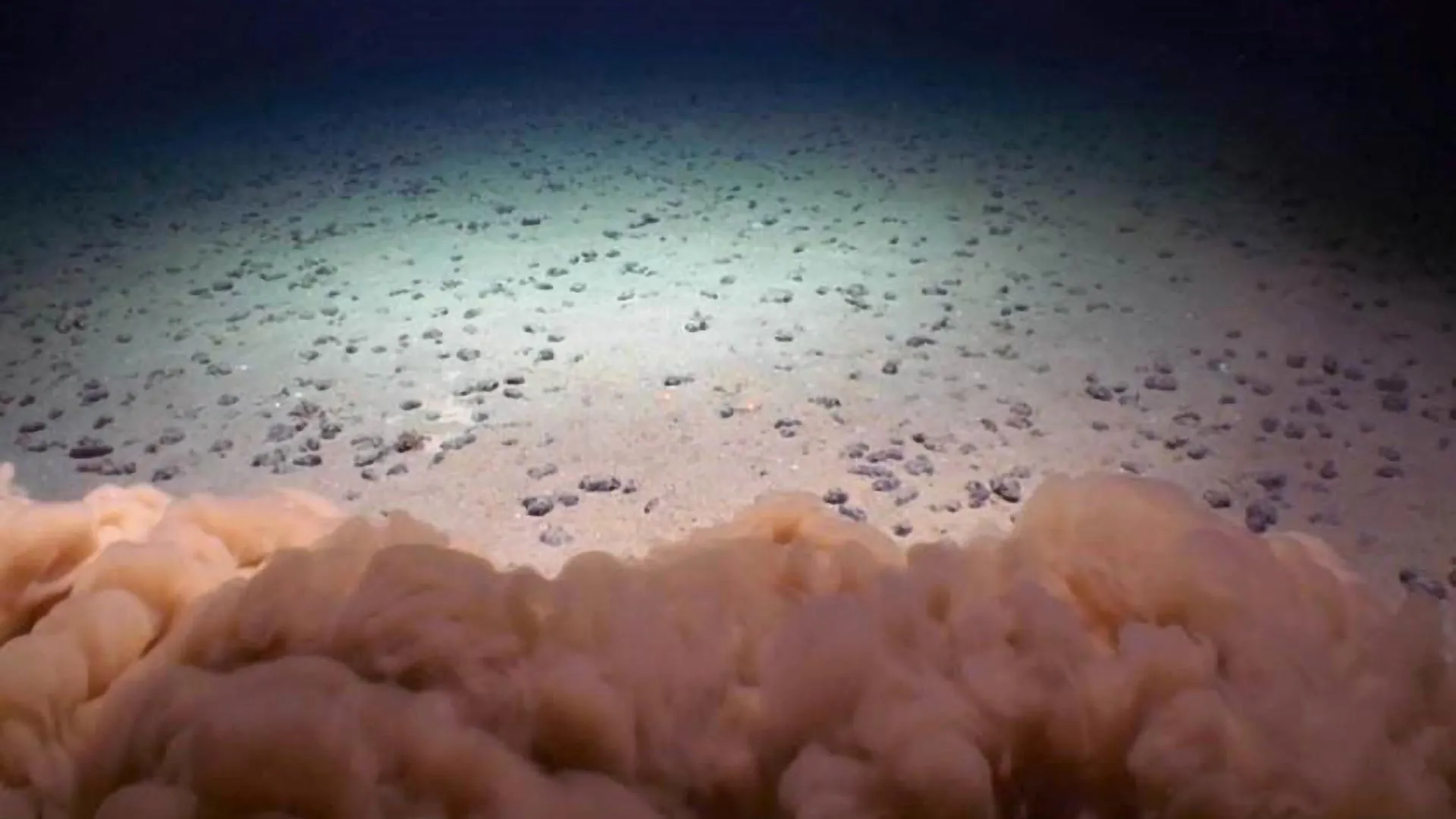
Nodules on the abyssal seafloor in the Clarion Clipperton Zone with a mud cloud from a scientific remotely-operated vehicle (ROV) touching down. Credit: UH/NOAA DeepCCZ Expedition

A new study from the University of Hawai’i (UH) at Mānoa, published on November 6 in Nature Communications, provides the first direct evidence that waste from deep-sea mining could disrupt vital ecosystems in the Pacific Ocean’s Clarion-Clipperton Zone (CCZ). This area, one of the most biologically rich regions of the deep sea, is now the focus of growing industrial interest. Researchers found that sediment discharged during mining operations could harm marine life in the midwater “twilight zone,” a key habitat between 200 and 1,500 meters below the surface that supports vast populations of tiny drifting animals called zooplankton — the foundation of the ocean’s food web.

The team determined that 53% of zooplankton and 60% of micronekton, which feed on zooplankton, would be affected by mining waste discharge. Such disturbances could ripple through the food chain, ultimately impacting larger predators such as fish, seabirds, and marine mammals.

Murky Plumes and “Junk Food” Sediment

“When the waste released by mining activity enters the ocean, it creates water as murky as the mud-filled Mississippi River. The pervasive particles dilute the nutritious, natural food particles usually consumed by tiny, drifting Zooplankton,” said Michael Dowd, lead author of the study and a graduate student in Oceanography at the UH Mānoa School of Ocean and Earth Science and Technology (SOEST).

“Micronekton, small shrimp, fish and other animals that swim, feed on zooplankton. Some migrate between the depths and near surface waters and they are consumed by fish, seabirds and marine mammals. Zooplankton’s exposure to junk food sediment has the potential to disrupt the entire food web.”

Measuring the Nutritional Impact of Deep-Sea Mining

The research, titled “Deep-sea mining discharge can disrupt midwater food webs,” examined the effects of sediment plumes released during a 2022 mining test in the CCZ. This vast region is targeted for the extraction of polymetallic nodules that contain valuable minerals such as cobalt, nickel, and copper — key components for electric vehicles and renewable technologies.

By collecting and analyzing water samples from the depths where waste was discharged, the scientists found that mining particles contained far fewer amino acids, an important measure of nutritional quality, than the natural particles that typically nourish marine organisms.

“This isn’t just about mining the seafloor; it’s about reducing the food for entire communities in the deep sea,” said co-author Erica Goetze, a SOEST oceanography professor and marine zooplankton specialist. “We found that many animals at the depth of discharge depend on naturally occurring small detrital particles — the very food that mining plume particles replace.”

At present, around 1.5 million square kilometers of the CCZ are licensed for deep-sea mining exploration, reflecting the surge in global demand for minerals used in low-carbon technologies.

Disrupting an Ecosystem Built on Scarcity

During the mining process, nodules are collected from the seafloor along with surrounding sediments and seawater, then pumped to a surface vessel where nodules are separated from the waste material. The leftover sediment and fine nodule fragments are then released back into the ocean. Some companies have proposed releasing this waste within the twilight zone, but the environmental consequences of such practices have remained largely unknown — until now.

These findings underscore a major regulatory gap, as no international rules currently govern where or how mining waste can be discharged.

The twilight zone teems with life, including krill, squid, fish, octopus, and delicate jelly-like species. Many of these organisms travel upward toward the surface each night to feed and then descend again by day, transporting carbon to the deep ocean in the process. This vertical migration helps maintain the planet’s carbon balance and supports the health of marine ecosystems worldwide.

“Our research suggests that mining plumes don’t just create cloudy water — they change the quality of what’s available to eat, especially for animals that can’t easily swim away,” said co-author Jeffrey Drazen, a deep-sea ecologist and SOEST professor of oceanography. “It’s like dumping empty calories into a system that’s been running on a finely tuned diet for hundreds of years.”

Global Implications for Marine Food Webs

The study raises concerns that large-scale mining could trigger widespread and long-lasting changes in ocean ecosystems if it proceeds without strict safeguards. Even commercial fisheries could be affected; for instance, tuna populations migrate through the CCZ, meaning the impacts of mining could extend to seafood consumed around the world.

“Deep-sea mining has not yet begun at a commercial scale, so this is our chance to make informed decisions,” said co-author Brian Popp, SOEST professor of Earth sciences and an expert in marine stable isotope biogeochemistry. “If we don’t understand what’s at stake in the midwater, we risk harming ecosystems we’re only just beginning to study.”

A Call for Responsible Regulation

The authors hope their results will guide policy discussions currently underway at the International Seabed Authority and inform environmental reviews conducted by the National Oceanic and Atmospheric Administration. They stress the importance of developing international rules to protect marine ecosystems from surface waters to the deep sea.

“Before commercial deep-sea mining begins, it is essential to carefully consider the depth at which mining waste is discharged,” added Drazen. “The fate of these mining waste plumes and their impact on ocean ecosystems varies with depth, and improper discharge could cause harm to communities from the surface to the seafloor.”

Additional contributors to the study include UH Mānoa oceanography graduate students Victoria Assad and Alexus Cazares-Nuesser, and oceanography professor Angelicque White.

CLICK HERE FOR MORE INFORMATION

https://www.sciencedaily.com/releases/2025/11/251108012850.htm