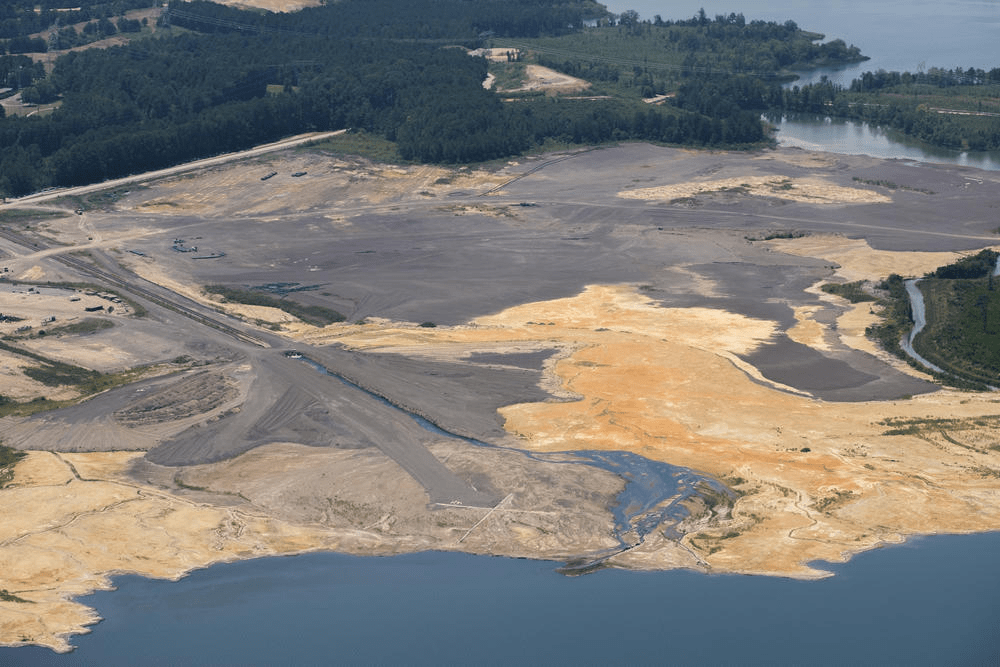
Four coal ash ponds Georgia Power plans to close in place will continue to expose ash to groundwater after the closures are completed, an executive with the utility disclosed this week.
Ash ponds at Plant Hammond near Rome, Plant McDonough south of Vinings, Plant Yates near Newnan and Plant Scherer near Macon are among 10 ash ponds Georgia Power plans to close in place by 2028. Ash from the utility’s other 19 ponds at coal plants across Georgia will be closed by excavating and removing the ash.
Aaron Mitchell, Georgia Power’s director of environmental affairs, testified on the second of two days of hearings before the state Public Service Commission (PSC) on a plan the utility submitted in January outlining the mix of energy sources it intends to rely on for power generation during the next 20 years.
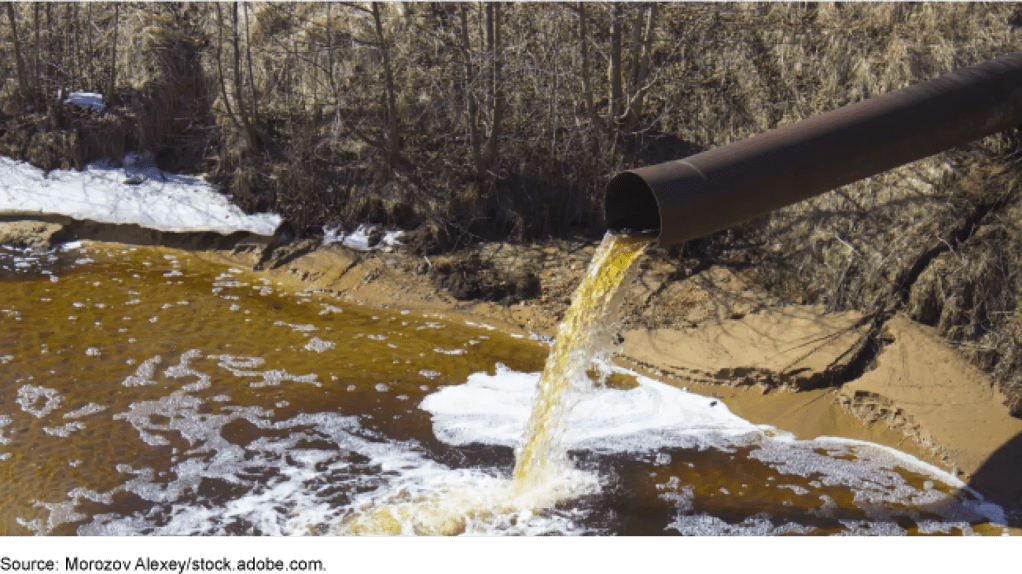
The Environmental Protection Agency (EPA) leads federal efforts to monitor water quality in the nation’s lakes, rivers, streams, and other water bodies. However, in 2018, EPA estimated that nearly 11,000 industrial facilities and municipal wastewater treatment plants had illegally dumped significant amounts of pollution into nearby water bodies.
For World Water Day—a day meant to raise awareness of the importance of clean water access—today’s WatchBlog post looks at EPA’s efforts to monitor and reduce water pollution, and our recommendations for improving this oversight.
How does EPA track water pollution?
Under the Clean Water Act, municipal wastewater treatment plants and industrial facilities must obtain a permit from EPA—or authorized state, tribal, and territorial governments—to discharge pollutants, such as contaminated wastewater, into waters of the U.S.
In FY 2020, about 335,000 facilities had such permits, including more than 700 municipalities with sewer systems that have combined sewer overflows, which can be a major source of pollution during heavy rainfall events. These permits set limits on the amount of pollutants allowed from each source and protect designated uses of the receiving waters. In addition, many facilities are required to monitor and report the amount of pollutants discharged each year to EPA. However, as discussed above, in 2018, nearly 11,000 facilities significantly exceeded their permit limits and illegally discharged pollutants into nearby waters.
The Ohio legislature could soon pass a bill allowing for deregulating the development of “ephemeral streams” — natural flows of water that form after rain and snowmelt.
Ohio has an estimated 115,000 miles of primary headwater streams, according to legislative testimony from Ohio Environmental Protection Agency Director Laurie Stevenson, referring to the brooks and ravines that are the origin of most rivers. Of them, an estimated 36,400 miles are ephemeral streams. They channel water into larger streams and can filter out contaminants like nitrogen and phosphorus.
Current state law requires a permit to discharge, dredge or fill material into any ephemeral feature, according to analysis from the Legislative Service Commission. Environmentalists say this permit, which is sometimes paired with required environmental mitigation, is a key means to protect larger bodies of water that catch ephemeral flow.
Legislation passed by the House would eliminate this permitting and mitigation requirement, explicitly removing ephemeral features from regulation under Ohio water pollution control laws. An amended version the Senate passed Wednesday would essentially only allow the state to regulate ephemeral streams if they’re covered by the federal Clean Water Act.
The federal issue has been ping-ponged between presidential administrations. Then-President Donald Trump’s U.S. EPA reversed rules imposed by his predecessor, Barack Obama, that applied Clean Water Act protections to ephemeral streams. However, a federal court in Arizona vacated the Trump-era rule in August, which reverts the permitting process to a case-by-case review to determine if the ephemeral stream has a “significant nexus” to more traditional bodies of water. The EPA under current President Joe Biden is in the process of changing the rule once again.
With a new overseer in charge, Florida finally has a plan to shut down an old environmental scourge.
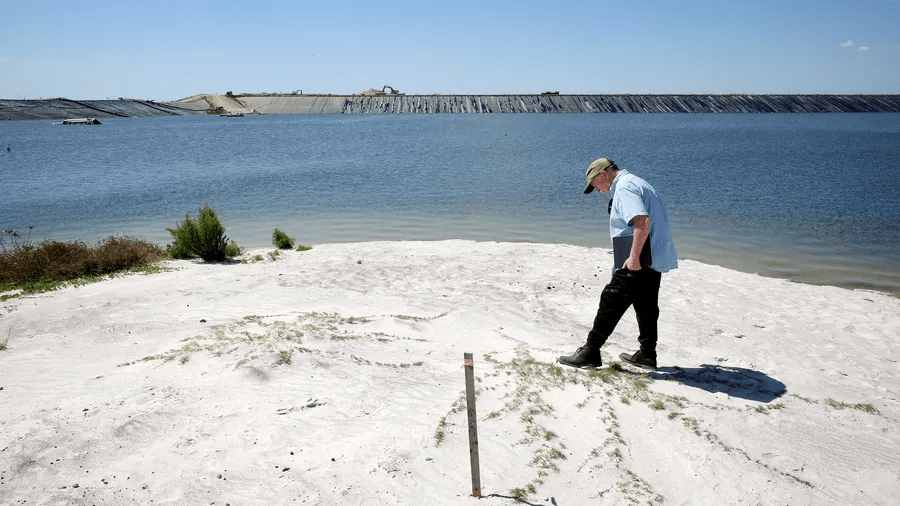
PALMETTO — The site of the former Piney Point fertilizer plant is still an environmental threat hanging like an anvil over Tampa Bay.
But one year since a reservoir on the property sprang a leak — leading to the release of 215 million gallons of polluted water into the bay — new management is offering a sense of hope that an end to the danger is within reach.
A pipe snaking to Port Manatee no longer spits tainted water. Engineers stopped warning of an imminent collapse and devastating flood. And a judge ordered an independent overseer to take control of the property from its struggling owner, a company formed by Wall Street investors.
EPA yesterday announced it would maintain a Trump-era position of not regulating toxic perchlorate in drinking water, infuriating public health and environmental advocates who have long sought federal limits on the contaminant.
EPA said it had conducted a review and concluded that a decision the agency made in 2020 to not regulate perchlorate — an ingredient of rocket fuel and fireworks tied to brain damage in infants — was based on the best available peer-reviewed science.
At the time, the agency said perchlorate was not found widely enough in drinking water or “at levels of public health concern” to require federal limits. The agency also said states and public water systems have already taken adequate steps to reduce exposure to the chemical through drinking water (Greenwire, June 18, 2020). The Biden administration announced last year it was reviewing EPA’s decision (Greenwire, Jan. 20, 2021).
Even so, studies show the toxin may be affecting millions of people through exposure to both contaminated drinking water and food. One 2016 study published in the medical journal Current Environmental Health Reports found that water systems serving 11 million people had perchlorate above detectable levels.
EPA has not regulated a new contaminant in drinking water since 1996 (Greenwire, Jan. 26, 2021).
While holding off on federal regulations on perchlorate, EPA yesterday laid out actions it plans to take in a fact sheet, including studying perchlorate levels in ambient water following firework display events, continued cleanup of contaminated sites, and continued consideration of changes to federal law around the open burning and detonation of waste explosives and propellants. The agency also pointed to funding for cleanup in the $1.2 trillion infrastructure bill as supporting efforts to tackle emerging contaminants.
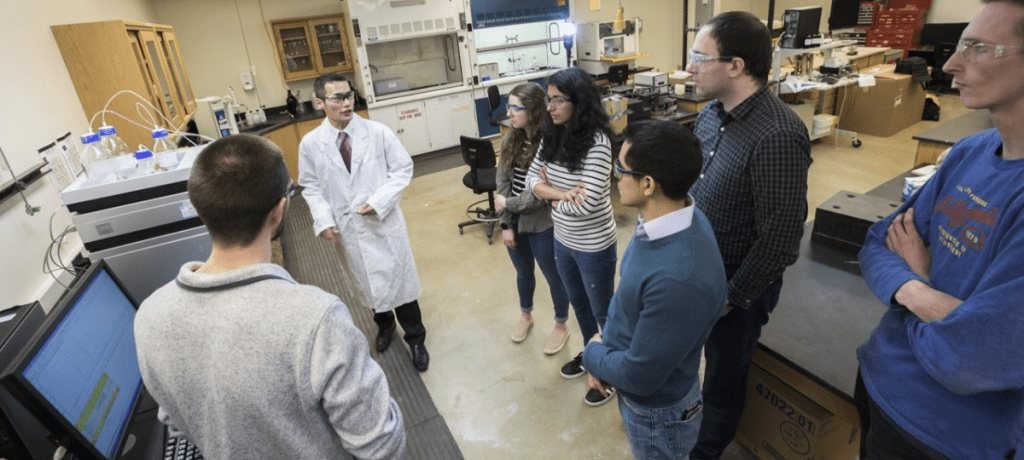
A new computational tool developed at Michigan Technological University assists in the urgent quest to eliminate the persistent chemicals known as PFAS from community water supplies.
Because of their unique properties, per- and polyfluoroalkyl substances (PFAS) are used everywhere in daily life — from water-repellent clothing and nonstick cookware to pizza boxes, ski wax, fast food wrappers and firefighting foam.
“PFAS contain a very strong carbon-fluorine bond, not easily degraded by biological activities,” said Daisuke Minakata, an associate professor of civil, environmental and geospatial engineering. “PFAS can remain in the environment almost forever; thus, they are called ‘the forever chemicals.’ They end up contaminating our groundwater and surface water, our waterways, and eventually our drinking water and ecological systems, too — including freshwater fish.”
Researchers from the University of Iowa are looking to aggregate data and develop an algorithm for communities to identify their individual risk of lead exposure in their drinking water.
Researchers at the University of Iowa are developing a system for residents and public health officials that will allow them to more easily detect lead in drinking water across the state.
The research involves collecting data and developing an algorithm to predict where individuals are most at risk for lead exposure in their communities and the resulting ailments.
David Cwiertny, principal investigator for the study and UI professor of civil environmental engineering, said he and his team hope to create a system to prevent the negative health effects that can occur from ingesting lead. While the team has been broadly researching lead contamination in water for four years, the research for the system has been going on for two years.
Road salt, while helping to keep streets and sidewalks safe during winter weather, can have a big negative impact on streams and rivers and the freshwater creatures that inhabit them. New research from the University of Maryland posits stages of freshwater salinization, modeled after the stages of cancer. In the final stage, Stage IV, waterways suffer “system-level failures,” posing a threat to human health and aquatic life.
Sujay Kaushal, the UMD professor who led the study, says tracking the health of a body of water is similar to tracking the health of a human body. “If you don’t know where you are on the scale of your blood sugar or your cholesterol, you don’t know whether you have a problem or not,” Kaushal says. “When we have risk factors, guidelines and stages, we can effectively manage things.”
Unlike other pollutants, salt is not currently regulated at the federal or local level, though many jurisdictions have made efforts in recent years to cut back.
Major rivers in the Amazon Basin of Brazil are contaminated with a wide range of pharmaceuticals as well as with sewage and wastewater, largely coming from urban centers in the region, according to recent research. Water samples taken along the Amazon, Negro, Tapajós and Tocantins rivers, and small urban tributaries that pass through the region’s cities, including Manaus, Santarém, Belém and Macapá contained 40 pharmaceuticals out of 43 in concentrations that have the potential to affect 50-80% of the local aquatic species. Experts explain that a major cause of freshwater contamination is the Amazon Basin’s rapidly growing population along with the government’s failure to provide adequate sanitation infrastructure — even though that has long been promised. Most of the region’s sewage is untreated, a solvable problem if properly funded.
High schoolers at Barrie Middle and Upper School in Silver Spring, USA, are tackling the issue of lead pollution in drinking water. They have designed a cheap, reusable cartridge filter that removes this toxic heavy metal from tap water, and warns when the chemical cartridges it uses need to be refreshed.
The issues people have been having with drinking water fed through lead piping are already well known. The plight of people in Flint, Michigan, is one tragic example. Lead exposure from drinking water can lead to a host of medical issues, ranging from cardiovascular complications to cognitive and reproductive problems.
High schoolers have now joined the efforts to protect people from this toxic metal by designing a simple device that can scrub it out of tap water.