Colorado hits a “hard pause” on water demand management as it waits for other states to catch up

Colorado is taking a “hard pause” on investigating the viability of demand management, a program that would allow the state to pay water users to temporarily and voluntarily conserve water and store what’s saved in Lake Powell for future use.

“No more energy spent on this right now,” Colorado Water Conservation Board chair Jaclyn Brown said this week. “Until the facts change; until someone brings us new information.” 

Demand management was a key component of the 2019 Drought Contingency Plans agreed upon by all seven states in the Colorado River Basin. The idea was that the Upper Basin states — Colorado, New Mexico, Utah and Wyoming — would each investigate the feasibility of paying water users to conserve water on a temporary and voluntary basis and then store the extra in Lake Powell in a special 500,000 acre-foot “account.” Then, if needed, that water could later be used by the Upper Basin states to meet delivery requirements specified in the Colorado River Compact. 

Read more about, at: https://coloradosun.com/2022/03/25/colorado-hard-pause-water-demand-management/

Utah uranium mill is endangering land, water, say environmentalists and tribes

Tribes and environmentalists say the country’s last operational uranium mill has become a low-cost industrial waste dump that could imperil land and groundwater in the Colorado River Basin and at nearby Bears Ears National Monument.

They want it to close or be subject to stricter regulations to avoid a catastrophic incident like the 2015 Gold King mine spill, which contaminated both the Animas River and the nearby San Juan River.

A report issued by the Grand Canyon Trust March 15 said the White Mesa Mill in southeastern Utah, which opened in 1980 to extract uranium from mined ore, had been converted into a lower-cost alternative to a highly regulated toxic waste facility using what the trust calls a “radioactive Midas touch,” a licensed “alternative feed” mill that reprocesses used ore and low-level waste to extract more uranium and rare earths.

Read more, at: https://www.azcentral.com/story/news/local/arizona-environment/2022/03/25/utah-uranium-mill-threat-nearby-water-and-land-report-says/7054623001/

California Unveils Long Awaited Standard For Drinking Water Contaminant

California proposed on Monday a long-awaited standard for a cancer-causing contaminant in drinking water that would require costly treatment in many cities throughout the state.

Traces of hexavalent chromium are widely found in the drinking water of millions of Californians, with some of the contamination naturally occurring and some from industries that work with the heavy metal.

The proposed standard is a major step in a decades-long effort to curtail the water contaminant made infamous by the movie Erin Brockovich, based on residents of rural Hinkley, California who won more than $300 million from Pacific Gas & Electric for contamination of their drinking water.

Read more, at: https://laist.com/news/climate-environment/state-unveils-long-awaited-standard-for-drinking-water-contaminant

Nebraska and Colorado Are Fighting Over Water After 99 Years of Sharing Rights

Fearing development in Colorado, Nebraska plans canal to lay claim to water from South Platte River before its neighbor uses it up.

JULESBURG, Colo.—The South Platte River is the economic heart of this small town in the northeast corner of the Rocky Mountain state, feeding farmers’ crops and drawing hunters who shoot deer, snow geese and other waterfowl.

Soon it could run dry for nearly half the year because of a fight over a 99-year-old water-sharing compact between the states of Colorado and Nebraska that could end up in court.

Nebraska Gov. Pete Ricketts announced plans in January to build a canal into Colorado to drain water from the South Platte several miles upstream from Julesburg, which is allowed under a 1923 agreement between the states. The $500 million project, consisting of some 60 miles of canals and several reservoirs, would be one of the biggest nonfederal interstate water infrastructure projects in decades.

Read more, at: https://www.wsj.com/articles/nebraska-and-colorado-are-fighting-over-water-after-99-years-of-sharing-rights-11647860400

Don’t underestimate the power of water this severe weather season

Flooding is second to only heat for the most weather-related fatalities each year.

Flooding may not appear to be as deadly as tornadoes or hurricanes, but you should respect the power of water.

Each year, more deaths occur due to flooding than from any other thunderstorm related hazard, according to the National Weather Service. Last year, there were 57 fatalities that were flood related in the U.S.  Flooding is second to only heat in weather-related fatalities for the 10 and 30 year averages.

Flooding is the most common global natural disaster, according to the Centers for Disease Control and Prevention. They also say that over half of all flood-related drownings occur when a vehicle is driven into hazardous flood water.

Read more, at: https://www.10tv.com/article/weather/weather-blog/dont-underestimate-the-power-of-water-during-flash-flooding/530-6621d707-05b1-490b-931a-84d0c7acc17d

Infographic: Which countries have the safest drinking water?

One in four people does not have access to safe water. In low-income countries, unsafe water accounts for six out of every 100 deaths.

People across the globe observe March 22 as World Water Day – designated by the United Nations to raise awareness of the two billion people living without access to safe water. The theme this year is “Groundwater: making the invisible visible”.

Groundwater is the water found below the Earth’s surface and is the largest source of fresh water on earth.

Read more, at: https://www.aljazeera.com/news/2022/3/22/infographic-which-countries-have-the-safest-drinking-water-interactive

Which Uses More Water: A Dishwasher or Doing Dishes by Hand? 

Dishwashers were invented a century ago as labor-saving devices, mostly to relieve the drudgery of housework, and their water consumption wasn’t considered. Until the last couple of decades, when water shortages began to command public attention, they still used more water than doing dishes by hand. But today, washing by hand uses more. The Department of Energy has set standards for dishwashers, and manufacturers compete to use less water. Also, our methods of washing dishes by hand haven’t changed much, nor would it be easy to change them radically. So use your dishwasher free of guilt!

Drought-stricken California imposes new round of water cuts

California’s urban water users and farmers who rely on supplies from state reservoirs will get less than planned this year as fears of a third consecutive dry year become reality, state officials announced Friday.

Water agencies that serve 27 million people and 750,000 acres of farmland will get just 5% of what they’ve requested this year from state supplies beyond what’s needed for critical activities such as drinking and bathing.

That’s down from the 15% allocation state officials had announced in January, after a wet December fueled hopes of a lessening drought.

For more information, visit: https://www.cbsnews.com/news/drought-california-imposes-new-water-cuts/

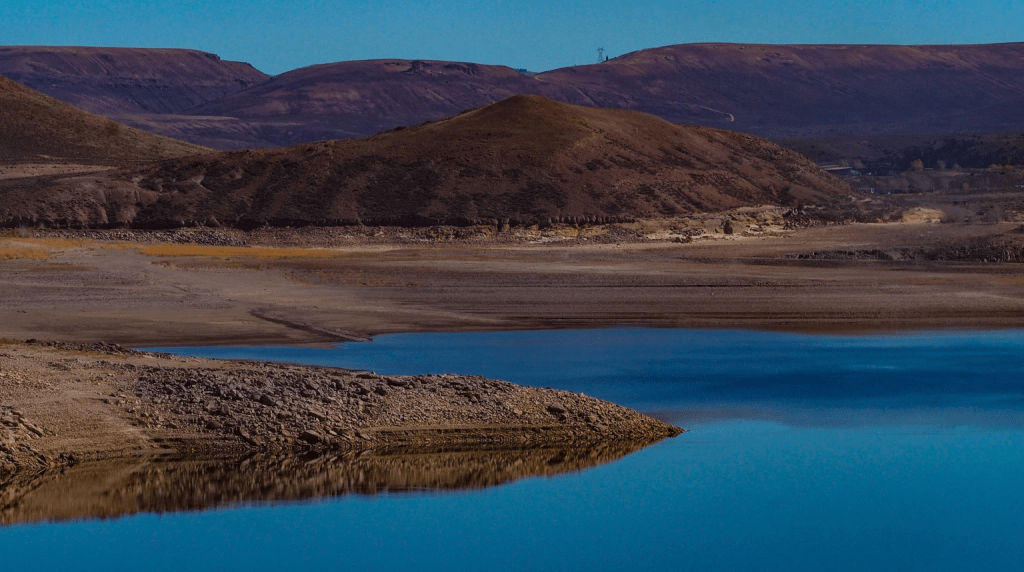
Lake Powell outlook “substantially worse” than predictions after water level falls below target elevation

Arelatively dry February pushed Lake Powell below a key water level for the first time since the lake was considered “full” in 1980, and has led to deeper projected drops over the next two years.

On Tuesday, the lake fell below 3,525 feet above sea level, a key target elevation that water managers have been trying to keep Powell above because it provides a buffer from the minimum level at which Glen Canyon Dam can generate power. Previous forecasts showed this was possible and the Bureau of Reclamation announced on March 4 that a temporary drop below 3,525 feet was on its way.

It comes as the latest monthly report from the Bureau outlines the potential for Powell to hit even lower levels during the next two years. That has water watchers worried, and businesses that depend on water closer to home could be impacted. “We’re trying to figure out what we’re going to do; we might not even be able to open this season,” said Eric Loken, head of operations at Blue Mesa’s Elk Creek Marina, which his family has operated for more than 30 years. “The current forecast is — if we’re lucky we might have a two-and-a-half-month season.”

Read more, at: https://coloradosun.com/2022/03/16/lake-powell-water-below-buffer-zone/

Californians used more water as state braces for another dry year

Californians used 2.6% more water in January compared to before the drought emergency was declared, a sign that urban residents are ignoring the state’s pleas to take the drought seriously and cut back.

The increased water use in California’s cities and towns came during the second-driest January on record, as the Sierra Nevada snowpack continues to dwindle — and another dry summer looms. 

The new data, which details urban water use statewide, shows that Gov. Gavin Newsom’s repeated pleas for a 15% voluntary cutback in water use are failing to reach people in cities and towns. Yet Newsom has stopped short of issuing a mandatory order. 

“With the voluntary call, some areas were doing okay, others not so well. The message gets pretty garbled. With a mandate, it’s a very clear message about the need,” said Heather Cooley, research director with the Pacific Institute, a global water think tank. 

Read more, at: https://calmatters.org/environment/2022/03/california-water-use-up/