Water contamination source found at William Beaumont Army Medical Center, officials report

The cause of the contaminated water at the new William Beaumont Army Medical Center in East El Paso appears to have been found and the water system is being fixed, officials announced Tuesday afternoon.

A valve failure in the hospital’s water softener system appears to have put brine, or salty water, into the water system, causing “limited piping corrosion,” which resulted in sediment contaminating and discoloring the water, officials said in a news release.

Meanwhile, the hospital on Monday reopened its emergency department to trauma patients and again allowed elective surgeries by using bottled water and having surgical instruments sanitized at another El Paso hospital, Beaumont officials reported.

Elective surgeries had been canceled and trauma patients diverted to other hospitals since April 7, after it was determined the water system had been contaminated with sediment.

Read more, at: https://www.elpasotimes.com/story/news/2022/04/19/water-contamination-source-found-fort-bliss-army-hospital-william-beaumont-medical-center-el-paso/7373043001/

Popular Florida sea turtle center losing entire medical staff as water quality issues continue: report

Problems continue to plague the popular Loggerhead Marinelife Center in South Florida with reports its entire medical staff will be gone by May.

After water quality issues remain a concern for the rehabilitation center and attraction in Juno Beach, the center once again has no sea turtles on site, according to a report from WPTV.

The center has been a working hospital that takes in all species of sea turtles for more than 30 years.

WPTV reports that all of the veterinary hospital section of the center have either left or given notice. Last week there were only four sea turtles utilizing its 26 rehab pools, but now there are none.

Read more, at: https://www.orlandosentinel.com/news/florida/os-ne-loggerhead-marinelife-center-medical-staff-resigning-20220415-e6srufbmzrfythwhddavwaew54-story.html

Delray Beach water inspector says city fired her for disclosing contamination

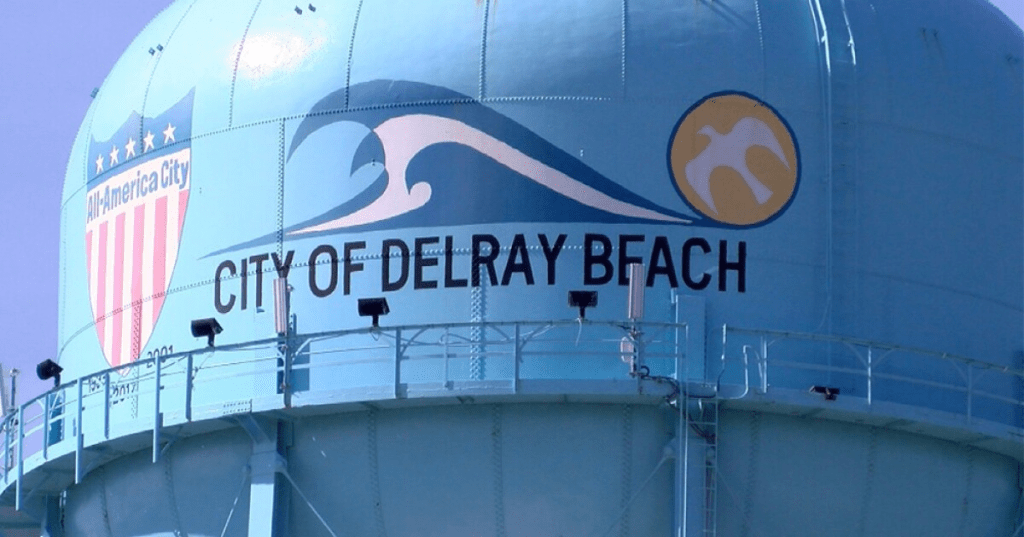
DELRAY BEACH, Fla. — A former Delray Beach employee has filed a whistleblower lawsuit against the city, claiming she was harassed and terminated for disclosing alleged contamination of the city’s drinking water.

According to the lawsuit, the city terminated wastewater inspector Christine Ferrigan in January, claiming “reorganization” although her position had been approved and funded.

The lawsuit contends the city terminated Ferrigan following a series of public health-related disclosures she made to her management and other state and city officials about alleged contamination of Delray Beach’s drinking water.

The suit also claims city officials terminated her in part to prevent her from disclosing information about the utility department’s handling of cross connection and drinking water contamination issues to oversight agencies.

Read more, at: https://www.wptv.com/news/local-news/investigations/delray-beach-water-inspector-says-city-fired-her-for-disclosing-contamination

Popular Florida sea turtle center losing entire medical staff as water quality issues continue: report

Problems continue to plague the popular Loggerhead Marinelife Center in South Florida with reports its entire medical staff will be gone by May.

After water quality issues remain a concern for the rehabilitation center and attraction in Juno Beach, the center once again has no sea turtles on site, according to a report from WPTV.

The center has been a working hospital that takes in all species of sea turtles for more than 30 years.

WPTV reports that all of the veterinary hospital section of the center have either left or given notice. Last week there were only four sea turtles utilizing its 26 rehab pools, but now there are none.

“At this time we do not have any sea turtle patients in our hospital,” a notice on the center’s website reads. “We’re incredibly proud that our Hospital team cared for 83 sea turtles (plus 704 hatchlings!) in 2021. We’re eagerly standing by to rescue and respond to the next sea turtles requiring care, and putting the final touches on our stunning new outdoor sea turtle hospital, which will open soon.”

Read More, at: https://www.orlandosentinel.com/news/florida/os-ne-loggerhead-marinelife-center-medical-staff-resigning-20220415-e6srufbmzrfythwhddavwaew54-story.html

This startup fights climate change by growing algae in the desert

In the Sahara Desert along the coastline in Morocco, more than 300 miles from the nearest city, a green pond now sits in the middle of the sand. It’s a test site for Brilliant Planet, a startup that plans to fight climate change by growing vast quantities of carbon-capturing algae in the world’s deserts.

“Per unit area, we can fix as much carbon—or more carbon, depending on where we are in the seasonality—as a rainforest,” says Raffael Jovine, cofounder and chief scientist at Brilliant Planet. “The difference is, when a rainforest tree falls down, it returns 97% of the carbon back to the atmosphere, whereas we can sequester all of it.” The production at the test site varies, as the company runs different trials. But when it builds the first commercial-scale plant, covering 1,000 acres, it expects to remove 40,000 tons of CO2 per year, roughly the equivalent emissions of using 92,000 barrels of oil. Scaled up to cover available desert land on coasts, the system could hypothetically remove 2 gigatons of CO2 a year.

The company pumps seawater from the nearby coast into its facility, taking advantage of the fact that the water is filled both with nutrients that algae needs to grow and with CO2; the ocean has absorbed tens of billions of tons of CO2 emissions over the last few decades. As the water flows through a series of containers and ponds, algae grows in the startup’s proprietary system and captures carbon. When the algae is ready to be harvested—a process that takes between 18 and 30 days—it’s filtered out of the water, which is returned to the ocean. (The process also makes the water less acidic, helping solve another problem caused by climate change.) Then the algae is dried and buried under the sand, where the carbon it captures can be permanently stored.

It’s one example of something that climate science says is necessary: Tackling climate change involves not only moving away from fossil fuels and eliminating other emissions, but also removing CO2 from the air. The latest IPCC report says that carbon removal—both through technology and natural solutions like planting trees— is essential and will have to massively grow for the world to have any chance of limiting global warming to 1.5 or 2 degrees Celsius.

Read more, at: https://www.fastcompany.com/90740513/this-startup-fights-climate-change-by-growing-algae-in-the-desert

Algae bloom alert issued for Orange County lake

ORANGE COUNTY, Fla. — There’s a health alert in effect for an Orange County lake after the presence of a harmful toxin was detected on April 6.

The Florida Department of Health in Orange County said harmful blue-green algal toxins were found in Lake Mann by the Florida Department of Environmental Protection.

Health officials said blue-green algae are a type of bacteria that is common in Florida’s freshwater environments, and that a bloom occurs when the rapid growth of algae leads to an accumulation of individual cells that discolor water and often produce floating mats that emit unpleasant odors.

Officials said the blooms can impact human health and ecosystems, including fish and other aquatic animals.

Article Published on 4/11/22

Stony Brook scientist: Nitrogen loading an ongoing threat to Long Island waters

Stony Brook University scientist Christopher Gobler emphasized again at his annual State of the Bays lecture last Wednesday that excessive nitrogen loading from wastewater is an ongoing threat for Long Island waters. 

“Warming, acidification, hypoxia and harmful algal blooms are the four horsemen of the ocean climate change apocalypse, because they’re all happening together,” he said.

The Suffolk County subwatershed plan, published in 2020, showed nitrogen levels rising in surface and ground waters. Between June and September 2021, documented marine and freshwater harmful algal blooms and dead zones were widespread on Long Island shorelines. 

The rising population on Long Island has correlated with a significant increase in the nitrate levels in the aquifer, according to Mr. Gobler. Epidemiological literature on even low levels of nitrates have been associated with elevated levels of cancer, he said, adding that Suffolk County has higher rates of bladder cancers than anywhere else in the state or country, and higher rates of kidney cancer than average. 

Widespread toxic algal blooms have also impacted water quality and marine ecosystems, including the bay scallop population, he noted. Suffolk County has the most toxic blue-green algal blooms in the state, according to Mr. Gobler, and last year was “pretty bad” for rust tides, with the bloom starting in early August and continuing through October. Last spring, there was also a mahogany tide in many places across the south shore. 

In an October report, Mr. Gobler said conditions causing low oxygen and harmful algae blooms in Long Island waters, including on the East End, have become a “new normal,” with every major bay and estuary that summer suffering from toxic blooms and dead zones in a “dual assault of climate change and excessive nitrogen loading.”

Read More, at: https://shelterislandreporter.timesreview.com/2022/04/13/stony-brook-scientist-nitrogen-loading-an-ongoing-threat-to-long-island-waters/

Fracking-Related Water Pollution Linked to Poor Infant Health

New research documents for the first time the pollution of public water supplies caused by shale gas development, commonly known as fracking, and its negative impact of infant health. These findings call for closer environmental regulation of the industry, as levels of chemicals found in drinking water often fall below regulatory thresholds. 

“In this study, we provide evidence that public drinking water quality has been compromised by shale gas development,” said Elaine Hill, Ph.D., an associate professor with the University of Rochester Departments of Public Health Sciences, Economics and Obstetrics & Gynecology. “Our findings indicate that drilling near an infant’s public water source yields poorer birth outcomes and more fracking-related contaminants in public drinking water.”

The new paper, which appears in the Journal of Health Economics, is co-authored by Hill and Lala Ma, Ph.D., with the University of Kentucky. Hill’s previous research was the first to link shale gas development to drinking water quality and has examined the association between shale gas development and reproductive health, and the subsequent impact on later educational attainment, higher risk of childhood asthma exacerbation, higher risk of heart attacks, and opioid deaths. Her research brings an important perspective to the policy discussion about fracking which has often emphasized the immediate job creation and economic benefits, without fully understanding the long-term environmental and health consequences for communities in which drilling occurs.

Read more, at: https://www.technologynetworks.com/applied-sciences/news/fracking-related-water-pollution-linked-to-poor-infant-health-360534

Oil companies to pay state $15 million to settle water pollution allegations

PROVIDENCE — A trio of fossil fuel companies are set to pay the state $15 million to settle a federal lawsuit brought by Attorney General Peter Neronha over allegations that they polluted groundwater supplies in Rhode Island with a gasoline additive that has been linked to cancer. 

Methyl tertiary-butyl ether was mixed with gasoline to boost engine performance, but the chemical was known to leak from underground fuel storage tanks at gas stations and contaminate water aquifers and soils. The most notable instance in Rhode Island occurred in Burrillville in 2001, which resulted in the closure of the only well that supplied the village of Pascoag. The chemical was banned by the state in 2007, but cases of contamination still arise because MTBE persists in the environment. 

Under the settlement with Neronha’s office announced on Monday, Shell, Sunoco and CITGO agreed to pay $15 million that will be used for MTBE remediation and emergency response efforts conducted by the state Department of Environmental Management.  

Read more, at: https://www.providencejournal.com/story/news/2022/04/11/ri-settlement-water-contamination-lawsuit-mtbe-oil-companies/7276877001/

Uranium Detectable in Two-Thirds of U.S. Community Water System Monitoring Records

In a study on metal concentrations in U.S. community water systems (CWS) and patterns of inequalities, researchers at Columbia University Mailman School of Public Health found that metal concentrations were particularly elevated in CWSs serving semi-urban, Hispanic communities independent of location or region, highlighting environmental justice concerns. These communities had the highest levels of uranium, selenium, barium, chromium, and arsenic concentrations.

Even at low concentrations, uranium represents an important risk factor for the development of chronic diseases. Until now, little epidemiological research had been done on chronic water uranium exposures despite the potential health effects of uranium exposure from CWSs. Uranium, in particular, has been underappreciated in the literature as a public drinking water contaminant of concern. The study results are published in the journal The Lancet Planetary Health.

“Previous studies have found associations between chronic uranium exposure and increased risk of hypertension, cardiovascular disease, kidney damage, and lung cancer at high levels of exposure,” said Anne Nigra, PhD, assistant professor of Environmental Health Sciences at Columbia Mailman School of Public Health. “Our objectives were to estimate CWS metal concentrations across the U.S, and identify sociodemographic subgroups served by these systems that either reported high metal concentration estimates or were more likely to report averages exceeding the U.S. EPA’s maximum contaminant level.”

Approximately 90 percent of U.S. residents rely on public drinking water systems, with most residents relying specifically on CWSs that serve the same population year-round. The researchers evaluated six-year EPA review records for antimony, arsenic, barium, beryllium, cadmium, chromium, mercury, selenium, thallium, and uranium to determine if average concentrations exceeded the maximum contaminant levels set by the EPA which regulates levels for six classes of contaminants. This included approximately 13 million records from 139,000 public water systems serving 290 million people annually. The researchers developed average metal concentrations for 37,915 CWSs across the country, and created an online interactive map of estimated metal concentrations at the CWS and county levels to use in future analyses.

Read more, at: https://www.publichealth.columbia.edu/public-health-now/news/uranium-detectable-two-thirds-us-community-water-system-monitoring-records