Boil water advisory issued in some blocks of M-43 in South Haven

SOUTH HAVEN, Mich. — A boil water advisory was issued for the 1200 blocks of M-43 in South Haven Sunday by the South Haven Area Water and Sewer Authority. 

The advisory was issued due to a water main break which dropped the pressure below 20 psi. 

Customers in the affected area were told to boil water before consuming in order to destroy any harmful bacteria or microbes in the water. 

Water for drinking, cooking, and making ice should be brought to rolling boil, boiled for two minutes, and then cooled before use. 

The advisory was issued until further notice, according to SHAWSA representatives. 

Water system officials are expected to notify customers when the water is safe for consumption. 

FOR MORE INFORMATION: https://wwmt.com/news/local/boil-water-advisory-issued-m-43-south-haven-area-sewer-authority-bacteria-microbes-main-break

Federal funds both ‘huge’ and ‘not near enough’ for Mississippi’s rural water problems

LELAND — The Black Bayou Water Association, which now connects to nearly 3,000 rural customers in the Delta, was started about 30 years ago by a rice and soybean farmer with no water service experience. 

David Koehn, now 76, had plans to build a mobile home park on his land in Washington County but didn’t have a central water source to offer residents. At the time, Koehn and others in the area drank from their personal shallow well, usually filled with brown, iron-laden water.   

So the farmer went home-by-home to see who’d want to pay for a new water service. He took out some loans, found local volunteers to form a board, and by 1991 had the Black Bayou Water Association up and running, serving about 350 homes. 

“It started as a community service and it turned into a career,” Koehn said.

Read more, at: https://www.clarionledger.com/story/news/2022/04/30/mississippi-federal-funds-not-meet-needs-rural-water-problems/9586349002/ 

‘A worldwide public health threat’: Rob Bilott on his 20-year fight against forever chemicals

Last month, an Ohio court certified a class action lawsuit brought by lawyer Rob Bilott that would cover 7 million people – and at some point possibly everyone living in the United States – who have been exposed to certain hazardous “forever chemicals” known as per- and polyfluoroalkyl substances or PFAS.

The chemicals have been linked to cancer, birth defects, kidney disease and a range of other human health problems. They are called “forever chemicals” because they do not naturally break down, persisting indefinitely in the environment.

Two types of PFAS – PFOA and PFOS – have been found to be so harmful that they are being phased out of use. In addition to US multi-national company 3M, the class action lawsuit names 10 other companies that produce PFAS, which are used to make cookware, food packaging, water-resistant fabrics, firefighting foam and other products. The Biden administration last year pledged to undertake a massive PFAS mitigation strategy at a cost of more than $10bn.

Read more, at: https://www.theguardian.com/environment/2022/may/01/pfas-forever-chemicals-rob-bilott-lawyer-interview

Parts of Southern California don’t have enough water to meet demand, sparking sweeping cuts

The unprecedented water restrictions imposed on parts of Southern California this week have put a spotlight on how rapidly the state’s water supply is being reduced by drought and climate change.

An order to limit outdoor watering to only one day a week will take effect June 1 in areas that depend on water from the drought-ravaged State Water Project. The plan was adopted Tuesday by the Metropolitan Water District of Southern California and will affect 6 million people.

“These areas rely on extremely limited supplies from Northern California, and there is not enough supply available to meet the normal demands in these areas for the remainder of the year,” said Adel Hagekhalil, the district’s general manager.

Read more, at: https://www.latimes.com/california/story/2022-04-27/drought-sparks-water-cuts-in-southern-california

Groundwater pollution may be an overlooked aspect of Arizona water issues

PHOENIX — You can’t see it, but how we live impacts it and plays a vital role in almost everything that happens in Arizona. Groundwater is located deep beneath the surface and stored in aquifers, which are porous rock that contain or transport water.

About 40% of the state’s water supply is underground, with that number likely to increase due to reductions in available water from the Colorado River. Sarah Porter, director of the Kyl Center for Water Policy at Arizona State University, said the reliance on the resource stems from Arizona’s geography.

“A lot of Arizona does not have a convenient surface water supply, but we did have water in the ground,” Porter said.

An ongoing concern is what would happen if the valuable resource got contaminated. Thankfully, according to Porter, much of Arizona is regulated to catch dangerous chemicals and pollutants before reaching the water we drink.

Dr. Rebecca Muenich, associate professor of environmental engineering at ASU, points out a different dilemma. Those same standards don’t apply to private wells. “This is, in turn, a problem because about a third of those wells exceed human health based standards for one or more pollutants,” Muenich said.

Read more, at:https://ktar.com/story/5027502/groundwater-pollution-may-be-an-overlooked-aspect-of-arizona-water-issues/

How microplastics affect human health

Water bottles. Shopping bags. Computers. Medical equipment. Food containers. And on and on and on.

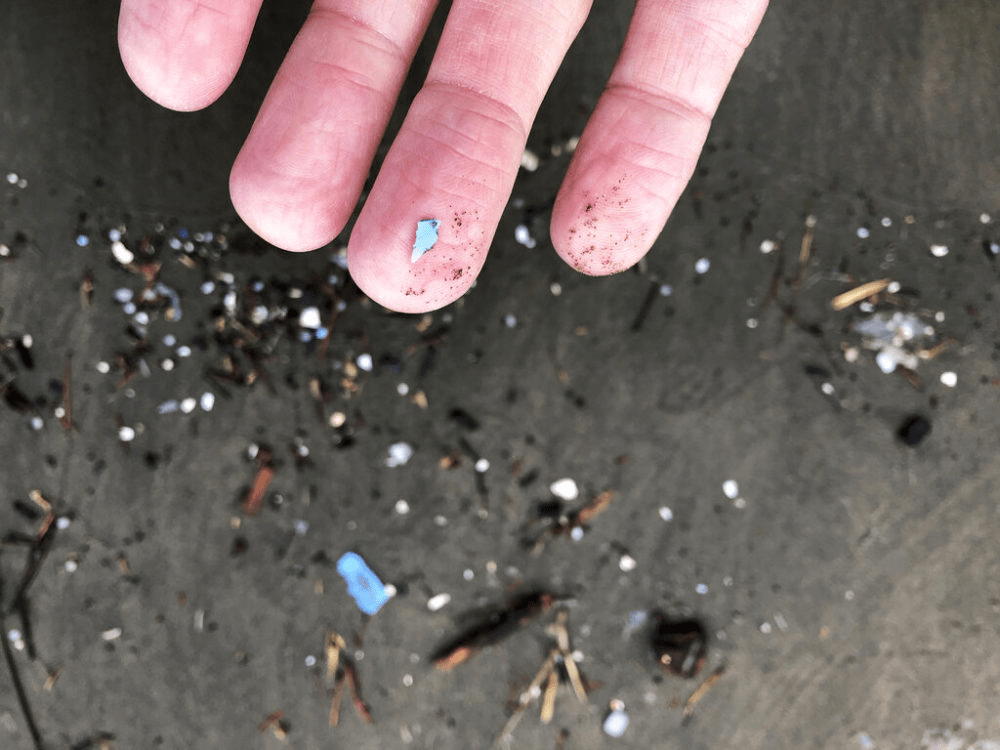
Plastics. They never go away. And even if we can’t see them — they’re everywhere.

“They are carried in the atmosphere, they are raining down on us. They’ve been found in the Himalayan mountains,” Erica Cirino says. “So right now we are immersed in a microplastics and nanoplastics soup.”

But are those microplastics inside of us?

“About five years ago was when scientists first began questioning, Are there plastics inside our bodies? And indeed there are,” Cirino adds.

For the first time, microplastics have been found in living humans — their lungs and blood.

Read more, at: https://www.wbur.org/onpoint/2022/04/15/what-microplastics-are-doing-to-human-health

Do water bottles expire?

Do water bottles expire? We explore whether water bottles have an expiration date and if you should swap from disposable to reusable.

It’s a question you’ve probably never thought about: do water bottles expire? While the best water bottles that are reusable certainly don’t, before you go stockpiling bottled water, the expiration date is something that you may just want to be aware of.

Bottled water does indeed come with an expiration date – even though the water itself doesn’t go bad. The US Food and Drug Administration (FDA), which regulates bottled drinking water, doesn’t legally require a shelf life on bottled water. But because plastic can begin leaching into bottled water over time, they generally have an expiration date of 2 years from the date of manufacture.

Figuring out how to stay hydrated is vital to your health, with water doing everything from preventing dehydration to carrying nutrients and oxygen to your entire body. So, what should you be using to hydrate – bottled water or a reusable water bottle? Single-use water bottles are popular because they’re an easy and fast solution to drink water. Reusable water bottles are a safer option to drink from and will save you money in the long run. Let’s take a closer look.

Read more, at: https://www.livescience.com/do-water-bottles-expire

UMaine scientist: PFAS affects species of plants, animals differently

Apr. 24—POLAND — A scientist from the University of Maine tackled one of the more well publicized — but far less understood — issues facing many Mainers: forever chemicals.

Excelsior Grange hosted the PFAS discussion Friday, with more than a dozen in attendance.

Per- and polyfluorinated substances, commonly referred to as PFAS or “forever chemicals,” are a group of more than 4,000 man-made chemicals commonly found in nonstick and water-resistant surfaces on cookware, clothing, furniture, food packaging and more. “You name it,” said Richard Kersbergen, professor of sustainable dairy and forage systems at UMaine. “If it doesn’t stick, it’s probably got some PFAS in it, or had PFAS in it.”

Although its impact on human health is not yet fully understood, studies indicate PFAS can increase cholesterol levels, decrease the body’s vaccine response, prompt changes in liver enzymes, and elevate an individual’s risk of kidney or testicular cancer.

“They’re forever chemicals because they don’t break down,” he said. “They have a carbon-fluoride bond that’s incredibly strong. There’s lots of research going on as to how to actually destroy PFAS, and that’s the problem. We don’t have good ways to destroy it.”

Kersbergen has been working with the Maine Centers for Disease Control and Prevention to better understand the “root pathway from soil to (feed) to cow, to milk, to child.”

Once the chemical is ingested, it can take a human anywhere from five to 60 years for half of the PFAS in their body to leave, depending on the amount present, Kersbergen said.

Research shows that PFOS, a subgroup of PFAS, has “declined dramatically” in human blood since 2000, when it was first tested for.

Read more, at: https://news.yahoo.com/umaine-scientist-pfas-affects-species-223400180.html

New Buoys & Platforms Along Fairfield Coast Being Used for Water Quality Research

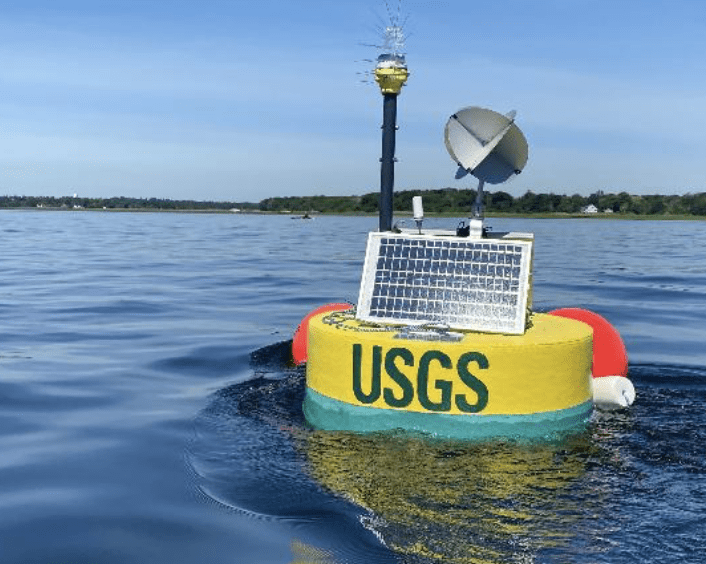
FAIRFIELD, CT — The Fairfield Harbor Management Commission has announced it will collaborate with the U.S. Geological Survey (USGS) in a three-year water quality data collection and research effort in Southport Harbor and Sasco Creek.

The investigation, in cooperation with the Connecticut Department of Energy and Environmental Protection (DEEP), is aimed at expanding scientific knowledge of water quality issues along the Fairfield shoreline and in several other coastal Connecticut communities including Mystic, Norwalk and Westport.

The research effort will start in May as USGS scientists begin installing equipment to collect water quality data at select locations. This includes a marked buoy platform with scientific instruments at the mouth of Southport Harbor and instruments at the Pequot Yacht Club within the harbor. Data will be collected throughout the year, and scientists will also periodically collect manual water samples at those two locations as well as the mouth of Sasco Creek under the Pequot Avenue bridge.

“USGS scientists will collect water quality samples from three locations along the Fairfield shoreline, providing water resource managers with a detailed understanding as to how, and to what extent, excessive amounts of nutrients affect the coastal bays of Long Island Sound,” said USGS Hydrologic Technician Brittney Izbicki.

Read more, at: https://news.hamlethub.com/fairfield/life/50919-new-buoys-platforms-along-fairfield-coast-being-used-for-water-quality-research

‘Forever chemicals’ linger in West Virginia streams, blood samples

It’s been nearly six years since city officials in Martinsburg, WV, learned that one of the wells supplying drinking water to their community contained harmful levels of per– and polyfluoroalkyl substances, extremely persistent compounds often called “forever chemicals.”

Authorities promptly took the tainted well out of service and only resumed using it in December 2017 after installing a granular activated-carbon treatment system to deal with the contaminants. Since the treatment system went online, PFAS concentrations in Martinsburg’s water have been below the health threshold recommended by the U.S. Environmental Protection Agency.

But the compounds have continued to show up in the area’s groundwater and local streams, and questions remain about health effects from area residents’ lengthy exposures to the toxic chemicals.

A recent report by the U.S. Agency for Toxic Substances and Disease Registry found that residents of Martinsburg and surrounding Berkeley County who drank public tapwater still had elevated levels of two PFAS compounds in their bodies roughly 3.5 years after the contaminated well had been taken offline.

Read more, at:https://www.bayjournal.com/news/pollution/forever-chemicals-linger-in-west-virginia-streams-blood-samples/article_33281d64-b5e3-11ec-8c33-73cba420c778.html