As an industry largely based on paper, the industry produces around 400 million tons of paper per year (Environmental Paper Network, 2018). Additionally, take into account the ink and water that goes along with the processing of said paper in factories, offices, and even our own homes. The use of such a volume of natural resources, combined with the energy needed to process it makes the printing industry “the fourth largest user of industrial energy worldwide” (Laurijssen, 2013). Naturally, these processes are bound to affect the environment.
One result of this energy usage from printing plants and paper mills are volatile organic compounds (VOCs), which are chemicals that evaporate at room temperature. VOCs in small amounts may be found in our homes, which can “irritate the eyes, throat, and nose, as well as cause headaches, dizziness, and potentially lead to memory loss or visual impairment” (Lafond, n.d). However, VOCs emitted at larger amounts have an effect not just us, but our environment as well. According to the Government of Canada, VOCs from the printing industry are “one of the principal stationary sources of volatile organic compound”, which stems from the use of solvents in ink and cleaning (Environment Canada, 2016). VOCs on this scale are detrimental to our environment, contributing to acid rain and the formation of ozone. Acid rain can cause damage to ecosystems, seeping into the ground destroying nutrients, and releasing aluminum into water streams, making them toxic. Ozone is a pollutant that when at ground level, is hazardous to our health and can cause smog.
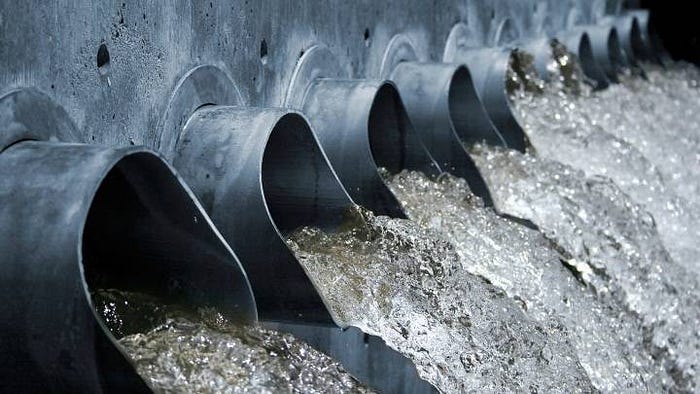
Another byproduct of the printing industry is effluent, also known as wastewater. Water is essential to printing, as ink is oil-based and water repels ink, which is how offset lithographic printing, the most common form of large scale printing today works. This water comes in contact with the ink, contaminating it. Water is also required to clean printing presses. Disposal of the wastewater and various solvents and cleansers is a procedure where the utmost care must be taken, as the pollutants from the effluent can quickly seep in and harm the surrounding environment. Waste management is necessary to safely dispose of the various chemicals used in printing processes. Recycling these chemicals instead of disposing of it saves the environmental and financial costs of producing these chemicals.
Having up to date technology is a crucial aspect of being sustainable in the print industry. For example, a printer that still uses traditional inks when vegetable-based inks are available, or printers that dispose of their solvents instead of recovering and recycling it are leaving behind a larger carbon footprint. Understanding and applying the latest tactics are key when it comes to reducing pollution and being sustainable in the printing industry.
We have used scents from nature to mask their body odour throughout the entirety of human history.
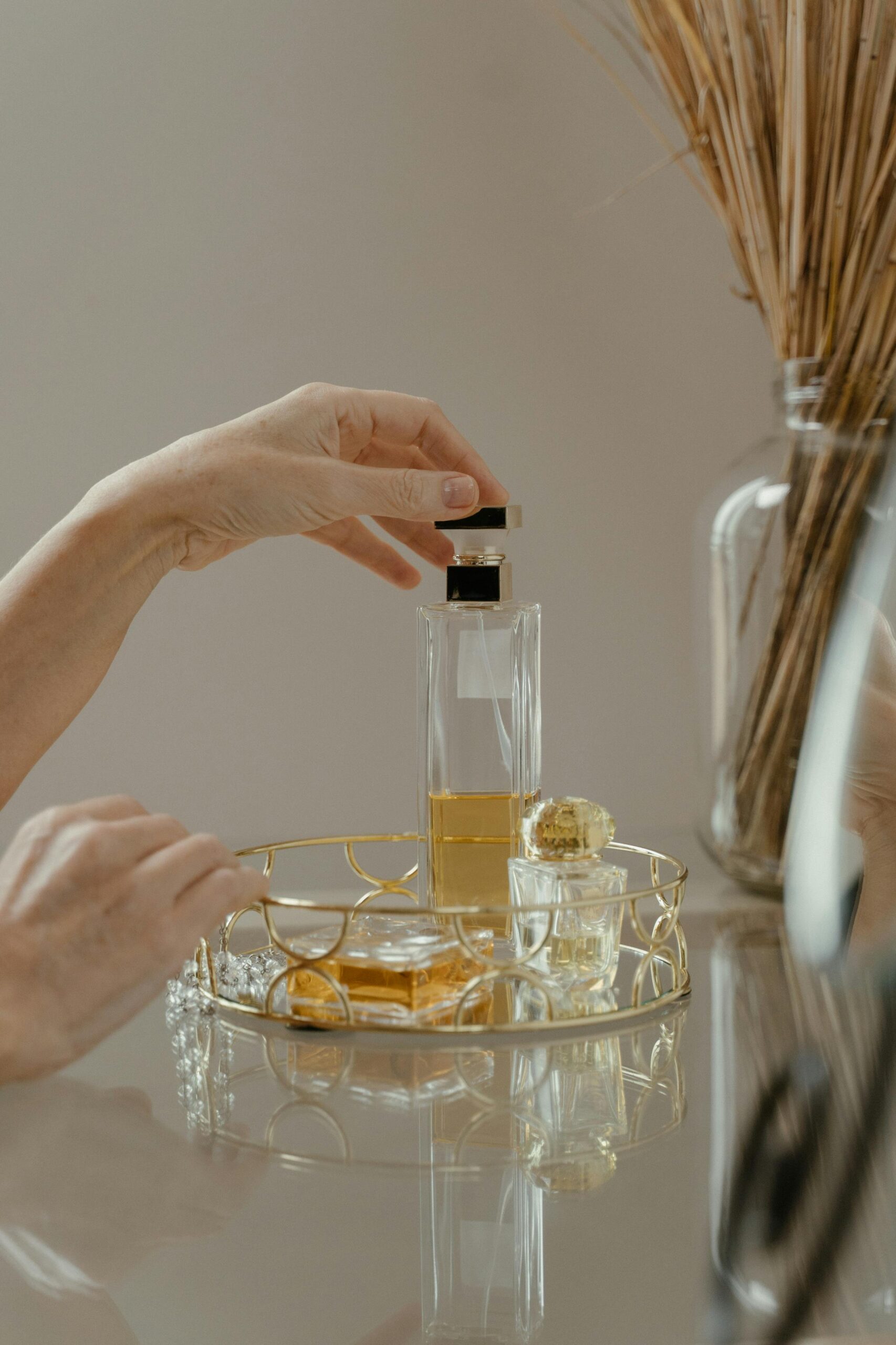
Perfume comes from the Latin “per” meaning “through” and “fumum,” or “smoke.” Many ancient perfumes were made by extracting natural oils from plants through pressing and steaming. The oil was then burned to scent the air.
The early Egyptians also perfumed their dead and often assigned specific fragrances to deities. Their word for perfume has been translated as “fragrance of the gods.”
It is said that the prophet Mohammed wrote, “Perfumes are foods that reawaken the spirit.”
The art of perfumery spread to Europe when 13th-century Crusaders brought back samples from Palestine to England, France, and Italy.
France’s King Louis the 14th used it so much that he was called the “perfume king.” His court contained a floral pavilion filled with fragrances, and dried flowers were placed in bowls throughout the palace to freshen the air.
It was at this time that Grasse, a region of southern France where many flowering plant varieties grow, became a leading producer of perfumes.
It was not until the late 1800s, when synthetic chemicals were used, that perfumes could be mass-marketed. The first synthetic perfume was nitrobenzene, made from nitric acid and benzene. This synthetic mixture gave off an almond smell and was often used to scent soaps.
Today, The United States is the world’s largest perfume market with annual sales totalling several billions of dollars.
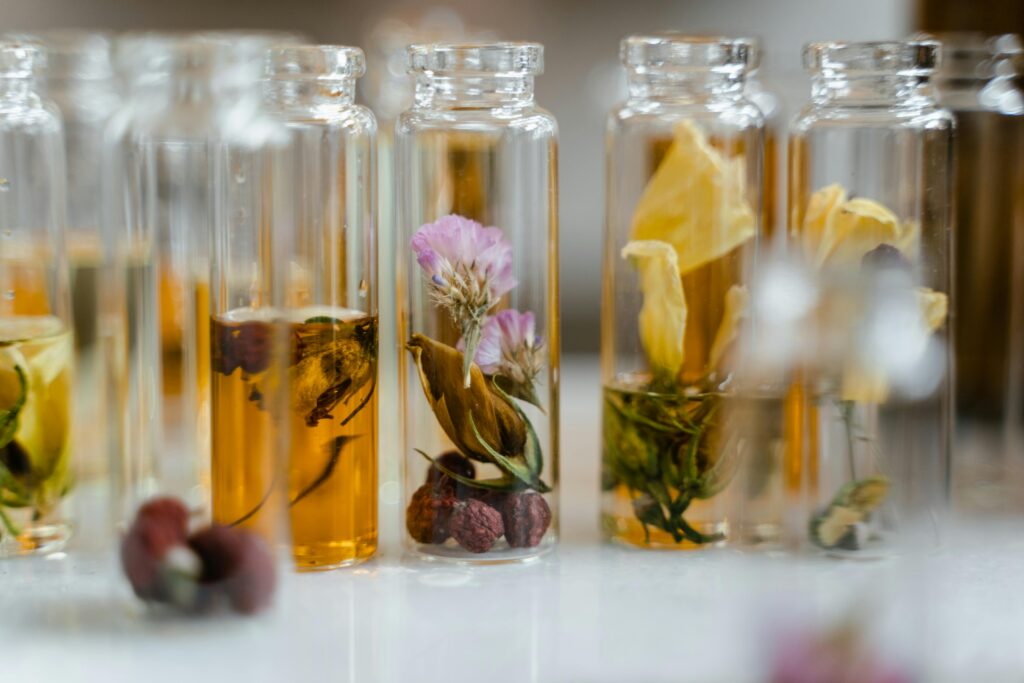
Perfume contains natural ingredients like flowers, grasses, spices, fruit, wood, roots, resins, balsams, leaves, gums, and animal secretions. The oils from these ingredients are extracted and that’s where the scents are. These natural compounds are mixed with alcohol, petrochemicals, coal and coal tars. Some plants used in many perfumes, like Lily of the Valley, do not produce any oils naturally. It’s only about 2000 of the 250.000 flowering plants on earth that contain oil naturally. As such, those scents are not obtained through harvesting the flowers, those scents are created synthetically.
Synthetic ingredients are used more widely today because it makes the perfumers less dependent on harvest quality, weather and crop yield. Previously, perfumery was a very unstable craft because it was very hard to make several identical batches of essential oil. With synthetic ingredients made in a lab, perfumers can control the quality, thus wasting less product and using less natural materials. Today even scents that could be extracted from natural resources are recreated synthetically, to standardize the products.
Many perfumes also contain a fair amount of animal-derived products, some of which are pretty grim. Castor and vanillin are derived from beavers. Musk from male deer. Ambergris from the sperm whale. They enable the perfume to evaporate more slowly and emit the odour for longer. This can also be done using fossil fuel-derived compounds like tar, coal, resin and petrochemicals. But yeah, just know that if you’re smelling “natural vanilla aroma” it is probably extracted from the anal glands of a beaver.
Alcohol and water are used to dilute ingredients in perfumes, and it is the ratio of alcohol to scent that determines whether the perfume is “eau de toilette” (toilet water) or cologne.
Most full perfumes are made of about 10-20% perfume oils dissolved in alcohol and a trace of water. Colognes contain approximately 3-5% oil diluted in 80-90% alcohol, with water making up about 10%. Toilet water has the least amount—2% oil in 60-80% alcohol and 20% water.
To make a perfume, you must first extract the ingredients, several methods are depending on what subject the scent is extracted from.
A “nose”, which is a master perfumer blends the scents and develops the formula. It can take more than 800 different ingredients to make a perfume.
A perfume consists of three notes, “notes de tete”, “notes de Coeur” and notes de fond”. The top notes are typically tangy or citrus-like, the central tones provide body to the scent and tend to be based on aromatic flowers, and the base tones create woody fragrances. But more notes and tones are used to create a unique formula, but that’s the gist of it
When the perfume is blended it has to age, which can take months or years. [1]
So there are two aspects of perfume we need to look at, first the natural ingredients, and then the synthetic ingredients. Now first of all, I am always sceptical if a product is heavily advertised as “natural”, because “natural” is not synonymous with “sustainable”, not at all actually. It is easy to fall into the trap of demonising everything synthetic while believing that everything natural is perfectly healthy. We need a little bit more nuanced than that.
The natural ingredients in perfumes are essential oils, extracted from flowers, herbs, grass, wood and yeah, animals. But let’s zoom in on essential oils, the crack of 2016 zero waste households and almonds moms.
The amount of plant material required to produce a single bottle of essential oil can vary greatly depending on the plant type and the specific oil being produced as well as the method of extraction.
Essential oil production comes with various impact factors. Firstly, some oil is difficult to extract from the plant if the plant only provides small yields. Constantly planting vast amounts of the same plant, which is just a good-smelling mono-crop at this point, deprives the soil of nutrients, some farmers also use pesticides and insecticides, and essential oils derived from sap often means that the trees have to be cut down to extract enough, so we also have deforestation as a factor. This is not always the case, but when we’re looking at the industrial production.
Another issue is that many essential oils come from plants that are listed on the IUCN Red List of Threatened Species. For instance, rosewood and atlas cedarwood, two popular essential oils, are listed as endangered species. Listed as vulnerable, sandalwood’s population is also decreasing mainly because of illegal harvesting and overexploitation. In India and Indonesia, sandalwood has been so overharvested that it nearly went extinct.[7] While it remains a heavily used ingredient in many perfumes and fragrances.
Deforestation and mono-cultures make the environment and local ecosystems vulnerable and decrease biodiversity. I don’t think I have made one impact video where mono-crops have not been mentioned tbh. But that’s what happens when we mass produce anything. Even products marketed as natural and eco-friendly.
Using synthetic ingredients means that we won’t need millions and millions of flowers and herbs to produce a few drops of oil, so this much be better for the planet on all parameters, right? Right??.
Perfumes, colognes, deodorants, candles, air fresheners, cleaning products, soaps, shampoo, paints and detergents are the most frequently used scented products. And while I’ll try to close in on perfumes as much as possible, most of the studies about fragrances include the impact of all these scented products, so we’ll keep that in mind.
Perfumes and these products contain thousands of chemical compounds and the thing is, it is impossible to know which and how many. That’s because the composition of fragrances is usually kept secret to avoid other brands using the same formula, but it also means that consumers have virtually no idea what they are putting on their bodies. A fragrance or scented product contains thousands of different synthetic fragrance compounds of unknown origins, completely protected by intellectual property law.
The majority of fragrances today are made with synthetic chemicals with 4000 to 7000 compounds. On average, perfumed soaps contain between 30 and 150 fragrance ingredients, whereas scented cosmetics can contain between 200 and 500 fragrance ingredients, making it impossible to determine individual product impact.[8]
Water pollution
The synthetic compounds from fragrances and scented products are washed into our water systems every single day, and wastewater treatment plants cannot effectively remove those substances from our water. So it is inevitable that those compounds end up in aquatic ecosystems, and in our bodies as well.
And the thing is when we release, even somewhat harmless synthetic ingredients into the environment they don’t go away – they bioaccumulate. This means that they build up in the environments, and react with other synthetic compounds causing unpredictable reactions.
Musks, which is a family of ingredients often used in perfumes have been especially bad because they do not degrade when they are released into the environment but instead, they attach themselves to the fatty tissue of aquatic organisms.
The unknown composition of harmful chemical scents is just the beginning of the problem. According to Lenntech, phosphates in some of these chemical mixes can cause algae to bloom uncontrollably in waterways, thereby depleting oxygen levels. Other chemicals can even reduce the surface tension of water, making it easier for pesticides and other toxins to enter the water and be absorbed by the plants and animals that live there. [9]
Of course, not only synthetic compounds can pose a threat to water systems. In this study from 2021 essential oils and extract toxicity levels are observed: “While some essential oils and extracts have been described to have no toxic effects to the selected organisms or the toxic effects were only observable at high concentrations, others were reported to be toxic at concentrations below the limit set by international regulations, some of them at very low concentrations. Generally, essential oils exhibit higher toxicity than extracts. However, when the extracts are obtained from plants that are known to produce toxic metabolites, the extracts can be more toxic than essential oils. Overall, and despite being generally considered “eco-friendly” products and safer than their synthetic counterparts, some essential oils and plant extracts are toxic towards non-target organisms. Given the increasing interest from the industry on these plant-based products further research using international standardized protocols is mandatory.” [10]
Air pollution and emissions
Our air is also impacted – both indoors and outdoors. Most fragrances are classified as volatile compounds, which means they break down into other compounds when released into the air; very often these compounds can have more serious environmental and health implications compared to the actual fragrance compound. But that’s not the worst part.
About 5% of raw oil is processed into ingredients for household products whereas 95% is processed into fuel, but these 5 % are doing some serious damage.
According to a 2018 study from NOAA, the greenhouse gas emissions released from scented consumer products and the chemical vapours they emit are roughly the same as the greenhouse gasses emitted from burning fuel for transportation. Even though there are 15 times more petroleum used for fuel than as ingredients in industrial and consumer products.
These chemical vapours as known as VOCs (volatile chemical vapours), and when they react with sunlight they form ozone pollution and react with other particles in the air. The head of the study explains that: “as the transportation sector gets cleaner, these other sources of VOCs become more and more important”. Furthermore, fuel systems minimize the loss of gasoline to evaporation to maximize energy generated by combustion, but common products like paints and perfumes are engineered to evaporate. Again this doesn’t mean that perfumes alone emit as many greenhouse gasses as fuel, but perfume belongs to a larger category of consumer products where that is the case. [11]
Reducing environmental damage
The biggest game changer here would be legislation that demands greater transparency from corporations and manufacturers. Demanding greater transparency would mean that consumers and distributors would know which chemical compounds are used. Moreover, we could also demand stricter requirements and bans on certain ingredients that are most likely to bioaccumulate etc. Politically, there are several measures we can take, and demand to reduce the impact of these products.
But of course, there are also tons of ways consumers can minimize the impact of these compounds. For instance, avoid scented products and fragrances whenever possible, or at the very least in products that do not need them.
Instead of air fresheners, ventilate your home, and remove smells with vinegar
Avoid scented candles and soaps and go for more neutral alternatives
Avoid scented cleaning products and detergents, fabric softeners are simply unnecessary and “clean” is the absence of scents and smells, so cleaning products without scents are better. [12]
Replacing all synthetic fragrances with essential oil is not the solution, but reducing consumption and being mindful of how much we use is the way to go.
Before you buy new essential oils, research whether the plant species are on the Red List of Threatened Species (you can do a quick search on the website). If they are endangered or even vulnerable, refrain from purchasing them. This includes ingredients like sandalwood, rosewood, and cedarwood.
Store your perfumes in a dark place, away from the sunlight to extend the shelf-life and keep the bottle closed.
Do not store perfumes in the bathroom, the humidity can alter both the colour and the scent of the perfume
Look for organic, or wild-harvested essential oils from plants native to the environment they are grown in.
To make your essential oils last longer, dilute them in carrier oils, like coconut or jojoba oil. It is always recommended to do so!
Many “sustainable” perfume brands only focus on recycled/refillable packaging, and while that’s nice we should be looking for brands that reduce the impact of their ingredients, and are cruelty-free of course.
If you want to know more about the ingredients in your products, look them up at the EWG Skin Deep Index: https://www.ewg.org/skindeep/
So are there even sustainable perfumes? Well, there are more or less sustainable options and more or less sustainable ways of using perfume. While the impacts of synthetic and natural ingredients are often different, and thus somewhat difficult to compare 1/1; the most important thing consumers can do is not overconsume perfumes and essential oils, and store them correctly to extend shelf life. Avoiding certain polluting or extinction-threatened ingredients is also a good idea. But, I did a little digging to come up with some recommendations for more sustainable brands or options, I have left that list down below.
These brands both improve their supply chains, as well as ingredients (and packaging, but we’re not spending too much time on that, or I guess we are spending the amount of time on packaging that is equivalent to how much of the product impact packaging accounts for).
During a recent visit to Japan, we found ourselves in the offices of our esteemed supplier—a fourth-generation family business that’s been crafting hair accessories since the 1920s. As we presented an overview of the North American hair accessories market to their senior team, a particular slide sparked an unexpected yet enlightening conversation.
The slide displayed the top 10 best-selling hair tie packs in the USA, revealing that the average number of hair ties per pack was 55. We’ve long advocated for quality over quantity, so this statistic wasn’t news to us. But what happened next resonated deeply.
The operations manager raised his hand and asked, “Why would anyone ever need 55 hair ties at a time?” It was a question we’d often pondered ourselves. His curiosity wasn’t just a cultural difference; it was a shared bewilderment over a wasteful norm.
“In Japan,” he continued, “the average pack size of hair ties is two.”
At that moment, we realized we weren’t alone in questioning the status quo. It wasn’t just us—it was an entire country that valued durability and sustainability over disposability. And we believed millions of Americans would agree, given the facts.
Understanding Planned Obsolescence
What Is Planned Obsolescence?
Planned obsolescence is a business strategy where products are intentionally designed with a limited lifespan. The goal is to encourage consumers to purchase replacements more frequently, fueling a cycle of continuous consumption.
Why Is It Harmful?
Environmental Impact: Products designed to fail contribute to waste and pollution. Disposable items often end up in landfills or oceans, where they take centuries to decompose and break down into harmful microplastics.
Consumer Exploitation: It forces consumers to spend more money over time on low-quality items that need constant replacing.
Resource Depletion: The manufacturing of disposable products consumes valuable natural resources unnecessarily.
Everyday Examples of Planned Obsolescence
Smartphones: New models are released annually with minor upgrades, pushing consumers to replace perfectly good devices.
Fast Fashion: Low-quality clothing that wears out quickly, encouraging more frequent purchases.
Printers: Inexpensive printers that require costly ink cartridges, which run out rapidly.
The Hidden Cost of Bulk Hair Ties
More Than Just Wasteful
Those packs of 55 hair ties aren’t just excessive—they’re a hidden environmental hazard. Predominantly made from synthetic plastics, each hair tie contributes to the growing problem of microplastics contaminating our ecosystems. In fact, 25,000 lbs of plastic hair ties are lost or tossed daily in the USA because of planned obsolescence.
Microplastics: An Invisible Threat
As these plastic hair ties degrade, they break down into tiny particles known as microplastics. These particles infiltrate our waterways, soil, and even enter the food chain, posing severe risks to wildlife and human health.
A Tale of Quality: Japan vs. North America
The Japanese Commitment to Durability
Our Japanese partner tests every single hair tie three times during production to ensure strength and integrity. This meticulous attention to quality means consumers only need to purchase a pack of two hair ties—not 55.
The Proof Is in the Testing
Before leaving Japan, we provided our partner with samples of the top-selling American hair ties. They sent these, along with our own Organic Cotton Round Hair Ties—the Mondos and Minis—to a third-party lab for strength testing.
The results were staggering:
Our Round hair ties are 2.5 to 3 times stronger than the major U.S. brands.
Our Flat Hair Ties, ethically made by hand in India, tested to be 6 times stronger. Hand-sewn with care, they offer a stronger, longer-lasting option for everyone.
Breaking the Cycle of Planned Obsolescence
Quality Over Quantity
It’s time to challenge the notion that more is better. A single, well-crafted hair tie can outlast dozens of disposable ones, saving you money and reducing environmental impact.
Making Sustainable Choices
Choose Natural Materials: Opt for hair ties made from biodegradable materials that won’t harm the planet.
Support Ethical Brands: Companies that prioritize sustainability and fair labor practices deserve your support.
Educate Yourself: Understanding the impact of your purchases empowers you to make better choices.
Discover the Strongest Hair Ties
Looking for hair ties that combine strength, durability, and sustainability? Explore our:
Mondo Hair Ties: 2.5 to 3 times stronger than standard brands.
Flat Hair Ties: Ethically made by hand in India, these are 6 times stronger and designed to last.
The Environmental Impact of Disposable Hair Ties
Reducing Hair Accessory Pollution
Every year, countless plastic hair ties contribute to hair accessory pollution. By choosing durable, eco-friendly options, we can significantly reduce this number.
Joining a Global Movement
Our experience in Japan affirmed that we’re part of a global community that values sustainability. By making conscious choices, we align ourselves with millions who believe in protecting our planet.
Conclusion: Time to Rethink Our Choices
The question from our Japanese colleague wasn’t just about cultural differences; it was a mirror reflecting our consumption habits. “Why would anyone ever need 55 hair ties at a time?”
We realized we’re not alone in questioning this norm. It’s time to embrace products designed to last, breaking free from the wasteful cycle of planned obsolescence. Together, we can make a difference—one hair tie at a time.
A very special thank you to our incredible team in Japan.
Thousands of bottles of Waiakea’s artisanal volcanic water have been recalled after the discovery of hazardous bacteria, leading to a major safety overhaul by the company.
According to the Daily Mail, Waiakea Bottling Inc. concluded a massive recall this week after customers reported seeing floating particles in their bottles.
Waiakea Bottling Inc., a Hawaii-based company, is known for sourcing its water from unique volcanic regions in Hawaii. The brand values sustainability and purity, catering to a clientele that appreciates natural and minimally processed products.
A recent issue surfaced when consumers noticed undesirable objects, described as mold, white blobs, and other unspecified particles, floating in the water. These complaints triggered a lot of concerns, prompting the company to investigate further and eventually initiate a product recall.
The recall began in 2023 after consumers’ complaints reached the company. Waiakea swiftly responded with a comprehensive examination of its quality control procedures, confirming the particles to be caused by Pseudomonas aeruginosa. This bacterium can be extremely harmful, particularly to those with compromised immune systems.
Detailed FDA Report Sheds Light on Severity of Contamination
The Food and Drug Administration (FDA) played a crucial role in classifying and evaluating the level of threat posed by the contaminated water. Their inspection report employed terms like ‘mold,’ ‘white blob,’ and ‘floaters’ to describe the contaminants, which underscored the variability and visible nature of the impurities.
During their investigation, the FDA classified the incident as a Class II recall. This classification indicates that while the exposure might result in temporary or medically reversible adverse health consequences, experts deemed the risk of long-term serious effects low.
The severity of the issue sparked an array of health concerns across the customer base. In response, Waiakea Bottling Inc. took significant measures to rectify the contamination issues and reassure its consumer base of the water’s safety and quality moving forward.
Enhancements in Quality Control after the Recall
In the aftermath of the recall, Waiakea took deliberate steps to overhaul and improve its safety protocols and quality control procedures. Their initiatives included the adoption of state-of-the-art sanitation technology and the installation of advanced sensors.
Company spokespeople detailed the steps taken following the incident. They stated, “We have intensified our quality control processes and enhanced our safety protocols to maintain the highest standards of product excellence. This includes upgrading our sanitation technology to state-of-the-art, fault-proof equipment and sensors,” highlighting their commitment to preventing future issues.
At the onset of the recall, Waiakea expressed remorse and a determined commitment to its customers. Its official statement noted, “After receiving complaints about floating particles in some bottles, we discovered a potential issue during our rigorous quality assurance procedures. We identified the affected lots through our safety protocols and took this precautionary measure to recall them.”
Other Incidents in the Bottled Water Industry
The incident with Waiakea’s products does not stand alone within the bottled water industry. Recently, other companies have also faced similar challenges. For instance, in spring 2024, Fiji recalled 1.9 million bottles due to elevated levels of minerals and bacterial contamination, while Berkeley Club Beverages recalled products due to coliform contamination.
These recurring issues across multiple brands highlight the challenges the industry faces in maintaining the purity of bottled water. They also stress the importance of rigorous quality assurance practices and proactive consumer safety measures.
Amidst these industry-wide challenges, the FDA continues to mandate annual inspections and stringent testing for both source water and final products in a bid to safeguard public health and ensure that the industry maintains high standards of product quality and safety.
Community and Consumer Response to Safety Measures
Waiakea’s quick response and transparency during the recall process have been crucial in maintaining trust with its customers. Their proactive communication and upgrades in safety protocols suggest a strong ongoing commitment to quality and consumer safety.
As the company moves forward, it expects these enhancements in operational protocols to set new standards not just for Waiakea, but potentially for others in the bottled water industry, fostering a greater emphasis on quality control and consumer trust.
The recall, although a significant setback for Waiakea, provided important lessons and opportunities for growth, ensuring that the safety of the consumers remains paramount in their operations.
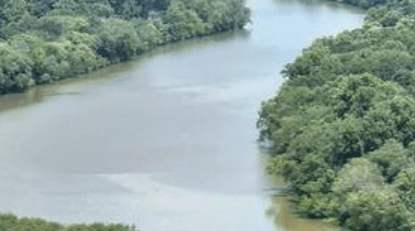
The release of inadequately treated wastewater from Atlanta’s R.M. Clayton Water Reclamation Center has caused a significant increase in dangerous E. coli bacteria levels in the Chattahoochee River downstream, according to Jason Ulseth, executive director of the Chattahoochee Riverkeeper. The environmental organization is advising people to avoid the river downstream of the Chattahoochee River National Recreation Area due to the health hazard posed by the contamination.
The contamination was discovered in routine daily samples collected downstream from the Marietta Boulevard/Atlanta Road bridge in NW Atlanta Metro Atlanta. Although there hasn’t been an official sewage spill, mechanical failures at the Clayton plant, caused by rising water from the Chattahoochee River flooding the facility, led to the discharge of sewage into the river. While the plant remains operational, corrective and preventive maintenance is being conducted on several secondary clarifiers to remove additional pollutants.
Despite efforts to mitigate the contamination, E. coli concentrations around the facility’s outfall have been found to be alarmingly high, well above safe levels for recreation. The Chattahoochee Riverkeeper reported concentrations of fecal bacteria exceeding 120,000 units per 100 milliliters of water. Although there have been no fish kills reported as of March 13, the contamination poses a significant risk to public health and recreational activities in the affected areas.
Officials say drinking water in Fulton County and the metro Atlanta region remains unaffected by the plant failure. The Atlanta Department of Watershed Management (DWM) is collaborating with the Georgia Environmental Protection Division to address the elevated E. coli levels and ensure compliance with environmental regulations.
The incident underscores the need for ongoing monitoring and maintenance of water treatment facilities to prevent similar occurrences in the future.
Valentine’s Day has come around again. Far from a modern invention, pre-Christian Romans celebrated the Saint beheaded by Claudius II in Third Century Europe – apparently the martyr wrote a final letter before his execution signed ‘Your Valentine’.
North America did not embrace the holiday until Hallmark cards specialised in Valentine’s cards in 1910. Since then, the marketing of symbols of love has flourished. In 1939 the De Beers company made diamonds the ultimate gift of love; within three years, 80 per cent of engagement rings in the United States were diamonds. Much attention has been paid to the implications of ‘blood diamonds’, which led to the creation of the Kimberly Process in 2000 to attempt to stop the trade.
Gold too falls into this category. Gold has retained its social value for centuries, which can only partially be explained through its attractiveness and relative scarcity. Estimates of how much gold there is in circulation, in vaults and jewelry boxes, range from 155,244 to 2.5 million tons, with an estimated 52,000 tons minable gold still in the ground. Yet, the potential severe environmental degradation resulting from gold mining through soil erosion, deforestation, resource intensity, greenhouse gas emissions and cyanide pollution makes the appeal of gold less bright.
A more modest token – flowers – have also become a global industry. The connection between roses and love can be traced back to Aphrodite in Greece or Venus in Rome: the Goddesses of love. The cut-flower – or floriculture industry – was developed in England in the late 19th Century and now stands at an estimated US$33 billion. The Netherlands, United States and Japan account for nearly half of the world’s flower trade with the majority of the market being distributed via the Netherlands. The Netherlands makes up only 10 per cent of production volume but accounts for 60 per cent of global export. Since the 1990s, production has shifted towards countries where climatic conditions can provide year round production with low labour costs, with Colombia, Kenya, Ecuador and Ethiopia the world’s greatest producers. Whilst controls do exist, there are huge implications for the environmental impact of the industry.
Chemical pollution is an issue. The cut-flower industry is a short-cycle production process that requires the extensive use of agrochemicals which have a negative effect on the air, soil and water supply.
The industry has loose regulatory status because flowers are not edible crops and are exempt from regulations on pesticide residues, although they carry significantly more pesticides than allowed on foods. It is estimated that one-fifth of the chemicals used in the floriculture industry in developing countries are banned or untested in the US. In 2015, the Montreal Protocol (signed in 1987 to prevent the depletion of the ozone layer) deadline for changing floricultural chemical use of Methyl Bromide came into effect in all developing countries. Already 100 per cent phased out in the US since 2005, Methyl Bromide is a toxic chemical hazardous to humans, five times more potent than Carbon Dioxide and destructive to the ozone layer with an Ozone Depletion Potential of 0.6 (with CFCs classified as 1).
Water use is also an issue. Increasingly, virtual water is being exported through international trade from some of the most water-stressed countries. For example, cut flowers account for 45 per cent of Kenya’s virtual water exports. Controversy surrounds Lake Naivasha, with more than half of the water extraction coming from the floriculture industry. Yet, flowers provide livelihoods. In Kenya for example, the industry stands at US$141 million per year, which is the second largest foreign exchange earner for the country. Cut flowers in Kenya produce the highest economic return per unit of water exported. To maintain water balance going forward, Kenya may need to import water-intense crops, such as maize, to ensure food security, or for the price of water to be offset in a price premium by the consumer.
Regulation is needed. In Ethiopia, where serious environmental concerns have been raised, the total area of land covered with flowers has increased from less than 100 hectares in the late 1990s to more than 1200 hectares in 2008 (over 990 hectares or 82 per cent is for rose cultivation). The earnings from the floriculture sector amounted to more than US$131 million in the year 2009. Export value earned is expected to rise up to US$550 million by 2016. Whilst government guidelines and collectives have been created to ensure standards, the proportion of adopters is still low. Standards are arising through Fairtrade and sustainably certified flowers but much more needs to be done.
The market is fragile. Proponents may argue that the floriculture industry employs thousands and takes the burden away from reliance on aid. Yet the industry is vulnerable to external factors such as currency rates, oil prices, climate change and the economic situation in the target markets.
As another Valentine’s Day brings a surge in demand for cut-flowers, and as the world edges towards a global population of 9.6 billion by 2050, which faces roughly a 70 per cent gap between the crop calories produced today and those that will be needed to feed the projected population, it is important to stop and ask whether the water, chemicals, land, air-miles and carbon footprint used for floriculture wouldn’t be better used elsewhere. For example, over 2,000 hectares of agricultural land in Kenya is used for cut flower cultivation and globally the area is expanding as countries like China make investments in the industry.
China has emerged as a large producer and exporter of floriculture products in Asia. According to official statistics, the estimated production value of flowers and plants in China increased by 150 per cent from €6 billion in 2009 to €15 billion in 2013. Of this, China’s cut flower industry had an estimated production value of €1.5 billion – the lily taking 42 per cent of the production value, followed by the rose at 24 per cent. Capitalising on this, as much as 90 per cent of the retail price of a rose is added after the flowers arrive in the United States or Europe.
Projecting into the future, China plans to become the largest flower exporter in Asia and the second globally after the Netherlands. Regardless of whether roses are grown in the greenhouses of Yunnan or elsewhere, we need to think about land use. Globally there is an estimated 2 billion hectares of degraded land, roughly twice the size of China, with opportunities for restoration. This Valentine’s Day it may be worth considering the value of this culturally constructed symbol of love, and looking at the thorns on your roses – which countries’ virtual water, chemicals, land and labour provide your love token.
David vs. Goliath. TikTok vs. your to do list. Toilet paper vs. the environment. All legendary showdowns, each with their own stakes.
The first two you’re probably familiar with. But just how harmful is toilet paper to the environment? Let’s dig in and discuss some possible solutions (like bamboo and 100% recycled toilet paper) for easing the strain on the planet.
What are the different ways toilet paper production harms the environment?
Traditional toilet paper production harms the environment at every step of the process — chopping down virgin trees, pumping out nasty chemicals and piling up landfill waste. Not great.
Fortunately, many brands are stepping up to impact the environment in positive ways by offering more eco-friendly alternatives, including bamboo and 100% recyclable toilet paper options.
But traditional toilet paper is still the big player and the biggest problem. From harvesting virgin pulp trees to chemical bleaching, its impact adds up.
How harmful is making toilet paper white for the environment?
Ever wondered how those traditional store brands get that bright, toilet paper white look? The answer isn’t great: for many manufacturers, chlorine is used in the bleaching process. It’s a process that isn’t just bad news for your bum — it can also pollute water supplies and disrupt ecosystems.
However not all bleaching methods are created equal.
Some, like elemental chlorine, are heavy hitters on the pollution scale, while others, like processed chlorine-free (PCF) and totally chlorine-free (TCF), are far less harmful. Unbleached toilet paper or paper whitened with hydrogen peroxide and chlorine dioxide both create less impact on the planet.
How bad is virgin pulp paper for the environment?
Most traditional TP relies on virgin pulp paper — meaning it’s made by chopping down tonnes of trees, instead of using recycled materials. And by tonnes, we mean tonnes — one million trees are harvested each day to keep up with demand.
This doesn’t just wipe out forests — it also wreaks havoc on ecosystems and uses staggering amounts of energy and water. If lowering your carbon footprint is on your to-do list, switching to more sustainable options is an easy way to make a big difference.
How much toilet paper winds up in the landfill?
Most of us imagine that toilet paper disposal ends as soon as we flush, but in many cases, that’s only the start of the story. In regions with limited plumbing infrastructure, disposal alternatives often mean toilet paper ends up in landfills — where it makes up 15% of paper products.
Even modern septic systems aren’t perfect. Without regular maintenance, they risk leaking waste into the environment, creating a negative impact on nearby water sources.
Is all toilet paper equally bad for the environment?
The short answer is no, not all toilet paper is equally bad for the environment — some rolls are putting in the work to do better. Making the switch to bamboo or 100% recycled toilet paper brings big eco benefits to your bathroom — think lower carbon emissions, less water waste, and more virgin trees standing tall where they should be.
While both are a huge upgrade for the environment compared to traditional TP, each brings its own strengths to the table. Let’s dig into the real impact of bamboo toilet paper and recycled toilet paper.
How bad is bamboo toilet paper for the environment?
While bamboo toilet paper has a smaller environmental footprint than virgin pulp paper, it’s not entirely impact-free. Most bamboo for toilet paper comes from China, where coal still powers some of the harvesting process.
On the plus side, bamboo toilet paper breaks down quicker than traditional TP, reducing pressure on sewage systems and landfills. It’s also the fastest-growing plant on the planet — sometimes growing up to 35 inches in a single day — meaning it takes much less time to replenish. Un-bamboo-lievable!
How bad is recycled toilet paper for the environment?
Don’t worry, it’s not used toilet paper. 100% recycled toilet paper just means no virgin trees were used in the production of the rolls. Instead, recycled toilet paper gives post-consumer waste like office paper, newspapers and junk mail a new lease on life.
While the process isn’t impact-free — carbon emissions and water usage are still part of the equation — these effects are significantly less compared to traditional toilet paper. The wins are clear: reduced deforestation, lower water consumption and a chlorine-free whitening process that’s easier on the earth and your conscience.
Conclusion: Making eco-friendly purchases
Toilet paper vs the environment doesn’t have to be a losing battle. While virgin pulp paper comes with a host of environmental troubles — deforestation, carbon emissions and water waste — your bum can still be part of the solution. Bamboo toilet paper and 100% recyclable toilet paper are way better options than virgin tree paper to help mitigate the harm toilet paper has on the environment.
By choosing bamboo toilet paper, you’re backing a sustainable, fast-growing resource. Opting for 100% recycled toilet paper gives refuse a second life and helps keep trees right where they belong.
Turns out the environment and toilet paper don’t have to be sworn enemies — with thoughtful choices, your bathroom habits can do their part for the planet. Everybody wins!
BY: Christian Harned, CUER Fellow | DATE: Feb 22, 2018
Many Americans are currently experiencing a clean water crisis and you likely haven’t heard about it. The public perception of water crises rarely extends beyond Flint, MI, or Capetown, SA. While these cities have experienced and are experiencing clear problems with access to clean water, rural Americans are experiencing a water crisis significantly larger than either of these cities.
There were 5,000 health violations issued against water systems in 2015. 50% of these violations were against water systems serving less than 500 people. When you combine these systems, millions of Americans lack access to safe or clean drinking water. The reason rural Americans face a crisis in access to clean water is often rooted in the industries that supply a town with jobs. Coal towns are often affected by spills from waste retainment ponds while agricultural fertilizers slide off the land and contaminate waterways. It is also worth mentioning that some rural Americans, like those in Lowndes County, AL, are the result of racist policies and funding.
Although polluters are often large-scale industries and the affected communities are distributed across the country, clear solutions for this problem exist. Many rural water systems are underfunded and, therefore, not maintained. Poorly maintained systems decay, creating an entry point for contaminants. We can solve this part of the problem by providing funding for the repair and maintenance of these systems. Further, we have technologies that can improve the efficiency of water-capture systems to reduce stress on the water infrastructure.
However, there is no solution here without tackling the pollution sources. Agriculture must have limits set for the use and disposal of chemical fertilizers, and coal companies must be regulated and held accountable for improperly maintained waste. Without addressing the source of pollution, any effort to address this problem will be treating the symptoms of the problem, not the cause.
To read more about the rural clean water crisis, read The New Republic’s article here.
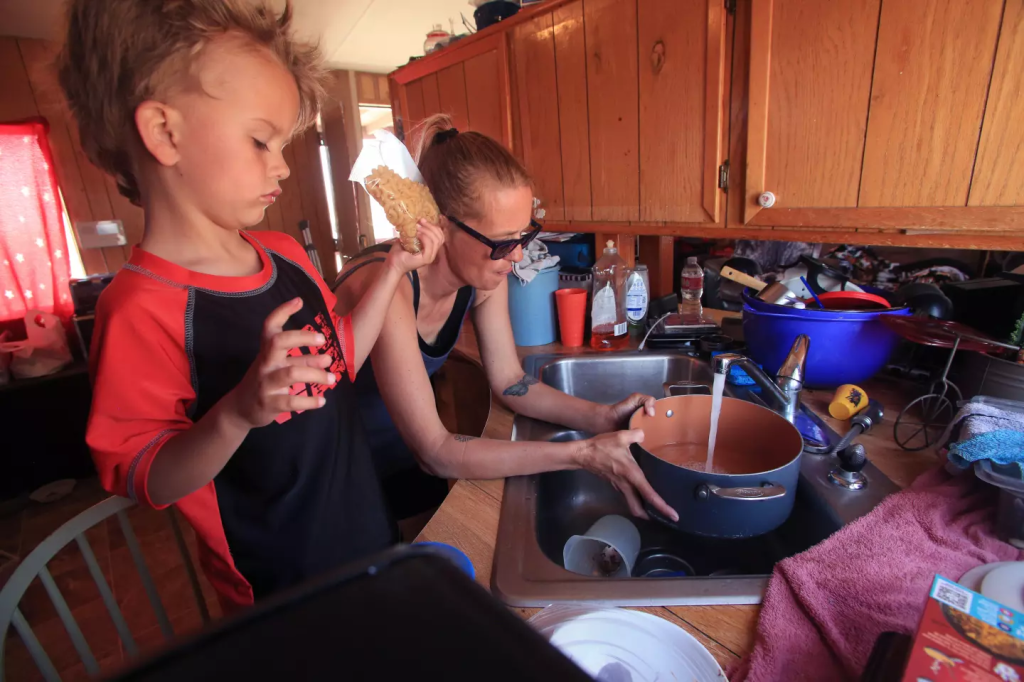
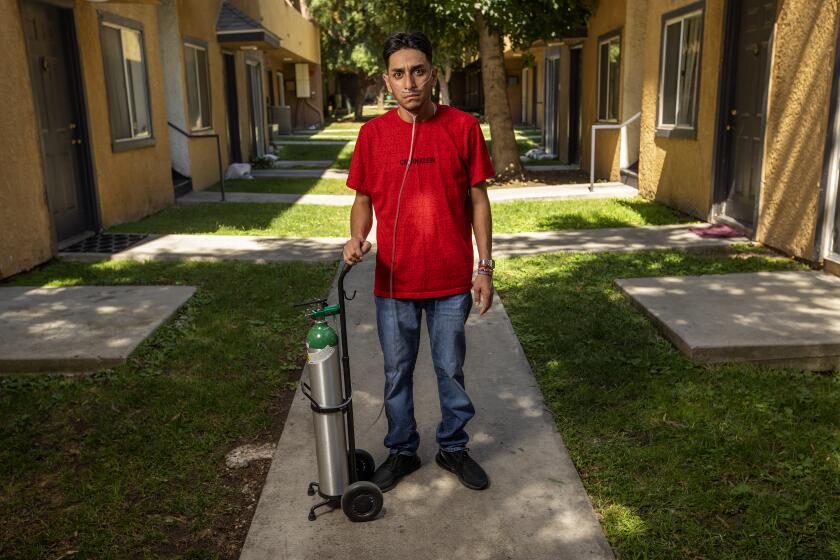
In the Mojave Desert community of North Edwards, 5-year-old Adam Ezelle knows never to drink water from the tap, which contains dangerous levels of arsenic.
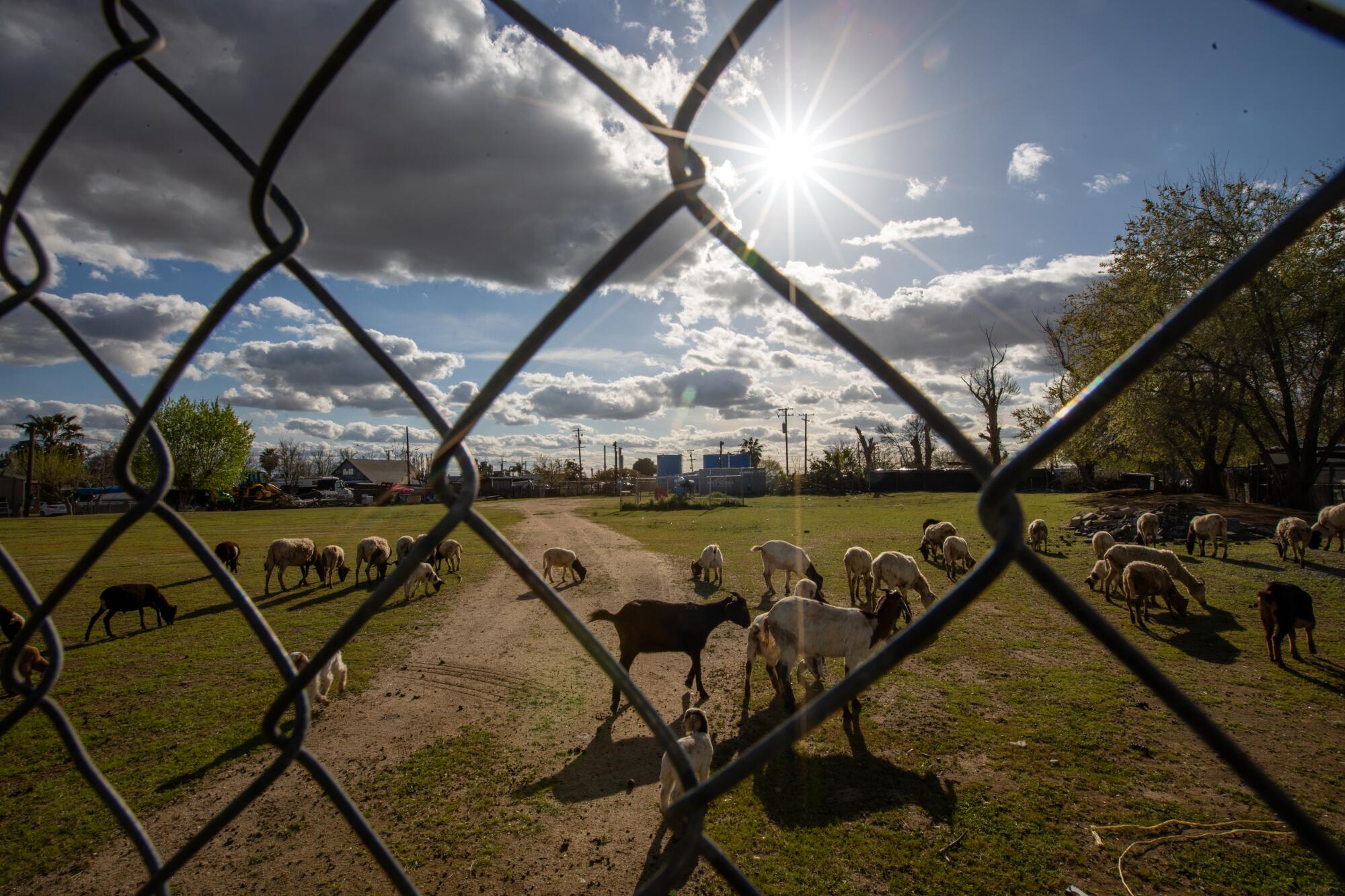
In the tiny farming and oil refining community of Fuller Acres, where a potent carcinogen has tainted groundwater wells, Maria Martinez and her family say they feel neglected by a state that has pledged clean water for all of its residents.
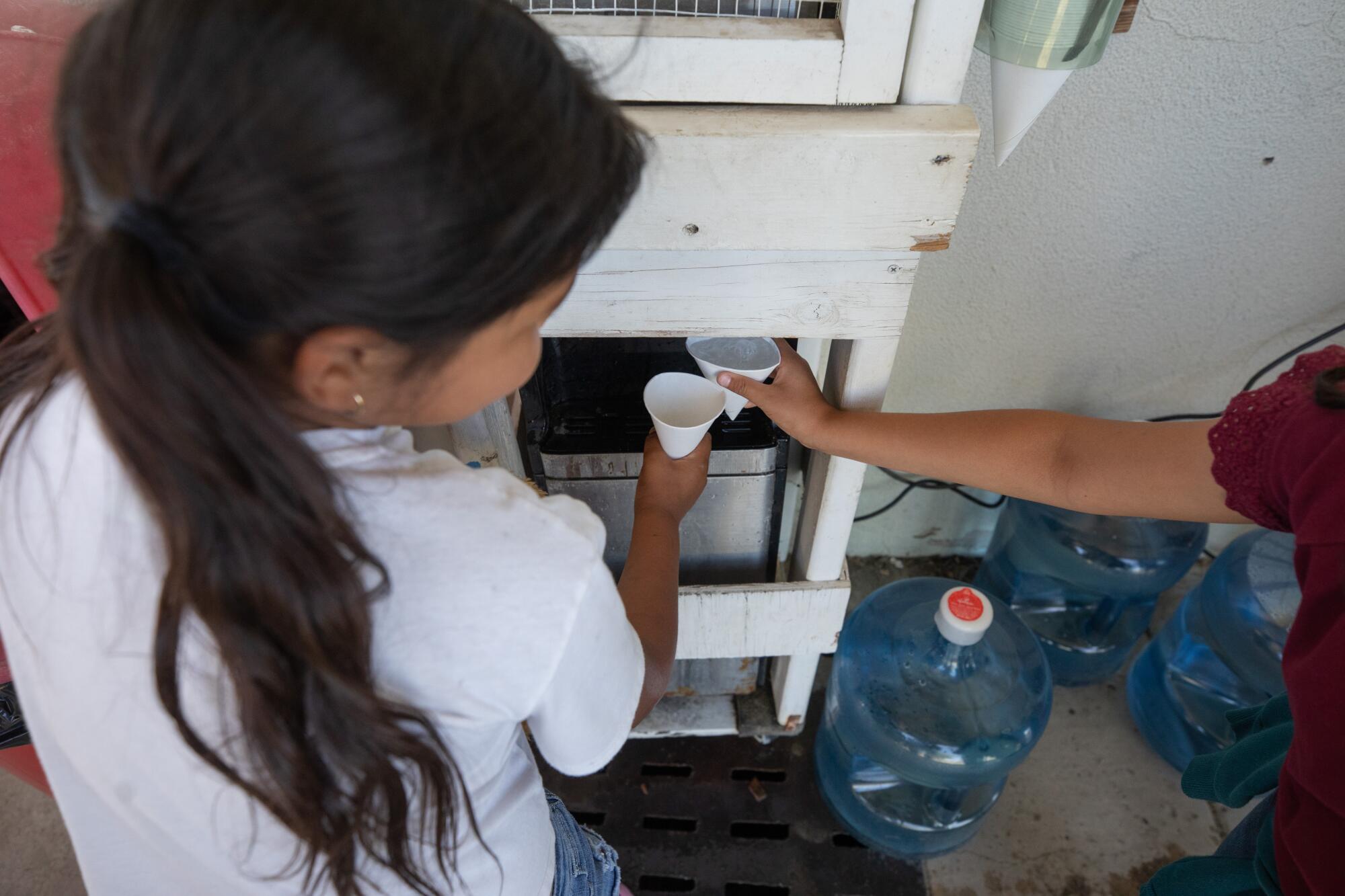
And in a dusty corner of Bakersfield, preschool through eighth-grade students at Lakeside School line up to fill paper cups from water jugs that have replaced their sinks and fountains, which were capped because of contamination.
More than a decade after California became the first state in the nation to declare that access to clean, safe and affordable drinking water was a human right, about a million residents remain connected to failing water systems — many of which may increase their risk of cancer, liver and kidney problems, or other serious health issues.
The number of failed water systems has jumped about 25% since 2021 , an increase driven partly by the collection of more data. Today, about 400 such systems exist across California, and experts warn that hundreds more are poised to fail because of new and higher testing standards.
“It’s a bit of a ticking time bomb,” said Gregory Pierce, director of the Human Right to Water Solutions Lab at UCLA. With new regulations slated to take effect in the next few years, many systems will need to take urgent and proactive steps or “they’ll be out of compliance and be failing.”
The crisis has cast a harsh light on the state’s ability to provide clean and affordable drinking water to all its residents, particularly those in the Central Valley, where widespread contaminants afflict communities with substandard infrastructure and where the heavy use of agricultural fertilizers and fumigants, as well as the overpumping of aquifers, has worsened water quality.
Advertisement
The State Water Resources Control Board insists that limited resources and a lack of involvement from some local governments have partly contributed to a persistent backlog of cases and assistance requests.
“The amount of work that’s needed across all of these failing systems is much larger than our capacity,” Bryan Potter, senior water resources control engineer with the Division of Drinking Water, said at a public gathering this year.
However, some experts, community groups and government auditors say the state can and should be doing more to ensure that all Californians have access to clean, safe water.
The board, also known as the State Water Board, “has funding available to help these failing systems improve the quality of their drinking water. Nonetheless, the board has generally demonstrated a lack of urgency in providing this critical assistance,” Michael S. Tilden, then-acting California state auditor, wrote last year.
Aggressive and impactful reporting on climate change, the environment, health and science.
“In fact, the time necessary for water systems to complete applications for funding and for the State Water Board to approve and award that funding nearly doubled from 17 months in 2017 to 33 months in 2021,” Tilden wrote.
Advertisement
The delays, critics say, have added hardship to the lives of those who lack clean water, and increased the likelihood they will suffer negative health outcomes.
Concern over the availability of clean drinking water has grown significantly in California as global warming, drought and climate whiplash threaten traditional sources.
At the same time, increased understanding of the potentially harmful effects of both natural and manufactured contaminants has raised new health alarms.
A Times analysis found that the problem of failed water systems is particularly acute in Kern County, where about 131,500 residents are served by 65 failed systems — the highest number of failing systems in the state. Nearly 80% of those systems have been categorized as failing for three or more years and nearly two-thirds have served contaminated water to customers in the last few years.
Hundreds of water systems in California have failed for years to provide safe drinking water
Central Valley communities are most affected by entrenched systems, defined as failing for three or more years. Kern County leads the state with 50 such systems.
This is a map of entrenched failing water systems in California. Kern County has the most with 50 failing systems. Next is Fresno with 26 and Tulare with 21 failing systems.
Count of entrenched systems
1-
7
8-1
4
15-2
1
22-2
8
29+
Areas shaded in gray have no entrenched water systems.
California State Water Resources Control Board
Katie Licari
Los Angeles Times
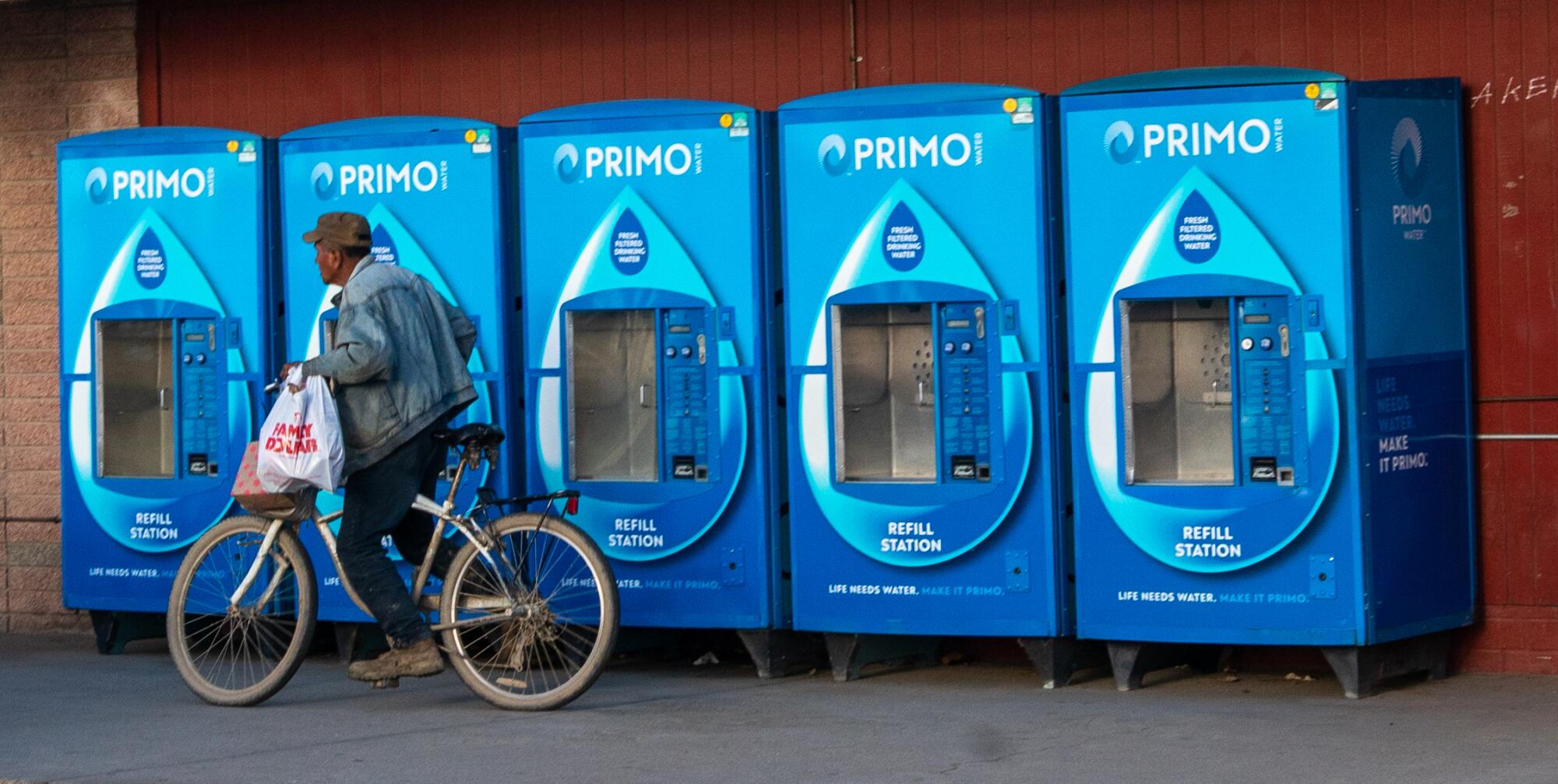
Many people connected to failed systems must drive multiple times a month to neighboring towns or cities to purchase potable water at a cost of hundreds of dollars, while paying monthly bills for water they can’t consume.
Some rely on twice-a-month deliveries funded by state grants and ration their water until the next distribution. When that runs out, some families are left with no choice but to drink and cook with contaminated tap water.
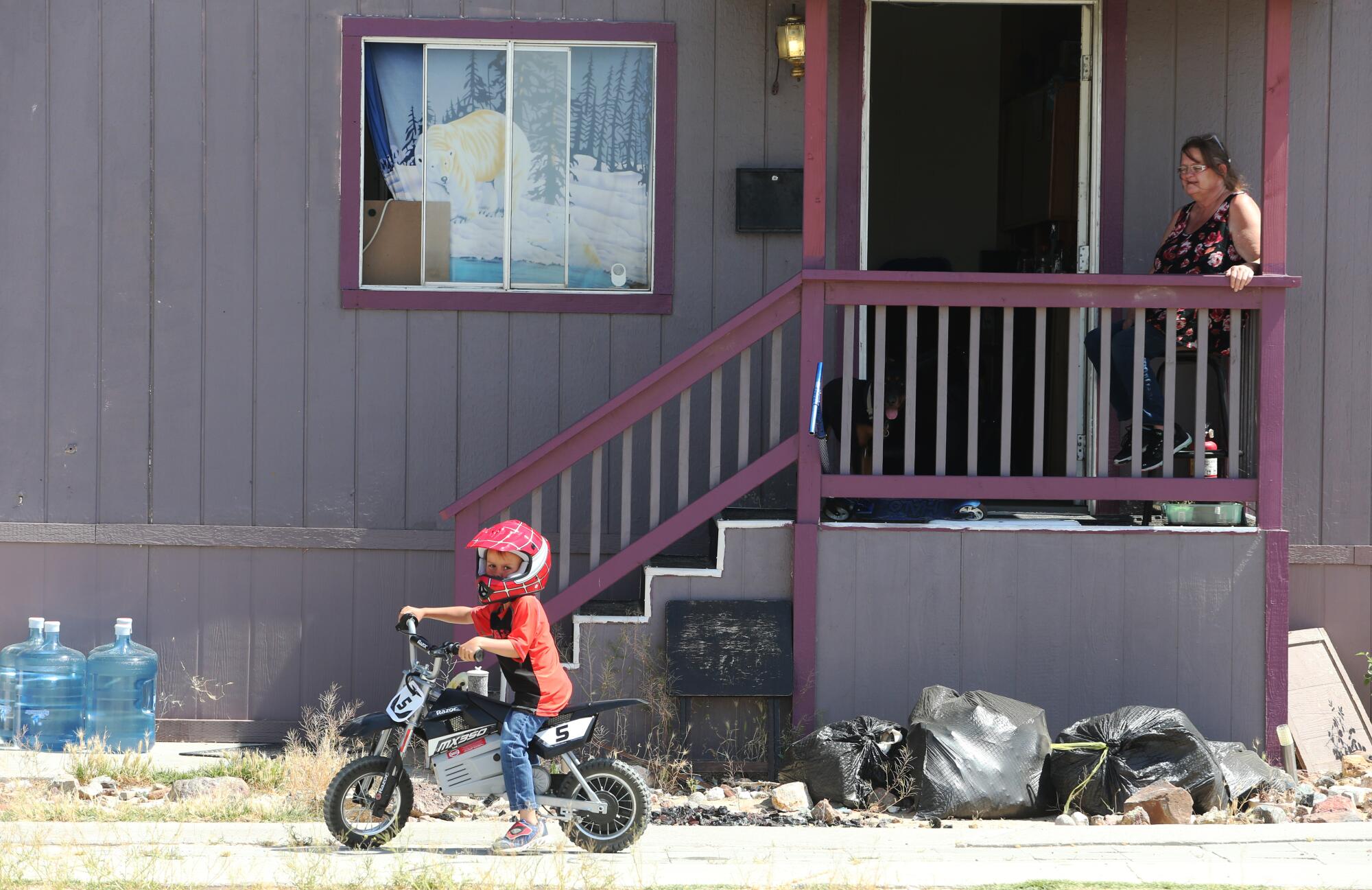
For Dana Ezelle, the lack of safe drinking water is something she lived with for nearly 20 years.
When she moved into her purple trailer in the Antelope Valley — just north of the dry lake bed where NASA’s space shuttle would make its return to Earth — she was warned that the tap water had high levels of arsenic.
“They said to drink the water at your own risk,” she said. And she did, because she couldn’t afford to buy bottled water.
Advertisement
Arsenic is a naturally occurring element that can cause cancer with chronic, long-term exposure. Consumption of large doses of arsenic in drinking water can also cause nausea, vomiting, diarrhea, numbness in the fingers and toes, partial paralysis or discoloration of the skin. It has also been associated with harmful effects on children’s cognitive development and decreased mental abilities among adults.
Since 1999, Fountain Trailer Park in North Edwards has received 74 violations for exceeding safe drinking water standards for arsenic. In the last three years, customers received notices that their water has arsenic up to eight times the state’s threshold of 10 parts per billion, according to data obtained by The Times. Plans are underway to connect the trailer park with a larger water system; however, that system is also contaminated.https://www.latimes.com/projects/california-drinking-water-contamination/north-edwards/
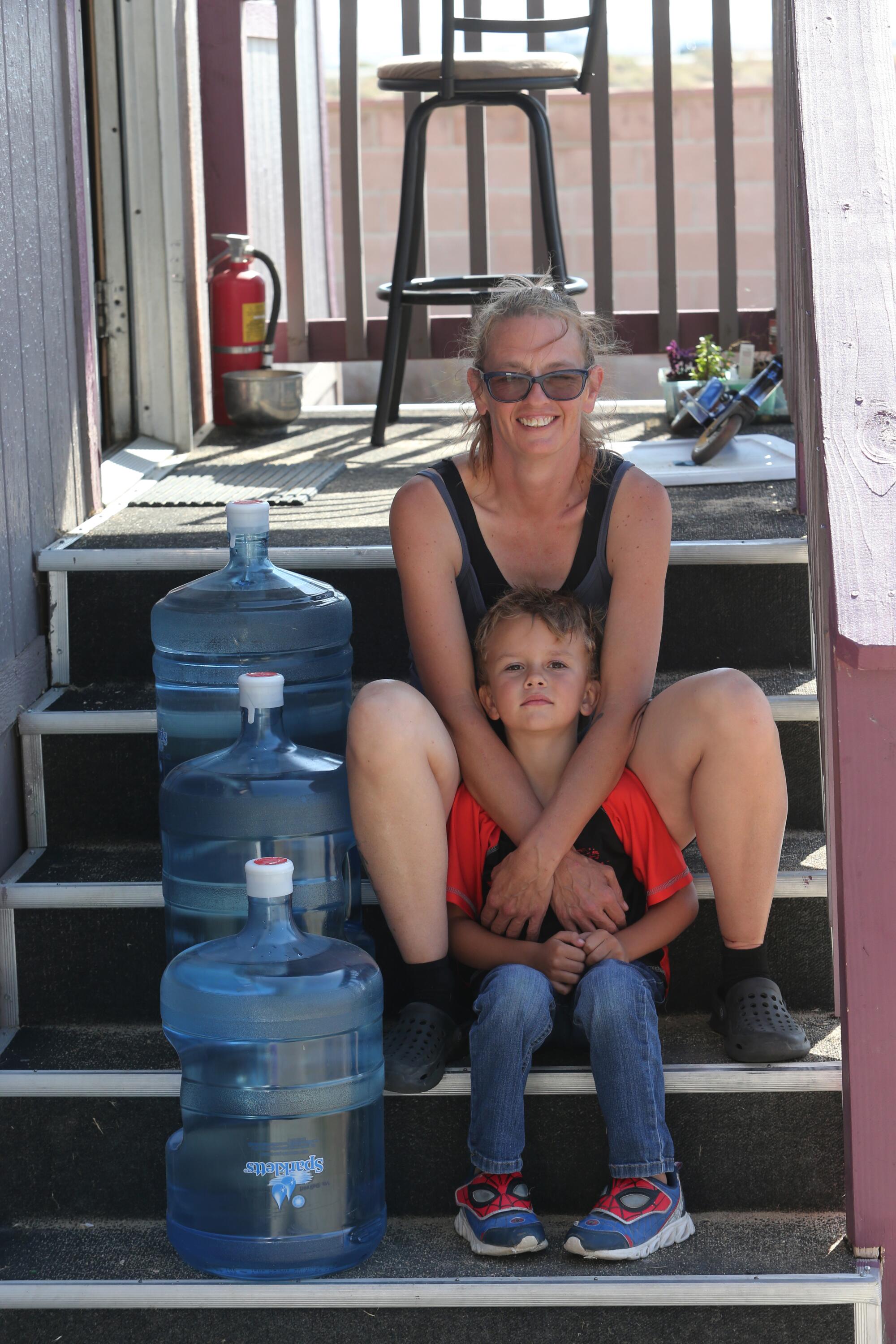
Before she recently moved, Ezelle, 47, still drank and cooked with the tap water. She saved the water deliveries — six 5-gallon jugs every other week — mostly for Adam, her blond and musically inclined son. She said that she hadn’t had a normal bowel movement since she moved to the desert community, and that their skin was always dry and itchy from showering.
In the summer, when temperatures in their home surged to 120 degrees, they finished the safe water within days.
“If I run out of Sparkletts water, my son and I are forced to drink this water because I don’t make enough to buy more,” said Ezelle, a single mother who until recently survived on some $12,900 a year.
Advertisement
As she spoke, four empty jugs stood on the floor nearby. It would be another week before the delivery of more clean water.
Experts, officials and community activists say the proliferation of failing systems is due to multiple factors — aging infrastructure; inadequate financial, managerial and technical capacity within systems; aquifer overpumping; decades of discriminatory policies and chronic disinvestment in affected communities.
They also blame widespread use of agricultural fertilizers and fumigants, and say the health risks are borne disproportionately by rural, low-income and predominantly nonwhite communities.
“The issue is, [the human right to water] is a moral obligation more than a legal obligation,” said Mark Gold, director of water scarcity solutions for the Natural Resources Defense Council. “That’s why you see the results that we’ve had. Unless there’s a legal obligation to clean up the water supply and provide it to your residents, then we end up perpetuating the system that we have, which is environmental racism.”
In California, the State Water Resources Control Board is responsible for enforcing regulations that ensure systems meet federal and state drinking water standards. As part of its role, the board’s Division of Drinking Water monitors risks that could tip water systems to failure — such as violations of drinking water standards and treatment techniques; extreme water bills and household socioeconomic burden; and the net annual income of system ratepayers.
In effort to address failing systems, Gov. Gavin Newsom established the Safe and Affordable Drinking Water Fund, which provides $130 million annually until June 2030 for struggling water systems. Similarly, California’s Safe and Affordable Funding for Equity and Resilience Program, administered by the water board, provides tools — including maps and data, funding sources and regulatory powers — to increase access to clean drinking water. Under the program, the board works with residents, water systems, local governments and other agencies in an effort to achieve the state’s goal of providing safe, clean, affordable and accessible water to all of its residents for drinking, cooking and sanitary needs. Other drinking water funds have also been established.
Yet water system operators and organizations working with them say they are frustrated with the lengthy and complicated application process and how long it can take to complete projects.
Since 2008, the water system in El Adobe, on the outskirts of Bakersfield, has exceeded arsenic standards. Although it has agreed to consolidate with the nearby Lamont Public Utility District — an effort that has received a $25.4-million grant from the water board — the state estimates the project won’t be completed until June 2025.
Kyle Wilkerson, president of the El Adobe Property Owners Assn. who runs its water system on a voluntary basis, said he’s frustrated by the length of time it’s taken to get clean water.
“This is just ridiculous. There’s no reason for it to take this long,” he said. “They keep saying two years, three years or six years, and it’s been 12 years since I’ve been out here.”
The board said the consolidation has taken time partly because Lamont’s water is also contaminated, which has to be remediated first.
Advertisement
A state audit blamed the water board’s “lack of goals and metrics” for likely delays and warned that “the longer the board takes to fund projects, the more expensive those projects become. More importantly, delays increase the likelihood of negative health outcomes for Californians served by the failing water systems.”
State water officials disputed the auditor’s criticisms. They said they’ve reduced the number of people affected by failing water systems by 40% between 2019 and 2022 — from 1.6 million people to 934,000.
Also, in March, the State Water Board adopted new protocols for its Expedited Drinking Water Grant Program to fast-track projects in disadvantaged communities. Joe Karkoski, deputy director and head of the board’s Division of Financial Assistance, said officials are hoping to expedite funding approvals from a year or more to four to six months. But he acknowledged the goal is ambitious.
Newsletter
Toward a more sustainable California
Get Boiling Point, our newsletter exploring climate change, energy and the environment, and become part of the conversation — and the solution.Enter email addressSign Me Up
You may occasionally receive promotional content from the Los Angeles Times.
E. Joaquin Esquivel, chair of the water board, acknowledged the scope and complexity of the challenge but also touted the state’s progress in recent years. Since 2019, more than 200 systems that were failing to meet drinking water standards have been brought into compliance, he said. He attributed the gains partly to $600 million in grant funding that has gone to small and disadvantaged communities.
Yet funding and local roadblocks, such as volunteer-run and under-resourced boards, remain fundamental obstacles, he said. He conceded that it was a “travesty” that one of the largest economies in the world had so many people living without reliable drinking water.
“I take the charge very seriously and with a lot of humility when I hear about the endemic lack of investment and attention,” Esquivel said, noting that he grew up in the eastern Coachella Valley and has seen many of these challenges firsthand.
The pressure of more droughts, floods and other challenges due to climate change is only adding to the urgency. But California continues to have more stringent drinking water standards than any other state in the nation, he said. “At least we have technical capacity, money, and I hope the continued faith that California is actually leading the nation, and doing well by really difficult topics that span multiple generations.”
Athough a system that’s failing does not necessarily mean it’s contaminated, 77% of the state’s failing water systems have at least one contaminant exceeding safe drinking water standards. In Kern County, 83% of failing water systems have exceeded a maximum contaminant level, or MCL.
The most common contaminants in 2022 were arsenic, which is colorless and odorless; nitrate, which can come from animal manure, fertilizers and sewage leaks; and 1,2,3-Trichloropropane, a carcinogen found in industrial solvents and some pesticides.
According to state data, 22% of primary MCL violations last year were for arsenic, and 22% were for nitrate, the highest of any contaminants. Twenty percent were for 1,2,3-TCP.
Systems are required to routinely test their water sources. If test results exceed an MCL, systems must attempt to address the contamination, such as with treatment techniques or dilution. When it can’t get levels below standards, they must routinely notify customers that their drinking water is contaminated.
Across the state, 81 systems in the last three years have sent 850 notices to customers that their drinking water had high levels of one of the three most common contaminants, according to system-level data obtained by The Times.
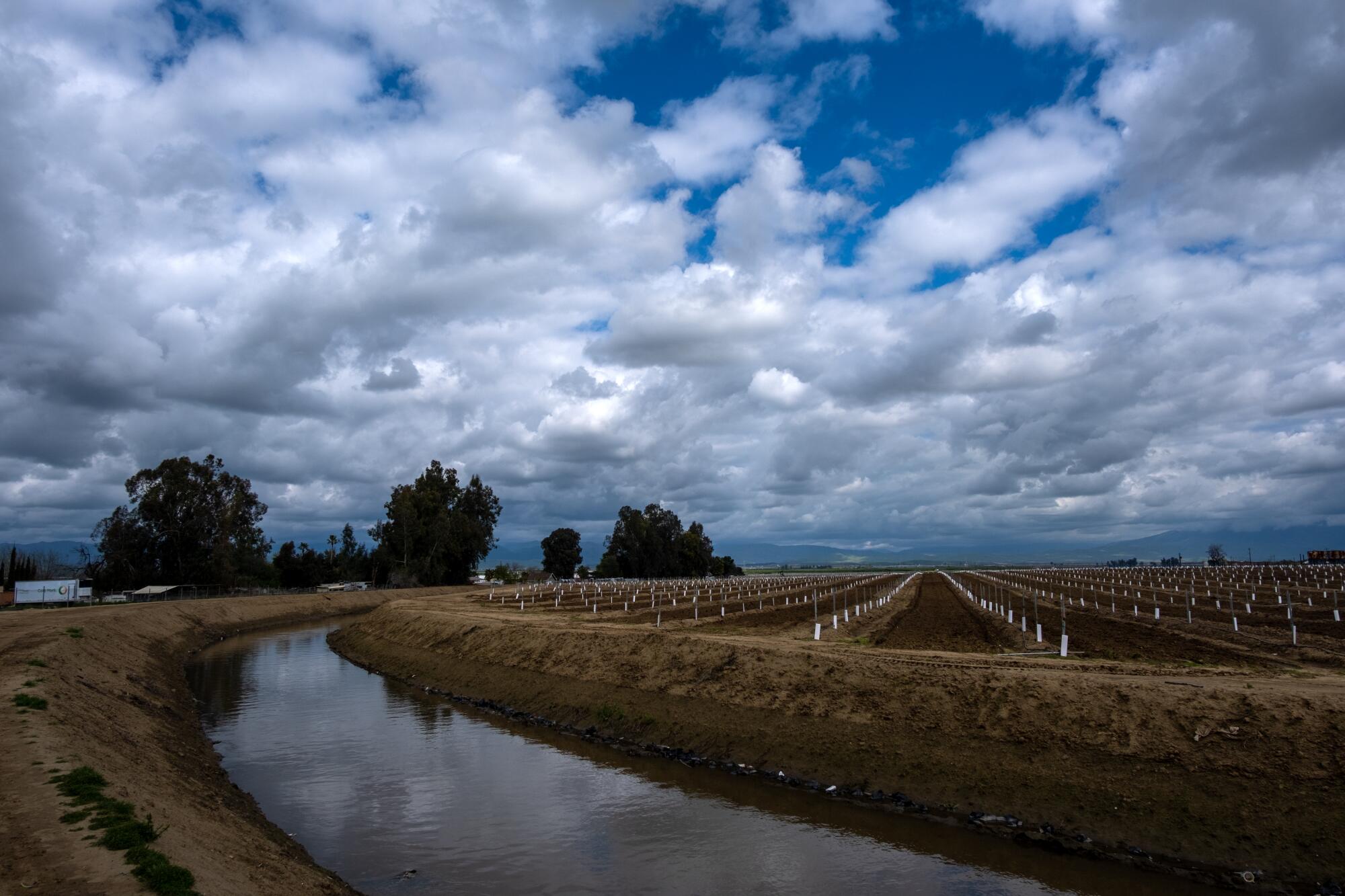
In Kern County — one of the most productive farming counties in the nation — the use of fertilizers and crop fumigants has resulted in numerous sources of contamination for nitrate and 1,2,3-TCP.
Arsenic is typically contained in rocks and sediment, but it can become soluble and enter groundwater supplies when it encounters conditions of low oxygen and high pH levels — both of which are particularly common in older groundwater.
That can be a major problem for the Central Valley, where worsening cycles of drought and dwindling supplies are causing growers to drill deeper than ever and tap into older reserves.
“Deeper wells that have generally older groundwater tend to have more of a problem with arsenic than shallower wells,” said John Izbicki, a research hydrologist with the California Water Science Center. “In places like the San Joaquin Valley, where shallower wells have, over the last many decades, extracted more recent groundwater, people are going deeper and deeper, and problems with arsenic are becoming increasingly common.”
Izbicki said he’s sampled wells with concentrations as high as 1,500 parts per billion, and some colleagues have even seen numbers as high as 10,000 in the Central Valley.
A recent study estimated that nearly 1.5 million people in the Central Valley rely on public water systems that may have moderate or high levels of arsenic. Elevated nitrate levels may affect more than 500,000 people.
Clean water advocates say delays in addressing such problems have potentially grave health impacts.
Joseph Heide, community development manager at the nonprofit Self-Help Enterprises, said that projects to address water quality problems can take five to 10 years to finish, and that officials need to expedite them to three.
“We need to make sure small, disadvantaged communities have the resources and the funding to fix their water within that three-year time period, because this has real impacts,” said Heide, who helps under-resourced communities access clean drinking water in the San Joaquin Valley — the fertile southern region of the Central Valley.
“There are real people on the ground that have lived with arsenic in their water for 10, 15 years. … People drinking water with arsenic or 1,2,3-TCP have higher rates of cancer, and you can definitely see that in the Central Valley.”
Although statistics indicate that Central Valley counties have a moderate cancer prevalence compared with other regions in the state, cancer was the second-leading cause of deaths in Fresno County from 2016 to 2020 and the first in Kern County from 2008 to 2018. Another recent study found that thyroid cancer associated with high nitrate contamination in drinking water wells is widespread in the Central Valley and disadvantaged communities, which had double the incidences of non-disadvantaged communities.
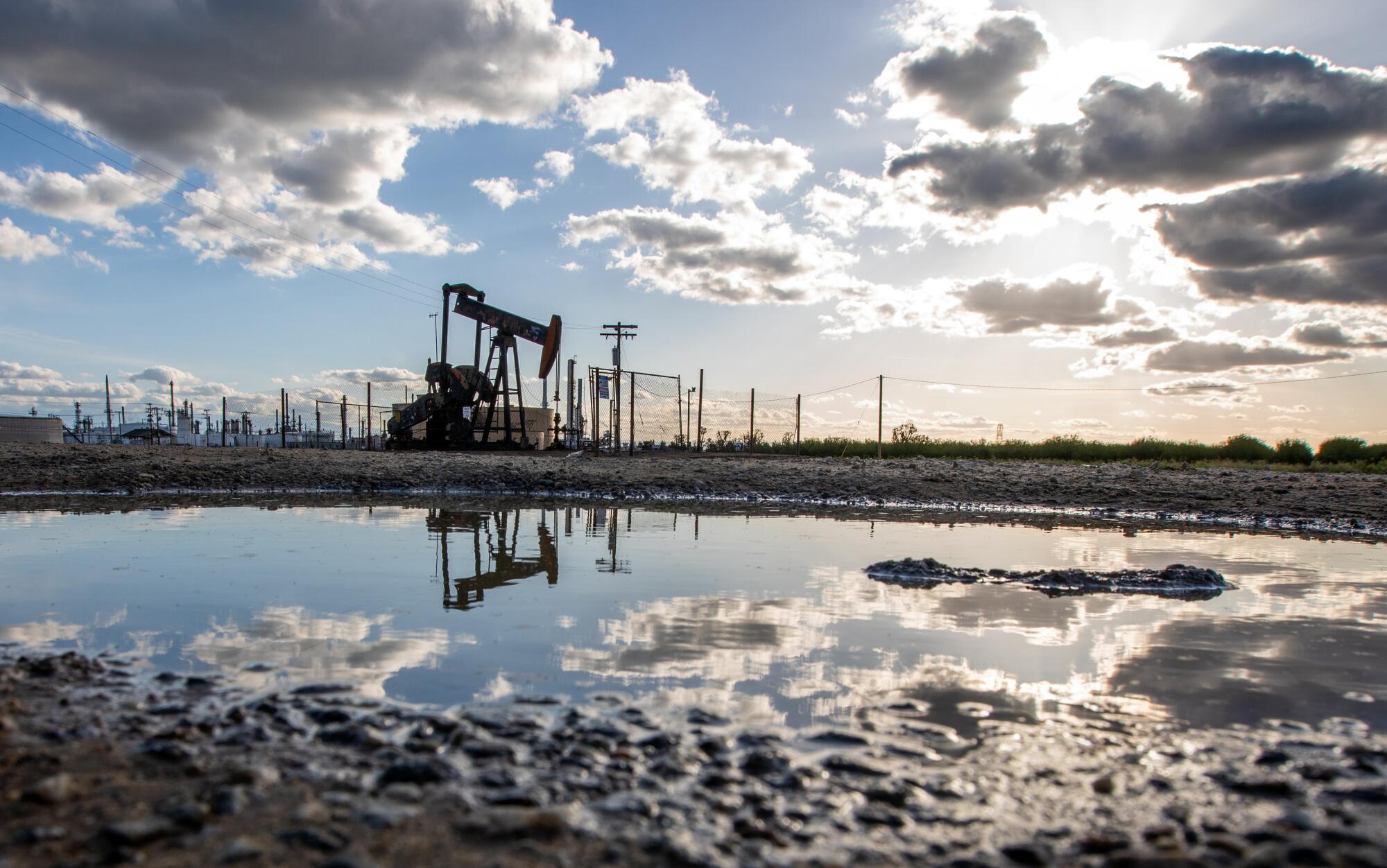
In Fuller Acres, where oil pumpjacks bob amid lush orchards, Maria Martinez and her family had never heard of 1,2,3-Trichloropropane until 2018, when they received a notice saying the tap water in their home had high levels of the chemical.
A component of soil fumigants that Central Valley growers once used to kill microscopic plant pests, 1,2,3-TCP causes cancer in lab animals, as well as liver and kidney damage, and is presumed to do the same in humans. Short-term exposure can cause eye, throat and skin irritation, and may affect memory, concentration and muscle coordination.https://latimes.com/projects/california-drinking-water-contamination/fuller
The presence of the chemical has generated numerous lawsuits over the years by water suppliers against the Dow Chemical and Shell Oil companies, accusing the manufacturers of failing to warn people of the risks. Although the potential health effects had been known for decades, it wasn’t until 2018 that the state mandated testing for the carcinogen.
News of the contamination concerned Martinez.
“I used the water for many years, and I don’t know if there will be future health risks,” said Martinez, 64, who moved to the rural, unincorporated community near downtown Bakersfield about 30 years ago. She said neighbors and others in the area have died from stomach cancer, and she and others wonder if their water was to blame.
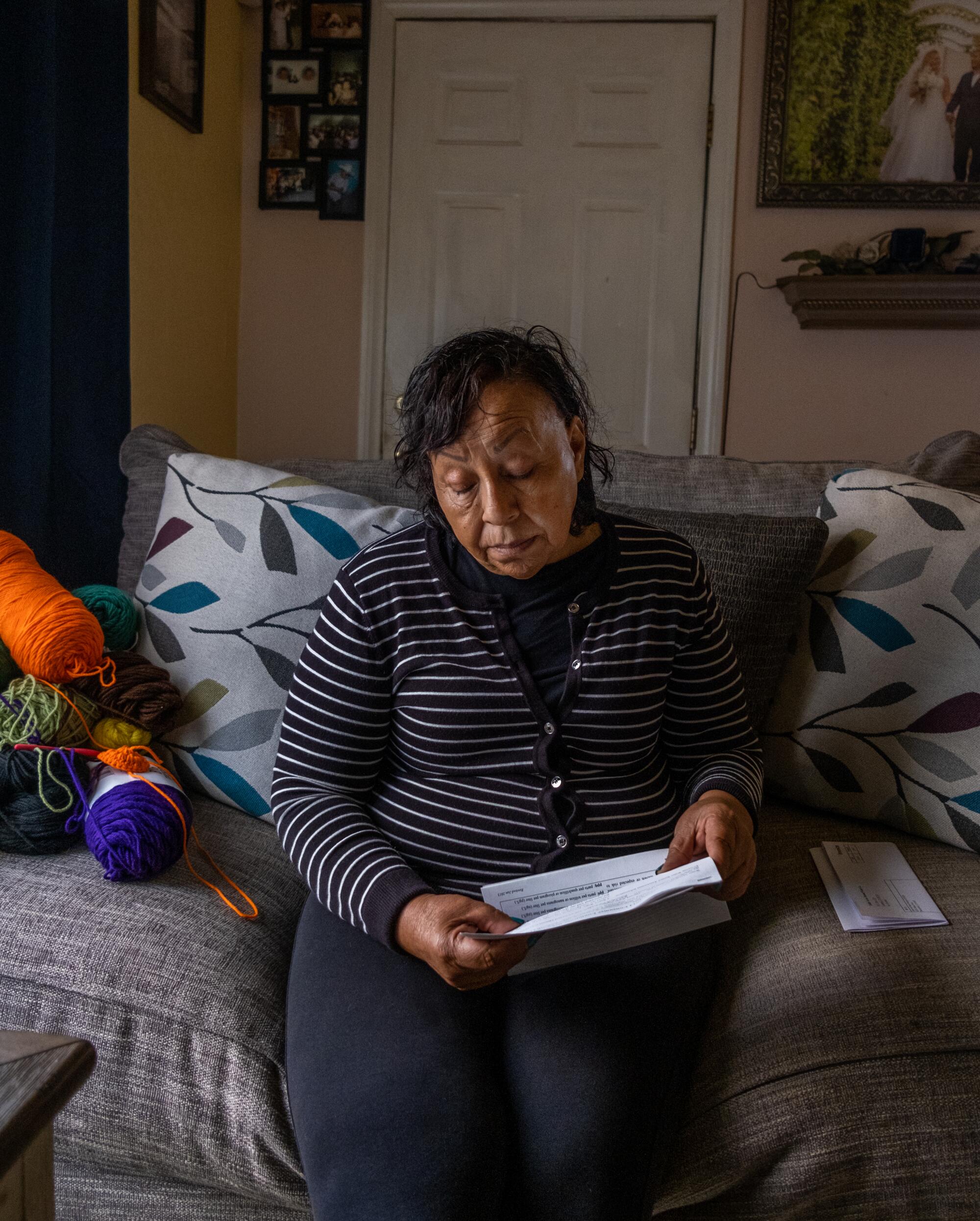
Residents recently started receiving potable water after asking their provider, Fuller Acres Mutual Water Co., to apply for state-funded water deliveries until a project to address the contamination is completed. But that may take years. For now, the 5-gallon jugs every two weeks are enough for cooking and brewing coffee, but the Martinez family still buys their own bottled water, spending some $50 a month in addition to a $70 monthly water bill. There’s also the price of gas. It’s an economic stressor for a family living off some $14,500 a year.
They also worry about other forms of exposure: Showering. Washing dishes. Brushing their teeth. Eating fruits and vegetables from their gardens.
Living like this, Martinez said, makes her and her family feel neglected.
“We’re a really poor community and a community with lots of problems.” Even in Guanajuato, Mexico, a less affluent state where she was born and raised, communities had things like sewer systems and streetlights, she said. “And those of us living in the United States, where people supposedly live the American dream, we don’t have a sewer system and clean water.”
Some experts worry the growth of failing Central Valley water systems offers a glimpse into California’s future as climate change, drought, groundwater overpumping, aging infrastructure and heightened water standards push more systems to the brink. They say that addressing these failures will require not only more effort by the state, but from local officials as well.
“I think with enough resources, money, people and political will, the human right to water is absolutely achievable in California,” said Max Gomberg, an independent consultant working with environmental justice advocates and a former staffer at the State Water Board. “But it’s going to take all of that to a degree that has not been provided in the 11 years since the Human Right to Water Act was passed.”
Much of Kern County’s challenges have to do with the sheer number of public water systems in the county. Communities here rely heavily on groundwater, and many are served by small systems often run by volunteer boards with little staffing and limited income for long-term investments.
“A lot of these small systems operate to failure,” said Darrin Polhemus, deputy director and head of the Division of Drinking Water at the State Water Board. “A well-run, larger system never actually gets there.”
Contamination problems can surprise small water suppliers if they haven’t been doing sufficient maintenance or charging enough to pay for needed upgrades, he said.
It’s why state officials often believe that the best long-term solution is consolidation — connecting smaller failing suppliers to larger utilities or nearby towns. But some water systems are too remote to physically consolidate, and at roughly $1 million a mile, it’s a costly option and can be met with resistance.
To add to the challenges, some counties have not been active partners in remediation efforts. “The governing structures of the district level, then the communities and then the county, they’ve been really kind of hands off,” Polhemus said.
It’s a problem that clean water advocates have noticed as well.
“The state does have some responsibility in not addressing the challenge, but I think the board is trying to do a lot to address the issue,” said Erick Orellana, senior policy advocate for the nonprofit Community Water Center and a member of the Safe and Affordable Funding for Equity and Resilience Program’s advisory group. “It really just needs more local partners to help address the challenges, and certainly Kern County has not stepped up to be a partner yet.”
Amy Rutledge, assistant director of the Kern County Public Health Department, said the county can do only so much because it doesn’t regulate its public water systems.
Advertisement
“We are here to provide the water systems with any support they may need, answer any questions or concerns they may have and to facilitate between the water system and state as best as we can,” she said.
But getting counties and municipalities to be more involved is easier said than done.
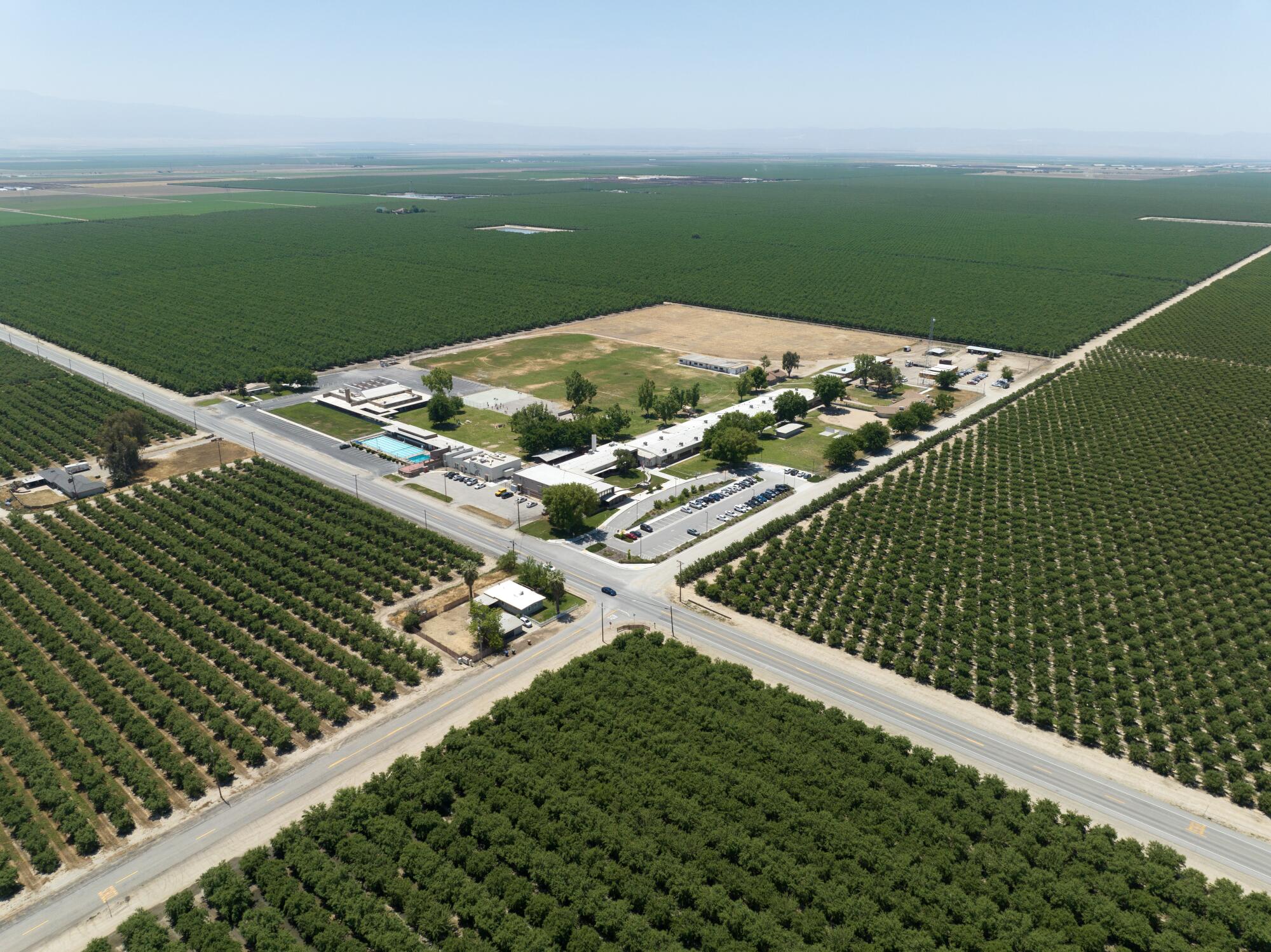
For more than a decade, the staff and students at Lakeside School in Bakersfield have been almost entirely reliant on bottled water. If you turn the taps on a classroom sink, nothing will come out.
Officials there have been reporting arsenic levels above the Environmental Protection Agency’s limit since 2009, with an average reading of about 18 parts per billion. The school district has tried a variety of solutions, including an attempt to have its water system join Bakersfield’s municipal system. But the city fought the proposal, stating that it didn’t want to take on the maintenance of that pipeline, according to Supt. Ty Bryson. After several years of going back and forth, the city prevailed, and the proposal fizzled. https://www.latimes.com/projects/california-drinking-water-contamination/lakeside/
On a Friday morning this spring, Principal Kristin Angelo pointed to a seating area that was installed where a cluster of water fountains once stood, and a hand-washing station where all the spigots had been capped and sealed.
“It would be nice to not have to worry about it,” Angelo said as kids queued up at one of the school’s water stations, where they filled paper cups from 5-gallon jugs that require near-constant replacement. “To not have to deal with cups and refilling bottles and then staffing to deliver them — it’s just a whole other layer.”
Colby, then a fifth-grader, said he wished he could use water from the stations for art projects, but it’s against the rules. “It would be nice to be able to turn it on and use as much as we want,” he said.
Lakeside is one of 57 schools in California with a failing water system, and 76 more are at risk of failing.
“They talk about a human right to water, and I think something like that is so basic and essential,” Bryson said. “I think it’s just sad that a kid can’t go to a drinking fountain at their school and get a drink of water.”