Montana State Prison Pipe Leaks Create Crisis and Prompt Broad Water System Overhaul

Nearly a week after leaks cut off water for about 1,500 inmates at the Montana State Prison in Deer Lodge, inmate Bryce Baltezar said it has created tension between guards and inmates

By Associated Press

U.S. News & World Report

Montana State Prison Pipe Leaks Create Crisis and Prompt Broad Water System Overhaul

More

Nearly a week after leaks cut off water for about 1,500 inmates at the Montana State Prison in Deer Lodge, inmate Bryce Baltezar said things at the facility are dystopian.

“As soon as you hit the door, it smells like (urine) smacking you right in the face,” Baltezar said in a phone interview with Montana Free Press on Tuesday. The smell of human waste, he continued, has become the new normal.

Recommended Videos

Baltezar said he’s concerned about sanitation and safety for the roughly 90% of the prison’s population affected by the leak. Montana State Prison houses male inmates and had a population of 1,597 as of Wednesday.

Water supply issues at the prison started at 6 a.m. on Oct. 10. The Department of Corrections has since identified several leaks, ultimately prompting a broad water infrastructure overhaul. The department has not clarified what caused the leaks, but spokesperson Carolynn Stocker said the department “has experienced numerous service interruptions at its various facilities related to extreme weather, failing infrastructure, and more, but none have risen to this level of emergency.”

In a press release Wednesday, Stocker said the prison’s water and sewer system was built in the 1970s and that “work on the system has for the most part been limited to fixing problems, not maintaining or improving the system for the long haul.”

Stocker said that the corrections department will start installing a new water system using $21 million from House Bill 5, a state facilities-focused infrastructure bill passed during the legislative session that concluded in April.

“Years of deferred maintenance have caught up with us, and we’re finding multiple failures throughout the system. We will continue providing water to our inmates while we take on this longer fix,” Department of Corrections Director Brian Gootkin said in the press release. He has instructed teams working on new units at the prison to begin the water system work as early as next week.

“We are going to simultaneously continue our work to identify the issues with the existing system and install a modern system that will take us into the future,” Gootkin said. “This is not going to be an easy couple of months for inmates or staff, but the end result will be worth it.”

While work is ongoing, water will be temporarily unavailable in some prison units throughout the day, the release stated. There are 153 portable toilets, 13 that are ADA-compliant, and 43 portable showers at the prison, according to a Tuesday statement from Stocker. It took until the end of Wednesday for all inmates to get a chance to shower since the leaks started. Inmates receive a rationed number of water bottles daily for drinking and hygiene.

Without operational plumbing across 10 buildings, temporary facilities are in short supply, creating tension between guards and inmates, Baltezar said. He said that he has been scrutinized and sometimes berated by correctional officers while using portable toilets, and that he has “never felt so dehumanized in my whole life.”

“I literally just came into my cell and called my wife crying,” Baltezar said.

The department has enlisted a range of groups to aid the situation. About a dozen employees from other branches of the agency have arrived at the facility to assist with security. The Montana National Guard has helped manage the water supply and deploy temporary showers. Water detection firms supported corrections in locating leaks around the premises.

Stocker said the agency was unable to offer an estimate of the incident’s total cost.

___

This story was originally published by Montana Free Press and distributed through a partnership with The Associated Press.

Copyright 2025 The Associated Press. All rights reserved. This material may not be published, broadcast, rewritten or redistributed.

CLICK HERE FOR MORE INFORMATION
https://www.usnews.com/news/best-states/montana/articles/2025-10-17/montana-state-prison-pipe-leaks-create-crisis-and-prompt-broad-water-system-overhaul

Why Alaska’s salmon streams are suddenly bleeding orange

Warming soil unleashes metals deadly to fish and food chains.

Source:University of California – Riverside

Summary:Warming Arctic permafrost is unlocking toxic metals, turning Alaska’s once-clear rivers into orange, acid-laced streams. The shift, eerily similar to mine pollution but entirely natural, threatens fish, ecosystems, and communities that depend on them—with no way to stop the process once it starts.Share:


FULL STORY


Alaska’s Salmon Streams Are Bleeding Orange
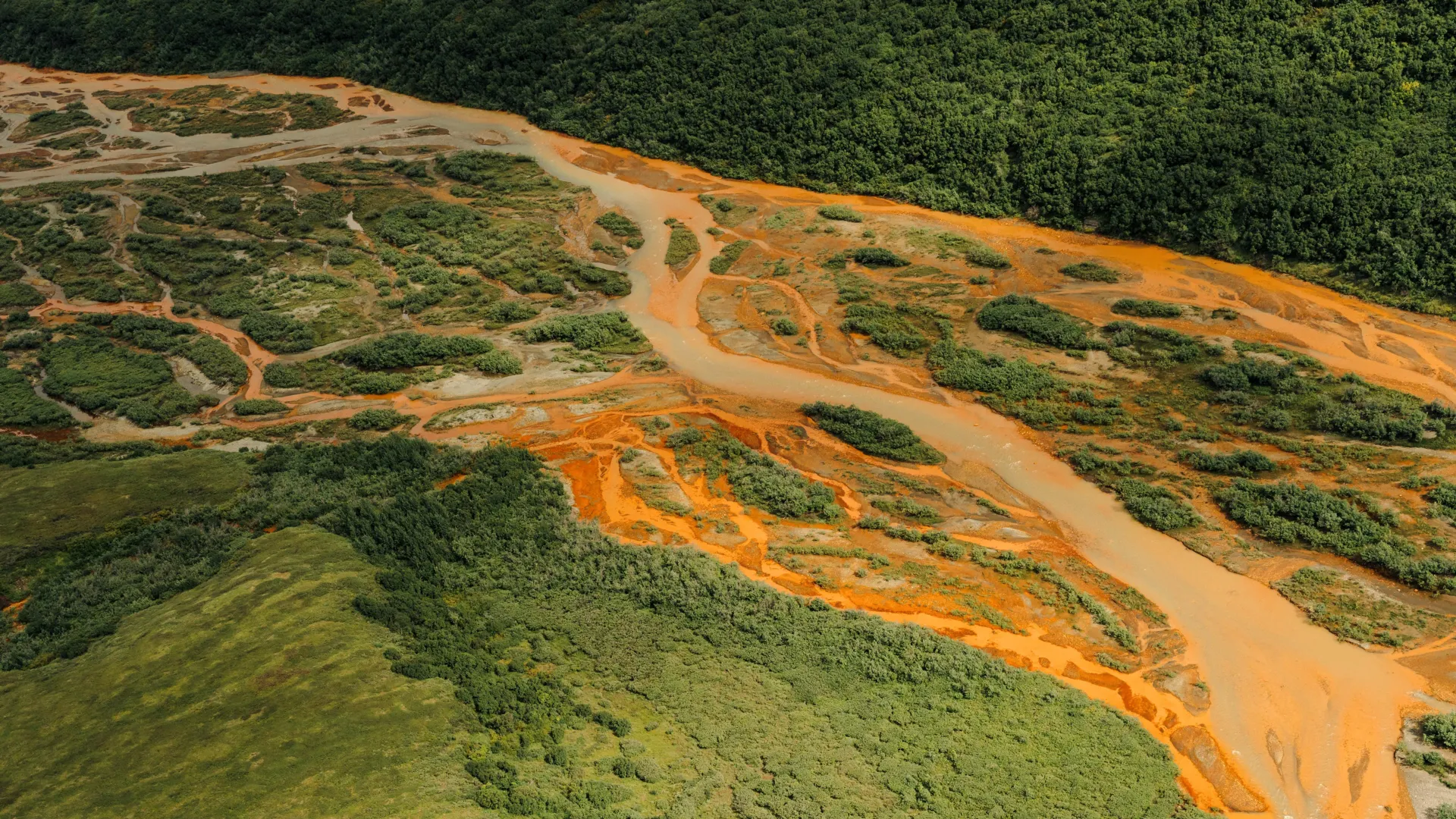
The Salmon River in Alaska now runs a rusty orange thanks to metal contaminants unleashed by thawing permafrost. Credit: Taylor Rhoades

In Alaska’s Brooks Range, rivers once clear enough to drink now run orange and hazy with toxic metals. As warming thaws formerly frozen ground, it sets off a chemical chain reaction that is poisoning fish and wreaking havoc on ecosystems.

As the planet warms, a layer of permafrost — permanently frozen Arctic soil that locked away minerals for millennia — is beginning to thaw. Water and oxygen creep into the newly exposed soil, triggering the breakdown of sulfide-rich rocks, and creating sulfuric acid that leaches naturally occurring metals like iron, cadmium, and aluminum from rocks into the river.

Often times, geochemical reactions like these are triggered by mining operations. But that is not the case this time.

“This is what acid mine drainage looks like,” said Tim Lyons, a biogeochemist at the University of California, Riverside. “But here, there’s no mine. The permafrost is thawing and changing the chemistry of the landscape.”

A new paper detailing the severity of the contamination has been published in the Proceedings of the National Academy of Sciences. Though the study focuses on the Salmon River, researchers warn that similar transformations are already underway across dozens of other Arctic watersheds.

“I have worked and traveled in the Brooks Range since 1976, and the recent changes in landforms and water chemistry are truly astounding,” said David Cooper, Colorado State University research scientist and study co-author.

Ecologist Paddy Sullivan of the University of Alaska first noticed the dramatic changes in 2019 while conducting fieldwork on Arctic forests shifting northward — another consequence of climate change. A pilot flying Sullivan into the field warned him the Salmon River hadn’t cleared up after the snowmelt and looked “like sewage.” Alarmed by what he saw, Sullivan joined forces with Lyons, Roman Dial from Alaska Pacific University, and others to investigate the causes and ecological consequences.

Their analysis confirmed that thawing permafrost was unleashing geochemical reactions that oxidize sulfide-rich rocks like pyrite, generating acidity and mobilizing a wide suite of metals, including cadmium, which accumulates in fish organs and could affect animals like bears and birds that eat fish.

In small amounts, metals aren’t necessarily toxic. However, the study shows that levels of metals in the river’s waters exceed U.S. Environmental Protection Agency toxicity thresholds for aquatic life. In addition, the iron-clouded waters reduce the amount of light reaching the bottom of the river and smother insect larvae eaten by the salmon and other fish.

While current metal concentrations in edible fish tissue are not considered hazardous to humans, the changes to the rivers pose indirect but serious threats. Chum salmon, a key subsistence species for many Indigenous communities, might struggle to spawn in gravel beds choked with fine sediment. Other species, such as grayling and Dolly Varden, may also be affected.

“It’s not just a Salmon River story,” Lyons said. “This is happening across the Arctic. Wherever you have the right kind of rock and thawing permafrost, this process can start.”

Unlike mine sites, where acid drainage can be mitigated with buffers or containment systems, these remote watersheds might have hundreds of contamination sources and no such infrastructure. Once the chemical process begins, the only thing that can stop it is recovery of the permafrost.

“There’s no fixing this once it starts,” Lyons said. “It’s another irreversible shift driven by a warming planet.”

The study, funded by the National Science Foundation’s Rapid Response program, highlights the potential danger for other Arctic regions. The researchers would like to help communities and land managers anticipate future impacts and, when possible, prepare for them.

“There are few places left on Earth as untouched as these rivers,” Lyons said. “But even here, far from cities and highways, the fingerprint of global warming is unmistakable. No place is spared.”

CLICK HERE FOR MORE INFORMATION

https://www.sciencedaily.com/releases/2025/09/250918011602.htm

Scientists finally solve the mystery of ghostly halos on the ocean floor

Initially thought to contain the pesticide DDT, study reveals some barrels contained caustic alkaline waste.

Source:University of California – San Diego

Summary:Barrels dumped off Southern California decades ago have been found leaking alkaline waste, not just DDT, leaving behind eerie white halos and transforming parts of the seafloor into toxic vents. The findings reveal a persistent and little-known legacy of industrial dumping that still shapes marine life today.Share:


FULL STORY


Scientists Solve the Mystery of Ghostly Halos
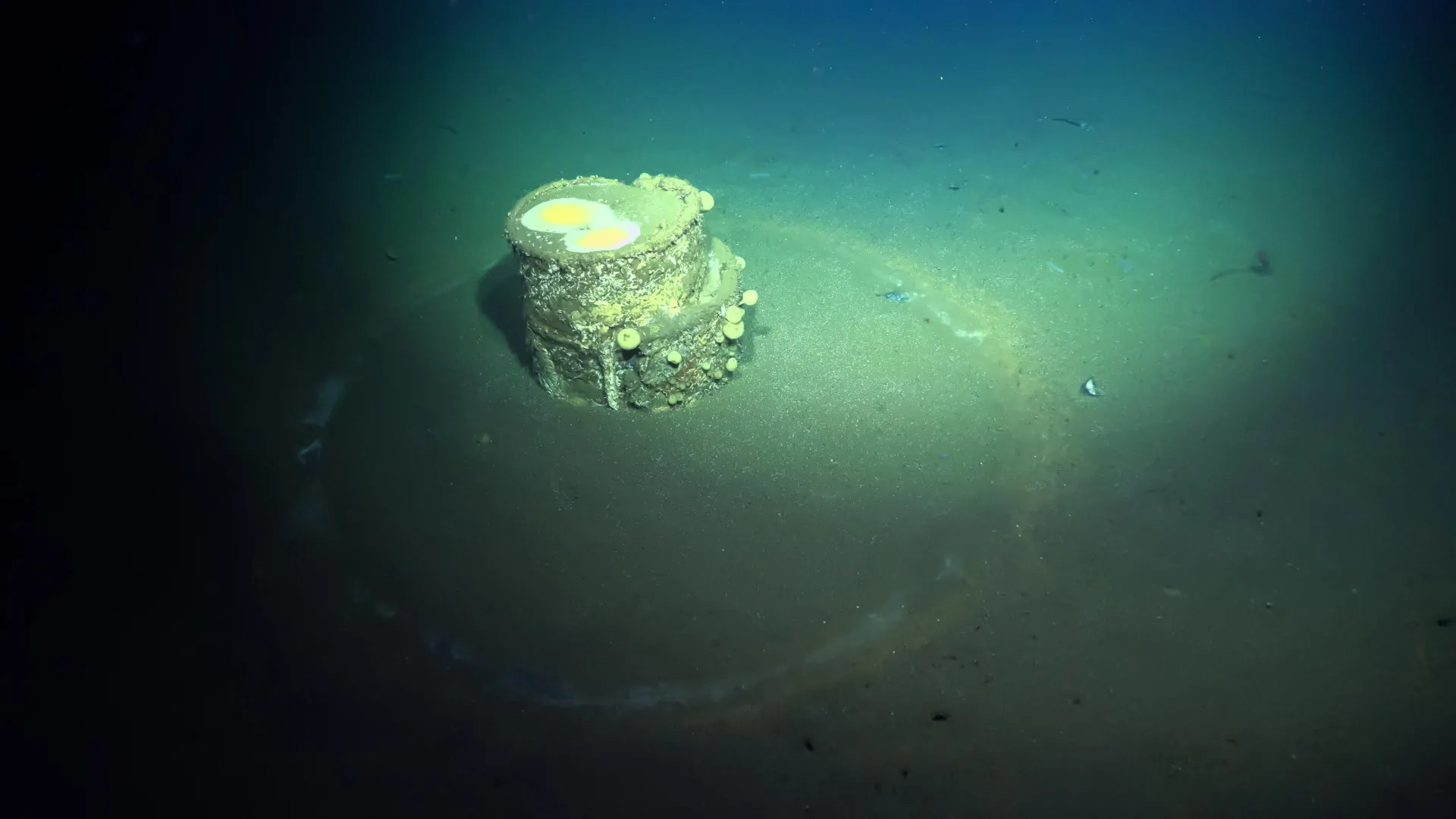
A discarded barrel on the seafloor off the coast of Los Angeles. The image was taken during a survey in July 2021 by remotely operated vehicle SuBastian. Credit: Schmidt Ocean Institute

In 2020, haunting images of corroded metal barrels in the deep ocean off Los Angeles leapt into the public consciousness. Initially linked to the toxic pesticide DDT, some barrels were encircled by ghostly halos in the sediment. It was unclear whether the barrels contained DDT waste, leaving the barrels’ contents and the eerie halos unexplained.

Now, new research from UC San Diego’s Scripps Institution of Oceanography reveals that the barrels with halos contained caustic alkaline waste, which created the halos as it leaked out. Though the study’s findings can’t identify which specific chemicals were present in the barrels, DDT manufacturing did produce alkaline as well as acidic waste. Other major industries in the region such as oil refining also generated significant alkaline waste.

“One of the main waste streams from DDT production was acid and they didn’t put that into barrels,” said Johanna Gutleben, a Scripps postdoctoral scholar and the study’s first author. “It makes you wonder: What was worse than DDT acid waste to deserve being put into barrels?”

The study also found that the caustic waste from these barrels transformed portions of the seafloor into extreme environments mirroring natural hydrothermal vents — complete with specialized bacteria that thrive where most life cannot survive. The study authors said the severity and extent of this alkaline waste’s impacts on the marine environment depend on how many of these barrels are sitting on the seafloor and the specific chemicals they contained.

Despite these unknowns, Paul Jensen, emeritus marine microbiologist at Scripps and senior author of the study, said that he would have expected the alkaline waste to quickly dissipate in seawater. Instead, it has persisted for more than half a century, suggesting this alkaline waste “can now join the ranks of DDT as a persistent pollutant with long-term environmental impacts.”

The study, published on September 9 in the Proceedings of the National Academy of Sciences Nexus and supported by NOAA and the University of Southern California’s Sea Grant program, continues Scripps’ leadership role in unspooling the toxic legacy of once-legal ocean dumping off the coast of Southern California. The findings also provide a way of visually identifying barrels that formerly contained this caustic alkaline waste.

“DDT was not the only thing that was dumped in this part of the ocean and we have only a very fragmented idea of what else was dumped there,” said Gutleben. “We only find what we are looking for and up to this point we have mostly been looking for DDT. Nobody was thinking about alkaline waste before this and we may have to start looking for other things as well.”

From the 1930s until the early 1970s, 14 deep-water dump sites off the coast of Southern California received “refinery wastes, filter cakes and oil drilling wastes, chemical wastes, refuse and garbage, military explosives and radioactive wastes,” according to the EPA. A pair of Scripps-led seafloor surveys in 2021 and 2023 identified thousands of objects, including hundreds of discarded military munitions. The number of barrels on the seafloor remains unknown. Sediments in the area are heavily contaminated with the pesticide DDT, a chemical banned in 1972 now known to harm humans and wildlife. Scant records from this time period suggest DDT waste was largely pumped directly into the ocean.

Gutleben said she and her co-authors didn’t initially set out to solve the halo mystery. In 2021, aboard the Schmidt Ocean Institute’s Research Vessel Falkor, she and other researchers collected sediment samples to better understand the contamination near Catalina. Using the remotely operated vehicle (ROV) SuBastian, the team collected sediment samples at precise distances from five barrels, three of which had white halos.

The barrels featuring white halos presented an unexpected challenge: Inside the white halos the sea floor suddenly became like concrete, preventing the researchers from collecting samples with their coring devices. Using the ROV’s robotic arm, the researchers collected a piece of the hardened sediment from one of the halo barrels.

The team analyzed the sediment samples and the hardened piece of halo barrel crust for DDT concentrations, mineral content and microbial DNA. The sediment samples showed that DDT contamination did not increase closer to the barrels, deepening the mystery of what they contained.

During the analysis, Gutleben struggled to extract microbial DNA from the samples taken through the halos. After some unsuccessful troubleshooting in the lab, Gutleben tested one of these samples’ pH. She was shocked to find that the sample’s pH was extremely high — around 12. All the samples from near the barrels with halos turned out to be similarly alkaline. (An alkaline mixture is also known as a base, meaning it has a pH higher than 7 — as opposed to an acid which has a pH less than 7).

This explained the limited amount of microbial DNA she and her colleagues had been able to extract from the halo samples. The samples turned out to have low bacterial diversity compared to other surrounding sediments and the bacteria came from families adapted to alkaline environments, like deep-sea hydrothermal vents and alkaline hot springs.

Analysis of the hard crust showed that it was mostly made of a mineral called brucite. When the alkaline waste leaked from the barrels, it reacted with magnesium in the seawater to create brucite, which cemented the sediment into a concrete-like crust. The brucite is also slowly dissolving, which maintains the high pH in the sediment around the barrels, and creates a place only few extremophilic microbes can survive. Where this high pH meets the surrounding seawater, it forms calcium carbonate that deposits as a white dust, creating the halos.

“This adds to our understanding of the consequences of the dumping of these barrels,” said Jensen. “It’s shocking that 50-plus years later you’re still seeing these effects. We can’t quantify the environmental impact without knowing how many of these barrels with white halos are out there, but it’s clearly having a localized impact on microbes.”

Prior research led by Lisa Levin, study co-author and emeritus biological oceanographer at Scripps, showed that small animal biodiversity around the barrels with halos was also reduced. Jensen said that roughly a third of the barrels that have been visually observed had halos, but it’s unclear if this ratio holds true for the entire area and it remains unknown just how many barrels are sitting on the seafloor.

The researchers suggest using white halos as indicators of alkaline waste could help rapidly assess the extent of alkaline waste contamination near Catalina. Next, Gutleben and Jensen said they are experimenting with DDT contaminated sediments collected from the dump site to search for microbes capable of breaking down DDT.

The slow microbial breakdown the researchers are now studying may be the only feasible hope for eliminating the DDT dumped decades ago. Jensen said that trying to physically remove the contaminated sediments would, in addition to being a huge logistical challenge, likely do more harm than good.

“The highest concentrations of DDT are buried around 4 or 5 centimeters below the surface — so it’s kind of contained,” said Jensen. “If you tried to suction that up you would create a huge sediment plume and stir that contamination into the water column.”

In addition to Gutleben, Jensen and Levin, Sheila Podell, Douglas Sweeney and Carlos Neira of Scripps Oceanography co-authored the study, alongside Kira Mizell of the U.S. Geological Survey.

CLICK HERE FOR MORE INFORMATION

https://www.sciencedaily.com/releases/2025/09/250910000244.htm

A monster seaweed bloom is taking over the Atlantic

Source:Florida Atlantic University

Summary:Sargassum has escaped the Sargasso Sea and exploded across the Atlantic, forming the massive Great Atlantic Sargassum Belt. Fueled by nutrient runoff, Amazon outflows, and climate events, these blooms now reshape ecosystems, economies, and coastlines on a staggering scale.Share:


FULL STORY


Monster Seaweed Bloom Taking Over the Atlantic
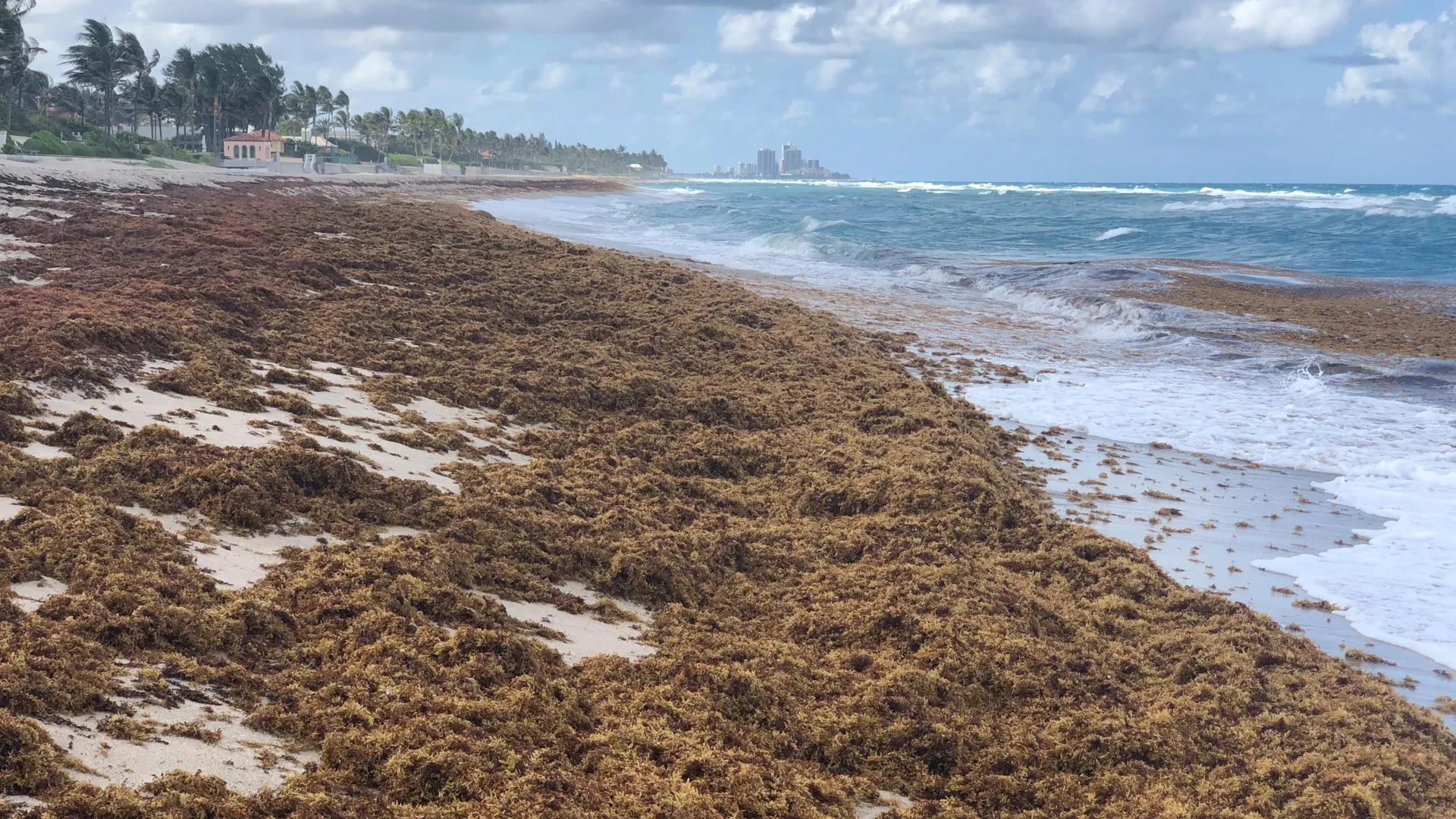
Sargassum on a beach in Palm Beach County in 2021. Credit: Brian Lapointe, FAU Harbor Branch

Researchers at Florida Atlantic University’s Harbor Branch Oceanographic Institute have released a landmark review tracing four decades of changes in pelagic sargassum – free-floating brown seaweed that plays a vital role in the Atlantic Ocean ecosystem.

Once thought to be primarily confined to the nutrient-poor waters of the Sargasso Sea, sargassum is now recognized as a rapidly growing and widely distributed marine organism, whose expansion across the Atlantic is closely linked to both natural processes and human-induced nutrient enrichment.

The review, published in the journal Harmful Algae, sheds new light on the origins and development of the Great Atlantic Sargassum Belt, a massive recurring bloom of sargassum that stretches across the Atlantic Ocean from the coast of West Africa to the Gulf of America.

Since its first appearance in 2011, this belt has formed nearly every year – except in 2013 – and in May, reached a new record biomass of 37.5 million tons. This does not include the baseline biomass of 7.3 million tons historically estimated in the Sargasso Sea.

By combining historical oceanographic observations, modern satellite imagery, and advanced biogeochemical analyses, this review provides a comprehensive framework for understanding the dramatic changes in sargassum distribution, productivity and nutrient dynamics. It also highlights the broader implications of anthropogenic nutrient enrichment on ocean ecology and the need for coordinated international efforts to monitor and manage the impacts of these massive seaweed blooms.

“Our review takes a deep dive into the changing story of sargassum – how it’s growing, what’s fueling that growth, and why we’re seeing such a dramatic increase in biomass across the North Atlantic,” said Brian Lapointe, Ph.D., lead author and a research professor at FAU Harbor Branch. “By examining shifts in its nutrient composition – particularly nitrogen, phosphorus and carbon – and how those elements vary over time and space, we’re beginning to understand the larger environmental forces at play.”

Early in the review, Lapointe and co-authors Deanna F. Webber, research coordinator; and Rachel Brewton, Ph.D., an assistant research professor, both with FAU Harbor Branch, explain that early oceanographers charted the Sargasso Sea based on surface sightings of sargassum, believing the seaweed thrived in its warm, clear, but nutrient-poor waters. However, this notion created a paradox when mid-20th-century oceanographers described the region as a “biological desert.”

However, recent satellite observations, ocean circulation models, and field studies have resolved this paradox by tracing the seasonal transport of sargassum from nutrient-rich coastal areas, particularly the western Gulf of America, to the open ocean via the Loop Current and Gulf Stream. These findings support early theories by explorers who proposed that Gulf-originating sargassum could feed populations in the Sargasso Sea.

Remote sensing technology played a pivotal role in these discoveries. In 2004 and 2005, satellites captured extensive sargassum windrows – long, narrow lines or bands of floating sargassum – in the western Gulf of America, a region experiencing increased nutrient loads from river systems such as the Mississippi and Atchafalaya.

“These nutrient-rich waters fueled high biomass events along the Gulf Coast, resulting in mass strandings, costly beach cleanups and even the emergency shutdown of a Florida nuclear power plant in 1991,” Lapointe said. “A major focus of our review is the elemental composition of sargassum tissue and how it has changed over time.”

Laboratory experiments and field research dating back to the 1980s confirmed that sargassum grows more quickly and is more productive in nutrient-enriched neritic waters than in the oligotrophic waters of the open ocean. Controlled studies revealed that the two primary species, sargassum natans and sargassum fluitans, can double their biomass in just 11 days under optimal conditions. These studies also established that phosphorus is often the primary limiting nutrient for growth, although nitrogen also plays a critical role.

From the 1980s to the 2020s, the nitrogen content of sargassum increased by more than 50%, while phosphorus content decreased slightly, leading to a sharp rise in the nitrogen-to-phosphorus (N:P) ratio.

“These changes reflect a shift away from natural oceanic nutrient sources like upwelling and vertical mixing, and toward land-based inputs such as agricultural runoff, wastewater discharge and atmospheric deposition,” said Lapointe. “Carbon levels in sargassum also rose, contributing to changes in overall stoichiometry and further highlighting the impact of external nutrient loading on marine primary producers.”

The review also explores how nutrient recycling within sargassum windrows, including excretion by associated marine organisms and microbial breakdown of organic matter, can sustain growth in nutrient-poor environments. This micro-scale recycling is critical in maintaining sargassum populations in parts of the ocean that would otherwise not support high levels of productivity.

Data from sargassum collected near the Amazon River mouth support the hypothesis that nutrient outflows from this major river contribute significantly to the development of the GASB. Variations in sargassum biomass have been linked to flood and drought cycles in the Amazon basin, further connecting land-based nutrient inputs to the open ocean.

The formation of the GASB appears to have been seeded by an extreme atmospheric event – the negative phase of the North Atlantic Oscillation in 2009 to 2010, which may have helped shift surface waters and sargassum from the Sargasso Sea southward into the tropical Atlantic.

However, the researchers caution that there is no direct evidence of this movement. Moreover, genetic and morphological data suggest that some sargassum populations, particularly the dominant S. natans var. wingei, were already present in the tropical Atlantic prior to 2011, indicating that this region may have had an overlooked role in the early development of the GASB.

“The expansion of sargassum isn’t just an ecological curiosity – it has real impacts on coastal communities. The massive blooms can clog beaches, affect fisheries and tourism, and pose health risks,” said Lapointe. “Understanding why sargassum is growing so much is crucial for managing these impacts. Our review helps to connect the dots between land-based nutrient pollution, ocean circulation, and the unprecedented expansion of sargassum across an entire ocean basin.”

This work was funded by the Florida Department of Emergency Management, United States Environmental Protection Agency, South Florida Program Project, and the NOAA Monitoring and Event Response for Harmful Algal Blooms program. Historical studies included within the review were funded by the NASA Ocean Biology and Biogeochemistry Program and Ecological Forecast Program, NOAA RESTORE Science Program, National Science Foundation, “Save Our Seas” Specialty License Plate and discretionary funds, granted through the Harbor Branch Oceanographic Institute Foundation, and a Red Wright Fellowship from the Bermuda Biological Station.

CLICK HERE FOR MORE INFORMATION

https://www.sciencedaily.com/releases/2025/08/250830001159.htm

Residents say jet fuel leak in Pennsylvania went undetected for months, poisoned their drinking water

When Kristine Wojnovich and her husband bought their home 20 years ago in Washington Crossing, Pennsylvania, it was everything they wanted — until one day in 2023, when she turned on her kitchen faucet.

“It tasted weird and smelled like oil,” Wojnovich said. “It was very disconcerting.”

Wojnovich called Sunoco Pipeline, operator of the Twin Oaks pipeline that runs just across their street. It carries jet fuel underground from a fuel terminal outside Philadelphia to Newark Terminal near the airport.Sunoco tested her water, but she says they didn’t find anything.

“[They said], ‘We’re so happy to tell you, there’s no oil, no gas, no propane, nothing in your water,'” Wojnovich said.

When she pressed further about the cause, Wojnovich said Sunoco Pipeline told her they didn’t know, but it could be “some kind of bacteria” unrelated to the pipeline.

But other neighbors made similar complaints. Finally, 16 months after Wojnovich made her first call — and only after the Pennsylvania Department of Environmental Protection investigated — Sunoco found a leak in the pipeline.

“I feel like we’re being poisoned every day,” Wojnovich said.

People in the community don’t use water piped in from a reservoir far away. Instead, they use wells that draw from underground aquifers for their cooking and drinking water.When their well was finally opened earlier this year, Wojnovich was shocked at the amount of jet fuel on top of it. 

“It was 15 gallons…and it’s been gathering there since September 2023,” Wojnovich said.

Sunoco removed that fuel, but Wojnovich says Sunoco still sends workers each day to skim off new fuel seeping into her well.

She’s not alone. The number of wells impacted has risen to at least 38, according to the Pennsylvania Department of Environmental Protection.

In 2024, Sunoco Pipeline spilled more fuel than any other pipeline in the United States, according to data from the Pipeline and Hazardous Materials Safety Administration.”A pipeline company that’s more aggressive in follow-up, would have identified it sooner,” said Robert Hall, who spent decades regulating pipeline safety for the federal government. “They are not one of the best pipeline companies with regard to their management of their pipeline.”

In a statement, Sunoco’s partner company Energy Transfer said it has installed “advanced water filtration systems at no cost” and is “committed to the cleanup and restoration of the…neighborhood,” but did not address why it took so long to find the leak.

As for Wojnovich, she is suing Sunoco Pipeline. With the pipeline back in operation, she doesn’t plan to stick around the neighborhood.

“Would you stay if there was 12 feet of jet fuel found on your well?” Wojnovich said. “We feel unsafe.”

CLICK HERE FIR MORE INFORMATION

https://www.cbsnews.com/news/sunoco-pipeline-fuel-leak-pennsylvania-water/

This plastic disappears in the deep sea—and microbes make it happen

An environment-friendly plastic lost over 80% of its mass after 13 months underwater real-time deep-sea conditions.

Summary:A new eco-friendly plastic called LAHB has shown it can biodegrade even in the extreme environment of the deep ocean, unlike conventional plastics that persist for decades. In real-world underwater testing nearly a kilometer below the surface, LAHB lost more than 80% of its mass after 13 months, while traditional PLA plastic remained completely intact. The secret? Colonies of deep-sea microbes actively broke down the material using specialized enzymes, converting it into harmless byproducts like CO and water.

Researchers submerged LAHB films at a depth of 855 m near Hatsushima Island to test real-world deep-sea biodegradation. After 13 months, the LAHB plastic lost over 80% of its mass, showing its potential as a safer alternative to conventional plastics that persist in marine ecosystems. Credit: Japan Agency for Marine-Earth Science and Technology (JAMSTEC)

Researchers have demonstrated a new eco-friendly plastic that decomposes in deep ocean conditions. In a deep-sea experiment, the microbially synthesized poly(d-lactate-co-3-hydroxybutyrate) (LAHB) biodegraded, while conventional plastics such as a representative bio-based polylactide (PLA) persisted. Submerged 855 meters (~2,800 feet) underwater, LAHB films lost over 80% of their mass after 13 months as microbial biofilms actively broke down the material. This real-world test establishes LAHB as a safer biodegradable plastic, supporting global efforts to reduce marine plastic waste.

Despite the growing popularity of bio-based plastics, plastic pollution remains one of the world’s most pressing environmental issues. According to the OECD’s Global Plastics Outlook (2022), about 353 million metric tons of plastic waste were produced globally in 2019, with nearly 1.7 million metric tons flowing directly into aquatic ecosystems. Much of this waste becomes trapped in large rotating ocean currents, known as gyres, forming the infamous “garbage patches” found in the Pacific, Atlantic, and Indian Oceans.

To tackle this, researchers have been searching for plastics that can be degraded more reliably in deep-sea environments. One promising candidate is poly(d-lactate-co-3-hydroxybutyrate) or LAHB, a lactate-based polyester biosynthesized using engineered Escherichia coli. So far, LAHB has shown strong potential as a biodegradable polymer that breaks down in river water and shallow seawater.

Now, in a study made available online on July 1, 2025, and published in Volume 240 of the journal Polymer Degradation and Stability on October 1, 2025, researchers from Japan have shown for the first time that LAHB can also get biodegraded under deep-sea conditions, where low temperatures, high pressure, and too limited nutrients make breakdown of plastic extremely difficult. The study was led by Professor Seiichi Taguchi at the Institute for Aqua Regeneration, Shinshu University, Japan, together with Dr. Shun’ichi Ishii from the Japan Agency for Marine-Earth Science and Technology (JAMSTEC), Japan and Professor Ken-ichi Kasuya from Gunma University Center for Food Science and Wellness, Japan.

“Our study demonstrates for the first time that LAHB, a microbial lactate-based polyester, undergoes active biodegradation and complete mineralization even on the deep-sea floor, where conventional PLA remains completely non-degradable,” explains Prof. Taguchi.

The research team submerged two types of LAHB films — one containing about 6% lactic acid (P6LAHB) and another with 13% lactic acid (P13LAHB) — alongside a conventional PLA film for comparison. The samples were submerged at a depth of 855 meters near Hatsushima Island, where deep-sea conditions, cold temperatures (3.6 °C), high salinity, and low dissolved oxygen levels make it hard for microbes to degrade plastic.

After 7 and 13 months of immersion, the LAHB films revealed clear signs of biodegradation under deep-sea conditions. The P13LAHB film lost 30.9% of its weight after 7 months and over 82% after 13 months. The P6LAHB film showed similar trends. By contrast, the PLA film showed no measurable weight loss or visible degradation during the same period, underscoring its resistance to microbial degradation. The surfaces of the LAHB films had developed cracks and were covered by biofilms made up of oval- and rod-shaped microbes, indicating that deep-sea microorganisms were colonizing and decomposing the LAHB plastic. The PLA film, however, remained completely free of biofilm.

To understand how the plastic decomposes, the researchers analyzed the plastisphere, the microbial community that formed on the plastic’s surface. They found that different microbial groups played distinct roles. Dominant Gammaproteobacterial genera, including ColwelliaPseudoteredinibacterAgarilytica, and UBA7957, produced specialized enzymes known as extracellular poly[3-hydroxybutyrate (3HB)] depolymerases. These enzymes break down long polymer chains into smaller fragments like dimers and trimers. Certain species, such as UBA7959, also produce oligomer hydrolases (like PhaZ2) that further cleave these fragments, splitting 3HB-3HB or 3HB-LA dimers into their monomers.

Once the polymers are broken down into these simpler building blocks, other microbes, including various Alpha-proteobacteria and Desulfobacterota, continue the process by consuming the monomers like 3HB and lactate. Working together, these microbial communities ultimately convert the plastic into carbon dioxide, water, and other harmless compounds that ideally return to the marine ecosystem.

The findings of this study fill a critical gap in our understanding of how bio-based plastics degrade in remote marine environments. Its proven biodegradability makes it a promising option for creating safer, more biodegradable materials.

“This research addresses one of the most critical limitations of current bioplastics — their lack of biodegradability in marine environments. By showing that LAHB can decompose and mineralize even in deep-sea conditions, the study provides a pathway for safer alternatives to conventional plastics and supports the transition to a circular bioeconomy,” says Prof. Taguchi.

CLICK HERE FOR MORE INFORMATION

https://www.sciencedaily.com/releases/2025/07/250724232418.htm

18x more floods, 105% bigger storms — all from a single clear-cut

New research finds long-term impacts on flood size and frequency decades after trees are removed

Clear-cutting forests doesn’t just raise flood risk — it can supercharge it. UBC researchers found that in certain watersheds, floods became up to 18 times more frequent and over twice as severe after clear-cutting, with these effects lasting more than four decades. The surprise? Terrain details like which direction a slope faces played a huge role in flood behavior. Conventional models miss these dynamics, which could mean we’ve been underestimating the danger for decades — especially as climate change accelerates extreme weather.Share:


FULL STORY


Clear-Cutting Triggers 18x More Floods
Clear-cutting can make extreme floods dramatically more frequent and severe, especially depending on subtle terrain features. The effects can last more than 40 years, far longer than expected. Credit: Shutterstock

Clear-cutting can make catastrophic floods 18 times more frequent with effects lasting more than 40 years, according to a new UBC study.

In one watershed, these extreme floods also became more than twice as large, turning a once-in-70-years event into something that now happens every nine.

“This research challenges conventional thinking about forest management’s impact on flooding,” said senior author Dr. Younes Alila, a hydrologist in the UBC faculty of forestry. “We hope the industry and policymakers will take note of the findings, which show that it matters not only how much forest you remove but also where, how and under what conditions.”

Same treatment, different floods 

The UBC-led study draws on one of the world’s longest-running forest experiments at the Coweeta Hydrologic Laboratory in North Carolina and is published in the Journal of Hydrology.

The research team analyzed two adjacent watersheds, one north-facing, the other south-facing, that were both clear-cut in the late 1950s.

“We found seemingly minor landscape factors — like the direction a slope faces — can make or break a watershed’s response to treatment,” said first author Henry Pham, a doctoral student in the faculty of forestry.

In the north-facing watershed, which receives less direct sunlight and retains more moisture, floods became four to 18 times more frequent. Average flood sizes increased by 47 percent compared to pre-treatment levels, and the biggest floods grew by as much as 105 percent.

In the south-facing watershed, the same treatment had virtually no impact on flood behavior.

Old flood models inadequate 

Most conventional flood models use simplified assumptions: cut X percent of trees, expect Y percent more water runoff. But this study found that such models fail to account for extreme and erratic flood patterns that emerge after landscape disturbances.

“This experimental evidence validates our longstanding call for better analysis methods,” said Dr. Alila. “When we apply proper probabilistic tools to long-term data, we find much stronger and more variable impacts than older models suggest.”

In short, he adds, forest treatments don’t just raise average flood levels — they can fundamentally reshape a watershed’s entire flood regime, making rare and catastrophic events much more common.

The most concerning finding was that flood effects in the north-facing watershed persisted for over 40 years, confirming that forestry treatments can lead to long-term changes in a watershed’s flood response, especially as climate change brings more extreme weather, putting downstream communities at greater risk.

Policy implications

The findings have immediate relevance for forest management practices, particularly in B.C. where there are similar terrain types and forestry operations in the form of clear-cut logging.

Dr. Alila noted that the model used in this study can be used to predict which parts of B.C. are currently more at risk of extreme flooding. It can also be used to investigate how much of the severity of Sumas Prairie floods in 2021 and the more recent Texas floods can be attributed to global warming and/or land use and forest cover changes.

“Our findings highlight how multiple landscape factors interact in complex ways. As climate conditions shift, understanding those dynamics is becoming increasingly important for forest and water management.”

CLICK HERE FOR MORE INFORMATION

https://www.sciencedaily.com/releases/2025/07/250718031220.htm