Even in countries with adequate water resources, water scarcity is not uncommon. Although this may be due to a number of factors — collapsed infrastructure and distribution systems, contamination, conflict, or poor management of water resources — it is clear that climate change, as well as human factors, are increasingly denying children their right to safe water and sanitation.
Water scarcity limits access to safe water for drinking and for practising basic hygiene at home, in schools and in health-care facilities. When water is scarce, sewage systems can fail and the threat of contracting diseases like cholera surges. Scarce water also becomes more expensive.
Water scarcity takes a greater toll on women and children because they are often the ones responsible for collecting it. When water is further away, it requires more time to collect, which often means less time at school. Particularly for girls, a shortage of water in schools impacts student enrolment, attendance and performance. Carrying water long distances is also an enormous physical burden and can expose children to safety risks and exploitation.
UNICEF/UNI315914/Haro Niger, 2020. Early in the morning, children go to the nearest water point to fetch water, 15 kilometres away from their home in Tchadi village.
Key facts
Four billion people — almost two thirds of the world’s population — experience severe water scarcity for at least one month each year.
Over two billion people live in countries where water supply is inadequate.
Half of the world’s population could be living in areas facing water scarcity by as early as 2025.
Some 700 million people could be displaced by intense water scarcity by 2030.
By 2040, roughly 1 in 4 children worldwide will be living in areas of extremely high water stress.
UNICEF’s response
As the factors driving water scarcity are complex and vary widely across countries and regions, UNICEF works at multiple levels to introduce context-specific technologies that increase access to safe water and address the impacts of water scarcity. We focus on:
Identifying new water resources: We assess the availability of water resources using various technologies, including remote sensing and geophysical surveys and field investigations.
Improving the efficiency of water resources: We rehabilitate urban water distribution networks and treatment systems to reduce water leakage and contamination, promoting wastewater reuse for agriculture to protect groundwater.
Planning for urban scarcity: We plan for future water needs by identifying available resources to reduce the risk of cities running out of water.
Expanding technologies to ensure climate resilience: We support and develop climate-resilient water sources, including the use of deeper groundwater reserves through solar-powered water networks. We also advance water storage through small-scale retention structures, managed aquifer recharge (where water is pumped into underground reserves to improve its quality), and rainwater harvesting.
Changing behaviours: We work with schools and communities to promote an understanding of the value of water and the importance of its protection, including by supporting environmental clubs in schools.
Planning national water needs: We work with key stakeholders at national and sub-national levels to understand the water requirements for domestic use and for health and sanitation, and advocate to ensure that this is reflected in national planning considerations.
Supporting the WASH sector: We develop technical guidance, manuals and online training programmes for WASH practitioners to improve standards for water access.
To mark World Water Week 2025, new report highlights persistent inequalities, with vulnerable communities left behind.
Despite progress over the last decade, billions of people around the world still lack access to essential water, sanitation, and hygiene services, putting them at risk of disease and deeper social exclusion.
A new report: Progress on Household Drinking Water and Sanitation 2000–2024: special focus on inequalities –launched by WHO and UNICEF during World Water Week 2025 – reveals that, while some progress has been made, major gaps persist. People living in low-income countries, fragile contexts, rural communities, children, and minority ethnic and indigenous groups face the greatest disparities.
Ten key facts from the report:
Despite gains since 2015, 1 in 4 – or 2.1 billion people globally – still lack access to safely managed drinking water*, including 106 million who drink directly from untreated surface sources.
3.4 billion people still lack safely managed sanitation, including 354 million who practice open defecation.
1.7 billion people still lack basic hygiene services at home, including 611 million without access to any facilities.
People in least developed countries are more than twice as likely as people in other countries to lack basic drinking water and sanitation services, and more than three times as likely to lack basic hygiene.
In fragile contexts**, safely managed drinking water coverage is 38 percentage points lower than in other countries, highlighting stark inequalities.
While there have been improvements for people living in rural areas, they still lag behind. Safely managed drinking water coverage rose from 50 per cent to 60 per cent between 2015 and 2024, and basic hygiene coverage from 52 per cent to 71 per cent. In contrast, drinking water and hygiene coverage in urban areas has stagnated.
Data from 70 countries show that while most women and adolescent girls have menstrual materials and a private place to change, many lack sufficient materials to change as often as needed.
Adolescent girls aged 15–19 are less likely than adult women to participate in activities during menstruation, such as school, work and social pastimes.
In most countries with available data, women and girls are primarily responsible for water collection, with many in sub-Saharan Africa and Central and Southern Asia spending more than 30 minutes per day collecting water.
As we approach the last five years of the Sustainable Development Goals period, achieving the 2030 targets for ending open defecation and universal access to basic water, sanitation and hygiene services will require acceleration, while universal coverage of safely managed services appears increasingly out of reach.
“Water, sanitation and hygiene are not privileges, they are basic human rights,” said Dr Ruediger Krech, Director a.i, Environment, Climate Change and Health, World Health Organization. “We must accelerate action, especially for the most marginalized communities, if we are to keep our promise to reach the Sustainable Development Goals.”
“When children lack access to safe water, sanitation, and hygiene, their health, education, and futures are put at risk,” said Cecilia Scharp, UNICEF Director of WASH. “These inequalities are especially stark for girls, who often bear the burden of water collection and face additional barriers during menstruation. At the current pace, the promise of safe water and sanitation for every child is slipping further from reach – reminding us that we must act faster and more boldly to reach those who need it most.”
This latest update – produced by WHO/UNICEF Joint Monitoring Programme for Water Supply, Sanitation and Hygiene (JMP) – provides new national, regional and global estimates for water, sanitation and hygiene services in households from 2000 until 2024. The report also includes expanded data on menstrual health for 70 countries, revealing challenges that affect women and girls across all income levels.
The report is being launched during World Water Week 24-28 August 2025, the leading annual conference on global water issues, and bringing together stakeholders from across sectors to accelerate progress towards the Sustainable Development Goals.
____________________________
*JMP definition of ‘Safely managed drinking water and sanitation services’: Drinking water from sources located on premises, free from contamination and available when needed, and using hygienic toilets from which wastes are treated and disposed of safely.
**Fragile contexts: Fragility, according to the OECD, is the combination of exposure to risk and insufficient coping capacities of the state, system and/or communities to manage, absorb or mitigate those risks. It occurs in a spectrum of intensity across six dimensions: economic, environmental, human, political, security and societal.
About the JMP The WHO/UNICEF Joint Monitoring Programme for Water Supply, Sanitation and Hygiene (JMP) was established in 1990 and has been tracking global progress for 35 years. It is responsible for monitoring Sustainable Development Goal targets 1.4, 6.1 and 6.2, which call for universal access to safe water, sanitation, hygiene and the elimination of open defecation by 2030.
IMAGE: IMAGE SHOWING FLOW OF WATER AND TREATED WATER.view more CREDIT: PLOS WATER, ET. AL.
University of Pittsburgh Researchers Reveal Hidden Impacts of Drinking Water Treatment on Urban Streams
Aging lead-pipe drinking water systems, along with the public health measures implemented to reduce their risks, are reshaping the chemistry and health of nearby urban streams. New research from University of Pittsburgh biogeochemists, hydrologists, and environmental engineers uncovered previously overlooked environmental impacts of a common water treatment practice: adding orthophosphate to drinking water systems to prevent lead pipe corrosion. Published in PLOS Water, the study reveals that phosphate used in drinking water treatment can leak into urban streams, altering their chemistry and potentially accelerating eutrophication, the process where such nutrients lead to excessive growth of algae and aquatic plants..
And such lead-pipe networks are widespread throughout the Northeast, Great Lakes region and Midwest — meaning as many as 20 million Americans and their nearby streams may face similar challenges.
In collaboration with local water authorities, the scientists studied five urban streams to look for changes in the pre- and post-implementation of orthophosphate-based corrosion control on stream chemistry. Their findings show statistically significant increases in phosphorus and metal concentrations in streamwater following the treatment, indicating that subsurface infrastructure is not a closed system. Phosphorus concentrations in urban streams increased by over 600% following orthophosphate dosing, while trace metals such as copper, iron, and manganese also rose by nearly 3,500%, suggesting co-transport of corrosion byproducts.
“We were surprised by how clearly the effects of drinking water treatment appeared in stream chemistry. This finding suggests that our underground infrastructure isn’t as sealed off from the environment as we often assume,” said first author Dr. Anusha Balangoda, Assistant Teaching Professor in Geology and Environmental Science in the Kenneth P. Dietrich School of Arts & Sciences. “Our study is the first to examine urban stream chemistry and the influence of drinking-water additives.”
“We absolutely need to protect people from lead in drinking water,” said co-author Dr. Emily Elliott, co-founder and chair of the Pittsburgh Water Collaboratory and professor in Geology and Environmental Science. “But we also need to understand how these treatments affect our rivers and ecosystems.” Elliott collaborated with co-authors Sarah-Jane-Haig, an associate professor, and Isaiah Spencer-Williams, a doctoral student, both also in Civil and Environmental Engineering. Their paper, titled “From Pipes to Streams: The Hidden Influence of Orthophosphate Additions on Urban Waterways,” was published November 13 in PLOS Water.
Public-health emergencies arising from corroded, lead-water pipes are nothing new— contaminations have made the news in the past decade in Flint, Michigan, Washington, D.C., and more recently in the study area of Pittsburgh. Phosphate corrosion inhibitors are used in water systems across North America, the United Kingdom, and parts of Europe. The researchers noted that the potential ecological consequences of this dosing of drinking-water system pipes does to streams, rivers, and groundwater remain “largely unexplored, particularly in the U.S.”
The study examined a pathway of phosphorus pollution that has received little attention: leakage from drinking water pipes rather than traditional sources like wastewater discharge or industrial runoff. The researchers monitored five above-ground urban stream reaches, selecting these because most Pittsburgh streams are buried in an underground pipe network, and collected detailed water chemistry samples monthly over a two-year period spanning before, during, and after orthophosphate treatment implementation (February 2019 to June 2020). They also conducted nutrient addition bioassays at three key time points, using both streamwater and tap water controls, to assess the ecological impacts on algal growth.
The scientists offer four corrective actions to address phosphate leakage from buried water infrastructure systems:
1. Repair Aging Infrastructure. Urgently address the issue of drinking water pipe networks losing 40-50% of treated water through leaks and breaks, thereby preventing phosphate-enriched water from reaching urban streams and groundwater.
2. Upgrade Wastewater Treatment. Implement tertiary treatment processes at wastewater treatment plants to remove excess phosphorus. The study shows effluent phosphorus increased 26% after dosing began, yet many plants lack phosphorus removal capabilities that can achieve an 80-99% reduction.
3. Optimize Dosing Concentrations. Determine the minimum effective orthophosphate concentration that protects human health from lead exposure while minimizing ecological harm to receiving waters.
4. Develop Innovative Approaches to Monitor Infrastructure-Ecosystem Interactions. Create new monitoring and assessment methods to understand how additives in drinking water systems reach and affect urban streams through subsurface connections.
“Pittsburgh isn’t unique—millions of Americans are served by water systems with lead pipes and aging infrastructure,” Elliott said. “Our findings suggest this issue extends far beyond one city, particularly in the Midwest and Northeast where both lead pipes and phosphate treatment are common. We need a national conversation about infrastructure and water quality.”
This research was supported by the National Science Foundation RAPID funding program (grant NSF No. 1929843), as well as the Pittsburgh Water Collaboratory. The Pittsburgh Water and Sewer Authority contributed drinking water sample collection, chemical analysis and water treatment information.
# # #
JOURNAL
PLOS Water
METHOD OF RESEARCH
Data/statistical analysis
SUBJECT OF RESEARCH
Not applicable
ARTICLE TITLE
From Pipes to Streams: The Hidden Influence of 2 Orthophosphate Additions on Urban Waterways
ARTICLE PUBLICATION DATE
13-Nov-2025
COI STATEMENT
None
Disclaimer: AAAS and EurekAlert! are not responsible for the accuracy of news releases posted to EurekAlert! by contributing institutions or for the use of any information through the EurekAlert system.
There is urgency for the seven states that rely on the Colorado River to reach an agreement on how to keep water levels high enough in its two major reservoirs. Climate change is threatening water delivery and power systems as the region becomes drier.
Lake Mead, 2022 | Credit: NASA Earth Observatory
The states—Colorado, Utah, Wyoming, New Mexico, Arizona, Nevada, and California—have until next month to agree on alternatives to keep the system afloat for the next couple of decades and submit them to the Bureau of Reclamation. If they don’t, the bureau will propose its own plan for cuts to allocations from the river, which supplies 40 million people and agriculture.
However, there’s a wrinkle in the negotiations. A report released by the bureau on February 8 concluded that 1.3 million acre-feet of water was lost annually to evaporation and transpiration in the three Lower Basin states of Arizona, California, and Nevada. Water lost to evaporation and transpiration has not been considered under the current rules. Despite evaporation and transpiration, the three lower states have continued to draw down from the reservoirs that are threatened by aridification.
Now, all of the Colorado River Basin states, except California, have submitted a letter to the federal government proposing that in times of low water levels, there would be cuts in allocations—most heavily to California—that take evaporation and transpiration into account. The Los Angeles Timesreports that agencies in Southern California would be required to endure the largest cuts, up to 32 percent for evaporation losses if Lake Powell and Lake Mead hit crisis levels. California has proposed a more modest plan that it argues does not rewrite the rules of the river, which are based on historic water rights. Because of the winter snowpack last year, recent storms, and conservation, water levels at Lake Mead, the country’s largest reservoir, are currently about 40 feet higher than was projected.
Added to the federal government’s deadline for the states to come up with a plan for cutbacks, is the fear that a different administration after the November election could change those involved at the federal level.
A portion (looking south) of the 152-mile Friant-Kern Canal, an aqueduct to convey water to augment agriculture irrigation on the east side of the San Joaquin Valley, is viewed on July 8, 2021, thirty minutes east of Fresno, Calif.
The headlines suggested a comparison with the “Zero Day” announcement in Cape Town, South Africa, during a drought in 2018. That was the projected date when water would no longer be available at household taps without significant conservation. Cape Town avoided a water shutoff, barely.
While California’s announcement represents uncharted territory and is meant to promote water conservation in what is already a dry water year, there is more to the story.
California’s drought solution
California is a semi-arid state, so a dry year isn’t a surprise. But a recent state report observed that California is now in a dry pattern “interspersed with an occasional wet year.” The state suffered a three-year drought from 2007 to 2009, a five-year drought from 2012 to 2016, and now two dry years in a row; 2020 was the fifth-driest year on record, and 2021 was the second-driest.
Coming into the 2022 water year – which began Oct. 1 – the ground is dry, reservoirs are low and the prediction is for another dry year.
Over a century ago, well before climate change became evident, officials began planning ways to keep California’s growing cities and farms supplied with water. They developed a complex system of reservoirs and canals that funnel water from where it’s plentiful to where it’s needed.
Part of that system is the State Water Project.
First envisioned in 1919, the State Water Project delivers water from the relatively wetter and, at the time, less populated areas of Northern California to more populated and drier areas, mostly in Southern California. The State Water Project provides water for 27 million people and 750,000 acres of farmland, with about 70% for residential, municipal and industrial use and 30% for irrigation. There are 29 local water agencies – the state water contractors – that helped fund the State Water Project and in return receive water under a contract dating to the 1960s.
While the State Water Project is important to these local water agencies, it is usually not their only source of water. Nor is all water in California supplied through the State Water Project. Most water agencies have a portfolio of water supplies, which can include pumping groundwater.
What does 0% mean?
Originally, the State Water Project planned to deliver 4.2 million acre-feet of water each year. An acre-foot is about 326,000 gallons, or enough water to cover a football field in water 1 foot deep. An average California household uses around one-half to 1 acre-foot of water per year for both indoor and outdoor use. However, contractors that distribute water from the State Water Project have historically received only part of their allocations; the long-term average is 60%, with recent years much lower.
Based on water conditions each year, the state Department of Water Resources makes an initial allocation by Dec. 1 to help these state water contractors plan. As the year progresses, the state can adjust the allocation based on additional rain or snow and the amount of water in storage reservoirs. In 2010, for example, the allocation started at 5% and was raised to 50% by June. In 2014, the allocation started at 5%, dropped to 0% and then finished at 5%.
This year is the lowest initial allocation on record. According to the state Department of Water Resources, “unprecedented drought conditions” and “reservoirs at or near historic lows” led to this year’s headline-producing 0% allocation.
That’s 0% of each state water contractor’s allocation; however, the department committed to meet “unmet minimum health and safety needs.” In other words, if the contractors cannot find water from other sources, they could request up to 55 gallons per capita per day of water to “meet domestic supply, fire protection and sanitation needs.” That’s about two-thirds of what the average American uses.
The department is also prioritizing water for salinity control in the Sacramento Bay Delta area, water for endangered species, water to reserve in storage and water for additional supply allocations if the weather conditions improve.
Under the current plan, there will be no water from the State Water Project for roughly 10% of California’s irrigated land. As a result, both municipal and agricultural suppliers will be seeking to conserve water, looking elsewhere for water supplies, or not delivering water. None are easy solutions.
Those who can afford to dig deeper wells have done so, while others have no water as their wells have gone dry. During the 2012-2016 drought, the Public Policy Institute of California found that a majority of affected households that lost water access from their wells were in “small rural communities reliant on shallow wells – many of them communities of color.”
As someone who has worked in California and the Western U.S. on complex water issues, I am familiar with both drought and floods and the challenges they create. However, the widespread nature of this year’s drought – in California and beyond – makes the challenge even harder.
This “zero allocation” for California’s State Water Contractors is an unprecedented early warning, and likely a sign of what’s ahead.
A recent study warned that the snowpack in Western states like California may decline by up to 45% by 2050, with low- and no-snow years becoming increasingly common. Thirty-seven cities in California have already issued moratoriums on development because of water supply concerns.
If voluntary conservation does not work, enacting mandatory conservation measures like San Jose’s tough new drought rules may be needed. The state is now weighing emergency regulations on water use, and everyone is hoping for more precipitation.
Lara B. Fowler, Senior Lecturer in Law and Assistant Director for Outreach and Engagement, Penn State Institutes of Energy and the Environment, Penn State
According to experts, water policy makers and water users in the Colorado River Basin need to get their acts together to substantially cut amounts they take from the river.
At Lees Ferry where river trips, both recreational and scientific, launch. | Credit: public domain
In a new analysis, six experts—Jack Schmidt, Anne Castle, John Fleck, Eric Kuhn, Kathryn Sorensen, and Katherine Tara—released a report saying that immediate action is needed, especially if this dry year is repeated next year. They estimate that consumptive use will exceed the flow of the river by no less than 3.6 million-acre feet, and the two main reservoirs, Lake Mead and Lake Powell, would absorb the bulk of that shortfall, causing them to be depleted and reduced to dangerous levels. Last winter’s snowpack was miserable, and the forecast for the coming season is for less precipitation and warmer temperatures.
However, leaders in the Upper Basin states of Colorado, Utah, New Mexico, and Wyoming, have been unable to agree with their lower basin neighbors of California, Arizona, and Nevada on how to cut water usage along the river. The two basins have been discussing how to allocate the shortages when the current rules expire next year. The experts who wrote the report are urging the federal government to impose cutbacks along the river, according to the Los Angeles Times.
The animosity between the Upper and Lower Basins appears to have torpedoed the Trump administration’s nomination of Ted Cooke to be the commissioner of the Bureau of Reclamation charged with managing the river. Cooke had been a water manager in Arizona for more than 20 years, which was viewed as disturbing in the Upper Basin states, and would make him biased in favor of the Lower Basin, according to KUNC.
The White House asked him to withdraw his nomination, which he told the Las Vegas Review-Journal, was based on vitriol the likes of which he had never seen. He said that officials from Colorado, Utah, Wyoming, and New Mexico had urged members of Congress to oppose his nomination.
Portable tests could detect “forever chemicals” in your home’s drinking water
By Tara Molina
We know how important clean water is, but tricky chemicals that get into our water can be hard to detect, posing dangers to our water systems and our health – until now.
Researchers with the University of Chicago have teamed up with Argonne National Labs in Lemont to detect the smallest chemicals in our water in an effort to make it safer and healthier for all.
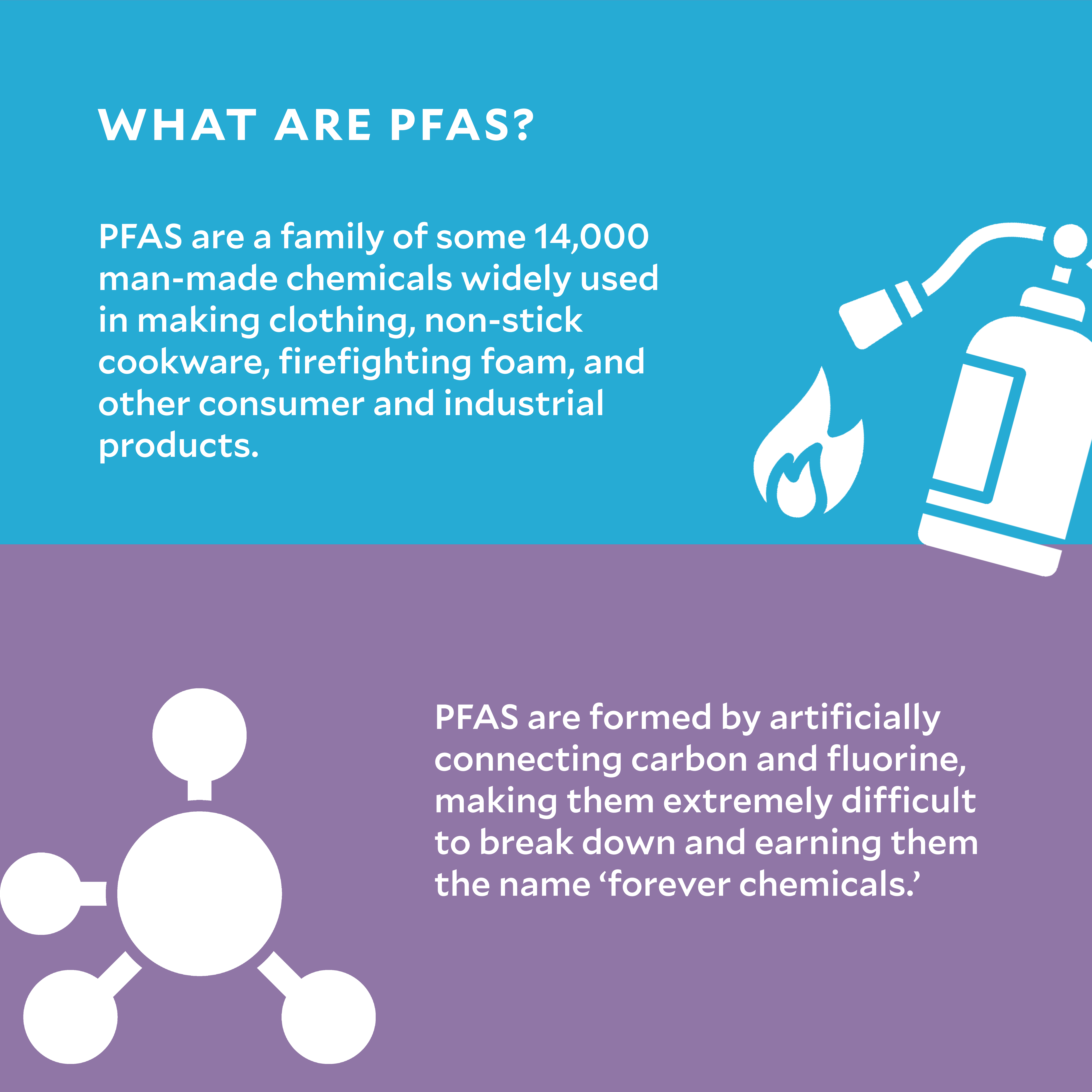
PFAS, or per- and polyfluoroalkyl substances, are better known as “forever chemicals.” They’re man-made compounds that are found in places like fast food packaging, firefighters’ foams and other places. They’re long-lasting chemicals and do not naturally degrade, instead accumulating in the environment and our bodies over time, which is why the Environmental Protection Agency issued regulations on them last year.
Until recently, they were somewhat difficult to detect in drinking water, but labs like Argonne are making gains.
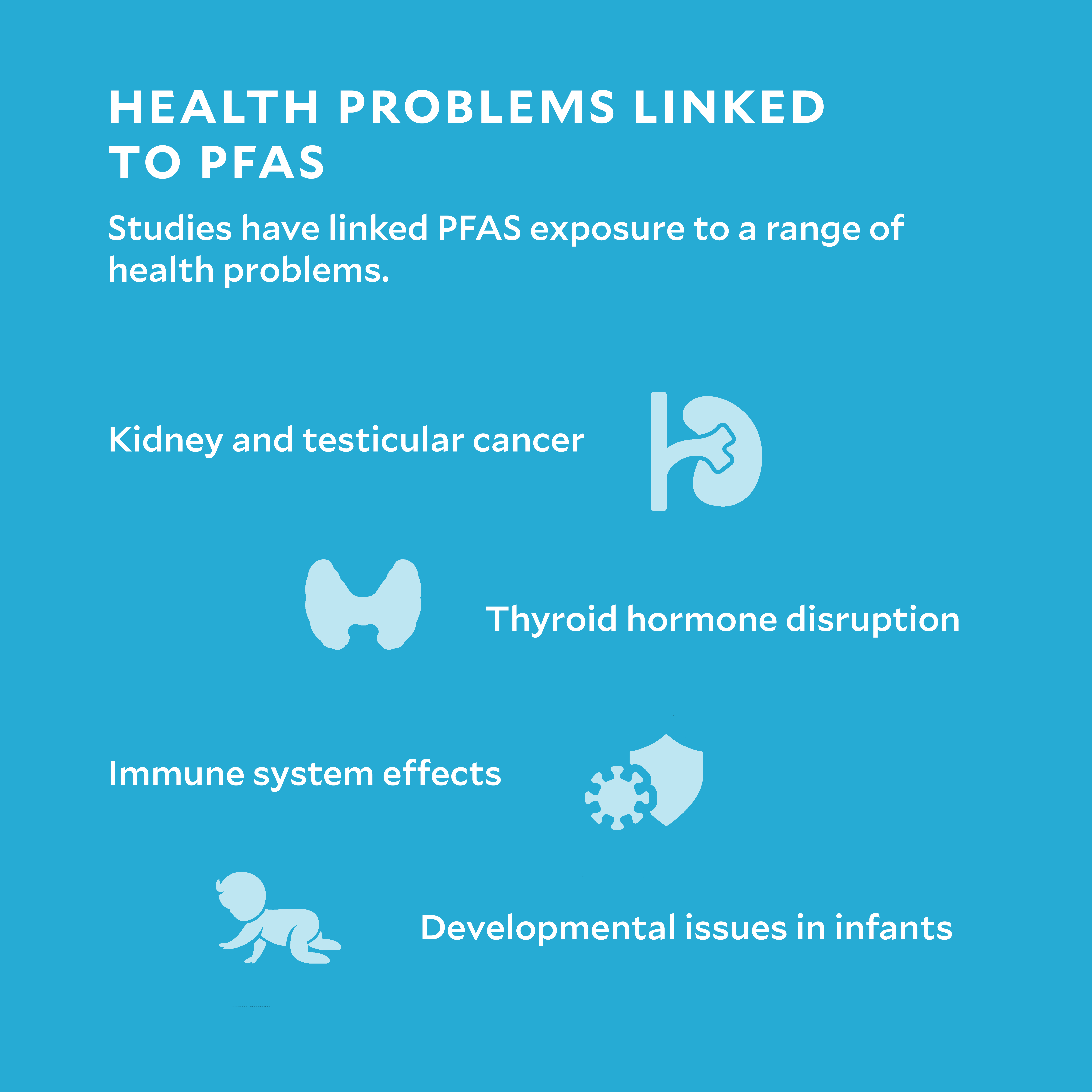
“It affects essentially all of us, and it is, in fact, dangerous,” Argonne’s Seth Darling said. “They’re really toxic to humans. They’ve been linked to cancer, they’ve been linked to reproductive issues, thyroid problems, all kinds of health issues.”
Darling is working alongside Junhong Chen, with UChicago’s Pritzker School of Molecular Engineering. They’re building a first-of-its-kind sensor that can detect PFAS in water.
“The work we are doing here is really important, because now we have a way to be able to measure this PFAS,” Chen said. “Almost the only way to measure for PFAS is to take the water sample and send it to a high-end analytical laboratory for the analysis.”
Darling says that, because the chemicals are dangerous even at low concentrations, you need a technique that can test for extremely low levels. The sensor they’re behind can detect down to what would equate to one grain of sand in an Olympic-sized swimming pool, or 250 parts per quadrillion.
Typically, this level of inspection would require intensive and expensive lab testing. Their goal is to make these tests accessible for anyone to make sure their water is safe, directly from their home.
“What’s important here is developing new ways,” Darling said, “low-cost, fast ways to determine: Is there PFAS in your water and, if so, how much?”
In a first-of-its-kind report, the Environmental Protection Agency has released a comprehensive assessment on lead pipe infrastructure across the United States, revealing that an estimated total of 9.2 million lead pipes serviced American homes in 2021.
According to the report, lead service lines are estimated to make up over 9% of the entire national service line infrastructure, exposing much of America’s drinking water to lead contamination.
The EPA says there are no safe levels of lead in children’s blood, as lead exposure has been tied to an array of adverse health effects in children, including behavioral problems, lower IQ and slowed growth. In adults, lead exposure is linked with decreased cardiovascular health and kidney function, and lead exposure in pregnant women is linked to premature births.
The bulk of the nation’s lead pipe infrastructure is concentrated in a handful of states, including many of the Rust Belt states in the Great Lakes region. Florida has the most lead service lines in the country, with its 1.16 million lines accounting for 12.6% of the country’s total. Over 50% of the national service lines are concentrated in six states: Florida, Illinois (11.4%), Ohio (8.1%), Pennsylvania (7.5%), Texas (7.1%) and New York (5.4%).
Lead service lines are far less common west of the Mississippi River, with Texas as the lone exception. Notably, California’s service line infrastructure, which serves the largest state population over the third-largest area, has less than 13,500 lead service lines, or about 0.15% of the national total.
Federal law prohibits installing new lead plumbing because of its dangers to health. In 2021, the Biden Administration announced an aggressive plan to replace all lead service lines in the next decade as part of the Bipartisan Infrastructure Law, and earlier this year the EPA announced that $1.2 billion had already been distributed to 23 states to address that goal. But the costs associated with such an effort are significant. Over the next two decades, the EPA report estimates that $625 billion is needed to address the challenges with drinking water infrastructure.
Lead exposure does not impact all American demographics evenly. The Centers for Disease Control and Prevention published a study in 2021 indicating that non-Hispanic Black or African American children were at particular risk, as well as children living in areas with higher poverty rates.
Although the Safe Drinking Water Act, which was enacted 1974 and amended most recently in 1996, aims to ensure the public’s access to contaminant-free water, large-scale issues with drinking water distribution systems are still prevalent. Spikes in the rates of lead in children’s blood in 2015 sparked the start of a years-long water crisis in Flint, Michigan. The city of Jackson, Mississippi, which endured days with a full water outage last August and September, has ongoing projects to reduce elevated levels of lead in its water supply, and lead contamination has led to crises in Newark, New Jersey, Chicago and Washington, D.C., among other communities.
These are the states with the most lead pipes, according to the EPA:
A portion (looking south) of the 152-mile Friant-Kern Canal, an aqueduct to convey water to augment agriculture irrigation on the east side of the San Joaquin Valley, is viewed on July 8, 2021, thirty minutes east of Fresno, Calif.
The headlines suggested a comparison with the “Zero Day” announcement in Cape Town, South Africa, during a drought in 2018. That was the projected date when water would no longer be available at household taps without significant conservation. Cape Town avoided a water shutoff, barely.
While California’s announcement represents uncharted territory and is meant to promote water conservation in what is already a dry water year, there is more to the story.
California’s drought solution
California is a semi-arid state, so a dry year isn’t a surprise. But a recent state report observed that California is now in a dry pattern “interspersed with an occasional wet year.” The state suffered a three-year drought from 2007 to 2009, a five-year drought from 2012 to 2016, and now two dry years in a row; 2020 was the fifth-driest year on record, and 2021 was the second-driest.
Coming into the 2022 water year – which began Oct. 1 – the ground is dry, reservoirs are low and the prediction is for another dry year.
Over a century ago, well before climate change became evident, officials began planning ways to keep California’s growing cities and farms supplied with water. They developed a complex system of reservoirs and canals that funnel water from where it’s plentiful to where it’s needed.
Part of that system is the State Water Project.
First envisioned in 1919, the State Water Project delivers water from the relatively wetter and, at the time, less populated areas of Northern California to more populated and drier areas, mostly in Southern California. The State Water Project provides water for 27 million people and 750,000 acres of farmland, with about 70% for residential, municipal and industrial use and 30% for irrigation. There are 29 local water agencies – the state water contractors – that helped fund the State Water Project and in return receive water under a contract dating to the 1960s.
While the State Water Project is important to these local water agencies, it is usually not their only source of water. Nor is all water in California supplied through the State Water Project. Most water agencies have a portfolio of water supplies, which can include pumping groundwater.
What does 0% mean?
Originally, the State Water Project planned to deliver 4.2 million acre-feet of water each year. An acre-foot is about 326,000 gallons, or enough water to cover a football field in water 1 foot deep. An average California household uses around one-half to 1 acre-foot of water per year for both indoor and outdoor use. However, contractors that distribute water from the State Water Project have historically received only part of their allocations; the long-term average is 60%, with recent years much lower.
Based on water conditions each year, the state Department of Water Resources makes an initial allocation by Dec. 1 to help these state water contractors plan. As the year progresses, the state can adjust the allocation based on additional rain or snow and the amount of water in storage reservoirs. In 2010, for example, the allocation started at 5% and was raised to 50% by June. In 2014, the allocation started at 5%, dropped to 0% and then finished at 5%.
This year is the lowest initial allocation on record. According to the state Department of Water Resources, “unprecedented drought conditions” and “reservoirs at or near historic lows” led to this year’s headline-producing 0% allocation.
That’s 0% of each state water contractor’s allocation; however, the department committed to meet “unmet minimum health and safety needs.” In other words, if the contractors cannot find water from other sources, they could request up to 55 gallons per capita per day of water to “meet domestic supply, fire protection and sanitation needs.” That’s about two-thirds of what the average American uses.
The department is also prioritizing water for salinity control in the Sacramento Bay Delta area, water for endangered species, water to reserve in storage and water for additional supply allocations if the weather conditions improve.
Under the current plan, there will be no water from the State Water Project for roughly 10% of California’s irrigated land. As a result, both municipal and agricultural suppliers will be seeking to conserve water, looking elsewhere for water supplies, or not delivering water. None are easy solutions.
Those who can afford to dig deeper wells have done so, while others have no water as their wells have gone dry. During the 2012-2016 drought, the Public Policy Institute of California found that a majority of affected households that lost water access from their wells were in “small rural communities reliant on shallow wells – many of them communities of color.”
As someone who has worked in California and the Western U.S. on complex water issues, I am familiar with both drought and floods and the challenges they create. However, the widespread nature of this year’s drought – in California and beyond – makes the challenge even harder.
This “zero allocation” for California’s State Water Contractors is an unprecedented early warning, and likely a sign of what’s ahead.
A recent study warned that the snowpack in Western states like California may decline by up to 45% by 2050, with low- and no-snow years becoming increasingly common. Thirty-seven cities in California have already issued moratoriums on development because of water supply concerns.
If voluntary conservation does not work, enacting mandatory conservation measures like San Jose’s tough new drought rules may be needed. The state is now weighing emergency regulations on water use, and everyone is hoping for more precipitation.
Lara B. Fowler, Senior Lecturer in Law and Assistant Director for Outreach and Engagement, Penn State Institutes of Energy and the Environment, Penn State
Earlier this year, the city scrapped plans to build a new water treatment facility because costs became too high, rising from $60 million to $83 million.
“Certainly we’re all committed to safe and healthy drinking water here in Northfield,” said Ben Martig, Northfield’s city administrator.
City officials are now advising families with infants under 1 to have them drink bottled water or to treat the water themselves, like with a reverse osmosis system.
Officials said they have been warning residents about the water quality issues for years through multiple press releases.
“We’ve talked with local providers, letting them know to notify pregnant mothers and newborn families that they should be looking at different options for their water and making sure that it is further treated,” said Justin Wagner, the city’s utilities manager.
“It’s unsafe for children under 1 and people who are pregnant, and those are important and valuable people to our community, too,” said Ward 1 City Council Member Kathleen Holmes.
She said water treatment is a city need, and costs for the project will only increase as time passes.
“This is a situation for renters who can’t put in reverse osmosis or can’t afford it,” said Holmes.
Northfield resident Levi Prinzing is the parent of an infant, but said at this point he’s more worried about the financial impacts of a new treatment facility. Prinzing also filters his water.
“I don’t think we need a new treatment plant,” said Prinzing. “The treatment plant is a lot of money and we just raised our taxes a lot.”
“We have to find a way to work together as a council and find a solution that can help bridge that gap, that we can provide safe drinking water for all residents, and hopefully reduce the financial impact or financial burden that it is on residents,” said Holmes.
The City Council may reconsider the water treatment facility in June.