Lebanon’s Worst Drought on Record Drains Largest Reservoir

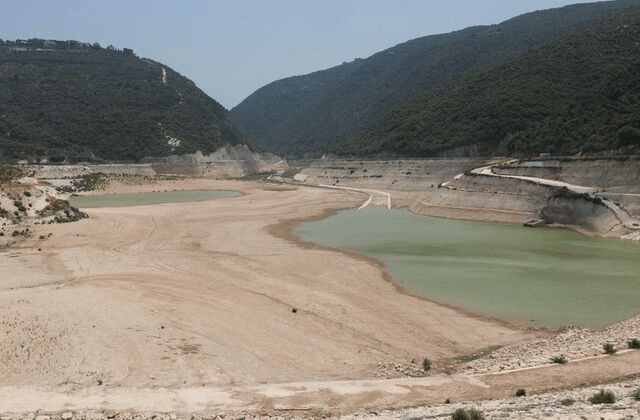
QARAOUN, Lebanon (Reuters) -Water levels at Lebanon’s largest reservoir on the Litani River have fallen to historic lows amid what experts describe as the country’s worst drought on record, threatening agriculture, electricity production, and domestic water supplies.

The Litani River National Authority said inflows to Lake Qaraoun during this year’s wet season did not exceed 45 million cubic metres, a fraction of the 350 million cubic metres annual average.

Last year, the figure stood at 230 million. The water currently available in Lake Qaraoun – around 61 million cubic meters – was unusable due to severe pollution, the authority said.

“There were dry years in 1989, 1990 and 1991, but this year is the driest,” said Sami Alawieh, head of the river authority. “We are facing a water scarcity problem across all Lebanese territories and water basins.”

Drone footage of Lake Qaraoun shows a dramatically receded shoreline, exposing cracked earth and dead vegetation.

Lebanon’s hydroelectric plants tied to the Litani basin have been shut down, Alawieh said, causing financial losses and intensifying electricity rationing by Electricite du Liban.

“We have two factors: the decline in rainfall and the pressure on groundwater,” he said.

A study by the authority found climate warming and shifting weather patterns have contributed to more frequent dry seasons and higher temperatures, exacerbating soil moisture loss and reducing the recharging of groundwater reservoirs.

The state utility has slashed supply in some areas from 20 hours a day to as little as 10.

In the fertile area around Qaraoun village, in the Bekaa Valley, farmers were already feeling the impact.

“I have never seen such drought or scarcity of rain as this year,” said Safa Issa. “We used to get snow up to a metre high. Now, it’s been 10 years since we’ve seen any.”

The strain has been compounded by erratic supply of electricity needed to run irrigation systems.

“You irrigate for three hours, then stop for three,” said Fayez Omais, another local farmer.

Suzy Hoayek, an adviser to the Ministry of Energy and Water in Beirut, said a nationwide awareness campaign to reduce consumption would be launched within 10 days.

“The most important thing is to manage demand,” she said.

CLICK HERE FOR MORE INFORMATION

https://www.usnews.com/news/world/articles/2025-07-15/lebanons-worst-drought-on-record-drains-largest-reservoir

18x more floods, 105% bigger storms — all from a single clear-cut

New research finds long-term impacts on flood size and frequency decades after trees are removed

Clear-cutting forests doesn’t just raise flood risk — it can supercharge it. UBC researchers found that in certain watersheds, floods became up to 18 times more frequent and over twice as severe after clear-cutting, with these effects lasting more than four decades. The surprise? Terrain details like which direction a slope faces played a huge role in flood behavior. Conventional models miss these dynamics, which could mean we’ve been underestimating the danger for decades — especially as climate change accelerates extreme weather.Share:


FULL STORY


Clear-Cutting Triggers 18x More Floods
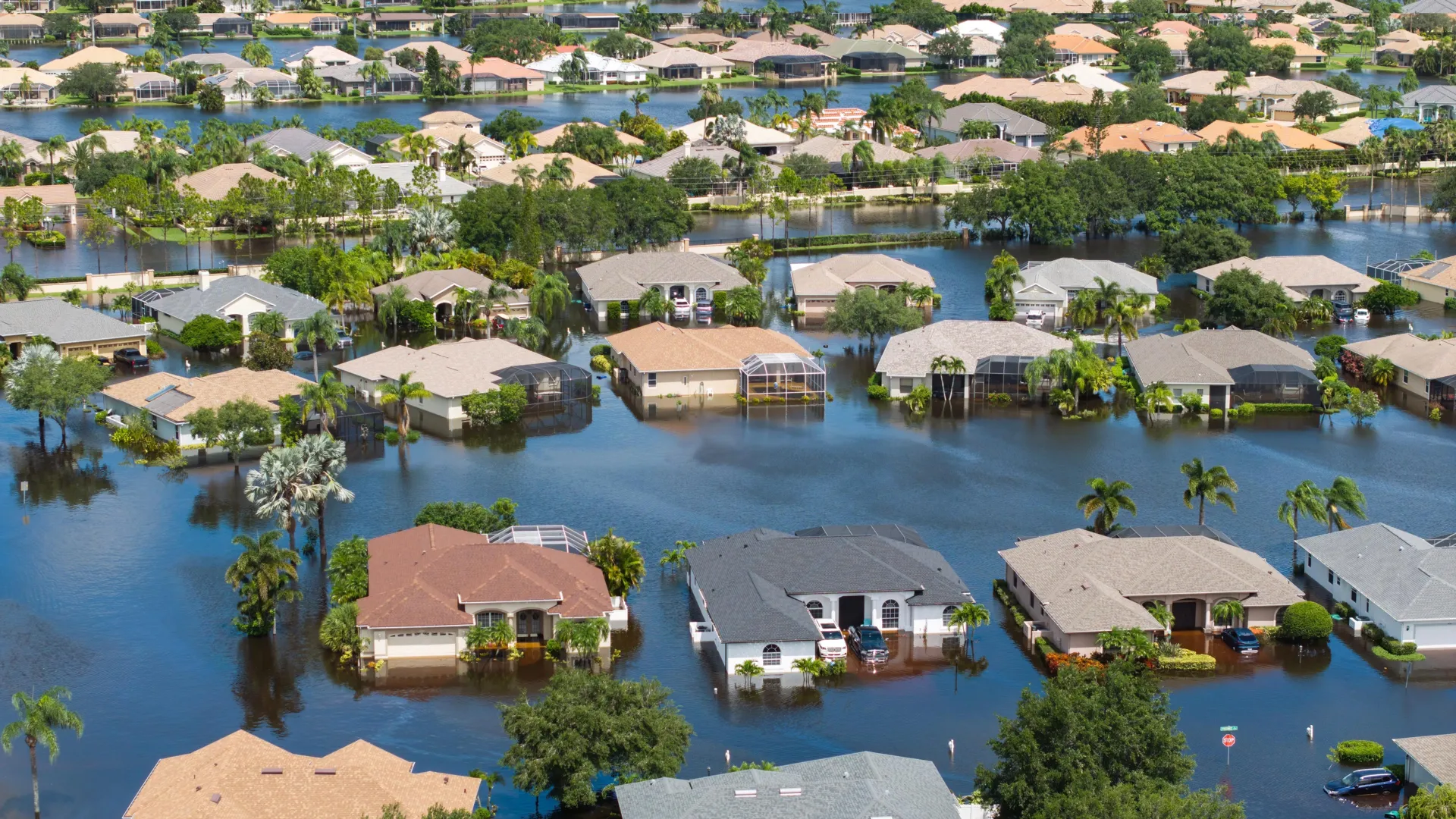
Clear-cutting can make extreme floods dramatically more frequent and severe, especially depending on subtle terrain features. The effects can last more than 40 years, far longer than expected. Credit: Shutterstock

Clear-cutting can make catastrophic floods 18 times more frequent with effects lasting more than 40 years, according to a new UBC study.

In one watershed, these extreme floods also became more than twice as large, turning a once-in-70-years event into something that now happens every nine.

“This research challenges conventional thinking about forest management’s impact on flooding,” said senior author Dr. Younes Alila, a hydrologist in the UBC faculty of forestry. “We hope the industry and policymakers will take note of the findings, which show that it matters not only how much forest you remove but also where, how and under what conditions.”

Same treatment, different floods 

The UBC-led study draws on one of the world’s longest-running forest experiments at the Coweeta Hydrologic Laboratory in North Carolina and is published in the Journal of Hydrology.

The research team analyzed two adjacent watersheds, one north-facing, the other south-facing, that were both clear-cut in the late 1950s.

“We found seemingly minor landscape factors — like the direction a slope faces — can make or break a watershed’s response to treatment,” said first author Henry Pham, a doctoral student in the faculty of forestry.

In the north-facing watershed, which receives less direct sunlight and retains more moisture, floods became four to 18 times more frequent. Average flood sizes increased by 47 percent compared to pre-treatment levels, and the biggest floods grew by as much as 105 percent.

In the south-facing watershed, the same treatment had virtually no impact on flood behavior.

Old flood models inadequate 

Most conventional flood models use simplified assumptions: cut X percent of trees, expect Y percent more water runoff. But this study found that such models fail to account for extreme and erratic flood patterns that emerge after landscape disturbances.

“This experimental evidence validates our longstanding call for better analysis methods,” said Dr. Alila. “When we apply proper probabilistic tools to long-term data, we find much stronger and more variable impacts than older models suggest.”

In short, he adds, forest treatments don’t just raise average flood levels — they can fundamentally reshape a watershed’s entire flood regime, making rare and catastrophic events much more common.

The most concerning finding was that flood effects in the north-facing watershed persisted for over 40 years, confirming that forestry treatments can lead to long-term changes in a watershed’s flood response, especially as climate change brings more extreme weather, putting downstream communities at greater risk.

Policy implications

The findings have immediate relevance for forest management practices, particularly in B.C. where there are similar terrain types and forestry operations in the form of clear-cut logging.

Dr. Alila noted that the model used in this study can be used to predict which parts of B.C. are currently more at risk of extreme flooding. It can also be used to investigate how much of the severity of Sumas Prairie floods in 2021 and the more recent Texas floods can be attributed to global warming and/or land use and forest cover changes.

“Our findings highlight how multiple landscape factors interact in complex ways. As climate conditions shift, understanding those dynamics is becoming increasingly important for forest and water management.”

CLICK HERE FOR MORE INFORMATION

https://www.sciencedaily.com/releases/2025/07/250718031220.htm