The Stream, November 11, 2025: America’s Water Infrastructure Needs $3.4 Trillion Investment, Report Warns

by Christian Thorsberg

Give Water a Voice

Your support helps inform the world’s most important decisions about water and all that it touches.One-timeMonthlyAnnually$7$15$30OtherDonate Now

Circle of Blue
Fishermen cast their nets at sunrise on the Mekong River south of Phnom Penh, capital of Cambodia. Photo © J. Carl Ganter/Circle of Blue

Global Rundown

  • A new report on the economic importance of a strong water sector forecasts that America will need to invest $3.4 trillion over the next 20 years to modernize its infrastructure. 
  • As Iran’s water crisis continues, dams in the country’s second-largest city, Mashhad, have dwindled to less than 3 percent capacity.
  • Millions of people in NigerNigeria, and Ghana are at high risk of surface water contamination and loss as a result of deforestation, a new report indicates. 
  • The over-extraction of sand from Cambodia’s Tonle Sap, Asia’s largest lake and a crucial Mekong River source, threatens to shrink its wet-season size by up to 40 percent.

The Lead

For every 1,000 hectares of forest cleared in Niger and Nigeria, almost 10 hectares of surface water disappear, according to a study released this month from Water Aid and Tree Aid, two international NGOs.

The links between deforestation and worsening water crises in West Africa are clear, the report shows. Across Ghana, Niger, and Nigeria, 122 million people live in areas of high surface water risk as a direct result of deforestation — a 5 million-person increase in five years. Nigeria alone, which loses 27,000 hectares of vegetation cover annually, accounts for 70 percent of this vulnerable population. 

In Niger, the impacts of deforestation are particularly dire. Tree loss imperils nearly all the country’s available freshwater sources. In the primarily arid and semi-arid country, climate change is giving rise to a pronounced “more drought, more flood” phenomenon. Without forests to filter and absorb excess water, storms – when they do arrive – are falling increasingly in extreme bursts, resulting in runoff, contamination, and infrastructure damage. But there is also hope. Of the three countries studied, Niger is the only one to achieve a net gain in forest cover since 2013, adding more than 100,000 hectares.

Recent WaterNews from Circle of Blue

This Week’s Top Water Stories, Told In Numbers

$1 million

When invested into water infrastructure in America, it yields $2.5 million in economic output, according to a report released last week by the nonprofit U.S. Water Alliance. What’s more, that $1 million provides 10 jobs, $837,000 in labor income, and $1.4 million in GDP.

The publication, a centerpiece of the organization’s Value of Water campaign, links the country’s financial health with sound water investments — a relationship that is strained by widespread underinvestment, it warns. Over the next 20 years, the report estimates that America will need to spend roughly $3.4 trillion to modernize and repair its aging wastewater, treatment, and stormwater facilities. The problem is comparatively worse in rural communities, which face greater needs per-capita than urban areas in 80 percent of states. 

Per capita, these investments would have the greatest impact in North Dakota, Iowa, Louisiana, West Virginia, Vermont, and New Hampshire. 

“Clean water utilities are on the frontlines of protecting public health and the environment. This report affirms what we have long known — that closing the investment gap will not only safeguard clean water, but also strengthen the entire U.S. economy,” Adam Krantz, CEO of the National Association of Clean Water Agencies, said in the report.

In context: After Decades of Neglect, Bill Coming Due for Michigan’s Water Infrastructure

40 percent

Amount by which the wet season-size of Tonle Sap, the largest lake in Asia, will shrink by 2038 if local mining continues at its current pace, according to a study published this week in the journal Nature SustainabilityA rising demand for sand, used to make concrete and glass, has led to increased dredging in the Cambodian lake, which drains for half of the year into the Mekong River, supporting its southern flow. But during the rainy summer months of May through October, rising water levels in the Mekong reverse this trend, and Tonle Sap pulses, “expanding the lake’s surface area by 4 to 6 times and swelling its water volume to 80 cubic kilometers,” Science reports. This dynamic supports some of the world’s most biodiverse riparian, lake, and wetland habitat, and the livelihoods and cultural identities of some 60 million people who live along the Mekong’s shores. In the absence of strong, nutrient-rich pulses, fisheries and water supplies are at risk of collapse.

According to Science, sand is the world’s second most-exploited resource, “often extracted from riverbeds or shores.” Water is the most exploited. Both Cambodia and Vietnam have banned sand export, though its mining from the Mekong watershed continues, to the detriment of its health and local human communities, flora, and fauna.

In Context: Can the Mekong, the World’s Most Productive River, Endure Relentless Strain?

On the Radar

As the Tehran metropolitan area — home to nearly 18 million people — nears a potential Day Zero scenario within two weeks, Iran’s second-largest city is also facing acute water shortages amid widespread drought, exacerbated by mismanagement. 

The water levels in dams in Mashhad, population 4 million, have dwindled to less than 3 percent capacity, Agence France-Presse (AFP) reports. The city’s water consumption has been measured at roughly 8,000 liters per second, “of which about 1,000 to 1,500 litres per second is supplied from the dams,” Hossein Esmaeilian, the chief executive of Mashhad’s water company, told AFP. Residents are urged to reduce their water consumption by 20 percent, he said. 

Tehran officials admitted this week that water rationing began too late in the capital, a failure that may now lead to forced evacuations, according to Iran International. The country’s central plateau may be depopulated as a result of “a chronic disconnect between scientists, industry, and government agencies.” Already, residents of villages and rural regions have abandoned their land amid shortages and migrated toward city centers, further straining limited reservoir supplies.

Wetland Watch

MARSH Project: Near the historic downtown of Charleston, South Carolina, a grassroots effort to preserve important salt marshes along the Ashley River — installed amid rollbacks to the Clean Water Act — has proved successful in mitigating floods, the Associated Press reports

CLICK HERE FOR MORE INFORMATION

MEDIA ADVISORY: DC Water To Launch Pure Water DC, A Major Initiative To Develop A Second Source Of Drinking Water

Pure Water DC Logo with DC Water Logo and the text Pure Water DC Launch over graphic image of water

On November 19, DC Water will launch an ambitious effort – Pure Water DC – to reduce the District’s reliance on the Potomac River as its only water source. We’ll be hosting an event to outline our vision and strategy for resilience and host an expert panel to address one of the most critical challenges facing the nation’s capital.

Any disruption to the Potomac or Washington Aqueduct—whether from contamination, drought, or infrastructure failure—would have catastrophic consequences for public health, the economy, and national security.

Pure Water DC seeks to mitigate that risk through a comprehensive program to strengthen water supply resilience and explore a second source of water for the District. This initiative represents a major investment and a regional call to action, inviting collaboration among utilities, agencies, and stakeholders to secure a drought-proof future.

EVENT DETAILS

What: 
Launch of Pure Water DC Program, unveiling the vision and strategy for water supply resilience, followed by an expert panel discussion.

When: 
Wednesday, November 19, 2025 
10:00 a.m. – 12:00 p.m.

Where: 
DC Water Headquarters 
1385 Canal Street SE 
Washington, DC 20003

Who: 
DC Water leadership, regional water utilities, environmental agencies, and federal partners including:

  • U.S. Environmental Protection Agency (EPA)
  • District Department of Energy & Environment (DOEE)
  • Water Environment Federation (WEF)
  • Interstate Commission on the Potomac River Basin (ICPRB)
  • WSSC Water
  • Greater Washington Board of Trade

Pure Water DC is DC Water’s commitment to lead the region toward a more resilient water future. The program will explore several options, including:

  • Safeguard our existing source and optimize the distribution system.
  • Add local storage and align with regional emergency storage efforts.
  • Explore advanced water reuse from Blue Plains as a drought-proof, cost-effective second source.

DC Water has committed $21 million over three years to fund studies, pilot projects, and public engagement, including the creation of the Pure Water DC Discovery Center at Blue Plains. This facility will test purification technologies, support regulatory research, and educate the public about water resilience.

The stakes are high: a major disruption could cost the region $15 billion in the first month alone.

Media should RSVP by Tuesday, November 18, at noon to Sherri Lewis at sherri.lewis@dcwater.com to attend and learn more about the new initiative, and next steps to create a more resilient water supply.

CLICK HERE FOR MORE INFORMATION

https://www.dcwater.com/about-dc-water/media/news/media-advisory-dc-water-launch-pure-water-dc-major-initiative-develop?

Massive hidden waves are rapidly melting Greenland’s glaciers

Calving icebergs unleash hidden wave forces that supercharge Greenland’s melt and push the ice sheet closer to collapse.

Source:University of ZurichSummary:Researchers in Greenland used a 10-kilometer fiber-optic cable to track how iceberg calving stirs up warm seawater. The resulting surface tsunamis and massive hidden underwater waves intensify melting at the glacier face. This powerful mixing effect accelerates ice loss far more than previously understood. The work highlights how fragile the Greenland ice system has become as temperatures rise.Share:


FULL STORY


Hidden Waves Speed Up Greenland’s Melting
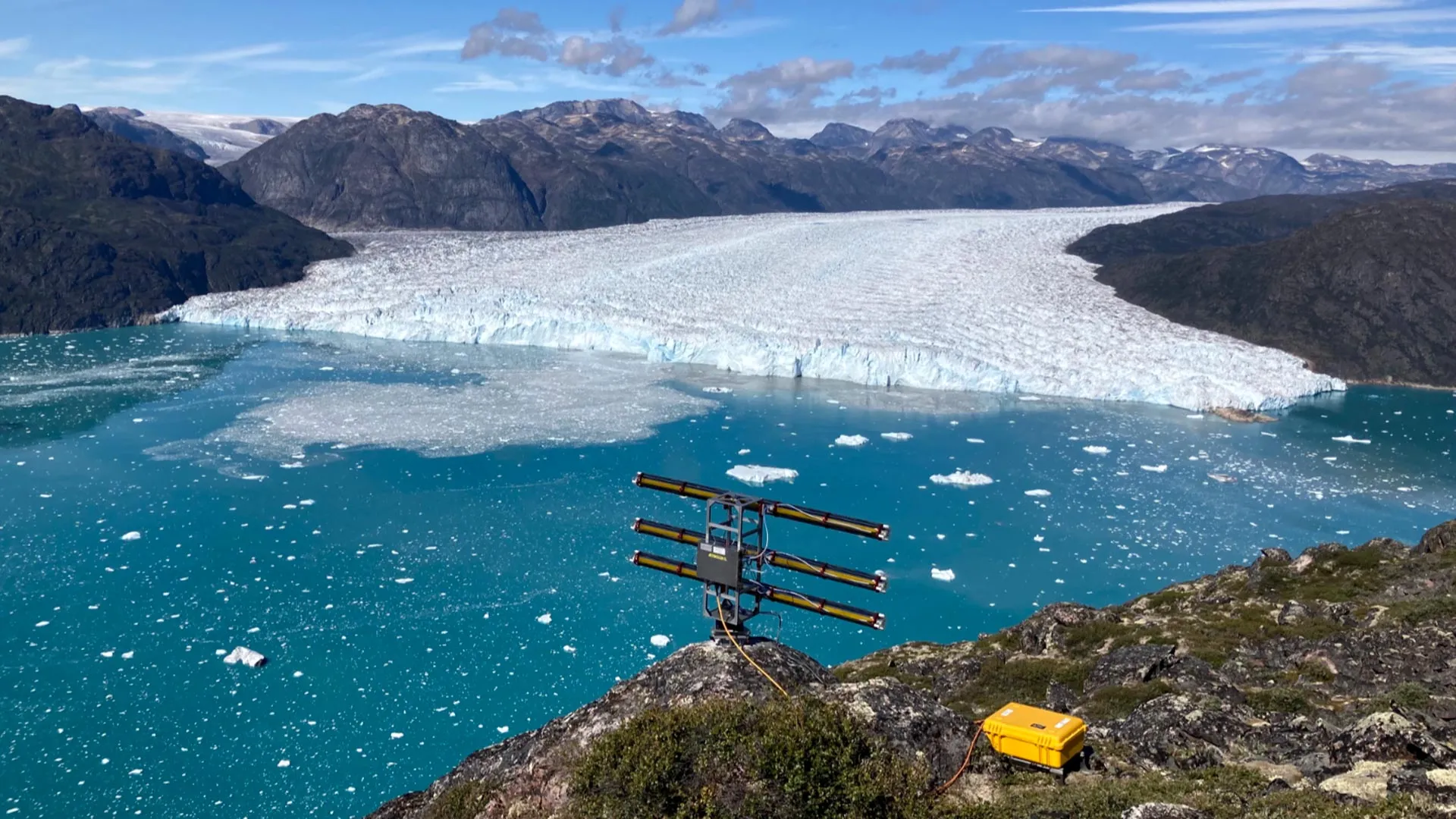
View of the fjord and the three-kilometer-wide calving front of Eqalorutsit Kangilliit Sermiat in southern Greenland. The fiber-optic cable was laid a few hundred meters from the ice wall through the 300-meter-deep water on the seabed. In the foreground is the UZH radar device, which measures calving events and ice movements in order to interpret the data from the fiber-optic cable. Credit: Andreas Vieli, University of Zurich

Iceberg calving happens when large pieces of ice split from the front of a glacier and fall into the ocean. This natural event is a major contributor to the rapid reduction of ice on the Greenland ice sheet. For the first time, an international team led by the University of Zurich (UZH) and the University of Washington (UW) has used fiber-optic technology to track how the impact of falling ice, along with the movement of the released ice, causes glacial meltwater to mix with warmer seawater below the surface.

“The warmer water increases seawater-induced melt erosion and eats away at the base of the vertical wall of ice at the glacier’s edge. This, in turn, amplifies glacier calving and the associated mass loss from ice sheets,” explains Andreas Vieli, a professor in UZH’s Department of Geography and co-author of the research. Vieli leads the Cryosphere cluster, one of six groups in the international GreenFjord project in southern Greenland, supported by the Swiss Polar Institute. The team’s discovery about how ice and seawater interact was highlighted on the cover of Nature.

Wave measurements using fiber-optic cable on seafloor

During the GreenFjord project, researchers from UZH, UW and several Swiss partners carried out an extensive field campaign to study calving behavior. They placed a ten-kilometer-long fiber-optic cable on the seafloor across the fjord in front of the Eqalorutsit Kangilliit Sermiat glacier. This fast-moving glacier in southern Greenland releases about 3.6 km3 of ice into the ocean each year, which is almost three times the annual volume of the Rhône glacier near the Furka mountain pass in Switzerland.

The research team relied on Distributed Acoustic Sensing (DAS), a method that detects tiny vibrations along the cable caused by events such as newly formed crevasses, falling ice blocks, ocean waves or temperature changes. “This enables us to measure the many different types of waves that are generated after icebergs break off,” says lead author Dominik Gräff, a UW postdoctoral researcher affiliated with ETH Zurich.

Underwater waves amplify glacier melt and erosion

After an iceberg crashes into the water, surface waves called calving-induced tsunamis sweep across the fjord and mix the upper water layers. Because seawater in Greenland’s fjords is warmer and denser than meltwater, it sinks toward the deeper layers.

The team also detected another type of wave that continues to move between density layers long after the surface becomes calm. These internal underwater waves, which can reach heights comparable to skyscrapers, cannot be seen from above but keep mixing the water for extended periods. This ongoing movement brings warm water upward, increasing melting and erosion at the glacier’s edge and promoting further calving. “The fiber-optic cable allowed us to measure this incredible calving multiplier effect, which wasn’t possible before,” says Gräff. The data gathered will support future efforts to document calving events and better understand the rapid decline of ice sheets.

A fragile and threatened system

Scientists have long known that interactions between seawater and calving play an important role in glacier retreat, but collecting detailed measurements in the field has been extremely difficult. Fjords filled with icebergs present constant hazards from falling ice, and satellite observations cannot capture what happens below the surface where these interactions occur. “Our previous measurements have often merely scratched the surface, so a new approach was needed,” says Andreas Vieli.

The Greenland ice sheet covers an area around 40 times larger than Switzerland. If it were to melt completely, global sea levels would rise by about seven meters. The large volumes of meltwater flowing from shrinking glaciers can also disrupt major ocean currents such as the Gulf Stream, with significant consequences for Europe’s climate. The retreat of calving glaciers further affects the ecosystems within Greenland’s fjords. “Our entire Earth system depends, at least in part, on these ice sheets. It’s a fragile system that could collapse if temperatures rise too high,” warns Dominik Gräff.

CLICK HERE FOR MORE INFORMATION

https://www.sciencedaily.com/releases/2025/11/251113071623.htm

A Wrinkle in the Negotiations Over Allocating the Colorado River 

There is urgency for the seven states that rely on the Colorado River to reach an agreement on how to keep water levels high enough in its two major reservoirs. Climate change is threatening water delivery and power systems as the region becomes drier.

Lake Mead, 2022  |  Credit: NASA Earth Observatory

The states—Colorado, Utah, Wyoming, New Mexico, Arizona, Nevada, and California—have until next month to agree on alternatives to keep the system afloat for the next couple of decades and submit them to the Bureau of Reclamation. If they don’t, the bureau will propose its own plan for cuts to allocations from the river, which supplies 40 million people and agriculture.

However, there’s a wrinkle in the negotiations. A report released by the bureau on February 8 concluded that 1.3 million acre-feet of water was lost annually to evaporation and transpiration in the three Lower Basin states of Arizona, California, and Nevada. Water lost to evaporation and transpiration has not been considered under the current rules. Despite evaporation and transpiration, the three lower states have continued to draw down from the reservoirs that are threatened by aridification.

Now, all of the Colorado River Basin states, except California, have submitted a letter to the federal government proposing that in times of low water levels, there would be cuts in allocations—most heavily to California—that take evaporation and transpiration into account. The Los Angeles Times reports that agencies in Southern California would be required to endure the largest cuts, up to 32 percent for evaporation losses if Lake Powell and Lake Mead hit crisis levels. California has proposed a more modest plan that it argues does not rewrite the rules of the river, which are based on historic water rights. Because of the winter snowpack last year, recent storms, and conservation, water levels at Lake Mead, the country’s largest reservoir, are currently about 40 feet higher than was projected.

Added to the federal government’s deadline for the states to come up with a plan for cutbacks, is the fear that a different administration after the November election could change those involved at the federal level.

CLICK HERE FOR MORE INFORMATION

https://h2oradio.org/this-week-in-water/the-lies-of-the-plastics-industry-exposed

Water main break floods streets, swamps cars, damages homes in North Philadelphia near Temple University campus

By Jessica MacAulay, Scott Hezlep, Madeleine Wright

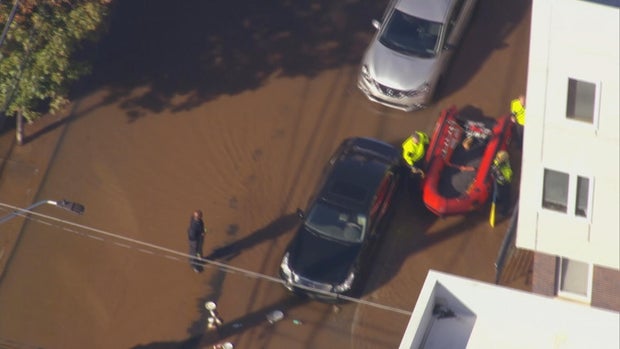
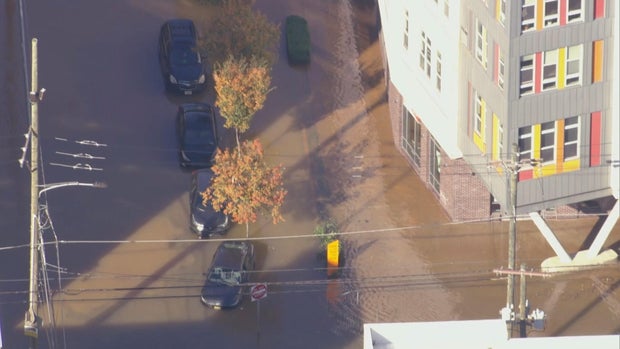
A large water main broke, gushing out 4 million gallons of water into city streets, creating a muddy mess for North Philadelphia residents near Temple University’s campus on Friday.

Chopper 3 was over the water main break at North 9th and West Berks streets shortly after 10 a.m., where crews worked to stop the flow, which took about two hours, officials said. Emergency response crews even used what appeared to be an inflatable raft to navigate the substantially flooded streets Friday morning.

lns-water-main-break-9th-and-berks-102425-frame-59074.jpg
CBS News Philadelphia

The Philadelphia Water Department said the water main is 30 inches wide, and the break was first reported at 8:45 a.m. The department said it was one of the largest breaks they’ve had in a while.

Officials said the water main is from 1879, and when it broke, gallons of water leaked out, flooding city streets. The water main break is just around the block — .2 miles away — from Temple University’s Kardon Atlantic Apartments.

lns-water-main-break-9th-and-berks-102425-frame-50895.jpg
CBS News Philadelphia

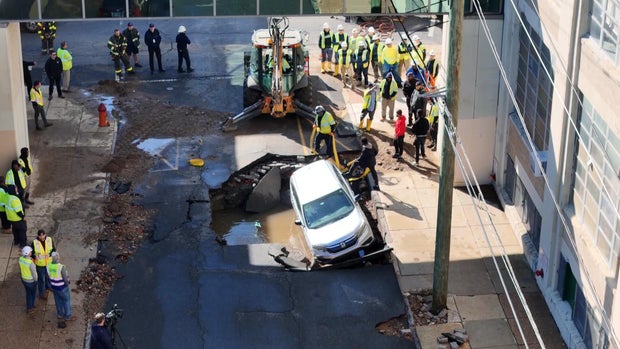
A giant hole was cracked in the ground at the intersection of North 9th Street and Montgomery Avenue. When the main broke, it caused part of the street above it to collapse, damaging a parked car owned by a Temple University chemistry student, Brian Rafferty.

Rafferty said he was getting ready for chemistry class when police called him and said his car was in a watery hole. 

“It was, you know, heartbreaking to see, ’cause you know the guys were telling me that it’s probably going to be totaled,” he said. 

While the cause of the break is still unknown, Philadelphia’s aging infrastructure has been a challenge for the system. 

“We have about 7,000 miles of water mains and sewers altogether, and that is a system that has been built over the course of 200 years, so we are continually replacing those pipes,” Brian Rademaekers, a spokesperson for PWD, said.

wright-4pm-pkg-n-philly-watermain-break-102425-frame-624.jpg
CBS News Philadelphia

No one lost water service, but landlord Boris Keisserman said the basement of his rental property flooded. 

“Oh, it’s awful. It’s green. Dark green, it’s like I said about 4 feet of the water down there,” he said. “This is a new construction house which I just finished a few months ago. No one lived there. Thank God. I was about to rent it out.”

The city said it plans to reimburse residents whose basements were flooded. 

Once crews finish repairing the main, the Streets Department will begin fixing the road, a process expected to take several days.

In:

CLICK HERE FOR MORE INFORMATION

https://www.cbsnews.com/philadelphia/news/water-main-break-north-philadelphia-temple/?intcid=CNM-00-10abd1h

Experts Say Urgent Action to Cut Water Use Is Needed in the Colorado River Basin

According to experts, water policy makers and water users in the Colorado River Basin need to get their acts together to substantially cut amounts they take from the river.

At Lees Ferry where river trips, both recreational and scientific, launch.  |  Credit: public domain

In a new analysis, six experts—Jack Schmidt, Anne Castle, John Fleck, Eric Kuhn, Kathryn Sorensen, and Katherine Tara—released a report saying that immediate action is needed, especially if this dry year is repeated next year. They estimate that consumptive use will exceed the flow of the river by no less than 3.6 million-acre feet, and the two main reservoirs, Lake Mead and Lake Powell, would absorb the bulk of that shortfall, causing them to be depleted and reduced to dangerous levels. Last winter’s snowpack was miserable, and the forecast for the coming season is for less precipitation and warmer temperatures.

However, leaders in the Upper Basin states of Colorado, Utah, New Mexico, and Wyoming, have been unable to agree with their lower basin neighbors of California, Arizona, and Nevada on how to cut water usage along the river.  The two basins have been discussing how to allocate the shortages when the current rules expire next year. The experts who wrote the report are urging the federal government to impose cutbacks along the river, according to the Los Angeles Times.

The animosity between the Upper and Lower Basins appears to have torpedoed the Trump administration’s nomination of Ted Cooke to be the commissioner of the Bureau of Reclamation charged with managing the river. Cooke had been a water manager in Arizona for more than 20 years, which was viewed as disturbing in the Upper Basin states, and would make him biased in favor of the Lower Basin, according to KUNC. 

The White House asked him to withdraw his nomination, which he told the Las Vegas Review-Journal, was based on vitriol the likes of which he had never seen. He said that officials from Colorado, Utah, Wyoming, and New Mexico had urged members of Congress to oppose his nomination.

CLICK HERE FOR MORE INFORMATION

https://h2oradio.org/this-week-in-water/a-high-five-for-the-high-seas

The Red Sea that vanished and the catastrophic flood that brought it back

KAUST researchers find the Red Sea experienced a massive disruption 6.2 million years ago completely changing its marine life.

Source:King Abdullah University of Science & Technology (KAUST)

Summary:Researchers at KAUST have confirmed that the Red Sea once vanished entirely, turning into a barren salt desert before being suddenly flooded by waters from the Indian Ocean. The flood carved deep channels and restored marine life in less than 100,000 years. This finding redefines the Red Sea’s role as a key site for studying how oceans form and evolve through extreme geological events.Share:


FULL STORY


When the Red Sea Became a Desert
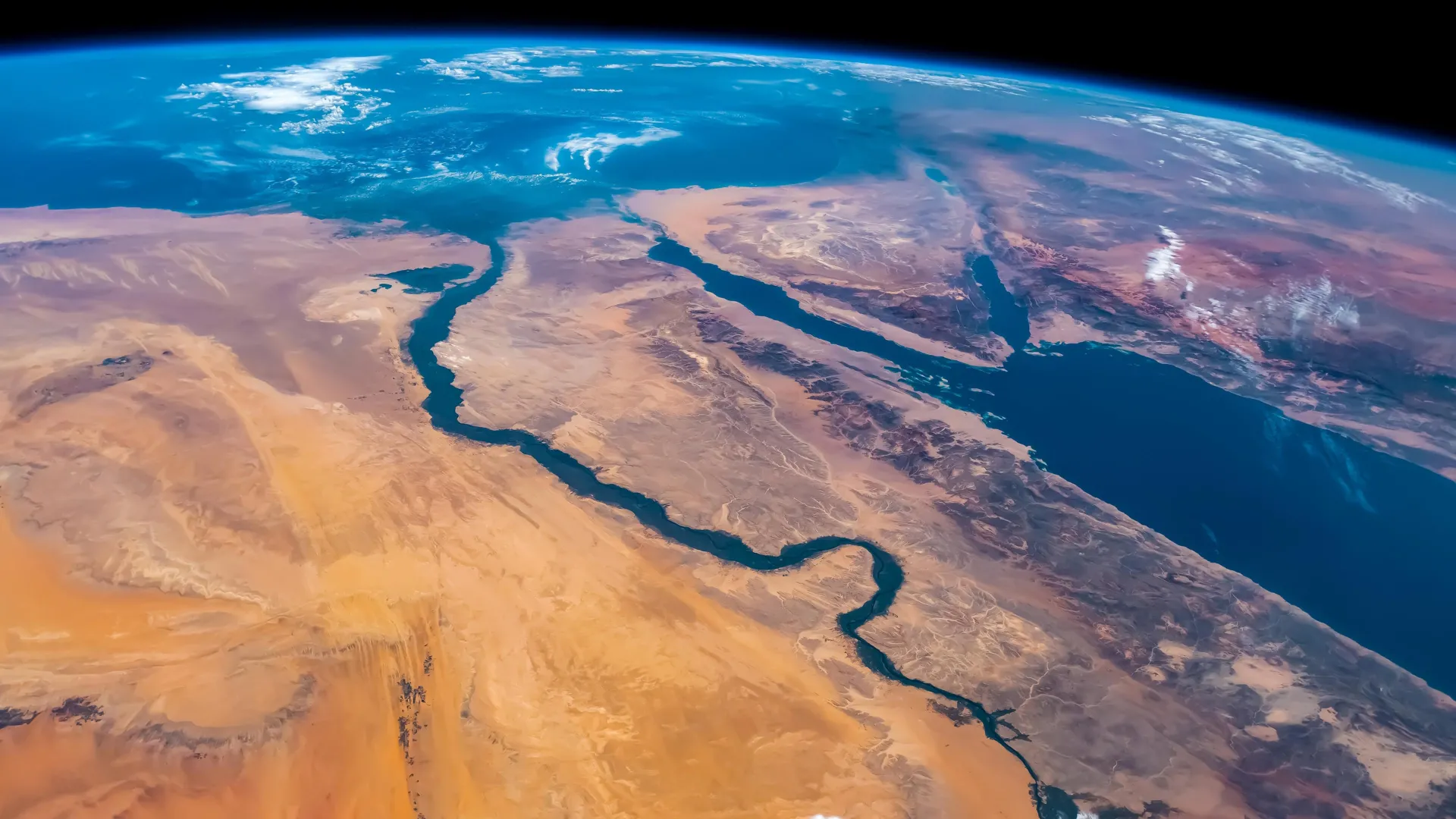
Around 6.2 million years ago, the Red Sea completely dried up before a monumental flood from the Indian Ocean refilled it in less than 100,000 years. Credit: Shutterstock

Scientists at King Abdullah University of Science and Technology (KAUST) have provided conclusive evidence that the Red Sea completely dried out about 6.2 million years ago, before being suddenly refilled by a catastrophic flood from the Indian Ocean. The findings put a definitive time on a dramatic event that changed the Red Sea.

Using seismic imaging, microfossil evidence, and geochemical dating techniques, the KAUST researchers showed that a massive change happened in about 100,000 years – a blink of an eye for a major geological event. The Red Sea went from connecting with the Mediterranean Sea to an empty, salt-filled basin. Then, a massive flood burst through volcanic barriers to open the Bab el-Mandab strait and reconnect the Red Sea with the world’s oceans.

“Our findings show that the Red Sea basin records one of the most extreme environmental events on Earth, when it dried out completely and was then suddenly reflooded about 6.2 million years ago,” said lead author Dr. Tihana Pensa of KAUST. “The flood transformed the basin, restored marine conditions, and established the Red Sea’s lasting connection to the Indian Ocean.”

How the Indian Ocean Flooded the Red Sea

The Red Sea was initially connected from the north to the Mediterranean through a shallow sill. This connection was severed, drying the Red Sea into a barren salt desert. In the south of the Red Sea, near the Hanish Islands, a volcanic ridge separated the sea from the Indian Ocean. But around 6.2 million years ago, seawater from the Indian Ocean surged across this barrier in a catastrophic flood. The torrent carved a 320-kilometer-long submarine canyon that is still visible today on the seafloor. The flood rapidly refilled the basin, drowning the salt flats and restoring normal marine conditions in less than 100,000 years. This event happened nearly a million years before the Mediterranean was refilled by the famous Zanclean flood, giving the Red Sea a unique story of rebirth.

Why the Red Sea Matters Geologically

The Red Sea formed by separation of the Arabian Plate from the African Plate beginning 30 million years ago. Initially, the sea was a narrow rift valley filled with lakes, then became a wider gulf when it was flooded from the Mediterranean 23 million years ago. Marine life thrived initially, as seen by the fossil reefs along the northern coast near Duba and Umlujj. However, evaporation and poor seawater circulation increased salinity, causing the extinction of marine life between 15 and 6 million years ago. Additionally, the basin was filled with layers of salt and gypsum. This culminated in complete desiccation of the Red Sea. The catastrophic flood from the Indian Ocean restored marine life in the Red, which persists in the coral reefs to the present.

All in all, the Red Sea is a natural laboratory for understanding how oceans are born, how salt giants accumulate, and how climate and tectonics interact over millions of years. The discovery highlights how closely the Red Sea’s history is linked with global ocean change. It also shows that the region has experienced environmental extremes before, only to return as a thriving marine ecosystem.

“This paper adds to our knowledge about the processes that form and expand oceans on Earth. It also maintains KAUST’s leading position in Red Sea research,” said co-author KAUST Professor Abdulkader Al Afifi.

CLICK HERE FOR MORE INFORMATION

https://www.sciencedaily.com/releases/2025/10/251007081831.htm

Local News

Water restored in Novi area after transmission line break, many still under boil water advisory

By Paula Wethington,

 Nick Lentz

Water service was restored by Friday morning to the communities affected by a massive water main break Thursday morning in and near Novi, Michigan, the Great Lakes Water Authority says. 

But disruptions to daily routines, including boil water advisories, school closures and the road closing along 14 Mile Road continue for thousands of people who live, work or go to school in Commerce, Walled Lake and parts of Novi. The Great Lakes Water Authority has sent water trucks into the affected neighborhoods to help provide residents and businesses with water, and in some cases, businesses arranged for water bottles and portable toilets as a temporary step.

Repairs continue 

Great Lakes Water Authority, which is the regional water system in charge of the 42-inch transmission line that broke on 14 Mile Road, said utility crews worked all day Thursday and into the night to pressurize a 24-inch line and get water service restored. 

Service was returned to all affected communities by Friday morning, GLWA said, although utility crews will remain on site until repairs are complete on the 42-inch transmission line.

The City of Novi said its residents should be noticing improved water pressure, although it may not yet be at full strength. “The system is stable, but it’s a good idea to fill your bathtub or other containers with water as a backup supply in case service is interrupted again,” the city of Novi said Friday morning. 

City officials say it will take several weeks for repairs to be finished. Crews completed isolating the broken water main on Friday afternoon and are now flushing the system before water quality testing can start. 

Once flushing is complete, Great Lakes Water Authority crews will begin collecting water samples. Per state regulations, two consecutive clean samples must be taken 24 hours apart before a boil water advisory can be lifted. Novi officials said the first sample could be collected on Sunday “if all goes as planned.” 

Officials said on Saturday that it’s hopeful the advisory can be lifted on Tuesday, but asked residents to be prepared for it to remain in place until Wednesday in case more testing is needed. 

Currently, 14 Mile Road between Welch Road and M-5 will remain closed to through traffic. 

Boil water advisories 

The Great Lakes Water Authority lifted a boil water alert that was issued as a precaution for the City of Wixom late Thursday. 

boil-water-map-0926.jpg
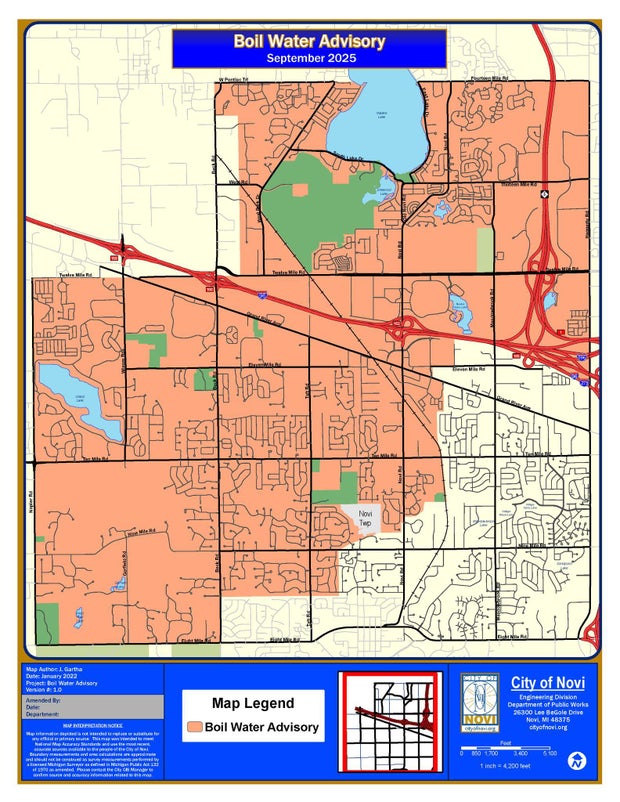
The city of Novi, Michigan, posted this map of a boil water advisory region on Sept. 26, 2025, the day after a massive water main break on 14 Mile Road.City of Novi, Michigan

But the boil water advisories for Walled Lake and the Novi neighborhoods that lost water remain in effect until further notice. The city of Novi said Friday morning that it expects the boil water advisory for its residents to remain in effect until Sunday.

Outdoor water use 

An outdoor water use restriction was posted for Novi and for nearby West Bloomfield, with residents asked to turn off irrigation systems to help ease water demand in the region.

GLWA didn’t specifically mention outdoor water use in its Friday morning report, but the water authority is asking all residents in the affected communities “to conserve water resources over the weekend to limit any additional stress on the system.”

School closures

Several schools in the affected communities were closed Thursday. The announcements for Friday include:

  • Novi Christian Academy announced it will be closed Friday. 
  • Detroit Catholic Central High School will be in session, but students are asked to bring their own water bottles.

CLICK HERE FOR MORE INFORMATION

https://www.cbsnews.com/detroit/news/water-main-break-novi-michigan-day-2/?intcid=CNM-00-10abd1h

Local News

Shedd Aquarium study on fish reproduction in Chicago River indicates continuing recovery from pollution

By Adam Harrington

A new study by the Shedd Aquarium has found that the Chicago River system continues to recover from pollution, as evidenced by the fish species that have been spawning in the river system.

A report on the study, “Larval fish community of the urbanized Chicago River,” was published Wednesday. It was authored by Dr. Austin Happel, a research biologist at the Shedd Aquarium who focuses on freshwater ecosystems.

The study analyzed the species of fish that spawn in the Chicago River to sustain resilient and biodiverse fish communities, the Shedd explained in a news release. Using light traps at 10 locations in the river between 2020 and 2022, researchers collected 2,211 larval fish — and their DNA found the fish belonged to 24 different species.

light-trap-on-south-branch-of-river-1.jpg
A light trap on the South Branch of the Chicago River to capture fish larvae.Shedd Aquarium

“This research represents the first documentation of larvae from fish species occurring within the Chicago River, indicating that recovery and restoration efforts allow at least 24 species to successfully spawn and reach the larval stage,” Happel said in the news release. “Our previous studies showed that improvements to water quality in the river increased biodiversity, and now we have more positive news as populations are proliferating locally within the river.”

The Chicago River: A history of pollution

The reversal of the flow of the Chicago River is a point of Chicago pride that youngsters learn in history classes at local schools. On Jan. 2, 1900, the Sanitary District of Chicago — a predecessor to the Metropolitan Water Reclamation District — completed the massive undertaking by digging the 28-mile Sanitary and Ship Canal heading southwest out of the city.

Before the reversal, human and industrial waste would flow from the river right into Lake Michigan — the source of Chicago’s drinking water, then as now. The oft-repeated story that 90,000 people died of cholera and typhoid fever after a storm in Chicago sent sewage into the lake in 1885 has been debunked, but nevertheless, the flow of disgusting material from the river into the lake was a monumental public health hazard.

However, while the reversal of the flow of the river away from Lake Michigan protected the lake itself and the city’s drinking water, the Chicago River system remained polluted, neglected, and smelly as the city grew and developed.

As explained by Friends of the Chicago River, the city went on treating the river system like an alley — dumping trash and sewage and damaging conditions for people and wildlife alike.

“After more than 100 years of this abuse, the Chicago River and the others were so polluted that when the Clean Water Act passed in 1972, officials were convinced no one would ever want to fish or swim here — and set the standards incredibly low,” Friends of the Chicago River wrote.

But for half a century now, efforts have been under way to clean up the river. The Metropolitan Water Reclamation District of Greater Chicago set up the Deep Tunnel system to reduce flooding and improve waterway quality. Meanwhile, Friends of the Chicago River — founded in 1979 — undertook habitat restoration and long-range planning efforts for river improvement, with efforts ranging from planting wetlands vegetation to encouraging river-friendly land development.

Conditions on the Chicago River have improved to the point where a Chicago River Swim is set for this coming Saturday — the first such event in 95 years. The Shedd Aquarium study documents that the diversification of fish species in the river is also evidence that things are on the right track.

brh-5931.jpg
Chicago RiverBrenna Hernandez

Signs of hope in the Chicago River fish community

The fish community in the Chicago River has been rising in both numbers and species diversity since the 1970s as conditions in the river have improved, the Shedd Aquarium study said.

The study found species now reproducing in the Chicago River include popular sport fish like the black crappie, bluegill, and largemouth bass, and forage fish like the gizzard shad, golden shiner, and spotfin shiner. Larvae of brook silverside and mimic shiner were also found — which the Shedd found to be a pleasant surprise, as these fish were believed to be intolerant of pollution, the Shedd Aquarium said.

10-fish-species-1.jpg
Ten fish species found on the Chicago RiverShedd Aquarium

The peak abundance of fish larvae was found in July, as water temperatures reached the low 70s, the aquarium said.

The study also compared the fish larvae species found in the North Branch of the Chicago River versus the South Branch.

The North Branch of the River generally follows its historical path flowing southeast, though the North Shore Channel was dug between 1907 and 1910 to ensure further that sewage flowed into the river system and away from Lake Michigan. Before the flow reversal of 1900, the South Branch of the river flowed northeast into the Main Branch and on to Lake Michigan, but since the reversal, the South Branch has flowed southwest into the Sanitary and Ship Canal.

The Shedd Aquarium study found that species considered less tolerant of pollution were more common in the South Branch, while species more tolerant of pollution were seen more in the North Branch.

The finding indicates that “some combination of suitable substrate, submerged vegetation, and water quality and flow are most likely present in the South Branch.”

The study said these areas on the South Branch that may be favorable to the spawning of pollution-intolerant fish species could include backwater areas such as barge slips that are no longer used in Bubbly Creek. Bubbly Creek is the terminal South Fork of the river’s South Branch that was infamously once a dump site for animal remains from the Union Stockyards, but the study said the old barge slips may now be effective fish nursery habitats that offer both abundant food and protection from predators.

larval-sampling-north-side-jun-8-2020-1.jpg
Dr. Austin Happel studies fish larvae on the Chicago River.Shedd Aquarium

Happel is also researching how floating wetlands — which the Shedd Aquarium and the nonprofit Urban Rivers have been installing on the river system over the past several years — could also be affecting fish reproduction.

“As people continue to care about and conserve this critical freshwater ecosystem, we hope to see increases in the number of fish spawning in the system,” Happel said in the Shedd Aquarium news release. 

The aquarium said the study could be taken as a sign of hope for other heavily modified urban waterways, and insights on how to support fish communities to spawn and grow.

The study also demonstrates how restoration can return wildlife to a waterway, the aquarium said, emphasizing that healthy fish populations mean healthier aquatic environments overall.

The study was published in the Journal of Great Lakes Research.

CLICK HERE FOR MORE INFORMATION

https://www.cbsnews.com/chicago/news/shedd-aquarium-study-fish-reproduction-chicago-river/?intcid=CNM-00-10abd1h

CBS Evening News

Why thousands of people in rural West Virginia lack reliable drinking water

By Tom Hanson

Rhodell, West Virginia — For as long as Roman Patsey of Raleigh County, West Virginia, remembers, the Appalachian Mountains have provided virtually everything he’s needed to survive, from his income as a coal miner, to his tap water.

“I don’t know if it’s safe or not to tell you the truth,” Patsey told CBS News of his tap water source. “But, you know, what are you going to do? You’ve got to drink water.” 

He took CBS News to his only source of drinking water for nearly 50 years: an abandoned coal mine near his home. Like so many here, he dug his own trenches and laid his own water lines hundreds of feet up a mountainside.

He says no part of him wondered why access to water should be this difficult.  

“No, I just accepted it,” Patsey said. “It was something you had to do. I worried about running out of water, really, for years.”

He said he has never conducted regular tests on the water for possible contaminants

About 250,000 West Virginia residents rely on untreated sources of water, like natural springs or aquifers from coal mines, according to the Environmental Protection Agency. 

The median income in this area is around $30,000 per year, according to U.S. Census data, a far cry from the prosperity that the coal industry once created.

Coal companies used to fund and operate many town water systems in rural West Virginia. But when the industry declined, so did the water infrastructure it used to maintain. Patsey wanted to see this firsthand. So he, with a CBS News crew in tow, went to a water treatment plant in nearby Kimball, a town of more than 300 people in McDowell County. The plant’s windows are boarded up, the roof is completely missing, and there is rusted metal. Yet, this facility is supposed to clean tap water for the entire community.

Just 20 minutes up the road in Rhodell, a community in Raleigh County, the water treatment plant is also crumbling, with rust covering the pipes and a ceiling that is caved in.

“It’s in pretty bad shape as you can see,” said Shane Bragg with the Raleigh County Public Service District. “The fear is what you can’t see underground and what’s in the mines. We have no way of accessing the pumps in the mines, so when they go, the town will lose water.”

Raleigh County is racing to replace water systems before that happens with help from the nonprofit DigDeep, which works to bring clean tap water to the more than 2.2 million Americans who it says are living without it.

“We’re dealing with a lot of systems that are very expensive to maintain,” said Travis Foreman, director of DigDeep’s Appalachia Water Project. “And the local public service districts, they don’t have the manpower to keep up.”

In Rhodell, DigDeep is bringing clean water to the community for the first time in 10 years. 

“It is a human right to have access to water,” Foreman said. “…Everyone deserves to have that access.”

For Patsey, it’s a source of hope straight from the tap.

“Not long ago at 4 o’clock in the morning, I turned this on like this, not a drop,” Patsey said while standing at his kitchen sink. “It’s such a peace knowing I’m going to have water here.”

CLICK HERE FOR MORE INFORMATION

https://www.cbsnews.com/news/thousands-of-people-rural-west-virginia-lack-reliable-drinking-water/