Renewable energy is soaring around the globe, but one obstacle to its growth has been how to store the electricity to use it when the sun isn’t shining or the wind’s not blowing. The solution to that problem may be blowing in the wind—in the air we breathe.
Credit: Highview Power
“Liquefied air” to be exact. It’s air that has been cooled to the point it liquefies and can be stored in a tank, acting like a battery. When electricity is needed, the air is heated and expands to drive turbines that generate power. It’s super-efficient because liquifying the air generates heat. This heat can then be used to help restore the liquid to a gas.
The liquid air energy storage (LEAS) technology was first developed in the 1970s but wasn’t put into use because it’s expensive. The growth of renewables means it could now be cost effective—and a faster way to get off fossil fuels. To that point, the BBC reports, the world’s first commercial-scale liquid air energy storage facility is being built in Manchester, England. Its developer, Highview Power, expects the system to come online in 2027 and have the capacity to store enough electricity from renewables to power nearly half a million homes.
If it catches on, it could be a game changer for the storage aspect of the renewable energy paradigm. Currently, electrical grids rely on pumped hydro and lithium batteries for storage, but those have drawbacks. Pumped hydro relies on water and only works in certain locations. Lithium mining has environmental impacts, and the batteries last only around ten years. In contrast, liquid air storage facilities use above-ground tanks, which can be situated practically anywhere, and they store energy for longer. The best part, the process runs on air—an abundant natural resource.
Microscopic plankton that regulate Earth’s climate and sustain ocean ecosystems take center stage in a new awareness campaign.
Source:Ruđer Bošković Institute
Summary:Coccolithophores, tiny planktonic architects of Earth’s climate, capture carbon, produce oxygen, and leave behind geological records that chronicle our planet’s history. European scientists are uniting to honor them with International Coccolithophore Day on October 10. Their global collaboration highlights groundbreaking research into how these microscopic organisms link ocean chemistry, climate regulation, and carbon storage. The initiative aims to raise awareness that even the smallest ocean dwellers have planetary impact.Share:
FULL STORY
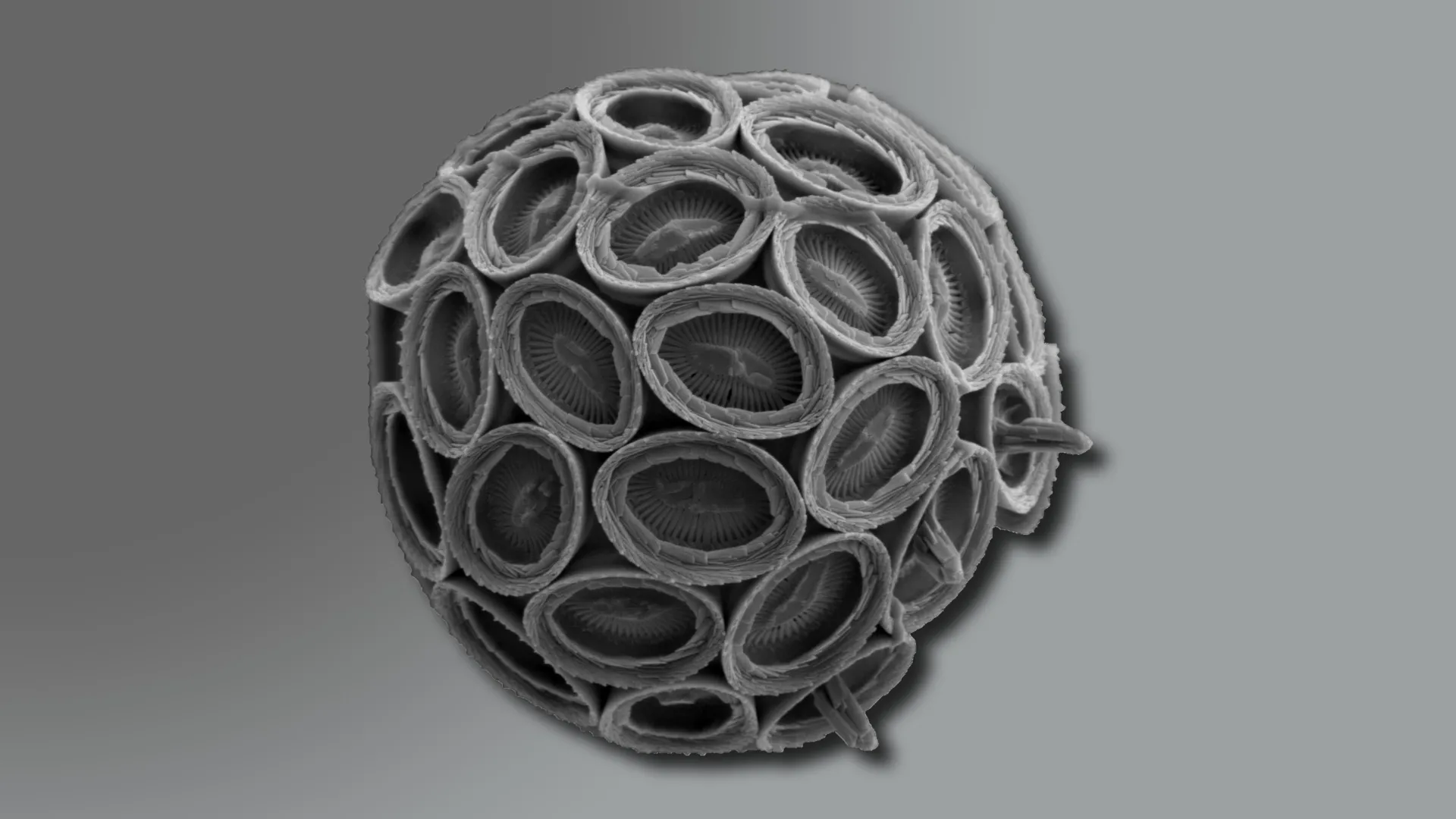
Microscopic view of a coccolithophore (Syracosphaera pulchra), a single-celled ocean alga whose intricate calcium plates (coccoliths) play a role in the global carbon cycle. Credit: Dr. Jelena Godrijan, Ruđer Bošković Institute
Smaller than a grain of dust and shaped like minute discs, coccolithophores are microscopic ocean dwellers with an outsized influence on the planet’s climate. These tiny algae remove carbon from seawater, release oxygen, and create delicate calcite plates that eventually sink to the ocean floor. Over time, these plates form chalk and limestone layers that record Earth’s climate history. Today, five European research institutions announced a new effort to establish October 10 as International Coccolithophore Day, drawing attention to the organisms’ vital contributions to carbon regulation, oxygen production, and the health of marine ecosystems that sustain life on Earth.
The initiative is being led by the Ruđer Bošković Institute (Zagreb, Croatia), the Lyell Centre at Heriot-Watt University (Edinburgh, UK), NORCE Norwegian Research Centre (Bergen, Norway), Marine and Environmental Sciences Centre (MARE) at the University of Lisbon (Portugal), and the International Nannoplankton Association (INA).
A Delicate Balance Under Threat
Few people are aware of coccolithophores, yet without them, the planet’s oceans and climate would look drastically different. These single-celled algae, which contain chlorophyll, float in the sunlit layers of the sea and are coated with calcium carbonate plates known as coccoliths.
Though incredibly small, coccolithophores are among Earth’s most effective natural carbon regulators. Every year, they generate more than 1.5 billion tonnes of calcium carbonate, capturing carbon dioxide from the atmosphere and storing it in deep-sea sediments. In addition to removing carbon, they produce oxygen, nourish marine food webs, and influence the planet’s greenhouse balance.
Coccolithophores often dominate vast stretches of the ocean, but climate change is altering the temperature, chemistry, and nutrient makeup of seawater. These shifts pose serious risks to their survival—and to the stability of the ecosystems that depend on them.
Why Coccolithophores?
What makes coccolithophores stand out from other plankton is both their role in the global carbon cycle and the unique record they leave behind. “Unlike other groups, they build intricate calcium carbonate plates that not only help draw down carbon dioxide from the atmosphere, but also transport it into deep ocean sediments, where it can be locked away for millennia. This biomineralization leaves behind an exceptional geological record, allowing us to study how they’ve responded to past climate shifts and better predict their future role. In short, their dual role as carbon pumps and climate archives makes them irreplaceable in understanding and tackling climate change,” says Professor Alex Poulton of the Lyell Centre.
“They are the ocean’s invisible architects, crafting the tiny plates that become vast archives of Earth’s climate,” says Dr. Jelena Godrijan, a leading coccolithophore researcher at the Ruđer Bošković Institute. “By studying their past and current responses to changes in the ocean, we can better understand how marine ecosystems function and explore how natural processes might help us tackle climate change.”
Cutting-Edge Science: From Plankton to Planetary Processes
The launch of International Coccolithophore Day spotlights the tiny ocean plankton that quietly help regulate atmospheric carbon dioxide.
At the Lyell Centre in Scotland, the OceanCANDY team, led by Prof. Alex Poulton, studies how these plankton pull CO2 from the air and store it in the sea, and tests how warmer, more acidic oceans could alter this process. Computer forecasts compare which species do this job best, today and tomorrow.
In Norway, scientists at NORCE Research, led by Dr. Kyle Mayers and his team, track coccolithophore life stories, how they grow, who eats them, and the viruses that infect and ultimately kill them, to show how carbon moves through the ocean. Ancient DNA in seafloor mud adds a long view of past climate shifts. “Coccolithophore interactions with viruses and grazers matter,” says Dr. Kyle Mayers of NORCE. “These links shape food webs and how the ocean stores carbon.”
In Croatia, the Cocco team at the Ruđer Bošković Institute study how they shape the ocean’s carbon cycle, from the decay of organic matter to bacterial interactions that influence seawater chemistry and CO2 uptake. “In understanding coccolithophores, we’re really uncovering the living engine of the ocean’s carbon balance,” says Dr. Jelena Godrijan “Their interactions with bacteria determine how carbon moves and transforms — processes that connect the microscopic scale of plankton to the stability of our planet’s climate.”
At MARE, University of Lisbon, Dr. Catarina V. Guerreiro leads studies to trace how aerosol-driven fertilization shapes the distribution of coccolithophores across the Atlantic into the Southern Ocean, and what that means for the ocean’s carbon pumps today and in recent times. Her approach consists of combining aerosol and seawater samples with sediment records, satellite data and lab microcosms to pin down cause and effect. “We’re connecting tiny chalky organisms to planetary carbon flows,” says Dr. Guerreiro.
At INA, scientists connect living coccolithophores to their fossil record, using their microscopic plates to date rocks and trace Earth’s climate history. By refining global biostratigraphic frameworks and calibrating species’ evolutionary timelines, INA researchers transform fossils of coccolithophores into precise tools for reconstructing ancient oceans, linking modern plankton ecology with the geological record of climate change.
Why Coccolithophore Day Matters?
Designating a day for Coccolithophores may seem like a small gesture, but its advocates argue it could have a big impact. “This could contribute to changing the way we see the ocean. “We most often talk about whales, coral reefs, and ice caps, but coccolithophores are a vital part of the planet’s climate system. They remind us that the smallest organisms can have the biggest impact, and that microscopic life plays a crucial role in shaping our planet’s future, ” says Dr. Sarah Cryer from the CHALKY project and OceanCANDY team.
The campaign to establish October 10 as International Coccolithophore Day is a call to action. By highlighting the profound, yet often overlooked, role of coccolithophores, scientists want to inspire a new wave of ocean literacy, policy focus, and public engagement.
A portion (looking south) of the 152-mile Friant-Kern Canal, an aqueduct to convey water to augment agriculture irrigation on the east side of the San Joaquin Valley, is viewed on July 8, 2021, thirty minutes east of Fresno, Calif.
The headlines suggested a comparison with the “Zero Day” announcement in Cape Town, South Africa, during a drought in 2018. That was the projected date when water would no longer be available at household taps without significant conservation. Cape Town avoided a water shutoff, barely.
While California’s announcement represents uncharted territory and is meant to promote water conservation in what is already a dry water year, there is more to the story.
California’s drought solution
California is a semi-arid state, so a dry year isn’t a surprise. But a recent state report observed that California is now in a dry pattern “interspersed with an occasional wet year.” The state suffered a three-year drought from 2007 to 2009, a five-year drought from 2012 to 2016, and now two dry years in a row; 2020 was the fifth-driest year on record, and 2021 was the second-driest.
Coming into the 2022 water year – which began Oct. 1 – the ground is dry, reservoirs are low and the prediction is for another dry year.
Over a century ago, well before climate change became evident, officials began planning ways to keep California’s growing cities and farms supplied with water. They developed a complex system of reservoirs and canals that funnel water from where it’s plentiful to where it’s needed.
Part of that system is the State Water Project.
First envisioned in 1919, the State Water Project delivers water from the relatively wetter and, at the time, less populated areas of Northern California to more populated and drier areas, mostly in Southern California. The State Water Project provides water for 27 million people and 750,000 acres of farmland, with about 70% for residential, municipal and industrial use and 30% for irrigation. There are 29 local water agencies – the state water contractors – that helped fund the State Water Project and in return receive water under a contract dating to the 1960s.
While the State Water Project is important to these local water agencies, it is usually not their only source of water. Nor is all water in California supplied through the State Water Project. Most water agencies have a portfolio of water supplies, which can include pumping groundwater.
What does 0% mean?
Originally, the State Water Project planned to deliver 4.2 million acre-feet of water each year. An acre-foot is about 326,000 gallons, or enough water to cover a football field in water 1 foot deep. An average California household uses around one-half to 1 acre-foot of water per year for both indoor and outdoor use. However, contractors that distribute water from the State Water Project have historically received only part of their allocations; the long-term average is 60%, with recent years much lower.
Based on water conditions each year, the state Department of Water Resources makes an initial allocation by Dec. 1 to help these state water contractors plan. As the year progresses, the state can adjust the allocation based on additional rain or snow and the amount of water in storage reservoirs. In 2010, for example, the allocation started at 5% and was raised to 50% by June. In 2014, the allocation started at 5%, dropped to 0% and then finished at 5%.
This year is the lowest initial allocation on record. According to the state Department of Water Resources, “unprecedented drought conditions” and “reservoirs at or near historic lows” led to this year’s headline-producing 0% allocation.
That’s 0% of each state water contractor’s allocation; however, the department committed to meet “unmet minimum health and safety needs.” In other words, if the contractors cannot find water from other sources, they could request up to 55 gallons per capita per day of water to “meet domestic supply, fire protection and sanitation needs.” That’s about two-thirds of what the average American uses.
The department is also prioritizing water for salinity control in the Sacramento Bay Delta area, water for endangered species, water to reserve in storage and water for additional supply allocations if the weather conditions improve.
Under the current plan, there will be no water from the State Water Project for roughly 10% of California’s irrigated land. As a result, both municipal and agricultural suppliers will be seeking to conserve water, looking elsewhere for water supplies, or not delivering water. None are easy solutions.
Those who can afford to dig deeper wells have done so, while others have no water as their wells have gone dry. During the 2012-2016 drought, the Public Policy Institute of California found that a majority of affected households that lost water access from their wells were in “small rural communities reliant on shallow wells – many of them communities of color.”
As someone who has worked in California and the Western U.S. on complex water issues, I am familiar with both drought and floods and the challenges they create. However, the widespread nature of this year’s drought – in California and beyond – makes the challenge even harder.
This “zero allocation” for California’s State Water Contractors is an unprecedented early warning, and likely a sign of what’s ahead.
A recent study warned that the snowpack in Western states like California may decline by up to 45% by 2050, with low- and no-snow years becoming increasingly common. Thirty-seven cities in California have already issued moratoriums on development because of water supply concerns.
If voluntary conservation does not work, enacting mandatory conservation measures like San Jose’s tough new drought rules may be needed. The state is now weighing emergency regulations on water use, and everyone is hoping for more precipitation.
Lara B. Fowler, Senior Lecturer in Law and Assistant Director for Outreach and Engagement, Penn State Institutes of Energy and the Environment, Penn State
Marine heatwaves are clogging the ocean’s carbon pump, threatening its power to fight climate change.
Source:Monterey Bay Aquarium Research Institute
Summary:Marine heatwaves can jam the ocean’s natural carbon conveyor belt, preventing carbon from reaching the deep sea. Researchers studying two major heatwaves in the Gulf of Alaska found that plankton shifts caused carbon to build up near the surface instead of sinking. This disrupted the ocean’s ability to store carbon for millennia and intensified climate feedbacks. The study highlights the urgent need for continuous, collaborative ocean observation.Share:
New research shows that marine heatwaves can reshape ocean food webs, which in turn can slow the transport of carbon to the deep sea and hamper the ocean’s ability to buffer against climate change. The study, published in the scientific journal Nature Communications on October 6, was conducted by an interdisciplinary team of researchers from MBARI, the University of Miami Rosenstiel School of Marine, Atmospheric, and Earth Science, the Hakai Institute, Xiamen University, the University of British Columbia, the University of Southern Denmark, and Fisheries and Oceans Canada.
To explore the impacts of marine heatwaves on ocean food webs and carbon flows, the research team combined multiple datasets that tracked biological conditions in the water column in the Gulf of Alaska for more than a decade. This region experienced two successive marine heatwaves during this time, one from 2013 to 2015 known as “The Blob,” and another from 2019 to 2020.
“The ocean has a biological carbon pump, which normally acts like a conveyor belt carrying carbon from the surface to the deep ocean. This process is powered by the microscopic organisms that form the base of the ocean food web, including bacteria and plankton,” said the lead author, Mariana Bif, previously a research specialist at MBARI and now an assistant professor in the Department of Ocean Sciences at the Rosenstiel School. “For this study, we wanted to track how marine heatwaves affected those microscopic organisms to see if those impacts were connected to the amount of carbon being produced and exported to the deep ocean.”
The research team used information collected by the Global Ocean Biogeochemical (GO-BGC) Array, a collaborative initiative funded by the US National Science Foundation and led by MBARI that uses robotic floats to monitor ocean health. The GO-BGC project has deployed hundreds of autonomous biogeochemical Argo (BGC-Argo) floats, which measure ocean conditions such as temperature, salinity, nitrate, oxygen, chlorophyll, and particulate organic carbon (POC) up and down the water column every five to 10 days. The team also looked at seasonal data from ship-based surveys that tracked plankton community composition, including pigment chemistry and sequencing of the environmental DNA (eDNA) from seawater samples collected during the Line P program carried out by Fisheries and Oceans Canada.
The study found that marine heatwaves did impact the base of the ocean food web, and those impacts were connected to changes in the ways that carbon was cycled in the water column. However, the changes that occurred in the food web were not consistent across the two heatwaves.
Under typical conditions, plant-like phytoplankton convert carbon dioxide to organic material. These microorganisms are the foundation of the ocean food web. When they are eaten by larger animals and excreted as waste, they transform into organic carbon particles that sink from the surface through the ocean’s mesopelagic, or twilight, zone (200 to 1,000 meters, approximately 660 to 3,300 feet) and down to the deep sea. This process locks atmospheric carbon away in the ocean for thousands of years.
During the 2013-2015 heatwave, surface carbon production by photosynthetic plankton was high in the second year, but rather than sinking rapidly to the deep sea, small carbon particles piled up approximately 200 meters (roughly 660 feet) underwater.
During the 2019-2020 heatwave, there was record-high accumulation of carbon particles at the surface in the first year that could not be attributed to carbon production by phytoplankton alone. Instead, this accumulation was likely due to the recycling of carbon by marine life and the buildup of detritus waste. This pulse of carbon then sank to the twilight zone, but lingered at depths of 200 to 400 meters (roughly 660 to 1,320 feet) instead of sinking to the deep sea.
The team attributed these differences in carbon transport between the two heatwaves to changes in phytoplankton populations. These changes cascaded through the food web, leading to a rise in small grazers who do not produce fast-sinking waste particles, so carbon was retained and recycled at the surface and in the upper twilight zone rather than sinking to deeper depths.
“Our research found that these two major marine heatwaves altered plankton communities and disrupted the ocean’s biological carbon pump. The conveyor belt carrying carbon from the surface to the deep sea jammed, increasing the risk that carbon can return to the atmosphere instead of being locked away deep in the ocean,” said Bif.
This research demonstrated that not all marine heatwaves are the same. Different plankton lineages rise and fall during these warming events, underscoring the need for long-term, coordinated monitoring of the ocean’s biological and chemical conditions to accurately model the diverse, and expansive, ecological impacts of marine heatwaves.
“This research marks an exciting new chapter in ocean monitoring. To really understand how a heatwave impacts marine ecosystems and ocean processes, we need observation data from before, during, and after the event. This research included robotic floats, pigment chemistry, and genetic sequencing, all working together to tell the entire story. It’s a great example of how collaboration can help us answer key questions about the health of the ocean,” said MBARI Senior Scientist Ken Johnson, the lead principal investigator for the GO-BGC project and a coauthor of the study.
Ocean observations and models suggest that marine heatwaves have been expanding in size and intensifying over the past few decades. The ocean absorbs a quarter of the carbon dioxide emitted each year, thanks to the steady stream of carbon particles sinking from the surface to the deep sea. A warmer ocean can mean less carbon locked away, which in turn can accelerate climate change. Beyond the changes to carbon transport, the shifts in plankton at the foundation of the ocean food web have cascading impacts on marine life and human industry too.
“Climate change is contributing to more frequent and intense marine heatwaves, which underscores the need for sustained, long-term ocean monitoring to understand and predict how future marine heatwaves will impact ecosystems, fisheries, and climate,” said Bif.
This work was funded by the US National Science Foundation’s GO-BGC project (NSF Award 1946578 with operational support from NSF Award 2110258), with additional support from the David and Lucile Packard Foundation, China National Science Foundation (grant number: 42406099), Fundamental Research Funds for the Central Universities (grant number: 20720240105), Danish Center for Hadal Research (Grant No. DNRF145), and Fisheries and Oceans Line P program.
Earlier this year, the city scrapped plans to build a new water treatment facility because costs became too high, rising from $60 million to $83 million.
“Certainly we’re all committed to safe and healthy drinking water here in Northfield,” said Ben Martig, Northfield’s city administrator.
City officials are now advising families with infants under 1 to have them drink bottled water or to treat the water themselves, like with a reverse osmosis system.
Officials said they have been warning residents about the water quality issues for years through multiple press releases.
“We’ve talked with local providers, letting them know to notify pregnant mothers and newborn families that they should be looking at different options for their water and making sure that it is further treated,” said Justin Wagner, the city’s utilities manager.
“It’s unsafe for children under 1 and people who are pregnant, and those are important and valuable people to our community, too,” said Ward 1 City Council Member Kathleen Holmes.
She said water treatment is a city need, and costs for the project will only increase as time passes.
“This is a situation for renters who can’t put in reverse osmosis or can’t afford it,” said Holmes.
Northfield resident Levi Prinzing is the parent of an infant, but said at this point he’s more worried about the financial impacts of a new treatment facility. Prinzing also filters his water.
“I don’t think we need a new treatment plant,” said Prinzing. “The treatment plant is a lot of money and we just raised our taxes a lot.”
“We have to find a way to work together as a council and find a solution that can help bridge that gap, that we can provide safe drinking water for all residents, and hopefully reduce the financial impact or financial burden that it is on residents,” said Holmes.
The City Council may reconsider the water treatment facility in June.
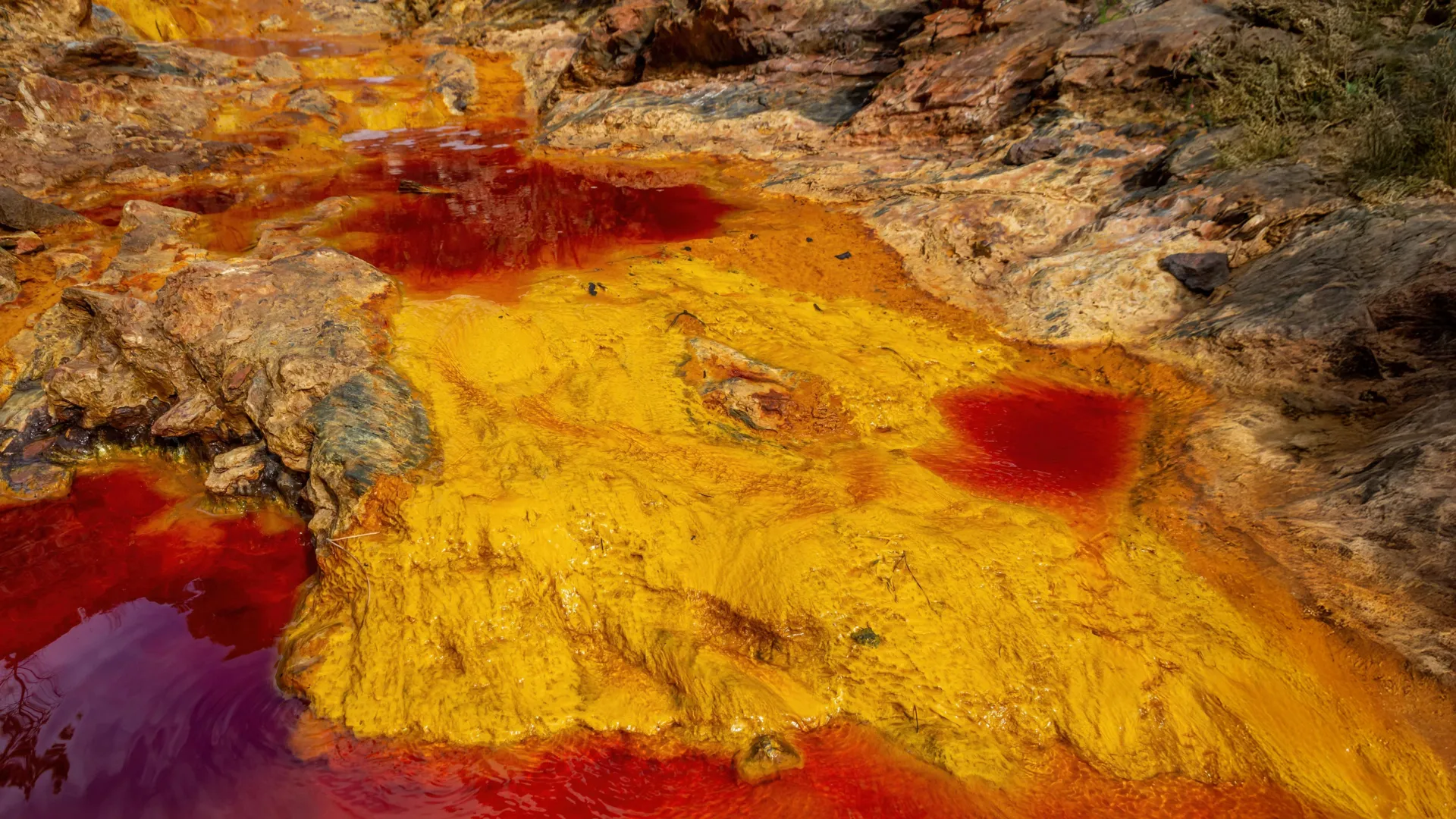
Ice doesn’t just freeze, it fuels hidden chemistry that could turn rivers rusty as the planet warms.
Source:Umea University
Summary:Researchers found that ice can trigger stronger chemical reactions than liquid water, dissolving iron minerals in extreme cold. Freeze-thaw cycles amplify the effect, releasing iron into rivers and soils. With climate change accelerating these cycles, Arctic waterways may face major transformations.
FULL STORY
An aerial view of the rust-colored Kutuk River in Gates of the Arctic National Park in Alaska. Thawing permafrost is exposing minerals to weathering, increasing the acidity of the water, which releases metals like iron, zinc, and copper. Credit: Ken Hill / National Park Service
Ice can dissolve iron minerals more effectively than liquid water, according to a new study from Umeå University. The discovery could help explain why many Arctic rivers are now turning rusty orange as permafrost thaws in a warming climate.
The study, recently published in the scientific journal PNAS, shows that ice at minus ten degrees Celsius releases more iron from common minerals than liquid water at four degrees Celsius. This challenges the long-held belief that frozen environments slow down chemical reactions.
“It may sound counterintuitive, but ice is not a passive frozen block,” says Jean-François Boily, Professor at Umeå University and co-author of the study. “Freezing creates microscopic pockets of liquid water between ice crystals. These act like chemical reactors, where compounds become concentrated and extremely acidic. This means they can react with iron minerals even at temperatures as low as minus 30 degrees Celsius.”
To understand the process, the researchers studied goethite – a widespread iron oxide mineral – together with a naturally occurring organic acid, using advanced microscopy and experiments.
They discovered that repeated freeze-thaw cycles make iron dissolve more efficiently. As the ice freezes and thaws, organic compounds that were previously trapped in the ice are released, fuelling further chemical reactions. Salinity also plays a crucial role: fresh and brackish water increase dissolution, while seawater can suppress it.
The findings apply mainly to acidic environments, such as mine drainage sites, frozen dust in the atmosphere, acid sulfate soils along the Baltic Sea coast, or in any acidic frozen environment where iron minerals interact with organics. The next step is to find out if the same is true for all iron-bearing ice. This is what ongoing research in the Boily laboratory will soon reveal.
“As the climate warms, freeze-thaw cycles become more frequent,” says Angelo Pio Sebaaly, doctoral student and first author of the study. “Each cycle releases iron from soils and permafrost into the water. This can affect water quality and aquatic ecosystems across vast areas.”
The findings show that ice is not a passive storage medium, but an active player. As freezing and thawing increase in polar and mountain regions, for the impact on ecosystems. and the natural cycling of elements could be significant.
Summary:A global research effort offers the first worldwide view of how climate change could affect water availability and drought severity in the decades to come. By the late 21st century, global land area and population facing extreme droughts could more than double — increasing from 3% during 1976-2005 to 7%-8%, according to a professor of civil and environmental engineering.Share:
FULL STORY
Michigan State University is leading a global research effort to offer the first worldwide view of how climate change could affect water availability and drought severity in the decades to come.
By the late 21st century, global land area and population facing extreme droughts could more than double — increasing from 3% during 1976-2005 to 7%-8%, according to Yadu Pokhrel, associate professor of civil and environmental engineering in MSU’s College of Engineering, and lead author of the research published in Nature Climate Change.
“More and more people will suffer from extreme droughts if a medium-to-high level of global warming continues and water management is maintained at its present state,” Pokhrel said. “Areas of the Southern Hemisphere, where water scarcity is already a problem, will be disproportionately affected. We predict this increase in water scarcity will affect food security and escalate human migration and conflict.”
The research team, including MSU postdoctoral researcher Farshid Felfelani, and more than 20 contributing authors from Europe, China and Japan are projecting a large reduction in natural land water storage in two-thirds of the world, also caused by climate change.
Land water storage, technically known as terrestrial water storage, or TWS, is the accumulation of water in snow and ice, rivers, lakes and reservoirs, wetlands, soil and groundwater — all critical components of the world’s water and energy supply. TWS modulates the flow of water within the hydrological cycle and determines water availability as well as drought.
“Our findings are a concern,” Pokhrel said. “To date, no study has examined how climate change would impact land water storage globally. Our study presents the first, comprehensive picture of how global warming and socioeconomic changes will affect land water storage and what that will mean for droughts until the end of the century.”
Felfelani said the study has given the international team an important prediction opportunity.
“Recent advances in process-based hydrological modeling, combined with future projections from global climate models under wide-ranging scenarios of socioeconomic change, provided a unique foundation for comprehensive analysis of future water availability and droughts,” Felfelani said. “We have high confidence in our results because we use dozens of models and they agree on the projected changes.”
The research is based on a set of 27 global climate-hydrological model simulations spanning 125 years and was conducted under a global modeling project called the Inter-Sectoral Impact Model Intercomparison Project. Pokhrel is a working member of the project.
“Our findings highlight why we need climate change mitigation to avoid the adverse impacts on global water supplies and increased droughts we know about now,” Pokhrel said. “We need to commit to improved water resource management and adaptation to avoid potentially catastrophic socio-economic consequences of water shortages around the world.”
Melting glaciers are putting a hold on countries’ development
Source:Ohio State University
Summary:Climate change is putting an enormous strain on global water resources, and according to researchers, the Tibetan Plateau is suffering from a water imbalance so extreme that it could lead to an increase in international conflicts.Share:
FULL STORY
Climate change is putting an enormous strain on global water resources, and according to researchers, the Tibetan Plateau is suffering from a water imbalance so extreme that it could lead to an increase in international conflicts.
Nicknamed “The Third Pole,” the Tibetan Plateau and neighboring Himalayas is home to the largest global store of frozen water outside of the North and South Polar Regions. This region, also known as the Asian water tower (AWT), functions as a complex water distribution system which delivers life-giving liquid to multiple countries, including parts of China, India, Nepal, Pakistan, Afghanistan, Tajikistan and Kyrgyzstan.
Yet due to the rapid melting of snow and upstream glaciers, the area can’t sustainably support the continued growth of the developing nations that rely on it.
“Populations are growing so rapidly, and so is the water demand,” said Lonnie Thompson, distinguished university professor of earth sciences at The Ohio State University and senior research scientist at the Byrd Polar Research Center. “These problems can lead to increased risks of international and even intranational disputes, and in the past, they have.”
Thompson, who has studied climate change for nearly five decades, is intimately familiar with the precarious nature of the region’s hydrological situation. In 1984, Thompson became a member of the first Western team sent to investigate the glaciers in China and Tibet. Since then, he and a team of international colleagues have spent years investigating ice core-derived climate records and the area’s rapidly receding ice along with the impact it’s had on the local settlements that depend on the AWT for their freshwater needs.
The team’s latest paper, of which Thompson is a co-author, was published in the journal Nature Reviews Earth and Environment. Using temperature change data from 1980 to 2018 to track regional warming, their findings revealed that the AWT’s overall temperature has increased at about 0.42 degrees Celsius per decade, about twice the global average rate.
“This has huge implications for the glaciers, particularly those in the Himalayas,” Thompson said. “Overall, we’re losing water off the plateau, about 50% more water than we’re gaining.” This scarcity is causing an alarming water imbalance: Northern parts of Tibet often experience an overabundance of water resources as more precipitation occurs due to the strengthening westerlies, while southern river basins and water supplies shrink as drought and rising temperatures contribute to water loss downstream.
According to the study, because many vulnerable societies border these downstream basins, this worsening disparity could heighten conflicts or exacerbate already tense situations between countries that share these river basins, like the long-term irrigation and water struggles between India and Pakistan.
“The way that regional climate varies, there are winners and losers,” Thompson said. “But we have to learn to work together in order to ensure adequate and equitable water supplies throughout this region.” As local temperatures continue to rise and water resources become depleted, more people will end up facing ever diminishing water supplies, he said.
Still, overall increases in precipitation alone won’t meet the increased water demands of downstream regions and countries.
To combat this, the study recommends using more comprehensive water monitoring systems in data-scarce areas, noting that better atmospheric and hydrologic models are needed to help predict what’s happening to the region’s water supply. Lawmakers should then use those observations to help develop actionable policies for sustainable water management, Thompson said. If policymakers do decide to listen to the scientists’ counsel, these new policies could be used to develop adaptation measures for the AWT through collaboration between upstream and downstream countries.
After all, when things go awry in one area of the world, like the butterfly effect, they tend to have long-lasting effects on the rest of Earth’s population. “Climate change is a global process,” Thompson said. “It doesn’t matter what country or what part of the world you come from. Sooner or later, you’ll have a similar problem.”
Exposure to oil — and possibly the chemicals used to clean up oil spills — has made corals prone to breaking and showing signs of high stress, even today
Source:American Geophysical Union
Summary:Deep-water corals in the Gulf of Mexico are still struggling to recover from the devastating Deepwater Horizon oil spill in 2010, scientists report at the Ocean Science Meeting in New Orleans. Comparing images of more than 300 corals over 13 years — the longest time series of deep-sea corals to date — reveals that in some areas, coral health continues to decline to this day.Share:
FULL STORY
Deep-water corals in the Gulf of Mexico are still struggling to recover from the devastating Deepwater Horizon oil spill in 2010, scientists report at the Ocean Sciences Meeting in New Orleans. Comparing images of more than 300 corals over 13 years — the longest time series of deep-sea corals to date — reveals that in some areas, coral health continues to decline to this day.
The spill slathered hundreds of miles of shoreline in oil, and a slick the size of Virginia coated the ocean surface. Over 87 days, 134 million gallons of oil spilled directly from the wellhead at a depth of 1520 meters (nearly 5000 feet) into the Gulf. While the spill was most visible at the surface, negative ecological impacts extended hundreds of meters into the ocean.
In a presentation on Tuesday, 20 February, scientists will show that deep-water corals remain damaged long after the spill. Over 13 years, these coral communities have had limited recovery — some even continuing to decline.
“We always knew that deep-sea organisms take a long time to recover, but this study really shows it,” said Fanny Girard, a marine biologist and conservationist at the University of Hawai’i at Mānoa who led the work. “Although in some cases coral health appeared to have improved, it was shocking to see that the most heavily impacted individuals are still struggling, and even deteriorating, a decade later.”
The findings can help guide deep-water restoration efforts following oil spills.
Delicate and damaged
A few months after the Deepwater Horizon well was capped, an interdisciplinary team of researchers surveyed the ocean floor 6 to 22 kilometers (3.7 to 13.7 miles) from the wellhead to record the damage. About 7 miles away and at 1,370 meters (4,495 feet) depth, they found a dense forest of tree-like Paramuricea corals that looked sickly.
“These corals were covered in a brown material,” Girard said. Testing showed the sludge contained traces of a combination of oil and chemical dispersants. A few months later, the researchers found two additional coral sites at 1,580 meters and 1,875 meters (4921 and 6233 feet, respectively) deep that were similarly damaged.
Deep-sea corals are suspension feeders and may have ingested contaminated particles, leading to the observed health impacts, the researchers said. Direct exposure to toxic chemicals contained in the mixture of oil and chemicals may have also damaged coral tissue. However, to date, scientists still do not exactly know how the oil and dispersant affected these vulnerable organisms.
Every year from 2010 to 2017, scientists visited those three sites to monitor damages, measure growth rates and note any recovery of the corals, as part of a large initiative aiming to better understand ecosystem impacts and improve our ability to respond to future oil spills. They used a remotely operated vehicle to take high-resolution photographs of corals at all three impacted sites and two far-removed reference sites, tracking more than 300 corals overall.
The researchers visited these sites again in 2022 and 2023 as part of the Habitat Assessment and Evaluation project, one of the projects funded through the Natural Resource Damage Assessment settlement. The images allowed the team to measure changes to coral health over time, including noting any breaks along the delicate branches of the coral caused by exposure to oil pollution.
Still suffering after all these years
The scientists found that even by 2022, the affected corals continued to show signs of stress and damage from the oil spill. The brown coating they had first observed was long gone, but upon closer inspection, the corals were weak and prone to breaking. The scarred spots where branches fell off were leaking mucus, and some corals whose skeletons were exposed had been colonized by other, parasitic coral species.
“Not only were some of these corals not recovering, but some of them seemed to be getting worse,” Girard said. She added that if the impacts are too heavy, ecosystems can struggle to recover at all, especially given the onslaught of climate change-related stressors like ocean acidification. “It’s really important to prevent damage in the first place, and the way to do that is through protection measures.”
Girard notes that their work is being used to inform restoration strategies, including trying to grow deep-sea corals for coral propagation from transplants, deploying artificial anchoring sites for recolonization or protecting the deepwater communities and letting nature heal itself. In the coming years, the team will continue to monitor to corals, looking for signs that they’re getting better — or worse.
New study suggests that smallmouth bass and channel catfish are changing what they eat to avoid having to compete with or being eaten by the invader.
Source:Penn State
Summary: Flathead catfish are rapidly reshaping the Susquehanna River’s ecosystem. Once introduced, these voracious predators climbed to the top of the food chain, forcing native fish like channel catfish and bass to shift diets and habitats. Using stable isotope analysis, researchers uncovered how the invaders disrupt food webs, broaden dietary overlaps, and destabilize energy flow across the river system. The findings show how a single invasive species can spark cascading ecological consequences. Share:
FULL STORY
Flatheads grow fast in this river system, attain large body sizes and can eat a variety of prey. Because adult flatheads have few natural predators, they can exert strong control over the ecosystem. Credit: Penn State
Flathead catfish, opportunistic predators native to the Mississippi River basin, have the potential to decimate native and recreational fisheries, disrupting ecosystems in rivers where they become established after their introduction or invasion from a nearby river drainage. That concern led a team of researchers from Penn State, the U.S. Geological Survey (USGS), and the Pennsylvania Fish and Boat Commission to assess how flatheads are affecting the food web and energy flow in the Susquehanna River in Pennsylvania, where they were first detected in 1991. Their population has grown rapidly in the decades since.
“Flatheads grow fast in this river system, attain large body sizes and can eat a variety of prey,” said study first author Olivia Hodgson, a master’s degree student in Penn State’s Intercollege Graduate Degree Program in Ecology. “Because adult flatheads have few natural predators, flathead catfish can exert strong control over the ecosystem.”
Hodgson is working with Tyler Wagner, a scientist with the USGS Pennsylvania Cooperative Fish and Wildlife Research Unit Program and a Penn State affiliate professor of fisheries ecology. He is senior author on the study. In findings published Sept. 4 in Ecology, the researchers reported that flathead catfish are apex predators.
Flatheads had the highest trophic position — the level an organism occupies in a food web, based on its feeding relationships — even higher than resident top predators such as smallmouth bass and channel catfish. Channel catfish had a lower trophic position in areas with flathead catfish. This means they now eat lower on the food chain, likely because they are being outcompeted by flatheads or avoiding them, the researchers explained. In areas with flathead catfish, they found, all species showed broader and overlapping diets.
“This suggests that resident species are changing what they eat to avoid competing with or being eaten by the invader,” Hodgson said. “These findings support the ‘trophic disruption hypothesis,’ that says when a new predator enters an ecosystem, it forces existing species to alter their behavior, diets and roles in the food web. This can destabilize ecosystems over time. Our study highlights how an invasive species can do more than just reduce native populations — it can reshape entire foodwebs and change how energy moves through ecosystems.”
Although the predatory effects of invasive catfishes on native fish communities have been documented — such as in a recent study on the Susquehanna River led by researchers at Penn State — the impacts of invasion on riverine food webs are poorly understood, Hodgson noted. This study quantified the effects of invasive flathead catfish on the food web in the Susquehanna by comparing uninvaded river sections to invaded sections, focusing on several key species: flathead catfish — invader, channel catfish and smallmouth bass — resident predators, and crayfish and minnows — prey.
In addition to evaluating trophic position, the researchers analyzed the isotopic niche occupied by the fish species — the range of carbon and nitrogen markers found within the tissues of an organism, reflecting its diet and habitat, providing insights into its ecological role.
To reach their conclusions, the researchers employed stable isotope analysis, a widely used tool that can explain patterns within a food web, highlighting links between trophic positions, as well as the breadth and overlap of trophic niches. Stable isotope analysis is especially useful for studying invasion ecology, such as investigating trophic reorganization and trophic overlap between introduced and resident species.
When fish eat, their bodies incorporate the isotopic signature of their food. By sampling their tissues, scientists can measure nitrogen isotopes and determine their diet, carbon isotopes to determine habitat use, and compare isotopic signatures across regions to deduce fish migration or habitat shifts. For this study, channel catfish, smallmouth bass, minnows and crayfish were selected as focal species because a previous diet analysis conducted in collaboration with Penn State, USGS, and Pennsylvania Fish and Boat Commission researchers within the Susquehanna River, showed that these species are important prey for flathead catfish.
The researchers collected a total of 279 fish and 64 crayfish for stable isotope analysis, including 79 flathead catfish, 45 smallmouth bass, 113 channel catfish and 42 minnows comprising nine species. All samples were oven dried and ground to a fine powder using a mortar and pestle. Stable isotope samples were sent to Penn State’s Core Facilities and the Michigan State University Stable Isotope Laboratories for isotope determination.
“Stable isotope analysis explained patterns within the Susquehanna food web in habitats invaded and not invaded by the flathead catfish, and it allowed us to understand links between different species in the river food web and how invasive species might lead to changes in how native species interact and compete, what they eat and how their diets overlap, and if they might be displaced from preferred habitats by the invader,” Hodgson said. “We were able to infer resource use, helping us to better understand potential competition for resources and how this changes when flathead catfish become established.”
Contributing to the research were: Sydney Stark, recent Penn State graduate with a master’s degree in wildlife and fisheries science; Megan Schall, associate professor of biology and science at Penn State Hazleton; Geoffrey Smith, Susquehanna River biologist for the Pennsylvania Fish and Boat Commission; and Kelly Smalling, research hydrologist withtheU.S. Geological Survey, New Jersey Water Science Center.
Funding for this research was provided by Pennsylvania Sea Grant and the U.S. Geological Survey.