Villagers drank sinkhole water as a ‘miracle cure’, until officials found dangerous bacteria
TOI World Desk / TIMESOFINDIA.COM / Jan 19, 2026, 04:24 IST
Residents in West Sumatra, Indonesia have been urged to stop collecting and drinking water from a newly formed sinkhole after authorities found it was contaminated with E. coli, a bacteria linked to serious gastrointestinal illness.The incident unfolded in Limapuluh Kota Regency, where a large ground collapse drew crowds of locals who believed the water pooling inside the sinkhole had medicinal properties. Videos and posts showing people lining up with bottles quickly spread online, turning the site into an unlikely “healing water” destination.That belief, officials say, is not just unproven. It could be dangerous.
Authorities warn water is unsafe
West Sumatra’s Deputy Governor Vasko Ruseimy publicly cautioned residents not to consume the water after tests showed it contained Escherichia coli (E. coli). Reports citing early findings from the Geological Agency and local health checks said the water did not meet safe drinking standards, and officials warned against using it for “health” or “treatment” claims.E. coli contamination is often considered a red-flag indicator because it can suggest the presence of harmful pathogens introduced through surface runoff, soil contamination, or waste intrusion.
Where the sinkhole appeared
The sinkhole reportedly opened in a rice field area in Jorong Tepi, Nagari Situjuah Batua, part of Limapuluh Kota Regency. Indonesian authorities and geology experts began assessing the site soon after it was reported, as concern grew about whether the collapse could expand.A geology expert from Universitas Gadjah Mada (UGM) said the phenomenon was shaped by local geological conditions and was likely triggered by heavy rainfall, linking it to wider hydrometeorological impacts felt across parts of Sumatra.
Why sinkholes happen in the first place
Sinkholes form when the ground surface collapses into an underground gap. In many cases, that gap grows silently over time, then fails suddenly.Experts say several factors can cause this:1) Hidden erosion beneath the surfaceWater moving underground can gradually carry away soil particles in a process sometimes described as “piping erosion”, eventually creating a hollow space large enough for the ground above to give way.2) Intense rainfall and flooding pressureHeavy rain can destabilise soil layers, accelerate erosion, and raise groundwater pressure. Even if the ground has been weakening for months or years, extreme rainfall can be the final trigger.3) Landscape vulnerabilitySome areas are naturally more prone to collapses depending on soil composition, underground drainage patterns, and whether the land has been altered by farming, construction, or shifting water channels.In practical terms, sinkholes are not just dramatic “holes in the ground”. They are often a sign that the underground structure has changed, and that nearby land may still be unstable.
Why drinking sinkhole water can be risky even if it looks clear
One reason the West Sumatra case drew alarm is how quickly “clean-looking” water was assumed to be safe.But sinkholes can act like natural funnels, pulling in contaminants from surrounding areas, including:
animal waste from nearby fields
bacteria from soil and surface runoff
agricultural contamination
drainage seepage
Even if the water appears clear, it may still carry harmful organisms. That’s why officials moved quickly to warn residents once E. coli was detected.
A public health warning wrapped inside a viral moment
The sinkhole water episode has become a reminder of how fast health misinformation can spread when fear, curiosity, and hope collide. For some residents, the attraction was not spectacle but belief: that unusual natural phenomena can offer cures.Authorities, however, have taken a firm line. Their message is simple: do not drink it.As officials monitor the site for further ground movement, the bigger risk may no longer be the sinkhole itself, but what happens when viral belief outruns basic water safety.
In real-world testing, researchers found that a carbon-based material placed underground sharply lowered PFAS in groundwater and required minimal maintenance.
How to Make Spanakopita-Inspired Potato Crust QuicheClose
Credit: Viktoriya Skorikova / Getty Images
Scientists from Brown University, the University of Minnesota, and the U.S. Navy found that injecting colloidal carbon into contaminated soil can trap PFAS chemicals underground, dramatically reducing contamination.
In field tests, PFAS concentrations fell from over 50,000 nanograms per liter to undetectable levels within 10 months, capturing both long- and short-chain PFAS compounds.
The approach could cost less than half as much as current cleanup methods and require minimal maintenance, offering a sustainable solution for communities dealing with PFAS pollution.
Over decades, per- and polyfluoroalkyl substances (PFAS) have slowly woven their way into our daily lives, without most of us ever noticing. They’re the stuff that prevents your eggs from sticking to the frying pan, waterproofs your jackets, allows makeup to last an entire day, and keeps those fast-food wrappers grease-resistant.
They’re also the stuff that earned the unsettling nickname “forever chemicals” thanks to carbon-fluorine bonds so strong that once these chemicals enter the environment, they tend to stay there. Forever. And that durability has become a serious problem. Scientists are increasingly recognizing that PFAS may cause a range of health issues, even as these chemicals have been detected in groundwater near military bases, airports, industrial sites, and municipal water systems across the United States. Cleaning them up has proven frustratingly difficult, expensive, and often temporary. Public-facing advice has often focused on avoiding products that contain PFAS or relying on above-ground water filtration, which requires almost constant upkeep. But now a few savvy researchers say they may soon have a solution for that, too.
Researchers from Brown University and the University of Minnesota, alongside industry partners and the U.S. Navy, tested whether an ultrafine carbon material could be injected directly into contaminated soil to trap PFAS in place. Their findings, published inThe Journal of Hazardous Materials, show that it may be a wild enough idea to work.
The team tested an activated carbon material known as “colloidal carbon,” which acts like a microscopic sponge that can trap PFAS chemicals underground. They began by trialing it in lab conditions, collecting soil from a contaminated site, before testing it on the real thing, taking it to a field at a Navy training area known to have extremely high PFAS levels.
The researchers ran a “push-pull” test, injecting the carbon into the ground, creating an underground treatment zone where PFAS bind as groundwater flows through the net, then pumping the water back out to measure how much of the PFAS made it through. In their tests, the PFAS concentrations dropped from more than 50,000 nanograms per liter to tktk, below detection limits, within 10 months. Importantly, the carbon net captures both long-chain and short-chain PFAS. This is a big deal for the potential cleanup of these forever chemicals because short-chain PFAS are harder to remove, yet are becoming increasingly common as manufacturers move away from older compounds.
Just as important from an economic standpoint is that, according to the team’s analysis, the long-term operating costs of this carbon-based approach would be less than half those of the existing PFAS remedies. And because the system would exist underground, it would require little maintenance.
“This study shows that we can create an effective treatment zone underground that dramatically reduces PFAS levels with far lower long-term costs,” Matt Simcik, a professor in the School of Public Health and co-author of the study, shared in a statement. “The effectiveness of this method, combined with the fact that the system requires very little ongoing maintenance, makes this a promising option for real-world cleanup efforts. For communities facing PFAS contamination, this represents a major step forward toward practical, sustainable technologies that can protect drinking water and reduce long-term exposure risks.”
It’s critical to note that this isn’t a silver bullet — at least not yet. The researchers are clear that more work is needed to understand how long underground carbon remains effective and how it could perform under different soil conditions. But the study does offer some good news and a potentially practical path forward in the fight against forever chemicals. And, on a similarly impactful note, it shows just how important it is that we work on this issue together.
”The project shows the importance of partnerships between practitioners, government, and academia,” William Arnold, a professor in the College of Science and Engineering, said. “The expertise, experience, and insight of the individuals who made up the team were needed for this lab-to-field project to succeed.”
CARLSBAD, Calif. (AP) — Some four miles off the Southern California coast, a company is betting it can solve one of desalination’s biggest problems by moving the technology deep below the ocean’s surface.
OceanWell’s planned Water Farm 1 would use natural ocean pressure to power reverse osmosis — a process that forces seawater through membranes to filter out salt and impurities — and produce up to 60 million gallons (nearly 225 million liters) of freshwater daily. Desalination is energy intensive, with plants worldwide producing between 500 and 850 million tons of carbon emissions annually — approaching the roughly 880 million tons emitted by the entire global aviation industry.
OceanWell claims its deep sea approach — 1,300 feet (400 meters) below the water’s surface — would cut energy use by about 40% compared to conventional plants while also tackling the other major environmental problems plaguing traditional desalination: the highly concentrated brine discharged back into the ocean, where it can harm seafloor habitats, including coral reefs, and the intake systems that trap and kill fish larvae, plankton and other organisms at the base of the marine food web.
“The freshwater future of the world is going to come from the ocean,” said OceanWell CEO Robert Bergstrom. “And we’re not going to ask the ocean to pay for it.”
Jaden Gilliam, OceanWell project engineer, left, and Mark Golay, director of engineering projects, lower a prototype reverse osmosis pod into Las Virgenes Reservoir in Westlake Village, Calif., Monday, Dec. 1, 2025. (AP Photo/Annika Hammerschlag)A prototype OceanWell reverse osmosis pod is lowered into Las Virgenes Reservoir in Westlake Village, Calif., Monday, Dec. 1, 2025, where the deep sea desalination technology is being tested. (AP Photo/Annika Hammerschlag)This photo shows the intake screen of OceanWell’s prototype reverse osmosis pod that is designed to allow microscopic organisms such as plankton to safely pass through in Westlake Village, Calif., Monday, Dec. 1, 2025. (AP Photo/Annika Hammerschlag)A prototype OceanWell reverse osmosis pod sits on the dock at the Las Virgenes Reservoir in Westlake Village, Calif., Monday, Dec. 1, 2025, where the deep sea desalination technology is being tested. (AP Photo/Annika Hammerschlag)
It’s an ambitious promise at a time when the world desperately needs alternatives. As climate change intensifies droughts, disrupts rainfall patterns and fuels wildfires, more regions are turning to the sea for drinking water. For many countries, particularly in the arid Middle East, parts of Africa and Pacific island nations, desalination isn’t optional — there simply isn’t enough freshwater to meet demand. More than 20,000 plants now operate worldwide, and the industry has been expanding at about 7% annually since 2010.
“With aridity and climate change issues increasing, desalination will become more and more prevalent as a key technology globally,” said Peiying Hong, a professor of environmental science and engineering at King Abdullah University of Science and Technology in Saudi Arabia.
But scientists warn that as desalination scales, the cumulative damage to coastal ecosystems — many already under pressure from warming waters and pollution — could intensify.
As climate change is driving a global boom in desalination, new technologies like deep-sea desalination offer a more sustainable approach. (AP Video by Annika Hammerschlag. Produced by Julián Trejo Bax)
A search for solutions
Some companies are powering plants with renewable energy, while others are developing more efficient membrane technology to reduce energy consumption. Still others are moving the technology underwater entirely. Norway-based Flocean and Netherlands-based Waterise have tested subsea desalination systems and are working toward commercial deployment. Beyond southern California, OceanWell has signed an agreement to test its system in Nice, France — another region facing intensifying droughts and wildfires — beginning this year.
For now, its technology remains in development. A single prototype operates in the Las Virgenes Reservoir where the local water district has partnered with the company in hopes of diversifying its water supply. If successful, the reverse osmosis pods would eventually float above the sea floor in the Santa Monica Bay, anchored with minimal concrete footprint, while an underwater pipeline would transport freshwater to shore. The system would use screens designed to keep out even microscopic plankton and would produce less concentrated brine discharge.
The remains of fire-damaged homes sit in a cleared-out block in the Palisades neighborhood of Los Angeles, Calif., Monday, Dec. 1, 2025. (AP Photo/Annika Hammerschlag)
Gregory Pierce, director of UCLA’s Water Resources Group, said deep sea desalination appears promising from an environmental and technical standpoint, but the real test will be cost.
“It’s almost always much higher than you project” with new technologies, he said. “So that, I think, will be the make or break for the technology.”
Las Virgenes Reservoir serves about 70,000 residents in western Los Angeles County. Nearly all the water originates in the northern Sierra Nevada and is pumped some 400 miles (640 kilometers) over the Tehachapi Mountains — a journey that requires massive amounts of energy. During years of low rainfall and snowpack in the Sierra, the reservoir and communities it serves suffer.
California’s desalination dilemma
About 100 miles (160 kilometers) down the coast, the Carlsbad Desalination Plant has become a focal point in the state’s debate over desalination’s environmental tradeoffs.
The plant came online in 2015 as the largest seawater desalination facility in North America. Capable of producing up to 54 million gallons (204 million liters) of drinking water daily, it supplies about 10% of San Diego County’s water — enough for roughly 400,000 households.
In Southern California, intensifying droughts and wildfires have exposed the region’s precarious water supply. Agricultural expansion and population growth have depleted local groundwater reserves, leaving cities dependent on imported water. San Diego imports roughly 90% of its supply from the Colorado River and Northern California — sources that are becoming increasingly strained by climate change. Desalination was pitched as a solution: a local, drought-proof source of drinking water drawn from the Pacific Ocean.
But environmental groups have argued the plant’s seawater intake and brine discharge pose risks to marine life, while its high energy demands drive up water bills and worsen climate change. Before the plant came online, environmental organizations filed more than a dozen legal challenges and regulatory disputes. Most were dismissed but some resulted in changes to the project’s design and permits.
“It sucks in a tremendous amount of water, and with that, sea life,” said Patrick McDonough, a senior attorney with San Diego Coastkeeper, which has participated in multiple legal challenges to the project. “We’re not just talking fish, turtles, birds, but larvae and spores — entire ecosystems.”
A sectioned-off area of the Agua Hedionda Lagoon marks the seawater intake for the Carlsbad desalination plant in Carlsbad, Calif., Tuesday, Dec. 2, 2025. (AP Photo/Annika Hammerschlag)
A 2009 Regional Water Quality Control Board order estimated the plant would entrap some 10 pounds (4.5 kilograms) of fish daily and required offsetting those impacts by restoring wetlands elsewhere. Seventeen years later, that restoration remains incomplete. And a 2019 study found the plant’s brine discharge raises offshore salinity above permitted levels, though it detected no significant biological changes — likely because the site had already been heavily altered by decades of industrial activity from a neighboring power plant.
Those impacts are especially acute in California, where roughly 95% of coastal wetlands have been lost largely to development, leaving the remaining lagoons as vital habitats for fish and migratory birds.
“When we start messing with these very critical and unfortunately sparse coastal lagoons and wetlands, it can have tremendous impacts in the ocean,” McDonough said.
Michelle Peters, chief executive officer of Channelside Water Resources, which owns the plant, said the facility uses large organism exclusion devices and one-millimeter screens to minimize marine life uptake, though she acknowledged some smaller species can still pass through.
A drone view shows the Carlsbad desalination plant’s intake lagoon on the right and the discharge canal on the left, Tuesday, Dec. 2, 2025, in Carlsbad, Calif. (AP Photo/Annika Hammerschlag)Pipes carrying brine and other substances run through the Carlsbad desalination plant in Carlsbad, Calif., Tuesday, Dec. 2, 2025. (AP Photo/Annika Hammerschlag)Pipes carrying brackish feed water run through the Carlsbad desalination plant in Carlsbad, Calif., Tuesday, Dec. 2, 2025. (AP Photo/Annika Hammerschlag)Reverse osmosis machinery operates at the Carlsbad desalination plant in Carlsbad, Calif., Tuesday, Dec. 2, 2025. (AP Photo/Annika Hammerschlag)
The plant dilutes its brine discharge with additional seawater before releasing it back into the ocean, and years of monitoring have shown no measurable impacts to surrounding marine life, she said.
Peters said the Carlsbad plant has significantly cut its energy consumption through efficiency improvements and operates under a plan aimed at making the facility carbon net-neutral.
Many experts say water recycling and conservation should come first, noting wastewater purification typically uses far less energy than seawater desalination and can substantially reduce impacts on marine life. Las Virgenes is pursuing a wastewater reuse project alongside its desalination partnership.
“What we are looking for is a water supply that we can count on when Mother Nature does not deliver,” Las Virgenes’ Pedersen said. “Developing new sources of local water is really a critical measure to be more drought and climate ready.”
A sea lion basks in the sun in La Jolla, Calif., Wednesday, Dec. 3, 2025. (AP Photo/Annika Hammerschlag)
___
Follow Annika Hammerschlag on Instagram @ahammergram.
___
The Associated Press receives support from the Walton Family Foundation for coverage of water and environmental policy. The AP is solely responsible for all content. For all of AP’s environmental coverage, visit https://apnews.com/hub/climate-and-environment
The world has entered a new era of ‘water bankruptcy,’ U.N. report says
Researchers say this is not merely a temporary crisis, but a permanent failure that requires rethinking the world’s approach to water scarcity.
Iran’s Lake Urmia, once the largest lake in the Middle East, has dramatically shrunk due to prolonged drought, the damming of rivers feeding the lake, and extensive groundwater extraction in the surrounding area. (MORTEZA AMINOROAYAYI/Middle East Images/AFP via Getty Images)
Climate change, pollution and decades of overuse have pushed the world into a state of “water bankruptcy,” leaving essential sources of fresh water irreparably damaged and billions of people without enough water to meet their basic needs, United Nations experts declared on Tuesday.
In a sweeping report from United Nations University (UNU), the international agency’s research arm, scientists compared humanity to a person plunging into financial ruin. Not only does the world overspend its annual water “income” — the renewable flows that come from rain and snow — but it has also exhausted the long-term “savings” stored in underground aquifers, glaciers and ecosystems. At the same time, people are allowing pollution from human waste, agriculture and industrial operations to contaminate the dwindling fresh water that remains — like someone setting fire to the last few dollars in their wallet.
Signs of this emergency are alarming and abundant, said lead author Kaveh Madani, director of the UNU Institute for Water, Environment and Health. More than half of the world’s large lakes are shrinking. Roughly 70 percent of underground aquifers are in long-term decline. Large-scale droughts have become more frequent and pervasive, costing an average of $307 billion annually. Some 4.4 billion people face water scarcity for at least one month a year.
Madani and his colleagues argue that it’s not sufficient to refer to the situation as “water stress” or a “water crisis” — language often used by the U.N. and other international institutions — because the challenge will not go away anytime soon.
Human activities have already caused irreversible damage to many of the systems that generate, regulate and store fresh water, the report says. Rising temperatures, driven mostly by the burning of fossil fuels, have altered precipitation patterns and increased the rate of evaporation from landscapes. Deforestation and development have destroyed the ecosystems that filter and clean rainwater. Overextraction is causing the collapse of subterranean aquifers that store groundwater, reducing their capacity to become recharged. And melting mountain glaciers, which accumulated over centuries or millennia, will not grow back in a human lifetime.
“What appears on the surface as a crisis is, in fact, a new baseline,” the report authors write. “Some losses are now unavoidable, and the central task is to prevent further irreversible damage while reorganizing the system around a smaller hydrological budget.”
Existing policies are too narrowly focused on improving sanitation and drinking water and helping industries to become incrementally more efficient, the report says. Ahead of an upcoming United Nations water conference in the United Arab Emirates, it calls on leaders to declare a “global water bankruptcy” and adopt a new approach to managing the world’s dwindling supply of safe water. Otherwise, it warns, the world will slide deeper into a future of food shortages, disease outbreaks and water-fueled conflict.Ask The Post AIDive deeper
Madani, who was born in Tehran, became convinced of the need for a new approach to water management after watching a decades-old black-and-white video about shortages in the Iranian capital. The narrator referred to the situation as a “crisis” — the same language being used now to describe the multiyear drought that has threatened Tehran’s water supply and prompted President Masoud Pezeshkian to contemplate evacuating the city.
“How long can we call something like this crisis?” Madani said. “A crisis means a shock — it’s an anomaly that must be addressed urgently, but still you have hopes that the baseline can be restored.”
“I think it’s a big lie if you’re communicating to the public that this is a temporary situation,” he added. What Iran — and the world — are truly facing is “a postcrisis situation of failure.”
The water shortages in Iran — which experts have linked to human-caused climate change as well as surging demand and mismanagement of limited resources — have led to rationing, power cuts and increased food prices. The economic strain helped fuel the mass protest movement currently gripping the country, which in turn has prompted a brutal crackdown by government forces.
These issues increasingly affect countries of all sizes and income levels, said Melissa Scanlan, an environmental law expert and director of the Center for Water Policy at the University of Wisconsin at Milwaukee, who did not contribute to the report.
Major urban areas — from Cape Town, South Africa to Chennai, India to Mexico City — have teetered on the brink of “day zero” events, when water supplies fall so low that millions of people’s taps run dry. Pervasive droughts have caused spikes in the prices of foods such as Mediterranean olive oil and California vegetables, while saltwater contamination from rising seas has caused billions of dollars in damage to rice paddies and fruit farms in Vietnam. Large hydropower dams from Zambia to Nevada have seen reservoir levels fall so low they lose their ability to produce electricity. And some places have pumped so much water from their aquifers that their land is sinking — damaging infrastructure and making these areas more vulnerable to floods.Ask The Post AIDive deeper
“The global scope of the report is useful in showing repeat patterns,” Scanlan said. “It’s not just the Southern Hemisphere, it’s not just the Middle East. There is something larger at play in terms of how we’re treating water across the world.”
The report also shows how water problems are already wreaking economic and political havoc. Western U.S. states are locked in a years-long battle over the dwindling Colorado River. Egypt, Sudan and Ethiopia are at odds over a massive new dam on a major tributary of the Nile. Research shows that undocumented migration from Mexico to the United States increases amid warming-fueled droughts.
“Lack of water means lack of food,” Madani said. “It means famine, unemployment, chaos, revolution.”
A lot of this geopolitical turmoil comes down to what Madani calls a “mismatch between water availability and water consumption.” The laws, contracts and treaties that govern water use — such as the century-old compact determining allocation of the Colorado River — were based on a climate that no longer exists, she said. Farmers, cities and industrial water users trade blame over who is taking more than their fair share, without acknowledging that the overall pie has shrunk. Typical measures to address shortfalls, such as drilling deeper wells or diverting more water from rivers, can end up making the problem worse.
Much the way a company filing Chapter 11 bankruptcy must restructure operations, renegotiate contracts and create a new plan to pay debts, the world should reassess how much water is actually available and prioritize among competing claims, the U.N. report says. In some cases, that might involve limiting new development in water-stressed cities or restricting the growth of water-intensive industries. World leaders must also protect the forests, wetlands and other ecosystems that pay a crucial role in Earth’s water cycle.
The biggest challenges — and the biggest opportunity for change — lie in the agriculture sector, which accounts for 70 percent of humanity’s water usage, said Rabi Mohtar, a hydrologist who leads the Water-Energy-Food Nexus Research Group at Texas A&M University.
Governments may need to impose restrictions on irrigation and groundwater pumping or require farmers to shift to less-thirsty crops, he said. They should also implement regulations to prevent pesticides, fertilizers and other forms of agricultural runoff from polluting the shrinking water supply.
Mohtar, who was not involved in the U.N. report, expressed skepticism about the rhetorical value of declaring “water bankruptcy.” He worried that the terminology might discourage people from taking action, because it sends the message that humanity has already failed.
But he agreed with the basic premise that people have drastically exceeded the planet’s capacity to produce clean, fresh water.
“The time when we have abundance is over,” Mohtar said. “I would like to see accountability to every single drop.”
Rethinking the world’s approach to managing water will have far-reaching economic and social consequences, the U.N. report acknowledges. Arid nations might need to import food rather than trying to grow it themselves. Farmers in areas that can no longer support agriculture may need to pursue other livelihoods. If changes aren’t implemented in a manner that is equitable and inclusive, the report said, the world’s poorest and most vulnerable people will inevitably suffer the most.
Yet Madani emphasized that addressing the world’s water challenges will yield “co-benefits” in other areas. Restoring wetlands can help reduce dust storms, improving air quality and public health. Techniques to boost farmland’s ability to retain water also helps the soils absorb more carbon.
“In a fragmented world, water might be an excuse for bringing people together,” he said.
The world has entered an era of “global water bankruptcy” that is harming billions of people, a UN report has declared.
The overuse and pollution of water must be tackled urgently, the report’s lead author said, because no one knew when the whole system could collapse, with implications for peace and social cohesion.
All life depends on water but the report found many societies had long been using water faster than it could be replenished annually in rivers and soils, as well as over-exploiting or destroying long-term stores of water in aquifers and wetlands.
This had led to water bankruptcy, the report said, with many human water systems past the point at which they could be restored to former levels. The climate crisis was exacerbating the problem by melting glaciers, which store water, and causing whiplashes between extremely dry and wet weather.
Prof Kaveh Madani, who led the report, said while not every basin and country was water bankrupt, the world was interconnected by trade and migration, and enough critical systems had crossed this threshold to fundamentally alter global water risk.
The result was a world in which 75% of people lived in countries classified as water-insecure or critically water-insecure and 2 billion people lived on ground that is sinking as groundwater aquifers collapse.
Conflicts over water had risen sharply since 2010, the report said, while major rivers, such as the Colorado, in the US, and the Murray-Darling system, in Australia, were failing to reach the sea, and “day zero” emergencies – when cities run out of water, such as in Chennai, India – were escalating. Half of the world’s large lakes had shrunk since the early 1990s, the report noted. Even damp nations, such as the UK, were at risk because of reliance on imports of water-dependent food and other products.
“This report tells an uncomfortable truth: many critical water systems are already bankrupt,” said Madani, of the UN University’s Institute for Water, Environment and Health. “It’s extremely urgent [because] no one knows exactly when the whole system would collapse.”
About 70% of fresh water taken by human withdrawals was used for agriculture, but Madani said: “Millions of farmers are trying to grow more food from shrinking, polluted or disappearing water sources. Water bankruptcy in India or Pakistan, for example, also means an impact on rice exports to a lot of places around the world.” More than half of global food was grown in areas where water storage was declining or unstable, the report said.
Madani said action to deal with water bankruptcy offered a chance to bring countries together in an increasingly fragmented world. “Water is a strategic, untapped opportunity to the world to create unity within and between nations. It is one of the very rare topics that left and right and north and south all agree on its importance.”https://interactive.guim.co.uk/datawrapper/embed/rksLJ/1/?dark=false
The UN report, which is based on a forthcoming paper in the peer-reviewed journal Water Resources Management, sets out how population growth, urbanisation and economic growth have increased water demand for agriculture, industry, energy and cities. “These pressures have produced a global pattern that is now unmistakable,” it said.
In some of the world’s most densely populated river basins, including the Indus, Yellow, and Tigris-Euphrates, the rivers were periodically drying up before reaching the ocean. “In many basins, the ‘normal’ to which crisis managers once hoped to return has effectively vanished,” the report said. Lakes were also shrinking, from Lake Urmia, in Iran, to the Salton Sea, in the US, and Lake Chad. Wildlife suffered as well as people, as humans “steal” water from nature, Madani said
The over-exploitation of groundwater was causing cities to subside around the world, with Rafsanjan, in Iran, sinking by 30cm a year; Tulare, in the US, by about 28cm a year, and Mexico City by about 21cm a year. Jakarta, Manila, Lagos and Kabul were other major cities affected. Among the most visible signs of this water bankruptcy, the report said, were the 700 sinkholes peppering the heavily farmed Konya plain in Turkey.
Cities, such as Tehran, Cape Town, São Paulo and Chennai, had all faced day zero water crises, the report noted, while the number of water-related conflicts around the world had risen from 20 in 2010 to more than 400 in 2024.skip past newsletter promotion
Humanity was also slashing the amount of water available by destroying natural stores, such as wetlands, and polluting waterways. Wetlands equal in size to the entire European Union had been erased in the past five decades, the report said.
The report calls for a fundamental reset of how water is protected and used around the world. This would include cutting the rights and claims to withdraw water to match today’s degraded supply, and transforming water-intensive sectors, such as agriculture and industry, via changes in crops, more efficient irrigation and less wasteful urban systems. The report emphasises support for communities whose livelihoods must change.
“Water bankruptcy management requires honesty, courage and political will,” said Madani. “We cannot rebuild vanished glaciers or reinflate acutely compacted aquifers. But we can prevent further losses, and redesign institutions to live within new hydrological limits.”
Tshilidzi Marwala, UN undersecretary general, said: “Water bankruptcy is becoming a driver of fragility, displacement and conflict. Managing it fairly is now central to maintaining peace, stability and social cohesion.”
The challenge of sustainable water management around the world was very real, said Prof Albert Van Dijk, at the Australian National University who was not part of the UN report, although, he added, he preferred the description of collapse, or systemic failure, over bankruptcy.
A recent water report led by Van Dijk highlighted the increasingly erratic climate. “Increased variability is as much a problem as scarcity,” he said. “Sometimes there’s more water available overall, but it increasingly arrives in bursts, at the wrong place and at the wrong time. This makes management genuinely harder. For example, dam reservoir levels need to be kept low to mitigate floods but high to ensure supply during droughts.”
Dr Jonathan Paul, at Royal Holloway, University of London, said: “The report lays bare humankind’s mistreatment of water [which] threatens the viability of ‘the water cycle’ as a concept.
“The elephant in the room, which is mentioned explicitly only once, is the role of massive and unequal population growth in driving so many of the manifestations of water bankruptcy,” he said. “Addressing this growth would be more useful than tinkering with outdated, non-inclusive, and top-down water resource management frameworks.”
image: Cover of the Global Water Bankruptcy Report (UNU)view more Credit: UNU-INWEH and Pyae Phyo Aung
UN Headquarters, New York – Amid chronic groundwater depletion, water overallocation, land and soil degradation, deforestation, and pollution, all compounded by global heating, a UN report today declared the dawn of an era of global water bankruptcy, inviting world leaders to facilitate “honest, science-based adaptation to a new reality.”
“Global Water Bankruptcy: Living Beyond Our Hydrological Means in the Post-Crisis Era,” argues that the familiar terms “water stressed” and “water crisis” fail to reflect today’s reality in many places: a post-crisis condition marked by irreversible losses of natural water capital and an inability to bounce back to historic baselines.
“This report tells an uncomfortable truth: many regions are living beyond their hydrological means, and many critical water systems are already bankrupt,” says lead author Kaveh Madani, Director of the UN University’s Institute for Water, Environment and Health (UNU-INWEH), known as ‘The UN’s Think Tank on Water.’
Expressed in financial terms, the report says many societies have not only overspent their annual renewable water “income” from rivers, soils, and snowpack, they have depleted long-term “savings” in aquifers, glaciers, wetlands, and other natural reservoirs.
This has resulted in a growing list of compacted aquifers, subsided land in deltas and coastal cities, vanished lakes and wetlands, and irreversibly lost biodiversity.
The UNU report is based on a peer-reviewed paper in the journal of Water Resources Management that formally defines water bankruptcy as
1) persistent over-withdrawal from surface and groundwater relative to renewable inflows and safe levels of depletion; and
2) the resulting irreversible or prohibitively costly loss of water-related natural capital.
By contrast:
“Water stress” reflects high pressure that remains reversible
“Water crisis” describes acute shocks that can be overcome
The report is issued prior to a high-level meeting in Dakar, Senegal (26–27 Jan.) to prepare the 2026 UN Water Conference, to be co-hosted by the United Arab Emirates and Senegal 2-4 Dec. in the UAE.
While not every basin and country is water-bankrupt, Madani says, “enough critical systems around the world have crossed these thresholds. These systems are interconnected through trade, migration, climate feedbacks, and geopolitical dependencies, so the global risk landscape is now fundamentally altered.”
Madani underlines the following four essential points:
Water cannot be protected if we allow the hydrological cycle, the climate, and the underlying natural capital that produces water to be interrupted or damaged. The world has an important and still largely untapped strategic opportunity to act.
Water is an issue that crosses traditional political boundaries. It belongs to north and south, and to left and right. For that reason, it can serve as a bridge to create trust and unity between and within nations. In the fragmented world we live in, water can become a powerful focus for cooperation and for aligning national security with international priorities.
Investment in water is also investment in mitigating climate change, biodiversity loss, and desertification. Water should not be treated only as a downstream sector affected by other environmental crises. On the contrary, targeted investment in water can address the immediate concerns of communities and nations while also advancing the objectives of the Rio Conventions (climate, biodiversity, desertification).
A renewed global emphasis on water could help reaccelerate stalled negotiations and potentially reenergize halted international processes. A practical and cooperative focus on water offers a way to connect urgent local needs with long-term global goals.
Hotspots
In the Middle East and North Africa region, high water stress, climate vulnerability, low agricultural productivity, energy-intensive desalination, and sand and dust storms intersect with complex political economies;
In parts of South Asia, groundwater-dependent agriculture and urbanization have produced chronic declines in water tables and local subsidence; and
In the American Southwest, the Colorado River and its reservoirs have become symbols of over-promised water.
A world in the red
Drawing on global datasets and recent scientific evidence, the report presents a stark statistical overview of trends, the overwhelming majority caused by humans:
50%: Large lakes worldwide that have lost water since the early 1990s (with 25% of humanity directly dependent on those lakes)
50%: Global domestic water now derived from groundwater
40%+: Irrigation water drawn from aquifers being steadily drained
70%: Major aquifers showing long-term decline
410 million hectares: Area ofnatural wetlands – almost equal in size to the entire European Union – erased in the past five decades
30%+: Global glacier mass lost since 1970, with entire low- and mid-latitude mountain ranges expected to lose functional glaciers altogether within decades
Dozens: Major rivers that now fail to reach the sea for parts of the year
50+ years: How long many river basins and aquifers have been overdrawing their accounts
100 million hectares: Cropland damaged by salinization alone
And the human consequences:
75%: Humanity in countries classified as water-insecure or critically water-insecure
2 billion: People living on sinking ground.
25 cm: Annual drop being experienced by some cities
4 billion: People facing severe water scarcity at least one month every year
170 million hectares: Irrigated cropland under high or very high water stress – equivalent to the areas of France, Spain, Germany, and Italy combined
US$5.1 trillion: Annual value of lost wetland ecosystem services
3 billion: People living in areas where total water storage is declining or unstable, with 50%+ of global food produced in those same stressed regions.
1.8 billion: People living under drought conditions in 2022–2023
US$307 billion: Current annual global cost of drought
2.2 billion: People who lack safely managed drinking water, while 3.5 billion lack safely managed sanitation
Says Madani: “Millions of farmers are trying to grow more food from shrinking, polluted, or disappearing water sources. Without rapid transitions toward water-smart agriculture, water bankruptcy will spread rapidly.”
A new diagnosis for a new era
A region can be flooded one year and still be water bankrupt, he adds, if long-term withdrawals exceed replenishment. In that sense, water bankruptcy is not about how wet or dry a place looks, but about balance, accounting, and sustainability.
Says Madani: As with global climate change or pandemics, a declaration of global water bankruptcy does not imply uniform impact everywhere, but that enough systems across regions and income levels have become insolvent and crossed irreversible thresholds to constitute a planetary-scale condition.
“Water bankruptcy is also global because its consequences travel,” Madani explains. “Agriculture accounts for the vast majority of freshwater use, and food systems are tightly interconnected through trade and prices. When water scarcity undermines farming in one region, the effects ripple through global markets, political stability, and food security elsewhere. This makes water bankruptcy not a series of isolated local crises, but a shared global risk that demands a new type of response: Bankruptcy management, not crisis management.”
A call to reset the global water agenda
The report warns that the current global water agenda – largely focused on drinking water, sanitation, and incremental efficiency improvements – is no longer fit for purpose in many places and calls for a new global water agenda that:
Formally recognizes the state of water bankruptcy
Recognizes water as both a constraint and an opportunity for meeting climate, biodiversity, and land commitments
Elevates water issues in climate, biodiversity, and desertification negotiations, development finance, and peacebuilding processes.
Embeds water-bankruptcy monitoring in global frameworks, using Earth observation, AI, and integrated modelling
Uses water as a catalyst to accelerate cooperation between the UN Member States
In practical terms, managing water bankruptcy requires governments to focus on the following priorities:
Prevent further irreversible damage such as wetland loss, destructive groundwater depletion, and uncontrolled pollution
Rebalance rights, claims, and expectations to match degraded carrying capacity
Support just transitions for communities whose livelihoods must change
Transform water-intensive sectors, including agriculture and industry, through crop shifts, irrigation reforms, and more efficient urban systems
Build institutions for continuous adaptation, with monitoring systems linked to threshold-based management
The report underlines that water bankruptcy is not merely a hydrological problem, but a justice issue with deep social and political implications requiring attention at the highest levels of government and multilateral cooperation. The burdens fall disproportionately on smallholder farmers, Indigenous Peoples, low-income urban residents, women and youth while the benefits of overuse often accrued to more powerful actors.
“Water bankruptcy is becoming a driver of fragility, displacement, and conflict,” says UN Under-Secretary-General Tshilidzi Marwala, Rector of UNU. “Managing it fairly – ensuring that vulnerable communities are protected and that unavoidable losses are shared equitably – is now central to maintaining peace, stability, and social cohesion.”
“Bankruptcy management requires honesty, courage, and political will,” Madani adds. “We cannot rebuild vanished glaciers or reinflate acutely compacted aquifers. But we can prevent further loss of our remaining natural capital, and redesign institutions to live within new hydrological limits.”
Upcoming milestones — the 2026 and 2028 UN Water Conferences, the end of the Water Action Decade in 2028, and the 2030 SDG deadline, for example — provide critical opportunities to implement this shift, he says.
“Despite its warnings, the report is not a statement of hopelessness,” adds Madani. “It is a call for honesty, realism, and transformation. Declaring bankruptcy is not about giving up — it is about starting fresh. By acknowledging the reality of water bankruptcy, we can finally make the hard choices that will protect people, economies, and ecosystems. The longer we delay, the deeper the deficit grows.”
* * * * *
Report in brief
Media highlights
This report declares that the world has already entered the era of Global Water Bankruptcy. The condition is not a distant threat but a present reality. Many human water systems are now in a post-crisis failure state where past baselines can no longer be restored.
Global Water Bankruptcy is defined as a persistent post-crisis state of failure. In this state, long-term water use and pollution have exceeded renewable inflows and safe depletion limits. Key parts of the water system can no longer realistically be brought back to previous levels of supply and ecosystem function.
Terms such as water stress and water crisis are no longer sufficient descriptions of the world’s new water realities. Many rivers, lakes, aquifers, wetlands, and glaciers have been pushed beyond tipping points and cannot bounce back to past baselines. The language of temporary crisis is no longer accurate in many regions.
The global water cycle has moved beyond its safe planetary boundary. Together with climate, biodiversity, and land systems, freshwater has been pushed outside its safe operating space. The report concludes that the world is living beyond its hydrological means.
Billions of people are living with chronic water insecurity. Around 2.2 billion people still lack safely managed drinking water, 3.5 billion lack safely managed sanitation, and nearly 4 billion face severe water scarcity for at least one month each year. Almost three-quarters of the world’s population live in countries classified as water insecure or critically water insecure.
Surface waters and wetlands are shrinking on a massive scale. More than half of the world’s large lakes have lost water since the early 1990s, affecting about one-quarter of the global population that relies on them directly. Over the last five decades, humanity has lost roughly 410 million hectares of natural wetlands, almost the land area of the European Union. This includes about 177 million hectares of inland marshes and swamps, roughly the size of Libya or seven times the area of the United Kingdom. The loss of ecosystem services from these wetlands is valued at over US$5.1 trillion, similar to the combined GDP of around 135 of the world’s poorest countries.
Groundwater depletion and land subsidence show that hidden reserves are being exhausted. Around 70 percent of the world’s major aquifers show long-term declines. Land subsidence linked to groundwater over-pumping now affects more than 6 million square kilometers, almost 5 percent of the global land area, and nearly 2 billion people. This permanently reduces storage and increases flood risk in many cities, deltas, and coastal zones.
Water quality degradation further reduces usable water and accelerates bankruptcy. Growing loads of untreated wastewater, agricultural runoff, industrial pollution, and salinization are degrading rivers, lakes, and aquifers. Even where volumes appear sufficient on paper, the fraction of water that is safe for drinking, irrigation, and ecosystems continues to shrink.
The cryosphere is melting, eroding a critical long-term water buffer. The world has already lost more than 30 percent of its glacier mass since 1970. Some mountain ranges risk losing functional glaciers within decades, undermining water security for hundreds of millions of people who depend on rivers fed by glacier and snowmelt.
Farmers and food systems sit at the very heart of Global Water Bankruptcy. Roughly 70 percent of global freshwater withdrawals are used for agriculture, much of it in the Global South. Groundwater provides about 50 percent of domestic water use and over 40 percent of irrigation water worldwide. Both drinking water and food production now depend heavily on aquifers that are being depleted faster than they can realistically recharge.
Global food production is increasingly exposed to water decline and degradation. About 3 billion people and more than half of global food production are concentrated in areas where total water storage is already declining or unstable. More than 170 million hectares of irrigated cropland, about the combined land area of France, Spain, Germany, and Italy, are under high or very high water stress. Salinization has degraded roughly 82 million hectares of rainfed cropland and 24 million hectares of irrigated cropland, eroding yields in key global breadbaskets.
Drought impacts are becoming steadily more human-made and extremely costly. The report identifies a growing pattern of anthropogenic drought, meaning water deficits caused by overuse and degradation rather than natural variability alone. These impacts already cost around US$307 billion per year, more than the annual GDP of almost three-quarters of United Nations Member States.
Global Water Bankruptcy is also a justice, security, and political economy challenge. Without a deliberate commitment to equity, the costs of adjustment will fall disproportionately on farmers, rural communities, Indigenous Peoples, informal urban residents, women, youth, and other vulnerable groups. This imbalance increases the risk of social unrest and conflict in many regions.
Governments need to urgently shift from crisis management to bankruptcy management. The report calls for an end to short-term emergency thinking. Instead, it urges strategies that prevent further irreversible damage, reduce and reallocate demand, transform water-intensive sectors, tackle illegal withdrawals and pollution, and ensure just transitions for people whose livelihoods must change.
The current global water agenda is no longer fit for the Anthropocene. A narrow focus on drinking water, sanitation, and small efficiency gains will not be sufficient to resolve escalating water risks. In fact, that limited approach will increasingly compromise progress on climate action, biodiversity protection, land management, food security, and peace.
Water can be a bridge in a fragmented world. Every country, sector, and community depends on freshwater. Investing in water bankruptcy management therefore becomes an investment in climate stability, biodiversity protection, land restoration, food security, employment, and social harmony. This shared reliance offers practical common ground for cooperation between North and South and across political divides within nations.
World leaders are urged to use upcoming UN water milestones as decisive turning points. The report calls on governments and the UN system to use the 2026 and 2028 UN Water Conferences, the conclusion of the Water Action Decade in 2028, and the 2030 Sustainable Development Goal deadline to reset the global water agenda. It urges formal recognition of Global Water Bankruptcy, stronger monitoring and diagnostics, and a renewed effort to position water as a bridge for peace, climate action, biodiversity protection, and food security in an increasingly fragmented world.
******
Key Policy Messages
The world is already in the state of “water bankruptcy”. In many basins and aquifers, long-term overuse and degradation mean that past hydrological and ecological baselines cannot realistically be restored. While not every basin or country is water-bankrupt, enough critical systems around the world have crossed these thresholds, and are interconnected through trade, migration, climate feedbacks, and geopolitical dependencies, that the global risk landscape is now fundamentally altered.
The familiar language of “water stress” and “water crisis” is no longer adequate. Stress describes high pressure that is still reversible. Crisis describes acute, time-bound shocks. Water bankruptcy must be recognized as a distinct post-crisis state, where accumulated damage and overshoot have undermined the system’s capacity to recover.
Water bankruptcy management must address insolvency and irreversibility. Unlike financial bankruptcy management, which deals only with insolvency, managing water bankruptcy is concerned with rebalancing demand and supply under conditions where returning to baseline conditions is no longer possible.
Anthropogenic drought is central to the world’s new water reality. Drought and water shortage are increasingly driven by human activities, over-allocation, groundwater depletion, land and soil degradation, deforestation, pollution, and climate change, rather than natural variability alone. Water bankruptcy is the outcome of long-term anthropogenic drought, not just bad luck with hydrological anomalies.
Water bankruptcy is about both quantity and quality. Declining stocks, polluted rivers, and degrading aquifers, and salinized soils mean that the truly usable fraction of available water is shrinking, even where total volumes may appear stable.
Managing water bankruptcy requires a shift from crisis management to bankruptcy management. The priority is no longer to “get back to normal”, but to prevent further irreversible damage, rebalance rights and claims within degraded carrying capacities, transform water-intensive sectors and development models, and support just transitions for those most affected.
Governance institutions must protect both water and its underlying natural capital. The existing institutions focus on protecting water as a good or service disregarding the natural capital that makes water available in the first place. Efforts to protect a product are ineffective when the processes that produce it are disrupted. Recognizing water bankruptcy calls for developing legal and governance institutions that can effectively protect not only water but also the hydrological cycle and natural capital that make its production possible.
Water bankruptcy is a justice and security issue. The costs of overshoot and irreversibility fall disproportionately on smallholder farmers, rural and Indigenous communities, informal urban residents, women, youth, and downstream users, while benefits have often accrued to more powerful actors. How societies manage water bankruptcy will shape social cohesion, political stability, and peace.
Water bankruptcy management combines mitigation with adaptation. While water crisis management paradigms seek to return the system to normal conditions through mitigation efforts only, water bankruptcy management focuses on restoring what is possible and preventing further damages through mitigation combined with adaptation to new normals and constraints.
Water can serve as a bridge in a fragmented world. Water can align national priorities with international priorities and improve cooperation between and within nations. Roughly 70% of global freshwater withdrawals are used for agriculture, much of it by farmers in the Global South. Elevating water in global policy debates can help rebuild trust between South and North but also within nations, between rural and urban, left and right constituencies.
Water must be recognized as an upstream sector. Most national and international policy agendas treat water as a downstream impact sector where investments are focused on mitigating the imposed problems and externalities. The world must recognize water as an upstream opportunity sector where investments have long-term benefits for peace, stability, security, equity, economy, health, and the environment.
Water is an effective medium to fulfill the global environmental agenda. Investments in addressing water bankruptcy deliver major co-benefits for the global efforts to address its environmental problems while addressing the national security concerns of the UN member states. Elevating water in the global policy agenda can renew international cooperation, increase the efficiency of environmental investments, and reaccelerate the halted progress of the three Rio Conventions to address climate change, biodiversity loss, and desertification.
A new global water agenda is urgently needed. Existing agendas and conventional water policies, focused mainly on WASH, incremental efficiency gains and generic IWRM guidelines, are not sufficient for the world’s current water reality. A fresh water agenda must be developed that takes Global Water Bankruptcy as a starting point and uses the 2026 and 2028 UN Water Conferences, the conclusion of the Water Action Decade in 2028, and the 2030 SDG 6 timeline as milestones for resetting how the world understands and governs water.
* * * * *
Report Information
Global Water Bankruptcy: Living Beyond Our Hydrological Means in the Post-Crisis Era, United Nations University Institute for Water, Environment and Health (UNU-INWEH), Richmond Hill, Ontario, Canada, doi: 10.53328/INR26KAM001
Support Paper
Madani K. (2026) Water Bankruptcy: The Formal Definition, Water Resources Management.
About UNU-INWEH
The United Nations University Institute for Water, Environment and Health (UNU-INWEH) is one of 13 institutions that make up the United Nations University (UNU), the academic arm of the UN. Known as ‘The UN’s Think Tank on Water’, UNU-INWEH addresses critical water, environmental, and health challenges around the world. Through research, training, capacity development, and knowledge dissemination, the institute contributes to solving pressing global sustainability and human security issues of concern to the UN and its Member States.
Headquartered in Richmond Hill, Ontario, UNU-INWEH has been hosted and supported by the Government of Canada since 1996. With a global mandate and extensive partnerships across UN entities, international organizations, and governments, UNU-INWEH operates through its UNU Hubs in Calgary, Hamburg, New York, Lund, and Pretoria, and an international network of affiliates.
Drought can impact our health in many ways. Some health effects are short-term and can be directly observed and measured. Drought can also cause long-term public health issues.
Drought health impacts
Water
Reduced stream and river flows can increase the concentration of pollutants in water and cause stagnation. Higher water temperatures in lakes and reservoirs lead to reduced oxygen levels. These levels can affect fish and other aquatic life and water quality.
Runoff from drought-related wildfires can carry extra sediment, ash, charcoal, and woody debris to surface waters, killing fish and other aquatic life by decreasing oxygen levels in the water. Many parts of the United States depend on groundwater as a primary source of water. Over time, reduced precipitation and increased surface water evaporation mean groundwater supplies are not replenished at a typical rate.
Food and Nutrition
Drought can limit the growing season and create conditions that encourage insect and disease infestation in certain crops. Low crop yields can result in rising food prices and shortages, potentially leading to malnutrition.
Drought can also affect the health of livestock raised for food. During drought, livestock can become malnourished, diseased, and die.
Air Quality
The dusty, dry conditions and wildfires that often accompany drought can harm health. Fire and dry soil and vegetation increase the number of particulates that are suspended in the air, such as pollen, smoke, and fluorocarbons. These substances can irritate the bronchial passages and lungs, making chronic respiratory illnesses like asthma worse. This can also increase the risk for acute respiratory infections like bronchitis and bacterial pneumonia.
Other drought-related factors affect air quality, including the presence of airborne toxins originating from freshwater blooms of cyanobacteria. These toxins can become airborne and have been associated with lung irritation, which can lead to adverse health effects in certain populations.
Having water available for cleaning, sanitation, and hygiene reduces or controls many diseases. Drought conditions create the need to conserve water, but these conservation efforts should not get in the way of proper sanitation and hygiene.
Personal hygiene, cleaning, hand washing, and washing of fruits and vegetables can be done in a way that conserves water and also reduces health risks. Installing low-flow faucet aerators in businesses and homes is one example of how to reduce water consumption while maintaining hand washing and other healthy hygienic behaviors.
People who engage in water-related recreational activities during drought may be at increased risk for waterborne disease caused by bacteria, protozoa, and other contaminants such as chemicals and heavy metals. Exposure can occur through accidentally or intentionally swallowing water, direct contact of contaminants with mucous membranes, or breathing in contaminants.
Untreated surface water can be a health threat in drought conditions. In untreated surface waters, some pathogens, such as a type of amoeba (Naegleria fowleri), are more common during drought because low water levels may create warmer water temperatures that encourage their growth.
As the levels of surface waters used for boating, swimming, and fishing drop, the likelihood of injury increases. Low water levels in lakes can put people at risk for life-threatening injuries resulting from diving into shallow waters or striking objects that may not be immediately visible while boating. Low surface water levels can also expose potentially dangerous debris from the bottom of lakes, rivers, and ponds.
Increases in infectious disease can be a direct consequence of drought.
Viruses, protozoa, and bacteria can pollute both groundwater and surface water when rainfall decreases. People who get their drinking water from private wells may be at higher risk for drought-related infectious disease. Other groups also at increased risk include those who have underlying chronic conditions.
Acute respiratory and gastrointestinal illnesses are more easily spread from person to person when hand washing is compromised by a perceived or real lack of available water. During water shortages, the risk for infectious disease increases when hygiene is not maintained.
E. coli and Salmonella are examples of bacteria that can more readily contaminate food and cause infectious disease during drought. Food can serve as a vehicle for disease transmission during a drought because water shortages can cause farmers to use recycled water to irrigate their fields and process the food they grow. When used to grow crops, improperly treated water can cause a host of infectious diseases (such as those caused by toxin-producing E. coli and Salmonella), which can be life-threatening for people in high-risk groups. In addition, the likelihood of surface runoff, which can occur when rain fails to penetrate the dry and compacted soil that often accompanies drought, can cause the inadvertent contamination of crops.
Other infectious disease threats arise when drought leads to the contamination of surface waters and other types of water that are used for recreational purposes. When temperatures rise and rainfall declines, people are more likely to participate in water-related recreation. Persons exposed to contaminated recreational waters are more likely to become infected with pathogens that thrive in the shallow warm waters that exist during drought conditions.
Chronic Disease
Conditions associated with drought may negatively impact people who have certain chronic health conditions such as asthma and some immune disorders.
Drought-related changes in air quality, such as increased concentrations of air particulates and airborne toxins resulting from freshwater algal blooms, can irritate the eyes, lungs, and respiratory systems of persons with chronic respiratory conditions.
Changes in water quality, such as increased concentrations of contaminants, can threaten persons whose immune systems are compromised.
Diseases Transmitted by Insects and Animals
In periods of limited rainfall, both human and animal behavior can change in ways that increase the likelihood of other vectorborne diseases. For instance, during dry periods, wild animals are more likely to seek water in areas where humans live. These behaviors increase the likelihood of human contact with wildlife, the insects they host, and the diseases they carry.
Drought reduces the size of water bodies and causes them to become stagnant. This provides additional breeding grounds for certain types of mosquitoes (for example, Culex pipiens). Outbreaks of West Nile virus, which is transmitted to humans via mosquitoes, have occurred under such conditions. Inadequate water supply can cause people to collect rainwater. This can lead to collections of stagnant water that can become manmade mosquito breeding areas.
This chapter assesses observed and projected climate-induced changes in the water cycle, their current impacts and future risks on human and natural systems and the benefits and effectiveness of water-related adaptation efforts now and in the future.
Currently, roughly half of worlds ~8 billion people are estimated to experience severe water scarcity for at least some part of the year due to climatic and non-climatic factors (medium confidence1 ). Since the 1970s, 44% of all disaster events have been flood-related. Not surprisingly, a large share of adaptation interventions (~60%) are forged in response to water-related hazards (high confidence). {4.1, Box 4.1, 4.2.1.1, 4.2.1.2, 4.2.2, 4.2.4, 4.2.5, 4.2.6, 4.3.8, 4.6, 4.7}
Intensification of the hydrological cycle due to human-induced climate change is affecting physical aspects of water security (high confidence), thereby exacerbating existing water-related vulnerabilities caused by other socioeconomic factors. {4.2, 4.2.1.1, 4.2.1.2, 4.2.1.3, 4.2.2, 4.2.4, 4.2.5, 4.2.6, 4.3}
Extreme weather events causing highly impactful floods and droughts have become more likely and (or) more severe due to anthropogenic climate change (high confidence). {4.2.4, 4.2.5, Cross-Chapter Box DISASTER in Chapter 4}
There is increasing evidence of observed changes in the hydrological cycle on people and ecosystems. A significant share of those impacts are negative and felt disproportionately by already vulnerable communities (high confidence). {4.3.1, 4.3.2, 4.3.3, 4.3.4, 4.3.5, 4.3.6, 4.3.8}
Water-related risks are projected to increase with every degree of global warming (high confidence), and more vulnerable and exposed regions and peoples are projected to face greater risks (medium confidence). {Box 4.1, 4.4.1, 4.4.1.1, 4.4.4, 4.5.4, 4.5.5, 4.5.6, Box 4.2}
Drought and flood risks and societal damages are projected to increase with every degree of global warming (medium confidence). {4.4.4, 4.4.5, 4.4.7, 4.5.1, 4.5.2}
Limiting global warming to 1.5°C would reduce water-related risks across regions and sectors (high confidence). {4.4.2, 4.4.5, 4.5.2, 4.5.3, 4.5.4, 4.5.6, 4.5.7, 4.6.1, 4.7.2}
Observed water adaptation responses have multiple benefits (high confidence), yet evidence of effectiveness of adaptation in reducing climate risks is not clear due to methodological challenges (medium confidence). {4.6, 4.7.1, 4.7.3}
Future projected adaptations are effective in reducing risks to a varying extent (medium confidence), but effectiveness falls sharply beyond 2°C, emphasizing the need for limiting warming to 1.5°C (high confidence). {4.6, 4.7.2, 4.7.3}
Water security is critical for meeting Sustainable Development Goals (SDGs) and systems transitions needed for climate resilient development, yet many mitigation measures have a high water footprint which can compromise SDGs and adaptation outcomes (high confidence). {4.1, Box 4.4, 4.6, 4.6.2, 4.6.3, 4.7, 4.7.1, 4.7.4, 4.7.5.7}
A common set of enabling principles underpinned by strong political support can help meet the triple goals of water security, sustainable and climate resilient development (high confidence). {4.8, 4.8.3, 4.8.4., 4.8.5, 4.8.6, 4.8.7}
4.1 Centrality of Water Security in Climate Change and Climate Resilient Development
Water security is defined as ‘the capacity of a population to safeguard sustainable access to adequate quantities of acceptable quality water for sustaining livelihoods, human well-being, and socio-economic development, for ensuring protection against water-borne pollution and water-related disasters, and for preserving ecosystems in a climate of peace and political stability’ (Grey and Sadoff, 2007). Risks emanating from various aspects of water insecurity have emerged as a significant global challenge. The Global Risks Report by the World Economic Forum lists water crisis as one of the top five risks in all its reports since 2015 (WEF, 2015; WEF, 2016; WEF, 2017; WEF, 2018; WEF, 2019; WEF, 2020). Water also features prominently in the SDGs (Section 4.8) and plays a central role in various systems transitions needed for climate resilient development. Most SDGs cannot be met without access to adequate and safe water (Ait-Kadi, 2016; Mugagga, 2016). In addition, without adequate adaptation, future water-related impacts of climate change on various sectors of the economy are projected to lower the global GDP by mid-century, with higher projected losses expected in low- and middle-income countries (World Bank, 2017; GCA, 2019).
Water quality has been closely related to human health 1 ever since John Snow linked a cholera outbreak in London to contaminated water in 1855.2Vibriocholerae in water still plays a big role in the annual 1.4-4.3 million cholera cases that continue to occur globally. 3 The SARS-CoV-2 virus, which caused the COVID-19 pandemic, also enters the water cycle, as some COVID-19 patients shed the virus with their stool. 4 Although SARS-CoV-2 has been detected in wastewater, and in surface water receiving untreated wastewater, 5 so far there has been no evidence for presence of viable or infectious virus particles in wastewater, or for water as a transmission source. 6 Instead, the European Union launched a study, coordinated by its Joint Research Council and linked to the World Water Quality Alliance, to explore the potential of wastewater-based virus remnants as a sentinel monitoring concept.
But pathogens are not the only problem. Water is contaminated in a number of other ways that can threaten human health. The toxic compound arsenic is widely present in groundwater and can lead to skin, vascular and nervous system disorders, and cancer. 7 Recent estimates show that 94-220 million people are exposed to high arsenic concentrations in groundwater. 8 Similarly, fluoride, nitrate, heavy metals, and salinity in (ground)water pose human health risks.
Biotoxins formed by some cyanobacteria are a particular nuisance because bloom-forming species accumulate at the water surface, requiring closure of bathing sites and drinking water intakes. 9 As well, a large number of organic micropollutants coming from manufacturing and agriculture pose a health risk to the population. 10These organic micropollutants can have a variety of impacts, such as disruption of endocrine, reproductive and immune systems. They can also cause cancer and diabetes as well as thyroid and behavioural problems . 11
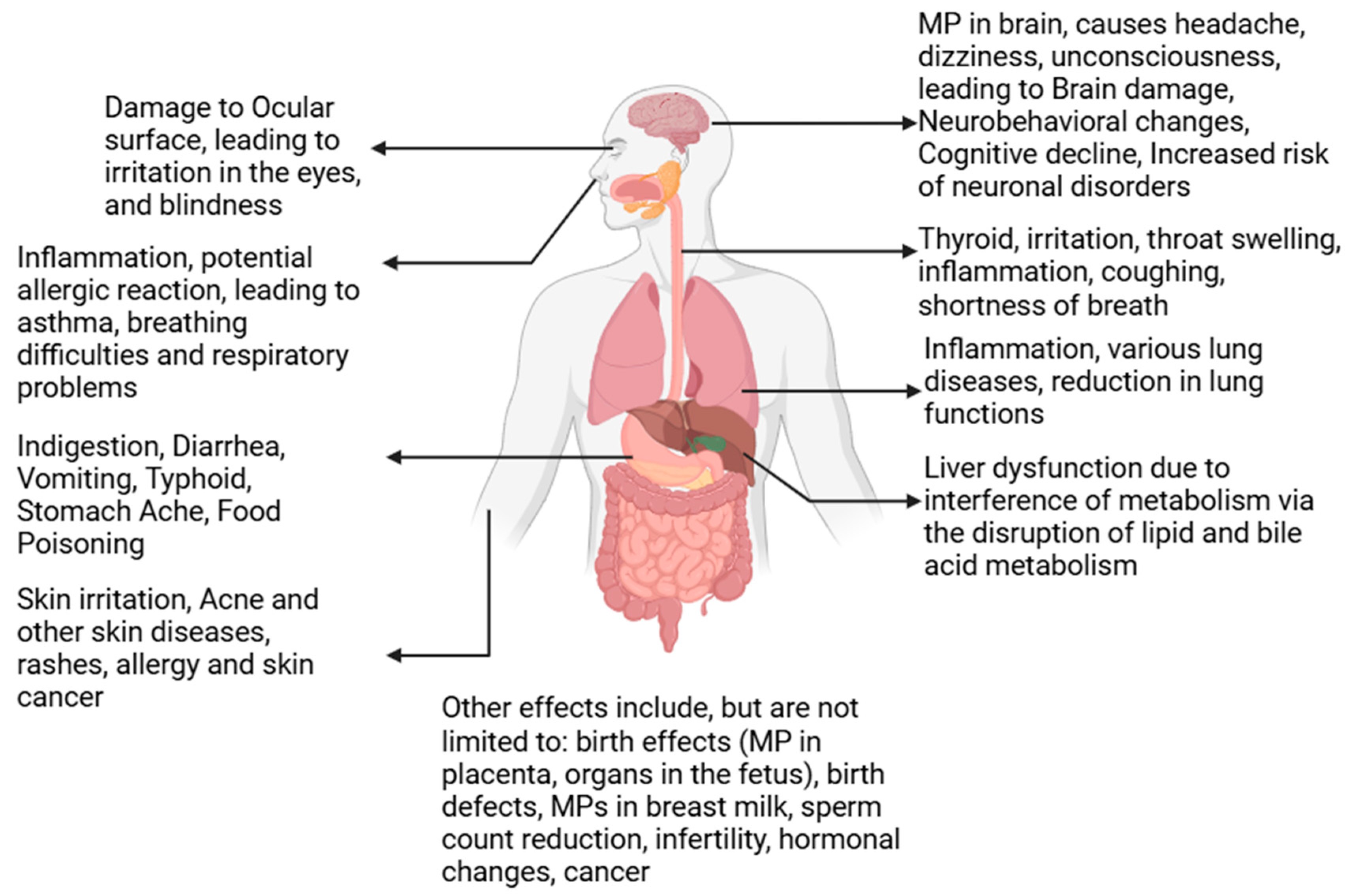
More recently recognized contaminants influencing human health include antimicrobial resistant microorganisms (AMR), microplastics 12or nanomaterials. AMR are a concern worldwide 13because infections from them are often difficult to treat. Although the role of water in the spread of AMR is not yet quantified, its importance has been recognized. 14
The potential health risks from microplastics seem obvious, but knowledge of the extent to which they affect human health is limited. 15And, though recent focus has largely been on the marine realm, UNEP will soon publish guidance on monitoring and addressing plastics in freshwater. 16
Water quality is related to human health through exposure. People are exposed to water in many different ways, depending on their location, livelihood, culture, wealth, gender etc. The most common exposure ways can be summarized as drinking, bathing, ingestion during domestic use, eating irrigated vegetables, rice (or rice products) or aquatic plants (such as water spinach), eating contaminated fish and shellfish, and skin contact. These exposure pathways highlight that the quality of ground, surface and coastal waters is relevant to human health.
In an earlier assessment, Snapshot of the World’s Water Quality, 17faecal coliforms were the contaminant included to represent human-health impacts. The assessment concluded that the rural population at risk of health problems, which is defined as those in contact with water contaminated with high concentrations of faecal coliforms, could be up to hundreds of millions of people in Latin America, Africa and Asia. 18While this was an important realization, faecal coliform concentrations do not usually correlate very well with pathogen concentrations, as they can grow in the water body, 19and many more contaminants can have human-health impacts. Therefore, this current assessment incorporates more water quality variables and exposure routes to assess the impact of water quality on human health.
Results
To evaluate the direct and indirect impacts of water quality on human health, we developed a non-exhaustive overview (see Table 3.1). This showed that there are a large number of direct and indirect links between water quality and human health, as well as interrelations between water quality variables, their sources, state, impacts and response. For example, pathogens and nitrate have to some extent the same sources and, therefore, potentially similar response options. But quantitative evidence for the links between water quality and human health are still largely lacking at continental or larger scales.
The global freshwater quality database GEMStat has data for a number of contaminants, but these data vary in space and time. For example, faecal coliform data are available for 6,451 stations across the world, while Escherichia coli data are available from 3,790 stations in North America, South America, Japan, and New Zealand. Data for Salmonella are available for 62 stations along rivers in Europe, but only for a few years in the early 1990s. For arsenic, many heavy metals, nutrients and organic micropollutants some data are available in GEMStat. Here we do not evaluate these data, because they are scattered and recent data for health are scarce. Instead, we report on potential data analyses that have been performed.
Table 3.1The influence of water quality on human health. This list is non-exhaustive, as no detailed literature has been performed. The colour coding is blue for GEMStat or other large-scale databases; red for remote sensing; yellow for modelling; and green for a combination of GEMStat and modelling. Dark colours are for surface water, light colours for groundwater.
Microplastics (MPs), defined as plastic particles smaller than 5 mm, are an emerging global environmental and health concern due to their pervasive presence in aquatic ecosystems. This systematic review synthesizes data on the distribution, shapes, materials, and sizes of MPs in various water sources, including lakes, rivers, seas, tap water, and bottled water, between 2014 and 2024. Results reveal that river water constitutes the largest share of studies on MP pollution (30%), followed by lake water (24%), sea water (19%), bottled water (17%), and tap water (11%), reflecting their critical roles in MP transport and accumulation. Seasonal analysis indicates that MP concentrations peak in the wet season (38%), followed by the dry (32%) and transitional (30%) seasons. Spatially, China leads MP research globally (19%), followed by the USA (7.8%) and India (5.9%). MPs are predominantly composed of polyethylene (PE), polypropylene (PP), and polyethylene terephthalate (PET), with fibers and fragments being the most common shapes. Sub-millimeter MPs (<1 mm) dominate globally, with significant variations driven by anthropogenic activities, industrial discharge, and environmental factors such as rainfall and temperature. The study highlights critical gaps in understanding the long-term ecological and health impacts of MPs, emphasizing the need for standardized methodologies, improved waste management, and innovative mitigation strategies. This review underscores the urgency of addressing microplastic pollution through global collaboration and stricter regulatory measures.


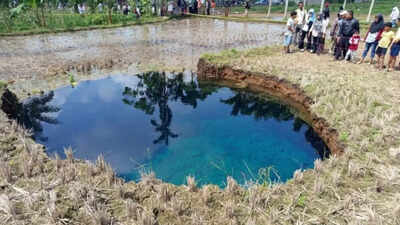
:max_bytes(150000):strip_icc():format(webp)/Scientists-Underground-Fix-PFAS-Drinking-Water-FT-DGTL0126-8a7f79e48b49459390a775a27583088e.jpg)


 GET WET!