Tiny creatures, massive impact: How zooplankton store 65 million tonnes of carbon annually

Summary:Zooplankton like copepods aren’t just fish food—they’re carbon-hauling powerhouses. By diving deep into the ocean each winter, they’re secretly stashing 65 million tonnes of carbon far below the surface, helping fight climate change in a way scientists are only just starting to understand.

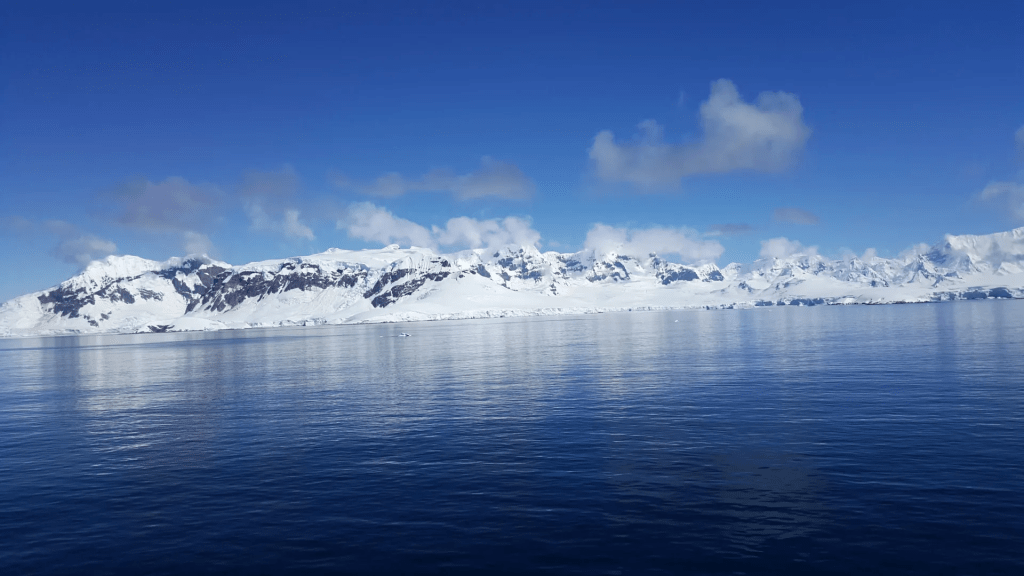
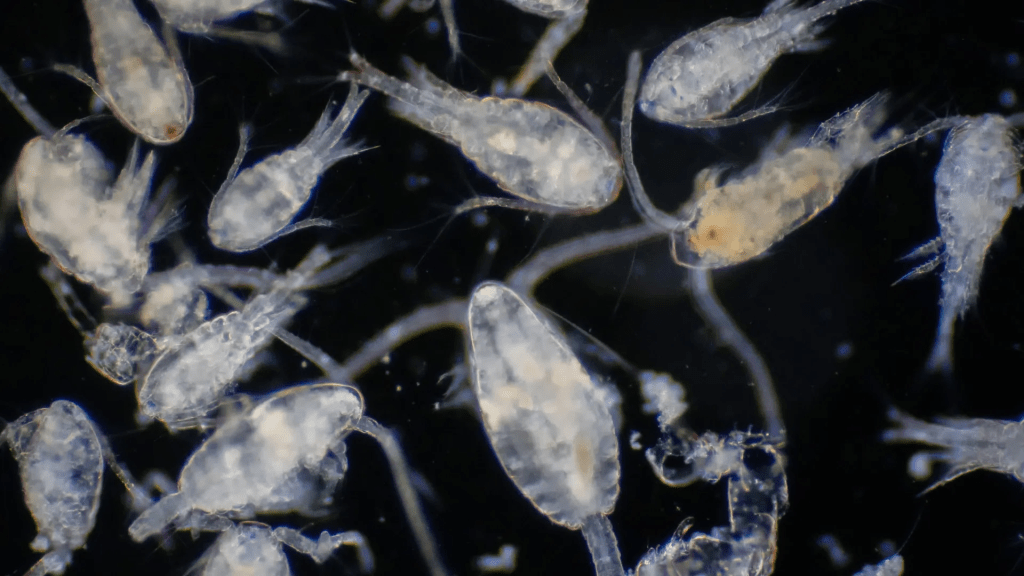
Each year, swarms of tiny zooplankton dive deep and silently trap millions of tons of carbon in the ocean’s depths, a natural climate solution we’ve barely noticed until now. Credit: Shutterstock

A groundbreaking study has revealed that small but mighty zooplankton — including copepods, krill, and salps — are key players in the Southern Ocean’s ability to absorb and store carbon.

Led by an international team of researchers, and published in Limnology and Oceanography, the study quantifies for the first time how these tiny creatures collectively enhance carbon sequestration through their seasonal, vertical migrations.

The Southern Ocean is a key region for carbon storage. Traditional thinking is that the carbon storage in the Southern Ocean is dominated by gravitational sinking of detritus produced by large zooplankton grazers, such as krill.

This new research concerns another more recently described process called the ‘seasonal migrant pump’. This process sees zooplankton migrate each year from surface waters to depths below 500m, storing carbon via their respiration and mortality during this deep overwintering phase.

This figure shows the traditional view of how zooplankton transport carbon to depth (left panel) by eating phytoplankton in surface waters in summer, whereby their waste material (Particulate Organic Carbon, POC) sinks passively to great depth, thereby storing the carbon for thousands of years. This new study shows that a winter process known as the ‘seasonal migrant pump’ also leads to a substantial deep carbon storage (right panel). The zooplankton migrate downwards in autumn to overwinter below 500m where their respiration and death directly inject around 65 million tonnes of carbon annually into the deep ocean.

The team first built a big database of zooplankton collected in thousands of net hauls from around the Southern Ocean, dating from the 1920s to the present day. From these they quantified the extent of the zooplankton’s annual descent to overwinter at great depths, where they respire CO2 — directly and efficiently injecting carbon into the deep ocean.

Key Findings: 

  • 65 Million Tonnes of Carbon Stored Annually: The seasonal, vertical migration of zooplankton transports roughly 65 million tonnes of carbon to depths below 500 meters.
  • Copepods Dominate the ‘Seasonal Migrant Pump’: Mesozooplankton (mainly small crustaceans called copepods) account for 80% of this carbon flux, while krill and salps contribute 14% and 6%, respectively.
  • Climate Implications: The Southern Ocean is a critical carbon sink, but current Earth System Models overlook this zooplankton-driven process. As warming shifts species distributions (e.g., declining krill, increasing copepods, changing food sources), the carbon storage dynamics may change dramatically.

Why does the ‘Seasonal Migrant Pump’ matter: 

The Southern Ocean absorbs approximately 40% of all human-made CO2 taken up by oceans, yet the role of zooplankton has been underestimated. Unlike sinking detritus, which removes both carbon and essential nutrients like iron, migrating zooplankton efficiently inject carbon into the deep ocean while recycling nutrients near the surface. This ‘Seasonal Migrant Pump’ could become even more important as marine ecosystems respond to climate change.

Dr Guang Yang, first author and Marine Ecologist from Institute of Oceanology, Chinese Academy of Sciences, said: “Our work shows that zooplankton are unsung heroes of carbon sequestration. Their seasonal migrations create a massive, previously unquantified carbon flux — one that models must now incorporate.”

Prof. Angus Atkinson MBE, co-author and Senior Marine Ecologist at Plymouth Marine Laboratory, added: “This study is the first to estimate the total magnitude of this carbon storage mechanism. It shows the value of large data compilations to unlock new insights and to get an overview of the relative importance of carbon storage mechanisms.”

Dr Katrin Schmidt, co-author and Marine Ecologist at the University of Plymouth, said: “The study shows the ‘seasonal migrant pump’ as an important pathway of natural carbon sequestration in polar regions. Protecting these migrants and their habitats will help to mitigate climate change.”

Dr Jen Freer, co-author and Ecological Modeller at the British Antarctic Survey (BAS), added: “Krill are famous for their role in the Antarctic food web, but we find that copepods significantly dominate carbon storage overwinter. This has big implications as the ocean warms and their habitats may shift.”

This research stresses the urgent need for updates to climate models to include zooplankton-driven carbon fluxes. It also highlights the necessity to manage and protect Southern Ocean ecosystems, where industrial fishing and warming threaten krill populations — a key species that supports both carbon export and Antarctica’s unique biodiversity.

This international study was a collaboration among scientists from China, UK, and Canada, and leverages a century’s worth of data on zooplankton biomass, distribution, respiration and mortality across the Southern Ocean.

CLICK HERE FOR MORE INFORMATION

https://www.sciencedaily.com/releases/2025/06/250627021851.htm

Frozen for 12,000 years, this Alpine ice core captures the rise of civilization

Summary:An ancient glacier high in the French Alps has revealed the oldest known ice in Western Europe—dating back over 12,000 years to the last Ice Age. This frozen archive, meticulously analyzed by scientists, captures a complete chemical and atmospheric record spanning humanity’s transition from hunter-gatherers to modern industry. The core contains stories of erupting volcanoes, changing forests, Saharan dust storms, and even economic impacts across history. It offers a rare glimpse into both natural climate transitions and human influence on the atmosphere, holding vital clues for understanding past and future climate change.Share:


FULL STORY


Alps Glacier Hides Secrets from the Last Ice Age
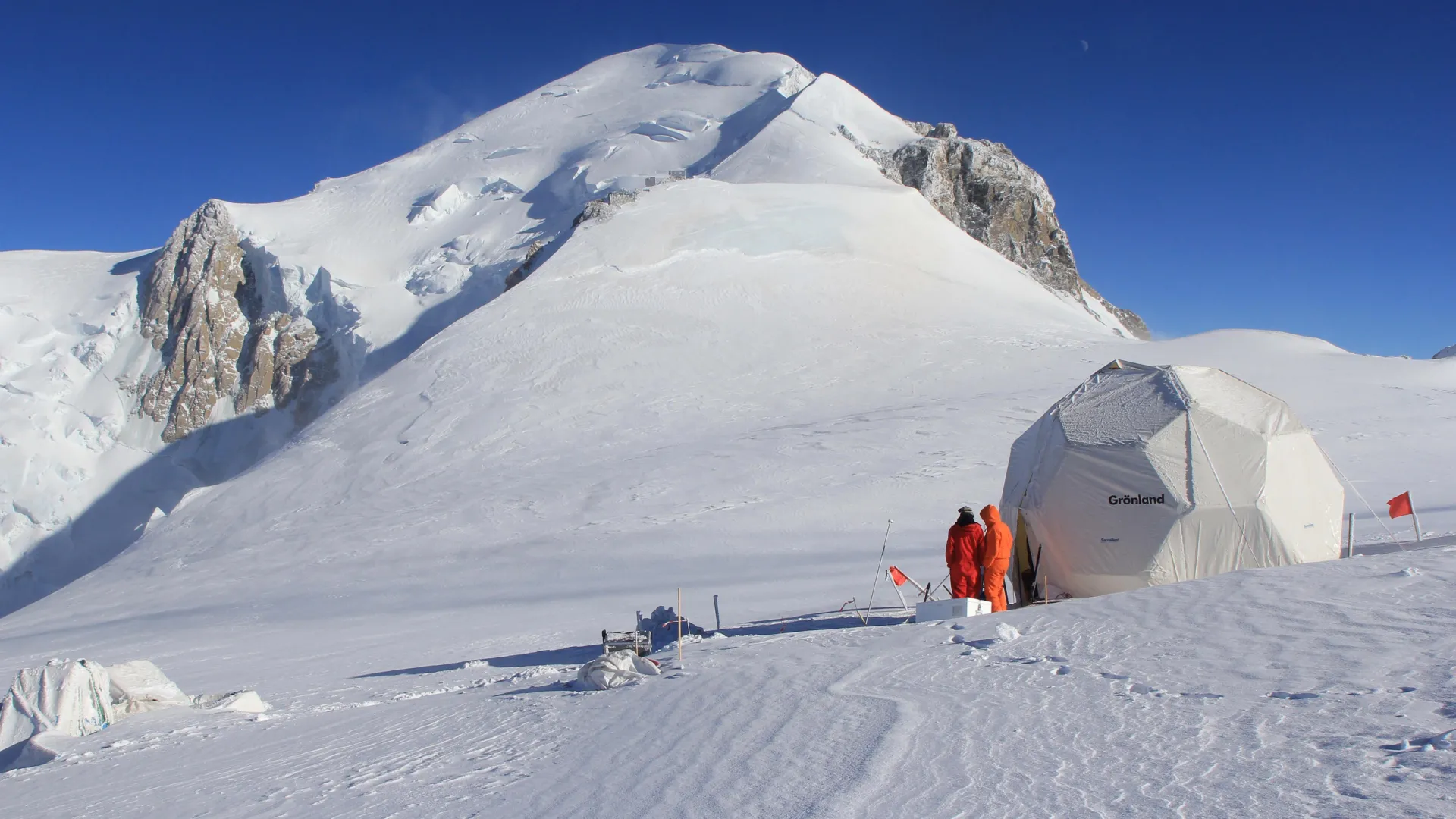
The 1999 expedition team collecting the ice core from Dome du Goûter on the shoulder of Mont Blanc. Credit: LGGE/OSUG, Bruno Jourdain

Glaciers hold layers of history preserved in ice, offering unique insights into Earth’s past that can also help us interpret the future. Trapped amidst the frozen water are microscopic deposits of dust, pollen, and even pollutants that scientists can use to examine environmental changes through time. DRI’s Ice Core Lab has used this technique to highlight atmospheric lead pollution and economic turbulence in Ancient Rome. Now, their latest study found that a glacier in the French Alps dates back to the last Ice Age – the oldest known glacier ice in the region. Serving as a record that spans through the development of agriculture in Western Europe and the advent of industrialization, the glacier holds insights into an era of rapid change.

The new study, published in the June issue of PNAS Nexus, examines a 40-meter long ice core from Mont Blanc’s Dôme du Goûter. Using radiocarbon dating techniques, the research team found that the glacier provides an intact record of aerosols and climate dating back at least 12,000 years. Aerosols are small droplets and particles in the air such as desert dust, sea salts, sulfur from volcanic eruptions, soot from forest fires, as well as pollutants and other emissions from human activities. Glacier ice offers the most detailed record of past atmospheric aerosols, and this is the first ice core record from the European region that extends back to the last climatic transition. Aerosols play an important role in regional climate through their interactions with clouds and solar radiation, and the insights offered by the ice record can help inform accurate climate modeling for both the past and future.

“For the first time, we have a fairly complete Alpine record of atmospheric and precipitation chemistry going all the way back to the Mesolithic Period,” said Joe McConnell, Director of DRI’s Ice Core lab who co-authored the study. “And that’s a big deal, because you have two major climate states – glacial and interglacial – and to get a record of atmospheric precipitation chemistry across that huge climate change tells you the most extreme natural aerosol concentrations that you’d expect. On top of that, you have humans going from hunter-gatherers with a very low population through the development of agriculture, domestication of animals, mining, etc, and then a vast population increase and the clearing of land. All of that is happening around this ice core site. It spans the full range of natural and anthropogenic change, and it’s right in the center of Europe – where much of Western civilization evolved.”

The glacier’s location in the Alps is important because it serves as a more intact record of Europe’s local climate than those found in distant Arctic ice. Many aerosols play important roles in driving Earth’s climate, so scientists would like to know how sources and concentrations in the air have varied in the past.

“Ice cores collected from glaciers and ice sheets can provide such information, but since these droplets and particles stay in the air only for a few days to maybe a week, records developed from glaciers close to the sources often are the most informative,” said lead author, Michel Legrand.

The ice core analyzed in this study was first collected in 1999 by some of the study’s French authors. It was stored in a freezer in France for more than 20 years before McConnell and his team brought it to DRI’s Ice Core Lab in Reno, Nevada, where specialized equipment and methods known as continuous flow analysis allowed it to be melted down and the chemistry measured, layer by icy layer.

“Determining what year or period of time a layer in the ice represents can be challenging, so here we used a unique combination of radiometric methods to establish the chronology in the ice,” said coauthor Werner Aeschbach.

“We were relieved to find that even under the unusually warm climate of the 20th century, the cold temperatures at over 14,000 feet near Mont Blanc’s peak had preserved the glacier so that the ice record hadn’t yet been impacted by melting,” said co-author Nathan Chellman.

The historic age of the ice at the base of the core, around 40 meters deep into the glacier, surprised the researchers. Another core collected from a glacier located less than 100 meters away at Col du Dome was found to contain ice only about a century old, despite being much deeper. The scientists attribute this to the strong wind patterns found on Mont Blanc.

“It’s exciting to find the first ice core from the European Alps containing an intact record of climate that extends back through the current ten-thousand-year warm period and into the very different climate of the last ice age,” said coauthor Susanne Preunkert, who was a member of the field team that collected the ice core in 1999.

Insights into Europe’s Past Climate 

The uniquely detailed ice record revealed a temperature difference of about 3 degrees Celsius between the last Ice Age and the current Holocene Epoch. Using pollen records embedded in the ice, reconstructions of summer temperatures during the last Ice Age were about 2 degrees Celsius cooler throughout western Europe, and about 3.5 degrees Celsius cooler in the Alps.

The phosphorous record also told researchers the story of vegetation changes in the region over the last 12,000 years. Phosphorous concentrations in the ice were low during the last Ice Age, increased dramatically during the early to mid-Holocene, and then decreased steadily into the late Holocene. This is consistent with the spread of forests under the warmer climate, and their decline following the proliferation of modern society and the land-clearing that resulted from agriculture and the spread of industry.

Records of sea salt also helped the researchers examine changes in historical wind patterns. The ice core revealed higher rates of sea salt deposition during the last Ice Age that may have resulted from stronger westerly winds offshore of western Europe. Sea salt aerosols can scatter solar radiation back to space and affect climate via their impacts on cloud droplet, size, and albedo, making them important drivers of the regional climate.

The ice record tells a more dramatic story for the changes in dust aerosols during the climatic shift. Dust serves as an important driver of climate by both absorbing and scattering incoming solar radiation and outgoing planetary radiation, and impacts cloud formation and precipitation by acting as cloud condensation nuclei. During the last Ice Age, dust was found to be about 8-fold higher compared to the Holocene. This contradicts the mere doubling of dust aerosols between warm and cold climate stages in Europe simulated by prior climate models. The difference may be explained by increased plumes of Saharan dust depositing in Europe, which remains the main source of dust in the region. The ice core record is consistent with other paleoclimate records that suggest more arid conditions over the Mediterranean during colder climates.

The 1999 expedition team collecting the ice core from Dome du Goûter on the shoulder of Mont Blanc. Credit: LGGE/OSUG, Bruno Jourdain

Uncovering More Stories Entombed in the Ice 

This study is only the beginning of the Mont Blanc ice record’s story, as the researchers plan to continue analyzing it for indicators of human history. The first step in uncovering every ice core’s record is to use isotopes and radiocarbon dating to establish how old each layer of ice is. Now, with that information, the scientists can take an even deeper look at what it can tell us about past human civilizations and their impact on the environment.

“Now we can start to interpret all these other records that we have of lead and arsenic and other things like that, in terms of human history,” said McConnell.

The information can also be used to help interpret how changes in aerosols impact the climate and improve modeling to help us understand current and future climatic shifts.

“If you’re really going to go back and examine all possible climate states, past and future, you need a model that captures true climate variability,” McConnell said. “It’s a laudable goal, but to evaluate how good the models are, you’ve got to be able to compare them to observations, right? And that’s where the ice cores come in.”

CLICK HERE FOR MORE INFORMATION

https://www.sciencedaily.com/releases/2025/07/250716000858.htm

Scientists thought the Arctic was sealed in ice — they were wrong

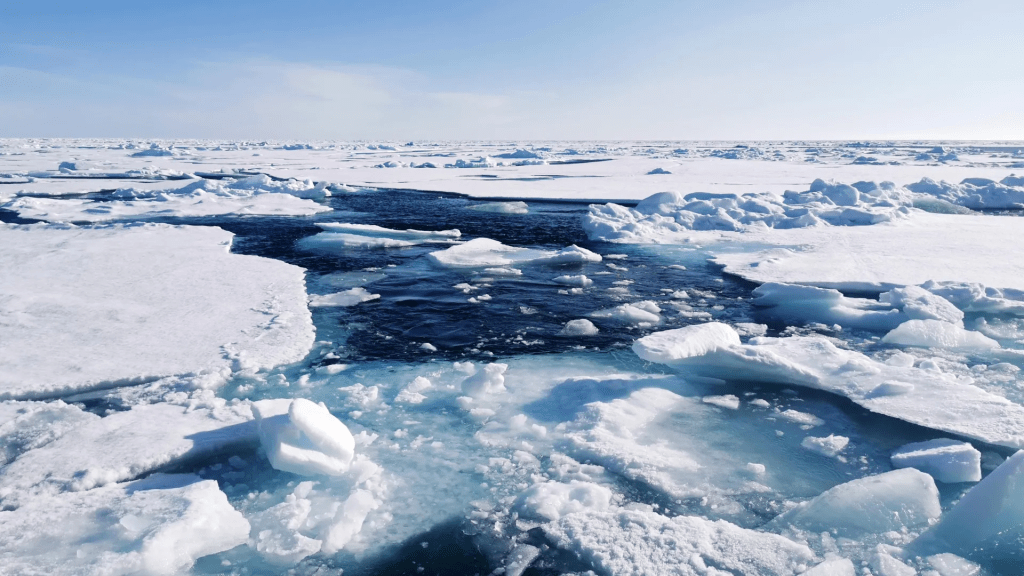
By analyzing ancient ocean seafloor sediments and running detailed climate simulations, the research team found no evidence for the presence of a thick ice shelf. Instead, this study paints a picture of an Arctic that, despite being cold and icy, still had open water areas that allowed for biological activity and ocean circulation. Credit: Morven Muilwijk

For years, scientists have debated whether a giant thick ice shelf once covered the entire Arctic Ocean during the coldest ice ages. Now a new study published in Science Advances, challenges this idea as the research team found no evidence for the presence of a massive ~1km ice shelf. Instead, the Arctic Ocean appears to have been covered by seasonal sea ice — leaving open water and life-sustaining conditions even during the harshest periods of cold periods during the last 750,000 years. This discovery gives insights crucial for our understanding of how the Arctic has responded to climate change in the past — and how it might behave in the future.

Tiny traces of life in ancient mud

Led by the European Research Council Synergy Grant project Into the Blue — i2B, the research team studied sediment cores collected from the seafloor of the central Nordic Seas and Yermak Plateau, north of Svalbard. These cores hold tiny chemical fingerprints from algae that lived in the ocean long ago. Some of these algae only grow in open water, while others thrive under seasonal sea ice that forms and melts each year.

“Our sediment cores show that marine life was active even during the coldest times,” said Jochen Knies, lead author of the study, based at UiT The Arctic University of Norway and co-lead of the Into The Blue — i2B project. “That tells us there must have been light and open water at the surface. You wouldn’t see that if the entire Arctic was locked under a kilometre-thick slab of ice.”

One of the key indicators the team looked for was a molecule called IP25, which is produced by algae that live in seasonal sea ice. Its regular appearance in the sediments shows that sea ice came and went with the seasons, rather than staying frozen solid all year round.

Simulating ancient Arctic climates

To test the findings based on the geological records, the research team used the AWI Earth System Model — a high-resolution computer model — to simulate Arctic conditions during two especially cold periods: the Last Glacial Maximum around 21,000 years ago, and a deeper freeze about 140,000 years ago when large ice sheets covered a lot of the Arctic.

“The models support what we found in the sediments,” said Knies. “Even during these extreme glaciations, warm Atlantic water still flowed into the Arctic gateway. This helped keep some parts of the ocean from freezing over completely.”

The models also showed that the ice wasn’t static. Instead, it shifted with the seasons, creating openings in the ice where light could reach the water — and where life could continue to thrive. This research not only reshapes our view of past Arctic climates but also has implications for future climate predictions. Understanding how sea ice and ocean circulation responded to past climate extremes can improve models that project future changes in a warming world.

“These reconstructions help us understand what’s possible — and what’s not — when it comes to ice cover and ocean dynamics,” said Gerrit Lohmann, co-author of this study, based at Alfred Wegener Institute, Helmholtz Centre for Polar and Marine Research (AWI) and co-lead of Into The Blue — i2B. “That matters when trying to anticipate how ice sheets and sea ice might behave in the future.”

Re-thinking the giant ice shelf theory

Some scientists have argued that features on the Arctic seafloor suggest that a huge, grounded ice shelf once covered the entire ocean. But this new study offers another explanation.

“There may have been short-lived ice shelves in some parts of the Arctic during especially severe cold phases,” said Knies. “But we don’t see any sign of a single, massive ice shelf that covered everything for thousands of years.”

One possible exception could have occurred about 650,000 years ago, when biological activity in the sediment record dropped sharply. But even then, the evidence points to a temporary event, not a long-lasting frozen lid over the Arctic.

Understanding the Arctic’s future

The study sheds new light on how the Arctic has behaved under extreme conditions in the past. This matters because the Arctic is changing rapidly today. Knowing how sea ice and ocean circulation responded to past climate shifts helps scientists understand what might lie ahead.

“These past patterns help us understand what’s possible in future scenarios,” said Knies. “We need to know how the Arctic behaves under stress — and what tipping points to watch for — as the Arctic responds to a warming world.”

The full paper, “Seasonal sea ice characterized the glacial Arctic-Atlantic gateway over the past 750,000 years,” is available in Science Advances.

This research is part of the European Research Council Synergy Grant project Into the Blue — i2B and the Research Council of Norway Centre of Excellence, iC3: Centre for ice, Cryosphere, Carbon, and Climate.

CLICK HERE FOR MORE INFORMATION

https://www.sciencedaily.com/releases/2025/07/250704235554.htm

Melting glaciers are awakening Earth’s most dangerous volcanoes

Scientists have discovered that melting glaciers could unleash powerful volcanic eruptions by removing the weight that keeps magma trapped deep underground. Antarctica may hold hundreds of these explosive time bombs. Credit: Shutterstock

Melting glaciers may be silently setting the stage for more explosive and frequent volcanic eruptions in the future, according to research on six volcanoes in the Chilean Andes.

Presented today (July 8) at the Goldschmidt Conference in Prague, the study suggests that hundreds of dormant subglacial volcanoes worldwide – particularly in Antarctica – could become more active as climate change accelerates glacier retreat.

The link between retreating glaciers and increased volcanic activity has been known in Iceland since the 1970s, but this is one of the first studies to explore the phenomenon in continental volcanic systems. The findings could help scientists better understand and predict volcanic activity in glacier-covered regions.

Researchers from the University of Wisconsin-Madison, USA, used argon dating and crystal analysis across six volcanoes in southern Chile, including the now dormant Mocho-Choshuenco volcano, to investigate how the Patagonian Ice Sheet’s advance and retreat influenced past volcanic behaviour. The work is in collaboration with researchers from Lehigh University, University of California Los Angeles, and Dickinson College.

By precisely dating previous eruptions and analysing crystals in erupted rocks, the team tracked how the weight and pressure of glacial ice alter the characteristics of magma underground.

They found that during the peak of the last ice age (around 26,000-18,000 years ago), thick ice cover suppressed the volume of eruptions and allowed a large reservoir of silica-rich magma to accumulate 10-15 km below the surface.

As the ice sheet melted rapidly at the end of the last ice age, the sudden loss of weight caused the crust to relax and gasses in the magma to expand. This buildup of pressure triggered explosive volcanic eruptions from the deep reservoir, causing the volcano to form.

Pablo Moreno-Yaeger from the University of Wisconsin-Madison, USA, is presenting the research at the Goldschmidt Conference. He said: “Glaciers tend to suppress the volume of eruptions from the volcanoes beneath them. But as glaciers retreat due to climate change, our findings suggest these volcanoes go on to erupt more frequently and more explosively. The key requirement for increased explosivity is initially having a very thick glacial coverage over a magma chamber, and the trigger point is when these glaciers start to retreat, releasing pressure – which is currently happening in places like Antarctica.

“Our study suggests this phenomenon isn’t limited to Iceland, where increased volcanicity has been observed, but could also occur in Antarctica. Other continental regions, like parts of North America, New Zealand and Russia, also now warrant closer scientific attention.”

While the volcanic response to glacial melting is almost instant in geological terms, the process of changes in the magma system is gradual and occurs over centuries, giving some time for monitoring and early warning.

The researchers also note that increased volcanic activity could have global climate impacts. In the short term, eruptions release aerosol (tiny particles in gases) that can temporarily cool the planet. This was seen after the 1991 eruption of Mount Pinatubo in the Philippines, which reduced global temperatures by approximately 0.5 degrees C. But with multiple eruptions, the effects reverse.

“Over time the cumulative effect of multiple eruptions can contribute to long-term global warming because of a buildup of greenhouse gases,” said Moreno-Yaeger. “This creates a positive feedback loop, where melting glaciers trigger eruptions, and the eruptions in turn could contribute to further warming and melting.”

The research was funded by the National Science Foundation as part of a grant led by Professor Brad Singer at UW-Madison, and is due to be published in a peer-reviewed journal later this year.

The Goldschmidt Conference is the world’s foremost geochemistry conference. It is a joint congress of the European Association of Geochemistry and the Geochemical Society (US), and over 4000 delegates attend. It takes place in Prague, Czech Republic, from July 6-11 2025.

CLICK HERE FOR MORE INFORMATION

https://www.sciencedaily.com/releases/2025/07/250708045654.htm

The Oceans Are Getting Darker

Colorado River Basin Suffers from a Warm and Dry Spring

Officials, farmers, and others who depend on the Colorado River received a grim prediction last week that Lake Powell, the second largest reservoir in the basin, will receive less than half of the yearly median amount of water over the next three months, which could mean cutbacks in the future. 

The Colorado River carves through the Grand Canyon  |  Credit: Grand Canyon NPS

The snowpack at the beginning of April was less than normal, and the spring has been very warm and dry in the Rocky Mountains, which has led to low runoff.  

Currently, Lake Powell is at 31 percent capacity, and Lake Mead, the largest reservoir in the country, is at 32 percent after about 25 years of severe drought. A study done three years ago showed that the drought in the Western U.S. was the driest two decades in the last 1,200 years.

Officials in the seven states of the Colorado River Basin, including Utah, Wyoming, Colorado, New Mexico, Arizona, Nevada, and California, met last week and have yet to come to an agreement on how they will share water in the coming years after the existing guidelines expire at the end of 2026. If no agreement is reached, the federal government will likely impose its own plan, which could lead to much litigation.

Meanwhile, a new study is showing that ground and surface water in the Colorado River Basin have been depleted during the last 20 years by an amount that is equivalent to the total capacity of Lake Mead. NASA satellite imagery shows the severity of the region’s crisis. Jay Famiglietti, the senior author of the study and a professor at Arizona State University, toldthe Guardian that groundwater is disappearing nearly 2.5 times faster than surface water. He added that everyone in the U.S. should be worried about the crisis in the Southwest, because much of the country’s food is grown there. In addition, the river provides drinking water to 40 million people in the U.S. and Mexico.

The study was published in the journal Geophysical Research Letters.

High Court Decision Could Allow Oil Trains along the Colorado River 

A controversial plan to transport crude oil by rail along portions of the Colorado River is much closer to becoming a reality after the U.S. Supreme Court overturned a lower court’s decision blocking it. 

Amtrak’s California Zephyr train travels along the Colorado River near McCoy, Colorado. |  Credit: Tony Webster/Creative Commons

Environmental groups and Eagle County, Colorado, home of Vail Ski Resort, had challenged an agency decision that permitted the two-mile-long trains to ship crude oil from Utah’s Uintah Basin to the Gulf Coast. They argued that the Surface Transportation Board did not weigh the downstream effects should a tanker derail and pollute the Colorado River, threatening the environment and communities. Additionally, they said the agency had not considered how refining five billion gallons of additional oil per year would exacerbate global warming.

An appellate court agreed, but the Supreme Court, in a unanimous decision, with Justice Gorsuch recusing himself, decided that some judges have incorrectly reviewed an agency decision under the National Environmental Policy Act (NEPA) and used it to block or slow down many projects. All three of the Court’s liberal justices agreed with the decision, which has a much broader effect than just the potential of endangering people and the environment by oil tankers that could derail. 

Justice Kavanaugh, writing for the Court, said that overly intrusive judicial review has led to delay upon delay and higher costs. NEPA, he continued, is to inform decision-making, not paralyze it. NEPA requires federal agencies to assess the environmental effects of proposed major actions prior to making decisions. However, this case narrows the scope of all environmental reviews of major infrastructure projects like highways and pipelines.

Earlier, the Supreme Court severely reduced environmental regulation by limiting rules on water pollution and runoff and allowing long-standing agency actions to be challenged in court, according to the Washington Post. The Court has also cut away at the ability of the EPA to regulate greenhouse gas emissions and air pollution.

Darkening Oceans Raises Concerns about Food Webs and Fisheries

The world’s oceans are getting darker. That’s the conclusion of a new study out last week that says there’s cause for concern. 

According to researchers from the University of Plymouth, 21 percent of the global ocean—an area spanning more than 75 million sq km—has darkened over the past two decades.  |  Credit: Naja Bertolt Jensen / Unsplash

“Ocean darkening” occurs when sunlight and moonlight can’t penetrate the upper layers of the ocean called the “photic zone,” which is home to 90 percent of all marine life and one of the most productive habitats on Earth. According to researchers from the University of Plymouth in the UK, over one-fifth (21 percent) of the global ocean—around 75 million square kilometers—has darkened over the past two decades.

Typically, darkening can occur near coastlines because of agricultural runoff and increased rainfall making the waters murkier. However, this new research shows that it’s happening in the open ocean, which they suggest could be from hotter temperatures causing increased algal blooms that reduce light penetration below the surface. It could also be the result of changes in ocean circulation patterns driven by global warming.

The researchers used data from NASA’s Ocean Color Web, which breaks the global ocean down into a series of 9km pixels, to assess the changes and found that the most prominent shifts in photic zone depth in the open ocean were at the top of the Gulf Stream and around both the Arctic and Antarctic—areas of the planet experiencing the most pronounced shifts as a result of climate change. Conversely, the team also found around ten percent of the ocean had become lighter during the same study period.

The authors suggest that a shrinking photic zone in the upper ocean where marine organisms grow, hunt, reproduce, and photosynthesize, would create intense competition for resources and negatively affect food webs and global fisheries.

The study was published in Global Change Biology.

A New Tax in Hawai’i That You Can Feel Good About

The word kuleana in the Hawai‘an language means a responsibility, right, or privilege to take care of one another—and to take care of the āina—the land. Those terms were invoked when, on May 27, Governor Josh Green, MD, signed into law Act 96 (Senate Bill 1396) that establishes a “Green Fee” that will add a tax on hotel stays to protect the environment in the face of climate change. It’s a first for the state—and for the country.

On May 27, Hawai‘i Governor Josh Green signed into law Act 96 (Senate Bill 1396) that establishes a “Green Fee” that will add a tax on hotel stays to protect the environment in the face of climate change. |  Credit: Hawai‘i Governor Josh Green, M.D./Flickr

The new “climate impact fee” is a response to the increased risk of natural disasters driven by global warming, like the wildfires on Maui in 2023. The revenue will provide a stable source of funding for environmental stewardship, hazard mitigation, and sustainable tourism, which together will enhance the islands’ resiliency.

The new law raises the amount of the current transient accommodations tax or TAT by 0.75 percent, or roughly $3 on a $400 hotel room per night. It will also apply to short-term rentals as well as to cruise ships—a sector that has long gone untaxed. The Green Fee is projected to generate $100 million annually, when it goes into effect in January 2026. 

As the online publication Travel And Tour World reports, Hawai‘i joins a list of places around the globe like Greece, Bali, and the Galápagos Islands, where fees are being implemented in recognition that tourism, while economically vital, must be managed responsibly to protect the fragile ecosystems—that many people come to see—from the growing impacts of climate change.