“Day Zero” Could Hit One Major World City—and More Could Be at Risk

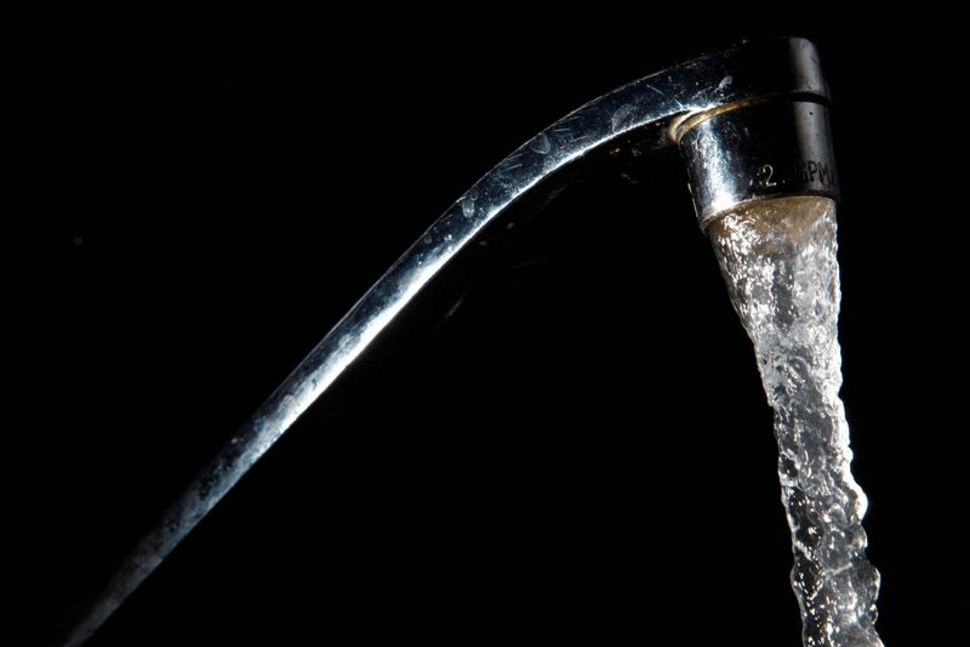
A historic drought in Iran could make its capital city Tehran reach “Day Zero” within two weeks, according to state media. Day Zero is the term signifying when the main source of drinking water runs dry and nothing comes out of faucets. As of November 6, one of the five dams that supplies Tehran was at only eight percent of its capacity, enough for two weeks.

The Siosepol Bridge in Isfahan, Iran. A historic drought across the country could make the city of Tehran reach “Day Zero” within about two weeks, according to the state media. |  Credit: Seiiedali/Creative Commons

Iran’s president, Masoud Pezeshkian, reportedly said that if it doesn’t rain by late November, Tehran, a city of ten million people, will have to ration water.  If there’s no rain after that, they will have to evacuate the city. Mismanagement and overexploitation of water resources as well as climate change are said to be the cause of the shortages.

The possibility of a Day Zero occurring in other parts of the world was the subject of a new study by researchers in South Korea. The authors write that regions along the Mediterranean Sea, parts of North America, and southern Africa could see shortages arriving as early as this or next decade, and they could last longer. Cape Town, South Africa, faced a complete shutdown of its water in 2018, which was avoided by severe restrictions like limiting people to just a few liters a day.

The authors say that solutions must come from policy makers prioritizing smart management and modernizing leaky infrastructure as well as from people using water more responsibly.

The study was published in the journal Nature Communications.

CLICK HERE FOR MORE INFORMATION

https://h2oradio.org/this-week-in-water/a-major-world-city-could-run-out-of-water

The Federal Climate Information Website Will No Longer Be Updated

In June, the Trump administration announced that the government’s 15-year-old website, climate.gov, which was the primary source of information about climate change and science, would no longer be updated. Links to the old site redirect viewers to an address at the National Oceanic and Atmospheric Administration (NOAA). As of 2021, the old website was receiving 900,000 visits per month and was a trusted source of information about the climate, according to NPR. The jobs of those who authored stories, created photos, and designed materials were eliminated.

Climate change effects include wildfire, ocean acidification, desertification, and coastal flooding caused by storms and sea level rise. |  Credit: CalFire

However, as the Guardian reports, a group of climate communications experts is rebuilding the climate.gov content at climate.us through a new nonprofit. The organization will offer services about climate to others such as local governments that are trying to adapt to global warming. The website is in development, and the organization has a presence on social media accounts like BlueSky and Facebook

According to Rebecca Lindsey, who was the managing editor of the government’s old site, the new entity includes several of her former federal colleagues, many of whom are grieving over losing not only a job but also a vocation. Lindsey added that there is a need for content that helps people develop climate literacy. Being outside of government gives the new group new opportunities to have fun by using platforms like TikTok.

The organization has launched a crowdfunding effort and hopes to get more permanent operating support from a foundation. Lindsey said that all of the climate information released prior to July 1 is still up on a government site, but you have to know where to look for it.

Meanwhile, the National Weather Service is trying to rapidly hire 450 people, including some meteorologists to fill jobs that were cut by DOGE, or the Department of Government Efficiency. Hundreds of forecasters were cut at NOAA after Trump took office, and there were warnings that there could be dangerous consequences if weather predictions were slowed.

However, applicants for the new meteorologist positions are being asked how they would promote Trump’s agenda by identifying one or two of his executive orders that they find significant, and how they would implement them if hired. Some experts are alarmed that the ideology of a potential weather forecaster could be considered. One told the Associated Press that he questioned whether forecasts would be made better based upon someone’s ideology.

CLICK HERE FOR MORE INFORMATION

https://h2oradio.org

Florida Bans Fluoride in Public Water Systems, Part of Conservative Push

Florida Governor Ron DeSantis signed the bill banning fluoride, saying at a signing event that “forcing it into the water supply is basically forced medication on people.”

The ban takes effect on July 1. 

Fluoride is a mineral that occurs naturally in water, soil and air that has been demonstrated to prevent dental cavities and tooth decay. For decades, it has been added to community water supplies and dental products such as toothpaste.

DeSantis, a Republican, was one of the most outspoken political leaders who pushed back against public health mandates during the pandemic, when he opposed forced masking, school closures and pressuring people to get the COVID vaccine. 

“Some of these people, they think that they know better for you than you do for yourself,” DeSantis said just before signing the bill. “They think because they have medical training … that they should just be able to decree how we live our lives. That proved disastrous during COVID.” 

Utah, also led by a Republican governor, became in March the first U.S. state to ban fluoride in public water systems, a law that took effect this month. At the federal level, the U.S. Food and Drug Administration said this week it was starting a process to remove fluoride supplements for children from the market. 

Health Secretary Robert F. Kennedy, Jr. has opposed adding the mineral to tap water. 

Kennedy and others opposed to the use of fluoride in water say it is associated with numerous health issues, including certain cancers and lower cognitive ability among children.

The American Cancer Society on its website says the general consensus among scientific reviews examining possible links between fluoride and cancer shows no strong evidence connecting the two. However, the society says more studies are needed. 

About 63% of all Americans have fluoride in their community water systems, according to Centers for Disease Control and Prevention statistics as of 2022, the most recent data available.    

The American Dental Association strongly opposes the push to ban fluoride from water and in supplements, saying it greatly benefits dental health and has not conclusively been shown to have harmful effects. 

“More than ever, at this critical time in American health care policy, it is vital that we slow down to properly study the full implications of actions like this on the health of the nation,” Brett Kessler, president of the association, wrote earlier this week in response to the FDA targeting ingestible fluoride supplements. 

(Reporting by Brad Brooks in ColoradoEditing by Rod Nickel)

Copyright 2025 Thomson Reuters.

CLICK HERE FOR MORE INFORMATION

https://www.usnews.com/news/politics/articles/2025-05-15/florida-bans-fluoride-in-public-water-systems-part-of-conservative-push