Local News

Shedd Aquarium study on fish reproduction in Chicago River indicates continuing recovery from pollution

By Adam Harrington

A new study by the Shedd Aquarium has found that the Chicago River system continues to recover from pollution, as evidenced by the fish species that have been spawning in the river system.

A report on the study, “Larval fish community of the urbanized Chicago River,” was published Wednesday. It was authored by Dr. Austin Happel, a research biologist at the Shedd Aquarium who focuses on freshwater ecosystems.

The study analyzed the species of fish that spawn in the Chicago River to sustain resilient and biodiverse fish communities, the Shedd explained in a news release. Using light traps at 10 locations in the river between 2020 and 2022, researchers collected 2,211 larval fish — and their DNA found the fish belonged to 24 different species.

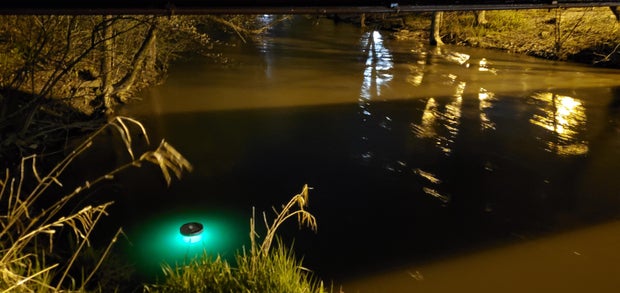
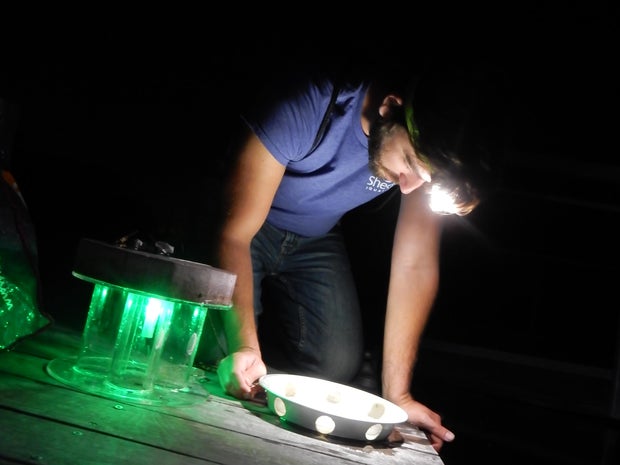
light-trap-on-south-branch-of-river-1.jpg
A light trap on the South Branch of the Chicago River to capture fish larvae.Shedd Aquarium

“This research represents the first documentation of larvae from fish species occurring within the Chicago River, indicating that recovery and restoration efforts allow at least 24 species to successfully spawn and reach the larval stage,” Happel said in the news release. “Our previous studies showed that improvements to water quality in the river increased biodiversity, and now we have more positive news as populations are proliferating locally within the river.”

The Chicago River: A history of pollution

The reversal of the flow of the Chicago River is a point of Chicago pride that youngsters learn in history classes at local schools. On Jan. 2, 1900, the Sanitary District of Chicago — a predecessor to the Metropolitan Water Reclamation District — completed the massive undertaking by digging the 28-mile Sanitary and Ship Canal heading southwest out of the city.

Before the reversal, human and industrial waste would flow from the river right into Lake Michigan — the source of Chicago’s drinking water, then as now. The oft-repeated story that 90,000 people died of cholera and typhoid fever after a storm in Chicago sent sewage into the lake in 1885 has been debunked, but nevertheless, the flow of disgusting material from the river into the lake was a monumental public health hazard.

However, while the reversal of the flow of the river away from Lake Michigan protected the lake itself and the city’s drinking water, the Chicago River system remained polluted, neglected, and smelly as the city grew and developed.

As explained by Friends of the Chicago River, the city went on treating the river system like an alley — dumping trash and sewage and damaging conditions for people and wildlife alike.

“After more than 100 years of this abuse, the Chicago River and the others were so polluted that when the Clean Water Act passed in 1972, officials were convinced no one would ever want to fish or swim here — and set the standards incredibly low,” Friends of the Chicago River wrote.

But for half a century now, efforts have been under way to clean up the river. The Metropolitan Water Reclamation District of Greater Chicago set up the Deep Tunnel system to reduce flooding and improve waterway quality. Meanwhile, Friends of the Chicago River — founded in 1979 — undertook habitat restoration and long-range planning efforts for river improvement, with efforts ranging from planting wetlands vegetation to encouraging river-friendly land development.

Conditions on the Chicago River have improved to the point where a Chicago River Swim is set for this coming Saturday — the first such event in 95 years. The Shedd Aquarium study documents that the diversification of fish species in the river is also evidence that things are on the right track.

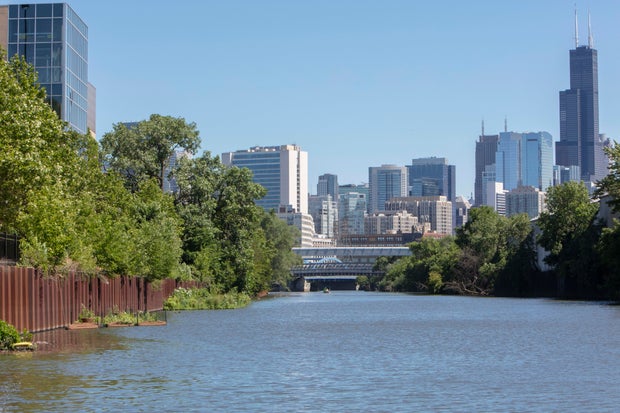
brh-5931.jpg
Chicago RiverBrenna Hernandez

Signs of hope in the Chicago River fish community

The fish community in the Chicago River has been rising in both numbers and species diversity since the 1970s as conditions in the river have improved, the Shedd Aquarium study said.

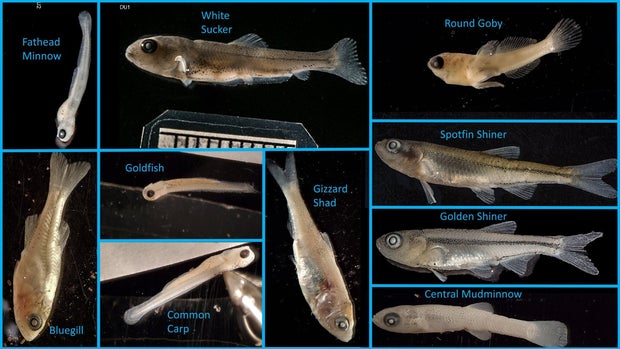
The study found species now reproducing in the Chicago River include popular sport fish like the black crappie, bluegill, and largemouth bass, and forage fish like the gizzard shad, golden shiner, and spotfin shiner. Larvae of brook silverside and mimic shiner were also found — which the Shedd found to be a pleasant surprise, as these fish were believed to be intolerant of pollution, the Shedd Aquarium said.

10-fish-species-1.jpg
Ten fish species found on the Chicago RiverShedd Aquarium

The peak abundance of fish larvae was found in July, as water temperatures reached the low 70s, the aquarium said.

The study also compared the fish larvae species found in the North Branch of the Chicago River versus the South Branch.

The North Branch of the River generally follows its historical path flowing southeast, though the North Shore Channel was dug between 1907 and 1910 to ensure further that sewage flowed into the river system and away from Lake Michigan. Before the flow reversal of 1900, the South Branch of the river flowed northeast into the Main Branch and on to Lake Michigan, but since the reversal, the South Branch has flowed southwest into the Sanitary and Ship Canal.

The Shedd Aquarium study found that species considered less tolerant of pollution were more common in the South Branch, while species more tolerant of pollution were seen more in the North Branch.

The finding indicates that “some combination of suitable substrate, submerged vegetation, and water quality and flow are most likely present in the South Branch.”

The study said these areas on the South Branch that may be favorable to the spawning of pollution-intolerant fish species could include backwater areas such as barge slips that are no longer used in Bubbly Creek. Bubbly Creek is the terminal South Fork of the river’s South Branch that was infamously once a dump site for animal remains from the Union Stockyards, but the study said the old barge slips may now be effective fish nursery habitats that offer both abundant food and protection from predators.

larval-sampling-north-side-jun-8-2020-1.jpg
Dr. Austin Happel studies fish larvae on the Chicago River.Shedd Aquarium

Happel is also researching how floating wetlands — which the Shedd Aquarium and the nonprofit Urban Rivers have been installing on the river system over the past several years — could also be affecting fish reproduction.

“As people continue to care about and conserve this critical freshwater ecosystem, we hope to see increases in the number of fish spawning in the system,” Happel said in the Shedd Aquarium news release. 

The aquarium said the study could be taken as a sign of hope for other heavily modified urban waterways, and insights on how to support fish communities to spawn and grow.

The study also demonstrates how restoration can return wildlife to a waterway, the aquarium said, emphasizing that healthy fish populations mean healthier aquatic environments overall.

The study was published in the Journal of Great Lakes Research.

CLICK HERE FOR MORE INFORMATION

https://www.cbsnews.com/chicago/news/shedd-aquarium-study-fish-reproduction-chicago-river/?intcid=CNM-00-10abd1h

Local News

Florida’s springs face pollution, climate threats as iconic waters risk losing natural beauty

Seen from the air, a Florida freshwater spring is a bit of liquid heaven, luring humans and wildlife to enjoy its aquamarine cool. With at least 1,000 of them — more than any other state — the springs serve as beaches for large swaths of central and northwestern Florida far from the ocean, with teenagers backflipping from docks and snorkelers peering into the crystalline depths.

But these treasures are under threat from agricultural pollution, rapid development and climate change.

Florida’s fragile freshwater springs under growing strain

Some places, such as fast-growing Zephyrhills in west-central Florida, have paused some construction as it struggles to stay within limits on the drinking water it can withdraw from a vast underground aquifer. Zephyrhills is home to Crystal Springs, source of the bottled water named after the town and several other brands.

“We really had to do something,” said Steven Spina, a member of the town council. “A lot of residents thought it was a good thing. People were happy to see us take a breath.”

The Floridan Aquifer: lifeline for 90% of the state’s drinking water

Covering an estimated 100,000 square miles (250,000 square kilometers), the underground Floridan Aquifer is the source of 90% of Florida’s drinking water. Because of the porous nature of the state’s bedrock, millions of gallons of water find their way to the surface in the form of clear, clean springs that, in turn, feed into rivers.

The highest concentration of springs are in central and northern Florida, including most of the 30 “first magnitude” springs — those that discharge at least 65 million gallons of water every day. All but four of them are considered polluted.

“We just have too much pollution going into the ground and too much water coming out of the ground,” said Ryan Smart, executive director of the nonprofit Florida Springs Council. “And when you get that combination, you end up with springs that are no longer blue and vibrant and full of life.”

Runoff, farming and algae blooms choke spring ecosystems

In rural Florida, runoff from fertilizers and pesticides used in farm fields is a major part of the problem. Fertilizers containing phosphates and nitrogen promote algae blooms that can suffocate a spring. Livestock waste contributes, too.

“When that algae covers everything, then you lose all of the seagrasses. The seagrasses are the forests of the water,” Smart said. “Then you begin to lose the biodiversity. And it even puts our drinking water at risk.”

Development and tourism add pressure to Florida’s springs

Elsewhere in Florida, rampant development is the threat. With over 1,000 people moving to Florida every day, more housing subdivisions are sprouting, along with the roads, strip malls, restaurants, golf courses and everything else that comes with them.

That means more paved surfaces that keep rainwater from percolating down into the aquifer and more pollutant-laden runoff from lawn fertilizers, parking lots, ever-widening roads and sometimes septic tanks. It also means more and more people, many of whom enjoy tubing, paddleboarding, kayaking and swimming in the springs.

It gets so busy in summer at some springs located in state and local parks that entry is halted by late morning. At Ichetucknee Springs State Park north of Gainesville, the daily limit of 750 tubers on the upper river is often reached within an hour after the park opens.

Kaelin Gibbs, on vacation in June with his family from Georgia, was swimming in the Blue Hole Spring along the Ichetucknee River.

“This is simply incredible; the water is cool and clear,” said Gibbs. “We’ve been to Florida’s beaches and to Orlando. There is no comparison to how beautiful this spring is.”

But that’s in peril, said Dennis Jones, a Republican former legislator deeply involved in springs issues. He said the volume of permits being issued for water use isn’t sustainable.

“You cannot keep taking water out of the aquifer because it’s not an endless supply,” Jones said.

Mining, climate change and saltwater intrusion worsen threats

Phosphate mining has also taken a toll on springs. Their operations require a great deal of water, which reduces water pressure available for springs. Some have died almost completely from mining and other factors, including White Sulphur Springs in north Florida, which was a sacred place for Native Americans and later a tourist resort that attracted famous visitors such as Henry Ford and Theodore Roosevelt.

A more subtle threat to the health of springs involves Earth’s changing climate. It is altering rainfall patterns around the globe, threatening the balance that feeds Florida’s springs.

In addition, some springs along the coasts are facing an intrusion of salt water, according to the Southwest Florida Water Management District. Four major springs are becoming increasingly brackish because of sea level rise and declining rainfall.

“As a result, freshwater vegetation has a hard time surviving in this saltier environment and unwanted vegetation moves in,” the district said in a website post.

State funding, lawsuits and grassroots activism aim to save springs

Florida spends billions every year on water quality projects, including about $800 million this year for Everglades restoration work. State funding for springs runs about $50 million a year, according to state documents.

Two state efforts at improving springs’ quality, both around a decade old, remain bottled up in court and administrative challenges. One would strengthen rules for permits to draw water from the major springs. The other would enhance rules to reduce the amount of nutrients such as nitrogen and phosphates that goes into springs that are considered impaired.

Jones, the former legislator, said lobbying by powerful agricultural interests and related political pressures have blocked progress on the nitrogen reduction plan that was expected to take about 20 years.

“We’ve burned up almost 10 years and they haven’t got on stage one. We got more nitrates now than when we started,” Jones said.

In Congress, U.S. Rep. Randy Fine recently filed a bill that would create a Florida Springs National Park across several counties, centered around the Ocala National Forest. Fine said in a statement the designation would protect the springs and increase funding. “Our Florida springs are something unique, not just to Florida but to the country,” Fine said.

It costs bottling companies just $115 for a permit allowing them to withdraw millions of gallons of water in perpetuity. But they do pay local taxes.

Blue Triton, the company that bottles Zephyrhills water, pays about $600,000 a year in taxes for things like schools, public safety and so forth, said Spina of the city council.

“They are one of our largest taxpayers,” he said.

Though they have challenges, Florida’s freshwater springs have energetic friends, too.

Michelle Jamesson loves the springs; she grew up swimming in one and is determined to help protect them for future generations. She volunteers for SpringsWatch Citizen Science Program, coordinating and working with other volunteers for monthly tests on the Wekiva River, north of Orlando.

They test water quality, take photos of underwater vegetation, count birds and more, seeking to spot any big changes that may require action. The Wekiva is fairly stable, she said, though it carries a lot of excess nutrients.

“The wildlife and the ecology, and all of it — it’s so full of life,” Jamesson said.

___

The Associated Press receives support from the Walton Family Foundation for coverage of water and environmental policy. The AP is solely responsible for all content. For all of AP’s environmental coverage, visit https://apnews.com/hub/climate-and-environment.

CLICK HERE FOR MORE INFORMATION

https://www.cbsnews.com/miami/news/florida-springs-water-pollution-climate-change-report/?intcid=CNM-00-10abd1h

Chesapeake Bay pollution down, but water quality still short of goals, CBF says

By Christian Olaniran

Chesapeake Bay pollution down, but water quality still short of goals, CBF says

Pollution entering the Chesapeake Bay has dropped, but water quality remains below restoration targets, according to the Chesapeake Bay Foundation.

In 2023 nitrogen, phosphorus and sediment levels were significantly lower than the previous year, according to the CBF. Nitrogen fell 21.7%, phosphorus 26% and sediment 15.5%. These three pollutants are the leading contributors to the bay’s poor health.

The largest reductions came from the Pamunkey, Patuxent, Potomac and Susquehanna rivers. By contrast, nitrogen rose in the Appomattox, Mattaponi and Rappahannock rivers, where excess levels can trigger algae blooms that sap oxygen and threaten fish and crabs.

How pollution progress is measured

Researchers measure progress through the Bay TMDL Indicator, which uses modeled data to track how far pollution reductions move the bay toward a healthier ecosystem. To meet water quality goals, nitrogen must be cut by about 145 million pounds per year and phosphorus by about 9 million pounds.

Since 2009, projects such as tree planting, wastewater treatment upgrades and improved farming practices have reduced roughly 82 million pounds of nitrogen and 1.6 million pounds of phosphorus. 

Those efforts are expected to cut an additional 27 million pounds of nitrogen and 4 million pounds of phosphorus annually in the years ahead, according to the CBF. 

Despite these reductions, the University of Maryland Center for Environmental Science gave the bay a “C” in its 2024 annual report, down from a C+ the previous year. 

The Maryland Department of Natural Resources also reported last month that underwater grasses in the state’s portion of the bay declined slightly in 2024. Both measures are considered key indicators of water quality.

Restoration efforts underway

Maryland continues to invest in bay improvements. In December, nearly $400,000 in federal grants went to five Maryland-based projects focused on environmental, cultural and historical conservation in the watershed.

Oyster restoration is also progressing. Oysters filter up to 50 gallons of water per day and provide habitat for small fish, worms and other prey species.

The Chesapeake Bay Program said in July it is on track to meet its 2025 goal of restoring oyster reefs in 10 tributaries, as set by the 2014 Chesapeake Bay Watershed Agreement.

Maryland’s restoration work includes Harris Creek, the Little Choptank, Tred Avon, Upper St. Mary’s and Manokin rivers. Virginia has completed restorations in its five tributaries and an additional site, while Maryland is finishing work in the Manokin.

CLICK HERE FOR MORE INFORMATION

https://www.cbsnews.com/baltimore/news/chesapeake-bay-pollution-water-quality-cbf-goals/?intcid=CNM-00-10abd1h

The shocking reason Arctic rivers are turning rusty orange

Ice doesn’t just freeze, it fuels hidden chemistry that could turn rivers rusty as the planet warms.

Source:Umea University

Summary:Researchers found that ice can trigger stronger chemical reactions than liquid water, dissolving iron minerals in extreme cold. Freeze-thaw cycles amplify the effect, releasing iron into rivers and soils. With climate change accelerating these cycles, Arctic waterways may face major transformations.


FULL STORY


Why Arctic Rivers Are Turning Rusty Orange
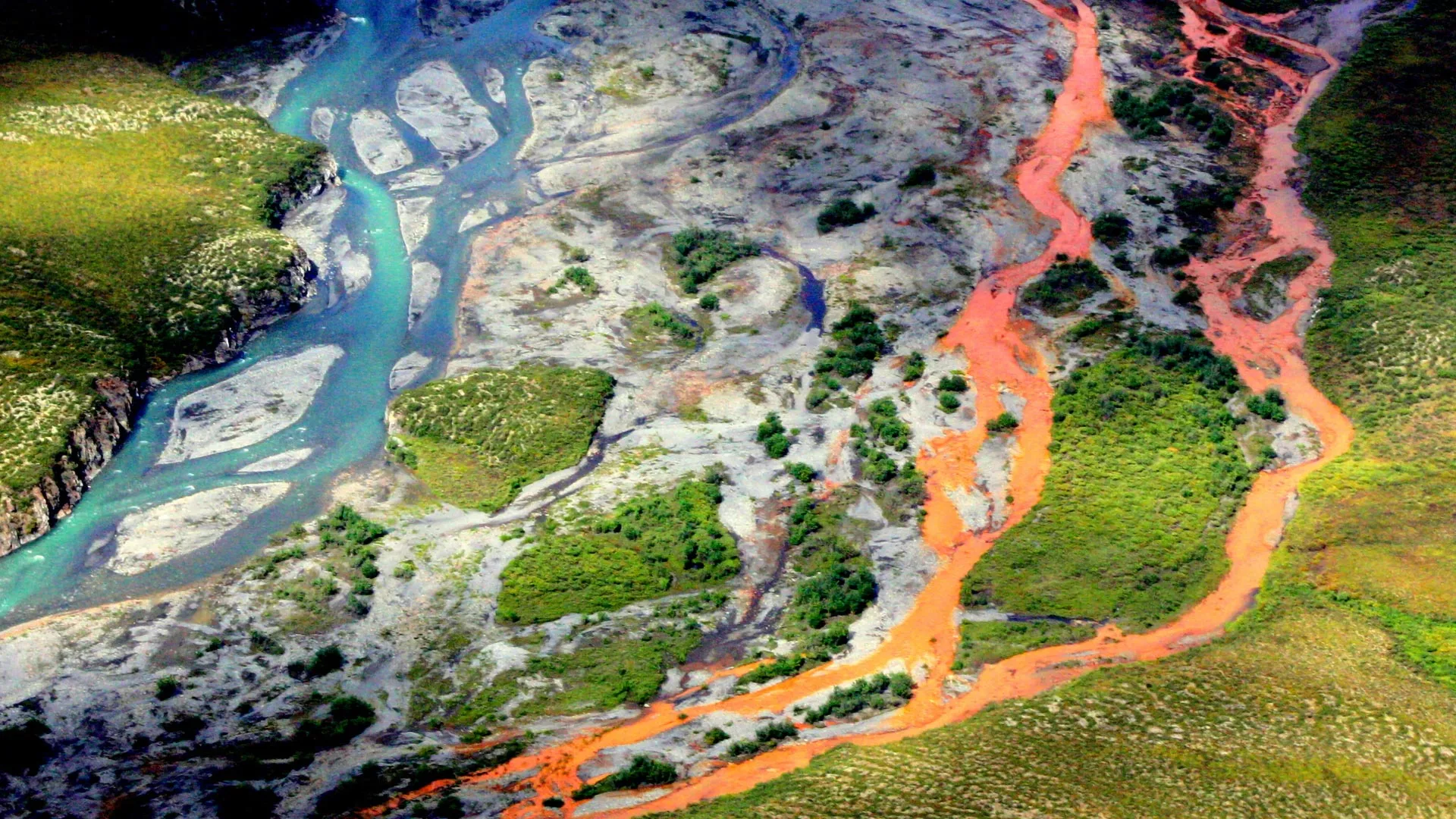
An aerial view of the rust-colored Kutuk River in Gates of the Arctic National Park in Alaska. Thawing permafrost is exposing minerals to weathering, increasing the acidity of the water, which releases metals like iron, zinc, and copper. Credit: Ken Hill / National Park Service

Ice can dissolve iron minerals more effectively than liquid water, according to a new study from Umeå University. The discovery could help explain why many Arctic rivers are now turning rusty orange as permafrost thaws in a warming climate.

The study, recently published in the scientific journal PNAS, shows that ice at minus ten degrees Celsius releases more iron from common minerals than liquid water at four degrees Celsius. This challenges the long-held belief that frozen environments slow down chemical reactions.

“It may sound counterintuitive, but ice is not a passive frozen block,” says Jean-François Boily, Professor at Umeå University and co-author of the study. “Freezing creates microscopic pockets of liquid water between ice crystals. These act like chemical reactors, where compounds become concentrated and extremely acidic. This means they can react with iron minerals even at temperatures as low as minus 30 degrees Celsius.”

To understand the process, the researchers studied goethite – a widespread iron oxide mineral – together with a naturally occurring organic acid, using advanced microscopy and experiments.

They discovered that repeated freeze-thaw cycles make iron dissolve more efficiently. As the ice freezes and thaws, organic compounds that were previously trapped in the ice are released, fuelling further chemical reactions. Salinity also plays a crucial role: fresh and brackish water increase dissolution, while seawater can suppress it.

The findings apply mainly to acidic environments, such as mine drainage sites, frozen dust in the atmosphere, acid sulfate soils along the Baltic Sea coast, or in any acidic frozen environment where iron minerals interact with organics. The next step is to find out if the same is true for all iron-bearing ice. This is what ongoing research in the Boily laboratory will soon reveal.

“As the climate warms, freeze-thaw cycles become more frequent,” says Angelo Pio Sebaaly, doctoral student and first author of the study. “Each cycle releases iron from soils and permafrost into the water. This can affect water quality and aquatic ecosystems across vast areas.”

The findings show that ice is not a passive storage medium, but an active player. As freezing and thawing increase in polar and mountain regions, for the impact on ecosystems. and the natural cycling of elements could be significant.

CLICK HERE FOR MORE INFORMATION

https://www.sciencedaily.com/releases/2025/09/250922074938.htm

Gulf corals still suffering more than a decade after Deepwater Horizon oil spill, scientists report

Exposure to oil — and possibly the chemicals used to clean up oil spills — has made corals prone to breaking and showing signs of high stress, even today

Source:American Geophysical Union

Summary:Deep-water corals in the Gulf of Mexico are still struggling to recover from the devastating Deepwater Horizon oil spill in 2010, scientists report at the Ocean Science Meeting in New Orleans. Comparing images of more than 300 corals over 13 years — the longest time series of deep-sea corals to date — reveals that in some areas, coral health continues to decline to this day.Share:


FULL STORY


Deep-water corals in the Gulf of Mexico are still struggling to recover from the devastating Deepwater Horizon oil spill in 2010, scientists report at the Ocean Sciences Meeting in New Orleans. Comparing images of more than 300 corals over 13 years — the longest time series of deep-sea corals to date — reveals that in some areas, coral health continues to decline to this day.

The spill slathered hundreds of miles of shoreline in oil, and a slick the size of Virginia coated the ocean surface. Over 87 days, 134 million gallons of oil spilled directly from the wellhead at a depth of 1520 meters (nearly 5000 feet) into the Gulf. While the spill was most visible at the surface, negative ecological impacts extended hundreds of meters into the ocean.

In a presentation on Tuesday, 20 February, scientists will show that deep-water corals remain damaged long after the spill. Over 13 years, these coral communities have had limited recovery — some even continuing to decline.

“We always knew that deep-sea organisms take a long time to recover, but this study really shows it,” said Fanny Girard, a marine biologist and conservationist at the University of Hawai’i at Mānoa who led the work. “Although in some cases coral health appeared to have improved, it was shocking to see that the most heavily impacted individuals are still struggling, and even deteriorating, a decade later.”

The findings can help guide deep-water restoration efforts following oil spills.

Delicate and damaged 

A few months after the Deepwater Horizon well was capped, an interdisciplinary team of researchers surveyed the ocean floor 6 to 22 kilometers (3.7 to 13.7 miles) from the wellhead to record the damage. About 7 miles away and at 1,370 meters (4,495 feet) depth, they found a dense forest of tree-like Paramuricea corals that looked sickly.

“These corals were covered in a brown material,” Girard said. Testing showed the sludge contained traces of a combination of oil and chemical dispersants. A few months later, the researchers found two additional coral sites at 1,580 meters and 1,875 meters (4921 and 6233 feet, respectively) deep that were similarly damaged.

Deep-sea corals are suspension feeders and may have ingested contaminated particles, leading to the observed health impacts, the researchers said. Direct exposure to toxic chemicals contained in the mixture of oil and chemicals may have also damaged coral tissue. However, to date, scientists still do not exactly know how the oil and dispersant affected these vulnerable organisms.

Every year from 2010 to 2017, scientists visited those three sites to monitor damages, measure growth rates and note any recovery of the corals, as part of a large initiative aiming to better understand ecosystem impacts and improve our ability to respond to future oil spills. They used a remotely operated vehicle to take high-resolution photographs of corals at all three impacted sites and two far-removed reference sites, tracking more than 300 corals overall.

The researchers visited these sites again in 2022 and 2023 as part of the Habitat Assessment and Evaluation project, one of the projects funded through the Natural Resource Damage Assessment settlement. The images allowed the team to measure changes to coral health over time, including noting any breaks along the delicate branches of the coral caused by exposure to oil pollution.

Still suffering after all these years

The scientists found that even by 2022, the affected corals continued to show signs of stress and damage from the oil spill. The brown coating they had first observed was long gone, but upon closer inspection, the corals were weak and prone to breaking. The scarred spots where branches fell off were leaking mucus, and some corals whose skeletons were exposed had been colonized by other, parasitic coral species.

“Not only were some of these corals not recovering, but some of them seemed to be getting worse,” Girard said. She added that if the impacts are too heavy, ecosystems can struggle to recover at all, especially given the onslaught of climate change-related stressors like ocean acidification. “It’s really important to prevent damage in the first place, and the way to do that is through protection measures.”

Girard notes that their work is being used to inform restoration strategies, including trying to grow deep-sea corals for coral propagation from transplants, deploying artificial anchoring sites for recolonization or protecting the deepwater communities and letting nature heal itself. In the coming years, the team will continue to monitor to corals, looking for signs that they’re getting better — or worse.

CLICK HERE FOR MORE INFORMATION

https://www.sciencedaily.com/releases/2024/02/240220144632.htm

Scientists stunned by salt giants forming beneath the Dead Sea

Source:University of California – Santa Barbara

Summary:The Dead Sea isn’t just the saltiest body of water on Earth—it’s a living laboratory for the formation of giant underground salt deposits. Researchers are unraveling how evaporation, temperature shifts, and unusual mixing patterns lead to phenomena like “salt snow,” which falls in summer as well as winter. These processes mirror what happened millions of years ago in the Mediterranean, leaving behind thick salt layers still buried today.Share:


FULL STORY


Salt Giants Rising Beneath the Dead Sea
The Dead Sea’s extreme salinity and shifting water layers produce salt giants and even summer “salt snow.” Studying these rare processes provides clues to ancient oceans and modern coastal stability. Credit: Shutterstock

The Dead Sea is a confluence of extraordinary conditions: the lowest point on the Earth’s surface, with one of the world’s highest salinities. The high concentration of salt gives it a correspondingly high density, and the water body’s status as the deepest hypersaline lake gives rise to interesting and often temperature-related phenomena below the water’s surface that researchers are still uncovering.

One of the most intriguing features of the Dead Sea continues to be revealed: salt giants, large-scale salt deposits.

“These large deposits in the Earth’s crust can be many, many kilometers horizontally, and they can be more than a kilometer thick in the vertical direction,” said UC Santa Barbara mechanical engineering professor Eckart Meiburg, lead author of a paper published in the Annual Review of Fluid Mechanics. “How were they generated? The Dead Sea is really the only place in the world where we can study the mechanism of these things today.”

Indeed, while there are other bodies of water in the world with massive salt formations, such as the Mediterranean and Red seas, only in the Dead Sea can one find them in the making, which allows researchers to tackle the physical processes behind their evolution, and in particular, the spatial and temporal variations in their thickness.

Evaporation, precipitation, saturation

In their paper, Meiburg and fellow author Nadav Lensky of the Geological Survey of Israel cover the fluid dynamical and associated sediment transport processes currently governing the Dead Sea. These processes are influenced by several factors, including the Dead Sea’s status as a saltwater terminal lake — a lake with no outflow — leaving evaporation as the primary way water leaves the lake, which has been shrinking for millennia and leaving salt deposits as it does so. More recently, damming of the Jordan River, which feeds into the lake, has accelerated lake level decline, estimated at roughly 1 meter (3 feet) per year.

Temperatures along the water column also play a role in the dynamics behind salt giants and other formations such as salt domes and chimneys. A once “meromictic” (stably stratified) lake — the Dead Sea was layered such that less dense warmer water at the surface overlaid a more saline, cooler layer at depth throughout the entire year.

“It used to be such that even in the winter when things cooled off, the top layer was still less dense than the bottom layer,” Meiburg explained. “And so as a result, there was a stratification in the salt.”

That changed in the early 1980s thanks to the partial diversion of the Jordan River, which resulted in evaporation outpacing the rate of freshwater inflow. At that time, the surface salinity reached the levels found at depth, enabling mixing between the two layers and transitioning the lake from meromictic to holomictic (a lake that experiences annual overturns in the water column). The Dead Sea continues to stratify, but only for eight of the warmer months of the year.

In 2019, Meiburg et al identified a rather unique process occurring in the lake during the summer: halite crystal precipitation or “snow” that was more typical in the cooler season. Halite (“rock salt”) precipitates when the concentration of salt exceeds the amount that the water can dissolve, hence the deeper, colder, denser conditions of the bottom layer are where it is most likely to happen, and in the cooler months. However, they observed that during the summer, while evaporation was increasing the salinity of the upper layer, salts were nonetheless continuing to dissolve in that layer due to its warmer temperature. This leads to a condition called “double diffusion” at the interface between the two layers, in which sections of the saltier warmer water of the top layer cool down and sink, while portions of the lower, cooler, relatively less dense water warm up and rise. As the upper, denser layer cools down, salts precipitate out, creating the “salt snow” effect.

The combination of evaporation, temperature fluctuations and density changes throughout the water column, in addition to other factors including internal currents and surface waves, conspire to create salt deposits of various shapes and sizes, assert the authors. In contrast to shallower hypersaline bodies in which precipitation and deposition occur during the dry season, in the Dead Sea, these processes were found to be most intense during the winter months. This year-round “snow” season at depth explains the emergence of the salt giants, found in other saline bodies such as the Mediterranean Sea, which once dried up during the Messinian Salinity Crisis, about 5.96 to 5.33 million years ago.

“There was always some inflow from the North Atlantic into the Mediterranean through the Strait of Gibraltar,” Meiburg said. “But when tectonic motion closed off the Strait of Gibraltar, there couldn’t be any water inflow from the North Atlantic.” The sea level dropped 3-5 km (2-3 miles) due to evaporation, creating the same conditions currently found in the Dead Sea and leaving behind the thickest of this salt crust that can still be found buried below the deep sections of the Mediterranean, he explained. “But then a few million years later the Strait of Gibraltar opened up again, and so you had inflow coming in from the North Atlantic and the Mediterranean filled up again.”

Meanwhile, salinity fluxes and the presence of springs on the sea floor contribute to the formation of other interesting salt structures, such as salt domes and salt chimneys, according to the researchers.

In addition to gaining a fundamental understanding of some of the idiosyncratic processes that can occur in evaporating, hypersaline lakes, research into the associated sediment transport processes occurring on the emerging beaches may also yield insight on the stability and erosion of arid coastlines under sea level change, as well as the potential for resource extraction, the authors state.

CLICK HERE FOR MORE INFORMATION

https://www.sciencedaily.com/releases/2025/09/250916221828.htm

Hungry flathead catfish are changing everything in the Susquehanna

New study suggests that smallmouth bass and channel catfish are changing what they eat to avoid having to compete with or being eaten by the invader.

Source:Penn State

Summary: Flathead catfish are rapidly reshaping the Susquehanna River’s ecosystem. Once introduced, these voracious predators climbed to the top of the food chain, forcing native fish like channel catfish and bass to shift diets and habitats. Using stable isotope analysis, researchers uncovered how the invaders disrupt food webs, broaden dietary overlaps, and destabilize energy flow across the river system. The findings show how a single invasive species can spark cascading ecological consequences. Share:


FULL STORY


Flathead Catfish Take Over the Susquehanna
Flatheads grow fast in this river system, attain large body sizes and can eat a variety of prey. Because adult flatheads have few natural predators, they can exert strong control over the ecosystem. Credit: Penn State

Flathead catfish, opportunistic predators native to the Mississippi River basin, have the potential to decimate native and recreational fisheries, disrupting ecosystems in rivers where they become established after their introduction or invasion from a nearby river drainage. That concern led a team of researchers from Penn State, the U.S. Geological Survey (USGS), and the Pennsylvania Fish and Boat Commission to assess how flatheads are affecting the food web and energy flow in the Susquehanna River in Pennsylvania, where they were first detected in 1991. Their population has grown rapidly in the decades since.

“Flatheads grow fast in this river system, attain large body sizes and can eat a variety of prey,” said study first author Olivia Hodgson, a master’s degree student in Penn State’s Intercollege Graduate Degree Program in Ecology. “Because adult flatheads have few natural predators, flathead catfish can exert strong control over the ecosystem.”

Hodgson is working with Tyler Wagner, a scientist with the USGS Pennsylvania Cooperative Fish and Wildlife Research Unit Program and a Penn State affiliate professor of fisheries ecology. He is senior author on the study. In findings published Sept. 4 in Ecology, the researchers reported that flathead catfish are apex predators.

Flatheads had the highest trophic position — the level an organism occupies in a food web, based on its feeding relationships — even higher than resident top predators such as smallmouth bass and channel catfish. Channel catfish had a lower trophic position in areas with flathead catfish. This means they now eat lower on the food chain, likely because they are being outcompeted by flatheads or avoiding them, the researchers explained. In areas with flathead catfish, they found, all species showed broader and overlapping diets.

“This suggests that resident species are changing what they eat to avoid competing with or being eaten by the invader,” Hodgson said. “These findings support the ‘trophic disruption hypothesis,’ that says when a new predator enters an ecosystem, it forces existing species to alter their behavior, diets and roles in the food web. This can destabilize ecosystems over time. Our study highlights how an invasive species can do more than just reduce native populations — it can reshape entire foodwebs and change how energy moves through ecosystems.”

Although the predatory effects of invasive catfishes on native fish communities have been documented — such as in a recent study on the Susquehanna River led by researchers at Penn State — the impacts of invasion on riverine food webs are poorly understood, Hodgson noted. This study quantified the effects of invasive flathead catfish on the food web in the Susquehanna by comparing uninvaded river sections to invaded sections, focusing on several key species: flathead catfish — invader, channel catfish and smallmouth bass — resident predators, and crayfish and minnows — prey.

In addition to evaluating trophic position, the researchers analyzed the isotopic niche occupied by the fish species — the range of carbon and nitrogen markers found within the tissues of an organism, reflecting its diet and habitat, providing insights into its ecological role.

To reach their conclusions, the researchers employed stable isotope analysis, a widely used tool that can explain patterns within a food web, highlighting links between trophic positions, as well as the breadth and overlap of trophic niches. Stable isotope analysis is especially useful for studying invasion ecology, such as investigating trophic reorganization and trophic overlap between introduced and resident species.

When fish eat, their bodies incorporate the isotopic signature of their food. By sampling their tissues, scientists can measure nitrogen isotopes and determine their diet, carbon isotopes to determine habitat use, and compare isotopic signatures across regions to deduce fish migration or habitat shifts. For this study, channel catfish, smallmouth bass, minnows and crayfish were selected as focal species because a previous diet analysis conducted in collaboration with Penn State, USGS, and Pennsylvania Fish and Boat Commission researchers within the Susquehanna River, showed that these species are important prey for flathead catfish.

The researchers collected a total of 279 fish and 64 crayfish for stable isotope analysis, including 79 flathead catfish, 45 smallmouth bass, 113 channel catfish and 42 minnows comprising nine species. All samples were oven dried and ground to a fine powder using a mortar and pestle. Stable isotope samples were sent to Penn State’s Core Facilities and the Michigan State University Stable Isotope Laboratories for isotope determination.

“Stable isotope analysis explained patterns within the Susquehanna food web in habitats invaded and not invaded by the flathead catfish, and it allowed us to understand links between different species in the river food web and how invasive species might lead to changes in how native species interact and compete, what they eat and how their diets overlap, and if they might be displaced from preferred habitats by the invader,” Hodgson said. “We were able to infer resource use, helping us to better understand potential competition for resources and how this changes when flathead catfish become established.”

Contributing to the research were: Sydney Stark, recent Penn State graduate with a master’s degree in wildlife and fisheries science; Megan Schall, associate professor of biology and science at Penn State Hazleton; Geoffrey Smith, Susquehanna River biologist for the Pennsylvania Fish and Boat Commission; and Kelly Smalling, research hydrologist withtheU.S. Geological Survey, New Jersey Water Science Center.

Funding for this research was provided by Pennsylvania Sea Grant and the U.S. Geological Survey.

CLICK HERE FOR MORE INFORMATION

https://www.sciencedaily.com/releases/2025/09/250909031516.htm

Oceans could reach a dangerous tipping point by 2050

Source:University of California – Santa Barbara

Summary:UC Santa Barbara researchers project that human impacts on oceans will double by 2050, with warming seas and fisheries collapse leading the charge. The tropics and poles face the fastest changes, and coastal regions will be hardest hit, threatening food and livelihoods worldwide.Share:


FULL STORY


Oceans Near Breaking Point by 2050
By 2050, ocean impacts from climate change and overuse could double—unless urgent action is taken. Credit: Shutterstock

The seas have long sustained human life, but a new UC Santa Barbara study shows that rising climate and human pressures are pushing the oceans toward a dangerous threshold.

Vast and powerful, the oceans can seem limitless in their abundance and impervious to disturbances. For millennia, humans have supported their lives, livelihoods and lifestyles with the ocean, relying on its diverse ecosystems for food and material, but also for recreation, business, wellness and tourism.

Yet the future of our oceans is worrying, according to researchers at UCSB’s National Center for Ecological Analysis and Synthesis (NCEAS).

“Our cumulative impact on the oceans, which is already substantial, is going to double by 2050 — in just 25 years,” said marine ecologist and NCEAS director Ben Halpern, who led the effort to forecast the future state of marine environments as they bow under the combined pressures of human activities, which include ocean warming, fisheries biomass loss, sea level rise, acidification and nutrient pollution, among other impacts. “It’s sobering. And it’s unexpected, not because impacts will be increasing — that is not surprising — but because they will be increasing so much, so fast.”

The research team, which includes collaborators from Nelson Mandela University in South Africa, also finds that the tropics and the poles will experience the fastest changes in impacts, and that coastal areas will feel the brunt of the increased impacts.

Their research, supported in large part by the National Science Foundation, is published in the journal Science.

A comprehensive global model of human impacts

As human activity on the ocean and along the coast has intensified, so have impacts on the marine environment. Halpern and a group of scientists first tackled the challenge of understanding how these pieces fit together to affect the ocean nearly 20 years ago, laying the groundwork for the current study.

“People tracked one issue at a time, but not everything together,” Halpern said. “More importantly, there was a pervasive sense that the ocean is so huge the human impacts couldn’t possibly be that bad.”

Their quest to build a comprehensive model of human impacts on the ocean led to a 2008 paper in the journal Science, a landmark study that synthesized 17 global data sets to map the intensity and extent of human activity on the world’s oceans. That initial view revealed startling results: No place was untouched, and 41% of the world’s marine environments were heavily impacted.

“The previous paper tells us where we are; the current paper tells us where we are headed,” Halpern said.

Ocean warming and biomass loss due to fisheries are expected to be the largest overall contributors to future cumulative impacts. Meanwhile, the tropics face rapidly increasing rates of impact, while the poles, which already experience a high level of impact, are expected to experience even more. According to the paper, the high level of future impacts “may exceed the capacity of ecosystems to cope with environmental change,” in turn posing challenges for human societies and institutions in a variety of ways.”

The world’s coasts are expected to bear the brunt of these increasing cumulative impacts — an unsurprising reality, the researchers say, given most human uses of the ocean are near coasts. Yet it’s also a “worrisome result nonetheless,” according to the paper, because the coasts “are where people derive most value from the ocean.” Additionally, many countries are dependent on the ocean for food, livelihood and other benefits. “Many of these countries will face substantial increases,” Halpern said.

The authors contend that enacting policies to reduce climate change and to strengthen fisheries management could be effective ways to manage and reduce human impacts, given the outsize roles that ocean warming and biomass loss play in the estimate of future human impacts on the ocean. Likewise, prioritizing management of habitats that are expected to be heavily impacted — such as salt marshes and mangroves — could help reduce the pressures on them.

In presenting these forecasts and analyses, the researchers hope that effective action can be taken sooner rather than later to minimize or mitigate the effects of increased pressures from human activity.

“Being able to look into the future is a super powerful planning tool,” Halpern said. “We can still alter that future; this paper is a warning, not a prescription.”

Research in this paper was also conducted by Melanie Frazier and Casey C. O’Hara at UCSB, and Alejandra Vargas-Fonseca and Amanda T. Lombard at Nelson Mandela University in South Africa.

CLICK HERE FOR MORE INFORMATION

https://www.sciencedaily.com/releases/2025/09/250905180728.htm

Even the toughest corals are shrinking in warming seas

Resilient coral growth predicted to decrease over next 3 decades, study finds.

Source:Ohio State University

Summary:Scientists found that Red Sea corals can endure warming seas but grow much smaller and weaken under long-term heat stress. Though recovery is possible in cooler months, rising global temperatures may outpace their resilience, endangering reefs and the people who depend on them.Share:


FULL STORY


Even the Toughest Corals Are Shrinking
Resilient Red Sea corals survive extreme heat but shrink and weaken, raising alarms about the future of marine life and reef-dependent communities. Credit: Shutterstock

As coral reefs decline at unprecedented rates, new research has revealed that some coral species may be more resilient to warming temperatures than others.

By studying how six months of elevated ocean temperatures would affect a species of coral from the northern Red Sea called Stylophora pistillata, scientists found that although these organisms can certainly survive in conditions that mimic future warming trends, they don’t thrive.

Stylophora pistillata tend to be tolerant of high ocean temperatures, but when continuously exposed to temperatures of 27.5 and 30 degrees Celsius (81.5 and 86 degrees Fahrenheit) — baseline warming expected in tropical oceans by 2050 and 2100 — scientists saw various changes in coral growth, metabolic rates, and even energy reserves. For instance, coral in 27.5 degrees Celsius waters survived, but were 30% smaller than their control group; those placed in 30 degrees Celsius waters wound up being 70% smaller.

“In theory, if corals in the wild at these temperatures are smaller, reefs might not be as diverse and may not be able to support as much marine life,” said Ann Marie Hulver, lead author of the study and a former graduate student and postdoctoral scholar in earth sciences at The Ohio State University. “This could have adverse effects on people that depend on the reef for tourism, fishing or food.”

Overall, the team’s results suggest that even the most thermally tolerant coral species may suffer in their inability to overcome the consequences of warming seas.

The study was published on September 3 in the journal Science of the Total Environment.

While current predictions for coral reefs are dire, there is some good news. During the first 11 weeks of the experiment, researchers saw that corals were only minimally affected by elevated baseline temperatures. Instead, it was the cumulative impact of chronic high temperatures that compromised coral growth and caused them to experience a higher metabolic demand.

The coral later recovered after being exposed for a month to 25 degree Celsius waters, but had a dark pigmentation compared to corals that were never heated. This discovery implies that despite facing ever longer periods of threat from high ocean temperatures in the summer months, resilient coral like S. pistillata can bounce back when waters cool in the winter, researchers say.

Still, as ocean temperatures are expected to increase by 3 degrees Celsius by 2100, expecting coral reefs to predictably bend to projected climate models can be difficult, according to the researchers.

This team’s research does paint a more detailed picture of how coral reefs may look and function in the next 50 years, said Andrea Grottoli, co-author of the study and a professor in earth sciences at Ohio State.

“Survival is certainly the No. 1 important thing for coral, but when they’re physiologically compromised, they can’t do that forever,” said Grottoli. “So there’s a limit to how long these resilient corals can cope with an ever increasing warming ocean.”

Gaining a more complex understanding of how warming waters can alter coral growth and feeding patterns may also better inform long-term conservation efforts, said Grottoli.

“Conservation efforts could focus on areas where resilient coral are present and create protected sanctuaries so that there are some ecosystems that grow as high-probability-success reefs for the future,” she said.

For now, all coral reefs are still in desperate need of protection, researchers note. To that end, Hulver imagines future work could be aimed at investigating the resilience of similar species of coral, including replicating this experiment to determine if sustained warming might cause trade-offs in other biological processes, such as reproduction.

“For coral, six months is still a very small snapshot of their lives,” said Hulver. “We’ll have to keep on studying them.”

Other Ohio state co-authors include Shannon Dixon and Agustí Muñoz-Garcia as well as Éric Béraud and Christine Ferrier-Pagès from the Centre Scientifique de Monaco, and Aurélie Moya, Rachel Alderdice and Christian R Voolstra from the University of Konstanz. The study was supported by the National Science Foundation and the German Research Foundation.

CLICK HERE FOR MORE INFORMATION

https://www.sciencedaily.com/releases/2025/09/250905112308.htm

Geologists got it wrong: Rivers didn’t need plants to meander

Source:Stanford University

Summary:Stanford researchers reveal meandering rivers existed long before plants, overturning textbook geology. Their findings suggest carbon-rich floodplains shaped climate for billions of years.Share:


FULL STORY


Geologists Were Wrong About Meandering Rivers
A view of seasonal flow in Shoshone Creek – an unvegetated meandering stream in Nevada. Credit: M. Hasson and M. Lapôtre

A new Stanford study challenges the decades-old view that the rise of land plants half a billion years ago dramatically changed the shapes of rivers.

Rivers generally come in two styles: braided, where multiple channels flow around sandy bars, and meandering, where a single channel cuts S-curves across a landscape. Geologists have long thought that before vegetation, rivers predominantly ran in braided patterns, only forming meandering shapes after plant life took root and stabilized riverbanks.

The new study, which was published online by the journal Science on Aug. 21, 2025, suggests the theory that braided rivers dominated the first 4 billion years of Earth’s history is based on a misinterpretation of the geological record. The research demonstrates that unvegetated meandering rivers can leave sedimentary deposits that look deceptively similar to those of braided rivers. This distinction is crucial for our understanding of Earth’s early ecology and climate, as a river’s type determines how long sediment, carbon, and nutrients are stored in floodplains.

“With our study, we’re pushing back on the widely accepted story of what landscapes looked like when plant life first evolved on land,” said lead author Michael Hasson, a PhD student in Mathieu Lapôtre’s lab at the Stanford Doerr School of Sustainability. “We’re rewriting the story of the intertwined relationship between plants and rivers, which is a significant revision to our understanding of the history of the Earth.”

The muddy floodplains of meandering rivers – dynamic ecosystems created over thousands of years by river overflow – are among the planet’s most abundant non-marine carbon reservoirs. Carbon levels in the atmosphere, in the form of carbon dioxide, act as Earth’s thermostat, regulating temperature over vast timescales. Accurately budgeting for the carbon caches created by meandering rivers could help scientists build more comprehensive models of Earth’s ancient and future climate.

“Floodplains play an important role in determining how, when, and whether carbon is buried or released back into the atmosphere,” Hasson said. “Based on this work, we argue carbon storage in floodplains would have been common for much longer than the classic paradigm that assumes meandering rivers only occurred over the last several hundred million years.”

Where the river flows

To gauge vegetation’s impact on river channel patterns, the researchers examined satellite imagery of about 4,500 bends in 49 current-day meandering rivers. About half of the rivers were unvegetated and half were densely or partly vegetated.

The researchers keyed in on point bars – the sandy landforms that develop on the inside bends of meandering rivers as water flow deposits sediments. Unlike the sandy bars that form in the middle of braided rivers, point bars tend to migrate laterally away from the centers of rivers. Over time, this migration contributes to meandering rivers’ characteristically sinuous channel shapes.

Recognizing that these sandy bars form in different places based on river style, geologists for decades have measured the trajectory of bars in the rock record to reveal ancient river paths. The rocks, typically of sandstones and mudstones, provide evidence for divergent river styles because each deposits different kinds of and amounts of rock-forming sediment, giving geologists clues for reconstructing long-ago river geometries. If sandstones showed little variation in the angle of bar migration, geologists interpreted the bars as moving downstream, and thus that a braided river created the deposits.

Using this technique, geologists had noticed that rivers changed the way they behaved around the time that plants first evolved on Earth. This observation led to the conclusion that land plants made river meandering possible, for instance by trapping sediment and stabilizing riverbanks.

“In our paper, we show that this conclusion – which is taught in all geology curricula to this day – is most likely incorrect,” said Lapôtre, the paper’s senior author and an assistant professor of earth and planetary sciences at the Doerr School of Sustainability.

By looking at modern rivers with a wide range of vegetation cover, the researchers showed that plants consistently change the direction of point bar migration. Specifically, in the absence of vegetation, point bars tend to migrate downstream – like mid-channel bars do in braided rivers.

“In other words, we show that, if one were to use the same criterion geologists use in ancient rocks on modern rivers, meandering rivers would be miscategorized as braided rivers,” Lapôtre said.

Rivers over time

The findings offer a provocative new window into Earth’s past eons, upending the conventional picture of how rivers have sculpted continents. If indeed carbon-loaded floodplains were laid down far more extensively over history, scientists may need to revise models of major natural climate swings over time, with implications for our understanding of ongoing climate change.

“Understanding how our planet is going to respond to human-induced climate change hinges on having an accurate baseline for how it has responded to past perturbations,” Hasson said. “The rock record provides that baseline, but it’s only useful if we interpret it accurately.”

“We’re suggesting that an important control on carbon cycling – where carbon is stored, and for how long, due to river type and floodplain creation – hasn’t been fully understood,” he said. “Our study now points the way to better assessments.”

Additional co-authors are from the University of Padova and the University of British Columbia.

CLICK HERE FOR MORE INFORMATION

https://www.sciencedaily.com/releases/2025/08/250831010533.htm