Florida Governor Ron DeSantis signed the bill banning fluoride, saying at a signing event that “forcing it into the water supply is basically forced medication on people.”
The ban takes effect on July 1.
Fluoride is a mineral that occurs naturally in water, soil and air that has been demonstrated to prevent dental cavities and tooth decay. For decades, it has been added to community water supplies and dental products such as toothpaste.
DeSantis, a Republican, was one of the most outspoken political leaders who pushed back against public health mandates during the pandemic, when he opposed forced masking, school closures and pressuring people to get the COVID vaccine.
“Some of these people, they think that they know better for you than you do for yourself,” DeSantis said just before signing the bill. “They think because they have medical training … that they should just be able to decree how we live our lives. That proved disastrous during COVID.”
Utah, also led by a Republican governor, became in March the first U.S. state to ban fluoride in public water systems, a law that took effect this month. At the federal level, the U.S. Food and Drug Administration said this week it was starting a process to remove fluoride supplements for children from the market.
Health Secretary Robert F. Kennedy, Jr. has opposed adding the mineral to tap water.
Kennedy and others opposed to the use of fluoride in water say it is associated with numerous health issues, including certain cancers and lower cognitive ability among children.
The American Cancer Society on its website says the general consensus among scientific reviews examining possible links between fluoride and cancer shows no strong evidence connecting the two. However, the society says more studies are needed.
About 63% of all Americans have fluoride in their community water systems, according to Centers for Disease Control and Prevention statistics as of 2022, the most recent data available.
The American Dental Association strongly opposes the push to ban fluoride from water and in supplements, saying it greatly benefits dental health and has not conclusively been shown to have harmful effects.
“More than ever, at this critical time in American health care policy, it is vital that we slow down to properly study the full implications of actions like this on the health of the nation,” Brett Kessler, president of the association, wrote earlier this week in response to the FDA targeting ingestible fluoride supplements.
(Reporting by Brad Brooks in ColoradoEditing by Rod Nickel)
As an industry largely based on paper, the industry produces around 400 million tons of paper per year (Environmental Paper Network, 2018). Additionally, take into account the ink and water that goes along with the processing of said paper in factories, offices, and even our own homes. The use of such a volume of natural resources, combined with the energy needed to process it makes the printing industry “the fourth largest user of industrial energy worldwide” (Laurijssen, 2013). Naturally, these processes are bound to affect the environment.
One result of this energy usage from printing plants and paper mills are volatile organic compounds (VOCs), which are chemicals that evaporate at room temperature. VOCs in small amounts may be found in our homes, which can “irritate the eyes, throat, and nose, as well as cause headaches, dizziness, and potentially lead to memory loss or visual impairment” (Lafond, n.d). However, VOCs emitted at larger amounts have an effect not just us, but our environment as well. According to the Government of Canada, VOCs from the printing industry are “one of the principal stationary sources of volatile organic compound”, which stems from the use of solvents in ink and cleaning (Environment Canada, 2016). VOCs on this scale are detrimental to our environment, contributing to acid rain and the formation of ozone. Acid rain can cause damage to ecosystems, seeping into the ground destroying nutrients, and releasing aluminum into water streams, making them toxic. Ozone is a pollutant that when at ground level, is hazardous to our health and can cause smog.
Another byproduct of the printing industry is effluent, also known as wastewater. Water is essential to printing, as ink is oil-based and water repels ink, which is how offset lithographic printing, the most common form of large scale printing today works. This water comes in contact with the ink, contaminating it. Water is also required to clean printing presses. Disposal of the wastewater and various solvents and cleansers is a procedure where the utmost care must be taken, as the pollutants from the effluent can quickly seep in and harm the surrounding environment. Waste management is necessary to safely dispose of the various chemicals used in printing processes. Recycling these chemicals instead of disposing of it saves the environmental and financial costs of producing these chemicals.
Having up to date technology is a crucial aspect of being sustainable in the print industry. For example, a printer that still uses traditional inks when vegetable-based inks are available, or printers that dispose of their solvents instead of recovering and recycling it are leaving behind a larger carbon footprint. Understanding and applying the latest tactics are key when it comes to reducing pollution and being sustainable in the printing industry.
We have used scents from nature to mask their body odour throughout the entirety of human history.
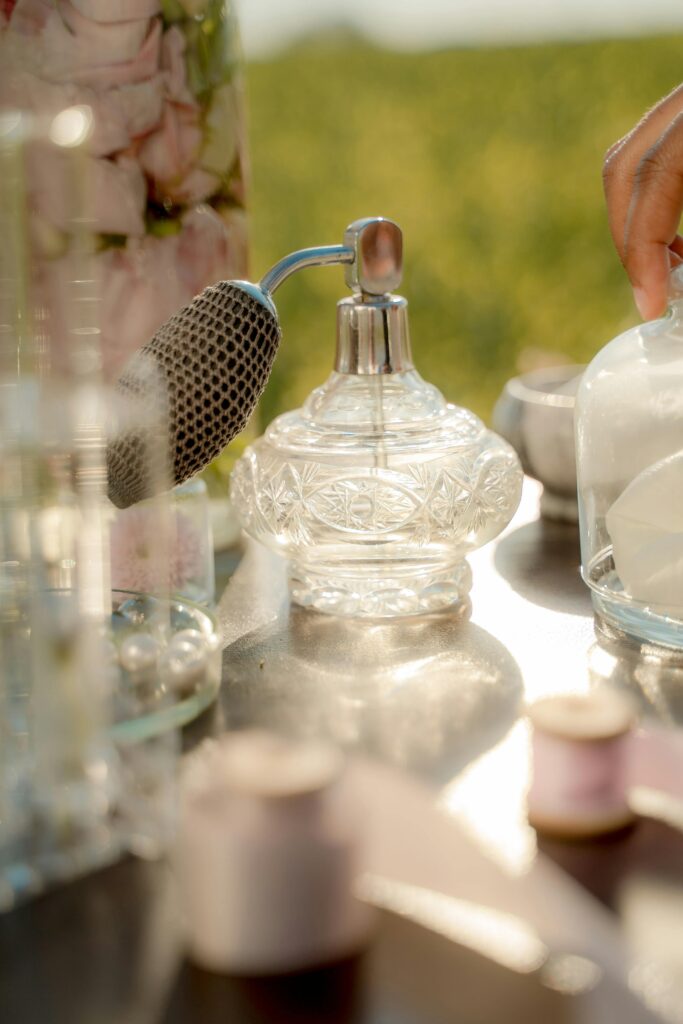
Perfume comes from the Latin “per” meaning “through” and “fumum,” or “smoke.” Many ancient perfumes were made by extracting natural oils from plants through pressing and steaming. The oil was then burned to scent the air.
The early Egyptians also perfumed their dead and often assigned specific fragrances to deities. Their word for perfume has been translated as “fragrance of the gods.”
It is said that the prophet Mohammed wrote, “Perfumes are foods that reawaken the spirit.”
The art of perfumery spread to Europe when 13th-century Crusaders brought back samples from Palestine to England, France, and Italy.
France’s King Louis the 14th used it so much that he was called the “perfume king.” His court contained a floral pavilion filled with fragrances, and dried flowers were placed in bowls throughout the palace to freshen the air.
It was at this time that Grasse, a region of southern France where many flowering plant varieties grow, became a leading producer of perfumes.
It was not until the late 1800s, when synthetic chemicals were used, that perfumes could be mass-marketed. The first synthetic perfume was nitrobenzene, made from nitric acid and benzene. This synthetic mixture gave off an almond smell and was often used to scent soaps.
Today, The United States is the world’s largest perfume market with annual sales totalling several billions of dollars.
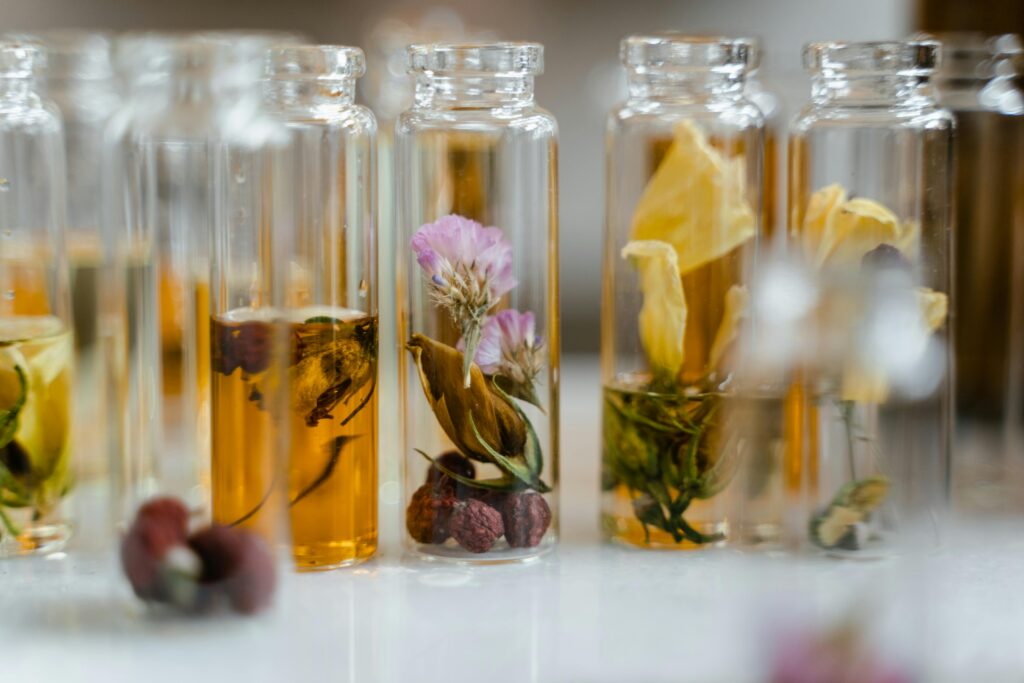
Perfume contains natural ingredients like flowers, grasses, spices, fruit, wood, roots, resins, balsams, leaves, gums, and animal secretions. The oils from these ingredients are extracted and that’s where the scents are. These natural compounds are mixed with alcohol, petrochemicals, coal and coal tars. Some plants used in many perfumes, like Lily of the Valley, do not produce any oils naturally. It’s only about 2000 of the 250.000 flowering plants on earth that contain oil naturally. As such, those scents are not obtained through harvesting the flowers, those scents are created synthetically.
Synthetic ingredients are used more widely today because it makes the perfumers less dependent on harvest quality, weather and crop yield. Previously, perfumery was a very unstable craft because it was very hard to make several identical batches of essential oil. With synthetic ingredients made in a lab, perfumers can control the quality, thus wasting less product and using less natural materials. Today even scents that could be extracted from natural resources are recreated synthetically, to standardize the products.
Many perfumes also contain a fair amount of animal-derived products, some of which are pretty grim. Castor and vanillin are derived from beavers. Musk from male deer. Ambergris from the sperm whale. They enable the perfume to evaporate more slowly and emit the odour for longer. This can also be done using fossil fuel-derived compounds like tar, coal, resin and petrochemicals. But yeah, just know that if you’re smelling “natural vanilla aroma” it is probably extracted from the anal glands of a beaver.
Alcohol and water are used to dilute ingredients in perfumes, and it is the ratio of alcohol to scent that determines whether the perfume is “eau de toilette” (toilet water) or cologne.
Most full perfumes are made of about 10-20% perfume oils dissolved in alcohol and a trace of water. Colognes contain approximately 3-5% oil diluted in 80-90% alcohol, with water making up about 10%. Toilet water has the least amount—2% oil in 60-80% alcohol and 20% water.
To make a perfume, you must first extract the ingredients, several methods are depending on what subject the scent is extracted from.
A “nose”, which is a master perfumer blends the scents and develops the formula. It can take more than 800 different ingredients to make a perfume.
A perfume consists of three notes, “notes de tete”, “notes de Coeur” and notes de fond”. The top notes are typically tangy or citrus-like, the central tones provide body to the scent and tend to be based on aromatic flowers, and the base tones create woody fragrances. But more notes and tones are used to create a unique formula, but that’s the gist of it
When the perfume is blended it has to age, which can take months or years. [1]
So there are two aspects of perfume we need to look at, first the natural ingredients, and then the synthetic ingredients. Now first of all, I am always sceptical if a product is heavily advertised as “natural”, because “natural” is not synonymous with “sustainable”, not at all actually. It is easy to fall into the trap of demonising everything synthetic while believing that everything natural is perfectly healthy. We need a little bit more nuanced than that.
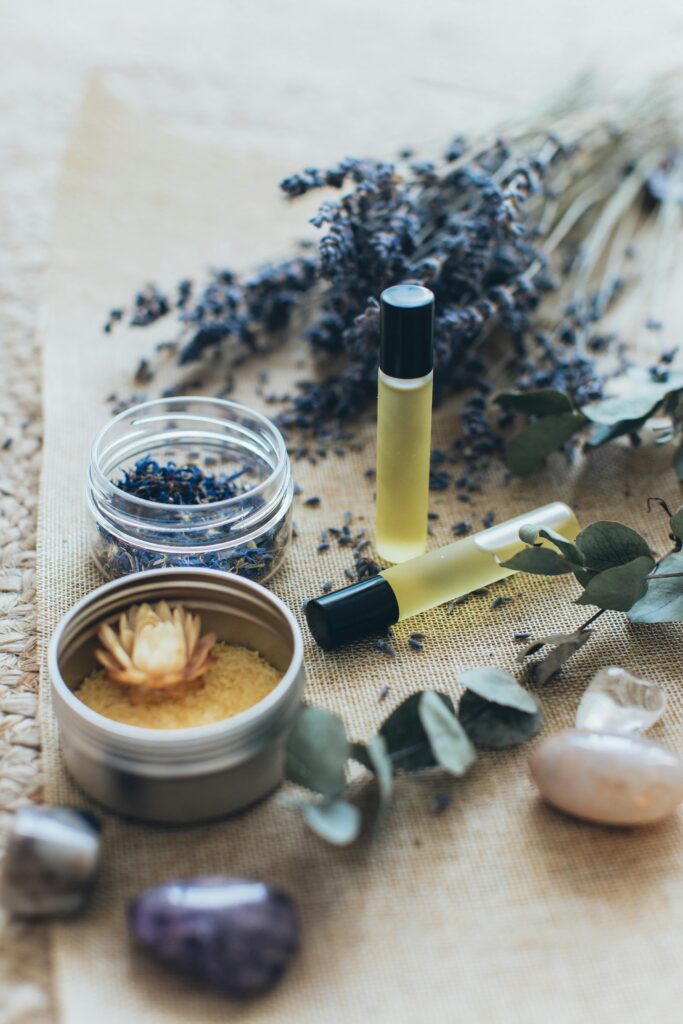
The natural ingredients in perfumes are essential oils, extracted from flowers, herbs, grass, wood and yeah, animals. But let’s zoom in on essential oils, the crack of 2016 zero waste households and almonds moms.
The amount of plant material required to produce a single bottle of essential oil can vary greatly depending on the plant type and the specific oil being produced as well as the method of extraction.
Essential oil production comes with various impact factors. Firstly, some oil is difficult to extract from the plant if the plant only provides small yields. Constantly planting vast amounts of the same plant, which is just a good-smelling mono-crop at this point, deprives the soil of nutrients, some farmers also use pesticides and insecticides, and essential oils derived from sap often means that the trees have to be cut down to extract enough, so we also have deforestation as a factor. This is not always the case, but when we’re looking at the industrial production.
Another issue is that many essential oils come from plants that are listed on the IUCN Red List of Threatened Species. For instance, rosewood and atlas cedarwood, two popular essential oils, are listed as endangered species. Listed as vulnerable, sandalwood’s population is also decreasing mainly because of illegal harvesting and overexploitation. In India and Indonesia, sandalwood has been so overharvested that it nearly went extinct.[7] While it remains a heavily used ingredient in many perfumes and fragrances.
Deforestation and mono-cultures make the environment and local ecosystems vulnerable and decrease biodiversity. I don’t think I have made one impact video where mono-crops have not been mentioned tbh. But that’s what happens when we mass produce anything. Even products marketed as natural and eco-friendly.
Using synthetic ingredients means that we won’t need millions and millions of flowers and herbs to produce a few drops of oil, so this much be better for the planet on all parameters, right? Right??.
Perfumes, colognes, deodorants, candles, air fresheners, cleaning products, soaps, shampoo, paints and detergents are the most frequently used scented products. And while I’ll try to close in on perfumes as much as possible, most of the studies about fragrances include the impact of all these scented products, so we’ll keep that in mind.
Perfumes and these products contain thousands of chemical compounds and the thing is, it is impossible to know which and how many. That’s because the composition of fragrances is usually kept secret to avoid other brands using the same formula, but it also means that consumers have virtually no idea what they are putting on their bodies. A fragrance or scented product contains thousands of different synthetic fragrance compounds of unknown origins, completely protected by intellectual property law.
The majority of fragrances today are made with synthetic chemicals with 4000 to 7000 compounds. On average, perfumed soaps contain between 30 and 150 fragrance ingredients, whereas scented cosmetics can contain between 200 and 500 fragrance ingredients, making it impossible to determine individual product impact.[8]
Water pollution
The synthetic compounds from fragrances and scented products are washed into our water systems every single day, and wastewater treatment plants cannot effectively remove those substances from our water. So it is inevitable that those compounds end up in aquatic ecosystems, and in our bodies as well.
And the thing is when we release, even somewhat harmless synthetic ingredients into the environment they don’t go away – they bioaccumulate. This means that they build up in the environments, and react with other synthetic compounds causing unpredictable reactions.
Musks, which is a family of ingredients often used in perfumes have been especially bad because they do not degrade when they are released into the environment but instead, they attach themselves to the fatty tissue of aquatic organisms.
The unknown composition of harmful chemical scents is just the beginning of the problem. According to Lenntech, phosphates in some of these chemical mixes can cause algae to bloom uncontrollably in waterways, thereby depleting oxygen levels. Other chemicals can even reduce the surface tension of water, making it easier for pesticides and other toxins to enter the water and be absorbed by the plants and animals that live there. [9]
Of course, not only synthetic compounds can pose a threat to water systems. In this study from 2021 essential oils and extract toxicity levels are observed: “While some essential oils and extracts have been described to have no toxic effects to the selected organisms or the toxic effects were only observable at high concentrations, others were reported to be toxic at concentrations below the limit set by international regulations, some of them at very low concentrations. Generally, essential oils exhibit higher toxicity than extracts. However, when the extracts are obtained from plants that are known to produce toxic metabolites, the extracts can be more toxic than essential oils. Overall, and despite being generally considered “eco-friendly” products and safer than their synthetic counterparts, some essential oils and plant extracts are toxic towards non-target organisms. Given the increasing interest from the industry on these plant-based products further research using international standardized protocols is mandatory.” [10]
Air pollution and emissions
Our air is also impacted – both indoors and outdoors. Most fragrances are classified as volatile compounds, which means they break down into other compounds when released into the air; very often these compounds can have more serious environmental and health implications compared to the actual fragrance compound. But that’s not the worst part.
About 5% of raw oil is processed into ingredients for household products whereas 95% is processed into fuel, but these 5 % are doing some serious damage.
According to a 2018 study from NOAA, the greenhouse gas emissions released from scented consumer products and the chemical vapours they emit are roughly the same as the greenhouse gasses emitted from burning fuel for transportation. Even though there are 15 times more petroleum used for fuel than as ingredients in industrial and consumer products.
These chemical vapours as known as VOCs (volatile chemical vapours), and when they react with sunlight they form ozone pollution and react with other particles in the air. The head of the study explains that: “as the transportation sector gets cleaner, these other sources of VOCs become more and more important”. Furthermore, fuel systems minimize the loss of gasoline to evaporation to maximize energy generated by combustion, but common products like paints and perfumes are engineered to evaporate. Again this doesn’t mean that perfumes alone emit as many greenhouse gasses as fuel, but perfume belongs to a larger category of consumer products where that is the case. [11]
Reducing environmental damage
The biggest game changer here would be legislation that demands greater transparency from corporations and manufacturers. Demanding greater transparency would mean that consumers and distributors would know which chemical compounds are used. Moreover, we could also demand stricter requirements and bans on certain ingredients that are most likely to bioaccumulate etc. Politically, there are several measures we can take, and demand to reduce the impact of these products.
But of course, there are also tons of ways consumers can minimize the impact of these compounds. For instance, avoid scented products and fragrances whenever possible, or at the very least in products that do not need them.
Instead of air fresheners, ventilate your home, and remove smells with vinegar
Avoid scented candles and soaps and go for more neutral alternatives
Avoid scented cleaning products and detergents, fabric softeners are simply unnecessary and “clean” is the absence of scents and smells, so cleaning products without scents are better. [12]
Replacing all synthetic fragrances with essential oil is not the solution, but reducing consumption and being mindful of how much we use is the way to go.
Before you buy new essential oils, research whether the plant species are on the Red List of Threatened Species (you can do a quick search on the website). If they are endangered or even vulnerable, refrain from purchasing them. This includes ingredients like sandalwood, rosewood, and cedarwood.
Store your perfumes in a dark place, away from the sunlight to extend the shelf-life and keep the bottle closed.
Do not store perfumes in the bathroom, the humidity can alter both the colour and the scent of the perfume
Look for organic, or wild-harvested essential oils from plants native to the environment they are grown in.
To make your essential oils last longer, dilute them in carrier oils, like coconut or jojoba oil. It is always recommended to do so!
Many “sustainable” perfume brands only focus on recycled/refillable packaging, and while that’s nice we should be looking for brands that reduce the impact of their ingredients, and are cruelty-free of course.
If you want to know more about the ingredients in your products, look them up at the EWG Skin Deep Index: https://www.ewg.org/skindeep/
So are there even sustainable perfumes? Well, there are more or less sustainable options and more or less sustainable ways of using perfume. While the impacts of synthetic and natural ingredients are often different, and thus somewhat difficult to compare 1/1; the most important thing consumers can do is not overconsume perfumes and essential oils, and store them correctly to extend shelf life. Avoiding certain polluting or extinction-threatened ingredients is also a good idea. But, I did a little digging to come up with some recommendations for more sustainable brands or options, I have left that list down below.
These brands both improve their supply chains, as well as ingredients (and packaging, but we’re not spending too much time on that, or I guess we are spending the amount of time on packaging that is equivalent to how much of the product impact packaging accounts for).
Plastics are a part of our everyday lives, and plastic pollution is a growing concern. When plastics break down over time, they can form smaller particles called microplastics, which are 5 mm or less in length—smaller than a sesame seed. Microplastics, in turn, can break down into even smaller pieces called nanoplastics, which are less than 1 μm in size. Unable to be seen with the naked eye, these are small enough to enter the body’s cells and tissues.
Previous research has found evidence of plastic particles in human blood, lungs, gut, feces, and reproductive tissues like the placenta and testes. But the potential health effects of these tiny plastic bits are still unproven and unknown. The small size of nanoparticles has made them especially difficult to detect and study.
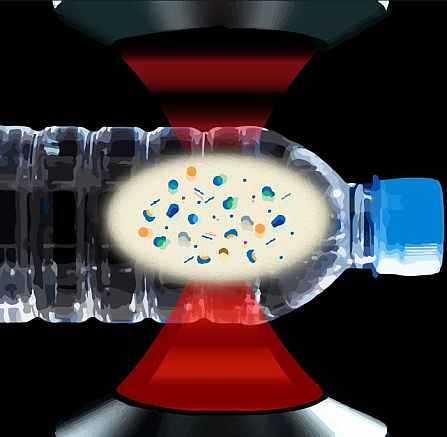
To gain more insight into nanoplastics, a research team led by Drs. Wei Min and Beizhan Yan of Columbia University modified a powerful imaging technique that Min co-invented 15 years ago with NIH support. The technique, called stimulated Raman scattering (SRS) microscopy, is now widely used to visualize small molecules in living cells. The method works by focusing two laser beams on samples to stimulate certain molecules to emit unique detectable light signals. Unlike many other methods, SRS microscopy does not depend on labeling specific molecules to find them.
For the new study, which was supported by NIH, the researchers developed a new SRS approach to detect micro- and nanoplastics at the single-particle level. After confirming that the technique could rapidly spot plastic particles smaller than 1 μm, they developed an algorithm based on machine learning to detect seven common types of plastic.
To test their new high-throughput imaging platform, the team analyzed the micro- and nanoplastics in three popular brands of bottled water. Results were reported on January 8, 2024, in the Proceedings of the National Academy of Sciences.
The researchers found that, on average, a liter of bottled water included about 240,000 tiny pieces of plastic. About 90% of these plastic fragments were nanoplastics. This total was 10 to 100 times more plastic particles than seen in earlier studies, which mostly focused on larger microplastics.
The water contained particles of all seven types of plastic. The most common was polyamide, a type of nylon that’s often used to help filter and purify water. An abundance of polyethylene terephthalate (PET) was also detected. This might be expected, since PET is used to make bottles for water, soda, and many other drinks and foods. Other identified plastics included polyvinyl chloride, polymethyl methacrylate, and polystyrene, which is also used in water purification. The method identified millions of additional particles that did not match the seven categories of plastic. It’s not yet clear if these tiny particles are nanoplastics or other substances.
The researchers say that this new technique will help to advance our understanding of human exposure to nanoplastics. “This opens a window where we can look into a plastic world that was not exposed to us before,” Yan says.
In the future, the researchers will apply this approach to analyze more environmental samples, such as tap water, indoor and outdoor air samples, and biological tissues. They are also developing filters that can reduce plastic pollution from laundry wastewater, since many fabrics include nylon, PET, and other plastics.
Funding: NIH’s National Institute of Environmental Health Sciences (NIEHS); Research Initiatives in Science and Engineering of Columbia University; Hudson River Foundation.
If you think the water you are drinking is just H2O, think again! According to studies, an astonishing 75,000 chemical compounds have been found in our water, yet the EPA has established enforceable safety standards for only 87. Many of these common water contaminants and chemicals are potentially harmful and can spawn health problems. According to the Centers for Disease Control and Prevention, nearly one million people get sick from drinking contaminated water each year, with about 1,000 cases on average ending in death.
Using outdated technology, many municipalities simply weren’t built to handle the influx of common modern-day water contaminants. Various pollutants such as pesticides, herbicides, toxic waste from landfills, chemical and oil spills, acid rain, and more find their way into our water supplies. Most often this water is treated with chlorine or chloramines to control bacterial growth which, according to some health experts, may also contribute to illness.
Even if the water that leaves the treatment plants meets EPA minimum safety standards, health threats don’t stop there. The water may pass through unsafe water lines that recontaminate it on the way to your home. Examine your pipes and those of water distribution systems and you’ll find the insides of some of these pipes caked with mineral, biological and chemical deposits. In some cases, the pipes themselves may leach copper and lead! Another threat lurking inside older water pipes is bio-film, composed of layers of bacteria that can harbor pathogens like E. coli. And don’t think well water is any safer because groundwater pollutants may also seep into that source. Add to that the chlorine and other chemicals used to treat well water, and you have water that is chemically altered.
The sad truth is that our water supply is compromised by harmful chemicals. EPA standards require water treatment plants to reduce certain common water contaminants. Annual reports issued by the EPA for 2002 indicated that there were 80,635 documented violations nationwide. When violations occur, “boil water” alerts are issued but, by then, you may have already consumed dangerously contaminated water.
You have to ask yourself the question, “Over the course of my life, how will these chemicals and trace pollutants affect my health and that of my family?” Consider what this means if, over the course of your life, you drink approximately 13,000 gallons of water. There could be undetected contaminants in each glass you drink having a cumulative effect on your health for the worse. That’s why it’s so important you make doubly sure the water you drink is 100% steam distilled. And with Waterwise’s distilled water-making machines, you can take control of your water quality today and enjoy peace of mind.
Toilets are probably not one of the first things most people think about when they are considering ways they can help make the world a better place, but lack of access to clean water and sanitation is a major global issue affecting billions of people around the world every year. Leaders from 193 countries have agreed to ensure access to water and sanitation for all people by the year 2030, which is Goal 6 of the United Nations (UN) Sustainable Development Goals. The Sustainable Development Goals are 17 interconnected goals that seek to transform our world by ending all forms of poverty, eliminating inequalities and improving the state of the world’s natural and human-made environments through sustained multinational cooperation and efforts in the next 15 years.
By learning about, teaching about and taking action on the state of clean water and sanitation around the world, young people can play a valuable leadership role in helping to accomplish the Sustainable Development Goals. Here are five important facts and some educational resources related to Goal 6 of the Sustainable Development Goals that can help youth learn and engage as global citizens, according to the UN.
Globally, 2.4 billion people do not have access to toilets or latrines. Earlier this year, the UN declared that access to clean sanitation is a basic human right. Without access to clean sanitation, people are not able to pursue and enjoy their other human rights, such as their right to health, life and education. The UN has found that “more than 443 million school days are lost every year due to sanitation and water related issues. Inadequate sanitation facilities are a common barrier for school attendance, particularly for girls.”
Approximately 1.8 billion people use a source of drinking water that is fecally contaminated. That means one in four people around the world have to use water that has been contaminated by human waste, which is a potential source of deadly pathogens and diseases.
One thousand children die every day due to preventable water and sanitation-related diarrheal diseases, which continue to be a major source of death in children under 5. “Worldwide, more than two million people die every year from diarrheal diseases. Poor hygiene and unsafe water are responsible for nearly 90 percent of these deaths and mostly affect children,” according to the UN.
Approximately 663 million people live without access to improved drinking water sources. “An improved drinking-water source is defined as one that, by nature of its construction or through active intervention, is protected from outside contamination, in particular from contamination with fecal matter, according to the WHO/UNICEF Joint Monitoring Programme for Water Supply and Sanitation.
Water scarcity affects more than 40 percent of the global population and is projected to rise.
Goal 6 of the Sustainable Development Goals seeks to improve the global populations access to clean water and sanitation by the year 2030 by ending open defection, reducing water pollution, increasing water-use efficiency, implementing “integrated water resources management,” protecting and restoring water-related ecosystems and expanding water harvesting, desalination, wastewater treatment and water recycling and reuse in developing countries.
Researchers at Michigan State University are engaged in efforts that will help reach the targets set out in Goal 6 of the Sustainable Development Goals. MSU professor Joan Rose, the 2016 Stockholm Water Prize Laureate, along with other university researchers, are studying innovative new materials for use in water filters as a way to make it easier and less costly for people to access clean and safe drinking water.
Adult and youth leaders can help other youth and children learn about global water quality, clean water access and sanitation issues in order to be informed and active global citizens. Here are some activities and lesson plans that can be used to help teach others about these issues:
There’s No New Water! A National 4-H curriculum designed for high school aged youth, There’s No New Water is a high quality set of resources and activities to help young people learn “that water is a finite natural resource whose quantity and quality must be responsibly preserved, protected, used and reused.” In addition to learning about the natural water cycle and the impact of human activity on water quality and quantity, the curriculum helps youth plan and conduct a service learning project as the local level.
Water Conservation with the Water Lion. For younger learners, Pennsylvania State Extension provides a set of resources on youth water conservation to help elementary, middle and high school-aged youth develop knowledge about the water cycle, water quality and ways to use water responsibly in their home.
Clean Water For All. Available as a free download from World’s Largest Lesson website, Clean Water for All is a lesson plan and set of resources for helping youth ages 8-14 learn about the topics of global water pollution and clean water access. The set of activities can be led by older youth leaders or adults, and is designed as a 60-minute learning session with opportunities to extend the learning beyond the activity.
Plan for Change: Water Toolkit. This resource and set of activities is available as a free download from Plan Canada’s website. The toolkit includes information and activities to help youth and children learn about access to safe water and clean toilets in other parts of the world.
Get Involved and Take Action! Ready to help make a difference in the world around the issue of clean water and sanitation? Get a group of youth together to start planning a service activity for World Toilet Day (Nov. 19) or World Water Day (March 22).





 GET WET!