Satellites confirm 1990s sea-level predictions were shockingly accurate

Source:Tulane University

Summary:Satellite data reveals sea-level rise has unfolded almost exactly as predicted by 1990s climate models, with one key underestimation: melting ice sheets. Researchers stress the importance of refining local projections as seas continue to rise faster than before.Share:


FULL STORY


1990s Sea-Level Predictions Shockingly Accurate
1990s climate projections nailed sea-level rise, but underestimated ice-sheet melt. Now, with accelerating seas, scientists warn of regional risks and the slim chance of catastrophic collapse. Credit: Shutterstock

Global sea-level change has now been measured by satellites for more than 30 years, and a comparison with climate projections from the mid-1990s shows that they were remarkably accurate, according to two Tulane University researchers whose findings were published in Earth’s Future, an open-access journal published by the American Geophysical Union.

“The ultimate test of climate projections is to compare them with what has played out since they were made, but this requires patience – it takes decades of observations,” said lead author Torbjörn Törnqvist, Vokes Geology Professor in the Department of Earth and Environmental Sciences.

“We were quite amazed how good those early projections were, especially when you think about how crude the models were back then, compared to what is available now,” Törnqvist said. “For anyone who questions the role of humans in changing our climate, here is some of the best proof that we have understood for decades what is really happening, and that we can make credible projections.”

Co-author Sönke Dangendorf, David and Jane Flowerree Associate Professor in the Department of River-Coastal Science and Engineering, said that while it is encouraging to see the quality of early projections, today’s challenge is to translate global information into projections tailored to the specific needs of stakeholders in places like south Louisiana.

“Sea level doesn’t rise uniformly – it varies widely. Our recent study of this regional variability and the processes behind it relies heavily on data from NASA’s satellite missions and NOAA’s ocean monitoring programs,” he said. “Continuing these efforts is more important than ever, and essential for informed decision-making to benefit the people living along the coast.”

A new era of monitoring global sea-level change took off when satellites were launched in the early 1990s to measure the height of the ocean surface. This showed that the rate of global sea-level rise since that time has averaged about one eighth of an inch per year. Only more recently, it became possible to detect that the rate of global sea-level rise is accelerating.

When NASA researchers demonstrated in October 2024 that the rate has doubled during this 30-year period, the time was right to compare this finding with projections that were made during the mid-1990s, independent of the satellite measurements.

In 1996, the Intergovernmental Panel on Climate Change published an assessment report soon after the satellite-based sea-level measurements had started. It projected that the most likely amount of global sea-level rise over the next 30 years would be almost 8 cm (three inches), remarkably close to the 9 cm that has occurred. But it also underestimated the role of melting ice sheets by more than 2 cm (about one inch).

At the time, little was known about the role of warming ocean waters and how that could destabilize marine sectors of the Antarctic Ice Sheet from below. Ice flow from the Greenland Ice Sheet into the ocean has also been faster than foreseen.

The past difficulties of predicting the behavior of ice sheets also contain a message for the future. Current projections of future sea-level rise consider the possibility, albeit uncertain and of low likelihood, of catastrophic ice-sheet collapse before the end of this century. Low-lying coastal regions in the United States would be particularly affected if such a collapse occurs in Antarctica.

CLICK HERE FOR MORE INFORMATION

https://www.sciencedaily.com/releases/2025/09/250906013453.htm

Oceans could reach a dangerous tipping point by 2050

Source:University of California – Santa Barbara

Summary:UC Santa Barbara researchers project that human impacts on oceans will double by 2050, with warming seas and fisheries collapse leading the charge. The tropics and poles face the fastest changes, and coastal regions will be hardest hit, threatening food and livelihoods worldwide.Share:


FULL STORY


Oceans Near Breaking Point by 2050
By 2050, ocean impacts from climate change and overuse could double—unless urgent action is taken. Credit: Shutterstock

The seas have long sustained human life, but a new UC Santa Barbara study shows that rising climate and human pressures are pushing the oceans toward a dangerous threshold.

Vast and powerful, the oceans can seem limitless in their abundance and impervious to disturbances. For millennia, humans have supported their lives, livelihoods and lifestyles with the ocean, relying on its diverse ecosystems for food and material, but also for recreation, business, wellness and tourism.

Yet the future of our oceans is worrying, according to researchers at UCSB’s National Center for Ecological Analysis and Synthesis (NCEAS).

“Our cumulative impact on the oceans, which is already substantial, is going to double by 2050 — in just 25 years,” said marine ecologist and NCEAS director Ben Halpern, who led the effort to forecast the future state of marine environments as they bow under the combined pressures of human activities, which include ocean warming, fisheries biomass loss, sea level rise, acidification and nutrient pollution, among other impacts. “It’s sobering. And it’s unexpected, not because impacts will be increasing — that is not surprising — but because they will be increasing so much, so fast.”

The research team, which includes collaborators from Nelson Mandela University in South Africa, also finds that the tropics and the poles will experience the fastest changes in impacts, and that coastal areas will feel the brunt of the increased impacts.

Their research, supported in large part by the National Science Foundation, is published in the journal Science.

A comprehensive global model of human impacts

As human activity on the ocean and along the coast has intensified, so have impacts on the marine environment. Halpern and a group of scientists first tackled the challenge of understanding how these pieces fit together to affect the ocean nearly 20 years ago, laying the groundwork for the current study.

“People tracked one issue at a time, but not everything together,” Halpern said. “More importantly, there was a pervasive sense that the ocean is so huge the human impacts couldn’t possibly be that bad.”

Their quest to build a comprehensive model of human impacts on the ocean led to a 2008 paper in the journal Science, a landmark study that synthesized 17 global data sets to map the intensity and extent of human activity on the world’s oceans. That initial view revealed startling results: No place was untouched, and 41% of the world’s marine environments were heavily impacted.

“The previous paper tells us where we are; the current paper tells us where we are headed,” Halpern said.

Ocean warming and biomass loss due to fisheries are expected to be the largest overall contributors to future cumulative impacts. Meanwhile, the tropics face rapidly increasing rates of impact, while the poles, which already experience a high level of impact, are expected to experience even more. According to the paper, the high level of future impacts “may exceed the capacity of ecosystems to cope with environmental change,” in turn posing challenges for human societies and institutions in a variety of ways.”

The world’s coasts are expected to bear the brunt of these increasing cumulative impacts — an unsurprising reality, the researchers say, given most human uses of the ocean are near coasts. Yet it’s also a “worrisome result nonetheless,” according to the paper, because the coasts “are where people derive most value from the ocean.” Additionally, many countries are dependent on the ocean for food, livelihood and other benefits. “Many of these countries will face substantial increases,” Halpern said.

The authors contend that enacting policies to reduce climate change and to strengthen fisheries management could be effective ways to manage and reduce human impacts, given the outsize roles that ocean warming and biomass loss play in the estimate of future human impacts on the ocean. Likewise, prioritizing management of habitats that are expected to be heavily impacted — such as salt marshes and mangroves — could help reduce the pressures on them.

In presenting these forecasts and analyses, the researchers hope that effective action can be taken sooner rather than later to minimize or mitigate the effects of increased pressures from human activity.

“Being able to look into the future is a super powerful planning tool,” Halpern said. “We can still alter that future; this paper is a warning, not a prescription.”

Research in this paper was also conducted by Melanie Frazier and Casey C. O’Hara at UCSB, and Alejandra Vargas-Fonseca and Amanda T. Lombard at Nelson Mandela University in South Africa.

CLICK HERE FOR MORE INFORMATION

https://www.sciencedaily.com/releases/2025/09/250905180728.htm

Even the toughest corals are shrinking in warming seas

Resilient coral growth predicted to decrease over next 3 decades, study finds.

Source:Ohio State University

Summary:Scientists found that Red Sea corals can endure warming seas but grow much smaller and weaken under long-term heat stress. Though recovery is possible in cooler months, rising global temperatures may outpace their resilience, endangering reefs and the people who depend on them.Share:


FULL STORY


Even the Toughest Corals Are Shrinking
Resilient Red Sea corals survive extreme heat but shrink and weaken, raising alarms about the future of marine life and reef-dependent communities. Credit: Shutterstock

As coral reefs decline at unprecedented rates, new research has revealed that some coral species may be more resilient to warming temperatures than others.

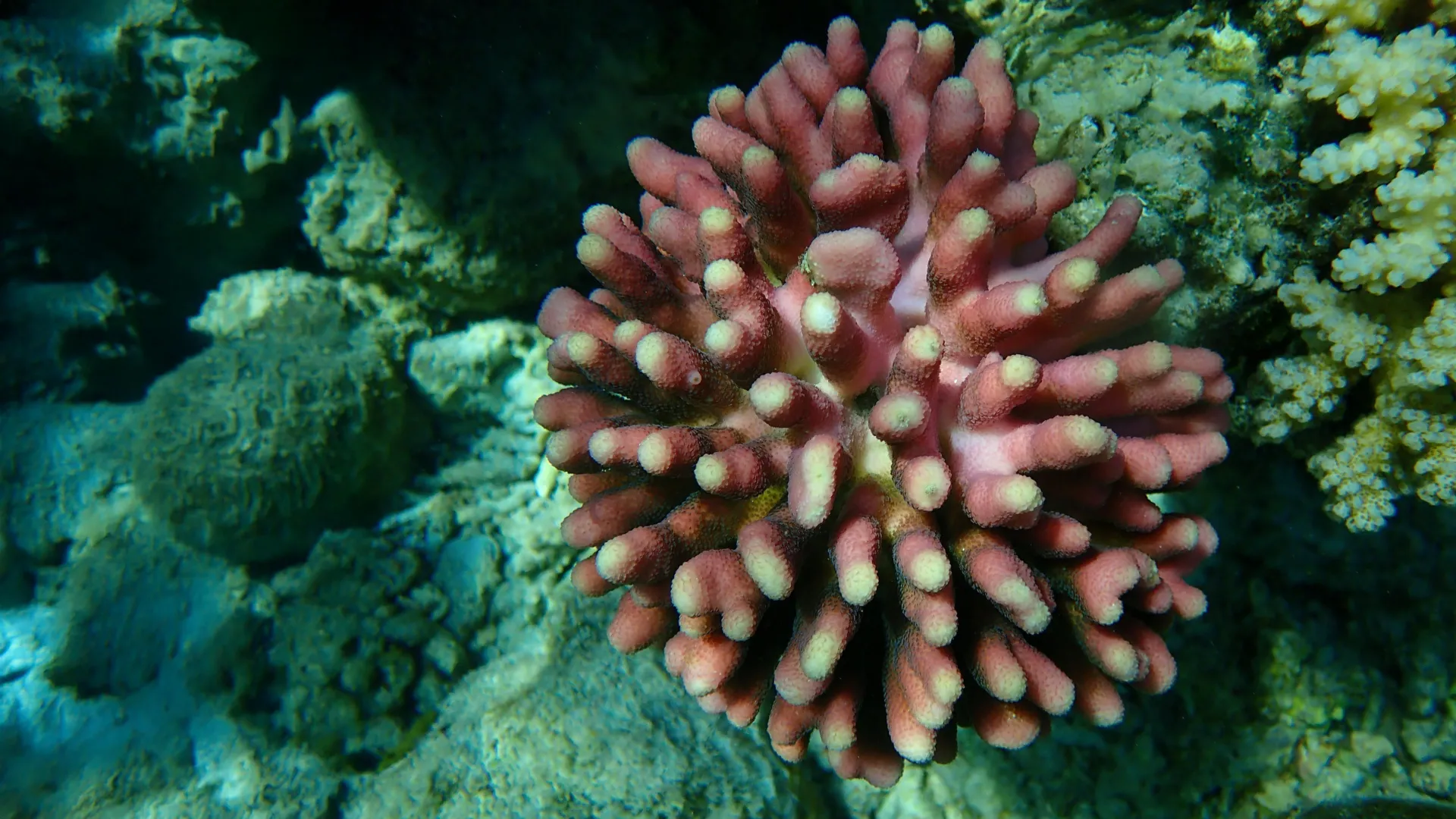
By studying how six months of elevated ocean temperatures would affect a species of coral from the northern Red Sea called Stylophora pistillata, scientists found that although these organisms can certainly survive in conditions that mimic future warming trends, they don’t thrive.

Stylophora pistillata tend to be tolerant of high ocean temperatures, but when continuously exposed to temperatures of 27.5 and 30 degrees Celsius (81.5 and 86 degrees Fahrenheit) — baseline warming expected in tropical oceans by 2050 and 2100 — scientists saw various changes in coral growth, metabolic rates, and even energy reserves. For instance, coral in 27.5 degrees Celsius waters survived, but were 30% smaller than their control group; those placed in 30 degrees Celsius waters wound up being 70% smaller.

“In theory, if corals in the wild at these temperatures are smaller, reefs might not be as diverse and may not be able to support as much marine life,” said Ann Marie Hulver, lead author of the study and a former graduate student and postdoctoral scholar in earth sciences at The Ohio State University. “This could have adverse effects on people that depend on the reef for tourism, fishing or food.”

Overall, the team’s results suggest that even the most thermally tolerant coral species may suffer in their inability to overcome the consequences of warming seas.

The study was published on September 3 in the journal Science of the Total Environment.

While current predictions for coral reefs are dire, there is some good news. During the first 11 weeks of the experiment, researchers saw that corals were only minimally affected by elevated baseline temperatures. Instead, it was the cumulative impact of chronic high temperatures that compromised coral growth and caused them to experience a higher metabolic demand.

The coral later recovered after being exposed for a month to 25 degree Celsius waters, but had a dark pigmentation compared to corals that were never heated. This discovery implies that despite facing ever longer periods of threat from high ocean temperatures in the summer months, resilient coral like S. pistillata can bounce back when waters cool in the winter, researchers say.

Still, as ocean temperatures are expected to increase by 3 degrees Celsius by 2100, expecting coral reefs to predictably bend to projected climate models can be difficult, according to the researchers.

This team’s research does paint a more detailed picture of how coral reefs may look and function in the next 50 years, said Andrea Grottoli, co-author of the study and a professor in earth sciences at Ohio State.

“Survival is certainly the No. 1 important thing for coral, but when they’re physiologically compromised, they can’t do that forever,” said Grottoli. “So there’s a limit to how long these resilient corals can cope with an ever increasing warming ocean.”

Gaining a more complex understanding of how warming waters can alter coral growth and feeding patterns may also better inform long-term conservation efforts, said Grottoli.

“Conservation efforts could focus on areas where resilient coral are present and create protected sanctuaries so that there are some ecosystems that grow as high-probability-success reefs for the future,” she said.

For now, all coral reefs are still in desperate need of protection, researchers note. To that end, Hulver imagines future work could be aimed at investigating the resilience of similar species of coral, including replicating this experiment to determine if sustained warming might cause trade-offs in other biological processes, such as reproduction.

“For coral, six months is still a very small snapshot of their lives,” said Hulver. “We’ll have to keep on studying them.”

Other Ohio state co-authors include Shannon Dixon and Agustí Muñoz-Garcia as well as Éric Béraud and Christine Ferrier-Pagès from the Centre Scientifique de Monaco, and Aurélie Moya, Rachel Alderdice and Christian R Voolstra from the University of Konstanz. The study was supported by the National Science Foundation and the German Research Foundation.

CLICK HERE FOR MORE INFORMATION

https://www.sciencedaily.com/releases/2025/09/250905112308.htm

Scientists fear the Atlantic’s great ocean conveyor could shut down

Source:Potsdam Institute for Climate Impact Research (PIK)

Summary:A new study projects that the Atlantic Meridional Overturning Circulation (AMOC)—the system of currents that includes the Gulf Stream—could shut down after 2100 under high-emission scenarios. This shutdown would drastically reduce heat transport northward, leaving Europe vulnerable to extreme winters, summers of drying, and shifts in tropical rainfall. Climate models show the tipping point is linked to collapsing winter convection in the North Atlantic, which weakens vertical mixing and creates a feedback loop that accelerates decline.Share:


FULL STORY


Atlantic’s Great Ocean Conveyor Could Shut Down
Scientists warn the AMOC could collapse after 2100, unleashing extreme winters, shifting rainfall, and climate upheaval. Early signals show the system weakening, making emission cuts vital to slow the risk. Credit: Shutterstock

Under high-emission scenarios, the Atlantic Meridional Overturning Circulation (AMOC), a key system of ocean currents that also includes the Gulf Stream, could shut down after the year 2100. This is the conclusion of a new study, with contributions by the Potsdam Institute for Climate Impact Research (PIK). The shutdown would cut the ocean’s northward heat supply, causing summer drying and severe winter extremes in northwestern Europe and shifts in tropical rainfall belts.

“Most climate projections stop at 2100. But some of the standard models of the IPCC – the Intergovernmental Panel on Climate Change – have now run centuries into the future and show very worrying results,” says Sybren Drijfhout from the Royal Netherlands Meteorological Institute, the lead author of the study published in Environmental Research Letters. “The deep overturning in the northern Atlantic slows drastically by 2100 and completely shuts off thereafter in all high-emission scenarios, and even in some intermediate and low-emission scenarios. That shows the shutdown risk is more serious than many people realize.”

Collapse of deep convection in winter as the tipping point 

The AMOC carries sun-warmed tropical water northward near the surface and sends colder, denser water back south at depth. This ocean “conveyor belt” helps keep Europe relatively mild and influences weather patterns worldwide. In the simulations, the tipping point that triggers the AMOC shutdown is a collapse of deep convection in winter in the Labrador, Irminger and Nordic Seas. Global heating reduces winter heat loss from the ocean, because the atmosphere is not cool enough. This starts to weaken the vertical mixing of ocean waters: The sea surface stays warmer and lighter, making it less prone to sinking and mixing with deeper waters. This weakens the AMOC, resulting in less warm, salty water flowing northward.

In northern regions, then, surface waters become cooler and less saline, and this reduced salinity makes the surface water even lighter and less likely to sink. This creates a self-reinforcing feedback loop, triggered by atmospheric warming but perpetuated by weakened currents and water desalination.

“In the simulations, the tipping point in key North Atlantic seas typically occurs in the next few decades, which is very concerning,” says Stefan Rahmstorf, Head of PIK’s Earth System Analysis research department and co-author of the study. After the tipping point the shutdown of the AMOC becomes inevitable due to a self-amplifying feedback. The heat released by the far North Atlantic then drops to less than 20 percent of the present amount, in some models almost to zero, according to the study.

Lead author Drijfhout adds that “recent observations in these deep convection regions already show a downward trend over the past five to ten years. It could be variability, but it is consistent with the models’ projections.”

It is crucial to cut emissions fast

To arrive at these results, the research team analyzed CMIP6 (Coupled Model Intercomparison Project) simulations, which were used in the latest IPCC Assessment Report, with extended time horizons to years from 2300 to 2500. In all nine high-emission simulations, the models evolve into a weak, shallow circulation state with the deep overturning shutting down; this result is produced in some intermediate and low-emission simulations as well. In every case, this change follows a mid-century collapse of the deep convection in North Atlantic seas.

“A drastic weakening and shutdown of this ocean current system would have severe consequences worldwide,” PIK researcher Rahmstorf points out. “In the models, the currents fully wind down 50 to 100 years after the tipping point is breached. But this may well underestimate the risk: these standard models do not include the extra fresh water from ice loss in Greenland, which would likely push the system even further. This is why it is crucial to cut emissions fast. It would greatly reduce the risk of an AMOC shutdown, even though it is too late to eliminate it completely.”

CLICK HERE FOR MORE INFORMATION

https://www.sciencedaily.com/releases/2025/08/250830001201.htm

Tiny creatures, massive impact: How zooplankton store 65 million tonnes of carbon annually

Summary:Zooplankton like copepods aren’t just fish food—they’re carbon-hauling powerhouses. By diving deep into the ocean each winter, they’re secretly stashing 65 million tonnes of carbon far below the surface, helping fight climate change in a way scientists are only just starting to understand.

Each year, swarms of tiny zooplankton dive deep and silently trap millions of tons of carbon in the ocean’s depths, a natural climate solution we’ve barely noticed until now. Credit: Shutterstock

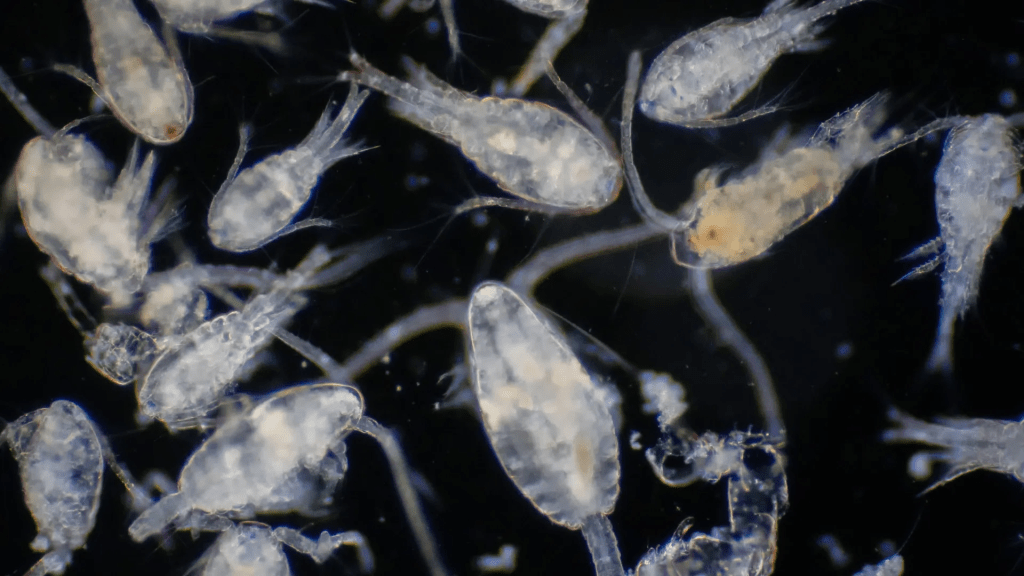
A groundbreaking study has revealed that small but mighty zooplankton — including copepods, krill, and salps — are key players in the Southern Ocean’s ability to absorb and store carbon.

Led by an international team of researchers, and published in Limnology and Oceanography, the study quantifies for the first time how these tiny creatures collectively enhance carbon sequestration through their seasonal, vertical migrations.

The Southern Ocean is a key region for carbon storage. Traditional thinking is that the carbon storage in the Southern Ocean is dominated by gravitational sinking of detritus produced by large zooplankton grazers, such as krill.

This new research concerns another more recently described process called the ‘seasonal migrant pump’. This process sees zooplankton migrate each year from surface waters to depths below 500m, storing carbon via their respiration and mortality during this deep overwintering phase.

This figure shows the traditional view of how zooplankton transport carbon to depth (left panel) by eating phytoplankton in surface waters in summer, whereby their waste material (Particulate Organic Carbon, POC) sinks passively to great depth, thereby storing the carbon for thousands of years. This new study shows that a winter process known as the ‘seasonal migrant pump’ also leads to a substantial deep carbon storage (right panel). The zooplankton migrate downwards in autumn to overwinter below 500m where their respiration and death directly inject around 65 million tonnes of carbon annually into the deep ocean.

The team first built a big database of zooplankton collected in thousands of net hauls from around the Southern Ocean, dating from the 1920s to the present day. From these they quantified the extent of the zooplankton’s annual descent to overwinter at great depths, where they respire CO2 — directly and efficiently injecting carbon into the deep ocean.

Key Findings: 

  • 65 Million Tonnes of Carbon Stored Annually: The seasonal, vertical migration of zooplankton transports roughly 65 million tonnes of carbon to depths below 500 meters.
  • Copepods Dominate the ‘Seasonal Migrant Pump’: Mesozooplankton (mainly small crustaceans called copepods) account for 80% of this carbon flux, while krill and salps contribute 14% and 6%, respectively.
  • Climate Implications: The Southern Ocean is a critical carbon sink, but current Earth System Models overlook this zooplankton-driven process. As warming shifts species distributions (e.g., declining krill, increasing copepods, changing food sources), the carbon storage dynamics may change dramatically.

Why does the ‘Seasonal Migrant Pump’ matter: 

The Southern Ocean absorbs approximately 40% of all human-made CO2 taken up by oceans, yet the role of zooplankton has been underestimated. Unlike sinking detritus, which removes both carbon and essential nutrients like iron, migrating zooplankton efficiently inject carbon into the deep ocean while recycling nutrients near the surface. This ‘Seasonal Migrant Pump’ could become even more important as marine ecosystems respond to climate change.

Dr Guang Yang, first author and Marine Ecologist from Institute of Oceanology, Chinese Academy of Sciences, said: “Our work shows that zooplankton are unsung heroes of carbon sequestration. Their seasonal migrations create a massive, previously unquantified carbon flux — one that models must now incorporate.”

Prof. Angus Atkinson MBE, co-author and Senior Marine Ecologist at Plymouth Marine Laboratory, added: “This study is the first to estimate the total magnitude of this carbon storage mechanism. It shows the value of large data compilations to unlock new insights and to get an overview of the relative importance of carbon storage mechanisms.”

Dr Katrin Schmidt, co-author and Marine Ecologist at the University of Plymouth, said: “The study shows the ‘seasonal migrant pump’ as an important pathway of natural carbon sequestration in polar regions. Protecting these migrants and their habitats will help to mitigate climate change.”

Dr Jen Freer, co-author and Ecological Modeller at the British Antarctic Survey (BAS), added: “Krill are famous for their role in the Antarctic food web, but we find that copepods significantly dominate carbon storage overwinter. This has big implications as the ocean warms and their habitats may shift.”

This research stresses the urgent need for updates to climate models to include zooplankton-driven carbon fluxes. It also highlights the necessity to manage and protect Southern Ocean ecosystems, where industrial fishing and warming threaten krill populations — a key species that supports both carbon export and Antarctica’s unique biodiversity.

This international study was a collaboration among scientists from China, UK, and Canada, and leverages a century’s worth of data on zooplankton biomass, distribution, respiration and mortality across the Southern Ocean.

CLICK HERE FOR MORE INFORMATION

https://www.sciencedaily.com/releases/2025/06/250627021851.htm

The oceans are overheating—and scientists say a climate tipping point may be here

Summary:In 2023, the world’s oceans experienced the most intense and widespread marine heatwaves ever recorded, with some events persisting for over 500 days and covering nearly the entire globe. These searing ocean temperatures are causing mass coral bleaching and threatening fisheries, while also signaling deeper, system-wide climate changes.

Marine heatwaves surged to record-breaking levels in 2023, disrupting ecosystems and fisheries across 96% of the ocean. Scientists warn this may mark the beginning of a fundamental climate shift. Credit: Shutterstock

The global marine heatwaves (MHWs) of 2023 were unprecedented in their intensity, persistence, and scale, according to a new study. The findings provide insights into the region-specific drivers of these events, linking them to broader changes in the planet’s climate system. They may also portend an emerging climate tipping point. Marine heatwaves (MHWs) are intense and prolonged episodes of unusually warm ocean temperatures.

These events pose severe threats to marine ecosystems, often resulting in widespread coral bleaching and mass mortality events. They also carry serious economic consequences by disrupting fisheries and aquaculture. It’s widely understood that human-driven climate change is driving a rapid increase in the frequency and intensity of MHWs.

In 2023, regions across the globe, including the North Atlantic, Tropical Pacific, South Pacific, and North Pacific, experienced extreme MHWs. However, the causes underlying the onset, persistence, and intensification of widespread MHWs remain poorly understood.

To better understand the MHWs of 2023, Tianyun Dong and colleagues conducted a global analysis using combined satellite observations and ocean reanalysis data, including those from the ECCO2 (Estimating the Circulation and Climate of the Ocean-Phase II) high-resolution project.

According to the findings, MHWs of 2023 set new records for intensity, duration, and geographic extent, lasting four times the historical average and covering 96% of the global ocean surface. Regionally, the most intense warming occurred in the North Atlantic, Tropical Eastern Pacific, North Pacific, and Southwest Pacific, collectively accounting for 90% of the oceanic heating anomalies.

The researchers show that the North Atlantic MHW, which began as early as mid-2022, persisted for 525 days, while the Southwest Pacific event broke prior records with its vast spatial extent and prolonged duration. What’s more, in the Tropical Eastern Pacific, temperature anomalies peaked at 1.63 degrees Celsius during the onset of El Niño.

Using a mixed-layer heat budget analysis, the scientists discovered diverse regional drivers contributing to the formation and persistence of these events, including increased solar radiation due to reduced cloud cover, weakened winds, and ocean current anomalies. According to the researchers, the 2023 MHWs may mark a fundamental shift in ocean-atmosphere dynamics, potentially serving as an early warning of an approaching tipping point in Earth’s climate system.

CLICK HERE FOR MORE INFORMATION

https://www.sciencedaily.com/releases/2025/07/250724232417.htm

Frozen for 12,000 years, this Alpine ice core captures the rise of civilization

Summary:An ancient glacier high in the French Alps has revealed the oldest known ice in Western Europe—dating back over 12,000 years to the last Ice Age. This frozen archive, meticulously analyzed by scientists, captures a complete chemical and atmospheric record spanning humanity’s transition from hunter-gatherers to modern industry. The core contains stories of erupting volcanoes, changing forests, Saharan dust storms, and even economic impacts across history. It offers a rare glimpse into both natural climate transitions and human influence on the atmosphere, holding vital clues for understanding past and future climate change.Share:


FULL STORY


Alps Glacier Hides Secrets from the Last Ice Age
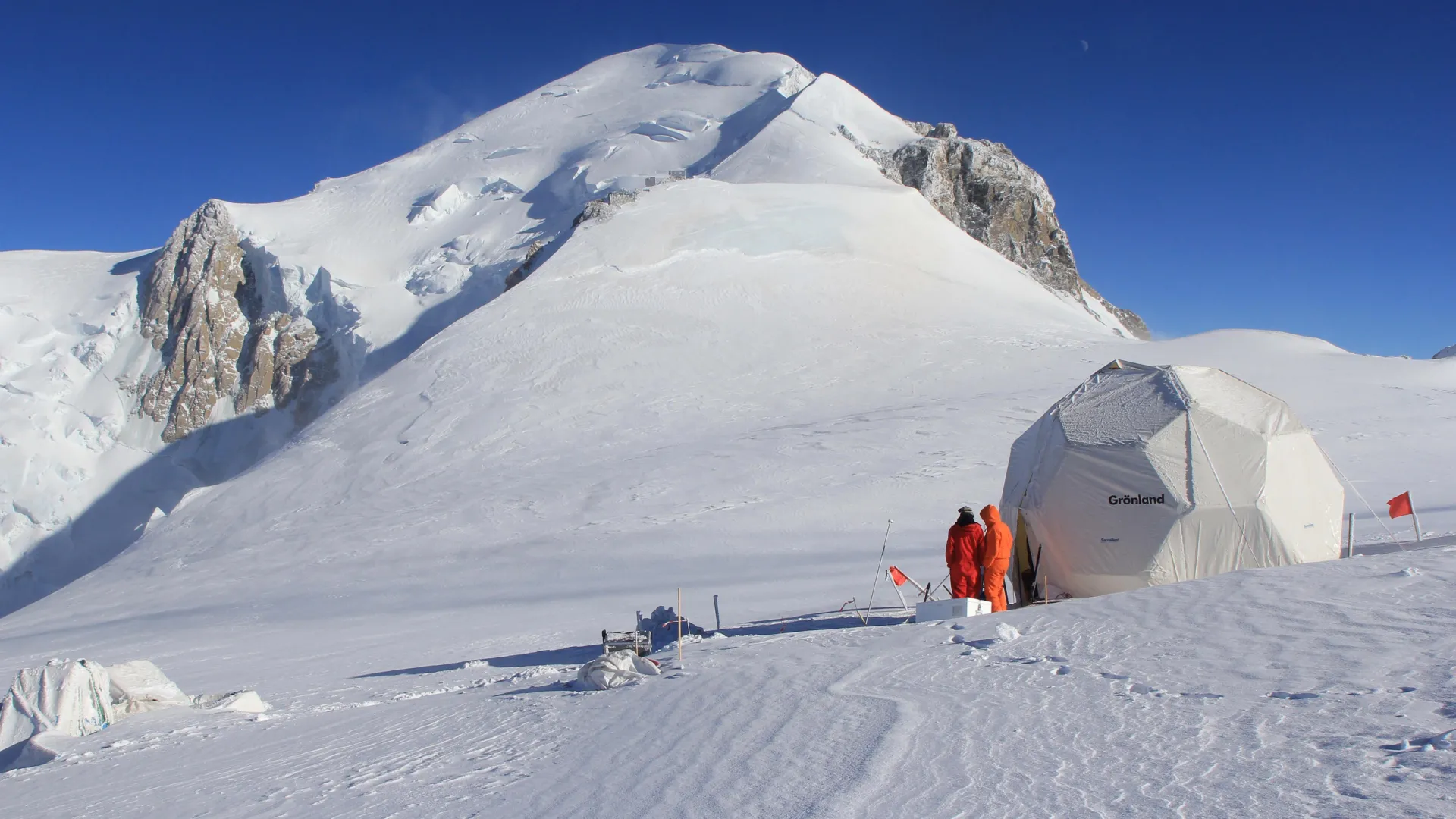
The 1999 expedition team collecting the ice core from Dome du Goûter on the shoulder of Mont Blanc. Credit: LGGE/OSUG, Bruno Jourdain

Glaciers hold layers of history preserved in ice, offering unique insights into Earth’s past that can also help us interpret the future. Trapped amidst the frozen water are microscopic deposits of dust, pollen, and even pollutants that scientists can use to examine environmental changes through time. DRI’s Ice Core Lab has used this technique to highlight atmospheric lead pollution and economic turbulence in Ancient Rome. Now, their latest study found that a glacier in the French Alps dates back to the last Ice Age – the oldest known glacier ice in the region. Serving as a record that spans through the development of agriculture in Western Europe and the advent of industrialization, the glacier holds insights into an era of rapid change.

The new study, published in the June issue of PNAS Nexus, examines a 40-meter long ice core from Mont Blanc’s Dôme du Goûter. Using radiocarbon dating techniques, the research team found that the glacier provides an intact record of aerosols and climate dating back at least 12,000 years. Aerosols are small droplets and particles in the air such as desert dust, sea salts, sulfur from volcanic eruptions, soot from forest fires, as well as pollutants and other emissions from human activities. Glacier ice offers the most detailed record of past atmospheric aerosols, and this is the first ice core record from the European region that extends back to the last climatic transition. Aerosols play an important role in regional climate through their interactions with clouds and solar radiation, and the insights offered by the ice record can help inform accurate climate modeling for both the past and future.

“For the first time, we have a fairly complete Alpine record of atmospheric and precipitation chemistry going all the way back to the Mesolithic Period,” said Joe McConnell, Director of DRI’s Ice Core lab who co-authored the study. “And that’s a big deal, because you have two major climate states – glacial and interglacial – and to get a record of atmospheric precipitation chemistry across that huge climate change tells you the most extreme natural aerosol concentrations that you’d expect. On top of that, you have humans going from hunter-gatherers with a very low population through the development of agriculture, domestication of animals, mining, etc, and then a vast population increase and the clearing of land. All of that is happening around this ice core site. It spans the full range of natural and anthropogenic change, and it’s right in the center of Europe – where much of Western civilization evolved.”

The glacier’s location in the Alps is important because it serves as a more intact record of Europe’s local climate than those found in distant Arctic ice. Many aerosols play important roles in driving Earth’s climate, so scientists would like to know how sources and concentrations in the air have varied in the past.

“Ice cores collected from glaciers and ice sheets can provide such information, but since these droplets and particles stay in the air only for a few days to maybe a week, records developed from glaciers close to the sources often are the most informative,” said lead author, Michel Legrand.

The ice core analyzed in this study was first collected in 1999 by some of the study’s French authors. It was stored in a freezer in France for more than 20 years before McConnell and his team brought it to DRI’s Ice Core Lab in Reno, Nevada, where specialized equipment and methods known as continuous flow analysis allowed it to be melted down and the chemistry measured, layer by icy layer.

“Determining what year or period of time a layer in the ice represents can be challenging, so here we used a unique combination of radiometric methods to establish the chronology in the ice,” said coauthor Werner Aeschbach.

“We were relieved to find that even under the unusually warm climate of the 20th century, the cold temperatures at over 14,000 feet near Mont Blanc’s peak had preserved the glacier so that the ice record hadn’t yet been impacted by melting,” said co-author Nathan Chellman.

The historic age of the ice at the base of the core, around 40 meters deep into the glacier, surprised the researchers. Another core collected from a glacier located less than 100 meters away at Col du Dome was found to contain ice only about a century old, despite being much deeper. The scientists attribute this to the strong wind patterns found on Mont Blanc.

“It’s exciting to find the first ice core from the European Alps containing an intact record of climate that extends back through the current ten-thousand-year warm period and into the very different climate of the last ice age,” said coauthor Susanne Preunkert, who was a member of the field team that collected the ice core in 1999.

Insights into Europe’s Past Climate 

The uniquely detailed ice record revealed a temperature difference of about 3 degrees Celsius between the last Ice Age and the current Holocene Epoch. Using pollen records embedded in the ice, reconstructions of summer temperatures during the last Ice Age were about 2 degrees Celsius cooler throughout western Europe, and about 3.5 degrees Celsius cooler in the Alps.

The phosphorous record also told researchers the story of vegetation changes in the region over the last 12,000 years. Phosphorous concentrations in the ice were low during the last Ice Age, increased dramatically during the early to mid-Holocene, and then decreased steadily into the late Holocene. This is consistent with the spread of forests under the warmer climate, and their decline following the proliferation of modern society and the land-clearing that resulted from agriculture and the spread of industry.

Records of sea salt also helped the researchers examine changes in historical wind patterns. The ice core revealed higher rates of sea salt deposition during the last Ice Age that may have resulted from stronger westerly winds offshore of western Europe. Sea salt aerosols can scatter solar radiation back to space and affect climate via their impacts on cloud droplet, size, and albedo, making them important drivers of the regional climate.

The ice record tells a more dramatic story for the changes in dust aerosols during the climatic shift. Dust serves as an important driver of climate by both absorbing and scattering incoming solar radiation and outgoing planetary radiation, and impacts cloud formation and precipitation by acting as cloud condensation nuclei. During the last Ice Age, dust was found to be about 8-fold higher compared to the Holocene. This contradicts the mere doubling of dust aerosols between warm and cold climate stages in Europe simulated by prior climate models. The difference may be explained by increased plumes of Saharan dust depositing in Europe, which remains the main source of dust in the region. The ice core record is consistent with other paleoclimate records that suggest more arid conditions over the Mediterranean during colder climates.

The 1999 expedition team collecting the ice core from Dome du Goûter on the shoulder of Mont Blanc. Credit: LGGE/OSUG, Bruno Jourdain

Uncovering More Stories Entombed in the Ice 

This study is only the beginning of the Mont Blanc ice record’s story, as the researchers plan to continue analyzing it for indicators of human history. The first step in uncovering every ice core’s record is to use isotopes and radiocarbon dating to establish how old each layer of ice is. Now, with that information, the scientists can take an even deeper look at what it can tell us about past human civilizations and their impact on the environment.

“Now we can start to interpret all these other records that we have of lead and arsenic and other things like that, in terms of human history,” said McConnell.

The information can also be used to help interpret how changes in aerosols impact the climate and improve modeling to help us understand current and future climatic shifts.

“If you’re really going to go back and examine all possible climate states, past and future, you need a model that captures true climate variability,” McConnell said. “It’s a laudable goal, but to evaluate how good the models are, you’ve got to be able to compare them to observations, right? And that’s where the ice cores come in.”

CLICK HERE FOR MORE INFORMATION

https://www.sciencedaily.com/releases/2025/07/250716000858.htm

Scientists thought the Arctic was sealed in ice — they were wrong

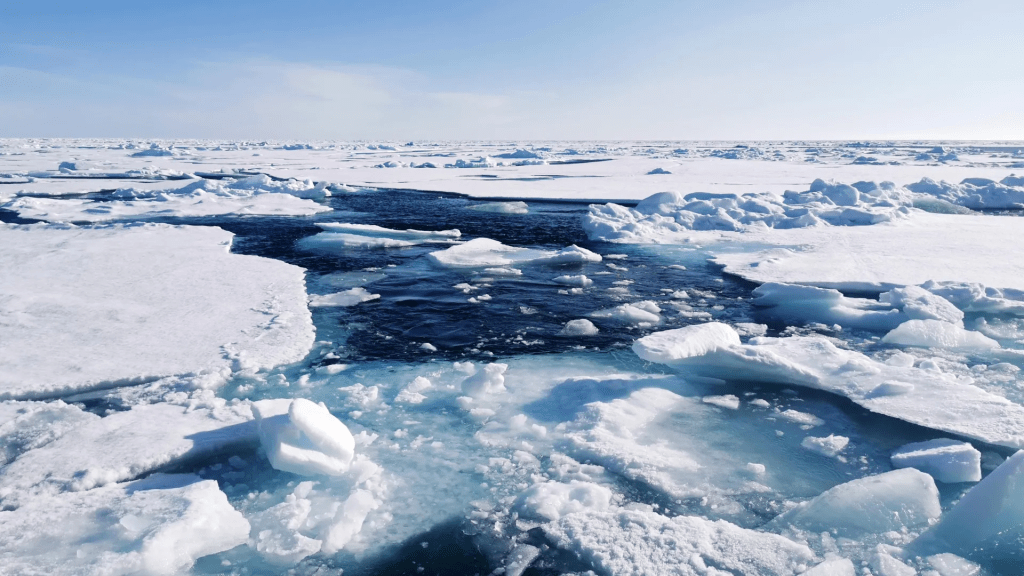
By analyzing ancient ocean seafloor sediments and running detailed climate simulations, the research team found no evidence for the presence of a thick ice shelf. Instead, this study paints a picture of an Arctic that, despite being cold and icy, still had open water areas that allowed for biological activity and ocean circulation. Credit: Morven Muilwijk

For years, scientists have debated whether a giant thick ice shelf once covered the entire Arctic Ocean during the coldest ice ages. Now a new study published in Science Advances, challenges this idea as the research team found no evidence for the presence of a massive ~1km ice shelf. Instead, the Arctic Ocean appears to have been covered by seasonal sea ice — leaving open water and life-sustaining conditions even during the harshest periods of cold periods during the last 750,000 years. This discovery gives insights crucial for our understanding of how the Arctic has responded to climate change in the past — and how it might behave in the future.

Tiny traces of life in ancient mud

Led by the European Research Council Synergy Grant project Into the Blue — i2B, the research team studied sediment cores collected from the seafloor of the central Nordic Seas and Yermak Plateau, north of Svalbard. These cores hold tiny chemical fingerprints from algae that lived in the ocean long ago. Some of these algae only grow in open water, while others thrive under seasonal sea ice that forms and melts each year.

“Our sediment cores show that marine life was active even during the coldest times,” said Jochen Knies, lead author of the study, based at UiT The Arctic University of Norway and co-lead of the Into The Blue — i2B project. “That tells us there must have been light and open water at the surface. You wouldn’t see that if the entire Arctic was locked under a kilometre-thick slab of ice.”

One of the key indicators the team looked for was a molecule called IP25, which is produced by algae that live in seasonal sea ice. Its regular appearance in the sediments shows that sea ice came and went with the seasons, rather than staying frozen solid all year round.

Simulating ancient Arctic climates

To test the findings based on the geological records, the research team used the AWI Earth System Model — a high-resolution computer model — to simulate Arctic conditions during two especially cold periods: the Last Glacial Maximum around 21,000 years ago, and a deeper freeze about 140,000 years ago when large ice sheets covered a lot of the Arctic.

“The models support what we found in the sediments,” said Knies. “Even during these extreme glaciations, warm Atlantic water still flowed into the Arctic gateway. This helped keep some parts of the ocean from freezing over completely.”

The models also showed that the ice wasn’t static. Instead, it shifted with the seasons, creating openings in the ice where light could reach the water — and where life could continue to thrive. This research not only reshapes our view of past Arctic climates but also has implications for future climate predictions. Understanding how sea ice and ocean circulation responded to past climate extremes can improve models that project future changes in a warming world.

“These reconstructions help us understand what’s possible — and what’s not — when it comes to ice cover and ocean dynamics,” said Gerrit Lohmann, co-author of this study, based at Alfred Wegener Institute, Helmholtz Centre for Polar and Marine Research (AWI) and co-lead of Into The Blue — i2B. “That matters when trying to anticipate how ice sheets and sea ice might behave in the future.”

Re-thinking the giant ice shelf theory

Some scientists have argued that features on the Arctic seafloor suggest that a huge, grounded ice shelf once covered the entire ocean. But this new study offers another explanation.

“There may have been short-lived ice shelves in some parts of the Arctic during especially severe cold phases,” said Knies. “But we don’t see any sign of a single, massive ice shelf that covered everything for thousands of years.”

One possible exception could have occurred about 650,000 years ago, when biological activity in the sediment record dropped sharply. But even then, the evidence points to a temporary event, not a long-lasting frozen lid over the Arctic.

Understanding the Arctic’s future

The study sheds new light on how the Arctic has behaved under extreme conditions in the past. This matters because the Arctic is changing rapidly today. Knowing how sea ice and ocean circulation responded to past climate shifts helps scientists understand what might lie ahead.

“These past patterns help us understand what’s possible in future scenarios,” said Knies. “We need to know how the Arctic behaves under stress — and what tipping points to watch for — as the Arctic responds to a warming world.”

The full paper, “Seasonal sea ice characterized the glacial Arctic-Atlantic gateway over the past 750,000 years,” is available in Science Advances.

This research is part of the European Research Council Synergy Grant project Into the Blue — i2B and the Research Council of Norway Centre of Excellence, iC3: Centre for ice, Cryosphere, Carbon, and Climate.

CLICK HERE FOR MORE INFORMATION

https://www.sciencedaily.com/releases/2025/07/250704235554.htm