Alaska’s Salmon River Once Ran Pure and Clear. Now, It’s Orange Because of Climate Change.

In 1977, author John McPhee wrote his nonfiction classic “Coming into the Country.” It describes how he and a group of men canoed the Salmon River in the Brooks Range of Alaska to assess its potential for Wild and Scenic status—a designation that would provide long-term federal protection. On their trip, they found abundant Arctic grayling (Thymallus arcticus), chum salmon (Oncorhynchus keta)—and as McPhee writes, “the clearest, purest water I have ever seen flowing over rocks,” which allowed them to “see down 15 feet in pools.”

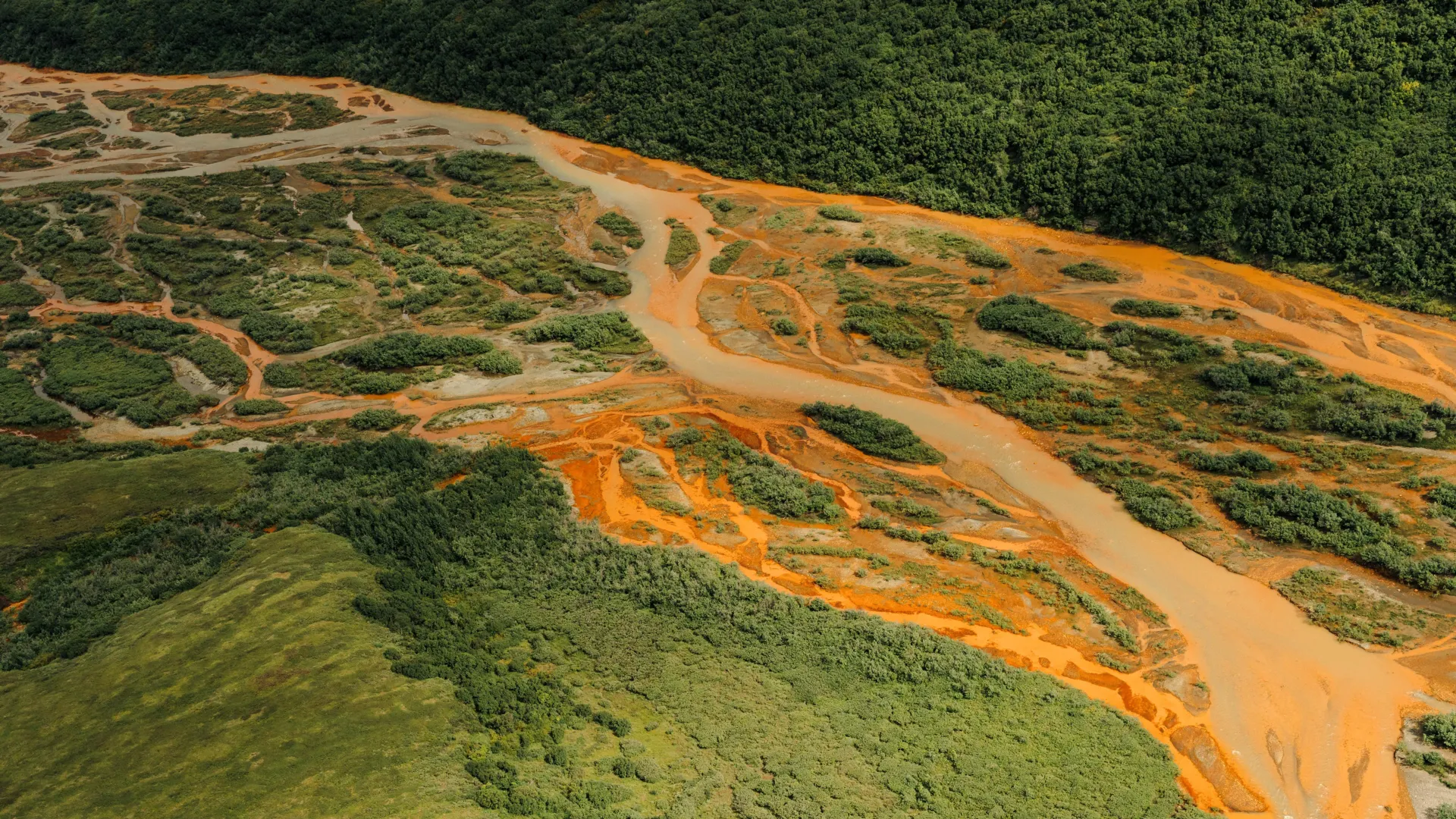
In Alaska’s Brooks Range, rivers once clear enough to drink from now run orange and hazy with toxic metals.  |  Credit: Taylor Roades

Not anymore. These days, the Salmon River runs orange—contaminated with toxic metals. Not because of acid mine drainage—although the water has the same ocher color—but because of climate change. According to new research from the University of California, Riverside, permafrost—the frozen Arctic soil that has locked away minerals for thousands of years—is beginning to thaw with a warming planet. As it thaws, water and oxygen creep into the exposed soil, triggering the breakdown of sulfide-rich rocks and creating sulfuric acid that leaches naturally occurring metals like iron, cadmium, and aluminum from rocks into the river, which poisons fish and damages ecosystems. 

According to a press release, the team’s analysis confirmed that thawing permafrost was unleashing geochemical reactions that oxidize sulfide-rich rocks like pyrite, generating acidity and mobilizing a wide suite of metals, including cadmium, which accumulates in fish organs and could affect animals like bears and birds that eat fish. The authors say that levels for several of the metals exceed EPA toxicity thresholds for aquatic life. Additionally, the cloudy water reduces the amount of light reaching the bottom of the river and smothers insect larvae that salmon and other fish eat.

According to the study, the Salmon River is not alone. A recent inventory in the same mountain range identified 75 streams that have recently turned orange and turbid. The authors say it’s likely happening across the Arctic. Wherever there’s the right kind of rock and thawing permafrost, the process can start. Unfortunately, co-author, Tim Lyons, said once it starts, it can’t be stopped, calling it “another irreversible shift driven by a warming planet.”

The study was published in the Proceedings of the National Academy of Sciences.

CLICK HERE FOR MORE INFORMATION

https://h2oradio.org/this-week-in-water/a-high-five-for-the-high-seas
Chesapeake Bay pollution down, but water quality still short of goals, CBF says

By Christian Olaniran

Chesapeake Bay pollution down, but water quality still short of goals, CBF says

Pollution entering the Chesapeake Bay has dropped, but water quality remains below restoration targets, according to the Chesapeake Bay Foundation.

In 2023 nitrogen, phosphorus and sediment levels were significantly lower than the previous year, according to the CBF. Nitrogen fell 21.7%, phosphorus 26% and sediment 15.5%. These three pollutants are the leading contributors to the bay’s poor health.

The largest reductions came from the Pamunkey, Patuxent, Potomac and Susquehanna rivers. By contrast, nitrogen rose in the Appomattox, Mattaponi and Rappahannock rivers, where excess levels can trigger algae blooms that sap oxygen and threaten fish and crabs.

How pollution progress is measured

Researchers measure progress through the Bay TMDL Indicator, which uses modeled data to track how far pollution reductions move the bay toward a healthier ecosystem. To meet water quality goals, nitrogen must be cut by about 145 million pounds per year and phosphorus by about 9 million pounds.

Since 2009, projects such as tree planting, wastewater treatment upgrades and improved farming practices have reduced roughly 82 million pounds of nitrogen and 1.6 million pounds of phosphorus. 

Those efforts are expected to cut an additional 27 million pounds of nitrogen and 4 million pounds of phosphorus annually in the years ahead, according to the CBF. 

Despite these reductions, the University of Maryland Center for Environmental Science gave the bay a “C” in its 2024 annual report, down from a C+ the previous year. 

The Maryland Department of Natural Resources also reported last month that underwater grasses in the state’s portion of the bay declined slightly in 2024. Both measures are considered key indicators of water quality.

Restoration efforts underway

Maryland continues to invest in bay improvements. In December, nearly $400,000 in federal grants went to five Maryland-based projects focused on environmental, cultural and historical conservation in the watershed.

Oyster restoration is also progressing. Oysters filter up to 50 gallons of water per day and provide habitat for small fish, worms and other prey species.

The Chesapeake Bay Program said in July it is on track to meet its 2025 goal of restoring oyster reefs in 10 tributaries, as set by the 2014 Chesapeake Bay Watershed Agreement.

Maryland’s restoration work includes Harris Creek, the Little Choptank, Tred Avon, Upper St. Mary’s and Manokin rivers. Virginia has completed restorations in its five tributaries and an additional site, while Maryland is finishing work in the Manokin.

CLICK HERE FOR MORE INFORMATION

https://www.cbsnews.com/baltimore/news/chesapeake-bay-pollution-water-quality-cbf-goals/?intcid=CNM-00-10abd1h

Why Alaska’s salmon streams are suddenly bleeding orange

Warming soil unleashes metals deadly to fish and food chains.

Source:University of California – Riverside

Summary:Warming Arctic permafrost is unlocking toxic metals, turning Alaska’s once-clear rivers into orange, acid-laced streams. The shift, eerily similar to mine pollution but entirely natural, threatens fish, ecosystems, and communities that depend on them—with no way to stop the process once it starts.Share:


FULL STORY


Alaska’s Salmon Streams Are Bleeding Orange
The Salmon River in Alaska now runs a rusty orange thanks to metal contaminants unleashed by thawing permafrost. Credit: Taylor Rhoades

In Alaska’s Brooks Range, rivers once clear enough to drink now run orange and hazy with toxic metals. As warming thaws formerly frozen ground, it sets off a chemical chain reaction that is poisoning fish and wreaking havoc on ecosystems.

As the planet warms, a layer of permafrost — permanently frozen Arctic soil that locked away minerals for millennia — is beginning to thaw. Water and oxygen creep into the newly exposed soil, triggering the breakdown of sulfide-rich rocks, and creating sulfuric acid that leaches naturally occurring metals like iron, cadmium, and aluminum from rocks into the river.

Often times, geochemical reactions like these are triggered by mining operations. But that is not the case this time.

“This is what acid mine drainage looks like,” said Tim Lyons, a biogeochemist at the University of California, Riverside. “But here, there’s no mine. The permafrost is thawing and changing the chemistry of the landscape.”

A new paper detailing the severity of the contamination has been published in the Proceedings of the National Academy of Sciences. Though the study focuses on the Salmon River, researchers warn that similar transformations are already underway across dozens of other Arctic watersheds.

“I have worked and traveled in the Brooks Range since 1976, and the recent changes in landforms and water chemistry are truly astounding,” said David Cooper, Colorado State University research scientist and study co-author.

Ecologist Paddy Sullivan of the University of Alaska first noticed the dramatic changes in 2019 while conducting fieldwork on Arctic forests shifting northward — another consequence of climate change. A pilot flying Sullivan into the field warned him the Salmon River hadn’t cleared up after the snowmelt and looked “like sewage.” Alarmed by what he saw, Sullivan joined forces with Lyons, Roman Dial from Alaska Pacific University, and others to investigate the causes and ecological consequences.

Their analysis confirmed that thawing permafrost was unleashing geochemical reactions that oxidize sulfide-rich rocks like pyrite, generating acidity and mobilizing a wide suite of metals, including cadmium, which accumulates in fish organs and could affect animals like bears and birds that eat fish.

In small amounts, metals aren’t necessarily toxic. However, the study shows that levels of metals in the river’s waters exceed U.S. Environmental Protection Agency toxicity thresholds for aquatic life. In addition, the iron-clouded waters reduce the amount of light reaching the bottom of the river and smother insect larvae eaten by the salmon and other fish.

While current metal concentrations in edible fish tissue are not considered hazardous to humans, the changes to the rivers pose indirect but serious threats. Chum salmon, a key subsistence species for many Indigenous communities, might struggle to spawn in gravel beds choked with fine sediment. Other species, such as grayling and Dolly Varden, may also be affected.

“It’s not just a Salmon River story,” Lyons said. “This is happening across the Arctic. Wherever you have the right kind of rock and thawing permafrost, this process can start.”

Unlike mine sites, where acid drainage can be mitigated with buffers or containment systems, these remote watersheds might have hundreds of contamination sources and no such infrastructure. Once the chemical process begins, the only thing that can stop it is recovery of the permafrost.

“There’s no fixing this once it starts,” Lyons said. “It’s another irreversible shift driven by a warming planet.”

The study, funded by the National Science Foundation’s Rapid Response program, highlights the potential danger for other Arctic regions. The researchers would like to help communities and land managers anticipate future impacts and, when possible, prepare for them.

“There are few places left on Earth as untouched as these rivers,” Lyons said. “But even here, far from cities and highways, the fingerprint of global warming is unmistakable. No place is spared.”

CLICK HERE FOR MORE INFORMATION

https://www.sciencedaily.com/releases/2025/09/250918011602.htm