In June, the Trump administration announced that the government’s 15-year-old website, climate.gov, which was the primary source of information about climate change and science, would no longer be updated. Links to the old site redirect viewers to an address at the National Oceanic and Atmospheric Administration (NOAA). As of 2021, the old website was receiving 900,000 visits per month and was a trusted source of information about the climate, according to NPR. The jobs of those who authored stories, created photos, and designed materials were eliminated.
Climate change effects include wildfire, ocean acidification, desertification, and coastal flooding caused by storms and sea level rise. | Credit: CalFire
However, as the Guardianreports, a group of climate communications experts is rebuilding the climate.gov content at climate.us through a new nonprofit. The organization will offer services about climate to others such as local governments that are trying to adapt to global warming. The website is in development, and the organization has a presence on social media accounts like BlueSky and Facebook.
According to Rebecca Lindsey, who was the managing editor of the government’s old site, the new entity includes several of her former federal colleagues, many of whom are grieving over losing not only a job but also a vocation. Lindsey added that there is a need for content that helps people develop climate literacy. Being outside of government gives the new group new opportunities to have fun by using platforms like TikTok.
The organization has launched a crowdfunding effort and hopes to get more permanent operating support from a foundation. Lindsey said that all of the climate information released prior to July 1 is still up on a government site, but you have to know where to look for it.
Meanwhile, the National Weather Service is trying to rapidly hire 450 people, including some meteorologists to fill jobs that were cut by DOGE, or the Department of Government Efficiency. Hundreds of forecasters were cut at NOAA after Trump took office, and there were warnings that there could be dangerous consequences if weather predictions were slowed.
However, applicants for the new meteorologist positions are being asked how they would promote Trump’s agenda by identifying one or two of his executive orders that they find significant, and how they would implement them if hired. Some experts are alarmed that the ideology of a potential weather forecaster could be considered. One told the Associated Press that he questioned whether forecasts would be made better based upon someone’s ideology.
Heat waves are becoming more frequent and intense across the U.S., so perhaps this summer you took a dip in a river to cool off. However, according to new research it might not have been as refreshing as it once was.
Credit: Dillon Groves/Unsplash
A new study from Penn State found that heat waves are happening in rivers too, and they’re accelerating faster than and lasting nearly twice as long as the heat waves in the air. It’s a surprising finding, given that many rivers are fed by snowmelt and underground streams, but the team found that periods of abnormally high temperatures in rivers are becoming more common, more intense, and longer-lasting than they were 40 years ago. Lead author Li Li (李黎) wrote in The Conversation that the increased heat puts stress on aquatic ecosystems and can also raise the cost of treating drinking water.
The team collected river data at nearly 1,500 sites in the contiguous United States between 1980 and 2022. They found that temperatures rose above 59 °F (15 °C)—a threshold that can stress many species—at 82 percent of study areas for an average of 11.6 days per year. The places where the waters warmed the fastest were in the Northeast, the Rocky Mountains, and Appalachia.
The authors say climate change is driving river heat waves, as rising air temperatures affect water conditions. Changing precipitation patterns with global warming are shrinking winter snowpacks, leaving less meltwater to support river health. Low, slow-moving water warms more easily and holds less oxygen, creating dangerous conditions for aquatic life and increasing the chances of large-scale die-offs. The study adds that human activities, such as dams and agriculture, play a secondary role in shaping how and where rivers are most vulnerable to these impacts.
Microscopic plankton that regulate Earth’s climate and sustain ocean ecosystems take center stage in a new awareness campaign.
Source:Ruđer Bošković Institute
Summary:Coccolithophores, tiny planktonic architects of Earth’s climate, capture carbon, produce oxygen, and leave behind geological records that chronicle our planet’s history. European scientists are uniting to honor them with International Coccolithophore Day on October 10. Their global collaboration highlights groundbreaking research into how these microscopic organisms link ocean chemistry, climate regulation, and carbon storage. The initiative aims to raise awareness that even the smallest ocean dwellers have planetary impact.Share:
FULL STORY
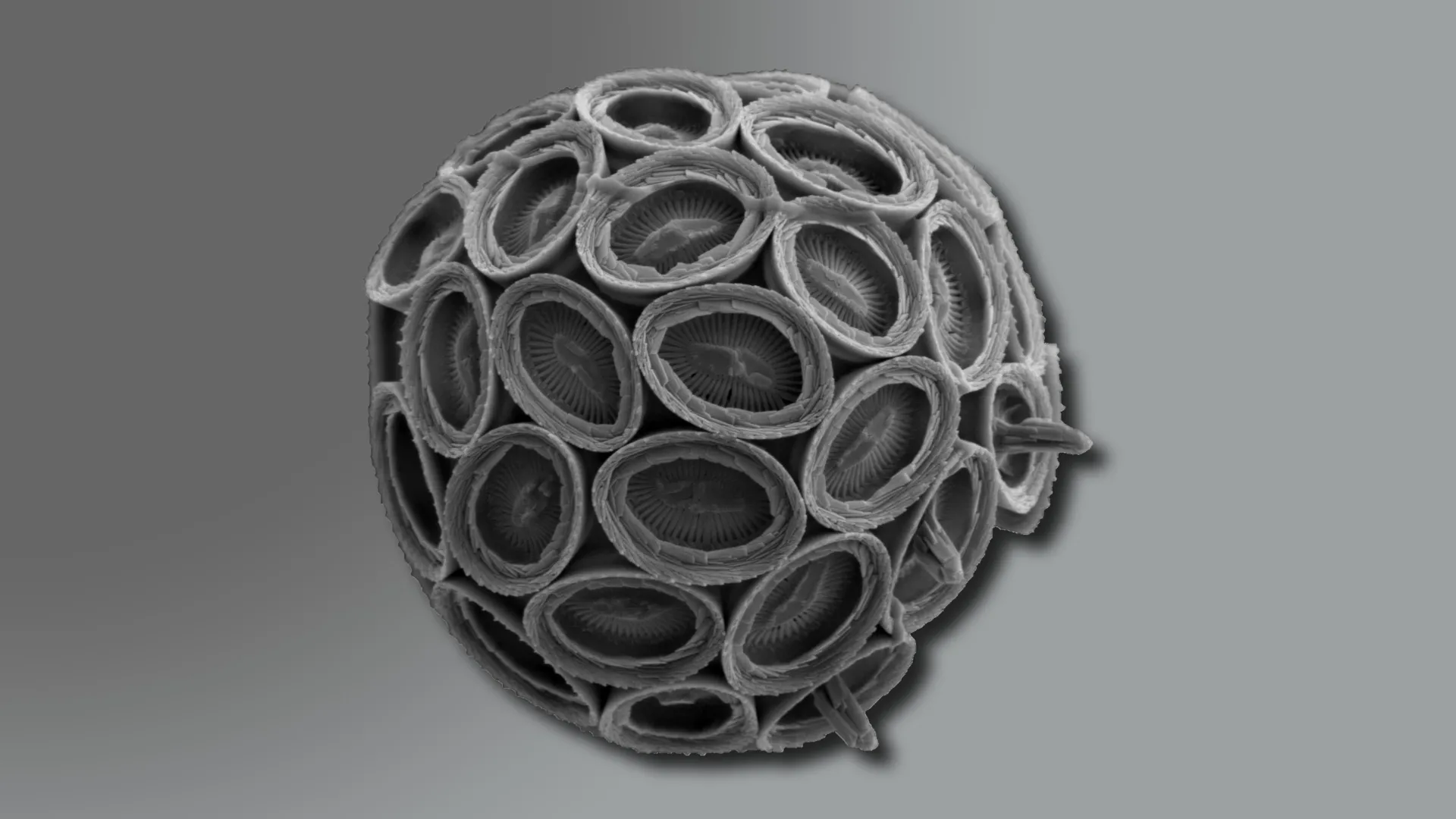
Microscopic view of a coccolithophore (Syracosphaera pulchra), a single-celled ocean alga whose intricate calcium plates (coccoliths) play a role in the global carbon cycle. Credit: Dr. Jelena Godrijan, Ruđer Bošković Institute
Smaller than a grain of dust and shaped like minute discs, coccolithophores are microscopic ocean dwellers with an outsized influence on the planet’s climate. These tiny algae remove carbon from seawater, release oxygen, and create delicate calcite plates that eventually sink to the ocean floor. Over time, these plates form chalk and limestone layers that record Earth’s climate history. Today, five European research institutions announced a new effort to establish October 10 as International Coccolithophore Day, drawing attention to the organisms’ vital contributions to carbon regulation, oxygen production, and the health of marine ecosystems that sustain life on Earth.
The initiative is being led by the Ruđer Bošković Institute (Zagreb, Croatia), the Lyell Centre at Heriot-Watt University (Edinburgh, UK), NORCE Norwegian Research Centre (Bergen, Norway), Marine and Environmental Sciences Centre (MARE) at the University of Lisbon (Portugal), and the International Nannoplankton Association (INA).
A Delicate Balance Under Threat
Few people are aware of coccolithophores, yet without them, the planet’s oceans and climate would look drastically different. These single-celled algae, which contain chlorophyll, float in the sunlit layers of the sea and are coated with calcium carbonate plates known as coccoliths.
Though incredibly small, coccolithophores are among Earth’s most effective natural carbon regulators. Every year, they generate more than 1.5 billion tonnes of calcium carbonate, capturing carbon dioxide from the atmosphere and storing it in deep-sea sediments. In addition to removing carbon, they produce oxygen, nourish marine food webs, and influence the planet’s greenhouse balance.
Coccolithophores often dominate vast stretches of the ocean, but climate change is altering the temperature, chemistry, and nutrient makeup of seawater. These shifts pose serious risks to their survival—and to the stability of the ecosystems that depend on them.
Why Coccolithophores?
What makes coccolithophores stand out from other plankton is both their role in the global carbon cycle and the unique record they leave behind. “Unlike other groups, they build intricate calcium carbonate plates that not only help draw down carbon dioxide from the atmosphere, but also transport it into deep ocean sediments, where it can be locked away for millennia. This biomineralization leaves behind an exceptional geological record, allowing us to study how they’ve responded to past climate shifts and better predict their future role. In short, their dual role as carbon pumps and climate archives makes them irreplaceable in understanding and tackling climate change,” says Professor Alex Poulton of the Lyell Centre.
“They are the ocean’s invisible architects, crafting the tiny plates that become vast archives of Earth’s climate,” says Dr. Jelena Godrijan, a leading coccolithophore researcher at the Ruđer Bošković Institute. “By studying their past and current responses to changes in the ocean, we can better understand how marine ecosystems function and explore how natural processes might help us tackle climate change.”
Cutting-Edge Science: From Plankton to Planetary Processes
The launch of International Coccolithophore Day spotlights the tiny ocean plankton that quietly help regulate atmospheric carbon dioxide.
At the Lyell Centre in Scotland, the OceanCANDY team, led by Prof. Alex Poulton, studies how these plankton pull CO2 from the air and store it in the sea, and tests how warmer, more acidic oceans could alter this process. Computer forecasts compare which species do this job best, today and tomorrow.
In Norway, scientists at NORCE Research, led by Dr. Kyle Mayers and his team, track coccolithophore life stories, how they grow, who eats them, and the viruses that infect and ultimately kill them, to show how carbon moves through the ocean. Ancient DNA in seafloor mud adds a long view of past climate shifts. “Coccolithophore interactions with viruses and grazers matter,” says Dr. Kyle Mayers of NORCE. “These links shape food webs and how the ocean stores carbon.”
In Croatia, the Cocco team at the Ruđer Bošković Institute study how they shape the ocean’s carbon cycle, from the decay of organic matter to bacterial interactions that influence seawater chemistry and CO2 uptake. “In understanding coccolithophores, we’re really uncovering the living engine of the ocean’s carbon balance,” says Dr. Jelena Godrijan “Their interactions with bacteria determine how carbon moves and transforms — processes that connect the microscopic scale of plankton to the stability of our planet’s climate.”
At MARE, University of Lisbon, Dr. Catarina V. Guerreiro leads studies to trace how aerosol-driven fertilization shapes the distribution of coccolithophores across the Atlantic into the Southern Ocean, and what that means for the ocean’s carbon pumps today and in recent times. Her approach consists of combining aerosol and seawater samples with sediment records, satellite data and lab microcosms to pin down cause and effect. “We’re connecting tiny chalky organisms to planetary carbon flows,” says Dr. Guerreiro.
At INA, scientists connect living coccolithophores to their fossil record, using their microscopic plates to date rocks and trace Earth’s climate history. By refining global biostratigraphic frameworks and calibrating species’ evolutionary timelines, INA researchers transform fossils of coccolithophores into precise tools for reconstructing ancient oceans, linking modern plankton ecology with the geological record of climate change.
Why Coccolithophore Day Matters?
Designating a day for Coccolithophores may seem like a small gesture, but its advocates argue it could have a big impact. “This could contribute to changing the way we see the ocean. “We most often talk about whales, coral reefs, and ice caps, but coccolithophores are a vital part of the planet’s climate system. They remind us that the smallest organisms can have the biggest impact, and that microscopic life plays a crucial role in shaping our planet’s future, ” says Dr. Sarah Cryer from the CHALKY project and OceanCANDY team.
The campaign to establish October 10 as International Coccolithophore Day is a call to action. By highlighting the profound, yet often overlooked, role of coccolithophores, scientists want to inspire a new wave of ocean literacy, policy focus, and public engagement.
Marine heatwaves are clogging the ocean’s carbon pump, threatening its power to fight climate change.
Source:Monterey Bay Aquarium Research Institute
Summary:Marine heatwaves can jam the ocean’s natural carbon conveyor belt, preventing carbon from reaching the deep sea. Researchers studying two major heatwaves in the Gulf of Alaska found that plankton shifts caused carbon to build up near the surface instead of sinking. This disrupted the ocean’s ability to store carbon for millennia and intensified climate feedbacks. The study highlights the urgent need for continuous, collaborative ocean observation.Share:
New research shows that marine heatwaves can reshape ocean food webs, which in turn can slow the transport of carbon to the deep sea and hamper the ocean’s ability to buffer against climate change. The study, published in the scientific journal Nature Communications on October 6, was conducted by an interdisciplinary team of researchers from MBARI, the University of Miami Rosenstiel School of Marine, Atmospheric, and Earth Science, the Hakai Institute, Xiamen University, the University of British Columbia, the University of Southern Denmark, and Fisheries and Oceans Canada.
To explore the impacts of marine heatwaves on ocean food webs and carbon flows, the research team combined multiple datasets that tracked biological conditions in the water column in the Gulf of Alaska for more than a decade. This region experienced two successive marine heatwaves during this time, one from 2013 to 2015 known as “The Blob,” and another from 2019 to 2020.
“The ocean has a biological carbon pump, which normally acts like a conveyor belt carrying carbon from the surface to the deep ocean. This process is powered by the microscopic organisms that form the base of the ocean food web, including bacteria and plankton,” said the lead author, Mariana Bif, previously a research specialist at MBARI and now an assistant professor in the Department of Ocean Sciences at the Rosenstiel School. “For this study, we wanted to track how marine heatwaves affected those microscopic organisms to see if those impacts were connected to the amount of carbon being produced and exported to the deep ocean.”
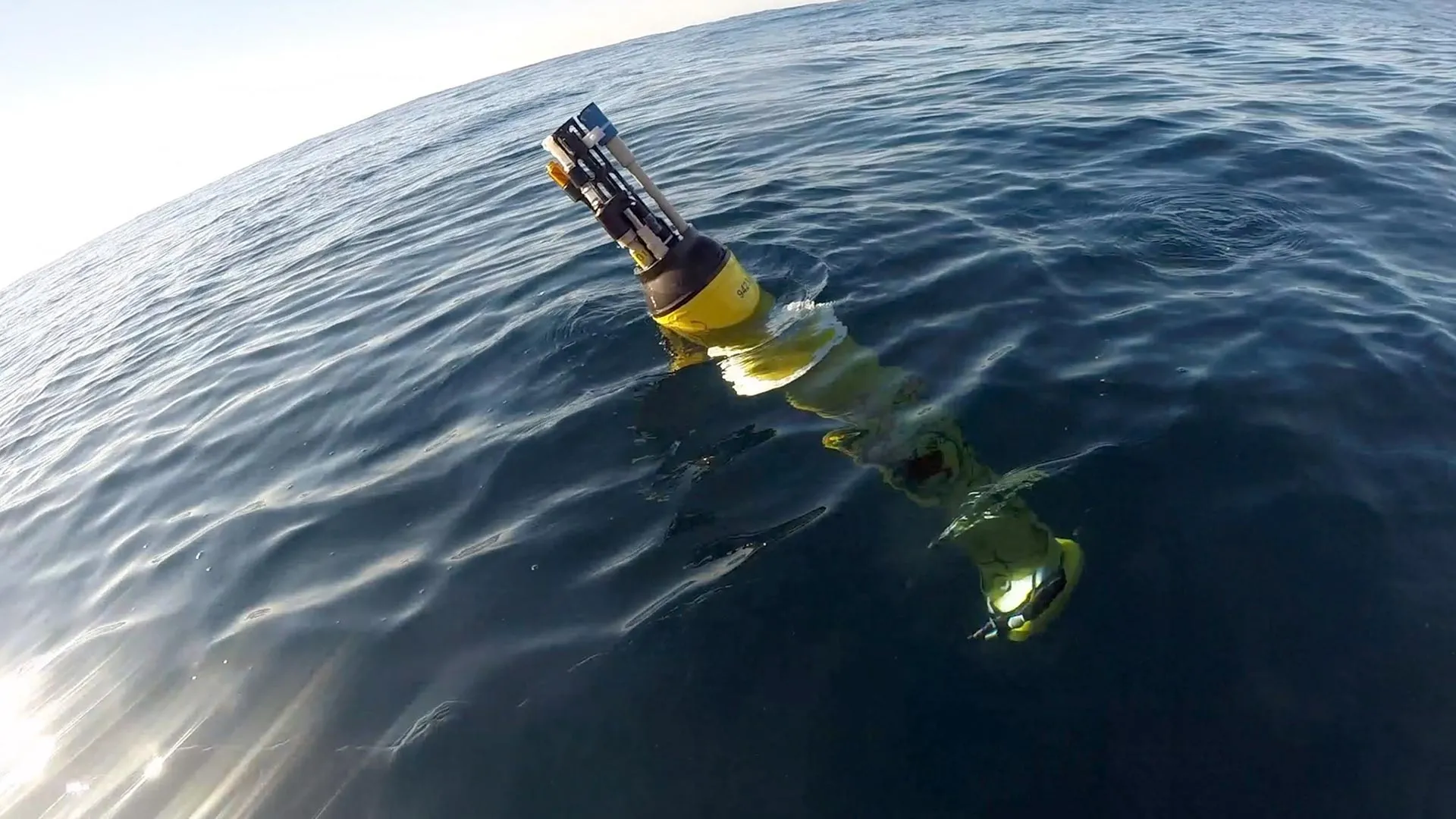
The research team used information collected by the Global Ocean Biogeochemical (GO-BGC) Array, a collaborative initiative funded by the US National Science Foundation and led by MBARI that uses robotic floats to monitor ocean health. The GO-BGC project has deployed hundreds of autonomous biogeochemical Argo (BGC-Argo) floats, which measure ocean conditions such as temperature, salinity, nitrate, oxygen, chlorophyll, and particulate organic carbon (POC) up and down the water column every five to 10 days. The team also looked at seasonal data from ship-based surveys that tracked plankton community composition, including pigment chemistry and sequencing of the environmental DNA (eDNA) from seawater samples collected during the Line P program carried out by Fisheries and Oceans Canada.
The study found that marine heatwaves did impact the base of the ocean food web, and those impacts were connected to changes in the ways that carbon was cycled in the water column. However, the changes that occurred in the food web were not consistent across the two heatwaves.
Under typical conditions, plant-like phytoplankton convert carbon dioxide to organic material. These microorganisms are the foundation of the ocean food web. When they are eaten by larger animals and excreted as waste, they transform into organic carbon particles that sink from the surface through the ocean’s mesopelagic, or twilight, zone (200 to 1,000 meters, approximately 660 to 3,300 feet) and down to the deep sea. This process locks atmospheric carbon away in the ocean for thousands of years.
During the 2013-2015 heatwave, surface carbon production by photosynthetic plankton was high in the second year, but rather than sinking rapidly to the deep sea, small carbon particles piled up approximately 200 meters (roughly 660 feet) underwater.
During the 2019-2020 heatwave, there was record-high accumulation of carbon particles at the surface in the first year that could not be attributed to carbon production by phytoplankton alone. Instead, this accumulation was likely due to the recycling of carbon by marine life and the buildup of detritus waste. This pulse of carbon then sank to the twilight zone, but lingered at depths of 200 to 400 meters (roughly 660 to 1,320 feet) instead of sinking to the deep sea.
The team attributed these differences in carbon transport between the two heatwaves to changes in phytoplankton populations. These changes cascaded through the food web, leading to a rise in small grazers who do not produce fast-sinking waste particles, so carbon was retained and recycled at the surface and in the upper twilight zone rather than sinking to deeper depths.
“Our research found that these two major marine heatwaves altered plankton communities and disrupted the ocean’s biological carbon pump. The conveyor belt carrying carbon from the surface to the deep sea jammed, increasing the risk that carbon can return to the atmosphere instead of being locked away deep in the ocean,” said Bif.
This research demonstrated that not all marine heatwaves are the same. Different plankton lineages rise and fall during these warming events, underscoring the need for long-term, coordinated monitoring of the ocean’s biological and chemical conditions to accurately model the diverse, and expansive, ecological impacts of marine heatwaves.
“This research marks an exciting new chapter in ocean monitoring. To really understand how a heatwave impacts marine ecosystems and ocean processes, we need observation data from before, during, and after the event. This research included robotic floats, pigment chemistry, and genetic sequencing, all working together to tell the entire story. It’s a great example of how collaboration can help us answer key questions about the health of the ocean,” said MBARI Senior Scientist Ken Johnson, the lead principal investigator for the GO-BGC project and a coauthor of the study.
Ocean observations and models suggest that marine heatwaves have been expanding in size and intensifying over the past few decades. The ocean absorbs a quarter of the carbon dioxide emitted each year, thanks to the steady stream of carbon particles sinking from the surface to the deep sea. A warmer ocean can mean less carbon locked away, which in turn can accelerate climate change. Beyond the changes to carbon transport, the shifts in plankton at the foundation of the ocean food web have cascading impacts on marine life and human industry too.
“Climate change is contributing to more frequent and intense marine heatwaves, which underscores the need for sustained, long-term ocean monitoring to understand and predict how future marine heatwaves will impact ecosystems, fisheries, and climate,” said Bif.
This work was funded by the US National Science Foundation’s GO-BGC project (NSF Award 1946578 with operational support from NSF Award 2110258), with additional support from the David and Lucile Packard Foundation, China National Science Foundation (grant number: 42406099), Fundamental Research Funds for the Central Universities (grant number: 20720240105), Danish Center for Hadal Research (Grant No. DNRF145), and Fisheries and Oceans Line P program.
Summary:A global research effort offers the first worldwide view of how climate change could affect water availability and drought severity in the decades to come. By the late 21st century, global land area and population facing extreme droughts could more than double — increasing from 3% during 1976-2005 to 7%-8%, according to a professor of civil and environmental engineering.Share:
FULL STORY
Michigan State University is leading a global research effort to offer the first worldwide view of how climate change could affect water availability and drought severity in the decades to come.
By the late 21st century, global land area and population facing extreme droughts could more than double — increasing from 3% during 1976-2005 to 7%-8%, according to Yadu Pokhrel, associate professor of civil and environmental engineering in MSU’s College of Engineering, and lead author of the research published in Nature Climate Change.
“More and more people will suffer from extreme droughts if a medium-to-high level of global warming continues and water management is maintained at its present state,” Pokhrel said. “Areas of the Southern Hemisphere, where water scarcity is already a problem, will be disproportionately affected. We predict this increase in water scarcity will affect food security and escalate human migration and conflict.”
The research team, including MSU postdoctoral researcher Farshid Felfelani, and more than 20 contributing authors from Europe, China and Japan are projecting a large reduction in natural land water storage in two-thirds of the world, also caused by climate change.
Land water storage, technically known as terrestrial water storage, or TWS, is the accumulation of water in snow and ice, rivers, lakes and reservoirs, wetlands, soil and groundwater — all critical components of the world’s water and energy supply. TWS modulates the flow of water within the hydrological cycle and determines water availability as well as drought.
“Our findings are a concern,” Pokhrel said. “To date, no study has examined how climate change would impact land water storage globally. Our study presents the first, comprehensive picture of how global warming and socioeconomic changes will affect land water storage and what that will mean for droughts until the end of the century.”
Felfelani said the study has given the international team an important prediction opportunity.
“Recent advances in process-based hydrological modeling, combined with future projections from global climate models under wide-ranging scenarios of socioeconomic change, provided a unique foundation for comprehensive analysis of future water availability and droughts,” Felfelani said. “We have high confidence in our results because we use dozens of models and they agree on the projected changes.”
The research is based on a set of 27 global climate-hydrological model simulations spanning 125 years and was conducted under a global modeling project called the Inter-Sectoral Impact Model Intercomparison Project. Pokhrel is a working member of the project.
“Our findings highlight why we need climate change mitigation to avoid the adverse impacts on global water supplies and increased droughts we know about now,” Pokhrel said. “We need to commit to improved water resource management and adaptation to avoid potentially catastrophic socio-economic consequences of water shortages around the world.”
Melting glaciers are putting a hold on countries’ development
Source:Ohio State University
Summary:Climate change is putting an enormous strain on global water resources, and according to researchers, the Tibetan Plateau is suffering from a water imbalance so extreme that it could lead to an increase in international conflicts.Share:
FULL STORY
Climate change is putting an enormous strain on global water resources, and according to researchers, the Tibetan Plateau is suffering from a water imbalance so extreme that it could lead to an increase in international conflicts.
Nicknamed “The Third Pole,” the Tibetan Plateau and neighboring Himalayas is home to the largest global store of frozen water outside of the North and South Polar Regions. This region, also known as the Asian water tower (AWT), functions as a complex water distribution system which delivers life-giving liquid to multiple countries, including parts of China, India, Nepal, Pakistan, Afghanistan, Tajikistan and Kyrgyzstan.
Yet due to the rapid melting of snow and upstream glaciers, the area can’t sustainably support the continued growth of the developing nations that rely on it.
“Populations are growing so rapidly, and so is the water demand,” said Lonnie Thompson, distinguished university professor of earth sciences at The Ohio State University and senior research scientist at the Byrd Polar Research Center. “These problems can lead to increased risks of international and even intranational disputes, and in the past, they have.”
Thompson, who has studied climate change for nearly five decades, is intimately familiar with the precarious nature of the region’s hydrological situation. In 1984, Thompson became a member of the first Western team sent to investigate the glaciers in China and Tibet. Since then, he and a team of international colleagues have spent years investigating ice core-derived climate records and the area’s rapidly receding ice along with the impact it’s had on the local settlements that depend on the AWT for their freshwater needs.
The team’s latest paper, of which Thompson is a co-author, was published in the journal Nature Reviews Earth and Environment. Using temperature change data from 1980 to 2018 to track regional warming, their findings revealed that the AWT’s overall temperature has increased at about 0.42 degrees Celsius per decade, about twice the global average rate.
“This has huge implications for the glaciers, particularly those in the Himalayas,” Thompson said. “Overall, we’re losing water off the plateau, about 50% more water than we’re gaining.” This scarcity is causing an alarming water imbalance: Northern parts of Tibet often experience an overabundance of water resources as more precipitation occurs due to the strengthening westerlies, while southern river basins and water supplies shrink as drought and rising temperatures contribute to water loss downstream.
According to the study, because many vulnerable societies border these downstream basins, this worsening disparity could heighten conflicts or exacerbate already tense situations between countries that share these river basins, like the long-term irrigation and water struggles between India and Pakistan.
“The way that regional climate varies, there are winners and losers,” Thompson said. “But we have to learn to work together in order to ensure adequate and equitable water supplies throughout this region.” As local temperatures continue to rise and water resources become depleted, more people will end up facing ever diminishing water supplies, he said.
Still, overall increases in precipitation alone won’t meet the increased water demands of downstream regions and countries.
To combat this, the study recommends using more comprehensive water monitoring systems in data-scarce areas, noting that better atmospheric and hydrologic models are needed to help predict what’s happening to the region’s water supply. Lawmakers should then use those observations to help develop actionable policies for sustainable water management, Thompson said. If policymakers do decide to listen to the scientists’ counsel, these new policies could be used to develop adaptation measures for the AWT through collaboration between upstream and downstream countries.
After all, when things go awry in one area of the world, like the butterfly effect, they tend to have long-lasting effects on the rest of Earth’s population. “Climate change is a global process,” Thompson said. “It doesn’t matter what country or what part of the world you come from. Sooner or later, you’ll have a similar problem.”
First long-term study on the East Antarctic interior ice sheet region reveals the Indian Ocean mechanism driving this change
Source: Nagoya University
Summary: New research has revealed that East Antarctica’s vast and icy interior is heating up faster than its coasts, fueled by warm air carried from the Southern Indian Ocean. Using 30 years of weather station data, scientists uncovered a hidden climate driver that current models fail to capture, suggesting the world’s largest ice reservoir may be more vulnerable than previously thought. Share:
FULL STORY
Scientists discovered that East Antarctica’s interior is warming faster than its coasts due to warm air flows from the Southern Indian Ocean. Current climate models don’t capture this effect, suggesting ice loss could be underestimated. Credit: Shutterstock
Scientists have confirmed that East Antarctica’s interior is warming faster than its coastal areas and identified the cause. A 30-year study, published in Nature Communications and led by Nagoya University’s Naoyuki Kurita, has traced this warming to increased warm air flow triggered by temperature changes in the Southern Indian Ocean. Previously considered an observation “blind spot,” East Antarctica contains most of the world’s glacial ice. This newly identified warming mechanism indicates that current predictions may underestimate the rate of future Antarctic ice loss.
Collecting data in Earth’s most extreme environment
Antarctica, the world’s coldest, driest, and windiest continent, contains about 70% of Earth’s freshwater frozen in its massive ice sheets. Climate change in the region has been studied using data from manned stations located mostly in coastal areas. However, the Antarctic interior has only four manned stations, with long-term climate data available for just two: Amundsen-Scott Station (South Pole) and Vostok Station (East Antarctic Interior). Therefore, the actual state of climate change in the vast interior remained largely undocumented.
The research group collected observation data from three unmanned weather stations in East Antarctica where observations have continued since the 1990s: Dome Fuji Station, Relay Station, and Mizuho Station. They created a monthly average temperature dataset spanning 30 years, from 1993 to 2022.
Annual average temperature changes showed that all three locations experienced temperature increases at a rate of 0.45-0.72°C per decade, faster than the global average. The researchers analyzed meteorological and oceanic data and traced this temperature rise to changes in the Southern Indian Ocean that alter atmospheric circulation patterns and transport warm air toward Antarctica’s interior.
Current climate models do not capture this warming process, so future projections of temperature for Antarctica may be underestimated. “While interior regions show rapid warming, coastal stations have not yet experienced statistically significant warming trends,” Professor Naoyuki Kurita from the Institute for Space-Earth Environmental Research at Nagoya University said. “However, the intensified warm air flow over 30 years suggests that detectable warming and surface melting could reach coastal areas like Syowa Station soon.”
The Southern Indian Ocean-East Antarctica climate connection
Ocean fronts — areas where warm and cold ocean waters meet — create sharp temperature boundaries in the Southern Indian Ocean. Because global warming heats ocean waters unevenly, it intensifies these temperature differences: stronger oceanic fronts lead to more storm activity and atmospheric changes that create a “dipole” pattern, with low pressure systems in mid-latitudes and high pressure over Antarctica. The high-pressure system over Antarctica pulls warm air southward and carries it deep into the continent.
Now, for the first time, scientists have comprehensive weather station data demonstrating that East Antarctica’s interior is warming faster than its coasts and have identified the major cause of this change. The study provides important insights into how quickly the world’s largest ice reservoir will respond to continued global warming.
Summary:Satellite data reveals sea-level rise has unfolded almost exactly as predicted by 1990s climate models, with one key underestimation: melting ice sheets. Researchers stress the importance of refining local projections as seas continue to rise faster than before.Share:
FULL STORY
1990s climate projections nailed sea-level rise, but underestimated ice-sheet melt. Now, with accelerating seas, scientists warn of regional risks and the slim chance of catastrophic collapse. Credit: Shutterstock
Global sea-level change has now been measured by satellites for more than 30 years, and a comparison with climate projections from the mid-1990s shows that they were remarkably accurate, according to two Tulane University researchers whose findings were published in Earth’s Future, an open-access journal published by the American Geophysical Union.
“The ultimate test of climate projections is to compare them with what has played out since they were made, but this requires patience – it takes decades of observations,” said lead author Torbjörn Törnqvist, Vokes Geology Professor in the Department of Earth and Environmental Sciences.
“We were quite amazed how good those early projections were, especially when you think about how crude the models were back then, compared to what is available now,” Törnqvist said. “For anyone who questions the role of humans in changing our climate, here is some of the best proof that we have understood for decades what is really happening, and that we can make credible projections.”
Co-author Sönke Dangendorf, David and Jane Flowerree Associate Professor in the Department of River-Coastal Science and Engineering, said that while it is encouraging to see the quality of early projections, today’s challenge is to translate global information into projections tailored to the specific needs of stakeholders in places like south Louisiana.
“Sea level doesn’t rise uniformly – it varies widely. Our recent study of this regional variability and the processes behind it relies heavily on data from NASA’s satellite missions and NOAA’s ocean monitoring programs,” he said. “Continuing these efforts is more important than ever, and essential for informed decision-making to benefit the people living along the coast.”
A new era of monitoring global sea-level change took off when satellites were launched in the early 1990s to measure the height of the ocean surface. This showed that the rate of global sea-level rise since that time has averaged about one eighth of an inch per year. Only more recently, it became possible to detect that the rate of global sea-level rise is accelerating.
When NASA researchers demonstrated in October 2024 that the rate has doubled during this 30-year period, the time was right to compare this finding with projections that were made during the mid-1990s, independent of the satellite measurements.
In 1996, the Intergovernmental Panel on Climate Change published an assessment report soon after the satellite-based sea-level measurements had started. It projected that the most likely amount of global sea-level rise over the next 30 years would be almost 8 cm (three inches), remarkably close to the 9 cm that has occurred. But it also underestimated the role of melting ice sheets by more than 2 cm (about one inch).
At the time, little was known about the role of warming ocean waters and how that could destabilize marine sectors of the Antarctic Ice Sheet from below. Ice flow from the Greenland Ice Sheet into the ocean has also been faster than foreseen.
The past difficulties of predicting the behavior of ice sheets also contain a message for the future. Current projections of future sea-level rise consider the possibility, albeit uncertain and of low likelihood, of catastrophic ice-sheet collapse before the end of this century. Low-lying coastal regions in the United States would be particularly affected if such a collapse occurs in Antarctica.
Source:Potsdam Institute for Climate Impact Research (PIK)
Summary:A new study projects that the Atlantic Meridional Overturning Circulation (AMOC)—the system of currents that includes the Gulf Stream—could shut down after 2100 under high-emission scenarios. This shutdown would drastically reduce heat transport northward, leaving Europe vulnerable to extreme winters, summers of drying, and shifts in tropical rainfall. Climate models show the tipping point is linked to collapsing winter convection in the North Atlantic, which weakens vertical mixing and creates a feedback loop that accelerates decline.Share:
FULL STORY
Scientists warn the AMOC could collapse after 2100, unleashing extreme winters, shifting rainfall, and climate upheaval. Early signals show the system weakening, making emission cuts vital to slow the risk. Credit: Shutterstock
Under high-emission scenarios, the Atlantic Meridional Overturning Circulation (AMOC), a key system of ocean currents that also includes the Gulf Stream, could shut down after the year 2100. This is the conclusion of a new study, with contributions by the Potsdam Institute for Climate Impact Research (PIK). The shutdown would cut the ocean’s northward heat supply, causing summer drying and severe winter extremes in northwestern Europe and shifts in tropical rainfall belts.
“Most climate projections stop at 2100. But some of the standard models of the IPCC – the Intergovernmental Panel on Climate Change – have now run centuries into the future and show very worrying results,” says Sybren Drijfhout from the Royal Netherlands Meteorological Institute, the lead author of the study published in Environmental Research Letters. “The deep overturning in the northern Atlantic slows drastically by 2100 and completely shuts off thereafter in all high-emission scenarios, and even in some intermediate and low-emission scenarios. That shows the shutdown risk is more serious than many people realize.”
Collapse of deep convection in winter as the tipping point
The AMOC carries sun-warmed tropical water northward near the surface and sends colder, denser water back south at depth. This ocean “conveyor belt” helps keep Europe relatively mild and influences weather patterns worldwide. In the simulations, the tipping point that triggers the AMOC shutdown is a collapse of deep convection in winter in the Labrador, Irminger and Nordic Seas. Global heating reduces winter heat loss from the ocean, because the atmosphere is not cool enough. This starts to weaken the vertical mixing of ocean waters: The sea surface stays warmer and lighter, making it less prone to sinking and mixing with deeper waters. This weakens the AMOC, resulting in less warm, salty water flowing northward.
In northern regions, then, surface waters become cooler and less saline, and this reduced salinity makes the surface water even lighter and less likely to sink. This creates a self-reinforcing feedback loop, triggered by atmospheric warming but perpetuated by weakened currents and water desalination.
“In the simulations, the tipping point in key North Atlantic seas typically occurs in the next few decades, which is very concerning,” says Stefan Rahmstorf, Head of PIK’s Earth System Analysis research department and co-author of the study. After the tipping point the shutdown of the AMOC becomes inevitable due to a self-amplifying feedback. The heat released by the far North Atlantic then drops to less than 20 percent of the present amount, in some models almost to zero, according to the study.
Lead author Drijfhout adds that “recent observations in these deep convection regions already show a downward trend over the past five to ten years. It could be variability, but it is consistent with the models’ projections.”
It is crucial to cut emissions fast
To arrive at these results, the research team analyzed CMIP6 (Coupled Model Intercomparison Project) simulations, which were used in the latest IPCC Assessment Report, with extended time horizons to years from 2300 to 2500. In all nine high-emission simulations, the models evolve into a weak, shallow circulation state with the deep overturning shutting down; this result is produced in some intermediate and low-emission simulations as well. In every case, this change follows a mid-century collapse of the deep convection in North Atlantic seas.
“A drastic weakening and shutdown of this ocean current system would have severe consequences worldwide,” PIK researcher Rahmstorf points out. “In the models, the currents fully wind down 50 to 100 years after the tipping point is breached. But this may well underestimate the risk: these standard models do not include the extra fresh water from ice loss in Greenland, which would likely push the system even further. This is why it is crucial to cut emissions fast. It would greatly reduce the risk of an AMOC shutdown, even though it is too late to eliminate it completely.”
Summary:Zooplankton like copepods aren’t just fish food—they’re carbon-hauling powerhouses. By diving deep into the ocean each winter, they’re secretly stashing 65 million tonnes of carbon far below the surface, helping fight climate change in a way scientists are only just starting to understand.
Each year, swarms of tiny zooplankton dive deep and silently trap millions of tons of carbon in the ocean’s depths, a natural climate solution we’ve barely noticed until now. Credit: Shutterstock
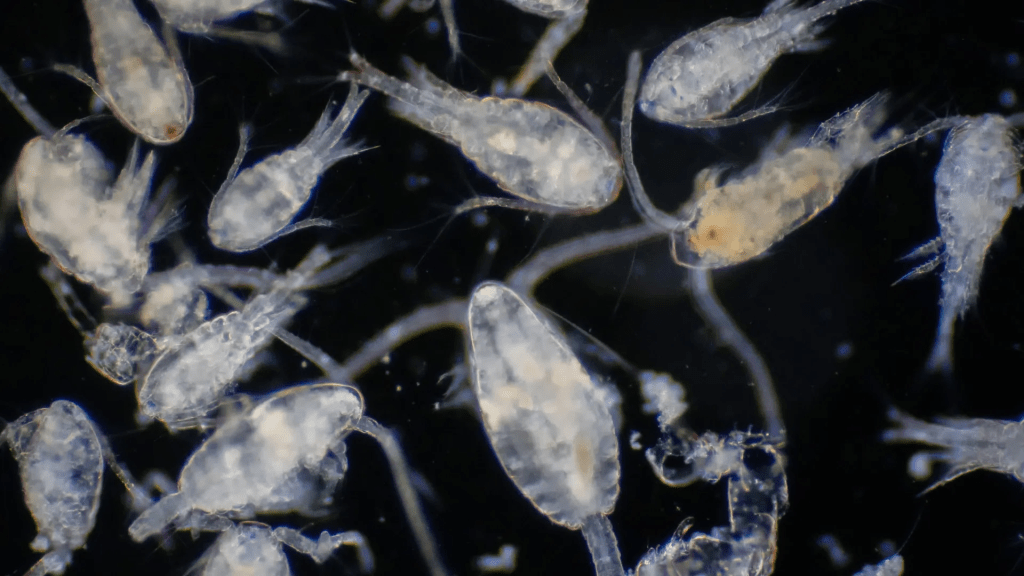
A groundbreaking study has revealed that small but mighty zooplankton — including copepods, krill, and salps — are key players in the Southern Ocean’s ability to absorb and store carbon.
Led by an international team of researchers, and published in Limnology and Oceanography, the study quantifies for the first time how these tiny creatures collectively enhance carbon sequestration through their seasonal, vertical migrations.
The Southern Ocean is a key region for carbon storage. Traditional thinking is that the carbon storage in the Southern Ocean is dominated by gravitational sinking of detritus produced by large zooplankton grazers, such as krill.
This new research concerns another more recently described process called the ‘seasonal migrant pump’. This process sees zooplankton migrate each year from surface waters to depths below 500m, storing carbon via their respiration and mortality during this deep overwintering phase.
This figure shows the traditional view of how zooplankton transport carbon to depth (left panel) by eating phytoplankton in surface waters in summer, whereby their waste material (Particulate Organic Carbon, POC) sinks passively to great depth, thereby storing the carbon for thousands of years. This new study shows that a winter process known as the ‘seasonal migrant pump’ also leads to a substantial deep carbon storage (right panel). The zooplankton migrate downwards in autumn to overwinter below 500m where their respiration and death directly inject around 65 million tonnes of carbon annually into the deep ocean.
The team first built a big database of zooplankton collected in thousands of net hauls from around the Southern Ocean, dating from the 1920s to the present day. From these they quantified the extent of the zooplankton’s annual descent to overwinter at great depths, where they respire CO2 — directly and efficiently injecting carbon into the deep ocean.
Key Findings:
65 Million Tonnes of Carbon Stored Annually: The seasonal, vertical migration of zooplankton transports roughly 65 million tonnes of carbon to depths below 500 meters.
Copepods Dominate the ‘Seasonal Migrant Pump’: Mesozooplankton (mainly small crustaceans called copepods) account for 80% of this carbon flux, while krill and salps contribute 14% and 6%, respectively.
Climate Implications: The Southern Ocean is a critical carbon sink, but current Earth System Models overlook this zooplankton-driven process. As warming shifts species distributions (e.g., declining krill, increasing copepods, changing food sources), the carbon storage dynamics may change dramatically.
Why does the ‘Seasonal Migrant Pump’ matter:
The Southern Ocean absorbs approximately 40% of all human-made CO2 taken up by oceans, yet the role of zooplankton has been underestimated. Unlike sinking detritus, which removes both carbon and essential nutrients like iron, migrating zooplankton efficiently inject carbon into the deep ocean while recycling nutrients near the surface. This ‘Seasonal Migrant Pump’ could become even more important as marine ecosystems respond to climate change.
Dr Guang Yang, first author and Marine Ecologist from Institute of Oceanology, Chinese Academy of Sciences, said: “Our work shows that zooplankton are unsung heroes of carbon sequestration. Their seasonal migrations create a massive, previously unquantified carbon flux — one that models must now incorporate.”
Prof. Angus Atkinson MBE, co-author and Senior Marine Ecologist at Plymouth Marine Laboratory, added: “This study is the first to estimate the total magnitude of this carbon storage mechanism. It shows the value of large data compilations to unlock new insights and to get an overview of the relative importance of carbon storage mechanisms.”
Dr Katrin Schmidt, co-author and Marine Ecologist at the University of Plymouth, said: “The study shows the ‘seasonal migrant pump’ as an important pathway of natural carbon sequestration in polar regions. Protecting these migrants and their habitats will help to mitigate climate change.”
Dr Jen Freer, co-author and Ecological Modeller at the British Antarctic Survey (BAS), added: “Krill are famous for their role in the Antarctic food web, but we find that copepods significantly dominate carbon storage overwinter. This has big implications as the ocean warms and their habitats may shift.”
This research stresses the urgent need for updates to climate models to include zooplankton-driven carbon fluxes. It also highlights the necessity to manage and protect Southern Ocean ecosystems, where industrial fishing and warming threaten krill populations — a key species that supports both carbon export and Antarctica’s unique biodiversity.
This international study was a collaboration among scientists from China, UK, and Canada, and leverages a century’s worth of data on zooplankton biomass, distribution, respiration and mortality across the Southern Ocean.


 GET WET!