Water – at the center of the climate crisis

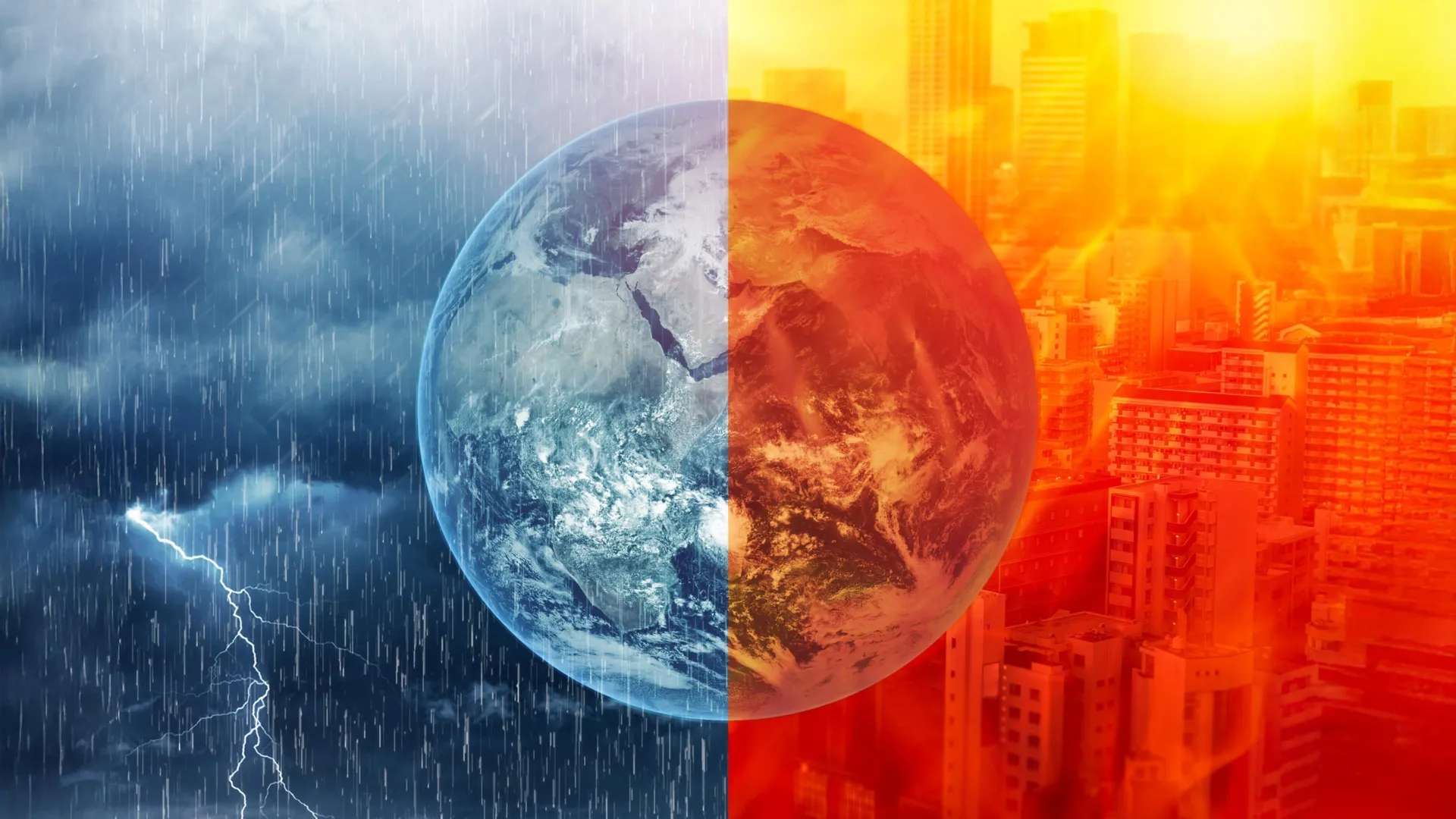
Photocomposition: a faceut with a drop coming out of it, with a red circle behing the drop.

Climate change is exacerbating both water scarcity and water-related hazards (such as floods and droughts), as rising temperatures disrupt precipitation patterns and the entire water cycle.

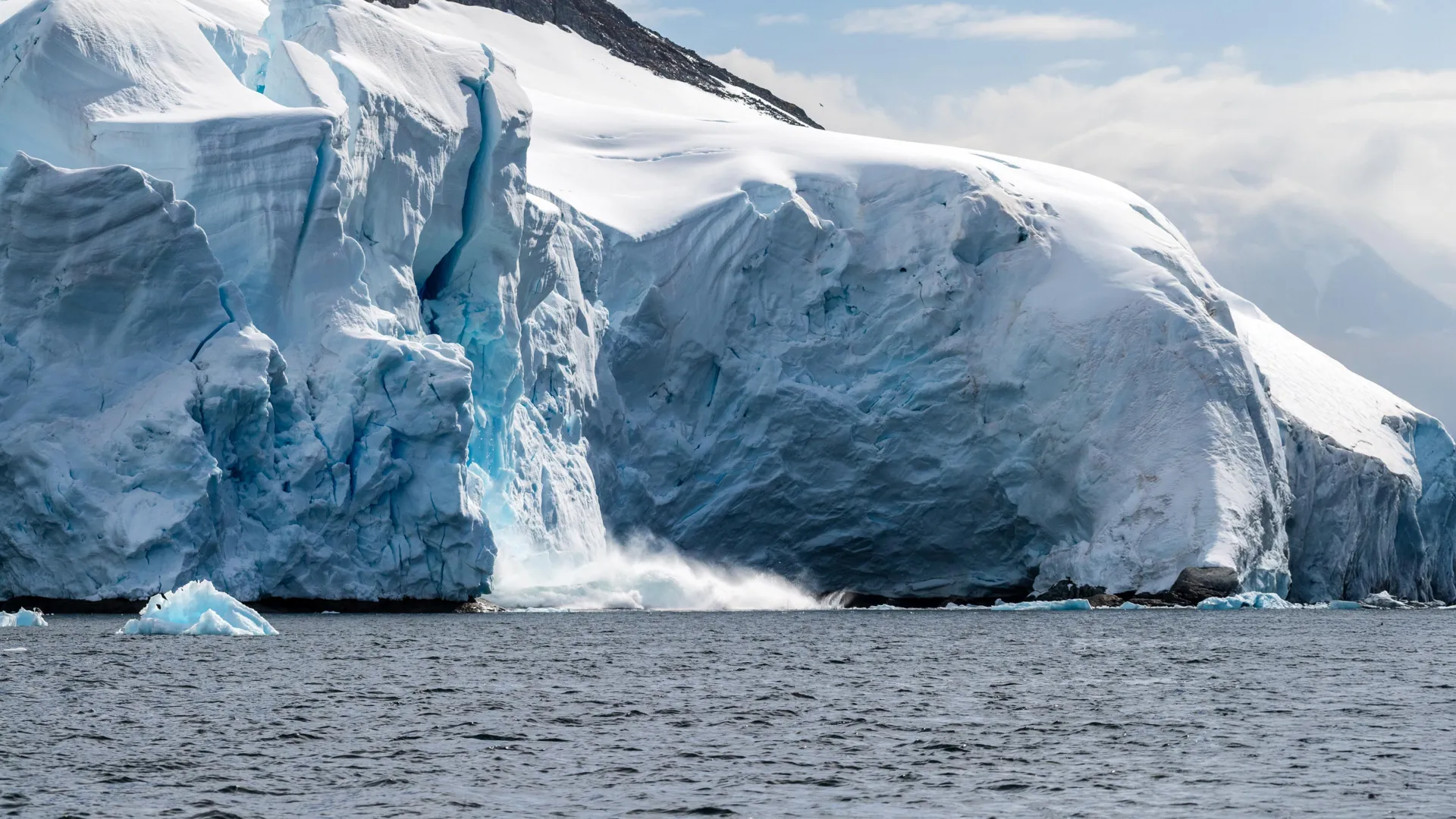
Water and climate change are inextricably linked. Climate change affects the world’s water in complex ways. From unpredictable rainfall patterns to shrinking ice sheets, rising sea levels, floods and droughts – most impacts of climate change come down to water.

Climate change is exacerbating both water scarcity and water-related hazards (such as floods and droughts), as rising temperatures disrupt precipitation patterns and the entire water cycle.

Get more facts on climate and water below.
 

Water scarcity
 

  • Over two billion people worldwide don’t have access to safe drinking water today, and roughly half of the world’s population is experiencing severe water scarcity for at least part of the year. These numbers are expected to increase, exacerbated by climate change and population growth.
  • Only 0.5 per cent of water on Earth is useable and available freshwater – and climate change is dangerously affecting that supply. Over the past twenty years, terrestrial water storage – including soil moisture, snow and ice – has dropped at a rate of 1 cm per year, with major ramifications for water security.
  • Melting glaciers, snow and permafrost are affecting humans and ecosystems in mid-to-high latitudes and the high-mountain regions. These changes are already impacting irrigation, hydropower, water supply, and populations depending on ice, snow and permafrost.
  • Climate change is one of the key drivers of the loss and degradation of freshwater ecosystems and the unprecedented decline and extinction of many freshwater-dependent populations, particularly due to land use and pollution.
  • Limiting global warming to 1.5°C compared to 2°C would approximately halve the proportion of the world population expected to suffer water scarcity, although there is considerable variability between regions.
  • Water quality is also affected by climate change, as higher water temperatures and more frequent floods and droughts are projected to exacerbate many forms of water pollution – from sediments to pathogens and pesticides.
  • Climate change, population growth and increasing water scarcity will put pressure on food supply as most of the freshwater used, about 70 per cent on average, is used for agriculture (it takes between 2000 and 5000 liters of water to produce a person’s daily food).

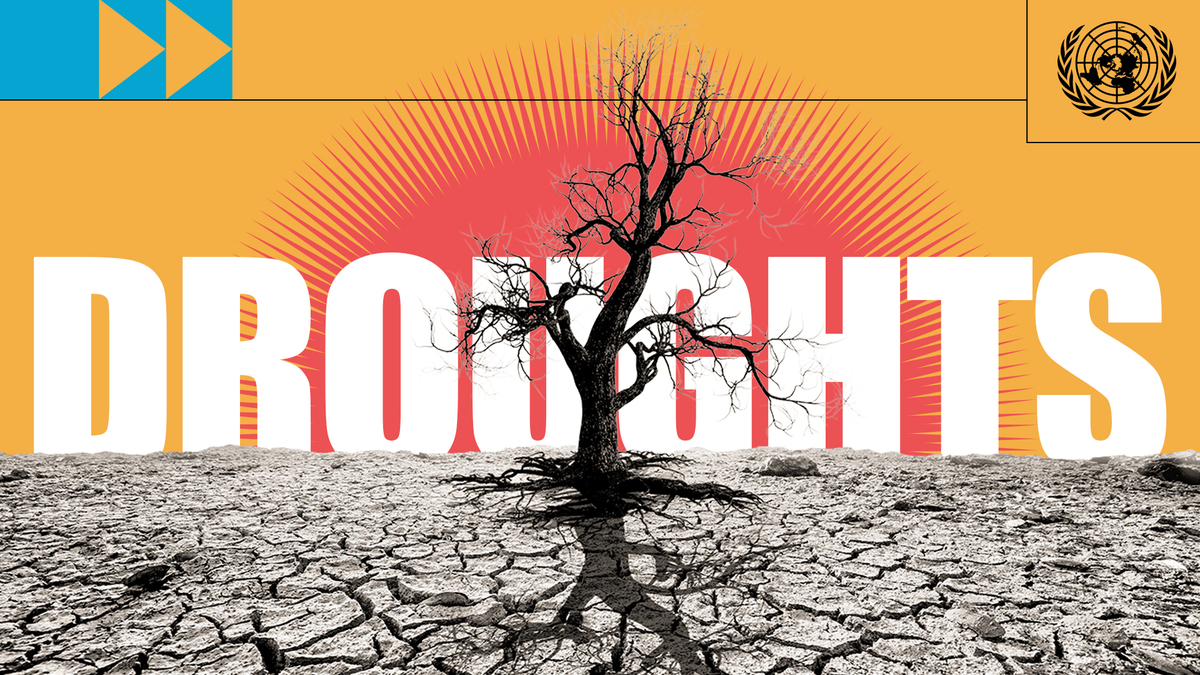
 Photocomposition: a dry tree in a dry soil, with the word drought written in bold big letters at the background.

Water-related hazards
 

  • Climate change has made extreme weather events such as floods and droughts more likely and more severe.
  • Rising global temperatures increase the moisture the atmosphere can hold, resulting in more storms and heavy rains, but paradoxically also more intense dry spells as more water evaporates from the land and global weather patterns change.
  • Annual mean precipitation is increasing in many regions worldwide and decreasing over a smaller area, particularly in the tropics.
  • Climate change has increased the likelihood of extreme precipitation events and the associated increase in the frequency and magnitude of river floods.
  • Climate change has also increased the likelihood or severity of drought events in many parts of the world, causing reduced agricultural yields, drinking water shortages, increased wildfire risk, loss of lives and economic damages.
  • Drought and flood risks, and associated societal damages, are projected to further increase with every degree of global warming.
  • Water-related disasters have dominated the list of disasters over the past 50 years and account for 70 per cent of all deaths related to natural disasters.
  • Since 2000, flood-related disasters have risen by 134 per cent compared with the two previous decades. Most of the flood-related deaths and economic losses were recorded in Asia. The number and duration of droughts also increased by 29 per cent over this same period. Most drought-related deaths occurred in Africa.

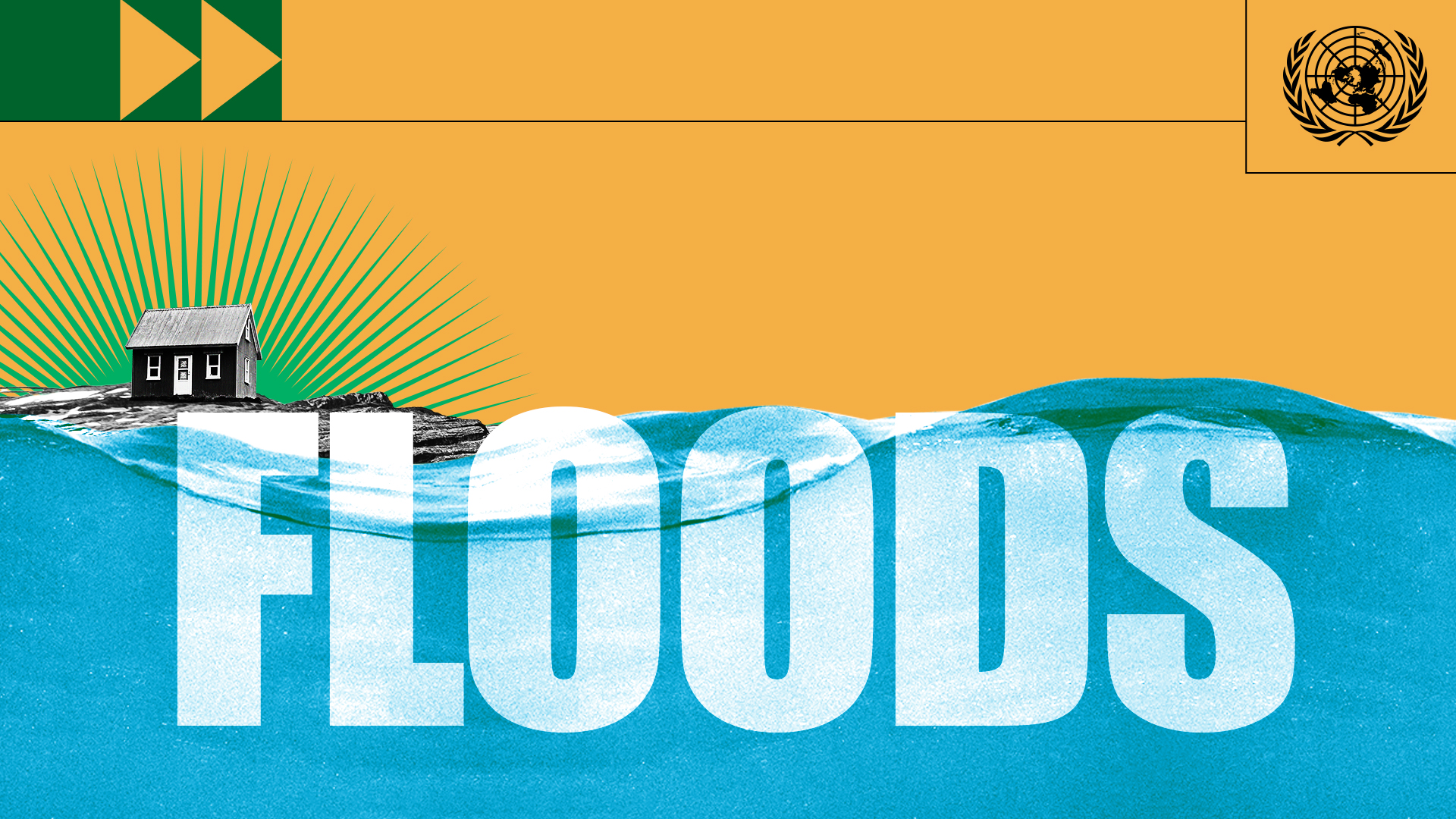
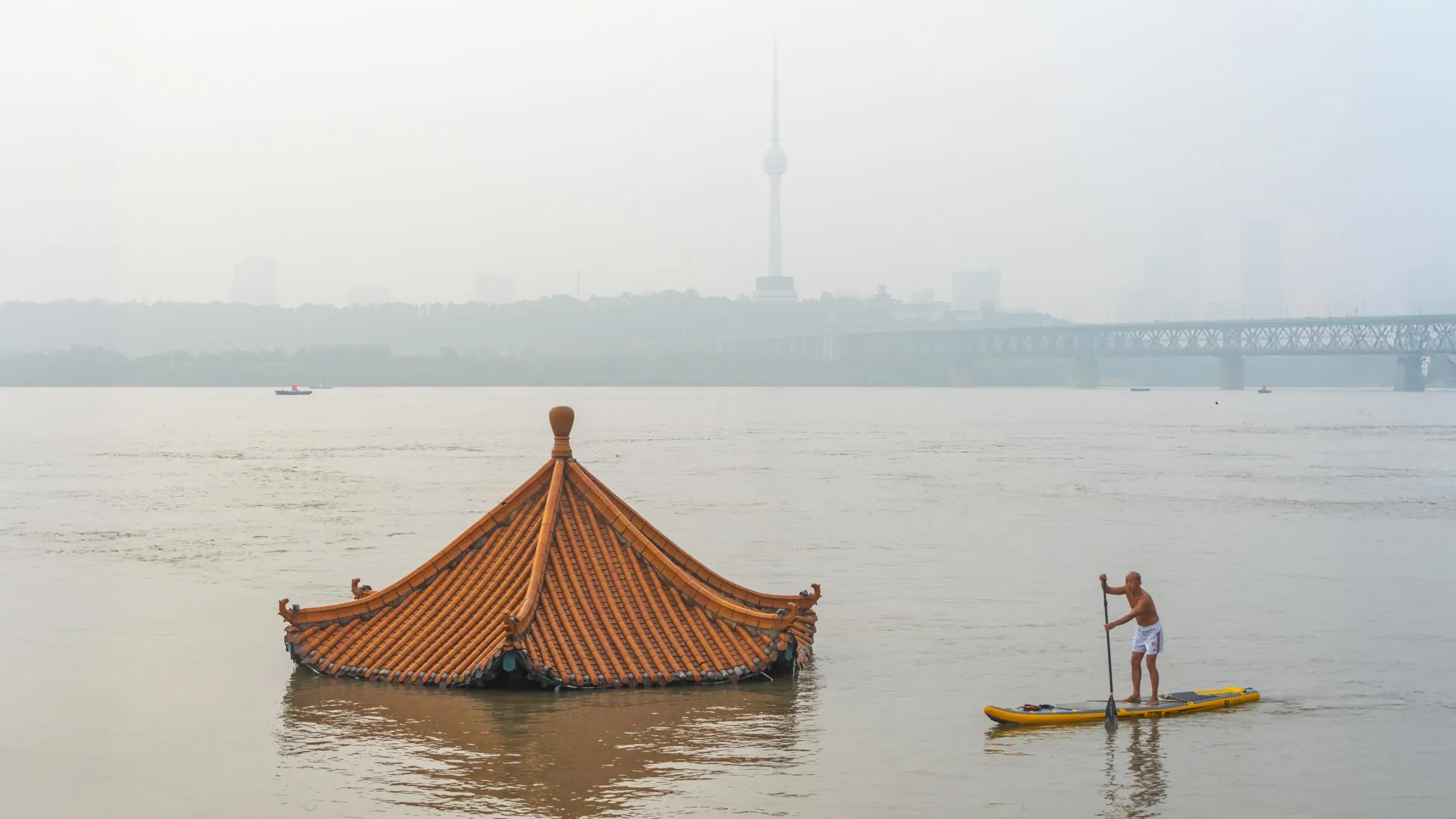
 Photocomposition: a house on the left, with a lot of water in the bottom of the image. The word floods is written in big bold white letters at the front of both illustrations.

Water solutions
 

  • Healthy aquatic ecosystems and improved water management can lower greenhouse gas emissions and provide protection against climate hazards.
  • Wetlands such as mangroves, seagrasses, marshes and swamps are highly effective carbon sinks that absorb and store CO2, helping to reduce greenhouse gas emissions.
  • Wetlands also serve as a buffer against extreme weather events. They provide a natural shield against storm surges and absorb excess water and precipitation. Through the plants and microorganisms that they house, wetlands also provide water storage and purification.
  • Early warning systems for floods, droughts and other water-related hazards provide a more than tenfold return on investment and can significantly reduce disaster risk: a 24-hour warning of a coming storm can cut the ensuing damage by 30 per cent.
  • Water supply and sanitation systems that can withstand climate change could save the lives of more than 360,000 infants every year.
  • Climate-smart agriculture using drip irrigation and other means of using water more efficiently can help reduce demand on freshwater supplies.

CLICK HERE FOR MORE INFORMATION

https://www.un.org/en/climatechange/science/climate-issues/water?

Extreme floods are slashing global rice yields faster than expected

Flooding is emerging as a silent but powerful destroyer of global rice supplies—and the danger is accelerating.

Source:Stanford UniversitySummary:Scientists discovered that a week of full submergence is enough to kill most rice plants, making flooding a far greater threat than previously understood. Intensifying extreme rainfall events may amplify these losses unless vulnerable regions adopt more resilient rice varieties.Share:


FULL STORY


Rising Floods Threaten the World’s Rice
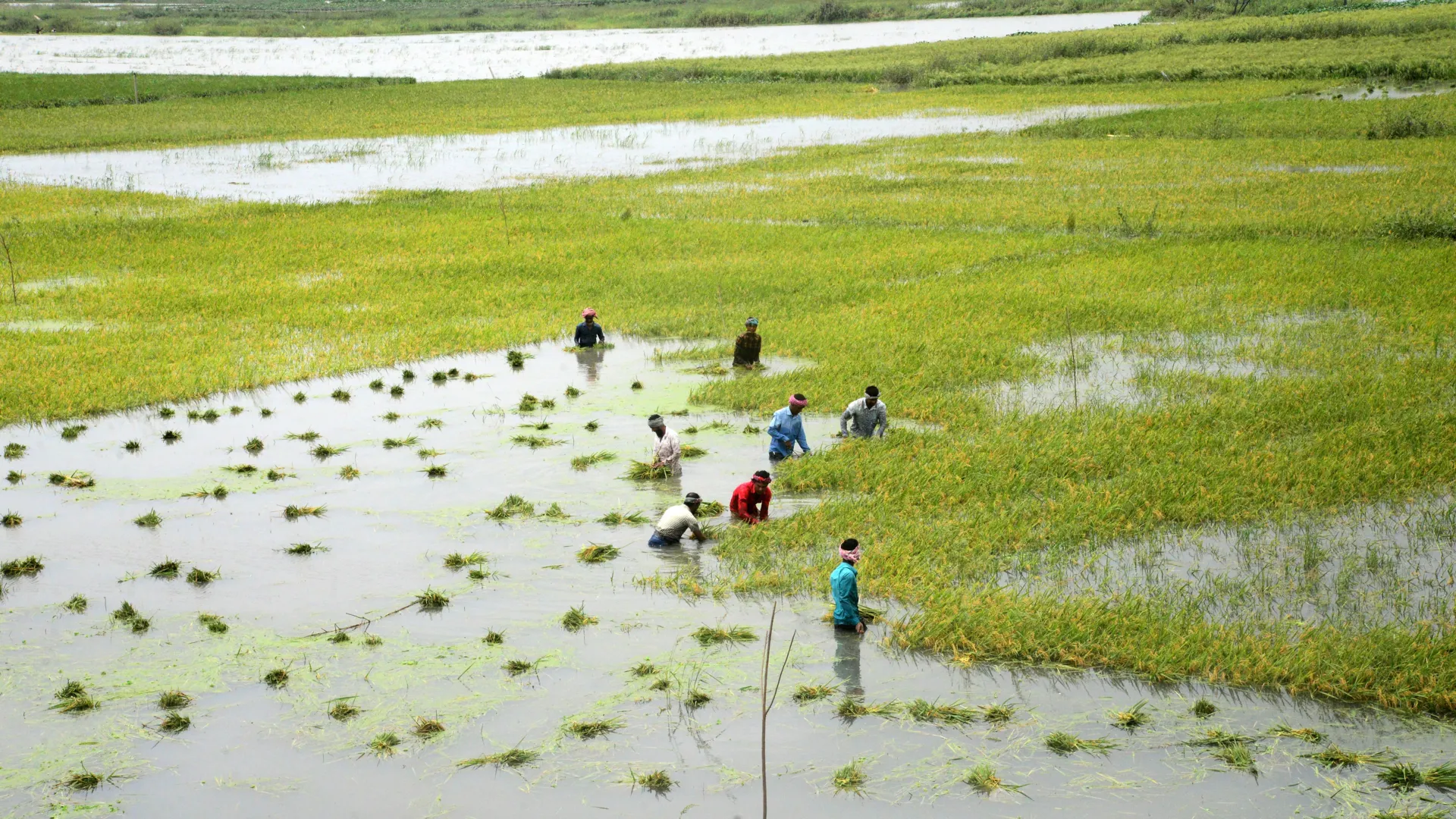
Severe flooding is increasingly damaging global rice yields, slashing production by millions of tons and threatening food security for billions. Credit: Shutterstock

Intense flooding has significantly reduced rice harvests around the world in recent decades, putting at risk the food supply of billions of people who rely on the grain as a dietary staple. Between 1980 and 2015, annual losses averaged about 4.3%, or roughly 18 million tons of rice each year, according to Stanford University research published November 14 in Science Advances.

The researchers found that the damage has grown worse since 2000 as extreme floods have become more common in many of the planet’s main rice-growing regions. They report that climate change is likely to further increase the frequency and severity of these destructive floods in the coming decades.

Droughts, Floods, and a Delicate Balance for Rice

Scientists and farmers have long known that rice yields fall during droughts. The new study adds fresh detail to this picture, estimating that droughts reduced rice yields by an average of 8.1% per year during the 35-year study window. At the same time, the work draws attention to a related but less examined danger from too much water. Rice plants benefit from shallow standing water during early growth, yet prolonged or deep flooding can severely damage or kill the crop.

“While the scientific community has focused on damage to rice yield due to droughts, the impacts of floods have not received enough attention,” said Steven Gorelick, the study’s senior co-author and a professor of Earth system science in the Stanford Doerr School of Sustainability. “Our research documents not only areas where rice yields have suffered due to past flooding, but also where we can anticipate and prepare for this threat in the future.”

What Counts as a ‘Rice-Killing’ Flood

The research team clearly spells out, for the first time, the conditions that turn a flood into a lethal event for rice, said lead study author Zhi Li, who worked on the project as a postdoctoral fellow in Gorelick’s lab at Stanford and recently joined the faculty of the University of Colorado Boulder.

They found that a full week of complete submergence during the plant’s growth cycle is the critical tipping point. “When crops are fully submerged for at least seven days, most rice plants die,” Li said. “By defining ‘rice-killing floods,’ we were able to quantify for the first time how these specific floods are consistently destroying one of the most important staple foods for more than half of the global population.”

How the Researchers Measured Flood and Drought Damage

To estimate how much past droughts and floods have harmed rice production, the scientists combined several lines of evidence. They drew on information about rice growth stages, annual global rice yields, a worldwide database of droughts and floods dating back to 1950, a model of how floods behave across landscapes, and a simulation of soil moisture levels over time in major rice-growing river basins.

Their analysis indicates that, in the coming decades, the most intense week of rainfall in key rice-growing basins around the world could deliver 13% more rain than the average for those regions during the 1980 to 2015 baseline period. This projected increase suggests that rice-killing flood conditions may become more common as the climate continues to warm.

Flood-Resistant Rice Varieties and High-Risk Regions

Wider use of flood-resistant rice varieties could help reduce future losses, especially in the areas that face the highest risk. The study highlights the Sabarmati Basin in India, which experiences the longest rice-killing floods, along with North Korea, Indonesia, China, the Philippines, and Nepal, where the impact of such floods on rice yields has grown the most in recent decades. The greatest total losses have occurred in North Korea, East China, and India’s West Bengal.

The researchers also identified exceptions, such as India’s Pennar Basin, where flooding appears to boost rice yields. They suggest that in these locations, hot and dry conditions may allow standing floodwater to evaporate quickly, reducing long-term damage and sometimes even creating favorable moisture conditions for the crop.

Compounding Climate Stresses on Rice

For Gorelick and Li, the new findings reinforce the need to understand how rice responds not only to floods and droughts, but also to heat waves and cold stress, both individually and when they occur in succession. Earlier research has shown that rapid swings from drought to flood and back again can nearly double rice yield losses compared with single flood or drought events on their own. According to the authors, “How these combined effects can be mitigated remains a major challenge.”

Additional co-authors not mentioned above include Lorenzo Rosa, who is affiliated with the Department of Earth System Science in the Stanford Doerr School of Sustainability and the Department of Global Ecology at the Carnegie Institution for Science. The research was supported by a Dean’s Postdoctoral Fellowship awarded to Li by the Stanford Doerr School of Sustainability.

CLICK HERE FOR MORE INFORMATION

https://www.sciencedaily.com/releases/2025/11/251115095918.htm

Laser satellites expose a secret Antarctic carbon burst

Source:Chinese Academy of Sciences Headquarters

Summary:A new study shows that the Southern Ocean releases far more carbon dioxide in winter than once thought. By combining laser satellite data with AI analysis, scientists managed to “see” through the polar darkness for the first time. The results reveal a 40% undercount in winter emissions, changing how researchers view the ocean’s carbon balance and its impact on climate models.Share:


FULL STORY


Satellites Expose Secret Antarctic Carbon Burst
Researchers have found that the Southern Ocean emits about 40% more carbon dioxide during the Antarctic winter than previous estimates suggested. Using laser-based satellite technology, they uncovered a hidden seasonal flux that redefines the ocean’s role in the global carbon cycle. Credit: Shutterstock

A team of scientists has found that the Southern Ocean emits far more carbon dioxide (CO2) during the lightless Antarctic winter than researchers once believed. According to their new study, this wintertime release of CO2 has been underestimated by as much as 40%.

The research was led by scientists from the Second Institute of Oceanography, Ministry of Natural Resources (SIO-MNR), and the Nanjing Institute of Geography and Limnology (NIGLAS) of the Chinese Academy of Sciences. Their results were published in Science Advances on Nov. 5.

The Ocean’s Role in Earth’s Carbon Balance

The Southern Ocean is a major regulator of the global carbon cycle, absorbing a large share of the carbon released by human activity. Yet despite its importance, it remains the “largest source of uncertainty” in global CO2 flux calculations.

That uncertainty comes from a lack of winter observations. For months each year, the Southern Ocean lies in complete darkness and is lashed by extreme weather, making direct measurement nearly impossible. During this time, the region becomes an “observational black box.” Traditional satellites, which depend on reflected sunlight (passive sensors) to detect ocean properties, cannot collect data under these conditions, leaving scientists reliant on incomplete or estimated models.

Using Lasers to See in the Dark

To overcome this limitation, the researchers used an advanced approach that combined 14 years of data from a laser-based satellite instrument called LIDAR (on the CALIPSO mission) with machine learning analysis.

LIDAR, unlike passive sensors, sends out its own light signals, working similarly to radar but with lasers instead of radio waves. This technology allowed the team to observe the ocean even during the polar night and create the first continuous, observation-based record of winter CO2 exchange in the Southern Ocean.

The results revealed that earlier estimates had missed nearly 40% of the Southern Ocean’s wintertime CO2output. “Our findings suggest that the Southern Ocean’s role in the global carbon cycle is more complex and dynamic than previously known,” said Prof. Kun Shi of NIGLAS.

Rethinking the Ocean’s Carbon Dynamics

Beyond updating the numbers, the study redefines how scientists understand carbon movement in the Southern Ocean. The team introduced a new “three-loop framework” to explain how CO2 exchange varies across different regions.

In the Antarctic Loop (south of 60°S), physical factors such as sea ice and salinity are the main drivers of CO2exchange. In the Polar Front Loop (45°S-60°S), the interaction between atmospheric CO2 and biological activity (chlorophyll) becomes more influential. Meanwhile, in the Subpolar Loop (north of 45°S), sea surface temperature plays the dominant role.

Global Climate Implications

Filling this long-standing data gap could lead to more accurate global carbon budgets, which form the foundation of climate projections used by organizations such as the Intergovernmental Panel on Climate Change (IPCC).

CLICK HERE FOR MORE INFORMATION

https://www.sciencedaily.com/releases/2025/11/251108014024.htm

Antarctica’s collapse may already be unstoppable, scientists warn

Source:Australian National University

Summary:Researchers warn Antarctica is undergoing abrupt changes that could trigger global consequences. Melting ice, collapsing ice shelves, and disrupted ocean circulation threaten sea levels, ecosystems, and climate stability. Wildlife such as penguins and krill face growing extinction risks. Scientists stress that only rapid emission reductions can avert irreversible damage.Share:


FULL STORY


Antarctica’s Collapse May Already Be Unstoppable
Antarctica’s ice and ecosystems are destabilizing faster than expected, threatening coastal cities and wildlife alike. Experts say urgent emission cuts are the only way to stop a cascade of irreversible changes. Credit: Shutterstock

Antarctica faces the possibility of sudden and potentially irreversible changes to its ice, oceans, and ecosystems. Scientists warn that without a sharp global reduction in carbon emissions, these transformations could have serious effects not only for the continent but also for Australia and the rest of the planet.

The warning comes from new research published in Nature by scientists from The Australian National University (ANU) and the University of New South Wales (UNSW), together with researchers from all of Australia’s major Antarctic science institutions.

The team found that multiple large-scale changes are now unfolding at once across Antarctica and that these processes are tightly “interlinked,” intensifying global pressure on the climate system, sea levels, and ecosystems.

The West Antarctic Ice Sheet: A Collapse in Motion

Researchers identified the West Antarctic Ice Sheet (WAIS) as being at extreme risk of collapsing as atmospheric carbon dioxide levels continue to climb. A full collapse of the WAIS could raise global sea levels by more than three meters, endangering coastal populations and major cities worldwide.

Dr. Nerilie Abram, Chief Scientist at the Australian Antarctic Division (AAD) and lead author of the study, warned that such an event would have “catastrophic consequences for generations to come.”

She noted that “rapid change has already been detected across Antarctica’s ice, oceans and ecosystems, and this is set to worsen with every fraction of a degree of global warming.”

Sea Ice Decline and Worsening Feedback Loops

According to Dr. Abram, the sharp decline in Antarctic sea ice is another alarming signal. “The loss of Antarctic sea ice is another abrupt change that has a whole range of knock-on effects, including making the floating ice shelves around Antarctica more susceptible to wave-driven collapse,” she said.

The reduction in sea ice, together with the weakening of deep ocean circulation in the Southern Ocean, indicates that these systems are more vulnerable to rising temperatures than previously believed.

As sea ice disappears, more solar heat is absorbed by the ocean’s surface, amplifying regional warming. Dr. Abram added that other critical systems may soon reach a point of no return, including the ice shelves that hold back parts of the Antarctic ice sheet.

Consequences Reaching Australia and Beyond

Professor Matthew England from UNSW and the ARC Australian Centre for Excellence in Antarctic Science (ACEAS), who co-authored the study, explained that these rapid Antarctic shifts could have severe effects for Australia.

“Consequences for Australia include rising sea levels that will impact our coastal communities, a warmer and deoxygenated Southern Ocean being less able to remove carbon dioxide from the atmosphere, leading to more intense warming in Australia and beyond, and increased regional warming from Antarctic sea ice loss,” he said.

Wildlife and Ecosystems in Jeopardy

The loss of sea ice is already threatening Antarctic wildlife. Professor England warned that emperor penguin populations are facing greater extinction risks because their chicks depend on stable sea ice to mature. “The loss of entire colonies of chicks has been seen right around the Antarctic coast because of early sea ice breakout events, and some colonies have experienced multiple breeding failure events over the last decade,” he said.

Other species are also under threat. The researchers reported that krill, as well as several penguin and seal species, could experience major declines, while key phytoplankton that form the base of the food web are being affected by ocean warming and acidification.

Professor England added that a potential collapse in Antarctic overturning circulation would be disastrous for marine ecosystems, preventing vital nutrients from reaching surface waters where marine life depends on them.

Urgent Global Action Needed

Dr. Abram emphasized that while efforts through the Antarctic Treaty System remain vital, they will not be sufficient on their own. “While critically important, these measures will not help to avoid climate-related impacts that are already beginning to unfold,” she said.

She urged that “the only way to avoid further abrupt changes and their far-reaching impacts is to reduce greenhouse gas emissions fast enough to limit global warming to as close to 1.5 degrees Celsius as possible.”

Governments, industries, and communities, she added, must now include these accelerating Antarctic changes in their planning for climate adaptation, especially in regions like Australia that will be directly affected.

A Global Effort to Understand Antarctica’s Rapid Change

The research represents a collaboration among leading Antarctic experts from Australia, South Africa, Switzerland, France, Germany, and the United Kingdom. It was led by the Australian Centre for Excellence in Antarctic Science (ACEAS), working with Securing Antarctica’s Environmental Future (SAEF), the Australian Antarctic Program Partnership (AAPP), and the Australian Antarctic Division (AAD).

This study supports the objectives of the Australian Antarctic Science Decadal Strategy 2025-2035, a long-term initiative to understand and address the sweeping changes underway in Earth’s southernmost region.

CLICK HERE FOR MORE INFORMATION

https://www.sciencedaily.com/releases/2025/11/251106003941.htm#google_vignette

Earth has hit its first climate tipping point, scientists warn

Source:Goethe University FrankfurtSummary:Global scientists warn that humanity is on the verge of crossing irreversible climate thresholds, with coral reefs already at their tipping point and polar ice sheets possibly beyond recovery. The Global Tipping Points Report 2025 reveals how rising temperatures could trigger a cascade of system collapses, from the Amazon rainforest turning to savanna to the potential shutdown of the Atlantic Ocean circulation.Share:


FULL STORY


Earth Has Hit Its First Climate Tipping Point
Rising temperatures have pushed coral reefs to the brink and may have already destabilized parts of the polar ice sheets. Scientists warn of cascading climate failures but see hope in emerging positive social and technological shifts. Credit: Shutterstock

In a recently released report, a team of international climate scientists warns that saving many tropical coral reefs from destruction caused by rising ocean temperatures will now require extraordinary effort. The researchers also conclude that some regions of the polar ice sheets may have already crossed their tipping points. If this melting continues, it could cause irreversible sea level rise measured in several meters.

Scientists Warn of Cascading Climate System Failures

Among the lead authors of the Global Tipping Points Report 2025 (GTPR 2025) is Nico Wunderling, Professor of Computational Earth System Sciences at Goethe University’s Center for Critical Computational Studies | C3S and researcher at the Senckenberg Research Institute Frankfurt. Together with several co-authors, he led the chapter on “Earth System Tipping Points and Risks.”

Wunderling explains: “The devastating consequences that arise when climate tipping points are crossed pose a massive threat to our societies. There is even a risk of the tipping of one climate system potentially triggering or accelerating the tipping of others. This risk increases significantly once the 1.5°C threshold is exceeded.”

The World Nears a Cascade of Climate Tipping Points

According to the report, scientists have identified roughly two dozen parts of the global climate system that could reach tipping points. The first of these, involving tropical coral reefs, appears to have already been surpassed. The report projects that the global average temperature will rise 1.5°C above pre-industrial levels within the next few years. This would mark the start of a period in which multiple tipping points could be crossed, with profound outcomes such as rapid sea level rise from melting ice sheets or global temperature disruptions caused by a breakdown of the Atlantic Ocean circulation. The authors also recommend actions to prevent further temperature increases.

The coordinating lead author of the GTPR 2025 is Tim Lenton, Professor at the University of Exeter’s (UK) Global Systems Institute. More than 100 scientists from over 20 countries contributed to the report, which was released ahead of the 30th World Climate Conference beginning November 10, 2025, in Belém, Brazil. First published in 2023, the Global Tipping Points Report has already gained recognition as a leading reference for assessing both the risks and potential benefits of negative and positive tipping points within the Earth system and human societies.

Understanding Climate Tipping Points

Climate tipping points have become a major focus in climate research only within the past two decades. The GTPR authors describe a climate-induced tipping point as a level of warming at which key natural systems — such as coral reefs, the Amazon rainforest, or major ocean currents — undergo self-reinforcing and often irreversible change.

For example, once tropical coral reefs surpass their temperature threshold, they begin to die even if humanity later stabilizes or reduces global warming. The scientists warn that more tipping points may soon follow, as some lie near or at 1.5°C of warming. Systems already at risk include the Amazon rainforest (which could shift toward savanna), the ice sheets of Greenland and West Antarctica (which could raise sea levels by several meters), and the Atlantic Ocean circulation (whose collapse could sharply cool Europe).

CLICK HERE FOR MORE INFORMATION

https://www.sciencedaily.com/releases/2025/10/251029002920.htm

Scientists predict a wetter, greener future for the Sahara Desert

Source:University of Illinois ChicagoSummary:UIC researchers predict that the Sahara Desert could see up to 75% more rain by the end of this century due to rising global temperatures. Using 40 climate models, the team found widespread precipitation increases across Africa, though some regions may dry out. The results suggest a major rebalancing of the continent’s climate. Scientists stress that adaptation planning is essential to prepare for both wetter and drier futures.Share:


FULL STORY


A Wetter, Greener Future for the Sahara Desert
Climate models suggest that global warming could dramatically increase rainfall in the Sahara and other parts of Africa. Credit: Shutterstock

The Sahara Desert is known as one of the driest places on Earth, receiving only about 3 inches of precipitation each year — roughly one-tenth of what falls in Chicago.

However, new research from the University of Illinois Chicago (UIC) suggests that this could change dramatically within the next few decades. By the latter half of the 21st century, rising global temperatures may bring much more rain to the region. The study, published in npj Climate and Atmospheric Science, predicts that the Sahara could receive up to 75% more precipitation than its historical average. Similar increases are also projected for parts of southeastern and south-central Africa under extreme climate scenarios.

Rising Rainfall Could Reshape Africa 

“Changing rainfall patterns will affect billions of people, both in and outside Africa,” explained lead author Thierry Ndetatsin Taguela, a postdoctoral climate researcher in UIC’s College of Liberal Arts and Sciences. “We have to start planning to face these changes, from flood management to drought-resistant crops.”

Taguela emphasized that understanding how temperature increases influence rainfall is vital for developing adaptation strategies. His research used an ensemble of 40 climate models to simulate African summer rainfall during the latter half of the 21st century (2050-2099) and compared the results with data from the historical period (1965-2014). Two climate scenarios were examined: one assuming moderate greenhouse gas emissions and another assuming very high emissions.

In both scenarios, rainfall across most of Africa was projected to rise by the end of the century, although the changes vary by region. The Sahara Desert showed the largest increase at 75%, while southeastern Africa could see about 25% more rainfall and south-central Africa about 17% more. In contrast, the southwestern part of the continent is expected to become drier, with precipitation decreasing by around 5%.

Surprising Outlook for a Dry Region 

“The Sahara is projected to almost double its historical precipitation levels, which is surprising for such a climatologically dry region,” said Taguela. “But while most models agree on the overall trend of wetter conditions, there’s still considerable uncertainty in how much rainfall they project. Improving these models is critical for building confidence in regional projections.”

The increase in precipitation is largely linked to the warming atmosphere. Higher temperatures allow the air to hold more moisture, which contributes to heavier rainfall in some areas. Shifts in atmospheric circulation patterns also affect how and where rain falls, sometimes leading to both wetter and drier regions across the continent.

“Understanding the physical mechanisms driving precipitation is essential for developing adaptation strategies that can withstand both wetter and drier futures,” Taguela said.

Taguela conducts his work as part of UIC’s Climate Research Lab, led by Akintomide Afolayan Akinsanola. Their team continues to investigate how changing atmospheric conditions could reshape Africa’s environment, agriculture, and long-term sustainability.

CLICK HERE FOR MORE INFORMATION

https://www.sciencedaily.com/releases/2025/11/251102205025.htm

China’s coastal cities are sinking as seas rise at record speed

Sea levels are rising faster than at any time in 4,000 years, and China’s sinking coastal cities are on the front lines.

Source:Rutgers University

Summary:Sea levels are rising faster than at any time in 4,000 years, scientists report, with China’s major coastal cities at particular risk. The rapid increase is driven by warming oceans and melting ice, while human activities like groundwater pumping make it worse. In some areas, the land itself is sinking faster than the ocean is rising. Still, researchers see progress as cities like Shanghai adopt new technologies to stabilize the ground and prepare for the future.Share:


FULL STORY


Sea Levels Are Rising Faster Than in 4,000 Years
Scientists have found that modern sea level rise is accelerating faster than at any time in the past 4,000 years, and China’s coastal megacities are among the most at risk. Credit: Shutterstock

A team of scientists led by Rutgers University researchers has found that sea levels today are climbing more quickly than at any time in the past 4,000 years, with China’s coastal cities facing some of the most severe risks.

To uncover this trend, the researchers analyzed thousands of geological records from natural indicators such as ancient coral reefs and mangrove formations. These environments preserve long-term evidence of past sea levels. Using this data, the team reconstructed ocean changes stretching back almost 12,000 years to the start of the Holocene epoch, which began after the last major ice age.

Fastest Rate of Rise Since 1900

Published in Nature, the study reports that global sea levels have risen by an average of 1.5 millimeters (about one-sixteenth of an inch) per year since 1900. This pace is faster than any century-long period recorded in the last four millennia.

“The global mean sea level rise rate since 1900 is the fastest rate over at least the last four millennia,” said Yucheng Lin, who conducted the research as a postdoctoral associate at Rutgers and is a scientist at Australia’s national research agency, the Commonwealth Scientific and Industrial Research Organization in Hobart.

Lin worked under the guidance of Robert Kopp, a Distinguished Professor in the Department of Earth and Planetary Sciences at Rutgers. “Dr. Lin’s work illustrates how geological data can help us better understand the hazards that coastal cities face today,” said Kopp, who also authored the study.

What’s Driving the Acceleration

According to Lin, two main processes are responsible for today’s rapid sea level rise: thermal expansion and melting ice. As climate change warms the planet, oceans absorb heat, causing the water to expand. At the same time, melting glaciers and ice sheets in Greenland and Antarctica add vast amounts of water to the seas.

“Getting warmer makes your ocean take up more volume,” Lin said. “And the glaciers respond faster because they are smaller than the ice sheets, which are often the size of continents. We are seeing more and more acceleration in Greenland now.”

China’s Coastal Cities Face a Double Threat

While sea level rise is a global concern, China faces a particularly dangerous combination of natural and human factors. Many of its largest cities — including Shanghai, Shenzhen and Hong Kong — sit in delta regions made of soft, water-saturated sediment that naturally sinks over time.

Human activities have accelerated this sinking.

“We’ve been able to quantify the natural rate of sea level rise for this area,” Lin said. “But human intervention, mostly groundwater extraction, makes it happen much faster.”

Subsidence, the gradual sinking or settling of the Earth’s surface, can occur through natural geological changes or from human-driven causes such as overuse of groundwater.

Delta Regions Under Pressure

To assess the risk to China’s deltas, the researchers combined geological records, measurements of land subsidence, and data on human impacts. They focused on the Yangtze River Delta and Pearl River Delta, two areas that are home to several megacities and key industrial zones.

In Shanghai, parts of the city sank more than one meter (around three feet) during the 20th century because of extensive groundwater pumping, Lin said. That rate is vastly higher than the current global average for sea level rise.

Delta regions are naturally flat and fertile, making them ideal for farming, transport, and urban development. But those same features make them exceptionally vulnerable to flooding.

“Centimeters of sea level rise will greatly increase the risk of flooding in deltas,” Lin said. “These areas are not only important domestically, they’re also international manufacturing hubs. If coastal risks happen there, the global supply chain will be vulnerable.”

Efforts to Slow the Sinking

Despite the alarming data, Lin noted that there are reasons for optimism. Some Chinese cities have begun taking effective steps to manage the problem. Shanghai, for example, has slowed its rate of subsidence by controlling groundwater extraction and reinjecting freshwater into underground aquifers.

“Shanghai now is not sinking that fast anymore,” Lin said. “They recognized the problem and started regulating their groundwater usage.”

The research team also created vulnerability maps to help local governments and city planners identify high-risk zones and prepare for future sea level rise.

A Global Lesson

Although the study focuses on China, its implications reach far beyond. Many major coastal cities, including New York, Jakarta and Manila, are built on low-lying plains and face similar threats.

“Deltas are great places, good for farming, fishing, urban development and naturally draw civilizations to them,” Lin said. “But they are really flat yet prone to human-caused subsidence, so sustained sea level rise could submerge them really fast.”

Modeling the Past to Protect the Future

The paper is an application of PaleoSTeHM, an open-source software framework for statistically modeling paleo-environmental data that Lin developed as a postdoctoral associate.

Praveen Kumar, a postdoctoral associate in the Department of Earth and Planetary Sciences, also contributed to the study.

The National Science Foundation and NASA supported the research.

CLICK HERE FOR MORE INFORMATION

https://www.sciencedaily.com/releases/2025/10/251023031627.htm

The Federal Climate Information Website Will No Longer Be Updated

In June, the Trump administration announced that the government’s 15-year-old website, climate.gov, which was the primary source of information about climate change and science, would no longer be updated. Links to the old site redirect viewers to an address at the National Oceanic and Atmospheric Administration (NOAA). As of 2021, the old website was receiving 900,000 visits per month and was a trusted source of information about the climate, according to NPR. The jobs of those who authored stories, created photos, and designed materials were eliminated.

Climate change effects include wildfire, ocean acidification, desertification, and coastal flooding caused by storms and sea level rise. |  Credit: CalFire

However, as the Guardian reports, a group of climate communications experts is rebuilding the climate.gov content at climate.us through a new nonprofit. The organization will offer services about climate to others such as local governments that are trying to adapt to global warming. The website is in development, and the organization has a presence on social media accounts like BlueSky and Facebook

According to Rebecca Lindsey, who was the managing editor of the government’s old site, the new entity includes several of her former federal colleagues, many of whom are grieving over losing not only a job but also a vocation. Lindsey added that there is a need for content that helps people develop climate literacy. Being outside of government gives the new group new opportunities to have fun by using platforms like TikTok.

The organization has launched a crowdfunding effort and hopes to get more permanent operating support from a foundation. Lindsey said that all of the climate information released prior to July 1 is still up on a government site, but you have to know where to look for it.

Meanwhile, the National Weather Service is trying to rapidly hire 450 people, including some meteorologists to fill jobs that were cut by DOGE, or the Department of Government Efficiency. Hundreds of forecasters were cut at NOAA after Trump took office, and there were warnings that there could be dangerous consequences if weather predictions were slowed.

However, applicants for the new meteorologist positions are being asked how they would promote Trump’s agenda by identifying one or two of his executive orders that they find significant, and how they would implement them if hired. Some experts are alarmed that the ideology of a potential weather forecaster could be considered. One told the Associated Press that he questioned whether forecasts would be made better based upon someone’s ideology.

CLICK HERE FOR MORE INFORMATION

https://h2oradio.org

Heat Waves Are Becoming More Frequent and Intense in Rivers

Heat waves are becoming more frequent and intense across the U.S., so perhaps this summer you took a dip in a river to cool off. However, according to new research it might not have been as refreshing as it once was. 

Credit: Dillon Groves/Unsplash

new study from Penn State found that heat waves are happening in rivers too, and they’re accelerating faster than and lasting nearly twice as long as the heat waves in the air. It’s a surprising finding, given that many rivers are fed by snowmelt and underground streams, but the team found that periods of abnormally high temperatures in rivers are becoming more common, more intense, and longer-lasting than they were 40 years ago. Lead author Li Li (李黎) wrote in The Conversation that the increased heat puts stress on aquatic ecosystems and can also raise the cost of treating drinking water. 

The team collected river data at nearly 1,500 sites in the contiguous United States between 1980 and 2022. They found that temperatures rose above 59 °F (15 °C)—a threshold that can stress many species—at 82 percent of study areas for an average of 11.6 days per year. The places where the waters warmed the fastest were in the Northeast, the Rocky Mountains, and Appalachia.

The authors say climate change is driving river heat waves, as rising air temperatures affect water conditions. Changing precipitation patterns with global warming are shrinking winter snowpacks, leaving less meltwater to support river health. Low, slow-moving water warms more easily and holds less oxygen, creating dangerous conditions for aquatic life and increasing the chances of large-scale die-offs. The study adds that human activities, such as dams and agriculture, play a secondary role in shaping how and where rivers are most vulnerable to these impacts.

The study was published in the journal Proceedings of the National Academy of Sciences (PNAS).

CLICK HERE FOR MORE INFORMATION

https://h2oradio.org/this-week-in-water/your-dogs-carbon-paw-print

They’re smaller than dust, but crucial for Earth’s climate

Microscopic plankton that regulate Earth’s climate and sustain ocean ecosystems take center stage in a new awareness campaign.

Source:Ruđer Bošković Institute

Summary:Coccolithophores, tiny planktonic architects of Earth’s climate, capture carbon, produce oxygen, and leave behind geological records that chronicle our planet’s history. European scientists are uniting to honor them with International Coccolithophore Day on October 10. Their global collaboration highlights groundbreaking research into how these microscopic organisms link ocean chemistry, climate regulation, and carbon storage. The initiative aims to raise awareness that even the smallest ocean dwellers have planetary impact.Share:


FULL STORY


Tiny Ocean Creatures Key to Climate Stability
Microscopic view of a coccolithophore (Syracosphaera pulchra), a single-celled ocean alga whose intricate calcium plates (coccoliths) play a role in the global carbon cycle. Credit: Dr. Jelena Godrijan, Ruđer Bošković Institute

Smaller than a grain of dust and shaped like minute discs, coccolithophores are microscopic ocean dwellers with an outsized influence on the planet’s climate. These tiny algae remove carbon from seawater, release oxygen, and create delicate calcite plates that eventually sink to the ocean floor. Over time, these plates form chalk and limestone layers that record Earth’s climate history. Today, five European research institutions announced a new effort to establish October 10 as International Coccolithophore Day, drawing attention to the organisms’ vital contributions to carbon regulation, oxygen production, and the health of marine ecosystems that sustain life on Earth.

The initiative is being led by the Ruđer Bošković Institute (Zagreb, Croatia), the Lyell Centre at Heriot-Watt University (Edinburgh, UK), NORCE Norwegian Research Centre (Bergen, Norway), Marine and Environmental Sciences Centre (MARE) at the University of Lisbon (Portugal), and the International Nannoplankton Association (INA).

A Delicate Balance Under Threat

Few people are aware of coccolithophores, yet without them, the planet’s oceans and climate would look drastically different. These single-celled algae, which contain chlorophyll, float in the sunlit layers of the sea and are coated with calcium carbonate plates known as coccoliths.

Though incredibly small, coccolithophores are among Earth’s most effective natural carbon regulators. Every year, they generate more than 1.5 billion tonnes of calcium carbonate, capturing carbon dioxide from the atmosphere and storing it in deep-sea sediments. In addition to removing carbon, they produce oxygen, nourish marine food webs, and influence the planet’s greenhouse balance.

Coccolithophores often dominate vast stretches of the ocean, but climate change is altering the temperature, chemistry, and nutrient makeup of seawater. These shifts pose serious risks to their survival—and to the stability of the ecosystems that depend on them.

Why Coccolithophores?

What makes coccolithophores stand out from other plankton is both their role in the global carbon cycle and the unique record they leave behind. “Unlike other groups, they build intricate calcium carbonate plates that not only help draw down carbon dioxide from the atmosphere, but also transport it into deep ocean sediments, where it can be locked away for millennia. This biomineralization leaves behind an exceptional geological record, allowing us to study how they’ve responded to past climate shifts and better predict their future role. In short, their dual role as carbon pumps and climate archives makes them irreplaceable in understanding and tackling climate change,” says Professor Alex Poulton of the Lyell Centre.

“They are the ocean’s invisible architects, crafting the tiny plates that become vast archives of Earth’s climate,” says Dr. Jelena Godrijan, a leading coccolithophore researcher at the Ruđer Bošković Institute. “By studying their past and current responses to changes in the ocean, we can better understand how marine ecosystems function and explore how natural processes might help us tackle climate change.”

Cutting-Edge Science: From Plankton to Planetary Processes

The launch of International Coccolithophore Day spotlights the tiny ocean plankton that quietly help regulate atmospheric carbon dioxide.

At the Lyell Centre in Scotland, the OceanCANDY team, led by Prof. Alex Poulton, studies how these plankton pull CO2 from the air and store it in the sea, and tests how warmer, more acidic oceans could alter this process. Computer forecasts compare which species do this job best, today and tomorrow.

In Norway, scientists at NORCE Research, led by Dr. Kyle Mayers and his team, track coccolithophore life stories, how they grow, who eats them, and the viruses that infect and ultimately kill them, to show how carbon moves through the ocean. Ancient DNA in seafloor mud adds a long view of past climate shifts. “Coccolithophore interactions with viruses and grazers matter,” says Dr. Kyle Mayers of NORCE. “These links shape food webs and how the ocean stores carbon.”

In Croatia, the Cocco team at the Ruđer Bošković Institute study how they shape the ocean’s carbon cycle, from the decay of organic matter to bacterial interactions that influence seawater chemistry and CO2 uptake. “In understanding coccolithophores, we’re really uncovering the living engine of the ocean’s carbon balance,” says Dr. Jelena Godrijan “Their interactions with bacteria determine how carbon moves and transforms — processes that connect the microscopic scale of plankton to the stability of our planet’s climate.”

At MARE, University of Lisbon, Dr. Catarina V. Guerreiro leads studies to trace how aerosol-driven fertilization shapes the distribution of coccolithophores across the Atlantic into the Southern Ocean, and what that means for the ocean’s carbon pumps today and in recent times. Her approach consists of combining aerosol and seawater samples with sediment records, satellite data and lab microcosms to pin down cause and effect. “We’re connecting tiny chalky organisms to planetary carbon flows,” says Dr. Guerreiro.

At INA, scientists connect living coccolithophores to their fossil record, using their microscopic plates to date rocks and trace Earth’s climate history. By refining global biostratigraphic frameworks and calibrating species’ evolutionary timelines, INA researchers transform fossils of coccolithophores into precise tools for reconstructing ancient oceans, linking modern plankton ecology with the geological record of climate change.

Why Coccolithophore Day Matters?

Designating a day for Coccolithophores may seem like a small gesture, but its advocates argue it could have a big impact. “This could contribute to changing the way we see the ocean. “We most often talk about whales, coral reefs, and ice caps, but coccolithophores are a vital part of the planet’s climate system. They remind us that the smallest organisms can have the biggest impact, and that microscopic life plays a crucial role in shaping our planet’s future, ” says Dr. Sarah Cryer from the CHALKY project and OceanCANDY team.

The campaign to establish October 10 as International Coccolithophore Day is a call to action. By highlighting the profound, yet often overlooked, role of coccolithophores, scientists want to inspire a new wave of ocean literacy, policy focus, and public engagement.

CLICK HERE FOR MORE INFORMATION

https://www.sciencedaily.com/releases/2025/10/251010091548.htm