

These findings show how life adapted before photosynthesis reshaped the planet and may also guide the search for life on alien worlds.
Source:Institute of Science Tokyo
Summary:Billions of years ago, Earth’s atmosphere was hostile, with barely any oxygen and toxic conditions for life. Researchers from the Earth-Life Science Institute studied Japan’s iron-rich hot springs, which mimic the ancient oceans, to uncover how early microbes survived. They discovered communities of bacteria that thrived on iron and tiny amounts of oxygen, forming ecosystems that recycled elements like carbon, nitrogen, and sulfur.Share:
FULL STORY
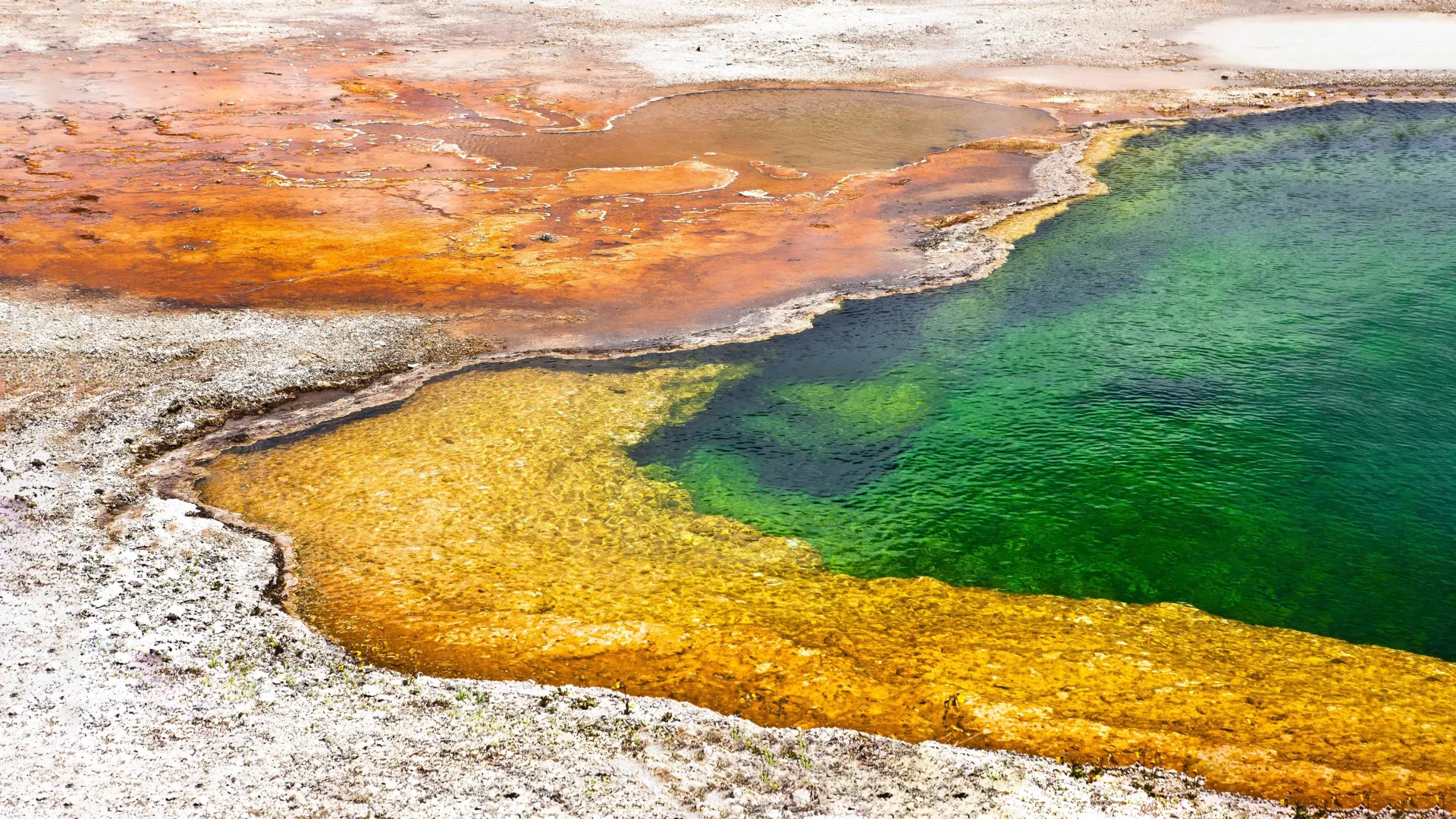
Earth was not always the blue-green world we know today: the early Earth’s oxygen levels were about a million times lower than we now experience. There were no forests and no animals. For ancient organisms, oxygen was toxic. What did life look like at that time then? A recent study led by Fatima Li-Hau (graduate student at ELSI at the time of the research) along with the supervisor Associate Professor Shawn McGlynn (at the time of research) of the Earth-Life Science Institute (ELSI) at Institute of Science Tokyo, Japan, explores this question by examining iron-rich hot springs that mimic the chemistry of Earth’s ancient oceans around the time of one of Earth’s most dramatic changes: the oxygenation of the atmosphere. Their findings suggest that early microbial communities used iron along with oxygen released by photosynthetic microbes, for energy, revealing a transitional ecosystem where life turned a waste product of one organism into a new energy source before photosynthesis became dominant.
The Great Oxygenation Event (GOE) occurred around 2.3 billion years ago and marked the rise of atmospheric oxygen, likely triggered by green Cyanobacteria that used sunlight to split water, subsequently converting carbon dioxide into oxygen through photosynthesis. The result is that the current atmosphere is around 78% nitrogen and 21% oxygen, with only traces of other gases such as methane and carbon dioxide, which might have played a greater role before the rise of oxygen. The GOE fundamentally changed the course of life on Earth. This high amount of oxygen allows us animals to breathe, but it also complicates life for ancient life forms, which were almost unaware of the O2 molecule. Understanding how these ancient microbes adapted to the presence of oxygen remains a major question.
To answer this, the team studied five hot springs in Japan, which are rich in varied water chemistries. Those five springs (one in Tokyo, two each in Akita and Aomori prefectures) are naturally rich in ferrous iron (Fe2+). They are rare in today’s oxygen-rich world because ferrous iron quickly reacts with oxygen and turns into an insoluble ferric iron form (Fe3+). But in these springs, the water still contains high levels of ferrous iron, low levels of oxygen, and a near-neutral pH, conditions thought to resemble parts of the early Earth’s oceans.
“These iron-rich hot springs provide a unique natural laboratory to study microbial metabolism under early Earth-like conditions during the late Archean to early Proterozoic transition, marked by the Great Oxidation Event. They help us understand how primitive microbial ecosystems may have been structured before the rise of plants, animals, or significant atmospheric oxygen,” says Shawn McGlynn, who supervised Li-Hau during her dissertation work.
In four of the five hot springs, the team found microaerophilic iron-oxidising bacteria to be the dominant microbes. These organisms thrive in low-oxygen conditions and use ferrous iron as an energy source, converting it into ferric iron. Cyanobacteria, known for producing oxygen through photosynthesis, were also present but in relatively small numbers. The only exception was one of the Akita hot springs, where non-iron-based metabolisms were surprisingly dominant.
Using metagenomic analysis, the team assembled over 200 high-quality microbial genomes and used them to analyse in detail the functions of microbes in the community. The same microbes that coupled iron and oxygen metabolism converted a toxic compound into an energy source and helped maintain conditions that allowed oxygen-sensitive anaerobes to persist. These communities carried out essential biological processes such as carbon and nitrogen cycling, and the researchers also found evidence of a partial sulfur cycle, identifying genes involved in sulfide oxidation and sulfate assimilation. Given that hot springs contained very little sulfur compounds, this was a surprising discovery. The researchers propose that this may indicate a “cryptic” sulfur cycle, where microbes recycle sulfur in complex ways that are not yet fully understood.
“Despite differences in geochemistry and microbial composition across sites, our results show that in the presence of ferrous iron and limited oxygen, communities of microaerophilic iron oxidisers, oxygenic phototrophs, and anaerobes consistently coexist and sustain remarkably similar and complete biogeochemical cycles,” says Li-Hau.
The research suggests a shift in our understanding of early ecosystems, showing that microbes may have harnessed energy from iron oxidation and oxygen produced by early phototrophs. The study proposes that, similar to these hot springs, early Earth hosted ecosystems were composed of diverse microbes, including iron-oxidising bacteria, anaerobes, and Cyanobacteria living alongside one another and modulating oxygen concentrations.
“This paper expands our understanding of microbial ecosystem function during a crucial period in Earth’s history, the transition from an anoxic, iron-rich ocean to an oxygenated biosphere at the onset of the GOE. By understanding modern analogue environments, we provide a detailed view of metabolic potentials and community composition relevant to early Earth’s conditions,” says Li-Hau.
Together, these insights deepen our understanding of life’s early evolution on Earth and have implications for the search for life on other planets with geochemical conditions similar to those of early Earth.
More information
Earth-Life Science Institute (ELSI) is one of Japan’s ambitious World Premiere International research centers, whose aim is to achieve progress in broadly inter-disciplinary scientific areas by inspiring the world’s greatest minds to come to Japan and collaborate on the most challenging scientific problems. ELSI’s primary aim is to address the origin and co-evolution of the Earth and life.
Institute of Science Tokyo (Science Tokyo) was established on October 1, 2024, following the merger between Tokyo Medical and Dental University (TMDU) and Tokyo Institute of Technology (Tokyo Tech), with the mission of “Advancing science and human wellbeing to create value for and with society.”
World Premier International Research Center Initiative (WPI) was launched in 2007 by Japan’s Ministry of Education, Culture, Sports, Science and Technology (MEXT) to foster globally visible research centers boasting the highest standards and outstanding research environments. Numbering more than a dozen and operating at institutions throughout the country, these centers are given a high degree of autonomy, allowing them to engage in innovative modes of management and research. The program is administered by the Japan Society for the Promotion of Science (JSPS).
CLICK HERE FOR MORE INFORMATION
https://www.sciencedaily.com/releases/2025/10/251002074009.htm
 GET WET!