Summary:Converting forest land to urban development or agricultural use can present risks to water quality when done near streams or river sources. This study examined data from 15 water treatment plants in the Middle Chattahoochee watershed to model the impacts of four potential land use scenarios several decades into the future.Share:
FULL STORY
A new study from North Carolina State University researchers finds that conversion of forests to urban development or agriculture near streams can have harmful effects on water quality downstream, presenting both health concerns and raising the cost of water treatment.
Using a model called the Soil and Water Assessment Tool, researchers mapped out the current and projected future effects of four land-use scenarios at 15 water intake locations across the Middle Chattahoochee watershed in Georgia and Alabama. By combining a series of potential socioeconomic outcomes and climate change models reaching out to 2070, researchers examined several potential land use change scenarios to predict their effects on water quality.
Katherine Martin, associate professor in the NC State University College of Natural Resources and co-author of a paper on the study, said that in models where forest cover was converted to other land uses, water quality suffered.
“In terms of aspects of water quality that we have long term data on, two of the biggest are nitrogen levels and the amount of sediment in the water. Looking at those two, in places where we’re losing forest cover, we see both of those increasing,” she said. “Those are both detrimental to the quality of drinking water, and they require more filtration.”
Part of the issue, Martin said, is the relatively high level of fertilizer used in large-scale agriculture. Urban development results in large areas of impermeable surfaces, where rainwater cannot soak into the ground and instead runs off into rivers and streams. This causes the water to carry more sediment into those waterways than it would if it had been absorbed into the ground.
Increased filtration has several knock-on effects, Martin said. Not only is it potentially harmful for aquatic life, but it also increases the cost of managing water treatment plants. For facilities that do not serve large populations, this can lead to large per-capita price increases that end up being passed on to residents. These areas are also more likely to see increased development, due to their abundance of open land. The study suggests that more attention should be paid to where development might have serious effects on water quality for people living nearby, Martin said.
“Agriculture and urban development are beneficial, and this study does not say otherwise,” she said. “What we are seeing is that there are tradeoffs when we lose forest cover, and we need to open up the conversation about those.”
This work was supported by the U.S. Department of Agriculture Forest Service Southern Research Station agreement number 20-CS-11330180-053.
image: Cover of the Global Water Bankruptcy Report (UNU)view more Credit: UNU-INWEH and Pyae Phyo Aung
UN Headquarters, New York – Amid chronic groundwater depletion, water overallocation, land and soil degradation, deforestation, and pollution, all compounded by global heating, a UN report today declared the dawn of an era of global water bankruptcy, inviting world leaders to facilitate “honest, science-based adaptation to a new reality.”
“Global Water Bankruptcy: Living Beyond Our Hydrological Means in the Post-Crisis Era,” argues that the familiar terms “water stressed” and “water crisis” fail to reflect today’s reality in many places: a post-crisis condition marked by irreversible losses of natural water capital and an inability to bounce back to historic baselines.
“This report tells an uncomfortable truth: many regions are living beyond their hydrological means, and many critical water systems are already bankrupt,” says lead author Kaveh Madani, Director of the UN University’s Institute for Water, Environment and Health (UNU-INWEH), known as ‘The UN’s Think Tank on Water.’
Expressed in financial terms, the report says many societies have not only overspent their annual renewable water “income” from rivers, soils, and snowpack, they have depleted long-term “savings” in aquifers, glaciers, wetlands, and other natural reservoirs.
This has resulted in a growing list of compacted aquifers, subsided land in deltas and coastal cities, vanished lakes and wetlands, and irreversibly lost biodiversity.
The UNU report is based on a peer-reviewed paper in the journal of Water Resources Management that formally defines water bankruptcy as
1) persistent over-withdrawal from surface and groundwater relative to renewable inflows and safe levels of depletion; and
2) the resulting irreversible or prohibitively costly loss of water-related natural capital.
By contrast:
“Water stress” reflects high pressure that remains reversible
“Water crisis” describes acute shocks that can be overcome
The report is issued prior to a high-level meeting in Dakar, Senegal (26–27 Jan.) to prepare the 2026 UN Water Conference, to be co-hosted by the United Arab Emirates and Senegal 2-4 Dec. in the UAE.
While not every basin and country is water-bankrupt, Madani says, “enough critical systems around the world have crossed these thresholds. These systems are interconnected through trade, migration, climate feedbacks, and geopolitical dependencies, so the global risk landscape is now fundamentally altered.”
Madani underlines the following four essential points:
Water cannot be protected if we allow the hydrological cycle, the climate, and the underlying natural capital that produces water to be interrupted or damaged. The world has an important and still largely untapped strategic opportunity to act.
Water is an issue that crosses traditional political boundaries. It belongs to north and south, and to left and right. For that reason, it can serve as a bridge to create trust and unity between and within nations. In the fragmented world we live in, water can become a powerful focus for cooperation and for aligning national security with international priorities.
Investment in water is also investment in mitigating climate change, biodiversity loss, and desertification. Water should not be treated only as a downstream sector affected by other environmental crises. On the contrary, targeted investment in water can address the immediate concerns of communities and nations while also advancing the objectives of the Rio Conventions (climate, biodiversity, desertification).
A renewed global emphasis on water could help reaccelerate stalled negotiations and potentially reenergize halted international processes. A practical and cooperative focus on water offers a way to connect urgent local needs with long-term global goals.
Hotspots
In the Middle East and North Africa region, high water stress, climate vulnerability, low agricultural productivity, energy-intensive desalination, and sand and dust storms intersect with complex political economies;
In parts of South Asia, groundwater-dependent agriculture and urbanization have produced chronic declines in water tables and local subsidence; and
In the American Southwest, the Colorado River and its reservoirs have become symbols of over-promised water.
A world in the red
Drawing on global datasets and recent scientific evidence, the report presents a stark statistical overview of trends, the overwhelming majority caused by humans:
50%: Large lakes worldwide that have lost water since the early 1990s (with 25% of humanity directly dependent on those lakes)
50%: Global domestic water now derived from groundwater
40%+: Irrigation water drawn from aquifers being steadily drained
70%: Major aquifers showing long-term decline
410 million hectares: Area ofnatural wetlands – almost equal in size to the entire European Union – erased in the past five decades
30%+: Global glacier mass lost since 1970, with entire low- and mid-latitude mountain ranges expected to lose functional glaciers altogether within decades
Dozens: Major rivers that now fail to reach the sea for parts of the year
50+ years: How long many river basins and aquifers have been overdrawing their accounts
100 million hectares: Cropland damaged by salinization alone
And the human consequences:
75%: Humanity in countries classified as water-insecure or critically water-insecure
2 billion: People living on sinking ground.
25 cm: Annual drop being experienced by some cities
4 billion: People facing severe water scarcity at least one month every year
170 million hectares: Irrigated cropland under high or very high water stress – equivalent to the areas of France, Spain, Germany, and Italy combined
US$5.1 trillion: Annual value of lost wetland ecosystem services
3 billion: People living in areas where total water storage is declining or unstable, with 50%+ of global food produced in those same stressed regions.
1.8 billion: People living under drought conditions in 2022–2023
US$307 billion: Current annual global cost of drought
2.2 billion: People who lack safely managed drinking water, while 3.5 billion lack safely managed sanitation
Says Madani: “Millions of farmers are trying to grow more food from shrinking, polluted, or disappearing water sources. Without rapid transitions toward water-smart agriculture, water bankruptcy will spread rapidly.”
A new diagnosis for a new era
A region can be flooded one year and still be water bankrupt, he adds, if long-term withdrawals exceed replenishment. In that sense, water bankruptcy is not about how wet or dry a place looks, but about balance, accounting, and sustainability.
Says Madani: As with global climate change or pandemics, a declaration of global water bankruptcy does not imply uniform impact everywhere, but that enough systems across regions and income levels have become insolvent and crossed irreversible thresholds to constitute a planetary-scale condition.
“Water bankruptcy is also global because its consequences travel,” Madani explains. “Agriculture accounts for the vast majority of freshwater use, and food systems are tightly interconnected through trade and prices. When water scarcity undermines farming in one region, the effects ripple through global markets, political stability, and food security elsewhere. This makes water bankruptcy not a series of isolated local crises, but a shared global risk that demands a new type of response: Bankruptcy management, not crisis management.”
A call to reset the global water agenda
The report warns that the current global water agenda – largely focused on drinking water, sanitation, and incremental efficiency improvements – is no longer fit for purpose in many places and calls for a new global water agenda that:
Formally recognizes the state of water bankruptcy
Recognizes water as both a constraint and an opportunity for meeting climate, biodiversity, and land commitments
Elevates water issues in climate, biodiversity, and desertification negotiations, development finance, and peacebuilding processes.
Embeds water-bankruptcy monitoring in global frameworks, using Earth observation, AI, and integrated modelling
Uses water as a catalyst to accelerate cooperation between the UN Member States
In practical terms, managing water bankruptcy requires governments to focus on the following priorities:
Prevent further irreversible damage such as wetland loss, destructive groundwater depletion, and uncontrolled pollution
Rebalance rights, claims, and expectations to match degraded carrying capacity
Support just transitions for communities whose livelihoods must change
Transform water-intensive sectors, including agriculture and industry, through crop shifts, irrigation reforms, and more efficient urban systems
Build institutions for continuous adaptation, with monitoring systems linked to threshold-based management
The report underlines that water bankruptcy is not merely a hydrological problem, but a justice issue with deep social and political implications requiring attention at the highest levels of government and multilateral cooperation. The burdens fall disproportionately on smallholder farmers, Indigenous Peoples, low-income urban residents, women and youth while the benefits of overuse often accrued to more powerful actors.
“Water bankruptcy is becoming a driver of fragility, displacement, and conflict,” says UN Under-Secretary-General Tshilidzi Marwala, Rector of UNU. “Managing it fairly – ensuring that vulnerable communities are protected and that unavoidable losses are shared equitably – is now central to maintaining peace, stability, and social cohesion.”
“Bankruptcy management requires honesty, courage, and political will,” Madani adds. “We cannot rebuild vanished glaciers or reinflate acutely compacted aquifers. But we can prevent further loss of our remaining natural capital, and redesign institutions to live within new hydrological limits.”
Upcoming milestones — the 2026 and 2028 UN Water Conferences, the end of the Water Action Decade in 2028, and the 2030 SDG deadline, for example — provide critical opportunities to implement this shift, he says.
“Despite its warnings, the report is not a statement of hopelessness,” adds Madani. “It is a call for honesty, realism, and transformation. Declaring bankruptcy is not about giving up — it is about starting fresh. By acknowledging the reality of water bankruptcy, we can finally make the hard choices that will protect people, economies, and ecosystems. The longer we delay, the deeper the deficit grows.”
* * * * *
Report in brief
Media highlights
This report declares that the world has already entered the era of Global Water Bankruptcy. The condition is not a distant threat but a present reality. Many human water systems are now in a post-crisis failure state where past baselines can no longer be restored.
Global Water Bankruptcy is defined as a persistent post-crisis state of failure. In this state, long-term water use and pollution have exceeded renewable inflows and safe depletion limits. Key parts of the water system can no longer realistically be brought back to previous levels of supply and ecosystem function.
Terms such as water stress and water crisis are no longer sufficient descriptions of the world’s new water realities. Many rivers, lakes, aquifers, wetlands, and glaciers have been pushed beyond tipping points and cannot bounce back to past baselines. The language of temporary crisis is no longer accurate in many regions.
The global water cycle has moved beyond its safe planetary boundary. Together with climate, biodiversity, and land systems, freshwater has been pushed outside its safe operating space. The report concludes that the world is living beyond its hydrological means.
Billions of people are living with chronic water insecurity. Around 2.2 billion people still lack safely managed drinking water, 3.5 billion lack safely managed sanitation, and nearly 4 billion face severe water scarcity for at least one month each year. Almost three-quarters of the world’s population live in countries classified as water insecure or critically water insecure.
Surface waters and wetlands are shrinking on a massive scale. More than half of the world’s large lakes have lost water since the early 1990s, affecting about one-quarter of the global population that relies on them directly. Over the last five decades, humanity has lost roughly 410 million hectares of natural wetlands, almost the land area of the European Union. This includes about 177 million hectares of inland marshes and swamps, roughly the size of Libya or seven times the area of the United Kingdom. The loss of ecosystem services from these wetlands is valued at over US$5.1 trillion, similar to the combined GDP of around 135 of the world’s poorest countries.
Groundwater depletion and land subsidence show that hidden reserves are being exhausted. Around 70 percent of the world’s major aquifers show long-term declines. Land subsidence linked to groundwater over-pumping now affects more than 6 million square kilometers, almost 5 percent of the global land area, and nearly 2 billion people. This permanently reduces storage and increases flood risk in many cities, deltas, and coastal zones.
Water quality degradation further reduces usable water and accelerates bankruptcy. Growing loads of untreated wastewater, agricultural runoff, industrial pollution, and salinization are degrading rivers, lakes, and aquifers. Even where volumes appear sufficient on paper, the fraction of water that is safe for drinking, irrigation, and ecosystems continues to shrink.
The cryosphere is melting, eroding a critical long-term water buffer. The world has already lost more than 30 percent of its glacier mass since 1970. Some mountain ranges risk losing functional glaciers within decades, undermining water security for hundreds of millions of people who depend on rivers fed by glacier and snowmelt.
Farmers and food systems sit at the very heart of Global Water Bankruptcy. Roughly 70 percent of global freshwater withdrawals are used for agriculture, much of it in the Global South. Groundwater provides about 50 percent of domestic water use and over 40 percent of irrigation water worldwide. Both drinking water and food production now depend heavily on aquifers that are being depleted faster than they can realistically recharge.
Global food production is increasingly exposed to water decline and degradation. About 3 billion people and more than half of global food production are concentrated in areas where total water storage is already declining or unstable. More than 170 million hectares of irrigated cropland, about the combined land area of France, Spain, Germany, and Italy, are under high or very high water stress. Salinization has degraded roughly 82 million hectares of rainfed cropland and 24 million hectares of irrigated cropland, eroding yields in key global breadbaskets.
Drought impacts are becoming steadily more human-made and extremely costly. The report identifies a growing pattern of anthropogenic drought, meaning water deficits caused by overuse and degradation rather than natural variability alone. These impacts already cost around US$307 billion per year, more than the annual GDP of almost three-quarters of United Nations Member States.
Global Water Bankruptcy is also a justice, security, and political economy challenge. Without a deliberate commitment to equity, the costs of adjustment will fall disproportionately on farmers, rural communities, Indigenous Peoples, informal urban residents, women, youth, and other vulnerable groups. This imbalance increases the risk of social unrest and conflict in many regions.
Governments need to urgently shift from crisis management to bankruptcy management. The report calls for an end to short-term emergency thinking. Instead, it urges strategies that prevent further irreversible damage, reduce and reallocate demand, transform water-intensive sectors, tackle illegal withdrawals and pollution, and ensure just transitions for people whose livelihoods must change.
The current global water agenda is no longer fit for the Anthropocene. A narrow focus on drinking water, sanitation, and small efficiency gains will not be sufficient to resolve escalating water risks. In fact, that limited approach will increasingly compromise progress on climate action, biodiversity protection, land management, food security, and peace.
Water can be a bridge in a fragmented world. Every country, sector, and community depends on freshwater. Investing in water bankruptcy management therefore becomes an investment in climate stability, biodiversity protection, land restoration, food security, employment, and social harmony. This shared reliance offers practical common ground for cooperation between North and South and across political divides within nations.
World leaders are urged to use upcoming UN water milestones as decisive turning points. The report calls on governments and the UN system to use the 2026 and 2028 UN Water Conferences, the conclusion of the Water Action Decade in 2028, and the 2030 Sustainable Development Goal deadline to reset the global water agenda. It urges formal recognition of Global Water Bankruptcy, stronger monitoring and diagnostics, and a renewed effort to position water as a bridge for peace, climate action, biodiversity protection, and food security in an increasingly fragmented world.
******
Key Policy Messages
The world is already in the state of “water bankruptcy”. In many basins and aquifers, long-term overuse and degradation mean that past hydrological and ecological baselines cannot realistically be restored. While not every basin or country is water-bankrupt, enough critical systems around the world have crossed these thresholds, and are interconnected through trade, migration, climate feedbacks, and geopolitical dependencies, that the global risk landscape is now fundamentally altered.
The familiar language of “water stress” and “water crisis” is no longer adequate. Stress describes high pressure that is still reversible. Crisis describes acute, time-bound shocks. Water bankruptcy must be recognized as a distinct post-crisis state, where accumulated damage and overshoot have undermined the system’s capacity to recover.
Water bankruptcy management must address insolvency and irreversibility. Unlike financial bankruptcy management, which deals only with insolvency, managing water bankruptcy is concerned with rebalancing demand and supply under conditions where returning to baseline conditions is no longer possible.
Anthropogenic drought is central to the world’s new water reality. Drought and water shortage are increasingly driven by human activities, over-allocation, groundwater depletion, land and soil degradation, deforestation, pollution, and climate change, rather than natural variability alone. Water bankruptcy is the outcome of long-term anthropogenic drought, not just bad luck with hydrological anomalies.
Water bankruptcy is about both quantity and quality. Declining stocks, polluted rivers, and degrading aquifers, and salinized soils mean that the truly usable fraction of available water is shrinking, even where total volumes may appear stable.
Managing water bankruptcy requires a shift from crisis management to bankruptcy management. The priority is no longer to “get back to normal”, but to prevent further irreversible damage, rebalance rights and claims within degraded carrying capacities, transform water-intensive sectors and development models, and support just transitions for those most affected.
Governance institutions must protect both water and its underlying natural capital. The existing institutions focus on protecting water as a good or service disregarding the natural capital that makes water available in the first place. Efforts to protect a product are ineffective when the processes that produce it are disrupted. Recognizing water bankruptcy calls for developing legal and governance institutions that can effectively protect not only water but also the hydrological cycle and natural capital that make its production possible.
Water bankruptcy is a justice and security issue. The costs of overshoot and irreversibility fall disproportionately on smallholder farmers, rural and Indigenous communities, informal urban residents, women, youth, and downstream users, while benefits have often accrued to more powerful actors. How societies manage water bankruptcy will shape social cohesion, political stability, and peace.
Water bankruptcy management combines mitigation with adaptation. While water crisis management paradigms seek to return the system to normal conditions through mitigation efforts only, water bankruptcy management focuses on restoring what is possible and preventing further damages through mitigation combined with adaptation to new normals and constraints.
Water can serve as a bridge in a fragmented world. Water can align national priorities with international priorities and improve cooperation between and within nations. Roughly 70% of global freshwater withdrawals are used for agriculture, much of it by farmers in the Global South. Elevating water in global policy debates can help rebuild trust between South and North but also within nations, between rural and urban, left and right constituencies.
Water must be recognized as an upstream sector. Most national and international policy agendas treat water as a downstream impact sector where investments are focused on mitigating the imposed problems and externalities. The world must recognize water as an upstream opportunity sector where investments have long-term benefits for peace, stability, security, equity, economy, health, and the environment.
Water is an effective medium to fulfill the global environmental agenda. Investments in addressing water bankruptcy deliver major co-benefits for the global efforts to address its environmental problems while addressing the national security concerns of the UN member states. Elevating water in the global policy agenda can renew international cooperation, increase the efficiency of environmental investments, and reaccelerate the halted progress of the three Rio Conventions to address climate change, biodiversity loss, and desertification.
A new global water agenda is urgently needed. Existing agendas and conventional water policies, focused mainly on WASH, incremental efficiency gains and generic IWRM guidelines, are not sufficient for the world’s current water reality. A fresh water agenda must be developed that takes Global Water Bankruptcy as a starting point and uses the 2026 and 2028 UN Water Conferences, the conclusion of the Water Action Decade in 2028, and the 2030 SDG 6 timeline as milestones for resetting how the world understands and governs water.
* * * * *
Report Information
Global Water Bankruptcy: Living Beyond Our Hydrological Means in the Post-Crisis Era, United Nations University Institute for Water, Environment and Health (UNU-INWEH), Richmond Hill, Ontario, Canada, doi: 10.53328/INR26KAM001
Support Paper
Madani K. (2026) Water Bankruptcy: The Formal Definition, Water Resources Management.
About UNU-INWEH
The United Nations University Institute for Water, Environment and Health (UNU-INWEH) is one of 13 institutions that make up the United Nations University (UNU), the academic arm of the UN. Known as ‘The UN’s Think Tank on Water’, UNU-INWEH addresses critical water, environmental, and health challenges around the world. Through research, training, capacity development, and knowledge dissemination, the institute contributes to solving pressing global sustainability and human security issues of concern to the UN and its Member States.
Headquartered in Richmond Hill, Ontario, UNU-INWEH has been hosted and supported by the Government of Canada since 1996. With a global mandate and extensive partnerships across UN entities, international organizations, and governments, UNU-INWEH operates through its UNU Hubs in Calgary, Hamburg, New York, Lund, and Pretoria, and an international network of affiliates.
Water is life. Yet, as the world population mushrooms and climate change intensifies droughts, over 2 billion people still lack access to clean, safe drinking water. By 2030, water scarcity could displace over 700 million people. From deadly diseases to famines, economic collapse to terrorism, the global water crisis threatens to sever the strands holding communities together. This ubiquitous yet unequally distributed resource underscores the precarious interdependence binding all nations and ecosystems and shows the urgent need for bold collective action to promote global water security and avert the humanitarian, health, economic, and political catastrophes that unchecked water stress promises.
—
The global water crisis refers to the scarcity of usable and accessible water resources across the world. Currently, nearly 703 million people lack access to water – approximately 1 in 10 people on the planet – and over 2 billion do not have safe drinking water services. The United Nations predicts that by 2025, 1.8 billion people will be living in countries or regions with absolute water scarcity. With the existing climate change scenario, almost half the world’s population will be living in areas of high water stress by 2030. In addition, water scarcity in some arid and semi-arid places will displace between 24 million and 700 million people. By 2030, water scarcity could displace over 700 million people.
In Africa alone, as many as 25 African countries are expected to suffer from a greater combination of increased water scarcity and water stress by 2025. Sub-Saharan regions are experiencing the worst of the crisis, with only 22-34% of populations in at least eight sub-Saharan countries having access to safe water.
Water security, or reliable access to adequate quantities of acceptable quality water for health, livelihoods, ecosystems, and production has become an urgent issue worldwide.
This crisis has far-reaching implications for global health, food security, education, economics, and politics. As water resources dwindle, conflicts and humanitarian issues over access to clean water will likely increase. Climate change also exacerbates water scarcity in many parts of the world. Addressing this complex and multifaceted crisis requires understanding its causes, impacts, and potential solutions across countries and communities.
The global water crisis stems from a confluence of factors, including growing populations, increased water consumption, poor resource management, climate change, pollution, and lack of access due to poverty and inequality.
The world population has tripled over the last 70 years, leading to greater demand for finite freshwater resources. Agricultural, industrial, and domestic water usage have depleted groundwater in many regions faster than it can be replenished. Agriculture alone accounts for nearly 70% of global water withdrawals, often utilizing outdated irrigation systems and water-intensive crops.Climate change has significantly reduced renewable water resources in many parts of the world. Glaciers are melting, rainfall patterns have shifted, droughts and floods have intensified, and temperatures are on the rise, further exacerbating the crisis.
Baseline water stress measures the ratio of total water withdrawals to available renewable water supplies. Image: United Nations (2019).
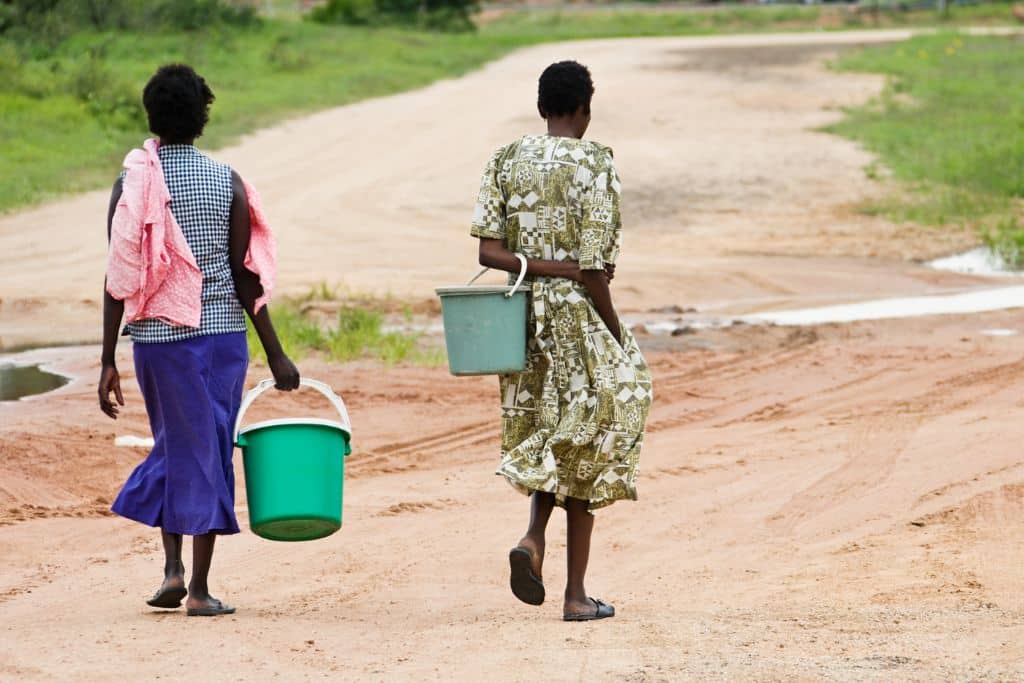
In many less developed nations, lack of infrastructure, corruption, and inequality leave large populations without reliable access to clean water. Women and children often bear the burden of travelling distances to fetch water for households. Contamination from human waste, industrial activities, and agricultural runoff also threaten water quality and safety.
Water scarcity poses risks to health, sanitation, food production, energy generation, economic growth, and political stability worldwide. Conflicts over shared water resources are likely to intensify without concerted global action.
Case Study: Water Crisis in Gaza
The water crisis in Gaza represents one of the most severe cases of water scarcity worldwide. The small Palestinian territory relies almost entirely on the underlying coastal aquifer as its source of freshwater. However, years of excessive pumping far exceed natural recharge rates. According to the UN, 97% groundwater does not meet World Health Organization (WHO) standards for human consumption due to high salinity and nitrate levels.
The pollution of Gaza’s sole freshwater source stems from multiple factors. Rapid population growth contaminated agricultural runoff, inadequate wastewater treatment, and saltwater intrusion due to over-extraction have rendered the aquifer unusable.
In June 2007, following the military takeover of Gaza by Hamas, the Israeli authorities significantly intensified existing movement restrictions, virtually isolating the Gaza Strip from the rest of the occupied Palestinian territory (oPt), and the world. The blockade imposed by Israeli Authority also severely restricts infrastructure development and humanitarian aid.
The water crisis has devastated Gazan agriculture, caused widespread health issues, and crippled economic growth. Many citizens of Gaza have to buy trucked water of dubious quality, as the public network is unsafe and scarce. The United Nations Relief and Works Agency for Palestine Refugees in the Near East (UNRWA) reports that this water can cost up to 20 times more than the public tariff, with some households spending a third of their income or more on water. Long-term solutions require increased water supplies, wastewater reuse, desalination, and better resource management under conflict.
According to a 2022 report by the WHO and UNICEF’s Joint Monitoring Programme (JMP), 344 million people in sub-Saharan Africa lacked access to safely managed drinking water, and 762 million lacked access to basic sanitation in 2020. WaterAid, a non-governmental organization, explains that water resources are often far from communities due to the expansive nature of the continent, though other factors such as climate change, population growth, poor governance, and lack of infrastructure also play a role. Surface waters such as lakes and rivers evaporate rapidly in the arid and semi-arid regions of Africa, which cover about 45% of the continent’s land area. Many communities rely on limited groundwater and community water points to meet their water needs, but groundwater is not always a reliable or sustainable source, as it can be depleted, contaminated, or inaccessible due to technical or financial constraints. A 2021 study by UNICEF estimated that women and girls in sub-Saharan Africa collectively spend about 37 billion hours a year collecting water, which is equivalent to more than 1 billion hours a day.The 2023 UN World Water Development Report emphasizes the importance of partnerships and cooperation for water, food, energy, health and climate security in Africa, a region with diverse water challenges and opportunities, low water withdrawals per capita, high vulnerability to climate change, and large investment gap for water supply and sanitation.
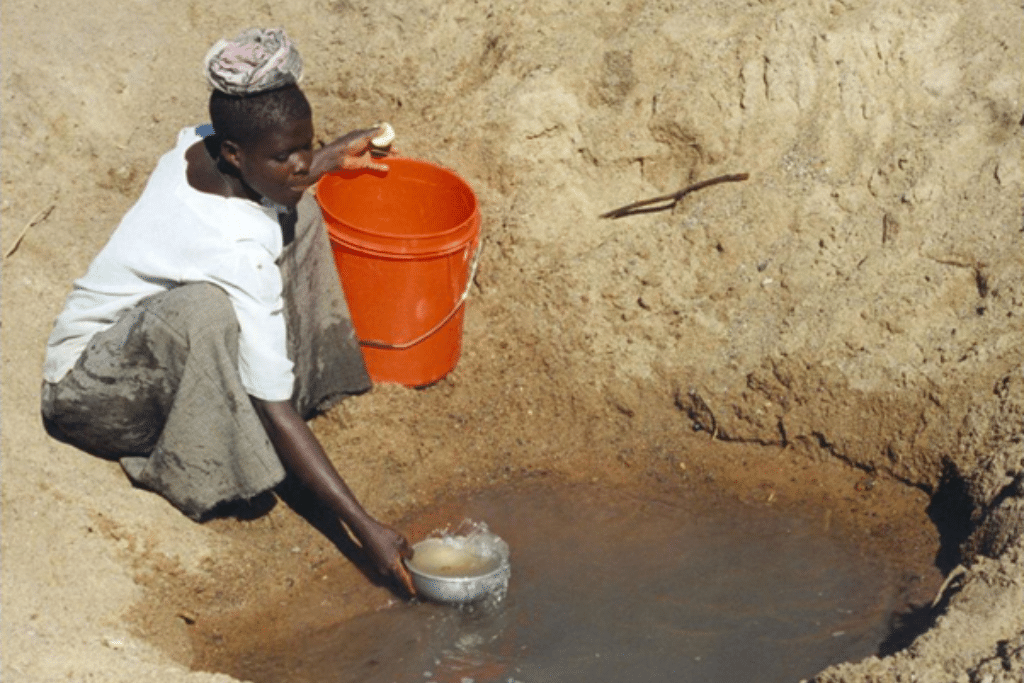
In the Meatu District in Shinyanga, an administrative region of Tanzania, water most often comes from open holes dug in the sand of dry riverbeds and it is invariably contaminated.
Water security in Africa is low and uneven, with various countries facing water scarcity, poor sanitation, and water-related disasters. Transboundary conflicts over shared rivers, such as the Nile, pose additional challenges for water management.
However, some efforts have been made to improve water security through various interventions, such as community-based initiatives, irrigation development, watershed rehabilitation, water reuse, desalination, and policy reforms. These interventions aim to enhance water availability, quality, efficiency, governance, and resilience in the face of climate change. Water security is essential for achieving sustainable development in Africa, as it affects numerous sectors, such as agriculture, health, energy, and the environment.
Other Countries with Water Shortages
Water scarcity issues plague many other parts of the world beyond Gaza and Africa. Several examples stand out:
Iraq faces severe water stress impacting agriculture and public health. The Tigris and Euphrates Rivers have dwindled because of upstream damming and climate change. Water distribution is inefficient and wasteful.
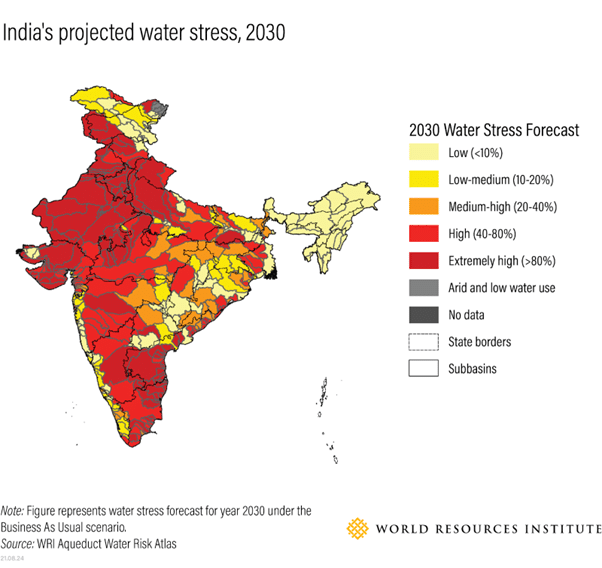
Indiagrapples with extensive groundwater depletion, shrinking reservoirs and glaciers, pollution from agriculture and industry, and tensions with Pakistan and China over shared rivers. Monsoons are increasingly erratic with climate change.
Projections show India will be under severe water stress by the end of the decade. Image: WRI.
While the specifics differ, recurrent themes include unsustainable usage, climate change, pollution, lack of infrastructure, mismanagement, poverty, transboundary conflicts, and population growth pressures. But resources often exist; the challenge lies in equitable distribution, cooperation, efficiency, and sustainable practices. Multiple approaches must accommodate local conditions and transboundary disputes.
Water scarcity poses a grave threat to global security on multiple fronts.
First, it can incite conflicts within and between nations over access rights. History contains many examples of water wars, and transboundary disputes increase the risk today in arid regions like the Middle East and North Africa.
Second, water shortages undermine food security. With agriculture consuming the greatest share of water resources, lack of irrigation threatens crops and livestock essential for sustenance and livelihoods. Food price spikes often trigger instability and migrations.
Third, water scarcity fuels public health crises, leading to social disruptions. Contaminated water spreads diseases like cholera and typhoid. Poor sanitation and hygiene due to water limitations also increase illness. The Covid-19 pandemic underscored the essential nature of water access for viral containment.
Finally, water shortages hamper economic growth and worsen poverty. Hydroelectricity, manufacturing, mining, and other water-intensive industries suffer. The World Bank estimates that by 2050, water scarcity could cost some regions 6% of gross domestic product (GDP), entrenching inequality. Climate migration strains nations. Overall, water crises destabilize societies on many levels if left unaddressed.
Solutions and Recommendations
Tackling the global water crisis requires both local and international initiatives across infrastructure, technology, governance, cooperation, education, and funding.
First, upgrading distribution systems, sewage treatment, dams, desalination, watershed restoration, and irrigation methods could improve supply reliability and quality while reducing waste. Community-based projects often succeed by empowering local stakeholders.
Second, emerging technologies like low-cost water quality sensors, affordable desalination, precision agriculture, and recyclable treatment materials could help poorer nations bridge infrastructure gaps. However, funding research and making innovations affordable remains a key obstacle.
Third, better governance through reduced corruption, privatization, metering, pricing incentives, and integrated policy frameworks could improve efficiency. But human rights must be protected by maintaining affordable minimum access.
Fourth, transboundary water-sharing treaties like those for the Nile and Mekong Rivers demonstrate that diplomacy can resolve potential conflicts. But political will is needed, along with climate change adaptation strategies.
Fifth, education and awareness can empower conservation at the individual level. Behaviour change takes time but can significantly reduce household and agricultural usage.
Finally, increased financial aid, public-private partnerships, better lending terms, and innovation prizes may help nations fund projects. Cost-benefit analyses consistently find high returns on water security investments.
In summary, sustainable solutions require combining new technologies, governance reforms, education, cooperation, and creative financing locally and globally.
Conclusion
The global water crisis threatens the well-being of billions of people and the stability of nations worldwide. Key drivers include unsustainable usage, climate change, pollution, lack of infrastructure, poverty, weak governance, and transboundary disputes. The multiple impacts span public health, food and energy security, economic growth, and geopolitical conflicts.
While daunting, this crisis also presents opportunities for innovation, cooperation, education, and holistic solutions. With wise policies and investments, water security can be achieved in most regions to support development and peace. But action must be accelerated on both global and community levels before the stresses become overwhelming. Ultimately, our shared human dependence on clean water demands that all stakeholders work in unison to create a water-secure future.
Climate change is exacerbating both water scarcity and water-related hazards (such as floods and droughts), as rising temperatures disrupt precipitation patterns and the entire water cycle.
Water and climate change are inextricably linked. Climate change affects the world’s water in complex ways. From unpredictable rainfall patterns to shrinking ice sheets, rising sea levels, floods and droughts – most impacts of climate change come down to water.
Climate change is exacerbating both water scarcity and water-related hazards (such as floods and droughts), as rising temperatures disrupt precipitation patterns and the entire water cycle.
Only 0.5 per cent of water on Earth is useable and available freshwater – and climate change is dangerously affecting that supply. Over the past twenty years, terrestrial water storage – including soil moisture, snow and ice – has dropped at a rate of 1 cm per year, with major ramifications for water security.
Melting glaciers, snow and permafrost are affecting humans and ecosystems in mid-to-high latitudes and the high-mountain regions. These changes are already impacting irrigation, hydropower, water supply, and populations depending on ice, snow and permafrost.
Climate change is one of the key drivers of the loss and degradation of freshwater ecosystems and the unprecedented decline and extinction of many freshwater-dependent populations, particularly due to land use and pollution.
Limiting global warming to 1.5°C compared to 2°C would approximately halve the proportion of the world population expected to suffer water scarcity, although there is considerable variability between regions.
Water quality is also affected by climate change, as higher water temperatures and more frequent floods and droughts are projected to exacerbate many forms of water pollution – from sediments to pathogens and pesticides.
Climate change, population growth and increasing water scarcity will put pressure on food supply as most of the freshwater used, about 70 per cent on average, is used for agriculture (it takes between 2000 and 5000 liters of water to produce a person’s daily food).
Rising global temperatures increase the moisture the atmosphere can hold, resulting in more storms and heavy rains, but paradoxically also more intense dry spells as more water evaporates from the land and global weather patterns change.
Annual mean precipitation is increasing in many regions worldwide and decreasing over a smaller area, particularly in the tropics.
Climate change has increased the likelihood of extreme precipitation events and the associated increase in the frequency and magnitude of river floods.
Climate change has also increased the likelihood or severity of drought events in many parts of the world, causing reduced agricultural yields, drinking water shortages, increased wildfire risk, loss of lives and economic damages.
Drought and flood risks, and associated societal damages, are projected to further increase with every degree of global warming.
Water-related disasters have dominated the list of disasters over the past 50 years and account for 70 per cent of all deaths related to natural disasters.
Since 2000, flood-related disasters have risen by 134 per cent compared with the two previous decades. Most of the flood-related deaths and economic losses were recorded in Asia. The number and duration of droughts also increased by 29 per cent over this same period. Most drought-related deaths occurred in Africa.
Water solutions
Healthy aquatic ecosystems and improved water management can lower greenhouse gas emissions and provide protection against climate hazards.
Wetlands such as mangroves, seagrasses, marshes and swamps are highly effective carbon sinks that absorb and store CO2, helping to reduce greenhouse gas emissions.
Wetlands also serve as a buffer against extreme weather events. They provide a natural shield against storm surges and absorb excess water and precipitation. Through the plants and microorganisms that they house, wetlands also provide water storage and purification.
Early warning systems for floods, droughts and other water-related hazards provide a more than tenfold return on investment and can significantly reduce disaster risk: a 24-hour warning of a coming storm can cut the ensuing damage by 30 per cent.
Water supply and sanitation systems that can withstand climate change could save the lives of more than 360,000 infants every year.
Even in countries with adequate water resources, water scarcity is not uncommon. Although this may be due to a number of factors — collapsed infrastructure and distribution systems, contamination, conflict, or poor management of water resources — it is clear that climate change, as well as human factors, are increasingly denying children their right to safe water and sanitation.
Water scarcity limits access to safe water for drinking and for practising basic hygiene at home, in schools and in health-care facilities. When water is scarce, sewage systems can fail and the threat of contracting diseases like cholera surges. Scarce water also becomes more expensive.
Water scarcity takes a greater toll on women and children because they are often the ones responsible for collecting it. When water is further away, it requires more time to collect, which often means less time at school. Particularly for girls, a shortage of water in schools impacts student enrolment, attendance and performance. Carrying water long distances is also an enormous physical burden and can expose children to safety risks and exploitation.
UNICEF/UNI315914/Haro Niger, 2020. Early in the morning, children go to the nearest water point to fetch water, 15 kilometres away from their home in Tchadi village.
Key facts
Four billion people — almost two thirds of the world’s population — experience severe water scarcity for at least one month each year.
Over two billion people live in countries where water supply is inadequate.
Half of the world’s population could be living in areas facing water scarcity by as early as 2025.
Some 700 million people could be displaced by intense water scarcity by 2030.
By 2040, roughly 1 in 4 children worldwide will be living in areas of extremely high water stress.
UNICEF’s response
As the factors driving water scarcity are complex and vary widely across countries and regions, UNICEF works at multiple levels to introduce context-specific technologies that increase access to safe water and address the impacts of water scarcity. We focus on:
Identifying new water resources: We assess the availability of water resources using various technologies, including remote sensing and geophysical surveys and field investigations.
Improving the efficiency of water resources: We rehabilitate urban water distribution networks and treatment systems to reduce water leakage and contamination, promoting wastewater reuse for agriculture to protect groundwater.
Planning for urban scarcity: We plan for future water needs by identifying available resources to reduce the risk of cities running out of water.
Expanding technologies to ensure climate resilience: We support and develop climate-resilient water sources, including the use of deeper groundwater reserves through solar-powered water networks. We also advance water storage through small-scale retention structures, managed aquifer recharge (where water is pumped into underground reserves to improve its quality), and rainwater harvesting.
Changing behaviours: We work with schools and communities to promote an understanding of the value of water and the importance of its protection, including by supporting environmental clubs in schools.
Planning national water needs: We work with key stakeholders at national and sub-national levels to understand the water requirements for domestic use and for health and sanitation, and advocate to ensure that this is reflected in national planning considerations.
Supporting the WASH sector: We develop technical guidance, manuals and online training programmes for WASH practitioners to improve standards for water access.
Flooding is emerging as a silent but powerful destroyer of global rice supplies—and the danger is accelerating.
Source:Stanford UniversitySummary:Scientists discovered that a week of full submergence is enough to kill most rice plants, making flooding a far greater threat than previously understood. Intensifying extreme rainfall events may amplify these losses unless vulnerable regions adopt more resilient rice varieties.Share:
FULL STORY
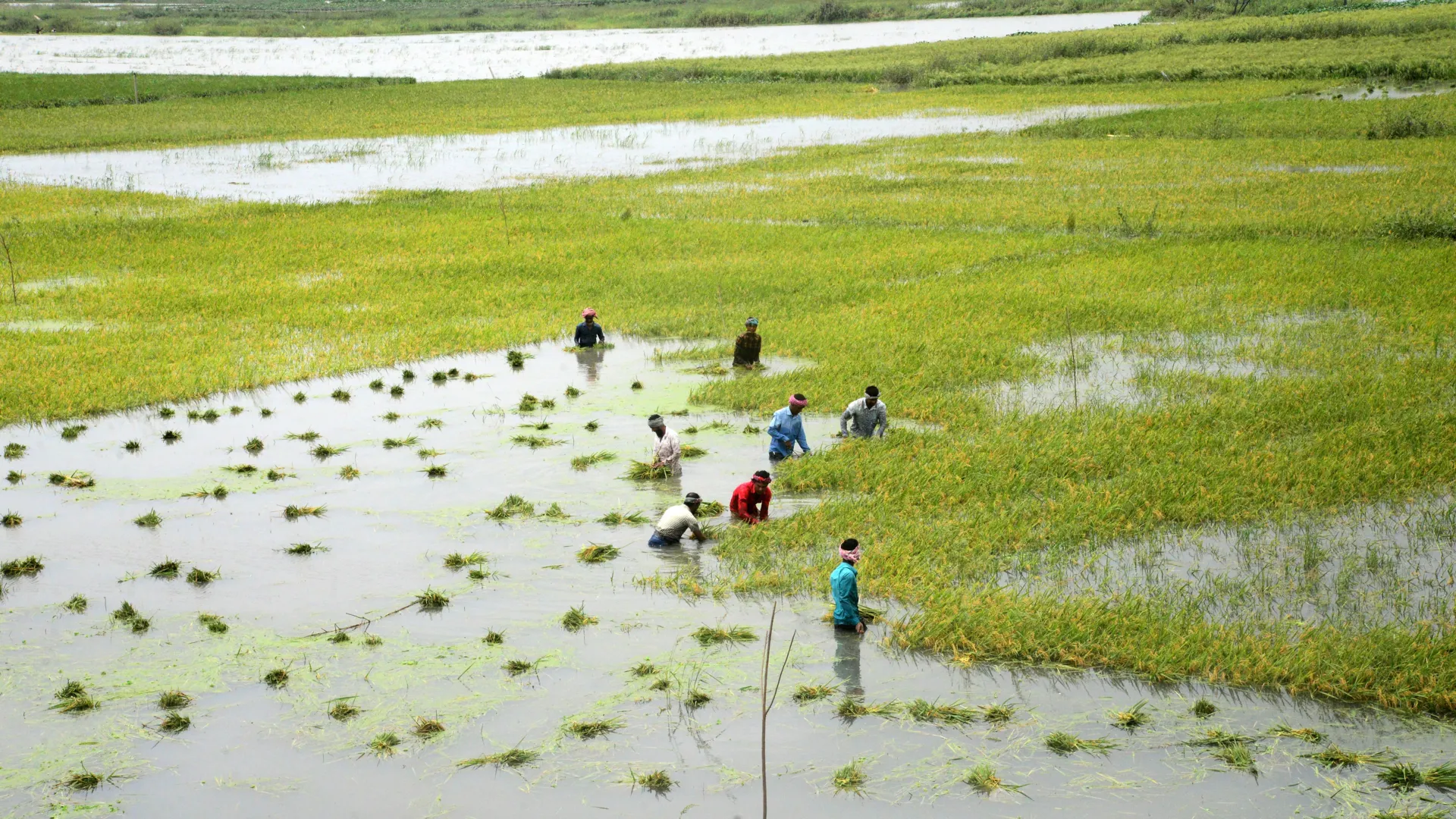
Severe flooding is increasingly damaging global rice yields, slashing production by millions of tons and threatening food security for billions. Credit: Shutterstock
Intense flooding has significantly reduced rice harvests around the world in recent decades, putting at risk the food supply of billions of people who rely on the grain as a dietary staple. Between 1980 and 2015, annual losses averaged about 4.3%, or roughly 18 million tons of rice each year, according to Stanford University research published November 14 in Science Advances.
The researchers found that the damage has grown worse since 2000 as extreme floods have become more common in many of the planet’s main rice-growing regions. They report that climate change is likely to further increase the frequency and severity of these destructive floods in the coming decades.
Droughts, Floods, and a Delicate Balance for Rice
Scientists and farmers have long known that rice yields fall during droughts. The new study adds fresh detail to this picture, estimating that droughts reduced rice yields by an average of 8.1% per year during the 35-year study window. At the same time, the work draws attention to a related but less examined danger from too much water. Rice plants benefit from shallow standing water during early growth, yet prolonged or deep flooding can severely damage or kill the crop.
“While the scientific community has focused on damage to rice yield due to droughts, the impacts of floods have not received enough attention,” said Steven Gorelick, the study’s senior co-author and a professor of Earth system science in the Stanford Doerr School of Sustainability. “Our research documents not only areas where rice yields have suffered due to past flooding, but also where we can anticipate and prepare for this threat in the future.”
What Counts as a ‘Rice-Killing’ Flood
The research team clearly spells out, for the first time, the conditions that turn a flood into a lethal event for rice, said lead study author Zhi Li, who worked on the project as a postdoctoral fellow in Gorelick’s lab at Stanford and recently joined the faculty of the University of Colorado Boulder.
They found that a full week of complete submergence during the plant’s growth cycle is the critical tipping point. “When crops are fully submerged for at least seven days, most rice plants die,” Li said. “By defining ‘rice-killing floods,’ we were able to quantify for the first time how these specific floods are consistently destroying one of the most important staple foods for more than half of the global population.”
How the Researchers Measured Flood and Drought Damage
To estimate how much past droughts and floods have harmed rice production, the scientists combined several lines of evidence. They drew on information about rice growth stages, annual global rice yields, a worldwide database of droughts and floods dating back to 1950, a model of how floods behave across landscapes, and a simulation of soil moisture levels over time in major rice-growing river basins.
Their analysis indicates that, in the coming decades, the most intense week of rainfall in key rice-growing basins around the world could deliver 13% more rain than the average for those regions during the 1980 to 2015 baseline period. This projected increase suggests that rice-killing flood conditions may become more common as the climate continues to warm.
Flood-Resistant Rice Varieties and High-Risk Regions
Wider use of flood-resistant rice varieties could help reduce future losses, especially in the areas that face the highest risk. The study highlights the Sabarmati Basin in India, which experiences the longest rice-killing floods, along with North Korea, Indonesia, China, the Philippines, and Nepal, where the impact of such floods on rice yields has grown the most in recent decades. The greatest total losses have occurred in North Korea, East China, and India’s West Bengal.
The researchers also identified exceptions, such as India’s Pennar Basin, where flooding appears to boost rice yields. They suggest that in these locations, hot and dry conditions may allow standing floodwater to evaporate quickly, reducing long-term damage and sometimes even creating favorable moisture conditions for the crop.
Compounding Climate Stresses on Rice
For Gorelick and Li, the new findings reinforce the need to understand how rice responds not only to floods and droughts, but also to heat waves and cold stress, both individually and when they occur in succession. Earlier research has shown that rapid swings from drought to flood and back again can nearly double rice yield losses compared with single flood or drought events on their own. According to the authors, “How these combined effects can be mitigated remains a major challenge.”
Additional co-authors not mentioned above include Lorenzo Rosa, who is affiliated with the Department of Earth System Science in the Stanford Doerr School of Sustainability and the Department of Global Ecology at the Carnegie Institution for Science. The research was supported by a Dean’s Postdoctoral Fellowship awarded to Li by the Stanford Doerr School of Sustainability.
Summary:Sargassum has escaped the Sargasso Sea and exploded across the Atlantic, forming the massive Great Atlantic Sargassum Belt. Fueled by nutrient runoff, Amazon outflows, and climate events, these blooms now reshape ecosystems, economies, and coastlines on a staggering scale.Share:
FULL STORY
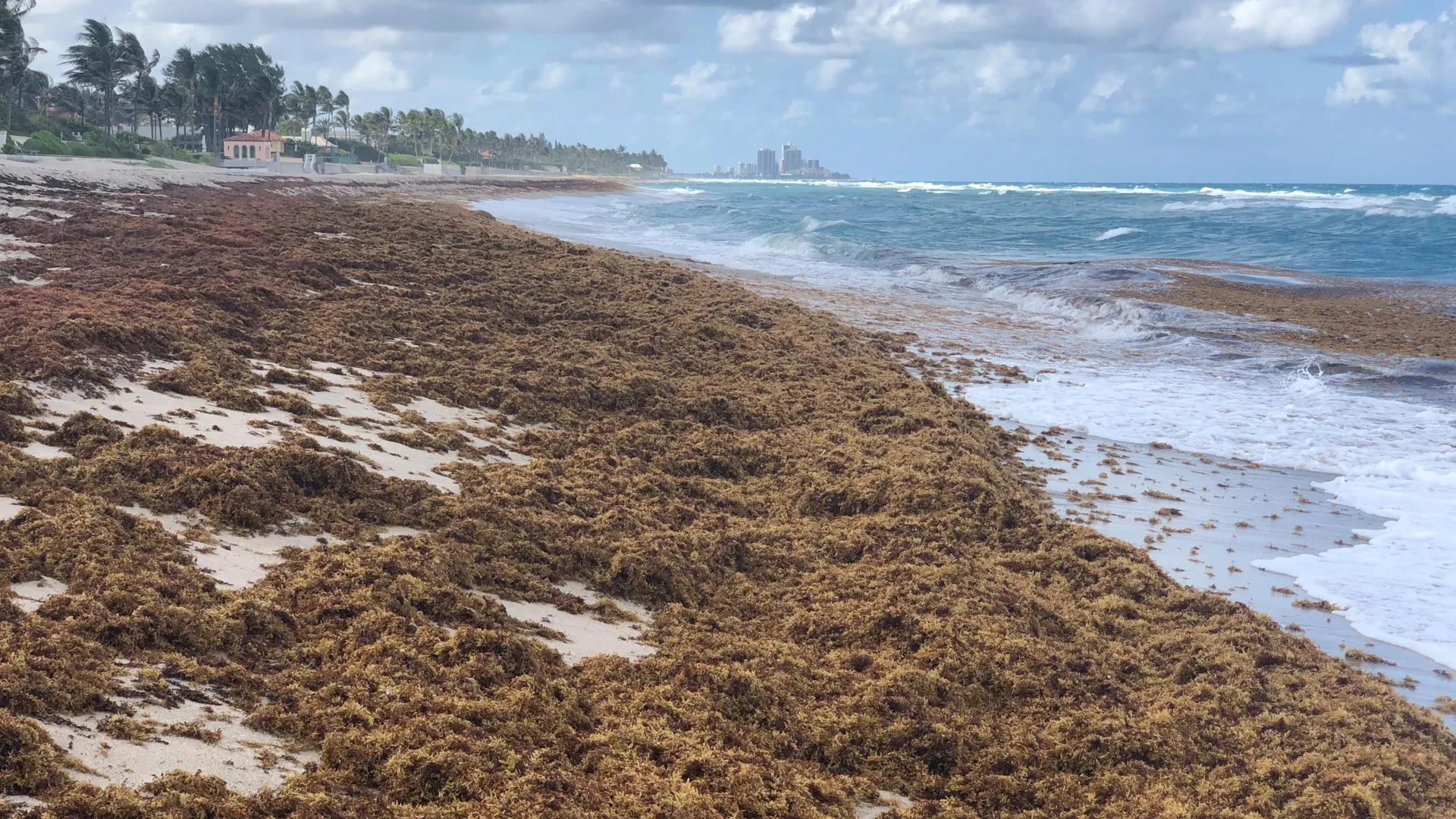
Sargassum on a beach in Palm Beach County in 2021. Credit: Brian Lapointe, FAU Harbor Branch
Researchers at Florida Atlantic University’s Harbor Branch Oceanographic Institute have released a landmark review tracing four decades of changes in pelagic sargassum – free-floating brown seaweed that plays a vital role in the Atlantic Ocean ecosystem.
Once thought to be primarily confined to the nutrient-poor waters of the Sargasso Sea, sargassum is now recognized as a rapidly growing and widely distributed marine organism, whose expansion across the Atlantic is closely linked to both natural processes and human-induced nutrient enrichment.
The review, published in the journal Harmful Algae, sheds new light on the origins and development of the Great Atlantic Sargassum Belt, a massive recurring bloom of sargassum that stretches across the Atlantic Ocean from the coast of West Africa to the Gulf of America.
Since its first appearance in 2011, this belt has formed nearly every year – except in 2013 – and in May, reached a new record biomass of 37.5 million tons. This does not include the baseline biomass of 7.3 million tons historically estimated in the Sargasso Sea.
By combining historical oceanographic observations, modern satellite imagery, and advanced biogeochemical analyses, this review provides a comprehensive framework for understanding the dramatic changes in sargassum distribution, productivity and nutrient dynamics. It also highlights the broader implications of anthropogenic nutrient enrichment on ocean ecology and the need for coordinated international efforts to monitor and manage the impacts of these massive seaweed blooms.
“Our review takes a deep dive into the changing story of sargassum – how it’s growing, what’s fueling that growth, and why we’re seeing such a dramatic increase in biomass across the North Atlantic,” said Brian Lapointe, Ph.D., lead author and a research professor at FAU Harbor Branch. “By examining shifts in its nutrient composition – particularly nitrogen, phosphorus and carbon – and how those elements vary over time and space, we’re beginning to understand the larger environmental forces at play.”
Early in the review, Lapointe and co-authors Deanna F. Webber, research coordinator; and Rachel Brewton, Ph.D., an assistant research professor, both with FAU Harbor Branch, explain that early oceanographers charted the Sargasso Sea based on surface sightings of sargassum, believing the seaweed thrived in its warm, clear, but nutrient-poor waters. However, this notion created a paradox when mid-20th-century oceanographers described the region as a “biological desert.”
However, recent satellite observations, ocean circulation models, and field studies have resolved this paradox by tracing the seasonal transport of sargassum from nutrient-rich coastal areas, particularly the western Gulf of America, to the open ocean via the Loop Current and Gulf Stream. These findings support early theories by explorers who proposed that Gulf-originating sargassum could feed populations in the Sargasso Sea.
Remote sensing technology played a pivotal role in these discoveries. In 2004 and 2005, satellites captured extensive sargassum windrows – long, narrow lines or bands of floating sargassum – in the western Gulf of America, a region experiencing increased nutrient loads from river systems such as the Mississippi and Atchafalaya.
“These nutrient-rich waters fueled high biomass events along the Gulf Coast, resulting in mass strandings, costly beach cleanups and even the emergency shutdown of a Florida nuclear power plant in 1991,” Lapointe said. “A major focus of our review is the elemental composition of sargassum tissue and how it has changed over time.”
Laboratory experiments and field research dating back to the 1980s confirmed that sargassum grows more quickly and is more productive in nutrient-enriched neritic waters than in the oligotrophic waters of the open ocean. Controlled studies revealed that the two primary species, sargassum natans and sargassum fluitans, can double their biomass in just 11 days under optimal conditions. These studies also established that phosphorus is often the primary limiting nutrient for growth, although nitrogen also plays a critical role.
From the 1980s to the 2020s, the nitrogen content of sargassum increased by more than 50%, while phosphorus content decreased slightly, leading to a sharp rise in the nitrogen-to-phosphorus (N:P) ratio.
“These changes reflect a shift away from natural oceanic nutrient sources like upwelling and vertical mixing, and toward land-based inputs such as agricultural runoff, wastewater discharge and atmospheric deposition,” said Lapointe. “Carbon levels in sargassum also rose, contributing to changes in overall stoichiometry and further highlighting the impact of external nutrient loading on marine primary producers.”
The review also explores how nutrient recycling within sargassum windrows, including excretion by associated marine organisms and microbial breakdown of organic matter, can sustain growth in nutrient-poor environments. This micro-scale recycling is critical in maintaining sargassum populations in parts of the ocean that would otherwise not support high levels of productivity.
Data from sargassum collected near the Amazon River mouth support the hypothesis that nutrient outflows from this major river contribute significantly to the development of the GASB. Variations in sargassum biomass have been linked to flood and drought cycles in the Amazon basin, further connecting land-based nutrient inputs to the open ocean.
The formation of the GASB appears to have been seeded by an extreme atmospheric event – the negative phase of the North Atlantic Oscillation in 2009 to 2010, which may have helped shift surface waters and sargassum from the Sargasso Sea southward into the tropical Atlantic.
However, the researchers caution that there is no direct evidence of this movement. Moreover, genetic and morphological data suggest that some sargassum populations, particularly the dominant S. natans var. wingei, were already present in the tropical Atlantic prior to 2011, indicating that this region may have had an overlooked role in the early development of the GASB.
“The expansion of sargassum isn’t just an ecological curiosity – it has real impacts on coastal communities. The massive blooms can clog beaches, affect fisheries and tourism, and pose health risks,” said Lapointe. “Understanding why sargassum is growing so much is crucial for managing these impacts. Our review helps to connect the dots between land-based nutrient pollution, ocean circulation, and the unprecedented expansion of sargassum across an entire ocean basin.”
This work was funded by the Florida Department of Emergency Management, United States Environmental Protection Agency, South Florida Program Project, and the NOAA Monitoring and Event Response for Harmful Algal Blooms program. Historical studies included within the review were funded by the NASA Ocean Biology and Biogeochemistry Program and Ecological Forecast Program, NOAA RESTORE Science Program, National Science Foundation, “Save Our Seas” Specialty License Plate and discretionary funds, granted through the Harbor Branch Oceanographic Institute Foundation, and a Red Wright Fellowship from the Bermuda Biological Station.







 GET WET!