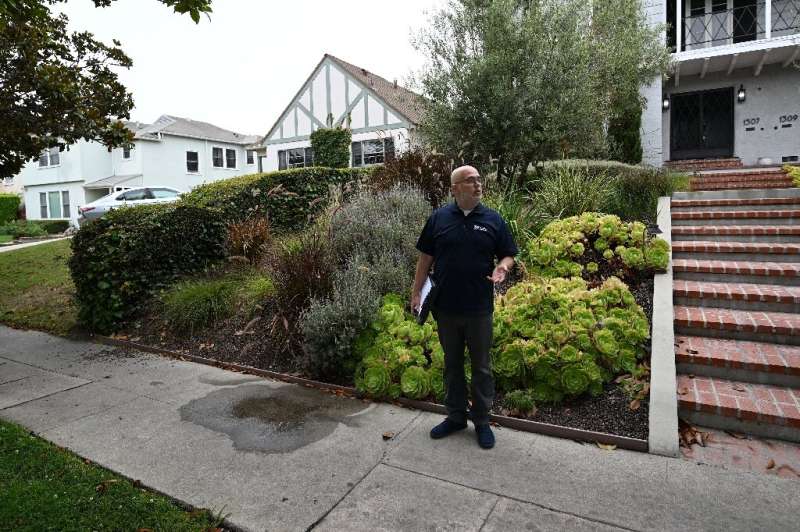
Damon Ayala patrols the streets of drought-stricken Los Angeles every day, inspecting the sidewalks. Each time he sees a puddle, he stops.
He is part of the city’s Department of Water and Power team, which looks into hundreds of community complaints filed by neighbors each week about water waste.
“It’s not extreme, but it’s something that we want them to take a look at,” he says of one pool of water.
“Looks like they have drip irrigation on this side. So there might be just a broken connector.”
Ayala’s patrol comes as California and the western United States are in the grip of a severe, years-long drought.
Scientists say global warming driven by human activity, including the unchecked burning of fossil fuels, is creating a greater number of extreme events.
With reservoirs and rivers at historic lows, Los Angeles authorities have brought in water restrictions, such as limiting lawn irrigation to as little as eight minutes, twice per week.
Ayala notes down the addresses of properties where he finds evidence of infringement. The first violation prompts a warning.
“A lot of times they don’t know about the ordinance, and that’s our job to educate them,” he said.
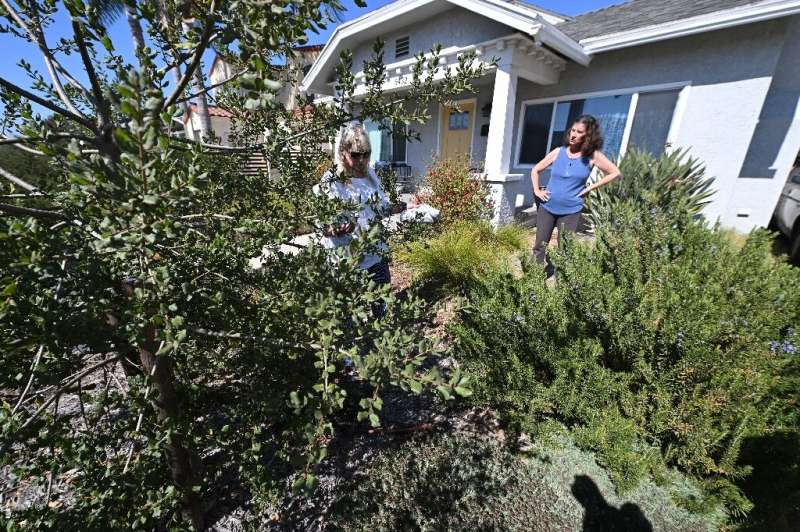
Pamela Berstler and Marianne Simon encourage Los Angeles residents to trade in their lawns for less thirsty alternatives.
Repeat offenders are fined between $200 and $600.
“We’re not looking really for their money—that doesn’t get us more water. We’re trying to get behavioral change,” he said.
“So that way we can capture the water savings from making those changes.”
After a fifth infraction, a device is installed which physically restricts a household’s supply, although Ayala says that step has rarely been necessary.
“We’ve been in serious drought situations in the past in the city of Los Angeles, and its citizens responded,” he said.
“And we expect them to respond this time around too.
‘Obvious choice’
The water department says it is beginning to see results.
Officials noted a reduction in residential water demand in June, compared to the same month last year.
But as the drought worsens, more permanent changes to the city’s landscape could become necessary.
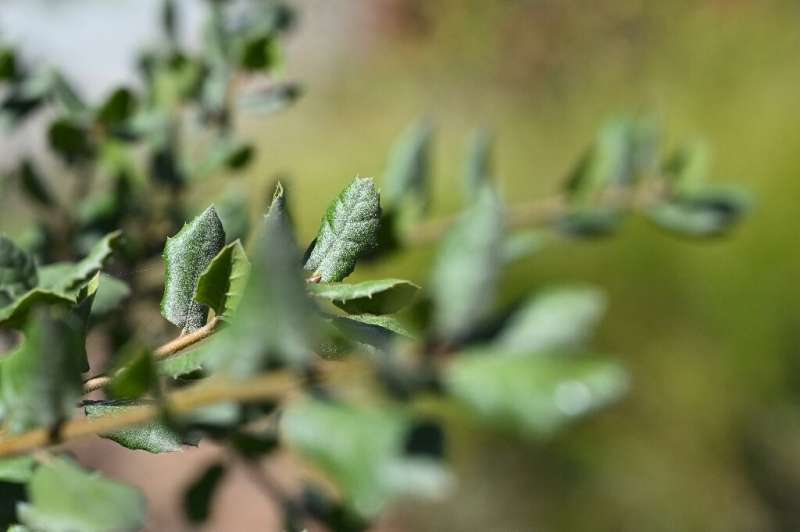
The small, leathery leaves of a young California live oak (Quercus agrifolia) in a Los Angeles garden that swapped its lawn for native plants.
Famous for its rows of palm trees, Los Angeles has also traditionally been known for its lush, green lawns, maintained with automatic sprinklers.
Residents are increasingly replacing their thirsty lawns with plants native to this desert region.
“When we think of how much water gets used in a residential setting, over 50 per cent is actually used outdoors,” said Pamela Berstler, executive director of urban landscaping firm G3 Garden Group.
She and her colleague Marianne Simon teach classes as part of a city program to encourage Angelenos to trade in their lawns for alternatives.
South Los Angeles residents Gabriel Golden and Danielle Koplinkase, joined the program a few years ago.
“The environmental impact of watering a lawn, not only in the midst of a draught but also living in a very dry climate, made this an obvious choice,” they said.
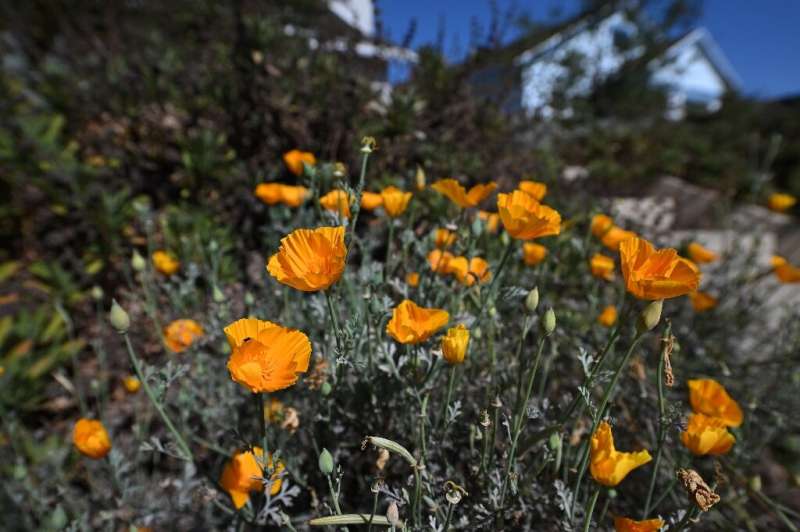
California poppies are a colorful choice in a garden where traditional Los Angeles grasses have been replaced by native and less water-demanding options.
“We also sought to inspire our neighbors and community by going to a drought tolerant and native garden.”
Native plants such as California oak, and flowers that only require a few drops of water each week to thrive, now adorn the couple’s garden.
“There are parts of southern California where they have cut the water down to one day of watering per week,” said Simon.
“And the reality is that these kinds of gardens would be fine on that amount of water—in fact, could do with less—but our traditional lawns can’t survive on that.”
Water resources will fluctuate increasingly and become more and more difficult to predict in snow-dominated regions across the Northern Hemisphere by later this century, according to a comprehensive new climate change study led by the National Center for Atmospheric Research (NCAR).
The research team found that, even in regions that keep receiving about the same amount of precipitation, streamflow will become more variable and unpredictable. As snowpack recedes in a warmer future and fails to provide reliable runoff, the amount and timing of water resources will become increasingly reliant on periodic episodes of rain.
“Water managers will be at the whim of individual precipitation events instead of having four-to-six months lead time to anticipate snowmelt and runoff,” said NCAR scientist Will Wieder, the lead author. “Water management systems in snow-dominated regions are based on the predictability of snowpack and runoff, and much of that predictability could go away with climate change.”
Observations show that snowpack is already melting earlier, and even declining in many regions. This decline will become so pronounced toward the end of the century that the amount of water contained in snowpack at the end of an average winter in parts of the U.S. Rocky Mountains could plummet by nearly 80%, the scientists found.
The changes in runoff and streamflow are likely to have cascading impacts on ecosystems that depend on reliable water from snow, the study warns. Although the changes won’t be uniform across regions, more snow-free days and longer growing seasons will put stress on water resources, drying out soils in many areas and heightening fire risk.
The study assumes that emissions of greenhouse gasses continue at a high rate (a scenario known as SSP3-7.0). Wieder said that the most severe impacts on snowpack, runoff, and ecosystems would likely be avoided if society successfully reduced greenhouse gas emissions.
The scientists drew on an advanced set of computer simulations to fill in details about the future of water resources, showing the extent to which changes in temperature and precipitation will alter snow accumulation and runoff patterns in the Northern Hemisphere. Although past research looked at the impacts of climate change on water availability, the new study focuses on the increasing variability of water resources.
‘A race with predictability’
Many regions of Earth rely on the accumulation of snow during the winter and subsequent melting in the spring and summer for regulating runoff and streamflow. For years, however, scientists have warned that the snowpack will become thinner and melt earlier as more precipitation during the colder months falls as rain instead of snow, and as melting occurs at times during the winter instead of the spring runoff season.
To determine how reduced snowpack will affect the variability of water resources, Wieder and his co-authors turned to a powerful NCAR-based climate model: the Community Earth System Model, version 2. They drew on a recently created database of simulations, known as the CESM2 Large Ensemble, to compare a past period (1940–1969) with a future period (2070–2099). The simulations were run on the Aleph supercomputer at the Institute for Basic Science supercomputer in Busan, South Korea.
The results illuminate the extent to which widespread shifts in the timing and extent of water flows will occur in much of the world by 2100. There will be an average of about 45 more snow-free days yearly in the Northern Hemisphere, assuming high greenhouse gas emissions. The largest increases will occur in midlatitudes that are relatively warm and high-latitude maritime regions that are influenced by changes in sea ice.
Many regions that rely the most on predictable relationships between snowpack and runoff will experience the largest loss in predictability because of a sharp decline in reliable pulses of spring runoff. These regions include the Rocky Mountains, Canadian Arctic, Eastern North America, and Eastern Europe. The authors warn that this will substantially complicate the management of freshwater resources, both for society and ecosystems.
“We are in a race with predictability when it comes to streamflow because we’re trying to improve our forecasts through better data, models, and physical understanding, but these efforts are being canceled by the rapid disappearance of our best predictor: snow,” said Flavio Lehner, a professor of earth and atmospheric science at Cornell University and a co-author of the study. “It might be a race we’ll lose, but we’re trying to win it, and that is why we need to study these topics.”
Although the reduced runoff will result in drier summertime soil conditions in much of the Northern Hemisphere, the simulations showed that certain regions—including East Asia, the Himalayas, and Northwestern North America—will maintain soil moisture because of increased rainfall.
Australians in more than 400 remote or regional communities lack access to good-quality drinking water, while about eight percent of Australia’s population is not included in reporting on access to clean water, according to researchers at The Australian National University (ANU).
The researchers reviewed public reporting by 177 water utilities to measure gaps in drinking water quality in regional and remote Australia.
They assessed water quality performance against the Australian Drinking Water Guidelines (ADWG), which provide guidance to water regulators and suppliers on monitoring and managing drinking water quality.
The researchers found at least 25,245 people across 99 locations with populations of fewer than 1,000 people had accessed water services that did not comply with the health-based guideline values at least once in 2018-19.
They also identified 408 regional and remote locations with a combined population of 627,736 people that failed to measure up to either health-based guidelines or the ADWG’s aesthetic determinants of good water quality across taste, color and odor.
Furthermore, 40 percent of all locations with reported health-based non-compliances were remote Indigenous communities.
Lead author of a peer-reviewed paper published in npj Clean Water, Dr. Paul Wyrwoll said their research also shows Australia’s national reporting of drinking water quality is not fit-for-purpose.
“Australia’s national water quality statistics do not include service providers with less than 10,000 connections,” he said.
“This means approximately two million people, or about eight percent of Australia’s population, are not included in reporting on the ‘clean water for all’ goal of the United Nations Sustainable Development Goals (SDGs). The 2022 SDG progress report states that 100 percent of Australians have universal and equitable access to safe and affordable drinking water.”
“Our national statistics misrepresent the challenges facing households and water service providers across regional and remote Australia.”
Dr. Wyrwoll also said the creation of a national drinking water database is urgently required, but numerous gaps in reporting must be addressed.
“For example, the New South Wales government does not require local water utilities to make annual reports available to customers,” he said.
“About 1.2 million people in regional areas don’t know what’s coming out of their tap, but the government has a database with all the results. Why don’t they make the data public?”
“Our study shows we can create a national database. Combined with the body of knowledge emerging on the conditions needed for consistent delivery of safe water and sanitation, this can help deliver water for all.”
Convener of the ANU Water Justice Hub, Professor Quentin Grafton, said momentum is building to respond to the drinking water quality problems in regional and remote Australia, with the Productivity Commission and Infrastructure Australia recognizing this urgent need.
“But, Australia is still flying blind as it lacks a national drinking water quality database that would support the federal government’s expansion of the National Water Grid investment policy to town water supplies,” he said.
“A renewed National Water Commission could oversee progress.”
Dr. Wyrwoll said droughts, floods, unsustainable irrigation water extractions, industrial pollution, aging infrastructure, high costs and harsh environmental conditions also affect water quality.
“Testimonies from the 2019 Citizen’s Inquiry into the Health of the Barka/Darling River and Menindee Lakes highlight the severe impacts of poor water quality on the well-being of families and communities,” he said.
“The majority of Australia’s population lives in capital cities where they might assume that all Australians have universal and equitable access to safe and affordable drinking water. But they would be very wrong.”
Urban areas are often thought of as concrete jungles, but they encompass much more than that. Nature, people and built structures are interconnected. Together they comprise the urban environment of the cities and towns in which we live.
In the past five years, Australian cities have continued to grow. In fact, the State of the Environment Report released this week revealed most of our major cities have grown faster than many developed cities overseas.
This growth has increased demand for resources such as water and energy. It has increased other impacts, too, including urban heat, congestion, pollution and waste.
These pressures are a threat to the livability and sustainability of urban life in Australia. However, the report assessed the overall state of the urban environment as good and stable—among the most positive ratings of any category. That’s largely a result of actions across Australia, mostly at the level of states, local councils and communities, that are starting to make progress towards cities that will be more resilient to climate change and remain good places for us to live.
The State of the Environment Report contains fundamental information on how the country’s environment is faring in areas ranging from air quality to urban environments. Western Parkland City Authority CEO Sarah Hill, private consultant and Barkandji woman Zena Cumpston and I collaborated in assessing the state of the urban environment for this report.
We found state and local governments have responded to some challenges with great initiatives that take us closer to more resilient and sustainable urban environments. However, there is still a need for national approaches and for better collaboration and co-ordination between the private and public sectors.
What are the pressures on our cities and towns?
The Australian Bureau of Statistics (ABS) defines urban as centers with more than 200 people. Australia has over 1,853 urban environments. However, 75% of people in Australia live in just 18 cities with more than 100,000 people each.
The report shows the population of these 18 urban areas grew by 20% in the past ten years. Most of that growth happened in the five years after the last State of the Environment report in 2016. At the same time, remote area populations decreased.
Property developers and the construction sectors have responded by increasing housing production. They have mainly focused on apartment buildings and semi-detached houses.
Unfortunately, at the same time the public sector has greatly reduced its role in housing. Based on ABS data, we calculated that the government now develops only 1% of all new dwellings in Australia.
Residential building and house sizes have slightly increased while lot sizes have shrunk. This means there is less open space. And these smaller backyards and setbacks between buildings are now often paved.
As a result, we are seeing higher temperatures and reduced or endangered biodiversity. These changes have negative impacts on people’s and the environment’s well-being.
Despite local government policies to increase green cover in public areas and protect our urban forests, the changes in private properties have led to an overall loss of green spaces in our cities.
These developments are often found in the urban outskirts of expanding cities. Increased travel distances and limited access to jobs, education, food and services are reducing the livability of these cities.
These pressures are even worse in smaller and more isolated areas. For example, in the report we note: “Indigenous communities in smaller urban centers are often far from amenities such as shopping, health care, cultural business, education and social services. In 2014–2015, 75% of Indigenous Australians reported that they could not easily get to the places they needed.”
These areas also have more insecure access to resources such as digital infrastructure, energy and water. On top of this, they have suffered from shocks such as extreme bushfires, floods and mice plagues.
So, the overall livability of smaller urban areas with fewer than 10,000 people has been assessed as poor. The livability of larger cities, on the other hand, has remained good over the past five years.
However, we need to beware of generalizations. Differences in livability between inner and outer areas of the bigger cities are noticeable.
Inner-city areas have higher levels of livability based on factors such as walkability, access to green spaces and services. The urban fringes tend to have poorer access to services and longer commute times. Higher socio-economic areas tend to benefit from better tree canopy cover and digital access.
Smaller urban areas have some advantages—mainly shorter commute times—but are disadvantaged by fewer services and job opportunities.
What are we doing about the challenges we face?
Population growth and its effects on resource consumption, waste generation, travel and pollution continue to pressure the urban environment. However, our biggest challenge is climate change.
Sea-level rises, more extreme events such as bushfires, drought, extreme rainfall and flooding, and higher urban temperatures are expected to have significant impacts on cities’ biodiversity and people.
Many state and local governments are taking a hands-on approach to some of these challenges and pressures. Through urban planning policies, they are managing urban sprawl and protecting public green areas.
Governments have also been investing in more integrated infrastructure—for example, better coordinating the development and use of roads, public transport, cycle paths and walkways—better waste management and reducing disaster risk.
We are on the right path with great initiatives all over Australia working to achieve more sustainable and resilient urban environments. However, they are in the early stages.
Elizabeth O’Connell of Northeastern University-London worked through Britain’s record breaking heat wave Tuesday at home with her curtains closed and a Dyson fan at her side.
“Regular cold showers are a must,” says O’Connell, director of marketing and admissions for Northeastern’s London location.
“Dog walks now take place at 6 a.m. when it is relatively cool. Few homes have air conditioning, as historically we have not experienced the temperatures to warrant its installation,” she says in an email.
The heat wave striking Europe has sent temperatures in Britain above 40 degrees Celsius–or 104 Fahrenheit—for the first time ever, caused wildfires in France and killed more than 1,000 people in Spain and Portugal.
Northeastern University professors say it is a sign of more to come as climate change continues to create extreme weather challenges.
“Continents across the globe are going through enormous heat waves,” says Auroop Ganguly, a professor of civil and environmental engineering at Northeastern University.
“It’s not that they have never happened before. They have not happened continuously for this long and over and over,” he says.
“We are seeing records being broken almost each successive year.”
To say that northern latitudes such as Britain were unprepared for the broiler to be turned on is an understatement.
“Our overall lack of readiness for extreme heat extends to our overall infrastructure,” O’Connell reports from London.
“So while some of my luckier colleagues are working in the wonderfully air-conditioned campus at St. Katharine Docks, many staff have been unable to travel to the campus for reasons such as train cancelations and no air conditioning in the Tube or buses,” she says.
CBS News reported that hundreds of trains were canceled in Britain, and people were advised not to take public transportation. It said London’s Luton Airport had to cancel flights after part of the runway melted.
But it’s not just Europe. The Washington Post reported that Central Asia and Oklahoma and Texas are currently baking in excessive heat.
Last month, Phoenix and Las Vegas experienced record daily high temperatures, while the North African city of Tunis experienced a scorching record high of 118 degrees Fahrenheit on July 13, according to NASA.
“It is extraordinary, but it’s completely expected,” says Samuel Munoz, Northeastern University assistant professor of marine and environmental sciences.
“Environmental and climate scientists have been predicting an increase in extreme weather events for years due to the impact of greenhouse gas emissions on the climate,” Munoz says.
“We’re going to keep breaking records,” he says.
The combination of larger wildfires, hotter heat waves and more intense hurricanes is prompting experts at the Union of Concerned Scientists in Cambridge to dub summer “the danger season.”
Union of Concerned Scientists principal climate scientist Kristina Dahl said in a June blog post that the dangers are many: heat stress and heat stroke, mold exposure in flood-damaged homes and poor air quality from wildfires.
The extreme weather events “compound one another and cause cascading chains of hazards,” Dahl writes.
As an example, she says, the “megadrought” in the U.S. Southwest is making fires more difficult to contain, resulting last month in New Mexico experiencing its largest wildfire ever, the Hermits Peak and Calf Canyon fire.
Extreme weather poses a risk to summer tourism, making travel inconvenient or downright dangerous in beloved destinations around the globe.
This month, the Washburn wildfire threatened Yosemite’s National Park famed Mariposa Grove of Giant Sequoias, and a collapsing glacier killed 11 hikers in the Italian Dolomites, one day after record heat was recorded at the base of the glacier.
Earlier this summer, historic floods temporarily closed Yellowstone National Park for the first time in 34 years.
Increased flooding is as much a part of climate change as heat waves and drought, Munoz says.
“A warmer atmosphere is a ‘thirstier’ atmosphere, increasing the likelihood of droughts and wildfires by causing more water to evaporate from the earth’s surface,” he says.
“At the same time, the extra water held in the atmosphere can also create heavier rainstorms that cause flooding,” Munoz says.
In the case of Yellowstone, scenic roads were built next to rivers when there was a low likelihood the roads would get flooded and washed out.
“We designed and built infrastructure for a 20th century climate. It might not work as well for a 21st century climate,” Munoz says.
The impact of extreme events on critical infrastructure can determine the difference between life and death, Dahl writes in her blog post.
During “the massive heatwave that followed on the heels of Hurricane Ida in Louisiana in 2021, for instance, residents of the state were left without water or power for weeks,” she says.
“In Louisiana, the inability to cool off in the wake of the storm ultimately led to more deaths due to heat after the storm than to the storm itself even as the storm (traveled) northward, wreaking havoc and claiming dozens of lives from Mississippi to New York.”
Officials who have planned around extreme weather events occurring every 100 to 500 years are finding that the pace has picked up dramatically, Ganguly says.
He says locations in India and Pakistan that are used to high temperatures are experiencing heat beyond expectations.
Climate change, sea level rise, groundwater extraction and aging infrastructure are all occurring at once, says Ganguly, who 13 years ago published a paper anticipating higher than predicted temperature trends.
“It’s almost become a perfect storm,” he says
“These are the things we have to design for,” Ganguly says.
Ganguly recently returned from a study abroad trip to Tanzania as part of Northeastern University’s Dialogue of Civilizations program, where Northeastern science, engineering, social science and computer science students learned about the infrastructure of the low-income, tourist-dependent nation.
“There has been a steady state of warming in Tanzania and heavy rainfall-induced floods, but there have been droughts in other parts of the country that have caused issues with crops,” Ganguly says.
Climate change is a global problem, but countries with low levels of resources and incomes are more affected than wealthier nations, Ganguly says.
“Many more people potentially lose their lives” or face a difficult economic recovery from disaster, he says.
But Tanzania, which is responsible for a small fraction of global greenhouse gas emissions, presents an opportunity to build a resilient infrastructure with critical redundancies built into the system, while also making efforts to reduce greenhouse gas emissions from the transportation sector, in ways that can serve as a model for the world, Ganguly says.
“They almost have to start from scratch,” he says, “which can enable them to bake resilience into infrastructure design while simultaneously ensuring operational efficiency.”
With some help from industrialized nations and technology, it’s likely that places at most risk of climate change such as Tanzania can make progress without burning that much more fossil fuel, while also adapting better to climate change, Ganguly says.
When it comes to climate change, what happens in one country doesn’t stay there, he says.
“We share what is happening to the planet.”
But it’s not just Europe. The Washington Post reported that Central Asia and Oklahoma and Texas are currently baking in excessive heat.
Last month, Phoenix and Las Vegas experienced record daily high temperatures, while the North African city of Tunis experienced a scorching record high of 118 degrees Fahrenheit on July 13, according to NASA.
“It is extraordinary, but it’s completely expected,” says Samuel Munoz, Northeastern University assistant professor of marine and environmental sciences.
“Environmental and climate scientists have been predicting an increase in extreme weather events for years due to the impact of greenhouse gas emissions on the climate,” Munoz says.
“We’re going to keep breaking records,” he says.
The combination of larger wildfires, hotter heat waves and more intense hurricanes is prompting experts at the Union of Concerned Scientists in Cambridge to dub summer “the danger season.”
Union of Concerned Scientists principal climate scientist Kristina Dahl said in a June blog post that the dangers are many: heat stress and heat stroke, mold exposure in flood-damaged homes and poor air quality from wildfires.
The extreme weather events “compound one another and cause cascading chains of hazards,” Dahl writes.
As an example, she says, the “megadrought” in the U.S. Southwest is making fires more difficult to contain, resulting last month in New Mexico experiencing its largest wildfire ever, the Hermits Peak and Calf Canyon fire.
Extreme weather poses a risk to summer tourism, making travel inconvenient or downright dangerous in beloved destinations around the globe.
This month, the Washburn wildfire threatened Yosemite’s National Park famed Mariposa Grove of Giant Sequoias, and a collapsing glacier killed 11 hikers in the Italian Dolomites, one day after record heat was recorded at the base of the glacier.
Earlier this summer, historic floods temporarily closed Yellowstone National Park for the first time in 34 years.
Increased flooding is as much a part of climate change as heat waves and drought, Munoz says.
“A warmer atmosphere is a ‘thirstier’ atmosphere, increasing the likelihood of droughts and wildfires by causing more water to evaporate from the earth’s surface,” he says.
“At the same time, the extra water held in the atmosphere can also create heavier rainstorms that cause flooding,” Munoz says.
In the case of Yellowstone, scenic roads were built next to rivers when there was a low likelihood the roads would get flooded and washed out.
“We designed and built infrastructure for a 20th century climate. It might not work as well for a 21st century climate,” Munoz says.
The impact of extreme events on critical infrastructure can determine the difference between life and death, Dahl writes in her blog post.
During “the massive heatwave that followed on the heels of Hurricane Ida in Louisiana in 2021, for instance, residents of the state were left without water or power for weeks,” she says.
“In Louisiana, the inability to cool off in the wake of the storm ultimately led to more deaths due to heat after the storm than to the storm itself even as the storm (traveled) northward, wreaking havoc and claiming dozens of lives from Mississippi to New York.”
Officials who have planned around extreme weather events occurring every 100 to 500 years are finding that the pace has picked up dramatically, Ganguly says.
He says locations in India and Pakistan that are used to high temperatures are experiencing heat beyond expectations.
Climate change, sea level rise, groundwater extraction and aging infrastructure are all occurring at once, says Ganguly, who 13 years ago published a paper anticipating higher than predicted temperature trends.
“It’s almost become a perfect storm,” he says
“These are the things we have to design for,” Ganguly says.
Ganguly recently returned from a study abroad trip to Tanzania as part of Northeastern University’s Dialogue of Civilizations program, where Northeastern science, engineering, social science and computer science students learned about the infrastructure of the low-income, tourist-dependent nation.
“There has been a steady state of warming in Tanzania and heavy rainfall-induced floods, but there have been droughts in other parts of the country that have caused issues with crops,” Ganguly says.
Climate change is a global problem, but countries with low levels of resources and incomes are more affected than wealthier nations, Ganguly says.
“Many more people potentially lose their lives” or face a difficult economic recovery from disaster, he says.
But Tanzania, which is responsible for a small fraction of global greenhouse gas emissions, presents an opportunity to build a resilient infrastructure with critical redundancies built into the system, while also making efforts to reduce greenhouse gas emissions from the transportation sector, in ways that can serve as a model for the world, Ganguly says.
“They almost have to start from scratch,” he says, “which can enable them to bake resilience into infrastructure design while simultaneously ensuring operational efficiency.”
With some help from industrialized nations and technology, it’s likely that places at most risk of climate change such as Tanzania can make progress without burning that much more fossil fuel, while also adapting better to climate change, Ganguly says.
When it comes to climate change, what happens in one country doesn’t stay there, he says.
“We share what is happening to the planet.”
But it’s not just Europe. The Washington Post reported that Central Asia and Oklahoma and Texas are currently baking in excessive heat.
Last month, Phoenix and Las Vegas experienced record daily high temperatures, while the North African city of Tunis experienced a scorching record high of 118 degrees Fahrenheit on July 13, according to NASA.
“It is extraordinary, but it’s completely expected,” says Samuel Munoz, Northeastern University assistant professor of marine and environmental sciences.
“Environmental and climate scientists have been predicting an increase in extreme weather events for years due to the impact of greenhouse gas emissions on the climate,” Munoz says.
“We’re going to keep breaking records,” he says.
The combination of larger wildfires, hotter heat waves and more intense hurricanes is prompting experts at the Union of Concerned Scientists in Cambridge to dub summer “the danger season.”
Union of Concerned Scientists principal climate scientist Kristina Dahl said in a June blog post that the dangers are many: heat stress and heat stroke, mold exposure in flood-damaged homes and poor air quality from wildfires.
The extreme weather events “compound one another and cause cascading chains of hazards,” Dahl writes.
As an example, she says, the “megadrought” in the U.S. Southwest is making fires more difficult to contain, resulting last month in New Mexico experiencing its largest wildfire ever, the Hermits Peak and Calf Canyon fire.
Extreme weather poses a risk to summer tourism, making travel inconvenient or downright dangerous in beloved destinations around the globe.
This month, the Washburn wildfire threatened Yosemite’s National Park famed Mariposa Grove of Giant Sequoias, and a collapsing glacier killed 11 hikers in the Italian Dolomites, one day after record heat was recorded at the base of the glacier.
Earlier this summer, historic floods temporarily closed Yellowstone National Park for the first time in 34 years.
Increased flooding is as much a part of climate change as heat waves and drought, Munoz says.
“A warmer atmosphere is a ‘thirstier’ atmosphere, increasing the likelihood of droughts and wildfires by causing more water to evaporate from the earth’s surface,” he says.
“At the same time, the extra water held in the atmosphere can also create heavier rainstorms that cause flooding,” Munoz says.
In the case of Yellowstone, scenic roads were built next to rivers when there was a low likelihood the roads would get flooded and washed out.
“We designed and built infrastructure for a 20th century climate. It might not work as well for a 21st century climate,” Munoz says.
The impact of extreme events on critical infrastructure can determine the difference between life and death, Dahl writes in her blog post.
During “the massive heatwave that followed on the heels of Hurricane Ida in Louisiana in 2021, for instance, residents of the state were left without water or power for weeks,” she says.
“In Louisiana, the inability to cool off in the wake of the storm ultimately led to more deaths due to heat after the storm than to the storm itself even as the storm (traveled) northward, wreaking havoc and claiming dozens of lives from Mississippi to New York.”
Officials who have planned around extreme weather events occurring every 100 to 500 years are finding that the pace has picked up dramatically, Ganguly says.
He says locations in India and Pakistan that are used to high temperatures are experiencing heat beyond expectations.
Climate change, sea level rise, groundwater extraction and aging infrastructure are all occurring at once, says Ganguly, who 13 years ago published a paper anticipating higher than predicted temperature trends.
“It’s almost become a perfect storm,” he says
“These are the things we have to design for,” Ganguly says.
Ganguly recently returned from a study abroad trip to Tanzania as part of Northeastern University’s Dialogue of Civilizations program, where Northeastern science, engineering, social science and computer science students learned about the infrastructure of the low-income, tourist-dependent nation.
“There has been a steady state of warming in Tanzania and heavy rainfall-induced floods, but there have been droughts in other parts of the country that have caused issues with crops,” Ganguly says.
Climate change is a global problem, but countries with low levels of resources and incomes are more affected than wealthier nations, Ganguly says.
“Many more people potentially lose their lives” or face a difficult economic recovery from disaster, he says.
But Tanzania, which is responsible for a small fraction of global greenhouse gas emissions, presents an opportunity to build a resilient infrastructure with critical redundancies built into the system, while also making efforts to reduce greenhouse gas emissions from the transportation sector, in ways that can serve as a model for the world, Ganguly says.
“They almost have to start from scratch,” he says, “which can enable them to bake resilience into infrastructure design while simultaneously ensuring operational efficiency.”
With some help from industrialized nations and technology, it’s likely that places at most risk of climate change such as Tanzania can make progress without burning that much more fossil fuel, while also adapting better to climate change, Ganguly says.
When it comes to climate change, what happens in one country doesn’t stay there, he says.
As intense heatwaves grip the United Kingdom, Spain, France and Portugal—at times exceeding temperatures of 40 C—as well as parts of North America and Asia, lakes around the world are feeling the heat from climate change, which is creating a cascade of ecological and environmental issues.
Northernmost lakes are considered the bellwethers of environmental change, but research shows consequences of climate change can affect any of the more than 100 million lakes in the world.
To get a cohesive picture of how climate change is threatening lakes, Reader R. Iestyn Woolway of Bangor University, Wales, Associate Professor Sapna Sharma of York University, and Distinguished University Professor John Smol of Queen’s University have reviewed and synthesized available studies on freshwater lakes from across the globe.
The research team found that the effects of climate change on lakes are often cumulative. Warmer water temperatures lead to changes in stratification regimes, declines in dissolved oxygen, a higher risk of cyanobacterial algal blooms, and a loss of habitat for native cold-water fish. It can affect not only water quality and quantity, but also cultural and recreational activities, and local economies.
“Climate change has far-reaching social and ecological repercussions, but the impacts of climate change, combined with other environmental pressures, are often little understood and the significance of them has not been appreciated at a global level,” says Sharma of York’s Faculty of Science. “There is still much work to be done.”
Warmer air temperatures can impact winter ice cover in the case of northern lakes. Ice loss is one of the most blatant consequences of climate warming on lakes, which can increase winter evaporation rates and water temperatures, and lead to a multitude of physical and chemical effects, including greater salinity. The global mean annual evaporation of lakes is expected to increase by 16 percent by century’s end. In addition, lower levels of precipitation can also have a significant effect on lake levels.
“The ecological consequences of climate change coupled with the impacts of extreme climate events are already occurring in lakes globally and will continue to do so in the future, often without warning or time to adapt,” says Woolway. “The results of these kinds of changes have been felt in lakes from Algonquin Park in Ontario to Lake Chad in Africa, the English Lake District in the U.K. to Lake Mead in the United States.”
Declines in water levels can be severe in some regions. Historically ranked as one of the largest lakes in Africa, Lake Chad, which borders Chad, Cameroon, Niger and Nigeria, has shrunk considerably because of decreases in local precipitation and discharge from its catchment, as well as increased evaporation.
“Events like an earlier summer season can also cause mismatches in fish spawning and foraging, often with widespread ramifications across the food web. Although a ‘longer summer’ may be welcome to many cottagers and campers, such weather conditions increase the risk of algal blooms, and especially cyanobacterial blooms, which can have far-reaching ecological consequences and even make drinking water toxic,” says Smol.
Some of the effects of climate change are creating conditions where lakes are losing oxygen needed for fish and other aquatic species. This deoxygenation can be made worse by cyanobacterial blooms.
“Algal blooms can block sunlight from reaching the deeper waters and bacterial decomposition of sedimented algae can lead to a decrease in oxygen for deep-water fish and other aquatic life,” says Woolway. “In addition, episodic storms can cause nutrients to suddenly wash into lakes and foster the development of cyanobacterial blooms.”
A decline in the availability of safe drinking water caused by harmful algal blooms is considerably worse when combined with a reduction in water quantity. In 2014, a cyanobacteria bloom in Lake Erie shut down the water supply in Toledo, Ohio, while a massive toxic cyanobacterial bloom in Lake Taihu, China, shut down the water supply for two million people for a week in Wuxi city
“In Ontario, reports of algal blooms have not only increased, but have been reported as late as November, something that was typically not the case in previous years,” says Sharma. “These blooms could also affect tourism and lakeside property values.”
Seven years ago, Algonquin Park banned overnight camping on remote and nutrient-poor Dickson Lake because cyanobacterial blooms caused health concerns. A sediment-based study determined that these blooms were new to the lake and no comparable events had occurred in the last century, but that’s changing.
Warmer water temperatures, algal blooms, earlier onset, and longer periods of thermal stratification, combined with lower dissolved oxygen concentrations can have important cumulative and potentially negative effects on aquatic organisms, such as fish.
“The effects of climate change also interact synergistically with multiple environmental stressors exacerbating problems with water quantity and quality, including salinization, contamination, and the spread of invasive species,” says Smol. “As humans can’t survive without water, a better understanding of how climate change affects lake function is needed along with recognition of early warning signals.”
The researchers hope that recent advances in technology, such as remote sensing and environmental DNA, combined with a move to work beyond traditional silos, will allow for a better understanding of lake responses in the future. Their study is published in BioScience.
For the United Nations’ Sustainable Development Goal of equitable access to clean water to be realized by 2030, the inclusion of diverse voices from researchers worldwide, including the Global South, and the cross-pollination of ideas across disciplines will be essential.
The continental shelf is the submerged extension of a continent and as such it is at the crossroad of terrestrial, oceanic and atmospheric influences. This confluence is the lead driver of the high biological productivity that often characterizes the continental shelf regions. Their productivity is not only critical to the ecosystems that it sustains but also to the livelihood of coastal communities such as tourism, fishing, aquaculture and more.
Anthropogenic climate change is expected to have profound implications on shelf dynamics as changes in local atmospheric circulation, heat, and evaporative fluxes can significantly affect the balance between surface fluxes, horizontal transports and vertical mixing. In addition, changes to freshwater discharge from the continent whether by land management, climate driven rainfall or man-made modified freshwater discharge, have large impacts on shelf dynamics and may mitigate or exacerbate changes associated with climate.
One region where these changes are particularly evident is the Gulf of Mexico. The West Florida coast is under the influence of a significant number of freshwater inputs. They drain fresh water from precipitation (direct or delayed, local or regional) from rivers, streams, lakes, and canals into the near shore, majorly contributing to the estuarine properties of West Florida Shelf waters. This fresh water usually expands westward and southward over the shelf, and contributes to the riverine properties of the inner shelf waters.
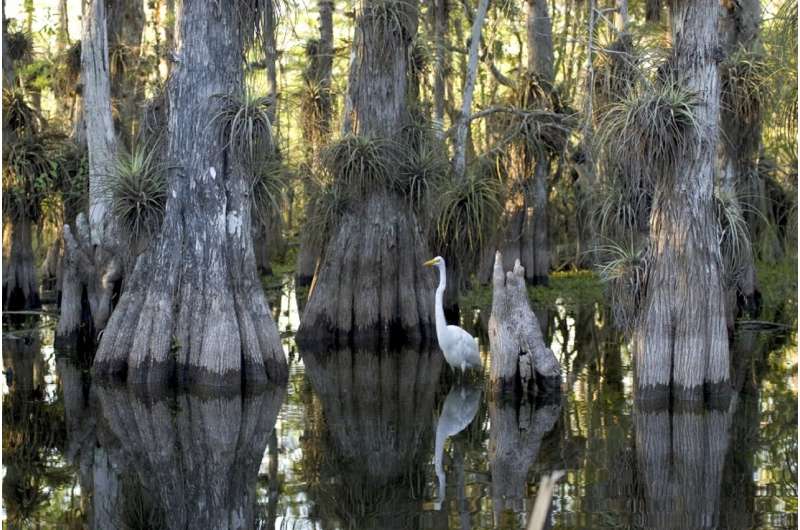
South Florida is currently implementing the most expansive restoration project ever undertaken to restore the Greater Everglades Ecosystem. The Comprehensive Everglades Restoration Plan is restoring the quantity, quality, timing and distribution of freshwater flows to its pre-drainage levels.
While it seems possible to assess the effect of changes in water runoff locally, there are also long-range implications at depth, on the inner and mid shelf, that remain to be understood.
A researcher from Florida Atlantic University’s Harbor Branch Oceanographic Institute, in collaboration with Florida International University, conducted a study that provides an assessment of the potential effects of climate warming and water management of the West Florida Shelf dynamics during two particular events that affect its hydrology through the lens of a very high-resolution model.
For the study, they evaluated, in a high-resolution simulation (1.5 kilometers), the separate and combined effects of freshwater discharge management and climate warming by 1 degree Celsius on the Loop Current intrusions on the West Florida Shelf and its dynamics, in the sub-tropical western Atlantic.
Results, published in Bulletin of Marine Science, showed that based on a one-year simulation in which a Loop Current and its eddy intruded on the West Florida Shelf, either the increase of freshwater discharge or the climate warming led to a change in the stratification properties of the West Florida Shelf significant enough to affect the type of Loop Current intrusions. Increased freshwater discharge contributed to the intensification of shelf water mixing that favors surface intrusion of Loop Current waters. In contrast, 1 degree Celsius warming led to increased shelf waters stratification that favors bottom intrusions.
“Either type of intrusion leads to a different oceanographic regime on the shelf to which the ecosystem might respond differently,” said Laurent Chérubin, Ph.D., senior author, a physical oceanographer who specializes in ocean dynamics and a research professor at FAU Harbor Branch. “Our study suggests, however, that increased freshwater discharge could mitigate the effect of climate warming on the West Florida Shelf by reducing shelf waters stratification.”
Researchers also analyzed the West Florida Shelf response to cold air outbreaks that are common in the fall and winter months. Results showed that under a warmer climate, the increased stratification due to the freshwater discharge at the end the boreal summer wet season is canceled by the warmer climate and reduces the available potential energy on the shelf, limiting coastal upwelling, instabilities, and shelf convection.
“The West Florida Shelf is under the influence of a large number of estuarine systems and bays that influence the baroclinicity of the flow on the shelf,” said Robert Burgman, Ph.D., co-author and an associate professor who specializes in climate dynamics and atmospheric science in FIU’s College of Arts, Sciences & Education. “Changes in salinity and/or nutrient patterns have had significant direct and indirect impacts on the water column and attached communities, with documented micro- and macroalgal blooms, mass mortality of seagrasses, fragmentation of seascapes, sponge die-offs, and declines in pink-shrimp catches.”
The current river discharge in South Florida is the product of a historical effort that was originally aimed at draining water from the Everglades region in Florida. The modification of the freshwater flows caused by the construction of the Central and Southern Florida Project water-drainage system was completed in the 1960s. This system, consisting of canals, pumps, levees, and other control structures, was designed to prevent flooding of urban and agricultural areas and has altered the regional hydrology, reducing the total amount of freshwater reaching the coastline.
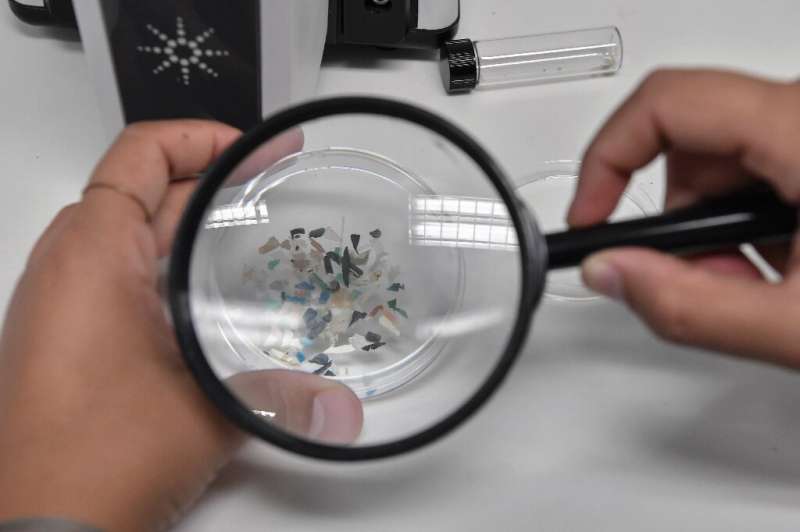
From ocean depths to mountain peaks, humans have littered the planet with tiny shards of plastic. We have even absorbed these microplastics into our bodies—with uncertain implications.
Images of plastic pollution have become familiar: a turtle suffocated by a shopping bag, water bottles washed up on beaches, or the monstrous “Great Pacific Garbage Patch” of floating detritus.
Millions of tonnes of plastic produced every year, largely from fossil fuels, make their way into the environment and degrade into smaller and smaller pieces.
“We did not imagine 10 years ago that there could be so many small microplastics, invisible to the naked eye, and that they were everywhere around us,” said Jean-Francois Ghiglione, a researcher at the Laboratory of Microbial Oceanography in France.
“And we could not yet envisage finding them in the human body“.
Now scientific studies are increasingly detecting microplastics in some human organs—including “the lungs, spleen, kidneys, and even the placenta,” Ghiglione told AFP.
It may not come as much of a shock that we breathe in these particles present in the air, in particular microfibres from synthetic clothing.
“We know that there’s microplastics in the air, we know it’s all around us,” said Laura Sadofsky, from the Hull York Medical School in the UK.
Millions of tonnes of plastic produced every year, largely from fossil fuels, make their way into the environment.
Her team found polypropylene and PET (polyethylene terephthalate) in lung tissue, identifying fibres from synthetic fabrics.
“The surprise for us was how deep it got into the lungs and the size of those particles,” she told AFP.
In March, another study reported the first traces of PET found in the blood.
Given the small sample of volunteers, some scientists say it is too early to draw conclusions, but there are concerns that if plastics are in the bloodstream they could be transported to all organs.
In 2021, researchers found microplastics in both maternal and foetal placental tissue, expressing “great concern” over the possible consequences on the development of the foetus.
But concern is not the same as a proven risk.
“If you ask a scientist if there is a negative effect, he or she would say ‘I don’t know’,” said Bart Koelmans, professor in Aquatic Ecology and Water Quality at Wageningen University.
It is likely that humans have been eating, drinking and breathing in plastics for years.
“It’s potentially a big problem, but we don’t have the scientific evidence to positively confirm what are the effects, if any.”
One hypothesis is that microplastics could be responsible for certain syndromes that weaken human health.
While scientists have recently identified their presence in the body, it is likely that humans have been eating, drinking and breathing in plastics for years.
In 2019, a shock report by the environmental charity WWF estimated that people are ingesting and inhaling up to five grams of plastic per week—enough to make a credit card.
Koelmans, who contests the methodology and results of that study, has calculated the amount is closer to a grain of salt.
“Over a lifetime, a grain of salt per week is still quite something,” he told AFP.
While health studies on humans have yet to be developed, toxicity in certain animals reinforces concerns.
“Small microplastics invisible to the naked eye have deleterious effects on all the animals that we have studied in the marine environment, or on land,” said Ghiglione.
In March, a study reported the first traces of PET (polyethylene terephthalate) found in the blood.
He added that the array of chemicals found in these materials—including dyes, stabilisers, flame retardants—can affect growth, metabolism, blood sugar, blood pressure and even reproduction.
The researcher said there should be a “precautionary” approach, urging consumers to reduce the number of plastic-packaged products they buy, particularly bottles.
Earlier this year, the United Nations began a process to develop an internationally binding treaty to tackle the global plastic scourge.
It has warned that the world is facing a pollution crisis to match the biodiversity and climate crises.
While the health implications from plastics are not known, scientists do know the impacts of indoor and outdoor air pollution, which experts from The Lancet Commission on pollution and health have estimated caused 6.7 million people to suffer an early death in 2019.
Some 460 million tonnes of plastics were used in 2019, twice as much as 20 years earlier. Less than 10 percent was recycled.
Annual production of fossil-fuel-based plastics is set to top 1.2 billion tonnes by 2060, with waste exceeding one billion tonnes, the Organisation for Economic Co-operation and Development said last month.
“People cannot stop breathing, so even if you change your eating habits you will still inhale them,” said Koelmans.
The Nature Conservancy’s Joseph Schmidt envisions a future for the Lake Worth Lagoon. In it, American oystercatchers forage the shoreline, mangroves and oysters filter pollution, and kayaks glide from restored island to restored island. In turn, those islands help protect human development.
his vision is one step closer to reality with the completion of the the Palm Beach Resilient Island Project, which rebuilt an eroded island in West Palm Beach with green infrastructure such as oyster beds and mangroves in lieu of seawalls.
The hope is that the island will both protect nearby shoreline by softening the brunt of storm surge, while also buttressing marine habitat: Nesting sites attract shorebirds while mangroves and oysters cleanse polluted waters and create habitats for shrimp, snook, mangrove snapper and even juvenile grouper.
The project is spearheaded by Schmidt, the interim climate strategy director at the Florida chapter of the Nature Conservancy, and the Palm Beach County Department of Environmental Resources Management. It marks the latest effort to strengthen the county’s shorelines against climate change.
Construction began in mid-March and was completed July 1. The final step, planting mangroves, is scheduled for August.
“Florida is very vulnerable. Everywhere here is not too far from the coast and our low-lying topography makes it even more vulnerable during storms,” Schmidt said. “So if this works well, we can replicate it elsewhere.”
Funding for the project came from both private and public sources. The Nature Conservancy provided $300,000 through funds from the Batchelor Foundation and the Carrier Corporation, while the Florida Department of Environmental Protection also provided $300,000 through its Resilient Coastlines Program.
Green infrastructure
Prior to the project, the one-acre island had eroded, and barely poked out of the water during low tide.
“Increased traffic, high tides, sea level rise have really taken its toll,” Schmidt said, “so this remnant of an island was much larger in the past.”
County crews built up the island with leftover soil from dredging projects in the Intracoastal Waterway.
They then ringed the island with different elements. An outer ring of limestone boulders buffers the impact of storms and floods that could otherwise beat against coastlines or uproot mangroves. Inside that, they placed an array of small limestone rocks ideal for oyster growth. Both the boulders and the rocks have enough nooks and crannies to double as homes for small fish and invertebrates.
Closer to the island there’s a shallow area for mangrove and seagrass—more habitat for sea life.
“Living shorelines and using green infrastructure is definitely not new,” Schmidt said of the project. “But arranging them specifically for coastal resilience is relatively new, and it’s kind of at its early infancy.”
The lagoon’s health
Water quality treatment is especially necessary in the central portion of the lagoon, where the project lays. The county’s Lake Worth Lagoon Management Plan, updated in 2021, says the central portion has “markedly diminished water quality and biodiversity” since it’s the furthest away from tidal flushing.
Outputs from hundreds of square miles of runoff from the C-51 Canal, among other canals, feed into the lagoon. The outflow brings with it polluting nutrients, algae and fine sediments that prevent sunlight from reaching the lagoon’s floor.
“When it rains a lot, there’s not any place to store the water,” said Lisa Interlandi, an attorney for the Everglades Law Center. “So it’s basically all discharged into the lagoon with whatever it has with it—everything from sediments to lawn clippings to what people have sprayed on their lawns, to the harmful residual chemicals in Lake Okeechobee.”
Living shoreline projects and restored lagoon islands aim to chip away at the damage done by a century’s worth of human development.
Both the mangroves and oyster beds will filter water and absorb carbon dioxide, while stabilizing the soil to keep the island intact.
A look forward
Where there was once scant habitat for sea turtles and shorebirds, there are now nesting sites and fertile bottom for soon-to-be mangroves.
Even with the mangroves still missing, American oystercatchers, a protected species of shorebird, have already started foraging around the island. The species only returned to the lagoon within the last decade—a response chalked up to restoration efforts.
“Since we’ve been building projects over the past 30 years, we’ve had four pairs take up residence in our restoration areas,” said David Carson, senior environmental analyst for the Palm Beach County Department of Environmental Resources Management. “Since 2005, we’ve had 40 pairs of chicks fledged out of [restored areas].”
With the arrival of oystercatchers comes a revived vision of the lagoon, the county’s largest estuary. As more of the bright orange bills peck through the sand of the lagoon’s latest island, other visitors—winged and not—could follow suit.
Now, other coastal communities dependent on the lagoon are requesting islands, too, says Gregg Weiss, commissioner and vice mayor of Palm Beach County’s second district and member of the Lake Worth Lagoon Initiative Steering Committee.
Weiss said the next areas to receive them will likely be along Lake Worth Beach or further south near Lantana and Boynton.
“It took many years for us to understand the impact we were having,” says Weiss, “and then try to figure out how to undo some of the damage done by previous generations.”
As any gardener or farmer can tell you, nitrogen and phosphorus are chemical elements found in soils and fertilizers that plants need to grow. They also know different ratios of nitrogen and phosphorus are ideal or detrimental for different types of plants and crops.
Nitrogen and phosphorus also play a powerful role in lakes and can alter the clear and pristine waters of low-nutrient lakes. But while considerable efforts have been made to monitor the amounts of each nutrient element separately, limited research has assessed how the ratio of nitrogen to phosphorus being supplied to lakes might also alter algae growth and water quality in consequential ways.
Now a team of researchers led by scientists from the University of Montana’s Flathead Lake Biological Station has examined nearly 40 years of nutrient dynamics in Flathead Lake. This unique dataset, assembled by the FLBS Flathead Monitoring Program, documents a sustained imbalance between nitrogen and phosphorus that likely has significant ecological consequences in Flathead Lake, as well as other low-nutrient ecosystems.
Their work was published July 11 by the Proceedings of the National Academy of Sciences.
“Since the early 1990s, I’ve worked to better understand when and where nitrogen and phosphorus limit the growth of lakeorganisms, such as plankton,” said FLBS Director Jim Elser, a member of the National Academy of Sciences and the lead author on the study. “It turns out that strong imbalances in the ratio between nitrogen and phosphorus in ecosystems and organisms can have big impacts. I wanted to see if this was going on in Flathead Lake.”
For over a century, research and monitoring programs at FLBS have served as the first line of defense against ever-looming threats to the renowned water quality of the Flathead watershed. The primary threats of nutrient pollution and invasive species have remained the bio station’s oldest foes in the fight to sustain the lake’s condition and excellent water quality.
Flathead Lake is known for its clean and clear water, largely because the geology encompassing its watershed is ancient and low in nutrients, especially the nutrient phosphorus. This means there are very low levels of nutrients that can be weathered from the bedrock to reach the lake through rainstorms and snowmelt. Therefore, naturally there are low levels of nutrients available for lake algae to grow, and Flathead Lake remains clear and blue instead of green and murky.
This low background of naturally supplied nutrients makes Flathead Lake very sensitive to human-driven inputs of nutrients. Such human-driven inputs of nutrients into Flathead Lake and associated algal blooms raised concerns in the 1970s and ’80s. Subsequently, research conducted by FLBS scientists led to nutrient reduction measures in the Flathead watershed, including one of the nation’s largest bans on phosphorus-containing laundry detergents and a multimillion-dollar overhaul of local wastewater treatment facilities to remove phosphorus to very low levels.
But in recent years, Elser and his colleagues began to wonder if monitoring nitrogen and phosphorus in isolation was enough. Given his long history in developing and testing the theory of ecological stoichiometry—the study of the balance of multiple chemical elements in ecological interactions—Elser was eager to find out.
“We found that the overall levels of nitrogen and phosphorus in Flathead Lake and its surrounding rivers and streams, while variable within years and year-to-year, are low but not increasing,” said Elser. “In fact, nitrogen and phosphorus levels coming into Flathead Lake from its larger rivers actually appear to be slowly declining. This is great news for the water quality and clarity in our beloved Flathead Lake, while water quality in many of the world’s lakes is declining due to increasing nutrient inputs.”
Then came a surprising development. While the overall levels of nitrogen and phosphorus in Flathead Lake weren’t increasing, the researchers discovered that the lake has sustained a high ratio of nitrogen to phosphorus across a span of four decades, often reaching values that greatly exceed the normal nitrogen-to-phosphorus recipe that matches the needs of most phytoplankton, the lake’s microscopic floating algae.
To put it another way, just as humans benefit from a well-balanced breakfast or farmers apply a fertilizer with the appropriate ratio of nitrogen to phosphorus for specific crops, microorganisms that make up the foundation of a lake’s food web depend on a very specific ratio of nutrients. When the ratio between nitrogen and phosphorus is high, as it is in Flathead Lake, plankton growth is likely limited by lack of available phosphorus for much of the year.
Through a series of experiments, the team of researchers showed that Flathead Lake phytoplankton are phosphorus-limited. This means the algae are forced to build cells that have low content of phosphorus, making them not particularly nutritious. For the tiny lake animals, zooplankton, which eat those phytoplankton and thereby sustain the lake’s high transparency, this amounts to the equivalent of a “junk food” diet. As a result the zooplankton also become phosphorus-limited and their abundances low.
Finally, the team showed that the strong nitrogen-to-phosphorus imbalance in Flathead Lake sets the stage for potential production of the greenhouse gas methane. This occurs when phosphorus-hungry microbes start to scavenge phosphorus from organic molecules and produce methane as a byproduct.
These findings have implications not only for Flathead Lake but also for lakes globally. Wastewater treatment systems, agricultural runoff and urban influences are increasingly recognized as contributing to nitrogen-to-phosphorus imbalance in a variety of situations.
“At Flathead Lake, implementation of wastewater treatment processes that more effectively remove nitrogen would help balance the lake’s nitrogen-to-phosphorus ratio,” Elser said. “Regionally, a reduction of the atmospheric transport of nitrogen, which occurs through fossil fuel combustion or volatilization of agricultural fertilizers or animal wastes, would also help reduce nitrogen inputs to the lake.”
When it comes to the building blocks of our lake ecosystems, in other words, nutrient balance matters.