Scientists challenge claim British rivers are ‘cleanest since Industrial Revolution’

Water quality is still “unacceptably poor” in many British rivers, research involving academics at York has shown.

The study, published in Science of The Total Environment, challenges recent claims from UK government that water quality in British Rivers is “better than at any time since the end of the Industrial Revolution.”

Although progress has been made in reducing some pollutants—particularly in rivers downstream from major towns and cities—over the past three decades, the results of the study show a mixed picture, and do not support these claims. 

Pharmaceuticals

Data analyzed in the study indicates that many rivers remain highly polluted, often from combined sewer overflows in addition to many new pollutants, such as pharmaceuticals and personal care products, which are not routinely monitored and are likely to be on the rise.

In areas with intensive agriculture the water quality of rivers today is more affected by agrochemicals such as pesticides and nitrogen fertilizers than it was before the 1960s. 

Impacts

Professor Alistair Boxall from the Department of Environment and Geography at the University of York said, “It is often claimed that the quality of UK rivers is better than ever. For some traditional pollutants such as sewage, nutrients and metals, this is probably true. However, as a society we now use more chemicals than ever before and many of these will end up in our rivers. The impacts of these chemicals are more subtle and will occur over a prolonged period of time but could be playing an important role in the loss of biodiversity in our rivers.”

As part of their analysis, the scientists collated available, often very limited, data for seven different categories of water pollutants from the late 19th Century up to the present day, combined with insights into historical population growth, industrial activity and wastewater treatment provision.

‘Unacceptably poor’

The researchers noted that, while levels of some pollutants probably peaked at some point between the 1960s and the mid-1990s and have since declined, water quality is still “unacceptably poor” in multiple areas across the UK, and there are signs that recent progress to tackle pollution has stalled. Levels of nitrate in many catchments remain high, and levels of most synthetic organic pollutants are unknown. 

The authors of the study have called for urgent improvements to water quality in many rivers and streams, as well as enhancements to monitoring programs, including increased frequency and geographical spread of sampling and including a wider range of pollutants in routine analyses.

Contaminants

Lead-author of the study, Professor Mick Whelan from the University of Leicester, said that “data for many pollutants show that concentrations are, indeed, likely to be lower than they were in the 1960s and ’70s. Legislation such as the European Urban Wastewater Treatment Directive have clearly played a very important role in cleaning up our rivers from the mid-1990s. However, we have very little understanding about the impacts of many contaminants because we just don’t look for them routinely.”

FOR MORE INFORMATION: https://phys.org/news/2022-07-scientists-british-rivers-cleanest-industrial.html

Experts: Great Barrier Reef among World Heritage sites where ‘In Danger’ listing is essential

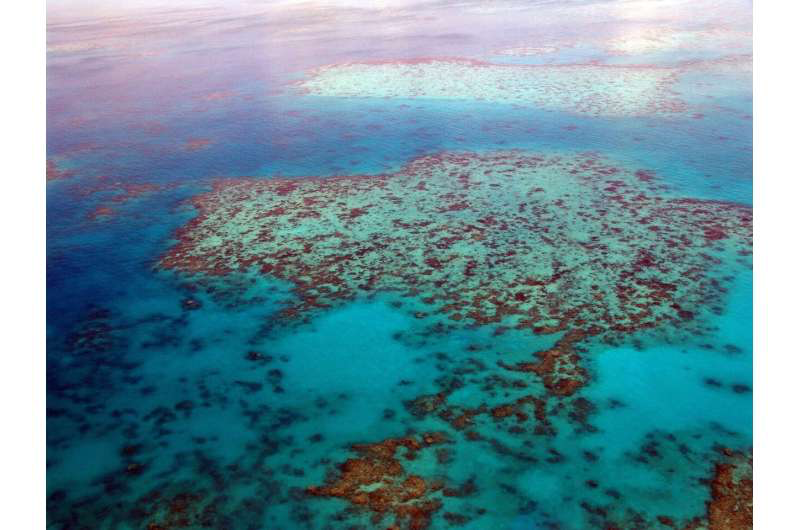
A team of climate and environment experts has put the Great Barrier Reef in the spotlight by calling for it to be listed as “In Danger” in a wider argument to increase protection of World Heritage listed sites that are vulnerable to climate change impacts.

The discussion paper, published by Griffith University’s Climate Action Beacon, proposes a structured way forward for the 21 World Heritage Committee government signatories to deal with the global threat of climate change. 

The key measures outlined include: 

  • More ambitious climate action by the government of the country in which the World Heritage site is situated; 
  • More ambitious climate action by other country’s governments who are also signatories to the World Heritage Convention; 
  • Additional measures that would raise the profile of climate impacts on World Heritage sites in the other important international conventions, especially the UN Climate Change and Biodiversity conventions 

The GBR has experienced major coral bleaching events in the past seven years with the latest event occurring during the current cooler La Nina cycle, which has prompted renewed calls for Australia to list the GBR as “In Danger’ by scientists. 

Co-Lead Authors Professor Brendan Mackey and Imogen Zethoven said the GBR faced two main threats: climate change and poor water quality from agricultural runoff. 

“The Australian Government has committed substantial funds to address poor water quality and implement a reef water quality management plan,” Professor Mackey said. 

“However, while addressing water quality is necessary it does not protect the GBR from climate change. In the last seven years there have been four severe and widespread coral bleaching events and the threat from climate change increases with every increment of global warming. 

“Therefore, as the climate change threat remains, there is a strong scientific case to have the GBR, and other at-risk World Heritage coral reef sites, placed on the In Danger list.” 

The discussion paper argues as the real purpose of the In Danger listing is not to “name and shame” a government but to send a clear signal to the world community for collective action. 

Professor Mackey said the listing would present the Australian Government with an opportunity to enhance Australia’s role as a leader on climate action by working in partnership with its neighboring countries who also have vulnerable tropical coral reef World Heritage sites. 

These include the Lagoons of New Caledonia (France); Phoenix Islands Protected Areas (Kiribati); East Rennell (Solomon Islands); Rock Islands Southern Lagoon (Palau); Papahānaumokuākea (Hawaii, US), Komodo National Park (Indonesia) and Tubbataha Reefs Natural Park (Philippines). 

“Australia can work with these governments, and other signatories to the World Heritage Convention, to help increase international climate ambition, capacity build our developing country neighbors and share knowledge and experiences on healthy reef management,” Zethoven said. 

“This is about a global policy on climate impacts and risk that could apply to any climate-vulnerable World Heritage site, whether it’s cultural or natural. 

“Yes, the GBR is a case study, but this applies to every signatory country to the World Heritage Convention and will apply to an increasing number of sites. 

“Let’s look at this issue with a fresh pair of eyes, let’s shift it from a perspective of ‘In Danger’ as being a negative or a penalty to the country, to this is what the science is telling us is the right thing to do. 

“Let’s use the ‘In Danger’ listing as a tool to both increase our ambition in Australia and urge other major emitters that they need to do more to protect World Heritage sites from climate change impacts.”


Explore further:https://phys.org/news/2022-07-experts-great-barrier-reef-world.html

Cultivating super corals alone is unlikely to protect coral reefs from climate change

A popular coral restoration technique is unlikely to protect coral reefs from climate change and is based on the assumption that local threats to reefs are managed effectively, according to a study co-authored by Rutgers researchers.

The research, published in the journal Ecological Applications, explored the response of coralreefs to restoration projects that propagate corals and outplant them into the wild. Additionally, researchers evaluated the effects of outplanting corals genetically adapted to warmer temperatures, sometimes called “super corals,” to reefs experiencing climate change as a way to build resilience to warming.

The study found neither approach was successful at preventing a decline in coral coverage in the next several hundred years because of climate change and that selectively breeding corals to be more heat tolerant only will lead to benefits if conducted at a very large scale over the course of centuries.

Even then, the researchers said, the benefits won’t be realized for 200 years.

Restoring areas with corals that haven’t been selected to be more heat tolerant was ineffective at helping corals survive climate change except at the largest supplementation levels.

“Our previous research shows that corals have the best chance of adapting to the effects of climate change, like warming ocean temperatures, if there is high genetic diversity and if habitat is protected from other local stressors,” said Lisa McManus, who co-led the research and conducted the work as a postdoctoral researcher at Rutgers University and is now faculty at the Hawai’i Institute of Marine Biology. “Repopulating a coral reef with corals that have similar genetic makeups could reduce an area’s natural genetic diversity, and therefore make it harder for all corals to adapt to climate change.”

Coral reef restoration techniques are widely applied throughout the world as a way to repopulate degraded coral reef areas. Although the practice has some benefits, such as engaging and educating communities about reef ecosystems or replenishing a coral reef population after an area has been hit by a storm or suffered direct physical damage, more scientists are speaking up about the limitations of conservation approaches that focus solely on restoration.

The authors said focusing solely on coral restoration and genetically engineering corals to be more tolerant of high temperatures is risky. Understanding of the genes that determine heat resistance remains limited and focusing on reproducing just one single trait could undermine a coral’s resilience to other stressors or its natural ability to adapt, they said.

Restoration practices also carry a hefty price tag and require a lot of resources. The median cost of restoring just one hectare (or about 2.5 acres) of coral reef has been estimated at more than $350,000, which doesn’t factor in high mortality rates that often come with such projects and the cost of genetically modifying corals.

“Coral restoration can be an important tool for conserving coral reefs, but restoration is expensive and hard. We can’t use restoration to replace the basics, like improving water quality, avoiding overfishing, and addressing climate change,” said Malin Pinsky, an associate professor in the Department of Ecology, Evolution, and Natural Resources at Rutgers University–New Brunswick.

FOR MORE INFORMATION: https://phys.org/news/2022-07-cultivating-super-corals-coral-reefs.html

Impact of climate on river chemistry across the United States

Rivers flow across many kinds of terrain, interacting with soil, rocks, microbes, and roots. River water therefore carries signatures of everything it interacts with, and its chemistry reflects the response of the critical zone—the region of the planet stretching from the tops of trees to the bottom of groundwater—to changing climate. River chemistry is likely to change with a warming climate, yet most climate-related research studies have focused on changes in river flow.

Now, Li et al. focus on changes in river chemistry and water quality under a changing climate. They investigated the influence of climate on the long-term chemistry of rivers in the contiguous United States, compiling more than 400,000 data points from 506 rivers with minimal human impacts to identify patterns of 16 common river chemistry constituents (solutes).

For all geographic areas of the United States, the team found that concentrations of 16 solutes decrease with increasing mean river discharge, which is the amount of precipitated water (both rainfall and snowfall) that ends up in streams and rivers. This finding contradicts the common perception that river chemistry is controlled primarily by the abundance of local materials in the critical zone. Instead, river chemistry is controlled first by river discharge, then by the abundance of materials the water interacts with.

Changing climate conditions—including higher temperatures—can influence not only river discharge but also the types of critical zone materials that interact with and dissolve in waters. The authors say that in places that become drier, such as western parts of the United States, mean concentrations are expected to increase, and the magnitude of the increase hinges on the solutes’ sensitivity to changes in discharge. In places that become wetter, mean concentrations likely decrease, but the loads, or the rates of solute export leaving rivers, can increase with more water.

As the climate changes, increasing solute concentrations will have implications for water management and treatment efforts and may require renovated or augmented treatment infrastructure. These changes can also have significant impacts on aquatic ecosystem health.


FOR MORE INFORMATION: https://phys.org/news/2022-07-impact-climate-river-chemistry-states.html

How year-round crops could reduce farm pollution in the Mississippi River

Eight years ago, just a tenth of the grain would survive the winter in this experimental field in St. Paul. But this year, after repeatedly refining the plant’s genetics, the field was flush with swaying, pale yellow grain heads.

The winter is the first hurdle that researchers at the University of Minnesota’s Forever Green Initiative must clear as they attempt to breed new crops that can cover farm fields year round—and in the process, help water quality across the state.

For years, Minnesota has struggled to reduce farm pollution from fertilizers and other sources that runs into streams, lakes, the Mississippi River and, eventually, the Gulf of Mexico.

Wyse, a crop scientist who founded and now co-leads Forever Green, said he watched for years as all the funding for farm pollution research went into describing the problem. “There wasn’t a very big investment in solutions.”

So crop breeders at Forever Green are working on 16 perennial and winter annual crops to suck up that nutrient pollution before it escapes. Food scientists and marketers with the program are trying to develop uses for these crops and hopefully provide new revenue for farmers.

Perennial crops are not a new idea—groups like the nonprofit Land Institute, in Salina, Kansas, have been promoting the concept for decades. It holds the trademark for Kernza, a perennial grain it is developing in partnership with Forever Green scientists.

But challenges remain in the chicken-or-egg problem of developing a market for these crops. For the crops to be used in large-scale products, there needs to be a lot of production; but for farmers to bet on them, they need to be convinced there’s a market.

Carried in the water

In the fertile fields of the Midwest, corn and soybeans dominate: The two annual crops covered 63% of Minnesota’s 25 million farm acres in 2021, according to the U.S. Department of Agriculture. In other states, the proportion is even higher—they cover 76% of farmland in Iowa and 80% in Illinois.

In these row crop operations, typically, farmers are tilling and planting seed in the spring, harvesting in the fall and leaving that ground bare until the next growing season.

Falling rain easily washes nutrients out of these fallow fields and into nearby waterways. Phosphorus that flows with eroding farm soils feeds algae in Minnesota’s lakes; nitrogen seeps down into groundwater, fouling rural water wells.

“It’s this wicked problem that’s choking our rivers,” said Whitney Clark, executive director of Friends of the Mississippi River. There are “too many acres of leaky, annual row crops.”

Nitrogen travels down the Mississippi River to the Gulf of Mexico, where it helps fuel an annual algae explosion and die-off that saps oxygen from the water, causing a massive “dead zone.” This year, the National Oceanic and Atmospheric Administration forecast that the dead zone would be 5,364 square miles, nearly the size of Connecticut.

The latest action plan to shrink this dead zone, from 2008, recommended each state along the river basin reduce its nitrogen and phosphorus pollution by 45%. But the levels remain high.

David Wall, a research scientist with the Minnesota Pollution Control Agency, said the state has shrunk phosphorus amounts between 20 and 35%, mostly from improving sewage treatment plants and some cropland management measures.

But nitrogen levels have stayed the same, or in some cases, increased, Wall said.

One solution is to keep plant roots in the ground longer, where they will stabilize the soil and suck up nitrogen before it escapes.

Kernza—a thick, grasslike plant—produces well for about three years, popping out of the ground each spring and maturing for harvest by late summer or fall. By staying in place year-round, peer-reviewed research from Forever Green has shown that it captures 99% of the nitrogen that would otherwise escape compared to annual corn.

“The only way to keep nitrogen from flushing through the soil is to have roots intercept that nitrogen,” said Lee DeHaan, the lead scientist for Kernza domestication with the Land Institute.

But Kernza plants are producing just 20% of what wheat plants do on the same acreage in Kansas field tests, DeHaan said.

In the field

On the U’s fields in St. Paul, breeders are working to solve that problem. Scientists painstakingly collected pollen from perennial plants and applied it to traditional, annual wheat. The hybrids are growing now, and the hope is that they will have both the perennial qualities of Kernza and the higher grain amounts of regular wheat.

Success or failure won’t be apparent until next spring, Wyse said. Only if they emerge again will breeders know whether the plants are truly perennials.

Take pennycress, a common roadside weed that plant biologist and breeder David Marks is trying to make into a major winter staple crop. Marks is so optimistic about the potential for pennycress to produce edible seeds that he has the plant’s light-green likeness tattooed on his left forearm.

Marks has plenty to do to make the crop ready for market. The flat, circular seed pods have to be made more durable so they don’t shatter open before harvest; thick seed coats must be thinned, so errant seed doesn’t survive in the soil longer than a farmer might want them there; and unsafe-to-consume erucic acid has to be eliminated from the seed oils.

Marks said the crop’s potential as a winter annual is not only stopping fertilizers from entering the water, but also expanding the growing window, at a time when the pandemic and war in Ukraine have unsettled the globe.

Marks said he worries that the next disruption “will be a threat to our food security. I’m thinking of the future of what’s coming next.”

Building the market

Of all Forever Green’s crops, Kernza is perhaps the best known—and the closest to being made into consumer products.

For these crops to make a difference, they need to be adopted on a grand scale, Wyse said.

“We have to have big markets to get enough of these plants on the landscape to protect the Mississippi River,” Wyse said.

There are a few products on the market right now, like a Kernza cereal sold in Whole Foods stores by Cascadian Farm, a General Mills brand.

But farmers said the Kernza they grow isn’t selling as fast as other crops.

Some state money has recently been budgeted to help with this scale-up. In addition to $763,000 in funding for crop breeding, a bipartisan group of Minnesota lawmakers this year allocated $500,000 to help fund the supply-chain businesses that take the grain from fields to store shelves.

Developing the supply chain has required intense work, said Christopher Abbott, the president of Perennial Pantry. The startup is focused on selling foods that use perennial and cover crops.

Kernza has to go through extensive cleaning after harvest, which takes about 10 times longer than conventional wheat, Abbott said. After that, his company had to experiment with how to use the grain, which has a higher bran-to-starch ratio than other wheat.

One of Abbott’s favorite products is a Kernza cracker, which he described as buttery and flaky. It took 80 iterations to get right, he said.

Early adopters of the crop are eager to make the plantings work.

Anne Schwagerl, a farmer in western Minnesota near Beardsley, said her Kernza crop has required some adjustments. Schwagerl, who planted 40 acres of Kernza in 2020, said harvesting now takes two passes; the wheatgrass must be cut a foot off the ground and then dried in the field for a few days before it can be collected.

Schwagerl said the novel grain fits well in her organic operation which also grows soybeans, corn, rye, oats and another Forever Green crop, winter camelina.

But because of the new market, she wasn’t able to sell the grain she first harvested in the fall of 2021 until the following spring.

“The Kernza, we had to store a lot longer than with our corn or soybean or oats crop,” she said.

There have been benefits, too. This spring, farmers struggled to get their seed into the ground in much of the state, as the cold, wet season delayed planting.

Schwagerl didn’t have to worry about planting; her Kernza grass was already there, with roots several feet deep.

FOR MORE INFORMATION: https://phys.org/news/2022-08-year-round-crops-farm-pollution-mississippi.html

‘Water police’ patrol drought-hit Los Angeles streets

Damon Ayala is part of the Los Angeles Department of Water and Power team which looks into hundreds of community complaints file

Damon Ayala patrols the streets of drought-stricken Los Angeles every day, inspecting the sidewalks. Each time he sees a puddle, he stops.

He is part of the city’s Department of Water and Power team, which looks into hundreds of community complaints filed by neighbors each week about water waste.

“It’s not extreme, but it’s something that we want them to take a look at,” he says of one pool of water.

“Looks like they have drip irrigation on this side. So there might be just a broken connector.”

Ayala’s patrol comes as California and the western United States are in the grip of a severe, years-long drought.

Scientists say global warming driven by human activity, including the unchecked burning of fossil fuels, is creating a greater number of extreme events.

With reservoirs and rivers at historic lows, Los Angeles authorities have brought in water restrictions, such as limiting lawn irrigation to as little as eight minutes, twice per week.

Ayala notes down the addresses of properties where he finds evidence of infringement. The first violation prompts a warning.

“A lot of times they don’t know about the ordinance, and that’s our job to educate them,” he said.

Pamela Berstler and Marianne Simon encourage Los Angeles residents to trade in their lawns for less thirsty alternatives
Pamela Berstler and Marianne Simon encourage Los Angeles residents to trade in their lawns for less thirsty alternatives.

Repeat offenders are fined between $200 and $600.

“We’re not looking really for their money—that doesn’t get us more water. We’re trying to get behavioral change,” he said.

“So that way we can capture the water savings from making those changes.”

After a fifth infraction, a device is installed which physically restricts a household’s supply, although Ayala says that step has rarely been necessary.

“We’ve been in serious drought situations in the past in the city of Los Angeles, and its citizens responded,” he said.

“And we expect them to respond this time around too.

‘Obvious choice’

The water department says it is beginning to see results.

Officials noted a reduction in residential water demand in June, compared to the same month last year.

But as the drought worsens, more permanent changes to the city’s landscape could become necessary.

The small, leathery leaves of a young California live oak (Quercus agrifolia) in a  Los Angeles garden that swapped its lawn for
The small, leathery leaves of a young California live oak (Quercus agrifolia) in a Los Angeles garden that swapped its lawn for native plants.

Famous for its rows of palm trees, Los Angeles has also traditionally been known for its lush, green lawns, maintained with automatic sprinklers.

Residents are increasingly replacing their thirsty lawns with plants native to this desert region.

“When we think of how much water gets used in a residential setting, over 50 per cent is actually used outdoors,” said Pamela Berstler, executive director of urban landscaping firm G3 Garden Group.

She and her colleague Marianne Simon teach classes as part of a city program to encourage Angelenos to trade in their lawns for alternatives.

South Los Angeles residents Gabriel Golden and Danielle Koplinkase, joined the program a few years ago.

“The environmental impact of watering a lawn, not only in the midst of a draught but also living in a very dry climate, made this an obvious choice,” they said.

California poppies are a colorful choice in a garden where traditional Los Angeles grasses have been replaced by native and less
California poppies are a colorful choice in a garden where traditional Los Angeles grasses have been replaced by native and less water-demanding options.

“We also sought to inspire our neighbors and community by going to a drought tolerant and native garden.”

Native plants such as California oak, and flowers that only require a few drops of water each week to thrive, now adorn the couple’s garden.

“There are parts of southern California where they have cut the water down to one day of watering per week,” said Simon.

“And the reality is that these kinds of gardens would be fine on that amount of water—in fact, could do with less—but our traditional lawns can’t survive on that.”

FOR MORE INFORMATION: https://phys.org/news/2022-07-police-patrol-drought-hit-los-angeles.html

Water resources to become less predictable with climate change

Water resources will fluctuate increasingly and become more and more difficult to predict in snow-dominated regions across the Northern Hemisphere by later this century, according to a comprehensive new climate change study led by the National Center for Atmospheric Research (NCAR).

The research team found that, even in regions that keep receiving about the same amount of precipitation, streamflow will become more variable and unpredictable. As snowpack recedes in a warmer future and fails to provide reliable runoff, the amount and timing of water resources will become increasingly reliant on periodic episodes of rain.

“Water managers will be at the whim of individual precipitation events instead of having four-to-six months lead time to anticipate snowmelt and runoff,” said NCAR scientist Will Wieder, the lead author. “Water management systems in snow-dominated regions are based on the predictability of snowpack and runoff, and much of that predictability could go away with climate change.” 

Observations show that snowpack is already melting earlier, and even declining in many regions. This decline will become so pronounced toward the end of the century that the amount of water contained in snowpack at the end of an average winter in parts of the U.S. Rocky Mountains could plummet by nearly 80%, the scientists found.

The changes in runoff and streamflow are likely to have cascading impacts on ecosystems that depend on reliable water from snow, the study warns. Although the changes won’t be uniform across regions, more snow-free days and longer growing seasons will put stress on water resources, drying out soils in many areas and heightening fire risk.

The study assumes that emissions of greenhouse gasses continue at a high rate (a scenario known as SSP3-7.0). Wieder said that the most severe impacts on snowpack, runoff, and ecosystems would likely be avoided if society successfully reduced greenhouse gas emissions.

The scientists drew on an advanced set of computer simulations to fill in details about the future of water resources, showing the extent to which changes in temperature and precipitation will alter snow accumulation and runoff patterns in the Northern Hemisphere. Although past research looked at the impacts of climate change on water availability, the new study focuses on the increasing variability of water resources.

‘A race with predictability’

Many regions of Earth rely on the accumulation of snow during the winter and subsequent melting in the spring and summer for regulating runoff and streamflow. For years, however, scientists have warned that the snowpack will become thinner and melt earlier as more precipitation during the colder months falls as rain instead of snow, and as melting occurs at times during the winter instead of the spring runoff season. 

To determine how reduced snowpack will affect the variability of water resources, Wieder and his co-authors turned to a powerful NCAR-based climate model: the Community Earth System Model, version 2. They drew on a recently created database of simulations, known as the CESM2 Large Ensemble, to compare a past period (1940–1969) with a future period (2070–2099). The simulations were run on the Aleph supercomputer at the Institute for Basic Science supercomputer in Busan, South Korea.

The results illuminate the extent to which widespread shifts in the timing and extent of water flows will occur in much of the world by 2100. There will be an average of about 45 more snow-free days yearly in the Northern Hemisphere, assuming high greenhouse gas emissions. The largest increases will occur in midlatitudes that are relatively warm and high-latitude maritime regions that are influenced by changes in sea ice.

Many regions that rely the most on predictable relationships between snowpack and runoff will experience the largest loss in predictability because of a sharp decline in reliable pulses of spring runoff. These regions include the Rocky Mountains, Canadian Arctic, Eastern North America, and Eastern Europe. The authors warn that this will substantially complicate the management of freshwater resources, both for society and ecosystems.

“We are in a race with predictability when it comes to streamflow because we’re trying to improve our forecasts through better data, models, and physical understanding, but these efforts are being canceled by the rapid disappearance of our best predictor: snow,” said Flavio Lehner, a professor of earth and atmospheric science at Cornell University and a co-author of the study. “It might be a race we’ll lose, but we’re trying to win it, and that is why we need to study these topics.”

Although the reduced runoff will result in drier summertime soil conditions in much of the Northern Hemisphere, the simulations showed that certain regions—including East Asia, the Himalayas, and Northwestern North America—will maintain soil moisture because of increased rainfall.

FOR MORE INFORMATION: https://phys.org/news/2022-07-resources-climate.html

Aussies living remotely lack access to quality drinking water

Australians in more than 400 remote or regional communities lack access to good-quality drinking water, while about eight percent of Australia’s population is not included in reporting on access to clean water, according to researchers at The Australian National University (ANU).

The researchers reviewed public reporting by 177 water utilities to measure gaps in drinking water quality in regional and remote Australia.

They assessed water quality performance against the Australian Drinking Water Guidelines (ADWG), which provide guidance to water regulators and suppliers on monitoring and managing drinking water quality.

The researchers found at least 25,245 people across 99 locations with populations of fewer than 1,000 people had accessed water services that did not comply with the health-based guideline values at least once in 2018-19.

They also identified 408 regional and remote locations with a combined population of 627,736 people that failed to measure up to either health-based guidelines or the ADWG’s aesthetic determinants of good water quality across taste, color and odor.

Furthermore, 40 percent of all locations with reported health-based non-compliances were remote Indigenous communities.

Lead author of a peer-reviewed paper published in npj Clean Water, Dr. Paul Wyrwoll said their research also shows Australia’s national reporting of drinking water quality is not fit-for-purpose.

“Australia’s national water quality statistics do not include service providers with less than 10,000 connections,” he said.

“This means approximately two million people, or about eight percent of Australia’s population, are not included in reporting on the ‘clean water for all’ goal of the United Nations Sustainable Development Goals (SDGs). The 2022 SDG progress report states that 100 percent of Australians have universal and equitable access to safe and affordable drinking water.”

“Our national statistics misrepresent the challenges facing households and water service providers across regional and remote Australia.”

Dr. Wyrwoll also said the creation of a national drinking water database is urgently required, but numerous gaps in reporting must be addressed.

“For example, the New South Wales government does not require local water utilities to make annual reports available to customers,” he said.

“About 1.2 million people in regional areas don’t know what’s coming out of their tap, but the government has a database with all the results. Why don’t they make the data public?”

“Our study shows we can create a national database. Combined with the body of knowledge emerging on the conditions needed for consistent delivery of safe water and sanitation, this can help deliver water for all.”

Convener of the ANU Water Justice Hub, Professor Quentin Grafton, said momentum is building to respond to the drinking water quality problems in regional and remote Australia, with the Productivity Commission and Infrastructure Australia recognizing this urgent need.

“But, Australia is still flying blind as it lacks a national drinking water quality database that would support the federal government’s expansion of the National Water Grid investment policy to town water supplies,” he said.

“A renewed National Water Commission could oversee progress.”

Dr. Wyrwoll said droughts, floods, unsustainable irrigation water extractions, industrial pollution, aging infrastructure, high costs and harsh environmental conditions also affect water quality.

“Testimonies from the 2019 Citizen’s Inquiry into the Health of the Barka/Darling River and Menindee Lakes highlight the severe impacts of poor water quality on the well-being of families and communities,” he said.

“The majority of Australia’s population lives in capital cities where they might assume that all Australians have universal and equitable access to safe and affordable drinking water. But they would be very wrong.”

FOR MORE INFORMATION: https://phys.org/news/2022-07-aussies-remotely-lack-access-quality.html

Report shows growing cities are under pressure, but there are positive signs too

Urban areas are often thought of as concrete jungles, but they encompass much more than that. Nature, people and built structures are interconnected. Together they comprise the urban environment of the cities and towns in which we live.

In the past five years, Australian cities have continued to grow. In fact, the State of the Environment Report released this week revealed most of our major cities have grown faster than many developed cities overseas. 

This growth has increased demand for resources such as water and energy. It has increased other impacts, too, including urban heat, congestion, pollution and waste. 

These pressures are a threat to the livability and sustainability of urban life in Australia. However, the report assessed the overall state of the urban environment as good and stable—among the most positive ratings of any category. That’s largely a result of actions across Australia, mostly at the level of states, local councils and communities, that are starting to make progress towards cities that will be more resilient to climate change and remain good places for us to live.

The State of the Environment Report contains fundamental information on how the country’s environment is faring in areas ranging from air quality to urban environments. Western Parkland City Authority CEO Sarah Hill, private consultant and Barkandji woman Zena Cumpston and I collaborated in assessing the state of the urban environment for this report. 

We found state and local governments have responded to some challenges with great initiatives that take us closer to more resilient and sustainable urban environments. However, there is still a need for national approaches and for better collaboration and co-ordination between the private and public sectors.

What are the pressures on our cities and towns?

The Australian Bureau of Statistics (ABS) defines urban as centers with more than 200 people. Australia has over 1,853 urban environments. However, 75% of people in Australia live in just 18 cities with more than 100,000 people each.

The report shows the population of these 18 urban areas grew by 20% in the past ten years. Most of that growth happened in the five years after the last State of the Environment report in 2016. At the same time, remote area populations decreased. 

Property developers and the construction sectors have responded by increasing housing production. They have mainly focused on apartment buildings and semi-detached houses.

Unfortunately, at the same time the public sector has greatly reduced its role in housing. Based on ABS data, we calculated that the government now develops only 1% of all new dwellings in Australia.

Residential building and house sizes have slightly increased while lot sizes have shrunk. This means there is less open space. And these smaller backyards and setbacks between buildings are now often paved. 

As a result, we are seeing higher temperatures and reduced or endangered biodiversity. These changes have negative impacts on people’s and the environment’s well-being. 

Despite local government policies to increase green cover in public areas and protect our urban forests, the changes in private properties have led to an overall loss of green spaces in our cities.

These developments are often found in the urban outskirts of expanding cities. Increased travel distances and limited access to jobs, education, food and services are reducing the livability of these cities.

These pressures are even worse in smaller and more isolated areas. For example, in the report we note: “Indigenous communities in smaller urban centers are often far from amenities such as shopping, health care, cultural business, education and social services. In 2014–2015, 75% of Indigenous Australians reported that they could not easily get to the places they needed.” 

These areas also have more insecure access to resources such as digital infrastructure, energy and water. On top of this, they have suffered from shocks such as extreme bushfires, floods and mice plagues.

So, the overall livability of smaller urban areas with fewer than 10,000 people has been assessed as poor. The livability of larger cities, on the other hand, has remained good over the past five years. 

However, we need to beware of generalizations. Differences in livability between inner and outer areas of the bigger cities are noticeable. 

Inner-city areas have higher levels of livability based on factors such as walkability, access to green spaces and services. The urban fringes tend to have poorer access to services and longer commute times. Higher socio-economic areas tend to benefit from better tree canopy cover and digital access.

Smaller urban areas have some advantages—mainly shorter commute times—but are disadvantaged by fewer services and job opportunities.

What are we doing about the challenges we face?

Population growth and its effects on resource consumption, waste generation, travel and pollution continue to pressure the urban environment. However, our biggest challenge is climate change. 

Sea-level rises, more extreme events such as bushfires, drought, extreme rainfall and flooding, and higher urban temperatures are expected to have significant impacts on cities’ biodiversity and people.

Many state and local governments are taking a hands-on approach to some of these challenges and pressures. Through urban planning policies, they are managing urban sprawl and protecting public green areas. 

Governments have also been investing in more integrated infrastructure—for example, better coordinating the development and use of roads, public transport, cycle paths and walkways—better waste management and reducing disaster risk. 

Commonwealth City Deals, the Resilient Cities Framework applied in Sydney and Melbourne, and the National Waste Policy Action Plan are just a few of the approaches being adopted in Australia.

We are on the right path with great initiatives all over Australia working to achieve more sustainable and resilient urban environments. However, they are in the early stages.

FOR MORE INFORMATION: https://phys.org/news/2022-07-cities-pressure-positive.html

Can infrastructure and tourism endure triple-digit temperatures, extreme weather during ‘danger season’?

Elizabeth O’Connell of Northeastern University-London worked through Britain’s record breaking heat wave Tuesday at home with her curtains closed and a Dyson fan at her side.

“Regular cold showers are a must,” says O’Connell, director of marketing and admissions for Northeastern’s London location.

“Dog walks now take place at 6 a.m. when it is relatively cool. Few homes have air conditioning, as historically we have not experienced the temperatures to warrant its installation,” she says in an email.

The heat wave striking Europe has sent temperatures in Britain above 40 degrees Celsius–or 104 Fahrenheit—for the first time ever, caused wildfires in France and killed more than 1,000 people in Spain and Portugal.

Northeastern University professors say it is a sign of more to come as climate change continues to create extreme weather challenges.

“Continents across the globe are going through enormous heat waves,” says Auroop Ganguly, a professor of civil and environmental engineering at Northeastern University.

“It’s not that they have never happened before. They have not happened continuously for this long and over and over,” he says.

“We are seeing records being broken almost each successive year.”

To say that northern latitudes such as Britain were unprepared for the broiler to be turned on is an understatement.

“Our overall lack of readiness for extreme heat extends to our overall infrastructure,” O’Connell reports from London.

“So while some of my luckier colleagues are working in the wonderfully air-conditioned campus at St. Katharine Docks, many staff have been unable to travel to the campus for reasons such as train cancelations and no air conditioning in the Tube or buses,” she says.

CBS News reported that hundreds of trains were canceled in Britain, and people were advised not to take public transportation. It said London’s Luton Airport had to cancel flights after part of the runway melted.

But it’s not just Europe. The Washington Post reported that Central Asia and Oklahoma and Texas are currently baking in excessive heat.

Last month, Phoenix and Las Vegas experienced record daily high temperatures, while the North African city of Tunis experienced a scorching record high of 118 degrees Fahrenheit on July 13, according to NASA.

“It is extraordinary, but it’s completely expected,” says Samuel Munoz, Northeastern University assistant professor of marine and environmental sciences.

“Environmental and climate scientists have been predicting an increase in extreme weather events for years due to the impact of greenhouse gas emissions on the climate,” Munoz says.

“We’re going to keep breaking records,” he says.

The combination of larger wildfires, hotter heat waves and more intense hurricanes is prompting experts at the Union of Concerned Scientists in Cambridge to dub summer “the danger season.”

Union of Concerned Scientists principal climate scientist Kristina Dahl said in a June blog post that the dangers are many: heat stress and heat stroke, mold exposure in flood-damaged homes and poor air quality from wildfires.

The extreme weather events “compound one another and cause cascading chains of hazards,” Dahl writes.

As an example, she says, the “megadrought” in the U.S. Southwest is making fires more difficult to contain, resulting last month in New Mexico experiencing its largest wildfire ever, the Hermits Peak and Calf Canyon fire. 

Extreme weather poses a risk to summer tourism, making travel inconvenient or downright dangerous in beloved destinations around the globe.

This month, the Washburn wildfire threatened Yosemite’s National Park famed Mariposa Grove of Giant Sequoias, and a collapsing glacier killed 11 hikers in the Italian Dolomites, one day after record heat was recorded at the base of the glacier.

Earlier this summer, historic floods temporarily closed Yellowstone National Park for the first time in 34 years. 

Increased flooding is as much a part of climate change as heat waves and drought, Munoz says.

“A warmer atmosphere is a ‘thirstier’ atmosphere, increasing the likelihood of droughts and wildfires by causing more water to evaporate from the earth’s surface,” he says.

“At the same time, the extra water held in the atmosphere can also create heavier rainstorms that cause flooding,” Munoz says. 

In the case of Yellowstone, scenic roads were built next to rivers when there was a low likelihood the roads would get flooded and washed out.

“We designed and built infrastructure for a 20th century climate. It might not work as well for a 21st century climate,” Munoz says.

The impact of extreme events on critical infrastructure can determine the difference between life and death, Dahl writes in her blog post.

During “the massive heatwave that followed on the heels of Hurricane Ida in Louisiana in 2021, for instance, residents of the state were left without water or power for weeks,” she says.

“In Louisiana, the inability to cool off in the wake of the storm ultimately led to more deaths due to heat after the storm than to the storm itself even as the storm (traveled) northward, wreaking havoc and claiming dozens of lives from Mississippi to New York.” 

Officials who have planned around extreme weather events occurring every 100 to 500 years are finding that the pace has picked up dramatically, Ganguly says. 

He says locations in India and Pakistan that are used to high temperatures are experiencing heat beyond expectations.

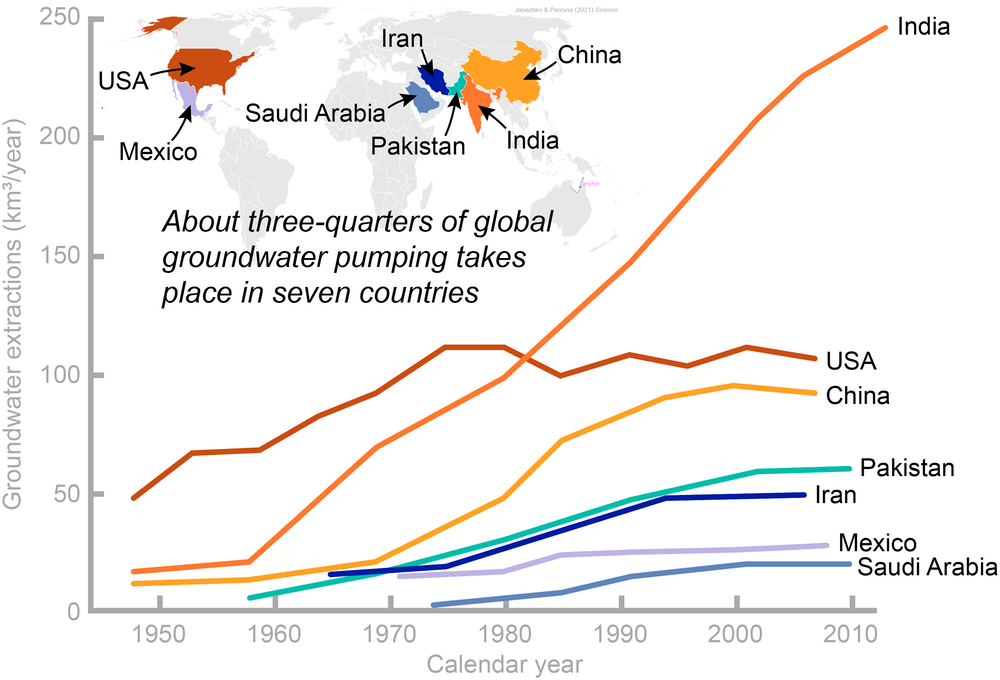
Climate change, sea level rise, groundwater extraction and aging infrastructure are all occurring at once, says Ganguly, who 13 years ago published a paper anticipating higher than predicted temperature trends.

“It’s almost become a perfect storm,” he says

“These are the things we have to design for,” Ganguly says.

Ganguly recently returned from a study abroad trip to Tanzania as part of Northeastern University’s Dialogue of Civilizations program, where Northeastern science, engineering, social science and computer science students learned about the infrastructure of the low-income, tourist-dependent nation.

“There has been a steady state of warming in Tanzania and heavy rainfall-induced floods, but there have been droughts in other parts of the country that have caused issues with crops,” Ganguly says.

Climate change is a global problem, but countries with low levels of resources and incomes are more affected than wealthier nations, Ganguly says.

“Many more people potentially lose their lives” or face a difficult economic recovery from disaster, he says.

But Tanzania, which is responsible for a small fraction of global greenhouse gas emissions, presents an opportunity to build a resilient infrastructure with critical redundancies built into the system, while also making efforts to reduce greenhouse gas emissions from the transportation sector, in ways that can serve as a model for the world, Ganguly says.

“They almost have to start from scratch,” he says, “which can enable them to bake resilience into infrastructure design while simultaneously ensuring operational efficiency.”

With some help from industrialized nations and technology, it’s likely that places at most risk of climate change such as Tanzania can make progress without burning that much more fossil fuel, while also adapting better to climate change, Ganguly says.

When it comes to climate change, what happens in one country doesn’t stay there, he says.

“We share what is happening to the planet.”

But it’s not just Europe. The Washington Post reported that Central Asia and Oklahoma and Texas are currently baking in excessive heat.

Last month, Phoenix and Las Vegas experienced record daily high temperatures, while the North African city of Tunis experienced a scorching record high of 118 degrees Fahrenheit on July 13, according to NASA.

“It is extraordinary, but it’s completely expected,” says Samuel Munoz, Northeastern University assistant professor of marine and environmental sciences.

“Environmental and climate scientists have been predicting an increase in extreme weather events for years due to the impact of greenhouse gas emissions on the climate,” Munoz says.

“We’re going to keep breaking records,” he says.

The combination of larger wildfires, hotter heat waves and more intense hurricanes is prompting experts at the Union of Concerned Scientists in Cambridge to dub summer “the danger season.”

Union of Concerned Scientists principal climate scientist Kristina Dahl said in a June blog post that the dangers are many: heat stress and heat stroke, mold exposure in flood-damaged homes and poor air quality from wildfires.

The extreme weather events “compound one another and cause cascading chains of hazards,” Dahl writes.

As an example, she says, the “megadrought” in the U.S. Southwest is making fires more difficult to contain, resulting last month in New Mexico experiencing its largest wildfire ever, the Hermits Peak and Calf Canyon fire. 

Extreme weather poses a risk to summer tourism, making travel inconvenient or downright dangerous in beloved destinations around the globe.

This month, the Washburn wildfire threatened Yosemite’s National Park famed Mariposa Grove of Giant Sequoias, and a collapsing glacier killed 11 hikers in the Italian Dolomites, one day after record heat was recorded at the base of the glacier.

Earlier this summer, historic floods temporarily closed Yellowstone National Park for the first time in 34 years. 

Increased flooding is as much a part of climate change as heat waves and drought, Munoz says.

“A warmer atmosphere is a ‘thirstier’ atmosphere, increasing the likelihood of droughts and wildfires by causing more water to evaporate from the earth’s surface,” he says.

“At the same time, the extra water held in the atmosphere can also create heavier rainstorms that cause flooding,” Munoz says. 

In the case of Yellowstone, scenic roads were built next to rivers when there was a low likelihood the roads would get flooded and washed out.

“We designed and built infrastructure for a 20th century climate. It might not work as well for a 21st century climate,” Munoz says.

The impact of extreme events on critical infrastructure can determine the difference between life and death, Dahl writes in her blog post.

During “the massive heatwave that followed on the heels of Hurricane Ida in Louisiana in 2021, for instance, residents of the state were left without water or power for weeks,” she says.

“In Louisiana, the inability to cool off in the wake of the storm ultimately led to more deaths due to heat after the storm than to the storm itself even as the storm (traveled) northward, wreaking havoc and claiming dozens of lives from Mississippi to New York.” 

Officials who have planned around extreme weather events occurring every 100 to 500 years are finding that the pace has picked up dramatically, Ganguly says. 

He says locations in India and Pakistan that are used to high temperatures are experiencing heat beyond expectations.

Climate change, sea level rise, groundwater extraction and aging infrastructure are all occurring at once, says Ganguly, who 13 years ago published a paper anticipating higher than predicted temperature trends.

“It’s almost become a perfect storm,” he says

“These are the things we have to design for,” Ganguly says.

Ganguly recently returned from a study abroad trip to Tanzania as part of Northeastern University’s Dialogue of Civilizations program, where Northeastern science, engineering, social science and computer science students learned about the infrastructure of the low-income, tourist-dependent nation.

“There has been a steady state of warming in Tanzania and heavy rainfall-induced floods, but there have been droughts in other parts of the country that have caused issues with crops,” Ganguly says.

Climate change is a global problem, but countries with low levels of resources and incomes are more affected than wealthier nations, Ganguly says.

“Many more people potentially lose their lives” or face a difficult economic recovery from disaster, he says.

But Tanzania, which is responsible for a small fraction of global greenhouse gas emissions, presents an opportunity to build a resilient infrastructure with critical redundancies built into the system, while also making efforts to reduce greenhouse gas emissions from the transportation sector, in ways that can serve as a model for the world, Ganguly says.

“They almost have to start from scratch,” he says, “which can enable them to bake resilience into infrastructure design while simultaneously ensuring operational efficiency.”

With some help from industrialized nations and technology, it’s likely that places at most risk of climate change such as Tanzania can make progress without burning that much more fossil fuel, while also adapting better to climate change, Ganguly says.

When it comes to climate change, what happens in one country doesn’t stay there, he says.

“We share what is happening to the planet.”

But it’s not just Europe. The Washington Post reported that Central Asia and Oklahoma and Texas are currently baking in excessive heat.

Last month, Phoenix and Las Vegas experienced record daily high temperatures, while the North African city of Tunis experienced a scorching record high of 118 degrees Fahrenheit on July 13, according to NASA.

“It is extraordinary, but it’s completely expected,” says Samuel Munoz, Northeastern University assistant professor of marine and environmental sciences.

“Environmental and climate scientists have been predicting an increase in extreme weather events for years due to the impact of greenhouse gas emissions on the climate,” Munoz says.

“We’re going to keep breaking records,” he says.

The combination of larger wildfires, hotter heat waves and more intense hurricanes is prompting experts at the Union of Concerned Scientists in Cambridge to dub summer “the danger season.”

Union of Concerned Scientists principal climate scientist Kristina Dahl said in a June blog post that the dangers are many: heat stress and heat stroke, mold exposure in flood-damaged homes and poor air quality from wildfires.

The extreme weather events “compound one another and cause cascading chains of hazards,” Dahl writes.

As an example, she says, the “megadrought” in the U.S. Southwest is making fires more difficult to contain, resulting last month in New Mexico experiencing its largest wildfire ever, the Hermits Peak and Calf Canyon fire. 

Extreme weather poses a risk to summer tourism, making travel inconvenient or downright dangerous in beloved destinations around the globe.

This month, the Washburn wildfire threatened Yosemite’s National Park famed Mariposa Grove of Giant Sequoias, and a collapsing glacier killed 11 hikers in the Italian Dolomites, one day after record heat was recorded at the base of the glacier.

Earlier this summer, historic floods temporarily closed Yellowstone National Park for the first time in 34 years. 

Increased flooding is as much a part of climate change as heat waves and drought, Munoz says.

“A warmer atmosphere is a ‘thirstier’ atmosphere, increasing the likelihood of droughts and wildfires by causing more water to evaporate from the earth’s surface,” he says.

“At the same time, the extra water held in the atmosphere can also create heavier rainstorms that cause flooding,” Munoz says. 

In the case of Yellowstone, scenic roads were built next to rivers when there was a low likelihood the roads would get flooded and washed out.

“We designed and built infrastructure for a 20th century climate. It might not work as well for a 21st century climate,” Munoz says.

The impact of extreme events on critical infrastructure can determine the difference between life and death, Dahl writes in her blog post.

During “the massive heatwave that followed on the heels of Hurricane Ida in Louisiana in 2021, for instance, residents of the state were left without water or power for weeks,” she says.

“In Louisiana, the inability to cool off in the wake of the storm ultimately led to more deaths due to heat after the storm than to the storm itself even as the storm (traveled) northward, wreaking havoc and claiming dozens of lives from Mississippi to New York.” 

Officials who have planned around extreme weather events occurring every 100 to 500 years are finding that the pace has picked up dramatically, Ganguly says. 

He says locations in India and Pakistan that are used to high temperatures are experiencing heat beyond expectations.

Climate change, sea level rise, groundwater extraction and aging infrastructure are all occurring at once, says Ganguly, who 13 years ago published a paper anticipating higher than predicted temperature trends.

“It’s almost become a perfect storm,” he says

“These are the things we have to design for,” Ganguly says.

Ganguly recently returned from a study abroad trip to Tanzania as part of Northeastern University’s Dialogue of Civilizations program, where Northeastern science, engineering, social science and computer science students learned about the infrastructure of the low-income, tourist-dependent nation.

“There has been a steady state of warming in Tanzania and heavy rainfall-induced floods, but there have been droughts in other parts of the country that have caused issues with crops,” Ganguly says.

Climate change is a global problem, but countries with low levels of resources and incomes are more affected than wealthier nations, Ganguly says.

“Many more people potentially lose their lives” or face a difficult economic recovery from disaster, he says.

But Tanzania, which is responsible for a small fraction of global greenhouse gas emissions, presents an opportunity to build a resilient infrastructure with critical redundancies built into the system, while also making efforts to reduce greenhouse gas emissions from the transportation sector, in ways that can serve as a model for the world, Ganguly says.

“They almost have to start from scratch,” he says, “which can enable them to bake resilience into infrastructure design while simultaneously ensuring operational efficiency.”

With some help from industrialized nations and technology, it’s likely that places at most risk of climate change such as Tanzania can make progress without burning that much more fossil fuel, while also adapting better to climate change, Ganguly says.

When it comes to climate change, what happens in one country doesn’t stay there, he says.

“We share what is happening to the planet.”

FOR MORE INFORMATION: https://phys.org/news/2022-07-infrastructure-tourism-triple-digit-temperatures-extreme.html