Little Ice Age study reveals North Atlantic reached a tipping point

Scientists have used centuries-old clam shells to see how the North Atlantic climate system reached a “tipping point” before the Little Ice Age.

The Little Ice Age — a period of regional cooling, especially in the North Atlantic — lasted several centuries, ending in about 1850.

A long-standing theory suggests initial cooling in this period was sustained by “sea-ice to ocean feedbacks” — sea ice expanded and this slowed ocean currents which in turn reduced the flow of warm water from the south.

The new study, by the University of Exeter, used the shells of quahog clams — which can live for several hundred years — to understand how the ocean has evolved and responded to external changes over recent centuries.

The findings show that the North Atlantic climate system destabilised and lost resilience (the ability to recover from external changes) prior to the Little Ice Age, possibly causing it to “tip” into a new, colder state.

And the researchers say the North Atlantic could be approaching a new tipping point, with major consequences for the region’s climate.

With scientists warning that multiple tipping points may now be approaching worldwide due to human-driven climate change, the study helps us understand when and how tipping points are triggered.

“One way to tell that a system is approaching a sudden transition is that it becomes slow to respond to perturbations (external changes),” said lead author Beatriz Arellano-Nava, of Exeter’s Global Systems Institute.

“In other words, a system loses the ability to return to its average state, and can instead ‘tip’ into a new state.”

“In the case of the North Atlantic prior to the Little Ice Age, this loss of resilience made the system vulnerable to an abrupt switch, potentially heralding the transition to Little Ice Age conditions” said Dr Paul Halloran, who co-led the research.

The new study warns that vulnerability of the North Atlantic system is a critical issue today, with recent analysis suggesting it has destabilised during the last century and might be approaching a tipping point.

“Our latest analysis suggests that the system of ocean currents in the northern North Atlantic could be at risk of a tipping point again now due to global warming, leading once again to abrupt climate change over Europe,” said Professor Tim Lenton, Director of the Global Systems Institute.

Analysis of clam shells focussed on oxygen and carbon isotopes and shell growth — all of which can be used as measures of environmental variability.

The study was funded by the European Union’s Horizon 2020 research and innovation programme.


Story Source:

Materials provided by University of Exeter. Note: Content may be edited for style and length.

FOR MORE INFORMATION: https://www.sciencedaily.com/releases/2022/09/220913110338.htm

Climate change is affecting drinking water quality

The water stored in reservoirs ensures our supply of drinking water. Good water quality is therefore important — but is at significant risk due to climate change. In a model study of the Rappbode reservoir in the Harz region, a research team from the Helmholtz Centre for Environmental Research (UFZ) demonstrated how the climate-related disappearance of forests in the catchment area for Germany’s largest drinking water reservoir can affect water quality. The problem of such indirect consequences of climate change is seriously underestimated, the scientists warn in Water Research. Water quality is of critical importance, especially for drinking water reservoirs, as subsequent treatment in the waterworks must continually meet high standards.

Heat waves, drought, floods, forest fires — the consequences of climate change are increasing and are changing our environment. A prime example is the countryside in the catchment area for the Rappbode reservoir in the eastern Harz region. This is the largest drinking water reservoir in Germany and provides drinking water for roughly one million people. Long periods of drought over the years from 2015 to 2020 have so severely weakened the tree population in the Harz region that parasites such as bark beetles have been able to propagate. This further exacerbated the effect: The trees were further damaged and quickly died off. “Over the past four years, the Rappbode catchment area, characterized by conifers, primarily spruce, has lost over 50 percent of its forest,” says UFZ hydrologist and last author Prof. Michael Rode. “This massive forest dieback is advancing rapidly and is dramatic. This will have consequences for the drinking water reservoir.”

Forests play a key role in the water cycle. They filter the water and bind nutrients and are therefore necessary for good water quality. The fewer nutrients — i.e. nitrogen or phosphorus compounds — contained in reservoir water, the better it is for drinking water treatment. “This makes it more difficult for algae to develop, making drinking water treatment in the waterworks more cost-effective and easier,” explains UFZ lake researcher and co-author Dr. Karsten Rinke. “Nutrient management in water conservation areas is therefore very important. Over the past decades, long-term concepts with close cooperation between forest and water management have advanced the development of large areas of forest in the Rappbode reservoir catchment area.” The rapid forest decline in the eastern Harz region is now a matter of grave concern for the reservoir and waterworks operators.

Spurred by this development, the UFZ team has investigated the effects of climate-induced deforestation on reservoir water quality in their model study. This study was based on data from the TERENO (Terrestrial Environmental Observatories) environmental observatory network, in which the UFZ is a participant with the Harz/Central German Lowland Observatory. “We were able to access environmental data from a period of over ten years, providing us with a solid set of data,” says Dr. Xiangzhen Kong, also a UFZ environmental scientist and lead author of the study. The team used data from the international ISIMIP project (Inter-sectoral Impact Model Intercomparison Project) to predict future climate changes. “We first fed these data into a model in order to estimate the climate-related effects on the nutrient balance in the catchment area,” explains Kong. “The resulting data were then processed in a reservoir ecosystem model with which we were able to determine the effects of different deforestation scenarios on the predicted water quality for 2035.

The Rappbode reservoir is supplied by three different catchment areas, two of which were included in the study. “The Hassel catchment area is characterized by agriculture, while that of the Rappbode is predominantly forest — at least that was the case before the spruce forests died,” says Kong. Before the water from the two catchment area flows into the large Rappbode reservoir, it is first retained by an upstream pre-dam. The agricultural influence results in a significantly higher nutrient content in the water in the Hassel pre-dam than that in the Rappbode pre-dam. “We were able to demonstrate that, for an anticipated deforestation of up to 80 percent, the Rappbode predam will experience an 85 percent increase in dissolved phosphorus concentration and a more than 120 percent increase in nitrogen concentration within only 15 years. The Rappbode pre-dam will thus reach nearly the same nutrient levels as the Hassel pre-dam,” says Kong. This will result in a more than 80 percent increase in diatoms and more than 200 percent increase in green algae in the Rappbode pre-dam. These results highlight the coming necessity for a wide range of adaptations in drinking water management. “Nutrient input to reservoir catchment areas should be reduced even more than previously, reforestation projects with drought-resistant tree species should be further promoted and waterworks should be adapted to the impending developments with selective water removal strategies,” says Rode. “And what remains important and must be further increased: extensive, granular environmental monitoring.”

The results for the Rappbode reservoir can be applied to other reservoir catchment areas in similar regions. “Forest dieback as an indirect consequence of climate change has a more pronounced effect on reservoir water quality than direct effects of climate change such as elevated water temperature. We were actually surprised by the extent of this effect,” says Kong.

FOR MORE INFORMATION: https://www.sciencedaily.com/releases/2022/09/220909120719.htm

Researchers develop new technique to keep drinking water safe using machine learning

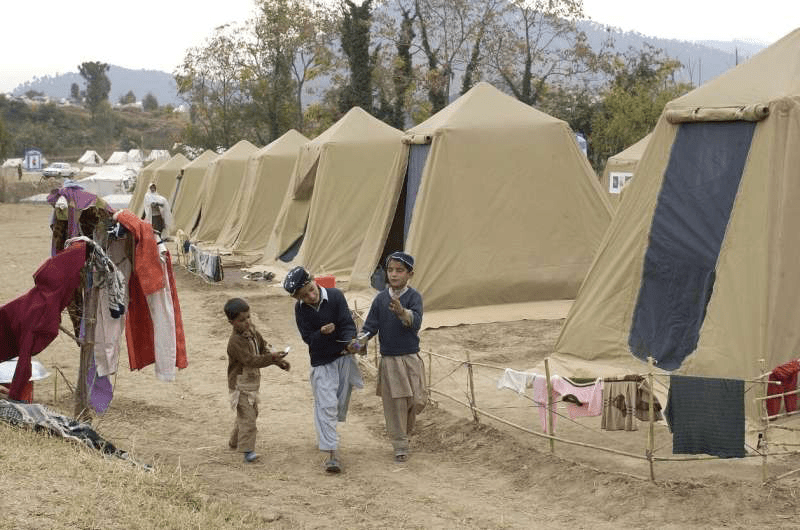
Waterborne illness is one of the leading causes of infectious disease outbreaks in refugee and internally displaced persons (IDP) settlements, but a team led by York University has developed a new technique to keep drinking water safe using machine learning, and it could be a game changer. The research is published in the journal PLOS Water.

As drinking water is not piped into homes in most settlements, residents instead collect it from public tap stands using storage containers.

“When water is stored in a container in a dwelling it is at high risk of being exposed to contaminants, so it’s imperative there is enough free residual chlorine to kill any pathogens,” says Lassonde School of Engineering Ph.D. student Michael De Santi, who is part of York’s Dahdaleh Institute for Global Health Research, and who led the research.

Recontamination of previously safe drinking water during its collection, transport and storage has been a major factor in outbreaks of cholera, hepatitis E, and shigellosis in refugee and IDP settlements in Kenya, Malawi, Sudan, South Sudan, and Uganda.

“A variety of factors can affect chlorine decay in stored water. You can have safe water at that collection point, but once you bring it home and store it, sometimes up to 24 hours, you can lose that residual chlorine, pathogens can thrive and illness can spread,” says Lassonde Adjunct Professor Syed Imran Ali, a Research Fellow at York’s Dahdaleh Institute for Global Health Research, who has firsthand experience working in a settlement in South Sudan.

Using machine learning, the research team—including Associate Professor Usman Khan, also of Lassonde—has developed a new way to predict the probability that enough chlorine will remain until the last glass is consumed. They used an artificial neural network (ANN) along with ensemble forecasting systems (EFS), something that is not typically done. EFS is a probabilistic model commonly used to predict the probability of precipitation in weather forecasts.

“ANN-EFS can generate forecasts at the time of consumption that take a variety of factors into consideration that affect the level of residual chlorine, unlike the typically used models. This new probabilistic modeling is replacing the currently used universal guideline for chlorine use, which has been shown to be ineffective,” says Ali.

Factors such as local temperature, how the water is stored and handled from home to home, the type and quality of the water pipes, water quality and whether a child dipped their hand in the water container can all play a role in how safe the water is to drink.

“However, it’s really important that these probabilistic models be trained on data at a specific settlement as each one is as unique as a snowflake,” says De Santi. “Two people could collect the same water on the same day, both store it for six hours, and one could still have all the chlorine remaining in the water and the other could have almost none of it left. Another 10 people could have varying ranges of chlorine.”

The researchers used routine water quality monitoring data from two refugee settlements in Bangladesh and Tanzania collected through the Safe Water Optimization Tool Project. In Bangladesh, the data was collected from 2,130 samples by Médecins Sans Frontières from Camp 1 of the Kutupalong-Balukhali Extension Site, Cox’s Bazaar between June and December 2019 when it hosted 83,000 Rohingya refugees from neighboring Myanmar.

Determining how to teach the ANN-EFS to come up with realistic probability forecasts with the smallest possible error required out-of-the-box thinking.

“How that error is measured is key as it determines how the model behaves in the context of probabilistic modeling,” says De Santi. “Using cost-sensitive learning, a tool that morphs the cost function towards a targeted behavior when using machine learning, we found it could improve probabilistic forecasts and reliability. We are not aware of this being done before in this context.”

For example, this model can say that under certain conditions at the tap with a particular amount of free residual chlorine in the water, there is a 90 percent chance that the remaining chlorine in the stored water after 15 hours will be below the safety level for drinking.

“That’s the kind of probabilistic determination this modeling can give us,” says De Santi. “Like with weather forecasts, if there is a 90 percent chance of rain, you should bring an umbrella. Instead of an umbrella, we can ask water operators to increase the chlorine concentration so there will be a greater percentage of people with safe drinking water.”

“Our Safe Water Optimization Tool takes this machine learning work and makes it available to aid workers in the field. The only difference for the water operators is we ask them to sample water in the container at the tap and in that same container at the home after several hours,” says Ali.

“This work Michael is doing is advancing the state of practice of machine learning models. Not only can this be used to ensure safe drinking water in refugee and IDP settlements, it can also be used in other applications.”

FOR MORE INFORMATION: https://phys.org/news/2022-09-technique-safe-machine.html

Riverine floodplains are among the most species-rich ecosystems on earth. Because they form the interface between land and water, they are hotspots of nutrient turnover and biodiversity. Along many rivers, however, numerous floodplains have been cut off from waterways or converted to other uses. At the same time, too many nutrients enter the water, especially nitrogen. Both degrade water quality and threaten biodiversity—both in the rivers themselves and in the seas into which they flow.

To a certain extent, rivers have the ability to break down nutrients in the river water itself and in the floodplains. Researchers working on the international IDES collaborative project have determined just how large the contribution of floodplains is to reduce nitrogen for the Danube River basin. “The special feature of our study is that we looked at such a large area for the first time, because the Danube has the second largest catchment area in Europe,” said IGB scientist and co-author Dr. Andreas Gericke.

The Danube catchment covers an area of more than 800,000 km2 and stretches across 19 countries. Some 70 to 80% of its floodplains have been cut off from the river or converted into agricultural land in recent decades, depriving it of its ecosystem functions and services. 

The researchers now wanted to know how much of the nutrient retention is provided by the remaining active floodplains. To do this, the team used the MONERIS model developed at the IGB, which determines nutrient inputs from various sources—including the atmosphere, fertilizer use in agriculture and sewage treatment plants—and calculates their fate and transport in the river system. 

According to the study, 500,000 metric tons of nitrogen enter the waters of the Danube River Basin each year, predominantly as nitrate. Most of the inputs come from agriculture (44%) and urban sources (30%). Two-thirds of these inputs reach the Black Sea, and one-third, or 160,000 metric tons, are degraded in water bodies.

To find out how large the share of floodplains in nitrate retention is, the team supplemented the MONERIS calculations with further modeling for the Danube and its tributaries Sava, Tisza and Jantra. There, 3,842 km2 of floodplains are found, accounting for nearly half of all active floodplains in the Danube basin. 

“Most nitrate is degraded in the water network, for example by nitrogen being taken up by plankton or converted by bacteria (denitrification). But floodplains can also contribute to a not inconsiderable extent to nutrient retention,” Andreas Gericke reports. The results show that active floodplains degrade 33,200 tons of nitrate annually, which corresponds to 6.5% of the input. Based on the model results, the researchers estimate that nitrate removal could be increased by 14.5% if the approximately 1,300 km² of potentially restorable floodplains and oxbow lakes were reconnected to the main streams.

“Our results impressively show that it makes sense to preserve floodplains and restore their functions—not only because of their ability to break down nutrients, but also to preserve biodiversity among many other ecosystem services,” said Martin Tschikof from the Institute of Hydrobiology and Water Management at BOKU. He is the lead author of the study. The simplified assumptions and data allow only limited statements. However, they are a good basis for better consideration of floodplains and their reconnection for good water quality in Europe’s major river basins.

FOR MORE INFORMATION: https://phys.org/news/2022-09-floodplains-quality-rivers.html

Growing number of Native American households in Nevada face plumbing poverty, water quality problems

A growing number of Native American households in Nevada have no access to indoor plumbing, a condition known as “plumbing poverty,” according to a new study by a team from DRI and the Guinn Center for Policy Priorities.

The study assesses trends and challenges associated with water security (reliable access to a sufficient quantity of safe, clean water) in Native American households and communities of Nevada and also found a concerning increase in the number of Safe Drinking Water Act violations during the last 15 years.

Native American communities in the Western U.S., including Nevada, are particularly vulnerable to water security challenges because of factors including population growth, climate change, drought, and water rights. In rural areas, aging or absent water infrastructure creates additional challenges.

In this study, the research team used U.S. Census microdata on household plumbing characteristics to learn about the access of Native American community members to “complete plumbing facilities,” including piped water (hot and cold), a flush toilet, and a bathtub or shower. They also used water quality reports from the Environmental Protection Agency to learn about drinking water sources and health violations.

According to their results, during the 30-year time period from 1990-2019, an average of 0.67 percent of Native American households in Nevada lacked complete indoor plumbing—higher than the national average of 0.4 percent. Their findings show a consistent increase in the lack of access to plumbing over the last few decades, with more than 20,000 people affected in 2019.”Previous studies have found that Native American households are more likely to lack complete indoor plumbing than other households in the U.S., and our results show a similar trend here in Nevada,” said lead author Erick Bandala, Ph.D., assistant research professor of environmental science at DRI. “This can create quality of life problems, for example, during the COVID-19 pandemic, when lack of indoor plumbing could have prevented basic health measures like hand-washing.”

Plumbing poverty may correlate with other types of poverty. Analysis by the study team showed that as the number of people living in a household increased, access to complete plumbing decreased significantly, in agreement with other studies.

Study findings also showed a significant increase in the number of Safe Drinking Water Act violations in water facilities serving Native American Communities in Nevada from 2005 to 2020. The most common health-based violations included presence of volatile organic compounds (VOCs), presence of coliform bacteria, and presence of inorganic chemicals.

“Water accessibility, reliability, and quality are major challenges for Native American communities in Nevada and throughout the Southwest,” said coauthor Maureen McCarthy, Ph.D., research professor of environmental science and director of the Native Climate project at DRI.

The study authors hope that their findings are useful to decision-makers and members of the general public who may not be aware that plumbing poverty and water quality are significant problems in Nevada.

FOR MORE INFORMATION: https://phys.org/news/2022-09-native-american-households-nevada-plumbing.html

Study recommends six steps to improve our water quality

Nitrogen fertilizers are critical for growing crops to feed the world, yet when applied in excess can pollute our water for decades. A new study provides six steps to address nitrogen pollution and improve water quality.

Since nitrogen persists for so long, management efforts may seem futile and unattractive because it can take a long time to see results. The study from the University of Waterloo appearing in Nature Geoscience provides a roadmap for scientists, policymakers, and the public to overcome the challenges associated with this legacy nitrogen for faster improvements to our water quality.

“We have to think about the legacy we leave for the future in a strategic way from both the scientific and socio-economic angles,” said Nandita Basu, a professor of Earth and Environmental Sciences and Civil and Environmental Engineering at Waterloo and the study’s lead author. “This is a call to action for us to accept that these legacies exist and figure out how to use them to our advantage.”

The study recommends the following six steps:

  • Focus research to quantify the length of time the nitrogen stays in our ecosystems to adjust our expectations for conservation timelines.
  • Find ways to use the legacy nitrogen as a resource for growing crops instead of adding new nitrogen fertilizers to our ecosystems with already high levels of nitrogen.
  • Target conservation strategies to get the maximum water quality improvement instead of a widespread blanket approach.
  • Combine conservation methods that reduce the amount of nitrogen that has already left the farm fields, such as in wetlands, with methods that harvest nitrogen from past legacies accumulated in the soil.
  • Monitor water quality at both large and small scales so that short-term results can be seen at scales like a farm field and long-term results downstream at river basins can also be tracked.
  • When assessing the economic impacts of conservation strategies, incorporate both short- and long-term cost-benefit analyses.

Nitrogen legacies are different around the world depending on the climate and historical land use, and land management patterns. While theoretical knowledge of these legacies has existed for decades, measurements and monitoring have not yet been widespread enough to understand these differences and support water quality policies, where there is still an expectation of short-term water quality improvement.

FOR MORE INFORMATION: https://www.sciencedaily.com/releases/2022/02/220214095805.htm

Baltimore latest among major cities experiencing contamination in water supply

Baltimore has become the latest major city to experience a water crisis involving contamination in the water supply.

City officials have been urging residents to boil tap water for at least one minute after E. coli was discovered in West Baltimore at one sampled location on Friday and another two locations on Saturday. More than 1,500 people were affected by the advisory, as well as several area schools.

Investigators are identifying construction sites that potentially contributed to the contamination, Baltimore Director of Department of Public Works Jason Mitchell told reporters during a press conference Monday, Baltimore ABC affiliate WMARreported. The health department is flushing the system, as well as performing leak detection and live checks in the area, and increasing chlorination levels, Mitchell said.MORE: How the water crisis is impacting Jackson residents

Engineers are inspecting the distribution system, treatment systems, pumping facilities and other infrastructure, city officials told reporters during a news conference on Tuesday, WMAR reported.

The boil water notice will remain in effect until the source of the E. coli is determined and the problem has been fixed, the Maryland Department of the Environment said.

There is no evidence so far that the contamination spread to the east or southeast sections of the city, officials said Tuesday after the results came in from another round of tests that were sampled on Monday.

The health department takes 360 samples from 90 locations throughout the city each month to identify potential issues with water quality.

The city began distributing water to impacted communities once the contamination was announced. More than 1,700 gallons of water were handed out on Monday alone, and the distribution continued into Tuesday, officials said.

Baltimore Mayor Brandon Scott told reporters Monday that the city is “taking this issue seriously.”

“We understand deeply the concerns of residents and we want to assure them that their health and well-being are our first priority,” Scott said.

FOR MORE INFORMATION: https://abcnews.go.com/US/baltimore-latest-major-cities-experiencing-contamination-water-supply/story?id=89415625

Drought revives ideas to shift water from Mississippi to help West

When Paul Cofell of Red Wing read a letter in the Palm Springs Desert Sun suggesting that water could be diverted from the Mississippi River and piped to the Colorado River basin, he couldn’t stay quiet.

Cofell wrote to the newspaper, advising Californians that if they come for the Midwest’s water, “we have plenty of dynamite in Minnesota.”

He didn’t anticipate the flood of responses to the paper that followed, some supportive, some angry. Cofell even got a call from the Goodhue County Sheriff’s Office, who told him some viewed his letter as threatening and advised him not to make any more references to dynamite.

“The reaction I got was quite astounding,” Cofell said. 

The incident highlights the passionate reaction to the idea of sending water from the Midwest to the southwestern United States, where an ongoing drought and population growth have created a looming water crisis. States such as California, Arizona and Nevada are facing severe restrictions on their water use.

One proposed solution making headlines is diverting water from the Mississippi River or some other water source to those drier states. Recent flooding along the Mississippi has led some to wonder, why not send some of that excess water to where it’s desperately needed?

Julie Makinen, the Desert Sun’s executive editor, said the topic of transporting water set off a cascade of interest, with letters pouring in from all over the world.

Some argue that the West’s current water systems date back decades to when there were far fewer people, and modern engineering solutions are needed. And they point out that agriculture in California and other western states is a national resource, she said.

“When the Midwesterners get very possessive about, ‘Don’t touch a drop of our water,’ then people here are like, ‘OK, well, don’t go to your supermarket looking for strawberries in January,’” Makinen said.

Others argue that “we shouldn’t try to engineer our way out of these problems,” she said.

“That means stop having surf parks and stop having green grass lawns, and stop building houses in places where it’s hard to get water,” Makinen said.

Plans to pipe water from wetter to drier regions of the country have been floated since the 1960s, and a few actually were built, said Todd Jarvis with the Institute for Water and Watersheds at Oregon State University. 

Since then, the water shortage in the Southwest has grown more dire, Jarvis said.

“We’re now looking at will the drought ever be broken?” he said. “I think everybody’s starting to think maybe this is the new normal.”

That scarcity has made water a valuable commodity, Jarvis said, attracting new interest in ideas to move it from one basin to another.

“The participants in the proposals are no longer governments,” he said. “We’re talking [about] private industry. Hedge funds are starting to look at water. We’re starting to see water show up on Nasdaq as far as futures.”

FOR MORE INFORMATION: https://www.mprnews.org/story/2022/09/07/drought-revives-ideas-to-shift-water-from-mississippi-to-help-west

The Great Bubble Barrier: How bubbles are keeping plastic out of the sea

By Lottie Limb  •  Updated: 27/09/2021

The power of tiny bubbles is being harnessed to remove plastic pollution from Europe’s rivers.

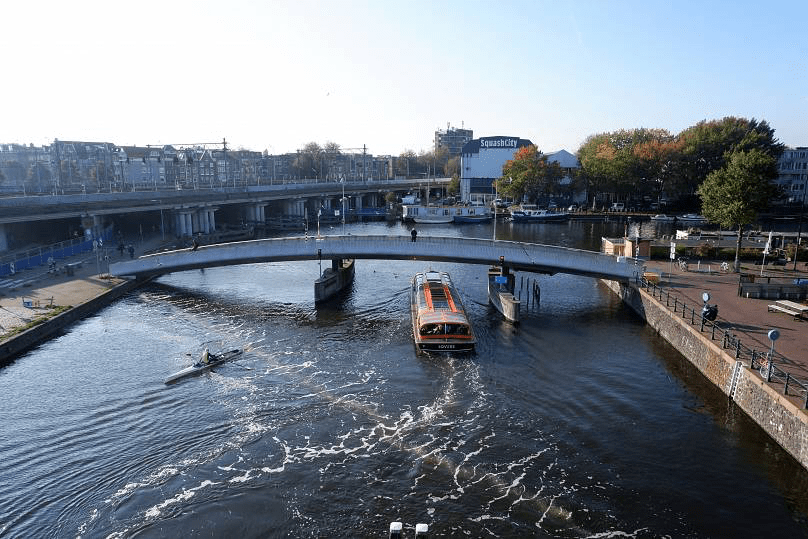
Dutch start-up The Great Bubble Barrier has developed an ingenious way of intercepting rubbish, by creating a curtain of bubbles that pushes plastics to the side of the waterway.

In a pilot test conducted in the IJssel, the bubbles caught 86 per cent of material. Promising news for the long term barrier installed in an Amsterdam canal in 2019, which is stopping trash from reaching the North Sea.

Now the team is taking their technology outside of the Netherlands for the first time, with a new Bubble Barrier to launch in Portugal in summer 2022.

An exact location for the new project – which was announced on World Clean Up Day last Sunday – is yet to be revealed, but it will arrive in the region of Porto.

“There is an urgent need for measures that stop plastic from flowing into our oceans. With the installation of a Bubble Barrier in the Porto region, we will be able to tackle the problem close to the source” explains co-founder of The Great Bubble Barrier and Chief Technical Officer Philip Ehrhorn.

“At the same time, we aim to build awareness among both residents and visitors about the issue of plastic pollution, making the impact of the project bigger than just regional.”

According to a recent study in the UK journal Nature, the Porto region is home to two of the rivers with the highest levels of plastic pollution in Portugal.

FOR MORE INFORMATION: https://www.euronews.com/green/2021/09/22/great-bubble-barrier-how-bubbles-are-keeping-plastic-out-of-the-sea

What are nurdles and how are they devastating the environment?

Nurdles are the raw material of the plastics industry.

Packed and shipped, in their billions, around the world, these lentil sized plastic pellets are then melted down and used as the building blocks for a vast array of items used in our daily lives – from computers and cars, to clothes and drink bottles.

Although the first reported sighting of nurdles on beaches was not until 1970, they have since been found on every continent except Antarctica.

There are now calls for this type of pollution to be taken much more seriously, as their size and persistence make them virtually impossible to remove, once in the environment.

Causing environmental devastation

Nurdles are lost at every stage of handling. According to Plastic Soup Foundation, each year, 230,000 tonnes enter our oceans and, within the EU alone, 23 billion nurdles a day end up in the environment. Making their way down storm drains, into rivers and waterways, and eventually reaching our oceans, they are then distributed by wind and ocean currents to every corner of our planet, but are practically impossible to clean up due to their size.

FOR MORE INFORMATION: https://www.euronews.com/green/2021/12/12/what-are-nurdles-and-how-are-they-devastating-the-environment