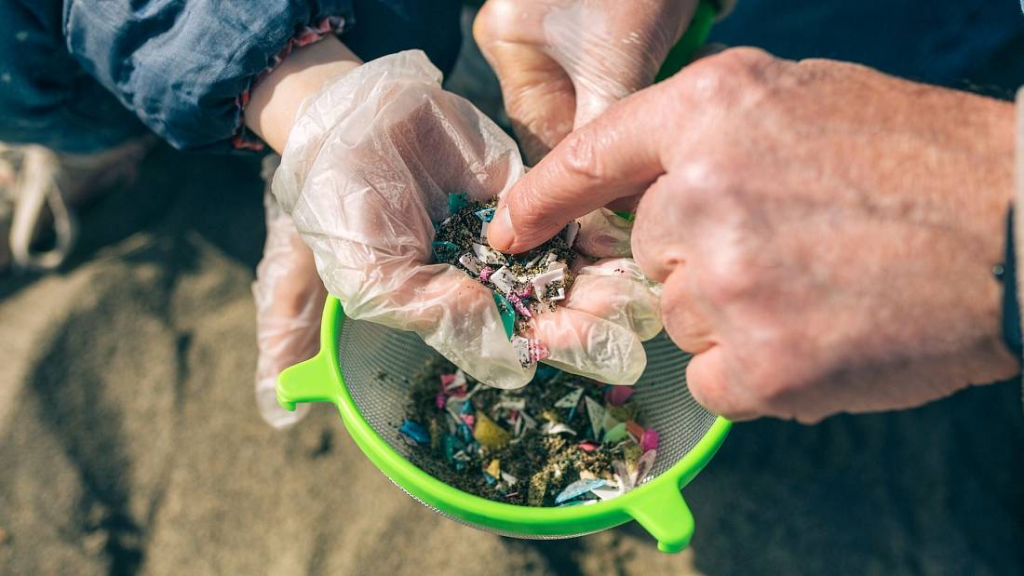
It follows an earlier discovery in babies – who, according to a recent study, have 15 times more particles in their bodies compared to adults.
Microplastics’ ability to penetrate our bodies is made even more worrying by scientists’ findings that the material provide a comfortable environment for bacteria with high antibiotic resistanceto thrive in.
What are microplastics?
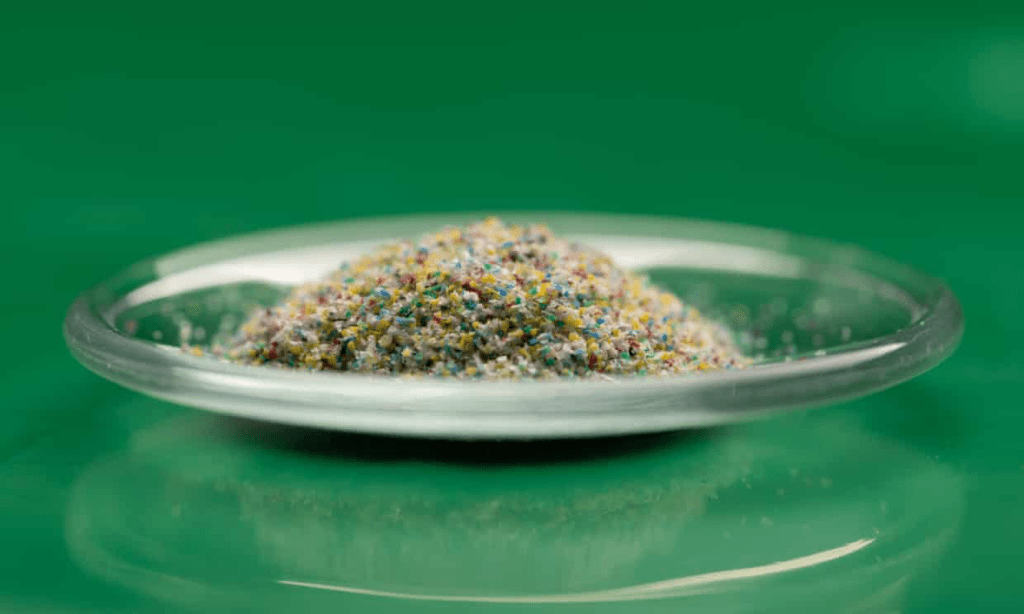
Microplastics are small pieces of plastic, often about the same size as sesame seed, and approximately five millimetres long. They are a result of plastic pollution, and are present in a variety of products, from synthetic clothing to plastic bottles.
They consist of carbon and hydrogen atoms bound together, and often contain chemicals such as phthalates and polybrominated diphenyl ethers (PBDEs).
These chemicals leach out of the plastics after entering the environment.
The simplest solution would be to stop buying synthetic fibres, but that isn’t always as easy or environmentally friendly as it might sound. Besides, binning all of your non-natural clothing just adds to the problem of persistent plastic pollution by sending them to landfill where they will likely remain forever.
Washing items less frequently is always an option. As nearly 2,000 fibres are shed every time a synthetic item goes through your machine, skipping a wash day here and there can make a difference. Not to mention that when you do eventually fill the drum up, washing a full load reduces friction resulting in fewer fibres going down the drain.
Expensive filters that catch the fibres inside your washing machine are available, but a more accessible alternative might be a microfibre catching bag. Invented by a group of German surfers and tested by the Fraunhofer research institute, Guppy Friend is one such device. Its tiny mesh keeps the fibres inside the bag allowing you to dispose of them properly once your clothing is clean.
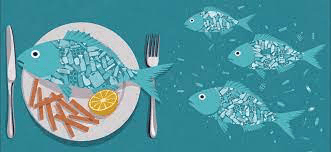
Fish exposed to fibres from our clothes are showing signs that microplastics are releasing harmful chemicals, according to a study by scientists at Duke University.
When we wash our clothes, fabrics made from synthetic materials shed tiny fibres into water that are then washed down the drain. Currently, most wastewater processing facilities don’t have the ability to remove these fibres meaning they end up in oceans, lakes and rivers. In some areas, they account for 90 per cent of microplastic pollution.
“Even if they are released miles from the ocean they can work their way down there. So they affect both freshwater and marine organisms,” says Duke University researcher Melissa Chernick.
Previous research has shown that fish end up eating a lot of these fibres and mechanisms in their digestive system allow them to pass through without much harm. This new study, however, suggests that the problem isn’t just with direct damage to the gut but with the chemical coatings on the plastics that are absorbed into the fish’s bloodstream.
“Until now, most studies have focused on primarily on looking for the presence of plastics in animals without identifying what the effects on various tissues might be,” says Chernick. “But that’s exactly where our study suggests the science needs to go.”
If nothing else, the study proves that microfibre pollution is bad news for populations of marine life.
Microplastic pollution has been detected in human blood for the first time, with scientists finding the tiny particles in almost 80% of the people tested.
The discovery shows the particles can travel around the body and may lodge in organs. The impact on health is as yet unknown. But researchers are concerned as microplastics cause damage to human cells in the laboratory and air pollution particles are already known to enter the body and cause millions of early deaths a year.
The scientists analysed blood samples from 22 anonymous donors, all healthy adults and found plastic particles in 17. Half the samples contained PET plastic, which is commonly used in drinks bottles, while a third contained polystyrene, used for packaging food and other products. A quarter of the blood samples contained polyethylene, from which plastic carrier bags are made.
“Our study is the first indication that we have polymer particles in our blood – it’s a breakthrough result,” said Prof Dick Vethaak, an ecotoxicologist at Vrije Universiteit Amsterdam in the Netherlands. “But we have to extend the research and increase the sample sizes, the number of polymers assessed, etc.” Further studies by a number of groups are already under way, he said.
“It is certainly reasonable to be concerned,” Vethaak told the Guardian. “The particles are there and are transported throughout the body.” He said previous work had shown that microplastics were 10 times higher in the faeces of babies compared with adults and that babies fed with plastic bottles are swallowing millions of microplastic particles a day.
“We also know in general that babies and young children are more vulnerable to chemical and particle exposure,” he said. “That worries me a lot.”
The new research is published in the journal Environment International and adapted existing techniques to detect and analyse particles as small as 0.0007mm. Some of the blood samples contained two or three types of plastic. The team used steel syringe needles and glass tubes to avoid contamination, and tested for background levels of microplastics using blank samples.
Advertisement
Vethaak acknowledged that the amount and type of plastic varied considerably between the blood samples. “But this is a pioneering study,” he said, with more work now needed. He said the differences might reflect short-term exposure before the blood samples were taken, such as drinking from a plastic-lined coffee cup, or wearing a plastic face mask.
“The big question is what is happening in our body?” Vethaak said. “Are the particles retained in the body? Are they transported to certain organs, such as getting past the blood-brain barrier?” And are these levels sufficiently high to trigger disease? We urgently need to fund further research so we can find out.”
“Plastic production is set to double by 2040,” said Jo Royle, founder of the charity Common Seas. “We have a right to know what all this plastic is doing to our bodies.” Common Seas, along with more than 80 NGOs, scientists and MPs, are asking the UK government to allocate £15m to research on the human health impacts of plastic. The EU is already funding research on the impact of microplastic on foetuses and babies, and on the immune system.
A new review paper published on Tuesday, co-authored by Vethaak, assessed cancer risk and concluded: “More detailed research on how micro- and nano-plastics affect the structures and processes of the human body, and whether and how they can transform cells and induce carcinogenesis, is urgently needed, particularly in light of the exponential increase in plastic production. The problem is becoming more urgent with each day.”
After two years of wrangling, false starts and disappointments, it finally happened: America has passed its first-ever climate legislation, moving the country closer to its goal of a decarbonized future and taking a significant step toward helping the planet avert the worst scenarios of climate catastrophe.
Thanks to their durability and versatility, plastics have reshaped our modern society and have become an essential part of our lives. However, as plastic waste accumulates, its management now represents a global environmental concern. Tiny particles of plastic debris (including micro and nano-sized plastics) have been detected in the oceans, lakes, rivers, soils, sediments, air, and in animal biomass. Plastic pollution is so ubiquitous and pervasive that it has become a severe threat to natural ecosystems, biodiversity, and human health. Global and concerted interventions are urgently needed to tackle this global challenge.
This collection will gather the latest technological solutions towards a plastic pollution-free planet. We will consider research papers that focus on reducing plastic consumption and waste, developing alternative materials, maximising sustainable waste management solutions, improving our understanding of the fate, transport, and effects of plastic pollution in different environmental matrices, and accelerating innovation in circular economy strategies.
Today, NOAA-supported scientists announced that this year’s Gulf of Mexico “dead zone”— an area of low to no oxygen that can kill fish and marine life—is approximately 3,275 square miles. That’s more than 2 million acres of habitat potentially unavailable to fish and bottom species—larger than the land area of Rhode Island and Delaware combined.
The five-year average dead zone size (also known as the hypoxic zone) is now 4,280 square miles, which is over two times larger than management targets. Since records began in 1985, the largest hypoxic zone measured was 8,776 square miles in 2017.
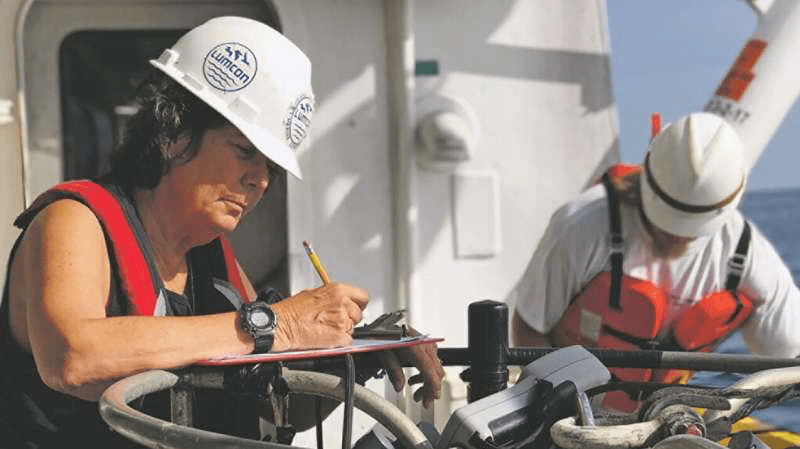
The measurement was made during an annual survey cruise, led by a team of scientists from Louisiana State University and the Louisiana Universities Marine Consortium (LUMCON) aboard the R/V Pelican during the last week of July. The information gathered is a key metric used by the Mississippi River/Gulf of Mexico Watershed Hypoxia Task Force to measure progress toward achieving their five-year average target of 1,900 square miles or smaller by 2035. The cruise provides a one-time snapshot of the dead zone; the five-year average captures the dynamic and changing nature of the zone over time.
“Yearly measurements enable us to help decision-makers fine tune strategies to reduce the size of the hypoxic zone in these waters and mitigate harmful impacts to our coastal resources and economy,” said Nicole LeBoeuf, director of NOAA’s National Ocean Service. “While some hypoxia is natural, the size and scale of what we’ve seen here in the last several decades is unusually large and detrimental. Our measurements and analyses can empower communities to take action to protect their coasts and contribute to the region’s economic sustainability.”
In June, NOAA forecasted an average-sized hypoxic zone of 5,364 square miles, based primarily on Mississippi River discharge and nutrient runoff data from the U.S. Geological Survey. The measured size fell within the uncertainty range for the models which factors in some of the inherent environmental variability of the system such as the below average river discharge over the summer. This demonstrates the overall accuracy of the models and their ability to be applied as tools for nutrient reduction strategies.
“This summer was an unusual year for Gulf hypoxia,” said Nancy Rabalais, Ph.D. professor at Louisiana State University and LUMCON, who is the principal investigator. “The Mississippi River discharge was below the summer average. The lower flow is unable to support the normal layering of the water column, allowing dissolved oxygen from the surface waters to diffuse more easily to the seabed. The ecosystem subject to hypoxia was characterized by lower turbidity, lower algal biomass, lower nutrients and higher salinity in the surface waters.”
Each year, excess nutrients from cities, farms and other sources in upland watersheds drain into the Gulf and stimulate algal growth during the spring and summer. The algae eventually die, sink and decompose. Throughout this process, oxygen-consuming bacteria decay the algae and consume the oxygen. The resulting low oxygen levels near the bottom are insufficient to support most marine life, rendering the habitat unusable and forcing species to move to other areas to survive.
Exposure to hypoxic waters has been found to alter fish diets, growth rates, reproduction, habitat use and availability of commercially harvested species like shrimp. This year, for the first time, scientists from NOAA Fisheries and North Carolina State University began using an experimental model to better understand where shrimp could be found relative to the hypoxic zone.
Investments in understanding and addressing hypoxia
The Hypoxia Task Force is accelerating progress in reducing excess nutrients in the Mississippi/Atchafalaya River Basin by promoting collaboration among federal partners, states, farmers and other stakeholders.
“The dead zone in the Gulf of Mexico is a stark reminder that water quality and land stewardship go hand in hand,” said Environmental Protection Agency (EPA) Assistant Administrator for Water Radhika Fox. “At EPA, we recognize this and are investing $60 million through President Biden’s Bipartisan Infrastructure Law in work that states are doing to reduce excess nutrients that feed the dead zone.”
In June, the EPA announced $60 million over the next five years to fund nutrient reduction efforts through the Gulf Hypoxia Program. The funding will significantly expand and enhance the capacity of the states to improve water quality in the Gulf and throughout the Mississippi/Atchafalaya River Basin. To support the work of the Hypoxia Task Force, EPA will also deepen its existing collaborations with the agricultural community, seek new partnerships and identify and elevate examples of producer innovation.
“Hypoxia Task Force states are focused on implementing our state-based and science-driven nutrient reduction strategies and scaling up and accelerating the adoption of proven water quality and conservation practices. The addition of new partnerships with both public and private partners in both urban and rural settings will pay big water-quality dividends in the future,” said Mike Naig, Iowa Secretary of Agriculture and co-chair of the Hypoxia Task Force. “We know that innovative changes on the land lead to positive changes in the water, and these investments benefit communities across our states and our neighbors downstream. As we take on this challenge and carry out our work in priority watersheds across the Mississippi River Basin in the years ahead, we are grateful to EPA and our other partners who provide needed support for these important efforts.”
Researchers at CU Boulder have developed and validated a new sensor for E. coli risk detection that features an impressive 83% accuracy rate when detecting contamination in surface waters.
The findings were recently published in Water Research and could improve detection of a variety of contaminants quickly and effectively in water systemsaround the globe and in America.
Emily Bedell (Ph.D.EnvEngr’22) is the lead author on the paper from the Mortenson Center in Global Engineering. She said about two billion people worldwide use a drinking water source that has some level of fecal matter in it and can cause health issues ranging from diarrhea to stunted growth—especially in young children.
“About 60% of all diarrheal deaths are related to water quality, globally,” she said. “This is a real problem, but current methods for finding poop in drinking water are expensive, have high barriers to entry like extensive training requirements or can take about 24 hours to provide results. We have invented a sensor combined with a machine learning model that uses fluorescence to show fecal contamination spikes in real-time.”
Both the sensor and machine learning model combination have been approved for a patent by the U.S. Patent Office.
Bedell said fluorescence works by shining a UV LED light source on a water sample and measuring the amount of light that is absorbed and re-emitted at a higher wavelength. That information can quickly show potential contamination, but it is sensitive to many environmental and physical factors such as sample temperature, which cause noise in the data and make it difficult to interpret.
“We use machine learning techniques to cut through that noise to better detect anomalies,” Bedell said.
Fast and accurate assessment of water quality is a growing need—not only in low-income countries, but in situations like the Flint, Michigan water crisis where citizens were exposed to dangerous levels of lead from poor government policies.
Professor Evan Thomas, director of the Mortenson Center, is a co-author on the paper. He said climate change is also a factor in this discussion as more frequent power outages may impact treatment facility operations and severe weather could contaminate critical water sources.
“We are going to need more data on water quality, and we need it to be widely available,” he said. “Taking measurements once a day will not be enough to ensure we are receiving water that doesn’t have either biological or chemical contaminants that can harm us in both the short and long term.”
Bedell is now employed as an engineer for Virridy in Boulder and is working on advancing the technology further. Ideally it will function in partnership with a larger home treatment system for those utilizing a private well—where water quality is not regulated by the EPA—for their drinking water.
“That sensor will be a miniaturized version of the design built in this paper and will be installed on a house’s main water line coming from the well,” she said. “The sensor’s data will be sent through the user’s WiFi to an online database where the machine learning model will be applied to predict risk level and send the information to a mobile app that will alert the user if contamination is detected.”
Bedell said she has always been interested in the intersections of engineering, the environment and social equity and this research project really brought those aspects together during her time with the Mortenson Center.
“Water quality research hits on all those points in so many ways. With more data we can explicitly point out how and when communities are being harmed through environmental injustices so that the policies and practices put in place that caused the harm can be addressed,” she said.
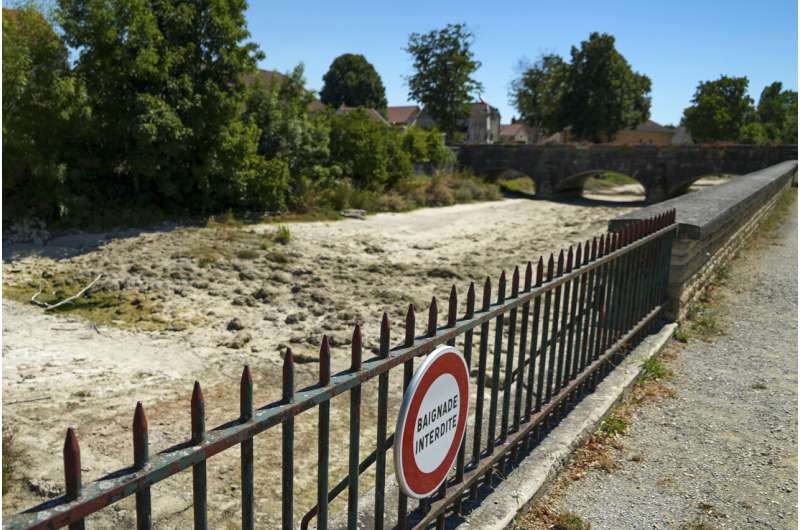
Once, a river ran through it. Now, white dust and thousands of dead fish cover the wide trench that winds amid rows of trees in France’s Burgundy region in what was the Tille River in the village of Lux.
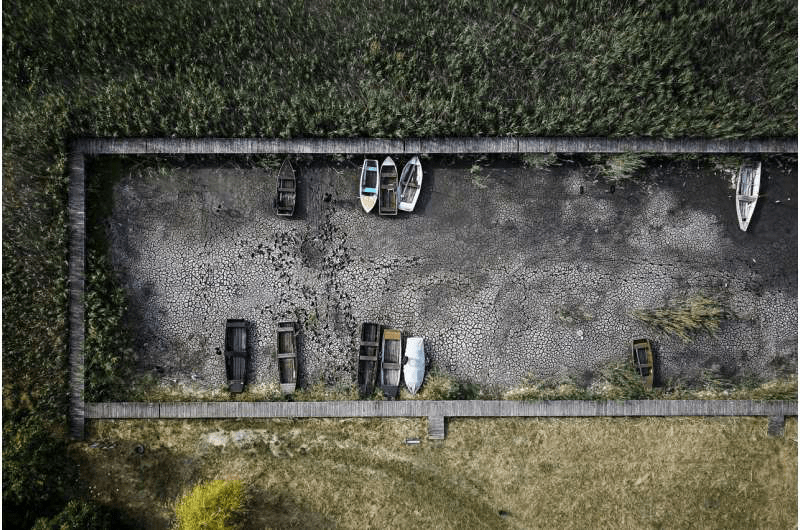
From dry and cracked reservoirs in Spain to falling water levels on major arteries like the Danube, the Rhine and the Po, an unprecedented drought is afflicting nearly half of Europe. It is damaging farm economies, forcing water restrictions, causing wildfires and threatening aquatic species.
There has been no significant rainfall for almost two months in the continent’s western, central and southern regions. In typically rainy Britain, the government officially declared a drought across southern and central England on Friday amid one of the hottest and driest summers on record.
And Europe’s dry period is expected to continue in what experts say could be the worst drought in 500 years.
Climate change is exacerbating conditions as hotter temperatures speed up evaporation, thirsty plants take in more moisture and reduced snowfall in the winter limits supplies of fresh water available for irrigation in the summer. Europe isn’t alone in the crisis, with drought conditions also reported in East Africa, the western United States and northern Mexico.
A sign on a fence near the dried-up river Tille says ‘Swimming is Forbidden’ in Lux, France, Tuesday Aug. 9, 2022.
As he walked in the 15-meter (50-foot) wide riverbed in Lux, Jean-Philippe Couasné, chief technician at the local Federation for Fishing and Protection of the Aquatic Environment, listed the species of fish that had died in the Tille.
“It’s heartbreaking,” he said. “On average, about 8,000 liters (2,100 gallons) per second are flowing. … And now, zero liters.”
In areas upstream, some trout and other freshwater species can take shelter in pools via fish ladders. But such systems aren’t available everywhere.
Without rain, the river “will continue to empty. And yes, all fish will die. … They are trapped upstream and downstream, there’s no water coming in, so the oxygen level will keep decreasing as the (water) volume goes down,” Couasné said. “These are species that will gradually disappear.”
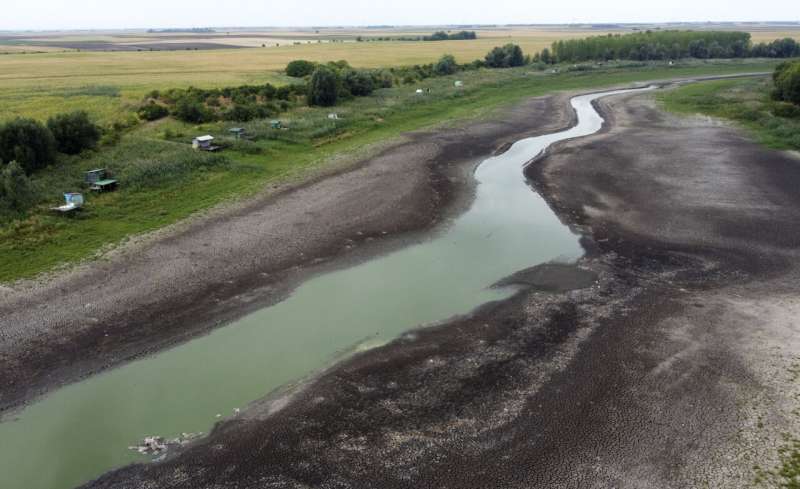
A view of a dry lake bed near the village of Conoplja
Jean-Pierre Sonvico, the regional head of the federation, said diverting the fish to other rivers won’t help because those waterways also are affected.
“Yes, it’s dramatic because what can we do? Nothing,” he said. “We’re waiting, hoping for storms with rain, but storms are very local so we can’t count on it.”
The European Commission’s Joint Research Center warned this week that drought conditions will get worse and potentially affect 47% of the continent.
Andrea Toreti, a senior researcher at the European Drought Observatory, said a drought in 2018 was so extreme that there were no similar events for the last 500 years, “but this year, I think, it is really worse.”
For the next three months, “we see still a very high risk of dry conditions over Western and Central Europe, as well as the U.K.,” Toreti said.
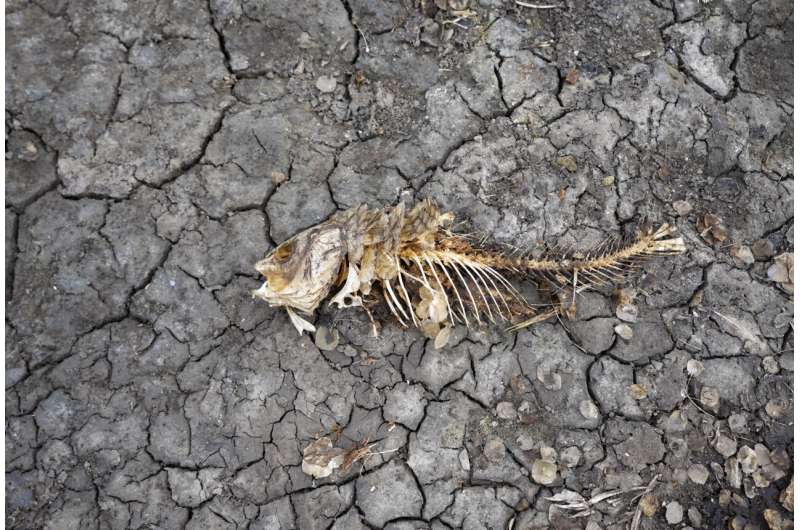
A dead fish skeleton laying on the cracking earth of a dry lake bed near the village of Conoplja, 150 kilometers north-west of Belgrade, Serbia, Tuesday, Aug. 9, 2022.
Current conditions result from long periods of dry weather caused by changes in world weather systems, said meteorologist Peter Hoffmann of the Potsdam Institute for Climate Impact Research near Berlin.
“It’s just that in summer we feel it the most,” he said. “But actually the drought builds up across the year.”
Climate change has lessened temperature differences between regions, sapping the forces that drive the jet stream, which normally brings wet Atlantic weather to Europe, he said.
A weaker or unstable jet stream can bring unusually hot air to Europe from North Africa, leading to prolonged periods of heat. The reverse is also true, when a polar vortex of cold air from the Arctic can cause freezing conditions far south of where it would normally reach.
Hoffmann said observations in recent years have all been at the upper end of what existing climate models predicted.
Laws intended to protect the environment in European cities must be more flexible in order to protect residents from the climate emergency, experts have warned.
More “adaptive” legislation and governance is needed if urban areas are to cope with changing temperatures and ecosystems, the study says.
Researchers say current environment law plays a part in protecting cities, but also stops them building resilience.
The study, by Tony Arnold from the University of Louisville and Tiago de Melo Cartaxo from the University of Exeter—and both from the Exeter Center for Environmental Law—is published in the book “Urban Climate Resilience.”
Dr. de Melo Cartaxo said, “European cities could arguably be world leaders in bringing together climate adaptation, given the multiple layers of laws and institutional frameworks involving urban environments and environmental rights. As promising as urban and environmental laws in Europe may be, they do not yet fully have the adaptive institutional characteristics nor the justice- and capacity-building characteristics that are needed to merge climate adaptation with justice for and among marginalized and oppressed communities.”
The study says it is key for cities to be governed in a resilient way, which reflects the fact that the environment, politics, the economy and social conditions are connected.
Instead many laws prioritize the protection of natural resources and the environment and focus on a single goal such as protecting water quality, rather than the functions and viabilities of broader systems, such as ecosystem-society dynamics or the composition of neighborhoods, will be affected by disturbances such as climate change or gentrification.
Professor Arnold said, “While European cities will benefit in their climate adaptation strategies from EU-level directives, top-down regulations, and coordination among networks of cities, they will also need legal and governance structures that create or maintain authority to act at local, sub-local, private, public-private, and community-commons levels. This will allow innovation and adaption to local contexts and lessens the risk of policy failures. They have high tolerance for uncertainty, whereas many legal systems demand certainty, which is incompatible with environmental or climate realities.”
The study also warns too much flexibility and discretion by decision-makers and policy implementers can lead to abuses of power and violations of rights. An adaptive legal framework must live together with conventional legal frameworks, as part of a whole system.
Dr. de Melo Cartaxo said, “Adaptive law is not the solution; it is one additional and important solution improving how institutions function with complexity, uncertainty, instability, and inequalities.
“The adaptive multi-tool characteristics of climate-adaptationgovernance in European cities should be harnessed to address the many vulnerabilities that marginalized communities face and that affect their capacities to adapt to climate change. These include: housing supply, affordability, and quality; food insecurity; energy insecurity and environmental injustices.
“Climate-adaptation laws, plans, and policies should include specific resilience-justice goals and targets, as well as mandatory mechanisms for reporting and monitoring of the many variables and conditions that affect the adaptive capacities of marginalized communities.”
The entire ecosystem of the planet, including humans, depends on clean water. When carbonate rock weathers, karst areas are formed, from which around a quarter of the world’s population obtains its drinking water. Scientists have been studying how quickly pollutants can reach groundwater supplies in karst areas and how this could affect the quality of drinking water. An international team led by Junior Professor Dr. Andreas Hartmann of the Chair of Hydrological Modeling and Water Resources at the University of Freiburg compared the time it takes water to seep down from the surface to the subsurface with the time it takes for pollutants to decompose in carbonate rock regions in Europe, North Africa and the Middle East. The researchers published their results in the scientific journal Proceedings of the National Academy of Sciences (PNAS).
Previous continental or global hydrologic model applications have focused mainly on the occurrence of floods or droughts and the general availability of drinking water. However, scientists have predominantly neglected water quality as an important factor for the potability of water on these large scales, in particular how quickly pollutants can seep from the earth’s surface into the groundwater through cracks or fissures.
The current research results of Hartmann and his team show that in karst regions, which are characterized by an increased occurrence of cracks or fissures, the risk of pollution by degradable pollutants such as pesticides, pharmaceuticals or pathogens is significantly higher than previously expected. Although pollutants are considered short-lived, up to 50 percent of them can still reach groundwater, depending on the period of their decomposition. The main reason for this, the researchers show, is rapid seepage pathways that allow large amounts of infiltrating water to reach groundwater in a short time. Particularly in regions with thin soils, such as the Mediterranean region, pollutants on the surface can thus seep quickly and in high concentrations into the subsurface during large rain events. Hartmann’s researchers demonstrated the consequences using the example of the degradable pesticide Glyphosate. According to their calculations, the rapid transport of Glyphosate into the groundwater can cause it to exceed its permissive values by a factor of up to 19. The increased risk of pollution for drinking water or ecosystems that depend on groundwater is particularly relevant for regions where agriculture depends on degradable fertilizers and pesticides.