By swimming the length of the Danube, chemist Andreas Fath hoped to bring attention to the condition of the rivers that affect communities, measuring pollution and performing outreach activities along the way. At the same time, other researchers are working to understand the impacts of this summer’s high temperatures and droughts on lakes and rivers.
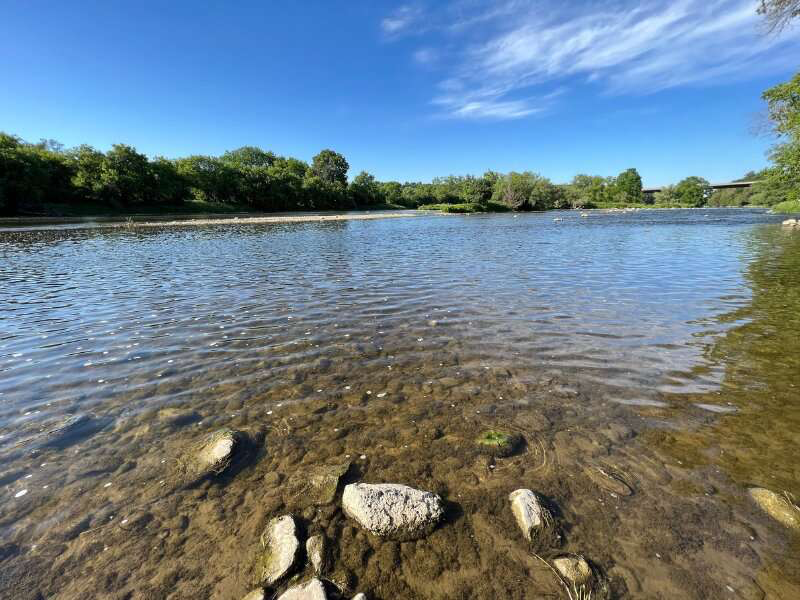
On April 22, Fath jumped into the Danube River in Ulm, Germany. He would spend the next eight weeks swimming over 1,600 miles along the river, writes Senior Editor Laura Howes. Passive sampling membranes stuck to the legs of his wetsuit absorbed persistent organic pollutants in the water, while scientists traveling with him took samples to measure the water’s chemistry and quality. One risk Fath particularly cares about is microplastics in the water. They can soak up pollutants and are then eaten by fish, concentrating the pollutants in their bodies. But that’s not the only risk to the wildlife in lakes and rivers. This past summer, a toxic algal bloom in the Oder River in Europe killed hundreds of thousands of fish. Other researchers have found that the river was susceptible to this ecological disaster because of warmer water temperatures, changes in the oxygenation levels of the water and lower water levels. As lakes and rivers globally suffer from the effects of climate change and pollution, there are also potential consequences for human health and the economy. Dust containing arsenic is being blown aloft as the Great Salt Lake shrinks, cargo transport on the Yangtze and Rhine Rivers has been disrupted, and low water levels limit the amount of power that can be generated by hydroelectric plants.
As he traveled the Danube River, Fath stopped at towns along the route to perform workshops on environmental risks—including Belgrade, Serbia, where Fath received significant attention from the media when he paused his swim because the water quality was so poor. In other countries, scientists are also raising a red flag regarding the health of rivers and lakes, with policymakers and the public beginning to take note. Fath has now swum the lengths of the Rhine, Tennessee and Danube Rivers, believing that public awareness will be key to inspiring people to protect these bodies of water.
Clean water is becoming a scarce resource, and one in four people in the world have no access to a safe source of drinking water. Population growth and climate change are making water shortages even worse. For this reason, we have to think innovatively and utilize our water resources more intelligently.
WIDER UPTAKE is a project that is testing a variety of ways of reusing water resources in five different countries.
“The barriers that inhibit water reuse are common to many countries, so our aim is to identify the best solutions together,” says Herman Helness, who is a Senior Research Scientist and coordinator of the WIDER UPTAKE project.
And the issue here isn’t primarily one of technology, he says. Obstacles to water reuse are rooted mainly in existing regulations and a lack of business models.
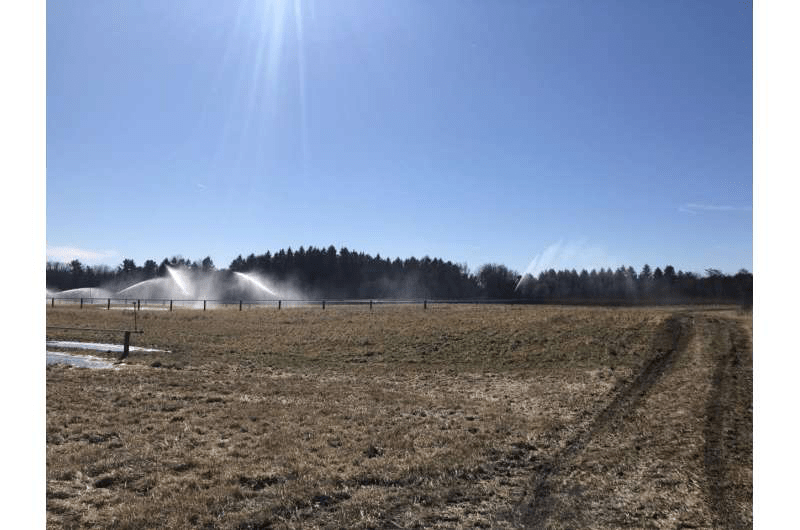
For example, treated wastewater can be used to irrigate urban green spaces and agricultural land, and this is now being tested in demo projects in Ghana, the Czech Republic and Italy.
“In order to use wastewater for large-scale irrigation, we first have to show that the quality of the water is good and that it doesn’t contain any harmful substances,” says Helness.
Facts about WIDER UPTAKE
WIDER UPTAKE is a project that brings together researchers, water and wastewater companies and other businesses from five countries. The aim is to identify how best to exploit available water resources, limit emissions and discharges, and develop sustainable business models. A variety of demonstration projects are being carried out to test circular economic models, and the results will be used to compile a set of guidelines for water-smart solutions. For more details, visit the website www.wider-uptake.eu.
The aims of the water treatment plant operators and other participants in the demo projects include the following:
To recover phosphorous and nitrogen from wastewater for use as fertilizer and for soil improvement (links to two articles).
To develop building materials manufactured from both cellulose fibers extracted from wastewater and calcite, which is a residual product from the purification of drinking water.
To manufacture biocoal from wastewater sludge with the aim of replacing charcoal currently used in the Ghanaian textile industry.
The Czech Republic has also been suffering from a lack of rain and water shortages for some time, and there is great willingness to try out new solutions.
Trials being carried out in Prague using wastewater to irrigate city parks are revealing promising results. The first step is t to demonstrate that it is both safe and profitable for the community.
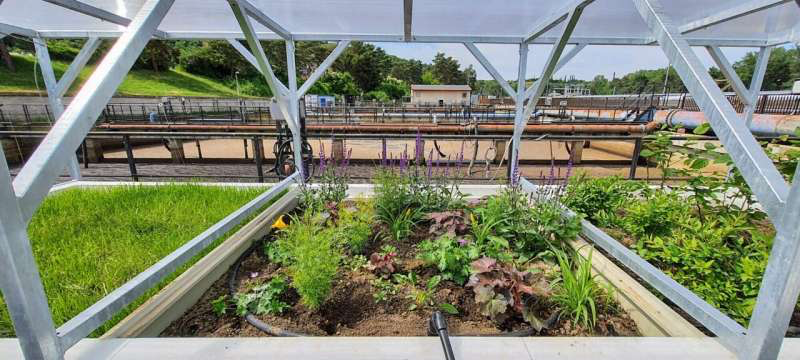
Scientists at the city’s wastewater treatment plant are testing a variety of water qualities for the irrigation of lawns, bushes and flower beds. They are using untreated water from the river and three different qualities of water taken from the plant; treated, extra pure and polished. To date, testing has shown that all these water types are good enough for irrigating plants and flower beds.
The regulations need changing
The technical solutions are in place and the water quality has been shown to be acceptable. The next challenge is to amend the regulations so that an effective business model can also be established.
It is currently not permitted to use wastewater for irrigation.
The EU has issued a separate directive governing the reuse of wastewater, but its application must be approved at national level. Researchers have thus held a number of meetings with the authorities, including the Mayor of Prague and the Czech Ministry of Agriculture.
Treated Wastewater for urban farming in Ghana
Access to clean water is a major challenge in Ghana too.
The country has experienced continuous population growth and urbanization since the 1950s, and shortages of treated water are a problem, especially in urban areas. However, there is no national strategy for reuse of water, yet untreated wastewater is currently used to irrigate vegetable crops in urban areas.
Analyses show that the vegetables do not contain elevated values of harmful substances, but many people are skeptical of eating vegetables that have been watered using wastewater.
“An information campaign is going to be run to persuade people that the vegetables being produced from the use of treated wastewater would not be harmful to their health,” says Gordon Akon-Yamga, a researcher at Ghana’s Council for Scientific and Industrial Research.
The long-term aim is to formulate public policies that promote wastewater treatment plants to incorporate water reuse in their design and ensuring that farmers get better incomes to enable them pay for the treated wastewater.
It will also be necessary to establish national standards for various forms of water reuse. Currently, Ghana applies WHO standards for limits on the concentrations of harmful substancesin water.
Hardly profitable in Norway
So when will we start to reuse wastewater in Norway?
“It’s far from certain that this will be profitable in the near future,” says Herman Helness.
Wastewater decontamination is a very energy-demanding process. We still have large volumes of water here in Norway, and it will not be sustainable to dedicate resources for this purpose.
There is much more to be gained by improving the distribution network and preventing treated water from leaking form the supply pipes.
Other relevant initiatives for saving water include the use of gray water (derived from sinks, showers and washing machines) for toilet flushing.
The Norwegian pilot projects incorporated as part of WIDER UPTAKE are thus looking into the recovery of other resources from wastewater, including phosphorous that can be used in fertilizers.
Defining what it is to be ‘water-smart’
“Common to all pilot projects incorporated as part of WIDER UPTAKE is the need to show that solutions are sustainable and ‘water-smart,'” says Helness.
The researchers are thus developing a method for measuring so-called ”water smartness” and sustainability.
“A water smart society is a society in which the true value of water is recognized and realized, and all available water sources are managed in such a way that water scarcity and pollution are avoided, and close loops and symbiosis are created to foster a circular economy and optimal resource efficiency.”
“It is possible to be sustainable without being water-smart, but not the other way round,” says Helness. “A water-smart solution is sustainable and must also be financially profitable for the water industry,” he says.
The key here is to achieve better interaction between the water sector and the industries that are planning to use the resources derived from the water.
To date, the demo projects incorporated as part of WIDER UPTAKE have demonstrated that there is a lot to be gained from the smarter utilization of water.
The UN’s Sustainable Development Goal 6: Clean water and sanitation
Clean water is perhaps the most important prerequisite for good health. As many as 1 in 4 of people in the world does not have access to safe sources of drinking water. Even more have no access to a toilet or standard sanitary facilities. It is not only uncomfortable and degrading not to be able to go to the toilet, but it is also very likely that a lack of opportunity to practice good hygiene will increase the likelihood of spreading infectious diseases.
There is sufficient freshwater in the world if we simply manage it in the right way. However, economics and a lack of infrastructure commonly stand in the way of universal access. Moreover, in many places, population growth and climate change are causing water shortages to become more acute. It is therefore important to protect the sources of drinking water that we have, and to invest in new water and sanitary facilities in regions that are without them.
The target linked to water reuse is to expand international cooperation and capacity-building support to developing countries in water- and sanitation-related activities and programs, including water harvesting, desalination, water efficiency, wastewater treatment, recycling and reuse technologies by 2030.
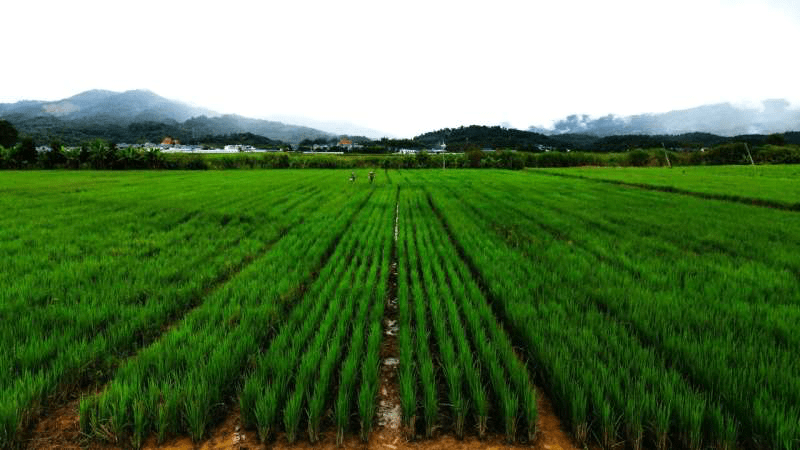
After more than 9,000 years in cultivation, annual paddy rice is now available as a long-lived perennial. The advancement means farmers can plant just once and reap up to eight harvests without sacrificing yield, an important step change relative to “ratooning,” or cutting back annual rice to obtain a second, weaker harvest.
A new report in Nature Sustainabilitychronicles agronomic, economic, and environmental outcomes of perennial rice cultivation across China’s Yunnan Province. Already, the retooled crop is changing the lives of more than 55,752 smallholder farmers in southern China and Uganda.
“Farmers are adopting the new perennial rice because it’s economically advantageous for them to do so. Farmers in China, like everywhere else, are getting older. Everyone’s going to the cities; young people are moving away. Planting rice is very labor intensive and costs a lot of money. By not having to plant twice a year, they save a lot of labor and time,” says Erik Sacks, professor in the Department of Crop Sciences at the University of Illinois and co-author on the report.
Sacks, along with senior author Fengyi Hu and Dayun Tao, began working to develop perennial rice in 1999 in a collaboration between the Yunnan Academy of Agricultural Sciences and the International Rice Research Institute. In subsequent years, the project grew to include the University of Illinois, Yunnan University, and the University of Queensland. Another partner, The Land Institute, provided perennial grain breeding and agroecology expertise, along with seed funding to ensure continuity of the project.
The researchers developed perennial rice through hybridization, crossing an Asian domesticated annual rice with a wild perennial rice from Africa. Taking advantage of modern genetic tools to fast-track the process, the team identified a promising hybrid in 2007, planted large-scale field experiments in 2016, and released the first commercial perennial rice variety, PR23, in 2018.
The international research team spent five years studying perennial rice performance alongside annual rice on farms throughout Yunnan Province. With few exceptions, perennial rice yield [6.8 megagrams per hectare] was equivalent to annual rice [6.7 megagrams per hectare] over the first four years. Yield began to drop off in the fifth year due to various factors, leading the researchers to recommend re-sowing perennial rice after four years.
But because they didn’t have to plant each season, farmers growing perennial rice put in almost 60% less labor and spent nearly half on seed, fertilizer, and other inputs.
“The reduction in labor, often done by women and children, can be accomplished without substitution by fossil fuel–based equipment, an important consideration as society aims to improve livelihoods while reducing greenhouse gas emissionsassociated with agricultural production,” Sacks says.
The economic benefits of perennial rice varied across study locations, but profits ranged from 17% to 161% above annual rice. Even in sites and years when perennial rice suffered temporary yield dips due to pests, farmers still achieved a greater economic return than by growing the annual crop.
“That first season, when they planted the annual and the perennial rice side by side, everything was the same, essentially. Yield is the same, costs are the same, there’s no advantage,” Sacks says. “But the second crop and every subsequent crop comes at a huge discount, because you don’t have to buy seeds, you don’t have to buy as much fertilizer, you don’t need as much water, and you don’t need to transplant that rice. It’s a big advantage.”
Avoiding twice-yearly tillage, perennial rice cultivation also provides significant environmental benefits. The research team documented higher soil organic carbon and nitrogen stored in soils under perennial rice. Additional soil quality parameters improved, as well.
“Modern high-yielding annual crops typically require complete removal of existing vegetation to establish and often demand major inputs of energy, pesticides, and fertilizers. This combination of repeated soil disturbance and high inputs can disrupt essential ecosystem services in unsustainable ways, especially for marginal lands,” says Hu, professor and dean in the School of Agriculture at Yunnan University. “Perennial rice not only benefits farmers by improving labor efficiency and soil quality, but it also helps replenish ecological systems required to maintain productivity over the long term.”
Another piece of the study assessed the low-temperature tolerance of perennial rice, with the goal of predicting its optimal growing zone around the world. Although significant exposure to cold limited regrowth, the research team predicts the crop could work in a broad range of frost-free locations.
Although they’ve already conducted on-farm testing and released three perennial rice varieties as commercial products in China and one in Uganda, the researchers aren’t done refining the crop. They plan to use the same modern genetic tools to quickly introduce desirable traits such as aroma, disease resistance, and drought tolerance into the new crop, potentially expanding its reach across the globe.
“While early findings on the environmental benefits of perennial rice are impressive and promising, more research and funding are needed to understand the full scope of perennial rice’s potential,” says Tim Crews, Chief Scientist at The Land Institute and study co-author.
“Questions about carbon sequestration and persistence and greenhouse gas balances in perennial paddy rice systems remain. Researchers must also make progress on perennializing upland rice, which could curb highly unsustainable soil erosion on farmlands across Southeast Asia. As the work of Dr. Hu’s group at Yunnan University progresses, The Land Institute and an ever-growing network of collaborators will continue to support these research and scaling efforts for perennial rice globally.”
Sacks adds, “I think now, with perennial rice in farmers’ fields, we have turned a corner. We have been feeding humanity by growing these grains as annuals since the dawn of agriculture, but it wasn’t necessarily the better way. Now we can consciously choose to make a better crop, and a better, more sustainable agriculture. We can fix the errors of history.”
The article, “Sustained productivity and agronomic potential of perennial rice,” is published in Nature Sustainability.
Lining the streets of Boise’s North End are stands of tall trees, with broad leaves that merge into a canopy, providing cool shade to pedestrians in the summer months.
Outside of the North End, Boise residents have fewer trees. That means less respite from the sun’s broiling heat that coincides, according to studies, with a higher frequency of poverty, health problems and other issues.
Studies have shown that tree canopy—coverage created by mature shade trees—can be linked to myriad socioeconomic factors. Poorer neighborhoods tend to have less canopy coverage, meaning more paved surfaces and higher temperatures. Unequal distributions of tree abundance and diversity have also been shown in parts of the country to connect to racial, educational, age and income-based inequalities.
Boise follows many of those same trends. In recent years, there has been a push through the City of Trees Challenge to plant in other neighborhoods. But the data that the project relies on is more than a decade old. As officials prepare to refresh their data next year, they’re uncertain what they’ll find thanks to years of breakneck growth, outdated information and a changing climate.
What does tree canopy tell us?
In 2013, the Treasure Valley Canopy Network, a group that works to improve the Boise area’s urban forest, worked with several local partners and experts at Portland State University to assess Treasure Valley canopy data collected in 2011. It looked at the relationship between tree canopy, air quality and average surface temperatures.
It found that more heavily forested areas in the Treasure Valley tended to have cooler average temperatures and better air quality, with the exception of some downtown areas.
Another analysis by conservation organization American Forests found similar results. American Forests launched a tool in the mid-1990s called CityGreen that measured tree cover and analyzed its overlap with different socioeconomic factors. The group still does that work today through its Tree Equity program.
“The general trend across the country is that the wealthier and predominantly whiter areas have more canopy cover,” American Forests’ Vice President of Urban Forestry Ian Leahy told the Idaho Statesman. “What that translates into is public health outcomes, economic opportunities, especially as cities are heating up. The extreme heat becomes life or death infrastructure.”
And the affects of climate change are shifting temperatures in Boise. This summer had the most 100-plus-degree days on record, and the summer of 2021 was the hottest on record, according to the National Weather Service.
American Forests issues a Tree Equity score for urban census tracts on a scale from 0 to 100. The scoring system takes into account the percentage of canopy cover, the average surface temperature and a variety of demographic data, including poverty levels, race, age and unemployment rate. It also includes information on physical and mental health from the self-reported Centers for Disease Control and Prevention Places dataset.
Many parts of the Treasure Valley earned the highest score possible: swaths of Boise north of the river, as well as most neighborhoods in southeast Boise and the Bench, all of the city of Eagle and parts of downtown Meridian, Nampa and Caldwell. There are also neighborhoods that didn’t fare as well. Tracts of Garden City south of the Boise River barely cracked a score of 50. Parts of the West Boise neighborhood show higher temperatures, less canopy and more poverty, health issues and people of color. Many parts of Canyon County are the same.
‘The rich parts of town have a lot of trees’
Two years ago, the city of Boise partnered with the Treasure Valley Canopy Network on a new initiative, called the City of Trees Challenge, to improve the city’s tree canopy and combat rising temperatures and worsening air quality. Officials set a goal of planting 100,000 trees in 10 years. To date, they’ve planted 13,627.
Lance Davisson, co-founder of the Canopy Network, said the initiative also focuses on evening out the inequity in canopy, providing shade that can lower temperatures, encourage outdoor activity and boost property values in less forested neighborhoods.
“The rich parts of town have a lot of trees,” he said. “The poor parts of town don’t. We want to focus our planting efforts in those parts of town that are struggling and help increase tree canopy so they have better quality of life.”
In an effort to focus on parts of the city with fewer resiliency resources, Boise is developing a baseline index system that will map “environmental justice, health and equity” issues across neighborhoods, according to the city’s 2021 climate road map. The project is called the Clean City Index.
“The goal there is to help better identify areas within Boise where we might see more challenges and communities might be affected more by climate change,” Steve Hubble, Boise’s climate action manager, told the Statesman in an interview. “That could help us long term to kind of prioritize where we deploy certain programs.”
The effort earned praise from Leahy.
“Anecdotally, Boise’s doing great stuff,” he said. “For a mid-sized city, you don’t really see that. We use Treasure Valley Canopy Network as a model around the country.”
Planting efforts so far have focused on parts of the Bench, South and West Boise and Barber Park. Davisson said the city is also focused on addressing downtown areas. He said the city is using suspended pavement—sidewalks built with adequate room for extensive tree root systems underneath—to try to bulk up the downtown canopy. It’s also adding small “pocket parks” like Cherie Buckner-Webb at 11th and Bannock streets to add green space.
“The urban core is not conducive for trees,” Davisson said. “It’s hotter, buildings are taller. It’s the most intense, difficult place for a tree to survive, but if you have pocket parks you can have your cake and eat it, too, in a sense.”
Outdated data
It’s hard to know what impact Boise’s planting initiative is having. The decade-old data it’s based on showed Boise with an average tree canopy of 16%, below the target of 20% to 25% citywide. That analysis is quite outdated.
“(Analyses) are generally good for five years,” Leahy said. “Trees don’t grow that fast.”
Not only is Boise’s canopy analysis past its prime, the city has experienced significant growth at the same time. Leahy said development could mean a decline in tree canopy as existing trees are removed to make room for construction. Davisson said some previously treeless desert areas could have actually seen an increase in canopy as residential growth sprawled into more rural areas, bringing landscaped trees.
Davisson said it’s high time for a fresh analysis, even if it may not show the results of the two-year-old City of Trees Challenge plantings. The Treasure Valley Canopy Network raised funds to conduct a new study and recently started accepting bids.
Davisson said the analysis could be finished by next fall.
“We’ll find out does Boise now have 20% (canopy), does it now have 14%?” he said. “A lot of things change when you’re the fastest-growing place in the country.”
The organization is already collecting data and aerial photos to determine how much of the city has water-permeable surfaces, like grass and trees, versus impervious surfaces like buildings and concrete.
“What’s exciting about redoing this tree canopy assessment is that there’s better technology than there was 10 years ago,” Davisson said. “There’s a lot better understanding on urban heat and the benefits trees provide.”
A quick survey of life on Earth will usually yield two groups: those that produce their own nutrients and those that must get them from other lifeforms. Plants generally fall into the first category, called autotrophs, while animals and fungi are almost exclusively the second, heterotrophs. But digging deeper reveals a host of organisms that can do both: mixotrophs.
“You’d think an organism that can do both photosynthesis and heterotrophy has hit the metabolic jackpot,” remarked Holly Moeller, an assistant professor at UC Santa Barbara. “So it’s fascinating to think about what the limits are on that.”
Members of the Moeller lab carried out a three-year experiment to see how two strains of mixotrophs would adapt to changes in temperature and light level. The team found that one strain evolved to be less photosynthetic at higher temperatures, which may have implications for the climate. The results also support the idea that natural selection may have a stronger effect on organisms with less flexible characteristics. The findings appear in the journal Global Change Biology.
The authors were curious if mixotrophs would evolve to become more photosynthetic at higher temperatures over many generations, an inquiry with significance for climate change. “These organisms can be either carbon sources or carbon sinksdepending on what process they’re relying on,” explained first author Michelle Lepori-Bui, a former National Science Foundation graduate fellow in the Department of Ecology, Evolution, and Marine Biology, now a marine water quality specialist at Washington Sea Grant.
Lepori-Bui wanted to know if the microbes would adapt to new conditions by simply altering their gene expression, or if they would evolve over many generations, accumulating permanent genetic changes. Previous studies on mixotrophs ran for only a few weeks, not enough time to identify actual evolutionary trends. Moeller and Lepori-Bui planned for an experiment on a much larger scale.
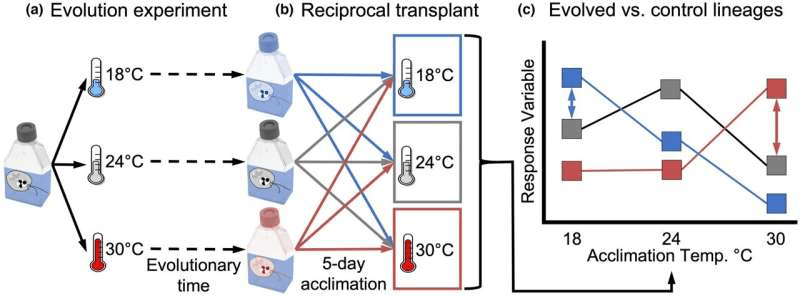
The authors started with two populations of mixotrophs, one that must always photosynthesize and one that only does so in some circumstances. They divided each strain between two light levels and three temperature regimes: 18° Celsius, 24° C and 30° C. Researchers compared the control population (evolved at 24° C) to the various experimental groups at regular points throughout the experiment. Briefly placing the control group under the experimental conditions, they noted how it fared compared to the experimental group that had been continuously exposed to those conditions. Armed with this data, researchers could determine how different populations were changing over the course of the experiment.
The whole study, which began in April 2018, was nearly derailed by the pandemic-response lockdown in March 2020. “Michelle [Lepori-Bui] kept it going over the pandemic with much consternation, strength and grit,” Moeller remarked.
Three years later, they had data from 400 to 700 generations of microbes. Still, deciphering trends from the data was a challenge. “These mixotrophs are super complicated little beasts, and they don’t always want to give us their secrets easily,” Moeller said. The researchers noticed a general increase in heterotrophy at higher temperatures, particularly from the strain that always performed photosynthesis.
This suggests the climate crisis may change the role mixotrophs play in the global carbon cycle. Mixotrophy is more common than scientists had previously realized, especially among plankton in the nutrient-poor open ocean. If mixotrophs shift to be more heterotrophic, they will produce more CO2, which contributes to climate change. This could further raise temperatures and expand nutrient-poor regions of the ocean, creating a feedback loop. “So mixotrophs have the potential to be major players in the carbon cycle,” Moeller noted.
That said, each of the experimental populations were better adapted to their conditions compared to the control group. For instance, the hot groups grew faster and made better use of carbon at high temperatures than the control group did under the same conditions.
“That may mean they’re passing more carbon up the food chain, which gives that carbon the opportunity to get sucked down to the deep ocean and removed from the atmosphere,” Moeller said. But the sheer complexity of global climate systems makes it difficult to predict whether mixotrophs will act as carbon producers or consumers in the future.
The results also support the idea that natural selection has a stronger effect on organisms with more rigid characteristics, or phenotypes. “If they have less flexibility, they have to change over several generations in order to survive,” Lepori-Bui said.
However, phenotypic plasticity may cut both ways. On the one hand, the ability to change characteristics during a single lifetime can reduce the pressure to make permanent genetic changes. On the other hand, it gives natural selection material to work with and prevents a lineage from dying off before it can adapt to new conditions.
Moeller plans to continue investigating the role that phenotypic plasticity plays in evolutionary adaptation with bigger studies involving a wider variety of mixotrophs. Earlier this year, the team published a paper examining how becoming a mixotroph can affect a species’ competitive advantage in the game of life. “We’re building this broader theory piecemeal, one tedious experiment at a time,” she said.
With its experiments, the Moeller lab is embarking on exciting new research investigating what really matters when predicting how organisms will adapt in the future. Because of their complexity, mixotrophs are difficult to include in large environmental models, so they’re often left out. More information and data about mixotrophs, and how they might change, will make it easier to include them in predictive models.
“We barely even know how they do what they do in current conditions, much less what they’re going to do in the future,” Moeller said. “And yet it’s also abundantly clear that this has implications for how they relate to other species and the carbon cycle.”
New research shows that water is much more important in mitigating climate change than previously believed. Better management of water is critical to tackling today’s food and energy crises, both of which are exacerbated by climate change.
The report titled “The essential drop to reach Net-Zero: Unpacking Freshwater’s Role in Climate Change Mitigation,” released today, is the first-ever summary of current research on the role of water in climate mitigation. A key message is the need to better understand global water shortages and scarcity in order to plan climate targets that do not backfire in future. If not planned carefully, negative impacts of climate action on freshwater resources might threaten water security and even increase future adaptation and mitigation burdens.
“Most of the measures needed to reach net-zero carbon targets can have a big impact on already dwindling freshwater resources around the world,” said Dr. Lan Wang Erlandsson from Stockholm Resilience Centre at Stockholm University. “With better planning, such risks can be reduced or avoided.”
The report describes why, where, and how freshwater should be integrated into climate change mitigation plans to avoid unexpected consequences and costly policy mistakes. Even efforts usually associated with positive climate action—such as forest restoration or bioenergy—can have negative impacts if water supplies are not considered.
Done right, however, water-related and nature-based solutions can instead address both the climate crisis and other challenges, said Dr. Malin Lundberg Ingemarsson from Stockholm International Water Institute (SIWI).
“We have identified water risks, but also win-win solutions that are currently not used to their full potential. One example is restoration of forests and wetlands which bring social, ecological, and climate benefits all at once. Another example is that better wastewater treatment can reduce greenhouse gas emissions from untreated wastewater, while improving surface water and groundwater quality, and even provide renewable energy through biogas.”
The report highlights five key messages on the interlinkage between water and mitigation:
Climate mitigation measures depend on freshwater resources. Climate mitigation planning and action need to account for current and future freshwater availability.
Freshwater impacts—both positive and negative—need to be evaluated and included in climate mitigation planning and action.
Water and sanitation management can reduce greenhouse gas emissions. More efficient drinking water and sanitation services save precious freshwater resources and reduce emissions.
Nature-based solutions to mitigate climate change can deliver multiple benefits for people and the environment. Measures safeguarding freshwater resources, protecting biodiversity, and ensuring resilient livelihoods are crucial.
Joint water and climate governance need to be coordinated and strengthened. Mainstreaming freshwater in all climate mitigation planning and action requires polycentric and inclusive governance.
“Climate change mitigation efforts will not succeed if [we are] failing to consider water needs,” says Marianne Kjellén, United Nations Development Programme (UNDP). “Water must be part of powerful solutions for enhancing ecosystem resilience, preserving biodiversity and regenerative food and energy production systems. In short, water security must be factored in to climate action,” she adds.
“To tackle the climate, food, nature, and energy crises, water availability is of the essence. It is urgent that the world focuses all attention on the double facts that water is the number one challenge for climate adaptation due to droughts and floods, and a key challenge for mitigation, as there is no safe climate future well below 2 degrees Celsius without a functioning hydrological cycle,” Professor Johan Rockström, Potsdam Institute for Climate Impact Research, concludes.
A new biodegradable packing foam developed at UBC not only potentially addresses the world’s plastic pollution crisis but also serves as an equal and true partnership example of working with First Nations.
The team came together to turn a timely research idea into reality while helping solve a critical community need at the same time. The collaboration included UBC researchers Dr. Feng Jiang and postdoctoral fellow Dr. Yeling Zhu, Reg Ogen and Joe Wong, president and CEO and vice president respectively of Wet’suwet’en First Nation’s Yinka Dene Economic Development Limited Partnership, and the office of the Chief Forester in the Ministry of Forests.
Transforming waste into pollutant-free innovation
Dr. Jiang, an assistant professor in the UBC faculty of forestry and the Canada Research Chair in Sustainable Functional Biomaterials, started developing a “biofoam” many years ago both to find new uses for wood waste and reduce pollution from packaging foam.
“Styrofoam waste fills up to 30 percent of global landfills and can take more than 500 years to break down. Our biofoam breaks down in the soil in a couple of weeks, requires little heat and few chemicals to make, and can be used as substitute for packaging foams, packing peanuts and even thermal insulation boards,” says Dr. Jiang.
He adds that the project also helps repurpose wood waste that is often left behind after trees are harvested. “Less than 50 percent of harvested trees are used in the wood industries—the rest is left behind in the forest, serving as potential fuel for devastating wildfires.”
Wet’suwet’en First Nation band and UBC form partnership
One year into the project, Dr. Jiang met Reg Ogen and Joe Wong at an event organized by the Ministry of Forests’ Innovation, Bioeconomy and Indigenous Opportunities Branch. A partnership was born.
“Our Nation was trying to create a new economy out of what was left of our forest after the wildfires and the damage caused by the mountain pine beetle epidemic in the 1990s and early 2000s. The amount of timber available for harvest in the next 20 to 60 years was significantly reduced. I have often asked why, when trees are harvested, up to 50 percent of the tree is left behind to just burn. As a Nation, we were also concerned about the losses in habitat, water quality, decline in moose and salmon populations and the acceleration in climate change,” recalls Ogen.
“When I met Dr. Jiang, I knew we wanted to work with him on this journey of creating the Wet’suwet’en forest bioeconomy, so that we could use what’s left of our forests, and maybe also be able to help other communities—including the fin species and four-legged animals.”
Two years of collaboration followed, with Yinka Dene Economic Development helping to secure provincial government funding and providing raw materials from their forests, located near Burns Lake, B.C. for the research.
Biofoam development now completed, the team is putting together a business model, with plans to open a pilot plant in B.C.
“A unique feature of this project is that the intellectual property is shared between UBC and First Nations,” says Dr. Jiang. “This project highlights the benefits of forging meaningful partnerships by first identifying the problems—reducing waste from each tree harvested, mitigating the impacts of wildfires, and ensuring participation in the forest sector by First Nations—before moving towards a solution with First Nations as a true partner.”
Ogen adds, “Status quo forestry industrial activities impact First Nations the most because we are losing our pharmacies, places of worship, areas for supporting cultural narratives and supermarkets. Climate change is accelerating our losses. This is why I felt it is important we find a partner, like Dr. Jiang’s lab at UBC, with support from the team at the Chief Forester’s office, to create a forest bioeconomy and seek solutions to mitigate climate change and reduce our reliance on fossil fuel-based products, especially in the construction and packaging sectors.”
As climate change worsens water quality and threatens ecosystems, the famous dams of beavers may help lessen the damage.
That is the conclusion of a new study by Stanford University scientists and colleagues, publishing Nov. 8 in Nature Communications. The research reveals that when it comes to water quality in mountain watersheds, beaver dams can have a far greater influence than climate-driven, seasonal extremes in precipitation. The wooden barriers raise water levels upstream, diverting water into surrounding soils and secondary waterways, collectively called a riparian zone. These zones act like filters, straining out excess nutrients and contaminants before water re-enters the main channel downstream.
This beneficial influence of the big, bucktoothed, amphibious rodents looks set to grow in the years ahead. Although hotter, arid conditions wrought by climate change will lessen water quality, these same conditions have also contributed to a resurgence of the American beaver in the western United States, and consequently an explosion of dam building.
“As we’re getting drier and warmer in the mountain watersheds in the American West, that should lead to water quality degradation,” said the study’s senior author Scott Fendorf, a professor of Earth system science at Stanford University. “Yet unbeknownst to us prior to this study, the outsized influence of beaver activity on water quality is a positive counter to climate change.”
A lucky natural experiment
The discovery of the profound impact of beaver dams came about serendipitously. As a Ph.D. student in Fendorf’s lab in 2017, lead study author Christian Dewey had started doing field work along the East River, a main tributary of the Colorado River near Crested Butte in central Colorado.
Initially, Dewey had set out to track seasonal changes in hydrology, and riparian zone impacts on nutrients and contaminants in a mountainous watershed.
“Completely by luck, a beaver decided to build a dam at our study site,” said Dewey, who is now a postdoctoral scholar at Oregon State University (whose mascot, incidentally, is a beaver). “The construction of this beaver dam afforded us the opportunity to run a great natural experiment.”
Dams versus dry years and wet years
For the study, Dewey and colleagues reviewed data on water levels gathered hourly by sensors installed in the river and throughout the riparian area. The team also collected water samples, including from below the ground’s surface, to monitor nutrient and contaminant levels.
To understand how beaver dams may affect water quality in a future where global warming produces more frequent droughts and extreme swings in rainfall, the researchers compared water quality along a stretch of the East River during a historically dry year, 2018, to water quality the following year, when water levels were unusually high. They also compared these yearlong datasets to water quality during the nearly three-month period, starting in late July 2018, when the beaver dam blocked the river.
Water quality is a measure of the suitability of water for a particular purpose—ecosystem health or human consumption, for instance. During periods of drought, as less water flows through rivers and streams, the concentrations of contaminants and excess nutrients, such as nitrogen, rise. Major downpours and seasonal snowmelt are then needed to flush out contaminants and restore water quality.
Through their measurements and computer modeling of the interlinked biological, chemical, and physical processes that affect how contaminants become concentrated or flow downstream, the researchers found that the beaver dam dramatically increased removal of nitrate, a form of nitrogen, by creating a surprisingly steep drop between the water levelsabove and below the dam.
Warm, dry summers following spring snowmelt also produce big level changes, which generate a pressure gradient that pushes water into surrounding soils. The larger the gradient, the greater the flow of water and nitrate into soils, where microbes transform nitrate into an innocuous gas.
In the East River, the researchers found the increase in the gradient compared to an average day was at least 10 times greater with the dam than it was during the summer peak without the dam, for both the high-water year (2019) and the drought year (2018). Stated otherwise, the effects of the dam exceeded climatic hydrological extremes—in either direction of drought or abundant snowmelt—by an order of magnitude.
“Beavers are countering water quality degradation and improving water quality by producing simulated hydrological extremes that dwarf what the climate is doing,” said Fendorf, who is the Terry Huffington Professor in the Stanford Doerr School of Sustainability and a senior fellow at the Stanford Woods Institute for the Environment.
While in place, the beaver dam boosted removal of unwanted nitrogen from the studied East River section by 44% over the seasonal extremes. Nitrogen is an especially pernicious problem for water quality as it promotes overgrowth of algae, which when decomposed starve water of the oxygen needed to support diverse animal life and a healthy ecosystem.
The study is a reminder that as the future impacts of climate change are holistically assessed, feedback from changes in ecosystems must also be included.
“We would expect climate change to induce hydrological extremes and degradation of water quality during drought periods,” said Fendorf, “and in this study, we’re seeing that would have indeed been true if it weren’t for this other ecological change taking place, which is the beavers, their proliferating dams, and their growing populations.”
Study co-authors are affiliated with Lawrence Berkeley National Laboratory.
In recent years, large-scale natural disasters around the world have caused a series of water cutoffs, which seriously affect the quality of life of disaster victims. To address this, there has been growing interest in the viability of disaster emergency wells to mitigate water cutoffs during natural disasters.
A research group led by Professor Takahiro Endo from the Graduate School of Sustainable System Sciences at Osaka Metropolitan University conducted surveys of local well owners who supplied groundwater(91 organizations) and welfare facilities representing water users (328 facilities) that were affected by the 2016 Kumamoto Earthquake. The surveys clarified the status of groundwater use after the earthquake for suppliers and users, as well as policy issues surrounding the use of emergency wells. The findings are published in the Hydrogeology Journal.
“Groundwater has been considered an important resource for both industrial production and the natural environment, but this research has newly clarified that groundwater is also a disaster prevention resource,” explained Professor Endo.
Although there have been previous studies of groundwater use in disasters, most of these studies assessed future disasters, such as groundwater exploration techniques and estimation of groundwater availability in the event of water supply cutoffs. Groundwater is primarily provided during the chaotic period immediately after a disaster through private wells, which are scattered throughout the affected area. This makes keeping official records of groundwater usage difficult. So, up until now, emergency well usage after earthquakes was not thoroughly understood.
The surveys found that the use of emergency wells complemented the Kumamoto city government’s emergency water supply by speeding up water delivery and improving access to water. On the other hand, a reasonable number of welfare facilities did not use water from emergency wells, even when they were nearby. This indicates that publicizing emergency well locations is an important policy issue.
“This new data is very useful for city governments who have already installed or are considering installing emergency wells in the near future,” Professor Endo concluded.
South Africa’s population is urbanizing at a rapid pace. The sheer rate of change poses challenges to planning for sustainable and liveable cities.
Part of what make cities work is having green spaces, such as parks, sports fields, nature trails and street trees. These provide many social, ecological and economic benefits. Research from multiple countries such as Australia, China, Finland, India, the U.S. and South Africa has shown this.
Aside from looking good and providing recreation, urban green spaces improve air quality, physical and mental health, and regulate storm water flows. They counteract urban heat islands, store carbon and create jobs.
Some communities nevertheless oppose urban greening efforts because they fear that green spaces and street trees provide places for criminals to hide. Such fears are not unique to South Africa and have been reported from cities in both developed and developing countries.
A great deal of research has been done on urban greening and its association with crime levels. But most of these studies have been conducted in Europe and North America, which are very different socially and economically to developing countries and have markedly lower rates of crime.
We conducted research to complement the evidence from the global north. Our study is the first ever national level analysis of the relationship between various measures of urban greenness and three different classes of crime: property, violent and sexual crimes.
Our findings, based on research in South Africa, lend further credence to calls for urban greening to be adopted as a major strategy in cities—for both environmental sustainability, as well as social sustainability.
Drilling down
We used 10 years of precinct-level crime statistics in South Africa to test the hypothesis that green space is associated with reduced crime rates. South Africa has one of the highest crime rates in the world, making it an important test of the relationship between urban greening and crime.
Using the broadest greenness measure—total green space—the results of this national-scale study corroborate many previous studies from the global north indicating that greener neighborhoods have significantly lower rates of violent and property crimes. Thus, the relationship reported in other countries and contexts appears to be robust in even a relatively high crime context like South Africa.
To gauge the relationship in South Africa we used several measures of urban greenness, several different crime categories, and a national analysis.
We obtained crime statistics per police precinct (there are 1,152 police precincts) between 2010 and 2019 from the South African Police Service and aggregated them into property, violent and sexual crimes (expressed as per 100,000 citizens for each police precinct).
We then used remote sensing to calculate the total area of green space per precinct, the proportional (percentage) cover of trees, and the average distance to the closest formal or informal park.
We found that greener areas had lower rates of both violent and property crimes. But there was no relationship with the rate of sexual crimes. A more mixed picture was revealed when considering tree cover specifically, where property crime was higher with more tree cover, but violent crimes were fewer.
However, property crimes were higher in locations close to public parks and sites with more trees.
Proximity to parks showed no relationship with the rates of violent or sexual crimes.
The concentration of property crimes in neighborhoods with more trees and parks can be explained by such areas typically being where more affluent households are found.
But well-maintained public parks, and those with fencing, lighting, playing fields and some sort of security show lower crime levels in adjacent areas than poorly maintained parks or those lacking basic facilities.
What needs to be done
These findings add further impetus to arguments for urban planners and decision-makers in South Africa (and similar contexts) to be more proactive and ambitious in including and integrating urban green spaces and trees into urban developments.
Planners and authorities often downplay such calls because they are viewed as coming from an environmental lobby, and because—they say—there are more pressing economic and social development needs.
But this research shows that benefits of urban greening extend well beyond an environmental agenda. They embrace social inclusivity and sustainability too, alongside the well-established public health benefits.
Urban greening, therefore, needs to be one of the foremost considerations in urban planning and development in the country. It also requires budgets, expertise and strategies beyond the planning phase to allow for regular tree and green space maintenance that keeps them functional and attractive to local citizens.
The research also supports calls for urban greening to be integrated into any holistic crime prevention strategy.