A home with a swimming pool abuts the desert on the edge of the Las Vegas valley July 20, 2022, in Henderson, Nev. Nevada lawmakers on Monday, March 13, 2023, will consider another shift in water use for one of the driest major metropolitan areas in the U.S. The water agency that manages the Colorado River supply for Vegas is seeking authority to limit what comes out of residents’ taps.
CARSON CITY, Nev. (AP) — Nevada lawmakers are set to consider a remarkable shift in allowing the water agency that manages the Colorado River supply for Las Vegas to limit residential use in the desert city.
It’s another potential step in a decades-long effort to ensure one of the driest metropolitan areas in the U.S. has enough water. Already, in Las Vegas ornamental lawns are banned, new swimming pools have a size limit and the water used inside homes is recycled.
While some agencies across the U.S. West tie increased water use to increased cost, Nevada could be the first to give a water agency — the Southern Nevada Water Authority — the power to restrict what comes out of residents’ taps in state statute. The provision is one among many in a sweeping omnibus bill that goes before legislators Monday afternoon.
Nevada is one of seven states that rely on the Colorado River. Deepening drought, climate change and demand have sunk key Colorado River reservoirs that depend on melting snow to their lowest levels on record.
“It’s a worst case scenario plan,” said the bill’s sponsor, Democratic Assemblyman Howard Watts of Las Vegas. “It makes sure that we prioritize the must-haves for a home. Your drinking water, your basic health and safety needs.”
The bill would give the water authority leeway to limit water usage in single-family homes to 160,000 gallons annually, incorporate homes with septic systems into the city’s sewer system and provide funding for the effort.
The average home uses about 130,000 gallons of water per year, meaning the largest water users would feel the pinch, according to the agency.
The authority hasn’t yet decided how it would implement or enforce the proposed limits, which would not automatically go into effect, spokesperson Bronson Mack said.
Las Vegas relies on the Colorado River for 90% of its water supply. Nevada has lost about 8% of that supply already because of mandatory cuts implemented as the river dwindles further. Most residents haven’t felt the effects because Southern Nevada Water Authority recycles a majority of water used indoors and doesn’t use the full allocation.
Nevada lawmakers banned ornamental grass at office parks, in street medians and entrances to housing developments two years ago. This past summer, Clark County, which includes Las Vegas, capped the size of new swimming pools at single-family residential homes to about the size of a three-car garage.
A state edict carries greater weight than city ordinances and more force in messaging, said Kyle Roerink, executive director of the Great Basin Water Network, which monitors western water policy.
Watts said he is hopeful other municipalities that have been hesitant to clamp down on residential water use will follow suit as “good stewards of the river” with even deeper cuts to the Colorado River supply looming.
Snow that has inundated northern Nevada and parts of California serves as only a temporary reprieve from dry conditions. Some states in the Colorado River basin have gridlocked on how to cut water usage.
Water from the Colorado River largely is used for agriculture in other basin states: Arizona, California, Wyoming, Utah, New Mexico and Colorado. Municipal water is a relatively small percentage of overall use.
As populations grow and climate change leaves future supplies uncertain, policymakers are paying close attention to all available options to manage water supplies.
Santa Fe, New Mexico, uses a tiered cost structure where rates rise sharply when residents reach 10,000 gallons during the summer months.
Scottsdale, Arizona, recently told residents in a community outside city limits that it no longer could provide a water source for them. Scottsdale argued action was required under a drought management plan to guarantee enough water for its own residents.
Elsewhere in metro Phoenix, water agencies aren’t currently discussing capping residential use, Sheri Trap of the Arizona Municipal Water Users Association said in an email. But cities like Phoenix, Glendale and Tempe have said they will cut down on usage overall.
A section of the Blue River as seen Jan. 7, 2020, near the Gold Hill Trailhead in Breckenridge. Colorado Springs Utilities is fighting to keep conditional water rights tied to three small reservoirs in the headwaters of the Blue River.
COLORADO SPRINGS — A Front Range water provider is entering its eighth year of trying to keep water rights alive for three small reservoirs in the headwaters of the Blue River in Summit County to take more water from the Western Slope.
Colorado Springs Utilities has been mired in water court since 2015, fighting for its conditional water rights, which date to 1952 and are tied to three proposed reservoirs: Lower Blue Lake Reservoir, which would be built on Monte Cristo Creek with a 50-foot-tall dam and hold 1,006 acre-feet of water; Spruce Lake Reservoir, which would be built on Spruce Creek with an 80- to 90-foot-tall dam and hold 1,542 acre-feet; and Mayflower Reservoir, which would also be built on Spruce Creek with a 75- to 85-foot-tall dam and hold 618 acre-feet.
An acre-foot is the amount of water needed to cover an acre of land to a depth of 1 foot.
The water rights case has eight different opposers, including the town of Breckenridge; Summit County; the Colorado River Water Conservation District; agricultural and domestic water users in the Grand Valley; the Lower Arkansas Water Conservancy District; and a private landowner who has mining claims in the area. Most of the opposers say they own water rights in the area that may be adversely impacted if the Blue River project’s conditional rights are granted.
Representatives from the town of Breckenridge, Summit County and Colorado Springs Utilities all declined to comment on the case to Aspen Journalism.
The proposed reservoirs would feed into Colorado Springs’ Continental-Hoosier system, also known as the Blue River Project, which takes water from the headwaters of the Blue River between Breckenridge and Alma, to Colorado Springs via the Hoosier Tunnel, Montgomery Reservoir and Blue River Pipeline. It is the city’s first and oldest transmountain diversion project. The Hoosier Tunnel takes an average of about 8,000 acre-feet of water a year, according to state diversion records.
Each year, transmountain diversions take about 500,000 acre-feet from the Colorado River basin to the Front Range. Colorado Springs is a large part of this vast network of tunnels and conveyance systems that move water from the west side of the Continental Divide to the east side, where the state’s biggest cities are located.
Colorado Springs Utilities, which serves more than 600,000 customers in the Pikes Peak region, takes water from the headwaters of the Fryingpan, Roaring Fork, Eagle and Blue rivers — all tributaries of the Colorado River. Colorado Springs gets 50% of its raw water supply — about 50,000 acre-feet annually — from the Colorado River basin, according to Jennifer Jordan, public affairs specialist with Colorado Springs Utilities. The existing Blue River system represents about 9% of Colorado Springs’ total raw water supply, she said.
Colorado Springs Utilities and the city of Aurora are working on another potential transmountain diversion project: a reservoir on lower Homestake Creek in the Eagle River basin that would hold between 6,850 acre-feet and 20,000 acre-feet.
The River District, which was formed in 1937, in part, to fight transmountain diversions that take water from the Western Slope, is opposing the Blue River water rights case.
“We are open to hear what the applicants have to say about the project, what their needs are and if they can provide meaningful compensation and mitigation of the impacts,” said Peter Fleming, River District general counsel. “At the end of the day, there might be a deal where the West Slope gets a result that hopefully makes sense.”
Proposed reservoirs on the Blue River Aspen Journalism/Courtesy image
A water rights place holder
In Colorado water law, the prior appropriation doctrine reigns supreme. Those with the oldest water rights get first use of the water, making the oldest rights the most valuable, or senior. Under the prior appropriation system, a water user has to simply put water to “beneficial use” — for example, irrigating land or using water in a home — to get a water right. The user can then ask a court to make it official, securing their place in line.
Conditional water rights are an exception to this rule, letting a water user, such as Colorado Springs Utilities, save their place in line in the prior appropriation system while they work to develop big, complicated, multiyear water projects. But they must file a “diligence” application with the water court every six years, proving that they have, in fact, been working toward developing the project and that they can and will eventually put the water to beneficial use. Hoarding water rights with no real plan to put them to beneficial use amounts to speculation and is not allowed.
In its 2015 diligence filing, Colorado Springs Utilities said during the previous six years that it had hired consultants — Wilson Water Group and its subcontractors — to do a water supply assessment; an engineering and geotechnical evaluation of each reservoir site; and an investigation of potential environmental effects of development of the reservoirs. Colorado Springs Utilities said it also acquired 28 undeveloped parcels of land to protect the project’s infrastructure and also performed maintenance work on other parts of the Blue River system that contributed to more than $4.2 million in spending on the overall Blue River Project.
Assistant Pitkin County Attorney Laura Makar is not involved in the Blue River case, but she is a legal expert in conditional water rights.
“The idea is that every six years, you address what the needs are, so you don’t have someone out there parking themselves in line for 100 years,” Makar said. “They must show that the project can and will be completed with diligence in a reasonable time and applied to the beneficial uses in the amounts they have claimed.”
The Wilson Water Group study concludes there is enough water physically and legally available to fill the reservoirs.
A portion of the Blue River in Silverthorne is pictured on May 14, 2020. Colorado Springs Utilities is trying to maintain conditional water rights that would allow it to take more water from the West Slope at the headwaters of the Blue River. Liz Copan/Summit Daily News
Ancient fens and endangered species
According to the Wilson Water Group study, there are several environmental considerations. Soil samples indicate that at least a portion of the wetlands near the Lower Blue Lake Reservoir site contain fens, ancient and fragile groundwater-fed wetlands with organic peat soils.
“The presence of fen wetlands may result in permitting challenges,” the report reads.
The report also says the three reservoir sites may be home to endangered species, including Canada lynx and Greenback cutthroat trout. Construction access to the Spruce Lake Reservoir would be challenging and would require a new 2-mile-long road. A new 1.5-mile-long road would be needed for access to Mayflower Lake Reservoir.
The project would need permits from the U.S. Army Corps of Engineers, the Colorado Department of Public Health and Environment and the U.S. Forest Service, and a 1041 permit from Summit County.
Kendra Tully, executive director of the Blue River Watershed Group, said her organization’s main concern with the project is its potential impacts to the already-low flows in the Blue River.
“We do feel like there is an environmental concern already with how much water is allotted for environmental flows in the river, and if we remove anymore from the very, very top, we are just going to affect everything downstream,” she said.
Although the Blue River Watershed Group is not an opposer in the water court case, Tully said the group is encouraging Summit County to do its own environmental impact study of the project and to potentially use their 1041 powers, which allow local governments to regulate development. In 1994, Eagle County stopped Colorado Springs and Aurora from building the Homestake II reservoir project using its 1041 powers to deny permits.
“What we are asking (Summit County) to do is make sure they are really taking into consideration all the power they have with the 1041 permit, which is what (Colorado Springs Utilities) will need to actually develop any of their water right,” Tully said.
Timeline
But before permitting and construction of the reservoirs could begin, Colorado Springs Utilities first has to secure another six-year extension on its conditional storage rights. It has been eight years since Colorado Springs Utilities filed the diligence case — a lengthy but not totally unusual period of time, according to Makar. If Colorado Springs Utilities can’t work out agreements with each of the opposers with the help of a water referee, the case may go to a trial, which is not an ideal situation for any water user, Makar said.
“When you get on a trial track, then you are forced into discovery and a standard litigation posture, you’re taking depositions of everyone’s witnesses, and it tends to make people clam up,” she said. “It’s not a great model to allow for discussion and resolution of issues.”
The next status conference in the case is scheduled for April 13.
The cycling of carbon through the environment is an essential part of life on the planet.
Understanding the various sources and reservoirs of carbon is a major focus of Earth science research. Plants and animals use the element for cellular growth. It can be stored in rocks and minerals or in the ocean. Carbon in the form of carbon dioxide can move into the atmosphere, where it contributes to a warming planet.
A new study led by Florida State University researchers found that plants and small organisms in Arctic rivers could be responsible for more than half the particulate organic matter flowing to the Arctic Ocean. That’s a significantly greater proportion than previously estimated, and it has implications for how much carbon gets sequestered in the ocean and how much moves into the atmosphere.
Scientists have long measured the organic matter in rivers to understand how carbon was cycling through watersheds. But this research, published in Proceedings of the National Academy of Sciences, shows that organisms in the Arctic’s major rivers are a crucial contributor to carbon export, accounting for about 40 to 60 percent of the particulate organic matter — tiny bits of decaying organisms — flowing into the ocean.
“When people thought about these major Arctic rivers and many other rivers globally, they tended to think of them as sewers of the land, exporting the waste materials from primary production and decomposition on land” said Rob Spencer, a professor in the Department of Earth, Ocean and Atmospheric Science. “This study highlights that there’s a lot of life in these rivers themselves and that a lot of the organic material that is exported is coming from production in the rivers.”
Scientists study carbon exported via waterways to better understand how the element cycles through the environment. As organic material on land decomposes, it can move into rivers, which in turn drain into the ocean. Some of that carbon supports marine life, and some sinks to the bottom of the ocean, where it is buried in sediments.
The researchers looked at the six major rivers flowing in the Arctic Ocean: The Yukon and Mackenzie in North America, and the Ob’, Yenisey, Lena and Kolyma in Russia. Using data collected over almost a decade, they built models that used the stable and radioactive isotope signatures of carbon and the carbon-to-nitrogen ratios of the particulate organic matter to determine the contribution of possible sources to each river’s chemistry.
Not all particulate organic matter is created equal Carbon from soils that gets washed downstream is more likely to be buried in the ocean than the carbon produced within a river. That carbon is more likely to stay floating in the ocean, be eaten by organisms there and eventually breathed out as carbon dioxide.
“It’s like the difference between a french fry and a stem of broccoli,” said lead author Megan Behnke, a former FSU doctoral student who is now a researcher at the University of Alaska, Southeast. “That broccoli is going to stay in storage in your freezer, but the french fry is much more likely to get eaten.”
That means a small increase in a river’s biomass could be equivalent to a larger increase in organic material coming from the land. If the carbon in that organic matter moves to the atmosphere, it would affect the rate of carbon cycling and associated climate change in the Arctic.
“I always get excited as a scientist or a researcher when we find new things, and this study found something new in the way that these big Arctic rivers work and how they export carbon to the ocean,” Spencer said. “We have to understand the modern carbon cycle if we’re really going to begin to understand and predict how it’s going to change. This is really relevant for the Arctic at the rate that it’s warming and due to the vast carbon stores that it holds.”
The study was an international endeavor involving researchers from ten different institutions.
“That pan-Arctic view of science is more important than ever,” Behnke said. “The changes that are occurring are far bigger than one institution in one country, and we need these longstanding collaborations. That’s critically important to continue.”
Paper co-authors included Suzanne E. Tank, University of Alberta; James W. McClelland, University of Texas; Robert M. Holmes and Anya Suslova, Woodwell Climate Research Center; Negar Haghipour and Timothy I. Eglinton, ETH Zurich; Peter A. Raymond, Yale University; Alexander V. Zhulidov and Tatiana Gurtovaya, South Russia Centre for Preparation and Implementation of International Projects; Nikita Zimov and Sergey Zimov, Russian Academy of Sciences; Edda A. Mutter, Yukon River Inter-Tribal Watershed Council; and Edwin Amos, Western Arctic Research Centre.
This research was supported by the National Science Foundation through grants for the Arctic Great Rivers Observatory.
A resident surveys the massive amount of snow that has trapped residents of mountain towns near Crestline, in San Bernadino County, U.S. March 2, 2023
SACRAMENTO, Calif. (Reuters) -Record rain and snowfall in recent weeks has eased half of California out of a persistent drought and bolstered the store of mountain snow that the state relies on to provide water during the warm, dry spring and summer.
Statewide on Friday there was nearly twice as much snow in the Sierra Nevada Mountains as is typical for March 3, the California Department of Water Resources said. The snow also was dense and wet, meaning that it held nearly 170% of the typical amount of water for this time of year, the agency said.
The snowpack is considered California’s largest reservoir, and is vital to fill streams and lakes as it slowly melts.
“We could not be more fortunate to have this kind of precipitation after three very punishing years of dry and drought conditions,” said Department of Water Resources Director Karla Nemeth.
The record precipitation and accompanying powerful storms in December and February have also dramatically lessened California’s ongoing drought, a team of U.S. government agencies said this week.
The U.S. Drought Monitor map released Thursday by the National Oceanic and Atmospheric Administration and cooperating agencies showed that 17% of California was not experiencing any sort of abnormal dryness, while another third was dry but no longer officially in a state of drought.
By contrast, just three months ago the entire state was considered to be experiencing drought conditions. California has cycled through four periods of drought since 2000, making less water available to irrigate crops and sustain wildlife along with meeting the needs of the state’s 40 million residents.
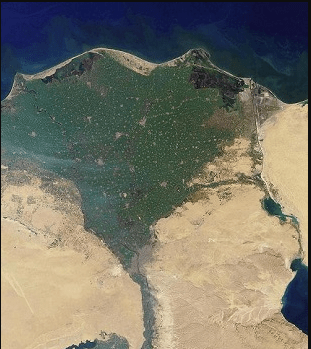
Satellite photo of the Nile Delta (From Study.com)
Large-scale heavy metal pollution, coastal erosion and seawater intrusion pose an existential threat to the Nile River Delta and endanger 60 million people (about twice the population of Texas) in Egypt who depend on its resources for every facet of life, according to new research from the USC Viterbi School of Engineering. Furthermore, the Nile River Delta is a critical stopover for migrating birds across their journey along the East African flyway.
The study, led by Essam Heggy from the USC Viterbi Innovation Fund Arid Climates and Water Research Center, published on Tuesday, March 7, in the American Geophysical Union (AGU) journal Earth’s Future.
The impact of the pollution is especially pronounced in Egypt, the most populous and arid nation downstream of the Nile, which depends entirely on the river as its only source of water for drinking and crop irrigation. The country currently faces one of the highest water budget deficits in Africa after decades of compensating for dwindling water supplies with intensive, large-scale wastewater reuse, the consequences of which have been understudied until now.
“You have roughly the combined populations of California and Florida living in a space the size of the state of New Jersey that is increasingly polluted by toxic heavy metals,” said Heggy. “Today, the civilization that thrived in a scenic waterscape for over 7,000 years must face the reality of this irreversible large-scale environmental degradation.”
For the study, researchers from the U.S. and Egypt analyzed grain size and pollution levels of eight heavy metals in samples of bottom sediment collected from two branches of the Nile River Delta. Key findings included:
Sediment at the bottom of the Nile River is highly polluted by heavy metals like cadmium, nickel, chromium, copper, lead and zinc.
Contaminants primarily come from untreated agricultural drainage and municipal and industrial wastewater. Without proper treatment of recycled water, concentrations of heavy metals increase and are permanently embedded in the riverbed unlike organic pollutants which naturally degrade over time.
Heavy metal concentrations could be exacerbated by increased damming of the Nile. Mega-dams built upstream disrupt the river’s natural flow and sediment flux and thus adversely affect its ability to flush contaminants out into the Mediterranean Sea, leaving toxins to build up in bottom sediment over time.
Much of the heavy metal contamination is irreversible, the researchers said, but science-based conservation measures suggested by the study can slow environmental degradation and hopefully recover the Nile River Delta ecosystem.
“The aggravating water stress and the rapid population growth in Egypt, reaching above 100 million, have put local authorities in a dilemma whether to provide sufficient fresh water for the thirsty agricultural sector to secure the food supply through reusing untreated agricultural drainage water or to preserve the health of the Nile River,” said Abotalib Z. Abotalib, a postdoctoral researcher at USC Viterbi and co-author of the study. “The balance is challenging, and the consequences of both choices are measurable.”
“Our study underscores the need for more research on the environmental impacts of untreated water recycling and the change in river turbidity under increased upstream damming of the Nile,” Heggy said.
“Continued research with more sampling campaigns in this area could inform future conversations and collaborations among nations of the Nile River Basin, who have a shared interest toward maintaining a healthy Nile River system.”
Grand Prismatic Spring, Midway Geyser Basin, Yellowstone National Park. (From arstechnica)
While the crowds swarm around Old Faithful to wait for its next eruption, a little pool just north of Yellowstone National Park’s most famous geyser is quietly showing off its own unique activity, also at more-or-less regular showtimes. Instead of erupting in a towering geyser, though, Doublet Pool cranks up the bass every 20 to 30 minutes by thumping. The water vibrates and the ground shakes.
Doublet Pool’s regular thumping is more than just an interesting tourist attraction. A new study led by University of Utah researchers shows that the interval between episodes of thumping reflects the amount of energy heating the pool at the bottom, as well as in indication of how much heat is being lost through the surface. Doublet Pool, the authors found, is Yellowstone’s thumping thermometer.
“By studying Doublet Pool, we are hoping to gain knowledge on the dynamic hydrothermal processes that can potentially be applied to understand what controls geyser eruptions,” said Fan-Chi Lin, an associate professor in the department of geology and geophysics at the U and a study co-author, “and also less predictable and more hazardous hydrothermal explosions.”
The study is published in Geophysical Research Letters.
Not exactly like a geyser
Doublet Pool is, as the name implies, a pair of hydrothermal pools connected by a small neck. It would fit comfortably in one half of a tennis court. It’s situated on Geyser Hill in Yellowstone National Park, across the Firehole River from the hotels, visitor centers and parking lots that surround Old Faithful.
“We knew Doublet Pool thumps every 20-30 minutes,” Lin said, “but there was not much previous knowledge on what controls the variation. In fact, I don’t think many people actually realize the thumping interval varies. People pay more attention to geysers.”
The thumping, Lin said, which lasts about 10 minutes, is caused by bubbles in the plumbing system that feeds water, heated by a magma system beneath Yellowstone, to Doublet Pool. When those bubbles of water vapor reach the cool upper reaches of the hydrothermal conduit, they collapse suddenly. Thump.
A similar process happens in geysers and excites “hydrothermal tremor,” Lin said, but occurs deeper in the hydrothermal system, at depths of about 30-60 ft and ends with the geyser releasing pressure through a narrow opening as an eruption. Doublet Pool does not have a plumbing structure that enables pressure accumulation and hence no eruption occurs. Also, scientific instruments placed in and around the pool aren’t at any risk for being regularly blown out.
So, to better understand how hydrothermal systems work, Lin and his colleagues, including Cheng-Nan Liu, Jamie Farrell and Sin-Mei Wu from the U and collaborators from the University of California, Berkeley and Yellowstone National Park, set up instruments called geophones around Doublet Pool in seven deployments between 2015 and 2021. In winter 2021 and spring 2022, with the permission of the National Park Service, they lowered temperature and water-level sensors into the pool itself. Then they watched, waited and listened.
Like blowing on a pot of pasta
The researchers focused on the silence interval, or the time between periods of thumping. They found that the silence interval varied both year-to-year and also hour-to-hour or day-to-day. Their results suggest that different processes of adding or removing heat to the hydrothermal system are behind the variation.
In November 2016, the silence interval was around 30 minutes. But by September 2018, that interval had been cut in half to around 13 minutes, and by November 2021, the interval was back up to around 20 minutes.
What else was happening on Geyser Hill during those same times? On September 15, 2018, Ear Spring, which is 200 feet (60 m) northwest of Doublet Pool, erupted for the first time since 1957. After the eruption, the water in Doublet Pool boiled.
Yellowstone’s hydrothermal system is like an Instant Pot, building up heat and pressure leading up to eruptions of geysers and other features. The unusual behavior of Ear Spring, Doublet Pool and other features suggests that in 2018 the heat under Geyser Hill may have been turned up more than usual. By 2021, like an Instant Pot on Natural Release, that heat and pressure had subsided and the silence interval at Doublet Pool had recovered.
The researchers also noticed that silence intervals varied from day to day, and even hour to hour. When they compared the weather conditions with the silence intervals, they found that wind speed over the pools was correlated with the silence interval. When wind speed was higher, the interval was longer. Nature was blowing over the top of Doublet Pool, cooling it off.
The team is still working to understand how the blowing wind at the surface of the pool impacts the heat at the bottom, but it’s clear that the wind removes heat energy from the water, just like blowing over a hot drink — or a pot of pasta about to boil over — cools it off.
“Right now, we are treating the pool as one whole system, which means energy taken away from the surface makes it harder for the system to accumulate enough energy to thump,” Lin said. “One possibility is that the pool is actively convecting so the cooling near the surface can affect the bottom of the pool in a relatively short time scale.”
Heat inputs and outputs
Using principles of heat transfer, the authors calculated the amount of heat and the heating rate needed to initiate thumping at Doublet Pool. Think again about blowing on a pot of pasta. You can prevent boiling over if you are removing heat (through blowing) at the same rate the heat is entering the pot.
“And as we know how to calculate the heat being removed from the wind,” Lin said, “we can estimate the heating rate at the base.”
The heating rate for Doublet Pool works out to around 3-7 megawatts of energy. For comparison, Lin said, it would take about 100 household furnaces burning at the same time to heat up Doublet Pool enough to thump. (This is also equivalent to more than $5,000 worth of energy daily, which highlights the potential of geothermal energy.)
Knowing that heating rate, scientists can use the silence interval as a measurement of how much heat is coming into the pool, since more heat means a shorter interval.
“A better understanding of the energy budget,” Lin said, “will also improve our understanding of how much energy from the Yellowstone volcano is released through these hydrothermal features.”
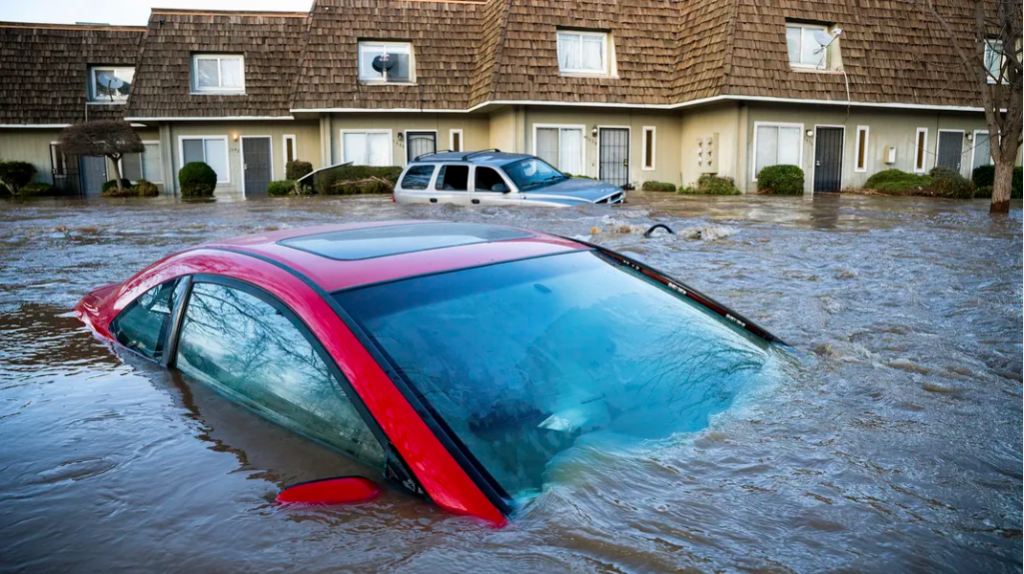
Floodwaters course through a neighborhood in Merced, California, on January 10, as Bear Creek overflowed its banks following days of rain, leaving dozens of homes and vehicles surrounded by floodwaters (Image from Vox)
Annual damage caused by flooding in the UK could increase by more than a fifth over the next century due to climate change unless all international pledges to reduce carbon emissions are met, according to new research.
The study, led by the University of Bristol and global water risk modelling leader Fathom, reveals the first-ever dataset to assess flood hazard using the most recent Met Office climate projections which factor in the likely impact of climate change.
Its findings show the forecasted annual increase in national direct flood losses, defined as physical damage to property and businesses, due to climate change in the UK can be kept below 5% above recent historical levels. But this is only on the proviso that all countries fulfil the ambitious pledges they signed up to at COP26 and also that countries, including the UK, which made further Net Zero commitments, actually achieve these on time and in full.
If the COP26 and Net Zero promises are not collectively met, the study shows the annual cost of flooding in the UK over the next century could grow by between 13% and 23%, depending on different levels of climate extreme projections.
Lead author Paul Bates, Professor of Hydrology and Chairman of Fathom, said: “For the first time this flood model gives us a more accurate and detailed picture of the impact of climate change on the risk of flooding in the future across the UK. The results are a timely warning to the country’s political leaders and business sector that global commitments to significantly reduce carbon emissions must be taken very seriously, and ultimately take effect, in order to mitigate increased losses due to flooding.”
The sophisticated data has also highlighted the places in the UK where risks will increase most rapidly, even under the best-case scenario where global warming is limited to 1.8 degrees C. These include South East England, South Wales, North West England and Central Scotland, especially densely populated cities such as London, Cardiff, Manchester, Glasgow, and Edinburgh, where damage increases of more than 25% are possible.
Conversely, the new model indicated flood hazards in North-East and Central England as well as Eastern and Northern Scotland change very little from the present day.
“Although the most optimistic climate scenarios see only modest increases in flood losses at a national level, these new data demonstrate how this conceals dramatic variations across the country, with some places seeing large changes and others very little. This is a result of changing patterns of future rainfall, river flow and sea level rise, and this leads to the regional differences we predict,” said Professor Bates.
“We found that flooding increases most in places where risk is already high now, so the best thing we can do to prepare for the impact of climate change is to strengthen flood management in currently at-risk areas, and this will bring immediate economic and social benefits as well.”
The modelled estimates of historical flood risk, which are based on actual river flow, rainfall, and tide-surge observations as well as climate model projections, match well with data on flood losses from the Association of British Insurers, and shed new light on the financial toll of flooding. Previous studies by other research groups have already shown that historical UK economic losses due to flooding were three times less than the Government’s estimates, but this is the first time the observed losses have been replicated and corroborated by a computer model.
The team of researchers plan to produce analysis for other countries across the world, furthering our understanding of how climate change is likely to affect flood risk globally.
Co-author Dr Oliver Wing, Chief Research Officer at Fathom and Honorary Research Fellow at the University of Bristol, said: “This study, which harnesses new data and the very latest modelling techniques, validates Fathom’s UK Flood Map and has given a new level of insight into the impact of climate change on flooding in future.
“The modelling provides clear evidence that flood risk needs to be a bigger international priority and that current governance doesn’t go far enough. While the majority of the nation’s future flood risk already exists today, it is strongly in the UK’s interest to exercise leadership in global carbon emission reduction efforts, both by example and as part of global diplomatic initiatives.”
Researchers in the Oregon State University College of Science have developed a dual-purpose catalyst that purifies herbicide-tainted water while also producing hydrogen.
The project, which included researchers from the OSU College of Engineering and HP Inc. is important because water pollution is a major global challenge, and hydrogen is a clean, renewable fuel.
Findings of the study, which explored photoactive catalysts, were published today in the journal ACS Catalysis.
“We can combine oxidation and reduction into a single process to achieve an efficient photocatalytic system,” OSU’s Kyriakos Stylianou said. “Oxidation happens via a photodegradation reaction, and reduction through a hydrogen evolution reaction.”
A catalyst is a substance that increases the rate of a chemical reaction without itself undergoing any permanent chemical change.
Photocatalysts are materials that absorb light to reach a higher energy level and can use that energy to break down organic contaminants through oxidation. Among photocatalysts’ many applications are self-cleaning coatings for stain- and odor-resistant walls, floors, ceilings and furniture.
Stylianou, assistant professor of chemistry, led the study, which involved titanium dioxide photocatalysts derived from a metal-organic framework, or MOF.
Made up of positively charged metal ions surrounded by organic “linker” molecules, MOFs are crystalline, porous materials with tunable structural properties and nanosized pores. They can be designed with a variety of components that determine the MOF’s properties.
Upon MOFs’ calcination — high heating without melting — semiconducting materials like titanium dioxide can be generated. Titanium dioxide is the most commonly used photocatalyst, and it’s found in the minerals anatase, rutile and brookite.
Stylianou and collaborators including Líney Árnadóttir of the OSU College of Engineering and William Stickle of HP discovered that anatase doped with nitrogen and sulfur was the best “two birds, one stone” photocatalyst for simultaneously producing hydrogen and degrading the heavily used herbicide glyphosate.
Glyphosate, also known as N-phosphonomethyl glycine or PMG, has been widely sprayed on agricultural fields over the last 50 years since first appearing on the market under the trade name Roundup.
“Only a small percentage of the total amount of PMG applied is taken up by crops, and the rest reaches the environment,” Stylianou said. “That causes concerns regarding the leaching of PMG into soil and groundwater, as well it should — contaminated water can be detrimental to the health of every living thing on the planet. And herbicides leaching into water channels are a primary cause of water pollution.”
Among an array of compounds in which hydrogen is found, water is the most common, and producing hydrogen by splitting water via photocatalysis is cleaner and more sustainable than the conventional method of deriving hydrogen — from natural gas via a carbon-dioxide-producing process known as methane-steam reforming.
Hydrogen serves many scientific and industrial purposes in addition to its energy-related roles. It’s used in fuel cells for cars, in the manufacture of many chemicals including ammonia, in the refining of metals and in the production of plastics.
“Water is a rich hydrogen source, and photocatalysis is a way of tapping into the Earth’s abundant solar energy for hydrogen production and environmental remediation,” Stylianou said. “We are showing that through photocatalysis, it is possible to produce a renewable fuel while removing organic pollutants, or converting them into useful products.”
The collaboration that included graduate student Emmanuel Musa, postdoctoral researcher Sumandeep Kaur and students Trenton Gallagher and Thao Mi Anthony also tested its photocatalyst against water tainted by two other often-used herbicides, glufosinate ammonium and 2,4-dichlorophenoxyacetic acid. It worked on water containing them as well — even water with those two compounds plus PMG.
The research was funded by the OSU Department of Chemistry, the U.S. Department of Energy and the National Science Foundation.
Signage is seen at the headquarters of the United States Environmental Protection Agency (EPA) in Washington, D.C., U.S., May 10, 2021
The U.S. Environmental Protection Agency intends to update its water pollution rules for slaughterhouses for the first time in nearly 20 years, the agency announced on Wednesday, following a lawsuit from environmental groups arguing current standards are too weak.
Under the U.S. Clean Water Act, the EPA regulates wastewater discharge from meat and poultry plants into nearby lakes and streams. Neighboring communities have increasingly complained that the discharges have dirtied their environment and drinking water.
Slaughterhouses are the top emitting industry of phosphorus, a mineral that can asphyxiate fish by triggering explosive growth of algae and aquatic plants in water. They are also huge emitters of nitrogen, which can have a similar impact.
According to EPA documents, 74% of meat plants that discharge wastewater to surface waters are within one mile of low-income communities or communities of color.
The EPA’s move to update meat and poultry industry standards is part of a proposed consent decree that would settle litigation with community and environmental groups who sued the agency late last year over the issue.
“EPA’s plan to strengthen these rules is a win for downstream communities,” said Sarah Kula, an attorney with the Environmental Integrity Project, one of the groups that sued. EPA last updated the regulations in 2004.
Just 300 of the nation’s 7,000 meat and poultry slaughter and rendering plants are covered by existing water discharge standards, which apply to plants over a certain size that discharge directly into streams, lakes or oceans, according to EPA documents.
The EPA did not immediately respond to a request for comment.
The U.S. Poultry and Egg Association and North American Meat Institute also did not immediately respond to requests for comment.
The proposed standards will be published by the end of 2023 and finalized by 2025.
Growing wheat in drought conditions may be easier in the future, thanks to new genetic research out of the University of California, Davis.
An international team of scientists found that the right number of copies of a specific group of genes can stimulate longer root growth, enabling wheat plants to pull water from deeper supplies. The resulting plants have more biomass and produce higher grain yield, according to a paper published in the journal Nature Communications.
The research provides novel tools to modify wheat root architecture to withstand low water conditions, said Gilad Gabay, a postdoctoral researcher in the Department of Plant Sciences at UC Davis and the first author on the paper.
Roots key to better yield in drought
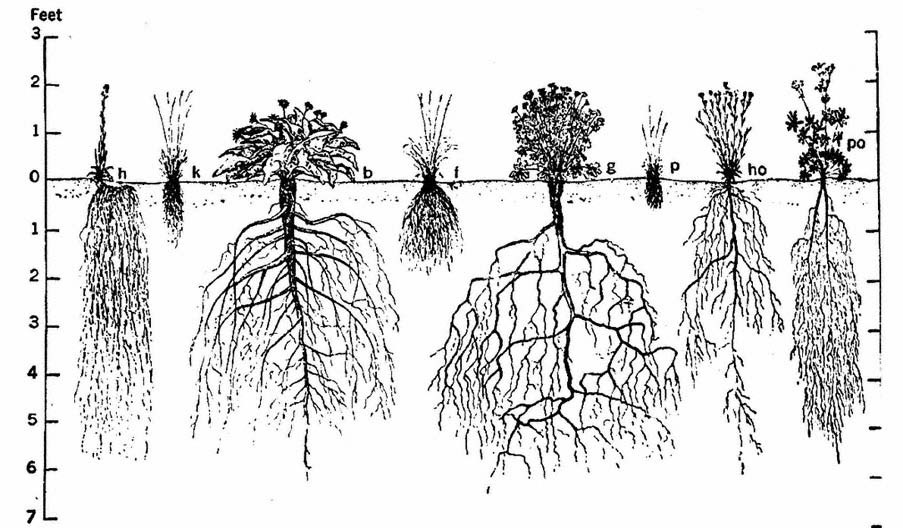
“Roots play a very important role in plants,” he said. “The root absorbs the water and the nutrients to support plants’ growth. This finding is a useful tool to engineer root systems to improve yield under drought conditions in wheat.”
Much has been done to improve wheat production but losses from water stress can erase other improvements. Plants that can adapt to low water conditions but have increased yield will be key to growing enough food for a growing population in the face of global warming.
Until now, little has been known about the genes that affect the root structure of wheat. The discovery of the gene family — known as OPRIII — and that different copies of these genes affect root length is a significant step, said Distinguished Professor Jorge Dubcovsky, the project leader in the lab where Gabay works.
“The duplication of the OPRIII genes results in increased production of a plant hormone called Jasmonic acid that causes, among other processes, the accelerated production of lateral roots,” Dubcovsky said. “Different dosages of these genes can be used to obtain different roots.”
From genomics to breeding
To get longer roots, the team of researchers used CRISPR gene editing technology to eliminate some of the OPRIII genes that were duplicated in wheat lines with shorter roots. By contrast, increasing the copies of these genes caused shorter and more branched roots. But inserting a rye chromosome, which result in decreased OPRIII wheat genes, caused longer roots.
“Fine-tuning the dosage of the OPRIII genes can allow us to engineer root systems that are adapted to drought, to normal conditions, to different scenarios,” Gabay said.
Knowing the right combination of genes means researchers can search for wheat varieties that have those natural variations and breed for release to growers planting in low-water environments.
Junli Zhang, Germán Burguener and Tyson Howell from the Department of Plant Sciences contributed to the paper, as did researchers from China Agricultural University in China, Fudan University in China, Howard Hughes Medical Institute in Maryland, Karolinska Institute in Sweden, National University of San Martin in Argentina, Technological Institute of Chascomús in Argentina, UC Berkeley, University of Haifa in Israel and UC Riverside Metabolomics Core Facility.
Funding for the researchers came from BARD US-Israel Agricultural Research and Development Fund, U.S. Department of Agriculture, Howard Hughes Medical Institute and National Natural Science Foundation of China.