Climate Impacts on Water Quality

The adaptation strategies provided below are intended to inform and assist communities in identifying potential alternatives. They are illustrative and are presented to help communities consider possible ways to address anticipated current and future climate threats to contaminated site management.

On this page:

Stormwater Runoff

Apply Green Infrastructure Strategies

  • Use Bioretention to collect stormwater runoff
    Bioretention is an adapted landscape feature that provides onsite storage and infiltration of collected stormwater runoff. Stormwater runoff is directed from surfaces to a shallow depression that allows runoff to pond prior to infiltration in an area that is planted with water-tolerant vegetation. As runoff accumulates, it will pond and slowly travel through a filter bed (pictured on the right) where it either infiltrates into the ground or is discharged via an underdrain. Small-scale bioretention areas are often referred to as rain gardens.
  • Use Blue Roof to hold precipitation after a storm event and discharge it at a controlled rate
    A blue roof is designed to hold up to eight inches of precipitation on its surface or in engineered trays. It is comparable to a vegetated roof without soil or vegetation. After a storm event, precipitation is stored on the roof and discharged at a controlled rate. Blue roofs greatly decrease the peak discharge of runoff and also allow water to evaporate into the air prior to being discharged.20 Precipitation discharge is controlled on a blue roof through a flow restriction device around a roof drain. The water can either be slowly released to a storm sewer system or to another GI practice such as a cistern or bioretention area.
  • Use Permeable pavement to allow runoff to flow through and be temporarily stored prior to discharge
    Permeable pavement includes both pavements and pavers with void space that allow runoff to flow through the pavement (pictured left). Once runoff flows through the pavement, it is temporarily stored in an underground stone base prior to infiltrating into the ground or discharging from an under drain. Permeable pavers are highly effective at removing heavy metals, oils, and grease in runoff. Permeable pavement also removes nutrients such as phosphorous and nitrogen. Soil and engineered media filter pollutants as the runoff infiltrates through the porous surface. The void spaces in permeable pavement surfaces and reservoir layers provide storage capacity for runoff. All permeable pavement systems reduce runoff peak volume.
  • Use Underground storage systems to detain runoff in underground receptacles
    Underground storage systems vary greatly in design. Underground storage systems detain runoff in underground receptacles that slowly release runoff. Often the underground receptacles are culverts, engineered stormwater detention vaults, or perforated pipes. One of the benefits of underground storage is that it does not take up additional surface area and can be implemented beneath roadways, parking lots, or athletic fields. Underground storage systems are typically designed to store large volumes of runoff and therefore can have a significant impact in reducing flooding and peak discharges.
  • Use a stormwater tree trench to store and filter stormwater runoff
    A stormwater tree trench is a row of trees that is connected by an underground infiltration structure. At the ground level, trees planted in a tree trench do not look different than any other planted tree. Underneath the sidewalk, the trees sit in a trench that is engineered with layers of gravel and soil that store and filter stormwater runoff. Stormwater tree trenches provide both water quality and runoff reduction benefits.
  • Use a retention pond to manage stormwater
    A retention pond is one of the earliest prototypes of GI, and is now considered a more traditional type of stormwater infrastructure because it has been integrated into gray infrastructure design. It is an engineered stormwater basin designed to store runoff and release it at a controlled rate while maintaining a level of ponded water. Pollutants and sediment loads are reduced as the runoff is retained in the basin. Retention ponds are a very common stormwater management practice and may be designed with sustainable elements to increase water quality and decrease peak discharges. Vegetated forebays may be added to increase sediment removal as well as provide habitat. Another enhancement to traditional stormwater retention ponds is the addition of an iron enhanced sand filter bench that removes dissolved substances such as phosphorus from runoff.
  • Use extended detention wetlands to reduce flood risk and provide water quality and ecological benefits
    Extended detention wetlands, such as the one shown in the figure on the right, may be designed as a flood mitigation strategy that also provides water quality and ecological benefits. Extended detention wetlands can require large land areas, but come with significant flood storage benefits. Extended detention wetlands can be created, restored (from previously filled wetlands), or enhanced existing wetlands. Wetlands typically store flood water during a storm and release it slowly, thereby reducing peak flows. An extended detention wetland allows water to remain in the wetland area for an extended period of time, which provides increased flood storage as well as water quality benefits.29 Extended detention wetlands are distinct from preservation of existing wetlands, but the two practices often are considered together as part of a watershed-based strategy.

Use Climate & Land Use Data

  • Consider how current design standards are formulated a starting point to the discussion
    Rather than starting a conversation with a discussion of climate change projections, understand the current design standard for stormwater management. Then, engage decision makers to seek agreement on a threshold (e.g., the community will prepare for X storm) that is informed by historic data and reflects the risk tolerance of the community (e.g., what level of damage or disruption the community can tolerate at different costs). This also entails understanding the current design standard and whether performance can be enhanced for projects in the region.
  • Demonstrate the use of dynamical downscaling on research projects at the site scale
    Decision makers can use local resources for climate change data from researchers at organizations within the area, such as universities, state meteorological agencies, and other organizations that may be involved in downscaling of climate change scenarios.
  • Develop a “wish-list” of data that should be collected to improve understanding of climate changes
    Stormwater managers and geographic information system (GIS) staff can begin to collect this needed local data (e.g., establish and maintain more local weather gauges and monitoring stations). Partners in the community or neighboring jurisdictions may also be interested in pooling resources to develop or improve data sets.
  • Use resources to show historical and future trend lines
    To understand future climate changes, techniques that use historic data, such as analogue events or other sensitivity and threshold information in the historic record, can be used as illustrations (e.g., see the IPCC [Intergovernmental Panel on Climate Change] report Climate Change 2001: Working Group II: Impacts, Adaptation, and Vulnerability, Section 3.5. EPA’s SWC and SWMM-CAT provide regional downscaled climate projections. EPA is also developing a web application for visualizing and downloading climate model output: the Global Change Explorer.

Use Natural Infrastructure

  • Build swales and rain gardens
    Water temperature benefits include getting water underground and maintains aquifers. Other benefits can included keeping stormwater runoff out of waterways.
  • Control stormwater runoff
    Water temperature benefits include reducing high peak flows that contribute to erosion and channel changes. Other benefits can include restoring natural hydrology, returning to natural sediment transport and geomorphology, reestablishing natural disturbance, and raising water quality.
  • Plant trees
    Water temperature benefits include shading the ground and keeping water temperature cooler. Other benefits can include controlling stormwater runoff and promoting infiltration.
  • Promote stormwater infiltration
    Water temperature benefits include getting water into aquifers and away from exposure to sun, and recharging groundwater that supplies baseflow that regulates stream temperature. Other benefits can include restoring natural hydrology, returning to natural sediment transport and geomorphology, and reestablishing natural disturbance.

Erosion and Sedimentation

Apply Green Infrastructure Strategies

  • Use Underground storage systems to detain runoff in underground receptacles
    Underground storage systems vary greatly in design. Underground storage systems detain runoff in underground receptacles that slowly release runoff. Often the underground receptacles are culverts, engineered stormwater detention vaults, or perforated pipes. One of the benefits of underground storage is that it does not take up additional surface area and can be implemented beneath roadways, parking lots, or athletic fields. Underground storage systems are typically designed to store large volumes of runoff and therefore can have a significant impact in reducing flooding and peak discharges.
  • Use a retention pond to manage stormwater
    A retention pond is one of the earliest prototypes of GI, and is now considered a more traditional type of stormwater infrastructure because it has been integrated into gray infrastructure design. It is an engineered stormwater basin designed to store runoff and release it at a controlled rate while maintaining a level of ponded water. Pollutants and sediment loads are reduced as the runoff is retained in the basin. Retention ponds are a very common stormwater management practice and may be designed with sustainable elements to increase water quality and decrease peak discharges. Vegetated forebays may be added to increase sediment removal as well as provide habitat. Another enhancement to traditional stormwater retention ponds is the addition of an iron enhanced sand filter bench that removes dissolved substances such as phosphorus from runoff.

Consider Cost and Benefits of Green Infrastructure

  • Consider long-term benefits of green infrastructure in economic analysis of stormwater management plans
    Train local appraisers/commissioners to capture the full value of green infrastructure. Incorporate cobenefits into ROI calculations, such as ecosystem services and quality of life factors.

Use Natural Infrastructure

  • Control soil erosion in the watershed
    Water temperature benefits include keeping sediment from clogging streambeds and interfering with groundwater exchange and keeping heat-trapping particles out of waterways. Other benefits can include returning to natural sediment transport and geomorphology, and raising water quality.
  • Control stream bank erosion
    Water temperature benefits include keeping stream channels from getting wider and shallower and warming more easily. Other benefits can include maintaining natural sediment transport and geomorphology, and raising water quality.

Harmful Algal Blooms

  • Develop models to understand potential water quality changes
    In many areas, increased water temperatures will cause eutrophication and excess algal growth, which will reduce drinking water quality. The quality of drinking water sources may also be compromised by increased sediment or nutrient inputs due to extreme storm events. These impacts may be addressed with targeted watershed management plans.
  • Manage reservoir water quality
    Changes in precipitation and runoff timing, coupled with higher temperatures due to climate change, may lead to diminished reservoir water quality. Reservoir water quality can be maintained or improved by a combination of watershed management, to reduce pollutant runoff and promote groundwater recharge and reservoir management methods, such as lake aeration.
  • Install effluent cooling systems
    Higher surface temperatures may contribute to making water quality standards or make temperature criteria more difficult to attain, as well as lead to greater outbreaks of harmful algal blooms. Therefore, efforts to reduce the temperature of treated wastewater discharges, such as additional effluent cooling systems, may be needed to help maintain water quality.
  • Visit the Water Utility Source Water Quality Page – to view more Adaptation Strategies that can help support efforts to reduce water quality impacts from harmful algal blooms.

Source Documents

These strategies are adapted from existing EPA, CDC and other federal resources. Please view these strategies in the context provided by the primary source documents:


Disclaimer

The adaptation strategies provided are intended to inform and assist communities in identifying potential alternatives. They are illustrative and are presented to help communities consider possible ways to address anticipated current and future climate threats to contaminated site management. Read the full disclaimer.

CLICK HERE FOR MORE INFORMATION https://www.epa.gov/arc-x/climate-impacts-water-quality

Pollution Isn’t Patriotic: Americans Want Clean Water

By Amy Souers Kober | January 31, 2025

Whether you’re making coffee in the morning, brushing your teeth, or filling up your kids’ water bottles, we all want to be confident that the water flowing from our faucets is safe. 

But the water sources for too many Americans are contaminated or at risk: 

  • A recent news story raised concern about toxins in drinking water supplies and possible links to cancer.  
  • Los Angeles residents have been cautioned to not drink the water following the catastrophic fires.  
  • Toxic algae outbreaks – fueled by polluted runoff – have shut down water supplies in places like Toledo, Ohio, and also make playing in rivers and lakes potentially deadly for pets and wildlife. 
  • Asheville, North Carolina residents were without clean drinking water for nearly two months following Hurricane Helene.  

Our nation may be divided on a lot of issues, but one thing we can all agree on is that clean water is a human right and a basic need. No matter who you are or where you live, we all need clean, safe, reliable drinking water. And most of our water comes from rivers.

American Voters, Clean Water message | Farmington River, Connecticut | Shutterstock
Farmington River, Connecticut | Shutterstock

The affiliate of American Rivers, the American Rivers Action Fund, has been conducting public opinion research to understand how people think about water. The findings show that concerns and support for clean water cuts across party lines and demographics.  

The main takeaway? Water is a unifying issue that can bridge divides and bring us together around urgently needed solutions for our rivers and communities. 

Voters agree. In 2024, all 23 water-related ballot measures across the country passed, safeguarding clean water for millions. 

But we have a lot more work to do. 

We must continue investing in river protection and smart water infrastructure to improve water quality and reliability for all Americans. Not only is this good for our health and safety, but investing in clean water creates jobs and stimulates the economy

In addition, decision-makers must resist efforts by polluters to unravel longstanding, common-sense clean water protections. That’s because prioritizing polluter profits over our clean water will compromise the health of our families and make regular people shoulder the costs. 

Pollution isn’t patriotic. Every American deserves clean water and healthy rivers. American Rivers is building a bigger, more inclusive effort for our water and rivers. We hope you will join us.  

CLICK HERE FOR MORE INFORMATION https://www.americanrivers.org/2025/01/pollution-isnt-patriotic-americans-want-clean-water/

Clean water and sanitation: Five facts to becoming informed and engaged global citizens

Toilets are probably not one of the first things most people think about when they are considering ways they can help make the world a better place, but lack of access to clean water and sanitation is a major global issue affecting billions of people around the world every year. Leaders from 193 countries have agreed to ensure access to water and sanitation for all people by the year 2030, which is Goal 6 of the United Nations (UN) Sustainable Development Goals. The Sustainable Development Goals are 17 interconnected goals that seek to transform our world by ending all forms of poverty, eliminating inequalities and improving the state of the world’s natural and human-made environments through sustained multinational cooperation and efforts in the next 15 years.

By learning about, teaching about and taking action on the state of clean water and sanitation around the world, young people can play a valuable leadership role in helping to accomplish the Sustainable Development Goals. Here are five important facts and some educational resources related to Goal 6 of the Sustainable Development Goals that can help youth learn and engage as global citizens, according to the UN.

  • Globally, 2.4 billion people do not have access to toilets or latrines. Earlier this year, the UN declared that access to clean sanitation is a basic human right. Without access to clean sanitation, people are not able to pursue and enjoy their other human rights, such as their right to health, life and education. The UN has found that “more than 443 million school days are lost every year due to sanitation and water related issues. Inadequate sanitation facilities are a common barrier for school attendance, particularly for girls.”
  • Approximately 1.8 billion people use a source of drinking water that is fecally contaminated. That means one in four people around the world have to use water that has been contaminated by human waste, which is a potential source of deadly pathogens and diseases.
  • One thousand children die every day due to preventable water and sanitation-related diarrheal diseases, which continue to be a major source of death in children under 5. “Worldwide, more than two million people die every year from diarrheal diseases. Poor hygiene and unsafe water are responsible for nearly 90 percent of these deaths and mostly affect children,” according to the UN.
  • Approximately 663 million people live without access to improved drinking water sources. “An improved drinking-water source is defined as one that, by nature of its construction or through active intervention, is protected from outside contamination, in particular from contamination with fecal matter, according to the WHO/UNICEF Joint Monitoring Programme for Water Supply and Sanitation.
  • Water scarcity affects more than 40 percent of the global population and is projected to rise.

Goal 6 of the Sustainable Development Goals seeks to improve the global populations access to clean water and sanitation by the year 2030 by ending open defection, reducing water pollution, increasing water-use efficiency, implementing “integrated water resources management,” protecting and restoring water-related ecosystems and expanding water harvesting, desalination, wastewater treatment and water recycling and reuse in developing countries.

Researchers at Michigan State University are engaged in efforts that will help reach the targets set out in Goal 6 of the Sustainable Development Goals. MSU professor Joan Rose, the 2016 Stockholm Water Prize Laureate, along with other university researchers, are studying innovative new materials for use in water filters as a way to make it easier and less costly for people to access clean and safe drinking water.

Adult and youth leaders can help other youth and children learn about global water quality, clean water access and sanitation issues in order to be informed and active global citizens. Here are some activities and lesson plans that can be used to help teach others about these issues:

  • There’s No New Water! A National 4-H curriculum designed for high school aged youth, There’s No New Water is a high quality set of resources and activities to help young people learn “that water is a finite natural resource whose quantity and quality must be responsibly preserved, protected, used and reused.” In addition to learning about the natural water cycle and the impact of human activity on water quality and quantity, the curriculum helps youth plan and conduct a service learning project as the local level.
  • Water Conservation with the Water Lion. For younger learners, Pennsylvania State Extension provides a set of resources on youth water conservation to help elementary, middle and high school-aged youth develop knowledge about the water cycle, water quality and ways to use water responsibly in their home.
  • Clean Water For All. Available as a free download from World’s Largest Lesson website, Clean Water for All is a lesson plan and set of resources for helping youth ages 8-14 learn about the topics of global water pollution and clean water access. The set of activities can be led by older youth leaders or adults, and is designed as a 60-minute learning session with opportunities to extend the learning beyond the activity.
  • Plan for Change: Water Toolkit. This resource and set of activities is available as a free download from Plan Canada’s website. The toolkit includes information and activities to help youth and children learn about access to safe water and clean toilets in other parts of the world.
  • Get Involved and Take Action! Ready to help make a difference in the world around the issue of clean water and sanitation? Get a group of youth together to start planning a service activity for World Toilet Day (Nov. 19) or World Water Day (March 22).

MSU Extension and the Michigan 4-H Youth Development program helps to prepare youth as positive and engaged leaders and global citizens by providing educational experiences and resources for youth interested in developing knowledge and skills in these areas. To learn about the positive impact of Michigan 4-H youth leadership, civic engagement, citizenship and global/cultural programs, read our 2015 Impact Report: “Developing Civically Engaged Leaders.”

Other articles in series

This article was published by Michigan State University Extension. For more information, visit https://extension.msu.edu. To have a digest of information delivered straight to your email inbox, visit https://extension.msu.edu/newsletters. To contact an expert in your area, visit https://extension.msu.edu/experts, or call 888-MSUE4MI (888-678-3464).

CLICK HERE FOR MORE INFORMATION https://www.canr.msu.edu/news/clean_water_and_sanitation_five_facts_to_becoming_informed_and_engaged

Groundwater Declines in the U.S. Southwest

Record snowfall in recent years has not been enough to offset long-term drying conditions and increasing groundwater demands in the U.S. Southwest, according to a new analysis of NASA satellite data.

Declining water levels in the Great Salt Lake and Lake Mead have been testaments to a megadrought afflicting western North America since 2000. But surface water only accounts for a fraction of the Great Basin watershed, which covers most of Nevada and large portions of California, Utah, and Oregon. Far more of the region’s water is underground. That has historically made it difficult to track the impact of droughts on the overall water content of the Great Basin.

A new look at 20 years of data from the GRACE (Gravity Recovery and Climate Experiment) and GRACE-FO satellites shows that the decline in groundwater in the Great Basin far exceeds stark surface water losses. Over about the past two decades, the underground water supply in the basin has fallen by 16.5 cubic miles (68.7 cubic kilometers). That’s roughly two-thirds as much water as the entire state of California uses in a year and about six times the total volume of water that was left in Lake Mead, the nation’s largest reservoir, at the end of 2023.

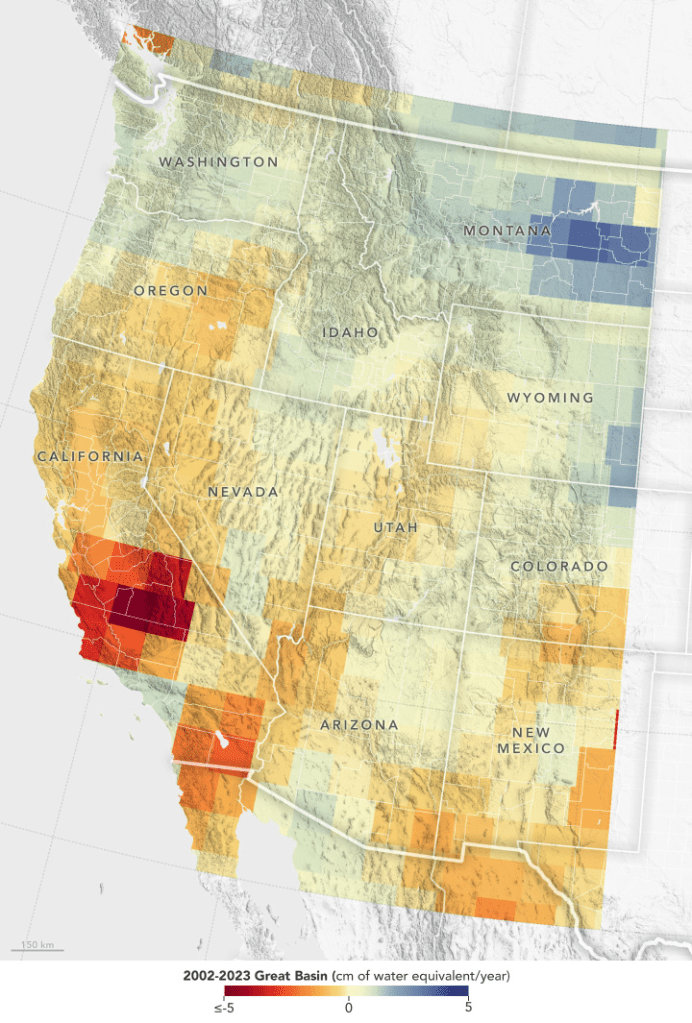
The map above shows changes in stored water between April 2002 and September 2023. Notice that some of the largest rates of loss (red) occurred across parts of Southern California, which has been severely affected by water declines in the Great Basin region. Data for this map and the chart below were derived from the joint German DLR-NASA GRACE missions. GRACE-based maps of fluctuating water levels have improved recently as researchers have learned to parse more and finer details from the dataset.

2002 – 2023

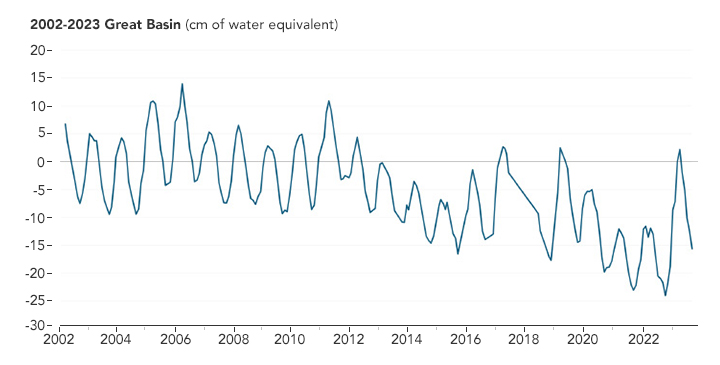
The satellite-derived data show a seasonal rise in water each spring due to melting snow from higher elevations, visible as the bumps in the chart above. But University of Maryland Earth scientist Dorothy Hall said occasional snowy winters are unlikely to stop the dramatic water level decline that’s been underway in the U.S. Southwest. This decline is apparent in the chart’s overall downward trend, especially after 2012. The finding came about as Hall and colleagues studied the contribution of annual snowmelt to Great Basin water levels.

“In years like the 2022–23 winter, I expected that the record amount of snowfall would really help to replenish the groundwater supply,” Hall said. “But overall, the decline continued.” The research was published in March 2024 in the journal Geophysical Research Letters.

“A major reason for the decline is the upstream water diversion for agriculture and households,” Hall said. Populations in the states that rely on Great Basin water supplies have grown by 6–18 percent since 2010, according to the U.S. Census Bureau. “As the population increases, so does water use.”

Runoff, increased evaporation, and the water needs of plants suffering from hot, dry conditions in the region are amplifying the problem. “With the ongoing threat of drought,” Hall said, “farmers downstream often can’t get enough water.”

According to the new findings, Hall said, “The ultimate solution will have to include wiser water management.”

NASA Earth Observatory images by Wanmei Liang, using data from Hall, Dorothy, et al. (2024). Text by James R. Riordon/NASA’s Earth Science News Team, adapted from a story first published on June 17, 2024.

CLICK HERE FOR MORE INFORMATION https://earthobservatory.nasa.gov/images/152970/groundwater-declines-in-the-us-southwest

Water firms admit sewage monitoring damaging public trust

By Esme Stallard

Water companies should no longer be allowed to monitor their own levels of sewage pollution, the industry body has told the BBC exclusively.

Instead they are proposing a new, third-party monitoring system to build consumer trust.

The recommendation is part of a submission made to the UK government’s independent review into the water sector.

Campaigners have long complained the companies’ self-reporting has prevented the true scale of pollution in UK water being revealed.

A third-party system could add more pressure to the regulators, which have also been criticised for not holding the companies to account.

A report from the National Audit Office examining the three water regulators (Ofwat, the Environment Agency, and the Drinking Water Inspectorate) and Defra, is expected on Friday.

David Henderson, CEO of industry body Water UK, told the BBC: “We absolutely accept that self-monitoring is not helping to instil trust and so we would like to see an end to it, and in place of it a more robust, third-party system.”

As part of their permitting arrangements water companies are expected to regularly sample water quality to identify potential pollution, and submit this data to the Environment Agency in an arrangement known as “operator self monitoring”.

But there have been incidents of misreporting by water companies in England and Wales uncovered by the regulators, who said some cases had been deliberate.

Southern Water was previously issued fines totalling £213m by the industry regulator (Ofwat) and the environmental regulator (the Environment Agency) for manipulating sewage data.

In that case, there was unreported pollution into numerous conservation sites which caused “major environmental harm” to wildlife.

The company later admitted its actions “fell short”.

Henderson added that the industry never asked to self-monitor, but that it was introduced in 2009 by the then Labour government to “reduce the administrative burden” on the Environment Agency (EA).

In 2023, the BBC reported that EA staff were concerned that, due to funding cuts, the Agency was increasingly relying on water companies to self-report rather than carrying out its own checks on pollution from sewage.

The current environment minister, Steve Reed, has promised to review the system, calling it the equivalent of companies “mark[ing] their own homework”.

But the National Audit Office (NAO), which reviews government spending, questioned the ability of regulators, like the EA, to take on any new monitoring.

“Regulators need to address the fact that they currently have limited oversight over whether water companies are carrying out their work as expected. It is hard to see how they will achieve this without increased overall capacity,” said Anita Shah, NAO Director of Regulation.

It is expected to publish a full review of the regulation of the water sector on Friday.

A Defra spokesperson told the BBC: “We are committed to taking decisive action to fix the water industry. The Water Commission’s recommendations will mark the next major step [to] restore public trust in the sector.”

The government launched an independent water commission in October to review the sector and the way it is regulated. The public consultation closed on Wednesday with the findings expected in July.

Water UK submitted a 200-page document of recommendations, including this call to end self-monitoring.

The industry body also requested that water meters be universal across England and Wales to make bills fairer. At present about 60% of the population have a meter.

“The meter is just to ensure that people are paying for what they use as opposed to a flat rate of system where you can use virtually no water and pay the same as someone filling up a pool three times in a summer,” said Henderson.

“This doesn’t properly reflect the value of water and encourage people to conserve it in the way that we need,” he added.

CLICK HERE FOR MORE INFORMATION: https://www.bbc.com/news/articles/cdxngw96qrgo

What are the impacts of PFAS polymers on our health and the environment?

The widespread use of PFAS polymers in everything from consumer products to green technologies can lead to contamination of water, air, soil, food and people. A European Environment Agency (EEA) assessment, published today, says that these chemicals can also contribute to global warming and ozone depletion. 

Per- and polyfluoroalkyl substances (PFAS) have been in the spotlight for more than a decade due to their potential impacts on human health and the environment. This is especially true for certain compounds such as PFOS and PFOA, while the impacts associated with the chemical form of PFAS known as ‘PFAS polymers’, which in simple terms consist of larger molecules, have been considered to be lower.

However, evidence now also suggests that PFAS polymers can lead to various types of impacts during their lifecycles according to the EEA briefing ‘PFAS polymers in focus: supporting Europe’s zero pollution, low-carbon and circular economy ambitions. The analysis provides the latest knowledge about the potential impacts on health, the environment and climate and provides background context to EU proposals to clarify the use of PFAS in Europe. 

PFAS polymers currently make up a significant part, 24-40%, of the total volume of PFAS placed on the EU market, and they are widely used in a broad range of products and technologies. The EEA briefing stresses that it is essential to adopt a full life-cycle perspective on PFAS polymers when evaluating their impacts and deciding on their future use. 

Identified concerns 

It is generally understood that PFAS polymers are less toxic than non-polymeric PFAS. This is due to polymers having a larger molecular size, which limits their uptake into living cells (and therefore limits their potential toxicity). However, concerns have been raised in relation to a number of potential impacts during the lifecycle of PFAS polymers, the EEA briefing says. These concerns include:  

  • Toxic effects to workers, the environment and communities surrounding factories can occur from chemicals used in the production of PFAS polymers and the different by-products generated during their production. Furthermore, there are environmental and human health concerns prompted by the degradation over time of certain PFAS polymers into smaller, persistent compounds, that may have a higher toxicity than their parent compounds. 
  • Release of potent greenhouse gasses (e.g. trifluoromethane – HFC-23) and substances that can degrade the ozone layer (e.g. dichlorofluoromethane – HCFC-22) can occur during the production of PFAS polymers.
  • The widespread presence of PFAS polymers in products and materials can potentially act as a future barrier for recycling, since it is difficult to trace and separate these materials at the waste stage. 

EU action 

A recently proposed universal PFAS restriction under the EU’s REACH regulation, brought forward by Denmark, Germany, the Netherlands, Norway and Sweden, aims to ban all PFAS (including PFAS polymers) except for certain uses which have time-limited derogations. In a recent communication from the European Chemicals Agency (ECHA) and the dossier submitters, it was stated that restriction options, other than a ban, were also being considered for some uses. 

CLICK HERE FOR MORE INFORMATION: https://www.eea.europa.eu/en/newsroom/news/impacts-of-pfas-polymers

‘Forever Chemicals’ Reach Tap Water via Treated Sewage, Study Finds

By Hiroko Tabuchi

As the world grapples with climate change, population growth and dwindling supplies of fresh water, more people are set to rely on treated wastewater to sustain their daily lives.

But wastewater, even after treatment, contains high levels of harmful “forever chemicals” that are already contaminating the drinking water of millions of Americans, researchers said in a study published on Monday that analyzed wastewater samples nationwide.

The study, led by researchers at Harvard and New York University, found elevated levels of six types of chemicals known as PFAS, or per- and polyfluoroalkyl substances, in the samples. The chemicals, which have been linked to cancer and other diseases, are known as forever chemicals because they don’t break down in the environment. Last year, the Environmental Protection Agency started to regulate PFAS in drinking water.

The researchers found that the samples contained an even greater quantity of organofluorines, a wider group of chemicals that includes PFAS and is used in pharmaceuticals, refrigerants, and nonstick coatings. The majority of those chemicals are unregulated and the health consequences of exposure to many of them are still unknown.

“What are all of these other compounds? Are they other PFAS that we’re not measuring, that the industry has shifted toward?” said Bridger Ruyle, assistant professor of environmental engineering at New York University, who led the research. “What does that mean for exposure?”

The study, published in the Proceedings of the National Academy of Sciences, found that wastewater treatment facilities do not effectively remove these compounds from wastewater. At most sites, in fact, PFAS in wastewater became more concentrated after treatment, the researchers found.

The contamination is of particular concern, the researchers said, given that water scarcity across many regions of the United States means wastewater is being reused or is being released into rivers and lakes. And if that wastewater isn’t diluted enough before re-entering the drinking water supply, a concern that is growing as water flows dwindle because of overuse and climate change, “you have a contamination issue,” Professor Ruyle said.

About 50 percent of the country’s drinking water supplies are downstream of one or more wastewater sites, he added. The study used modeling to show that PFAS from wastewater was already contaminating the drinking water of up to 23 million people in the United States.

The results “emphasize the importance of further curbing ongoing PFAS sources,” the researchers concluded.

The new study highlights how widespread contamination is complicating efforts to reuse wastewater, which includes sewage from households as well as polluted water from businesses and factories. The sludge that is left over after wastewater treatment is also used to fertilize farmland across the country, and PFAS contamination of that sludge is also raising concerns over the practice.

CLICK HERE FOR MORE INFORMATION: https://www.nytimes.com/2025/01/06/climate/forever-chemicals-pfas-sewage-drinking-water.html

How the fashion industry pollutes our water

By Gerardo Bandera

Greater public awareness of the climate crisis has pressured large retailers to ‘green’ production chains and make them more sustainable, but the bulk of the work is yet to be done.

The fashion industry emits up to 10 percent of global carbon emissions and continues to be the second-largest consumer of water. The culture generated by fast fashion to update our wardrobes for this year’s new look has also generated high levels of water pollution, contamination and waste with detrimental effects on the environment and human health.

The past two decades have seen an unprecedented growth for the fashion industry. Consumers today purchase 60 percent more clothing than they did 15 years ago, while clothing waste has also increased due to early discardment, overproduction and cheap fabrication; nearly one third of the clothing produced is burnt or trashed before being sold.

The increase in demand generated by fast fashion’s culture has induced destructive consequences for the world’s water supply, 93 billion cubic metres of which is used by the fashion industry annually. Below are the main sources of the textile industry’s water pollution.

Sources of water pollution by the fashion industry

Cotton farming

The most widely used natural fabric for clothing, cotton requires large amounts of water for irrigation and treatment, depleting local freshwater and groundwater resources. To increase the production required to fulfil this high demand, pesticides and fertilisers are often used to increase cotton output.

Apart from damaging the quality of soil and destroying microbial communities underground, the runoffs from the agrochemical-contaminated water pollute nearby water sources – posing threats to local biodiversity and human health.

Synthetic fabric production

Wastewater from the production of synthetic fabrics, which requires 70 million barrels of oil per year, releases lead, arsenic, benzene and other pollutants into water sources. 

Contaminated wastewater

Fabric dying and treatment practices generate about 20 percent of the world’s wastewater. In Bangladesh alone, 1,500 billion litres of water are used annually in garment factories and mills, depleting the region’s dwindling groundwater resources and transporting byproducts and harmful contaminants to nearby water sources.

The textile finishing and dying process infuses many chemicals into the water, including oil, phenol, dyes, pesticides and heavy metals, like copper, mercury and chromium. The polluted water can make its way to nearby streams and groundwater and may then be used for irrigating crops, therefore contaminating food sources with carcinogenic chemicals.

Microfibre pollution 

Little visible but highly dangerous, the textile industry’s pollution of water sources with microfibres (tiny synthetic fibres) has worried environmentalists all over the world, especially since these can spread across rivers and oceans. Some studies have estimated that up to 85 percent of human-made pollution on shorelines is from microfibres, while others have warned that half a million tonnes of microfibres are discarded into the oceans annually.

These fibres are released not only during the production process, but also after purchasing, when clothes are worn and washed. Microfibre pollution from synthetic materials can take hundreds of years to decompose and can disrupt underwater ecosystems. In fact, traces of microfibres from synthetic sources, like polyester and nylon, have been found in fish and other seafood destined for human consumption.

Fashion’s Biggest Water Polluters

The world’s largest water polluters hide under murky waters since most companies do not monitor their contributions to the sector-wide issue, and those who do are hesitant to disclose this information out of fear of backlash. Recent studies have shown that only one in 10 fashion companies is conscious of its water pollution levels, while less than a quarter of companies have set goals to reduce water pollution across the supply-chain.

In the past, the world’s largest retailers, such as Zara, Puma and Armani, have been linked to water pollution scandals in China. Companies like Gap Inc. and H&M have acknowledged their role in water pollution and have enforced measures to reduce water-use and contamination across their manufacturing process. Whether these promises are true commitments or just greenwashing campaigns to appease customers’ environmental consciences remains to be seen.

Solutions

Sustainable Cotton Farming

The World Wildlife Fund has started the Better Cotton Initiative, which seeks to promote sustainable cotton farming that minimises its impact on the environment. The enterprise assists farmers in sustainable water management, reducing agrochemical use and promoting decent work environments.

Shopping from retailers that source their cotton from certified organic cotton vendors can help promote sustainable farming and reduce their own impact on the environment.

Choose sustainable materials

To reduce their environmental impact, consumers should choose garments made of natural fibres that require less water in the manufacturing process, such as linen or organic cotton, and when possible, reduce the purchase of synthetic fibres that release microfibres, such as nylon and polyester. 

Customers can look for clothing with certifications of limited chemical content, such as OEKO_TEXⓇ or GOTS.

Reduced Consumption and production

While fashion is a powerful method of self-expression and the fashion industry has been integral to economic growth and development, the current rates of consumption and production cannot continue without exacerbating the dangerous consequences for the environment.

Consumer culture should shift towards long-term use of quality garments, repairing or donating older garments and purchasing second-hand clothing. On the production side, companies will have to decouple themselves from the expectation of rampant growth and focus instead on providing quality products that stay in style longer.

CLICK HERE FOR MORE INFORMATION: https://www.fairplanet.org/story/how-the-fashion-industry-pollutes-our-water/

Drug pollution in water is making salmon take more risks

By Jack Brand and Michael Bertram, The Conversation

“Out of sight, out of mind” is how we often treat what is flushed down our toilets. But the drugs we take, from anxiety medications to antibiotics, don’t simply vanish after leaving our bodies. Many are not fully removed by wastewater treatment systems and end up in rivers, lakes, and streams, where they can linger and affect wildlife in unexpected ways.

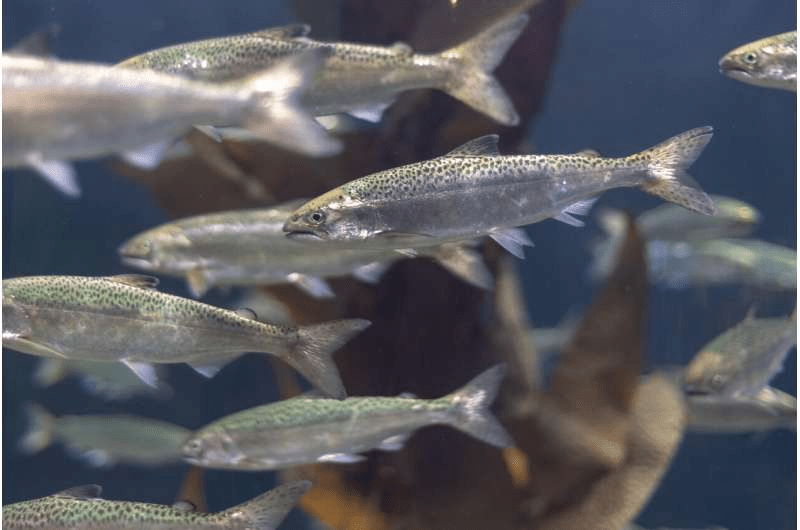
In our new study, we investigated how a sedative called clobazam, commonly prescribed for sleep and anxiety disorders, influences the migration of juvenile Atlantic salmon (Salmo salar) from the River Dal in central

Sweden to the Baltic Sea.

Our findings suggest that even tiny traces of drugs in the environment can alter animal behavior in ways that may shape their survival and success in the wild.

A recent global survey of the world’s rivers found drugs were contaminating waterways on every continent—even Antarctica. These substances enter aquatic ecosystems not only through our everyday use, as active compounds pass through our bodies and into sewage systems, but also due to improper disposal and industrial effluents.

To date, almost 1,000 different active pharmaceutical substances have been detected in environments worldwide.

Particularly worrying is the fact that the biological targets of many of these drugs, such as receptors in the human brain, are also present in a wide variety of other species. That means animals in the wild can also be affected.

In fact, research over the last several decades has demonstrated that pharmaceutical pollutants can disrupt a wide range of traits in animals, including their physiology, development, and reproduction.

Pharmaceutical pollution in the wild

The behavioral effects of pharmaceutical pollutants have received relatively less attention, but laboratory studies show that a variety of these contaminants can change brain function and behavior in fish and other animals. This is a major cause for concern, given that actions critical to survival, including avoiding predators, foraging for food, and social interaction, can all be disrupted.

Lab-based research has provided useful insights, but experimental conditions rarely reflect the complexity of nature. Environments are dynamic and difficult to predict, and animals often behave differently than they do in controlled settings. That’s why we set out to test the effects of pharmaceutical exposure in the wild.

As part of a large field study in central Sweden, we attached implants that slowly released clobazam (a common pharmaceutical pollutant) and also miniature tracking transmitters to juvenile Atlantic salmon on their seaward migration through the Dal.

We found that clobazam increased the success of this river-to-sea migration, as more clobazam-treated salmon reached the Baltic Sea compared with untreated fish. These clobazam-exposed salmon also took less time to pass through two major hydropower dams that often delay or block salmon migration.

To better understand these changes, we followed up with a laboratory experiment which revealed that clobazam also altered how fish group and move together—what scientists call shoaling behavior—when faced with a predator.

This suggests that the migration changes observed in the wild may stem from drug-induced shifts in social dynamics and risk-taking behavior.

What does this mean for wildlife?

Our study is among the first to show that pharmaceutical pollution can affect not just behavior in the lab, but outcomes for animals in their natural environment.

While an increase in migration success might initially sound like a positive effect, any disruption to natural behavior can have ripple effects across ecosystems.

Even seemingly beneficial changes to animal behavior, like faster passage through barriers, can come at a cost. Changes to the timing of migrations, for instance, might lead fish to arrive at the sea when conditions are not ideal, or expose them to new predators and risks. Over time, these subtle shifts could influence the dynamics of entire populations and threaten the balance of ecosystems.

Pharmaceuticals are vital for keeping people and animals healthy. But the accumulation of these drugs in rivers and lakes demands smarter approaches to keeping waterways clean.

One part of the solution is upgrading wastewater treatment plants. Some advanced methods such as ozonation, which involves bubbling ozone gas through wastewater to break down pollutants, can be effective at removing pharmaceuticals. But such advanced treatment systems are often prohibitively expensive to install and out of reach for many regions.

Another promising avenue is green chemistry: designing drugs that break down more easily in the environment or become less toxic after use. Our team has recently highlighted this as a key step toward reducing pharmaceutical pollution in the environment.

Stronger regulations and better drug disposal practices can also help to prevent medications from ending up in waterways in the first place.

There’s no single fix, but by advancing and integrating science, technology, and policy, we can help to protect wildlife from the unintended effects of pharmaceutical pollution.

CLICK HERE FOR MORE INFORMATION: https://phys.org/news/2025-04-drug-pollution-salmon.html

PFAS in drinking water linked to increased cancer risk, groundbreaking study finds

By Pamela Ferdinand 

Exposure to “forever chemicals” in drinking water is significantly associated with the increased risk of multiple cancers, including some not previously linked to these toxic compounds, a first-of-its-kind study shows.

PFAS (per- and polyfluoroalkyl substances) are endocrine-disrupting chemicals widely used in consumer products, from textiles and food packaging to cleaning agents. Known for their persistence in the environment, they accumulate in humans and animals and have been linked to cancer, birth defects, liver disease, thyroid disease, decreased immunity, hormone disruption, childhood obesity, and a range of other serious health problems.

Researchers from the University of Southern California’s Keck School of Medicine estimate that PFAS-contaminated water may contribute to as many as 6,864 cancer cases per year in the U.S. Communities where drinking water surpassed recommended maximum levels of PFAS had higher rates of digestive, endocrine, respiratory, and mouth and throat cancers—ranging from 2% to 33%, they say. 

“The key takeaway is that PFAS contamination in everyday water sources is a risk factor for long-term health consequences, including cancers,” the researchers say. “[Our] findings highlight the critical importance of developing effective strategies to mitigate cancer risks from exposure to PFAS through drinking water.”

This study, published in The Journal of Exposure Science & Environmental Epidemiology [January 2025], is the first large-scale analysis examining the association between PFAS-contaminated drinking water and cancer incidence across multiple organ systems using county-level U.S. data.

It follows the EPA’s establishment last year of the first enforceable drinking water standard for six PFAS types, a regulation currently being challenged by water systems and industry groups in federal court. Meanwhile, legislators in at least five states, including Vermont and California, are pushing for stricter PFAS limits.

Researchers found strong links between PFAS exposure and cancers of the mouth, throat, digestive, respiratory, and endocrine systems. Among the most notable findings:

  • Perfluorobutane sulfonic acid (PFBS) had the strongest correlation, with a 33% increased risk of mouth and throat cancers.
  • Perfluorohexanesulfonic acid (PFHxS) was associated with a 12% higher risk of digestive system cancers.
  • Perfluoroheptanoic acid (PFHpA) correlated with a 10% increased risk of endocrine system cancers.
  • Perfluorooctanoic acid (PFOA) was linked to a 6% higher risk of lung cancer.
  • PFHpA and perfluoropentanoic acid (PFPeA) were tied to 3% and 4% higher risks of respiratory system cancers, respectively.

Different cancers were also associated with PFAS by gender. The data showed:

  • Females: Higher incidence of thyroid, mouth, throat, and soft tissue cancers
  • Males: Increased cases of urinary system (kidney and bladder), brain, leukemia, and soft tissue cancers

“The significant associations identified between PFAS in drinking water and various cancers underscore the urgent need for more comprehensive research,” says Dr. Claudia Thompson, chief of the Population Health Branch at the National Institute of Environmental Health Studies (NIEHS), which funded the study.

Scientists have confirmed that PFAS levels in the blood come mainly from drinking water, based on tests of both tap water and blood samples. One or more types of PFAS were detected in at least 45% of the nation’s tap water, according to a 2023 report by the U.S. Geological Survey. Other recent studies have reinforced health concerns about PFAS exposure. 

One study, scheduled for publication in The International Journal of Hygiene and Environmental Health (May 2025), found that PFAS may elevate blood pressure in pregnant women, even in those who otherwise have normal blood pressure, increasing the odds of pregnancy complications. It found higher levels of PFOS linked to increased systolic blood pressure and PFHxS linked to increased diastolic blood pressure.

“Because of their characteristics, including the propensity to propagate through the food chain, accumulate and biomagnify, and ultimately pose a threat to human life, it is crucial to replace and remove these chemicals,” that study concluded.

Study methodology and limitations

Previous studies have focused primarily on PFOS and PFOA, with limited research assessing the effects of PFAS from drinking water. In the NIEHS study, researchers analyzed PFAS in public drinking water systems over two monitoring periods (2013-2015 and 2023-2024). They also examined all cancer cases reported between 2016 and 2021 across 22 cancer registries, covering about half of the U.S. population.

To refine their analysis, researchers accounted for demographic variables, air pollution, smoking rates, obesity levels, and urbanicity (how urban an area is). They note several study limitations, including:

  • Inability to control for individual-level risk factors beyond age and sex
  • Missing data from certain states
  • Not able to account for the delay between PFAS exposure and cancer onset
  • Potential exposure misclassification due to lack of personal drinking behavior data

“While these results should be interpreted cautiously, they highlight an urgent need for further research using personal health data and molecular studies,” the researchers say.

Next, they plan to conduct more detailed investigations, including an ongoing analysis of PFAS in Los Angeles drinking water.

CLICK HERE FOR MORE INFORMATION: https://usrtk.org/healthwire/pfas-drinking-water-cancer/