The Ultimate Guide to Water Health: Cellular Hydration, Energy Metabolism, Detoxification & More

Optimal water intake is without a doubt one of the most vital factors in good health. In essence, we need the proper amount of water in our bodies for every cellular function. Even mild dehydration leads to fatigue, brain fog, headaches and dizziness. However, the subject of water and hydration also happens to be one of the most confusing topics – how much water we should drink? What’s the best type of water to drink; distilled, alkaline, spring, sparkling, still, or some other type? In this article, we will seek to answer these questions and then some. As we evolve this topic, there is something key to keep in mind; it’s not just about how much water you consume. More importantly in the world of hydration is that your cells actually utilize that water efficiently.

Cellular Hydration: Beyond Water Deficiency

While not drinking enough water is the easiest way to become dehydrated, it’s not the only way. The truth is, just like food, water needs to be metabolized. Many people eat enough, but still end up nutritionally deficient due to poor digestion and a sluggish metabolism. Similarly, many people drink more than enough water, yet their bodies are starved for water. How can this be? First, understand that the amount of water a person needs is extremely variable; it depends on various things such as metabolic rate, physical activity, and even the temperature and humidity of the air. For example, working out hard in hot, dry weather, it’s possible to drink more than two quarts and not produce any urine because that water is lost by evaporation or “burned up” by the increased metabolic rate of that active person. On the other hand, a person with a sluggish metabolism, even in hot, humid conditions can be endangered by too much water. These are only two examples, but in reality, anything that affects the physiology of a person can potentially create a stress and therefore affect cellular hydration and the way the body uses water.

Stress & Hydration

Any stress on the body, and stress being defined as anything that may interfere with energy production, can potentially disturb the interactions between water and the cell. Stress causes “excitation” and this causes a cell to take up extra water. In fact, it is well known that the tissues of people with hypothyroid (a stress condition) tend to hold more water; this is referred to as edema, a common symptom of hypothyroid. 1 There are other ways that stress can cause dehydration. Under a stress response, the body secretes an excess of the stress hormone cortisol. Cortisol has a feedback loop with estrogen, so as cortisol increases, estrogen also increases. It is well known that estrogen causes sodium loss, and has a high affinity to water. In other words, when the cell is stressed, under the influence of estrogen, it tends to uptake more water and swell (edema), causing both a loss of sodium and water. Additionally, stress causes the increase of hormones like aldosterone, which cause the kidneys to secrete excess sodium in the urine and sweat and the cells to hold water. This loss of sodium causes a vicious cycle to occur because when there isn’t enough sodium, more aldosterone is synthesized, which leads to the increased loss of electrolytes like potassium, magnesium, and calcium. The loss of potassium leads to something called vasoconstriction, which means vascular motility is decreased, contributing to heart and kidney failure and high blood pressure. In these ways, stress of any sort can cause the increase of stress hormones that alter the cells’ ability to interact with water. This can lead to the loss of sodium and the excess uptake of water into the cells causing not only dehydration but edema. To conclude, “stress” is the true cause of dehydration because it interferes with the proper cellular interaction with water. However, because stress can occur in endless ways, here are some other probable causes of dehydration to keep in mind:

  • A sodium-deficient diet: salt has been demonized in this society; however, it is necessary for proper kidney function, mineral/fluid balance and therefore the cellular regulation of water.
  • Drinking only still water: Most of our water today is either contaminated with fluoride, heavy metals and other toxins, or it is so filtered that it is lacking in necessary minerals like sodium, potassium, and magnesium. So if you suspect you suffer from dehydration yet drink enough water, it might not be enough to drink “filtered water”, you might need to enhance it with minerals, mineral-rich salt or purchase mineralized waters like Gerolsteiner.
  • Vigorous exercise: During times of increased physical activity or exercise, the body undergoes an acute stress response, resulting in the loss electrolytes. The best ways to offset this process is to avoid over-exercising, keep cool (avoid exercising in too intense of heat), increase your intake of sodium and consume more water than usual. Be sure to drink 16 ounces of mineralized (add TraceMinerals or Real Salt) to your water before a workout, one during and one immediately after.
  • Chronic Alcohol Consumption: Alcohol is a stress on the liver for a few reasons but most trace back to its estrogenic effects. Estrogen interferes with metabolic function (including water metabolism), and estrogen causes the loss of sodium in the cell. In one study, the ingestion of alcohol is known to negatively affect the hypothalamo-neurohypophysial system resulting in increased diuresis, dehydration and hyperosmolality. 2

Symptoms of Dehydration

Feeling incredibly thirsty is only one symptom of dehydration. As mentioned, water is essential for all physiological functions, therefore, the signs of dehydration can also include:

  • Tension, spasms
  • Constipation
  • In severe cases, kidney and heart problems.
  • Cognitive concerns; difficulties concentrating, recall, attention, psychomotor skills and memory 3
  • Low energy, fatigue
  • Chronic muscle pains
  • Skin problems; dry skin especially
  • Headaches
  • Weight gain
  • Weak immunity
  • Poor detoxification

Considering the roles water plays in digestion, metabolism, immunity and detoxification, and the consequences of destination, it is vital to know how to stay hydrated properly.

Secrets to Healthy Hydration

By now, it is clear to see that hydration is not merely a game of “drinking enough” but also entails stress management (of all sorts), and keeping a proper balance of minerals and water in the body. If you’re wondering how to achieve these goals, here are some tips that you may not have considered before…

  1. Lower Stress Hormones: As we learned, it is estrogen and aldosterone which ultimately lead to cellular dehydration. These hormones cause the loss of sodium, interfering with the proper interactions between our cells and water. Therefore, as strange as it seems, keeping stress to a minimum is an essential part in proper hydration. Here are some ways to lower these stress hormones;
  2. Consume Healthy Salt: When it comes to proper hydration, one of the most important things to consider is the balance between minerals and water. Sodium, potassium and magnesium play an equally important role in hydration as water. However, in our culture, the extra water consumption, combined with a low salt diet is perhaps the worst hydration advice one could get – especially for an already stressed person, let’s say with hypothyroidism. The truth is, salt has an anti-stress effect, capable of mitigating the secretion of stress hormones like cortisol and aldosterone. Also, it’s well known that when the body is stressed, it loses sodium. With that being said, a smarter piece of advice would be to cautiously avoid the overconsumption of still (mineral-deficient) water and underconsumption of salt. Instead, consume healthy amounts of salt (we like Redmond’s Real Salt and Himalayan), and be sure to choose quality water.
  3. Avoid Over Drinking Water: Despite what most of us have learned in America, when our bodies are healthy, we don’t need as much water as we are told. As we have discussed, too much water accompanied by the lack of sodium and stress can lead to edema, swelling and tension. So, if you are the type of person to “chug” copious amounts of water (especially still, plain water) you may want to make a few adjustments. In regards to water intake, this is a matter of quality over quantity. If you’re generally healthy, not overly stressed and you eat a whole-foods diet, it’s likely you do not need as much water as you think. Whole foods contain a generous supply of water, especially fruits, vegetables, broths, etc.
  4. Tap Water Toxicity: For some, tap water toxicity seems like a conspiracy, but the fact of the matter is there is a known presence of toxins in our water supply. In fact, one study by the Environmental Working Group has discovered 316 chemicals in tap water throughout the country, including dangerous chemicals, compounds and metals. 45

Choosing the Best Water

Not all water is created equally; some water contains harmful toxins, others simply lack the precious minerals or electrolytes needed for the proper cellular utilization of water. With this in mind, the water you choose to drink can play a large role in how well your body is hydrated. Here are some of our top picks for water:Sparkling Mineral Water: Sparkling water may be an acquired taste. However, if you have been dehydrated for some time and haven’t known it, once you start, it will be difficult to go back. Not only is sparkling mineral water rich in the exact minerals we need for the cellular utilization of water, but it also contains CO2(carbon dioxide), which has many helpful benefits. For thousands of years, the therapeutic value of carbonated mineral springs has been acknowledged. In fact, the theory that ‘living water’s’ gas content had therapeutic benefits led researcher Joseph Priestley to investigate ways to make carbonated water, and in the process he discovered oxygen. Carbonated water had its medical vogue in the 19th century, but the modern medical establishment has mostly chosen to ignore these effects. However, if we consider that CO2 is the basic metabolic byproduct of healthy cellular respiration, it would make sense that the ingestion of even small amounts of CO2 is beneficial on overall metabolism. Not to mention, sparkling water has a better mouth feel and is also typically rich in important minerals like sodium. Our favorite picks for sparkling are Pellegrino and Gerolsteiner. Both waters are premium, mineral-rich, carbonated waters. However, Pellegrino appears to be much richer in sulfates. Sulfates (sulfur) are a necessary part of a healthy diet. Sulfur is the 8th most common element in the human body and while it is not FDA recommended, the fact is, sulfur is necessary for many important physiological functions including collagen formation, detoxification (especially of cysteine and methionine, two harmful amino acids when in excess), the production of master antioxidant glutathione, and the regulation of inflammation prostaglandins, amongst others. So in our understanding and research, the consumption of these sparkling mineral waters is highly therapeutic! 6Distilled: Distillation is a simple water purification process where water is brought to a boil and converted to steam. The steam flows through cooling tubes and condenses back into water for drinking. The major benefit of this process is that it removes all potentially harmful contaminants, additives, organisms and other toxins. The downside to distilled water is that it lacks any beneficial minerals; however, these can be easily added with a mineral supplement or a pinch of high-mineral salt. One last thing to keep in mind with distilled water is the possibility of serious contamination. If the pre-distilled water contained any volatile organic compounds like chlorine, as the water is vaporized it can actually become concentrated in the finished distilled water. This would create a final product that contains even more dangerous contaminants than it was prior to distilling. Spring Water:True spring water might make for a good choice for water consumption. First, spring water usually contains an ideal pH. Where distilled water is likely too acidic and alkaline water is too alkaline for drinking, mountain spring water is usually in an ideal neutral range. Some also consider wild spring water to be the healthiest water simply because it is in its most natural state, the way nature intended. Like raw food, living spring water contains “biophotons”, small units of light stored which activate the mitochondria. Also, let’s not forget that spring water is free! There’s a very helpful website you can utilize called FindaSpring.com where you can find local, safe springs.

Conclusion

Staying properly hydrated is not just beneficial for plumper, moisturized skin, it goes way beyond that to affect every single cellular process in your body. So tell us… What are your secrets to staying hydrated? Have you experienced any benefits when addressing your water and electrolyte intake? Leave us a comment below!

CLICK HERE FOR MORE INFORMATION
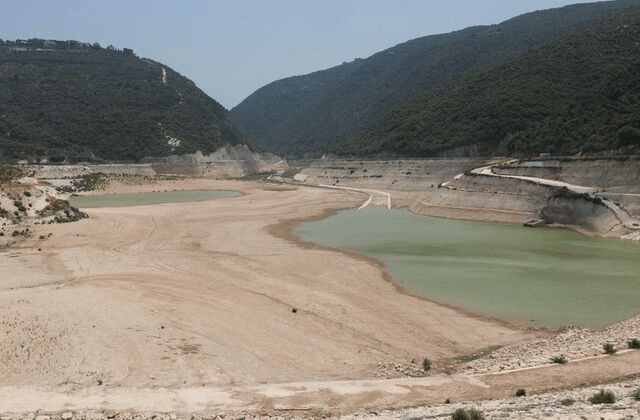
Lebanon’s Worst Drought on Record Drains Largest Reservoir

QARAOUN, Lebanon (Reuters) -Water levels at Lebanon’s largest reservoir on the Litani River have fallen to historic lows amid what experts describe as the country’s worst drought on record, threatening agriculture, electricity production, and domestic water supplies.

The Litani River National Authority said inflows to Lake Qaraoun during this year’s wet season did not exceed 45 million cubic metres, a fraction of the 350 million cubic metres annual average.

Last year, the figure stood at 230 million. The water currently available in Lake Qaraoun – around 61 million cubic meters – was unusable due to severe pollution, the authority said.

“There were dry years in 1989, 1990 and 1991, but this year is the driest,” said Sami Alawieh, head of the river authority. “We are facing a water scarcity problem across all Lebanese territories and water basins.”

Drone footage of Lake Qaraoun shows a dramatically receded shoreline, exposing cracked earth and dead vegetation.

Lebanon’s hydroelectric plants tied to the Litani basin have been shut down, Alawieh said, causing financial losses and intensifying electricity rationing by Electricite du Liban.

“We have two factors: the decline in rainfall and the pressure on groundwater,” he said.

A study by the authority found climate warming and shifting weather patterns have contributed to more frequent dry seasons and higher temperatures, exacerbating soil moisture loss and reducing the recharging of groundwater reservoirs.

The state utility has slashed supply in some areas from 20 hours a day to as little as 10.

In the fertile area around Qaraoun village, in the Bekaa Valley, farmers were already feeling the impact.

“I have never seen such drought or scarcity of rain as this year,” said Safa Issa. “We used to get snow up to a metre high. Now, it’s been 10 years since we’ve seen any.”

The strain has been compounded by erratic supply of electricity needed to run irrigation systems.

“You irrigate for three hours, then stop for three,” said Fayez Omais, another local farmer.

Suzy Hoayek, an adviser to the Ministry of Energy and Water in Beirut, said a nationwide awareness campaign to reduce consumption would be launched within 10 days.

“The most important thing is to manage demand,” she said.

CLICK HERE FOR MORE INFORMATION

https://www.usnews.com/news/world/articles/2025-07-15/lebanons-worst-drought-on-record-drains-largest-reservoir

Frozen for 12,000 years, this Alpine ice core captures the rise of civilization

Summary:An ancient glacier high in the French Alps has revealed the oldest known ice in Western Europe—dating back over 12,000 years to the last Ice Age. This frozen archive, meticulously analyzed by scientists, captures a complete chemical and atmospheric record spanning humanity’s transition from hunter-gatherers to modern industry. The core contains stories of erupting volcanoes, changing forests, Saharan dust storms, and even economic impacts across history. It offers a rare glimpse into both natural climate transitions and human influence on the atmosphere, holding vital clues for understanding past and future climate change.Share:


FULL STORY


Alps Glacier Hides Secrets from the Last Ice Age
The 1999 expedition team collecting the ice core from Dome du Goûter on the shoulder of Mont Blanc. Credit: LGGE/OSUG, Bruno Jourdain

Glaciers hold layers of history preserved in ice, offering unique insights into Earth’s past that can also help us interpret the future. Trapped amidst the frozen water are microscopic deposits of dust, pollen, and even pollutants that scientists can use to examine environmental changes through time. DRI’s Ice Core Lab has used this technique to highlight atmospheric lead pollution and economic turbulence in Ancient Rome. Now, their latest study found that a glacier in the French Alps dates back to the last Ice Age – the oldest known glacier ice in the region. Serving as a record that spans through the development of agriculture in Western Europe and the advent of industrialization, the glacier holds insights into an era of rapid change.

The new study, published in the June issue of PNAS Nexus, examines a 40-meter long ice core from Mont Blanc’s Dôme du Goûter. Using radiocarbon dating techniques, the research team found that the glacier provides an intact record of aerosols and climate dating back at least 12,000 years. Aerosols are small droplets and particles in the air such as desert dust, sea salts, sulfur from volcanic eruptions, soot from forest fires, as well as pollutants and other emissions from human activities. Glacier ice offers the most detailed record of past atmospheric aerosols, and this is the first ice core record from the European region that extends back to the last climatic transition. Aerosols play an important role in regional climate through their interactions with clouds and solar radiation, and the insights offered by the ice record can help inform accurate climate modeling for both the past and future.

“For the first time, we have a fairly complete Alpine record of atmospheric and precipitation chemistry going all the way back to the Mesolithic Period,” said Joe McConnell, Director of DRI’s Ice Core lab who co-authored the study. “And that’s a big deal, because you have two major climate states – glacial and interglacial – and to get a record of atmospheric precipitation chemistry across that huge climate change tells you the most extreme natural aerosol concentrations that you’d expect. On top of that, you have humans going from hunter-gatherers with a very low population through the development of agriculture, domestication of animals, mining, etc, and then a vast population increase and the clearing of land. All of that is happening around this ice core site. It spans the full range of natural and anthropogenic change, and it’s right in the center of Europe – where much of Western civilization evolved.”

The glacier’s location in the Alps is important because it serves as a more intact record of Europe’s local climate than those found in distant Arctic ice. Many aerosols play important roles in driving Earth’s climate, so scientists would like to know how sources and concentrations in the air have varied in the past.

“Ice cores collected from glaciers and ice sheets can provide such information, but since these droplets and particles stay in the air only for a few days to maybe a week, records developed from glaciers close to the sources often are the most informative,” said lead author, Michel Legrand.

The ice core analyzed in this study was first collected in 1999 by some of the study’s French authors. It was stored in a freezer in France for more than 20 years before McConnell and his team brought it to DRI’s Ice Core Lab in Reno, Nevada, where specialized equipment and methods known as continuous flow analysis allowed it to be melted down and the chemistry measured, layer by icy layer.

“Determining what year or period of time a layer in the ice represents can be challenging, so here we used a unique combination of radiometric methods to establish the chronology in the ice,” said coauthor Werner Aeschbach.

“We were relieved to find that even under the unusually warm climate of the 20th century, the cold temperatures at over 14,000 feet near Mont Blanc’s peak had preserved the glacier so that the ice record hadn’t yet been impacted by melting,” said co-author Nathan Chellman.

The historic age of the ice at the base of the core, around 40 meters deep into the glacier, surprised the researchers. Another core collected from a glacier located less than 100 meters away at Col du Dome was found to contain ice only about a century old, despite being much deeper. The scientists attribute this to the strong wind patterns found on Mont Blanc.

“It’s exciting to find the first ice core from the European Alps containing an intact record of climate that extends back through the current ten-thousand-year warm period and into the very different climate of the last ice age,” said coauthor Susanne Preunkert, who was a member of the field team that collected the ice core in 1999.

Insights into Europe’s Past Climate 

The uniquely detailed ice record revealed a temperature difference of about 3 degrees Celsius between the last Ice Age and the current Holocene Epoch. Using pollen records embedded in the ice, reconstructions of summer temperatures during the last Ice Age were about 2 degrees Celsius cooler throughout western Europe, and about 3.5 degrees Celsius cooler in the Alps.

The phosphorous record also told researchers the story of vegetation changes in the region over the last 12,000 years. Phosphorous concentrations in the ice were low during the last Ice Age, increased dramatically during the early to mid-Holocene, and then decreased steadily into the late Holocene. This is consistent with the spread of forests under the warmer climate, and their decline following the proliferation of modern society and the land-clearing that resulted from agriculture and the spread of industry.

Records of sea salt also helped the researchers examine changes in historical wind patterns. The ice core revealed higher rates of sea salt deposition during the last Ice Age that may have resulted from stronger westerly winds offshore of western Europe. Sea salt aerosols can scatter solar radiation back to space and affect climate via their impacts on cloud droplet, size, and albedo, making them important drivers of the regional climate.

The ice record tells a more dramatic story for the changes in dust aerosols during the climatic shift. Dust serves as an important driver of climate by both absorbing and scattering incoming solar radiation and outgoing planetary radiation, and impacts cloud formation and precipitation by acting as cloud condensation nuclei. During the last Ice Age, dust was found to be about 8-fold higher compared to the Holocene. This contradicts the mere doubling of dust aerosols between warm and cold climate stages in Europe simulated by prior climate models. The difference may be explained by increased plumes of Saharan dust depositing in Europe, which remains the main source of dust in the region. The ice core record is consistent with other paleoclimate records that suggest more arid conditions over the Mediterranean during colder climates.

The 1999 expedition team collecting the ice core from Dome du Goûter on the shoulder of Mont Blanc. Credit: LGGE/OSUG, Bruno Jourdain

Uncovering More Stories Entombed in the Ice 

This study is only the beginning of the Mont Blanc ice record’s story, as the researchers plan to continue analyzing it for indicators of human history. The first step in uncovering every ice core’s record is to use isotopes and radiocarbon dating to establish how old each layer of ice is. Now, with that information, the scientists can take an even deeper look at what it can tell us about past human civilizations and their impact on the environment.

“Now we can start to interpret all these other records that we have of lead and arsenic and other things like that, in terms of human history,” said McConnell.

The information can also be used to help interpret how changes in aerosols impact the climate and improve modeling to help us understand current and future climatic shifts.

“If you’re really going to go back and examine all possible climate states, past and future, you need a model that captures true climate variability,” McConnell said. “It’s a laudable goal, but to evaluate how good the models are, you’ve got to be able to compare them to observations, right? And that’s where the ice cores come in.”

CLICK HERE FOR MORE INFORMATION

https://www.sciencedaily.com/releases/2025/07/250716000858.htm

Corals in crisis: A hidden chemical shift is reshaping Hawaiian reefs

Summary:Hawaiian coral reefs may face unprecedented ocean acidification within 30 years, driven by carbon emissions. A new study by University of Hawai‘i researchers shows that even under conservative climate scenarios, nearshore waters will change more drastically than reefs have experienced in thousands of years. Some coral species may adapt, offering a glimmer of hope, but others may face critical stress.Share:


FULL STORY


Can Hawai‘i’s Reefs Survive What’s Coming?
Coral and red urchin in Maui, Hawai’i. Credit: Andre Seale

Across the globe, oceans are acidifying as they absorb carbon dioxide from the atmosphere, threatening coral reefs and many other marine organisms. A new study, led by oceanographers at the University of Hawai’i at Mānoa, revealed that unprecedented levels of ocean acidification are expected around the main Hawaiian Islands within the next three decades.

Increased ocean acidification has the potential to harm marine life by weakening the shells and skeletons of organisms such as corals and clams, amplifying the effects of existing stressors, and threatening ocean-based ecosystems. However, researchers have hope, as some organisms have shown signs of adapting to the changing waters. The study helps researchers, conservationists and policymakers understand the future challenges facing Hawaiian coral reefs and provides information for preserving these critical ecosystems for future generations.

Researchers within the laboratory group of Brian Powell, professor in the Department of Oceanography at the UH Mānoa School of Ocean and Earth Science and Technology (SOEST), used advanced, fine-scale computer models to project how ocean chemistry around the main Hawaiian Islands might change over the 21st century under different climate scenarios based on how much carbon dioxide societies continue to emit.

“We found that ocean acidification is projected to increase significantly in the surface waters around the main Hawaiian Islands, even if carbon emissions flatline by mid-century in the low emission scenario,” said Lucia Hošeková, lead author of the paper and research scientist in SOEST. “In all nearshore areas these increases will be unprecedented compared to what reef organisms have experienced in many thousands of years.”

Emissions shape coral reef future

The extent and timing of these changes vary depending on the amount of carbon added to the atmosphere. In the high‐emission scenario, the team found that ocean chemistry will become dramatically different from what corals have experienced historically, potentially posing challenges to their ability to adapt. Even in the low‐emission scenario, some changes are inevitable, but they are less extreme and occur more gradually.

The team calculated the difference between projected ocean acidification and acidification that corals in a given location have experienced in recent history. They refer to this as ‘novelty’ and discovered that various areas of the Hawaiian Islands may experience acidification differently. Windward coastlines consistently exhibited higher novelty, that is, future conditions deviate more dramatically from what coral reefs have experienced in recent history.

“We did not expect future levels of ocean acidification to be so far outside the envelope of natural variations in ocean chemistry that an ecosystem is used to,” said Tobias Friedrich, study co-author and research scientist in the Department of Oceanography. “This is the first ocean acidification projection specifically for Hawaiian waters to document that.”

Coral’s potential to adapt

Previous studies have shown that a coral that is exposed to slightly elevated ocean acidity can acclimatize to those conditions, thereby enhancing the coral’s adaptability.

“The results show the potential conditions of acidification that corals may experience; however, the extremity of the conditions varies based on the climate scenario that the world follows. In the best case, corals will be impacted, but it could be manageable. This is why we continue new research to examine the combined effects of stresses on corals,” said Powell. “This study is a big first step to examine the totality of changes that will impact corals and other marine organisms and how it varies around the islands.”

CLICK HERE FOR MORE INFORMATION

https://www.sciencedaily.com/releases/2025/07/250716000851.htm

18x more floods, 105% bigger storms — all from a single clear-cut

New research finds long-term impacts on flood size and frequency decades after trees are removed

Clear-cutting forests doesn’t just raise flood risk — it can supercharge it. UBC researchers found that in certain watersheds, floods became up to 18 times more frequent and over twice as severe after clear-cutting, with these effects lasting more than four decades. The surprise? Terrain details like which direction a slope faces played a huge role in flood behavior. Conventional models miss these dynamics, which could mean we’ve been underestimating the danger for decades — especially as climate change accelerates extreme weather.Share:


FULL STORY


Clear-Cutting Triggers 18x More Floods
Clear-cutting can make extreme floods dramatically more frequent and severe, especially depending on subtle terrain features. The effects can last more than 40 years, far longer than expected. Credit: Shutterstock

Clear-cutting can make catastrophic floods 18 times more frequent with effects lasting more than 40 years, according to a new UBC study.

In one watershed, these extreme floods also became more than twice as large, turning a once-in-70-years event into something that now happens every nine.

“This research challenges conventional thinking about forest management’s impact on flooding,” said senior author Dr. Younes Alila, a hydrologist in the UBC faculty of forestry. “We hope the industry and policymakers will take note of the findings, which show that it matters not only how much forest you remove but also where, how and under what conditions.”

Same treatment, different floods 

The UBC-led study draws on one of the world’s longest-running forest experiments at the Coweeta Hydrologic Laboratory in North Carolina and is published in the Journal of Hydrology.

The research team analyzed two adjacent watersheds, one north-facing, the other south-facing, that were both clear-cut in the late 1950s.

“We found seemingly minor landscape factors — like the direction a slope faces — can make or break a watershed’s response to treatment,” said first author Henry Pham, a doctoral student in the faculty of forestry.

In the north-facing watershed, which receives less direct sunlight and retains more moisture, floods became four to 18 times more frequent. Average flood sizes increased by 47 percent compared to pre-treatment levels, and the biggest floods grew by as much as 105 percent.

In the south-facing watershed, the same treatment had virtually no impact on flood behavior.

Old flood models inadequate 

Most conventional flood models use simplified assumptions: cut X percent of trees, expect Y percent more water runoff. But this study found that such models fail to account for extreme and erratic flood patterns that emerge after landscape disturbances.

“This experimental evidence validates our longstanding call for better analysis methods,” said Dr. Alila. “When we apply proper probabilistic tools to long-term data, we find much stronger and more variable impacts than older models suggest.”

In short, he adds, forest treatments don’t just raise average flood levels — they can fundamentally reshape a watershed’s entire flood regime, making rare and catastrophic events much more common.

The most concerning finding was that flood effects in the north-facing watershed persisted for over 40 years, confirming that forestry treatments can lead to long-term changes in a watershed’s flood response, especially as climate change brings more extreme weather, putting downstream communities at greater risk.

Policy implications

The findings have immediate relevance for forest management practices, particularly in B.C. where there are similar terrain types and forestry operations in the form of clear-cut logging.

Dr. Alila noted that the model used in this study can be used to predict which parts of B.C. are currently more at risk of extreme flooding. It can also be used to investigate how much of the severity of Sumas Prairie floods in 2021 and the more recent Texas floods can be attributed to global warming and/or land use and forest cover changes.

“Our findings highlight how multiple landscape factors interact in complex ways. As climate conditions shift, understanding those dynamics is becoming increasingly important for forest and water management.”

CLICK HERE FOR MORE INFORMATION

https://www.sciencedaily.com/releases/2025/07/250718031220.htm

Q&A: The Water Company Trying to Get Rid of PFAS

Representatives from Gradiant say their ForeverGone product, a 2025 Edison Awards gold winner, can both remove and destroy the potentially harmful chemicals found all over.

Katerina Dobbins, left, and Steven Lam, right, of Gradiant talk about ForeverGone at their innovators’ showcase booth at the 2025 Edison Awards.

FORT MYERS, Fla. — Gradiant’s multiaward-winning ForeverGone product looks like a shipping container. But its process of removing and destroying – not just containing – a group of synthetic, potentially harmful chemicals is most important to the product’s solution for people.

ForeverGone won gold in the Water & Environmental Sustainability category at the 2025 Edison Awards, an event established in 1987 honoring “excellence in new product and service development, marketing, design and innovation.” U.S. News is a media partner for the Edison Awards.

Steven Lam, the head of technology at Gradiant, a Boston-headquartered water company, describes ForeverGone as an “all-in-one solution” to both remove and destroy the group of chemicals, known as PFAS, from drinking water. He notes the product’s May 2024 launch coincided with Environmental Protection Agency regulations that went into effect the month prior tied to PFAS, which are used in a wide variety of household products and industrial processes and are often described as “forever chemicals” because some don’t degrade naturally.

“PFAS is just a ubiquitous issue,” Lam says.

Five essential stories, expertly curated, to keep you informed on your lunch break.Sign Up

Sign up to receive the latest updates from U.S. News & World Report and our trusted partners and sponsors. By clicking submit, you are agreeing to our Terms and Conditions & Privacy Policy.

Lam and Katerina Dobbins, Gradiant’s director of investor relations, both spoke with U.S. News at the Edison Awards about ForeverGone’s process and how it can make a difference – from both an environmental and health perspective. Dobbins notes in a follow-up email, for example, that studies show “many newborns have detectable levels of PFAS in their blood stream due to in utero exposure.”

The following interview has been edited for length and clarity.

Why is PFAS a bad thing?

Lam: “PFAS are considered persistent, bioaccumulative and toxic chemicals, or PBT. Because PFAS is so stable, it means it’s persistent in the environment. It’s bioaccumulating. So, once it gets in the food chain at the smaller levels, it just concentrates to the higher levels. And because humans are at the top of the food chain, it bioaccumulates in the human body. Then lastly, it’s toxic in very, very low concentrations.”

Steven Lam is the head of technology at Gradiant.

Gradiant

Steven Lam is the head of technology at Gradiant.

How does ForeverGone work?

Lam: “ForeverGone has two parts. It’s a micro-foam fractionation to separate the PFAS out of the water, and then we concentrate it about 100,000 times, and then we send it to electro-oxidation to destroy the PFAS. We’re essentially using electricity to break down the PFAS molecules into fluoride ions.”

How is this helping people?

Lam: “It’s in all drinking water at this point. If you don’t fix the problem of PFAS, then people are going to have a lot of health effects from just drinking PFAS in the drinking water. So what Gradiant does is try to remove it at the source.”

What are some of your short-term and long-term goals with this product?

Lam: “Short goal is to remove PFAS out of the wastewater, so this way PFAS can’t pollute your drinking water if it’s already being treated at the source.”

Katerina Dobbins is the director of investor relations at Gradiant.

Gradiant

Katerina Dobbins is the director of investor relations at Gradiant.

Dobbins: “The long-term goal would be to have our PFAS technology deployed at every municipal facility in the U.S., in Europe, to completely destroy PFAS. We’re starting in the industrial space, because that’s where Gradiant’s kind of bread and butter is to date.

“Then, after that’s been proven at a large commercial scale, the goal is to go to municipalities, because that’s where the majority of PFAS is. It’s in the municipal water streams, but there’s still a lot of PFAS in industry.”

Anything else you think is important to note for readers about ForeverGone?

Lam: “Treating PFAS takes continuous innovation. Today, treating PFAS in most technologies isn’t possible. We have a technology that can do it, that can do it cheaply, but in the future, we have to make even more innovations and make it even more cost-effective, so this way it can be applied just generically in each type of drinking water.”

Dobbins: “No other company can remove and destroy PFAS. So our solution combines both of those together.”

And why is that?

Dobbins: “The destruction piece is the most challenging that we’ve been able to innovate.

“You can remove the PFAS, but then you would just dump that in the landfill, and that’s not solving a problem.”

Why do you think it’s important to be here at the Edison Awards?

Lam: “The product was developed quite quickly. It started in 2018, but most of the development was in the last two or three years to fully commercialize this. It was a small team that worked really hard to do it. So by coming to the Edison Awards, by being recognized by the community, it shows that their efforts are being appreciated – from our company standpoint, but from the larger community as well.”

CLICK HERE FOR MORE INFORMATION

https://www.usnews.com/news/health-news/articles/2025-05-20/how-a-water-company-is-trying-to-destroy-pfas-chemicals

About 2,000 Gallons of Diesel Spills in Baltimore Waterfront, US Officials Say

A boat is parked at a Marina where the water turned red due to the dye in the diesel fuel, following a 2,000 gallon diesel spill that orignated at a hospital facility, according to U.S. officials, in Baltimore, Maryland, U.S., June 4, 2025. Maryland Dept. of the Environment/Handout via REUTERS

(Reuters) – A 2,000-gallon diesel spill that originated at a hospital facility in Baltimore, Maryland, on Wednesday tainted a waterfront in a popular tourist spot in the city, but there was no impact on drinking water in the area, officials said on Thursday.

The spill originated from a Johns Hopkins Hospital facility near the marina and was initially estimated at only 100 gallons, the office of Maryland Governor Wes Moore said in a statement.

The spill has been contained in the marina in Harbor East, an area roughly 100 by 250 yards, the statement added.

Moore’s office said that the water in the area had turned red due to dye in the diesel fuel, and that the U.S. Coast Guard was working with a contractor on cleanup efforts.

“My team and I are currently onsite at Fells Point, where there’s been an oil spill of unknown origins,” Moore said in a post on X earlier on Wednesday, before the origin of the spill was identified. Fells Point is a historic, waterfront neighborhood in the city.

Johns Hopkins Hospital was engaged in response, according to the governor’s statement. The hospital did not immediately respond to a request for comment outside regular business hours.

(Reporting by Rajveer Singh Pardesi and Shubham Kalia in Bengaluru. Editing by Mark Potter)

CLICK HERE FOR MORE INFORMATION

https://www.usnews.com/news/world/articles/2025-06-05/about-2-000-gallons-of-diesel-spills-in-baltimore-waterfront-us-officials-say

Is One Type of Water Healthier Than Another? Here’s What Experts Say

SUNDAY, July 6, 2025 (HealthDay News) — Alkaline. Electrolyte. Flavored. Walk down the beverage aisle and you’ll find all kinds of waters promising extra health perks. But are these fancy waters really better for you?

Not really, Tufts University experts say.

“There’s no physiological basis that there’s some metabolic benefit to these specialty waters over just regular, plain old water,” said Roger Fielding, a senior scientist at the Jean Mayer USDA Human Nutrition Research Center on Aging at Tufts in Boston.

For most people, Fielding said the best thing to do is simply drink more fluids — especially since many people walk around mildly dehydrated.

“If you have a preference for a beverage and that’s going to make you drink more and you’ll be more attentive to rehydrating with that beverage, and you have the resources to purchase that beverage, well have at it,” Fielding said in a news release.

“Just like with sweetened beverages to an extent, if you’re not in excess, you’re more likely to rehydrate because a beverage is sweetened or flavored,” he added.

Still, Fielding urged people to check nutrition labels — yes, even on water. Waters labeled with “added electrolytes” may contain added sodium.

Adults should aim for less than 2 grams of sodium a day.

“If someone consumes large amounts of water with high levels of sodium, they could elevate their risk of hypertension and other negative cardiovascular outcomes associated with excess salt intake,” Fielding said. “But most of these beverages that provide those kinds of electrolytes, they’re fairly dilute.”

Even for people who sweat a lot — like endurance athletes or hot yoga devotees — he said it’s “very difficult to induce an electrolyte deficiency.”

Electrolytes, such as sodium and potassium, help your body with important tasks. They’re found in food and drinks and are also made naturally by the body.

“The electrolyte concentrations inside our cells, and also in the fluids that are outside our cells, like the blood, for example, are very tightly controlled and regulated,” Fielding said. 

“That’s because they have an impact on how our muscles function, how our kidneys work, and how our hearts sort of beat 72 times every minute,” he explained. “So, increasing the electrolyte concentrations by consuming a beverage is not going to influence the overall electrolyte concentrations in our bodies.”

Some waters are labeled “alkaline,” suggesting they help balance the body’s pH (acid-to-alkaline) levels. But Dr. Bess Dawson-Hughes, another Tufts scientist and professor of medicine, said there’s no proof that young, healthy people benefit from drinking them.

“We don’t have direct evidence that shows a benefit from alkaline water interventions compared with non-alkaline water interventions,” Dawson-Hughes said. 

“But it would be logical if, as an older person, you have an acid-producing diet and it’s costing you bone and muscle that you might do well to get alkali any way you could get it,” she added.

However, she said older adults may benefit if they have a diet high in acid-forming foods like proteins and grains.

“When we’re young, our kidneys are functional enough to make needed adjustments to get us pH balanced, by dumping extra hydrogen ions,” Dawson-Hughes said. 

“When we age, our kidneys decline in that capacity. If the kidney can’t get rid of excess acid, guess what happens next?” she said. “Bone is resorbed or lost because bone is, in essence, an alkali reservoir.”

Eating more fruits and vegetables — alkali foods — can help, and alkaline water might play a small role too, though more research is needed.

Fielding said enhanced waters may help older adults who avoid drinking due to bladder problems or simply forget.

“For caregivers and providers, it’s important to remind the aging population that staying hydrated is important,” she said. “We need to encourage people to consume an adequate amount of liquid, because they might not know to do it on their own.”

But at the end of the day, you don’t need to spend extra money to stay hydrated.

“The best fluid replacement that you can probably drink to prevent becoming dehydrated is water,” Fielding said. “Water trumps everything, except in maybe some very extreme circumstances.”

CLICK HERE FOR MORE INFORMATION

https://www.usnews.com/news/health-news/articles/2025-07-05/is-one-type-of-water-healthier-than-another-heres-what-experts-say

Maryland Attorney General joins 17 states in defending nationwide drinking water standards

BALTIMORE — Maryland Attorney General Anthony Brown joined a coalition of 17 states to file an appeal in defense of the U.S. Environmental Protection Agency’s (EPA) Safe Drinking Water Act, which established the nation’s first drinking water standards limiting the amount of PFAS – or forever chemicals. 

The measure created nationwide protections against six types of polyfluoroalkyl (PFAS) chemicals and set standards for four other PFAS chemicals. 

Under the Safe Drinking Water Act, public water systems across the country are required to test drinking water for contaminants and treat the water if necessary. 

In the appeal, state leaders argued that the rule would improve public health if it is upheld. 

Maryland AG Brown joined attorneys general from Arizona, California, Colorado, Connecticut, Delaware, the District of Columbia, Hawai’i, Illinois, Massachusetts, Michigan, Minnesota, New Jersey, New York, North Carolina, Oregon, Rhode Island and Wisconsin in the appeal.

What is PFAS? 

PFAS chemicals have been used in many settings, including in airports and fire departments, and in products like car seats and non-stick cookware. Since they don’t break down, the chemicals pollute the environment, earning them the name “forever chemicals.” 

PFAS chemicals are toxic to humans and animals and even minimal exposure can impact health. The chemicals often enter and accumulate in our bodies through drinking water. 

According to CBS News, research found that PFAS chemicals are present in the blood of almost all Americans. 

“PFAS are dangerous chemicals that cause serious health risks. This rule permits water systems across the country, including here in Maryland, to regulate and treat these harmful substances,” said Attorney General Brown. “By making our drinking water cleaner, this policy safeguards the health of not only our generation but also our children and grandchildren. Our Office will fight to protect Marylanders’ access to safe and healthy drinking water.” 

PFAS chemicals in Maryland 

This is not the first time AG Brown has taken action against forever chemicals. 

In December 2024, the attorney general sued manufacturing giant W.L. Gore & Associates, claiming they knowingly polluted the air and water with PFAS chemicals. The company is based in Cecil County. 

According to CBS News, PFAS chemicals are sometimes used as a thin layer of waterproof material in clothes, and can be found within W.L. Gore & Associates’ “Gore-tex jackets.”

The attorney general’s lawsuit alleged that the company released forever chemicals for more than half a century, contaminating drinking water and natural resources, including soil, plants and animal life. 

In 2023, CBS News reported that the company debuted a technology that uses non-fluorinated materials, and said it plans to “transition the vast majority of its consumer portfolio by end of 2025.”

The attorney general’s lawsuit asks W.L. Gore & Associates to pay all costs related to the investigation and cleanup of the chemicals. 

In 2024, at least 10 Harford County schools were found to be contaminated with PFAS. School officials said the water was not safe to drink, so bottled water was provided.

CLICK HERE FOR MORE INFORMATION

https://www.cbsnews.com/baltimore/news/maryland-pfas-forever-chemicals-water-quality-health/?intcid=CNM-00-10abd1h

The best refrigerators with water filters: Reducing contaminants and understanding PFAS (forever chemicals)

If you’re making informed choices about the quality of the food you eat, you might also make informed choices about the quality of the water you drink. A new study by the U.S. Geological Survey estimates that “forever chemicals” can be found in 45% of tap water in the United States. 

The EPA warns the substances, also known as per- and polyfluorinated substances (PFAS) are “long-lasting chemicals, components of which break down very slowly over time” and may be linked to harmful health effects in humans.

One way to help protect yourself from contaminants and reduce your overall exposure to unwanted substances? Experts say drink filtered water. (Some bottled water has been found to contain PFAS.) And while experts say Brita filters can remove some contaminants, you can also get filtered water and ice from your refrigerator. The CBS Essentials shopping experts have found the best refrigerators with water filters that might help reduce your intake of certain contaminants. 

What are PFAS (forever chemicals)?

PFAS have been linked to a range of health problems, including certain forms of cancer. You may be able to reduce the amount of PFAS in your home’s water with a water filter. But not all water filters are the same. 

“In general, refrigerator filters are designed to remove sediments, chlorine, lead and other common contaminants and not specifically PFAS compounds,” says Dr. Andrew Lazur, a University of Maryland water quality specialist. “That said, since some refrigerator filters use activated carbon, they can reduce some PFAS compounds, but may not achieve EPA or state-recommended concentrations.”

In other words, Lazur says that some fridge filters can reduce forever chemicals, but exactly how much may vary from product to product.

“Consumers should ask about the water filters used in the refrigerators, and inquire specifically about what contaminants are reduced, and by what percent,” Lazur told CBS Essentials. “Also asking about filter replacement schedule and cost may help in decision making.”

We also have a guide for standalone water filters here.

Best refrigerators with water filters that reduce contaminants

The National Sanitation Foundation (NSF) examined several popular water filters, including water filters in refrigerators, and discovered that an LG water filter was able to remove 53 known contaminants in drinking water that are dangerous to human health.

While these refrigerators with water filters have not been proven to remove PFAS, they can help remove man-made and naturally occurring contaminants, including chlorine, pesticides, herbicides, insecticides and other impurities.

All of these top-rated fridges have a four-star rating or higher and include many positive customer reviews about the device’s water filtration.

LG smart Max refrigerator with dual ice makers

lg-max.jpg
LG

Your refrigerator should dispense clean water you can count on. This LG smart fridge is equipped with LG’s top-rated water filter, the same refrigerator water filter that the NSF says can remove 53 known hazardous contaminants. According to LG, the filter can remove pesticides, chemicals and detergents. The filter is certified by NSF International to meet industry-leading filtration standards. It should be replaced every six months.

This 4.2-star-rated refrigerator offers 26 cubic feet of evenly cooling tech to keep food fresh. Use the LG ThinQ app to adjust your refrigerator temp settings or troubleshoot your device.

CLICK HERE FOR MORE INFORMATION

https://www.cbsnews.com/miami/essentials/best-refrigerators-with-water-filters-reducing-forever-chemicals/?intcid=CNM-00-10abd1h