Federal Water Tap, December 23: EPA Reports on Water Affordability, Wetland Health

The Rundown

  • EPA publishes a report on drinking water affordability and a status update on the health of the nation’s wetlands.
  • Congress funds the federal government and includes $100 billion for disaster relief.
  • White House report highlights federal opportunities to help communities who decide they want to move people away from climate risks or contaminated sites.
  • President Biden signs a bill to allow “Good Samaritans” to clean up abandoned hardrock mines without legal liability for the pollutants.
  • GAO assesses cloud seeding technology.
  • Federal judge orders Washington state dairies to address nitrate pollution of groundwater.

And lastly, the White House updates the country’s climate goals under the Paris climate agreement.

“The Biden-Harris administration may be about to leave office, but we’re confident in America’s ability to rally around this new climate goal, because while the United States federal government under President Trump may put climate action on the back burner, the work to contain climate change is going to continue in the United States with commitment and passion and belief. That’s not wishful thinking; it’s happened before.” – John Podesta, senior adviser to the president for international climate policy, announcing the country’s updated greenhouse gas emissions target.

By the Numbers

61 to 66 Percent: Range of greenhouse gas emissions reductions, compared to 2005 levels, that the United States intends to achieve by 2035. The pledge counts as the country’s “nationally determined contribution” under the Paris climate agreement. The White House believes the lower end of the range can be achieved without additional effort from the Trump administration. A senior administration official described the pledge as “ambitious…but realistic.”

News Briefs

Congress’s Last Acts
The House and Senate avoided the hard decisions, passing a stop-gap bill to keep government operations funded through March 14, 2025, by maintaining current spending levels.

Avoiding a government shutdown was the main goal, but the bill contains other sweeteners, namely disaster relief and a one-year farm bill extension.

For disaster relief, some $100 billion will be distributed to various agencies to continue the federal response to drought, hurricane, and wildfire calamities from the last three years.

That amounts to $29 billion for FEMA’s disaster fund, and $20.8 billion for the U.S. Department of Agriculture to compensate farmers who incurred losses in 2023 and 2024. That includes Texas farmers who were hurt by Mexico’s insufficient deliveries of water to the Rio Grande. Farmers will be eligible for an additional $10 billion in economic aid.

In other action, Congress passed the Water Resources Development Act, the bill that authorizes Army Corps water projects like dams, ports, and environmental restoration.

A program to help endangered and threatened fish in the Upper Colorado and San Juan river basins was reauthorized as part of a defense spending bill.

And President Biden signed a bill to quicken the pace of abandoned hardrock mine cleanups by allowing “Good Samaritans” to do so without incurring legal liability for the pollutants.

Nitrate Contamination of Groundwater in Washington State
A federal judge ruled in favor of the EPA in the agency’s legal battle with Washington state farmers over nitrate contamination of groundwater in the Yakima Valley.

The valley, a high-value agricultural region, is home to numerous dairies. Thomas Rice, a judge from the U.S. District Court for the Eastern District of Washington, granted the EPA’s preliminary injunction.

The injunction orders dairy operators to test household well water in the affected area and provide alternative water to those whose wells are polluted with nitrate above the federal standard; monitor groundwater for nitrate; and prevent manure lagoons from leaking pollutants.

Fourteen dairy operations or people who own property where manure is spread are named in the lawsuit.

Stored in lagoons and spread on fields, these animal wastes contain nitrogen that seeps into shallow groundwater that is used as a drinking water source by homes with private wells. Water with high concentrations of nitrate can be deadly to infants. Recent research has connected lower levels of nitrate with a risk of certain cancers and babies born prematurely.

The EPA first took action against some of these dairies in 2013, after the agency found nitrate levels in household wells in the Yakima Valley above the federal drinking water standard. The lawsuit alleges that the dairies failed to stop polluting and that nitrate “hot spots” persist near farm fields and manure lagoons.

In context: Regulators Battle Oregon and Washington Farmers over Limits to Farm Contamination

Studies and Reports

Water Affordability
Between 12.1 million and 19.2 million U.S. households do not have affordable water services, according to an EPA report. It is the agency’s first national assessment of drinking water and wastewater affordability.

Ordered by Congress, the report also estimated the amount of household water bills that are unaffordable. The national total for that is between $5.1 billion and $8.8 billion.

The report notes various factors that influence water service affordability – how rates are set, how utilities are funded, infrastructure needs and operations costs – but it points out that a national water affordability program funded by taxpayers is one tool for addressing the problem.

In context: Millions of Americans Are in Water Debt

Wetland Health
The EPA’s latest report card on the nation’s 81 million acres of wetlands showed mixed results for the biological, physical, and chemical health of these essential water bodies.

Most wetlands are in poor condition for the 13 indicators tracked in the report.

Some of those indicators are stable. There was little change over a five-year period for vegetation and non-native plants.

A few are improving. Wetlands rated in good condition for nitrogen increased by 8 percentage points.

But many are stuck in an unsatisfactory place. Detections of microcystin, a liver toxin produced by cyanobacteria, jumped. Some 82 percent of wetlands are in poor or fair condition for their physical integrity. This relates to damage from water diversions, dredging, pavement, and removal of plant cover. Such actions have been made easier following the Sackett decision, a 2023 U.S. Supreme Court ruling that reduced federal wetlands protections.

The report card is based on measurements taken in 2021 and 2022.

Climate Migration
The White House published a report on federal opportunities to assist “community-driven relocation,” which happens when a community decides it wants to move people or assets away from areas threatened by climate risks – flooding, erosion, wildfire – or contaminated sites.

The report views the federal role as one that facilitates and funds, providing technical and planning support as well as financial assistance. It aims to be proactive, responding before situations reach the crisis stage.

Traditionally, the federal government has aided relocation through property buyouts. But agencies are also being more forward-thinking. Since November they have provided $135 million to 11 Indian tribes and Alaskan Native Villages to pursue relocation of infrastructure assets and people.

Make It Rain
The federal government has little involvement in cloud seeding, the act of inducing rain from clouds typically by injecting particles of silver iodide. Nonetheless, the Government Accountability Office, the investigative arm of Congress, assessed the technology and offered policy options.

Nine states use cloud seeding while 10 states have banned the practice or are considering a ban, the GAO found.

The report outlines ways for the federal government to become more involved. That could be through research and development, monitoring and oversight, permitting, and education.

CLICK HERE FOR MORE INFORMATION

WASH: Talking the Water, Sanitation, and Health Dilemma at World Water Week

Photo courtesy of Peter Gleick

Circle of Blue director J. Carl Ganter attends a session on water stewardship at the 2013 World Water Week in Stockholm, Sweden. Click image to enlarge.

STOCKHOLM, Sweden — It’s one of the world’s greatest failings. How do we bring safe water, sanitation, and health to the billions of people around the world who live on the edge of basic survival?

Here at World Water Week, the annual summit of summits on water, the conversation is about partnership and moving toward systemic responses to the water and sanitation (WASH) crisis. But what will it take to really reach water and sanitation for all?

From Skoll World Forum, here are provocative perspectives from six preeminent do-ers in the field.

At an April press conference, the president of the World Bank, Jim Yong Kim, held up a handwritten number and announced, “2030. This is it. This is the global target to end poverty.” That historic moment also served to underscore some of the dilemmas [that] actors in the WASH sector grapple with. How do we establish audacious, yet realistic goals? How do we announce an ambitious goal, such as full water and sanitation coverage in a number of countries and have confidence that we have a reasonable chance of achieving it?

Did you attend World Water Week? Do you work in the WASH field? I’d love to hear your thoughts. Send a tweet to @jcganter or comment below.

–J. Carl Ganter, director

CLICK HERE FOR MORE INFORMATION

EPA Restarts Assessment of Health Risks from Nitrate in Water

The agency will evaluate the hazards from agriculture’s primary water pollutant.

The U.S. Environmental Protection Agency, reversing a Trump-era decision, is restarting a human health assessment of nitrate and nitrite, a move that has potentially far-reaching regulatory implications for one of the country’s most pervasive drinking water contaminants.

The EPA suspended its nitrate assessment in December 2018. It was one of nine chemicals that the Trump administration deemed no longer a priority for evaluation by the agency’s health assessment division known as the Integrated Risk Information System, or IRIS.

That changed in June when the EPA quietly reinserted the nitrate assessment into the IRIS agenda “to address an agency priority.”

The decision to take a closer look at the chemical comes at a time of increased scrutiny and public concern over nitrate exposure and human health. Nitrate forms when nitrogen is exposed to oxygen in the air. An exponential increase in the use of synthetic, nitrogen-based fertilizers since 1950 supercharged the production of corn and soybeans. The number of large livestock feeding operations — and the amount of manure they produce — also increased rapidly.

Nutrients are essential to crop production. But the convergence of high rates of chemical fertilizer use and immense manure production led to well-documented risks to human health and the environment. In addition to generating heat-trapping greenhouse gases, over-application of nitrogen-rich fertilizer and manure contributed to steadily rising levels of nitrate in streams and groundwater, particularly in the 11 Corn Belt states across the Great Lakes and Midwest, California’s Central Valley, North Carolina, and Washington’s Yakima Valley.

The federal environmental agency’s attention to the hazards of exposure to nitrate has been historically feeble. Evidence of widespread nitrate contamination in surface waters, and in groundwater used as a source for drinking, has been documented for decades by the U.S. Geological Survey, and many state health and environmental departments. The federal environmental agency has left it up to the states to oversee nitrate contaminationwhich is growing steadily worse.

One of the primary sources of nitrate pollution is large livestock feeding operations, which produce some 1.4 billion tons of liquid and solid manure annually, according to the most recent accounting by the U.S. Department of Agriculture. Nitrogen-rich feces and urine, untreated, is spread across 19 million acres of farmland annually, where it drains into streams, rivers, lakes, and groundwater.

The EPA last proposed to strengthen regulations on livestock operations and waste management practices in 2008. Those rules were challenged by the American Farm Bureau Federation and other big agriculture trade associations and struck down by the federal Fifth Circuit Court of Appeals in 2011.

In 2017, and again in 2022, state and national environmental and health organizations petitioned the EPA to more carefully regulate large livestock feeding operations to limit water contamination. In August, the agency denied the petition but pledged to form a federal advisory committee next year. The advisory group will be charged to study pollution generated by large animal feeding operations, and is expected to take 12 to 18 months to conclude its work.

The risks from exposure to nitrate are real. Studies conducted in Denmark and the United States have shown nitrate in drinking water to be associated with higher rates of birth defects, pre-term birth, and low birth weight, as well as a number of cancers and thyroid disease in adults. Those associations are present at nitrate concentrations both above and, in some cases, below the federal health standard for nitrate in drinking water of 10 parts per million that was set in 1962 by the Public Health Service and later codified under the Safe Drinking Water Act in 1991.

The restarted IRIS nitrate assessment, last updated more than three decades ago, is a direct result of this accumulated evidence of harm. IRIS initially agreed to re-evaluate nitrate in 2015 at the request of EPA Region 5 and the Office of Water, which wanted updated health information to inform its periodic reviews of federal drinking water regulations. IRIS reports provide the scientific foundation for federal regulation. Nitrate and nitrite will be evaluated together because they are chemically and metabolically related.

Last year, the Office of Water, Region 5, and the Office of Children’s Health Protection re-nominated nitrate for an IRIS assessment, the agency’s press office told Circle of Blue.

Though important, don’t expect the assessment to arrive quickly, says Ila Cote, a former EPA senior science adviser in the office that oversees IRIS. Under a fast track, the process of drafting, reviewing, responding to comments, and finalizing an assessment can take four years, Cote told Circle of Blue. Controversial assessments, as the nitrate assessment will be because it affects such a powerful industry, can take longer.

“It’s so laborious you can’t hardly believe it,” she said.

IRIS is currently in the early stages of the nitrate assessment. The agency expects to release a “systematic review protocol” by the end of the year. Cote said this is an outline of methods and key studies that will be considered. The agency has not set a date for completing the assessment, which will focus on five nitrate compounds that represent main sources of exposure through drinking water and food.

A Broader Analysis

IRIS last reviewed nitrate toxicity in 1991. That assessment resulted in an “oral reference dose,” or the amount of a substance that a person can ingest without harm. The oral reference dose was based only on blue baby syndrome in infants, not on other health problems.

The updated assessment will widen the scope. It will examine both the cancer risk of nitrate and the effects on the reproductive system, metabolism, development, thyroid, and blood.

Cote said that new data generally results in more conservative estimates of how much of a chemical a person can be exposed to before being harmed.

In its study plan, the EPA noted challenges with conducting the assessment. Nitrate is a complex contaminant to evaluate because exposure comes not just from drinking water but from food, especially green, leafy vegetables. What’s more, the damage from nitrate is indirect. It is converted in the body to nitrite, which can then react to form harmful nitroso compounds. These conversions are affected by an individual’s diet.

Another obstacle is that relatively few nitrate studies have been published, said Leslie Stayner, a professor emeritus of epidemiology at the University of Illinois at Chicago. Researchers prefer to have a large sample from which to draw conclusions about causality.

Despite the analytical complexity, the implications of the nitrate assessment point squarely at the federal drinking water standard.

The nitrate standard was set at 10 parts per million to protect infants from suffocating due to blue baby syndrome. Exposure to high levels of nitrate in the first months of life impairs the blood’s ability to carry oxygen. The skin of ill infants, deprived of oxygen, takes on a bluish pallor. The nitrate standard protects against blue baby syndrome, but it does not address chronic effects from long-term exposure or outcomes to newborns from exposure in the womb.

That’s a problem, Stayner said.

“There’s growing evidence of adverse effects in children exposed in utero and among adults,” Stayner told Circle of Blue. His research in Denmark, based on a million child births, found nitrate exposure while the mother was pregnant is associated with higher risk of reduced birth weight, preterm births, and birth defects of the eye and central nervous system. These associations are present when exposures are below the current EPA standard.

The nitrate standard remains one of the most violated federal drinking water rules. And nitrate is one of the most widespread contaminants in drinking water. An EPA analysis found that nitrate was detected in 70 percent of public drinking water systems, at a median concentration of 2 to 3 parts per million.

The updated IRIS assessment will not automatically lower the federal drinking water standard. That requires a separate rulemaking process that weighs the cost of installing equipment to remove nitrate against the potential to reduce health risks and the public health benefit of a stricter standard.

The Alicia Patterson Foundation and the Fund For Investigative Journalism awarded investigative reporting fellowships to support this project. Along with The New Lede, co-publishers include: The GuardianGreat Lakes NowMichigan Radio, Investigate Midwest, and MinnPost.

CLICK HERE FOR MORE INFORMATION

Monsoon Season, Water Shortages Worsen Health Conditions in Nepal

The Nepalese government plans to improve sanitation access to combat water-borne diseases, while the monsoon season further complicates health problems in the country.

Monsoon in Nepal

Photo by Eileen Delhi

“Colours of Monsoon.” Click to enlarge.

Twenty people have died from water-borne diseases while more than 400 cases of acute watery diarrhea have been recorded so far this year in Nepal, according to IRIN.

While the South Asian country has the second largest freshwater resource in the world it suffers from limited drinking water sources due to pollution and disease. Roughly 15 million people, about half the population, face drinking water shortages, while another 5 million don’t have access to safe drinking water, according to the Federation of Drinking Water and Sanitation Users Nepal, an organization that monitors water and sanitation. And with monsoon season in full effect–it runs from about mid-April to mid-October–major drinking water problems are worsening. In 2009, Nepal recorded 370 deaths and 67,000 cases of AWD during the six-month period, according to the Nepal Red Cross. Women, children and the elderly are often the most effected.

To combat these illnesses, the Nepalese government intends to expand access to toilets from 14.4 million to 19 million people by 2011, the The Himalayan reports.

Flooding, unsanitary dumping, agriculture and political confrontation have lead to further pollution of ground and surface water as well as a damaged water infrastructure.

“With water sources drying up, erratic rainfall and poor management of water resources, the problems are worsening every year,” said Prakash Amatya the director of NGO Forum for Urban Water & Sanitation.

More than 80 percent of diseases reported in Nepal stem from unsafe drinking water and poor hygiene, according to a 2009 report released by Water Aid, an international NGO that strives to improve water access and sanitation for communities. The report, End Water Poverty, reveals that 10,500 children die before the age of five every year from diseases contracted from unsafe water, which includes dysentery, hepatitis and cholera.

“This situation could affect a large number of families who have already been reeling under the immense water shortage situation over the last many years,” Ajaya Dixit, director of the Nepal Water Conservation Foundation, a non-partisan NGO that researches water issues in the Himalaya-Ganga region, told IRIN.

Meanwhile communities higher up in the Himalayas have limited access to the five tributaries of the River Ganges that serve as Nepal’s main water sources. These people live on less than 5 liters of water per person per day, according to a 2004 report from the University in Kathmandu.

Water deficiencies contribute to political turmoil both within Nepal and the region itself, according to Dan Smith, the secretary general of International Alert, an independent peace building organization that works in more than 20 countries.

Nepal is embedded between India and China, which also have large agriculture demands that consume a majority of the Himalayan water. A recently proposed Indian dam project on the trans-boundary Kosi River that is a tributary of the Ganges river, has caused political and social uproar within Nepal, reports The Himalayan.

Sources: The HimalayanInternational Alert and IRIN.

CLICK HERE FOR MORE INFORMATION

Tiny creatures, massive impact: How zooplankton store 65 million tonnes of carbon annually

Summary:Zooplankton like copepods aren’t just fish food—they’re carbon-hauling powerhouses. By diving deep into the ocean each winter, they’re secretly stashing 65 million tonnes of carbon far below the surface, helping fight climate change in a way scientists are only just starting to understand.

Each year, swarms of tiny zooplankton dive deep and silently trap millions of tons of carbon in the ocean’s depths, a natural climate solution we’ve barely noticed until now. Credit: Shutterstock

A groundbreaking study has revealed that small but mighty zooplankton — including copepods, krill, and salps — are key players in the Southern Ocean’s ability to absorb and store carbon.

Led by an international team of researchers, and published in Limnology and Oceanography, the study quantifies for the first time how these tiny creatures collectively enhance carbon sequestration through their seasonal, vertical migrations.

The Southern Ocean is a key region for carbon storage. Traditional thinking is that the carbon storage in the Southern Ocean is dominated by gravitational sinking of detritus produced by large zooplankton grazers, such as krill.

This new research concerns another more recently described process called the ‘seasonal migrant pump’. This process sees zooplankton migrate each year from surface waters to depths below 500m, storing carbon via their respiration and mortality during this deep overwintering phase.

This figure shows the traditional view of how zooplankton transport carbon to depth (left panel) by eating phytoplankton in surface waters in summer, whereby their waste material (Particulate Organic Carbon, POC) sinks passively to great depth, thereby storing the carbon for thousands of years. This new study shows that a winter process known as the ‘seasonal migrant pump’ also leads to a substantial deep carbon storage (right panel). The zooplankton migrate downwards in autumn to overwinter below 500m where their respiration and death directly inject around 65 million tonnes of carbon annually into the deep ocean.

The team first built a big database of zooplankton collected in thousands of net hauls from around the Southern Ocean, dating from the 1920s to the present day. From these they quantified the extent of the zooplankton’s annual descent to overwinter at great depths, where they respire CO2 — directly and efficiently injecting carbon into the deep ocean.

Key Findings: 

  • 65 Million Tonnes of Carbon Stored Annually: The seasonal, vertical migration of zooplankton transports roughly 65 million tonnes of carbon to depths below 500 meters.
  • Copepods Dominate the ‘Seasonal Migrant Pump’: Mesozooplankton (mainly small crustaceans called copepods) account for 80% of this carbon flux, while krill and salps contribute 14% and 6%, respectively.
  • Climate Implications: The Southern Ocean is a critical carbon sink, but current Earth System Models overlook this zooplankton-driven process. As warming shifts species distributions (e.g., declining krill, increasing copepods, changing food sources), the carbon storage dynamics may change dramatically.

Why does the ‘Seasonal Migrant Pump’ matter: 

The Southern Ocean absorbs approximately 40% of all human-made CO2 taken up by oceans, yet the role of zooplankton has been underestimated. Unlike sinking detritus, which removes both carbon and essential nutrients like iron, migrating zooplankton efficiently inject carbon into the deep ocean while recycling nutrients near the surface. This ‘Seasonal Migrant Pump’ could become even more important as marine ecosystems respond to climate change.

Dr Guang Yang, first author and Marine Ecologist from Institute of Oceanology, Chinese Academy of Sciences, said: “Our work shows that zooplankton are unsung heroes of carbon sequestration. Their seasonal migrations create a massive, previously unquantified carbon flux — one that models must now incorporate.”

Prof. Angus Atkinson MBE, co-author and Senior Marine Ecologist at Plymouth Marine Laboratory, added: “This study is the first to estimate the total magnitude of this carbon storage mechanism. It shows the value of large data compilations to unlock new insights and to get an overview of the relative importance of carbon storage mechanisms.”

Dr Katrin Schmidt, co-author and Marine Ecologist at the University of Plymouth, said: “The study shows the ‘seasonal migrant pump’ as an important pathway of natural carbon sequestration in polar regions. Protecting these migrants and their habitats will help to mitigate climate change.”

Dr Jen Freer, co-author and Ecological Modeller at the British Antarctic Survey (BAS), added: “Krill are famous for their role in the Antarctic food web, but we find that copepods significantly dominate carbon storage overwinter. This has big implications as the ocean warms and their habitats may shift.”

This research stresses the urgent need for updates to climate models to include zooplankton-driven carbon fluxes. It also highlights the necessity to manage and protect Southern Ocean ecosystems, where industrial fishing and warming threaten krill populations — a key species that supports both carbon export and Antarctica’s unique biodiversity.

This international study was a collaboration among scientists from China, UK, and Canada, and leverages a century’s worth of data on zooplankton biomass, distribution, respiration and mortality across the Southern Ocean.

CLICK HERE FOR MORE INFORMATION

https://www.sciencedaily.com/releases/2025/06/250627021851.htm

This plastic disappears in the deep sea—and microbes make it happen

An environment-friendly plastic lost over 80% of its mass after 13 months underwater real-time deep-sea conditions.

Summary:A new eco-friendly plastic called LAHB has shown it can biodegrade even in the extreme environment of the deep ocean, unlike conventional plastics that persist for decades. In real-world underwater testing nearly a kilometer below the surface, LAHB lost more than 80% of its mass after 13 months, while traditional PLA plastic remained completely intact. The secret? Colonies of deep-sea microbes actively broke down the material using specialized enzymes, converting it into harmless byproducts like CO and water.

Researchers submerged LAHB films at a depth of 855 m near Hatsushima Island to test real-world deep-sea biodegradation. After 13 months, the LAHB plastic lost over 80% of its mass, showing its potential as a safer alternative to conventional plastics that persist in marine ecosystems. Credit: Japan Agency for Marine-Earth Science and Technology (JAMSTEC)

Researchers have demonstrated a new eco-friendly plastic that decomposes in deep ocean conditions. In a deep-sea experiment, the microbially synthesized poly(d-lactate-co-3-hydroxybutyrate) (LAHB) biodegraded, while conventional plastics such as a representative bio-based polylactide (PLA) persisted. Submerged 855 meters (~2,800 feet) underwater, LAHB films lost over 80% of their mass after 13 months as microbial biofilms actively broke down the material. This real-world test establishes LAHB as a safer biodegradable plastic, supporting global efforts to reduce marine plastic waste.

Despite the growing popularity of bio-based plastics, plastic pollution remains one of the world’s most pressing environmental issues. According to the OECD’s Global Plastics Outlook (2022), about 353 million metric tons of plastic waste were produced globally in 2019, with nearly 1.7 million metric tons flowing directly into aquatic ecosystems. Much of this waste becomes trapped in large rotating ocean currents, known as gyres, forming the infamous “garbage patches” found in the Pacific, Atlantic, and Indian Oceans.

To tackle this, researchers have been searching for plastics that can be degraded more reliably in deep-sea environments. One promising candidate is poly(d-lactate-co-3-hydroxybutyrate) or LAHB, a lactate-based polyester biosynthesized using engineered Escherichia coli. So far, LAHB has shown strong potential as a biodegradable polymer that breaks down in river water and shallow seawater.

Now, in a study made available online on July 1, 2025, and published in Volume 240 of the journal Polymer Degradation and Stability on October 1, 2025, researchers from Japan have shown for the first time that LAHB can also get biodegraded under deep-sea conditions, where low temperatures, high pressure, and too limited nutrients make breakdown of plastic extremely difficult. The study was led by Professor Seiichi Taguchi at the Institute for Aqua Regeneration, Shinshu University, Japan, together with Dr. Shun’ichi Ishii from the Japan Agency for Marine-Earth Science and Technology (JAMSTEC), Japan and Professor Ken-ichi Kasuya from Gunma University Center for Food Science and Wellness, Japan.

“Our study demonstrates for the first time that LAHB, a microbial lactate-based polyester, undergoes active biodegradation and complete mineralization even on the deep-sea floor, where conventional PLA remains completely non-degradable,” explains Prof. Taguchi.

The research team submerged two types of LAHB films — one containing about 6% lactic acid (P6LAHB) and another with 13% lactic acid (P13LAHB) — alongside a conventional PLA film for comparison. The samples were submerged at a depth of 855 meters near Hatsushima Island, where deep-sea conditions, cold temperatures (3.6 °C), high salinity, and low dissolved oxygen levels make it hard for microbes to degrade plastic.

After 7 and 13 months of immersion, the LAHB films revealed clear signs of biodegradation under deep-sea conditions. The P13LAHB film lost 30.9% of its weight after 7 months and over 82% after 13 months. The P6LAHB film showed similar trends. By contrast, the PLA film showed no measurable weight loss or visible degradation during the same period, underscoring its resistance to microbial degradation. The surfaces of the LAHB films had developed cracks and were covered by biofilms made up of oval- and rod-shaped microbes, indicating that deep-sea microorganisms were colonizing and decomposing the LAHB plastic. The PLA film, however, remained completely free of biofilm.

To understand how the plastic decomposes, the researchers analyzed the plastisphere, the microbial community that formed on the plastic’s surface. They found that different microbial groups played distinct roles. Dominant Gammaproteobacterial genera, including ColwelliaPseudoteredinibacterAgarilytica, and UBA7957, produced specialized enzymes known as extracellular poly[3-hydroxybutyrate (3HB)] depolymerases. These enzymes break down long polymer chains into smaller fragments like dimers and trimers. Certain species, such as UBA7959, also produce oligomer hydrolases (like PhaZ2) that further cleave these fragments, splitting 3HB-3HB or 3HB-LA dimers into their monomers.

Once the polymers are broken down into these simpler building blocks, other microbes, including various Alpha-proteobacteria and Desulfobacterota, continue the process by consuming the monomers like 3HB and lactate. Working together, these microbial communities ultimately convert the plastic into carbon dioxide, water, and other harmless compounds that ideally return to the marine ecosystem.

The findings of this study fill a critical gap in our understanding of how bio-based plastics degrade in remote marine environments. Its proven biodegradability makes it a promising option for creating safer, more biodegradable materials.

“This research addresses one of the most critical limitations of current bioplastics — their lack of biodegradability in marine environments. By showing that LAHB can decompose and mineralize even in deep-sea conditions, the study provides a pathway for safer alternatives to conventional plastics and supports the transition to a circular bioeconomy,” says Prof. Taguchi.

CLICK HERE FOR MORE INFORMATION

https://www.sciencedaily.com/releases/2025/07/250724232418.htm

The oceans are overheating—and scientists say a climate tipping point may be here

Summary:In 2023, the world’s oceans experienced the most intense and widespread marine heatwaves ever recorded, with some events persisting for over 500 days and covering nearly the entire globe. These searing ocean temperatures are causing mass coral bleaching and threatening fisheries, while also signaling deeper, system-wide climate changes.

Marine heatwaves surged to record-breaking levels in 2023, disrupting ecosystems and fisheries across 96% of the ocean. Scientists warn this may mark the beginning of a fundamental climate shift. Credit: Shutterstock

The global marine heatwaves (MHWs) of 2023 were unprecedented in their intensity, persistence, and scale, according to a new study. The findings provide insights into the region-specific drivers of these events, linking them to broader changes in the planet’s climate system. They may also portend an emerging climate tipping point. Marine heatwaves (MHWs) are intense and prolonged episodes of unusually warm ocean temperatures.

These events pose severe threats to marine ecosystems, often resulting in widespread coral bleaching and mass mortality events. They also carry serious economic consequences by disrupting fisheries and aquaculture. It’s widely understood that human-driven climate change is driving a rapid increase in the frequency and intensity of MHWs.

In 2023, regions across the globe, including the North Atlantic, Tropical Pacific, South Pacific, and North Pacific, experienced extreme MHWs. However, the causes underlying the onset, persistence, and intensification of widespread MHWs remain poorly understood.

To better understand the MHWs of 2023, Tianyun Dong and colleagues conducted a global analysis using combined satellite observations and ocean reanalysis data, including those from the ECCO2 (Estimating the Circulation and Climate of the Ocean-Phase II) high-resolution project.

According to the findings, MHWs of 2023 set new records for intensity, duration, and geographic extent, lasting four times the historical average and covering 96% of the global ocean surface. Regionally, the most intense warming occurred in the North Atlantic, Tropical Eastern Pacific, North Pacific, and Southwest Pacific, collectively accounting for 90% of the oceanic heating anomalies.

The researchers show that the North Atlantic MHW, which began as early as mid-2022, persisted for 525 days, while the Southwest Pacific event broke prior records with its vast spatial extent and prolonged duration. What’s more, in the Tropical Eastern Pacific, temperature anomalies peaked at 1.63 degrees Celsius during the onset of El Niño.

Using a mixed-layer heat budget analysis, the scientists discovered diverse regional drivers contributing to the formation and persistence of these events, including increased solar radiation due to reduced cloud cover, weakened winds, and ocean current anomalies. According to the researchers, the 2023 MHWs may mark a fundamental shift in ocean-atmosphere dynamics, potentially serving as an early warning of an approaching tipping point in Earth’s climate system.

CLICK HERE FOR MORE INFORMATION

https://www.sciencedaily.com/releases/2025/07/250724232417.htm

New Florida law derails campaign to put clean water amendment on ballot

The Legislature made it practically impossible for non-millionaires to amend the state constitution

If you’re not fired up right now about Florida’s Right to Clean Water, it’s time. Today’s issue is not only about the safety and health of our water, but also the right to self-determination. 

We dare to believe that Floridians should have the legal power to protect our families, fisheries, precious wildlife, economies and future generations from government harm. With the limitations and failures of lobbying and litigation, we are blocked from being the good stewards we need to be — and that’s just not right. 

This state constitutional amendment is sponsored by an all-volunteer, grassroots citizens’ initiative and supported by members of all political parties and hundreds of nonprofits, faith groups and businesses statewide. It will enshrine a fundamental and enforceable right for all Floridians to clean and healthy waters, with important terms defined. Without this amendment, a polluter’s right to poison and destroy our water functionally reigns supreme when propped up by poor governance.

The historic Florida Capitol with the modern Capitol complex in the background (iStock image)
The Florida Legislature changed the law governing citizens’ initiatives with the passage of HB 1205, which the governor signed on May 2. (iStock image)

The Right to Clean Water is sea-changing, aimed at government accountability. Once in place, politicians and agencies can no longer undermine the will of voters, compromise public safety or ignore the best available science where clean water is concerned. All government actions and policies of inaction must be constitutionally compliant. 

Of course, powerful pollution interests resist any positive change to the status quo. It’s “good business” to socialize billions in costs and damages to Florida’s natural resources onto the backs of taxpayers, while receiving billions in government subsidies (also from taxpayers). This enables the high-magnitude flow of campaign donations toward pollution-friendly actions in Tallahassee. Things are working just fine for them, as designed, and our amendment posed a direct threat. 

It was therefore no surprise that the Legislature changed the law governing citizens’ initiatives, making it practically impossible for non-millionaires to amend the state constitution. This anti-people’s bill, HB 1205, came into immediate effect when the governor signed it on May 2, in the midst of a strategically important phase of our campaign. The law substantially disrupted operations and forced us to halt volunteer petitioning activities, all but cutting us off from being able to qualify for the 2026 ballot. 

How? In many ways, but here are a few examples: 

Mel Martin
Mel Martin
  • Before, only paid petitioners had to turn in signed petitions to the supervisor of elections within 30 days. Now, all petitioners, including volunteers, have only 10 days – with $50 by-day, by-petition late fees. With regular mail taking up to five business days, this has wreaked havoc to our collection efforts due to the nature of our grassroots operation.
  • It limits the number of petitions a volunteer can “collect, deliver, or otherwise physically possess” before having to register as a petition circulator, which involves disclosing personal information to the state and on the petition form itself — all public records. 
  • It bans our volunteers from filling in “missing information” on a signed petition, which prevents us from correcting minor errors that would invalidate a petition form. Now, our volunteers cannot do simple things to ensure valid signatures are accepted, such as line through “U.S.A.” in the county box on the petition and fill in the correct name of the county. That act now comes with a $5,000 fine.
  • If Florida property owners who are nonresidents (such as Florida’s dear “snowbirds”) wanted to protect their waterfront property rights through the circulation of this petition, and the campaign knew about it, that’s a $50,000 fine for us. The same goes for noncitizens with real connections to Florida waters, to include those who legally live, work and play in Florida.

We joined other plaintiffs in challenging HB 1205 because it’s not only unjust, unfair and unconstitutional (especially to an all-volunteer, underway initiative like ours) — it’s also un-American. If the Florida Legislature wants to erode the individual right to amend, it should refer such a measure to the next ballot so Floridians can vote on it. State power must be legitimized by the consent of the people, not the other way around.

Stay tuned for the fate of Florida’s waters by visiting www.FloridaRightToCleanWater.org.

Mel Martin is the Florida Right to Clean Water campaign coordinator. A Florida attorney and retired U.S. Marine Corps judge advocate, Martin was co-drafter of the amendment language.

Sign up for The Invading Sea newsletter by visiting here. To support The Invading Sea, click here to make a donation. If you are interested in submitting an opinion piece to The Invading Sea, email Editor Nathan Crabbe at ncrabbe@fau.edu.

CLICK HERE FOR MORE INFORMATION

Scientists just solved the mystery of the missing ocean plastic—now we’re all in trouble

Summary:Millions of tons of plastic in the ocean aren’t floating in plain sight—they’re invisible. Scientists have now confirmed that the most abundant form of plastic in the Atlantic is in the form of nanoplastics, smaller than a micrometer. These particles are everywhere: in rain, rivers, and even the air. They may already be infiltrating entire ecosystems, including the human brain, and researchers say prevention—not cleanup—is our only hope.

“This estimate shows that there is more plastic in the form of nanoparticles floating in the this part of the ocean, than there is in larger micro- or macroplastics floating in the Atlantic or even all the world’s oceans!,” said Helge Niemann, researcher at NIOZ and professor of geochemistry at Utrecht University. Mid-June, he received a grant of 3.5 million euros to conduct more research into nanoplastics in the sea and their fate.

Ocean expedition For this research, Utrecht master student Sophie ten Hietbrink worked for four weeks aboard the research vessel RV Pelagia. On a trip from the Azores to the continental shelf of Europe, she took water samples at 12 locations where she filtered out anything larger than one micrometer. “By drying and heating the remaining material, we were able to measure the characteristic molecules of different types of plastics in the Utrecht laboratory, using mass spectrometry,” Ten Hietbrink says.

First real estimate The research by NIOZ and Utrecht University provides the first estimate of the amount of nanoplastics in the oceans. Niemann: “There were a few publications that showed that there were nanoplastics in the ocean water, but until now no estimate of the amount could ever be made.” This first estimate was made possible, according to Niemann, by the joining of forces of ocean scientists and the knowledge of atmospheric scientist Dusân Materic of Utrecht University.

Shocking amount Extrapolating the results from different locations to the whole of the North Atlantic Ocean, the researchers arrived at the immense amount of 27 million tons of nanoplastics. “A shocking amount,” Ten Hietbrink believes. “But with this we do have an important answer to the paradox of the missing plastic.” Until now, not all the plastic that was ever produced in the world could be recovered. So, it turns out that a large portion is now floating in the water as tiny particles.

Sun, rivers and rain The nanoplastics can reach water by various routes. In part, this happens because larger particles disintegrate under the influence of sunlight. Another part probably flows along with river water. It also appears that nanoplastics reach the oceans through the air, as suspended particles fall down with rainwater or fall from the air onto the water surface as ‘dry deposition’.

Consequences The consequences of all those nanoplastics in the water could be fundamental, Niemann emphasizes. “It is already known that nanoplastics can penetrate deep into our bodies. They are even found in brain tissue. Now that we know they are so ubiquitous in the oceans, it’s also obvious that they penetrate the entire ecosystem; from bacteria and other microorganisms to fish and top predators like humans. How that pollution affects the ecosystem needs further investigation.”

Other oceans In the future, Niemann and colleagues also want to do further research on, for example, the different types of plastics that have not yet been found in the fraction of 1 micrometer or smaller. “For example, we have not found polyethylene or polypropylene among the nanoplastics. It may well be that those were masked by other molecules in the study. We also want to know if nanoplastics are as abundant in the other oceans. It is to be feared that they do, but that remains to be proven.

Not cleaning up but preventing Niemann emphasizes that the amount of nanoplastics in ocean water was an important missing piece of the puzzle, but now there is nothing to do about it. “The nanoplastics that are there, can never be cleaned up. So an important message from this research is that we should at least prevent the further pollution of our environment with plastics.”

CLICK HERE FOR MORE INFORMATION

https://www.sciencedaily.com/releases/2025/07/250721223827.htm

Toxic algae releases chemicals to suppress competitors

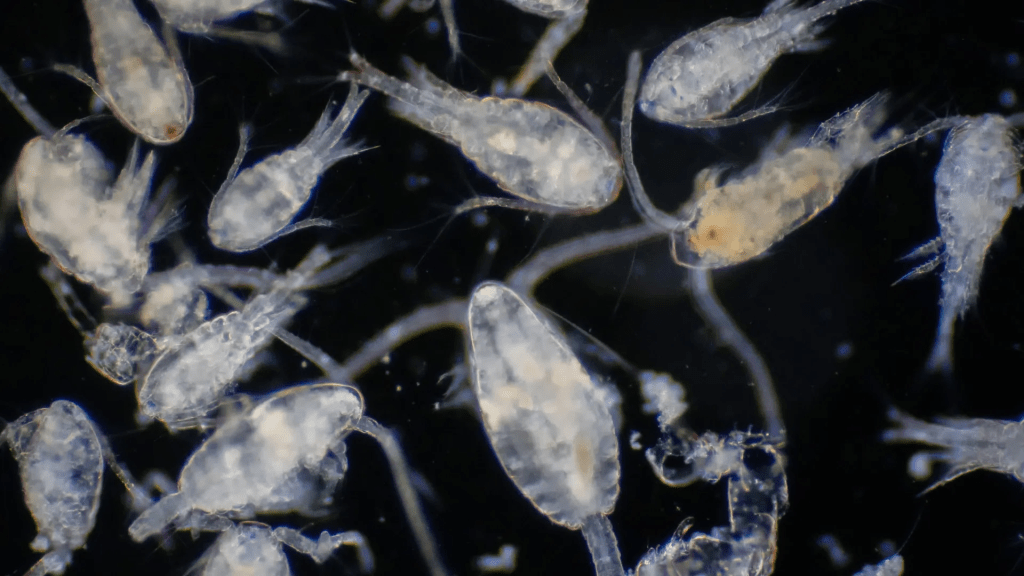
An alga that threatens freshwater ecosystems and is toxic to vertebrates has a sneaky way of ensuring its success: It suppresses the growth of algal competitors by releasing chemicals that deprive them of a vital vitamin.

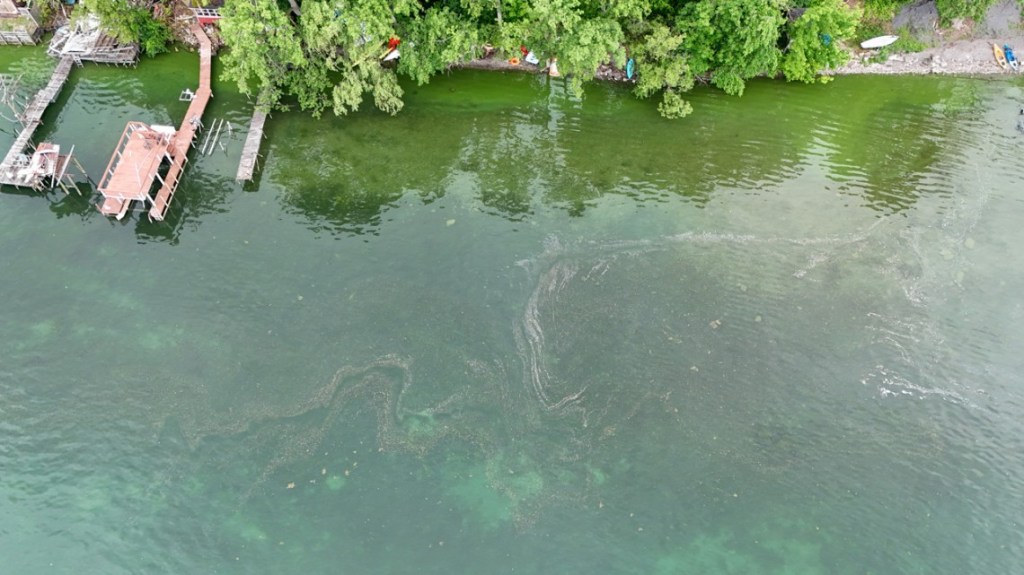
The finding was reported in a new study, published July 2 in the journal mBio. It describes how the cyanobacteria Microcystis aeruginosa manipulates its environment to give itself advantages to take over the water column, leading to harmful algal blooms and mats in lakes during hot summers.

Cornell impacting New York State

“Microcystis seems to be able to dominate more and more in the changing climate,” said Beth Ahner, professor in the Department of Biological and Environmental Engineering in the College of Agriculture and Life Sciences (CALS) and corresponding author of the paper.

The study shows how M. aeruginosa, a common harmful cyanobacteria, produces and releases chemicals, called antivitamins, that mimic thiamin, also known as vitamin B1. In the presence of the antivitamins, other alga species, some of which cannot synthesize their own thiamin, take up the chemicals from the water and are unable to distinguish them from the true vitamin. Inside the host, the chemicals mimic vitamin B1 and inhibit the thiamin-dependent enzymes required for growth. The study also revealed that M. aeruginosa has a specialized thiamin-biosynthesis enzyme that makes it resistant to the antivitamins that it produces.

While the frequency of these harmful algae blooms has increased, the reasons why have been unclear. People hypothesize the rise is related to watershed runoff that carries pollution and macronutrients, like phosphorus and nitrogen, Ahner said. Researchers are also perplexed about why blooms are occurring even in very clean lakes, such as Skaneateles Lake in the Finger Lakes region of New York. 

“No one’s ever really shown that this organism has an advantage in taking up those macronutrients over other algae,” Ahner said.

In addition, M. aeruginosa produces chemicals toxic to vertebrates. “If you have a dog lapping up the water on the shore and it ingests these organisms, it has the potential to cause severe illness and even death,” Ahner said. The toxins have contaminated municipal water supplies, such as in Toledo, Ohio, on the banks of Lake Erie in 2014. 

In the study, the researchers grew M. aeruginosa in a co-culture with another algae, Chlamydomonas reinhardtii, a model organism that researchers use for studies. While C. reinhardtii produces its own thiamin in the wild, the researchers used a mutant version that lacked the ability to synthesize the vitamin. In the presence of C. reinhardtii, M. aeruginosa released elevated levels of two thiamin antivitamins, bacimethrin and methoxythiamin, which inhibited C. reinhardtii. The mutant C. reinhardtii, without its own thiamin, was much more sensitive to the antivitamins than the wildtype. Additions of thiamin to the culture reversed the inhibitory effects of being exposed to the antivitamins, in both the mutant and wildtype.

Co-author Mingming Wu, professor of biological and environmental engineering in CALS, provided microfluidic devices that allowed the team to test the algae with steady, extremely low concentrations of antivitamins, similar to levels found in the environment. “We were able to show that the environmentally relevant concentrations of the chemicals are potentially toxic to organisms in the field,” Ahner said.

Using a technique called quantitative polymerase chain reaction (qPCR), the researchers identified a few genes they believe are involved in making antivitamins, Ahner said.

Finally, co-authors from Oregon State University shared data that identified the presence of the antivitamin bacimethrin in the environment and at elevated levels when M. aeruginosa bloomed.

Mohammad Yazdani, a postdoctoral research associate in the Department of Biological and Environmental Engineering, is the paper’s first author. Coauthors include Geoffrey Coates, the Tisch University Professor in the Department of Chemistry and Chemical Biology in the College of Arts and Sciences (CAS).

The study was supported by the U.S. Department of Agriculture’s National Institute of Food and Agriculture, the U.S. Fish and Wildlife Service, the California Department of Fish and Wildlife, and CALS and CAS at Cornell.

CLICK HERE FOR MORE INFORMATION

https://news.cornell.edu/stories/2025/07/toxic-algae-releases-chemicals-suppress-competitors