SDG 6 Water Action Agenda Special Event at the High-level Political Forum (HLPF) 2025

The fifth annual SDG 6 Water Action Agenda Special Event, co-hosted by UN‑Water and the United Nations Department of Economic and Social Affairs, took place at the 2025 High‑Level Political Forum on Sustainable Development (HLPF) in New York on 22 July 2025.  
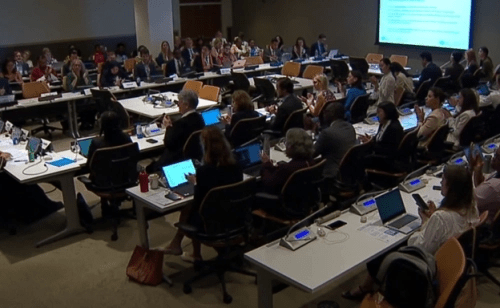
The event reviewed progress on Sustainable Development Goal 6 and its interlinkages with broader UN priorities.  

UN-Water launched the fourth series of the SDG 6 Country Acceleration Case Studies, spotlighting practical examples from Bhutan, Rwanda, and Saudi Arabia, showing how targeted policy interventions and coordinated UN support helped drive results.

The event featured a fireside chat between UN-Water Chair Alvaro Lario and Bob Rae, President of the 2025 session of the UN Economic and Social Council, reflecting on the transformative potential of Artificial Intelligence (AI) for sustainable water management.  

Looking ahead to the 2026 UN Water Conference, the event included a dialogue where commitment-holders and Member States explored how to sustain momentum through inclusive, collaborative processes.The fifth annual SDG 6 (clean water and sanitation) special event during the High-Level Political Forum (HLPF) launched three new SDG 6 Country acceleration case studies. The half-day event also hosted a dialogue on the interconnections and expectations for AI and water, followed by statements about countries’ commitments to water action. The Special Event took place alongside the High-Level Political Forum (HLPF), on 22 July 2025, in New York, US. 

Alvaro Lario, UN-Water Chair and President of the International Fund for Agricultural Development (IFAD), opened the special event and highlighted the recent launch of the Collaborative Implementation Plan (CIP) for the UN System-wide Strategy for Water and Sanitation. He also looked forward to discussions on the 2026 UN Water Conference, which will be co-hosted by the United Arab Emirates (UAE) and Senegal and will take place in the UAE, and the 2028 UN Water Conference, which will take place in Dushanbe, Tajikistan.

Li Junhua, Under-Secretary-General for Economic and Social Affairs, noted that the following themes for the 2026 UN Water Conference had been agreed on 9 July: Water for people, Water for prosperity, Water for planet, Water for cooperation, Water in multilateral processes, and Investments for water. 
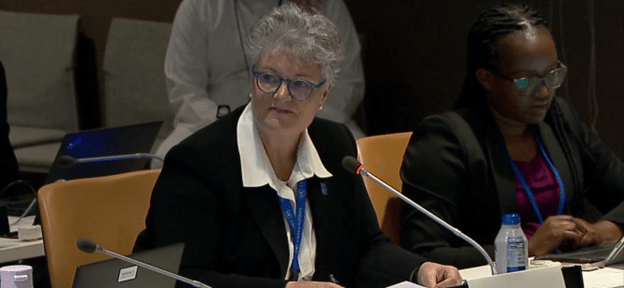
Launch of the SDG 6 Country Acceleration Case Studies

Mary Matthews, UNDP and UN-Water Senior Programme Manager, presented the three country case studies and highlighted recommendations and lessons learned in each country. Leaders from the three countries then commented on their national experiences.

In the Bhutan case study, Matthews highlighted that drivers of progress were identified as: the national prioritization of water; the establishment of a legal and policy framework; progressive implementation of plans and programmes; empowerment of local authorities to lead WASH initiatives; diversified sources of financing; and a low level of corruption.

In the Rwanda case study, Matthews noted the report indicates progress has been made due to the intersectoral coordination of policy under the Office of the Prime Minister and scaling planning and evaluation down to the district level, among others.

In the Saudi Arabia case study, Matthews noted the country’s Vision 2030 has inspired reform in all sectors, its National Water Strategy 2030 has provided a policy framework, and the government began purchasing desalinated water from the private sector.

Across the case studies, Matthews noted that: people and businesses were major sources of the solutions; non-conventional water is playing a key role; public investment has been critical in almost all case studies; and political leadership is essential.

Tshering Tobgay, Prime Minister, Bhutan, highlighted that his country has:

  • prioritized governance and let it be people centered, with its water vision based on consultations and governance not just focusing on policies, but listening to people;
  • financed “boldly and intelligently” by combining international loans, development grants, and user fees that help regulate demand; 
  • built institutions and human capacity; 
  • let data speak; and 
  • trusted and empowered youth and let them lead.

He said climate change is Bhutan’s next challenge, with 21.4% of its water sources drying up. He concluded by recommending that other leaders “Listen to your people, back vision with values, empower youth, and never take water for granted.”
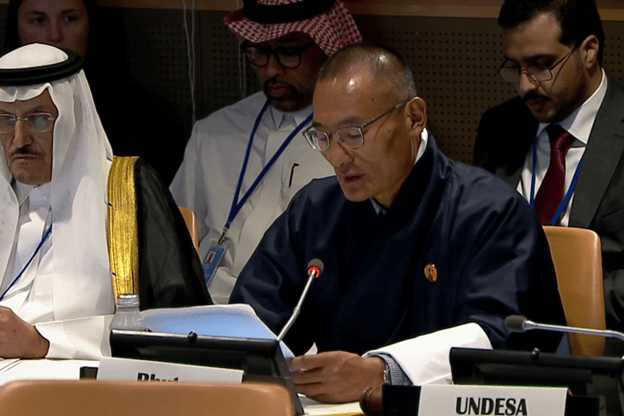
Abdulaziz Al-Shaibani, Deputy Minister for Water, Saudi Arabia, and Tshering Tobgay, Prime Minister, Bhutan

Abdulaziz Al-Shaibani, Deputy Minister for Water, Saudi Arabia, highlighted the following lessons: 

  1. secure high-level political will and commitment; 
  2. set goals, indicators, and assign responsibilities across the value chain; 
  3. engage the private sector as a partner in service delivery and infrastructure; 
  4. leverage data and innovation to improve delivery; and
  5. forge partnerships and international cooperation, such as with G20 and UN-Water, and convene global events, such as Saudi Water Week.

He invited participants to participate in the 2027 World Water Forum, which will take place in Saudi Arabia.

Gemma Maniraruta, Director General of Water and Sanitation, Ministry of Infrastructure, Rwanda, noted the benefits of intersectoral coordination, including by ensuring that water-related policies and decisions align with Rwanda’s broader development priorities. Efforts on transboundary water resources cooperation have also been undertaken, and noted that cooperative transboundary river management is a contribution to regional integration and diplomacy, builds trust, and ensures equitable resource use. She highlighted efforts to invest in human resources, including through support for the education and training of Rwandan nationals in internationally accredited institutions.
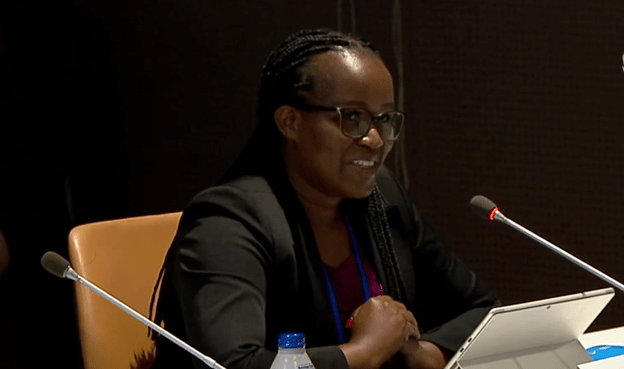
Gemma Maniraruta, Director General of Water and Sanitation, Ministry of Infrastructure, Rwanda

Ligia Noronha, Assistant Secretary-General and Head of the New York Office of the UN Environment Programme (UNEP), offered closing remarks for the session, highlighting that SDG 6 is not a stand alone goal but is central to achieving the other goals. She noted links between the strategies and the environment, and noted in particular Bhutan’s efforts to protect forests and adopt nature-based solutions, Saudi Arabia’s efforts to integrate governance, and Rwanda’s efforts to link its efforts to global objectives. She noted that UNEP develops tools to support countries.

During a discussion, a representative from the Children and Youth major group noted that water security is linked to biodiversity, food and climate. Other speakers noted that water is a human right and asked how synergies between the UN Water Conferences and other multilateral environmental agreements could be built.
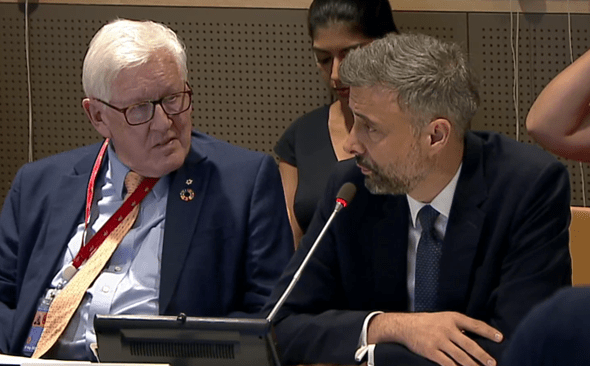
Bob Rae, President of the 2025 session of the Economic and Social Council, and Alvaro Lario, UN-Water Chair and President of IFAD

Fireside chat: Water and Artificial Intelligence

Aarathi Krishnan, founder of AI firm RAKSHA, moderated a conversation between Bob Rae, President of the 2025 session of the Economic and Social Council, and Alvaro Lario, UN-Water Chair and President of IFAD, on questions related to water and AI.

Rae recalled that AI is a tremendous user of energy, which he said represents a serious problem. He also noted that utilities have been assuming energy use would decline. Rae highlighted that AI has been expected to help us use water more efficiently, for example by informing us when leaks occur. He said AI should be seen as a tool that can be helpful in using a scarce resource more efficiently, but added that whether that happens is a political question that involves money, resources, and financing.

Alvaro said we need some guardrails for the technology, and its clear and present harms need to be addressed. He said water utilities need capacity and expertise to use AI, and that such capacity should not only be available to the private sector.

In closing, speakers noted that AI brings unprecedented potential along with profound responsibilities.
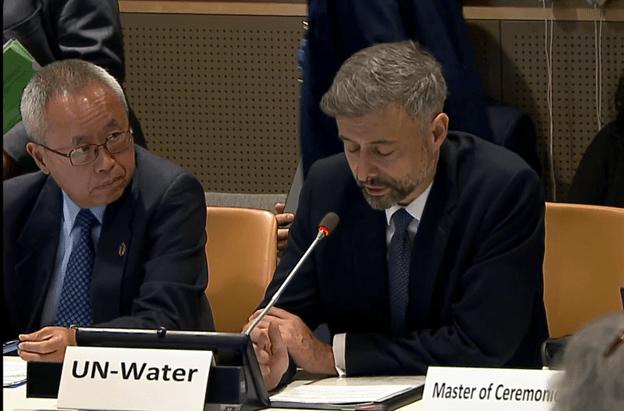
Li Junhua, Under-Secretary-General for Economic and Social Affairs, and Alvaro Lario, UN-Water Chair and President of the International Fund for Agricultural Development (IFAD)

Sustaining Momentum: Building toward the 2026 UN Water Conference

Representatives from the 2023 UN Water Conference host countries offered reflections on lessons from the 2023 conference.

Jonibek Hikmat, Permanent Representative of Tajikistan to the UN, noted that the Water Action Agenda gathered over 800 commitments. He recalled that the 2023 UN Water Conference led to the appointment of a Special Envoy on Water and the UN System-Wide Strategy on Water and Sanitation.

Anna Pot, Ministry of Foreign Affairs, the Netherlands, noted that Voluntary National Reviews (VNRs) are one area in which countries can share their experiences on water. She said the water conferences need to evolve into a platform for action and impact.

Diamane Diome, Deputy Permanent Representative of Senegal to the UN

Water Action Agenda Commitment Holders: Rapid Progress Pitches

Representatives from a number of countries and organizations then discussed their commitments and progress. They noted the importance of water diplomacy and the need to focus on implementation. Germany and Finland indicated their interest in co-chairing an interactive dialogue during the 2026 Water Conference.

Efforts of 10 multilateral development banks (MDBs) to collaborate on water funding was discussed, as was the recent launch of the first joint MDB report on water. The World Bank Group reported it has a new global water strategy.

A representative from UNDRR noted that water connects 90% of disasters worldwide, either because of too much or too little water. She said UNDRR is working to improve the data on hazardous events. The need to change behaviors was mentioned, with a call for reaching people through their faith traditions.

During the discussion, representatives from youth cautioned against the commodification of water and called for including them in decision making. Speakers also suggested developing case studies on tribal and First Nations water policies.
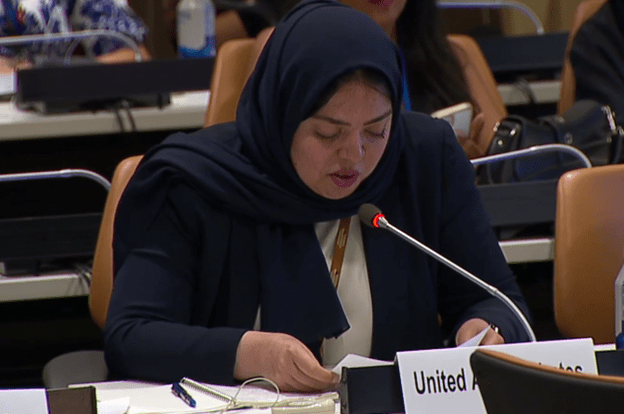
Fatema Yousuf, Deputy Permanent Representative of the UAE to the UN

2026 UN Water Conference Co-hosts Closing Remarks

Fatema Yousuf, UAE Deputy Permanent Representative to the UN, said the next step for the 2026 Conference will be the selection of co-chairs for the interactive dialogues. She said the co-hosts will work with stakeholder groups in the lead up to conference.

Diamane Diome, Deputy Permanent Representative of Senegal to the UN, said his country wants to make water be at the heart of the UN, including through regular meetings on water.
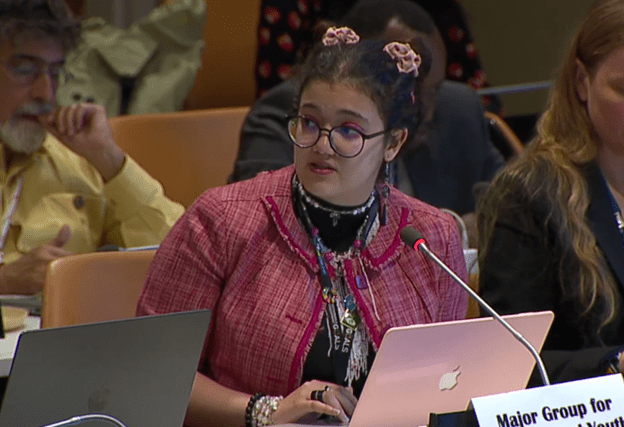
Representative of the Major Group for Children and Youth

CLICK HERE FOR MORE INFORMATION

https://enb.iisd.org/sdg-6-water-action-agenda-special-event
Residents say jet fuel leak in Pennsylvania went undetected for months, poisoned their drinking water

When Kristine Wojnovich and her husband bought their home 20 years ago in Washington Crossing, Pennsylvania, it was everything they wanted — until one day in 2023, when she turned on her kitchen faucet.

“It tasted weird and smelled like oil,” Wojnovich said. “It was very disconcerting.”

Wojnovich called Sunoco Pipeline, operator of the Twin Oaks pipeline that runs just across their street. It carries jet fuel underground from a fuel terminal outside Philadelphia to Newark Terminal near the airport.Sunoco tested her water, but she says they didn’t find anything.

“[They said], ‘We’re so happy to tell you, there’s no oil, no gas, no propane, nothing in your water,'” Wojnovich said.

When she pressed further about the cause, Wojnovich said Sunoco Pipeline told her they didn’t know, but it could be “some kind of bacteria” unrelated to the pipeline.

But other neighbors made similar complaints. Finally, 16 months after Wojnovich made her first call — and only after the Pennsylvania Department of Environmental Protection investigated — Sunoco found a leak in the pipeline.

“I feel like we’re being poisoned every day,” Wojnovich said.

People in the community don’t use water piped in from a reservoir far away. Instead, they use wells that draw from underground aquifers for their cooking and drinking water.When their well was finally opened earlier this year, Wojnovich was shocked at the amount of jet fuel on top of it. 

“It was 15 gallons…and it’s been gathering there since September 2023,” Wojnovich said.

Sunoco removed that fuel, but Wojnovich says Sunoco still sends workers each day to skim off new fuel seeping into her well.

She’s not alone. The number of wells impacted has risen to at least 38, according to the Pennsylvania Department of Environmental Protection.

In 2024, Sunoco Pipeline spilled more fuel than any other pipeline in the United States, according to data from the Pipeline and Hazardous Materials Safety Administration.”A pipeline company that’s more aggressive in follow-up, would have identified it sooner,” said Robert Hall, who spent decades regulating pipeline safety for the federal government. “They are not one of the best pipeline companies with regard to their management of their pipeline.”

In a statement, Sunoco’s partner company Energy Transfer said it has installed “advanced water filtration systems at no cost” and is “committed to the cleanup and restoration of the…neighborhood,” but did not address why it took so long to find the leak.

As for Wojnovich, she is suing Sunoco Pipeline. With the pipeline back in operation, she doesn’t plan to stick around the neighborhood.

“Would you stay if there was 12 feet of jet fuel found on your well?” Wojnovich said. “We feel unsafe.”

CLICK HERE FIR MORE INFORMATION

https://www.cbsnews.com/news/sunoco-pipeline-fuel-leak-pennsylvania-water/

Scientists just measured how fast glaciers carve the Earth

Analysis used machine learning to estimate erosion for 180,000 glaciers around the globe.

Summary:Scientists used machine learning to reveal how glaciers erode the land at varying speeds, shaped by climate, geology, and heat. The findings help guide global planning from environmental management to nuclear waste storage.

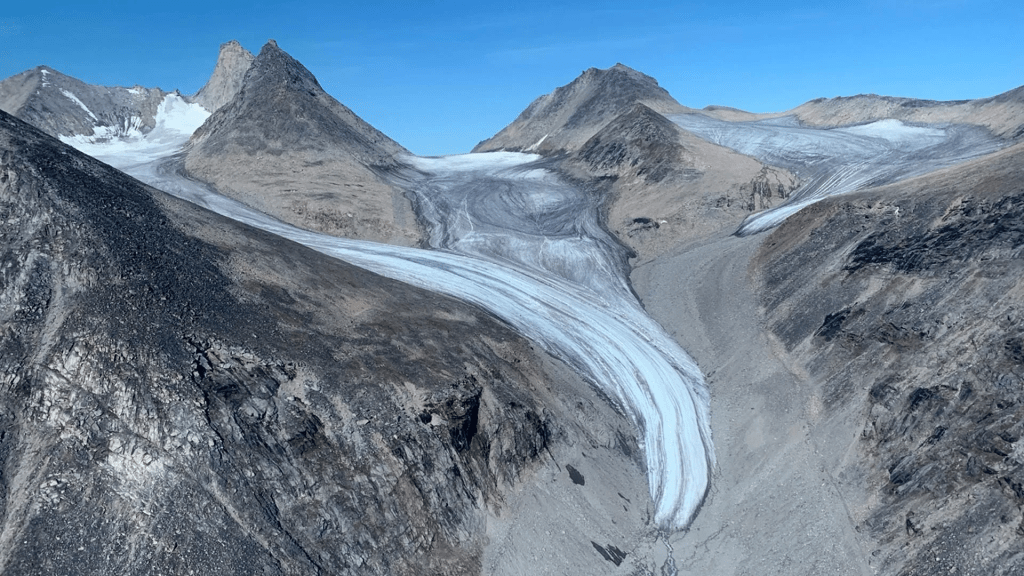
A glacier in the Canadian Arctic. Credit: John Gosse, Dalhousie University

Glaciers carved the deep valleys of Banff, eroded Ontario to deposit the fertile soils of the Prairies and continue to change the Earth’s surface. But how fast do glaciers sculpt the landscape?

Published on August 7 in Nature Geoscience, University of Victoria (UVic) geographer Sophie Norris and her international team provide the most comprehensive view of how fast glaciers erode, and how they change the landscape. Most importantly, their research also provides an estimate of the rate of contemporary future erosion for more than 180,000 glaciers worldwide. Using a machine learning-based global analysis, Norris and her research team have worked to predict glacial erosion for 85 per cent of modern glaciers. Their regression equations estimate that 99 per cent of glaciers erode between 0.02 and 2.68 millimeters per year — roughly the width of a credit card.

“The conditions that lead to erosion at the base of glaciers are more complicated than we previously understood,” says Norris. “Our analysis found that many variables strongly influence erosion rates: temperature, amount of water under the glacier, what kind of rocks are in the area, and how much heat comes from inside the Earth.”

“Given the extreme difficulty in measuring glacial erosion in active glacial settings, this study provides us with estimates of this process for remote locations worldwide,” says John Gosse, Dalhousie University.

Understanding the complex factors that cause erosion underneath glaciers is vital information for landscape management, long-term nuclear waste storage and monitoring the movement of sediment and nutrients around the world.

Norris started this work while a post-doctoral fellow at Dalhousie and concluded it at UVic. The team of collaborators included the University of Grenoble Alpes (France), Dartmouth College (US), Pennsylvania State University (US) and the University of California Irvine (US). The work was carried out in partnership with and financially supported by the Canadian Nuclear Waste Management Organization.

https://www.sciencedaily.com/releases/2025/08/250809100914.htm

The hidden climate battle between forests and the ocean

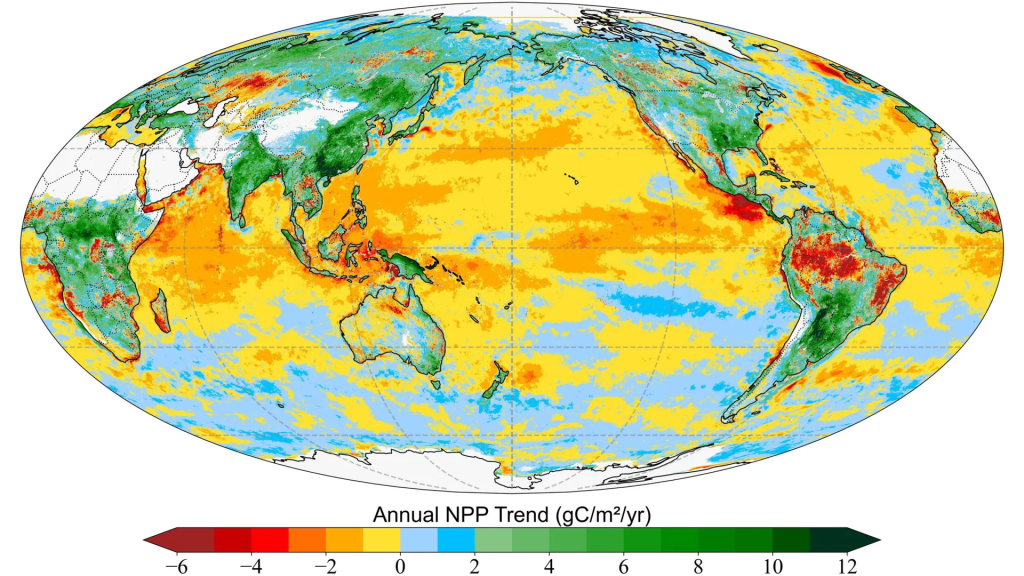
Summary:Between 2003 and 2021, Earth saw a net boost in photosynthesis, mainly thanks to land plants thriving in warming, wetter conditions—especially in temperate and high-latitude regions. Meanwhile, ocean algae struggled in increasingly stratified and nutrient-poor tropical waters. Scientists tracked this global energy shift using satellite data, revealing that land ecosystems not only added more biomass but also helped stabilize climate by capturing more carbon.

This image illustrates the annual trend in global net primary production (NPP) — or net carbon gain by photosynthetic organisms on Earth — from 2003 to 2021. Credit: Yulong Zhang, et al, 2025

Terrestrial plants drove an increase in global photosynthesis between 2003 and 2021, a trend partially offset by a weak decline in photosynthesis — the process of using sunlight to make food — among marine algae, according to a new study published in Nature Climate Change on August 1. The findings could inform planetary health assessments, enhance ecosystem management, and guide climate change projections and mitigation strategies.

Photosynthetic organisms — also known as primary producers — form the base of the food chain, making most life on Earth possible. Using energy from the sun, primary producers fix, or convert, carbon from the air into organic, or carbon-based, matter. But primary producers also release carbon through a process called autotrophic respiration, which is somewhat akin to breathing. The rate of carbon gain after accounting for loss through respiration is called net primary production.

“Net primary production measures the amount of energy photosynthetic organisms capture and make available to support nearly all other life in an ecosystem,” said first author Yulong Zhang, a research scientist in the lab of Wenhong Li at Duke University’s Nicholas School of the Environment. “As the foundation of food webs, net primary production determines ecosystem health, provides food and fibers for humans, mitigates anthropogenic carbon emissions and helps to stabilize Earth’s climate.”

Previous research on net primary production has typically focused on either land or ocean ecosystems, leaving gaps in our understanding of net primary production across Earth and the potential implications for climate mitigation.

For this study, the team explored annual trends and variability in global net primary production, with a focus on the interplay between land and ocean ecosystems.

“If you’re looking at planetary health, you want to look at both terrestrial and marine domains for an integrated view of net primary production. The pioneering studies that first combined terrestrial and marine primary production have not been substantially updated in over two decades,” said co-author Nicolas Cassar, Lee Hill Snowdon Bass Chair at the Nicholas School who jointly oversaw the research with Zhang.

Satellite Insights

Observations from satellites offer continuous perspective on photosynthesis by plants and marine algae called phytoplankton. Specifically, specialized satellite instruments measure surface greenness, which represents the abundance of a green pigment called chlorophyll produced by photosynthetic life. Computer models then estimate net primary production by combining greenness data with other environmental data, such as temperature, light and nutrient variability.

The authors of the new study used six different satellite-based datasets on net primary production — three for land and three for oceans — for the years from 2003 to 2021. Using statistical methods, they analyzed annual changes in net primary production for land and, separately, for the ocean.

They found a significant increase in terrestrial net primary production, at a rate of 0.2 billion metric tons of carbon per year between 2003 and 2021. The trend was widespread from temperate to boreal, or high-latitude, areas, with a notable exception in the tropics of South America.

By contrast, the team identified an overall decline in marine net primary production, of about 0.1 billion metric tons of carbon per year for the same time period. Strong declines mainly occurred in tropical and subtropical oceans, particularly in the Pacific Ocean.

All told, trends on land dominated those of oceans: Global net primary production increased significantly between 2003 and 2021, at a rate of 0.1 billion metric tons of carbon per year.

Environmental Drivers

To understand the potential environmental factors at play, the team analyzed variables such as light availability, air and sea-surface temperature, precipitation and mixed layer depth — a measure that reflects the extent of mixing in the ocean’s top layer by wind, waves and surface currents.

“The shift toward greater primary production on land mainly stemmed from plants in higher latitudes, where warming has extended growing seasons and created more favorable temperatures, and in temperate regions that experienced local wetting in some areas, forest expansion and cropland intensification,” said Wenhong Li, a professor of earth and climate sciences at the Nicholas School and a co-author on the study.

Warming temperatures appeared to have an opposite effect in some ocean areas.

“Rising sea surface temperatures likely reduced primary production by phytoplankton in tropical and subtropical regions,” Cassar added. “Warmer waters can layer atop cooler waters and interfere with the mixing of nutrients essential to algal survival.”

Although land drove the overall increase in global primary production, the ocean primarily influenced year-to-year variability, especially during strong climate events such as El Niño and La Niña, the authors found.

“We observed that ocean primary production responds much more strongly to El Niño and La Niña than land primary production,” said co-author Shineng Hu, an assistant professor of climate dynamics at the Nicholas School. “A series of La Niña events was partly responsible for a trend reversal in ocean primary production that we identified after 2015. This finding highlights the ocean’s greater sensitivity to future climate variability.”

Broad Implications

The study points to the important role of terrestrial ecosystems in offsetting declines in net primary production among marine phytoplankton, according to the authors.

But they added that declines in net primary production in tropical and subtropical oceans, coupled with stagnation on land in the tropics, can weaken the foundation of tropical food webs, with cascading effects on biodiversity, fisheries and local economies. Over time, these disruptions could also compromise the ability of tropical regions to function as effective carbon sinks, potentially intensifying the impacts of climate warming.

“Whether the decline in ocean primary production will continue — and how long and to what extent increases on land can make up for those losses — remains a key unanswered question with major implications for gauging the health of all living things, and for guiding climate change mitigation,” Zhang said. “Long-term, coordinated monitoring of both land and ocean ecosystems as integrated components of Earth is essential.”

Funding: Y.Z., W.L., and G.S. were partially supported by the Duke University-USDA Forest Service collaboration (23-JV-11330180-119). N.C. was supported by the National Science Foundation (OCE-2123198). J.M. was supported by the Oak Ridge National Laboratory. J.X. is supported by the National Science Foundation (Macrosystem Biology) and NEON-Enabled Science Program (DEB-2017870).

CLICK HERE FOR MORE INFORMATION

https://www.sciencedaily.com/releases/2025/08/250802022926.htm

Digital twins are reinventing clean energy — but there’s a catch

Summary:Researchers are exploring AI-powered digital twins as a game-changing tool to accelerate the clean energy transition. These digital models simulate and optimize real-world energy systems like wind, solar, geothermal, hydro, and biomass. But while they hold immense promise for improving efficiency and sustainability, the technology is still riddled with challenges—from environmental variability and degraded equipment modeling to data scarcity and complex biological processes.

As the world grapples with the urgent need to reduce carbon emissions and combat climate change, researchers at the University of Sharjah are turning to a cutting-edge technology that could reshape the future of energy: AI-powered digital twins.

According to the researchers, these digital replicas of the physical world have the potential to transform the generation, management, and optimization of energy across diverse clean energy platforms, accelerating the transition away from fossil fuels, which environmental scientists associate with global warming.

Digital twins’ ability to replicate and interact with complex systems has made them a cornerstone of innovation across industries, driving improvements in efficiency, cost reduction, and the development of novel solutions.

However, the scientists caution that current digital twin models still face notable limitations that restrict their full potential in harnessing energy from sources such as wind, solar, geothermal, hydroelectric, and biomass.

“Digital twins are highly effective in optimizing renewable energy systems,” the researchers write in the journal Energy Nexus. “Yet, each energy source presents unique challenges — ranging from data variability and environmental conditions to system complexity — that can limit the performance of digital twin technologies, despite their considerable promise in improving energy generation and management.”

In their study, the authors conducted an extensive review of existing literature on the application of digital twins in renewable energy systems. They examined various contexts, functions, lifecycles, and architectural frameworks to understand how digital twins are currently being utilized and where gaps remain.

To extract meaningful insights, the researchers employed advanced text mining techniques, leveraging artificial intelligence, machine learning, and natural language processing. This scientifically rigorous approach enabled them to analyze large volumes of raw data and uncover structured patterns, concepts, and emerging trends.

From this in-depth analysis, the authors drew several key conclusions. They identified research gaps, proposed new directions, and outlined the challenges that must be addressed to fully harness the potential of digital twin technology in the renewable energy sector.

Following a detailed discussion on the integration of digital twins across various renewable energy applications, the authors summarized their most significant findings across five major energy sources: wind, solar, geothermal, hydroelectric, and biomass. Each source presents unique opportunities and challenges, and the study offers a comprehensive overview of how digital twins can be tailored to optimize performance in each domain.

The study reveals that digital twins offer significant advantages across various renewable energy systems:

Wind Energy: Digital twins can predict unknown parameters and correct inaccurate measurements, enhancing system reliability and performance.

Solar Energy: They help identify key factors that influence efficiency and output power, enabling better system design and optimization.

Geothermal Energy: Digital twins can simulate the entire operational process — particularly drilling — facilitating cost analysis and reducing both time and expenses.

Hydroelectric Energy: The AI-driven models simulate system dynamics to identify influencing factors. In older hydro plants, they are used to mitigate the impact of worker fatigue on productivity.

Biomass Energy: Digital twins improve performance and management by offering deep insights into operational processes and plant configurations.

But the authors’ contribution to the field stands out in highlighting critical limitations in the application of digital twin technology across these energy sources. Their analysis underscores the need for more robust models that can address specific challenges unique to each renewable energy system.

The authors identify several limitations in the application of digital twins across different renewable energy systems:

Wind Energy: Digital twins face challenges in accurately modeling and monitoring environmental conditions. They struggle to simulate critical factors such as blade erosion, gearbox degradation, and electrical system performance — particularly in aging turbines.

Solar Energy: Despite their potential, digital twins still fall short in reliably predicting long-term performance. They have difficulty tracking panel degradation and accounting for environmental influences over time, which affects their accuracy and usefulness.

Geothermal Energy: A major obstacle is the lack of high-quality data, which hampers the ability of digital twins to simulate geological uncertainties and subsurface conditions. The technology also faces complexity in modeling the long-term behavior of geothermal systems, including heat transfer and fluid flow dynamics.

Hydroelectric energy: Applied to hydroelectric projects, digital twins face challenges in accurately modeling water flow variability and in capturing environmental and ecological constraints. These limitations reduce their effectiveness in optimizing system performance and sustainability.

biomass energy: When used with biomass energy systems, digital twins still struggle to simulate the entire production supply chain. They fall short in providing precise models for biological processes, biomass conversion, and the complex biochemical and thermochemical reactions involved.

The authors emphasize the broader implications of these shortcomings for the renewable energy sector. To address these challenges, they offer a set of guidelines and a research roadmap aimed at helping scientists enhance the reliability and precision of digital twin technologies.

Their recommendations focus on improving data collection methods, advancing modeling techniques, and expanding computational capabilities to ensure digital twins can deliver trustworthy insights for decision-making and system optimization.

CLICK HERE FOR MORE INFORMATION

https://www.sciencedaily.com/releases/2025/07/250729001217.htm

Terrible Thirst Hits Gaza With Polluted Aquifers and Broken Pipelines

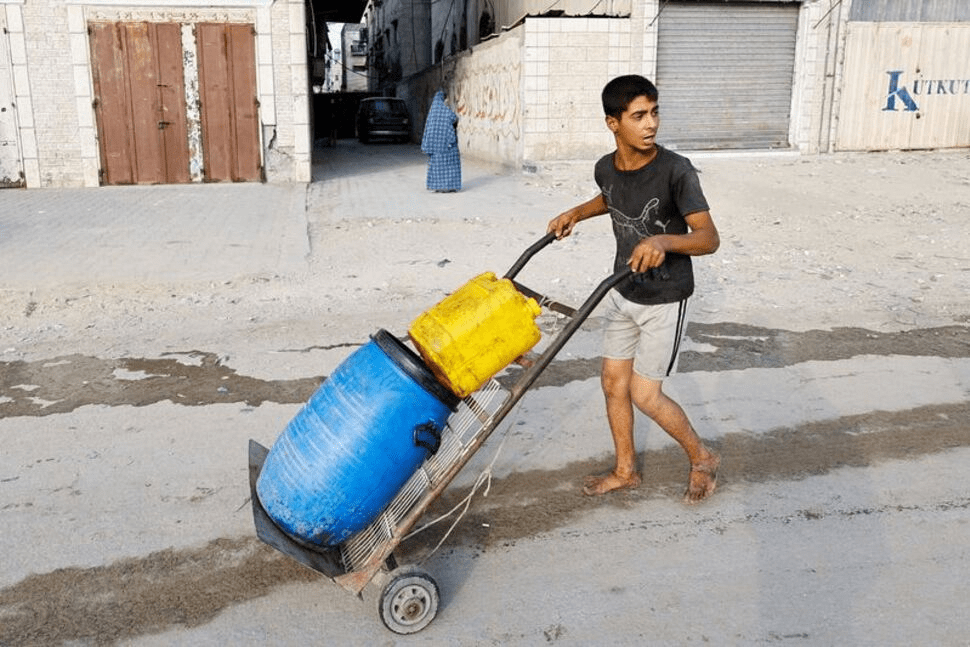
A boy pushes a trolley with containers as Palestinians wait to collect water amid shortages, in Gaza City August 6, 2025. REUTERS/Mahmoud Issa

By Nidal al-Mughrabi

GAZA/CAIRO (Reuters) -Weakened by hunger, many Gazans trek across a ruined landscape each day to haul all their drinking and washing water – a painful load that is still far below the levels needed to keep people healthy.

Even as global attention has turned to starvation in Gaza, where after 22 months of a devastating Israeli military campaign a global hunger monitor says a famine scenario is unfolding, the water crisis is just as severe according to aid groups.

Though some water comes from small desalination units run by aid agencies, most is drawn from wells in a brackish aquifer that has been further polluted by sewage and chemicals seeping through the rubble, spreading diarrhoea and hepatitis.

COGAT, the Israeli military agency responsible for coordinating aid in the Israeli-occupied Palestinian territories, says it operates two water pipelines into the Gaza Strip providing millions of litres of water a day.

Palestinian water officials say these have not been working recently.

Israel stopped all water and electricity supply to Gaza early in the war but resumed some supply later though the pipeline network in the territory has been badly damaged.

Most water and sanitation infrastructure has been destroyed and pumps from the aquifer often rely on electricity from small generators – for which fuel is rarely available.

COGAT said the Israeli military has allowed coordination with aid organisations to bring in equipment to maintain water infrastructure throughout the conflict.

Moaz Mukhaimar, aged 23 and a university student before the war, said he has to walk about a kilometre, queuing for two hours, to fetch water. He often goes three times a day, dragging it back to the family tent over bumpy ground on a small metal handcart.

“How long will we have to stay like this?” he asked, pulling two larger canisters of very brackish water to use for cleaning and two smaller ones of cleaner water to drink.

His mother, Umm Moaz, 53, said the water he collects is needed for the extended family of 20 people living in their small group of tents in Deir al-Balah in the central Gaza Strip.

“The children keep coming and going and it is hot. They keep wanting to drink. Who knows if tomorrow we will be able to fill up again,” she said.

Their struggle for water is replicated across the tiny, crowded territory where nearly everybody is living in temporary shelters or tents without sewage or hygiene facilities and not enough water to drink, cook and wash as disease spreads.

The United Nations says the minimum emergency level of water consumption per person is 15 litres a day for drinking, cooking, cleaning and washing. Average daily consumption in Israel is around 247 litres a day according to Israeli rights group B’Tselem.

Bushra Khalidi, humanitarian policy lead for aid agency Oxfam in the Israeli-occupied Palestinian territories said the average consumption in Gaza now was 3-5 litres a day.

Oxfam said last week that preventable and treatable water-borne diseases were “ripping through Gaza”, with reported rates increasing by almost 150% over the past three months.

Israel blames Hamas for the suffering in Gaza and says it provides adequate aid for the territory’s 2.3 million inhabitants.

QUEUES FOR WATER

“Water scarcity is definitely increasing very much each day and people are basically rationing between either they want to use water for drinking or they want to use a lot for hygiene,” said Danish Malik, a global water and sanitation official for the Norwegian Refugee Council.

Merely queuing for water and carrying it now accounts for hours each day for many Gazans, often involving jostling with others for a place in the queue. Scuffles have sometimes broken out, Gazans say.

Collecting water is often the job of children as their parents seek out food or other necessities.

“The children have lost their childhood and become carriers of plastic containers, running behind water vehicles or going far into remote areas to fill them for their families,” said Munther Salem, water resources head at the Gaza Water and Environment Quality Authority.

With water so hard to get, many people living near the beach wash in the sea.

A new water pipeline funded by the United Arab Emirates is planned, to serve 600,000 people in southern Gaza from a desalination plant in Egypt. But it could take several more weeks to be connected.

Much more is needed, aid agencies say. UNICEF spokesperson James Elder said the long-term deprivations were becoming deadly. “Starvation and dehydration are no longer side effects of this conflict. They are very much frontline effects.”

Oxfam’s Khalidi said a ceasefire and unfettered access for aid agencies was needed to resolve the crisis.

“Otherwise we will see people dying from the most preventable diseases in Gaza – which is already happening before our eyes.”

(Reporting by Ramadan Abed in Deir al-Balah, Gaza, Nidal al-Mughrabi in Cairo and Olivia Le Poidevin in Geneva; writing by Angus McDowall; Editing by Alexandra Hudson)

CLICK HERE FOR MORE INFORMATION

https://www.usnews.com/news/world/articles/2025-08-06/terrible-thirst-hits-gaza-with-polluted-aquifers-and-broken-pipelines

Local News

More “plant destroyer” water mold species discovered in Minnesota

Scientists at the University of Minnesota say they’ve discovered more than a dozen different types of a mold known as “plant destroyers.” 

At first, this rhodadendron plant just looks like it needs a little extra love. But through the microscope, you’ll see something more destructive.

“It’ll cause a wilting, or it’ll kill the tree or plant outright,” said Nick Rajtar, a researcher with the U’s plant pathology program. “It’s really species-specific, but basically mortality is the end goal for the pathogen, and it’s really good at what it does.”

It goes by the name Phytophthora, a water mold that can kill trees, plants, and crops. 

Rajtar and his team found 22 different species in the state, 14 of which were previously undetected.

“Minnesota’s nurseries ship a lot of material in from a lot of other places around the country, be it Missouri, Oregon, Washington, where these phytophthora are a little more prominent,” he said. “And that’s a potential avenue for them to be introduced to Minnesota’s landscapes.”

Rajtar says phytophthora loves Minnesota’s recent wet weather, potentially helping them spread even faster. 

If you suspect a plant or tree around your home is infected, you can get it tested at the university’s lab. If infected, the plant will need to be destroyed.

CLICK HERE FOR MORE INFORMATION

https://www.cbsnews.com/minnesota/news/university-of-minnesota-plant-destroyers-water-mold-phytophthora/?intcid=CNM-00-10abd1h

Toxic Water, Toxic Crops: India’s Public Health Time Bomb

Raw sewage and industrial wastewater contaminated with metals and chemicals irrigate much of the nation’s food.

BENGALURU, India – In a small town in the suburbs of this booming city, K.V. Muniraju knows all too well the decade-old battle of securing water for his crops. With groundwater tables continuously falling, the middle-aged farmer once borrowed heavily to dig wells ever deeper.

If he was lucky, he found water. If he was unlucky, he didn’t. If he was really unlucky, he found a hint of water and proceeded to invest in the well infrastructure, only to see the well run dry and trap him in debt.

That happened to Muniraju in 1994 and 1995, when he was forced to direct water into his fields from nearby storm water drains.

Then came apparent salvation. In 1998 the nearby town installed a sewer system and discharged the untreated wastewater through the same storm water drains alongside his fields. In the 20 years since, Muniraju has had a secure water source to grow his crops.

The steady water supply, though it reeks, also contains high nutrient concentrations. That enables Muniraju to increase production while reducing input costs, such as fertilizers. His standard of living has increased – he built a stone house and sent his three sons and two daughters to school and college.

Across India, and particularly in the nation’s big metropolitan regions, countless numbers of farmers like K.V. Muniraju raise their crops with untreated wastewater. Medical specialists say farmers and their families risk serious disease from exposure to harmful sewage-borne microorganisms and metals. Scientists have measured unsafe levels of heavy metals and other toxic substances in Indian crops – posing a public health threat if consumed.

We are praying that the wastewater flows will last as long as it takes for our children to find other jobs so that they can support our family.” – K.V. Munirjau

Indian public health and safety authorities have displayed limited action in tackling the impending public health crisis. Just 30 percent of wastewater undergoes any sort of treatment before being discharged in a wretched stream of industrial effluent that contains heavy metals and toxic chemicals. To date there is no regulatory framework for testing primary products, such as vegetable and fruits, for toxic contaminants. The widespread use of untreated wastewater – particularly in urban and peri-urban areas – to grow a considerable portion of India’s food supply, coupled with current inaction from officials, has converged to produce, say some scientists, a toxic time bomb in a nation that soon will overtake China to become the world’s largest. 

A mechanic works in a paper mill near Muzaffarnagar, Hindon, India. Mills, tanneries, and slaughterhouses in India are major sources of industrial wastewater that flows into nearby canals and rivers. Photo © J. Carl Ganter / Circle of Blue

“It is a complex nexus,” said Sumit Kumar Gautam, an environmental scientist at the Center for Energy, Environment, and Water (CEEW) in New Delhi. “If surface water is contaminated with untreated effluent, farmers use this for irrigation. The farmer is exposed to all contaminants and is likely to experience diarrhoea, bronchitis, skin diseases, eye irritation etc. The contaminants enter the soil, the biomass and thus enter the food chain. The entire food chain is contaminated because of this untreated effluent.”

The motivation for farmers to use wastewater to raise their crops is plainly evident in a convergence of three primary nation-testing challenges – rapid population growth and urbanization, increasing demand for food, and seriously depleted reserves of clean water.

Driven by economic opportunities, India’s megacities are growing fast. A 2010 study by McKinsey estimated that urban expansion is projected to happen twice as quickly as in the past – unlike any urbanization India has seen before – with 590 million people living in cities by 2030, or 170 million more than today.  

But the supply of clean fresh water to produce food is diminishing. Rivers and lakes are profoundly polluted, according to state and government studies. And groundwater reserves are shrinking fast from over pumping. Fresh water scarcity is made worse by deep and lengthy droughts that grip India with increasing regularity and ferocity. According to the latest assessment by the National Institution for Transforming India (NITI), 70 percent of the country’s fresh water – in the ground or on the surface – also is contaminated.

Fresh water, in sum, is in the worst condition in India’s history, according to the NITI report that was released in June by Nitin Gadkari, minister of water resources. India, said the study, was snared in “the worst water crisis” in its history. The report found that at least 600 million Indians – almost half the country – contend with high or extreme water stress.

The single water supply that is still plentiful, though, is a stream of treated and untreated municipal and industrial wastewater.

Farmers stop near Vijayapura to wash red beets on the way to the Bangalore produce markets. In many cases, the vegetables are irrigated with raw sewage and the farmers do not consume their own crops. Photo © J. Carl Ganter / Circle of Blue

Digging Deeper Into Food Supplies

The Hindon River, once the lifeline in one of the most fertile and productive agricultural regions in northern India is now one of the most polluted stretches in the Ganga Basin due to the discharge of untreated, highly polluted industrial, municipal and agricultural wastewater. Key industries upstream include paper mills, sugar processing and associated alcohol distilleries, as well as dairies, textile factories, tanneries, and informal battery manufacturing units. While it is mandatory to treat industrial effluent, water pollution levels show that this is not adhered to, nor enforced.

Krishan Pal Singh, an environmental activist in Doula Village remembers when farmers could safely use surface water to irrigate. That was before the 1980s. Then industries settled in the region and abstracted groundwater and polluted surface water.

Krishan Pal Singh, an environmental activist in Daula Village remembers when farmers could safely use surface water to irrigate. Now, it is a cocktail of heavy metals and pesticides. Photo © J. Carl Ganter / Circle of Blue

The cocktail of heavy metals and pesticides carried by the Hindon have accumulated in the river sediments and seeped into the ground. Now groundwater is polluted, too. A study in 2009 found manganese, lead, zinc, copper, chromium, iron, and elevated levels of cadmium in river sediments. The industrial wastes aggravate any potential measures to clean the Hindon and reverse the decades-old contamination.

If we use river water or not – we always lose.”

Downstream in Muzaffarnagar, an industrial city, the Hindon River is a pitiful sight. It looks more like a sewage canal than a river. Its stench is overwhelming. A mass of solid waste in the river forms a dam, limiting its flow. Dogs roam the landfill, happily picking up pieces of meat discharged by a slaughterhouse upstream. Along the river banks, farmers harvest corn. “The water is so polluted, we can only grow resistant crops,” said one farmer. “Half of our chili plants have diseases and at times the industries discharge acid, which damages the crops. If we use river water or not – we always lose.” 

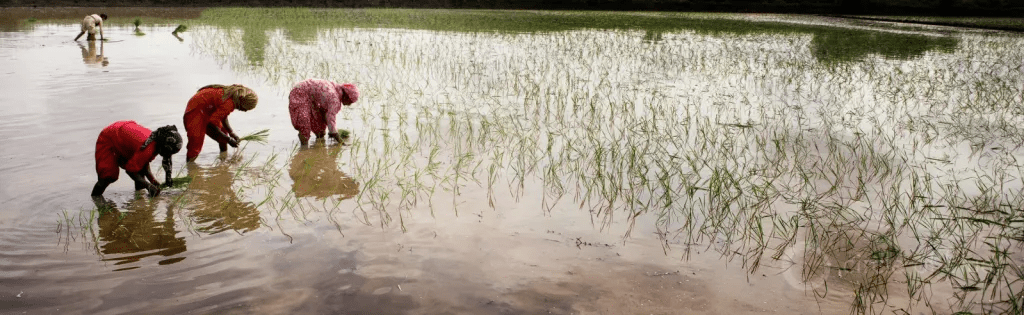
Women transplant rice in a field near Meerut irrigated with industrial wastewater pumped from a nearby canal and links to the Kali River, a tributary of the Hindon River. Photo © J. Carl Ganter / Circle of Blue

A bit further downstream, farmers transplant rice paddies, standing knee deep and without any protection in untreated wastewater. The head farmer explained that skin diseases are an issue at times. But he appreciates the fertilizing qualities of the untreated wastewater and the money he saves.

Further downstream, farmers from the village of Surana in the Bagpat district, said that surface water is of such bad quality that crops are of bad quality now, too. While they have no means of testing their water or crops for toxins, they realize that the quality of crops worsen with greater proximity to the river.

The farmers link the increased rate of diseases, particularly skin diseases, to the deteriorating water quality. “Kids are born healthy, but fall ill very quickly afterwards,” one farmer said. “Over time we realized that some crops are riskier to consume than others. Lentils seem to be less contaminated, so we eat them. Other vegetables, such as cauliflower, okra, and aubergine seem more contaminated. We believe they are unfit for consumption, so we don’t eat them. We sell them to the markets in Delhi.”

Bengaluru’s Foaming Lakes

Bengaluru was previously known for its beautiful lakes, which also served as lifeline for the city by collecting monsoon water and providing clean drinking water during the dry season when all rivers went dry. Today, the lakes are full of wastewater.

Bellandur Lake and Varthur Lake have gained international attention for frothing and catching fire as a result of untreated wastewater discharges. The wastewater contains nitrogen, phosphorus and carbon. It also contains sodium, potassium, calcium, and magnesium. The chemistry causes foam to form and accumulate.

Like a giant, smelly bathtub, big balls of snowy white suds roll across the water. The suds sometimes grow to be 30 to 40 feet high and, in a blizzard of bubbles, have even stopped traffic on the decaying bridge that spans the river. The suds are a soup of detergents and surfactants from the city upstream.

The lakes also catch fire. The water contains highly flammable compounds, namely hydrocarbon and organic polymers, as well as phosphates from detergents, from industries close to Bellandur Lake.

Vishwanath Srikantaiah, an environmental activist, said that the groundwater on which the city depends, has become harder to access as wells go deeper, and that people are using more detergent to wash their clothes – which then gets discharged untreated into waterways.

Vishwanath Srikantaiah, activist and researcher, at the Kelavarapalli Dam, Tamil Nadu, India. Photo © J. Carl Ganter / Circle of Blue

Circle of Blue followed the outflow of the lakes to the Koramangala-Challaghatta valley, where it is received, by grateful farmers, for irrigation and crop production for Bengaluru and its surroundings. Surresh, Shenkar, and Ramakrishna are farmers in their 30s and 40s in the village of Mugalur, downstream of Varthur Lake.

We use the little groundwater we have to grow our own food. The rest we sell to buyers who bring it to Bengaluru’s markets. We don’t eat it.”

When groundwater got scarce, the river became their lifeline. Until three years ago they could use it for their crops. Since then, water was mixed with foam and the quality and productivity of the crops went down – for rice even by 50 percent. ”Foam is in pipes, in the fields. It’s toxic, as at times when it foams badly, we can set the foam on fire. We use the little groundwater we have to grow our own food. The rest we sell to buyers who bring it to Bengaluru’s markets. We don’t eat it,” they said.

Their buyers, they said, know that untreated wastewater is used to grow the crops. But it does not concern them. Their crops enter the food supply unchecked.

A laborer waits before dawn to unload a truck full of onions at Azadpur produce market north of New Delhi. Photo © J. Carl Ganter / Circle of Blue 

Heavy Metals Through Untreated Wastewater

It is well-documented in the scientific literature that water used for irrigation containing heavy metals is a crucial pathway for the toxic chemicals to enter the food supply chain and be absorbed by consumers. Various studies have shown that long-term irrigation with wastewater results in a build-up of heavy metals in the soil – even if the concentrations in the wastewater are low. That, in turn, results in toxicity to plants and food contamination. Metals also accumulate in the body, increasing in concentration over time, which can result in cancers, genetic mutations, and malnutrition.

Despite the scientifically proven pathways for contamination, and the prevalence of wastewater-irrigated agriculture, surprisingly few raw food sample tests have been conducted across India.

As part of a research project from 2000 to 2003, the UK Department for International Development tested heavy metal contamination in spinach from various markets in Delhi, including the wholesale market in Azadpur. Every sample exceeded the U.N. Food and Agriculture Organization’s international CODEX safety standard for lead. Nearly three quarters of the samples – 73 percent — were found to exceed accepted PFA global public health safety standards for lead. Almost a quarter – 24 percent — contained twice the PFA standard. A fifth of the samples also had markedly elevated levels of zinc.  

In a 2015 study, a team of Indian researchers assessed residues of cadmium, lead, zinc, and copper in vegetables in five markets in Delhi. They found that a significant proportion of vegetables contained levels of zinc, lead, and cadmium above safe concentrations.

In a third assessment, of 22 varieties of vegetables grown in the Delhi region, researchers found nickel and lead concentrations in excess of permissible limits.

Similarly, in Bengaluru, food samples from various markets showed that all tested food – including fruits/curd, root vegetables, and leafy vegetables – had at least one heavy metal residue that exceeded the Indian Food Standard. When applying international standards on food safety, the picture becomes even bleaker.  Most samples exceeded all international thresholds for analysed heavy metal content.

In 2012, The Energy and Resources Institute (TERI), based in Delhi and one of India’s most renowned research organizations, assessed the health risks from eating crops grown on the banks of the Yamuna River, a tributary of the Ganga that flows through New Delhi. It found that the agricultural soil along the Yamuna contained levels of nickel, manganese, lead, and mercury above international standards. Treated and untreated wastewater discharged to the river was identified as the source.

TERI also found that vegetables grown in the Yamuna flood plain – a 22-kilometer (14-mile) stretch – had higher levels of heavy metals. TERI tested urine and blood samples from women and children in that area and found significantly higher levels of mercury, chromium, and lead than those of the rural population. Most strikingly, 23 percent of sampled children had blood lead levels above 10 micrograms per deciliter, a widely accepted international safety limit.

The Hindon River near Nai Basti Dundahera, east of Delhi, flows with raw sewage and industrial wastewater. Photo © J. Carl Ganter / Circle of Blue

The Detrimental Effects of Heavy Metals

One more seminal question confronts Indian food growers – the safety of the country’s agricultural exports. India is the world’s 15th largest exporter of agricultural, fishery and forestry products. The United States is India’s top export market. Other important markets include Vietnam, United Arab Emirates, Saudi Arabia, Bangladesh, China, Iran, Malaysia, Pakistan, and the United Kingdom.

The world is well aware of India’s wastewater-contaminated food exports. The United States ranks India among the three nations that most consistently violate American import safety limits. Food grown in India accounts for 60 percent of the items that United States Customs inspectors refuse to allow into U.S. markets.

Two years ago, the UAE barred Indian imports of chili peppers, mangoes, and cucumbers unless each shipment arrived with official residue analysis reports. The UAE is one of the top four global markets for Indian fruit and vegetables and one of the world’s biggest importers of Indian mangoes and onions.

The National, an important UAE newspaper, warned that the lack of regulatory oversight in the food sector, and the persistent failure to meet international quality standards, threaten India’s farmers and food companies. “An initiative is needed in the regulation of food exports. The introduction of better controls with clear guidelines for acceptable produce would dramatically help Indian’s agricultural industry. Time is running out for Indian farmers as consumers around the world have become more savvy and have options closer to home.”

Even knowing the risks from irrigating crops with untreated wastewater, most Indian farmers – especially in the peri-urban areas – have no alternative. Close to Bengaluru, farmer K.V. Muniraju projected that if wastewater started to be treated, it would be used for other purposes. It would not pass his farm anymore, he said.

“We are praying that the wastewater flows will last as long as it takes for our children to find other jobs so that they can support our family.”

Mechanics work in a paper mill near Muzaffarnagar, Hindon, a major user of water. Photo © J. Carl Ganter / Circle of Blue
A canal winds along the back of paper mills near Muzaffarnagar, Hindon, collecting industrial wastewater, which flows to farmers downstream who rely on it to irrigate their crops. Photo © J. Carl Ganter / Circle of Blue
Sugar cane stalks and other fibrous plants are used as pulp to make paper near Muzaffarnagar, Hindon. Photo © J. Carl Ganter / Circle of Blue
Paper mills near Muzaffarnagar use chlorine, stockpiled here, for bleaching processes. Some mills have rudimentary water treatment, while others discharge their waste directly into roadside canals. Photo © J. Carl Ganter / Circle of Blue
Farmers in Baghpat District, Surana village point to sources of industrial wastewater and sewage, which they rely upon for irrigation. Photo © J. Carl Ganter / Circle of Blue
A young boy serves as a mascot for a roadside restaurant near Muzaffarnagar that relies on lead-acid batteries to keep the lights on when the main power grid fails. Small shops that recondition the batteries are sources of lead and other toxic pollution that enters India’s waterways and contaminate the soils. Photo © J. Carl Ganter / Circle of Blue
Farmer K. V. Muniraju, stands near the cesspool of raw sewage captured from the nearby town of Vijayapura that provides water for his crops. “We are praying that the wastewater flows will last as long as it takes for our children to find other jobs so that they can support our family.” Photo © J. Carl Ganter / Circle of Blue
At K. V. Muniraju’s farm near Vijayapura, raw sewage pumped from a cesspool flows onto crops. Photo © J. Carl Ganter / Circle of Blue
At K. V. Muniraju’s farm near Vijayapura, Bangalore, his son applies herbicides like Roundup to control weeds in soil irrigated with raw sewage. Photo © J. Carl Ganter / Circle of Blue
Farmers load a truck with corn that was irrigated with a mix of industrial wastewater and sewage pumped from the Kali River branch of the Hindon River which collects water from nearby mills, tanneries, and slaughterhouses near Meerut. Photo © J. Carl Ganter / Circle of Blue
A farmer oversees a crew of women transplanting rice plants in a field irrigated with industrial wastewater pumped from a nearby canal connected to the Kali River, a tributary of the Hindon River near Meerut. Photo © J. Carl Ganter / Circle of Blue
Sachim Yadouv, a farmer in Baghpat District, Surana village says the sores on his arms came from working in his fields, which is irrigated with raw sewage and industrial wastewater. Photo © J. Carl Ganter / Circle of Blue
Farmers downstream rely on wastewater flowing from Kelavarapalli Dam, Tamil Nadu, to irrigate their crops. Produce in India is not tested for contaminants. Photo © J. Carl Ganter / Circle of Blue

CLICK HERE FOR MORE INFORMATION

Nonstick Chemicals Slipped Into Water, Causing Health, Environmental, Regulatory Mess

PFASs — used in clothing, carpets, cookware, and more — contaminate wells across the United States.

The early 1990s were the start of a sizzling decade for ChemFab, a producer of specialized plastics. The company’s water-repelling, heat-resistant fabrics were everywhere. Beta cloth, an insulator, lined the payload bay of the Space Shuttle Columbia. The roofs of the Metrodome and Georgia Dome, professional sports stadiums in Minneapolis and Atlanta, were draped with fabric coated with PTFE, a slick polymer. BusinessWeek took notice, naming the Merrimack, New Hampshire-based firm a Hot 100 growth company in 1991 after profits climbed 185 percent in three years.

The good fortune kept going in 2000 when the French industrial giant Saint-Gobain, a world leader in plastics, purchased ChemFab. After the acquisition, the product line continued to impress. The Dallas Cowboys, self-proclaimed as America’s football team, now play home games at AT&T Stadium beneath 19,000 square meters of Saint-Gobain’s gossamer Sheerfill fabric, which covers the retractable roof.

In several New England states, though, the company’s shine has worn away in the last year. State officials identified Saint-Gobain’s Merrimack facility, along with sister production sites in New York and Vermont, as sources of chemical contamination of household wells and public drinking water supplies.

Perfluorinated alkyl substances, or PFASs, that were used in the manufacture of a number of consumer and industrial goods at the facilities were detected in groundwater above the level that the U.S. Environmental Protection Agency says is potentially damaging to human health. The contamination zone around the Merrimack facility spreads across 30 to 40 square miles, an area of nearly unprecedented size for groundwater pollution from a single site, according to Brandon Kernen, a hydrologist in the New Hampshire Department of Environmental Services, who is investigating water contamination.

Saint-Gobain’s chemical releases are part of a much larger problem. PFASs in groundwater have been traced across the country to military bases, fire stations, landfills, hospitals, and schools — large institutions that use foams, waxes, or cleaners that contain the chemicals. In fact, the closer regulators and scientists look at drinking water supplies, the more PFASs they find.

“It’s not another contaminant du jour,” Kernen says, noting the ubiquity of PFASs in household and industrial products and the tenacity with which they remain in the environment. “It’s something we’re going to be dealing with for quite a while.”

In short, the miracle compounds of 20th-century chemistry are causing an ecological, legal, and regulatory mess today. Like PCBs and pesticides, authorities are discovering how deeply another chemical that contributed to the ease and convenience of contemporary life has embedded itself in rivers, lakes, aquifers, and soils — as well as in human bodies.

In February, 3,500 residents sickened by the chemicals in Parkersburg, West Virginia, won a $US 671 million lawsuit against DuPont, which contaminated local water sources with PFAS waste for decades. Similar class-action lawsuits are being pursued against Saint-Gobain by residents of Hoosick Falls, New York, and Bennington, Vermont, and against firefighting foam manufacturers and military bases that used the foams by residents of two eastern Pennsylvania counties where wells have been tainted. Meanwhile, Lake Elmo, Minnesota, is suing chemical manufacturer 3M to recover millions of dollars the city spent on a new well and pipes after PFASs were found in an existing well.

The U.S. Government Accountability Office, the investigative arm of Congress, noted in a January 2017 report that the Defense Department will likely incur significant costs to clean up PFASs at military bases. Navy officials said that the price tag for cleaning up the chemicals at active and closed bases could be billions of dollars.

A Modern Problem

When chemists began producing them after World War Two, perfluorinated compounds — long chains of carbon bonded to fluorine atoms and other elements — were the industrial equivalent of a wonder drug. The compounds repelled water, stains, and dirt like invisible armor. They were strong, durable, and flexible. For a go-go society with a consumer economy set to boil, the chemical properties were a perfect match.

The market for PFASs cracked wide open. Sold under brand names such as Teflon, Gore-Tex, Scotchgard, and Stainmaster, PFASs were incorporated into a dazzling range of household products: nonstick skillets, water-repelling jackets, stain-resistant carpets, floor cleaners, waxes, paints, and insect traps. High-tech industries added them to circuit boards and semiconductors, automotive wiring and solar panels. Food packaging companies put them on pizza boxes, burger wrappers, and microwavable popcorn bags, to reject grease. Fire departments used them to put out oil fires.

Today, PFASs are earning a new reputation — as a health risk and a menace to drinking water.

Because the carbon-fluorine bond is one of the most stable in chemistry, PFASs do not easily break down. They linger; then, if consumed, they accumulate in the blood, liver, and kidneys. Human studies show that PFASs harm the development of a fetus, resulting in low birth weight and hormonal disruption. In studies of laboratory animals, they are also associated with cancers of the thyroid, liver, and pancreas.

Many of the human health effects are derived from a study of some 69,000 people in Ohio and West Virginia who lived near DuPont’s Washington Works production facility in West Virginia, and were exposed to PFOA in drinking water. PFOA is the perfluorinated compound used to make Teflon.

The C8 study — named for the eight carbon atoms in PFOA — found links between elevated PFOA levels in blood and a number of ailments: kidney cancer, high cholesterol, colitis, and thyroid disease.

Military Bases and Congressional Representatives on Notice

Industrial plants such as the DuPont Washington Works facility and 3M factories in Oakdale, Minnesota, and Decatur, Alabama, were among the first sites to be scrutinized. Military bases are a more recent target. Groundwater contamination at bases is widespread due to a certain type of foams — class B aqueous film forming foams — that are used to put out petroleum fires. James Brindle, a Defense Department spokesman, told Circle of Blue that the department does not yet have cleanup cost figures that it can release publicly.

Air Force officials answer questions from local media at Fire Station One during a roundtable at Peterson Air Force Base, Colorado, on November 2, 2016. The officials were visiting Peterson AFB to discuss perfluorinated compound contamination in the aquifer that Fountain, Security, and Widefield use for drinking water. Photo by U.S. Air Force / Rob Bussard

Brindle said that as of last November department officials had identified 356 active military installations and bases slated for closure that have one or more areas of suspected PFAS contamination due to firefighting foams. He said the contaminated areas are in various stages of assessment and response.

Members of Congress have taken up the cause. In March, Rep. Brian Fitzpatrick, a first-term Republican from Pennsylvania, asked the House committee that controls the Defense Department’s budget to fund a national health study and a cleanup of public and private wells contaminated by military bases. In his eastern Pennsylvania district, 22 public water supply wells and more than 140 household wells have been shut down because of PFAS contamination linked to two naval air stations and a National Guard air station.

New York’s Democratic senators, meanwhile, introduced legislation three days earlier to require the EPA to set maximum levels in drinking water for PFOA and PFOS, the best-known of the roughly 3,000 perfluorinated compounds on the market.

Alan Roberson, executive director of the Association of State Drinking Water Administrators, said that Congress, given that it passes only a fraction of the bills that are introduced each session, probably will not force EPA action on PFASs. That is unless public outcry becomes so fervid that lawmakers cannot ignore it: “Unless something explodes, unless PFASs become the new Flint,” Roberson told Circle of Blue.

No Federal Regulation

Federal authorities offer guidance to local officials for responding to evidence of contamination, but the EPA does not regulate PFASs in drinking water, nor has the agency listed the chemicals under federal statutes for hazardous waste cleanup. In May 2016, the EPA significantly lowered a non-binding health advisory for PFOA and PFOS, saying that a combined concentration in drinking water above 70 parts per trillion is dangerous to health, especially for women who are breast feeding.

The EPA also has proposed the Saint-Gobain facility in Hoosick Falls for Superfund designation. And the agency worked with industry to phase out production of PFOA and PFOS. In their place companies are using shorter-chain compounds, which are supposed to break down more easily but critics claim they have not been properly vetted.

The lack of federal standards, meanwhile, is confusing water providers. John Lovie, vice president of Whidbey Island Water Systems Association, a group of Washington state water utilities that is dealing with PFAS contamination of wells near Naval Air Station Whidbey Island, understands that the EPA is under difficult circumstances, but thinks that the health advisory did not provide enough guidance.

“People don’t know how to react,” he told Circle of Blue.

Certain firefighting foams used to put out oil fires have been linked to PFAS contamination of groundwater near fire stations and military bases. Photo by Tech Sgt Brian E. Christiansen, North Carolina Air National Guard Public Affairs

For the hundreds of small water systems on Whidbey — all but three of which serve fewer than 1,000 people — deciding whether to act is often a matter of dollars. “The money is just not there,” Lovie said. And, as seen in the thousands of PFAS chemicals, there is a universe of unregulated but potentially dangerous chemicals that will pose severe hardship if small systems must pay for treatment without financial assistance.

“It’s hard enough dealing with regulated contaminants,” Lovie said. “This foreshadows the issues that small systems are going to have with unregulated contaminants.”

The grey area between regulated and unregulated complicates the cleanup process, argue Jeff Kray and Sarah Wightman, lawyers at Marten Law, a firm that handles environmental cases. Without national standards “it will remain unnecessarily difficult for drinking water suppliers, owners of contaminated land, and others concerned about the potential public health consequences of PFASs to address the sources of PFAS contamination and recover cleanup costs from responsible parties.”

In the absence of federal rules, state leaders are on their own to set standards. A few have.

On February 16, a New Jersey Department of Environmental Protection science advisory body endorsed a 14 parts per trillion standard for PFOA and submitted the recommendation to the department’s commissioner. A decision whether to accept that standard and begin the rulemaking process is expected soon, according to Larry Hajna, department spokesman. The state is also developing a separate PFOS standard.

New Jersey has been sampling drinking water systems for PFASs for a decade. State officials, aware of several DuPont facilities within their jurisdiction, were spooked by the West Virginia C8 investigation, Hajna said. From 2006 to 2016 the state tested more than 1,000 water samples from 80 public water systems. PFASs were found in samples from 60 percent of the systems. Still, only now is the state acting — and the regulations affect drinking water providers not the chemical manufacturers.

If adopted, New Jersey’s standard would follow the lead of Vermont and New Hampshire, both of which operate under state-approved PFAS limits. New Hampshire has a groundwater standard that matches the EPA’s 70 parts per trillion health advisory, while Vermont’s is stricter, at 20 parts per trillion.

Blowing in the Wind

One of the most rigorous PFAS investigations today is taking place in New Hampshire. Just over a year ago, after the Saint-Gobain facility made headlines, the Department of Environmental Services used hazardous waste records and data on fire stations and landfills to identify about 20 sites in the state most at risk for PFAS contamination. Their findings to date reveal a dispersed but significant problem.

The Saint-Gobain site, for one, is unusual. When the PTFE-coated fabrics that were the source of the PFAS contamination were dried in the facility’s blower stacks, chemicals were lifted into the air. Once airborne, the particles eventually settled onto the ground where they dissolved in rain and were absorbed in the soil, eventually flowing downward into groundwater.

This sort of air deposition “blows up the traditional approach to investigating groundwater contamination,” which typically involves a land-based source with a defined flow pattern, Kernen said. “The wind blows every which way. It complicates the issue.”

Other tests showed the diversity of pollution pathways.

The Kingston Fire Department, for example, wanted to open its well to citizens during last summer’s drought as emergency water source. But state tests found the well exceeded the 70 parts per trillion standard for PFOA and PFOS, as did three private wells in the neighborhood. Firefighting foams are the suspected contamination source.

But that’s not all. Other wells near the Kingston fire station showed hundreds of parts per trillion of unregulated PFAS compounds, Kernen said. That presented an uncomfortable situation for state authorities when they explained the test results to the homeowners and could offer no recommendations for how to act. “We had to say ‘You meet drinking water standards, but we detected all this other stuff at these levels and we don’t have any health information for you,’” Kernen recalled.

At another site, near a car wash, testing of a monitoring well showed more than 9,000 parts per trillion of unregulated PFAS compounds. The car wash, not connected to a sewer, had a permit to discharge wastewater to groundwater. Officials told some 800 waste sites — landfills, hazardous materials, and facilities with groundwater discharge permits — to include PFAS sampling in their routine groundwater monitoring.

The state also collected voluntary samples from private well owners. Kernen noted one important trend: a relatively high number of positive detections from schools and health care facilities. The state has not done a scientific analysis, but Kernen’s hypothesis is that these places mop the floors every day and then dump the suds either down the drain, where they flow into a septic tank that percolates into the groundwater, or outside, where they also soak into groundwater. PFASs are a component of high-strength floor cleaners and waxes.

The cost of addressing the contamination is still unknown, partly because new problem areas keep emerging. New Hampshire has spent roughly $US 30 million on remediation projects, half of which went to the Saint-Gobain site. Some 500 homes whose wells were polluted were connected to a public water system. At least 600 homes have been put on bottled water. The state is trying to recover its costs from Saint-Gobain. A company spokeswoman would not comment on the financial details but noted that Saint-Gobain will fund the design work to extend public water to 61 properties in the town of Bedford.

CLICK HERE FOR MORE INFORMATION

Wasting away: Effluent water bolsters urban agriculture, but poses serious health risks

Circle of Blue

Cities above and below the equator rely on the fruits of urban agriculture, literally. According to a new report, many farmers use human sewage to irrigate that agriculture. The United Nations Development Program (UNDP) estimates that 800 million people grow and eat food produced in cities. But times are changing: the climate is unpredictable, and water is scarce. While farmers on the outskirts of the world’s metropolises feed many, they now struggle to irrigate their crops. The United Nations Food and Agriculture Organization (FAOpredicts that in twenty years at least two-thirds of the world’s population will live in cities, making access to clean water for urban agriculture more crucial than ever.

As water supplies dwindle and water itself becomes a commodity, new research asks the question: how can low-income urban farmers ensure safe water for their produce? The report, released for World Water Week in Stockholm, reveals that millions of farmers across the globe currently resort to water saturated with human sewage for irrigation. While irrigation with raw sewage delivers unexpected benefits, it also presents tremendous health risks for farmers, consumers, and the environment.

Conducted by the International Water Management Institute (IWMI), the report — Drivers and characteristics of wastewater agriculture in developing countries — covers more than 53 cities across Asia, Africa and Latin America. It explores why so many farmers use wastewater, as well as how the quality of such water impacts the food they grow.

Waste not, want not
As growth in cities outpaces the capacity of urban infrastructure, many mid- to low-income farmers — for whom clean freshwater is either unavailable or too costly — turn to untreated wastewater as a solution, write study authors Liqa Rachid-Sally and Priyantha Jayakody. They note “the close relation between wastewater use and physical water scarcity.” Agriculture comprises over 70 percent of freshwater use worldwide. Of this percentage, at least 200 million farmers irrigate 20 million hectares (approximately 50 million acres) with wastewater.

There are benefits to doing so. Urban wastewater — made of domestic and industrial effluent, and run-off — actually contains nutrients that nourish food crops. The wastewater contains fertilizing nutrients, like nitrogen and phosphorus, most farmers cannot afford. The application of wastewater is also a simple way to prevent some surface water pollution.

In Colombo, Sri Lanka, wastewater and natural streams converge in the city center. The report shows that many residents — who lack access to treated water — rely on polluted run-off for their daily water needs.

 
In cities from Africa to Asia, wastewater provides poor families with financial security. It allows them to grow a variety of fresh and nutritious foods, improving their health. They sell the food in urban centers, which provides them with much needed income, as well as a chance to improve their livelihoods. Many of the 26 developing countries studied lack the infrastructure to transport and refrigerate produce. Informal urban farming that takes advantage of free and readily available wastewater for irrigation provides a local, affordable alternative.

But is it safe?
Although it does produce significant benefits, wastewater irrigation undeniably puts the health of many who cannot afford medical care at risk. “While wastewater has the potential to serve as a hitherto untapped water and nutrient source for agriculture; where treatment is limited it also has the potential to affect human health and pollute large volumes of freshwater rendering them unfit for human uses,” the study states.

Substituting highly available and cost-free wastewater for exceedingly scarce and expensive fresh water seems to be a sustainable alternative, but just how safe is wastewater irrigation for those consuming the produce it saturates? IWMI’s latest research determines that the true risks remain unknown.

Parasites and pathogens thrive in feces, easily infecting those exposed through irrigation or consumption of unwashed produce.

In low-income countries with developing infrastructure, many farmers use untreated wastewater rich with raw sewage — which poses higher health threats to both growers and consumers. Parasites and pathogens thrive in feces, easily infecting those exposed through irrigation or consumption of unwashed produce. Aside from basic hygiene practices, urban farmers surveyed for the study demonstrated little direct knowledge of how untreated wastewater can impact human health. Consumers surveyed indicated that while they do wash their produce, it is often in the same untreated water.

Untreated wastewater not only directly threatens urban populations. It potentially adds elements to the soil that are harmful to people, elements which food crops then absorb. Such use can contribute negatively to watersheds, facilitating the transport of salt or polluting the surface and groundwater with microbiological contaminants.

The urban farmer’s way forward
Yet, not everyone is unaware. Urban farmers from Burkina Faso to Nepal, Vietnam and Indonesia store untreated wastewater in tanks and ponds, allowing sediment to settle before use. They use their five senses to detect whether the water is pure enough. In Cambodia, farmers dilute dirty water with clean water. Chilean farmers in Santiago choose to grow crops that do not easily absorb specific pollutants.

Leaving such solutions up to the will of their citizens, few developing countries have outlined responses to deal with some of the risks of using wastewater to irrigate crops near and in urban centers. Of the 26 countries surveyed, only 12 say they follow guidelines to regulate wastewater use. Even where such use is forbidden, government offices rarely enforce regulation. In water-scarce Faisalabad, Pakistan use of untreated wastewater is banned, yet authorities auction off the polluted resource for great profits during dry seasons. In Nam Dinh, Vietnam the government pumps wastewater out of the drainage system for irrigation.

Major findings in the surveyed cities

Few people link exposure to wastewater with spreading diseases

Urban farmers who water crops with sewage earn more

Eight out of ten cities dump waste into waterways

Wastewater irrigates crops in least 80 percent of the cities

The health risks of using human waste in food production remain unknown

While water pollution poses a serious threat, treated wastewater could solve urban farmers’ irrigation dilemma. Tunisia, a country located in drought-fraught North Africa, integrates wastewater treatment into its national water resources management strategy. More than 62 plants treat Tunisia’s wastewater, which is then re-used to irrigate agriculture. While treated water still costs more than conventional water, the government subsidizes it to ensure that farmers can afford it.

For the millions who utilize free untreated wastewater to feed burgeoning cities, outlawing use does not sound like a realistic option. “From a livelihoods perspective therefore it must be remembered that extreme responses to minimizing risks from irrigated agriculture, like banning the use of polluted water, could have important adverse effects not only on farmers but also other sectors of the economy and society and urban food supply unless alternatives are made available,” the report concludes.

IWMI recommends that cities follow guidelines set out by the World Health Organization and FAO, which encourage safe use of wastewater — use that connects policy with improved sanitation. They also recommend separating domestic and industrial discharge. Rather than creating sophisticated agricultural infrastructure, they suggest taking better care of that which is already available.

The researchers conclude that, in the end, “a research gap clearly exists.” No one yet knows quite what the risks are. More research is needed to determine the actual impact untreated wastewater visits upon the millions of people worldwide who consume the produce it affords.
 
 
Sarah Haughn is a Circle of Blue staff writer and researcher. Reach her at circleofblue.org/contact.

Download the IMWI report here.

CLICK HERE FOR MORE INFORMATION