China’s coastal cities are sinking as seas rise at record speed

Sea levels are rising faster than at any time in 4,000 years, and China’s sinking coastal cities are on the front lines.

Source:Rutgers University

Summary:Sea levels are rising faster than at any time in 4,000 years, scientists report, with China’s major coastal cities at particular risk. The rapid increase is driven by warming oceans and melting ice, while human activities like groundwater pumping make it worse. In some areas, the land itself is sinking faster than the ocean is rising. Still, researchers see progress as cities like Shanghai adopt new technologies to stabilize the ground and prepare for the future.Share:


FULL STORY
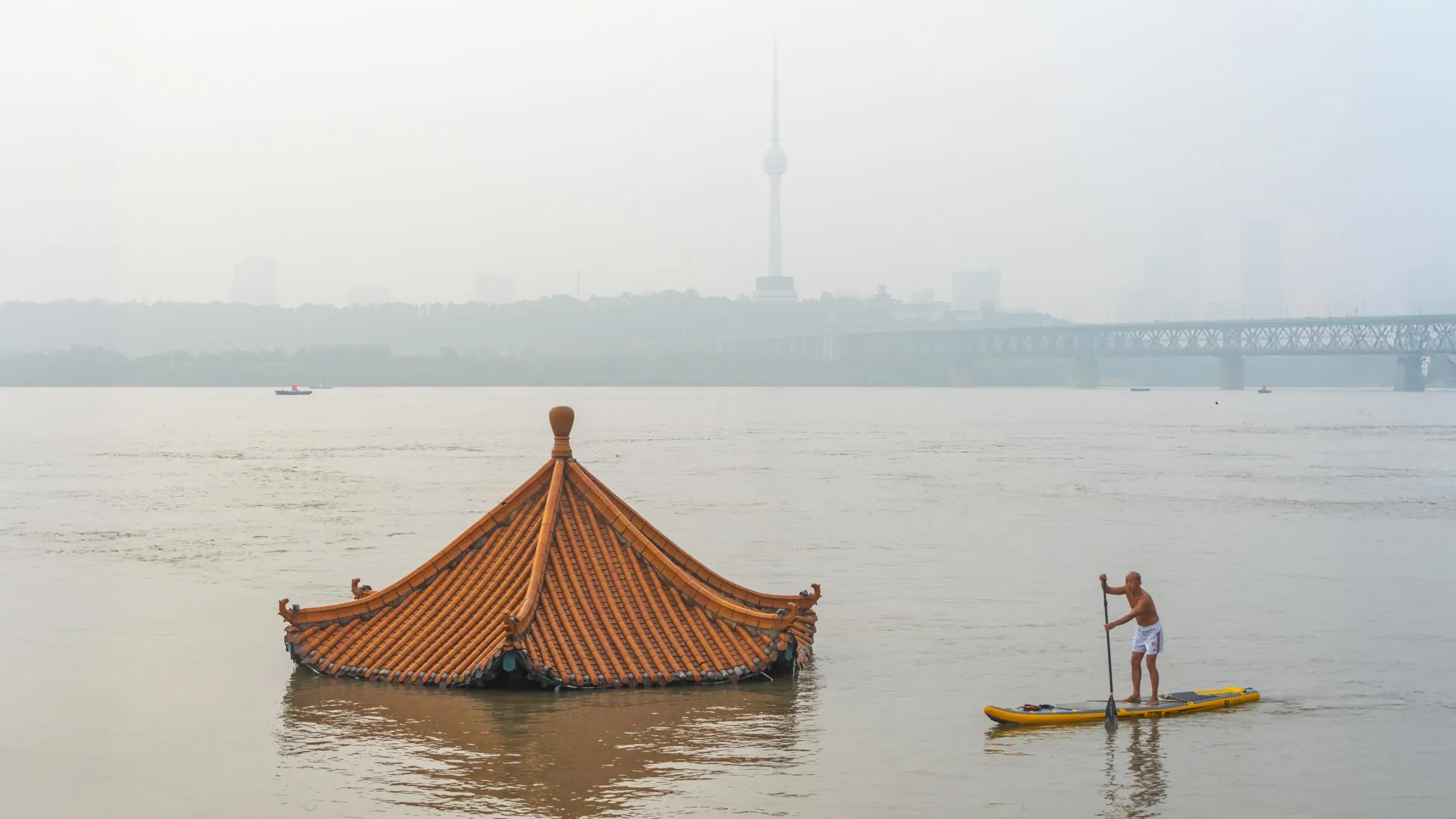

Sea Levels Are Rising Faster Than in 4,000 Years
Scientists have found that modern sea level rise is accelerating faster than at any time in the past 4,000 years, and China’s coastal megacities are among the most at risk. Credit: Shutterstock

A team of scientists led by Rutgers University researchers has found that sea levels today are climbing more quickly than at any time in the past 4,000 years, with China’s coastal cities facing some of the most severe risks.

To uncover this trend, the researchers analyzed thousands of geological records from natural indicators such as ancient coral reefs and mangrove formations. These environments preserve long-term evidence of past sea levels. Using this data, the team reconstructed ocean changes stretching back almost 12,000 years to the start of the Holocene epoch, which began after the last major ice age.

Fastest Rate of Rise Since 1900

Published in Nature, the study reports that global sea levels have risen by an average of 1.5 millimeters (about one-sixteenth of an inch) per year since 1900. This pace is faster than any century-long period recorded in the last four millennia.

“The global mean sea level rise rate since 1900 is the fastest rate over at least the last four millennia,” said Yucheng Lin, who conducted the research as a postdoctoral associate at Rutgers and is a scientist at Australia’s national research agency, the Commonwealth Scientific and Industrial Research Organization in Hobart.

Lin worked under the guidance of Robert Kopp, a Distinguished Professor in the Department of Earth and Planetary Sciences at Rutgers. “Dr. Lin’s work illustrates how geological data can help us better understand the hazards that coastal cities face today,” said Kopp, who also authored the study.

What’s Driving the Acceleration

According to Lin, two main processes are responsible for today’s rapid sea level rise: thermal expansion and melting ice. As climate change warms the planet, oceans absorb heat, causing the water to expand. At the same time, melting glaciers and ice sheets in Greenland and Antarctica add vast amounts of water to the seas.

“Getting warmer makes your ocean take up more volume,” Lin said. “And the glaciers respond faster because they are smaller than the ice sheets, which are often the size of continents. We are seeing more and more acceleration in Greenland now.”

China’s Coastal Cities Face a Double Threat

While sea level rise is a global concern, China faces a particularly dangerous combination of natural and human factors. Many of its largest cities — including Shanghai, Shenzhen and Hong Kong — sit in delta regions made of soft, water-saturated sediment that naturally sinks over time.

Human activities have accelerated this sinking.

“We’ve been able to quantify the natural rate of sea level rise for this area,” Lin said. “But human intervention, mostly groundwater extraction, makes it happen much faster.”

Subsidence, the gradual sinking or settling of the Earth’s surface, can occur through natural geological changes or from human-driven causes such as overuse of groundwater.

Delta Regions Under Pressure

To assess the risk to China’s deltas, the researchers combined geological records, measurements of land subsidence, and data on human impacts. They focused on the Yangtze River Delta and Pearl River Delta, two areas that are home to several megacities and key industrial zones.

In Shanghai, parts of the city sank more than one meter (around three feet) during the 20th century because of extensive groundwater pumping, Lin said. That rate is vastly higher than the current global average for sea level rise.

Delta regions are naturally flat and fertile, making them ideal for farming, transport, and urban development. But those same features make them exceptionally vulnerable to flooding.

“Centimeters of sea level rise will greatly increase the risk of flooding in deltas,” Lin said. “These areas are not only important domestically, they’re also international manufacturing hubs. If coastal risks happen there, the global supply chain will be vulnerable.”

Efforts to Slow the Sinking

Despite the alarming data, Lin noted that there are reasons for optimism. Some Chinese cities have begun taking effective steps to manage the problem. Shanghai, for example, has slowed its rate of subsidence by controlling groundwater extraction and reinjecting freshwater into underground aquifers.

“Shanghai now is not sinking that fast anymore,” Lin said. “They recognized the problem and started regulating their groundwater usage.”

The research team also created vulnerability maps to help local governments and city planners identify high-risk zones and prepare for future sea level rise.

A Global Lesson

Although the study focuses on China, its implications reach far beyond. Many major coastal cities, including New York, Jakarta and Manila, are built on low-lying plains and face similar threats.

“Deltas are great places, good for farming, fishing, urban development and naturally draw civilizations to them,” Lin said. “But they are really flat yet prone to human-caused subsidence, so sustained sea level rise could submerge them really fast.”

Modeling the Past to Protect the Future

The paper is an application of PaleoSTeHM, an open-source software framework for statistically modeling paleo-environmental data that Lin developed as a postdoctoral associate.

Praveen Kumar, a postdoctoral associate in the Department of Earth and Planetary Sciences, also contributed to the study.

The National Science Foundation and NASA supported the research.

CLICK HERE FOR MORE INFORMATION

https://www.sciencedaily.com/releases/2025/10/251023031627.htm

Arizona Cities Band Together to Fight for Colorado River Water

Last week, the Central Arizona Project (CAP) and more than 20 cities in Arizona announced that they were banding together to fight for their state’s share of the Colorado River. CAP delivers river water to Maricopa, Pinal, and Pima counties through a system more than 330 miles long. The effort by CAP and the cities, including Phoenix and Tucson, comes as Lake Mead, the largest reservoir in the country, was predicted by the federal Bureau of Reclamation to drop to its lowest level ever within two years.

Water flowing on the Colorado River near Moab, Utah. |  Credit: USGS 

The region has suffered drought for over 20 years, and is drying, or aridifying, because of climate change. A new study from the University of Colorado Boulder shows that human activity is playing a more intense and direct role in that aridification than previously thought. The Bureau announced on August 15 that Arizona, Nevada, as well as Mexico, will have their river allocations cut substantially for the third year in a row based upon the two-year prediction.

Arizona, along with California and Nevada are the three states in the Lower Basin of the River, and they have been negotiating with the Upper Basin states of Colorado, Utah, Wyoming, and New Mexico, to try to reach an agreement on how to cut allocations because of the shrinking water supply. Current agreements will expire at the end of next year.

The Upper Basin states say that the Lower Basin has used most of the river’s water, while those in the Upper Basin use three to four million acre-feet less than their apportionment every year. According to the Arizona Republic, Becky Mitchell, Colorado’s commissioner to the Upper Colorado River Commission, has said that the Upper Basin cannot be expected to cut back from its current uses to make up for climate change. Those in the Lower Basin argue that the water they use is essential for the nation’s agriculture, manufacturing, and families.

The coalition of Arizona cities and CAP say they need to act now because of overallocation and the unwillingness of some to protect the river’s future. Brenda Burman, the director of the CAP, told KJZZ that they will expand their coalition to include farms and other water users. She also said that California, Nevada, and Mexico have stepped up to cut their allocations, and that other water users must be part of the solution.

CLICK HERE FOR MORE INFORMATION

https://h2oradio.org

The Federal Climate Information Website Will No Longer Be Updated

In June, the Trump administration announced that the government’s 15-year-old website, climate.gov, which was the primary source of information about climate change and science, would no longer be updated. Links to the old site redirect viewers to an address at the National Oceanic and Atmospheric Administration (NOAA). As of 2021, the old website was receiving 900,000 visits per month and was a trusted source of information about the climate, according to NPR. The jobs of those who authored stories, created photos, and designed materials were eliminated.

Climate change effects include wildfire, ocean acidification, desertification, and coastal flooding caused by storms and sea level rise. |  Credit: CalFire

However, as the Guardian reports, a group of climate communications experts is rebuilding the climate.gov content at climate.us through a new nonprofit. The organization will offer services about climate to others such as local governments that are trying to adapt to global warming. The website is in development, and the organization has a presence on social media accounts like BlueSky and Facebook

According to Rebecca Lindsey, who was the managing editor of the government’s old site, the new entity includes several of her former federal colleagues, many of whom are grieving over losing not only a job but also a vocation. Lindsey added that there is a need for content that helps people develop climate literacy. Being outside of government gives the new group new opportunities to have fun by using platforms like TikTok.

The organization has launched a crowdfunding effort and hopes to get more permanent operating support from a foundation. Lindsey said that all of the climate information released prior to July 1 is still up on a government site, but you have to know where to look for it.

Meanwhile, the National Weather Service is trying to rapidly hire 450 people, including some meteorologists to fill jobs that were cut by DOGE, or the Department of Government Efficiency. Hundreds of forecasters were cut at NOAA after Trump took office, and there were warnings that there could be dangerous consequences if weather predictions were slowed.

However, applicants for the new meteorologist positions are being asked how they would promote Trump’s agenda by identifying one or two of his executive orders that they find significant, and how they would implement them if hired. Some experts are alarmed that the ideology of a potential weather forecaster could be considered. One told the Associated Press that he questioned whether forecasts would be made better based upon someone’s ideology.

CLICK HERE FOR MORE INFORMATION

https://h2oradio.org

The Polluted Tijuana River Is Polluting the Air in San Diego

Some people who reside in the southern portion of San Diego County, California, say it stinks to live there. Literally. For years, residents have complained that odors emanating from the polluted Tijuana River, which flows from Mexico into the U.S. toward the Pacific Ocean, are causing eye, nose and throat irritation, respiratory problems, fatigue, and headaches.

A new study shows that turbulence in polluted waters of the Tijuana River transfers contaminants to the air. In this photo, culverts at the Saturn Boulevard river crossing generate high turbulence, enhancing the transfer of toxic wastewater pollutants. The location was identified by members of the local community as a source of particularly strong odors.  |  Credit: Beatriz Klimeck / UC San Diego

Now, a new study from scientists at UC, San Diego Scripps Institution of Oceanography; UC, Riverside; San Diego State University; the National Science Foundation; and National Center for Atmospheric Research (NCAR) says the residents are not imagining things. The research found that the contaminated river is contaminating the air—releasing large quantities of the toxic gas hydrogen sulfide—commonly known as “sewer gas” because of its rotten egg smell.

In September 2024, the team had set up air quality monitors in San Diego’s Nestor community in the South Bay. One location was where water tumbles from a culvert, which as it falls, creates enough turbulence to send aerosolized particles of pollutants from the river into the air.

The scientists measured peak concentrations of hydrogen sulfide that were some 4,500 times what is typical for an urban area. In addition, they identified hundreds of other gases released into the air by the river and its ocean outflow, showing for the first time, a direct link between poor water quality and bad air quality—a connection lead investigator Kimberly Prather says had not been made before.

Untreated sewage and industrial waste have plagued the Tijuana River for decades, causing long-term closures of beaches. In July, the U.S. and Mexico signed a memorandum of understanding that requires both nations to expedite stormwater and sewage infrastructure projects on each side of the border.  

Last week, EPA announced the completion of a ten-million-gallon-per-day expansion of the South Bay International Wastewater Treatment Plant in San Diego, which could help mitigate the issue, but as inewsource reports, it’s unclear as to when it will be operating at its new capacity.

The paper was published in the journal Science.

CLICK HERE FOR MORE INFORMATION

https://h2oradio.org

The Seventh of Nine Planetary Boundaries Has Been Breached

While the UN was discussing climate change at the General Assembly, a new report showed that seven out of nine critical limits for Earth’s health have now been passed.

Bleached staghorn coral in the Great Barrier Reef  |  Credit: Matt Kieffer/Creative Commons

The Planetary Boundaries Science Lab at the Potsdam Institute for Climate Impact Research revealed that last year, ocean acidification had breached a boundary for the first time. The increasing acidity of the ocean is caused by the absorption of excess CO2 from the atmosphere, which they said was driven mainly by burning fossil fuels made worse by deforestation. 

Acidification makes it harder for organisms like oysters and corals to build their shells or skeletons, disrupting marine ecosystems and potentially affecting food security and coastal protection. Corals, both in cold water and in the tropics are at risk, as are Arctic environments. 

Currently, the institute says there are only two planetary boundaries that are within safe limits—air pollutants and the ozone layer in the stratosphere—successes they attribute to international action on aerosol emissions, although parts of the world, such as South and East Asia, and parts of Africa and Latin America, are still experiencing dangerous particulate pollution.

The other boundaries that have been breached are climate shifts in temperature and weather patterns, changes in land systems like deforestation, freshwater use, biosphere functioning and resilience, biogeochemical flows such as water or nitrogen cycles, and novel entities like chemicals and microplastics.

CLICK HERE FOR MORE INFORMATION

https://h2oradio.org

Heat Waves Are Becoming More Frequent and Intense in Rivers

Heat waves are becoming more frequent and intense across the U.S., so perhaps this summer you took a dip in a river to cool off. However, according to new research it might not have been as refreshing as it once was. 

Credit: Dillon Groves/Unsplash

new study from Penn State found that heat waves are happening in rivers too, and they’re accelerating faster than and lasting nearly twice as long as the heat waves in the air. It’s a surprising finding, given that many rivers are fed by snowmelt and underground streams, but the team found that periods of abnormally high temperatures in rivers are becoming more common, more intense, and longer-lasting than they were 40 years ago. Lead author Li Li (李黎) wrote in The Conversation that the increased heat puts stress on aquatic ecosystems and can also raise the cost of treating drinking water. 

The team collected river data at nearly 1,500 sites in the contiguous United States between 1980 and 2022. They found that temperatures rose above 59 °F (15 °C)—a threshold that can stress many species—at 82 percent of study areas for an average of 11.6 days per year. The places where the waters warmed the fastest were in the Northeast, the Rocky Mountains, and Appalachia.

The authors say climate change is driving river heat waves, as rising air temperatures affect water conditions. Changing precipitation patterns with global warming are shrinking winter snowpacks, leaving less meltwater to support river health. Low, slow-moving water warms more easily and holds less oxygen, creating dangerous conditions for aquatic life and increasing the chances of large-scale die-offs. The study adds that human activities, such as dams and agriculture, play a secondary role in shaping how and where rivers are most vulnerable to these impacts.

The study was published in the journal Proceedings of the National Academy of Sciences (PNAS).

CLICK HERE FOR MORE INFORMATION

https://h2oradio.org/this-week-in-water/your-dogs-carbon-paw-print

Alaska’s Salmon River Once Ran Pure and Clear. Now, It’s Orange Because of Climate Change.

In 1977, author John McPhee wrote his nonfiction classic “Coming into the Country.” It describes how he and a group of men canoed the Salmon River in the Brooks Range of Alaska to assess its potential for Wild and Scenic status—a designation that would provide long-term federal protection. On their trip, they found abundant Arctic grayling (Thymallus arcticus), chum salmon (Oncorhynchus keta)—and as McPhee writes, “the clearest, purest water I have ever seen flowing over rocks,” which allowed them to “see down 15 feet in pools.”

In Alaska’s Brooks Range, rivers once clear enough to drink from now run orange and hazy with toxic metals.  |  Credit: Taylor Roades

Not anymore. These days, the Salmon River runs orange—contaminated with toxic metals. Not because of acid mine drainage—although the water has the same ocher color—but because of climate change. According to new research from the University of California, Riverside, permafrost—the frozen Arctic soil that has locked away minerals for thousands of years—is beginning to thaw with a warming planet. As it thaws, water and oxygen creep into the exposed soil, triggering the breakdown of sulfide-rich rocks and creating sulfuric acid that leaches naturally occurring metals like iron, cadmium, and aluminum from rocks into the river, which poisons fish and damages ecosystems. 

According to a press release, the team’s analysis confirmed that thawing permafrost was unleashing geochemical reactions that oxidize sulfide-rich rocks like pyrite, generating acidity and mobilizing a wide suite of metals, including cadmium, which accumulates in fish organs and could affect animals like bears and birds that eat fish. The authors say that levels for several of the metals exceed EPA toxicity thresholds for aquatic life. Additionally, the cloudy water reduces the amount of light reaching the bottom of the river and smothers insect larvae that salmon and other fish eat.

According to the study, the Salmon River is not alone. A recent inventory in the same mountain range identified 75 streams that have recently turned orange and turbid. The authors say it’s likely happening across the Arctic. Wherever there’s the right kind of rock and thawing permafrost, the process can start. Unfortunately, co-author, Tim Lyons, said once it starts, it can’t be stopped, calling it “another irreversible shift driven by a warming planet.”

The study was published in the Proceedings of the National Academy of Sciences.

CLICK HERE FOR MORE INFORMATION

https://h2oradio.org/this-week-in-water/a-high-five-for-the-high-seas

Experts Say Urgent Action to Cut Water Use Is Needed in the Colorado River Basin

According to experts, water policy makers and water users in the Colorado River Basin need to get their acts together to substantially cut amounts they take from the river.

At Lees Ferry where river trips, both recreational and scientific, launch.  |  Credit: public domain

In a new analysis, six experts—Jack Schmidt, Anne Castle, John Fleck, Eric Kuhn, Kathryn Sorensen, and Katherine Tara—released a report saying that immediate action is needed, especially if this dry year is repeated next year. They estimate that consumptive use will exceed the flow of the river by no less than 3.6 million-acre feet, and the two main reservoirs, Lake Mead and Lake Powell, would absorb the bulk of that shortfall, causing them to be depleted and reduced to dangerous levels. Last winter’s snowpack was miserable, and the forecast for the coming season is for less precipitation and warmer temperatures.

However, leaders in the Upper Basin states of Colorado, Utah, New Mexico, and Wyoming, have been unable to agree with their lower basin neighbors of California, Arizona, and Nevada on how to cut water usage along the river.  The two basins have been discussing how to allocate the shortages when the current rules expire next year. The experts who wrote the report are urging the federal government to impose cutbacks along the river, according to the Los Angeles Times.

The animosity between the Upper and Lower Basins appears to have torpedoed the Trump administration’s nomination of Ted Cooke to be the commissioner of the Bureau of Reclamation charged with managing the river. Cooke had been a water manager in Arizona for more than 20 years, which was viewed as disturbing in the Upper Basin states, and would make him biased in favor of the Lower Basin, according to KUNC. 

The White House asked him to withdraw his nomination, which he told the Las Vegas Review-Journal, was based on vitriol the likes of which he had never seen. He said that officials from Colorado, Utah, Wyoming, and New Mexico had urged members of Congress to oppose his nomination.

CLICK HERE FOR MORE INFORMATION

https://h2oradio.org/this-week-in-water/a-high-five-for-the-high-seas

The UN High Seas Treaty, Now Ratified by 60 Countries, Will Become Law

In good news last week, Morocco and Sierra Leone ratified the High Seas Treaty that seeks to protect marine biodiversity in international waters—those beyond the jurisdiction of any country. The two nations put the treaty over the top of the 60 needed to bring it into effect under international law. The agreement covers about two-thirds of the oceans and addresses ongoing threats like plastic pollution, overfishing, as well as climate change, which is warming waters and threatening species. The high seas are also endangered by deep-sea mining.  

Mother and baby sperm whale  |  Credit: Gabriel Barathieu/Creative Commons

The High Seas Treaty is part of the goal to protect 30 percent of Earth’s land and seas by 2030, the so-called “30×30 target.” Among other goals, the intent of the agreement is to protect whales, sharks, tuna, corals, and many more species. The treaty also establishes a framework for sharing proceeds of resources generated from biodiversity in the oceans, like genetic material from marine organisms that could be used for medicines and cosmetics among other applications.  

The U.S. and China have not yet formally ratified the treaty. The Biden administration signed it, but since Trump took office, the country has not been involved. Earlier this year, Trump signed an order allowing the federal government to issue deep-sea mining permits that many other countries said would violate an older treaty.

Even though enough countries have ratified the treaty, the methods to implement it may be harder to enact. Each nation will have to regulate its own ships and companies. There will not be an international enforcement agency.

CLICK HERE FOR MORE INFORMATION

https://h2oradio.org/this-week-in-water/a-high-five-for-the-high-seas

EPA Is Moving to Allow the Twice-Banned Herbicide Dicamba in Agriculture

Dicamba is a herbicide that was twice banned by the courts, but now Trump’s EPA wants to put it back on the list of chemicals allowed for agricultural use. If the agency is successful at reregistering the weedkiller, then it would be allowed on soybean and cotton fields. 

Pesticides being sprayed on a soybean field in Iowa.  |  Credit: Eric Hawbaker, Blue Collar Ag, Riceville, IA/USGS

In 2020, environmental organizations sued the EPA to stop allowing the use of dicamba because, when it’s applied, it can drift and harm neighboring farms, communities, and ecosystems. A federal appeals court found against the EPA, ruling that it had understated the amount of damage from the herbicide and that its use would tear at the social fabric of farming communities. Then, the agency tried again to register dicamba, but another court prohibited its sale.

Now, the EPA plans to require practices that it says will minimize the impact on certain species and the environment, according to its website. The action was praised by the American Soybean Association, according to the Washington Post. A spokesperson for the Center for Food Safety said in a statement that allowing the chemical will decimate not only farmers and residents of rural America but also natural areas like wildlife refuges.

CLICK HERE FOR MORE INFORMATION

https://h2oradio.org/this-week-in-water/watering-down-water-protections