by
1
Department of Business & Management, Colorado State University Global, Denver, CO 80202, USA
2
School of Mechanical and Mechatronic Engineering, University of Technology Sydney, Ultimo, NSW 2007, Australia
3
Miyan Research Institute, International University of Business Agriculture and Technology, Uttara, Dhaka 1230, Bangladesh
4
Department of Mathematics, University of Dhaka, Dhaka 1000, Bangladesh
*
Author to whom correspondence should be addressed.
Microplastics 2025, 4(2), 24; https://doi.org/10.3390/microplastics4020024
Submission received: 8 January 2025 / Revised: 7 April 2025 / Accepted: 13 April 2025 / Published: 7 May 2025
Abstract
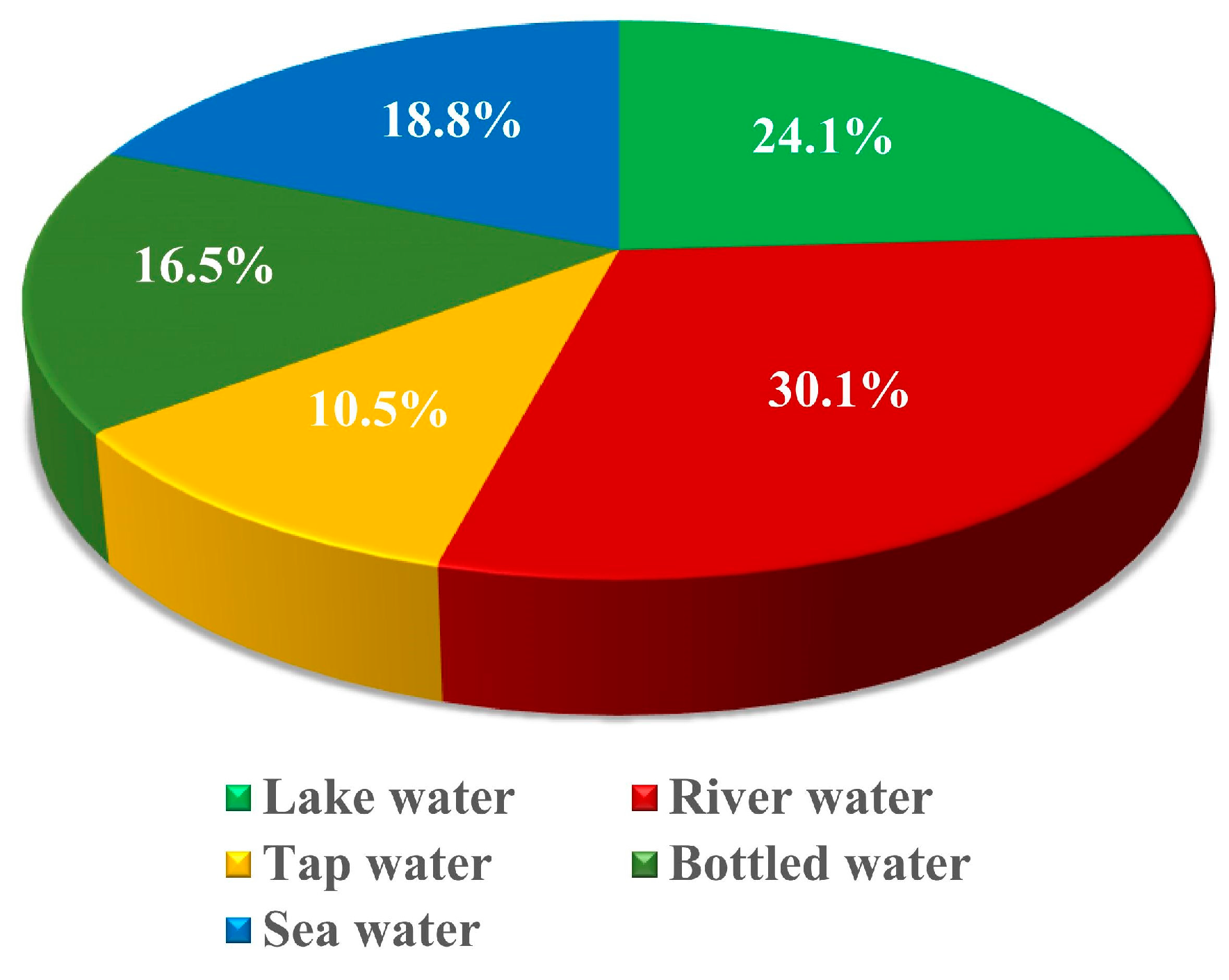
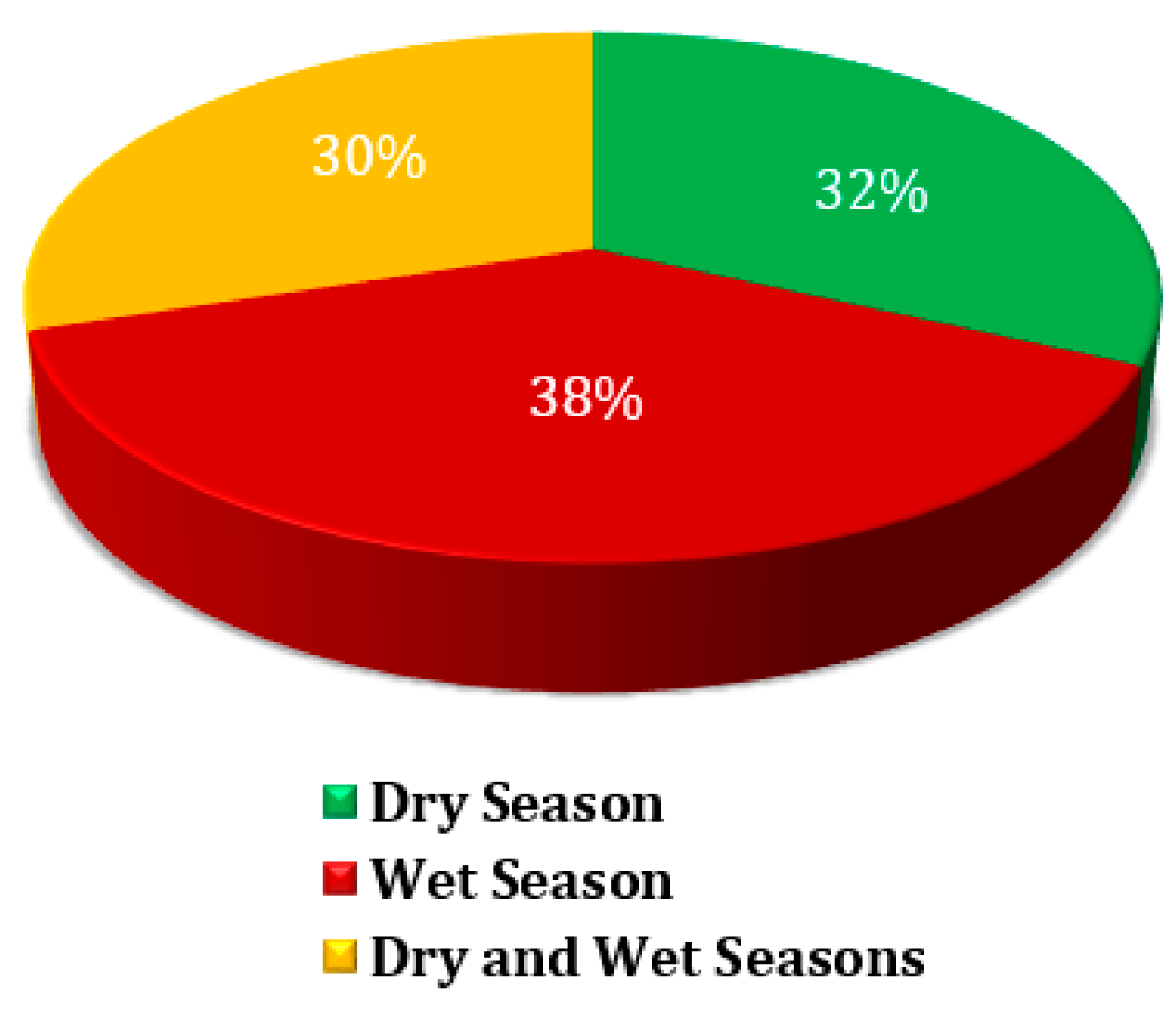
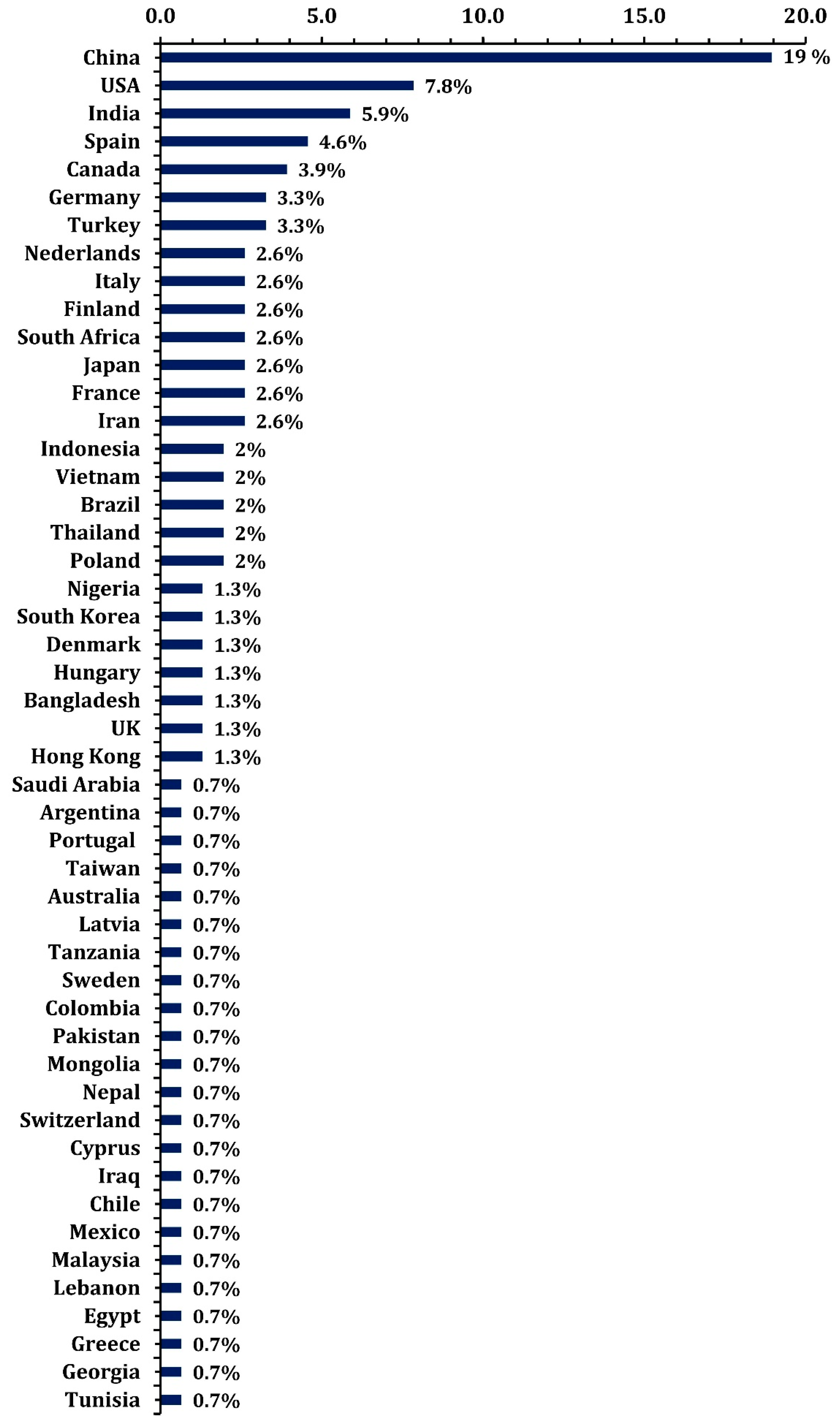
Microplastics (MPs), defined as plastic particles smaller than 5 mm, are an emerging global environmental and health concern due to their pervasive presence in aquatic ecosystems. This systematic review synthesizes data on the distribution, shapes, materials, and sizes of MPs in various water sources, including lakes, rivers, seas, tap water, and bottled water, between 2014 and 2024. Results reveal that river water constitutes the largest share of studies on MP pollution (30%), followed by lake water (24%), sea water (19%), bottled water (17%), and tap water (11%), reflecting their critical roles in MP transport and accumulation. Seasonal analysis indicates that MP concentrations peak in the wet season (38%), followed by the dry (32%) and transitional (30%) seasons. Spatially, China leads MP research globally (19%), followed by the USA (7.8%) and India (5.9%). MPs are predominantly composed of polyethylene (PE), polypropylene (PP), and polyethylene terephthalate (PET), with fibers and fragments being the most common shapes. Sub-millimeter MPs (<1 mm) dominate globally, with significant variations driven by anthropogenic activities, industrial discharge, and environmental factors such as rainfall and temperature. The study highlights critical gaps in understanding the long-term ecological and health impacts of MPs, emphasizing the need for standardized methodologies, improved waste management, and innovative mitigation strategies. This review underscores the urgency of addressing microplastic pollution through global collaboration and stricter regulatory measures.
Keywords:
microplastics; pollution; environment; freshwater; public health; mitigation strategies; tap and bottled water
CLICK HERE TO READ MORE
 GET WET!