New research reveals what’s really hiding in bottled water

Scientists estimate that bottled water drinkers swallow up to 90,000 more microplastic particles per year than those who stick to tap water.

Source:Concordia University

Summary:A chance encounter with plastic waste on a tropical beach sparked a deep investigation into what those fragments mean for human health. The research reveals that bottled water isn’t as pure as it seems—each sip may contain invisible microplastics that can slip through the body’s defenses and lodge in vital organs. These tiny pollutants are linked to inflammation, hormonal disruption, and even neurological damage, yet remain dangerously understudied.Share:


FULL STORY

What’s Really Hiding in Bottled Water
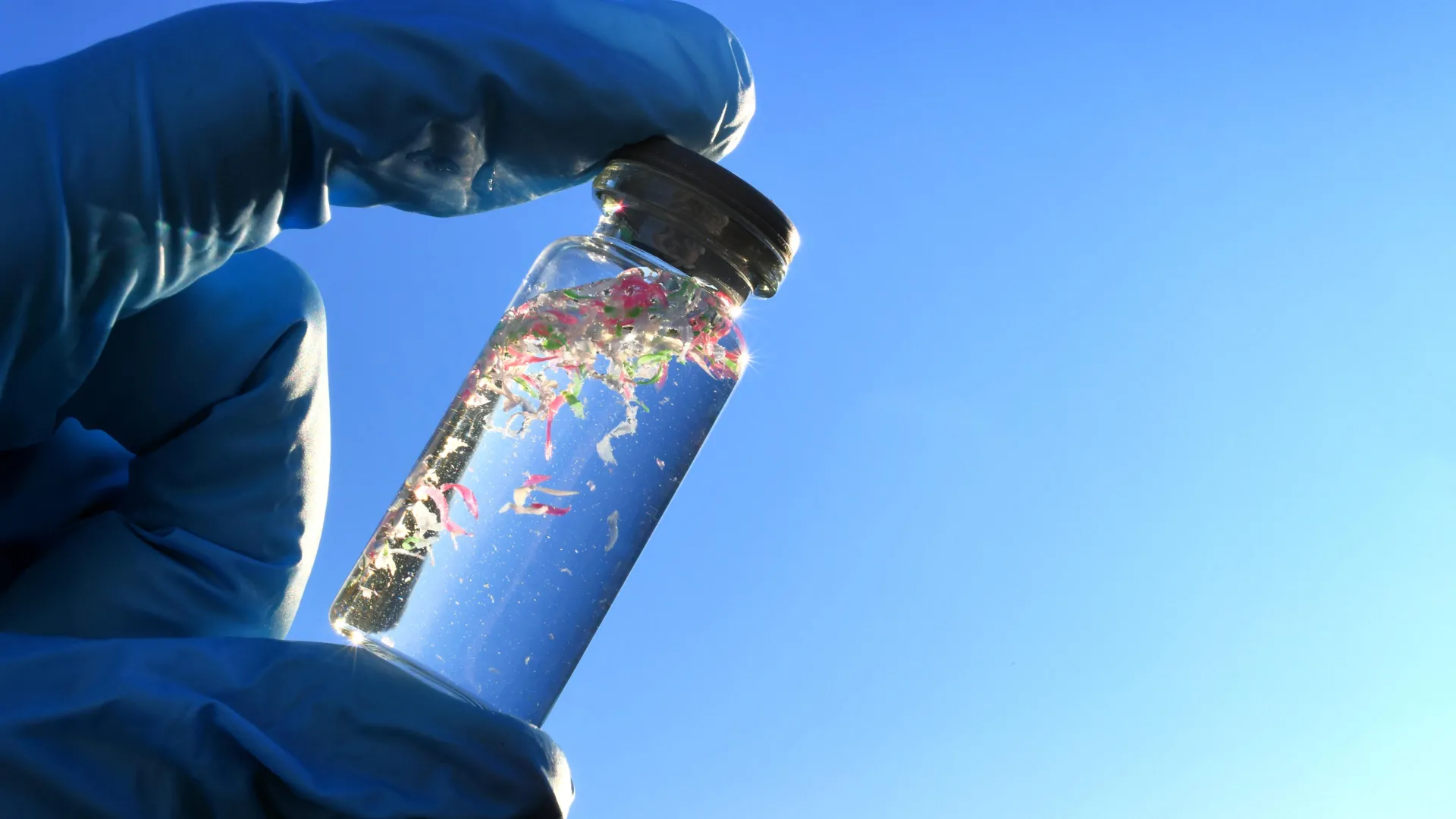
Recent research has revealed that people may be unknowingly ingesting tens of thousands of microplastic particles every year. On average, individuals consume between 39,000 and 52,000 particles annually, with bottled water drinkers taking in an additional 90,000 microplastic fragments compared to those who drink tap water. Credit: Shutterstock

Thailand’s Phi Phi Islands are known for their crystal-clear waters and white sand, not for launching advanced scientific research. Yet for one environmental scientist, the contrast between natural beauty and pollution sparked a major career shift from business to environmental science.

“I was standing there looking out at this gorgeous view of the Andaman Sea, and then I looked down and beneath my feet were all these pieces of plastic, most of them water bottles,” she says.

“I’ve always had a passion for waste reduction, but I realized that this was a problem with consumption.”

Armed with years of experience as co-founder of ERA Environmental Management Solutions, a company specializing in environmental, health and safety software, she returned to Concordia University to pursue a PhD on plastic waste. Her recent paper in the Journal of Hazardous Materials explores how single-use plastic water bottles pose potential health risks that remain largely overlooked in scientific research.

Hidden Hazards of Bottled Water

In an extensive review of more than 140 studies, the research reveals that people consume between 39,000 and 52,000 microplastic particles every year, and those who drink bottled water take in roughly 90,000 more than tap water users.

These microplastics are tiny fragments, often invisible to the eye. A typical particle measures between one micron (a thousandth of a millimeter) and five millimeters, while nanoplastics are even smaller. The contamination begins during manufacturing, transportation, and storage, when low-quality plastics release microscopic fragments — especially when exposed to sunlight and fluctuating temperatures. Unlike microplastics from food sources, those in bottled water are ingested directly.

Inside the Human Body

Once consumed, these particles can travel throughout the body. Studies indicate that microplastics can cross biological barriers, enter the bloodstream, and accumulate in organs. This may cause chronic inflammation, oxidative stress, hormonal disruption, reproductive impairment, neurological issues, and even some cancers. However, the long-term impact remains uncertain due to limited standardized testing and measurement techniques.

The researcher highlights that current detection tools vary in precision and capability. Some methods can spot smaller particles but cannot identify their composition, while others analyze chemical makeup but miss the tiniest plastics. The most advanced systems are both expensive and difficult to access, hindering consistent global study.

Rethinking Plastic Use Through Education

Despite growing environmental laws aimed at reducing plastic pollution, most regulations target items like shopping bags, straws, and packaging. Single-use water bottles often escape similar scrutiny.

“Education is the most important action we can take,” she says. “Drinking water from plastic bottles is fine in an emergency but it is not something that should be used in daily life. People need to understand that the issue is not acute toxicity — it is chronic toxicity.”

Chunjiang An, associate professor, and Zhi Chen, professor, in the Department of Building, Civil and Environmental Engineering at the Gina Cody School of Engineering and Computer Science contributed to this paper.

This research was supported by the Natural Sciences and Engineering Research Council of Canada and Concordia University.

CLICK HERE FOR MORE INFORMATION

https://www.sciencedaily.com/releases/2025/10/251006051131.htm
New research reveals what’s really hiding in bottled water

Scientists estimate that bottled water drinkers swallow up to 90,000 more microplastic particles per year than those who stick to tap water.

Source:Concordia University

Summary:A chance encounter with plastic waste on a tropical beach sparked a deep investigation into what those fragments mean for human health. The research reveals that bottled water isn’t as pure as it seems—each sip may contain invisible microplastics that can slip through the body’s defenses and lodge in vital organs. These tiny pollutants are linked to inflammation, hormonal disruption, and even neurological damage, yet remain dangerously understudied.Share:


FULL STORY


What’s Really Hiding in Bottled Water
Recent research has revealed that people may be unknowingly ingesting tens of thousands of microplastic particles every year. On average, individuals consume between 39,000 and 52,000 particles annually, with bottled water drinkers taking in an additional 90,000 microplastic fragments compared to those who drink tap water. Credit: Shutterstock

Thailand’s Phi Phi Islands are known for their crystal-clear waters and white sand, not for launching advanced scientific research. Yet for one environmental scientist, the contrast between natural beauty and pollution sparked a major career shift from business to environmental science.

“I was standing there looking out at this gorgeous view of the Andaman Sea, and then I looked down and beneath my feet were all these pieces of plastic, most of them water bottles,” she says.

“I’ve always had a passion for waste reduction, but I realized that this was a problem with consumption.”

Armed with years of experience as co-founder of ERA Environmental Management Solutions, a company specializing in environmental, health and safety software, she returned to Concordia University to pursue a PhD on plastic waste. Her recent paper in the Journal of Hazardous Materials explores how single-use plastic water bottles pose potential health risks that remain largely overlooked in scientific research.

Hidden Hazards of Bottled Water

In an extensive review of more than 140 studies, the research reveals that people consume between 39,000 and 52,000 microplastic particles every year, and those who drink bottled water take in roughly 90,000 more than tap water users.

These microplastics are tiny fragments, often invisible to the eye. A typical particle measures between one micron (a thousandth of a millimeter) and five millimeters, while nanoplastics are even smaller. The contamination begins during manufacturing, transportation, and storage, when low-quality plastics release microscopic fragments — especially when exposed to sunlight and fluctuating temperatures. Unlike microplastics from food sources, those in bottled water are ingested directly.

Inside the Human Body

Once consumed, these particles can travel throughout the body. Studies indicate that microplastics can cross biological barriers, enter the bloodstream, and accumulate in organs. This may cause chronic inflammation, oxidative stress, hormonal disruption, reproductive impairment, neurological issues, and even some cancers. However, the long-term impact remains uncertain due to limited standardized testing and measurement techniques.

The researcher highlights that current detection tools vary in precision and capability. Some methods can spot smaller particles but cannot identify their composition, while others analyze chemical makeup but miss the tiniest plastics. The most advanced systems are both expensive and difficult to access, hindering consistent global study.

Rethinking Plastic Use Through Education

Despite growing environmental laws aimed at reducing plastic pollution, most regulations target items like shopping bags, straws, and packaging. Single-use water bottles often escape similar scrutiny.

“Education is the most important action we can take,” she says. “Drinking water from plastic bottles is fine in an emergency but it is not something that should be used in daily life. People need to understand that the issue is not acute toxicity — it is chronic toxicity.”

Chunjiang An, associate professor, and Zhi Chen, professor, in the Department of Building, Civil and Environmental Engineering at the Gina Cody School of Engineering and Computer Science contributed to this paper.

This research was supported by the Natural Sciences and Engineering Research Council of Canada and Concordia University.

CLICK HERE FOR MORE INFORMATION

https://www.sciencedaily.com/releases/2025/10/251006051131.htm

New research reveals what’s really hiding in bottled water

Scientists estimate that bottled water drinkers swallow up to 90,000 more microplastic particles per year than those who stick to tap water.

Source:Concordia University

Summary:A chance encounter with plastic waste on a tropical beach sparked a deep investigation into what those fragments mean for human health. The research reveals that bottled water isn’t as pure as it seems—each sip may contain invisible microplastics that can slip through the body’s defenses and lodge in vital organs. These tiny pollutants are linked to inflammation, hormonal disruption, and even neurological damage, yet remain dangerously understudied.Share:


FULL STORY


What’s Really Hiding in Bottled Water
Recent research has revealed that people may be unknowingly ingesting tens of thousands of microplastic particles every year. On average, individuals consume between 39,000 and 52,000 particles annually, with bottled water drinkers taking in an additional 90,000 microplastic fragments compared to those who drink tap water. Credit: Shutterstock

Thailand’s Phi Phi Islands are known for their crystal-clear waters and white sand, not for launching advanced scientific research. Yet for one environmental scientist, the contrast between natural beauty and pollution sparked a major career shift from business to environmental science.

“I was standing there looking out at this gorgeous view of the Andaman Sea, and then I looked down and beneath my feet were all these pieces of plastic, most of them water bottles,” she says.

“I’ve always had a passion for waste reduction, but I realized that this was a problem with consumption.”

Armed with years of experience as co-founder of ERA Environmental Management Solutions, a company specializing in environmental, health and safety software, she returned to Concordia University to pursue a PhD on plastic waste. Her recent paper in the Journal of Hazardous Materials explores how single-use plastic water bottles pose potential health risks that remain largely overlooked in scientific research.

Hidden Hazards of Bottled Water

In an extensive review of more than 140 studies, the research reveals that people consume between 39,000 and 52,000 microplastic particles every year, and those who drink bottled water take in roughly 90,000 more than tap water users.

These microplastics are tiny fragments, often invisible to the eye. A typical particle measures between one micron (a thousandth of a millimeter) and five millimeters, while nanoplastics are even smaller. The contamination begins during manufacturing, transportation, and storage, when low-quality plastics release microscopic fragments — especially when exposed to sunlight and fluctuating temperatures. Unlike microplastics from food sources, those in bottled water are ingested directly.

Inside the Human Body

Once consumed, these particles can travel throughout the body. Studies indicate that microplastics can cross biological barriers, enter the bloodstream, and accumulate in organs. This may cause chronic inflammation, oxidative stress, hormonal disruption, reproductive impairment, neurological issues, and even some cancers. However, the long-term impact remains uncertain due to limited standardized testing and measurement techniques.

The researcher highlights that current detection tools vary in precision and capability. Some methods can spot smaller particles but cannot identify their composition, while others analyze chemical makeup but miss the tiniest plastics. The most advanced systems are both expensive and difficult to access, hindering consistent global study.

Rethinking Plastic Use Through Education

Despite growing environmental laws aimed at reducing plastic pollution, most regulations target items like shopping bags, straws, and packaging. Single-use water bottles often escape similar scrutiny.

“Education is the most important action we can take,” she says. “Drinking water from plastic bottles is fine in an emergency but it is not something that should be used in daily life. People need to understand that the issue is not acute toxicity — it is chronic toxicity.”

Chunjiang An, associate professor, and Zhi Chen, professor, in the Department of Building, Civil and Environmental Engineering at the Gina Cody School of Engineering and Computer Science contributed to this paper.

This research was supported by the Natural Sciences and Engineering Research Council of Canada and Concordia University.

CLICK HERE FOR MORE INFORMATION

https://www.sciencedaily.com/releases/2025/10/251006051131.htm?

Microplastics in drinking water: quantitative analysis of microplastics from source to tap by pyrolysis–gas chromatography-mass spectrometry

  • Research Article
  • Open access
  • Published: 05 November 2025

You have full access to thisopen accessarticle

Download PDF

Environmental Science and Pollution ResearchAims and scopeSubmit manuscript

Microplastics in drinking water: quantitative analysis of microplastics from source to tap by pyrolysis–gas chromatography-mass spectrometry

Download PDF

Abstract

The widespread presence of microplastics (MPs) in fresh surface water has raised concerns about potential human exposure through drinking water sourced from these environments. While MP research is advancing to understand the occurrence and fate of MPs in drinking water production systems, data based on mass concentration is scarce. This study assesses MP concentrations in the drinking water supply system of Amsterdam (the Netherlands) from source to tap, analyzing raw water from two freshwater sources (Lek Canal and Bethune Polder), treated water from two drinking water treatment plants (DWTPs) (Leiduin and Weesperkarspel DWTPs), and household tap water samples from the Amsterdam distribution area. MPs ≥ 0.7 µm were identified and quantified using pyrolysis gas chromatography-mass spectrometry (Py-GC–MS) targeting 6 high production volume polymers: polyethylene (PE), polyethylene terephthalate (PET), polymethyl methacrylate (PMMA) polypropylene (PP), polystyrene (PS), and polyvinyl chloride (PVC). Average MP concentrations in raw water samples were 50.6 ± 34.7 µg/L (n = 14) and 47.5 ± 33.7 µg/L (n = 14), while treated water samples exhibited significantly lower levels of 0.80 ± 0.44 µg/L (n = 12) and 1.65 ± 2.19 µg/L (n = 14), demonstrating high removal efficiencies of 97–98%. PE, PVC, and PET were the most abundant polymer types detected. Household tap water samples showed lower concentrations with an average of 0.21 ± 0.12 µg/L (n = 20). These findings highlight the effective removal of MPs during drinking water treatment processes while emphasizing the need for further research to understand the factors influencing MP transport and fate within water distribution networks.

CLICK HERE TO READ MORE

https://link.springer.com/article/10.1007/s11356-025-37130-8?

Harmful microplastics infiltrating drinking water

Wastewater treatment plants are still not effectively removing dangerous microplastics

Source:University of Texas at Arlington

Summary:Despite advances in wastewater treatment, tiny plastic particles called microplastics are still slipping through, posing potential health and environmental hazards, according to new research.Share:


FULL STORY


Despite advances in wastewater treatment, tiny plastic particles called microplastics are still slipping through, posing potential health and environmental hazards, according to new research from The University of Texas at Arlington.

Because plastic is inexpensive to produce yet lightweight and sturdy, manufacturers have found it ideal for use in nearly every consumer good, from food and beverage packaging to clothing and beauty products. The downside is that when a plastic item reaches the end of its useful life, it never truly disappears. Instead, it breaks down into smaller and smaller pieces called microplastics — particles five millimeters or less, about the width of a pencil eraser — that end up in our soil and water.

“What our systematic literature review found is that while most wastewater treatment facilities significantly reduce microplastics loads, complete removal remains unattainable with current technologies,” said Un-Jung Kim, assistant professor of earth and environmental sciences at UT Arlington and senior author of the study published in Science of the Total Environment.

“As a result, many microplastics are being reintroduced into the environment, likely transporting other residual harmful pollutants in wastewater, such the chemicals Bisphenols, PFAS and antibiotics,” Dr. Kim added. “These microplastics and organic pollutants would exist in trace level, but we can get exposure through simple actions like drinking water, doing laundry or watering plants, leading to potential long-term serious human health impacts such as cardiovascular disease and cancer.”

According to the study, one of the main challenges in detecting and mitigating microplastics is the lack of standardized testing methods. The researchers also call for a unified approach to define what size particle qualifies as a microplastic.

“We found that the effectiveness of treatments varies depending on the technology communities use and how microplastics are measured to calculate the removal rates,” said the study’s lead author, Jenny Kim Nguyen. “One way to better address the growing microplastics issue is to develop standardized testing methods that provide a clearer understanding of the issue.”

Nguyen began this research as an undergraduate student in Kim’s Environmental Chemistry Lab. She is now pursuing a master’s degree in earth and environmental sciences at UTA, where she is working to develop standardized experimental protocols for studying microplastics in air and water.

“This work helps us understand the current microplastics problem, so we can address its long-term health impacts and establish better mitigation efforts,” said Karthikraj Rajendiran, a co-author of the study and assistant professor of research from UTA’s Bone Muscle Research Center within the College of Nursing and Health Innovations.

The team also emphasizes the need for greater public awareness of microplastics to help consumers make more eco-friendly choices.

“While communities must take steps to improve microplastic detection and screening at the wastewater and water quality monitoring, consumers can already make a difference by choosing to buy clothing and textiles with less plastics whenever feasible, knowing that microfibers are the most common microplastic continually released through wastewater,” Kim added.

Funding for the project was provided by UTA’s Research Enhancement Program, which supports multidisciplinary researchers in launching new projects.

CLICK HERE FOR MORE INFORMATION

https://www.sciencedaily.com/releases/2025/04/250421162936.htm

Plastic particles in bottled water

Plastics are a part of our everyday lives, and plastic pollution is a growing concern. When plastics break down over time, they can form smaller particles called microplastics, which are 5 mm or less in length—smaller than a sesame seed. Microplastics, in turn, can break down into even smaller pieces called nanoplastics, which are less than 1 μm in size. Unable to be seen with the naked eye, these are small enough to enter the body’s cells and tissues.

Previous research has found evidence of plastic particles in human blood, lungs, gut, feces, and reproductive tissues like the placenta and testes. But the potential health effects of these tiny plastic bits are still unproven and unknown. The small size of nanoparticles has made them especially difficult to detect and study.

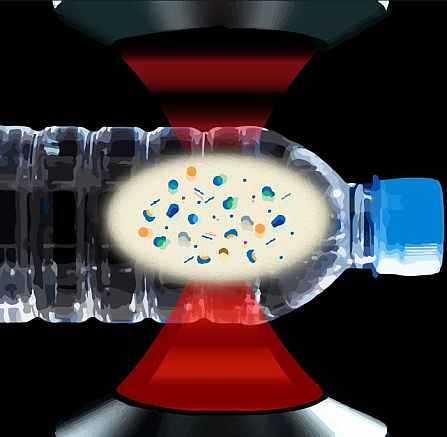
To gain more insight into nanoplastics, a research team led by Drs. Wei Min and Beizhan Yan of Columbia University modified a powerful imaging technique that Min co-invented 15 years ago with NIH support. The technique, called stimulated Raman scattering (SRS) microscopy, is now widely used to visualize small molecules in living cells. The method works by focusing two laser beams on samples to stimulate certain molecules to emit unique detectable light signals. Unlike many other methods, SRS microscopy does not depend on labeling specific molecules to find them.

For the new study, which was supported by NIH, the researchers developed a new SRS approach to detect micro- and nanoplastics at the single-particle level. After confirming that the technique could rapidly spot plastic particles smaller than 1 μm, they developed an algorithm based on machine learning to detect seven common types of plastic.

To test their new high-throughput imaging platform, the team analyzed the micro- and nanoplastics in three popular brands of bottled water. Results were reported on January 8, 2024, in the Proceedings of the National Academy of Sciences.

The researchers found that, on average, a liter of bottled water included about 240,000 tiny pieces of plastic. About 90% of these plastic fragments were nanoplastics. This total was 10 to 100 times more plastic particles than seen in earlier studies, which mostly focused on larger microplastics.

The water contained particles of all seven types of plastic. The most common was polyamide, a type of nylon that’s often used to help filter and purify water. An abundance of polyethylene terephthalate (PET) was also detected. This might be expected, since PET is used to make bottles for water, soda, and many other drinks and foods. Other identified plastics included polyvinyl chloride, polymethyl methacrylate, and polystyrene, which is also used in water purification. The method identified millions of additional particles that did not match the seven categories of plastic. It’s not yet clear if these tiny particles are nanoplastics or other substances.

The researchers say that this new technique will help to advance our understanding of human exposure to nanoplastics. “This opens a window where we can look into a plastic world that was not exposed to us before,” Yan says.

In the future, the researchers will apply this approach to analyze more environmental samples, such as tap water, indoor and outdoor air samples, and biological tissues. They are also developing filters that can reduce plastic pollution from laundry wastewater, since many fabrics include nylon, PET, and other plastics.

—by Vicki Contie

Related Links

References: Rapid single-particle chemical imaging of nanoplastics by SRS microscopy. Qian N, Gao X, Lang X, Deng H, Bratu TM, Chen Q, Stapleton P, Yan B, Min W. Proc Natl Acad Sci U S A. 2024 Jan 16;121(3):e2300582121. doi: 10.1073/pnas.2300582121. Epub 2024 Jan 8. PMID: 38190543.

Funding: NIH’s National Institute of Environmental Health Sciences (NIEHS); Research Initiatives in Science and Engineering of Columbia University; Hudson River Foundation.

CLICK HERE FOR MORE INFORMATION https://www.nih.gov/news-events/nih-research-matters/plastic-particles-bottled-water?