

GITTEMARY LEAVE A COMMENTON THE IMPACT OF PERFUME AND FRAGRANCES //A GOOD-SMELLING, DIRTY, INDUSTRY
We have used scents from nature to mask their body odour throughout the entirety of human history.
- Perfume comes from the Latin “per” meaning “through” and “fumum,” or “smoke.” Many ancient perfumes were made by extracting natural oils from plants through pressing and steaming. The oil was then burned to scent the air.
- The early Egyptians also perfumed their dead and often assigned specific fragrances to deities. Their word for perfume has been translated as “fragrance of the gods.”
- It is said that the prophet Mohammed wrote, “Perfumes are foods that reawaken the spirit.”
- The art of perfumery spread to Europe when 13th-century Crusaders brought back samples from Palestine to England, France, and Italy.
- France’s King Louis the 14th used it so much that he was called the “perfume king.” His court contained a floral pavilion filled with fragrances, and dried flowers were placed in bowls throughout the palace to freshen the air.
- It was at this time that Grasse, a region of southern France where many flowering plant varieties grow, became a leading producer of perfumes.
- It was not until the late 1800s, when synthetic chemicals were used, that perfumes could be mass-marketed. The first synthetic perfume was nitrobenzene, made from nitric acid and benzene. This synthetic mixture gave off an almond smell and was often used to scent soaps.
- Today, The United States is the world’s largest perfume market with annual sales totalling several billions of dollars.
Also check out: products that aren’t as sustainable as you think // toothtabs
Also check out: ZERO WASTE SKIN & HAIR CARE // an international list
How is perfume made?
Perfume contains natural ingredients like flowers, grasses, spices, fruit, wood, roots, resins, balsams, leaves, gums, and animal secretions. The oils from these ingredients are extracted and that’s where the scents are. These natural compounds are mixed with alcohol, petrochemicals, coal and coal tars. Some plants used in many perfumes, like Lily of the Valley, do not produce any oils naturally. It’s only about 2000 of the 250.000 flowering plants on earth that contain oil naturally. As such, those scents are not obtained through harvesting the flowers, those scents are created synthetically.
Synthetic ingredients are used more widely today because it makes the perfumers less dependent on harvest quality, weather and crop yield. Previously, perfumery was a very unstable craft because it was very hard to make several identical batches of essential oil. With synthetic ingredients made in a lab, perfumers can control the quality, thus wasting less product and using less natural materials. Today even scents that could be extracted from natural resources are recreated synthetically, to standardize the products.
Many perfumes also contain a fair amount of animal-derived products, some of which are pretty grim. Castor and vanillin are derived from beavers. Musk from male deer. Ambergris from the sperm whale. They enable the perfume to evaporate more slowly and emit the odour for longer. This can also be done using fossil fuel-derived compounds like tar, coal, resin and petrochemicals. But yeah, just know that if you’re smelling “natural vanilla aroma” it is probably extracted from the anal glands of a beaver.
Alcohol and water are used to dilute ingredients in perfumes, and it is the ratio of alcohol to scent that determines whether the perfume is “eau de toilette” (toilet water) or cologne.
Most full perfumes are made of about 10-20% perfume oils dissolved in alcohol and a trace of water. Colognes contain approximately 3-5% oil diluted in 80-90% alcohol, with water making up about 10%. Toilet water has the least amount—2% oil in 60-80% alcohol and 20% water.
- To make a perfume, you must first extract the ingredients, several methods are depending on what subject the scent is extracted from.
- A “nose”, which is a master perfumer blends the scents and develops the formula. It can take more than 800 different ingredients to make a perfume.
- A perfume consists of three notes, “notes de tete”, “notes de Coeur” and notes de fond”. The top notes are typically tangy or citrus-like, the central tones provide body to the scent and tend to be based on aromatic flowers, and the base tones create woody fragrances. But more notes and tones are used to create a unique formula, but that’s the gist of it
- When the perfume is blended it has to age, which can take months or years. [1]
Also check out: LOW WASTE COSMETICS // international list and recommendations
The natural ingredients
So there are two aspects of perfume we need to look at, first the natural ingredients, and then the synthetic ingredients. Now first of all, I am always sceptical if a product is heavily advertised as “natural”, because “natural” is not synonymous with “sustainable”, not at all actually. It is easy to fall into the trap of demonising everything synthetic while believing that everything natural is perfectly healthy. We need a little bit more nuanced than that.
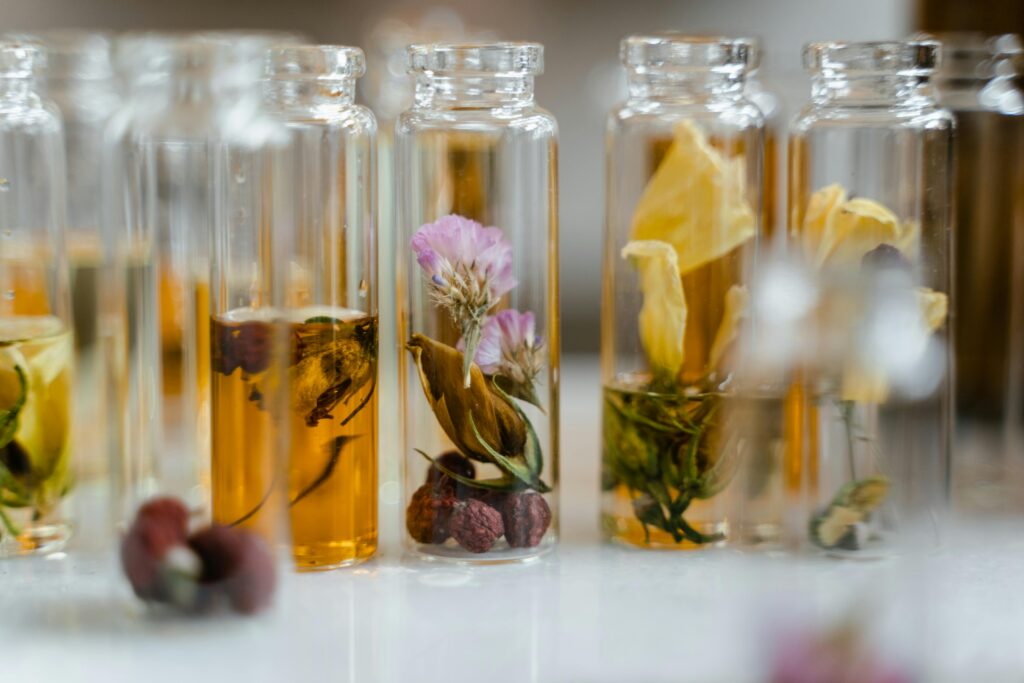
The natural ingredients in perfumes are essential oils, extracted from flowers, herbs, grass, wood and yeah, animals. But let’s zoom in on essential oils, the crack of 2016 zero waste households and almonds moms.
The amount of plant material required to produce a single bottle of essential oil can vary greatly depending on the plant type and the specific oil being produced as well as the method of extraction.
- 10,000lbs to create 1 lb of rose oil [2]
- 8,000 carefully hand-picked blossoms to produce 1 gram (about 1 ml.) of Jasmine oil [3]
- 1,000 pounds of orange blossoms to create 1lb of oil[4]
- 7 tons of Melissa leaves to create 1kg of Melissa oil [5]
- 1500 lemons to create 1 pound of lemon oil[6]
Essential oil production comes with various impact factors. Firstly, some oil is difficult to extract from the plant if the plant only provides small yields. Constantly planting vast amounts of the same plant, which is just a good-smelling mono-crop at this point, deprives the soil of nutrients, some farmers also use pesticides and insecticides, and essential oils derived from sap often means that the trees have to be cut down to extract enough, so we also have deforestation as a factor. This is not always the case, but when we’re looking at the industrial production.
Another issue is that many essential oils come from plants that are listed on the IUCN Red List of Threatened Species. For instance, rosewood and atlas cedarwood, two popular essential oils, are listed as endangered species. Listed as vulnerable, sandalwood’s population is also decreasing mainly because of illegal harvesting and overexploitation. In India and Indonesia, sandalwood has been so overharvested that it nearly went extinct.[7] While it remains a heavily used ingredient in many perfumes and fragrances.
Deforestation and mono-cultures make the environment and local ecosystems vulnerable and decrease biodiversity. I don’t think I have made one impact video where mono-crops have not been mentioned tbh. But that’s what happens when we mass produce anything. Even products marketed as natural and eco-friendly.
Also check out: LOW WASTE COSMETICS //The Impact of Makeup / what you need to know about the beauty industry
The synthetic ingredients
Using synthetic ingredients means that we won’t need millions and millions of flowers and herbs to produce a few drops of oil, so this much be better for the planet on all parameters, right? Right??.
Perfumes, colognes, deodorants, candles, air fresheners, cleaning products, soaps, shampoo, paints and detergents are the most frequently used scented products. And while I’ll try to close in on perfumes as much as possible, most of the studies about fragrances include the impact of all these scented products, so we’ll keep that in mind.
Perfumes and these products contain thousands of chemical compounds and the thing is, it is impossible to know which and how many. That’s because the composition of fragrances is usually kept secret to avoid other brands using the same formula, but it also means that consumers have virtually no idea what they are putting on their bodies. A fragrance or scented product contains thousands of different synthetic fragrance compounds of unknown origins, completely protected by intellectual property law.
The majority of fragrances today are made with synthetic chemicals with 4000 to 7000 compounds. On average, perfumed soaps contain between 30 and 150 fragrance ingredients, whereas scented cosmetics can contain between 200 and 500 fragrance ingredients, making it impossible to determine individual product impact.[8]
Water pollution
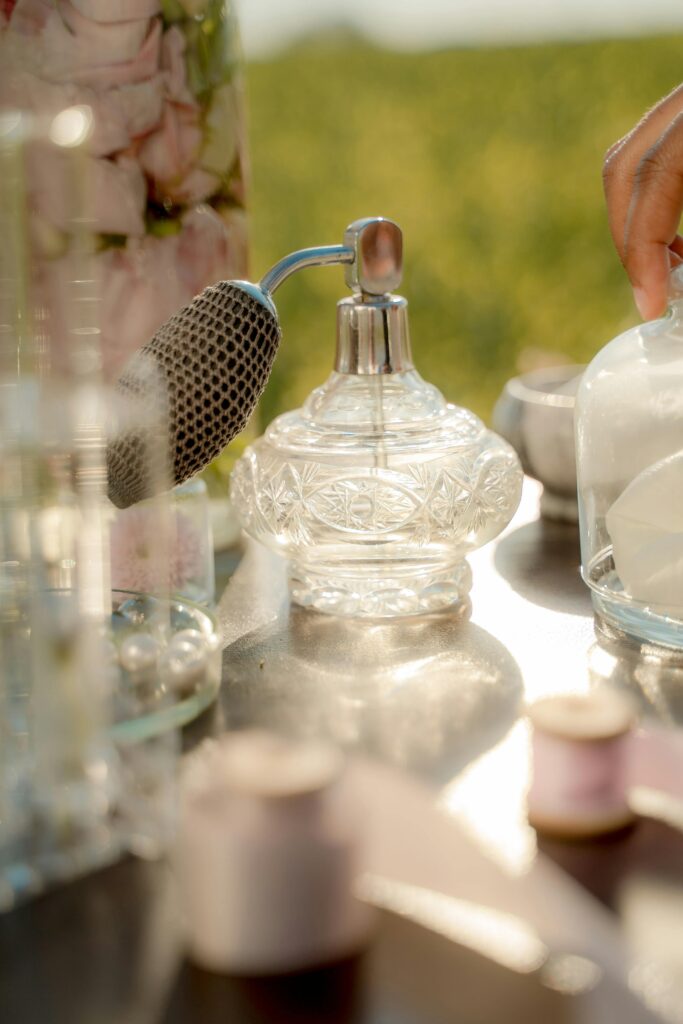
The synthetic compounds from fragrances and scented products are washed into our water systems every single day, and wastewater treatment plants cannot effectively remove those substances from our water. So it is inevitable that those compounds end up in aquatic ecosystems, and in our bodies as well.
And the thing is when we release, even somewhat harmless synthetic ingredients into the environment they don’t go away – they bioaccumulate. This means that they build up in the environments, and react with other synthetic compounds causing unpredictable reactions.
Musks, which is a family of ingredients often used in perfumes have been especially bad because they do not degrade when they are released into the environment but instead, they attach themselves to the fatty tissue of aquatic organisms.
The unknown composition of harmful chemical scents is just the beginning of the problem. According to Lenntech, phosphates in some of these chemical mixes can cause algae to bloom uncontrollably in waterways, thereby depleting oxygen levels. Other chemicals can even reduce the surface tension of water, making it easier for pesticides and other toxins to enter the water and be absorbed by the plants and animals that live there. [9]
Of course, not only synthetic compounds can pose a threat to water systems. In this study from 2021 essential oils and extract toxicity levels are observed: “While some essential oils and extracts have been described to have no toxic effects to the selected organisms or the toxic effects were only observable at high concentrations, others were reported to be toxic at concentrations below the limit set by international regulations, some of them at very low concentrations. Generally, essential oils exhibit higher toxicity than extracts. However, when the extracts are obtained from plants that are known to produce toxic metabolites, the extracts can be more toxic than essential oils. Overall, and despite being generally considered “eco-friendly” products and safer than their synthetic counterparts, some essential oils and plant extracts are toxic towards non-target organisms. Given the increasing interest from the industry on these plant-based products further research using international standardized protocols is mandatory.” [10]
Air pollution and emissions
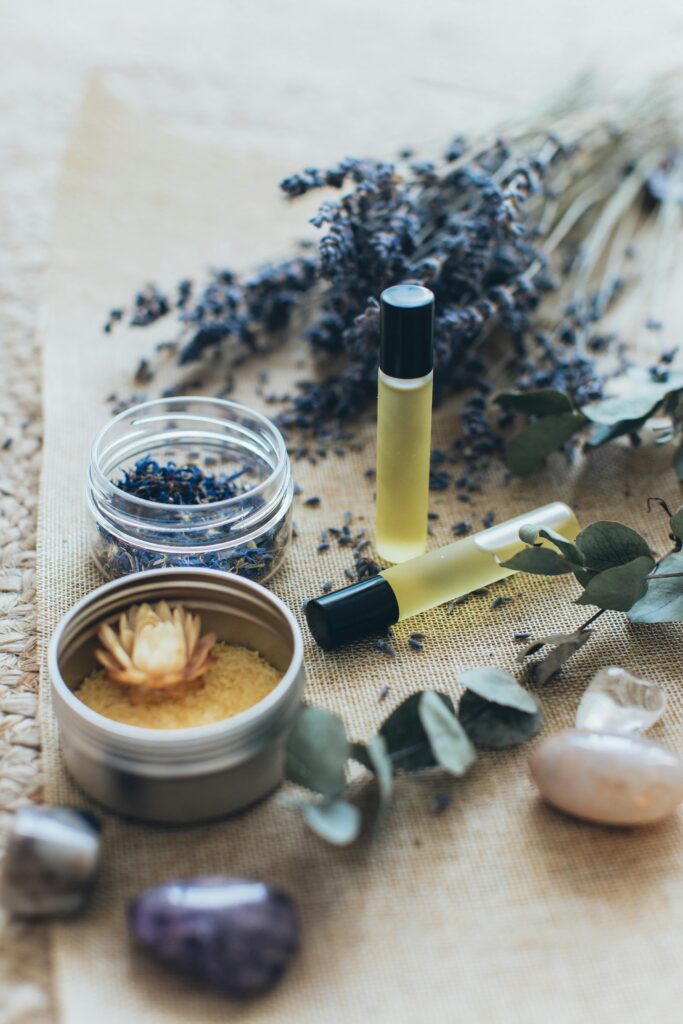
Our air is also impacted – both indoors and outdoors. Most fragrances are classified as volatile compounds, which means they break down into other compounds when released into the air; very often these compounds can have more serious environmental and health implications compared to the actual fragrance compound. But that’s not the worst part.
About 5% of raw oil is processed into ingredients for household products whereas 95% is processed into fuel, but these 5 % are doing some serious damage.
According to a 2018 study from NOAA, the greenhouse gas emissions released from scented consumer products and the chemical vapours they emit are roughly the same as the greenhouse gasses emitted from burning fuel for transportation. Even though there are 15 times more petroleum used for fuel than as ingredients in industrial and consumer products.
These chemical vapours as known as VOCs (volatile chemical vapours), and when they react with sunlight they form ozone pollution and react with other particles in the air. The head of the study explains that: “as the transportation sector gets cleaner, these other sources of VOCs become more and more important”. Furthermore, fuel systems minimize the loss of gasoline to evaporation to maximize energy generated by combustion, but common products like paints and perfumes are engineered to evaporate. Again this doesn’t mean that perfumes alone emit as many greenhouse gasses as fuel, but perfume belongs to a larger category of consumer products where that is the case. [11]
Reducing environmental damage
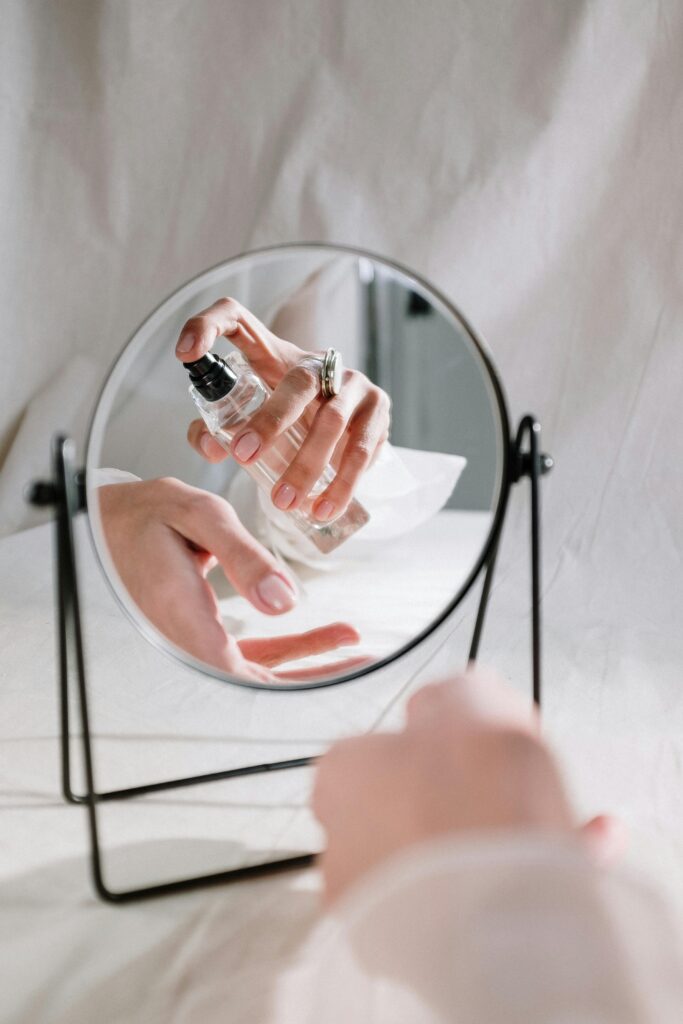
The biggest game changer here would be legislation that demands greater transparency from corporations and manufacturers. Demanding greater transparency would mean that consumers and distributors would know which chemical compounds are used. Moreover, we could also demand stricter requirements and bans on certain ingredients that are most likely to bioaccumulate etc. Politically, there are several measures we can take, and demand to reduce the impact of these products.
But of course, there are also tons of ways consumers can minimize the impact of these compounds. For instance, avoid scented products and fragrances whenever possible, or at the very least in products that do not need them.
- Instead of air fresheners, ventilate your home, and remove smells with vinegar
- Avoid scented candles and soaps and go for more neutral alternatives
- Avoid scented cleaning products and detergents, fabric softeners are simply unnecessary and “clean” is the absence of scents and smells, so cleaning products without scents are better. [12]
- Replacing all synthetic fragrances with essential oil is not the solution, but reducing consumption and being mindful of how much we use is the way to go.
- Before you buy new essential oils, research whether the plant species are on the Red List of Threatened Species (you can do a quick search on the website). If they are endangered or even vulnerable, refrain from purchasing them. This includes ingredients like sandalwood, rosewood, and cedarwood.
- Store your perfumes in a dark place, away from the sunlight to extend the shelf-life and keep the bottle closed.
- Do not store perfumes in the bathroom, the humidity can alter both the colour and the scent of the perfume
- Look for organic, or wild-harvested essential oils from plants native to the environment they are grown in.
- To make your essential oils last longer, dilute them in carrier oils, like coconut or jojoba oil. It is always recommended to do so!
- Many “sustainable” perfume brands only focus on recycled/refillable packaging, and while that’s nice we should be looking for brands that reduce the impact of their ingredients, and are cruelty-free of course.
- If you want to know more about the ingredients in your products, look them up at the EWG Skin Deep Index: https://www.ewg.org/skindeep/
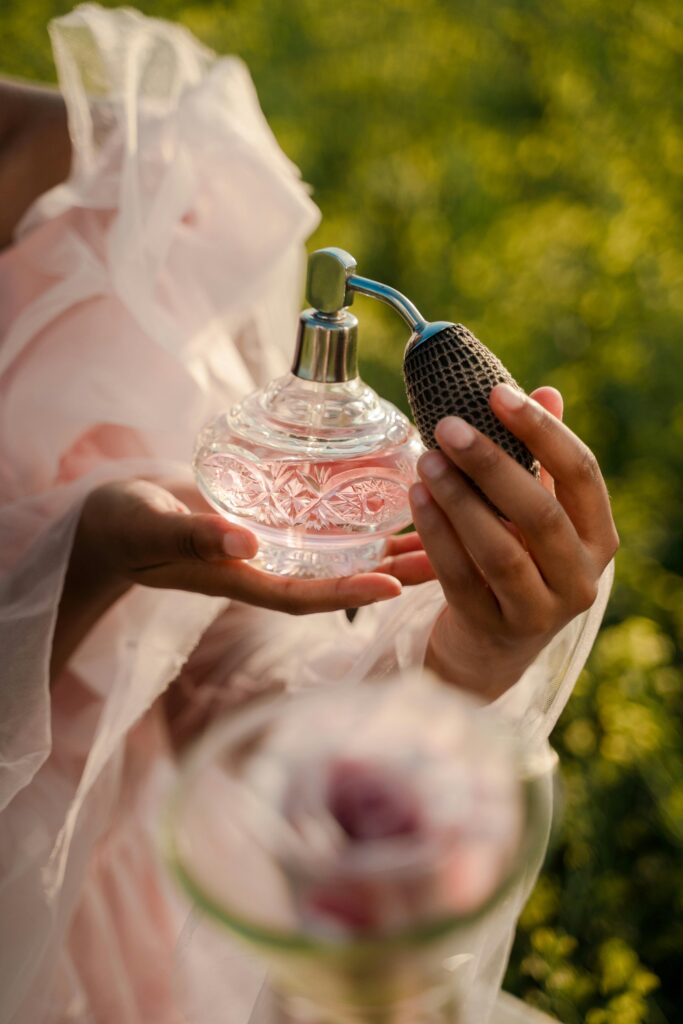
So are there even sustainable perfumes? Well, there are more or less sustainable options and more or less sustainable ways of using perfume. While the impacts of synthetic and natural ingredients are often different, and thus somewhat difficult to compare 1/1; the most important thing consumers can do is not overconsume perfumes and essential oils, and store them correctly to extend shelf life. Avoiding certain polluting or extinction-threatened ingredients is also a good idea. But, I did a little digging to come up with some recommendations for more sustainable brands or options, I have left that list down below.
These brands both improve their supply chains, as well as ingredients (and packaging, but we’re not spending too much time on that, or I guess we are spending the amount of time on packaging that is equivalent to how much of the product impact packaging accounts for).
Perfume brands that are doing better:
- One seed
- Cultus Artem
- Henry Rose
- The 7 Virtues
- Ded Cool
- By Rosie Jane
- Phlur
- Linnic
- Ime Natural
- Blade + Bloom
- Thorn and Bloom
- Skylar
- Clean
- Maison Louis Marie
- Ellis Brooklyn
- Sana Jardin
- [1] http://www.madehow.com/Volume-2/Perfume.html
- [2]https://mountainroseherbs.com/bulgarian-rose-oil
- [3]https://irishapothecary.ie/products/jasmine-dilute?variant=37003854577830
- [4]https://malibuapothecary.com/blogs/clean-candles/how-many-flowers-does-it-take-to-make-essential-oils#:~:text=Yield%20of%20Material%20to%20Oil&text=For%20example%2C%20it%20takes%20approximately,pound%20of%20rose%20essential%20oil
- [5]https://www.maximizemarketresearch.com/market-report/global-melissa-essential-oil-market/75746/[5]
- [6]https://www.earthisland.org/journal/index.php/articles/entry/the_environmental_impact_of_essential_oils/
- [7] https://www.sustainably-chic.com/blog/are-essential-oils-sustainable
- [8] https://greentumble.com/why-are-perfumes-harmful-for-the-environment
- [9]https://www.lenntech.com/aquatic/detergents.htm#:~:text=Phosphates%20in%20detergents%20can%20lead,oxygen%20available%20for%20aquatic%20life.
- [10]https://pubmed.ncbi.nlm.nih.gov/34656680/
- [11] https://www.noaa.gov/news/those-scented-products-you-love-noaa-study-finds-they-can-cause-air-pollution
- [12]https://www.greenmatters.com/p/environmental-impect-scented-products-synthetic-fragrance
CLICK HERE FOR MORE INFORMATION


 GET WET!