WASHINGTON – New data released by the Environmental Protection Agency shows an additional 6.5 million Americans have drinking water contaminated by the toxic “forever chemicals” known as PFAS. It brings the total number of people at risk of drinking this contaminated tap water to about 165 million across the U.S.
“It is impossible to ignore the growing public health crisis of PFAS exposure. It’s detectable in nearly everyone and it’s found nearly everywhere, including the drinking water for a huge segment of the population,” saidDavid Andrews, Ph.D., acting chief science officer at the Environmental Working Group.
“The documented extent of PFAS contamination of the country’s water supply highlights the enormous scale of contamination,” he added.
The EPA’s new findings come from tests of the nation’s drinking water supply conducted as part of the Fifth Unregulated Contaminant Monitoring Rule, or UCMR 5, which requires U.S. water utilities to test drinking water for 29 individual PFAS compounds.
The EPA has said it will roll back limits on four PFAS in drinking water, leaving those chemicals unregulated. It plans to only retain standards for the two most notorious chemicals, PFOA and PFOS. These maximum contaminant levels or MCLs, set enforceable standards for the amount of contaminants allowed in drinking water.
Even with keeping the PFOA and PFOS MCLs in place, rolling back the four other limits will make it harder to hold polluters responsible and ensure clean drinking water.
In addition, the EPA’s plan to reverse the four science-based MCLs likely contradicts an anti-backsliding provision in the Safe Drinking Water Act. That law requires any revision to a federal drinking water standard “maintain, or provide for greater, protection of the health of persons.”
“It’s worrying to see the EPA renege on its commitments to making America cleaner and safer, especially as it ignores its own guidelines to do so,” said Melanie Benesh, EWG’s vice president for government affairs.
Widespread PFAS pollution
The Trump administration’s PFAS standards rollback could grant polluters unchecked freedom to release toxic forever chemicals into U.S. waterways, endangering millions of Americans.
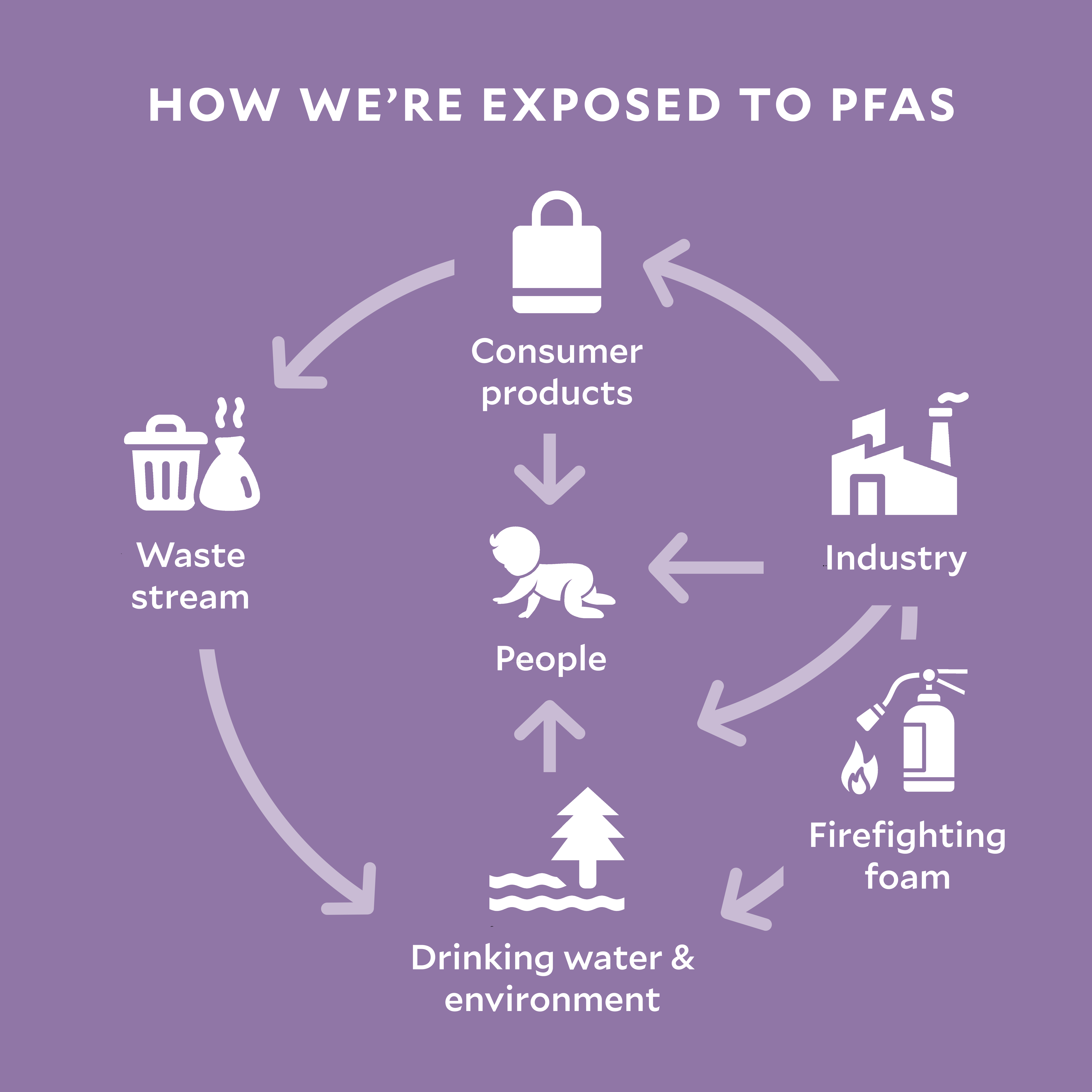
EWG estimates nearly 30,000 industrial polluters could be discharging PFAS into the environment, including into sources of drinking water. Restrictions on industrial discharges would lower the amount of PFAS ending up in drinking water sources.
“Addressing the problem means going to the source. For PFAS, that’s industrial sites, chemical plants and the unnecessary use of these chemicals in consumer products,” said Andrews.
Health risks of PFAS exposure
PFAS are toxic at extremely low levels. They are known as forever chemicals because once released into the environment, they do not break down and can build up in the body. The Centers for Disease Control and Prevention has detected PFAS in the blood of 99 percent of Americans, including newborn babies.
For over 30 years, EWG has been dedicated to safeguarding families from harmful environmental exposures, holding polluters accountable and advocating for clean, safe water.
“Clean water should be the baseline,” Andrews said, “The burden shouldn’t fall on consumers to make their water PFAS-free. While there are water filters that can help, making water safer begins with ending the unnecessary use of PFAS and holding polluters accountable for cleanup.”
For people who know of or suspect the presence of PFAS in their tap water, a home filtration system is the most efficient way to reduce exposure. Reverse osmosis and activated carbon water filters can be extremely effective at removing PFAS.
EWG researchers tested the performance of 10 popular water filters to evaluate how well each reduced PFAS levels detected in home tap water.
###
The Environmental Working Group is a nonprofit, non-partisan organization that empowers people to live healthier lives in a healthier environment. Through research, advocacy and unique education tools, EWG drives consumer choice and civic action.
Drinking water contaminated with Pfas chemicals probably increases the risk of infant mortality and other harm to newborns, a new peer-reviewed study of 11,000 births in New Hampshire finds.
The first-of-its-kind University of Arizona research found drinking well water down gradient from a Pfas-contaminated site was tied to an increase in infant mortality of 191%, pre-term birth of 20%, and low-weight birth of 43%.
It was also tied to an increase in extremely premature birth and extremely low-weight birth by 168% and 180%, respectively.
The findings caught authors by surprise, said Derek Lemoine, a study co-author and economics professor at the University of Arizona who focuses on environmental policymaking and pricing climate risks.
“I don’t know if we expected to find effects this big and this detectable, especially given that there isn’t that much infant mortality, and there aren’t that many extremely low weight or pre-term births,” Lemoine said. “But it was there in the data.”
The study also weighed the cost of societal harms in drinking contaminated water against up-front cleanup costs, and found it to be much cheaper to address Pfas water pollution.
Extrapolating the findings to the entire US population, the authors estimate a nearly $8bn negative annual economic impact just in increased healthcare costs and lost productivity. The cost of complying with current regulations for removing Pfas in drinking water is estimated at about $3.8bn.
“We are trying to put numbers on this and that’s important because when you want to clean up and regulate Pfas, there’s a real cost to it,” Lemoine said.
Pfas are a class of at least 16,000 compounds often used to help products resist water, stains and heat. They are called “forever chemicals” because they do not naturally break down and accumulate in the environment, and they are linked to serious health problems such as cancer, kidney disease, liver problems, immune disorders and birth defects.
Pfas are widely used across the economy, and industrial sites that utilize them in high volume often pollute groundwater. Military bases and airports are among major sources of Pfas pollution because the chemicals are used in firefighting foam. The federal government estimated that about 95 million people across the country drink contaminated water from public or private wells.
Among those are toxicological studies in which researchers examine the chemicals’ impact on lab animals, but that leaves some question about whether humans experience the same harms, Lemoine said.
Other studies are correlative and look at the levels of Pfas in umbilical cord blood or in newborns in relation to levels of disease. Lemoine said those findings are not always conclusive, in part because many variables can contribute to reproductive harm.
The new natural study is unique because it gets close to “isolating the effect of the Pfas itself, and not anything around it”, Lemoine said.
Researchers achieved this by identifying 41 New Hampshire sites contaminated with Pfoa and Pfos, two common Pfas compounds, then using topography data to determine groundwater flow direction. The authors then examined reproductive outcomes among residents down gradient from the sites.
Researchers chose New Hampshire because it is the only state where Pfas and reproductive data is available, Lemoine said. Well locations are confidential, so mothers were unaware of whether their water source was down gradient from a Pfas-contaminated site. That created a randomization that allows for causal inference, the authors noted.
The study’s methodology is rigorous and unique, and underscores “that Pfas is no joke, and is toxic at very low concentrations”, said Sydney Evans, a senior science analyst with the Environmental Working Group non-profit. The group studies Pfas exposures and advocates for tighter regulations.
The study is in part effective because mothers did not know whether they were exposed, which created the randomization, Evans said, but she noted that the state has the information. The findings raise questions about whether the state should be doing a similar analysis and alerting mothers who are at risk, Evans said.
Lemoine said the study had some limitations, including that authors don’t know the mothers’ exact exposure levels to Pfas, nor does the research account for other contaminants that may be in the water. But he added that the findings still give a strong picture of the chemicals’ effects.
Granular activated carbon or reverse osmosis systems can be used by water treatment plants and consumers at home to remove many kinds of Pfas, and those systems also remove other contaminants.
The Biden administration last year put in place limits in drinking water for six types of Pfas, and gave water utilities several years to install systems.
The Trump administration is moving to undo the limits for some compounds. That would probably cost the public more in the long run. Utility customers pay the cost of removing Pfas, but the public “also pays the cost of drinking contaminated water, which is bigger”, Lemoine said.
It was an ideal spot for families to swim and fish
Then Wisconsin officials tested the water
Snowden Lake in Stella, Wis., seen here on Oct. 20, 2025, has been contaminated with PFAS, known commonly as forever chemicals. (AP Photo/Michael Phillis)
STELLA, Wis. (AP) — Kristen Hanneman made a small decision in 2022 that would upend life for her entire town.
State scientists were checking private drinking water wells across Wisconsin for a widely used family of harmful chemicals called PFAS. They mailed an offer to test the well outside her tidy farmhouse surrounded by potato farms cut out of dense forest. Without much thought, she accepted.
Months later, Hanneman found herself on the phone with a state toxicologist who told her to stop drinking the water — now. The well her three kids grew up on had levels thousands of times higher than federal drinking water limits for what are commonly known as forever chemicals.
Hanneman’s well was hardly the only one with a problem. And the chemicals were everywhere. Pristine lakes and superb hunting made Stella a sportsman’s dream. Now officials say the fish and deer should be eaten sparingly or not at all.
Many residents here have known their neighbors for decades. If they want to move away from all this, it’s hard to sell their property – who, after all, would want to buy?
“Had I just thrown that survey in the garbage,” Hanneman said, “would any of this be where it is today?”
The town hall in Stella, Wis., on Friday, Dec. 5, 2025. (AP Photo/Morry Gash)
Stella is far from the only community near industrial sites and military bases nationwide where enormous amounts of PFAS have contaminated the landscape, posing a particular threat to nearby well owners.
Forever chemicals get their name because they resist breaking down, whether in well water or the environment. In the human body, they accumulate in the liver, kidneys and blood. Research has linked them to an increased risk of certain cancers and developmental delays in children.
Government estimates suggest as much as half of U.S. households have some level of PFAS in their water — whether it comes from a private well or a tap. But while federal officials have put strict limits on water provided by utilities, those rules don’t apply to the roughly 40 million people in the United States who rely on private drinking water wells.
Short of a random test, as in Stella, few may learn their water is tainted with the odorless, colorless chemicals.
At least 20 states do not test private wells for PFAS outside of areas where problems are already suspected, according to a survey of state agencies by The Associated Press. Even in states that do, residents often wait years for help and receive far fewer resources than people tied into municipal tap water.
PFAS are so common because they are so useful. Uniquely able to repel moisture and withstand extreme temperatures, the chemicals have been critical to making waterproof shoes, nonstick cookware and foam that could extinguish the hottest fires.
When the chemicals reach soil or water, as they have near factories and waste sites, they are extremely difficult to remove. North Carolina saw an early example, with well owners downstream from a PFAS manufacturing plant still dealing with tainted water years later. In rural northwest Georgia, communities are reckoning with widespread contamination from PFAS that major carpet manufacturers applied for stain resistance.
Robert Bilott, an environmental attorney who pursued one of the first major lawsuits against a PFAS manufacturer in the late 1990s, said many states don’t have the money to help.
“The well owners — the victims of the contamination — shouldn’t have to be paying,” he said. “But where’s this money going to come from?”
Attendees listen to presentations at the Chatsworth, Ga., town hall on Thursday, June 12, 2025. The group PFAS Georgia represents numerous residents and farmers in Dalton and Calhoun who allege their properties are contaminated with PFAS from the carpet industry. (Hyosub Shin/Atlanta Journal-Constitution via AP)Marie Jackson mows her lawn, Thursday, May 8, 2025, in Resaca, Ga. She spent her childhood playing and swimming in the Conasauga River, downstream from Dalton. Her idyllic memories are overshadowed by recollections of foam on the river and dead fish. (Hyosub Shin/Atlanta Journal-Constitution via AP)
Well owners often the last to know about contamination
The alarming results from Hanneman’s well triggered a rush of testing, beginning with the wells of nearby neighbors and later expanding miles away.
How the chemicals infiltrated water beneath Stella’s sandy soil was initially a mystery. State officials eventually suspected the paper mill in the small city of Rhinelander, a 10-mile (16-kilometer) drive from town. The mill had specialized in making paper for microwave popcorn bags — a product that was greaseproof thanks in part to PFAS.
The mill’s manufacturing process also produced a waste sludge which could be used as a fertilizer. By 1996, and for decades after with state approval, the mill spread millions of pounds on farm fields in and around Stella. Wisconsin officials now believe the PFAS it contained seeped into the subterranean reserves of groundwater that feed lakes, streams and many residential wells.
In September, the state sent initial letters assigning cleanup and investigation responsibilities to current and former owners of the mill. These companies point out that the state permitted their sludge spreading, starting long before the dangers of PFAS were widely understood.
The Ahlstrom paper mill in Rhinelander, Wis., on Friday, Dec. 5, 2025 (AP Photo/Morry Gash)
The problem in Stella remained hidden because well owners don’t have a utility testing their water.
Rhinelander’s water utility first tested for PFAS in 2013 to comply with federal rules. By 2019, the city shut down two utility-owned public wells to protect customers. In Stella, meanwhile, some well owners found out only last year that their water is unsafe.
The Hanneman family moved into their home when their oldest son was nearly two. He’s 19 now. His parents worry about all those years of exposure, and have joined an effort to sue the paper mill’s owners and PFAS manufacturers.
Several plaintiffs in the growing lawsuit allege property damage and that their cholesterol, thyroid and kidney diseases are linked to contaminated groundwater. The companies have denied responsibility.
Very tiny amounts of PFAS consumed regularly over years can be dangerous. As scientists better understood those risks, federal advice for water utilities slowly followed and tightened. The current limit is just 4 parts per trillion, or less than a drop diluted in an Olympic-size swimming pool.
The Environmental Protection Agency recommends private wells be tested for bacteria and a limited number of commonly found chemicals, but not PFAS unless it is a known local problem. Experts say testing mandates would be deeply unpopular. Many well owners value their freedom from government oversight and a monthly bill, and take pride in the taste of their water.
PFAS has turned some of those freedoms into liabilities. The chemicals can only be removed from water with costly filters that must be regularly monitored and replaced. Some well owners opt instead to drill deeper or even connect to city water pipes. Facing expensive and uncertain options, many resort to bottled water.
Tom LaDue baits a hook with his grandkids in 2022 before PFAS contamination was discovered in Snowden Lake in Stella, Wis. (Courtesy Tom LaDue via AP)
In Stella, residents are grappling with the chemicals’ unpredictable underground path. Though Tom LaDue’s backyard extends to the edge of a highly contaminated lake, testing found barely any PFAS in his family’s well.
Somehow, a neighbor farther back from the lake found 1,500 parts per trillion of PFAS in her shallower well — magnitudes above the federal limits for tap water. The mother of three in that house says she is regularly tired, which she blames on thyroid issues, wondering if the water is to blame.
In one picture from a few years ago, LaDue is baiting a hook as his grandson dangles a fishing pole over the side of their boat. The sun shines bright.
“It’s a nice lake and we fished in here,” he said. “Now they tell us we can’t eat the fish anymore.”
House by house
While utilities can rely on centralized treatment facilities, restoring safe water for well owners must be done household by household. Some well owners get left out as regulators, lawyers and companies strike deals over who gets help.
The treatment of residents in the lakeside town of Peshtigo, Wisconsin, depends on the street where they live.
The town faced a crisis nearly a decade ago when PFAS were detected in wells downstream from a fire technology plant owned by Tyco and parent company Johnson Controls, which manufactured firefighting foam. Wisconsin officials said the company was responsible for cleaning up the plant and must sample wells in a broad area to see where the pollution spread. Johnson Controls told state regulators it studied the area’s hydrology and geology and concluded it would pay for tests and drill new wells in a smaller section of town for which it maintains it is responsible.
Kayla Furton, a high school teacher who grew up in Peshtigo, lives in a home inside this area.
Had she lived two houses away, Furton would have had to pay out of pocket to treat the PFAS in her water.
Furton’s worries over what would happen to her neighbors beyond that line, including her sister, motivated her to run for the town’s board. During her time in office, Peshtigo leadership split over which fixes to pursue, and some well owners are still waiting on a long-term solution.
“Groundwater does not follow lines drawn on a map,” Furton said. “There’s nothing to say that, OK, the PFAS stops there.”
In a statement, Johnson Controls said it has taken full responsibility for the area it contaminated. The company said it has restored more than 300 million gallons of clean water to the environment and installed 139 new wells.
The state of Wisconsin says the company has not fully investigated the extent of the contamination, and filed a lawsuit in 2022. Johnson Controls said in December the parties were close to reaching an agreement; the Wisconsin Department of Justice said it does not comment on pending litigation.
The Cape Fear River flows over Lock and Dam No. 1 at Riegelwood, N.C., on Jan. 18, 2025. (AP Video/Carolyn Kaster)
Residents along the Cape Fear River in North Carolina have seen just how far forever chemicals can spread. In 2017, the Wilmington StarNews revealed that PFAS from a Chemours chemical plant in Fayetteville were washing into the river and contaminating the water supply. After being sued, the billion-dollar company agreed to test nearby wells and treat those with polluted water. It did not admit to any wrongdoing.
As in Stella, the company tested in a slowly expanding radius that grew by quarter-mile segments from its plant. Chemours agreed to keep testing wells until it reached the edge of the polluted area — a process it expected to take 18 months.
Seven years and some 23,000 wells later, testing is ongoing, with the contamination stretching far beyond what state regulators first imagined. Forever chemicals have been found in drinking water along nearly 100 miles (160 kilometers) of the river, from inland Fayetteville to the Atlantic coast.
According to an AP analysis of data submitted to the state’s Department of Environmental Quality, Chemours discovered high levels of PFAS in more than 150 new wells in 2025.
Many well owners “thought they were fine,” said Emily Donovan, an organizer and cofounder of the group Clean Cape Fear. “And now they’re finding out so late that they were also contaminated.”
The Chemours Company, Fayetteville Works in White Oak, N.C., on Tuesday, Dec. 9, 2025. (AP Photo/Carolyn Kaster)A sign at the entrance of Chemours’ Fayetteville Works in White Oak, N.C., on Tuesday, Dec. 9, 2025. (AP Photo/Carolyn Kaster)
In a statement, Chemours said its timeline for testing wells depends on factors outside its control, including whether residents allow it, and that of the roughly 1,250 wells it sampled last year, 12% had PFAS. Chemours said it continues to contact eligible homes, and that a sample is typically taken within a week of residents’ responding.
States leave well owners behind
In the absence of federal rules, responsibility falls to the states. But many states don’t look for contamination in private wells — and when those that do find it, many struggle to fund a fix.
One proactive state is Michigan, where millions rely on private wells. Officials there have tested groundwater and offered free tests to well owners near PFAS hot spots which, at hundreds of dollars per test, many owners are reluctant or unable to buy. The state provided more than $29 million in grants to clean up forever chemicals in its 2022 fiscal year, including hooking up nearly a thousand well owners to public water.
One of the biggest challenges is helping well owners understand why they should take the threat seriously.
“We are very lucky to get 50% of the people to say, ‘Yes, come test my well for free,’ let alone willing to put on a filter,” said Abigail Hendershott, executive director of Michigan’s multiagency team that responds to PFAS contamination.
New Hampshire, which dealt with an early PFAS crisis in Merrimack, has tested over 15,000 wells, more than half of which had levels exceeding federal standards. It provides generous rebates for homeowners to access clean water.
Elsewhere, millions of households are left on their own.
In northwest Georgia, some of the world’s largest carpet companies began applying PFAS for stain resistance in the 1970s. The companies continued using the chemicals, which entered the environment through manufacturing wastewater, for years, even after scientific studies and regulators warned of their accumulation in human blood and possible health effects, according to an investigation by The Atlanta Journal-Constitution, The Associated Press, The Post and Courier and AL.com. The companies say that they followed all required regulations and that they stopped using PFAS on carpets in 2019.
Faye Jackson gets her blood tested at a medical clinic in Calhoun, Ga., on Tuesday, Sept. 30, 2025, as her daughter Marie waits outside for her turn. Their blood tests revealed they have PFAS levels above the safety threshold outlined by national health experts. (Miguel Martinez/Atlanta Journal-Constitution via AP)
The chemicals have tainted much of the landscape, including the drinking water in cities and the waterways that crisscross the Conasauga River watershed, home to tens of thousands of people. But only well owners near the small city of Calhoun have been offered free tests, and then only under a court agreement. The contaminated river flows into Alabama, where state officials do not typically test private wells for PFAS.
Financial limitations are an oft-cited reason why states aren’t doing more.
Wisconsin, which relied on federal funds for its initial survey of wells, has scraped together resources to investigate PFAS in Stella. The state’s environmental agency has no budget for sampling or treatment and is pulling money and staff time from other programs, according to the head of the drinking and groundwater program. Supplying bottled water to impacted homes — once a rare expense — now requires the state to set aside $900,000 annually.
Meanwhile, enormous amounts of money that could help have been stuck in a bank account, collecting interest. Though state lawmakers voted in 2023 to provide $125 million for PFAS cleanup, the funding has been mired by a separate debate over whether to shield certain property owners from liability. In January, key legislators said they were getting closer to a deal that would release the money.
The EPA has allocated billions to states for PFAS treatment and testing, but much of that money goes to public utilities.
Construction is underway on a reverse osmosis treatment facility which is designed to filter out PFAS from local drinking water in Gadsden, Ala., on Wednesday, Nov. 19, 2025. (Will McLelland/AL.com/The Birmingham News via AP)
Federal officials are evaluating Stella for inclusion in the Superfund program, a large-scale decontamination process that would take years. They also partnered with Wisconsin officials to expand well sampling in July.
At an October public meeting in Stella, several residents asked if they should be worried about their well water.
There is a risk, state employees said, but they could not offer unlimited free tests to rule it out. Those who wanted one immediately would have to pay for it.
“We’re doing the best that we can with the funding that we have available,” said Mark Pauli, a drinking and groundwater supervisor.
In a statement, a spokesperson for the Wisconsin Department of Natural Resources said it had offered cost-free PFAS sampling for well owners within three miles of Stella and to many beyond that distance. The state said it provides owners of contaminated wells with guidance on treating their water and accessing financial help.
Nobody is accepting blame in Stella and finger pointing is circular. While the state is investigating, the current and former mill owners point to the state’s permit as exonerating and say they followed all state rules.
Ahlstrom, the Finnish company that has owned the mill since 2018, said in a statement it hasn’t used two of the most common types of PFAS found in Stella wells in its manufacturing process, and that it phased out all other types of PFAS in 2023. In late January, the company announced its own free bottled water program for residents.
Former owner Wausau Paper and its parent company Essity said they were cooperating with state officials and that the waste sludge they spread was tested for various contaminants, but not PFAS because it wasn’t required.
Wisconsin officials say the threat of PFAS in the sludge wasn’t well understood when they approved its use as fertilizer, and that the state will continue to require those who caused contamination to address its impacts.
That leaves residents, who did not contaminate their own wells, stuck hiring lawyers who argue these companies and PFAS manufacturers knew — or should have known — the risks.
A new normal in Stella
The crisis in Stella sparked by the test of her own well drove Kristen Hanneman to run for a town leadership role.
She spent months learning about the dangers of PFAS, then relaying that knowledge. It’s a town so small that she said talking to a few of the right people would spread word to just about everyone.
It’s been more than three years since Hanneman learned her well had PFAS levels near 11,500 parts per trillion. Federal limits are in the single digits. Her water supply is just as contaminated now as it was then. The family currently drinks and cooks with bottled water provided by the state.
Though some Stella residents have been able to access grant funding to drill deeper wells to reach clean water, the help was limited by household income, with some families disqualified if they made more than $65,000. Typically, the most a family could receive was $16,000 — about half of what it may cost for a replacement well.
Stories circulate in Stella about people who paid for a new well only for their water still to be contaminated. Wisconsin state officials confirmed that at least three households faced this dilemma.
“Do we spend $20,000 to $40,000 on a new well for it to still be a problem?” Hanneman said.
One couple said replacing their well cleaned out much of their savings. Many are concerned about how much their home values have dropped.
A grant did help Cindy Deere, who worries about how 25 years of drinking the water in Stella may affect her health. She replaced her well and a test confirmed the new one was PFAS-free. Still, she has a hard time trusting the water.
“It’s a constant worry,” she said. “Is it going to turn bad?”
The paper mill is still permitted to spread sludge in the county that includes Stella. Its PFAS levels have recently tested well within new state guidelines.
Experts said sludge from industry and manufacturers is most likely to contain PFAS. Wisconsin developed testing guidelines for those sources for that reason, officials said.
But the state doesn’t require another type of sludge — treated waste from septic systems, which capture household sewage — to be tested for PFAS. A local septic company has been spreading it in Stella — in 2024 alone, it applied hundreds of thousands of gallons to farms and elsewhere, state records show. The company did not respond to multiple requests for comment.
Dianne Kopec, who has researched PFAS in wastewater at the University of Maine, said that without testing, officials can’t know if the practice recycles the chemicals back onto the soil in Stella.
“Given what we know today, continuing to spread sludge on agricultural fields is ludicrous,” Kopec said. “When you find yourself in a hole, it is best to stop digging.”
Snowden Lake in Stella, Wis., seen on Friday, Dec. 5, 2025, is contaminated by PFAS and officials say the fish is no longer safe to eat. (AP Photo/Morry Gash)
___
Associated Press writers Todd Richmond in Madison, Wis., Jason Dearen in Los Angeles and M.K. Wildeman in Hartford, Conn., contributed. Dylan Jackson and Justin Price of The Atlanta Journal-Constitution contributed from Atlanta.
___
This story is part of an investigative collaboration with The Atlanta Journal-Constitution, The Post and Courier and AL.com. It is supported through AP’s Local Investigative Reporting Program.
___
The Associated Press receives support from the Walton Family Foundation for coverage of water and environmental policy. The AP is solely responsible for all content. For all of the AP’s environmental coverage, visit https://apnews.com/hub/climate-and-environment.
Throughout the fall, Harvard Chan faculty will share evidence-based recommendations on urgent public health issues facing the next U.S. administration. Ronnie Levin, instructor in the Department of Environmental Health, offered her thoughts on policies that could address contamination in the country’s drinking water supply.
Q: Why is drinking water quality a pressing public health issue?
A: The U.S. has arguably the best and most reliable drinking water in the world, and that’s because we’ve spent a lot of money and time getting it in that shape. On the other hand, our drinking water is not risk-free. It’s not perfectly safe—it can contain lead, nitrate, PFAS, arsenic, and uranium, as examples. In addition, there are racial and ethnic disparities in contaminant exposures, so not everybody gets the same quality of drinking water.
Q: What are the biggest challenges facing the next administration around improving drinking water quality?
A: A hundred years ago, we sunk a lot of money into water treatment and infrastructure, but then we stopped putting in that kind of investment. Now our water systems are severely aging and deteriorated, and we haven’t continued to maintain the older ones. And when we build new ones, they’re not always as well designed as the old ones.
In addition, science has moved on—we’ve found things in our drinking water that we thought weren’t bad, like PFAS, that turn out to be biologically active at very low levels. Lead, arsenic, and nitrate cause health effects at lower levels than we knew when we set the standards decades ago. We now need to catch up.
Ronnie Levin. Photo: Kent Dayton Q: What are your top policy recommendations to address drinking water quality?
A: There’s been recent progress toward reducing lead in drinking water. On Oct. 8, the Environmental Protection Agency (EPA) announced a rule that requires all lead pipes in U.S. water systems to be replaced within the next decade, lowers the current level for taking action to reduce lead exposure from 15 to 10 parts per billion, and also implements several other policies to reduce exposure to lead from drinking water. If the rule is implemented and enforced, millions of people will have cleaner, safer water. Importantly, it will particularly enhance environmental protection among disadvantaged and low-income populations, which have been disproportionately impacted by lead-contaminated water.
There are several other contaminants I’d like to see the government address. PFAS are a class of thousands of chemicals that are in all kinds of consumer products. We don’t even know all of them, because industry keeps tweaking them to be different and cheaper, and industry doesn’t have to report how they get used. There are PFAS everywhere, contaminating water, soil, air, and food, and they build up in people and the environment over time.
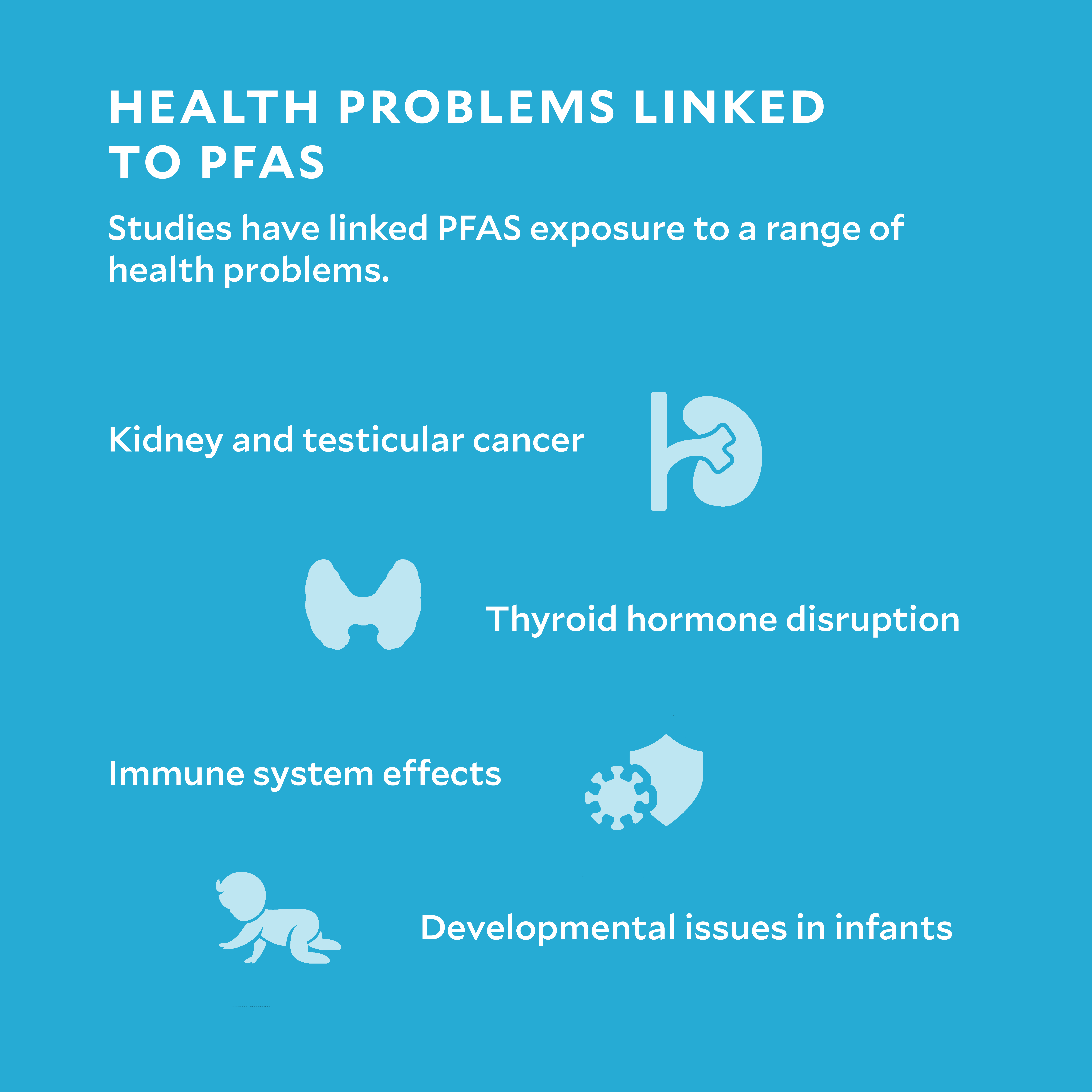
We don’t know a lot about the thousands of different PFAS because it takes years to do studies, and we haven’t known about them for that many years. But research so far has suggested that PFAS are associated with a host of biological changes, even at very low levels. PFAS exposure has been linked with many adverse health outcomes, such as decreased immune system function, thyroid disease, and kidney and testicular cancers.
The EPA recently set regulations for six PFAS chemicals, ones that we know are the easiest to measure and are associated with numerous health effects. Many people are researching PFAS, but industry is constantly altering the formulations for new and different applications, and so there’s no way to stop this train. But the EPA’s efforts are really good news.
Another issue that the EPA needs to address is revising the standard for arsenic in drinking water. We’ve known that arsenic is a poison for a really long time, and that’s actually what makes it so useful—we use it in chemotherapies, pesticides, and herbicides. It has a lot of other useful applications, like in paints and glassmaking. But arsenic has negative health effects across the board, including cardiovascular harms, liver damage, neurotoxicity, and reproductive toxicity.
The arsenic limit for drinking water—which was set in 2001 at 10 parts per billion—is probably an order of magnitude too high. It was looking like the EPA might propose lowering the arsenic standard in the next few years, but with the change in administration, that likelihood is looking dim. There’s a lot of resistance from industry and water utilities, but I think taking action on arsenic will be easier than regulating so many different types of PFAS, which is going to take a lot longer.
As for the EPA’s nitrate standard, it is dangerously high, and violations of the nitrate standard are the most common health-based violations of drinking water standards.
In general, the EPA is behind in keeping the drinking water standards up to date with the current scientific literature. Setting standards is a laborious process and, in addition, there is tremendous pushback from the “drinking water industry”—public water systems, which are often cities themselves, or semi-governmental agencies like the Massachusetts Water Resources Authority, which oversees water systems in the Boston metropolitan area. There are 50,000 active public water systems in the U.S., and there is a lot of complaining from those systems about the difficulty and expense of meeting stricter standards.
Q: What’s the evidence supporting those recommendations?
A: My colleagues and I wrote a 2023 review article about the exposure risks of a wide range of drinking water contaminants, including PFAS, arsenic, and more. In that article, we cited a number of studies linking these chemicals to health harms:
A 2023 meta-analysis of over a dozen different studies found that several types of PFAS may lower the body’s ability to produce antibodies after receiving vaccines, particularly for diphtheria, rubella, and tetanus. A 2022 meta-analysis of over 100 rodent and human epidemiological studies identified a link between PFAS exposure and liver injury. A 2013 study followed almost 4,000 individuals for around two decades, and found that higher arsenic levels in urine were associated with increased mortality from lung, prostate, and pancreatic cancers. A 2015 meta-analysis of over a dozen studies identified a link between arsenic exposure and adverse pregnancy outcomes and infant mortality. A 2021 study analyzed nationwide data collected by the Centers for Disease Control and Prevention, finding that an increased level of arsenic in urine was associated with heart disease mortality. Q: What do you hope can be accomplished to improve drinking water quality in the next four years?
A: Addressing both PFAS and arsenic will be difficult and expensive, and also take a lot of political will. The Supreme Court has tied the EPA’s hands through decisions such as eliminating the Chevron deference, which called for deferring to federal agencies for their judgments where federal law is silent or unclear, and the 2023 Sackett v. EPA case, which limited the agency’s power to regulate wetlands and waterways. The EPA can’t just issue regulations, it has to get laws passed through Congress, which is much harder to do. It used to be that the courts would defer to the EPA, but now the agency is going to have to make a much stronger case for regulations.
Regarding lead, now that the Biden administration has finalized the new lead pipe rule the government needs to make sure that the rule is implemented and enforced.
We have to regain a commitment to protecting human health and the environment, and clean drinking water should be a top priority. We have a lot of hard work to do.
In the first study of its kind, researchers from the Keck School of Medicine of USC found an association between levels of manmade “forever chemicals” in drinking water and the incidence of certain digestive, endocrine, respiratory, and mouth and throat cancers.
Zara Abrams
Image/Francesco Scatena, iStock
Communities exposed to drinking water contaminated with manufactured chemicals known as per- and polyfluoroalkyl substances (PFAS) experience up to a 33% higher incidence of certain cancers, according to new research from the Keck School of Medicine of USC.
PFAS, which are used in consumer products such as furniture and food packaging, have been found in about 45% of drinking water supplies across the United States. Past research has linked the chemicals, which are slow to break down and accumulate in the body over time, to a range of health problems, including kidney, breast and testicular cancers.
To paint a more comprehensive picture of PFAS and cancer risk, Keck School of Medicine researchers conducted an ecological study, which uses large population-level datasets to identify patterns of exposure and associated risk. They found that between 2016 and 2021, counties across the U.S. with PFAS-contaminated drinking water had higher incidence of certain types of cancer, which differed by sex. Overall, PFAS in drinking water are estimated to contribute to more than 6,800 cancer cases each year, based on the most recent data from the U.S. Environmental Protection Agency (EPA).
“These findings allow us to draw an initial conclusion about the link between certain rare cancers and PFAS,” said Shiwen (Sherlock) Li, PhD, a postdoctoral researcher in the Department of Population and Public Health Sciences at the Keck School of Medicine and first author of the study. “This suggests that it’s worth researching each of these links in a more individualized and precise way.”
In addition to providing a roadmap for researchers, the findings underscore the importance of regulating PFAS. Starting in 2029, the EPA will police levels of six types of PFAS in drinking water, but stricter limits may ultimately be needed to protect public health, Li said.
The toll of PFAS
To understand how PFAS contamination relates to cancer incidence, the researchers compared two exhaustive datasets—one covering all reported cancer cases and the other including all data on PFAS in drinking water data across the country. Data on cancer cases between 2016 and 2021 were obtained from the National Cancer Institute’s Surveillance, Epidemiology, and End Results Program, while data on PFAS levels in public drinking water (2013-2024) came from the EPA’s Unregulated Contaminant Monitoring Rule programs.
Li and his colleagues controlled for a number of factors that could influence cancer risk. At the individual level, these included age and sex; at the county level, they ruled out changes in cancer incidence due to socioeconomic status, smoking rates, obesity prevalence, urbanicity (how urban or rural an area is) and the presence of other pollutants.
The researchers then compared cancer incidence in each county to PFAS contamination in the drinking water, using the EPA’s recommended cutoffs for each type of PFAS. Counties where drinking water surpassed recommended maximum levels of PFAS had a higher incidence of digestive, endocrine, respiratory, and mouth and throat cancers. Increases in incidence ranged from slightly elevated at 2% to substantially elevated at 33% (the increased incidence of mouth and throat cancers linked to perfluorobutanesulfonic acid, or PFBS).
Males in counties with contaminated drinking water had a higher incidence of leukemia, as well as cancers of the urinary system, brain and soft tissues, compared to males living in areas with uncontaminated water. Females had a higher incidence of cancers in the thyroid, mouth and throat, and soft tissues. Based on the latest available EPA data, the researchers estimate that PFAS contamination of drinking water contributes to 6,864 cancer cases per year.
“When people hear that PFAS is associated with cancer, it’s hard to know how it’s relevant. By calculating the number of attributable cancer cases, we’re able to estimate how many people may be affected,” Li said, including inferring the personal and financial toll of these cases year after year.
Protecting public health
These population-level findings reveal associations between PFAS and rare cancers that might otherwise go unnoticed. Next, individual-level studies are needed to determine whether the link is causal and to explore what biological mechanisms are involved.
On the regulation side, the results add to the mounting evidence that PFAS levels should be limited, and suggest that proposed changes may not go far enough.
“Certain PFAS that were less studied need to be monitored more, and regulators need to think about other PFAS that may not be strictly regulated yet,” Li said
The work is part of a collaboration between the Southern California Environmental Health Sciences Center, which is funded by the National Institute of Environmental Health Sciences, and the USC Norris Comprehensive Cancer Center at the Keck School of Medicine.
About this research
In addition to Li, the study’s other authors are Lu Zhang, Jesse Goodrich, Rob McConnell, David Conti, Lida Chatzi and Max Aung from the Department of Population and Public Health Science, Keck School of Medicine of USC, University of Southern California; and Paulina Oliva from the Department of Economics, Dornsife College of Letters, Arts and Sciences, University of Southern California.
This work was supported by a pilot grant from the Southern California Environmental Health Sciences Center [P30ES007048] and the National Cancer Institute [5P30CA014089-47].
WASHINGTON – New data released by the Environmental Protection Agency shows an additional 6.5 million Americans have drinking water contaminated by the toxic “forever chemicals” known as PFAS. It brings the total number of people at risk of drinking this contaminated tap water to about 165 million across the U.S.
“It is impossible to ignore the growing public health crisis of PFAS exposure. It’s detectable in nearly everyone and it’s found nearly everywhere, including the drinking water for a huge segment of the population,” saidDavid Andrews, Ph.D., acting chief science officer at the Environmental Working Group.
“The documented extent of PFAS contamination of the country’s water supply highlights the enormous scale of contamination,” he added.
The EPA’s new findings come from tests of the nation’s drinking water supply conducted as part of the Fifth Unregulated Contaminant Monitoring Rule, or UCMR 5, which requires U.S. water utilities to test drinking water for 29 individual PFAS compounds.
The EPA has said it will roll back limits on four PFAS in drinking water, leaving those chemicals unregulated. It plans to only retain standards for the two most notorious chemicals, PFOA and PFOS. These maximum contaminant levels or MCLs, set enforceable standards for the amount of contaminants allowed in drinking water.
Even with keeping the PFOA and PFOS MCLs in place, rolling back the four other limits will make it harder to hold polluters responsible and ensure clean drinking water.
In addition, the EPA’s plan to reverse the four science-based MCLs likely contradicts an anti-backsliding provision in the Safe Drinking Water Act. That law requires any revision to a federal drinking water standard “maintain, or provide for greater, protection of the health of persons.”
“It’s worrying to see the EPA renege on its commitments to making America cleaner and safer, especially as it ignores its own guidelines to do so,” said Melanie Benesh, EWG’s vice president for government affairs.
Widespread PFAS pollution
The Trump administration’s PFAS standards rollback could grant polluters unchecked freedom to release toxic forever chemicals into U.S. waterways, endangering millions of Americans.
EWG estimates nearly 30,000 industrial polluters could be discharging PFAS into the environment, including into sources of drinking water. Restrictions on industrial discharges would lower the amount of PFAS ending up in drinking water sources.
“Addressing the problem means going to the source. For PFAS, that’s industrial sites, chemical plants and the unnecessary use of these chemicals in consumer products,” said Andrews.
Health risks of PFAS exposure
PFAS are toxic at extremely low levels. They are known as forever chemicals because once released into the environment, they do not break down and can build up in the body. The Centers for Disease Control and Prevention has detected PFAS in the blood of 99 percent of Americans, including newborn babies.
For over 30 years, EWG has been dedicated to safeguarding families from harmful environmental exposures, holding polluters accountable and advocating for clean, safe water.
“Clean water should be the baseline,” Andrews said, “The burden shouldn’t fall on consumers to make their water PFAS-free. While there are water filters that can help, making water safer begins with ending the unnecessary use of PFAS and holding polluters accountable for cleanup.”
For people who know of or suspect the presence of PFAS in their tap water, a home filtration system is the most efficient way to reduce exposure. Reverse osmosis and activated carbon water filters can be extremely effective at removing PFAS.
EWG researchers tested the performance of 10 popular water filters to evaluate how well each reduced PFAS levels detected in home tap water.
###
The Environmental Working Group is a nonprofit, non-partisan organization that empowers people to live healthier lives in a healthier environment. Through research, advocacy and unique education tools, EWG drives consumer choice and civic action.
PFAS, also known as “forever chemicals,” have emerged as a serious environmental and public health threat due to their persistence and widespread contamination. These man-made chemicals, widely utilized in consumer and industrial products since World War II, are now linked to alarming levels of contamination in drinking water supplies and health risks ranging from cancers to liver toxicity to reduced fertility.
Following decades of litigation, the U.S. Environmental Protection Agency in 2024 finally set legally enforceable levels for six PFAS chemicals in drinking water, requiring public water systems to monitor for the substances, report findings to customers, and take steps to reduce contamination. However, those regulations were partially rolled back in May 2025.
In this Q&A, two Yale experts delve into the challenges posed by PFAS and potential solutions for reducing exposure and contamination. Vasilis Vasiliou is Department Chair and Susan Dwight Bliss Professor of Epidemiology at Yale School of Public Health (YSPH). Robert Bilott is an environmental attorney and serves as a lecturer with the YSPH Department of Environmental Health Sciences. Bilott’s story and landmark case against chemical giant DuPont were recounted in his book, “Exposure: Poisoned Water, Corporate Greed, and One Lawyer’s Twenty-Year Battle Against DuPont,” and were the basis for the 2019 motion picture “Dark Waters,” starring Mark Ruffalo.
This interview was edited and condensed for clarity.
What are PFAS?
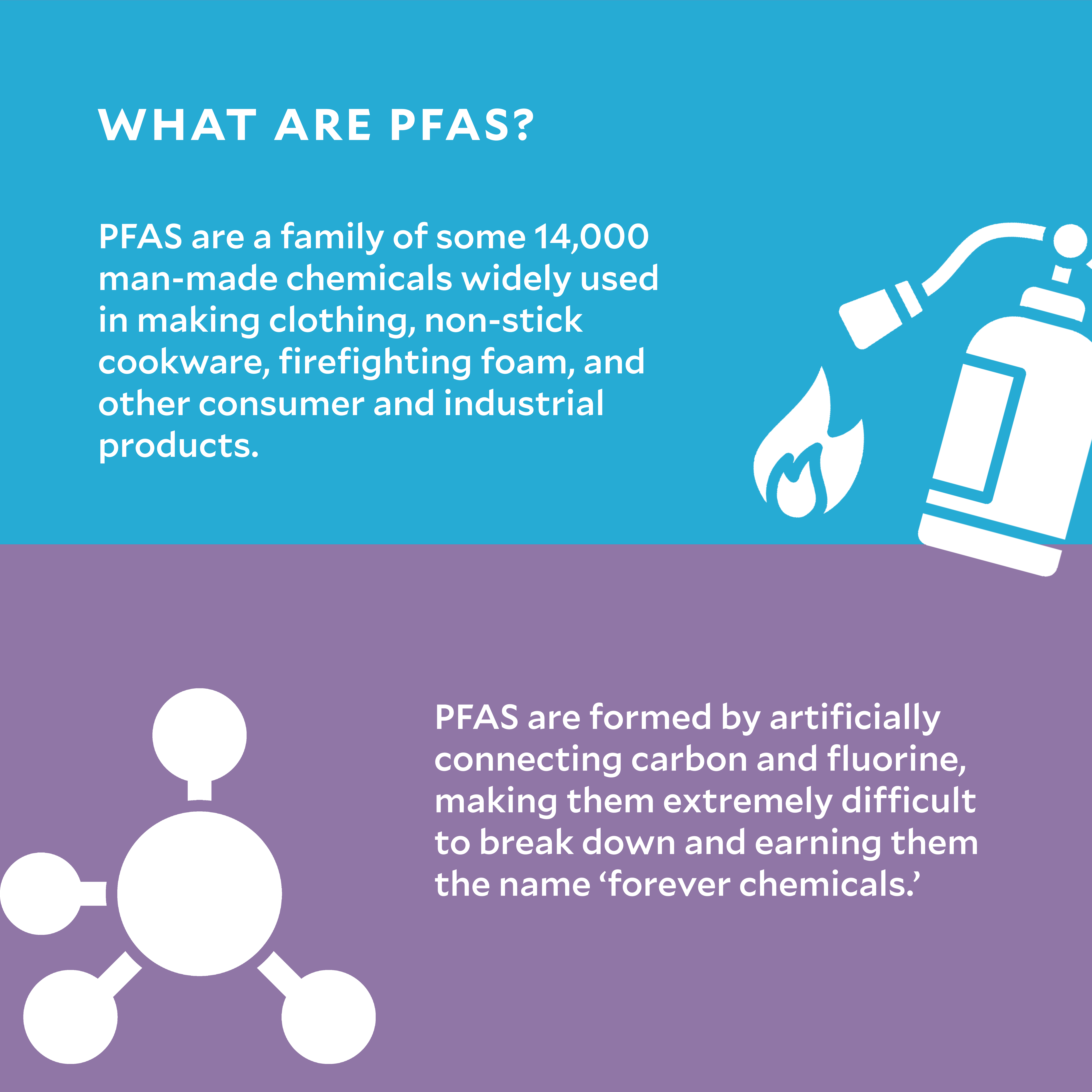
BILOTT: PFAS stands for per- and polyfluoroalkyl substances. They are a completely man-made family of chemicals created around the time of World War II. These chemicals, formed by artificially connecting carbon and fluorine, are known for their strength, stain resistance, grease protection, and water resistance. They are used in a wide variety of products, and there are now estimates of up to 14,000 different PFAS compounds.
Why are PFAS called ‘forever chemicals?’
VASILIOU: PFAS are often called ‘forever chemicals’ because they contain an exceptionally strong carbon-fluorine bond, which makes them highly resistant to breakdown. As a result, they persist in the environment for decades or longer—in water, soil, and even living organisms. Their environmental and biological persistence means they can accumulate over time, raising long-term concerns for ecosystems and public health.
What consumer or industrial products contain PFAS?
BILOTT: PFAS have been used in an incredible array of consumer and commercial products since the 1940s. Common products containing PFAS include non-stick cookware, carpeting, clothing, fast food wrappers and packaging, computer chips, toilet paper, and waterproof cosmetics. Keywords like stain-resistant, waterproof, grease-resistant, and non-stick often indicate the presence of PFAS. These chemicals were not listed on ingredient lists or labels, and many companies were unaware they were using them.
What are the known health risks associated with PFAS?
VASILIOU: PFAS are linked to various cancers such as kidney, testicular, and liver cancer, as well as liver toxicity. There is a rising incidence of early-onset cancers, like colon and liver cancer, in younger individuals, potentially due to developmental exposure. Developmental and reproductive effects of PFAS include low birth weight, accelerated puberty, reduced fertility, and pregnancy-induced hypertension, with possible epigenetic changes that might contribute to early-onset cancers. PFAS also impair the immune system, reducing vaccine effectiveness and potentially increasing susceptibility to infections like COVID-19. Additionally, PFAS exposure is linked to various metabolic effects such as obesity, type 2 diabetes, cardiovascular disease, reduced kidney function, high cholesterol, colitis, and neurodegenerative issues in children.
By some estimates, 90% of drinking water in the U.S. contains PFAS. How did that happen?
BILOTT: PFAS contamination in drinking water primarily comes from aqueous film-forming foam, or AFFF—the firefighting foam that was developed during the Vietnam War to extinguish petroleum-based fires. This foam contains high concentrations of C-8 PFAS chemicals known as PFOA and PFOS that have been widely used by military organizations, airports, and fire stations globally since the 1960s. The people buying and using it were not informed about its PFAS content and were misled about its safety, which led to widespread environmental contamination.
Has a safe level for PFAS chemicals been identified?
BILOTT: No one has identified a safe level of PFAS chemicals. Companies like 3M and DuPont set internal safety guidelines for their employees decades ago, but this information was withheld from government agencies and scientists until much later. Studies have revealed that PFAS are persistent, bioaccumulative, and toxic, affecting multiple organ systems and potentially reducing vaccine effectiveness. The EPA has set very low drinking water standards, aiming for no more than four parts per trillion and ideally zero for PFOA and PFOS, which are now recognized as human carcinogens.
VASILIOU: PFAS chemicals are not metabolized by the body, unlike many other environmental contaminants. Because they resist breakdown and are only slowly excreted, they accumulate in human tissues—especially in the blood, liver, and kidneys—over time. This bioaccumulation contributes to a range of toxic effects, including immunotoxicity, endocrine disruption, and increased risk of kidney and testicular cancer. Given their extreme persistence and potential for harm even at very low levels, efforts to establish safe exposure limits increasingly aim toward zero.
Can the human body repair damage caused by PFAS?
VASILIOU: The human body has some ability to repair tissue damage, but with PFAS, this process is complicated by the chemicals’ persistence. PFAS remain in the body for years and can interfere with normal repair mechanisms by promoting inflammation, oxidative stress, and immune dysfunction. Even if some tissues, like the liver, can regenerate, ongoing internal exposure means that damage may continue, making full recovery difficult—especially with chronic or high-level exposures.
Are any PFAS chemicals regulated?
BILOTT: In 2024, the first federal nationwide regulations for PFAS chemicals were adopted by the EPA, setting drinking water standards and declaring two C-8 PFAS as hazardous under federal Superfund law. The process took decades, with companies pushing back and fighting regulation in courts. States like New Jersey, Minnesota, and Connecticut have also moved forward with regulations, which are facing legal challenges from manufacturers. In Europe, proposed global bans on PFAS face significant opposition due to economic impacts.
What technologies exist to remove PFAS from drinking water?
VASILIOU: Activated carbon and reverse osmosis are the primary technologies to remove PFAS, though reverse osmosis is very expensive for individual homes. Yale engineers are working on innovative solutions, such as membranes and methods to break down PFAS chemicals.
Who is going to pay for cleaning up PFAS contamination?
BILOTT: Our law firm represents hundreds of cities seeking compensation from companies like 3M and DuPont, who created the chemicals. These cases are part of the aqueous film-forming foam (AFFF) multidistrict litigation in South Carolina. Recently, significant settlements totaling over $14 billion from companies like 3M, DuPont, BASF, and Tyco have been reached to help public water systems clean up PFAS. The federal government has allocated $10 billion for this purpose but that is taxpayer money. We are working to ensure the responsible companies pay for the cleanup.
How does someone know if PFAS is present in their drinking water or consumer products?
BILOTT: It’s not always easy. For public water systems, sampling is starting to be required and information may be available in quarterly reports to customers. But many districts haven’t started testing yet. The Environmental Working Group created an interactive map showing where testing has occurred and what the levels are. For consumer products, there’s a lot less information. PFAS were not listed on ingredient labels or material safety data sheets, and even manufacturers might not have known they were using PFAS. Some groups are now testing products for PFAS, and products labeled with buzzwords like waterproof, stain-resistant, non-stick, and grease-proof might contain PFAS. Consumer demand has led some companies to commit to PFAS-free products, but definitions and detection levels vary so that is causing mass confusion in the market.
What can the average person do about the PFAS problem?
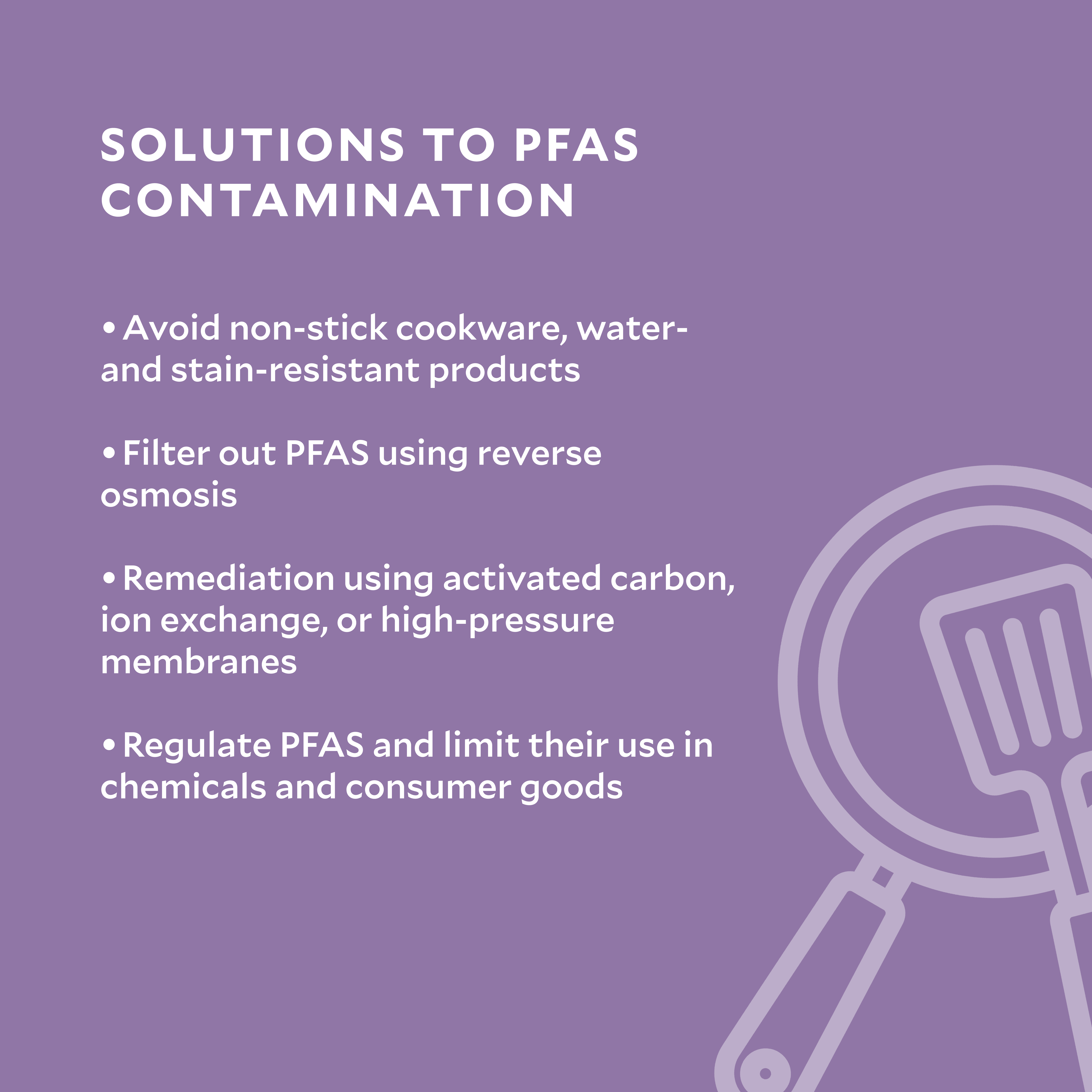
VASILIOU: Individuals can reduce their PFAS exposure by avoiding products such as older non-stick cookware, water-resistant clothing, stain-proof textiles, and certain cosmetics that may contain PFAS. It’s also important to be informed about your drinking water—use certified filters that are effective against PFAS and consult local or state resources for water quality information, including bottled water when available. Beyond personal choices, civic engagement plays a powerful role. Raising awareness, supporting legislation, and demanding transparency from manufacturers and regulators can drive meaningful, large-scale change
BILOTT: An individual can make a huge difference by standing up, speaking out, and demanding change. It may take a while, but as you see in the story of “Dark Waters,” individuals speaking out are having a huge impact. Laws are being proposed and passed to restrict these chemicals. Some of the biggest companies on the planet are now committing to getting out of PFAS. That only happened by individuals saying ‘we don’t want this.’
What is Yale doing?
Yale is committed to making the university a healthy and productive place to live, work, and study. We are reducing the amount of harmful chemicals on campus through healthy furniture standards to reduce the amount of chemicals of concern in the materials we purchase to furnish our buildings. The Yale School of Public Health is leading groundbreaking research into the human health impacts of PFAS, analyzing their role in cancer cell migration, liver damage, and pregnancy loss. The Yale School of Engineering and Applied Sciences is developing technologies to separate and destroy PFAS at water treatment facilities and other locations.
WASHINGTON – U.S. Environmental Protection Agency (EPA) Administrator Lee Zeldin announced the agency will keep the current National Primary Drinking Water Regulations (NPDWR) for perfluorooctanoic acid (PFOA) and perfluorooctane sulfonic acid (PFOS), which set nationwide limits for these “forever chemicals” in drinking water. The agency is committed to addressing Per- and Polyfluoroalkyl substances (PFAS) in drinking water while following the law and ensuring that regulatory compliance is achievable for drinking water systems.
“The work to protect Americans from PFAS in drinking water started under the first Trump Administration and will continue under my leadership,” saidEPA Administrator Zeldin. “We are on a path to uphold the agency’s nationwide standards to protect Americans from PFOA and PFOS in their water. At the same time, we will work to provide common-sense flexibility in the form of additional time for compliance. This will support water systems across the country, including small systems in rural communities, as they work to address these contaminants. EPA will also continue to use its regulatory and enforcement tools to hold polluters accountable.”
As part of this action, EPA is announcing its intent to extend compliance deadlines for PFOA and PFOS, establish a federal exemption framework, and initiate enhanced outreach to water systems, especially in rural and small communities, through EPA’s new PFAS OUTreach Initiative (PFAS OUT). This action would help address the most significant compliance challenges EPA has heard from public water systems, members of Congress, and other stakeholders, while supporting actions to protect the American people from certain PFAS in drinking water.
Paired with effluent limitations guidelines (ELGs) for PFAS and other tools to ensure that polluters are held responsible, EPA’s actions are designed to reduce the burden on drinking water systems and the cost of water bills, all while continuing to protect public health and ensure that the agency is following the law in establishing impactful regulations such as these.
EPA is also announcing its intent to rescind the regulations and reconsider the regulatory determinations for PFHxS, PFNA, HFPO-DA (commonly known as GenX), and the Hazard Index mixture of these three plus PFBS to ensure that the determinations and any resulting drinking water regulation follow the legal process laid out in the Safe Drinking Water Act.
Regulatory Protection with Flexibility and Cost Savings
On April 10, 2024, EPA announced the final National Primary Drinking Water Regulation, including standards for PFOA and PFOS. At that time, EPA established legally enforceable levels for these PFAS in drinking water and gave public water systems until 2029 to comply with the Maximum Contaminant Levels (MCLs).
To allow drinking water systems more time to develop plans for addressing PFOA and PFOS where they are found and implement solutions, EPA plans to develop a rulemaking to provide additional time for compliance, including a proposal to extend the compliance date to 2031. EPA plans to issue a proposed rule this fall and finalize this rule in the Spring of 2026. Aligned with the agency’s intent to provide additional compliance time for water systems, EPA encourages states seeking primacy for implementing the PFAS drinking water regulation to request additional time from EPA to develop their applications. At the same time, EPA will support the U.S. Department of Justice in defending ongoing legal challenges to the PFAS National Primary Drinking Water Regulation with respect to PFOA and PFOS.
“EPA has done the right thing for rural and small communities by delaying implementation of the PFAS rule. This commonsense decision provides the additional time that water system managers need to identify affordable treatment technologies and make sure they are on a sustainable path to compliance. NRWA greatly appreciates this reasonable and flexible approach, and we look forward to partnering with the agency’s PFAS OUTreach Initiative to help ensure water systems have the resources and support they need,” said National Rural Water Association CEO Matthew Holmes.
“ASDWA supports EPA’s proposed approach to the PFAS regulation to extend the compliance date for systems by an additional two years. With the current compliance date of 2029, states and water systems are struggling with the timeframes to complete the pilot testing, development of construction plans, and building the necessary treatment improvements. EPA’s proposed extension of the compliance date and increased technical assistance will address the number of systems that would be out of compliance in 2029 due to not being able complete all of these tasks on time,” said Association of State Drinking Water Administrators Executive Director Alan Roberson.
Enhancing Communication and Outreach
To enhance engagement on addressing PFAS, EPA will launch PFAS OUT to connect with every public water utility known to need capital improvements to address PFAS in their systems, including those EPA has identified as having PFOA and PFOS levels above EPA’s MCL. EPA will share resources, tools, funding, and technical assistance to help utilities meet the federal drinking water standards. PFAS OUT will ensure that no community is left behind as we work to protect public health and bring utilities into compliance with federal drinking water standards. PFAS OUT will engage utilities, technical assistance providers and local, State, Tribal, and Territorial leaders to develop effective, practical solutions where they are needed most.
EPA will continue to offer free water technical assistance (WaterTA) that provides services to water systems to improve their drinking water and help communities access available funding. EPA’s WaterTA initiatives work with water systems nationwide to identify affordable solutions to assess and address PFAS, including PFOA and PFOS. Services offered to utilities include water quality testing, development of technical plans, operator training support, designing public engagement and outreach strategies, and support for accessing federal funding opportunities.
Holding Polluters Accountable
Drinking water systems are passive receivers of PFOA and PFOS. Polluters can contaminate the surface waters or aquifers that these systems rely on to provide the drinking water to their communities. As announced by Administrator Zeldin, EPA intends to take a number of actions to reduce the prevalence of PFAS in the environment, including in sources of drinking water. Progress reducing concentrations of PFAS in drinking water sources can substantially reduce the cost burden for water systems and reduce the cost of living for the communities they serve.
A Record of Leadership
Administrator Zeldin’s leadership on PFAS dates back to his time in Congress, where he was a founding member of the PFAS Congressional Taskforce and a strong supporter of the PFAS Action Act, legislation to provide funding to support local communities cleaning up PFAS-contaminated water systems. He was, and remains, a staunch advocate for protecting Long Islanders and all Americans from contaminated drinking water.
In the process of developing and taking action on a number of these items, Administrator Zeldin personally heard from members of Congress on passive receiver issues where local water utilities will foot the bill for contamination and pass those costs onto consumers. This mindset and the need for a polluter pays model has guided a lot of the work to be done at EPA in the future.
Background
On April 28, 2025, Administrator Zeldin announced a long list of actions to combat PFAS contamination that included in part the designation of an agency lead for PFAS, the development of ELGs for certain PFAS to reduce discharges to waterways including upstream of drinking water systems, and initiatives to engage with Congress and industry to establish a clear liability framework that ensures passive receivers and consumers are protected. This list is the first, not the last, of all decisions and actions EPA will be taking to address PFAS over the course of the Trump Administration. There will be more to come in the future across EPA’s program offices to help communities impacted by PFAS contamination.
During President Trump’s first term, EPA convened a two-day National Leadership Summit on PFAS in Washington, D.C. that brought together more than 200 federal, state, and local leaders from across the country to discuss steps to address PFAS. Following the Summit, the agency hosted a series of visits during the summer of 2018 in communities directly impacted by PFAS. EPA interacted with more than 1,000 Americans during community engagement events in Exeter, New Hampshire, Horsham, Pennsylvania, Colorado Springs, Colorado, Fayetteville, North Carolina, and Leavenworth, Kansas, as well as through a roundtable in Kalamazoo, Michigan, and events with tribal representatives in Spokane, Washington.
In 2019, the Trump EPA announced the PFAS Action Plan. This historic Plan responded to extensive public interest and input the agency received and represented the first time EPA built a multi-media, multi-program, national communication and research plan to address an emerging environmental challenge like PFAS. EPA’s Action Plan identified both short-term solutions for addressing these chemicals and long-term strategies that will help provide the tools and technologies states, tribes, and local communities need to provide clean and safe drinking water to their residents and to address PFAS at the source—even before it gets into the water.
EPA supports water systems in reducing PFAS and emerging contaminants (EC) in drinking water through a range of funding resources. Federal funding opportunities include the Drinking Water State Revolving Fund (DWSRF) program, the EC Small or Disadvantaged Communities (EC-SDC) grant program, and funding resources, like EPA’s Water Infrastructure Finance and Innovation Act (WIFIA) program, that can be leveraged to provide supplemental, flexible, low-cost credit assistance to public and private borrowers.
Summary:Rain and water in ponds and lakes slowly seeps into the soil, moving through minute cracks to refill underground aquifers. Per- and polyfluoroalkyl substances (PFAS), often described as forever chemicals, can tag along into groundwater that’s later removed for drinking. Researchers analyzed water from over 100 wells in Denmark for one particularly persistent PFAS: trifluoroacetate. They report steadily increasing levels of the forever chemical in recent decades.Share:
FULL STORY
Rain and water in ponds and lakes slowly seeps into the soil, moving through minute cracks to refill underground aquifers. Per- and polyfluoroalkyl substances (PFAS), often described as forever chemicals, can tag along into groundwater that’s later removed for drinking. Researchers in ACS’ Environmental Science & Technology Letters analyzed water from over 100 wells in Denmark for one particularly persistent PFAS: trifluoroacetate. They report steadily increasing levels of the forever chemical in recent decades.
Trifluoroacetate forms when fluorinated gases, such as refrigerants, and fluorinated pesticides partially degrade in the environment. Water passing through air and soil picks up trifluoroacetate, transporting the persistent and mobile compound into groundwater aquifers. However, potable groundwater sources haven’t been widely tested for trifluoroacetate because there isn’t a regulatory limit for it beyond the European Environment Agency’s (EEA) limit on total PFAS in drinking water of 0.5 parts per billion (ppb). So, Christian Albers and Jürgen Sültenfuss wanted to thoroughly assess groundwater in Denmark for this contaminant, looking for potential changes in the past 60 years.
The researchers collected samples from 113 groundwater monitoring wells around Denmark. They analyzed the samples for trifluoroacetate and, using an established tritium-helium isotope method, calculated how long ago the water entered the underground aquifers. Overall, their data showed a trend of increasing trifluoroacetate concentrations since the 1960s. Specifically, groundwater from:
Before 1960 had unmeasurable levels.
1960 to 1980 contained 0.06 ppb on average.
1980 to 2000 contained 0.24 ppb on average.
2000 to the 2020s contained 0.6 ppb on average, which exceeds the EEA’s total PFAS limit in drinking water.
The researchers attribute concentration differences within time periods to changing atmospheric deposition, plant uptake and local pesticide application. For example, pesticides that might be precursors for trifluoroacetate have been applied to agricultural areas within Denmark since the late 1960s. On the basis of those observations, the researchers say that trifluoroacetate concentrations could be used to categorize when groundwater entered aquifers, such as after 1985 or before 2000, rather than using more sophisticated and tedious dating methods that require isotopes. Additionally, Albers says some particularly high trifluoroacetate concentrations in groundwater less than 10 years old could suggest local sources have recently become more important, such as fluorinated pesticide applications.



 GET WET!