Risk of cardiovascular disease linked to long-term exposure to arsenic in community water supplies

Understanding risk below the current US EPA regulatory standard

Source:Columbia University's Mailman School of Public Health

Summary:Long-term exposure to arsenic in water may increase cardiovascular risk and especially heart disease risk even at exposure levels below the federal regulatory limit, according to new research. A study describes exposure-response relationships at concentrations below the current regulatory limit and substantiates that prolonged exposure to arsenic in water contributes to the development of ischemic heart disease.Share:


FULL STORY


Long-term exposure to arsenic in water may increase cardiovascular disease and especially heart disease risk even at exposure levels below the federal regulatory limit (10µg/L) according to a new study at Columbia University Mailman School of Public Health. This is the first study to describe exposure-response relationships at concentrations below the current regulatory limit and substantiates that prolonged exposure to arsenic in water contributes to the development of ischemic heart disease.

The researchers compared various time windows of exposure, finding that the previous decade of water arsenic exposure up to the time of a cardiovascular disease event contributed the greatest risk. The findings are published in the journal Environmental Health Perspectives.

“Our findings shed light on critical time windows of arsenic exposure that contribute to heart disease and inform the ongoing arsenic risk assessment by the EPA. It further reinforces the importance of considering non-cancer outcomes, and specifically cardiovascular disease, which is the number one cause of death in the U.S. and globally,” said Danielle Medgyesi, a doctoral Fellow in the Department of Environmental Health Sciences at Columbia Mailman School. “This study offers resounding proof of the need for regulatory standards in protecting health and provides evidence in support of reducing the current limit to further eliminate significant risk.”

According to the American Heart Association and other leading health agencies, there is substantial evidence that arsenic exposure increases the risk of cardiovascular disease. This includes evidence of risk at high arsenic levels (>100µg/L) in drinking water. The U.S. Environmental Protection Agency reduced the maximum contaminant level (MCL) for arsenic in community water supplies (CWS) from 50µg/L to 10µg/L beginning in 2006. Even so, drinking water remains an important source of arsenic exposure among CWS users. The natural occurrence of arsenic in groundwater is commonly observed in regions of New England, the upper Midwest, and the West, including California.

To evaluate the relationship between long-term arsenic exposure from CWS and cardiovascular disease, the researchers used statewide healthcare administrative and mortality records collected for the California Teachers Study cohort from enrollment through follow-up (1995-2018), identifying fatal and nonfatal cases of ischemic heart disease and cardiovascular disease. Working closely with collaborators at the California Office of Environmental Health Hazard Assessment (OEHHA), the team gathered water arsenic data from CWS for three decades (1990-2020).

The analysis included 98,250 participants, 6,119 ischemic heart disease cases and 9,936 CVD cases. Excluded were those 85 years of age or older and those with a history of cardiovascular disease at enrollment. Similar to the proportion of California’s population that relies on CWS (over 90 percent), most participants resided in areas served by a CWS (92 percent). Leveraging the extensive years of arsenic data available, the team compared time windows of relatively short-term (3-years) to long-term (10-years to cumulative) average arsenic exposure. The study found decade-long arsenic exposure up to the time of a cardiovascular disease event was associated with the greatest risk, consistent with a study in Chile finding peak mortality of acute myocardial infarction around a decade after a period of very high arsenic exposure. This provides new insights into relevant exposure windows that are critical to the development of ischemic heart disease.

Nearly half (48 percent) of participants were exposed to an average arsenic concentration below California’s non-cancer public health goal <1 µg/L. In comparison to this low-exposure group, those exposed to 1 to <5 µg/L had modestly higher risk of ischemic heart disease, with increases of 5 to 6 percent. Risk jumped to 20 percent among those in the exposure ranges of 5 to <10 µg/L (or one-half to below the current regulatory limit), and more than doubled to 42 percent for those exposed to levels at and above the current EPA limit ≥10µg/L. The relationship was consistently stronger for ischemic heart disease compared to cardiovascular disease, and no evidence of risk for stroke was found, largely consistent with previous research and the conclusions of the current EPA risk assessment.

These results highlight the serious health consequences not only when community water systems do not meet the current EPA standard but also at levels below the current standard. The study found a substantial 20 percent risk at arsenic exposures ranging from 5 to <10 µg/L which affected about 3.2 percent of participants, suggesting that stronger regulations would provide significant benefits to the population. In line with prior research, the study also found higher arsenic concentrations, including concentrations above the current standard, disproportionally affect Hispanic and Latina populations and residents of lower socioeconomic status neighborhoods.

“Our results are novel and encourage a renewed discussion of current policy and regulatory standards,” said Columbia Mailman’s Tiffany Sanchez, senior author. “However, this also implies that much more research is needed to understand the risks associated with arsenic levels that CWS users currently experience. We believe that the data and methods developed in this study can be used to bolster and inform future studies and can be extended to evaluate other drinking water exposures and health outcomes.”

Co-authors are Komal Bangia, Office of Environmental Health Hazard Assessment, Oakland, California; James V. Lacey Jr and Emma S. Spielfogel,California Teacher Study, Beckman Research Institute, City of Hope, Duarte, California; and Jared A FisherJessica M. Madrigal, Rena R. Jones, and Mary H. WardDivision of Cancer Epidemiology and Genetics, National Cancer Institute.

The study was supported by the National Cancer Institute, grants U01-CA199277, P30-CA033572, P30-CA023100, UM1-CA164917, and R01-CA077398; and also funded by the Superfund Hazardous Substance Research and Training Program P42ES033719; NIH National Institute of Environmental Health Sciences P30 Center for Environmental Health and Justice P30ES9089, NIH Kirschstein National Research Service Award Institutional Research Training grant T32ES007322, NIH Predoctoral Individual Fellowship F31ES035306, and the Intramural Research Program of the NCI Z-CP010125-28.

CLICK HERE FOR MORE INFORMATION

https://www.sciencedaily.com/releases/2024/10/241023131603.htm

Scientists just found a hidden factor behind Earth’s methane surge

Using CRISPR to dial down enzyme helps to understand the isotope signatures of methane from different environments

Source:University of California – Berkeley

Summary:Roughly two-thirds of all atmospheric methane, a potent greenhouse gas, comes from methanogens. Tracking down which methanogens in which environment produce methane with a specific isotope signature is difficult, however. UC Berkeley researchers have for the first time CRISPRed the key enzyme involved in microbial methane production to understand the unique isotopic fingerprints of different environments to better understand Earth’s methane budget.Share:

FULL STORY


Hidden Factor Behind Earth’s Methane Surge
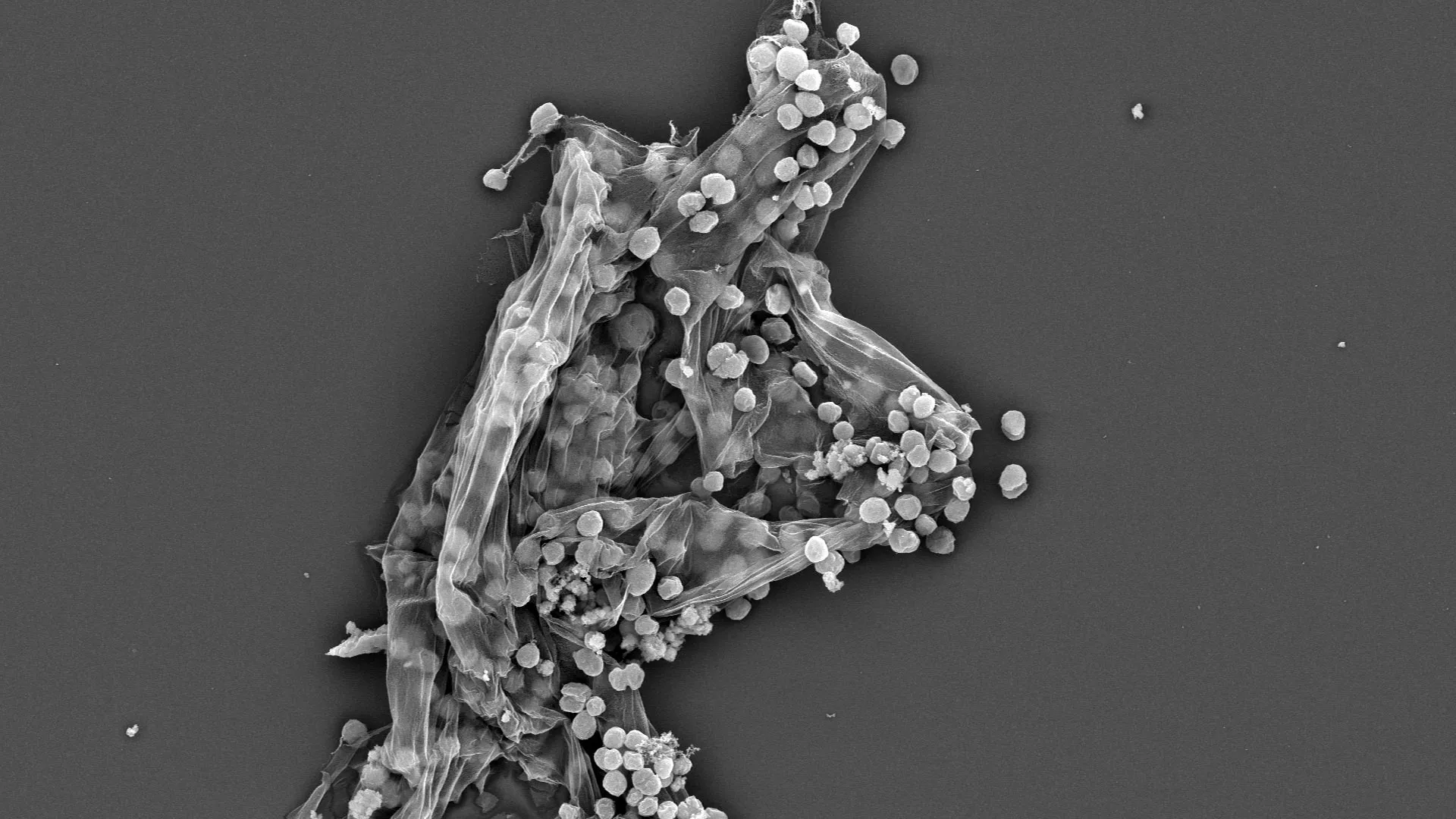
An electron microscope image of single-celled methanogens, members of the archaea domain. They are ubiquitous in oxygen-free environments, turning simple foods into methane, a potent greenhouse gas. Credit: Alienor Baskevitch/UC Berkeley

Roughly two-thirds of all emissions of atmospheric methane — a highly potent greenhouse gas that is warming planet Earth — come from microbes that live in oxygen-free environments like wetlands, rice fields, landfills and the guts of cows.

Tracking atmospheric methane to its specific sources and quantifying their importance remains a challenge, however. Scientists are pretty good at tracing the sources of the main greenhouse gas, carbon dioxide, to focus on mitigating these emissions. But to trace methane’s origins, scientists often have to measure the isotopic composition of methane’s component atoms, carbon and hydrogen, to use as a fingerprint of various environmental sources.

A new paper by researchers at the University of California, Berkeley, reveals how the activity of one of the main microbial enzymes involved in producing methane affects this isotope composition. The finding could change how scientists calculate the contributions of different environmental sources to Earth’s total methane budget.

“When we integrate all the sources and sinks of carbon dioxide into the atmosphere, we kind of get the number that we’re expecting from direct measurement in the atmosphere. But for methane, large uncertainties in fluxes exist — within tens of percents for some of the fluxes — that challenge our ability to precisely quantify the relative importance and changes in time of the sources,” said UC Berkeley postdoctoral fellow Jonathan Gropp, who is first author of the paper. “To quantify the actual sources of methane, you need to really understand the isotopic processes that are used to constrain these fluxes.”

Gropp teamed up with a molecular biologist and a geochemist at UC Berkeley to, for the first time, employ CRISPR to manipulate the activity of this key enzyme to reveal how these methanogens interact with their food supply to produce methane.

“It is well understood that methane levels are rising, but there is a lot of disagreement on the underlying cause,” said co-author Dipti Nayak, UC Berkeley assistant professor of molecular and cell biology. “This study is the first time the disciplines of molecular biology and isotope biogeochemistry have been fused to provide better constraints on how the biology of methanogens controls the isotopic composition of methane.”

Many elements have heavier or lighter versions, called isotopes, that are found in small proportions in nature. Humans are about 99% carbon-12 and 1% carbon-13, which is slightly heavier because it has an extra neutron in its nucleus. The hydrogen in water is 99.985% hydrogen-1 and 0.015% deuterium or hydrogen-2, which is twice as heavy because it has a neutron in its nucleus.

The natural abundances of isotopes are reflected in all biologically produced molecules and variations can be used to study and fingerprint various biological metabolisms.

“Over the last 70 years, people have shown that methane produced by different organisms and other processes can have distinctive isotopic fingerprints,” said geochemist and co-author Daniel Stolper, UC Berkeley associate professor of earth and planetary science. “Natural gas from oil deposits often looks one way. Methane made by the methanogens within cow guts looks another way. Methane made in deep sea sediments by microorganisms has a different fingerprint. Methanogens can consume or ‘eat’, if you will, a variety of compounds including methanol, acetate or hydrogen; make methane; and generate energy from the process. Scientists have commonly assumed that the isotopic fingerprint depends on what the organisms are eating, which often varies from environment to environment, creating our ability to link isotopes to methane origins.”

“I think what’s unique about the paper is, we learned that the isotopic composition of microbial methane isn’t just based on what methanogens eat,” Nayak said. “What you ‘eat’ matters, of course, but the amount of these substrates and the environmental conditions matter too, and perhaps more importantly, how microbes react to those changes.”

“Microbes respond to the environment by manipulating their gene expression, and then the isotopic compositions change as well,” Gropp said. “This should cause us to think more carefully when we analyze data from the environment.”

The paper will appear Aug. 14 in the journal Science.

Vinegar- and alcohol-eating microbes

Methanogens — microorganisms that are archaea, which are on an entirely separate branch of the tree of life from bacteria — are essential to ridding the world of dead and decaying matter. They ingest simple molecules — molecular hydrogen, acetate or methanol, for example — excreted by other organisms and produce methane gas as waste. This natural methane can be observed in the pale Will-o’-the-wisps seen around swamps and marshes at night, but it’s also released invisibly in cow burps, bubbles up from rice paddies and natural wetlands and leaks out of landfills. While most of the methane in the natural gas we burn formed in association with hydrocarbon generation, some deposits were originally produced by methanogens eating buried organic matter.

The isotopic fingerprint of methane produced by methanogens growing on different “food” sources has been well established in laboratory studies, but scientists have found that in the complexity of the real world, methanogens don’t always produce methane with the same isotopic fingerprint as seen in the lab. For example, when grown in the lab, species of methanogens that eat acetate (essentially vinegar), methanol (the simplest alcohol), or molecular hydrogen (H2) produce methane, CH4, with a ratio of hydrogen and carbon isotopes different from the ratios observed in the environment.

Gropp had earlier created a computer model of the metabolic network in methanogens to understand better how the isotope composition of methane is determined. When he got a fellowship to come to UC Berkeley, Stolper and Nayak proposed that he experimentally test his model. Stolper’s laboratory specializes in measuring isotope compositions to explore Earth’s history. Nayak studies methanogens and, as a postdoctoral fellow, found a way to use CRISPR gene editing in methanogens. Her group recently altered the expression of the key enzyme in methanogens that produces the methane — methyl-coenzyme M reductase (MCR) — so that its activity can be dialed down. Enzymes are proteins that catalyze chemical reactions.

Experimenting with these CRISPR-edited microbes — in a common methanogen called Methanosarcina acetivorans growing on acetate and methanol — the researchers looked at how the isotopic composition of methane changed when the enzyme activity was reduced, mimicking what is thought to happen when the microbes are starved for their preferred food.

They found that when MCR is at low concentrations, cells respond by altering the activity of many other enzymes in the cell, causing their inputs and outputs to accumulate and the rate of methane generation to slow so much that enzymes begin running both backwards and forwards. In reverse, these other enzymes remove a hydrogen from carbon atoms; running forward, they add a hydrogen. Together with MCR, they ultimately produce methane (CH4). Each forward and reverse cycle requires one of these enzymes to pull a hydrogen off of the carbon and add a new one ultimately sourced from water. As a result, the isotopic composition of methane’s four hydrogen molecules gradually comes to reflect that of the water, and not just their food source, which starts with three hydrogens.

This is different from typical assumptions for growth on acetate and methanol that assume no exchange between hydrogen derived from water and that from the food source.

“This isotope exchange we found changes the fingerprint of methane generated by acetate and methanol consuming methanogens vs. that typically assumed. Given this, it might be that we have underestimated the contribution of the acetate-consuming microbes, and they might be even more dominant than we have thought,” Gropp said. “We’re proposing that we at least should consider the cellular response of methanogens to their environment when studying isotopic composition of methane.”

Beyond this study, the CRISPR technique for tuning production of enzymes in methanogens could be used to manipulate and study isotope effects in other enzyme networks broadly, which could help researchers answer questions about geobiology and the Earth’s environment today and in the past.

“This opens up a pathway where modern molecular biology is married with isotope-geochemistry to answer environmental problems,” Stolper said. “There are an enormous number of isotopic systems associated with biology and biochemistry that are studied in the environment; I hope we can start looking at them in the way molecular biologists now are looking at these problems in people and other organisms — by controlling gene expression and looking at how the stable isotopes respond.”

For Nayak, the experiments are also a big step in discovering how to alter methanogens to derail production of methane and redirect their energy to producing useful products instead of an environmentally destructive gas.

“By reducing the amount of this enzyme that makes methane and by putting in alternate pathways that the cell can use, we can essentially give them another release valve, if you will, to put those electrons, which they were otherwise putting in carbon to make methane, into something else that would be more useful,” she said.

Other co-authors of the paper are Markus Bill of Lawrence Berkeley National Laboratory and former UC Berkeley postdoc Rebekah Stein, and Max Lloyd, who is a professor at Penn State University. Gropp was supported by a fellowship from the European Molecular Biology Organization. Nayak and Stolper were funded, in part, by Alfred B. Sloan Research Fellowships. Nayak also is an investigator with the Chan-Zuckerberg Biohub.

CLICK HERE FOR MORE INFORMATION

https://www.sciencedaily.com/releases/2025/08/250816113528.htm

Groundwater Declines in the U.S. Southwest

Record snowfall in recent years has not been enough to offset long-term drying conditions and increasing groundwater demands in the U.S. Southwest, according to a new analysis of NASA satellite data.

Declining water levels in the Great Salt Lake and Lake Mead have been testaments to a megadrought afflicting western North America since 2000. But surface water only accounts for a fraction of the Great Basin watershed, which covers most of Nevada and large portions of California, Utah, and Oregon. Far more of the region’s water is underground. That has historically made it difficult to track the impact of droughts on the overall water content of the Great Basin.

A new look at 20 years of data from the GRACE (Gravity Recovery and Climate Experiment) and GRACE-FO satellites shows that the decline in groundwater in the Great Basin far exceeds stark surface water losses. Over about the past two decades, the underground water supply in the basin has fallen by 16.5 cubic miles (68.7 cubic kilometers). That’s roughly two-thirds as much water as the entire state of California uses in a year and about six times the total volume of water that was left in Lake Mead, the nation’s largest reservoir, at the end of 2023.

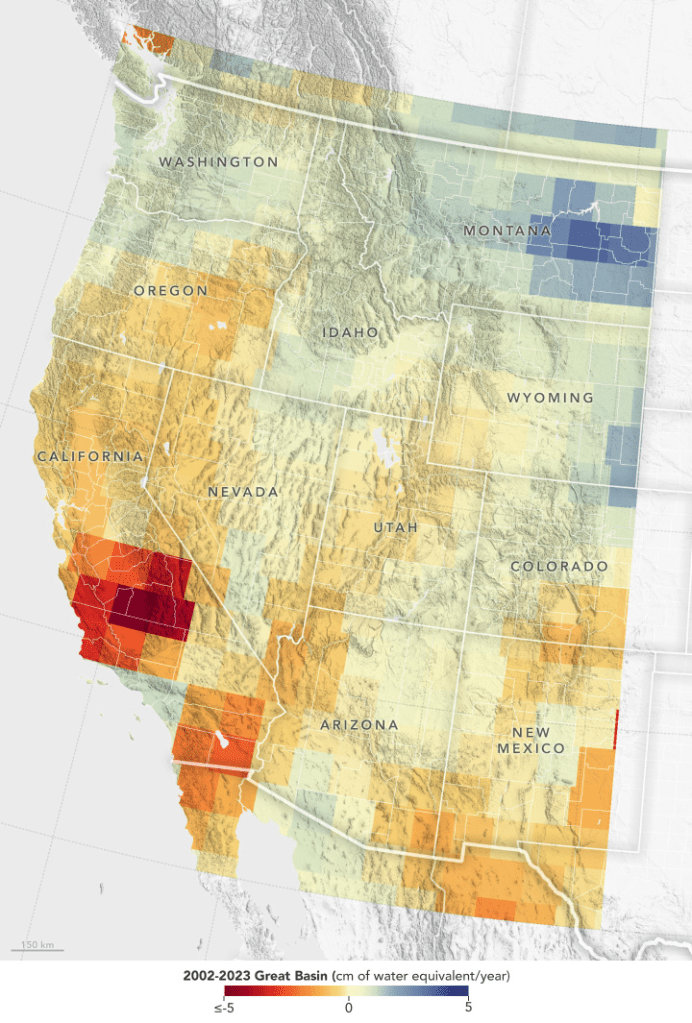
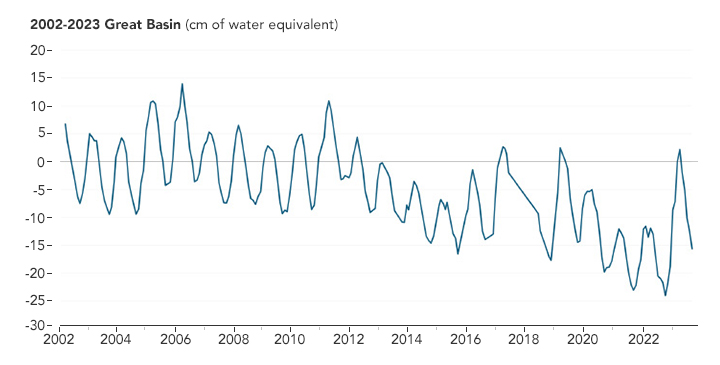
The map above shows changes in stored water between April 2002 and September 2023. Notice that some of the largest rates of loss (red) occurred across parts of Southern California, which has been severely affected by water declines in the Great Basin region. Data for this map and the chart below were derived from the joint German DLR-NASA GRACE missions. GRACE-based maps of fluctuating water levels have improved recently as researchers have learned to parse more and finer details from the dataset.

2002 – 2023

The satellite-derived data show a seasonal rise in water each spring due to melting snow from higher elevations, visible as the bumps in the chart above. But University of Maryland Earth scientist Dorothy Hall said occasional snowy winters are unlikely to stop the dramatic water level decline that’s been underway in the U.S. Southwest. This decline is apparent in the chart’s overall downward trend, especially after 2012. The finding came about as Hall and colleagues studied the contribution of annual snowmelt to Great Basin water levels.

“In years like the 2022–23 winter, I expected that the record amount of snowfall would really help to replenish the groundwater supply,” Hall said. “But overall, the decline continued.” The research was published in March 2024 in the journal Geophysical Research Letters.

“A major reason for the decline is the upstream water diversion for agriculture and households,” Hall said. Populations in the states that rely on Great Basin water supplies have grown by 6–18 percent since 2010, according to the U.S. Census Bureau. “As the population increases, so does water use.”

Runoff, increased evaporation, and the water needs of plants suffering from hot, dry conditions in the region are amplifying the problem. “With the ongoing threat of drought,” Hall said, “farmers downstream often can’t get enough water.”

According to the new findings, Hall said, “The ultimate solution will have to include wiser water management.”

NASA Earth Observatory images by Wanmei Liang, using data from Hall, Dorothy, et al. (2024). Text by James R. Riordon/NASA’s Earth Science News Team, adapted from a story first published on June 17, 2024.

CLICK HERE FOR MORE INFORMATION https://earthobservatory.nasa.gov/images/152970/groundwater-declines-in-the-us-southwest