Massive hidden waves are rapidly melting Greenland’s glaciers

Calving icebergs unleash hidden wave forces that supercharge Greenland’s melt and push the ice sheet closer to collapse.

Source:University of ZurichSummary:Researchers in Greenland used a 10-kilometer fiber-optic cable to track how iceberg calving stirs up warm seawater. The resulting surface tsunamis and massive hidden underwater waves intensify melting at the glacier face. This powerful mixing effect accelerates ice loss far more than previously understood. The work highlights how fragile the Greenland ice system has become as temperatures rise.Share:


FULL STORY

Hidden Waves Speed Up Greenland’s Melting
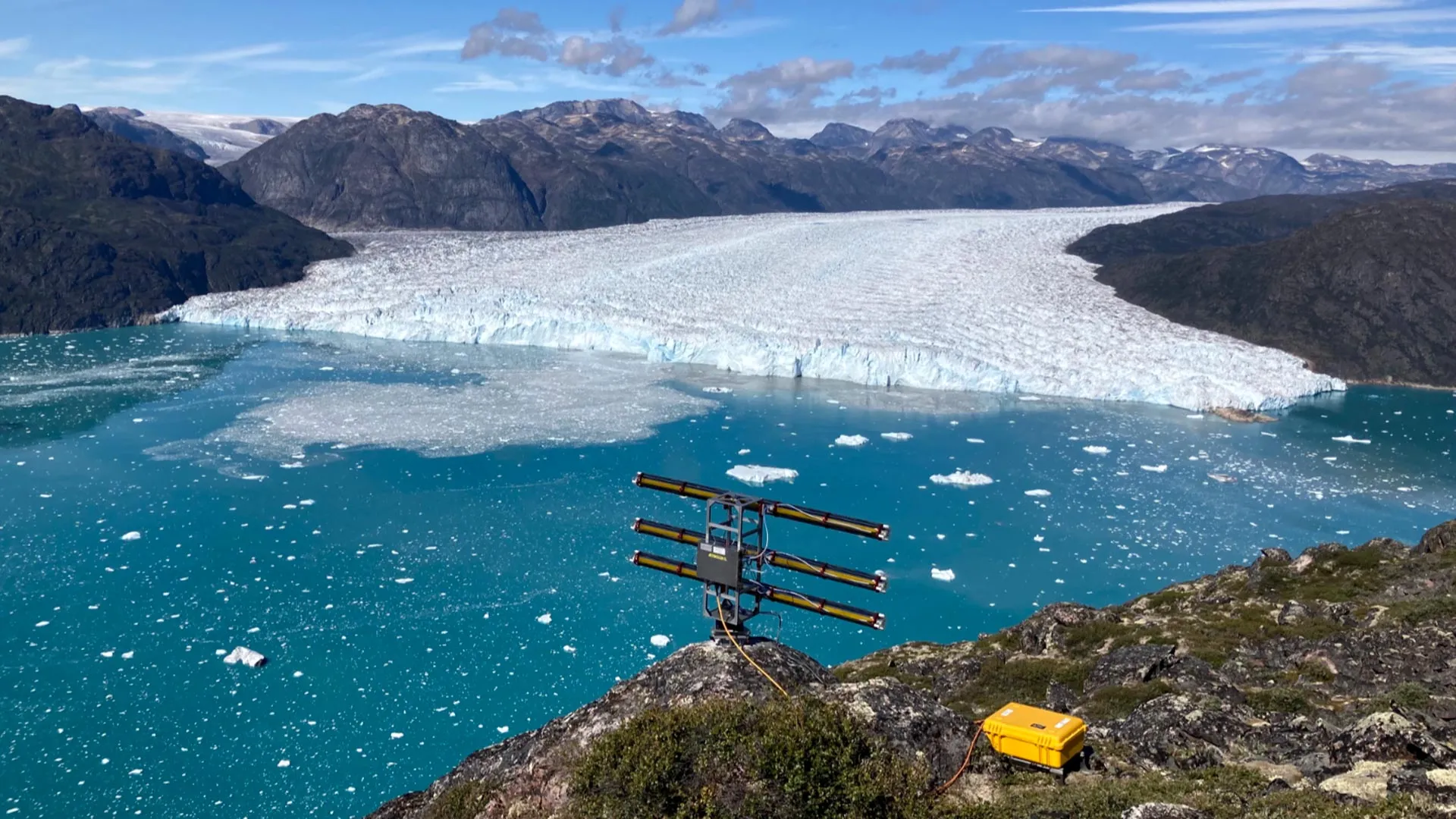
View of the fjord and the three-kilometer-wide calving front of Eqalorutsit Kangilliit Sermiat in southern Greenland. The fiber-optic cable was laid a few hundred meters from the ice wall through the 300-meter-deep water on the seabed. In the foreground is the UZH radar device, which measures calving events and ice movements in order to interpret the data from the fiber-optic cable. Credit: Andreas Vieli, University of Zurich

Iceberg calving happens when large pieces of ice split from the front of a glacier and fall into the ocean. This natural event is a major contributor to the rapid reduction of ice on the Greenland ice sheet. For the first time, an international team led by the University of Zurich (UZH) and the University of Washington (UW) has used fiber-optic technology to track how the impact of falling ice, along with the movement of the released ice, causes glacial meltwater to mix with warmer seawater below the surface.

“The warmer water increases seawater-induced melt erosion and eats away at the base of the vertical wall of ice at the glacier’s edge. This, in turn, amplifies glacier calving and the associated mass loss from ice sheets,” explains Andreas Vieli, a professor in UZH’s Department of Geography and co-author of the research. Vieli leads the Cryosphere cluster, one of six groups in the international GreenFjord project in southern Greenland, supported by the Swiss Polar Institute. The team’s discovery about how ice and seawater interact was highlighted on the cover of Nature.

Wave measurements using fiber-optic cable on seafloor

During the GreenFjord project, researchers from UZH, UW and several Swiss partners carried out an extensive field campaign to study calving behavior. They placed a ten-kilometer-long fiber-optic cable on the seafloor across the fjord in front of the Eqalorutsit Kangilliit Sermiat glacier. This fast-moving glacier in southern Greenland releases about 3.6 km3 of ice into the ocean each year, which is almost three times the annual volume of the Rhône glacier near the Furka mountain pass in Switzerland.

The research team relied on Distributed Acoustic Sensing (DAS), a method that detects tiny vibrations along the cable caused by events such as newly formed crevasses, falling ice blocks, ocean waves or temperature changes. “This enables us to measure the many different types of waves that are generated after icebergs break off,” says lead author Dominik Gräff, a UW postdoctoral researcher affiliated with ETH Zurich.

Underwater waves amplify glacier melt and erosion

After an iceberg crashes into the water, surface waves called calving-induced tsunamis sweep across the fjord and mix the upper water layers. Because seawater in Greenland’s fjords is warmer and denser than meltwater, it sinks toward the deeper layers.

The team also detected another type of wave that continues to move between density layers long after the surface becomes calm. These internal underwater waves, which can reach heights comparable to skyscrapers, cannot be seen from above but keep mixing the water for extended periods. This ongoing movement brings warm water upward, increasing melting and erosion at the glacier’s edge and promoting further calving. “The fiber-optic cable allowed us to measure this incredible calving multiplier effect, which wasn’t possible before,” says Gräff. The data gathered will support future efforts to document calving events and better understand the rapid decline of ice sheets.

A fragile and threatened system

Scientists have long known that interactions between seawater and calving play an important role in glacier retreat, but collecting detailed measurements in the field has been extremely difficult. Fjords filled with icebergs present constant hazards from falling ice, and satellite observations cannot capture what happens below the surface where these interactions occur. “Our previous measurements have often merely scratched the surface, so a new approach was needed,” says Andreas Vieli.

The Greenland ice sheet covers an area around 40 times larger than Switzerland. If it were to melt completely, global sea levels would rise by about seven meters. The large volumes of meltwater flowing from shrinking glaciers can also disrupt major ocean currents such as the Gulf Stream, with significant consequences for Europe’s climate. The retreat of calving glaciers further affects the ecosystems within Greenland’s fjords. “Our entire Earth system depends, at least in part, on these ice sheets. It’s a fragile system that could collapse if temperatures rise too high,” warns Dominik Gräff.

CLICK HERE FOR MORE INFORMATION

https://www.sciencedaily.com/releases/2025/11/251113071623.htm

Montana State Prison Pipe Leaks Create Crisis and Prompt Broad Water System Overhaul

Nearly a week after leaks cut off water for about 1,500 inmates at the Montana State Prison in Deer Lodge, inmate Bryce Baltezar said it has created tension between guards and inmates

By Associated Press

U.S. News & World Report

Montana State Prison Pipe Leaks Create Crisis and Prompt Broad Water System Overhaul

More

Nearly a week after leaks cut off water for about 1,500 inmates at the Montana State Prison in Deer Lodge, inmate Bryce Baltezar said things at the facility are dystopian.

“As soon as you hit the door, it smells like (urine) smacking you right in the face,” Baltezar said in a phone interview with Montana Free Press on Tuesday. The smell of human waste, he continued, has become the new normal.

Recommended Videos

Baltezar said he’s concerned about sanitation and safety for the roughly 90% of the prison’s population affected by the leak. Montana State Prison houses male inmates and had a population of 1,597 as of Wednesday.

Water supply issues at the prison started at 6 a.m. on Oct. 10. The Department of Corrections has since identified several leaks, ultimately prompting a broad water infrastructure overhaul. The department has not clarified what caused the leaks, but spokesperson Carolynn Stocker said the department “has experienced numerous service interruptions at its various facilities related to extreme weather, failing infrastructure, and more, but none have risen to this level of emergency.”

In a press release Wednesday, Stocker said the prison’s water and sewer system was built in the 1970s and that “work on the system has for the most part been limited to fixing problems, not maintaining or improving the system for the long haul.”

Stocker said that the corrections department will start installing a new water system using $21 million from House Bill 5, a state facilities-focused infrastructure bill passed during the legislative session that concluded in April.

“Years of deferred maintenance have caught up with us, and we’re finding multiple failures throughout the system. We will continue providing water to our inmates while we take on this longer fix,” Department of Corrections Director Brian Gootkin said in the press release. He has instructed teams working on new units at the prison to begin the water system work as early as next week.

“We are going to simultaneously continue our work to identify the issues with the existing system and install a modern system that will take us into the future,” Gootkin said. “This is not going to be an easy couple of months for inmates or staff, but the end result will be worth it.”

While work is ongoing, water will be temporarily unavailable in some prison units throughout the day, the release stated. There are 153 portable toilets, 13 that are ADA-compliant, and 43 portable showers at the prison, according to a Tuesday statement from Stocker. It took until the end of Wednesday for all inmates to get a chance to shower since the leaks started. Inmates receive a rationed number of water bottles daily for drinking and hygiene.

Without operational plumbing across 10 buildings, temporary facilities are in short supply, creating tension between guards and inmates, Baltezar said. He said that he has been scrutinized and sometimes berated by correctional officers while using portable toilets, and that he has “never felt so dehumanized in my whole life.”

“I literally just came into my cell and called my wife crying,” Baltezar said.

The department has enlisted a range of groups to aid the situation. About a dozen employees from other branches of the agency have arrived at the facility to assist with security. The Montana National Guard has helped manage the water supply and deploy temporary showers. Water detection firms supported corrections in locating leaks around the premises.

Stocker said the agency was unable to offer an estimate of the incident’s total cost.

___

This story was originally published by Montana Free Press and distributed through a partnership with The Associated Press.

Copyright 2025 The Associated Press. All rights reserved. This material may not be published, broadcast, rewritten or redistributed.

CLICK HERE FOR MORE INFORMATION

https://www.usnews.com/news/best-states/montana/articles/2025-10-17/montana-state-prison-pipe-leaks-create-crisis-and-prompt-broad-water-system-overhaul

CBS Evening News

Why thousands of people in rural West Virginia lack reliable drinking water

By Tom Hanson

Rhodell, West Virginia — For as long as Roman Patsey of Raleigh County, West Virginia, remembers, the Appalachian Mountains have provided virtually everything he’s needed to survive, from his income as a coal miner, to his tap water.

“I don’t know if it’s safe or not to tell you the truth,” Patsey told CBS News of his tap water source. “But, you know, what are you going to do? You’ve got to drink water.” 

He took CBS News to his only source of drinking water for nearly 50 years: an abandoned coal mine near his home. Like so many here, he dug his own trenches and laid his own water lines hundreds of feet up a mountainside.

He says no part of him wondered why access to water should be this difficult.  

“No, I just accepted it,” Patsey said. “It was something you had to do. I worried about running out of water, really, for years.”

He said he has never conducted regular tests on the water for possible contaminants

About 250,000 West Virginia residents rely on untreated sources of water, like natural springs or aquifers from coal mines, according to the Environmental Protection Agency. 

The median income in this area is around $30,000 per year, according to U.S. Census data, a far cry from the prosperity that the coal industry once created.

Coal companies used to fund and operate many town water systems in rural West Virginia. But when the industry declined, so did the water infrastructure it used to maintain. Patsey wanted to see this firsthand. So he, with a CBS News crew in tow, went to a water treatment plant in nearby Kimball, a town of more than 300 people in McDowell County. The plant’s windows are boarded up, the roof is completely missing, and there is rusted metal. Yet, this facility is supposed to clean tap water for the entire community.

Just 20 minutes up the road in Rhodell, a community in Raleigh County, the water treatment plant is also crumbling, with rust covering the pipes and a ceiling that is caved in.

“It’s in pretty bad shape as you can see,” said Shane Bragg with the Raleigh County Public Service District. “The fear is what you can’t see underground and what’s in the mines. We have no way of accessing the pumps in the mines, so when they go, the town will lose water.”

Raleigh County is racing to replace water systems before that happens with help from the nonprofit DigDeep, which works to bring clean tap water to the more than 2.2 million Americans who it says are living without it.

“We’re dealing with a lot of systems that are very expensive to maintain,” said Travis Foreman, director of DigDeep’s Appalachia Water Project. “And the local public service districts, they don’t have the manpower to keep up.”

In Rhodell, DigDeep is bringing clean water to the community for the first time in 10 years. 

“It is a human right to have access to water,” Foreman said. “…Everyone deserves to have that access.”

For Patsey, it’s a source of hope straight from the tap.

“Not long ago at 4 o’clock in the morning, I turned this on like this, not a drop,” Patsey said while standing at his kitchen sink. “It’s such a peace knowing I’m going to have water here.”

CLICK HERE FOR MORE INFORMATION

https://www.cbsnews.com/news/thousands-of-people-rural-west-virginia-lack-reliable-drinking-water/

Scientists finally solve the mystery of ghostly halos on the ocean floor

Initially thought to contain the pesticide DDT, study reveals some barrels contained caustic alkaline waste.

Source:University of California – San Diego

Summary:Barrels dumped off Southern California decades ago have been found leaking alkaline waste, not just DDT, leaving behind eerie white halos and transforming parts of the seafloor into toxic vents. The findings reveal a persistent and little-known legacy of industrial dumping that still shapes marine life today.Share:


FULL STORY


Scientists Solve the Mystery of Ghostly Halos
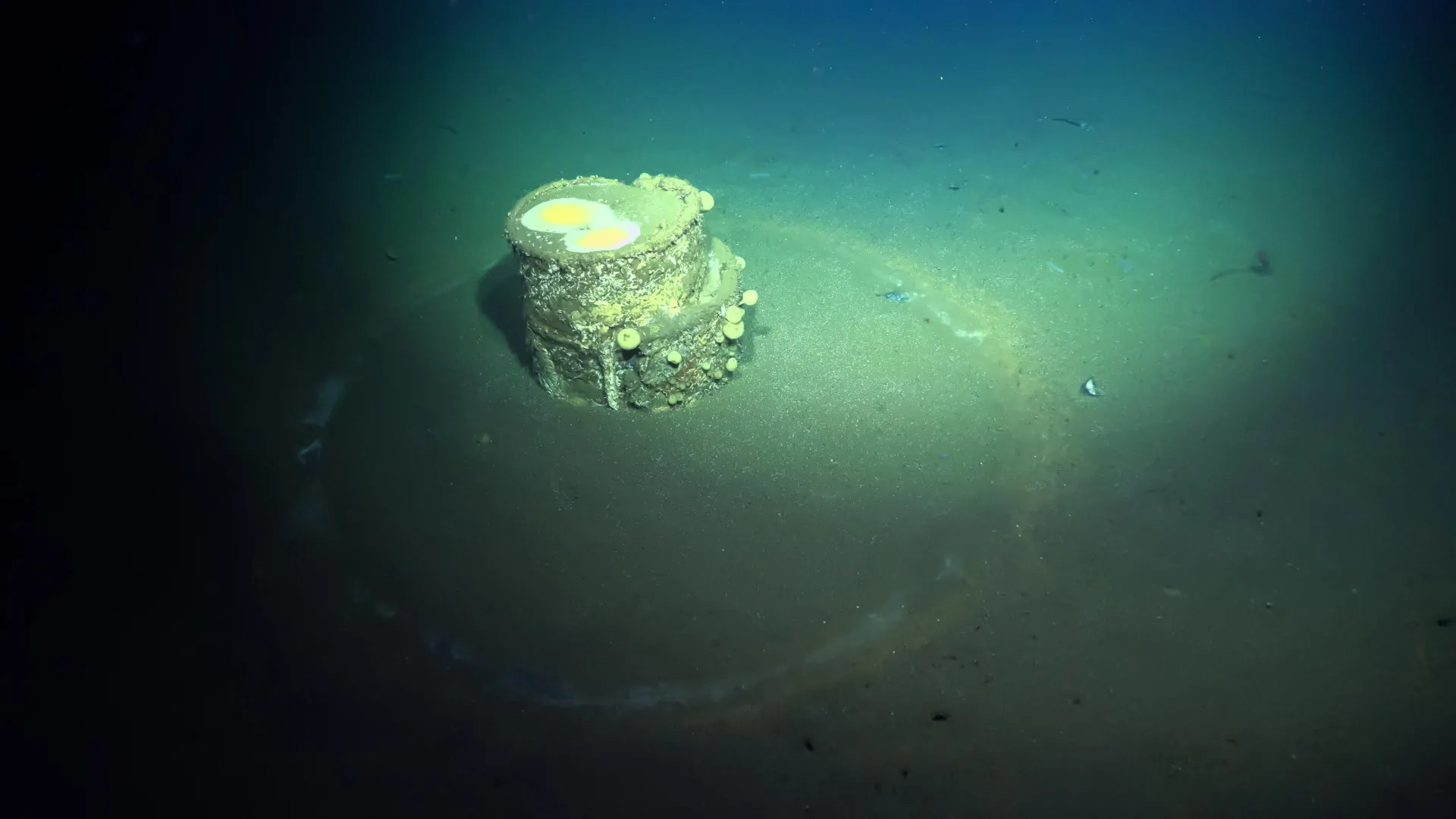
A discarded barrel on the seafloor off the coast of Los Angeles. The image was taken during a survey in July 2021 by remotely operated vehicle SuBastian. Credit: Schmidt Ocean Institute

In 2020, haunting images of corroded metal barrels in the deep ocean off Los Angeles leapt into the public consciousness. Initially linked to the toxic pesticide DDT, some barrels were encircled by ghostly halos in the sediment. It was unclear whether the barrels contained DDT waste, leaving the barrels’ contents and the eerie halos unexplained.

Now, new research from UC San Diego’s Scripps Institution of Oceanography reveals that the barrels with halos contained caustic alkaline waste, which created the halos as it leaked out. Though the study’s findings can’t identify which specific chemicals were present in the barrels, DDT manufacturing did produce alkaline as well as acidic waste. Other major industries in the region such as oil refining also generated significant alkaline waste.

“One of the main waste streams from DDT production was acid and they didn’t put that into barrels,” said Johanna Gutleben, a Scripps postdoctoral scholar and the study’s first author. “It makes you wonder: What was worse than DDT acid waste to deserve being put into barrels?”

The study also found that the caustic waste from these barrels transformed portions of the seafloor into extreme environments mirroring natural hydrothermal vents — complete with specialized bacteria that thrive where most life cannot survive. The study authors said the severity and extent of this alkaline waste’s impacts on the marine environment depend on how many of these barrels are sitting on the seafloor and the specific chemicals they contained.

Despite these unknowns, Paul Jensen, emeritus marine microbiologist at Scripps and senior author of the study, said that he would have expected the alkaline waste to quickly dissipate in seawater. Instead, it has persisted for more than half a century, suggesting this alkaline waste “can now join the ranks of DDT as a persistent pollutant with long-term environmental impacts.”

The study, published on September 9 in the Proceedings of the National Academy of Sciences Nexus and supported by NOAA and the University of Southern California’s Sea Grant program, continues Scripps’ leadership role in unspooling the toxic legacy of once-legal ocean dumping off the coast of Southern California. The findings also provide a way of visually identifying barrels that formerly contained this caustic alkaline waste.

“DDT was not the only thing that was dumped in this part of the ocean and we have only a very fragmented idea of what else was dumped there,” said Gutleben. “We only find what we are looking for and up to this point we have mostly been looking for DDT. Nobody was thinking about alkaline waste before this and we may have to start looking for other things as well.”

From the 1930s until the early 1970s, 14 deep-water dump sites off the coast of Southern California received “refinery wastes, filter cakes and oil drilling wastes, chemical wastes, refuse and garbage, military explosives and radioactive wastes,” according to the EPA. A pair of Scripps-led seafloor surveys in 2021 and 2023 identified thousands of objects, including hundreds of discarded military munitions. The number of barrels on the seafloor remains unknown. Sediments in the area are heavily contaminated with the pesticide DDT, a chemical banned in 1972 now known to harm humans and wildlife. Scant records from this time period suggest DDT waste was largely pumped directly into the ocean.

Gutleben said she and her co-authors didn’t initially set out to solve the halo mystery. In 2021, aboard the Schmidt Ocean Institute’s Research Vessel Falkor, she and other researchers collected sediment samples to better understand the contamination near Catalina. Using the remotely operated vehicle (ROV) SuBastian, the team collected sediment samples at precise distances from five barrels, three of which had white halos.

The barrels featuring white halos presented an unexpected challenge: Inside the white halos the sea floor suddenly became like concrete, preventing the researchers from collecting samples with their coring devices. Using the ROV’s robotic arm, the researchers collected a piece of the hardened sediment from one of the halo barrels.

The team analyzed the sediment samples and the hardened piece of halo barrel crust for DDT concentrations, mineral content and microbial DNA. The sediment samples showed that DDT contamination did not increase closer to the barrels, deepening the mystery of what they contained.

During the analysis, Gutleben struggled to extract microbial DNA from the samples taken through the halos. After some unsuccessful troubleshooting in the lab, Gutleben tested one of these samples’ pH. She was shocked to find that the sample’s pH was extremely high — around 12. All the samples from near the barrels with halos turned out to be similarly alkaline. (An alkaline mixture is also known as a base, meaning it has a pH higher than 7 — as opposed to an acid which has a pH less than 7).

This explained the limited amount of microbial DNA she and her colleagues had been able to extract from the halo samples. The samples turned out to have low bacterial diversity compared to other surrounding sediments and the bacteria came from families adapted to alkaline environments, like deep-sea hydrothermal vents and alkaline hot springs.

Analysis of the hard crust showed that it was mostly made of a mineral called brucite. When the alkaline waste leaked from the barrels, it reacted with magnesium in the seawater to create brucite, which cemented the sediment into a concrete-like crust. The brucite is also slowly dissolving, which maintains the high pH in the sediment around the barrels, and creates a place only few extremophilic microbes can survive. Where this high pH meets the surrounding seawater, it forms calcium carbonate that deposits as a white dust, creating the halos.

“This adds to our understanding of the consequences of the dumping of these barrels,” said Jensen. “It’s shocking that 50-plus years later you’re still seeing these effects. We can’t quantify the environmental impact without knowing how many of these barrels with white halos are out there, but it’s clearly having a localized impact on microbes.”

Prior research led by Lisa Levin, study co-author and emeritus biological oceanographer at Scripps, showed that small animal biodiversity around the barrels with halos was also reduced. Jensen said that roughly a third of the barrels that have been visually observed had halos, but it’s unclear if this ratio holds true for the entire area and it remains unknown just how many barrels are sitting on the seafloor.

The researchers suggest using white halos as indicators of alkaline waste could help rapidly assess the extent of alkaline waste contamination near Catalina. Next, Gutleben and Jensen said they are experimenting with DDT contaminated sediments collected from the dump site to search for microbes capable of breaking down DDT.

The slow microbial breakdown the researchers are now studying may be the only feasible hope for eliminating the DDT dumped decades ago. Jensen said that trying to physically remove the contaminated sediments would, in addition to being a huge logistical challenge, likely do more harm than good.

“The highest concentrations of DDT are buried around 4 or 5 centimeters below the surface — so it’s kind of contained,” said Jensen. “If you tried to suction that up you would create a huge sediment plume and stir that contamination into the water column.”

In addition to Gutleben, Jensen and Levin, Sheila Podell, Douglas Sweeney and Carlos Neira of Scripps Oceanography co-authored the study, alongside Kira Mizell of the U.S. Geological Survey.

CLICK HERE FOR MORE INFORMATION

https://www.sciencedaily.com/releases/2025/09/250910000244.htm