Source:King Abdullah University of Science & Technology (KAUST)
Summary:Beneath the ocean’s surface, bacteria have evolved specialized enzymes that can digest PET plastic, the material used in bottles and clothes. Researchers at KAUST discovered that a unique molecular signature distinguishes enzymes capable of efficiently breaking down plastic. Found in nearly 80% of ocean samples, these PETase variants show nature’s growing adaptation to human pollution.Share:
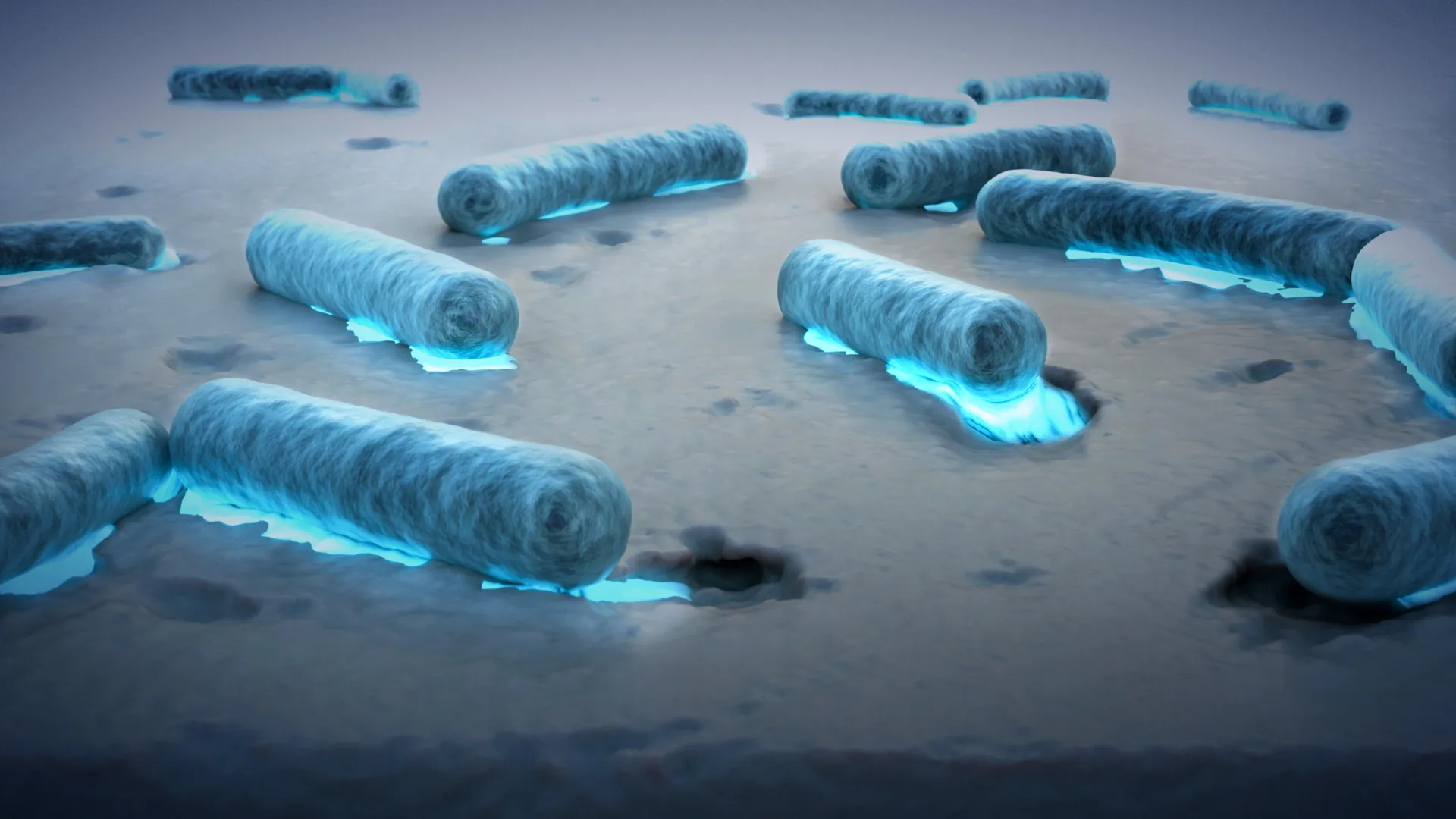
Far beneath the ocean’s surface, researchers have found bacteria that can digest plastic, using specialized enzymes that evolved alongside humanity’s synthetic debris.
A large-scale global study by scientists at KAUST (King Abdullah University of Science and Technology) revealed that these marine microbes are widespread and genetically prepared to consume polyethylene terephthalate (PET) — the tough plastic used in everyday items like drink bottles and fabrics.
Their remarkable ability stems from a distinct structural feature on a plastic-degrading enzyme called PETase. This feature, known as the M5 motif, acts as a molecular signature that signals when an enzyme can truly break down PET.
“The M5 motif acts like a fingerprint that tells us when a PETase is likely to be functional, able to break down PET plastic,” explains Carlos Duarte, a marine ecologist and co-leader of the study. “Its discovery helps us understand how these enzymes evolved from other hydrocarbon-degrading enzymes,” he says. “In the ocean, where carbon is scarce, microbes seem to have fine-tuned these enzymes to make use of this new, human-made carbon source: plastic.”
How Nature’s Recyclers Evolved
For decades, scientists believed PET was almost impossible to degrade naturally. That belief began to shift in 2016, when a bacterium discovered in a Japanese recycling plant was found to survive by consuming plastic waste. It had developed a PETase enzyme capable of dismantling plastic polymers into their building blocks.
Yet it remained unclear whether oceanic microbes had developed similar enzymes independently.
Using a combination of artificial intelligence modeling, genetic screening, and laboratory testing, Duarte and his team confirmed that the M5 motif distinguishes true PET-degrading enzymes from inactive look-alikes. In experiments, marine bacteria carrying the complete M5 motif efficiently broke down PET samples. Genetic activity maps showed that M5-PETase genes are highly active throughout the oceans, especially in areas heavily polluted with plastic.
Global Spread of Plastic-Eating Microbes
To understand how widespread these enzymes are, the researchers examined more than 400 ocean samples collected from across the globe. Functional PETases containing the M5 motif appeared in nearly 80 percent of the tested waters, ranging from surface gyres filled with floating debris to nutrient-poor depths nearly two kilometers below.
In the deep sea, this ability may give microbes an important edge. The ability to snack on synthetic carbon may confer a crucial survival advantage, noted Intikhab Alam, a senior bioinformatics researcher and co-leader of the study.
The discovery highlights a growing evolutionary response: microorganisms are adapting to human pollution on a planetary scale.
Although this adaptation reveals nature’s resilience, Duarte cautions against optimism. “By the time plastics reach the deep sea, the risks to marine life and human consumers have already been inflicted,” he warns. The microbial breakdown process is far too slow to offset the massive flow of plastic waste entering the oceans each year.
Turning Discovery Into Real-World Solutions
On land, however, the findings could accelerate progress toward sustainable recycling. “The range of PET-degrading enzymes spontaneously evolved in the deep sea provides models to be optimized in the lab for use in efficiently degrading plastics in treatment plants and, eventually, at home,” says Duarte.
The identification of the M5 motif offers a roadmap for engineering faster, more effective enzymes. It reveals the structural traits that work under real environmental conditions rather than just in test tubes. If scientists can replicate and enhance these natural mechanisms, humanity’s battle against plastic pollution may find powerful new allies in one of the planet’s most unexpected places: the deep ocean.
Using CRISPR to dial down enzyme helps to understand the isotope signatures of methane from different environments
Source:University of California – Berkeley
Summary:Roughly two-thirds of all atmospheric methane, a potent greenhouse gas, comes from methanogens. Tracking down which methanogens in which environment produce methane with a specific isotope signature is difficult, however. UC Berkeley researchers have for the first time CRISPRed the key enzyme involved in microbial methane production to understand the unique isotopic fingerprints of different environments to better understand Earth’s methane budget.Share:
FULL STORY
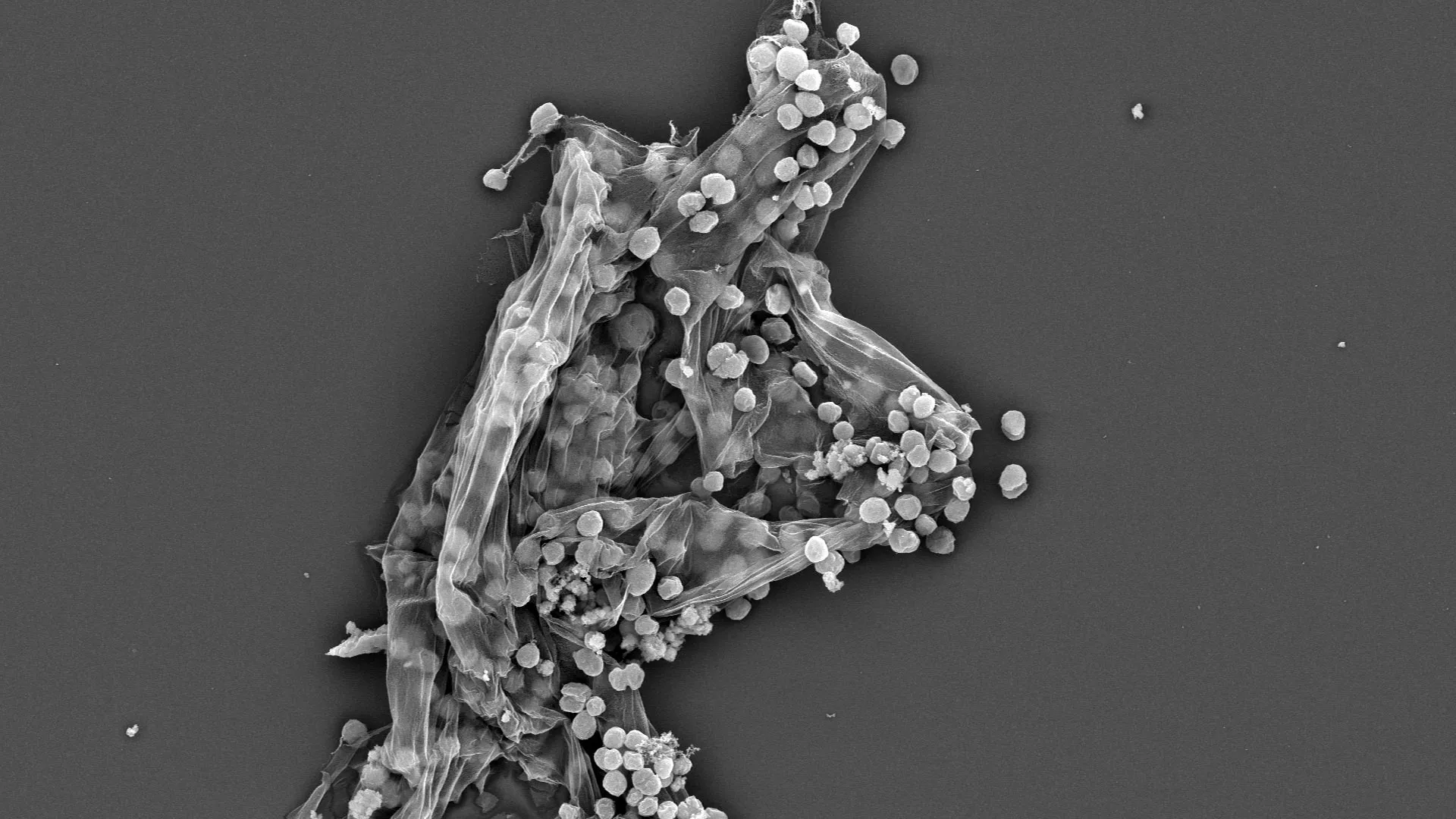
An electron microscope image of single-celled methanogens, members of the archaea domain. They are ubiquitous in oxygen-free environments, turning simple foods into methane, a potent greenhouse gas. Credit: Alienor Baskevitch/UC Berkeley
Roughly two-thirds of all emissions of atmospheric methane — a highly potent greenhouse gas that is warming planet Earth — come from microbes that live in oxygen-free environments like wetlands, rice fields, landfills and the guts of cows.
Tracking atmospheric methane to its specific sources and quantifying their importance remains a challenge, however. Scientists are pretty good at tracing the sources of the main greenhouse gas, carbon dioxide, to focus on mitigating these emissions. But to trace methane’s origins, scientists often have to measure the isotopic composition of methane’s component atoms, carbon and hydrogen, to use as a fingerprint of various environmental sources.
A new paper by researchers at the University of California, Berkeley, reveals how the activity of one of the main microbial enzymes involved in producing methane affects this isotope composition. The finding could change how scientists calculate the contributions of different environmental sources to Earth’s total methane budget.
“When we integrate all the sources and sinks of carbon dioxide into the atmosphere, we kind of get the number that we’re expecting from direct measurement in the atmosphere. But for methane, large uncertainties in fluxes exist — within tens of percents for some of the fluxes — that challenge our ability to precisely quantify the relative importance and changes in time of the sources,” said UC Berkeley postdoctoral fellow Jonathan Gropp, who is first author of the paper. “To quantify the actual sources of methane, you need to really understand the isotopic processes that are used to constrain these fluxes.”
Gropp teamed up with a molecular biologist and a geochemist at UC Berkeley to, for the first time, employ CRISPR to manipulate the activity of this key enzyme to reveal how these methanogens interact with their food supply to produce methane.
“It is well understood that methane levels are rising, but there is a lot of disagreement on the underlying cause,” said co-author Dipti Nayak, UC Berkeley assistant professor of molecular and cell biology. “This study is the first time the disciplines of molecular biology and isotope biogeochemistry have been fused to provide better constraints on how the biology of methanogens controls the isotopic composition of methane.”
Many elements have heavier or lighter versions, called isotopes, that are found in small proportions in nature. Humans are about 99% carbon-12 and 1% carbon-13, which is slightly heavier because it has an extra neutron in its nucleus. The hydrogen in water is 99.985% hydrogen-1 and 0.015% deuterium or hydrogen-2, which is twice as heavy because it has a neutron in its nucleus.
The natural abundances of isotopes are reflected in all biologically produced molecules and variations can be used to study and fingerprint various biological metabolisms.
“Over the last 70 years, people have shown that methane produced by different organisms and other processes can have distinctive isotopic fingerprints,” said geochemist and co-author Daniel Stolper, UC Berkeley associate professor of earth and planetary science. “Natural gas from oil deposits often looks one way. Methane made by the methanogens within cow guts looks another way. Methane made in deep sea sediments by microorganisms has a different fingerprint. Methanogens can consume or ‘eat’, if you will, a variety of compounds including methanol, acetate or hydrogen; make methane; and generate energy from the process. Scientists have commonly assumed that the isotopic fingerprint depends on what the organisms are eating, which often varies from environment to environment, creating our ability to link isotopes to methane origins.”
“I think what’s unique about the paper is, we learned that the isotopic composition of microbial methane isn’t just based on what methanogens eat,” Nayak said. “What you ‘eat’ matters, of course, but the amount of these substrates and the environmental conditions matter too, and perhaps more importantly, how microbes react to those changes.”
“Microbes respond to the environment by manipulating their gene expression, and then the isotopic compositions change as well,” Gropp said. “This should cause us to think more carefully when we analyze data from the environment.”
The paper will appear Aug. 14 in the journal Science.
Vinegar- and alcohol-eating microbes
Methanogens — microorganisms that are archaea, which are on an entirely separate branch of the tree of life from bacteria — are essential to ridding the world of dead and decaying matter. They ingest simple molecules — molecular hydrogen, acetate or methanol, for example — excreted by other organisms and produce methane gas as waste. This natural methane can be observed in the pale Will-o’-the-wisps seen around swamps and marshes at night, but it’s also released invisibly in cow burps, bubbles up from rice paddies and natural wetlands and leaks out of landfills. While most of the methane in the natural gas we burn formed in association with hydrocarbon generation, some deposits were originally produced by methanogens eating buried organic matter.
The isotopic fingerprint of methane produced by methanogens growing on different “food” sources has been well established in laboratory studies, but scientists have found that in the complexity of the real world, methanogens don’t always produce methane with the same isotopic fingerprint as seen in the lab. For example, when grown in the lab, species of methanogens that eat acetate (essentially vinegar), methanol (the simplest alcohol), or molecular hydrogen (H2) produce methane, CH4, with a ratio of hydrogen and carbon isotopes different from the ratios observed in the environment.
Gropp had earlier created a computer model of the metabolic network in methanogens to understand better how the isotope composition of methane is determined. When he got a fellowship to come to UC Berkeley, Stolper and Nayak proposed that he experimentally test his model. Stolper’s laboratory specializes in measuring isotope compositions to explore Earth’s history. Nayak studies methanogens and, as a postdoctoral fellow, found a way to use CRISPR gene editing in methanogens. Her group recently altered the expression of the key enzyme in methanogens that produces the methane — methyl-coenzyme M reductase (MCR) — so that its activity can be dialed down. Enzymes are proteins that catalyze chemical reactions.
Experimenting with these CRISPR-edited microbes — in a common methanogen called Methanosarcina acetivorans growing on acetate and methanol — the researchers looked at how the isotopic composition of methane changed when the enzyme activity was reduced, mimicking what is thought to happen when the microbes are starved for their preferred food.
They found that when MCR is at low concentrations, cells respond by altering the activity of many other enzymes in the cell, causing their inputs and outputs to accumulate and the rate of methane generation to slow so much that enzymes begin running both backwards and forwards. In reverse, these other enzymes remove a hydrogen from carbon atoms; running forward, they add a hydrogen. Together with MCR, they ultimately produce methane (CH4). Each forward and reverse cycle requires one of these enzymes to pull a hydrogen off of the carbon and add a new one ultimately sourced from water. As a result, the isotopic composition of methane’s four hydrogen molecules gradually comes to reflect that of the water, and not just their food source, which starts with three hydrogens.
This is different from typical assumptions for growth on acetate and methanol that assume no exchange between hydrogen derived from water and that from the food source.
“This isotope exchange we found changes the fingerprint of methane generated by acetate and methanol consuming methanogens vs. that typically assumed. Given this, it might be that we have underestimated the contribution of the acetate-consuming microbes, and they might be even more dominant than we have thought,” Gropp said. “We’re proposing that we at least should consider the cellular response of methanogens to their environment when studying isotopic composition of methane.”
Beyond this study, the CRISPR technique for tuning production of enzymes in methanogens could be used to manipulate and study isotope effects in other enzyme networks broadly, which could help researchers answer questions about geobiology and the Earth’s environment today and in the past.
“This opens up a pathway where modern molecular biology is married with isotope-geochemistry to answer environmental problems,” Stolper said. “There are an enormous number of isotopic systems associated with biology and biochemistry that are studied in the environment; I hope we can start looking at them in the way molecular biologists now are looking at these problems in people and other organisms — by controlling gene expression and looking at how the stable isotopes respond.”
For Nayak, the experiments are also a big step in discovering how to alter methanogens to derail production of methane and redirect their energy to producing useful products instead of an environmentally destructive gas.
“By reducing the amount of this enzyme that makes methane and by putting in alternate pathways that the cell can use, we can essentially give them another release valve, if you will, to put those electrons, which they were otherwise putting in carbon to make methane, into something else that would be more useful,” she said.
Other co-authors of the paper are Markus Bill of Lawrence Berkeley National Laboratory and former UC Berkeley postdoc Rebekah Stein, and Max Lloyd, who is a professor at Penn State University. Gropp was supported by a fellowship from the European Molecular Biology Organization. Nayak and Stolper were funded, in part, by Alfred B. Sloan Research Fellowships. Nayak also is an investigator with the Chan-Zuckerberg Biohub.


 GET WET!