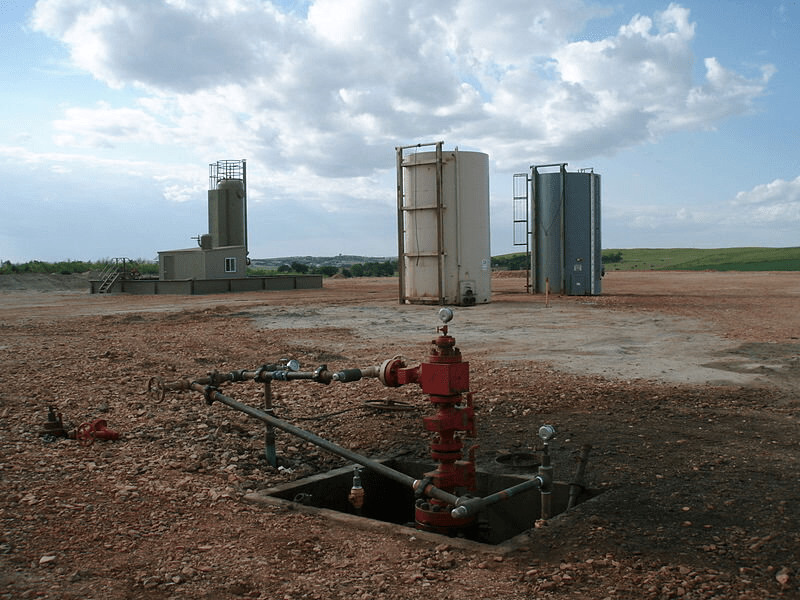
New research documents for the first time the pollution of public water supplies caused by shale gas development, commonly known as fracking, and its negative impact of infant health. These findings call for closer environmental regulation of the industry, as levels of chemicals found in drinking water often fall below regulatory thresholds.
“In this study, we provide evidence that public drinking water quality has been compromised by shale gas development,” said Elaine Hill, Ph.D., an associate professor with the University of Rochester Departments of Public Health Sciences, Economics and Obstetrics & Gynecology. “Our findings indicate that drilling near an infant’s public water source yields poorer birth outcomes and more fracking-related contaminants in public drinking water.”
The new paper, which appears in the Journal of Health Economics, is co-authored by Hill and Lala Ma, Ph.D., with the University of Kentucky. Hill’s previous research was the first to link shale gas development to drinking water quality and has examined the association between shale gas development and reproductive health, and the subsequent impact on later educational attainment, higher risk of childhood asthma exacerbation, higher risk of heart attacks, and opioid deaths. Her research brings an important perspective to the policy discussion about fracking which has often emphasized the immediate job creation and economic benefits, without fully understanding the long-term environmental and health consequences for communities in which drilling occurs.
This new study is a complex examination of the geographic expansion of shale gas drilling in Pennsylvania from 2006 to 2015, during which more than 19,000 wells were established in the state. Hill and Ma mapped the location of each new well in relation to groundwater sources that supply public drinking water, and linked this information maternal residences served by those water systems on birth records, and U.S. Geological Service groundwater contamination measures. This data set allowed the two to pinpoint infant health outcomes—specifically preterm birth and low birth weight—before, during, and after drilling activity. Preterm birth and low birth weight are associated with a range of negative outcomes, including higher risk for developing behavioral and social-emotional problems, and learning difficulties.
Other studies have shown elevated levels of chemicals associated with fracking in surface water, however, these levels often tend to be below federal guidelines, are not monitored closely, and even if detected do not rise to levels that trigger remediation. The new study indicates that fracking-related chemicals—including dangerous volatile organic compounds—are making their way into groundwater that feeds municipal water systems, and that the potential for contamination is greatest during the pre-production period when a new well is established. With only 29 out of more than 1,100 shale gas contaminants regulated in drinking water, the results suggest that the true contamination level is higher. The study specifically finds that every new well drilled within one kilometer of a public drinking water source was associated with an 11-13 percent increase in the incidence of preterm births and low birth weight in infants exposed during gestation.
“These findings indicate large social costs of water pollution generated by an emerging industry with little environmental regulation,” said Hill. “Our research reveals that fracking increases regulated contaminants found in drinking water, but not enough to trigger regulatory violations. This adds to a growing body of research that supports the re-evaluation of existing drinking water policies and possibly the regulation of the shale gas industry.”
Between vast almond orchards and dairy pastures in the heart of California’s farm country sits a property being redesigned to look like it did 150 years ago, before levees restricted the flow of rivers that weave across the landscape.
The 2,100 acres (1,100 hectares) at the confluence of the Tuolumne and San Joaquin rivers in the state’s Central Valley are being reverted to a floodplain. That means when heavy rains cause the rivers to go over their banks, water will run onto the land, allowing traditional ecosystems to flourish and lowering flood risk downstream.
The Dos Rios Ranch Preserve is California’s largest single floodplain restoration project, part of the nation’s broadest effort to rethink how rivers flow as climate change alters the environment. The land it covers used to be a farm, but the owners sold it to the nonprofit River Partners to use for restoring wildlife habitat.
The state wants to fund and prioritize similar projects that lower risks to homes and property while providing other benefits, like boosting habitats, improving water quality and potentially recharging depleted groundwater supplies. By notching or removing levees, swelling rivers can flow onto land that no longer needs to be kept dry.
“It’s giving new life ecologically but in a way that’s consistent with, complementary to, the human systems that have developed over the 150 years since the Gold Rush,” said Julie Rentner, president of Rivers Partners.
The Central Valley covers about 20,000 square miles (51,800 square kilometers) and is an agricultural powerhouse—more than 250 crops are grown there. The region constitutes about 1% of U.S. farmland but produces 25% of the nation’s food while accounting for one-fifth of all groundwater pumping in the U.S.
A flood in the 1860s demonstrates the potential for disaster; up to 6,000 square miles (15,500 square kilometers) of the valley were submerged. As the state’s population rapidly expanded and farming boomed through the 20th century, the government engineered vast systems to move water around to supply people and farms, and erected levees to protect cities and crops.
Some of those levees cut off rivers from their natural floodplains. As climate change causes temperatures to warm, mountain snow that typically trickles into the state’s watershed may fill rivers much faster, increasing the flows beyond what levees can take.
As human populations grow, pure freshwater systems are becoming rare around the world. Urbanization and infrastructure development have had an impact on the natural environment in African countries, as elsewhere. Many species have become extinct.
In Nigeria, various environmental pressures have jeopardized freshwater biodiversity in recent years. Undisturbed freshwater systems have become scarce, as human activity has destroyed many rivers, lakes and streams.
Cutting down trees, using water for domestic and industrial purposes, farming on river banks, dumping garbage and washing are some of the activities that contribute to reducing freshwater biodiversity.
Studies have found that the animals in Nigeria’s freshwater ecosystems are mostly species that indicate low or moderate water quality. In the waters studied, there are fewer species that indicate excellent water quality. Larvae of non-biting midges, soldier flies and hover flies are examples of species that indicatepoor water quality. But biological indicators of excellent water quality, such as mayflies, stoneflies and caddisflies, are frequently underrepresented.
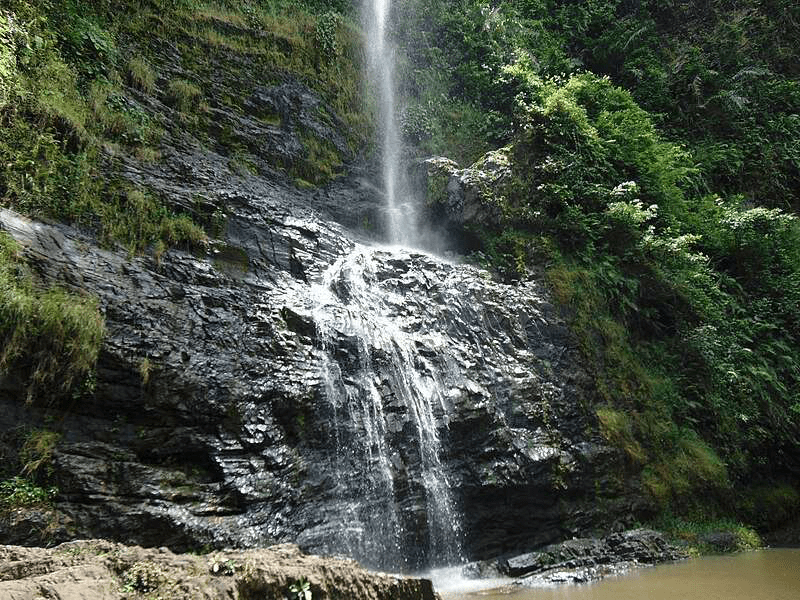
My research group recently conducted an ecological study of the freshwater systems of three waterfalls in Nigeria’s remote regions. They are all far from human settlement and are situated in Nigeria’s different vegetation and geographical zones. Our findings revealed that the streams had exceptional biological water quality, which is unusual in Nigeria.
It’s important to protect these places because pristine freshwater ecosystems are becoming rarer globally.
Although stream restoration filters pollutants out of local waterways and improves the health of the Chesapeake Bay, Baltimore area neighborhoods where it would do the most for water quality are far less willing to pay for such projects, according to a new study by a University of Maryland environmental economist and an interdisciplinary team of colleagues.
The team found that homeowners in the least densely populated, and generally wealthier areas of their study region, were less willing to pay to restore streams, while those in the most densely populated areas, which tended to have lower incomes, were more willing to pay for restoration projects.
The study, which appeared in the journal Environmental Research Letters, should help inform decision makers charged with improving water quality, who often must balance community support with environmental impacts.
“We see this strong urban-to-rural gradient where in urban areas there’s a higher economic potential as far as community support to pay for stream restoration, but less ecological potential to reduce nutrient pollution, and vice versa,” said David Newburn, an associate professor in the Department of Agricultural and Resource Economics at UMD and co-author of the study. “The overall trend is that there’s often a trade-off for environmental and economic benefits from stream restoration projects, and it’s hard to find the win-win locations.”
Stream restoration projects vary greatly with the local environment, but they are all designed to improve the ability of a stream to absorb and process nutrient pollutants and prevent them from flowing downstream. Such projects are central to improving water quality in the Chesapeake Bay and other watersheds around the world. But stream restoration can change the local landscape, sometimes removing trees or adding grassy meadows along streambanks.
Newburn and his colleagues wanted to understand the complex relationship between the environmental benefits of stream restoration and the perceived value to homeowners who frequently pay for them through taxes and fees. The team combined their analysis of one of the most comprehensive data sets on urban stream water quality in the world with a homeowner survey to estimate willingness to pay for various types of restoration projects.
The researchers leveraged long-term sampling data from the Baltimore Ecosystem Study, which has been measuring streamflow and nutrient load (a measure of ecological health of a waterway) since 1998 across fully forested, agricultural and highly developed watersheds. Using modern ecosystem modeling techniques, they estimated how much of the nitrogen would be removed by different stream restoration designs in a variety of settings.
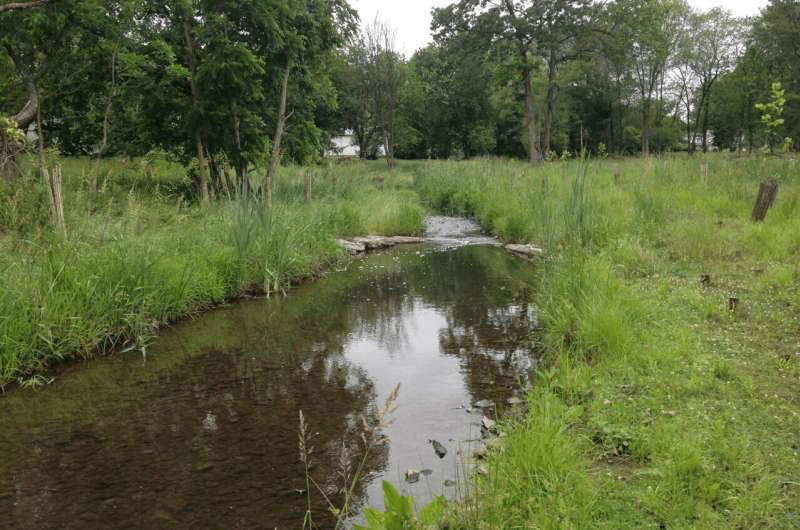
They focused on small, headwater streams within the Baltimore region spanning urban, suburban and exurban neighborhoods, meaning neighborhoods outside of city septic systems that are dominated by single family homes on one to five acre lots. Newburn and his colleagues developed hydrologic models that showed stream restoration had the most nitrogen reduction in the less densely populated exurban areas, where small streams predominantly have low flows. Streams lined by grassy buffers had the highest nutrient reduction compared to tree-lined streams.
The researchers suggest that low water flow in these areas allowed the streams to process nutrients in the water, and grassy buffers allowed more sunlight to reach the water than did tree covered stream banks. Sunlight is important because it helps the algae in streams to remove nitrogen from the water more effectively.
The projects that had the least nitrogen pollution reduction were in the most densely populated, urban areas of Baltimore city. In these neighborhoods, urban runoff from impervious surfaces like rooftops and parking lots leads to local flooding during rainstorms, and the torrents of swift-moving water do not allow streams time to remove a substantial portion of the nutrient pollution.
Next, the researchers used homeowner survey data to analyze willingness to pay for different stream restoration designs and mapped their results throughout the study region.
“In rural areas you get this high environmental benefit, that has high potential to remove nitrogen pollution from waterways, particularly when you remove trees and have grassy streambanks to open up the streams to sunlight,” Newburn said. “But that’s where you get the lowest willingness to pay and sometimes even resistance to tree removal from nearby homeowners compared to doing restoration somewhere else.”
Trees often represent an amenity that has value because homeowners enjoy their aesthetic benefits, and removing them equates to removing this value from the neighborhood. But in densely populated urban areas, where streams were more likely to be surrounded by man-made infrastructure, the addition of grassy meadows or trees during restoration provides green-space amenities that are often lacking, particularly in lower-income urban neighborhoods.
Newburn noted that the added green space in urban areas has social benefits beyond water quality improvement that may be factored into the environmental and socio-economic analysis for decision makers. He also suggested that in the future, research on additional benefits of restoration projects such as reducing urban heat islands, restoring habitats, and quality of life benefits may reveal a greater balance that favors some projects more clearly than others.
Wildlife officials working to prevent threatened Florida manatees from starving to death say they’re encouraged that some of the marine mammals’ favorite food is growing naturally in a key area.
Seagrasses have been found growing recently in small areas of the Indian River Lagoon along Florida’s east coast where chronic pollution has wiped out much of it, officials said on a Wednesday conference call.
“We take it as a positive there is seagrass growing, “said Ron Mezich of the Florida Fish and Wildlife Conservation Commission. “What that means long-term, we have no idea.”
The lack of seagrass forage during winter months has triggered an unprecedented die-off of manatees, including a record of more than 1,100 last year. The deaths recorded so far in 2022 are at 551, according to commission statistics.
The FWC and U.S. Fish and Wildlife Service in March completed an experimental program that fed manatees more than 202,000 pounds (91,600 kilograms) of donated lettuce near a power plant where the animals gather during colder months. Officials say a similar program is in the works for the coming winter.
“We aren’t ruling out other locations,” Mezich said.
As of Wednesday, FWC officials said there were 92 rescued manatees being treated at rehabilitation centers around the country—most of them in Florida including critical care facilities at SeaWorld in Orlando and the Jacksonville Zoo and Gardens.
Jon Wallace of the U.S. Fish and Wildlife Service said the new seagrass growth is positive but the plants could easily be wiped out by a sunlight-choking summer algae bloom. Fully restoring seagrass and improving water quality will take years, he added.
“It is just going to be a long process,” Wallace said.
People interested in assisting the manatee program can donateto a FWC-affiliated organization. Distressed manatees can be reported by calling a hotline at 888-404-FWCC (888-404-3922).
There are only an estimated 7,520 of the animals in the wild today, according to the state wildlife commission.
Manatees are gentle round-tailed giants, sometimes known as sea cows, and weigh as much as 1,200 pounds (550 kilograms) and live as long as 65 years or so. Manatees are also Florida’s official state marine mammal.
Don Myron is probably best known as the guy who survived one of the deadliest fires in Oregon’s history by sheltering overnight in a river with a patio chair. So there was never any question that Myron would rebuild his home in Oregon’s Santiam Canyon after the house was destroyed in the Labor Day wildfires of 2020.
The well Myron shared with nearby homeowners was no longer available, which meant one of his first tasks was to drill his own new source for drinking water.
“It’s hard to rebuild without water,” Myron said. “It’s hard to do anything without water. It was a priority.”
But with climate change confronting communities across the West, people who rely on wells are at particular risk as wildfires grow in intensity and frequency. Without vegetation, fire-scarred land becomes more susceptible to mudslides that can damage watersheds. Drought can increase the concentration of pathogens and other contaminants in well water. And fires can damage the well equipment and piping, leaching toxic chemicals into drinking water and forcing property owners to consider costly repairs, upgrades and filtering systems even as they rebuild their homes and businesses. Beyond the West, heavier rains and floods threaten well water quality, too.
In Oregon, about a quarter of state residents rely on private wells for their water supply, according to the Oregon Health Authority. An estimated 2,000 households that rely on private wells were affected by the Labor Day fires of 2020, which, fueled by severe windstorms, rank among the largest and deadliest fires ever experienced in the state. In response, the state established a free voucher program that pays for people affected by the Labor Day fires to test their well water for some contaminants.
Once Myron’s well was drilled and operational, he used the voucher to have the water tested. It was “as clean as could be,” Myron said. “I was pleasantly surprised.”
Such testing is increasingly common in Western states. After the 2018 Camp Fire nearly destroyed the town of Paradise in northern California, the Butte County Health Department warned residents that creeks and rivers flowing from fire-affected areas could contain elevated levels of heavy metals such as arsenic, a carcinogen, and lead, a neurotoxin. The fires damaged municipal systems and an estimated 2,438 private wells in what is, for now, the deadliest and most destructive wildfire in California history.
The county also alerted property owners that contaminants could seep into the aquifers tapped by private wells. Butte County not only warned people to test for contaminants, but also advised them to drink pricey bottled water until they knew the full extent of the fire damage to their wells.
If a fire burned or damaged the casing or plumbing around a well, officials warned, such breaches could cause bacterial growth, including E. coli, which can cause severe gastrointestinal distress. Heat damage from the fires also can compromise the plastic components of wells, potentially leaching dangerous chemicals into drinking water.
Many of the fire-scarred communities of the West now are using guidelines developed in part by researcher Andrew Whelton, an engineering professor at Purdue University and director of the school’s Center for Plumbing Safety. Whelton studies water safety after wildfires, most recently after the Marshall Fire in suburban Boulder, Colorado.
Health departments and state regulators needed a baseline understanding of what they should tell property owners, Whelton said, and in many cases were too overwhelmed by the logistics of disaster management to develop their own.
“The people that were most affected by the contamination, the people that were receiving water that may or may not be contaminated, they may or may not have contaminated plumbing,” Whelton said. “They didn’t have any single authority to go to, to get advice.”
Most of the states that require that private wells be inspected or tested for integrity or water quality only do so when they’re first drilled or when a property changes hands. It’s generally up to an individual homeowner to pay to maintain a well and monitor its water quality.
As a result, few wells are tested regularly. Polling shows that many Americans care deeply about water quality. But despite highly visible water crises, including high lead levels in Flint, Michigan, and scarcity within the Navajo Nation, the quality and safety of drinking water often are taken for granted. People turn on their taps and expect it to be fine.
In Oregon, only about 200 property owners with private wells have sought testing vouchers following the 2020 fires, said Curtis Cude, manager of the Oregon Health Authority’s domestic well safety program. Public health officials expected more people to apply for the vouchers, though they acknowledge that, because repairs can be expensive, wells may be a lower priority for some families.
“One of the things that we were hearing, especially last year, is that people were still buried in ash and debris,” Cude said. “And some of those properties were so extensively damaged that they hadn’t the opportunity to even think about getting their well on line.”
Nationwide, an estimated 40 million people obtain their drinking water from a domestic well, according to estimates by the U.S. Geological Survey. Many of those people are in rural communities not serviced by municipal water systems. In the West, homes with private wells are often in the places most vulnerable to increasingly hot or intense wildfires or the effects of drought.
In states prone to wildfire, water quality remains an existential threat. The burden of sourcing uncontaminated water can be particularly stressful on people who’ve survived a wildfire.
For example, Whelton points to a study of attitudes about water safety, which surveyed 233 households in Butte County, California, after the Camp Fire. More than half of respondents, 54%, self-reported that at least one member in their household had anxiety, stress or depression directly related to securing water, or in connection with water contamination issues. Most people who were surveyed said uncertainty about water and plumbing safety prompted them to alter water use in their homes. About 47% installed in-home water treatment technologies; 85% said they sought out alternate water sources.
Yet well contamination is a problem all over the country, including in places where climate change means more frequent and more intense rain events. In the Midwest, the intensity and frequency of rainstorms has increased since 1901, according to the most recent National Climate Assessment. It’s projected only to get worse. Heavy rains can overwhelm sewer or septic systems, transporting pathogens to the groundwater drawn up by wells.
In 2018, hurricanes Florence and Michael inundated coastal Florida, Georgia and the Carolinas, dumping more than 30 inches of rain in some places. The storms affected as many as 730,000 wells in the region, according to estimates from the National Groundwater Association. In North Carolina, the rains from Florence flooded more than 30 hog lagoons full of pig waste. The overflowing toxic muck from floodwaters can seep into the aquifer or make its way down into wells from flooding at the surface.
In the wake of the storms, North Carolina tested 1,000 private wells, said Wilson Mize, a regional environmental health specialist with the N.C. Department of Health and Human Services. After Hurricane Florence, 13% of the wells tested were positive for E. coli. Typically, with new wells, only about 3% test positive for it. The results gave health officials a good indication that floodwater was entering the wells, Mize said. The positive results for E. coli dropped to about 3% after wells were disinfected.
The numbers provided state health officials a baseline for the effects of flood-related pollution on wells, which is a matter of critical public health concern—about 2.4 million people rely on wells for drinking water in the state. Since 2018, North Carolina has developed a program to get information out to people with wells who face heavy rainstorms. In areas with many wells, county officials place door hanger pamphlets with information about how to care for a well before and after a storm.
Along with NASA and a researcher at Northeastern University, North Carolina is developing a well water surveillance and response system. It will create a mapping tool that, after flooding, will pinpoint the areas in the state with private wells. It’s aimed at helping the state determine where to emphasize sampling and disinfection after hurricanes, tropical storms and other heavy rains.
In parts of the Midwest, nitrate pollution from fertilizer is especially troublesome after heavy rains, said Scott Laeser, the water program director for Clean Wisconsin, an environmental nonprofit. About a third of Wisconsin residents draw their drinking water from private wells, Laeser said.
About 90% of nitrate contamination comes from manure and commercial fertilizer application. When heavy rainstorms dump water, they wash away the fertilizer on farm fields. Nitrates are especially mobile, and, once rainwater saturates the ground, the compounds quickly descend into the groundwater. Then, the chemicals reemerge in people’s well water. Nitrates are most notable for causing what’s known as blue baby syndrome, a condition that results in low oxygen levels in the blood.
The threat of well pollution from manure is so severe that the state of Wisconsin operates an online risk advisory forecast to help farmers understand how weather conditions and soil temperatures might exacerbate runoff. It is updated three times a day by the National Weather Service.
Laeser said the conservation work conducted by Clean Wisconsin to prevent runoff has been based on the assumptions of past climate patterns, not a present and future in which major rainstorms are increasingly frequent. The group’s conservation measures in the state weren’t enough before, he said, but now, they look “increasingly inadequate in the face of the extreme weather challenges that we’re facing.”
“What we are having to do is kind of toss those out because they aren’t relevant anymore,” Laeser said. “Places in western and northern Wisconsin are getting 100- and 500-year storms annually or biannually.”
Agriculture has the potential to be a big part of climate solutions, Laeser said. Synthetic fertilizer production uses fossil fuels, in particular natural gas. Heavy fertilizer use contributes to greenhouse gas emissions.
Reducing synthetic fertilizer use helps both the climate and water quality, Laeser said. So does finding ways for farms to be financially resilient and sustainable—including incentivizing growers to set aside wetlands—that don’t “solely reward them based on as much cheap food as possible.”
“There’s a huge opportunity in that we can address so many water and climate challenges simultaneously,” Laeser said. “The connections between our water and climate challenges are becoming clearer by the day.”
A study into the management and attitudes of key stakeholders operating in the Great Barrier Reef region has found that past and current approaches do not adequately address climate change threats to the reef or likely losses of species, habitats and processes.
Dr. Wade Hadwen from Griffith University’s Australian Rivers Institute and Climate Action Beacon and Lisa Walpole from Alluvium Consulting published the results in Ecology and Society.
The study provides a critical evaluation of management plans and actions with respect to the Great Barrier Reef over the past 30 years, focusing on the degree to which climate change threats have been incorporated into those plans and actions.
With another mass bleaching event impacting the Great Barrier Reef and a United Nations push to list the reef as ‘in danger,” Dr. Hadwen said current management approaches fell short of what was needed to provide the reef with any chance of remaining in good condition.
“In this study, we were able to review the management plans of key stakeholders in the GBR region and explore evidence of the willingness to accept environmental change—and the scientific evidence which has been talking about climate threats for almost five decades—through the lenses of environmental grief and resilience thinking concepts,” he said.
“Despite the huge ongoing investment in reef protection, few components of the reef management program have fully incorporated climate change and recognized that changes in the ecosystem are occurring now and are inevitable.
“This analysis highlights how the strategic planning environment for the GBR is lagging behind the state of knowledge.”
The researchers found that management efforts for the GBR had focused on “resilience as recovery” and fell short of “resilience as adaptation” and the opportunities created by “resilience as transformation.”
Despite the state of scientific understanding, Dr. Hadwen said the study revealed how the prevailing individual or collective mindset could support or suppress a “resilience as transformation” approach to management of the GBR.
“Over the past five years, the GBR has been exposed to several unprecedented climate-related events, including three coral bleaching events and impacts from severe tropical cyclones, poor water quality from catchment run-off, population increaseand urbanization, port expansion, fishing, and habitat loss,” he said.
“Acceptance of a future change in state in terms of system structure and function, and related changes in environmental, social, and economic values, would lead to a significant shift in the way the GBR is managed, liberating agencies and stakeholders to let go of the past and plan for the future.”
The study, “Extreme events, loss, and grief—an evaluation of the evolving management of climate change threats on the Great Barrier Reef,” has been published in Ecology and Society.
Biologists at the University of Cincinnati are studying low-cost ways to improve water quality and wildlife habitat in urban creeks.
Like those found in many large cities, Cincinnati’s streams are routinely affected by flash floods, sewage overflows, pollution and stormwater runoff.
UC biologists Stephen Matter and Michael Booth are examining whether water quality and wildlife habitat can be improved simply by adding a touch more of Mother Nature. With a team of volunteers, they placed fallen logs and branches in select parts of the upper Cooper Creek, a stream in the Cincinnati suburb of Blue Ash that drains downstream into the larger Mill Creek and Ohio River.
The addition of fallen timber could help slow periodic floodwaters, create more standing pools for fish during droughts and reduce nutrients that could make their way downstream, researchers said.
“Cooper Creek typifies a lot of issues streams in Hamilton County face,” said Booth, an assistant professor who studies fish and aquatic ecology across the country.
“We know wood plays an important role for creating wildlife habitat. Cooper Creek is a boring place—lots of rocks but not much else,” he said. “In creeks you’d like to see a variety of habitats, fallen logs, standing pools and flowing water.”
The UC researchers presented the project in April to the Geological Society of America’s sectional conference in Cincinnati. The project is supported by the Ohio Water Resources Center through a U.S. Geological Survey grant.
Greater Cincinnati has an extensive network of creeks feeding its major rivers.
“These streams really are the lifeblood of the natural system,” said Matter, an associate professor of biology in UC’s College of Arts and Sciences.
“Most of our creeks are these small headwater streams. If you walk through Cincinnati, you’re going to run into one of these in every neighborhood,” Matter said. “Often they’re places we’d like to see nature.”
“There are lots of impervious surfaces. When it rains, you see a massive increase in stream flow. This leads to major changes in sediment and habitat available for aquatic life,” Booth said.
As a result, while Ohio is home to 170 native freshwater fish, the upper section of Cooper Creek is home to just three species of fish today, Booth said.
“As we go downstream, we might add four or five more species,” he said. That’s a startling lack of biodiversity and a sign of an unhealthy ecosystem, he said.
“But we would definitely expect to see double the number of fish species if we had better habitat and better connectivity for fish to move back up into these sections,” Booth said. “We’re looking for a cost-effective solution to deploy to improve urban streams.”
Adam Lehmann, stream conservation program manager for the Hamilton County Conservation District, is overseeing the demonstration project. He said the biggest challenge facing headwater streams in Ohio is they become bone dry between rainstorms.
“If a stream goes dry between rain events, the fish aren’t going to care how polluted the water is,” Lehmann said.
But by placing heavy logs in strategic places in the creek where flooding won’t easily be able to wash them downstream, Lehmann said he hopes to use the rush of water to his advantage to create intermittent pools of water where fish and other aquatic life can survive between storms.
“Everybody understands that when a stream goes dry, fish are out of luck,” he said. “If we jam one side of a log against a tree, we can force the flow of water under the log to scour out a depression that will hold water in dry times.”
Lehmann said the logs should help to catch other flood-swept debris as well. Historically, fallen timber was removed from creeks to prevent it from clogging drainage culverts. Paradoxically, Lehmann said they expect to see less woody debris blocking drainage culverts by adding more heavy wood to the creek.
Restoring the natural hydrology of creeks can be expensive and labor-intensive, often requiring intrusive heavy equipment. Researchers are hoping to see similar benefits from less drastic efforts than bringing in backhoes.
“I like to focus on scalable solutions,” Lehmann said. “You don’t have to mow down the forest to get in there. You don’t need to hire engineers or obtain Clean Water Act permits. And the wood is available free of charge.”
To gauge the project’s effectiveness, researchers plan to add little passive transponders to each log and return to see if the wood gets washed downstream or remains in place as they hope it will.
If the project is successful, it could demonstrate that relatively simple efforts can have profound benefits. Hamilton County is home to more than 1,000 headwater streams that feed its lakes and rivers, said Amanda Nurre, watershed specialist with the Great Parks of Hamilton County.
“We have a very impressive watershed in Hamilton County. There are small streams in every park. We’re very interested in finding low-cost ways to improve our streams. I think it could be a useful tool,” she said. “I’m optimistic to see if it can work.”
“When it rains, it pours.” This phrase is meant to mean that bad news comes in waves. Unfortunately, that’s true with real rain, too. While rain is usually welcome for various reasons, in developed area like cities and towns, it can produce a big problem: polluted runoff.
Wherever rains lands on traditional human-made surfaces, it can’t soak into the ground. Instead, water from large areas like streets, driveways, and roofs collects, looking for lower ground. To deal with this runoff, cities have developed complex stormwater control systems. Eventually, the water is routed to a stream or lake. This runoff, though, can become contaminated in its travels, which risks the pollution of essential waterways.
In addition to hurting waterways, none of the runoff water helps recharge groundwater. Because many people rely on groundwater for drinking water, this can become a big problem. This is where green infrastructure practices come in. These structures collect stormwater and let it soak into the soil naturally. Bioretention cells are a popular example of green infrastructure for improving stormwater at a large scale, and rain gardens on a residential scale.
“The first goal of green stormwater infrastructure measures is to allow stormwater to filter into the ground on-site so that it contributes to groundwater recharge,” says Thorsten Knappenberger, a professor at Auburn University. Knappenberger recently conducted a study on how to make these structures better.
The study was published in Agricultural & Environmental Letters, a publication of the American Society of Agronomy, Crop Science Society of America, and Soil Science Society of America.
The study focused on two main ways to try and improve bioretention cells. One was to ensure water soaks into the soil at an optimum rate to treat pollutants. The other focus was to increase how many pollutants the cell can trap. Excess nutrients from fertilizer and heavy metals are especially worrisome when they runoff into water bodies. These contaminants decrease water quality, which is a big issue for surface water and groundwater that people drink. If a cell can hold onto and transform these contaminates, it protects water quality.To try and improve these metrics, Knappenberger tested a material known as zeolite. This mineral is made of aluminum and silicon that traps toxic chemicals. Knappenberger replaced some of the sand in the rain gardens with zeolite and measured how well the material performed.
Not surprisingly, zeolite held onto contaminates like ammonia and copper. But because the existing formula for bioretention cells is already efficient at trapping these materials, zeolite didn’t make a significant improvement. Zeolite also reduced the amount of nitrate leaving the cells. “Nitrate is a compound that is not typically held or retained by soil, so it was surprising that the nitrate retention was higher with added zeolite,” says Knappenberger. At the same time, zeolite tended to increase how quickly water could soak into the ground, which is a big plus. The findings could help communities design more effective bioretention cells.
While scientists like Knappenberger work to make green infrastructure practices better, readers may wonder what they can do to help. Be mindful about what is flushed down the storm drain, he says.
“Many people still think that the stormwater which enters a storm drain is treated in a wastewater treatment plant. But for the vast majority, the stormwater goes directly into a surface water body,” says Knappenberger. “This means that if you wash your car in your driveway, for example, the contaminated waterwith soap, oil, and grease will drain into a storm drain and might end up in the next creek.”
Griffith University researchers are unraveling how stressors like climate change, pollution, dissolved nitrogen and sediment from run-off are having combined effects in coastal ecosystems.
Two studies published in Ecology Letters and Proceedings of the Royal Society B reveal combining increasing ocean temperatures, pollution or dissolved nitrogen with the reduced light caused by sediment in the water can either amplify or reduce the impact of these stressors individually on seagrass or algal growth.
“Crucially, we show that the combined effects on seagrass and algal growth can vary significantly dependent on the amount of the two stressors and duration of exposure,” said Dr. Mischa Turschwell, Research Fellow at the Australian Rivers Institute.
“With the onset of climate change, coastal and marine ecosystems are under threat on more than one front from stressors such as rising ocean temperatures, poor water qualityand pollution.
“To effectively look after these coastal ecosystems, managers need a thorough understanding of the effects these human induced changes have, both individually and in combination.”
Associate Professor Chris Brown, head of the Seascape Models group at Australian Rivers Institute and the Coastal and Marine Research Centre lamented that “to-date most attempts to discover of how such stressors interact, using data pooled from multiple studies, have failed to find consistent predictions for combined effects.”
“Few generalities for the combined effects of these stressors have been seen, with meta-studies based on multiple pasts studies on same stressors often yielding conflicting results.”
With far too many potential stressor combinations for researchers to ever to hope to measure them all, accurate models are needed that can predict how potential environmental stressors interact.
Dr. Turschwell and his team built a model to predict how temperature and light interact to affect seagrass photosynthesis and growth, which also included an animal that consumed the seagrass.
“Using the model, we assessed the combined effect of both the temperature and the light in the water, altering the amount of both and how long they were exposed for,” Dr. Turschwell said.
“Surprisingly, our model revealed how combining the same two stressors could amplify or mitigate their individual consequences for seagrass growth.
“The combined impact on seagrass relied heavily on the changing amounts of the stressors. For example, when higher levels of light loss were combined with temperature the interactive impact became stronger.
“When organisms that eat seagrass were added to the model to better simulate real life systems the combined effect temperature and loss of light on seagrass growth changed yet again.”
To determine if these models are a true indication of what happens when water quality stressors are combined, Ph.D. candidate Olivia King conducted experimental studies on the interactive effects of three common stressors; a herbicide (diuron), dissolved inorganic nitrogen and reduced light (due to sediment).
Pollution in coastal water, such as herbicides in runoff from agriculture and sediment from erosion can affect the growth of important algae species.
Similar to finds using the model, Ms King’s study of multiple stressors like diuron and reduced light could either amplify or reduce their individual effects, depending on the changing amounts of these pollutants, how long they’re exposed or the biological response being looked at.
“This research clearly shows why it has been so difficult in the past to get a clear picture of how more than one stressor interact, because their combined effect can vary with factors like duration and the amount used.”
“To develop consistent patterns of these interactions we need to learn how stressors change with context and develop experiments accordingly that run over extended time scales, with treatments across gradients of stressor levels.”
There is an urgent need to better understand the combined impact of the multiple simultaneous stressors affecting the marine environment, in order to provide useful predictions on the highest priority stressors for managers of marine ecosystems to tackle.
“Water quality on the great barrier reef, for example, is managed using guidelines that currently only consider one pollutant at a time,” Associate Professor Brown said.
“Our work shows the need, and process for, updating water quality guidelines for the Great Barrier Reef and other important ecosystems, to account for the amplifying effects of multiple pollutants.
“Similarly, the combined effects of pollutants and increasing warming is a clear indication that water quality guidelines need to consider how increasing levels of climate change will interact with pollution.”