Hungry caterpillars an underappreciated river of carbon emissions

A study led by the University of Cambridge has found that periodic mass outbreaks of leaf-munching caterpillars can improve the water quality of nearby lakes—but may also increase the lakes’ carbon dioxide emissions.

Outbreaks of caterpillars of invasive gypsy moths, Lymantria dispar dispar, and forest tent caterpillar moths, Malacasoma disstriaoccur at least every five years in temperate forests. The insects munch through so many leaves that the resulting decrease in leaf-fall and increase in insect excrement has been found to alter the cycling of nutrients, particularly carbon and nitrogen, between land and nearby lakes on a huge scale.

Nitrogen-rich insect excrement, called frass, can wash into lakewater and act as fertilizer for microbes, which then release carbon dioxide into the atmosphere as they metabolize. The researchers suggest that in outbreak years the large quantities of frass will favor the growth of greenhouse gas-producing bacteria in lakes at the expense of algae that remove CO2 from the atmosphere.

“These insects are basically little machines that convert carbon-rich leaves into nitrogen-rich poo. The poo drops into lakes instead of the leaves, and this significantly changes the water chemistry—we think it will increase the extent to which lakes are sources of greenhouse gases,” said Professor Andrew Tanentzap in the University of Cambridge’s Department of Plant Sciences, senior author of the paper.

Northwards range expansion and increased insect population growth is anticipated as the climate changes. This puts northern forests at increased risk of defoliator outbreaks in the future, potentially causing greater quantities of CO2 to be released from nearby lakes.

This northwards shift is also concerning because there are more freshwater lakes further north. And climate change is also expected to favor broadleaved deciduous trees around the lakes, which will amplify the effect of the insects.

The study found that in years with insect outbreaks, the leaf area of forests was reduced by an average of 22%. At the same time, nearby lakes contained 112% more dissolved nitrogen and 27% less dissolved carbon compared to non-outbreak years. The effects were greatest when lake catchments contained higher proportions of deciduous broadleaved trees, such as oaks and maples, which the caterpillars favor over coniferous trees like pines.To get their results, researchers combined 32 years of government data from insect outbreak surveys and lake water chemistry in 12 lake catchments across Ontario, Canada, and satellite remote sensing data on forest type and monthly leaf area cover. The results are published today in the journal Nature Communications.

FOR MORE INFORMATION: https://phys.org/news/2021-11-hungry-caterpillars-underappreciated-driver-carbon.html

Toxic foam covers India’s sacred Yamuna river

One of India’s holiest rivers was coated with toxic foam on Monday, adding to the woes of New Delhi residents already enduring a blanket of thick smog over the capital.

The Yamuna is already one of the most polluted waterways in the country but parts of the river, which courses through the centre of Delhi, were coated in mounds of white foam resembling snowfall.

The city government blamed the blight on “heavy sewage and industrial waste” discharged into the river from further upstream last week.

It did not deter several Hindu worshippers from taking a dip in the river to mark Chhath Puja, a four-day festival to offer prayers to the sun. 

But the pollution did disrupt water supply to part of the city, according to local officials, who did not say how many households had been affected.

“I would like to thank the affected residents for their cooperation,” Raghav Chadha, vice-chair of the city’s water authority, said in a Sunday statement.

“Our team of officers and engineers are working day and night to ensure Delhi residents’ water woes stay at a minimum.”

Indian officials have long pledged to clean the Yamuna but without success, and the blooms of toxic foam have become an annual occurrence. 

A 2020 government report found water quality in the river had become “critically worse” over the last five years.

Delhi and its surrounds have also been engulfed in thick and hazardous smog since last week. 

The haze has been compounded by agricultural fires in nearby farming communities and a barrage of fireworks set off by the capital’s residents to mark Diwali, despite a ban on their sale. 

Levels of harmful PM 2.5 particles have topped 400 in several areas, which is 16 times higher than the daily safe limit set by the World Health Organization.

FOR MORE INFORMATION: https://phys.org/news/2021-11-toxic-foam-india-sacred-yamuna.html

Florida surpasses a grim milestone: One thousand dead manatees

Since July, every weekly update from state wildlife officials has set a new record for the most manatee deaths counted in a single year. On Wednesday, Florida crossed an especially tragic threshold: More than 1,000 manatees dead.

The exact count, through Nov. 12, was 1,003 manatees, according to the Florida Fish and Wildlife Conservation Commission.

That is up from 637 all of last year and far above the previous record, 830, in 2013. Florida passed the previous high halfway through 2021. Manatee death reports are filed each Friday and published by the state the following Wednesday.

“It makes me sad and angry,” said Patrick Rose, executive director of Save the Manatee Club, a conservation nonprofit.

The bad year got off to a quick start. Manatees took shelter from cold water by warm discharges from a power plant in the Indian River Lagoon off Brevard County, scientists say. The area is a typical wintering spot, but years of algal blooms there have killed tens of thousands of acres of seagrass. That destruction left manatees without enough food. Many starved.

“It could’ve been prevented,” Rose said. The algal blooms that have decimated the lagoon are fueled by human pollution, like septic and sewer overflows and fertilizer runoff during rainstorms.

Starvation is not the only culprit for manatee deaths, though. Nearly 100 have been killed in collisions with boats or other watercraft, according to Conservation Commission data. Red Tide has also contributed. The Tampa Bay and Pinellas shorelines were hit hard by a toxic bloom this summer.

The die-off in 2021 has left some with fears for the long-term health of one of Florida’s most beloved and iconic species. Manatees are listed as a threatened animal, after federal wildlife regulators improved their status from endangered in 2017. The Conservation Commission in recent years estimated at least 7,520 were alive.

U.S. Rep. Vern Buchanan, R-Fla., introduced a bill in August to return manatees to an endangered status. If passed, HR 4946 could draw more funding and attention, Buchanan said, which he hopes would help protect the creatures.

“I represent Manatee County. Manatees are so beloved there, but also across Florida,” Buchanan said. “People are very passionate about it.”

Manatees aren’t only cute, Rose said. Their health is a signal for the well-being of the overall ecosystem. Many fish and turtles also eat or live in seagrass, and poor water qualityaffects human health.

The damage that caused the die-off last winter is not easily repaired. State scientists and conservationists fear a repeat if manatees around Brevard County again struggle to find food this winter.

FOR MORE INFORMATION: https://phys.org/news/2021-11-florida-surpasses-grim-milestone-thousand.html

Novel model can aid decisions in electricity generation, stream water quality

Switching from coal to natural gas in power plants can reduce how much sulfur dioxide, a gas that smells like a freshly struck match, is emitted into the atmosphere and ultimately how much sulfate pollution enters waterways, according to a Penn State-led research team that has developed a model to detect if the recent switch from coal to gas is affecting streams.

“The number of power plants switching from coal to natural gas is increasing, and sulfur dioxide emissions in Pennsylvania and across the United States are decreasing dramatically,” said Xianzeng Niu, assistant research professor in Penn State’s Earth and Environmental Systems Institute (EESI). “Both technology and the shift of fuels have contributed to this trend. We wanted to look at how this trend has affected water quality.”

Coal- and natural gas-burning power plants emit sulfur dioxideinto the atmosphere, but coal has a much higher sulfur content than natural gas and releases more sulfur dioxide when burned. The sulfur particles eventually fall back down to earth and can acidify streams. Too much sulfur, which enters waterways in the form of sulfate, can cause water chemistry to become harmful to ecosystems.

The idea for the project arose when undergraduate studentsworking in a geosciences class with co-author Susan L. Brantley, Barnes Professor of Geosciences and director of EESI, had noticed that some streams near power plants in central Pennsylvania seemed to show improvements in water quality. The students thought that power plants switching to natural gas may explain the positive results. However, small datasets and new technologies that remove sulfur dioxide from emissions made it difficult to identify in the data the more recent shift from coal- to natural-gas-fired power plants. The research team developed a new technology trend model that made it possible to test an idea like that of the students using a big dataset.

The researchers looked at decades of sulfur dioxide emissions from Pennsylvania power plants provided by the U.S. Energy Information Administration (EIA) and stream sulfate concentrations taken by the Pennsylvania Department of Environmental Protection’s Bureau of Clean Water. They used the large datasets to search for evidence that water quality improved with the switch to natural gas. They also studied federal regulations, such as the Clean Air Act amendments of 1990 and the acid rain programs of 1995 and 2000, and how power plants adopted technologies to lower their sulfur dioxide emissions as required by the new laws.

They used the data to create a novel technology trend model to see how technological adoption affected emissions from coal-fired power plants and sulfate concentrations in streams within a 60-mile radius of the plants.

“Our model shows what happens when new technologies evolve and power plants adopt them,” Niu said. “We see that the trend of sulfur dioxide emissions declined gradually when innovators and early adopters first started using the new technologies, then the decline sped up as a majority of power plants adopted the technologies, and finally it slowed again as the late-adopters began implementing them.”

Although not every stream showed improvements in water quality, the model allowed the researchers to see what would happen to emissions and stream sulfate concentrations in Pennsylvania if 30% of the electricity generated by coal-fired power plants in 2017 came from natural gas instead. They found that the shift could have reduced sulfur dioxide emissions by 20.3 thousand tons, which could have decreased stream sulfate concentrations by as much as 10.4%. They reported their findings in the journal Environmental Pollution.

The researchers applied their model to the other 48 contiguous states and found that the model-predicted sulfur dioxide trends largely matched the figures provided by the EIA in all but six states. Climate, soil-type and vegetation-type affect how long it takes sulfate to enter waterways, and scientists and decision makers can change these parameters in the model to make it more accurate for their region, said the researchers.

“To me, what is important here is that whatever energy source we use causes some degradation of the environment,” said Brantley. “Most Pennsylvanians worry today about the impact of fracking and development of shale gas. There are some environmental problems that happen during that development. But, as we have switched from coal to natural gas, there are many impacts of coal—mining, transporting, burning—that are now lessened. So, each of us has to decide what source of energy we want to use, and we have to think about all of the characteristics of each energy source.”

FOR MORE INFORMATION: https://phys.org/news/2021-12-aid-decisions-electricity-stream-quality.html

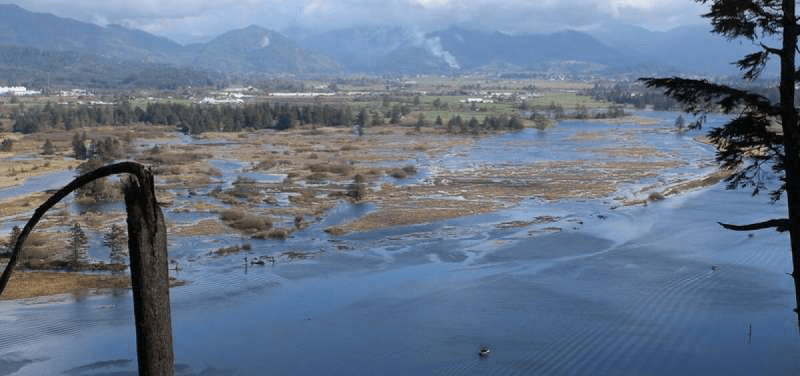
Benefits of Tillamook Bay wetlands restoration extend far beyond the scope of initial project, report finds

A 443-acre tidal wetland habitat restoration project in Oregon’s Tillamook Bay designed to reduce flooding and improve salmon habitat has also brought a host of other socioeconomic benefits to the community, a new report from Oregon State University researchers shows.

Since the $11.2 million project was completed in 2017, the restoration has led to water quality improvements; flood mitigation; salmon habitat improvements; increased carbon storage; added recreation opportunities; and increased home values, the researchers found. 

“This study provides strong evidence that ecosystem restoration is beneficial to communities as well as the environment,” said Steven Dundas, the report’s co-author and an environmental and resource economist in Oregon State University’s College of Agricultural Sciences and the Coastal Oregon Marine Experiment Station in Newport. “The positive impact on housing values near the restored site alone likely justifies the investment in this project.”

The report’s lead author is Graham Shaw, who recently completed his master’s degree in marine resource management at OSU. The Tillamook Estuaries Partnership and the National Oceanic and Atmospheric Administration’s Restoration Center, two of the partners in the restoration project, commissioned the economic impact report.

The primary aim of the wetlands restoration was to reduce severe and disruptive flooding in the city of Tillamook and on U.S. Highway 101 as well as improve habitat for salmon, some species of which are considered threatened or endangered. NOAA and the Federal Emergency Management Agency were the primary funders of the project.

The goal of the new report was to better understand the breadth of economic benefits a tidal restoration project might produce, said Lauren Senkyr, a biologist with the NOAA Restoration Center.

“This kind of information helps us to be able to talk about the community benefits of restoration projects,” Senkyr said. “Projects like this have ripple effects. Not only do they help the fish, they also help people.”

A concurrent NOAA economic impact analysis showed that during the four years the restoration work was underway, the project supported 108 jobs and $14.6 million in total economic output for the state of Oregon.

Shaw worked with Dundas to identify and quantify additional socioeconomic benefits of the project. They reviewed data from before and after the restoration, made comparisons to spot changes and conducted an analysis of the housing market to identify changes to home values near the restoration area.

FOR MORE INFORMATION: https://phys.org/news/2021-12-benefits-tillamook-bay-wetlands-scope.html

Leaf oysters: The unsung heroes of estuaries are disappearing

Camouflaged by a layer of silty mud, most people probably wouldn’t notice the large flat oysters lurking beneath shallow water in Australia’s coastal estuaries. These are remarkable “leaf oysters,” and they can form reefs, produce mauve pearls, and reach the size of a dinner plate.

Of the 14 species of reef-forming oysters and mussels in Australia, leaf oysters (Isognomon ephippium) are the least well known. Our review, published last year, found only 30 publications globally that mention leaf oysters. Half of those were only incidental recordings.

This is a huge problem because there is widespread evidenceof significant declines in the number and condition of shellfish reefs. In Australia, 99% of shellfish reefs have been described as “functionally extinct,” meaning the habitat these reefs previously provided has now been lost. 

This has led to serious efforts in shellfish reef restoration. Leaf oysters are crucial members of these ecosystems, and we need substantially more information about them to ensure they’re not left out of these programs. Let’s delve into what we do know.

Meet the leaf oyster

Oysters are often associated with summer feasts and intensive aquaculture. While leaf oysters are edible, they have a large shell to meat ratio and so aren’t particularly attractive as a source of food for humans.

But like the iconic pearl oysters, leaf oysters are members of the Pteridine family of bivalve molluscs and have an inner nacre layer. This means they can produce pearls mainly mauve in color, or sometimes purple, bronze, cream or silver.

Although not much is known about the life history of leaf oysters, we do know they reproduce by spawning. Thousands of eggs and sperm are released into the water and develop into swimming larvae after fertilization. Only a fraction of these survive and settle onto the substrate, where they develop into juvenile oysters. 

Like other reef-forming oysters such as the Sydney rock oysterand the Pacific oyster, leaf oyster larvae appear to be attracted to the shells of the adult oysters. They attach to the surface via “byssus”—a matt of strong hair-like threads. This enables shell clusters to form, which can develop into leaf oyster reefs.

Leaf oysters are ecosystem engineers. When they live in dense clumps, they support an entire ecosystem of fish and other invertebrates. 

The flat, plate-like shape of the leaf oysters provides a complex three-dimensional habitat, with many nooks and crannies for species to seek shelter from drying out at low tide, and to hide from predators at high tide. Their shells provide a hard surface for other invertebrates to attach to, and form biofilms grazed by snails and fish.

Our preliminary studies on leaf oyster beds have detected a high diversity of fish species. Using underwater videos, we recorded a number of important fishing species, including yellowfin bream, dusky flathead, sand whiting, sand mullet, leatherjacket and black spotted snapper.

FOR MORE INFORMATION:https://phys.org/news/2022-01-leaf-oysters-unsung-heroes-estuaries.html

Long-sought Great Lakes projects get funding under new law

A project that will boost Great Lakes shipping in a crucial bottleneck and another intended to protect the lakes from invasive carp will get big funding increases under the Biden administration’s infrastructure package, officials said Thursday.

The U.S. Army Corps of Engineers said it would pump $479 million into construction of a new navigational lock at Sault Ste. Marie, Michigan, expanding a complex that enables vessels to haul bulk cargo between Lake Superior and the other Great Lakes.

Additionally, the Corps will devote $226 million to the Brandon Road Lock and Dam near Joliet, Illinois, where plans call for the installation of obstacles to prevent invasive carp from migrating up the Illinois River to Lake Michigan.

The projects have been top priorities for members of Congress from the eight states that border the Great Lakes. The infrastructure measure, which also includes $1 billion to improve water quality, makes “the single largest investment ever in the Great Lakes,” Sens. Debbie Stabenow and Gary Peters of Michigan said in a statement.

About 7,000 vessels pass annually through the Soo Locks on the St. Marys River, which connects Lake Superior and Lake Huron and has a 21-foot elevation drop. Two locks are operational but only the Poe Lock can accommodate the biggest freighters, which are around 1,000 feet (305 meters) long.

The industry has long pushed for another, warning that if the Poe were disabled for long, it would disrupt the transport of commodities essential to Midwestern manufacturing.

Nearly all domestically made steel used in automobiles and appliances is produced from iron ore mined in Minnesota and Michigan’s Upper Peninsula and shipped through the Poe Lock.

“The new lock at the Soo will provide much needed resiliency in the Great Lakes navigation system,” said Kevin McDaniels, deputy district engineer for the Corps’ Detroit District. “It will eliminate the single point of failure in our nation’s iron ore supply chain.”

The new funding will be enough to finish building the $1.3 billion lock, Stabenow and Peters said.

“The critical role that Great Lakes waterways play in sustaining and advancing America’s economic vitality cannot be overstated,” said Rep. Marcy Kaptur, an Ohio Democrat and chairwoman of the House Energy and Water Subcommittee. “The revitalization of the Soo Locks will strengthen America’s commercial shipping capabilities and support good-paying jobs throughout the Industrial Heartland.”

The Brandon Road Lock and Dam funding will complete preconstruction, engineering and design work on upgrades to block the path of invasive carp, as well as initial construction. Electric barriers, bubble screens, noisemakers and other devices will be used.

Rivers and canals between the Mississippi and Lake Michigan are infested with carp imported from Asia in the 1960s to clear sewage lagoons and fish farms of algae and weeds. They escaped into the Mississippi River and have spread into its tributaries and are competing with native species for food.

Scientists say an invasion of the Great Lakes would threaten its $7 billion fishing industry.

The new funding “is an historic step forward for this critically needed project to add a chain of smart technologies to the waterway that will stop invasive carp from reaching Lake Michigan,” said Molly Flanagan, chief operating officer of the Alliance for the Great Lakes.

FOR MORE INFORMATION:https://phys.org/news/2022-01-long-sought-great-lakes-funding-law.html

Detecting Texas drought conditions with small fish

Shiners in the streams could serve as canaries in a coal mine for tracking water availability and planning for future droughts, according to a Texas A&M AgriLife Research scientist.

Joshuah Perkin, Ph.D., fish ecologist in the Department of Ecology and Conservation Biology in the College of Agriculture and Life Sciences at Texas A&M University, has been focusing on how small fish species react to disruptions to water flow in creeks, streams and rivers.

Perkin said these fishes’ sensitivity to change and their populations’ success or failure in streams are good indicators of how groundwater depletion or drought are impacting freshwater ecosystems. The rise and fall of these fish populations are also a good prognosticator for how these changes could impact humans.

Small fish like shiners and minnows could represent an important early warning signal for policy makers as long-term weather projections predict increased variability, he said. This could include extended periods of drought due to climate change, Perkin said. But the small fish are also an important link between aquatic and terrestrial ecosystems.

“Small shiners tell us so much about water quality and quantity,” he said. “Much like canaries’ sensitivity to low oxygen levelswarned miners, these small fish species raise red flags regarding water shortages and contaminants. Their sensitivity can give us an idea about what to expect when it comes to water rarity and quality as environments are altered or conditions change.”

Small fish, large role

Perkin said aquatic ecosystems are linked to all life on Earth. Aquatic ecosystems include freshwater and marine ecosystems in streams, rivers, reservoirs, wetlands and oceans.

The fish and aquatic life in these areas provide countless services, including food and recreation, to people around the globe. They also hold cultural significance.

Aquatic lifeforms also provide food for animals on land, in the water and in the air. Aquatic ecosystems regulate nutrients and resources like carbon dioxide and link all these services through a network of watersheds across continents and around the globe.

Small fish like shiners play a large role in all these services, but Perkin’s work is focused on the informational services these fish provide. They are a key signaler of habitat health and habitat response to change.

Natural changes like drought or artificial changes like dams, reservoirs, water use and land fragmentation can impact stream water levels, which subsequently impact populations of small shiners. Perkin has studied several small fish species and the impact water availability and quality has on their populations, from the Great Plains to the Appalachian Mountains.

One of Perkin’s projects funded by the Texas Parks and Wildlife Department looked at how one of these sensitive species—the plains minnow, which once dominated the Southern Great Plains, has reacted to changes in groundwater connections. Habitat fragmentation, dams and reservoirs have created a seasonal ebb and flow for the minnows’ populations.

“Reservoirs and dams are important for storing water for hydroelectricity and other needs, but they also matter in the ways we can preserve these fish,” he said. “When water is rare over a season or over a matter of years, the fish populations decline accordingly. When water returns the populations grow.”

For example, populations of the plains minnow and other species such as the peppered chub and the prairie chub in the upper Red River declined significantly during drought conditions in 2011–2013, Perkin said. Their numbers bounced back when rains returned, but the dry period was a good indicator of how the species react to water scarcity.

Using ecology to plan sustainably

Drought affects small fish habitats, but water use also affects changes in flow, Perkin said. The public, agriculture and industry all consume water.

Being conscious about water availability and attempting to conserve water during times of plenty will be critical as populations surrounding Texas rivers grow, he said. 

“Our ability to change riverscapes to our advantage has outpaced our understanding of the consequences, but ecology provides some insight,” he said.

Water consumption and continued land-use changes, coupled with drought and increased weather variability, make it vital to understand fluctuations in water availability, Perkin said. Researching effects on small fish populations adds to the ability to forecast and respond to changing water flows.

Modeling technology allows researchers to use historical and real-time data to provide scenarios regarding water flows, Perkin said. These projections can help guide policy related to water conservation and sustainability for the shiners—and ultimately for humans.

“We have to provide an answer for how to maintain water amid dynamic changes,” he said. “Answering the question of how we create balance that meets societal needs responsibly will have to come from ecology. We’re going to have to use these organisms that are really in tune with water availability to understand the consequences of actions and ultimately lead us to managing resources in a sustainable way.”

FOR MORE INFORMATION: https://phys.org/news/2022-01-texas-drought-conditions-small-fish.html

SeaWorld ramps up care for threatened Florida manatees

The SeaWorld theme park in Orlando is opening new pools to care for Florida manatees that are dying from starvation due to poor water quality in their normal habitat

The lovable, round-tailed marine mammals had their worst die-off last year, more than 1,100 of them, and there are federal and state efforts ongoing to save the threatened creatures. One of these efforts is to have a place like SeaWorld, with the marine assets it has, provide rehabilitation to those that can be rescued.

SeaWorld announced Friday that it has added five 40-foot (12-meter) pools to accomodate up to 20 manatees within two weeks. The theme park is one of five facilities in the U.S. taking care of sick and injured manatees. It had 28 manatees in its care as of Friday, according to a company release.

“We are bringing animals in that are skeletons. These animals need long-term care,” said Jon Peterson, chief of zoological operations at SeaWorld who chairs a manatee rescue partnership with government agencies.

“We’ve got the space. We will continue to use that space,” he added.

Manatees on the east coast of Florida, in particular, have suffered during winter months from a lack of food. They are large creatures that feed on sea grass, and poor water qualityhas reduced their natural food source, causing many to starve to death. It’s mostly agricultural, urban and septic tank sources of pollution that are depriving them of food.

As of Jan. 28, 97 manatees have been found dead in Florida, according to the Florida Fish and Wildlife Conservation Commission, which has taken a leading role in the manateerescue effort. Five of those were killed by boat strikes. Most of the rest are starving.

“That is the same pattern we had last winter, and these numbers will continue,” said Dr. Martine deWit, the veterinarian who examines dead manatees for the state of Florida.

The Fish and Wildlife Commission and the U.S. Fish and Wildlife Service have embarked on an experimental attempt to feed manatees with romaine lettuce at a Florida Power & Light plant on the east coast. The animals typically gather there in winter months because of the warm outflow waters and at a time when there is very little natural food.

Recently, wildlife officials said there were more than 700 manatees in that area, although it’s hard to say how many were eating lettuce.

“They are going to go where the food is,” said Tom Reinert, South regional director at the Florida Fish and Wildlife Commission. “We hope to make a difference.”

FOR MORE INFORMATION: https://phys.org/news/2022-02-seaworld-ramps-threatened-florida-manatees.html

Manatees’ prolonged suffering looks endless as seagrass fails to revive

Livers were shriveled, muscles resembled cooked celery, guts held sand from desperation foraging and none were pregnant.

Those findings from dead manatees, starved by pollution-triggered eradication of their seagrass diet, came this week from state veterinary scientists.

At the same time, a report from the Marine Resources Council depicts water quality and clarity along Florida’s Atlantic coast as improving slightly amid the urgent campaign of environmental restoration, but the last traces of seagrass continue to perish and little is sprouting again.

Leesa Souto, executive director of the group, focusing on the health of Florida’s coastal Indian River Lagoon, said that with current technology it could take a half-century of laboring to replant lost seagrass.

Recovery of seagrass must occur naturally to rescue manatees, Souto said. “We’ve got way too many questions about why the seagrass isn’t coming back.”

A state agency responsible for the Indian River, the St. Johns River Water Management District, agrees water may be improving while seagrass isn’t.

“A substantial increase in acreage of seagrass after one period of clear water would not be expected,” said district scientist Chuck Jacoby. “We would probably need several growing seasons with good conditions to see that kind of increase.”

The upshot is that the wildlife disaster unfolding last year and so far this year, triggering an emergency and experimental feeding of the animals with lettuce, threatens to continue indefinitely.

In some areas, “the lagoon cannot support any manatees anymore,” Souto said. “They are dying by the dozens every week.”

Last year’s statewide deaths set a record at more than 1,100, with a third in Brevard County – where this year’s pace is still higher.

Martine de Wit, a veterinarian scientist at the Florida Fish and Wildlife Conservation Commission, said starvation was documented or suspected in more than 90% of nearly 350 dead manatees examined in January and February.

Their emaciated condition has been an ongoing reminder of the harrowing plight of manatees clinging to life along the state’s east coast.

“We are looking at the dead ones and we always say don’t forget about the live ones that are out there and will continue the population,” de Wit said.

She said the wasting away of manatees, with symptoms varying from atrophied testes to adult 15-pound livers receding to as little as 9, poses deep uncertainty about their future.

“A lot of those that stay in the Indian River all summer, those are not in good condition. I would be surprised to find normal pregnancy rates in those animals,” de Wit said. “There is so much that we have to wait for to really prove, to have the evidence for.”

Manatees have taken on a lore of toughness for their ability to heal from terrible wounds carved by boat propellers.

But they are not invulnerable, as de Wit and other scientists learned from deaths of more than 200 manatee occurring from 2012 to 2019 in the Indian River.

During that period, its waters were invaded by microscopic algae, as well as macroalgae, often known as seaweed. After years of examinations, scientists determined that manatees turning to seaweed for foraging could succumb to a toxic reaction and infection so swiftly they drowned.

“But, for chronic wasting, they can last quite a while,” said de Wit, estimating their drawn-out suffering can go on for a year or more.

Their bodies flatten, skin loosens, skeletal structures become visible and necklines recess, leaving the animals with a “peanut head” profile.

Manatees have two, extremely muscular diaphragms that manipulate air within their torsos for buoyancy control. De Wit said emaciation of those muscles leaves them unable to navigate or hold a position well.

“Manatees are trying to find energy and if they do not get that through nutrition, then they start depleting their body,” de Wit said.

The celebrated marine mammals present a face for an environmental tragedy but the root trouble is the plight of seagrass, the underwater wilderness of food and shelter for an astounding array of sea life.

Souto said the loss of more than 180 square miles of seagrass in the Indian River, an area nearly twice the size of Orlando, has been blamed widely on decades of septic systems, sewage spills, stormwater and other organic pollution.

That pollution feeds harmful growths of microscopic algae, which blocks sunlight that would nourish seagrass.

“However, seagrass is dying in areas with clear water,” states a Marine Resources Council report card issued Thursday. “That’s deeply concerning.”

State cuts in environmental funding after the recession more than a decade ago are especially punishing now for monitoring water quality, Souto said, contending that state tests are too infrequent, in too few places, with too much lag time and looking for too few signs of illness.

A prime suspect not under surveillance is the trend of replacing mechanical removal of aquatic weeds with the use of herbicides, particularly in canals, which may also kill seagrass, Souto said.

“Maybe there are no herbicides and wouldn’t that be fantastic but maybe there are,” Souto said. “What if it is herbicides?”

Her group is launching funding initiatives for costly herbicide and other testing, as well as hosting an assembly of seagrass experts for solutions.

However those steps play out, state and federal wildlife authorities already are looking toward next winter.

An emergency feeding of manatees, doling out 110,000 pounds of lettuce by hand since December, is winding down at a Florida Power & Light Co. electric plant south of Titusville.

The animals congregated in the plant’s discharge of warm water during cold snaps but are now dispersing with spring approaching.

“Starvation is a chronic condition,” said Tom Reinert, a regional director for the state wildlife agency. “Animals that have been debilitated but make it through this year, coming into next winter they may not be in the best of shape.”

FOR MORE INFORMATION: https://phys.org/news/2022-03-manatees-prolonged-endless-seagrass-revive.html