Ocean warming intensifies viral outbreaks within corals

By Rice University

The coral reefs around Fiji cover 3,800 square miles and face threats from climate change, overfishing, and pollution (Image from National Georaphic)

A groundbreaking three-year study in the South Pacific has found evidence that ocean warming can trigger outbreaks of “dinoflagellate-infecting RNA viruses” that attack symbiotic algae inside corals. Coral reef viruses have gained greater attention since being implicated in 2021 as a possible cause of stony coral tissue loss disease that has decimated Florida and Caribbean reefs for almost a decade.

The breathtaking colors of reef-building corals come from photosynthetic algae that live inside the corals. A groundbreaking three-year study has found that viruses may increase their attacks on these symbiotic algae during marine heat waves.

Few studies have examined how heat and other forms of stress affect coral virus outbreaks, and fewer still have looked at the reef-scale dynamics of those outbreaks. The study published online today in ISME Communications does both. It is also the first study to analyze the reefwide prevalence, persistence, triggers and health impacts of “dinoflagellate-infecting RNA viruses” (dinoRNAVs), single-stranded RNA viruses that infect the symbiotic algae that live inside the corals.

Lead author Lauren Howe-Kerr said coral and marine disease researchers are paying closer attention to coral viruses in the wake of studies in October 2021 and February 2022 that found evidence suggesting viral infections of symbiotic dinoflagellates might be responsible for stony coral tissue loss disease (SCTLD). One of the deadliest coral diseases ever recorded, SCTLD has been decimating reefs in Florida and the Caribbean since it was first identified in 2014.

“While this study is not focused on SCLTD, it builds our understanding of coral viruses, and particularly RNA viruses that infect coral endosymbionts,” said Howe-Kerr, a Rice postdoctoral researcher who co-authored the study with more than a dozen colleagues from Rice, Northeastern University, the University of Oregon, the University of the Virgin Islands, Rutgers University, Oregon State University, George Mason University, New Zealand’s National Institute of Water and Atmospheric Research and the Mote Marine Laboratory’s Coral Reef Research and Restoration Center in Summerland Key, Florida.

“Our work provides the first empirical evidence that exposure to high temperatures on the reef triggers dinoRNAV infections within coral colonies, and we showed those infections are intensified in unhealthy coral colonies,” Howe-Kerr said.

The study was carried out at the Moorea Coral Reef Long-term Ecological Research station on the Pacific Ocean island of Moorea in French Polynesia. Moorea, which is about 20 miles from Tahiti, is ringed by coral reefs. Samples from 54 coral colonies around the island were collected twice a year between August 2018 and October 2020. The warmest water temperatures during that span were in March 2019. Reefs across the island suffered heat-related stress during this period, including widespread bleaching.

The study sites were located in a variety of reef zones that were subject to different kinds of environmental stress. For example, ocean-facing forereefs are deeper, with cooler and more consistent water temperatures, while near-shore fringing reefs in lagoons are subjected to the highest temperatures and greatest temperature variability.

Howe-Kerr earned her doctorate from Rice in 2022 and recently finished a yearlong Ocean Policy Fellowship at the National Science Foundation. The sampling and analysis were carried out during her doctoral studies in the Rice lab of marine biologist and study co-authorAdrienne Correa.

“It was a huge team effort to go out and locate and sample the exact same coral colonies two times a year over this three-year period,” Correa said. “That was further complicated by the pandemic, which prevented us from sampling in March 2020, but in the end it was all worth it. We learned a great deal about reef-wide viral dynamics.”

Correa said it was clear from previous studies that corals “harbor lots of diverse viruses,” but it wasn’t known how specific viral types were distributed across a reef. A 2022 study from her group that was lead-authored by another former student, Carsten Grupstra, had detailed findings from tank-based experiments that showed viral activity of a single viral group — dinoRNAVs — in corals increased under heat stress.

“This three-year study builds off that and shows it can also happen in the ocean,” Correa said. “We saw the same kind of heat-induced increases in viral production across reefs.”

Howe-Kerr said the new study also offers one of the first glimpses of how dinoRNAVs behave in time and space over reefs and reef zones.

“We were able to characterize the diversity of dinoRNAVs and their prevalence in colonies across multiple years and reef environments,” she said. “We detected dinoRNAV infections in over 90% of the sampled colonies at some point in the three years. And the composition and diversity of viruses we found in those infections differed among reef zones. That indicates environmental conditions play a role in the dynamics of these outbreaks.”

While all 54 colonies survived the three-year experiment, 50% suffered partial mortality. The hardest hit were ocean-facing forereefs, which were almost three times more likely to experience partial mortality than were corals in the fringing reefs, which may be more used to dealing with the high temperatures of the shallower waters close to shore, Correa said.

She said a wider variety of RNA viruses were found in heat-stressed colonies in 2019, which suggests viral production had increased. And the pattern proved strongest in colonies that suffered partial mortality, which points to specific host-virus interactions that could drive ecosystem impacts, she said.

“Viral productivity will likely increase as ocean temperatures continue to rise,” Correa said. “It’s important to learn as much as we can about host-virus interactions, because they have the potential to alter the foundational symbiosis that underpins coral reef ecosystems.”

This research was funded by the National Science Foundation (2224354, 1933165, 1635913, 1635798, 2145472), an Early-Career Research Fellowship from the Gulf Research Program of the National Academies of Sciences (2000009651), the Gordon and Betty Moore Foundation, Rice University, the Texas Branch of the American Society for Microbiology’s Eugene and Millicent Goldschmidt Graduate Student Award fund, the American Philosophical Society’s Lewis and Clark Fund for Exploration and Field Research, and Rice University’s Wagoner Foreign Study Scholarship Program.

FOR MORE INFORMATION: https://www.sciencedaily.com/releases/2023/04/230403162617.htm

UN warns against ‘vampiric’ global water use

By Marita Moloney

Image of two men watering a golf course in Europe

A United Nations report has warned of a looming global water crisis and an “imminent risk” of shortages due to overconsumption and climate change.

The world is “blindly travelling a dangerous path” of “vampiric overconsumption and overdevelopment”, the report says.

Its publication comes before the first major UN water summit since 1977.

Thousands of delegates will attend the three-day gathering in New York which begins on Wednesday.

UN Secretary General Antonio Guterres says water, “humanity’s lifeblood”, is being drained by “unsustainable water use, pollution and unchecked global warming”.

The report, published by UN Water and Unesco, warns that “scarcity is becoming endemic” because of overconsumption and pollution, while global warming will increase seasonal water shortages in both areas with abundant water and those already strained.

Richard Connor, the lead author of the report, said that about 10% of the global population “currently lives in areas that are high or critical water stress”.

“In our report, we say that up to 3.5 billion people live under conditions of water stress at least one month a year,” he told the BBC.

According to the most recent UN climate report, published Monday by the IPCC expert panel, “roughly half of the world’s population currently experience severe water scarcity for at least part of the year”.

Mr Connor told reporters that “uncertainties are increasing” when it comes to global water supply.

“If we don’t address it, there definitely will be a global crisis,” he said.

UNDP Associate Administrator Usha Rao Monari told the BBC that resources would need to be managed more carefully in the future.

“There is enough water on the planet if we manage it more effectively than we have managed it over the last few decades,” she said.

“I think we will have to find new governance models, new finance models, new models of using water and reusing water than ever before. I think that technology and innovation will play a very large role in looking at how to manage the water sector and the use of water.”

The summit, co-hosted by the governments of Tajikistan and the Netherlands, will gather some 6,500 participants, including 100 ministers and a dozen heads of state and government.

FOR MORE INFORMATION: https://www.bbc.com/news/world-65035041

Underground water could be the solution to green heating and cooling

By DOE/Lawrence Berkeley National Laboratory

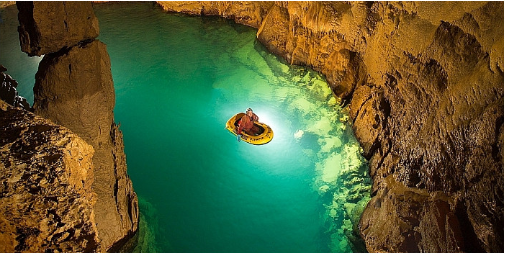
Pool of water in a cave system (Image from Umwelt Bundesamt)

About 12% of the total global energy demand comes from heating and cooling homes and businesses. A new study suggests that using underground water to maintain comfortable temperatures could reduce consumption of natural gas and electricity in this sector by 40% in the U.S. The approach, called aquifer thermal energy storage (ATES), could also help prevent blackouts caused by high power demand during extreme weather events.

“We need storage to absorb the fluctuating energy from solar and wind, and most people are interested in batteries and other kinds of electrical storage. But we were wondering whether there’s any opportunity to use geothermal energy storage, because heating and cooling is such a predominant part of the energy demand for buildings,” said first author A.T.D Perera, a former postdoctoral researcher at Lawrence Berkeley National Laboratory (Berkeley Lab), now at Princeton University’s Andlinger Center for Energy and Environment.

“We found that, with ATES, a huge amount of energy can be stored, and it can be stored for a long period of time,” Perera said. “As a result, the heating and cooling energy demand during extreme hot or cold periods can be met without adding an additional burden on the grid, making urban energy infrastructure more resilient.”

The study, published this week in Applied Energy, is one of the first examinations of how ATES could fit into the larger goal of decarbonizing U.S. energy systems by storing intermittent renewable energy to use when the sun isn’t shining and the turbines aren’t spinning. After building a comprehensive technological and economic simulation of an energy system, the authors found that ATES is a compelling option for heating and cooling energy storage that, alongside other technologies such as batteries, could help end our reliance on fossil fuel-derived backup power and enable a fully renewable grid.

Putting thermodynamics to work

ATES is a delightfully simple concept that leverages the heat-absorbing property of water and the natural geological features of the planet. You simply pump water up from existing underground reservoirs and heat it at the surface in the summer with environmental heat or excess energy from solar, or any time of the year with wind. Then you pump it back down.

“It actually stays fairly hot because the Earth is a pretty good insulator,” explained co-author Peter Nico, deputy director of the Energy Geosciences Division at Berkeley Lab and lead of the Resilient Energy, Water and Infrastructure Domain. “So then when you pull it up in the winter, months later, that water’s way hotter than the ambient air and you can use it to heat your buildings. Or vice versa, you can pull up water and let it cool and then you can put it back down and store it until you need cooling during hot summer months. It’s a way of storing energy as temperature underground.”

ATES is not yet widely used in the U.S., though it is gaining recognition internationally, most notably in the Netherlands. One major perk is that these systems get “free” thermal energy from seasonal temperature changes, which can be bolstered by the addition of artificial heating and cooling generated by electricity. As such, they perform very well in areas with large seasonal fluctuations, but have the potential to work anywhere, so long as there is wind or solar to hook up to. In regards to other impacts, ATES systems are designed to avoid impinging upon critical drinking water resources — often the water used is from deeper aquifers than the drinking water supply — and do not introduce any chemicals into the water.

How does it perform?

To get some concrete numbers estimating how much energy ATES could save on the U.S. grid, and how much it would cost to deploy, the team designed a case study using a computational model of a neighborhood in Chicago. This virtual neighborhood was composed of 58 two-story, single-family residence buildings with typical residential heating and cooling that were hooked up to a simulation of an energy grid with multiple possible energy sources and storage options, including ATES. Future climate projections were used to understand how much of the neighborhood’s total energy budget is taken up by heating and cooling demands currently, and how this might change in the future. Finally, a microgrid simulation was designed for the neighborhood that included renewable energy technologies and ATES to evaluate the technoeconomic feasibility and climate resilience. Putting all these factors together into one model would not have been possible without the team’s diverse expertise across the energy geosciences, climate science, and building science fields.

The results showed that adding ATES to the grid could reduce consumption of petroleum products by up to 40%, though it would cost 15 to 20% more than existing energy storage technologies.

“But, on the other hand, energy storage technologies are having sharp cost reductions, and after just a few years of developing ATES, we could easily break even. That’s why it’s quite important that we start to invest in this research and start building real-world prototype systems,” said Perera.

“ATES does not need space compared with above-ground tank-based water or ice storage systems. ATES is also more efficient and can scale up for large community cooling or heating compared with traditional geothermal heat pump systems that rely on heat transfer with the underground earth soil,” added Tianzhen Hong, a co-author and senior scientist at the Building Technology and Urban Systems Division.

Another major benefit of ATES is that it will become more efficient as weather becomes more extreme in the coming years due to climate change. The hotter summers and harsher winters predicted by the world’s leading climate models will have many downsides, but one upside is that they could supercharge the amount of free thermal energy that can be stored with ATES. “It’s making lemonade, right? If you’re going to have these extreme heat events, you might as well store some of that heat for when you have the extreme cold event,” said Nico.

ATES will also make the future grid more resilient to outages caused by high power demands during heat waves — which happen quite often these days in many high-population U.S. areas, including Chicago — because ATES-driven cooling uses far less electricity than air conditioners, it only needs enough power to pump the water around.

“It’s very much a realistic thing to do and this work was really about showing its value and how the costs can be offset,” said Nico. “This technology is ready to go, so to speak. We just need to do it.”

FOR MORE INFORMATION: https://www.sciencedaily.com/releases/2023/04/230405130132.htm

Ministers treating coastal areas like ‘open sewers’, says Labour

By Donna Ferguson

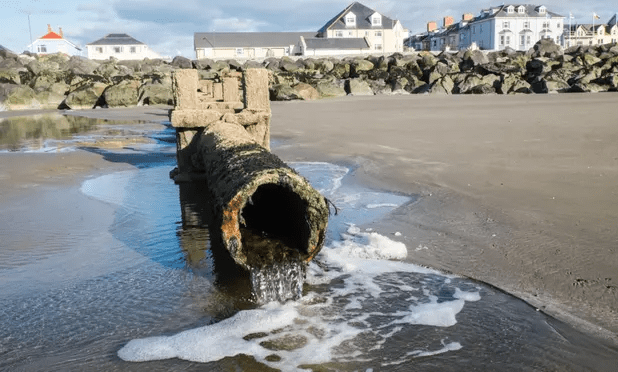
A sewage overflow pipe on Borth beach on the Cardigan Bay coast.

Ministers have treated coastal communities as if they are “open sewers”, Labour has said, after a damaging analysis of Environment Agency (EA) data revealed sewage was dumped for almost a million hours last year.

In total, the data – from the website Top of the Poops, which collates Environment Agency statistics at a constituency level – shows 141,777 sewage-dumping events occurred across 137 constituencies on the coasts of England and Wales in 2022.

This analysis found sewage was dumped once every three minutes and 45 seconds in 2022, adding up to a combined total of 980,999 hours of discharges last year.

The shadow environment secretary, Jim McMahon, said people who live by the coast “should be able to just enjoy the place where they live without having to worry about encountering filthy raw sewage”.

He added: “That the Tories have allowed villages, towns and cities across the country to be treated as open sewers shows that they have no respect for places where people live, work and holiday.”

The coastal constituency of Torridge and West Devon was found to have had the highest total hours of sewage discharge, at 57,494 hours.

The EA revealed at the end of last month that there were more than 300,000 raw discharges into rivers and coastal areas in 2022, lasting for more than 1.75m hours. Keir Starmer accused the government of “turning Britain’s waterways into an open sewer”.

On 21 April, MPs will debate a private member’s bill, put forward by McMahon, which Labour says would curb sewage discharges by 2030. It includes proposals to automatically fine companies for sewage dumping and implement legally binding reduction targets.

The party has previously said it would introduce a legally binding target to end 90% of sewage discharges by 2030 and stronger sanctions and fines for water bosses and companies who fail to do so.

“The next Labour government will build a better Britain, ending the Tory sewage scandal by delivering mandatory monitoring on all sewage outlets, introducing automatic fines for discharges, setting ambitious targets for stopping systematic sewage dumping and ensuring that water bosses are held to account for negligence,” said McMahon.

A senior Conservative party source said the Tories had brought in widespread monitoring of the issue, and said sewage was dumped more frequently under Labour in Wales.

EA figures released last month show that last year across England, sewage discharges fell by 19%, down to a total of 301,091 spills. However, the drop was largely due to dry weather and not action taken by water companies, the agency said.

A Department for Environment, Food and Rural Affairs spokesperson said: “We have introduced compulsory monitoring, set the strictest targets ever on water companies to reduce discharges and required them to deliver the largest infrastructure programme in their history.

“The environment secretary has demanded an action plan on every storm overflow from every company in England, prioritising those near bathing waters.

“We are also consulting to give regulators more powers to impose much larger penalties for polluters without needing to go to court.”

FOR MORE INFORMATION: https://www.theguardian.com/environment/2023/apr/06/ministers-treating-coastal-areas-like-open-sewers-says-labour

Fully recyclable printed electronics ditch toxic chemicals for water

By Duke University

Image from Lab Manager

Engineers at Duke University have produced the world’s first fully recyclable printed electronics that replace the use of chemicals with water in the fabrication process. By bypassing the need for hazardous chemicals, the demonstration points down a path industry could follow to reduce its environmental footprint and human health risks.

The research appeared online Feb. 28 in the journal Nano Letters.

One of the dominant challenges facing any electronics manufacturer is successfully securing several layers of components on top of each other, which is crucial to making complex devices. Getting these layers to stick together can be a frustrating process, particularly for printed electronics.

“If you’re making a peanut butter and jelly sandwich, one layer on either slice of bread is easy,” explained Aaron Franklin, the Addy Professor of Electrical and Computer Engineering at Duke, who led the study. “But if you put the jelly down first and then try to spread peanut butter on top of it, forget it, the jelly won’t stay put and will intermix with the peanut butter. Putting layers on top of each other is not as easy as putting them down on their own — but that’s what you have to do if you want to build electronic devices with printing.”

In previous work, Franklin and his group demonstrated the first fully recyclable printed electronics. The devices used three carbon-based inks: semiconducting carbon nanotubes, conductive graphene and insulating nanocellulose. In trying to adapt the original process to only use water, the carbon nanotubes presented the largest challenge.

To make a water-based ink in which the carbon nanotubes don’t clump together and spread evenly on a surface, a surfactant similar to detergent is added. The resulting ink, however, does not create a layer of carbon nanotubes dense enough for a high current of electrons to travel across.

“You want the carbon nanotubes to look like al dente spaghetti strewn down on a flat surface,” said Franklin. “But with a water-based ink, they look more like they’ve been taken one-by-one and tossed on a wall to check for doneness. If we were using chemicals, we could just print multiple passes again and again until there were enough nanotubes. But water doesn’t work that way. We could do it 100 times and there’d still be the same density as the first time.”

This is because the surfactant used to keep the carbon nanotubes from clumping also prevents additional layers from adhering to the first. In a traditional manufacturing process, these surfactants would be removed using either very high temperatures, which takes a lot of energy, or harsh chemicals, which can pose human and environmental health risks. Franklin and his group wanted to avoid both.

In the paper, Franklin and his group develop a cyclical process in which the device is rinsed with water, dried in relatively low heat and printed on again. When the amount of surfactant used in the ink is also tuned down, the researchers show that their inks and processes can create fully functional, fully recyclable, fully water-based transistors.

Compared to a resistor or capacitor, a transistor is a relatively complex computer component used in devices such as power control or logic circuits and sensors. Franklin explains that, by demonstrating a transistor first, he hopes to signal to the rest of the field that there is a viable path toward making some electronics manufacturing processes much more environmentally friendly.

Franklin has already proven that nearly 100% of the carbon nanotubes and graphene used in printing can be recovered and reused in the same process, losing very little of the substances or their performance viability. Because nanocellulose is made from wood, it can simply be recycled or biodegraded like paper. And while the process does use a lot of water, it’s not nearly as much as what is required to deal with the toxic chemicals used in traditional fabrication methods.

According to a United Nations estimate, less than a quarter of the millions of pounds of electronics thrown away each year is recycled. And the problem is only going to get worse as the world eventually upgrades to 6G devices and the Internet of Things (IoT) continues to expand. So any dent that could be made in this growing mountain of electronic trash is important to pursue.

While more work needs to be done, Franklin says the approach could be used in the manufacturing of other electronic components like the screens and displays that are now ubiquitous to society. Every electronic display has a backplane of thin-film transistors similar to what is demonstrated in the paper. The current fabrication technology is high-energy and relies on hazardous chemicals as well as toxic gasses. The entire industry has been flagged for immediate attention by the US Environmental Protection Agency. [https://www.epa.gov/climateleadership/sector-spotlight-electronics]

“The performance of our thin-film transistors doesn’t match the best currently being manufactured, but they’re competitive enough to show the research community that we should all be doing more work to make these processes more environmentally friendly,” Franklin said.

FOR MORE INFORMATION: https://www.sciencedaily.com/releases/2023/04/230406152644.htm

Good news on fall in sewage spills only highlights the scale of the challenge facing water companies

By Tom Clarke

A protest in November 2022 against sewage discharges at an overflow pipe on Long Rock Beach in Penzance, Cornwall

Well, first the good news: untreated sewage was pumped into our rivers and seas less frequently last year than the year before.

Overall, storm overflow spills – when sewage gets released into the environment due to treatment works being overwhelmed – were down 19% in 2022, according to the latest data.

In 2021, there were more than 372,000 sewage spills reported to the Environment Agency; it’s now just over 300,000. That’s the equivalent of 822 spills every day.

The duration of spills overall was also slightly reduced, but still add up to 1.75 million hours of sewage flowing into our rivers and seas last year.

Water UK, the body that represents water and sewerage companies, said today was an “important milestone” as spills were down for the fourth consecutive year.

However, in its statement, the Environment Agency said the reduction in spills in 2022 was largely due to the abnormally dry weather than any action taken by water firms. They said the same of the reduction between 2021 and 2020.

So when will we get to a situation when our sewage stays where we flush it?

Water UK says water and sewage firms were bringing forward £56bn in investment to address the issue. But campaigners argue they’re being given far too much time do that.

Following a consultation last year, the government is requiring water firms to “improve” storm overflows that run onto bathing water sites by 2035, and remaining overflows by 2050.

A timeline that’s already going to land the government in the High Court. In September, the court is hearing a case brought by campaign groups and businesses that’s attempting to force the government to take more urgent action.

The case is invoking Public Trust Doctrine – a piece of law dating from 1299 – that requires the state to protect things like fisheries for future generations.

But it’s far from an easy problem to fix; much of our sewer network was built by the Victorians – now entombed by modern infrastructure.

While the Victorians factored in a certain amount of population growth, they probably didn’t envision decades of under-investment by the regional water authorities and then water companies that inherited the network after privatisation in the 1980s.

Nor did the Victorians know about climate change, which is increasing the intensity of rainfall events and putting even more pressure on an already overwhelmed system.

FOR MORE INFORMATION: https://news.sky.com/story/good-news-on-fall-in-sewage-spills-only-highlights-the-scale-of-the-challenge-facing-water-companies-12846660

Mimicking biological enzymes may be key to hydrogen fuel production

By University of Illinois at Urbana-Champaign, News Bureau

This is a restriction enzyme or endonuclease, a type of enzyme that cuts a DNA molecule at a specific location (Image from Thought Co.)

An ancient biological enzyme known as nickel-iron hydrogenase may play a key role in producing hydrogen for a renewables-based energy economy, researchers said. Careful study of the enzyme has led chemists from the University of Illinois Urbana-Champaign to design a synthetic molecule that mimics the hydrogen gas-producing chemical reaction performed by the enzyme.

The researchers reported their findings in the journal Nature Communications.

Currently, industrial hydrogen is usually produced by separating hydrogen gas molecules from oxygen atoms in water using a process called electrolysis. To boost this chemical reaction in the industrial setting, platinum metal is used as a catalyst in the cathodes that direct the reaction. However, many studies have shown that the expense and rarity of platinum make it unattractive as the world pushes toward more environmentally sound energy sources.

On the other hand, nature’s nickel-iron hydrogenase enzyme produces hydrogen using earth-abundant metals in its core, said chemistry professor Liviu Mirica, who led the study with graduate student Sagnik Chakrabarti.

“The nickel at the core of the natural enzyme produces hydrogen by reducing protons in water,” Chakrabarti said. “During the catalytic process, the nickel center goes through paramagnetic intermediates, meaning that the intermediates have an unpaired electron — which makes them extremely short-lived.”

Synthetic chemists have made nickel compounds that produce hydrogen for over a decade, Mirica said. While some of these compounds are very efficient at producing hydrogen, the vast majority of them operate via intermediates that are not paramagnetic.

“Researchers are trying to mimic exactly what nature does because it is efficient, and maximizing efficiency is a key challenge to overcome when engineering energy sources,” Mirica said. “Being able to reproduce the paramagnetic intermediate steps that occur in the natural enzyme is what our group is trying to achieve — to increase efficiency and mimic nature.”

To achieve this, the team designed an organic molecule called a ligand that contains electron-donating atoms like nitrogen and sulfur, and can hold the nickel in place and support the two relevant paramagnetic states that produce hydrogen. The key design element that sets this molecule apart from other catalysts is the presence of a carbon-hydrogen bond near the nickel center that is broken and re-formed during catalysis. This was crucial in stabilizing the aforementioned paramagnetic states.

“One of the key takeaways from our work is that by using the specially designed ligand in the manner we did, we have successfully united ideas from two fields of inorganic chemistry — bioinorganic and organometallic chemistry — to make nickel complexes that behave similarly to the active site of one of nature’s most beautiful and complicated enzymes,” Chakrabarti said.

In the recent past, several unusual enzymes have been found that feature metal-carbon bonds in their active sites, the researchers said. Such design principles in synthetic complexes could lead to further insights into how nature performs chemistry with small molecules like hydrogen.

Former Illinois researchers Soumalya Sinha, Giang N. Tran and Hanah Na contributed to this study. The National Science Foundation supported this research.

Mirica also is affiliated with the neuroscience program, the Beckman Institute for Advanced Science and Technology and the Carle Illinois College of Medicine at Illinois.

FOR MORE INFORMATION: https://www.sciencedaily.com/releases/2023/03/230330102145.htm

Pulsing ultrasound waves could someday remove microplastics from waterways

By American Chemical Society

Researchers have found microplastics deep in lungs and in the bloodstream, findings that could spur more research into health consequences of the tiny specks. (Image from NBC News)

Colorful particles of plastic drift along under the surface of most waterways, from headwater streams to the Arctic Ocean. These barely visible microplastics — less than 5 mm wide — are potentially harmful to aquatic animals and plants, as well as humans. So, researchers are devising ways to remove them and to stop them at their source. Today, a team reports a two-stage device made with steel tubes and pulsing sound waves that removes most of the plastic particles from real water samples.

The researchers will present their results at the spring meeting of the American Chemical Society (ACS).

“The idea came from a discussion with a colleague who said that we need new ways to collect microplastics from water,” says Menake Piyasena, Ph.D., the project’s principal investigator. “Because acoustic forces can push particles together, I wondered if we could use them to aggregate microplastics in water, making the plastic easier to remove.”

Filtration is the most commonly used technique for removing these materials from water. For example, washing machine outlet filters can keep fibers that slough off clothes during washing from entering wastewater. But this method can be costly on a large scale, requiring regular cleaning of the filters, which can get clogged.

Another option could be concentrating plastic particles in flowing water with acoustic forces, or sound waves, that transfer energy to nearby particles, causing some of them to vibrate and move. Just think of a speaker playing loud music that shakes the ground, bouncing flecks of dust and dirt toward each other. Scientists have already been using this phenomenon to separate biological particles from liquids, such as red blood cells from plasma.

Recently, some teams have applied this approach to the separation of microplastics from samples they prepared in the lab with pure water. But this work was done with tiny volumes of water. They also used microplastics that were only tens of microns wide — smaller than the width of human hair, explains Nelum Perera, a graduate student in Piyasena’s lab at New Mexico Tech.

“I read that most of the microplastics in the environment are larger than that,” says Perera, who is presenting the work. “So, I wanted to develop a device that could be useful for most of the sizes and could be scaled up to meet real-world goals.”

To accommodate higher water flow rates, Perera created a proof-of-concept device with 8-mm-wide steel tubes connected to one inlet tube and multiple outlet tubes. Then she attached a transducer to the metal tube’s side. When the transducer was turned on, it generated ultrasound waves across the metal tube, applying acoustic forces onto microplastics as they passed through the system, making them easier to capture. The prototype device is relatively simple compared to traditional filtration methods, Piyasena explains, because it doesn’t clog as easily as a filter.

In initial experiments with polystyrene, polyethylene and polymethyl methacrylate microplastics, the researchers discovered that smaller (6- to 180-µm-wide) particles behaved differently than the larger (180- to 300-µm-wide) ones in the presence of acoustic forces. Spiked into pure water, particles of both sizes arranged along the center of the channel, exiting through the middle outlet, while clean water flowed out the surrounding outlets. But if laundry detergent or fabric softener were added to the water, the larger particles focused toward the sides, exiting through the side outlets, and purified water out the middle outlet.

Based on these results, the researchers set out to develop a system that could take advantage of these differing movements. They connected two steel tubes in tandem: The first stage captured small microplastics less than 180 µm wide, and the water stream with the remaining larger microplastics went to the second stage to be cleaned. “We removed more than 70% of the small plastics and more than 82% of the large ones this way,” says Perera.

To show that the two-stage system could work for real-world applications, Perera and Piyasena collected water from a pond on the New Mexico Tech campus and from the Rio Grande River. They filtered all of the samples to remove large contaminants, leaving behind water that still contained dissolved substances that could have affected the separation. Next, they spiked the water with microplastics. When the environmental water samples went through the acoustics device, plastic particles were removed as effectively as from pure water. With this prototype, Perera estimates it would cost around 7 cents to operate the current device for an hour and take around an hour and a half to clean one liter of water.

The team’s next step is to develop a system with wider tubes, or bundles of multiple tubes, and to try it on unspiked real-world samples, including ocean water and wastewater from washing machines. “We have shown that acoustic forces can be used to concentrate a wide range of microplastic sizes,” says Piyasena. “And from here, we want to prove that this can be done on a larger scale with real samples that already have microplastics in them.”

FOR MORE INFORMATION: https://www.sciencedaily.com/releases/2023/03/230328145536.htm

Starmer criticises government’s ‘flimsy’ plan over water pollution in England

By Sophie Zeldin-O’Neill

Raw sewage was discharged more than 300,000 times into England’s rivers in 2022, according to the latest Environment Agency figures

Labour has dismissed government plans that could see water companies in England facing tougher fines and penalties as part of efforts to tackle pollution.

The environment secretary, Thérèse Coffey, is expected to set out plans next week that ministers believe will “make polluters pay”, with fines levied on water companies put into a “water restoration fund”.

It comes as the latest Environment Agency figures showed that raw sewage was discharged 301,091 times into England’s rivers in 2022 – an average of 825 spills a day.

Clean water has become a politically charged topic in the run-up to May’s local elections, and Labour and the Liberal Democrats are mounting campaigns against the government’s record on sewage spills“What the government has done to our rivers and beaches is turn them into open sewers. I’m here in Kent and it’s a beautiful place, with rivers and beaches that are being polluted and it really, really goes to the heart of how people feel about their environment.

“The government has let them down very, very badly. And this is just a flimsy next step from the government.”

He called for a “strong plan” involving mandatory monitoring and automatic fines to ensure “that those that are responsible are held to account”.

The Liberal Democrats have called on Coffey to resign over the issue.

Coffey said: “I know how important our beautiful rivers, lakes, streams and coastlines are for people and nature – and I couldn’t agree more that more needs to be done to protect them.

“I want to make sure that regulators have the powers and tools to take tough action against companies that are breaking the rules, and to do so more quickly.

“Through the water restoration fund, I will be making sure that money from higher fines and penalties – taken from water company profits, not customers – is channelled directly back into the rivers, lakes and streams where it is needed.

“We know that around 310 miles of rivers each year have been improved through community-led projects – we must build on that success.”

Currently, penalties and fines imposed by Ofwat are returned to the Treasury, but the government’s new plans will see the money handed instead to the Department for Environment, Food and Rural Affairs (Defra).

On BBC Radio 4’s Today programme on Saturday, Charles Watson, the founder and chair of the campaign group River Action, “cautiously welcomed” the news but said “the key is how it will be executed”.

He said: “It may just be that the government has finally woken up to the huge public outrage we’ve seen around what has happened to our rivers … There is now a potential of real teeth.

“It is critical to understand that over the last 10 years, environmental protection has been defunded; it has suffered cutbacks to the tune of about 75% of its budget, so there is very little infrastructure to go out and inspect and monitor and ultimately bring to book polluters.

“We’ve seen this before. In 2018, the government introduced a robust set of regulations to protect rivers from agriculture. The reality is they have never been enforced.

“We want to see a redirection of funds away from rich overseas shareholders”.

As part of the plan, Coffey will publish a six-week consultation on strengthening the Environment Agency’s ability to impose sanctions on water companies without going through the courts.

Defra said the penalties would be quicker and easier to enforce, with the most serious cases still taken through criminal proceedings.

It added that the new fund was intended to help local groups identify the biggest issues and direct investment to where it was most needed, with the money going to support a range of projects, including the restoration of wetlands, the creation of new habitats and adding natural bends to rivers to improve water quality.

FOR MORE INFORMATION: https://www.theguardian.com/business/2023/apr/01/water-companies-england-fines-penalties-environment-agency-defra

Intriguing Moon Water Source Found in Glass Beads From Impacts

By Will Dunham

A screen shows footages of spacecraft for Chang’e-5 Mission, during an event on China’s lunar exploration program, at the National Astronomical Observatories of Chinese Academy of Sciences (CAS), in Beijing, China

Glass beads spawned in violent impacts from space rocks on the lunar surface have been found to have water trapped inside, offering what scientists describe as a potential reservoir of this precious resource for future human activities on the moon.

Scientists said on Monday an analysis of lunar soil samples retrieved in 2020 during China’s robotic Chang’e-5 mission showed that these spheres of glass – rock melted and cooled – created in the impacts bore within them water molecules formed through the action of the solar wind on the moon’s surface.

“The moon is constantly bombarded with impactors – for example micrometeoroids and large meteoroids – which produce impact glass beads during high-energy flash-heating events,” said planetary scientist Sen Hu of the Chinese Academy of Sciences’ Institute of Geology and Geophysics, a co-author of the study published in the journal Nature Geoscience.

The solar wind is a stream of charged particles, primarily protons and electrons, emanating outward from the corona, the outermost part of the sun’s atmosphere, and permeating the solar system.

“Solar wind-derived water is produced by the reaction of solar hydrogen with oxygen present at the surface of the lunar glass beads,” Hu said, with these spheres then acting sort of like a sponge for the water.

For future moon exploration, including potential long-term lunar bases staffed with astronauts, water is of vital importance not only as a drinking supply but as a fuel ingredient. The moon lacks the bodies of liquid water that are a hallmark of Earth. But its surface is thought to harbor a fairly substantial amount of water, for example in ice patches residing in permanently shadowed locales and trapped in minerals.

“Water is the most sought-after commodity for enabling sustainable exploration of planetary surfaces. Knowing how water is produced, stored and replenished near the lunar surface would be very useful for future explorers to extract and utilize it for exploration purposes,” Hu said.

The researchers see promise in obtaining water from the glass beads, perhaps through a heating process to release vapor that would then turn into liquid through condensation.

“We can simply heat these glass beads to free the water stored in them,” said planetary scientist and study co-author Hejiu Hui of Nanjing University in China.

The capsule returning the soil samples to Earth landed in the northern Chinese region of Inner Mongolia.

About 3.8 pounds (1.7 kg) of soil were collected in the Chang’e-5 mission, with 32 glass beads – tens to hundreds of micrometers wide – examined in the study from the small amount of soil made available for this research, Hu said. The glass beads were found to hold a water content of up to about 2,000 parts per million by weight. Hu said he believes that such impact glass beads are a common part of lunar soils, found globally and spread evenly.

The Chang’e-5 mission, named after the ancient Chinese moon goddess, was the first from any country to retrieve lunar surface samples since the Soviet Union brought back about 6 ounces (170 grams) in 1976. The United States brought back 842 pounds (382 kg) of surface samples during the Apollo program from 1969 to 1972.

The interaction of the solar wind with lunar surface materials could sustain a water cycle on the moon, with the glass beads absorbing the water and acting as a repository for it, the researchers said. This solar wind process could similarly yield water on other airless bodies in the solar system such as the innermost planet Mercury and the large asteroid-belt object Vesta, Hui said.

FOR MORE INFORMATION: https://www.usnews.com/news/world/articles/2023-03-27/intriguing-moon-water-source-found-in-glass-beads-from-impacts