In mountain peaks across the West, it’s their job to make it snow.
No, they’re not wizards, even if the work they do seems like magic.
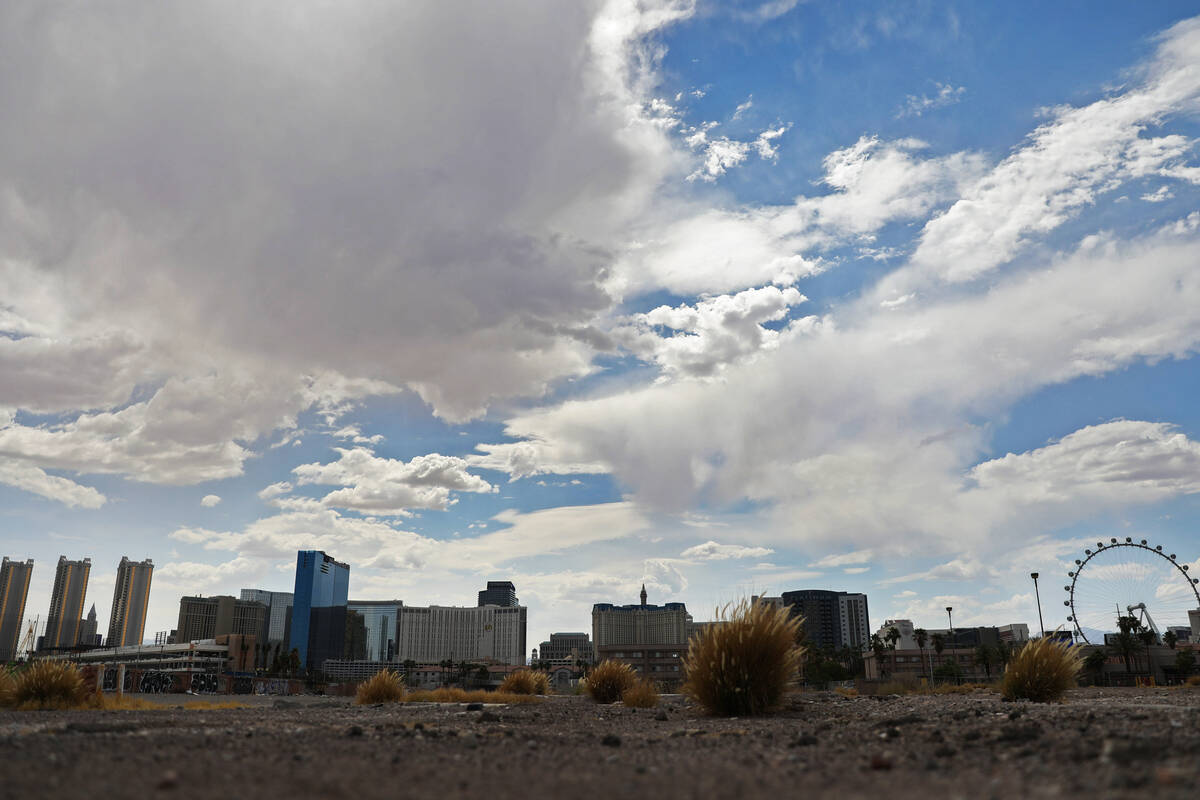
For scientists at Nevada’s Desert Research Institute, using cloud seeding to increase snowfall has been part of the job for more than half a century, dating back to the early 1960s.
It’s a practice that research has shown can add more than a little extra snow to the winter totals. And as states like Nevada grapple with dwindling water supplies along the Colorado River, which supplies 90 percent of the water in the Las Vegas Valley, it’s one the Silver State is investing in.
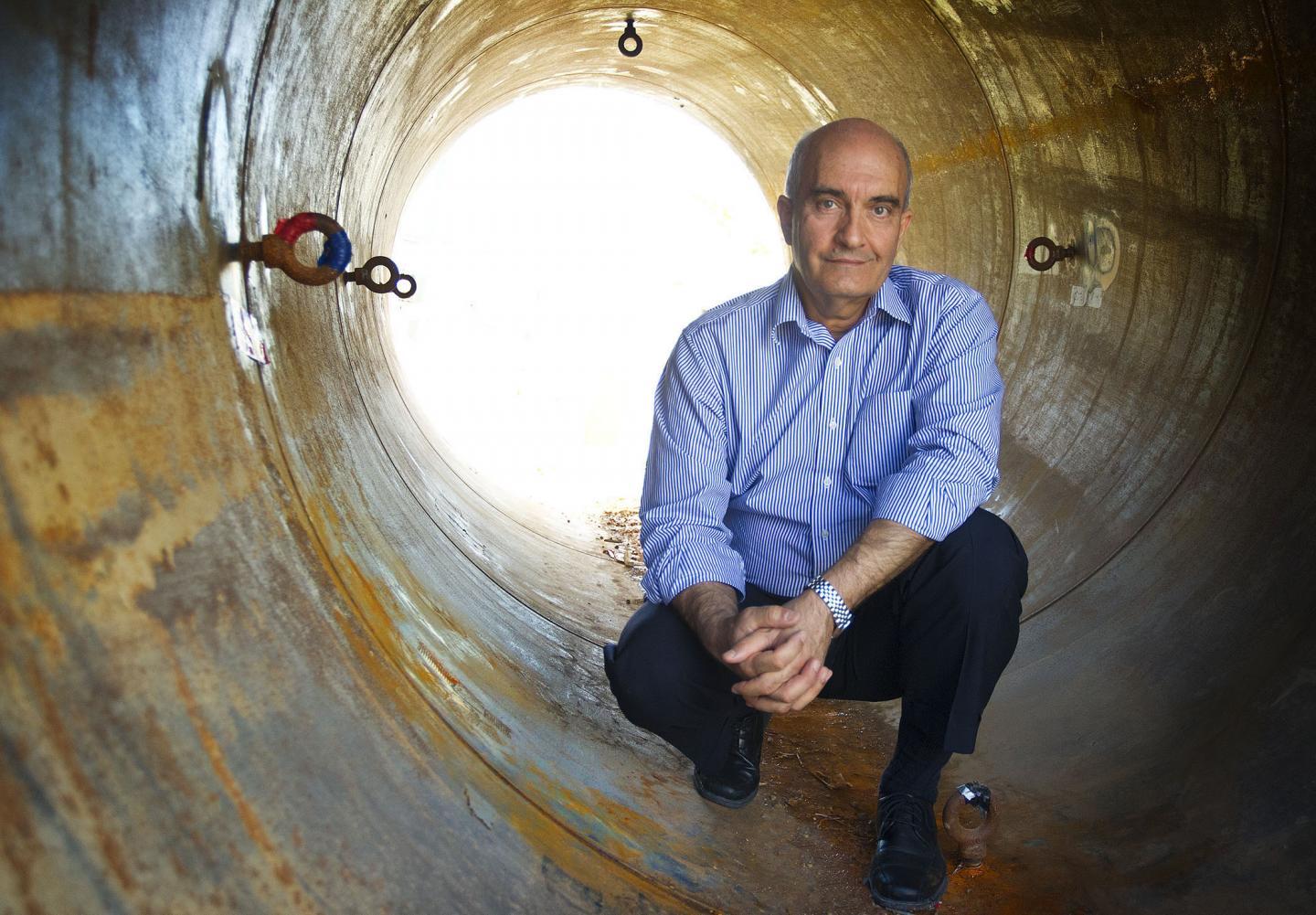
“This is inexpensive. It works. It’s pretty easy to do. And it’s safe,” said Frank McDonough, who leads Desert Research Institute’s cloud seeding program. “It’s kind of a no-brainer.”
Scientists with the institute wrapped up their latest cloud seeding research and operations season in May across six mountain ranges, including the Spring Mountains near Las Vegas, the Lake Tahoe Basin, the Ruby Mountains in Northern Nevada and ranges across Colorado.
For Nevada — the nation’s driest state — an extra 10 percent can go a long way, especially in parts of the state where the water basins are already overallocated, McDonough said.
So what exactly goes into making clouds give us more snow?
There’s a whole lot of science behind the actual process of seeding clouds, but the gist of it is that clouds need a certain process to happen in order to turn their moisture into precipitation.
Cloud seeding works by improving the conditions inside the cloud by introducing dust particles, which can help clouds create the icy crystals required to produce snow, McDonough said.
When a storm cell moves into one of their seeding areas, scientists burn a small amount of a chemical compound — silver iodide — from ground-based generators, the aerosols of which eventually reach the clouds.
That silver iodide then acts as nuclei of sorts to spark the formation of the ice crystals.
McDonough said the silver iodide compound used by Desert Research Institute is plenty safe, too. It already exists naturally and has no known harmful effects on humans or the surrounding environments.
“It’s part of the earth’s crust right now, so we’re just taking advantage of them to create ice crystals,” McDonough said.
Does it actually work?
McDonough said there is research dating back to the 1950s on cloud seeding showing decent success with the endeavor.
These days, he said, scientists are “pretty confident” that cloud-seeded areas produce about 10 percent more snowfall than if there was no cloud seeding at all.
One five-year study conducted in the mid-2000s in Australia showed that cloud seeding increased precipitation in the target area by 14 percent.
Can it help the west’s water problem?
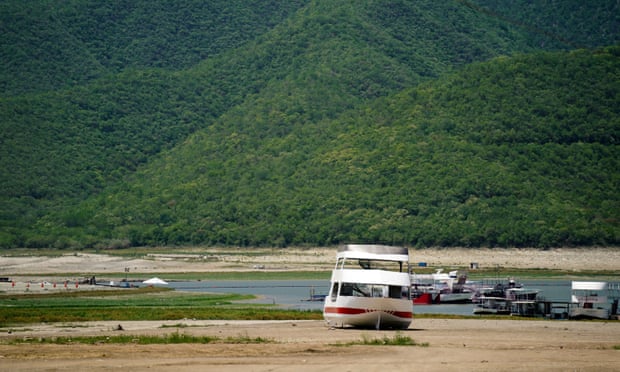
Nevada and the rest of the Western U.S. are in the midst of more than two decades of drought that has brought hotter and drier conditions and dwindled the Colorado River’s annual flows by roughly 20 percent.
That’s sent states and cities searching for other resources, and there’s been plenty of talk about desalinating ocean water as part of that.
Those projects are pricey, though, with the cost to build desalination plants typically ranging in the hundreds of millions of dollars. The typical cost of desalinated water is about $2,000 per acre-foot of water.
But cloud seeding, McDonough said, is much cheaper — coming in at roughly $10 per acre-foot.
In June, Gov. Joe Lombardo signed Senate Bill 99 into law, which allocated $1.2 million to Desert Research Institute specifically to bolster cloud seeding projects over the next two years.
That means there will be more opportunities for researchers to conduct and analyze seeding efforts, which have the happy byproduct of producing more snowfall, and eventually more runoff into river systems across Nevada and the West, McDonough said.
In a world where water is becoming ever more valuable, that’s an easy win-win.
Another week, another catastrophic, record-setting, history-making flood, this time in Kentucky.
Preliminary assessments indicate rainfall in Graves County last week likely set a new record for most precipitation in a 24-hour period, with 11.28 inches of rain. This would make it yet another “1,000-year” flood event, which had, according to historical projections, less than a 0.1 percent chance of occurring in any given year. One of the towns that experienced flash flooding was Mayfield, a community still rebuilding from a 2021 tornado that killed 57 people.
This was just one of the 11 flash flood emergencies in as many days in the United States, according to Weather Channel meteorologist Heather Zons. These events have claimed multiple lives: 2-year-old Mattie Shiels, 9-month-old brother, Conrad, and their mother, Katie Seley drowned after getting swept away by flash flooding in Pennsylvania, during an event that killed at least four others. In New York earlier this month, 43-year-old Pamela Nugent was swept away trying to evacuate a flooded area; 63-year-old Stephen Davoll drowned in his home in Vermont.
Another week, another catastrophic, record-setting, history-making flood, this time in Kentucky.
Preliminary assessments indicate rainfall in Graves County last week likely set a new record for most precipitation in a 24-hour period, with 11.28 inches of rain. This would make it yet another “1,000-year” flood event, which had, according to historical projections, less than a 0.1 percent chance of occurring in any given year. One of the towns that experienced flash flooding was Mayfield, a community still rebuilding from a 2021 tornado that killed 57 people.
This was just one of the 11 flash flood emergencies in as many days in the United States, according to Weather Channel meteorologist Heather Zons. These events have claimed multiple lives: 2-year-old Mattie Shiels, 9-month-old brother, Conrad, and their mother, Katie Seley drowned after getting swept away by flash flooding in Pennsylvania, during an event that killed at least four others. In New York earlier this month, 43-year-old Pamela Nugent was swept away trying to evacuate a flooded area; 63-year-old Stephen Davoll drowned in his home in Vermont.
Other catastrophic, deadly flooding events have occurred almost simultaneously around the globe. Just this weekend, 10 inches of rain fell on parts of Nova Scotia, Canada, which is about as much as the region experiences over a period of three months. Four people, including two children, are still missing.
Thousands of residents had to evacuate their homes in Delhi this month, after the Yamuna River swelled with rainwater. Flash floods and landslides have claimed at least 91 lives in northern India, and the waters are now lapping at the Taj Mahal.
Torrential rains, flash flooding, and landslides in South Korea have killed at least 46 people, with four more still missing.
Nearly two dozen cities in China experienced flooding this month; flooding claimed 15 lives (with four more people missing) in just one city, Chongqing, alone. At least 20,000 people have been displaced.
One begins to run out of ways to describe the death and destruction wrought by an onslaught of water. Lest reporters and readers become too numb, the Guardian compiled a shocking video montage of footage from around the globe that shows entire buildings collapsing and being swept away, and people clinging desperately to trees and cars on flooded roadways.
This interview has been condensed and lightly edited.
Jessica McKenzie: I recently interviewed someone who actually moved to Vermont, from Montana to escape the wildfire smoke, because Vermont, as I’m sure you know, has been sort of pitched as a climate refuge, only for the state to experience both wildfire smoke and catastrophic flooding one after the other this year.
Peter Gleick: That’s a key point right off the bat. There is no place that is going to be safe from climate disruption as the climate changes worsen.
McKenzie: Right. And then there are all of these almost concurrent flooding events happening around the world right now, and it’s insane that these are like happening within days of each other.
Gleick: It IS crazy. The news in the last couple of months has just been relentless, nonstop, extreme events. It’s everything, everywhere, all at once. It’s flooding, heat waves, extraordinarily high surface temperatures on the oceans, record sea ice loss in the Antarctic and the Arctic. It’s an indication that the climate is spinning out of control.
McKenzie: So you’ve said this has to do with the hydrologic cycle speeding up. What is that and what does that mean?
Gleick: The hydrologic cycle, which I think of as a fundamental part of the climate cycle, is intensifying. It’s intensifying because by increasing greenhouse gas concentrations in the atmosphere, we trap more energy. By putting more energy into the atmosphere, we’re accelerating, intensifying the hydrologic cycle, we see more evaporation because temperatures are going up. More evaporation means more moisture in the atmosphere, more moisture in the atmosphere—it has to come down somewhere. And it’s coming down in intense events. Rather than an increase in the average of rainfall, we’re seeing an increase in the extremes of rainfall.
For example, in California over the last 100 years, average annual precipitation hasn’t really changed. It’s not raining more in California or less in California. But we’re getting more intense rainfall events. We’re getting more floods and more droughts. And the average is staying the same. There’s an old saying that you could have your head in the refrigerator and your feet in the oven and have a perfectly nice average temperature. But we’re getting more extremes. And that’s exactly what the observations are showing.
McKenzie: And is that holding true elsewhere? Outside of California as well?
Gleick: If you look at the data from the most recent US National Climate Assessment, which is done every few years by the Global Change Research Project (the USGCRP), it’s a national assessment of climate in the US. Precipitation events in the northeast, are becoming more intense. More rain is falling in shorter periods of time. That’s what we see right now in Vermont. It’s huge amounts of rain in a very short period of time. And that’s what contributes to flooding. If we had more rain on average, but it came in small events, we wouldn’t see the flooding, necessarily. But we’re seeing intensification of flooding, as a consequence of intensification of rainfall.
McKenzie: Is this the same thing as atmospheric rivers? Or are atmospheric rivers becoming more extreme now.
Gleick: So it’s a little different. Atmospheric rivers are a phenomenon really, in the western United States. They’re storm patterns that form in the Pacific and come ashore in intense bands. I mean, atmospheric rivers is a wonderful term. It’s very descriptive. California has always gotten rainfall in the winter in atmospheric rivers. We’re now getting more intense “rivers,” and more of them. So that’s what caused this year’s extreme events in California.
In California, the difference between a wet year and a dry year is really the number of atmospheric rivers we get. If more of them go further north in Washington, Oregon, and Canada, California gets a dry year. If more of these rivers come ashore in California, we’ll have a wet year, and maybe Oregon and Washington might have a dry year. And so that’s what atmospheric rivers mean for the Western US.
McKenzie: The flip side of this is drought. Can you elaborate a bit more on that relationship?
Gleick: This is a consequence that has long been projected by climate models and by atmospheric physics, that some of the major consequences of climate change, especially for water resources, would be an intensification of extremes at both ends of the spectrum, both droughts and floods. And that’s, again, what we’re now starting to see in the observations. We’re seeing more extreme events at both ends of the spectrum rather than necessarily a change in the average.
Precipitation in California—or runoff in California—the average hasn’t changed much, but we’re getting more extreme events. Five plus six plus seven averages six. One plus six plus 11 also averages six. If the average doesn’t change, you can still get a big change in extremes.
McKenzie: I was wondering if you could also talk a little bit about sort of the consequences of floods.
Gleick: There are enormous and diverse implications of flooding. Obviously, the most worrisome is loss of life. When flood events overwhelm the flood defenses that we build—the reservoirs, the levees—there’s also tremendous loss of property. That’s already beginning to cause serious disruptions in the flood insurance industry. More and more flood insurance companies are either not writing flood insurance policies, or they’re unable to pay the insurance that overwhelms their reserves.
An interesting consequence I just read about this morning is that massive flooding in India has damaged three water treatment plants. And they’re talking about having to ration drinking water, because the drinking water plants have been damaged by these floods. So ironically, in this case, an excess of water is causing a shortage of clean water supply. There are also ecosystem consequences, there’s damage to infrastructure like roadways and energy systems, and in agriculture, you get damage to crops. There are a whole wide range of flood consequences.
McKenzie: Often people [Editor’s note: often climate change skeptics] make the case that weather isn’t climate, but at this point it’s really impossible—or should be—to talk about extreme weather events without bringing in climate change. Can you elaborate on that idea?
Gleick: Weather and climate are related. The weather events that we’re seeing—extreme weather events—are symptoms of a changing climate. There are indications that climate change is influencing, not necessarily causing but influencing, extreme events. And this is a very important distinction that people sometimes don’t get. Climate scientists aren’t saying that this or that extreme event was “caused” by climate change. What we’re saying is that climate change is now influencing all weather on the planet. And it’s influencing the statistics of extreme events, it’s worsening the consequences of events that might have happened anyway, but now are worse.
We know that for every degree C of warming, the atmosphere holds 7–10 percent more water. And so you might have a rainfall event, but it would be worsened by the fact that it’s warmer and the fact that the atmosphere is holding more water and that the atmosphere has to deliver more water when it rains. And so weather and climate are not the same thing, but they’re intimately connected.
There was a new poll just released from the Public Policy Institute of California that shows the majority of people in California understand that extreme events are now affected by climate change, and that they personally have been affected by these extreme events. More than 70 percent of Californians think climate change is a real threat and ought to be addressed politically, which is a remarkable number. And I think that as more and more people experience these events, climate change becomes real to them.
We have to do two things, we have to both work harder to mitigate climate change by reducing greenhouse gas emissions; and yet we also have no choice but to work to adapt to those climate changes we can no longer avoid. It’s not one or the other, it’s both.
I talked about all these issues in my book, The Three Ages of Water. The close connections between water and energy, are close connections between water and climate. We know that it takes a lot of energy to collect and treat and process and use water resources. And we know it takes a lot of water to produce the energy that we use. And so anything we can do, to both reduce greenhouse gas emissions associated with our water system—by becoming more efficient, by using renewable energy, rather than fossil fuel energy—can reduce the contribution of our water system to the climate crisis by reducing greenhouse gas emissions associated with our water system.
But at the same time, we absolutely have to adapt our water systems to those climate changes we can no longer avoid. The example from India, where our water treatment plants are disrupted by climate disruption—most of our wastewater treatment plants are at the water’s edge. And many of our water treatment plants for drinking water, of course, are close to water resources. And the extent to which they’re vulnerable to climate change is an example of the kinds of adaptations we have to pursue. We have to make ourselves less vulnerable to the flooding we’re seeing, to the droughts that we’re experiencing. And that requires rethinking, remanaging, and redesigning the water systems that we built a century ago, but that really need to be updated for modern times.
McKenzie: The climate migrant I interviewed about his move to Vermont also works at an organization dedicated to preserving and restoring the native forests of New England. And he really hammered the point that it’s not just climate change, it’s also about the sort of choices that people have made to live in certain places, to build in certain ways. What are some better ways that we could be building and living near water to prevent these catastrophic impacts from happening when floods inevitably occur?
Gleick: One of the things I think we’ve learned in the last few decades is the incredible value of protecting natural ecosystems and restoring natural ecosystems. So we’re beginning to take down big dams. In the United States, we’ve taken down 1000 dams, mostly small, dangerous, uneconomic dams, but we’re beginning to take down larger and larger dams. But that also means we have to learn to live differently in floodplains.
In the past, we’ve built dams to protect against floods. And then we’ve built levees around our rivers and channelized our rivers. And then we built in the floodplains. We need to let the floodplains flood again. If the climate is going to cause more and more extreme flooding, which it is, we have to rethink the way we deal with floods and we have to let floods occur. They’re good ecologically anyway.
McKenzie: Right, flooding is how nutrients were once deposited across the floodplain creating good agricultural land.
Gleick: And it’s the way we recharge our groundwater. There are enormous ecological benefits to flooding. The economic consequences really come from the fact that we’ve built in vulnerable areas. If there’s one thing that our flood insurance companies are starting to tell us, it’s that we can no longer assume that we can build in floodplains and get flooded and then rebuild in the same place.
McKenzie: Is there anything else that you want to add?
Gleick: Even for someone like me, who’s studied this for a long time, the number and intensity of recent events has really been stunning. It’s been a shock. It’s a worrisome indication that climate changes are accelerating even more rapidly than we thought. And that those of us who have been warning about climate change for a long time, even we perhaps have been under-estimating the risk.
There is a growing awareness of the problem. There’s a growing understanding of the broad implications, but also the personal implications, of the problem. And in some ways, the biggest problem is just our politicians. It’s not the public, it’s not the media, it’s the politicians, who are still not dealing with the problem. That’s the biggest challenge in my mind.
There are things that we know we need to do, that we’re doing, but just not quickly enough, and we need to do all those things faster.
The fingerprints of climate change are all over the intense heat waves gripping the globe this month, a new study finds. Researchers say the deadly hot spells in the American Southwest and Southern Europe could not have happened without the continuing buildup of warming gases in the air.
Thanks to years of research and more powerful computers, scientists can now determine almost in real-time whether climate change is contributing to the intensity of heat, storms, floods and drought — and by how much.
A generation ago, calculating such connections took up to a year, but researchers at World Weather Attribution made their conclusions about this summer’s heat wave in less than a week. Their study is the first to look at three simultaneous heat waves on three different continents.
These unusually strong heat waves are becoming more common, Tuesday’s study said. The same research found the increase in heat-trapping gases, largely from the burning of coal, oil and natural gas has made another heat wave — the one in China — 50 times more likely.
A stagnant atmosphere, warmed by carbon dioxide and other gases, made the European heat wave 4.5 degrees Fahrenheit (2.5 degrees Celsius) hotter, the one in the United States and Mexico 3.6 degrees Fahrenheit (2 degrees Celsius) warmer and the one in China 1.8 degrees Fahrenheit (1 degree Celsius) toastier, the study found.
“Had there been no climate change, such an event would almost never have occurred,” said Mariam Zachariah, a climate scientist at Imperial College of London and the lead author of the study. She called heat waves in Europe and North America “virtually impossible” without the increase in heat-trapping gases since the mid 1800s. Statistically, the one in China could have happened without global warming.
Relying on data gleaned from tree rings and other stand-ins for temperature records, several climate scientists say this month’s heat is likely the hottest Earth has been in about 120,000 years, which would make it easily the hottest of human civilization.
The global average temperature has been hotter in 22 of the first 24 days of July than on any other single day recorded, according to calculations by the University of Maine’s Climate Reanalyzer.
Since the advent of industrial-scale burning, the world has warmed 2.2 degrees Fahrenheit (1.2 degrees Celsius), so “the role of climate change is absolutely overwhelming,” said Imperial College climate scientist Friederike Otto, who leads the team of volunteer international scientists at World Weather Attribution.
The intense heat waves that Texas, California, Arizona, New Mexico, Nevada, Baja California, Sonora, Chihuahua and Coahuila are now roasting through are likely to happen about once every 15 years in the current climate, the study said.
But the climate is not stabilized, even at this level. If it warms a few more tenths of a degree, this month’s heat will become even more common, Otto said.
Phoenix has had a record-shattering 25 straight days of temperatures at or above 110 degrees Fahrenheit (43.3 degrees Celsius) and more than a week when the nighttime temperature never dropped below 90 degrees Fahrenheit (32.2 Celsius)
The heat in Spain, Italy, Greece and some Balkan states is likely to reoccur every decade in the current climate, the study said.
Because the weather attribution researchers started their analysis of three simultaneous heat waves on July 17, the results are not yet peer reviewed, which is the gold standard for science. But it used scientifically valid techniques, the team’s research regularly gets published, and several outside experts told The Associated Press it makes sense.
The way scientists do these rapid analyses is by comparing observations of current weather in the three regions to repeated computer simulations of “a world that might have been without climate change,” said study co-author Izidine Pinto, a climate scientist at the Royal Netherlands Meteorological Institute.
In Europe and North America, the study doesn’t claim human-caused climate change is the sole cause of the heat waves, but it is a necessary ingredient because natural causes and random chance couldn’t produce this alone.
Texas state climatologist John Nielsen-Gammon said the study was reasonable, but looks at a broad area of the U.S. Southwest, so it may not be applicable to every single place in the area.
“In the United States, it’s clear that the entire southern tier is going to see the worst of the ever-worsening heat and this summer should be considered a serious wake-up call,” said University of Michigan environment dean Jonathan Overpeck.
DOH-Palm Beach tests samples of ocean water from 15 beaches throughout the county, as recommended by the Environmental Protection Agency. A recent water sampling showed bacterial levels to be more than 71 colonies of a specific bacteria per milliliter of marine water for the three beaches, which is a “poor” rating for water quality.
Which Palm Beach County beaches were issued health advisories?
The beaches that received poor ratings are in Jupiter, Delray and Boca.
The following beaches are under a health advisory:
Dubois Park, Jupiter
Sandoway, Delray Beach
South Inlet Park, Boca Raton
Beaches that were tested and found satisfactory:
Jupiter Beach Park
Carlin Park, Jupiter
Riviera Beach
Phil Foster Park, Riviera Beach
Palm Beach Municipal, Palm Beach
Kreusler Park, Lake Worth
Ocean Inlet Park, Ocean Ridge
Boynton Beach
Spanish River, Boca Raton
Lantana Beach, Lantana
What does the Department of Health look for in contaminated ocean water?
The bacteria that DOH-Palm Beach tests these beaches for is called enterococci. Enterococci can cause infections like UTIs, bacteremia, or bacteria in your blood, infective endocarditis, which is inflammation in your heart’s inner lining, meningitis, intra-abdominal infections, and wound infections.
Most ocean water has bacteria like enterococci in it. We often swim in it without even knowing, but at a certain point it becomes a health risk. Over 71 colonies of enterococci in a 100-milliliter water sample is considered poor quality and swimming in it comes with some risk.
Here’s how many colonies were found in the water samples of each beach under health advisory:
Dubois Park, Jupiter – 422 colonies
Sandoway, Delray Beach – 763 colonies
South Inlet Park, Boca Raton – 481 colonies
Is it safe to swim or fish near me?
If you want to make sure that the beach you’re headed to is actually safe to swim at, check this map of water quality data to find out before you dive in.
The water temperature around the tip of Florida has hit triple digits — hot tub levels — two days in a row. Meteorologists say it could be the hottest seawater ever measured, although some questions about the reading remain.
Scientists are already seeing devastating effects from prolonged hot water surrounding Florida — coral bleaching and even the death of some corals in what had been one of the Florida Keys’ most resilient reefs. Climate change has set temperature records across the globe this month.
The warmer water is also fuel for hurricanes.
Scientists were careful to say there is some uncertainty with the reading. But the buoy at Manatee Bay hit 101.1 degrees Fahrenheit (38.4 degrees Celsius) Monday evening, according to National Weather Service meteorologist George Rizzuto. The night before, that buoy showed an online reading of 100.2 F (37.9 C).
“That is a potential record,” Rizzuto said.
“This is a hot tub. I like my hot tub around 100, 101, (37.8, 38.3 C). That’s what was recorded yesterday,” said Yale Climate Connections meteorologist Jeff Masters.
If verified, the Monday reading would be nearly 1.5 degrees Fahrenheit higher than what is regarded as the prior record, set in the waters off Kuwait three summers ago, 99.7 degrees Fahrenheit (37.6 degrees Celsius).
“We’ve never seen a record-breaking event like this before,” Masters said.
The consequences for sea corals are serious. NOAA researcher Andrew Ibarra, who took his kayak out to the area, “found that the entire reef was bleached out. Every single coral colony was exhibiting some form of paling, partial bleaching or full out bleaching.”
Some coral even had died, he said. This comes on top of bleaching seen last week by the University of Miami, when NOAA increased the alert level for coral earlier this month.
Until the 1980s, coral bleaching was mostly unheard of. But “now we’ve reached the point where it’s become routine,” Enochs said. Bleaching, which doesn’t kill coral but weakens it and can lead to death, occurs when water temperatures exceed the upper 80s (low 30s Celsius), Enochs said.
Masters and University of Miami tropical meteorologist Brian McNoldy said while the hot temperatures do fit with what’s happening around Florida, Monday’s reading may not be accepted as a record because the area is shallow, has sea grasses in it and may be influenced by warm land in the nearby Everglades National Park.
Still, McNoldy said, “it’s amazing.”
The fact that two 100 degree measurements were taken on consecutive days lends credence to them, McNoldy said. Water temperatures have been in the upper 90s in the area for more than two weeks.
There aren’t many coral reefs in Manatee Bay, but elsewhere in the Florida Keys, scientists diving at Cheeca Rocks found bleaching and even death in some of the Keys most resilient corals, said Ian Enochs, lead of the coral program at the National Oceanic and Atmospheric Administration Atlantic Oceanographic and Meteorological Laboratory.
“This is more, earlier than we have ever seen,” Enochs said. “I’m nervous by how early this is occurring.”
This all comes as sea surface temperatures worldwide have broken monthly records for heat in April, May and June, according to NOAA. And temperatures in the north Atlantic Ocean are off the charts — as much as 9 to 11 degrees Fahrenheit (5 to 6 degrees Celsius) warmer than normal in some spots near Newfoundland, McNoldy said.
A University of Texas at Arlington civil engineering researcher is leading a nationwide study to find and assess innovative technologies for monitoring water assets.
Mohammad Najafi, associate professor of civil engineering, is using a $410,000 grant from the Water Research Foundation for the project.
“We hope to streamline water asset monitoring so water utilities can make timely decisions and optimize their maintenance activities,” Najafi said. “We will investigate the utilization of existing and innovative asset-monitoring technologies—such as drones, sensors, fiber optics and more—for both horizontal and vertical assets. Considerations for both large and small water utilities will be given.”
Water Authority participates in national study
The San Diego County Water Authority is among water agencies involved in the project.
“We are happy to collaborate with the University of Texas at Arlington and the water utilities that have come together on this project,” said Martin Coghill, operations and maintenance manager with the San Diego County Water Authority. “It’s an exciting time to be in the water industry with new technologies being developed to help manage water assets more efficiently and effectively. Sharing our experiences and learning from others’ experiences has a huge value for us, our regional partners, and the industry as a whole.”
Other water entities involved in the project include DC Water, Los Angeles County Sanitation Districts, CDM Smith, Dallas Water Utilities, Greater Cincinnati Water Works, Dallas County, Tarrant Regional Water District, WaterOne, American Water, WSSC Water, Great Lakes Water Authority, Orange County Utilities and Underground Infrastructure.
Vinayak Kaushal, assistant professor of civil engineering, will serve as co-principal investigator. Zahra Borhani, program manager at the Center for Underground Infrastructure Research and Education (CUIRE), and Diego Calderon, a doctoral candidate, are part of the UT Arlington team for this project. Najafi leads CUIRE, a research, education and outreach organization that is part of UT Arlington’s Department of Civil Engineering. Since its inception, it has focused on assembling exceptional and broad-reaching engineering and technical talent to address the needs of underground infrastructure on regional, state, national and international scales.
Water infrastructure part of national study
The project will perform a comprehensive literature review on the topic, hold conferences and webinars among water utilities and industry leaders, provide case studies of what is available and make recommendations and guidelines on what to use in the future. Najafi will look at above-ground water infrastructure like reservoirs and dams, as well as below-ground infrastructure like pipes and mains.
Najafi said the project will identify gaps in water utility monitoring and make recommendations to fill them.
“Water monitoring now consists of using sensors, drones, fiber optics and advanced metering infrastructure. Other technologies are on the market and currently being used, but not by everyone,” he said. “We hope to issue a best practices guideline for water entities.”
Melanie Sattler, chair of the Department of Civil Engineering, said Najafi’s project will give water entities better information now and in the future.
“Water monitoring is essential to providing the resources needed for life and growth. This project does just that,” Sattler said. “Knowing how much water you have is vital to planning for the future.”
The numbers provide a stark reminder of the environmental cost of running huge data centers, which often require vast amounts of water to stay cool. And as Google and every other tech company in the AI arms race speed to build new data centers, the amount of water they consume will very likely keep rising.
The 20% jump in water consumption is roughly in line with the increase in Google’s compute capacity, which has been largely driven by AI, said Shaolei Ren, an associate professor of electrical and computer engineering at the University of California, Riverside.
However, Ren said he’s skeptical that this increase is sustainable in the long term, even with Google’s commitment to replenish water to offset its usage. “It just makes their water accounting looks nicer, but the water is still consumed,” he told Insider.
Google said it has targeted 2030 as a deadline to replenish 120% of the freshwater it consumes across its offices and data centers. Right now it’s replenishing just 6%, according to its own report.
The majority of the water Google is consuming right now is “potable,” clean enough to be used as drinking water.
In its latest report, Google said it takes “local water stress” (another way of saying scarcity) into account, and said 82% of its freshwater withdrawals in 2022 came from regions with low water stress.
For the remaining 18%, it says it’s “exploring new partnerships and opportunities” to improve watershed health, but it may face increased resistance as more places face water shortages.
Indeed, a Google spokesperson told Insider that, once completed, the Mesa data center will now make use of “air-cooled technology” instead.
Google isn’t the only one that’s thirsty. Meta, which is also building a data center in Arizona, used more than 2.6 million cubic meters (about 697 million gallons) of water in 2022, mostly for data centers. Its latest large language model, Llama 2, took a lot of water to train.
Amid a historic heatwave and months of drought, Mexico’s government has launched the latest phase of a cloud seeding project it hopes will increase rainfall.
The project, which began in July, involves planes flying into clouds to release silver iodide particles which then, in theory, will attract additional water droplets and increase rain or snowfall.
Cloud seeding in Mexico is “combatting the effects of drought in rural areas and contributing to refilling aquifers”, says the agriculture ministry, which has been carrying out cloud seeding at least once a year since 2020. The government has claimed significant success, saying the project was 98% effective and even helped extinguish forest fires in 2021.
But Mexico’s leading cloud physicists have cast significant doubt on the viability of the technology and experts across fields warn against simple solutions to the effects of climate change.
“There is no evidence that cloud seeding techniques allow for the increase of precipitation over important economic zones, nor is there certainty about effects outside the targeted zone,” write Fernando García García and Guillermo Montero Martínez, cloud physicists at Mexico’s National Autonomous University (Unam).
While the Mexican government claimed cloud seeding in 2021 increased precipitation by up to 40% above forecasts, the scientists say rain forecasts are highly variable and evidence does not consistently link cloud seeding and precipitation increases. Mexican scientists oversaw the world’s longest cloud seeding study from 1948 to 1970 and still failed to produce conclusive results.
Cloud seeding, “should only be considered as one element of an integrated strategy for managing water resources”, write the cloud physicists.
The agricultural ministry did not respond to the Guardian’s questions about cloud seeding and water scarcity.
Farmers in northern Mexico, currently suffering “severe drought” as designated by Mexico’s National Water Commission (Conagua), are open to anything that could bring more rain, says Álvaro Bours Cabrera, the president of the Association of Farmers’ Organizations of Southern Sonora (AOASS).
“But we are skeptical,” says Bours. “We would prefer the government brought back investment in the irrigation distribution networks to increase efficiency and save water.”
Bours says the end of the agricultural ministry’s insurance program for farmers against extreme weather events in 2021 has left farmers at the whims of a rapidly changing climate.
Recent conditions in Mexico – as in much of the world – have put the rapidly advancing effects of climate change into focus. It was the hottest month on record in Mexico, with temperatures 2.3C higher than historical averages.
The heat killed livestock, sending dairy and beef prices up in parts of the country. It dried up firefly populations in normally humid forests, sapping tourism dollars. On the US-Mexico border in Mexicali, temperatures hit 50.2C (122F), a national record. At least 167 Mexicans have died as a direct result of the heat. It was the driest June since 1941, with rainfall 60% below averages.
“We’re used to heat like that later in the summer, not as early as June,” said Bours. “It’s very strange. Last year we had one of the coldest Junes in our region’s history. Every year we see climate change more clearly.”
In both the countryside and cities, Mexico is ill-prepared for extreme climate events, says Elda Luyando, a professor of climate change and solar radiation at Unam. Urban areas that have paved over green space are becoming heat islands. Rural areas with unsustainable agricultural practices are increasingly transforming into fallow desert.
“We can’t be taken by surprise any more by these extreme weather events. We need to have early warnings” to plan for water, electricity and health concerns, says Luyando. “We have to be prepared because it’s going to keep happening.”
But even as the climate crisis intensifies and drought endures in northern Mexico, the most basic strategies for conserving water are overlooked, says Alfonso Cortez Lara, a professor of urban studies and the environment at the Northern Border College (Colef).
“Practically nothing has changed or rather what has changed has not had a major impact [on water sustainability],” he says.
Cortez studies Baja California state, which is reliant on the Colorado River for half its water and includes cities such as Tijuana, Mexicali and Ensenada, as well as large agricultural areas. With additional cuts to Mexico’s share of the Colorado River on the way, straightforward solutions are necessary, says Cortez.
“If we can improve efficiency in irrigation and water supply systems by 3, 4 or even 5%, we could recover tremendous amounts of water,” he says.
In addition to making irrigation systems more efficient, Cortez suggests the lowest-hanging fruit for water scarcity is to improve water infrastructure in cities to reduce loss and better regulate wells to prevent aquifers from drying up.
Instead, Cortez says these basic improvements are often overlooked in favor of moonshot projects like cloud seeding and desalination plants.
The state government is investing millions in upcoming public-private desalination plants.
“Desalination plants are the most costly alternative, they’re polluting, they’re energy-intensive,” says Cortez. “As an alternative, it could be on the list but it should not be at the top of the list.”
While temperatures push well above 100 degrees, it’s easy to forget that Arizona’s deserts lie on top of groundwater basins that formed during the Ice Age.
The state’s rural communities rely on that water, which experts say is a finite resource. But in most cases, it’s not regulated in any meaningful way. That lack of regulation has begun to show, as wells dry up and local residents call for action.
But the same political roadblocks that have long existed at the state Capitol are still in place.
More than four decades ago, Arizona attempted to pass a statewide groundwater law. Resistance from rural stakeholders forced the state to settle for a law that focused only on urban areas. Policymakers assumed that a law for rural communities would come later. It never did.
“Eighty percent of the state’s land area is essentially unprotected, unmanaged when it comes to its groundwater supplies,” said Haley Paul, of Audubon Southwest.
Out-of-state agriculture companies have noticed the lack of regulation, and they’ve come to set up shop in Arizona. Water tables have begun to fall.
“So it really is the deepest well wins,” Paul said.
“It’s a shame, because in the meantime people’s wells are going dry and people are feeling like they have no option,” Paul said.
Arizona has a reputation as a business-friendly state, with a Republican Legislature that tries to keep it that way. Some GOP lawmakers have begun to question the lack of action on groundwater, but they haven’t been able to do anything about it.
Kathleen Ferris, of the Kyl Center for Water Policy, helped write the Groundwater Law of 1980. She said that when corporate farmers in other states run out of groundwater, they come to the Arizona desert.
“They come, and they come to these areas to grow crops because they can. Very simply, the law allows them to do it,” Ferris said.
Lawmakers have proposed several bills in recent years, but they die in committee.
“Rarely, rarely do they get a hearing, even get a hearing. So, you can’t move a bill forward in the Legislature, unless the committee that has been assigned the bill holds a hearing and votes the bill out of committee,” she said.
Groundwater bills get assigned to the Natural Resources, Energy and Water Committees, where they die.
“The chairs of these legislative committees have a great deal of power. And they really have the power to decide the ultimate fate of a bill,” Ferris said.
The House committee is chaired by Republican Gail Griffin, a real-estate broker at Sierra Vista Realty. The Senate committee is chaired by Republican Sine Kerr, a dairy farmer from Buckeye. Both declined requests for interviews.
Ferris said that although Republicans in areas hit hard by corporate agriculture want change, groundwater is far from a bipartisan issue. La Paz County Supervisor Holly Irwin said that people in her region are getting frustrated.
“We can’t even get hearings on bills. That’s the problem,” Irwin said.
In some cases, the state can’t even take measurements on groundwater, which means our understanding of the water table is incomplete.
“We need to find out, number one, what’s underneath the ground, and number two, we need to do something to protect what we do have,” she said.
Irwin said she understands why people might resist regulation.
“I totally understand their perspective, but my whole thing is, OK, then let’s all get to the table. What will work to where we can start protecting what we have, before it’s too late,” she said.
She said for La Paz County residents, the biggest frustration is watching water get shipped off to other places – to Saudi Arabia, for example. Or piped to Queen Creek, which happened recently when a corporate farm in the county sold its share of Colorado River water.
“To be honest with you, you can’t keep kicking this can down the road, you know, they’re going to have to do something. La Paz County shouldn’t be the sacrificial lamb for everybody else,” Irwin said.
She’s optimistic that with a new administration, something might get done. Gov. Katie Hobbs has appointed a committee to study the problem, but any meaningful change will likely have to go through the Legislature.
In April, the Legislature appointed its own committee to study Arizona’s water supply. It’s co-chaired by Griffin and Kerr.
After months of pounding rains and a cooler than usual June, California reservoirs are bursting with water leaving only 6% of the state currently in drought. A year ago, more than 99% of California was in drought, according to the U.S. drought monitor.
Torrential rains transformed an arid landscape into an water rich environment with rushing waterways, brimming lakes and swollen underground basins.
After a record setting snow pack, scientists feared the snow would melt quickly leading to flooding. However, mild temperatures in June resulted in a moderate melt that has continued to feed into state reservoirs.
Current Central Coast and major state reservoir levels: