Researchers at the University of California San Diego have developed a new type of material that could offer a sustainable and eco-friendly solution to clean pollutants from water.
Dubbed an “engineered living material,” it is a 3D-printed structure made of a seaweed-based polymer combined with bacteria that have been genetically engineered to produce an enzyme that transforms various organic pollutants into benign molecules. The bacteria were also engineered to self-destruct in the presence of a molecule called theophylline, which is often found in tea and chocolate. This offers a way to eliminate them after they have done their job.
The researchers describe the new decontaminating material in a paper published in the journal Nature Communications.
“What’s innovative is the pairing of a polymer material with a biological system to create a living material that can function and respond to stimuli in ways that regular synthetic materials cannot,” said Jon Pokorski, a professor of nanoengineering at UC San Diego who co-led the research.
The work was a collaboration among engineers, materials scientists and biologists at the UC San Diego Materials Research Science and Engineering Center (MRSEC). Co-principal investigators of the multidisciplinary team include molecular biology professors Susan Golden and James Golden and nanoengineering professor Shaochen Chen.
“This collaboration allowed us to apply our knowledge of the genetics and physiology of cyanobacteria to create a living material,” said Susan Golden, a faculty member in the School of Biological Sciences. “Now we can think creatively about engineering novel functions into cyanobacteria to make more useful products.”
To create the living material in this study, the researchers used alginate, a natural polymer derived from seaweed, hydrated it to make a gel and mixed it with a type of water-dwelling, photosynthetic bacteria known as cyanobacteria.
advertisement
The mixture was fed into a 3D printer. After testing various 3D-printed geometries for their material, the researchers found that a grid-like structure was optimal for keeping the bacteria alive. The chosen shape has a high surface area to volume ratio, which places most of the cyanobacteria near the material’s surface to access nutrients, gases and light.
The increased surface area also makes the material more effective at decontamination.
As a proof-of-concept experiment, the researchers genetically engineered the cyanobacteria in their material to continually produce a decontaminating enzyme called laccase. Studies have shown that laccase can be used to neutralize a variety of organic pollutants including bisphenol A (BPA), antibiotics, pharmaceutical drugs and dyes. In this study, the researchers demonstrated that their material can be used to decontaminate the dye-based pollutant indigo carmine, which is a blue dye that is widely used in the textile industry to color denim. In tests, the material decolorized a water solution containing the dye.
The researchers also developed a way to eliminate the cyanobacteria after the pollutants have been cleared. They genetically engineered the bacteria to respond to a molecule called theophylline. The molecule triggers the bacteria to produce a protein that destroys their cells.
“The living material can act on the pollutant of interest, then a small molecule can be added afterwards to kill the bacteria,” said Pokorski. “This way, we can alleviate any concerns about having genetically modified bacteria lingering in the environment.”
A preferable solution, the researchers note, is to have the bacteria destroy themselves without the addition of chemicals. This will be one of the future directions of this research.
“Our goal is to make materials that respond to stimuli that are already present in the environment,” said Pokorski.
“We’re excited about the possibilities that this work can lead to, the exciting new materials we can create. This is the kind of research that can result when researchers with cross-disciplinary expertise in materials and biological sciences join forces. This is all made possible thanks to our interdisciplinary research group at the UC San Diego MRSEC.”
WINONA, MN. – Corn drapes every curve and rise here in Winona County, Minnesota – seemingly endless fields of grain that contribute to the food, fuel and finances of a robust US agricultural economy.
But the bucolic landscape belies a dark and dangerous truth: Much of the groundwater in the porous limestone beneath Winona County is contaminated with some of the nation’s highest levels of nitrates – harmful pollutants released into the environment by the use of nitrogen chemicals and livestock manure as fertilizer on farmland.
Close to 200 wells in the county have been contaminated with nitrates at levels higher than what federal officials consider safe, according to state officials. It’s frightening data for area residents because nitrates are linked to a range of health problems, including heart and lung problems and certain cancers. Nitrates are known to be particularly dangerous for babies.
Crop and livestock production accounts for roughly 70 percent of the state’s nitrate pollution, according to the Minnesota Pollution Control Agency, a fact that led a coalition of 11 state and national environmental groups this spring to petition federal regulators to investigate.
The groups are calling on the Environmental Protection Agency (EPA) to protect residents of Winona and seven other southeast Minnesota counties from “imminent and substantial endangerment” caused by nitrate contamination. The agency’s regional office has begun to interview state officials.
The issue is not unique to Minnesota. State and federal data show that since 1990, nitrogen spread on fields in ten major US corn-growing states has increased 26 percent, with more nitrogen than ever pouring off the land and into US waters.
Prioritizing profits
There are many well-known factors driving the contamination, which has been ongoing for years: High corn prices encourage excessive fertilizing. Large livestock and poultry operations spread billions of gallons of nitrogen-rich liquid and millions of tons of solid manure on farmland. And, because maturing corn plants absorb only a finite amount of nitrogen, as much as half to 70 percent of the fertilizer does not get used by the growing plants and drains off of fields into waterways instead.
There’s another, less-known factor at play, however: Taxpayer-funded, public agricultural universities are helping drive the overuse of fertilizer, and the resulting contamination. The role they play is buried deep in agriculture policy and contemporary practice and works in the form of “formal fertilizer recommendations”.
Developed in the early 1970s by a federal scientist and later refined at the University of Minnesota and every other Corn Belt agricultural university, the recommendations lay out for farmers how many pounds of nitrogen they should spread on their field to achieve high crop yields that maximize returns. Environmental impacts are not the priority. Profits are.
Farmers here and across the Corn Belt cite the recommendations as the scientifically sound basis for their fertilizing practices. But in interviews, prominent agronomists assert that far from being based on careful science, the recommendations are more like a big sports gambling wager – a convergence of field trial research, anticipated market prices for corn and fertilizer, soil testing, assumptions about weather, and the farmer’s own comfort with risk. There is little to no concern given to the fact that nutrients are running off the land and contaminating water.
“A producer who is risk-averse and cannot tolerate risk associated with less than maximum yields may want to use the N (nitrogen) rates near the high end of the acceptable range,” the University of Minnesota recommends.
The consequence, say leading agronomists, is that formal fertilizer recommendations promote applying 50 percent or more nitrogen than needed to raise abundant crops.
“A sizable percentage of nitrogen fertilizer is applied months ahead of when the corn actually goes into the ground. It gives it a lot of opportunity to go somewhere else,” said Matt Liebman, professor emeritus of agronomy at Iowa State University (ISU).
“If it’s going somewhere else, you might as well put on more. It’s relatively cheap in comparison to the value of the crop. So there’s a lot of that going on where people are looking at the recommendations, which are based on one set of precepts, versus the reality that there’s all this uncertainty and farmers just go get it done and have enough there,” said Liebman.
Research shows the average rate of fertilizer nitrogen application could be cut about 35 percent with no impact on corn yield, according to Liebman.
Drenching the soil
The nutrient recommendations generate a $27 billion-a-year source of revenue for the US fertilizer industry. They sanction soil-drenching manure spreading that helped livestock agriculture develop into immense hog, dairy, cattle, and poultry operations feeding thousands of animals.
They also have produced a kind of research schizophrenia in agricultural universities. In Minnesota, for instance, the university recommends as much as 255 pounds of nitrogen per acre for 200 bushel-per-acre yields when farmers plant corn two or more years in a row. ISU recommends as much as 240 pounds per acre for comparable yields.
Yet in field trials by different teams of agronomists at Iowa State University, and duplicated at other land grant universities, researchers found that nitrogen applied at rates of 120 pounds per acre yielded crops of nearly 200 bushels per acre. Adding more nitrogen had almost no effect on yield. Applying 240 pounds of nitrogen per acre, one of the university recommendations, added costs but did not increase the harvest.
The University of Minnesota participated with other agricultural universities in a well-regarded review of fertilizer recommendations in 2006 that made the same point. “When too much nitrogen is applied, corn yield and quality are generally not decreased, but profit is reduced and negative environmental consequences are likely to occur,” Gyles Randall, professor emeritus of soils science at the University of Minnesota, wrote in the review.
Moreover, farmers are inclined to heap nitrogen on their fields as insurance in case it rains and washes some nitrogen away. Despite high prices of late, it’s still pretty cheap. As a percentage of the roughly $520 per-acre cost of raising corn, according to an ISU study, nitrogen’s share is $155, or $31 an acre more than cost of corn seeds.
“When corn prices are high, that’s incentive to use a little extra,” said Emerson Nafziger, professor emeritus of agronomy at the University of Illinois. “The downside of that a lot of times is it’s going to be too much. Where does that excess nitrogen go? Much of it leaves the field.”
Starting in the mid-1960s, as agriculture was starting to become more specialized and big fields of corn – the most heavily fertilized crop – began to replace small diverse crop and livestock farms, university agronomists pursued field trials to understand how much nitrogen corn actually needs.
In two especially influential studies, the first in 1966 and the second in 1973, a federal scientist named George Stanford recommended that farmers apply 1.2 pounds of nitrogen for every bushel of corn they wanted to harvest. Stanford’s “1.2 rule of thumb,” as it came to be known, helped generate higher corn yields. But it also produced the first tides of nitrate water contamination across the Corn Belt. And it’s only growing worse.
In Iowa, as much as 1 billion pounds of nitrogen from fertilizer and manure combine with oxygen to form nitrates that drain off of farmland and into the Mississippi River annually, according to the University of Iowa’s IIHR Hydroscience and Engineering unit. An immense “dead zone” of oxygen-depleted water void of fish has developed where the river meets the Gulf of Mexico.
In Kansas, 6,300 square miles of groundwater, 8% of the state’s total, are contaminated with high levels of nitrates, according to the US Environmental Protection Agency. Nebraska is worse; more than 13,000 square miles of aquifers used by 360,000 residents for drinking water, are polluted with high nitrate levels.
A dispute over a dairy
Public restiveness about the contamination is now pitching farmers and communities in the Midwest and Great Lakes states into intense confrontations over fertilizer practices and pollution.
One of the fiercest disputes is focused on the expansion efforts of a large dairy operation in Winona called Daley Farms. The Daley family insists they need to triple the size of their current herd of 1,426 dairy cows in order to compete in the industry, and to enable a new generation to join in the ownership and management of the 160-year-old farm.
In 1998, facing a triple threat to its well-being — rising levels of nitrates in surface and groundwater, manure from increasing numbers of large livestock operations, and weak or non-existing state and federal regulations — Winona county developed and passed a local ordinance to limit the size of large dairies to 1,070 cows and thus control nitrate runoff from manure. Daley Farms’ existing herd is a grandfathered exception.
Further growth is not an option county officials are willing to allow. In Utica Township, where Daley Farms is located, 46.5 percent of the private wells initially tested by the state had nitrate rates above the 10 parts per million safety limit. In nearby Fremont Township, south of the farm, 54.8 percent of private wells tested above the safety level. In parts of Winona County half of all households have nitrate-contaminated drinking water.
The family has sued to reverse the county’s rejection, and a court battle is ongoing.
The unfolding drama over the farm’s desire to grow and the public efforts to limit environmental contamination is a microcosm of the intensifying civic struggle to limit farm nutrient contamination across the ten Corn Belt states. And it is testing the authority of local governments to bypass weak state and federal rules to establish their own enforceable regulations to protect water quality, and question university-sanctioned fertilizer practices.
Ben Daley, one of the farm’s senior owners and managers, asserts his farm is not contaminating water. “We incorporate manure in the field as it’s being applied,” he says. “We use cover crops to hold that nitrogen in the soil so it doesn’t go down in the groundwater. We also have 300 acres of pasture.”
The dairy produces about 15 million gallons of nitrogen-rich liquid manure annually, and then applies the manure at a rate of 190 pounds of nitrogen per acre on corn fields. “That’s the university recommendation,” Daley said.
Winona County officials did not respond to requests for an interview. In court filings and in news reports, elected leaders said they had the authority to restrict the size of livestock operations to limit water pollution. Daley’s argument that it has an economic need to expand does not qualify as justification for a variance to the ordinance, Jason Gilman, the county’s Planning and Environmental Services director, told the Winona Post in 2021. “It has to be some kind of physical limitation of the landscape.”
The confrontation between Daley Farms and the county underscores the hazards of fertilizer recommendations and so many other voluntary farm practices not only to residents but also to farmers. There are no regulatory constraints on how much commercial fertilizer crop farmers can use. And weak rules apply to managing manure. Thus, decades of discretionary, unenforceable, and limp oversight of fertilizer and manure have produced a water quality mess in the middle of the country.
Daley Farms is now snared in a conflict of credibility even though a morning tour makes perfectly clear that Ben and his family are experts in the careful choreography of tillage, crop and milk production.
With its 35 workers and all manner of production equipment, Daley Farms feeds its cows with farm-grown grain. Three times a day they are herded onto a rotating machine to be milked. The farm recycles much of the water and sand bedding used to care for the herd, and collects and stores rainwater that drains from its tarp-covered feed piles.
“For the last eight years people who have never met me or been on our farm have said pollution, pollution, pollution. Pollution coming from this farm,” Daley said. “We’re doing all these things. They’ve never seen them because they’ve never been on our farm. But they know everything about it because in their minds if you’re big, it’s bad.”
Minnesota’s rules for managing big livestock operations do not require water monitoring. A visitor suggests that despite its apparently excellent stewardship, Daley Farms cannot prove to the county that its nitrogen does not reach groundwater reserves. That requires drilling monitoring wells and frequent sampling for nitrate levels.
When asked if the farm would consider installing wells as part of its farm operation Ben Daley did not hesitate. “Yeah, why wouldn’t I if I have to,” he said. “Yeah, absolutely.”
Drinking water consumed by millions of Americans from hundreds of communities spread across the United States is contaminated with dangerous levels of toxic chemicals, according to testing data released on Thursday by the Environmental Protection Agency (EPA).
The data shows that drinking water systems serving small towns to large cities – from tiny Collegeville, Pennsylvania, to Fresno, California – contain measurable levels of so-called “forever chemicals”, a family of durable compounds long used in a variety of commercial products but that are now known to be harmful.
The water of as many as 26 million Americans is contaminated, according to an analysis of the new EPA data performed by the Environmental Working Group (EWG), a Washington DC-based non-profit.
Studies have linked the chemicals to cancers, immunodeficiencies, reproductive harms and developmental effects in children.
Scientists and environmental advocates have increasingly warned about the harms of chemicals like perfluorooctanoic acid (PFOA) and perfluorooctane sulfonate (PFOS) in recent decades, leading to an agreement between the the EPA and chemical manufacturers such as DuPont and 3M to phase out PFOA by 2015.
However, lasting pollution of the environment and human bodies with forever chemicals continues. Studies show nearly all Americans have some level of PFOA, PFOS, and similar chemicals, scientifically known as per- and polyfluoroalkyl substances (PFAS), circulating in their bodies. Additional analyses calculate that hundreds of millions of Americans are probably exposed through drinking water contamination.
But, the EPA’s testing program, part of a 27-year-old effort to sample the nation’s drinking water for unregulated chemicals, offers the most robust look into exactly which communities are polluted. The data released on Thursday is the first round of a program that will test most US water systems serving more than 3,300 Americans for 29 different forever chemicals, along with the metal lithium, over the next three years.
This first batch, which analyzed data from about 2,000 systems across the country, already spells trouble.
According to the data, 220 water systems found some level of PFOA, PFOS, or both chemicals in their drinking water. That means about one in 10 drinking water systems contain the two most notoriously dangerous forever chemicals.
When including all 29 forever chemicals, the data confirms that the drinking water of approximately 26 million Americans is contaminated, according to the EWG non-profit. The data is also “consistent” with a 2020 study from the group that calculated more than 200 million Americans could have some form of PFAS in their drinking water.
“This data confirms that PFAS is a pervasive problem, and it’s going to be a massive challenge for all of these water systems to deliver safe and clean water,” said John Reeder, vice-president for federal affairs at EWG.
The EPA says the testing program is part of a holistic effort to address forever chemicals. In March, the agency proposed new regulations to limit PFOA, PFOS and several other sister chemicals in drinking water. That followed updates to the agency’s scientific findings in recent years dramatically lowering the amount of the chemicals considered safe in drinking water.
In a press release, agency officials said the new monitoring data will further help inform what actions to take to protect drinking water.
“PFAS are an urgent public health issue facing people and communities across the nation. The latest science is clear: exposure to certain PFAS, also known as forever chemicals, over long periods of time is linked to significant health risks,” Radhika Fox, EPA assistant administrator for water, said in the release. “EPA is conducting the most comprehensive monitoring effort for PFAS ever, at every large and midsize public water system in America, and at hundreds of small water systems.”
But the road ahead remains perilous, says Tracy Carluccio, deputy director of the Delaware Riverkeeper Network, a Pennsylvania-based environmental non-profit that has pressed state regulators and the EPA for nearly two decades to take decisive action on PFAS.
Carluccio says that until regulations are finalized and contaminated drinking water is treated, Americans remain at risk. With the new release of data, hundreds of towns and millions of people will probably be learning for the first time that their water is contaminated with PFAS. But with the EPA admitting its testing program is just 7% complete, that means probably tens of millions more still remain in the dark.
“This is explosive and is going to be a shocker for a lot of people who thought, ‘Well I don’t live near a military base, I don’t live near a factory,’” Carluccio said, naming two common sources of forever chemical pollution. “In fact, PFAS are being found in really weird places because of how thoroughly they’ve been transported into the environment.”
Carluccio says she believes officials with contaminated water systems should immediately work to provide clean water, whether from another river or well, or bottled water.
Experts also question how swiftly EPA has worked to regulate PFAS. The agency previously tested water systems across the country for PFOA and PFOS as part of a similar program conducted between 2013 and 2015. That study used a less accurate technology that was incapable of detecting the smallest amounts of PFOA and PFOS in water, and thus found them in only about 4% of systems.
But a report by Eurofins Eaton Analytical laboratories, a California-based lab that performed some of the earlier testing for the EPA, found that by using more accurate technology available at the time, the chemicals were actually present in an estimated 28% of systems.
Andrew Eaton, former technical director of the laboratory and now owner of Eaton Environmental Water Quality Consulting in South Pasadena, California, says the newly released data thus represents a “missed opportunity”.
“We could have had most of this information 10 years ago,” Eaton said, adding a caveat that safe levels of PFOA and PFOS were also believed to be much higher at the time.
But Reeder, with EWG, says the lost time creates all the more impetus for EPA to work as swiftly as possible to finalize its drinking water regulations for PFOA, PFOS and other chemicals, as well as crack down on polluters.
“This calls for more urgency to keep the rules on time and get them out by the end of the year,” Reeder said.
From Elon Musk to Rupert Murdoch, a small number of billionaire owners have a powerful hold on so much of the information that reaches the public about what’s happening in the world. The Guardian is different. We have no billionaire owner or shareholders to consider. Our journalism is produced to serve the public interest – not profit motives.
And we avoid the trap that befalls much US media – the tendency, born of a desire to please all sides, to engage in false equivalence in the name of neutrality. While fairness guides everything we do, we know there is a right and a wrong position in the fight against racism and for reproductive justice. When we report on issues like the climate crisis, we’re not afraid to name who is responsible. And as a global news organization, we’re able to provide a fresh, outsider perspective on US politics – one so often missing from the insular American media bubble.
Around the world, readers can access the Guardian’s paywall-free journalism because of our unique reader-supported model. That’s because of people like you. Our readers keep us independent, beholden to no outside influence and accessible to everyone – whether they can afford to pay for news, or not.
Northern Ireland’s Lough Neagh, the largest lake in the British Isles, has been hit by recorded levels of potentially toxic blue-green algae that regional agencies say have not been seen since the 1970s.
Campaigners say the lake is “dying in plain sight” as vast algal blooms choke the aquatic life and bird and insect wildlife plummets.
The blooms are thought to be driven by slurry and other runoff from nearby farmland, as well as discharges of human sewage at the body where Northern Ireland sources nearly half of its drinking water.
A study showing that the temperature of the lough’s water has risen 1C since 1995, however, suggests that climate change and clearer waters as a result of an invasive zebra mussel species may also be contributing factors. Environmentalists highlight the additional impacts of industrial sand extraction, activity that has been described as an “outlier” case within Europe by UN experts and which may be redistributing toxins in the lough bed.
The lough, which at nearly 400 sq km has a surface area bigger than Malta, and its surrounding wetlands hold a considerable number of domestic and international conservation protections. Campaigners point to a serious lack of regulation and sharply declining wildlife as signs of long-term neglect and unintegrated thinking as regards the lough’s management.
A 2013 study by researchers at Queen’s University Belfast found that the number of migratory winter birds had dropped by nearly 80% in a decade. It also highlighted a 66% fall in certain insect and snail species inhabiting the lough bed.
“Lough Neagh is dying and it’s dying in plain sight,” said James Orr, Friends of the Earth NI’s director. “So interrelated and long-term are Lough Neagh’s problems that if it were a person it would be described as suffering from multiple organ failure.
“How an ecosystem that is so immense, so strategic, so beautiful, so rich in heritage has been ignored, forgotten and abused for decades is the story of wild west exploitation.”
About two dozen organisations – spanning devolved government departments, councils and charities – have varying degrees of responsibility for Lough Neagh’s management. But these groups are fragmented and siloed, campaigners say, with there being no agency or body that exercises executive control over the lough.
The last major research facility at Lough Neagh, operated mainly by the University of Ulster at Traád Point near Ballyronan along the lough’s north-western shores, closed more than a decade ago.
The soil, bed and banks of the lough are owned by the Shaftesbury estate, whose claim to the water body dates back to the Plantation of Ulster in the early 1600s. The current Earl of Shaftesbury, Nicholas Ashley-Cooper, has in recent weeks indicated he would be open to selling the asset.
Devolved administrations have explored public ownership of Lough Neagh a number of times since the 1970s, with the most recent bid floundering a decade ago.
But it is thought that a restored power-sharing executive at Stormont would be required in order to advance any fresh bid. And Northern Ireland’s devolved governing institutions have been lying dormant for more than a year, owing to a prolonged standoff over post-Brexit customs arrangements in the Irish Sea.
The Sinn Féin MP for Mid Ulster, Francie Molloy, who brought forward a debate over the lough’s future in 2012, said a new model for managing it was needed.
“I think there’s a greater awareness now of the lough and our dependency on it,” he said.
“There needs to be a proper management structure in place and we need to establish: what are the responsibilities on the Shaftesbury estate to ensure the safety of people using the lough? Is there a liability on the Shaftesbury estate for the condition of the lough?
“If you’re claiming ownership of it, then you have to take responsibility for it as well.”
Ashley-Cooper, the 12th Earl of Shaftesbury, said: “We should all be concerned about the algae bloom which has occurred not just on Lough Neagh but also on the Craigavon lakes and the beaches at Portstewart and Castlerock, as it can pose serious risks to human and animal health.
“I share the concerns about the management of Lough Neagh, as regulating all of these associated factors is currently within the remit of NI government bodies. The estate has agreed to contribute to projects developed by the Lough Neagh Partnership, which is a non-profit charity responsible for the integrated management and protection of the lough, and with whom the Shaftesbury estate of Lough Neagh Ltd has worked closely for many years as one of its members.”
A spokesperson for the devolved Department for Infrastructure and Department of Agriculture, Environment and Rural Affairs said: “DAERA has a range of significant programmes under way to improve water quality … [and] the Northern Ireland Environment Agency (NIEA) also undertakes extensive monitoring and inspection programmes as well as investigating all reported pollution incidents.”
The agency conceded that blue-green algae had been detected in multiple locations across Northern Ireland including Lough Neagh and Lough Erne, largely because excess nutrients were entering water bodies, primarily from agricultural activities and wastewater pressures.
It said: “Algal blooms occur naturally due to the combination of factors such as water temperature, water clarity, sunlight and nutrient availability. However, excess nutrients can compound blooms and lead to the growth of blue-green algae, exacerbated by invasive Zebra mussels leading to clearer water conditions.
“Whilst it is recognized that significant pieces of work are progressing, improvements in water quality will take a considerable period of sustained effort over many years, and DAERA and NIEA cannot deliver this on their own. Every person in Northern Ireland needs to consider how their behavior impacts on the water environment. We all have a part to play in this long-term effort to positively contribute to a sustained improvement in the status of our water bodies.”
Colorado will certainly grow warmer between now and 2050, but whether it will become wetter due to this warming isn’t clear yet, according to a new state climate report due out next month.
The draft report, 2023 Climate Change in Colorado, shows that scientific models predict with high confidence that the state will see temperatures rise 2.5 degrees to 6 degrees Fahrenheit by 2050, but models looking at how this warming trend will impact water are much less clear. Some projections indicate the state could see more precipitation, and others show it will get less, according to Becky Bolinger, assistant state climatologist and an author of the new report.
“Some models are showing wetter, some drier, and we have a lot of uncertainty about which direction it is going to go,” Bolinger said.
“Since 2008 we have consistently experienced drier conditions. If you were to do a simple trend, it would appear we have gone drier, but there is a lot of variability. It is possible we will end this dry period and go into a wetter period. It is also possible that we could go into a drier period,” she said.
The Climate Change in Colorado report was produced by the Colorado Climate Center at Colorado State University, with support from the Colorado Water Conservation Board and Denver Water.
Bolinger said that this new third edition of the climate report, two previous editions were published in 2008 and 2014 respectively, is designed to serve as a guide for any community, or farm, or industry in Colorado working to prepare for a warmer future.
Despite the uncertainty about water, new modeling shows that snow, soil moisture and streamflows will likely decline, heat waves, fires and droughts will increase in frequency, and extreme rain storms and flooding are also likely to worsen.
Among the hardest-hit sectors will be agriculture, Bolinger said, in part because evaporation rates will rise as temperatures rise. As larger amounts of water are lost to the atmosphere, plants will need more.
In addition, because spring snows will melt and peak runoff will occur sooner, farmers will likely have to change planting schedules and figure out how to make their irrigation water last longer.
“It’s going to get harder to farm,” Bolinger said.
Out on Colorado’s Eastern Plains, at the Greeley-based Central Colorado Water Conservancy District, that’s not necessarily a surprise.
Randy Ray, executive director of the district, said farmers have already begun using comparatively new methods to stretch their water supplies and to help the soil retain moisture. These techniques, which include dramatically reducing the tilling of soils and using compost to help them retain water, are becoming more and more common, Ray said.
Irrigators also continue to call for more storage, whether it is in a reservoir or an aquifer, to give them more flexibility in how they manage irrigation water.
“I’m confident that the American farmer is going to be able to adapt,” Ray said. “It probably isn’t going to be easier and they are going to adapt with different crops and different methods of irrigation.”
Water utilities across the state have already begun analyzing what the dramatic warming trends mean for urban water supplies.
The City of Grand Junction has done forecasts that show worst-case drought scenarios could slash annual water supplies by more than half, to 6,400 acre-feet, down from the 15,000 acre-feet its system generates and stores each year. It also figures that long-term warming will drop the number by an additional 10%, according to Mark Ritterbush, Grand Junction’s manager of water services.
“By 2039, we may need to develop a different water supply in the event the worst-case scenario happens. We have the water rights, we would just need to upgrade our treatment technology to utilize those new sources,” he said.
Having more refined climate data and experts, such as those available at the Colorado Climate Center, is going to be helpful, he said.
“I feel good about [our forecast], but you never really know,” he said. “I’d like to know if that 10% we came up with is accurate.”
Lake Geneva, nestled at the foot of the Alps, has long been considered as a near-pristine body of water, but new research has found that its plastic pollution levels are as high as those in the oceans.
Oceaneye, a Geneva-based non-profit that has for more than a decade been scouring the seas to collect plastic fragments, has turned its attention closer to home to landlocked Switzerland.
“We compared the levels with the ocean data and reached the conclusion that the microplastic pollution on the lake surface is the same order of magnitude as the oceans,” said Pascal Hagmann, the founder and director of Oceaneye.
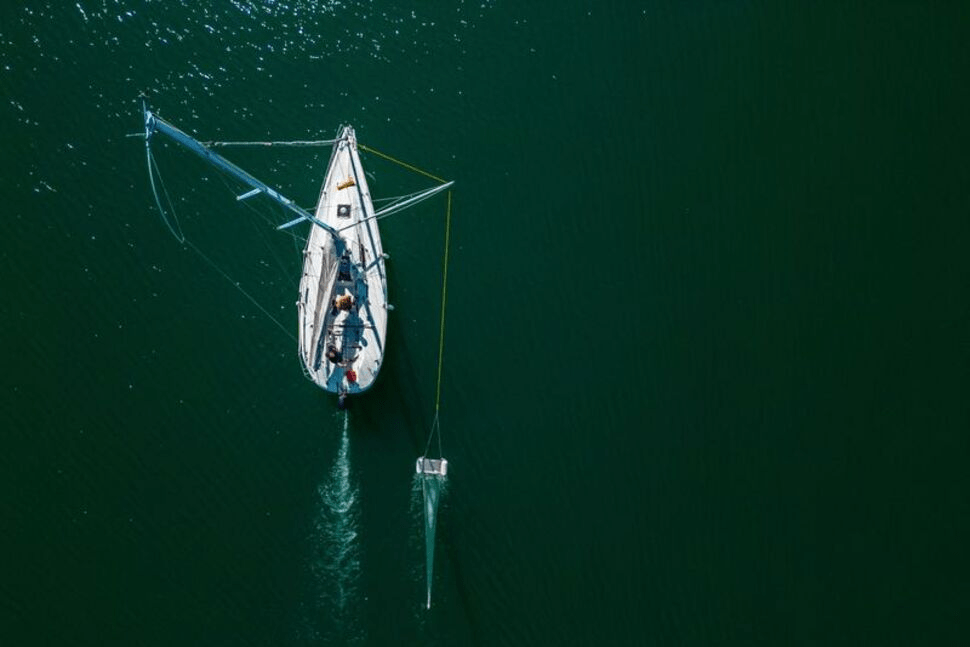
He was speaking from the stern of a sailing vessel that was dragging a sample-collecting device across Switzerland’s biggest lake, also known as Lac Leman.
“We found that interesting because we often have the image of the Leman Lake as a big Alpine lake with crystal waters but it’s not really the case,” he said, using the French name.
The crescent-shaped lake is the largest in Western Europe covering 580 square kilometers (224 square miles) straddling France and Switzerland and is fed partly by Alpine glaciers. It spills into the Rhone River which eventually flows into the Mediterranean Sea.
Switzerland’s bordering cantons treat the water and then pipe it into homes as drinking water. One of the lakeside towns, Evian, on the French side, is also the name given to a brand of bottled water from a natural spring.
Microplastics derive from the breakdown of various consumer and industrial plastic waste over time and their concentrations are accumulating in the world’s oceans. They have even been found in the blood samples of unborn babies and scientists are trying to understand the health risks of the phenomenon for people and animals.
Hagmann said he was worried that rising plastic consumption over time would lead to more litter ending up in water systems. “We are seeing the growth curve rise very quickly. Projections are pessimistic if we do nothing,” he said, although he acknowledged that at least awareness of the issue was growing. “When we began working on this 12 years ago and talked about plastic fragments in water, people took us for wackos and now it is a recognized problem.”
Benton Harbor residents have been inundated with challenges facing their water system for years. Lead in pipes. Ineffective corrosion treatment. Threats of water shut-offs. Piled one on top of another.
Some relief is at hand. Following years of public interest campaigning, two years of construction, and $45 million in federal aid, almost all of Benton Harbor’s lead pipes have been replaced. The U.S. Environmental Protection Agency last month confirmed that Benton Harbor complies with safe water requirements. The measurements showed that the levels of lead are not hazardous.
Another hardship, though, has emerged in its place: more expensive water bills. Residents were told that in the next five years, water bills will grow 10 percent annually.
Rev. Edward Pinkney, an influential community organizer who helped lead the work to solve the lead emergency, said that a couple of years ago his water bill was around $40 a month. Now it is about $75. In five years, it will be around $120 if the 10 percent annual increase persists.
One of the main reasons for the increase is that Benton Harbor’s drinking water plant lost a third of its customer base after neighboring St. Joseph and Benton Township disconnected from the system, said Elin Warn Betanzo, president of Safe Water Engineering, a consulting firm. Right before that, the water plant made an expensive update to the infrastructure.
The burden of paying for it fell on the Benton Harbor residents. “The state played a role in removing their ratepayer base,” Betanzo said. “Benton Harbor would not be in this situation today if it wasn’t for the state’s decision. So they need public health protection, they need water system upgrades, and it can’t be supported only by the community through 10% annual rate increases.”
The plant still needs “millions of dollars of upgrades that they need to do over the next five to ten years,” according to Betanzo.
Reflecting on the government’s actions, Rev. Pinkney said: “What happened in the city of Benton Harbor, we hope and pray that does not ever, ever happen to anyone else. Because the government knew the problem and did nothing until we pressured them to do something.”
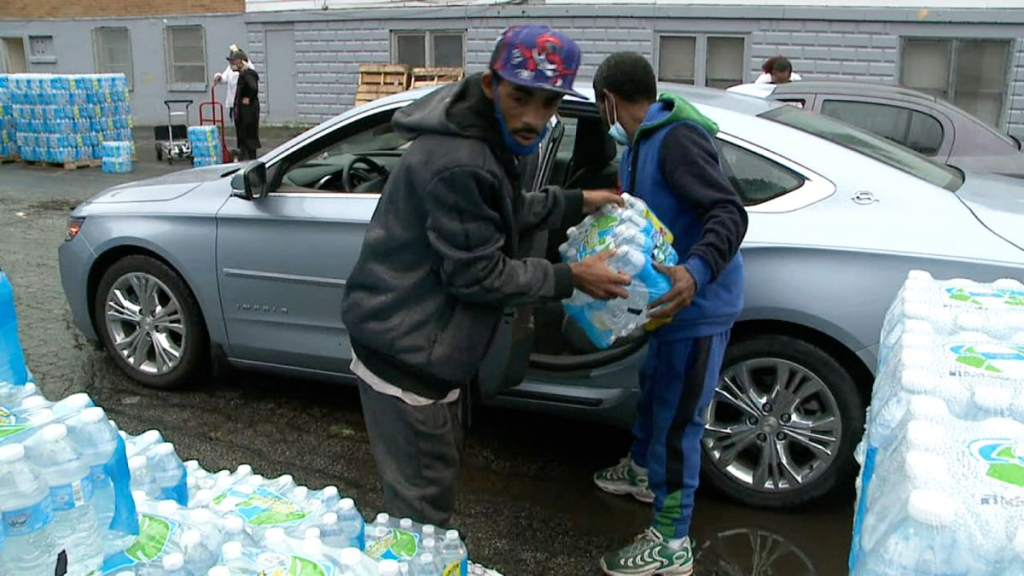
Cyndi Roper, senior policy advocate with the Natural Resources Defense Council, an organization based in New York City, said that communities like Benton Harbor have water trauma. “Their trust was violated. And so the question of whether or not they trust the tap water, with or without the filters, is another part of the equation and some people don’t trust the filters, and so they still want bottled water.”
She added, “In a water trauma community, it’s really important to be able to respond in a way that the residents are most comfortable with being able to ensure that they are getting their hydration, cooking, and other needs met.”
Benton Harbor is not alone in its struggle to address water affordability. Around 200 communities across Michigan are overburdened with the cost of the water infrastructure.
The battle for safe water is ongoing and requires community attention. Rev. Pinkney said: “Make sure that you hold your government accountable for their actions and inactions.”
Amid a brutal campaign a decade ago to claim a caliphate across the lands of Mesopotamia, the insurgent group the Islamic State sought to control the region’s choke points. In the desert, that means water. In northern Syria, its fighters seized Tabqa Dam. Proceeding eastward they commanded the decrepit Mosul Dam on the Tigris River in northern Iraq. A third target, Fallujah Dam, was just as strategic.
The structure west of Baghdad diverts water from the Euphrates River for irrigation. Together, the Tigris and Euphrates are the famed waterways of Mesopotamia, cradles of civilizations and present-day lifelines for farmers and cities in Syria, Iraq, and Turkey.
Upon taking control of Fallujah Dam, Islamic state insurgents promptly shut the gates. Downstream, the water supply for the holy cities of Karbala and Najaf was cut off. Upstream, crops were destroyed and livestock killed as the impounded waters flooded hundreds of square kilometers of land.
The events of 2014 echoed the region’s history. Nearly three thousand years earlier, the Assyrian king Sargon II destroyed an irrigation system in southern Mesopotamia during a military campaign against the Chaldeans. It was one of many acts of violence, in the Fertile Crescent and elsewhere, in which water systems were the target.
These conflicts are among the stories recounted in The Three Ages of Water, a new book by scientist Peter Gleick that traces the arc of society through its relationship with the most elemental of human needs.
“Water is us,” Gleick writes. And, he argues, we’re committing a series of self-inflicted wounds.
Studded with big themes and historical sweep, the book is a history and a blueprint. There’s conflict and violence over water. But also groundwater depletion, scientific advances, agricultural revolutions, life-giving improvements in public health, legal codes to manage scarce supplies, and the misery of those left behind.
Not to be overshadowed by trends and ideas, fascinating characters populate the pages. Famous and obscure, these are the people who moved history. John Snow, the disease detective who proved that a cholera outbreak in Victorian London was spread not by foul air but by tainted water. John Leal, the physician who first chlorinated a major city’s drinking water supply in order to kill off harmful bacteria. And Mesalim, the king of the Sumerian city-state of Kish who, 4,500 years ago, brokered a legal treaty to intervene in the first documented water conflict, which was also in the lands of Mesopotamia.
Gleick, co-founder and senior fellow at the Pacific Institute and a Circle of Blue board member, depicts the history of water in three acts, or ages.
The first age was defined by survival. Early humans hunted, gathered, and then mostly settled, founding civilizations in prominent river valleys. The first works of water engineering — dams, aqueducts, and irrigation systems — were developed. The human relationship to water, at this point, “was both central and unplanned — but always intimate.”
The second age was marked by acceleration and control. Knowledge of biology, chemistry, and physics expanded rapidly with the scientific revolutions of the 17th and 18th centuries, advances that later underpinned public health victories.
At the same time, new learnings opened the door to dominion at unprecedented scale. Nature was corralled, leashed, harnessed, colonized, exploited, and extracted. Polluted rivers caught fire. Dams blocked rivers for hydropower. Canals punctured hundreds of kilometers into the drylands, bringing irrigation water and land cultivation. Wetlands were diked and drained.
All of this development blunted the sharp edge of nature’s uncertainties. Large-scale engineering provided for an astronomical increase in material wealth, and longer lives. Deaths from waterborne diseases in the United States essentially vanished after Leal’s chlorination experiment caught on. But many people are not so fortunate. Diarrhea remains one of the leading causes of death globally for children under age 5. Roughly 2 billion people do not have safe drinking water.
Gleick argues that we are now at the cusp of a third age of water — “a fork in the road of our own survival” — when society must reckon with the crises brought on by the excesses of the second. Just as the energy sector must transition away from fossil fuels, society needs to revamp its relationship with water.
If society does not, there is dystopia. But Gleick does not countenance it. Instead he offers a blueprint for a sustainable transition. The blueprint is informed by his decades of research into something called the “soft path.” This means prizing water-sipping appliances and technology that cleans and reuses water. It means restoring ecosystems and re-valuing rivers. It means shifts in policy and law. In this vision, all people have sufficient clean water and sanitation. It means rapidly cutting planet-warming greenhouse gas emissions, for climate change is a water disruptor.
How to achieve this? All policy is implementation, as political scientists like to say. But that is beyond the scope of the book. Gleick does frequently remind readers that walking this soft path does not require an inconceivable detour. The tools and waypoints already exist. The key challenges, he says, are neither membranes nor money.
“There are no insurmountable technological or economic roadblocks to a positive Third Age of Water,” Gleick writes. “But whether we can overcome the political, social, and cultural obstacles that remain depends on the choices we make and how quickly we act.”
Those obstacles — political, social, cultural — are the true tests. Is unanimity possible as the world cracks under unbearable heat? What are we willing to sacrifice today for a calmer tomorrow? Can the momentous stakes overcome the viciousness of near-sighted politics and the echoes of history? Will we act quickly?
These are the unknowns in this uncertain third age.
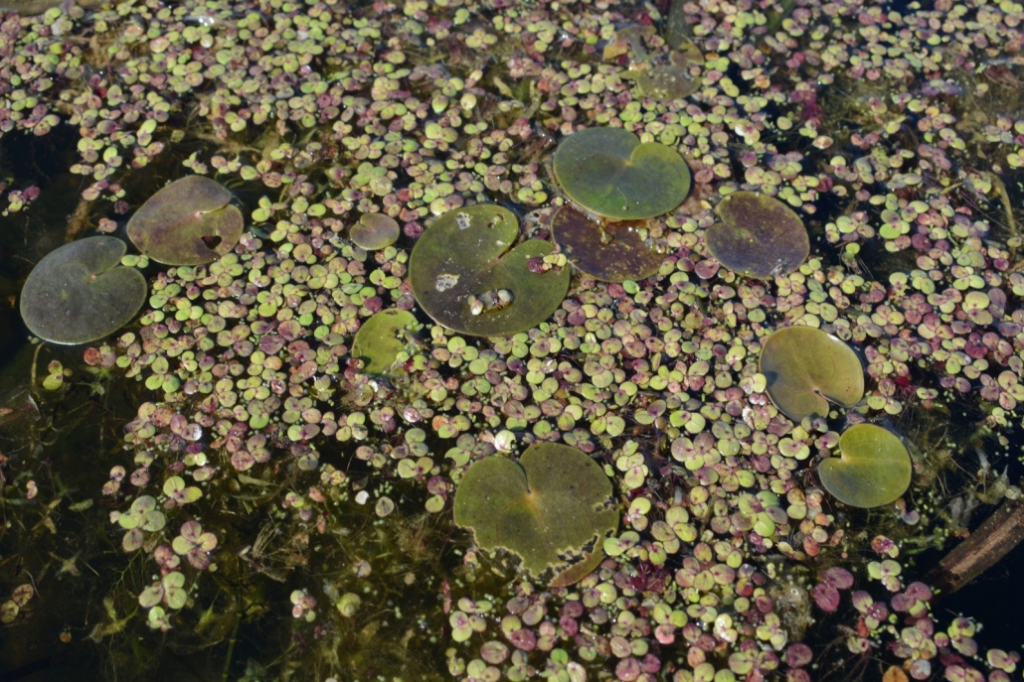
In the waters where it’s a native species — Europe, Asia, and Africa – the aquatic plant known as European frog-bit is no trouble at all. Though its name summons images of slime and bumps, frog-bit is a decorative display of coin-size leaves that in shallow water look like lily pads and serve as a source of food for insects, snails, rodents, waterfowl, and fish.
In the 1930s, frog-bit was transported out of its home region to decorate ponds and aquarium tanks in the U.S. and Canada. It escaped, likely in the first half of the century, And like so many other non-native exotic species of plants and animals started to spread in streams and rivers to make its way to Michigan, the waters of the Great Lakes, and to parts of New York, Ohio, Pennsylvania, Vermont, and Washington where it has no predators.
Almost a century later, frog-bit has become a formidable nuisance, especially along parts of Lake Huron and in southeast Michigan. First, the plant forms mats in Michigan surface waters so thick that they block sunlight and diminish oxygen levels for native species, and make it impossible to swim, boat, or fish. Second, frog-bit defies effective control.
In June, the U.S. Army Corps of Engineers promoted what the agency hopes will be a new strategy for frog-bit control. It offered researchers a $200,000 grant to develop a biological control for the frog-bit and its relative – water soldier.
The urgency is evident. One major cause of frog-bit’s expanding presence, say state authorities, is that boat owners are not following the “clean, drain, dry” rule to remove remnants on their hulls. The consequence is that in Michigan, frog-bit is creeping inland. Established populations are found in Monroe, Wayne, Macomb, St. Clair, and Wayne counties. It has been documented in 12 counties in total, including Arenac, Alpena, Kent, and Chippewa.
“You should clean your boat before you leave. Ideally, dry it off and drain any water out of it. So that you’re not moving water and mud that has seeds or turions in it,” said Tom Alwin, a senior aquatic biologist at the EGLE who works with aquatic invasive species.
Additionally, the frog-bit can move without human help using water currency. On top of its mobility, frog-bit is an evolutionary intelligent fighter. It is hiding among other plants such as cattails, said Noah Jansen, a restoration manager at Tip of the Mitt Watershed Council based in Petoskey, Michigan.
And if you miss one or two plants, the frog-bit will rebound and appear in the same place again, Alwin said.
That’s because frog-bit is resourceful. The plant uses two reproduction strategies to spread – seeds and turions, a bud that is capable of growing into a complete plant. Seeds and turions can’t be eradicated by herbicides. They hide on the bottom in the mud and wait till the right time to grow.
Hand pulling can work for adult plants. “It’s a rewarding feeling to reach into the water and pull out a big handful of it and know that you’re removing it from the ecosystem. But it’s a lot of work if you’re gonna do it all day long,” said Chris Engle, communication associate at the non-profit Huron Pines, based in Gaylord, Michigan.
With its grant for biological control, the Army Corps is embarking on a program of research, safety testing, and approval of a new frog-bit eradication strategy.
Michigan has had some success with bio-control. In 1994, the state introduced – the Galerucella beetle, which feeds on invasive purple loosestrife, a shoreline plant displacing native plants across the state.
Engle said that several hundred beetles were recently released in Mio to eradicate the loosestrife that grows on the Sable River shoreline.
“It’s always a risky proposition to introduce a new species. But at the same time, I feel that can be a really effective way to also help control an invasive species like frog-bit,” said Jansen.
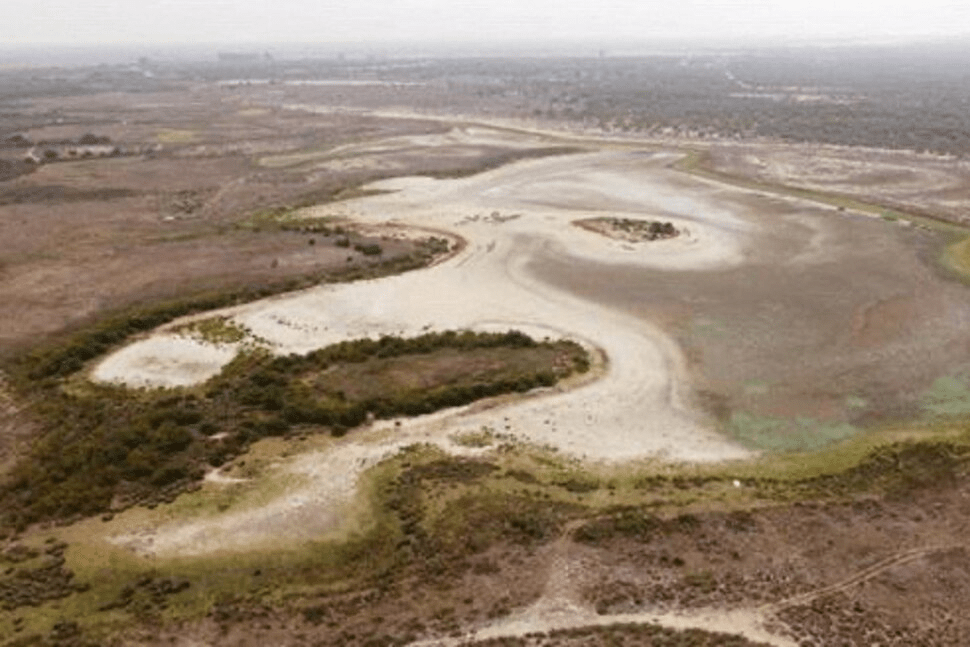
MADRID (Reuters) – The largest permanent lagoon in southern Spain’s Donana national park has completely dried out for the second summer in a row due to a prolonged drought and the overexploitation of aquifers, the Spanish National Research Council (CSIC) said on Thursday.
The drying out of the lagoon comes as Spain grapples with the third heatwave of the summer, while emptying reservoirs have forced water restrictions in parts of the country.
“Since we began collecting data on the area half a century ago, this has never happened in two consecutive years, which shows the seriousness of the situation facing the Donana lagoon system and, with it, all the biodiversity that depends on it,” the CSIC said in a statement.
The Donana wetlands harbour many endemic and threatened species, such as freshwater eels and turtles.
Most lagoons in Donana are temporary, meaning their basins fill when flooded by rainwater from aquifers in the winter and then dry out in the hotter months. But a few also contain water during the summer, providing an important refuge for migratory birds heading southward after breeding in northern Europe.
According to the researchers, Donana has seen in the past two years the lowest precipitation levels in a decade and the highest average annual temperature ever recorded, at 18.53 Celsius (65.35 Fahrenheit).
Donana’s lagoons are not only threatened by the drought and heat. They are also surrounded by a sea of greenhouses and a complex system of pipes that take water from illegally drilled wells for use by farmers growing red berries.
Andalusia’s conservative regional government plans an amnesty that would legalise additional irrigation around Donana, prompting an outcry from environmentalists.