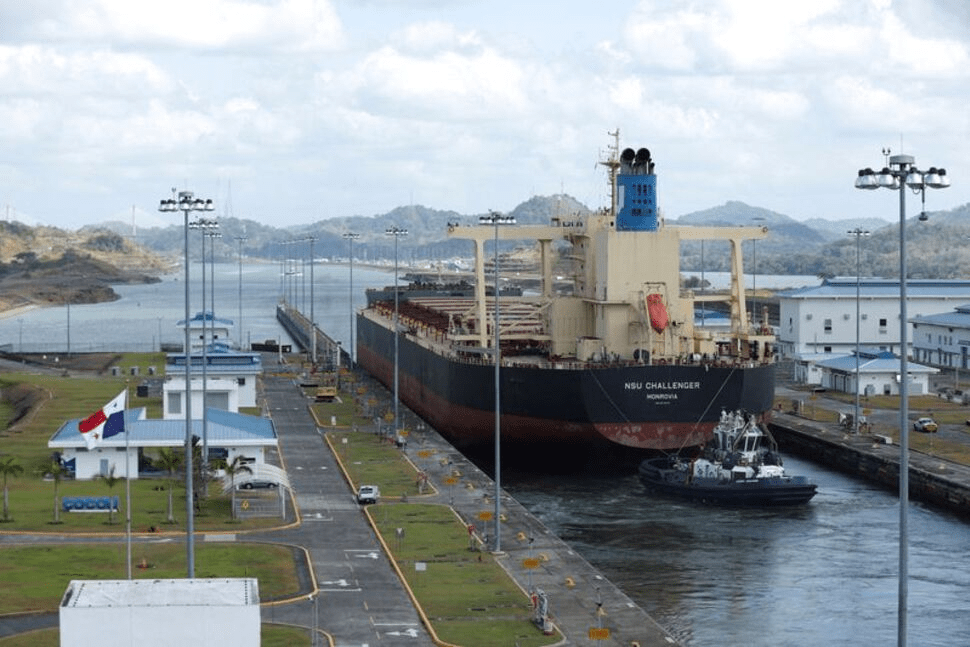
The Panama Canal’s toll revenues have dipped by about $100 million per month since last October, the canal’s administrator said on Wednesday, adding that if the trend continues reduced income from tolls could total some $700 million by around April.
The falling revenue stems from drought conditions that have forced the canal’s managers to impose shipping restrictions on the more than century-old waterway, a key global trade route linking the Pacific and Atlantic Oceans.
The canal’s fiscal year begins in October, and runs through September.
Canal Administrator Ricaurte Vasquez described the continued trend of falling toll revenue in coming months as “possible,” in comments to reporters at a press conference.
He added that the waterway expects to nonetheless meet targets set out in its budget for income for the fiscal year, in part due to a recent toll increase that have come into effect.
With more than 50% of the United States experiencing some level of drought, according to the U.S. Drought Monitor as of Jan. 17, 2024, it’s increasingly important that people think about how they use their water resources. Although homes aren’t the only source of water waste, they can be a pretty big one, and if you also live in a drought-prone area, the way you manage water in your home matters.
Do you know what to look for in a water-efficient home?
Where We Waste the Most Water
Going about your day, you probably don’t think twice about the water you use. Whether that’s flushing the toilet, running the dishwasher or watering the plants, every extra drop of water you use in your home is one that your area may need during a drought. With long-term droughts occurring across the nation, it matters when we waste. But where do we waste the most water?
“The bathroom tends to waste the most water since most daily routines start and end in that space, causing a significant amount of waste,” says Emily Martis, group product manager for Smart Kitchen and Bath at Moen in Berea, Ohio. “From taking long showers, the toilet running and being flushed consistently, faucets being left on for brushing your teeth, shaving and washing hands, the water usage for the household adds up very quickly.”
But water waste can be anywhere, and if you’re trying to make your home more efficient, it may pay to monitor your home’s water usage more closely. If you’re considering selling your home and you’re in a drought-prone area, this can help you make valuable upgrades before you put it on the market, and if not, you’ll see huge savings on your water bill.
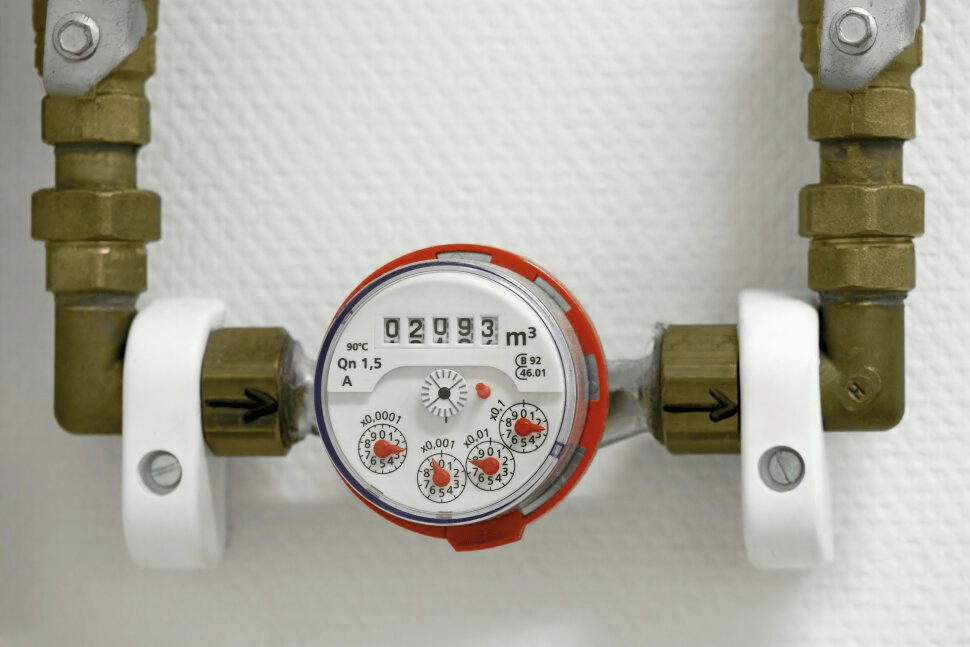
“By monitoring water usage, homeowners can easily see where they are wasting water in the different areas of the home, so they can find ways to remedy their habits,” Martis says. “For example, if you’re overwatering the lawn, you can invest in upgrading to smart sprinkler controllers and add smart wireless soil sensors to get an accurate read on each zone for precise watering habits while automatically factoring in restrictions within drought-prone locations.”
What to Look for In Water-Efficient Homes
If you’re shopping for a home that’s water-efficient, you have to look at the whole package, not just the bathroom. There are so many ways that water can be wasted, especially in a drought-prone area, that it can be overwhelming.
“There are two areas that I would suggest buyers look for water efficiency: inside and outside,” says Neil Brooks, a real estate agent with My Home Group and an agent within the Veterans United Realty Network in Scottsdale, Arizona. Although that might not sound like sage advice at the outset, it highlights the many places that water efficiency can be improved.
Brooks recommends choosing homes with equipment like hot water recirculating systems or instant hot water pumps, newer water-saving appliances, dual flush toilets, drip irrigation systems and pools with covers. He advises buyers to steer clear of water softeners and reverse osmosis systems since they can use a lot of water that ends up going to waste.
This advice is useful for homebuyers and homeowners, since anyone can make adjustments to make homes more efficient in these areas. And, whether you’re buying or simply need help rooting out inefficiency, a home inspection can make a huge difference.
“The home inspection will uncover inefficient appliances, water leaks and more,” says Brooks. “As part of that inspection, the buyer should get a copy of the previous 12 months of utility bills, including the water bill, to get a clear picture of the water situation with the house. But home inspections are for more than just new homebuyers; sellers should also conduct one.”
What About Grass and Landscaping?
For many people, their first thought when it comes to water efficiency is to remove their grass, plants and other things that need regular watering. The problem is by removing the grass and plants in your yard, you’re removing protection from the sun, which can increase the heat in the yard and lead to more evaporation and higher air conditioning use, which isn’t a better deal for the environment overall.
“What people forget is that plants and grass are a cooling agent to the soils and the things around us,” says Kody Ketterling, founder and landscape expert at K-IT Products in Twin Falls, Idaho. “If you remove the grass around your house and just have a yard that’s rock or cement, it’s going to be anywhere from 15 to 30 degrees warmer all the time. Instead of doing that, you can be more efficient with your sprinkler usage. Having an irrigation expert look at your setup can reveal inefficiencies with the timer or sprinklers you’re using. Smart controllers can reduce your water usage significantly by watering based on your lawn’s needs and the weather conditions.”
Another tip Ketterling gives his clients is to mow their lawns higher than they might think is necessary. His company cuts grass at a 3-inch height in the summertime to reduce evaporation, which he says can reduce water use by as much as 20%. He also recommends adding pressure regulators to hose bibs, which can additionally reduce the water your hose uses from 30 to 40 gallons per minute to just 15 to 25, depending on the regulator you install. It will still provide the water you need without wasting the water that you don’t.
Is it Worth Investing In a Water-Efficient Home?
If you already live in a drought-prone area, a water-efficient home can more than pay for itself when it’s time to sell. Being on a municipal water source is also incredibly helpful.
“Water efficiency does impact the value of homes in my area, especially a home on a private or shared well,” says Brooks. “Homes on a well are more challenging to sell because of the uncertainty of the continued flow of water. We’ll go dry in Arizona, and you can’t guarantee that you’ll strike water by drilling a new well.”
In other parts of the country, a water-efficient home may be ahead of its time, but as droughts get longer and worse, you may find significant benefit in bad years from having a water-efficient home. Other tools, like leak detectors, serve double-duty, ensuring that leaks are caught quickly to save water and prevent serious damage inside walls.
Smart leak detectors, Martis explains, work in the background all the time, constantly checking the pressure of the water system to ensure all is as it’s expected to be. If the pressure drops unexpectedly, these devices can alert you to a problem immediately, so you can address the issue. Some types of water monitors even monitor your water usage and automatically shut off in case of an issue. It’s a lot of useful data for a homeowner who is looking to improve their water usage.
With all the talk of energy-efficiency in homes right now, we tend to forget about water. But water is vital to our survival as a species, and it’s getting harder and harder to find in some areas. The time to prepare for a drought is long before one hits.
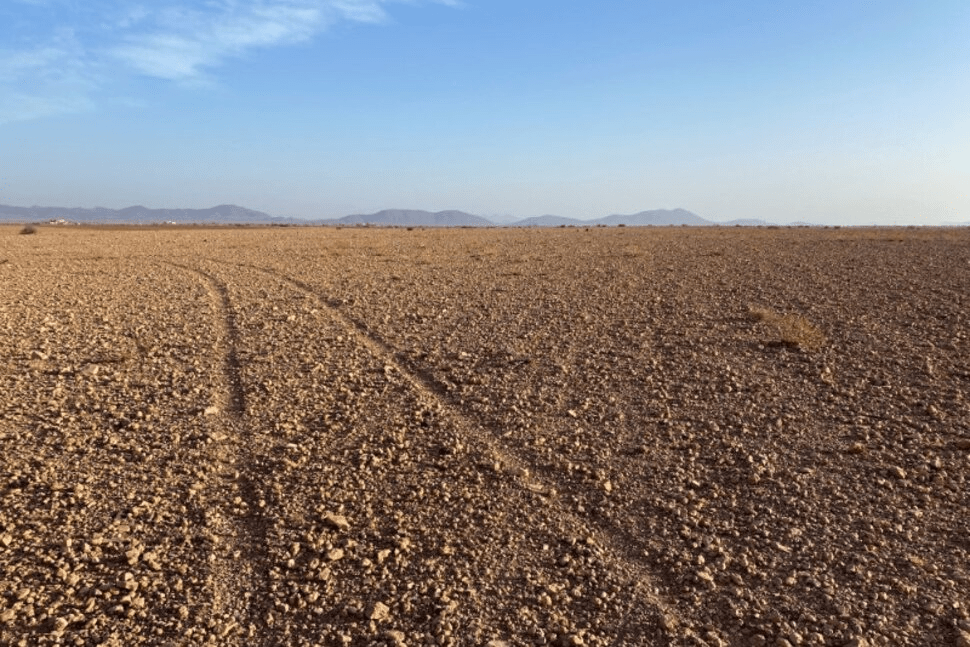
Six consecutive years of drought have left Moroccan dams at critical levels, prompting a big drop in the area of land being irrigated, Morocco’s water and agriculture ministers said.
By mid-January, Morocco’s average dam filling rate had dropped to 23.2% from 31.5% a year earlier, water minister Nizar Baraka told a meeting on Tuesday, according to a royal palace statement.
Rainfall was 70% lower than in an average year, he said.
The country’s second biggest dam, Al Masira, which serves the economic hub of Casablanca, is almost empty.
The worst drought in more than two decades prompted authorities to ban the use of drinking water to clean streets or irrigate parks in cities and to stop dam water being used to irrigate some key farming areas.
The decision took many farmers by surprise in the area of Taroudant in the Souss region, the main source of Morocco’s fresh produce, which supplies supermarkets across Europe and is a major source of export revenue.
“Stopping dam irrigation has sapped my investments … this year’s production is in danger,” Mbark N’Ait Ali, a banana and vegetable farmer in Taroudant, said.
Wells have dried up in the area, with farmers having to dig down to 400 meters with no guarantee of finding enough water, he added.
This “violent drought” had forced a reduction in the dam-irrigated area to 400,000 hectares from 750,000 hectares before the dry spell, agriculture minister Sadiki said.
“Autumn crops are at a critical condition … we pray for rain,” he said.
The ploughed area with rain-fed cereals has dropped this year to 2.3 million hectares, from 3.65 million hectares last year, which was also a dry year, he said.
Morocco’s statistics agency expects the cereals harvest to be less than average this year, meaning more wheat imports,
As well as building waterways and new dams, Morocco plans eight new desalination plants powered by renewables.
It aims to produce 1.3 billion cubic metres of fresh water from desalination by 2035.
“We are afraid it will be too late when desalination will be ready to irrigate our farms,” said N’Ait Ali.
Hydrologists measure large amounts of water in acre-feet – an acre of water one-foot deep, or 326,000 gallons.
In an average year, 200 million acre-feet of water fall on California as rain or snow. The vast majority of it sinks into the ground or evaporates, but about a third of it finds its way into rivers. Half of that will eventually flow into the Pacific Ocean.
That leaves approximately 35-40 million acre-feet for human use, with three-quarters being applied to fields and orchards to support the state’s agricultural output, and the remaining quarter – 9-10 million acre-feet – being used for household, commercial and industrial purposes.
In other words, nearly 39 million Californians wind up using about 5% of the original precipitation to water their lawns, bathe themselves, operate toilets and cook their food.
That number is important because it is such a tiny amount, even though the state’s perennial household water conservation programs imply that taking fewer showers or reducing lawn watering will somehow solve the state’s water problems.
The ludicrous nature of those propagandistic appeals is quite evident in the state Water Resources Control Board’s new plan to force local water agencies into cutting household water use even more, no matter the multibillion-dollar cost, and with penalties if they fail to meet quotas.
The water board says the plan, which was authorized by the Legislature in 2018, would reduce household use by 440,000 acre-feet a year when fully implemented. That would be about 5% of current use, which is only about 5% of average precipitation – scarcely a drop in the bucket.
The plan is drawing some well-reasoned criticism from two independent observers, the Legislative Analyst Office, an arm of the Legislature, and the Public Policy Institute of California, the state’s premier think tank.
The LAO, in a report to the Legislature, said the plan “will create challenges for water suppliers in several key ways, in many cases without compelling justifications.”
In essence, the LAO said, local water agencies would have to jump through the state’s hoops by spending billions of dollars for a tiny reduction in overall water use that could have an adverse impact on low-income families.
The PPIC is similarly skeptical, summarizing the plan as “very high cost for little benefit.” PPIC fellows David Mitchell and Ellen Hanak also pointed out its effects on low-income communities and the difficulty it would impose on local governments’ programs to plant and maintain trees as a shield against hot summer weather.
California does indeed have a water supply problem, mostly because its political leaders for decades have failed to expand the state’s water infrastructure that had been built during the mid-20th century.
Household use is not the problem. It cannot be because it is such a tiny part of the overall water picture and actually has declined, in relative terms, as the state’s population reached 40 million, more than twice what it was when the last major water works were constructed.
The major mismatch of demand and supply occurs in the two largest categories of water use, agriculture and the environment. Agricultural water agencies and environmental groups have been jousting for decades in the Legislature, in Congress, in courts and in regulatory agencies such as the water board over how much water farmers can draw and how much should remain in rivers to protect habitat for fish and other wildlife.
That’s the issue that must be resolved by reallocating existing supplies, building new storage and/or creating new supplies, such as desalination of seawater. Spending billions of dollars to save a few gallons of household water is just an expensive exercise in virtue-signaling that accomplishes virtually nothing.
Two consecutivesummers of brutal heat and drought have left some parts of Texas with notably low water supplies going into 2024.
A wet year or a well-placed hurricane could quickly pull these regions back from the brink. But winter rains have disappointed so far. Last week’s downpours are the first in weeks for parts of the state and they won’t hit the watersheds that need them most.
Looking ahead, forecasters increasingly expect another scorching summer here this year.
That’s bad news for places like far-south Texas, where big reservoirs on the Lower Rio Grande fell from 33 percent to 23 percent full over the past 12 months. A repeat of similar conditions would leave the reservoirs far lower than they’ve ever been, triggering an emergency response and an international crisis.
“Pretty scary times,” said Jim Darling, president of the Rio Grande Regional Water Authority and former mayor of the city of McAllen. “We’ll see what happens.”
Worries stretch beyond the Rio Grande. In Corpus Christi, on the south Texas coast, authorities last month stopped releasing water aimed at maintaining minimum viable ecology in the coastal wetlands, even as oil refineries and chemical plants remain exempt from water use restrictions during drought.
Also last month, in the sprawling suburbs of Central Texas, between Austin and San Antonio, one groundwater district declared stage 4 drought for the first time in its 36-year history.
Texans don’t usually talk about drought in the winter. Damp soil and green grass may conceal the impending predicament today, but water planners in regions with low reserves nervously await what summer may bring.
“Signs are not favorable,” said Greg Waller, a coordinating hydrologist with the National Oceanic and Atmospheric Administration in Fort Worth. “Expect warmer and drier, again.”
Winter and spring rains offer the best hope for relief, he said, but weather patterns so far haven’t produced the sustained downpours needed to refill reservoirs.
Drought conditions in 2022 and 2023 struck with markedly acute severity. Last year was the hottest on record for Texas—and the Earth, according to NOAA—after a global heat wave shattered temperature records around the world.
These patterns, Waller said, are consistent with scientific understanding of climate change caused by carbon emissions.
“Climate change means the extremes are going to get more extreme,” he said. “The heat waves are going to get more heat. The droughts are going to get droughty-er and the floods are going to get floody-er.”
Texas rainfall typically peaks in May. If relief doesn’t come by then, some places will need to start bracing for impact.
Corpus Christi: Wetlands and Refineries
Corpus Christi, with 421,000 people in its two-county metro area, sits where the Gulf Coast marshes meet the semi-arid South Texas plains. The region’s combined reservoirs dropped from 53.7 percent full in 2022 to 43.6 percent in 2023 to 30.5 percent this month.
The city announced in December that it would no longer release water from its reservoir system to support basic ecology in coastal bays and estuaries.
“Due to the ongoing drought in our water supply,” wrote a city spokesperson in a statement. “NO water is being released from Lake Corpus Christi to the Bays and Estuaries.”
Wherever Texas rivers join the sea, these once-vast wetlands host critical reproductive cycles of many aquatic species, and they depend on freshwater inflows for their characteristically half-salty, nutrient-rich systems. When water supply gets tight, the bays and estuaries typically are first to see their allocations revoked while cities keep dam gates closed.
These ecosystems, which once benefited from all the water from the formerly undammed rivers of Texas, have adapted to natural droughts. Dry years severely decrease the amount of species reproduction, but when wet weather returns, the system can usually recover within a year, according to Paul Montagna, endowed chair of hydroecology at Harte Research Institute for Gulf of Mexico Studies in Corpus Christi.
“However, if a system is permanently impaired it is also possible that recovery will not reach former levels,” Montagna said.
Studies suggest that systems around Corpus Christi may already be “permanently impaired,” Montagna said, largely due to a sustained lack of fresh water.
Similar problems span the lower Texas coast. The Rio Grande hasn’t flowed consistently into the Gulf of Mexico since the early 2000s. On the Colorado River, which runs through Austin, authorities have kept water releases to the coastal wetlands at a bare minimum in recent years. Jennifer Walker, director of the National Wildlife Foundation’s Texas Coast and Water Program, called it “critical life support.”
“Water to meet environmental needs is frequently the first to be negotiated away,” Walker said. “Our bays and estuaries are a hugely important part of Texas and they’re not something that would be easy to go back and fix.”
In Corpus Christi, a major refining and export hub for Texas shale oil and gas, city authorities have imposed water use restrictions on residents, with more to come if reservoir levels fall below 30 percent. But the region’s largest industrial water consumers operate unabated, thanks to a purchasable exemption from drought restrictions for industrial users—$0.25 per 1,000 gallons—passed by the city council in 2018.
That includes users like ExxonMobil’s massive new plastics plant, which is authorized to use up to 25 million gallons of water per day—a quarter of the regional summertime water demand.
“Industry can continue full bore through all of these drought stages and the estuary gets cut off early,” said a water resource consultant from Corpus Christi who requested anonymity to preserve his business relationship with the city. “I think it’s a looming disaster. They are still trying to recruit all these water-intensive industries along the coast.”
Proceeds from the exemption program were supposed to fund development of seawater desalination plants that would expand the regional water supply and meet demands of a booming industrial buildout. The first plant was initially planned to begin operations early last year, but it remains mired in challenges and years away from breaking ground. Meanwhile, the industrial buildout continues.
Central Texas: People and Grass
Two hundred miles inland, the five-county region surrounding Austin, Texas’ high-tech capital city, has grown faster than any US metro area for 12 straight years. Its water supplies haven’t.
In 2022, less water flowed into City of Austin reservoirs than ever before, city staff said at a public water task force meeting on Tuesday. Last year was only slightly better. The largest reservoir serving Austin, Lake Travis, fell from about 80 percent full in January 2022 to 38 percent full at the start of this year.
Even in another extreme drought year, Austin can avoid heightened water use restrictions, which take effect when reservoirs fall below 30 percent full, until at least July, according to a water supply outlook presented at the meeting. But the outlook stopped short of August and September, the region’s hottest and (recently) driest months.
“It’s not looking good,” said Robert Mace, director of the Meadows Center for Water and the Environment at Texas State University and a member of the water task force.
Even if levels fall below 30 percent, water users in Austin will face only minor restrictions, focused mostly on car washing and lawn irrigation. During the summer in Texas, when water consumption can double or triple over wintertime use, major cities spray most of their treated drinking water onto grass.
The problem worsens as more land converts to suburban subdivisions amid a homebuilding boom, said Todd Votteler, a water dispute consultant and editor of the Texas Water Journal, a peer-reviewed journal focused on water management and research. Texas gained more residents and built more homes than any state in recent years.
“One of the challenges is the idea for home builders and the real estate industry that all these new houses need to have beautiful green lawns,” said Votteler, who has worked at groundwater and river authorities in Central Texas since 1994. “People moving here from some place else have not lived in a region with a limited water supply.”
Around the city of Austin, a patchwork of authorities manages various aquifers and reservoirs. Last month, the Barton Springs/Edwards Aquifer Groundwater Conservation District declared stage four drought restrictions for the first time in its 36-year history. That required the oldest communities and major companies in the district to reduce water use by 40 percent, while 16 newer permit holders were cut off entirely.
The district’s customers include the small city of Kyle, the third-fastest growing US city in 2022, plus dozens of small water companies and utility districts.
“We’ve been concerned for years. We’ve been in one stage of drought or another for well over a year and a half now,” said Tim Loftus, general manager of the Barton Springs/Edwards Aquifer Groundwater Conservation District. “We just really need rain.”
Loftus said his customers have “risen to the occasion” and complied with cuts. Another district hasn’t been as lucky.
The neighboring Hays Trinity Groundwater Conservation District has fought for two years with a local subsidiary of a national investor-owned water supply company over violations of permit pumping limits, even as severe drought conditions have continued to deepen.
The company, Aqua Texas, has taken almost twice its permitted allotment for two consecutive years and has declined to abide by drought restrictions, according to Charlie Flatten, general manager of the Hays Trinity Groundwater Conservation District. This month, Aqua sued the conservation district in federal court. Its legal brief didn’t address whether Aqua had overpumped, but accused the groundwater district of violating due process and of “unequal application of its penalty policy.” It added that “Aqua Texas has voluntarily spent millions of dollars in water conservation.” The groundwater district, in legal documents, has denied Aqua’s allegations.
“We’re already seeing wells drying up, not just in specific sections but across the district,” Flatten said. “As we continue to use water and there continues to be no recharge, more and more wells will be affected.”
Another major nearby water source, the Canyon Lake reservoir, started last year 80 percent full, surpassed its record low of 68 percent in August, and is 60 percent full today.
The Lower Rio Grande: Texas and Mexico
The biggest water problems in Texas lie along its southern border, where some 6 million people in two countries depend on the dwindling Lower Rio Grande system.
At the river’s end, amid the irrigated fields of the fertile Rio Grande Valley, farmers have lost crops midseason in recent years due to water shortages. This year, many won’t plant at all, worried they will lose the investment to another summer drought, said Darling, the Rio Grande Regional Water Authority president.
That creates a spiraling conundrum for the flourishing cities of the Rio Grande Valley in Texas, home to more than a million people, he said. The once-prosperous agricultural sector historically accounts for more than 80 percent of water demand here. Without its vast volumes flowing for irrigation, the region’s network of canals would almost dry up. Cities would lose more than half their water supply to evaporation and soil absorption along its 70-mile journey from the nearest reservoir.
There are two possible temporary remedies to this problem, Darling said.
One is the weather. The only other time the Rio Grande reservoirs fell as low as they have today, around 2000, a hurricane soon hit and refilled them almost entirely. A Pacific storm could also bring relief to the bulk of the Rio Grande watershed, which covers the mountains of northwestern Mexico.
Another is international politics. Because most of the water used by Texas farmers on the Lower Rio Grande originates as rainfall in Northern Mexico, a binational treaty governs water sharing between the countries.
Northern Mexico has experienced its own water crises lately, including a deadly riot at a reservoir dam in 2020 and months of water rationing in 2022 in one of the country’s largest cities. So, it’s been reluctant to release water for Texas farmers, contributing to low levels in the downstream reservoirs.
Since 2020, Mexico has fallen sharply behind on its schedule of water releases to Texas under the treaty, which was ratified in 1944. It has until the end of 2025 before it faces delinquency. But the Rio Grande Valley of Texas might not have another two years to wait, Darling said.
The political situation is managed primarily by the International Boundary and Water Commission, a small agency operated by the US and Mexico.
“We are negotiating an agreement with Mexico intended to improve the predictability and reliability of Rio Grande water deliveries,” said an agency spokesperson, Frank Fisher. “We hope this agreement will provide tools that will help users affected by supply shortages.”
North of the border, Fisher said, water restrictions will be managed by the Texas Commission on Environmental Quality.
A TCEQ spokesperson, Victoria Cann, said the agency “has warned users about declining storage and encouraged users to plan for water shortages.”
“TCEQ continues to advocate for water users on the Rio Grande by communicating to IBWC the need for Mexico to deliver on their water obligations under the 1944 Water Treaty,” Cann said.
When a toilet is flushed in California, the water can end up in a lot of places: an ice-skating rink in Ontario, ski slopes around Lake Tahoe, farmland in the central valley.
And – coming soon – kitchen faucets.
California regulators on Tuesday approved rules to let water agencies recycle wastewater and put it into the pipes that carry drinking water to homes, schools and businesses.
It’s a big step for a state that has struggled for decades to secure reliable sources of drinking water for its more than 39 million residents, and it signals a shift in public opinion on a subject that as recently as two decades ago prompted backlash that scuttled similar projects.
Since then, California has been through multiple extreme droughts, including the most recent one, which scientists say was the driest three-year period on record and left the state’s reservoirs at dangerously low levels.
“Water is so precious in California. It is important that we use it more than once,” said Jennifer West, the managing director of WateReuse California, a group advocating for recycled water.
California has been using recycled wastewater for decades. The Ontario Reign minor league hockey team has used it to make ice for its rink in southern California. Soda Springs ski resort near Lake Tahoe has used it to make snow. And farmers in the central valley, where much of the nation’s vegetables, fruits and nuts are grown, use it to water their crops.
It hasn’t been used directly for drinking water. Orange county in southern California operates a large water-purification system that recycles wastewater and uses it to refill underground aquifers. The water mingles with the groundwater for months before being pumped up and used for drinking water again.
California’s new rules would let water agencies take wastewater, treat it, and put it into the drinking water system (although not require them to). California would be just the second state to allow this, following Colorado.
It’s taken regulators more than 10 years to develop these rules, a process that included multiple reviews by independent panels of scientists. A state law required the California water resources control board to approve these regulations by 31 December – a deadline met with just days to spare.
The vote was heralded by some of the state’s biggest water agencies, which all have plans to build huge water-recycling plants in the coming years. The metropolitan water district of southern California, which serves 19 million people, aims to produce up to 150m gallons (nearly 570m litres) per day of both direct and indirect recycled water. A project in San Diego is aiming to account for nearly half the city’s water by 2035.
Water agencies will need public support to complete these projects – which means convincing customers that not only is recycled water safe to drink, but it’s not icky.
California’s new rules require the wastewater be treated for all pathogens and viruses, even if the pathogens and viruses aren’t in the wastewater. That’s different from regular water-treatment rules, which require treatment only for known pathogens, said Darrin Polhemus, the deputy director of the division of drinking water for the California water resources control board.
In fact, the treatment is so stringent it removes all the minerals that make fresh drinking water taste good – meaning they have to be added back at the end of the process.
“It’s at the same drinking water quality, and probably better in many instances,” Polhemus said.
It’s expensive and time-consuming to build these treatment facilities, so, Polhemus said, it will only be an option for bigger, well-funded cities – at least initially.
In San José, local officials have opened the Silicon Valley Advanced Water Purification Center for public tours “so that people can see that this is a very hi-tech process that ensures the water is super clean”, said Kirsten Struve, the assistant officer for the water supply division at the Santa Clara valley water district.
Right now, the agency uses the water for things like irrigating parks and playing fields. But they plan to use it for drinking water in the future.
“We live in California, where the drought happens all the time. And with climate change, it will only get worse,” Struve said. “And this is a drought-resistant supply that we will need in the future to meet the demands of our communities.”
Joaquin Esquivel, the chair of the state water resources control board, which approved the new rules on Tuesday, noted that most people are already drinking recycled water: most wastewater treatment plants put their treated water back into rivers and streams, which then flow down to the next town so they can drink it.
“Anyone out there taking drinking water downstream from a wastewater treatment plant discharge – which, I promise you, you’re all doing – is already drinking toilet-to-tap,” Esquivel said. “All water is recycled. What we have here are standards, science and – importantly – monitoring that allow us to have the faith that it is pure water.”
In 1946 a young atmospheric scientist named Bernard Vonnegut made a significant discovery. It had already been shown that clouds could be made to produce snow or rain by “seeding” them with dry ice, but Vonnegut proved that an even more dramatic and persistent effect could be achieved with silver iodide. The following year, he encouraged his struggling younger brother to join the same lab, not as a scientist but as a copywriter. It was almost 20 years later that Kurt Vonnegut published his satirical novel Cat’s Cradle, inspired by what he’d seen, in which a tyrant unleashes a synthetic form of ice (“ice-nine”) that causes any water it touches to freeze instantly. The novel does not end happily for the planet or its inhabitants.
Ranging from the last ice age to the Anthropocene, Max Leonard’s beguiling history considers the nature of ice as well as its place “in the popular imagination, how it has inspired literature and poetry, and therefore how we might be being diminished as it disappears”. Its genesis was an experience of jarring but everyday incongruity: sitting in a pub one summer’s evening, ice clinking in his drink, Leonard found himself watching TV footage of “meltwater disgorging into the seas of Greenland”. He was struck by an urge to reconcile what was on the screen with what was in his glass. “My hope is that by bringing ice into a more intimate sphere … the catastrophe happening in remote places will become more tangible – that we might feel more keenly what is being lost.” But A Cold Spell is less an elegy and more a celebration of human ingenuity and adaptability. Ice, for Leonard, is a “radically disruptive substance”, a source of terror and entrapment, yes, but also a matrix of revelation.
“Mankind,” wrote Freud, “under the influence of the privations that the … Ice Age imposed upon it, has become generally anxious.” If that period of deep-freeze was a trauma for our species, it was also, Leonard suggests, a cradle of invention and creativity. In the painted caves of Chauvet, France, he finds the “most visible and famous relics of Ice Age life”. The era also gave rise to the oldest depiction of a human being, in the 40,000-year-old mammoth-ivory sculpture known as the Venus of Hohle Fels.
‘In my time,’ wrote Mark Twain, ‘ice was jewellery; none but the rich could wear it’
As glaciers have receded, the ice has divulged new curiosities. In 1862, a mountain guide whose companions had been killed by an avalanche 40 years earlier was asked to identify a corpse that had been spat out, largely intact, by a glacier near Chamonix. “This is Balmat’s hand,” he said. “I would never have dared to believe that, before I left this world, I’d be given the chance once more to shake the hand of one of my brave comrades.” One hundred and thirty years later, two hikers spotted a body high in the Ötztal Alps. What they took for another lost climber turned out, once it was drilled out of the remaining ice, to be a bronze age hunter preserved for more than 5,000 years. Ötzi, as the corpse was named, was wearing cow’s leather shoes, a coat of sheep- and goatskin and a bearskin hat. In his hand was an axe, and in his stomach his last meal: einkorn wheat and ibex.
Ice exists as geography but also as commodity. For much of the 19th century, frozen lakes were lucrative sites of harvest, with businesses such as the Wenham Lake Ice Company exporting their wares across the Atlantic. In 1973, the Rand Corporation published a proposal to sail “trains” of icebergs from the Antarctic to California with the aim of supplying cheap drinking water. (When it became apparent that nothing short of nuclear power would suffice for propulsion the project was put on the back burner.)
Ice’s ability to arrest decomposition, to freeze time, extended supply chains and allowed for national and imperial expansion. Refrigerated transportation possessed what Leonard calls a “colonising force” across the US west, carrying meat one way and dollars the other. The book introduces us to a cast of ice entrepreneurs that includes Frederic Tudor, who in 1833 sent his first shipment of ice from his native Boston to Calcutta. Ten years later, he was shipping more than 10,000 tonnes of Massachusetts lake ice to India each year. Half of it melted on the way; of the remainder half was unsellable; but the trade was still lucrative enough to make his fortune.
Only as ice began to be manufactured at scale using vapour compression technology was Tudor’s near monopoly challenged. When the American civil war cut off the south from the lake ice of the north, the new ice-making industry flourished. By 1865, New Orleans alone was home to three ice factories. Until that point, just as ice had been a luxury available only to the British in colonial India, in the US it had been the preserve of the wealthy. “In my time,” wrote Mark Twain, “ice was jewellery; none but the rich could wear it.”
It’s slippery stuff. “I own to you, I am extremely at a loss how to give the right idea of it,” wrote the English writer and traveller William Windham in 1744, on first setting eyes on Chamonix’s Mer de Glace glacier. “Thus Windham is confounded,” writes Leonard. We’re no less confounded today. On the day he sold the book to Bloomsbury, Leonard learned he had won a cruise to Antarctica in an Instagram competition. (As he says in his afterword, “it may seem like I went about it the wrong way around”, and his description of the trip does, understandably, feel a bit tacked on.) The ice sheets of Antarctica and Greenland, which contain two-thirds of the world’s fresh water, are melting at a rate of 420bn tonnes a year, a process that has accounted for a third of the global average sea level rise since 1993. Antarctica’s Thwaites glacier has lost 1,000bn tonnes of ice since 2000.
What can these vast events and their corollaries possibly have to do with, say, the history of ice skating or snow machines, or poor Ötzi with his gut full of einkorn gruel? How to reconcile such cosmic discrepancies in scale – between the ice cube and the ice sheet, to return to Leonard’s opening image – may be the biggest question we face. But a cabinet of wonders has its own value, and cataloguing what is being lost is its own form of activism.
With increasing evidence linking per- and polyfluoroalkyl substances (PFAS) with cancers, birth defects and negative effects on the immune systems of humans and animals, pressure is growing to restrict these handy waterproofing chemicals that are in everything from Teflon pans and medical devices to cosmetics and pizza boxes.
According to Nijhuis Saur industries, which has built more than 80 technologies to treat forever chemicals such as the banned or restricted PFOS, PFOA and PFHxS, these PFAS are difficult and expensive to remove and destroy.
“They are called the forever chemicals, because they cannot be removed easily, they don’t break down very easily, so they will persist forever,” said Wilbert Menkveld, chief technology officer, at the Aquatech Amsterdam conference. “And we are talking about very small concentrations: one nanogram per litre is like one glass of cola in a million tankers.”
Even when they have been banned, it is hard to get rid of their lingering traces: water cleanups must deal with different concentrations of pollutants and national limits.
In the UK, there is a guideline of 100 nanograms per litre for individual PFAS in drinking water, while in EU countries such as the Netherlands, the public health institute RIVM advises a maximum of 4.4ng/l. Similar limits have been proposed for six of the chemicals this year by the United States Environmental Protection Agency in a “toxicity index”.
While the EU is working on a broader ban on the chemicals, many are already in the environment. There were no limits for wastewater, said Menkveld.
Dr David Megson, a senior lecturer in chemistry and environmental forensics at Manchester Metropolitan University, said some pollutants were not even being tested for, there was no standard testing protocol for many compounds, and legislation was lagging.
“There is no consistency in approach, especially on a global level,” he said. “The US have committed to doing a studies and testing, within Europe there’s a lot going on – in Sweden in particular – and five years ago in the UK we were really behind the ball. People are doing more routine monitoring, but the number of PFAS we need to be worried about has gone from two, to 17, to 47 and now we could have 14,000. By the time a two-year monitoring programme has been performed, it’s almost obsolete.”
According to journalists and academics contributing to the Forever Pollution Project, there are 20 manufacturing facilities and more than 2,100 sites in Europe that “can be considered PFAS hotspots”.
Last year, Chemours, DuPont and Corteva agreed to pay $1.185bn to settle liability claims from American public water systems over PFAS contamination. The chemical company 3M has agreed to settle similar lawsuits in America, while the government of Flanders and 3M announced a €571m remediation agreement last year, and the Dutch government wants to hold the firm liable for pollution linked to a Westerschelde factory. But even with the cash, cleanups are complex.
The type of treatment currently being used depends on whether the pollutants are short- or long-chain chemicals, as well as their combination and whether the aim is to separate them from the water or also to destroy them.
“The longer the chain is, the better it absorbs; short chains are quite hard to reach, so you need a very selective [technology],” said Menkveld. “You can concentrate PFAS, but you have to have a destruction technology at the end.”
The most feasible and developed technologies, according to a review he cited by Blue Tech Research in March, include nanofiltration or reverse osmosis, using a special membrane to separate out larger particles from drinking water.
Granular activated carbon filtration is another method – although you need to treat the carbon before it can be reused, put in landfill or destroyed – and there are also pricier ion exchange resins to separate and concentrate out the pollutant.
Conventional treatments such as coagulation – adding another chemical to help purify the water – remove only limited amounts, but advanced coagulation using a reactor can do more, leaving PFAS in a sludge.
The options to destroy this concentrated waste include low-energy electrochemical oxidation, supercritical water oxidation – which requires high temperature, pressure and specialist operators – and expensive, high-temperature incineration at more than 1,400C.
“You need to have different solutions each and every time,” said Menkveld.
Scientists are working on more techniques. Dr Madeleine Bussemaker, a senior lecturer in chemical engineering at the University of Surrey, wants to start a first commercial pilot for an ultrasound method, sonolysis, that can completely degrade the strong carbon-fluorine bonds of PFAS into relatively harmless carbon dioxide and fluoride.
“We have seen that ultrasound works with other organics or different cell concentrations: the next step is going to the bigger scale and employing it in real life,” she said. “An American study has shown hydrofluorocarbons around the incineration location: you don’t want to create another pollution stream that you have to deal with later. Sonolysis breaks down those bonds using sound waves.”
But experts are calling for more work globally. In the UK, bodies such as the Royal Society of Chemistry have urged more action, while the Health and Safety Executive issued new recommendations in April. In Europe, the implementation of a new drinking water directive and a proposed PFAS ban are looming.
“Funding, legislation and awareness all go hand in hand,” said Bussemaker. “One of the most alarming things for me is that in order to find a blood sample that does not have PFAS in it, one study had to get blood from [1948-1951 American] Korean war soldiers … it’s not going to go away on its own.”
Increased sewage pollution, urban flooding and water supply interruptions are the result of a decade of failures by the Conservative ministers, according to water experts who are demanding an independent inquiry into water be set up by the next government.
The repeated failure of the Tories to implement rules to create “sponge cities” has led to much more visible sewage pollution, more flooding and increasing instances of water being cut off for householders and businesses, they say.
Alastair Chisholm, the director of the Chartered Institution of Water and Environmental Management, said: “These rules should have come in in 2011. They were canned by Eric Pickles in 2015 and we have had 13 years of delays. This has been kicked down the road and what is going on now is the result of that.”
He spoke as the institute published a comprehensive report at Westminster, which calls for the next government to order an independent investigation into water companies, who stand accused of widespread pollution and profiteering, and the regulators, who have failed to robustly control the privatised industry.
“Over 30 years on from water privatisation, with widespread urbanisation and agricultural intensification, a fresh approach – including potential reform of water regulators – is needed,” the report says.
“With levels of trust in water companies impacted by repeated reports of pollution and profiteering, both public and water practitioners want more transparency and assurance that companies are acting in the interest of society and the environment.”
The authors of the report interviewed professionals working in the water and environmental industries. Overwhelmingly, they expressed widespread dissatisfaction over water company ownership and operations. Just 6% of the experts questioned were supportive of a continuation of the current approach to ownership, corporate governance and regulation.
The report calls for the Conservative government to finally implement rules to create sponge cities after a decade in which ministers have delayed and attempted to scrap the plans. Sponge cities are urban zones with multiple areas of greenery, trees, ponds, soakaways, pocket parks and permeable paving to allow water to drain away. They also include measures to store rainwater and runoff, such as widespread use of water butts.
Increased runoff from rainfall overwhelms water company sewage systems, which have not been maintained and improved by water companies as a result of under-investment. The extra water increases the likelihood of raw sewage being discharged, while hard surfaces in towns and cities increase the risk of flooding.
In its latest business plan, Thames Water says by 2015 London had seen the biggest decrease in plant cover in front gardens of anywhere in the UK, with five times as many front gardens with no plants compared with the preceding 10 years.
This increased the burden on sewers and the risk of pollution, the company said.
But the Conservative government has repeatedly failed to implement rules under schedule 3 of the Flood and Water Management Act 2010, which mandated developers to install sustainable drainage systems in new developments. Conservative ministers have argued the requirements will be too costly for developers.
“Sponge cities are not a new concept and are being delivered internationally to manage demands for growth amidst water – typically flood and drought – crises,” the report said.
“In the UK we have our own water crises spanning these same challenges of either too much or too little water, as well as pollution.
“Greening our urban spaces is a win-win approach on all these fronts. We must flip the mindset that treats rainwater as a waste product to be got rid of in the urban environment, into one where it is a treasured resource.”
The report, which polled 4,000 members of the public, found 71% of people in England believed water company profits should be restricted because of performance concerns. Two-thirds said companies made too much profit.
The Queensland government is facing criticism over the decision to spend billions of dollars replacing an unsafe 20-year-old dam before completing a business case for the scheme.
The 3,000-megalitre Paradise Dam was built near Bundaberg in 2005 to serve the surrounding agricultural industry, but it was found to be at risk of collapse in 2019 due to engineering mistakes, including the use of a new concrete construction method.
The state and federal governments had jointly committed $1.2bn to return the dam to its original size after they were forced to lower the dam wall to improve safety. The dam now holds just 42% of its original design capacity.
The state’s water minister, Glenn Butcher, confirmed on Thursday that experts had determined the dam could not be repaired or reinforced. He promised to replace Paradise with an entirely new dam.
Building a new dam is expected to cost significantly more than repairing the existing structure, and there is no timeline or costings for the new project but development of a business case has commenced. It will also require new environmental approvals.
The University of Sydney head of school of civil engineering, Stuart Khan, said committing to the project before knowing cost, timeline, or technical details was repeating the mistakes of the past.
He said there was a familiar roadmap for similar situations, where initial cost estimates are “some sort of guess”, and blowouts escalate, until eventually it is discovered the project is not economically viable and is cancelled. Or even worse – the project is completed, and, like Paradise Dam, built incorrectly and fails.
“We should not be announcing projects – whether that be a new-build, or major repair or whatever – before doing an assessment of what’s involved,” Khan said.
The Bundaberg Fruit and Vegetable Growers CEO, Bree Watson, said they had been told the plan was to build a new dam wall about 70 metres downstream of the current one, which would take “seven to 10 years” to finish.
“This is a devastating blow for farmers,” Watson said. “We don’t have assurances around when water allocations will be available for sale again.
“So it’s a really, really challenging time for an industry which is already on its knees.”
A spokesperson for the state government-owned water provider Sunwater said the new dam would be exactly the same height and capacity as the old one.
Butcher described the decision to replace the dam as a “win for the Bundaberg region” and “a major benefit for agricultural producers”.
Butcher said the $1.2bn committed by the federal and state governments was still available for the project, but conceded the replacement would cost more than the initial budget.
“I don’t think it’s embarrassing at all,” he said.
The opposition MP Deb Frecklington labelled Paradise Dam as “one of the biggest infrastructure fails in Queensland” and a “disgrace”.
Sunwater’s chief executive, Glenn Stockton, said they only discovered that the dam was not up to contemporary standards and would lose strength over time “late last year”.
Stockton said the 60,000 people living downstream of the dam were perfectly safe.
“We have confidence that the dam is safe today. But the issue for us is investing in that dam and trying to rebuild that dam up is not a viable alternative going forward,” he said.