New research aimed at identifying which US neighborhoods face increased exposure to toxic PFAS “forever chemicals” found those living near “superfund” sites and other major industrial polluters, or in areas with limited access to fresh food, generally have higher levels of the dangerous compounds in their blood.
The study looked at hundreds of people living in southern California and found those who do not live within a half mile of a grocery store have 14% higher levels of PFOA and PFOS – two common PFAS compounds – in their blood than those who do.Meanwhile, those who live within three miles of a superfund site – a location contaminated with hazardous substances – have up to 107% higher levels of some compounds, and people who live near a facility known to use PFAS showed significantly higher blood levels.
The findings highlight how the built environment in low-income neighborhoods presents multiple PFAS exposure routes, said Sherlock Li, a postdoctoral researcher at the University of Southern California. The solutions are not easy, he added.
“It’s a difficult question because you can’t tell people to just move or to buy air filters and water filters and eat healthy food,” Li said. “We’re hoping the government will see the analysis and take action … because it’s more cost effective to reduce pollution at the source.”
PFAS are a class of about 15,000 compounds typically used to make products that resist water, stains and heat. They are called “forever chemicals” because they do not naturally break down and accumulate, and are linked to cancer, kidney disease, liver problems, immune disorders, birth defects and other serious health problems.
The study also found people who live in neighborhoods with water contaminated with PFAS have 70% higher blood levels of PFOS and PFOA, though there was no correlation among some other compounds.
Researchers say diet is likely a contributing factor to the higher levels in neighborhoods with limited fresh food access. Previous research has found processed and fast foods that are more accessible in these neighborhoods generally contain higher levels of PFAS – the chemicals are commonly added to resist moisture and grease in fast food wrappers and carryout containers. Conversely, eating a diet with more fresh foods may help lower PFAS blood levels.
Though the Food and Drug Administration announced last year that PFAS compounds were no longer approved for use in paper food packaging produced in the US, the chemicals could be on imported wrappers, or in plastic containers.
Packaging is among the “key sources” of elevated levels in the neighborhoods, Li said, but the solution is in part structural – improving access to fresh foods with more grocery stores or community gardens will also have a benefit of lowering PFAS levels.
Some study participants lived near several former Air Force bases and a metal plating facility that are now superfund sites contaminated with PFAS.
The link between groundwater at the site and drinking water was weak, and the authors hypothesize that the higher PFAS blood levels around superfund sites and industrial facilities that use the chemicals largely stems from air pollution. PFAS can be volatile, meaning it lifts into the air from a polluted area, or can get on dust, then is breathed in or ingested.
“We need to be more holistic to reduce water, food, soil air exposure – all of them,” Li said.
You probably know at least a little bit about ocean circulation around the world, also known as currents. In fact, you may have felt smaller currents yourself on a day at the beach.
But have you heard bout the “great global ocean conveyor belt,” which is a vast network of currents that constantly moves water around the entire planet?
This massive system helps distribute heat around the world, influencing everything from temperatures to rainfall. Unfortunately, it’s slowing down and on the verge of total collapse.
Scientists have been studying this phenomenon, and according to recent research published in Nature Geoscience, it’s a bigger deal than we thought.
Ocean circulation and the AMOC?
The Atlantic Meridional Overturning Circulation, or AMOC, is like a massive ocean conveyor belt that moves warm and cold water around the Atlantic Ocean.
It starts in the Gulf of Mexico, where warm, salty water flows northward along the eastern coast of the United States and across the Atlantic towards Europe.
As this warm water reaches the North Atlantic, it cools down, becomes denser, and sinks deep into the ocean.
This sinking process pulls more warm water north to replace it, creating a continuous loop that helps regulate the climate by distributing heat across the planet.
AMOC’s impact on humans
Thanks to the AMOC, regions like Western Europe enjoy milder winters than they would otherwise.
Humans rely on the AMOC in several important ways. By regulating global temperatures, it helps maintain stable weather patterns, which are crucial for agriculture, ecosystems, and our daily lives.
Researchers point out that the Atlantic Meridional Overturning Circulation (AMOC) is now weaker than at any other time in the past 1,000 years.
The research team from several leading universities explains that global warming is behind this slowdown.
Their new modeling suggests that meltwater from the Greenland ice sheet and Canadian glaciers could be the missing piece of the puzzle.
Why should we care ocean water circulation?
“Our results show the Atlantic overturning circulation is likely to become a third weaker than it was 70 years ago at 2°C of global warming,” says the research team.
“This would bring big changes to the climate and ecosystems, including faster warming in the southern hemisphere, harsher winters in Europe, and weakening of the northern hemisphere’s tropical monsoons.”
Think about that for a second. A weaker ocean current could mean colder winters in Europe and shifts in rainfall patterns that affect millions of people. It’s not just about the ocean; it’s about our daily lives.
Meltwater and ocean circulation
The Earth has already warmed 1.5ºC since the industrial revolution, and the Arctic has been heating up nearly four times faster than the rest of the planet.
All that heat is melting Arctic sea ice, glaciers, and the Greenland ice sheet.
“Since 2002, Greenland lost 5,900 billion tons (gigatons) of ice,” notes the research team. “To put that into perspective, imagine if the entire state of Texas was covered in ice 26 feet thick.”
All this fresh meltwater flowing into the subarctic ocean is lighter than salty seawater, so it doesn’t sink as much.
That messes with the southward flow of deep, cold waters from the Atlantic and weakens the Gulf Stream — the same current that gives Britain its mild winters.
Ripple effects around the globe
So, what’s the big deal with the Gulf Stream slowing down? Well, for starters, Europe could face harsher winters.
Places like Britain might start feeling more like their chilly counterparts at the same latitude, such as parts of Canada.
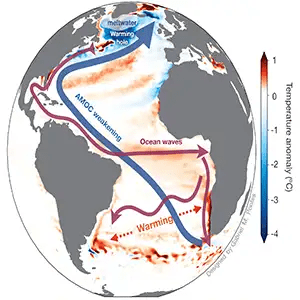
The addition of meltwater in the North Atlantic leads to localised cooling in the subpolar North Atlantic and warming in the South Atlantic. Credit: Nature Geoscience (2024).
“Our new research shows meltwater from the Greenland ice sheet and Arctic glaciers in Canada is the missing piece in the climate puzzle,” the researchers explain.
When they included this meltwater in their simulations, the slowing of the oceanic circulation made sense.
The study confirms that the Atlantic overturning circulation has been slowing down since the mid-20th century. It also gives us a sneak peek into what’s coming next.
Northern and Southern ocean circulation
“Our new research also shows the North and South Atlantic oceans are more connected than previously thought,” the team states.
Changes in one part of the ocean can quickly affect distant regions. When the oceanic circulation is strong, it transfers a lot of heat to the North Atlantic.
But when it weakens, the surface of the ocean south of Greenland doesn’t warm up as much, leading to what’s called a “warming hole.” Meanwhile, the South Atlantic ends up storing more heat and salt.
Time is not on our side
“Our simulations show changes in the far North Atlantic are felt in the South Atlantic Ocean in less than two decades,” the researchers reveal. This means the effects of the slowdown are spreading faster than we thought.
Climate projections have suggested the Atlantic overturning circulation will weaken by about 30% by 2060. But hold on — that’s without considering all that extra meltwater.
“The Greenland ice sheet will continue melting over the coming century, possibly raising global sea level by about 4 inches,” the study notes.
“If this additional meltwater is included in climate projections, the overturning circulation will weaken faster. It could be 30% weaker by 2040. That’s 20 years earlier than initially projected.”
What can we do?
Such a rapid decrease in the overturning circulation will shake things up.
Europe might see colder winters, the northern tropics could get drier, and places like the southern United States might experience warmer, wetter summers.
“Our climate has changed dramatically over the past 20 years,” the researchers warn. “More rapid melting of the ice sheets will accelerate further disruption of the climate system.”
So, what does this all mean for us? It means we have even less time to get our act together. Reducing emissions isn’t just a good idea — it’s crucial.
Our planet’s systems are interconnected in ways we’re only beginning to understand. If we want to keep things from getting worse, we need to act now. Every little bit counts, and the clock is ticking.
This story was originally published in the 2024 edition of Discovery magazine, the College of Science’s publication. This edition of Discovery celebrated the 20th anniversary of the College of Science.
“Today’s center is doing exactly what it should be doing,” Sudeep Chandra said.
Chandra is talking about the Global Water Center (GWC), a multidisciplinary community of scientists on the University campus who are addressing challenging water conservation issues. The work extends far beyond water, to conservation of livelihood and culture.
The Global Water Center, led by Chandra, was established in 2016 with an approval from the Nevada System of Higher Education’s Board of Regents. Since its inception, the Global Water Center has done impactful research across the world.
History of the Global Water Center
In 2013, Chandra, Foundation Professor of biology at the University, served as a rotating National Science Foundation (NSF) program officer. The position allowed him to see how other universities structured interdisciplinary centers.
The idea for the Global Water Center had already been planted in Chandra’s mind for some time when faculty came together to scope out how the University might utilize its strengths and grow in a new direction. University leadership put out a call for projects to empower research on campus a few years prior to the faculty discussion, and Chandra worked with colleagues from the College of Agriculture, Biotechnology and Natural Resources (CABNR), the College of Science and the College of Engineering to draft a white paper about the need for a central hub where researchers study and solve water issues. After returning from his position at the NSF, Chandra moved to the Department of Biology in the College of Science. He remembers speaking with the College’s then-dean, Jeff Thompson, who now serves as the University’s executive vice president and provost.
“It was a really important moment in my life,” Chandra said.
Chandra shared the white paper that he and his colleagues had written.
“Dean Thompson said, ‘That’s a great idea. So, what do you need?'” Chandra recalls.
Reflecting on successful programs he had seen while working with the NSF, Chandra asked for a physical space with conference meeting areas, whiteboards, videoconferencing technology (which was uncommon for the University at that time), stipends for early career faculty working through the center and support for research assistants. Chandra felt these were crucial tools for fostering innovation and interdisciplinary collaborations.
The University owned a house where the new William M. Pennington Engineering Building stands today, and where the Biodiversity Research Center had previously been located. That house became the site of the Global Water Center, and when the construction process began on the engineering building, the Global Water Center moved into a house across the street, which the center now calls home. The location has whiteboards, conference rooms and technology, just as Chandra envisioned (and importantly, a coffee and tea station where people can share and work through their ideas, fostering creative conversations).
Impactful projects
The Global Water Center has projects all over the world, but one that Chandra is particularly excited about is based in the northwestern corner of Nevada where the center is partnering with the Summit Lake Paiute Tribe.
The Tribe lives on the Summit Lake Indian Reservation in Humboldt County and is dedicated to protecting their resources, including the last self-sustaining lake population of Lahontan Cutthroat Trout (Nevada’s state fish), a listed species by the federal government.
Working closely with Tribal scientists like James Simmons, a student in the University’s interdisciplinary Ecology, Evolution and Conservation Biology Graduate Program, Chandra and his colleagues are developing a complete understanding of Summit Lake’s watershed, as the region warms due to climate change. This entails looking at changes in vegetation; monitoring how the water running into the lake triggers the fish to spawn; examining past climatic history using tree cores and lake cores (work done by Adam Csank in the geography department and Paula Noble in the geological sciences and engineering department, respectively) to understand how fish populations changed during warmer periods; observing fish ecology in the lake; estimating current fish populations and using that information to effectively support the population with the Tribe’s fishery and more. The University’s resident big fish expert, Zeb Hogan, has also been involved in this project. Together, the researchers are partnering with CABNR faculty Erin Hanan and Adrian Harpold to understand the current and future climate in the region and watershed.
“The outcomes of the research and collaborations so far are quite strong,” Chandra said. “We have a stronger partnership with the Tribe that’s been developed over 10 years, we are able to educate our students on Indigenous needs and desires and practices, and also offer assistance within Tribe departments that need support, like the Tribal natural resources department. In the end, we’re hoping to have the persistence of many species for the long term.”
For Chandra, a key element in the Summit Lake project and every other project at the Global Water Center is transparency.
“In today’s world, more than ever, I see the Global Water Center as a place where we can develop trust with our communities,” Chandra said. “Transparency builds trust, and trust allows us to solve problems.”
Transparency also prevents duplicative efforts. It allows researchers, policy makers and the public to understand what does and doesn’t work when trying to sustain a watershed.
Continued growth
As evidenced by the Summit Lake project and others that continue to impact watersheds around the world, the collaborations facilitated by the Global Water Center have flourished, and so have the careers of faculty involved. Half of the faculty who work with the Global Water Center are early-career faculty. Being part of the center allows for greater access to networking and interdisciplinary research than single-discipline units.
The center’s faculty members also come from a broad range of departments. The Global Water Center has representation from across campus, including the departments of natural resources, geography, geological sciences and engineering, civil and environmental engineering, political science, economics, agriculture, veterinary and rangeland sciences and biology. This menagerie of departments hails from four colleges. The Global Water Center removes departmental and collegial barriers of communication between faculty and allows them to gather in a space specifically designated for water conservation research. As a result of this interdisciplinary collaboration, faculty write proposals that are much larger in scope, like the ongoing research at Summit Lake, rather than single principal investigator proposals. Additionally, graduate students are afforded the opportunity to become involved in research projects that encourage such multidisciplinary collaborations.
“It’s just natural when you have research programming that you’re going to have students,” Chandra said.
These students also get to participate in projects in their own backyard. There are two new instruments that will support ongoing research and teaching at Lake Tahoe – a 30-foot, 5-passenger and a 38-foot, 9- to 12-passenger watercraft, designed for deep-lake and near-shore research and teaching in the jewel of the Sierra Nevada. Through a generous donation from the Wiegand Foundation, the University has purchased one of the vehicles. Federal funds announced in March will support the purchase of the second vehicle along with high-tech tools that can be used to sense the changes in Lake Tahoe and teach students about limnology (the study of inland waters).
Beyond physical infrastructure, Chandra and his colleagues are working to develop relationships with community stakeholders, policymakers, scientific agencies and other organizations, an effort called “Team Tahoe,” to promote scientific research in, around and at Lake Tahoe. One of Chandra’s doctoral students, Julie Regan, is the director of the Tahoe Regional Planning Agency. Earlier this year, Regan organized and led a trip to Washington, D.C. with Chandra and other researchers to meet with government officials, testify with United States Senator from Nevada Jackie Rosen’s Commerce Committee on tourism in the Tahoe basin and share how critical it is to preserve Lake Tahoe.
Chandra encourages all faculty in the Global Water Center to engage with media to share the outcomes and understandings of scientific research. Engaging with the public through outreach is critical to the mission of the Global Water Center, and Chandra seeks to share this message: “Science can transcend anything, and we can help society with its challenges.”
The substance is a byproduct of the process of treating water with chloramine, a chemical used to kill viruses and bacteria. It’s not yet known whether it is dangerous.
By Evan Bush
About a third of U.S. residents have been receiving tap water containing a previously unidentified chemical byproduct, a new study has found. Some scientists are now concerned — and actively investigating — whether that chemical could be toxic.
The newly identified substance, named “chloronitramide anion,” is produced when water is treated with chloramine, a chemical formed by mixing chlorine and ammonia. Chloramine is often used to kill viruses and bacteria in municipal water treatment systems.
Researchers said the existence of the byproduct was discovered about 40 years ago, but it was only identified now because analysis techniques have improved, which finally enabled scientists to determine the chemical’s structure.
It could take years to figure out whether chloronitramide anion is dangerous — it’s never been studied. The researchers reported their findings Thursday in the journal Science, in part to spur research to address safety concerns.
The scientists said they have no hard evidence to suggest that the compound represents a danger, but that it bears similarities to other chemicals of concern. They think it deserves scrutiny because it’s been detected so widely.
“It has similarity to other toxic molecules,” said David Wahman, one of the study’s authors and a research environmental engineer at the Environmental Protection Agency. “We looked for it in 40 samples in 10 U.S. chlorinated drinking water systems located in seven states. We did find it in all the samples.”
Chloronitramide anion is produced as chloramine decays over time. It’s likely to be found in all drinking water treated via this method, he said.
The fact that a byproduct with unknown risks could be so ubiquitous and evade researchers for so long renews questions about potential health effects of the chemicals used to treat tap water.
Some 113 million U.S. residents receive chloramine-treated water from their taps, according to the study. The chemical has been used for about a century to disinfect water. Today, it’s often used to protect a system’s “residual” — the water that remains in pipes for several days after it leaves a water treatment plant.
Increasingly, chloramine has been favored over chlorine because the latter also produces byproducts, some of which are associated with bladder cancer and are regulated by the EPA.
David Reckhow, a research professor in civil and environmental engineering at the University of Massachusetts, Amherst, who was not involved with the study, said the finding was an important step. The ultimate goal, he said, is understanding whether the substance is a hazard; he concurred that it was likely toxic.
“It’s a pretty small molecule and it can probably for that reason enter into biological systems and into cells. And it is still a reactive molecule,” he said. “Those are the kinds of things you worry about.”
The authors of the new study arrived at their results after figuring out how to formulate high concentrations of the chemical for laboratory testing, said Julian Fairey, lead author and an associate professor at the University of Arkansas.
“We don’t know the toxicity, but this study has enabled us to be able to do that work now,” said Fairey, who studies drinking water byproducts. “Now, we can go about the hard work of trying to figure out what its toxicological relevance is in our water systems.”
“We don’t know what’s driving these. We have no idea if this compound is in any way related to those outcomes,” Fairey said. “But we have unexplained incidents of certain types of cancer from treated drinking water.”
However, any conclusions about whether the newly identified substance is toxic are likely many years away. Potential regulation based on those eventual findings would take even longer.
“It’s a lot — probably a decade of research once a funding source is found,” said Alan Roberson, executive director of the Association of State Drinking Water Administrators.
Reckhow said that in the meantime, water utilities should pay close attention to ongoing research and try to reduce people’s exposure.
“You do what you can to minimize,” he said. “You make the best judgment you can on the toxicity and you run with incomplete information. That’s the world we live in, unfortunately.”
The EPA only regulates a handful of disinfectant byproducts, including several associated with the use of chlorine. Scientists said those regulations have pushed some water providers to increase the use of chloramine.
“This study really calls into question whether or not this disinfection process is safer from a health perspective,” said David Andrews, a senior scientist at the Environmental Working Group, an advocacy organization that pushes for more scrutiny of chemicals.
He added that there are hundreds of disinfection byproducts found in water systems but that this one deserves scrutiny.
“Many of those other contaminants are occurring at lower concentrations or less frequently,” Andrews said.
Any treatment of drinking water involves some level of health risk, Roberson said. It’s a trade-off: Disinfection processes have largely vanquished waterborne diseases such as cholera and typhoid, but research suggests that some byproducts are associated with risks of cancer and miscarriage.
“The reason you’re adding the chloramine — you want to kill the bacteria and viruses, you have a real risk-risk trade-off,” he said.
Many U.S. water utilities disclose on their websites whether they treat the water they supply with chlorine or chloramine. Wahman said some research suggests that active carbon filters, such as those used in home water purification devices or refrigerator filters, can remove disinfectant byproducts but that more research is needed.
One out of every 11 people in the world grapples with hunger. A hidden and growing driver is lack of water.
New WRI analysis shows that one-quarter of the world’s crops are grown in areas where the water supply is highly stressed, highly unreliable or both. Mounting risks like climate change and increased competition for water are threatening water supplies and, in turn, food security. Rice, wheat and corn — which provide more than half the world’s food calories — are particularly vulnerable: 33% of these three staple crops are produced using water supplies that are highly stressed or highly variable.
These growing water challenges come as food demands are increasing: Research shows the world will need to produce 56% more food calories in 2050 than it did in 2010 to feed a projected 10 billion people.
Here, we analyze what escalating water risks mean for food production, using new data from WRI’s Aqueduct Food platform.
Both Irrigated and Rainfed Crops Face Growing Threats
Farmers water their crops using rain that falls naturally or through irrigation, where water is diverted from rivers or reservoirs or pumped from underneath the ground to the land’s surface.
Both rainfed and irrigated crops are important for food security, but both face mounting threats.
Irrigated crops, which make up 34% of the world’s total production by weight, are vulnerable to increasing competition over shared water supplies, known as water stress. Water stress is considered “high” if at least 40% of the local water supply is used to meet demands from farms, industries, power plants and households.
About 60% of the world’s irrigated crops(by weight) are currently grown in areas facing high or extremely high levels of water stress.
Rainfed crops, which make up the other 66% of the world’s total production, are vulnerable to erratic weather patterns.
Globally, 8% of the rainfed crops the world produces are grown in areas facing high to extremely high variations in annual water supply, places where rainfall patterns may swing wildly between drought and deluge.
The problem with growing crops in both highly stressed and highly variable areas is that there isn’t much of a supply buffer to weather shocks such as prolonged droughts. While farmers have adapted to a certain level of variability in the water they can use, increased water competition and climate change are stretching available supplies to the limit. Growing crops in these areas therefore puts food security in jeopardy.
Just a Handful of Countries Produce Most of the World’s Irrigated Crops — and They’re Rapidly Depleting Their Water
Just 10 countries — China, India, United States, Pakistan, Brazil, Egypt, Mexico, Vietnam, Indonesia and Thailand — produce 72% of the world’s irrigated crops, including sugarcane, rice, wheat, vegetables, cotton and maize. Two-thirds of these crops face high to extremely high levels of water stress. That’s a problem for food security as well as economies — irrigated crops are often “cash crops” exported to other nations.
Meanwhile, demand for irrigation is poised to grow. Agriculture is already the biggest driver of water stress, responsible for 70% of the world’s withdrawals. According to data on Aqueduct, the demand for water to irrigate crops is projected to rise by 16% by 2050, compared to 2019. Warming temperatures are partially driving this trend. The warmer it is, the thirstier crops become.
Some countries are already grappling with the tension between food production and water security. In India, nearly 270 million metric tons — or around 24% of the country’s total crop production — is grown in watersheds that use more water than what can be naturally replenished. The country has resorted to pumping non-renewable groundwater and rerouting its rivers, but these are not sustainable long-term solutions. Northern India already loses up to a foot of groundwater a year due, in part, to pumping for irrigation. Groundwater depletion may triple by 2080 as temperatures in India continue to warm.
Rainfed Agriculture Supplies Most of the World’s Crops, but Faces Increasingly Unstable Precipitation
The majority of the world’s food — 66% of all crop production — still comes from rainfed agriculture. For example, 75% of the world’s corn comes from rainfed farms, predominantly in the United States, China and Brazil.
Yet as climate change fuels longer, more frequent droughts and deforestation alters local precipitation patterns, farmers will find it increasingly difficult to grow rainfed crops. Already, 8% of rainfed agriculture (by weight) faces high to extremely high levels of variation in annual water supply. By 2050, 40% more rainfed crops will face unreliable water supplies than in 2020, with the greatest increases occurring in India, the U.S., Australia, Niger and China.
Niger, a country where almost 97% of the production relies on rainfed agriculture, suffers from one drought every three years on average. Almost half of children are chronically malnourished, and the situation is only posed to worsen: The ND-Gain Index named Niger as the most vulnerable country in the world for climate change-related impacts on food systems.
In addition to rainfall variability, political instability and conflict are prompting farmers in Niger to abandon their crops to avoid violence. At the same time, lack of employment is the biggest motivation for new recruits to join armed groups, creating a vicious cycle. This is just one example where food production, climate-driven water challenges, and conflict are colliding to exacerbate hunger and other issues.
A Rwandan farmer plants a tree on his farm. Agroforestry can help water infiltrate the soil, thereby reducing the need for irrigation and replenishing groundwater. Photo by Flick Studios/WRI
It’s Still Possible to Produce More Food in a Water-Constrained World
Stressed and variable water supplies don’t automatically spell crisis. With the right policies that address the nexus of food production, water management and conservation, businesses and governments can ensure that bread baskets remain full.
Some of the same strategies for sustainably managing water also address the climate and biodiversity crises, and improve people’s lives:
Assess water risks and set meaningful targets: Corporations and governments alike must first understand the water risks they face, using granular data and mapping tools like Aqueduct and Aqueduct Food. Corporations should assess the water impacts of their own products and operations, as well as those of their suppliers. They should set meaningful targets to align with sustainability goals, such as science-based freshwater use targets.
Reduce food loss and waste: One quarter of all water used for agriculture grows food that ultimately goes uneaten. Food is lost and wasted across all parts of the supply chain, from farm to table. Governments, businesses, farmers and consumers alike all must play a role in reducing it.
Shift high-meat diets towards less water-intensive foods: One pound of beef requires 50 times more water to produce than one pound of potatoes. Choosing less water-intensive foods can substantially decrease water stress and unsustainable water use.
Increase water use efficiency: Farmers should use more efficient water measures, such as switching to water-efficient crops or using methods like sprinkler or drip irrigation versus flooding fields.
Invest in nature-based solutions: Conservation and nature-based solutions can boost water security. For example, protecting and restoring forests helps regulate rainfall in nearby areas. Regenerative practices like agroforestry can help water infiltrate the soil, reducing reliance on irrigation and replenishing groundwater.
Support inclusive water management: Water managers should ensure that water is distributed equitably throughout a basin — not prioritizing corporate farms over small family farms. Water infrastructure like dams and irrigation systems must be built and maintained in ways that do no harm. And water managers must plan for sustainable water use and access for future as well as current generations.
Producing more food in ways that protect nature and alleviate water challenges is a delicate balance. The world needs to prioritize sustainable water use today to ensure adequate water— and food — for tomorrow.
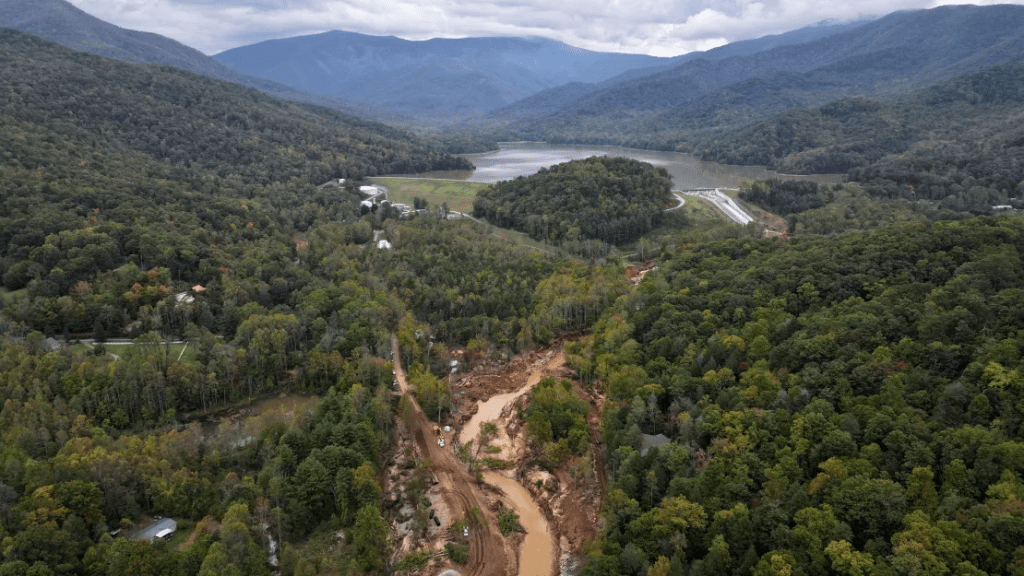
Asheville, North Carolina, residents now have safe drinking water after a boil notice was lifted Monday, more than seven weeks after Tropical Storm Helene struck on September 27.
Helene hit western North Carolina as a tropical storm, causing devastating flood damage and harm to its water system. The storm dumped so much water over the southern Appalachians in three days that it became a catastrophic, once-in-1,000-year rainfall eventfor the region, the National Weather Service said.
“The City of Asheville has lifted the Boil Water Notice for all water customers as of 11 a.m. today, November 18,” the Asheville Fire Department said in a Facebook post Monday. “Water Resources lab staff finished sampling the distribution system early Sunday afternoon, and results have confirmed that the water supply is free from contaminants.”
Asheville Water Resources spokesperson Clay Chandler said Friday there was asampling process that had totake place before the notice was lifted.
“Due to reduced turbidity levels in the North Fork Reservoir and our capacity to push treated water into the system, we’ve been able to feed a sufficient amount of filtered water into the distribution system without blending it with raw water,” Chandler said.
Turbidity is a measure of the level of particles in a body of water, according to the National Oceanic and Atmospheric Administration. The turbidity level must be around 1.5-2 units to be safe for a standard treatment process at North Carolina’s North Fork Reservoir, the city previously said.
The North Fork Reservoir provides water to most people in Asheville, according to the Asheville Citizen-Times. Its turbidity levels dropped below 15 units on Wednesday, according to recent information released by the city. Turbidity levels had been as high as 90 units in the immediate aftermath of Helene, CNN affiliate WLOS reported.
“The use of treated water combined with customer usage has given us data that we feel is sufficient to reach the conclusion that the system has, for the most part, turned over. And the vast majority of raw water has been replaced with treated water,” Chandler said.
The sampling process, which was developed in conjunction with guidance from the Environmental Protection Agency and The North Carolina Department of Environmental Quality began Saturday, Chandler said Friday.
Turbidity could still increase due to unforeseen events like line breaks, or “heaven forbid,” another natural disaster, Chandler said.
The Asheville Fire Department asked residents to “temporarily avoid large-volume activities like filling bathtubs, watering landscaping, filling swimming pools and taking abnormally long showers,” but said normal water usage for drinking, cooking and bathing could resume.
In Buncombe County, where Asheville is located, at least 42 people died due to Helene. The Asheville City Schools district reopened last month, CNN previously reported.
New research led by the U.S. Geological Survey now estimates that between 71 and 95 million Americans, over 20% of the U.S. population, potentially rely on groundwater with detectable levels of per- and polyfluoroalkyl substances (PFAS) for their drinking water supplies — many more people than previously estimated. Adequate coverage of groundwater contamination is crucial as it’s both a regional environmental issue and a largely invisible public health crisis that could have profound long-term impacts.
The study, published in Science, uses an advanced predictive model that accounts for various PFAS sources — such as industrial sites, wastewater facilities, and fire training areas — to estimate the likelihood of PFAS contamination across the contiguous United States. PFAS — also called “forever chemicals” — are known for their durability and resistance to degradation and have become widespread in the environment, infiltrating soils, waters and even human bodies.
The model suggests a stark reality: many Americans may unknowingly drink PFAS-contaminated water due to the lack of comprehensive testing, especially in domestic wells.
The findings suggest that PFAS contamination isn’t limited to industrial areas or densely populated regions. Instead, the contamination likely spans vast areas, affecting both public and private drinking water wells, including those in rural and underserved areas, where water sources are less regulated and monitored. This means that for millions of people, accessing safe water may depend on factors as arbitrary as geography, regulatory reach, and economic resources, highlighting inequities that journalists have a unique opportunity to explore.
Why this story matters now
The PFAS contamination crisis is emblematic of the broader struggle to balance economic activity with public health. The ongoing debate about regulating forever chemicals is part of a larger narrative about the responsibility corporations and governments have to protect natural resources and public welfare. This is an opportunity to shed light on the complexities of environmental policy, public health, and individual rights.
As the EPA moves toward possible regulation of PFAS in drinking water, public awareness and understanding of the issue will be critical. Journalists have a crucial role in keeping the public informed, advocating for transparency, and ensuring that the communities most affected by PFAS contamination are not left out of the conversation.
More about PFAS: Health and environmental risks
PFAS are known to pose significant health risks. Exposure has been linked to numerous adverse health effects, including cancer, immune system suppression, thyroid disease, and developmental issues in children. What makes forever chemicals especially concerning is their persistence; they do not break down naturally and can accumulate in the environment and human bodies over time. Because of their non-degradable nature, PFAS can be found almost everywhere, from human blood samples to remote bodies of water.
Journalists covering this topic should be aware that, despite the severity of these health risks, regulation and public knowledge about PFAS remain limited. There is no federal standard for PFAS levels in drinking water, though the Environmental Protection Agency recently proposed new guidelines. This regulatory gap leaves millions exposed to potentially harmful levels of PFAS without clear protections or guidance.
Earlier this year, the Biden-Harris administration issued the first enforceable U.S. drinking water standards targeting PFAS, which is expected to impact around 100 million people. This initiative is part of a larger $1 billion effort funded by the Bipartisan Infrastructure Law to support clean water projects nationwide, especially for communities with elevated PFAS levels.
Public awareness and informed advocacy could be key to prompting stricter regulations and safety measures.
Contaminated water in news deserts
Groundwater contamination by PFAS isn’t limited to urban or heavily industrialized areas. This issue affects rural and underserved communities disproportionately, as many such areas rely on unregulated domestic wells for drinking water. Often, these communities have limited access to news, making it less likely that residents are aware of potential contamination risks. This highlights the broader problem of “news deserts” — regions with little to no local journalism coverage — where environmental hazards like PFAS contamination may go unreported and unaddressed.
In areas where news resources are already thin, local journalists can bring PFAS contamination issues to light, connecting residents with health resources, and pushing for state and local action. By providing consistent and clear coverage, journalists can help mitigate the lack of accessible information in these regions.
Resources for journalists
To assist with reporting on PFAS contamination, the USGS has developed a publicly available, interactive map that shows probability estimates of PFAS contamination in groundwater at drinking water supply depths. This tool can help journalists localize the issue, identify communities at risk, and convey the scale of the problem to readers. Further, engaging with experts at organizations like the Environmental Working Group, which regularly publishes research and policy recommendations on forever chemicals, can provide additional insights and data for in-depth reporting.
And some states have enacted stricter PFAS regulations, which can provide case studies and comparison points for stories. Following up on state and local initiatives can give audiences a sense of what effective PFAS management might look like and the steps their communities could take.
As PFAS contamination in drinking water becomes more widely recognized, readers will want to know what actions they can take to protect themselves and their families. Practical, consumer-focused aspects of the PFAS issue include information on home water filtration options, guidance on understanding PFAS levels, and links to useful resources for further information.
Activated carbon filters: These filters work by adsorbing contaminants like PFAS. They are relatively affordable and widely available, but their effectiveness can vary. Large, whole-house carbon filters tend to be more effective than smaller pitcher or faucet options.
Reverse osmosis (RO) systems: RO systems are some of the most effective filters for PFAS removal. These systems force water through a semi-permeable membrane, leaving contaminants like PFAS behind. They are typically more expensive and may require professional installation.
Ion exchange filters: Ion exchange systems use resin to capture and remove PFAS molecules. They’re usually more complex than typical household filters but can be very effective in reducing PFAS levels.
Consumer resources for testing and additional information
Stories can direct readers to resources that offer testing options and further details on PFAS:
Home testing kits: For households that rely on well water or wish to be proactive, home water testing kits for PFAS are available. Though these tests can be expensive, they may provide peace of mind and data to support decisions on water treatment.
EPA’s resources and guidelines: The Environmental Protection Agency (EPA) has a collection of resources and guidelines for PFAS in drinking water. These documents provide current regulatory recommendations and offer valuable insights into what’s being done at the federal level to address PFAS
Over 410 million people could be at risk from rising sea levels by 2100 as a result of the climate crisis. Observed sea level rise data shows that global sea levels have already risen by more than 10cm over the last decade.
The UN General Assembly (UNGA) is holding a High-Level Meeting on sea-level rise on 25 September to address its existential threats.
Climate change, nature and the energy transition will be under the spotlight at the World Economic Forum’s annual Sustainable Development Impact Meetings, which coincide with UNGA’s General Debate.
“Since the start of the 20th century, global-mean sea level has risen faster than over any prior century in at least the last 3,000 years, and the rate of increase is accelerating,” warns ‘Surging Seas in Warming World’ – a new United Nations (UN) report on the current and future impacts of sea level rise.
Homes, livelihoods and, ultimately, lives are under threat from rising sea levels.
Here’s what you need to know.
What is Sea Level Rise?
Sea level rise refers to the increase in the average height of the ocean’s surface, measured from the center of the Earth. This phenomenon is primarily driven by two main factors: the melting of glaciers and ice sheets, and the thermal expansion of seawater as it warms. As global temperatures rise due to climate change, ice sheets in Greenland and Antarctica are melting at an accelerated rate, contributing significantly to sea level rise. Additionally, as seawater warms, it expands, further increasing the sea level. This rise in sea level is a critical indicator of climate change, with far-reaching impacts on coastal communities, ecosystems, and economies worldwide.
Why is the spotlight on sea level rise now?
For the first time, the UN General Assembly’s High-Level Week 2024 will feature a dedicated meeting on Sea-Level Rise on September 25, encompassing four multi-stakeholder thematic panel discussions. Collectively, they will address the legal, financial, socio-economic and scientific aspects of sea-level rise, covering its impacts on livelihoods, adaptation strategies and decision-making processes. The meeting will also address how global climate change contributes to local sea level rise, affecting different regions in unique ways.
Climate change, nature and the energy transition will also be under the spotlight at the World Economic Forum’s annual Sustainable Development Impact Meetings (SDIM24) in New York 23 to 27, which coincide with UNGA’s General Debate.
Uniting leaders from politics, business and civil society, SDIM aims to drive innovation on the UN Sustainable Development Goals, focusing on climate action, digital literacy, and economic inclusion. Only 17% of the SDGs are on track, underscoring the urgent need for accelerated progress.
Now satellites carry out this task by bouncing radar signals off the sea surface to measure changes in sea level. The Forum’s work on Amplifying the Global Value of Earth Observation highlights monitoring changing sea levels as a key application of the technology to support vulnerability analysis.
Because local weather conditions and other factors can affect sea level, measurements are taken globally and then averaged out.
Sea levels have risen by over 10cm between 1993 and 2024.Image: NASA
With the ice sheet at “a tipping point of irreversible melting”, scientists currently expect an unavoidable sea level rise of 1-2 metres.
Global sea levels have already risen by over 10cm between 1993 and 2024, according to NASA, which says sea levels have been rising at unprecedented rates over the past 2,500 years.
While global sea levels have risen by over 10cm between 1993 and 2024, relative sea level rise can vary significantly depending on local factors such as land subsidence and ocean currents.
The global sea level has risen by about 21cm since records began in 1880. While measuring in centimetres or even millimetres might seem small, these rises can have big consequences. This is particularly true where storm surges sweep further inland than they would have previously.
Greenland and Antarctica are losing around 270 billion and 150 billion tonnes of ice a year,
There are also likely negative feedback loops that could speed up glacier ice melt. For example, the Thwaites Glacier in Antarctica is disintegrating more quickly than anticipated. It’s nicknamed the ‘doomsday glacier’ because sea levels could rise more than three metres without it and its supporting ice shelves.
Heat stored in the ocean is responsible for between a third and half of global sea level rise, NASA says. The past decade has been the ocean’s warmest since at least 1800, and ocean temperatures reached a new high in 2023.
As sea levels rise, the frequency of high tide flooding, also known as nuisance flooding, is expected to increase, impacting coastal infrastructure and ecosystems.
Since 1971, oceans have absorbed over 90% of excess heat in the Earth system caused by rising greenhouse gas emissions, the UN’s Surging Seasreport reveals.
The Relationship Between Sea Level Rise and Climate Change
Climate change is the primary driver of global sea level rise.
As the Earth’s temperature increases, the polar ice caps and glaciers melt, releasing vast amounts of water into the oceans. This melting ice contributes directly to the rising sea levels.
Furthermore, the warming of the ocean causes the water to expand, a process known as thermal expansion, which also contributes to sea level rise.
The relationship between sea level rise and climate change is complex and multifaceted. Understanding this connection is crucial for predicting future sea level rise scenarios and developing strategies to mitigate its impacts.
As global warming continues, the rate of sea level rise is expected to accelerate, posing significant challenges for coastal regions around the world.
Effects of Global Sea Level Rise
The effects of global sea level rise are profound and multifaceted, impacting both human and natural systems. Rising seas threaten infrastructure, including roads, bridges, and buildings, leading to increased costs for maintenance and repair.
Coastal flooding becomes more frequent and severe, exacerbating erosion and causing saltwater intrusion into freshwater sources, which can compromise drinking water supplies and agricultural productivity.
Additionally, sea level rise poses a significant threat to coastal ecosystems such as mangroves, coral reefs, and salt marshes, which provide critical habitat for numerous species.
The displacement of people living in low-lying areas due to rising seas can lead to social and economic challenges, including loss of property, livelihoods, and increased pressure on social services.
Addressing these impacts requires comprehensive adaptation strategies to protect vulnerable communities and ecosystems.
Economic and Social Impacts
The economic and social impacts of sea level rise are significant and far-reaching. Rising seas can lead to increased costs for coastal protection measures, such as building sea walls and surge barriers, and repairing damage to infrastructure.
The loss of property and livelihoods due to coastal flooding and erosion can have devastating effects on communities, particularly in vulnerable regions. Additionally, sea level rise can exacerbate social and economic challenges by displacing people, disrupting economic activities, and straining social services.
For example, communities that rely on tourism, fishing, and agriculture may face significant economic losses as rising seas threaten their way of life.
Understanding these economic and social impacts is critical for developing effective adaptation strategies and mitigating the effects of sea level rise on vulnerable populations.
Past Sea Level Rise and Historical Context
Throughout Earth’s history, sea levels have fluctuated significantly, with major changes occurring during the last ice age and the subsequent warming period. However, the current rate of sea level rise is unprecedented.
Since 1900, the global average sea level has risen by approximately 15-20 cm, a rate much faster than historical averages. This rapid increase is largely attributed to human-induced climate change, driven by the burning of fossil fuels and the resulting increase in greenhouse gas emissions.
Understanding past sea level rise and its historical context is essential for predicting future changes and developing effective adaptation strategies.
By studying historical data, scientists can better understand the natural variability of sea levels and the extent to which current trends are influenced by human activities.
Which countries will be most affected by rising sea levels?
Bangladesh, China, India and the Netherlands were singled out by the UN in 2023 as being at high risk from rising sea levels, with nearly 900 million people living in low-lying coastal areas in acute danger.
In its Surging Seas report, the organization highlights the dangers facing the communities of the Pacific Small Island Developing States: “The Pacific SIDS, especially those in the western tropical Pacific (e.g., Kiribati, Tuvalu, and the Republic of the Marshall Islands), are particularly vulnerable to SLR [sea level rise] because of: (i) high exposure to tropical cyclones and other tropical storms; (ii) high shoreline-to-land area ratios; (iii) high sensitivity to changes in sea level, waves, and currents; and (iv) its many low-lying coral atolls or volcanically-composed islands.”
How are areas at risk of rising sea levels adapting?
In its Global Risks Report 2024, the World Economic Forum added the category ‘Critical change to Earth systems’ as one of the top two threats to the world in the coming decade – and sea level rise from collapsing ice sheets is identified as a key contributing factor.
Adaptation is vital, it says, but “efforts are falling short”, with a finance gap currently estimated at $194 billion to $366 billion a year.
Countries and cities around the world are nevertheless putting strategies into action. In New Zealand, climate adaptation policies are being designed to ensure public housing is not built near areas prone to climate hazards.
Sea walls, surge barriers and other coastal defences are being built and strengthened in several countries including Denmark, Germany and the United Kingdom.
More drastic action is taking place in Fiji, where government officials are making plans to relocate whole villages because of rising sea levels – 42 villages have been recommended for relocation in the next five to 10 years, while six have already been moved to safer ground, The Guardian reports.
Water is life. Yet, as the world population mushrooms and climate change intensifies droughts, over 2 billion people still lack access to clean, safe drinking water. By 2030, water scarcity could displace over 700 million people. From deadly diseases to famines, economic collapse to terrorism, the global water crisis threatens to sever the strands holding communities together. This ubiquitous yet unequally distributed resource underscores the precarious interdependence binding all nations and ecosystems and shows the urgent need for bold collective action to promote global water security and avert the humanitarian, health, economic, and political catastrophes that unchecked water stress promises.
—
The global water crisis refers to the scarcity of usable and accessible water resources across the world. Currently, nearly 703 million people lack access to water – approximately 1 in 10 people on the planet – and over 2 billion do not have safe drinking water services. The United Nations predicts that by 2025, 1.8 billion people will be living in countries or regions with absolute water scarcity. With the existing climate change scenario, almost half the world’s population will be living in areas of high water stress by 2030. In addition, water scarcity in some arid and semi-arid places will displace between 24 million and 700 million people. By 2030, water scarcity could displace over 700 million people.
In Africa alone, as many as 25 African countries are expected to suffer from a greater combination of increased water scarcity and water stress by 2025. Sub-Saharan regions are experiencing the worst of the crisis, with only 22-34% of populations in at least eight sub-Saharan countries having access to safe water.
Water security, or reliable access to adequate quantities of acceptable quality water for health, livelihoods, ecosystems, and production has become an urgent issue worldwide.
This crisis has far-reaching implications for global health, food security, education, economics, and politics. As water resources dwindle, conflicts and humanitarian issues over access to clean water will likely increase. Climate change also exacerbates water scarcity in many parts of the world. Addressing this complex and multifaceted crisis requires understanding its causes, impacts, and potential solutions across countries and communities.
The Global Water Crisis
The global water crisis stems from a confluence of factors, including growing populations, increased water consumption, poor resource management, climate change, pollution, and lack of access due to poverty and inequality.
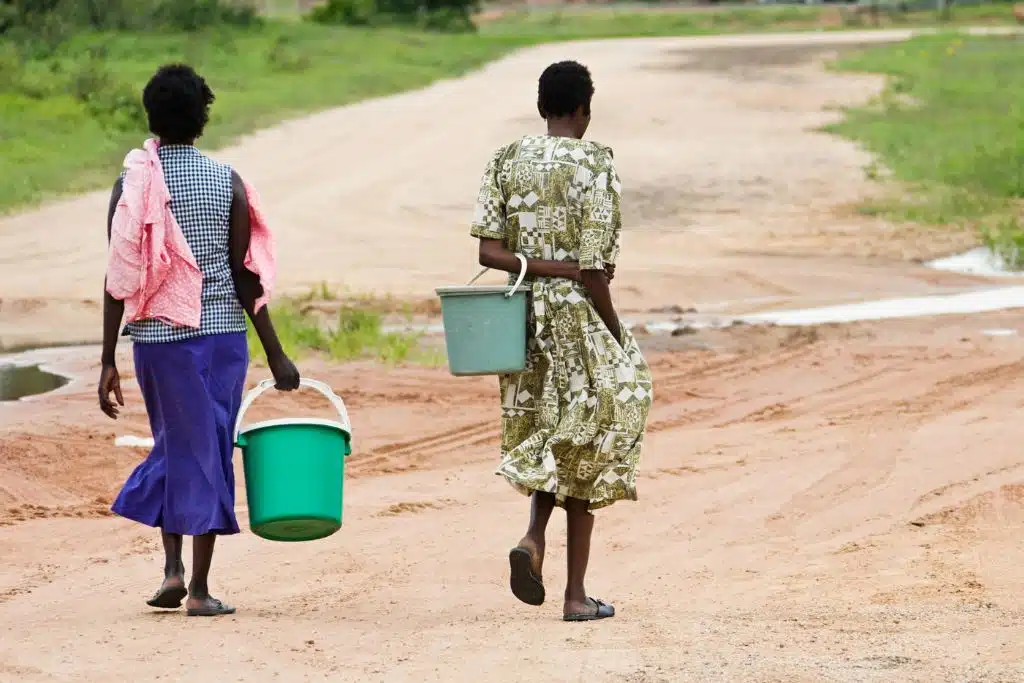
The world population has tripled over the last 70 years, leading to greater demand for finite freshwater resources. Agricultural, industrial, and domestic water usage have depleted groundwater in many regions faster than it can be replenished. Agriculture alone accounts for nearly 70% of global water withdrawals, often utilizing outdated irrigation systems and water-intensive crops.Climate change has significantly reduced renewable water resources in many parts of the world. Glaciers are melting, rainfall patterns have shifted, droughts and floods have intensified, and temperatures are on the rise, further exacerbating the crisis.In many less developed nations, lack of infrastructure, corruption, and inequality leave large populations without reliable access to clean water. Women and children often bear the burden of travelling distances to fetch water for households. Contamination from human waste, industrial activities, and agricultural runoff also threaten water quality and safety.
Water scarcity poses risks to health, sanitation, food production, energy generation, economic growth, and political stability worldwide. Conflicts over shared water resources are likely to intensify without concerted global action.
Case Study: Water Crisis in Gaza
The water crisis in Gaza represents one of the most severe cases of water scarcity worldwide. The small Palestinian territory relies almost entirely on the underlying coastal aquifer as its source of freshwater. However, years of excessive pumping far exceed natural recharge rates. According to the UN, 97% groundwater does not meet World Health Organization (WHO) standards for human consumption due to high salinity and nitrate levels.
The pollution of Gaza’s sole freshwater source stems from multiple factors. Rapid population growth contaminated agricultural runoff, inadequate wastewater treatment, and saltwater intrusion due to over-extraction have rendered the aquifer unusable.
In June 2007, following the military takeover of Gaza by Hamas, the Israeli authorities significantly intensified existing movement restrictions, virtually isolating the Gaza Strip from the rest of the occupied Palestinian territory (oPt), and the world. The blockade imposed by Israeli Authority also severely restricts infrastructure development and humanitarian aid.
The water crisis has devastated Gazan agriculture, caused widespread health issues, and crippled economic growth. Many citizens of Gaza have to buy trucked water of dubious quality, as the public network is unsafe and scarce. The United Nations Relief and Works Agency for Palestine Refugees in the Near East (UNRWA) reports that this water can cost up to 20 times more than the public tariff, with some households spending a third of their income or more on water. Long-term solutions require increased water supplies, wastewater reuse, desalination, and better resource management under conflict.
According to a 2022 report by the WHO and UNICEF’s Joint Monitoring Programme (JMP), 344 million people in sub-Saharan Africa lacked access to safely managed drinking water, and 762 million lacked access to basic sanitation in 2020. WaterAid, a non-governmental organization, explains that water resources are often far from communities due to the expansive nature of the continent, though other factors such as climate change, population growth, poor governance, and lack of infrastructure also play a role. Surface waters such as lakes and rivers evaporate rapidly in the arid and semi-arid regions of Africa, which cover about 45% of the continent’s land area. Many communities rely on limited groundwater and community water points to meet their water needs, but groundwater is not always a reliable or sustainable source, as it can be depleted, contaminated, or inaccessible due to technical or financial constraints. A 2021 study by UNICEF estimated that women and girls in sub-Saharan Africa collectively spend about 37 billion hours a year collecting water, which is equivalent to more than 1 billion hours a day.The 2023 UN World Water Development Report emphasizes the importance of partnerships and cooperation for water, food, energy, health and climate security in Africa, a region with diverse water challenges and opportunities, low water withdrawals per capita, high vulnerability to climate change, and large investment gap for water supply and sanitation.
Water security in Africa is low and uneven, with various countries facing water scarcity, poor sanitation, and water-related disasters. Transboundary conflicts over shared rivers, such as the Nile, pose additional challenges for water management.
However, some efforts have been made to improve water security through various interventions, such as community-based initiatives, irrigation development, watershed rehabilitation, water reuse, desalination, and policy reforms. These interventions aim to enhance water availability, quality, efficiency, governance, and resilience in the face of climate change. Water security is essential for achieving sustainable development in Africa, as it affects numerous sectors, such as agriculture, health, energy, and the environment.
Other Countries with Water Shortages
Water scarcity issues plague many other parts of the world beyond Gaza and Africa. Several examples stand out:
Iraq faces severe water stress impacting agriculture and public health. The Tigris and Euphrates Rivers have dwindled because of upstream damming and climate change. Water distribution is inefficient and wasteful.
Indiagrapples with extensive groundwater depletion, shrinking reservoirs and glaciers, pollution from agriculture and industry, and tensions with Pakistan and China over shared rivers. Monsoons are increasingly erratic with climate change.
While the specifics differ, recurrent themes include unsustainable usage, climate change, pollution, lack of infrastructure, mismanagement, poverty, transboundary conflicts, and population growth pressures. But resources often exist; the challenge lies in equitable distribution, cooperation, efficiency, and sustainable practices. Multiple approaches must accommodate local conditions and transboundary disputes.
Water scarcity poses a grave threat to global security on multiple fronts.
First, it can incite conflicts within and between nations over access rights. History contains many examples of water wars, and transboundary disputes increase the risk today in arid regions like the Middle East and North Africa.
Second, water shortages undermine food security. With agriculture consuming the greatest share of water resources, lack of irrigation threatens crops and livestock essential for sustenance and livelihoods. Food price spikes often trigger instability and migrations.
Third, water scarcity fuels public health crises, leading to social disruptions. Contaminated water spreads diseases like cholera and typhoid. Poor sanitation and hygiene due to water limitations also increase illness. The Covid-19 pandemic underscored the essential nature of water access for viral containment.
Finally, water shortages hamper economic growth and worsen poverty. Hydroelectricity, manufacturing, mining, and other water-intensive industries suffer. The World Bank estimates that by 2050, water scarcity could cost some regions 6% of gross domestic product (GDP), entrenching inequality. Climate migration strains nations. Overall, water crises destabilize societies on many levels if left unaddressed.
Solutions and Recommendations
Tackling the global water crisis requires both local and international initiatives across infrastructure, technology, governance, cooperation, education, and funding.
First, upgrading distribution systems, sewage treatment, dams, desalination, watershed restoration, and irrigation methods could improve supply reliability and quality while reducing waste. Community-based projects often succeed by empowering local stakeholders.
Second, emerging technologies like low-cost water quality sensors, affordable desalination, precision agriculture, and recyclable treatment materials could help poorer nations bridge infrastructure gaps. However, funding research and making innovations affordable remains a key obstacle.
Third, better governance through reduced corruption, privatization, metering, pricing incentives, and integrated policy frameworks could improve efficiency. But human rights must be protected by maintaining affordable minimum access.
Fourth, transboundary water-sharing treaties like those for the Nile and Mekong Rivers demonstrate that diplomacy can resolve potential conflicts. But political will is needed, along with climate change adaptation strategies.
Fifth, education and awareness can empower conservation at the individual level. Behaviour change takes time but can significantly reduce household and agricultural usage.
Finally, increased financial aid, public-private partnerships, better lending terms, and innovation prizes may help nations fund projects. Cost-benefit analyses consistently find high returns on water security investments.
In summary, sustainable solutions require combining new technologies, governance reforms, education, cooperation, and creative financing locally and globally.
Conclusion
The global water crisis threatens the well-being of billions of people and the stability of nations worldwide. Key drivers include unsustainable usage, climate change, pollution, lack of infrastructure, poverty, weak governance, and transboundary disputes. The multiple impacts span public health, food and energy security, economic growth, and geopolitical conflicts.
While daunting, this crisis also presents opportunities for innovation, cooperation, education, and holistic solutions. With wise policies and investments, water security can be achieved in most regions to support development and peace. But action must be accelerated on both global and community levels before the stresses become overwhelming. Ultimately, our shared human dependence on clean water demands that all stakeholders work in unison to create a water-secure future.
The US Environmental Protection Agency (EPA) Office of Water has awarded a $75m contract to ICF to provide environmental, economic, regulatory and evaluation services to the agency’s critical water programmes.
The partnership aims to help reduce pollutants in US waters, improve the quality of drinking water, and decrease exposure to toxic substances and emerging contaminants.
Consultancy ICF has supported EPA’s water regulations since 2018 and helped to develop the first-ever nationwide, legally enforceable drinking water standards to protect communities from per- and polyfluoroalkyl substances (PFAS), often referred to as forever chemicals. The EPA issued the final rule for these standards in April.
Under the contract, ICF will evaluate the environmental and health impacts of the EPA’s regulations and associated costs and benefits.
Jennifer Welham, senior vice president of health, people and human services at the consultancy, says: “The EPA is facing an increasingly complex set of challenges related to water regulation and quality, from addressing emerging contaminants like PFAS to improving water infrastructure and mitigating the effects of climate change.”
Welham adds: “Beyond PFAS, the EPA is grappling with a growing list of emerging contaminants in ambient water and in drinking water. Identifying and regulating these contaminants presents several challenges, such as the broad range of them and treatment cost.”
To identify and regulate these contaminants, Welham says: “ICF will continue to apply a range of research and analysis methods – ranging from literature review and data analyses to complex system modelling – to assess the environmental effects of pollutants and estimate the benefits and costs of regulatory or policy measures to address water pollution.”
ICF’s modelling simulates the environmental effects of pollutants and evaluates different regulatory scenarios. This includes estimating the costs and effectiveness of measures that facilities implement in response to the regulations, as well as economic impacts and direct and indirect benefits.
Welham says: “The cost-benefit and other analyses supported by ICF allow EPA policy makers and stakeholders to evaluate the possible regulatory options and ensure that the regulation achieves its objectives.”
The contract is a blanket purchase agreement (BPA) valued at up to $75m and will last for five years, consisting of a one-year base period and four optional one-year extensions.