New freshwater database tells water quality story for 12K lakes globally

Freshwater lakes already emit a quarter of global carbon—and climate change  could double that

Although less than one per cent of all water in the world is freshwater, it is what we drink and use for agriculture. In other words, it’s vital to human survival. York University researchers have just created a publicly available water quality database for close to 12,000 freshwater lakes globally — almost half of the world’s freshwater supply — that will help scientists monitor and manage the health of these lakes.

The study, led by Faculty of Science Postdoctoral Fellow Alessandro Filazzola and Master’s student Octavia Mahdiyan, collected data for lakes in 72 countries, from Antarctica to the United States and Canada. Hundreds of the lakes are in Ontario.

“The database can be used by scientists to answer questions about what lakes or regions may be faring worse than others, how water quality has changed over the years and which environmental stressors are most important in driving changes in water quality,” says Filazzola.

The team included a host of graduate and undergraduate students working in the laboratory of Associate Professor Sapna Sharma in addition to a collaboration with Assistant Professor Derek Gray of Wilfrid Laurier University, Associate Professor Catherine O’Reilly of Illinois State University and York University Associate Professor Roberto Quinlan.

The researchers reviewed 3,322 studies from as far back as the 1950s along with online data repositories to collect data on chlorophyll levels, a commonly used marker to determine lake and ecosystem health. Chlorophyll is a predictor of the amount of vegetation and algae in lakes, known as primary production, including invasive species such as milfoil.

“Human activity, climate warming, agricultural, urban runoff and phosphorus from land use can all increase the level of chlorophyll in lakes. The primary production is most represented by the amount of chlorophyll in the lake, which has a cascading impact on the phytoplankton that eat the algae and the fish that eat the phytoplankton and the fish that eat those fish,” says Filazzola. “If the chlorophyll is too low, it can have cascading negative effects on the entire ecosystem, while too much can cause an abundance of algae growth, which is not always good.”

Warming summer temperatures and increased solar radiation from decreased cloud cover in the northern hemisphere also contributes to an increase in chlorophyll, while more storm events caused by climate change contribute to degraded water quality, says Sharma. “Agricultural areas and urban watersheds are more associated with degraded water quality conditions because of the amount of nutrients input into these lakes.”

The researchers also gathered data on phosphorus and nitrogen levels — often a predictor of chlorophyll — as well as lake characteristics, land use variables, and climate data for each lake. Freshwater lakes are particularly vulnerable to changes in nutrient levels, climate, land use and pollution.

“In addition to drinking water, freshwater is important for transportation, agriculture, and recreation, and provides habitats for more than 100,000 species of invertebrates, insects, animals and plants,” says Sharma. “The database can be used to improve our understanding of how chlorophyll levels respond to global environmental change and it provides baseline comparisons for environmental managers responsible for maintaining water quality in lakes.”

The researchers started looking only at Ontario lakes, but quickly expanded it globally as although there are thousands of lakes in Ontario a lot of the data is not as readily available as it is in other regions of the world.

“The creation of this database is a feat typically only accomplished by very large teams with millions of dollars, not by a single lab with a few small grants, which is why I am especially proud of this research,” says Sharma.make a difference: sponsored opportunity


Story Source:

Materials provided by York UniversityNote: Content may be edited for style and length.


Journal Reference:

  1. Alessandro Filazzola, Octavia Mahdiyan, Arnab Shuvo, Carolyn Ewins, Luke Moslenko, Tanzil Sadid, Kevin Blagrave, Mohammad Arshad Imrit, Derek K. Gray, Roberto Quinlan, Catherine M. O’Reilly, Sapna Sharma. A database of chlorophyll and water chemistry in freshwater lakesScientific Data, 2020; 7 (1) DOI: 10.1038/s41597-020-00648-2

FOR MORE INFO: York University. “New freshwater database tells water quality story for 12K lakes globally.” ScienceDaily. ScienceDaily, 22 September 2020. <www.sciencedaily.com/releases/2020/09/200922083910.htm>.

Improving the health of the African Great Lakes

A new collaboration between the Canada-based International Institute for Sustainable Development (IISD) and the African Center for Aquatic Research and Education (ACARE) will tackle some of the most pressing issues facing the African Great Lakes (AGL) today.

This new partnership will build on decades of freshwater science and policy research at IISD’s Experimental Lakes Area and the local networks and initiatives of the ACARE to improve research, information and management around the African Great Lakes.

During its first year, the new partnership will boost the activities of six Advisory Groups that were created to address specific issues on each of the African Great Lakes. Members of each group are harmonizing priorities on the lakes to advance work on scientific inquiry, monitoring, climate change, and education and training, among other issues.

Learn more about the partnership here.

FOR MORE INFORMATION: https://www.unwater.org/improving-the-health-of-the-african-great-lakes/

Brain-eating amoeba in city’s water supply kills 6-year-old, leads Texas to declare a disaster

Texas Gov. Greg Abbott issued a disaster declaration in Brazoria County on Sunday after the discovery in the local water supply system of an amoeba that can cause a rare and deadly infection of the brain.

“The state of Texas is taking swift action to respond to the situation and support the communities whose water systems have been impacted by this ameba,” Abbott (R) in a news release Sunday. “I urge Texans in Lake Jackson to follow the guidance of local officials and take the appropriate precautions to protect their health and safety as we work to restore safe tap water in the community.”

The governor’s declaration follows an investigation of the death of 6-year-old Josiah McIntyre in Lake Jackson this month after he contracted the brain-eating microbe, which prompted local authorities and experts from the Centers for Disease Control and Prevention to test the water. The preliminary results came back Friday, showing that three out of 11 samples collected tested positive.

One of the samples came from a hose bib at the boy’s home, Lake Jackson City Manager Modesto Mundo said, according to CBS News. The others came from a “splash pad” play fountain and a hydrant.

“The notification to us at that time was that he had played at one of [the] play fountains and he may have also played with a water hose at the home,” Mundo said.

On Friday night, the Brazosport Water Authority issued a do-not-use advisory for eight communities after confirmation of the presence of Naegleria fowleri, which destroys brain tissue, then causes swelling of the brain, known as amebic meningoencephalitis. It urged residents to not use the tap water for drinking and cooking.

The Texas Commission on Environmental Quality (TCEQ) urged people to avoid water going up the nose when bathing, showering or swimming and prohibited children from playing with hoses, sprinklers or any device that may squirt water up the nose. It also advised running bath and shower taps and hoses for several minutes before use and boiling tap water before drinking.

By Monday morning, the do-not-use advisory was lifted in Brazoria County, but a boil notice remained in Lake Jackson, where the TCEQ, along with the Texas Department of State Health Services, the CDC and the Environmental Protection Agency are conducting operations to flush and disinfect the city’s water system where the amoeba was found.

Naegleria fowleri is a type of amoeba that can be managed using standard treatment and disinfection processes,” a statement from the commission said.

To ensure the water distribution system is safe, city workers will convert the disinfectant used in the distribution system from chloramine to free chlorine — a practice known as a “chlorine burn.” Chlorine is more useful in deactivating certain types of bacteria that can make it difficult for the systems to maintain a disinfectant residual, a commission statement said.

Over the weekend, city officials handed out boxes of water for the population of about 27,000 at a temporary distribution center.

The water-loving amoeba is often found in warm lakes, rivers and springs. People usually get infected when swimming in these locations, as the microbe travels up the nose and into the brain, where it destroys tissue, causing brain swelling and death.

Initial symptoms range from headache, fever and vomiting to loss of balance and hallucinations, and infection can lead to death, normally within five days. Although infections are rare, the microbe is usually fatal. There have been 145 reported infections in the United States since 1962, from which only four people survived, according to the CDC.

As of 2018, Texas had the largest number of registered cases in the country, with 36, followed by Florida with 35.

The first documented death associated with exposure to water from a U.S.-treated public drinking water system happened in 2013 in Louisiana, according to a report by the journal Clinical Infectious Diseases.

FOR MORE INFORMATION: https://www.washingtonpost.com/health/2020/09/28/brain-eating-amoeba-texas/

The Value of Investing in Water Infrastructure

Attempted cyberattack highlights vulnerability of global water  infrastructure | CSO Online

In the United States, a water main breaks at least every two minutes. As our nation’s water and wastewater infrastructure ages, the gap between spending and necessary funding for repairs is growing. With the infrastructure funding gap currently at $81 billion, this is an issue that can no longer be ignored.

That’s the message of The Economic Benefits of Investing in Water Infrastructure: How a Failure to Act Would Affect the US Economic Recovery, a new report released by the American Society of Civil Engineers and the Value of Water Campaign. Released against the backdrop of the global coronavirus pandemic, the report calls for major increases in government spending to ensure public health and bolster economic recovery efforts.

“Millions of Americans all around the country are really struggling with this dual crisis of COVID-19 and the worst economic crisis that I have certainly seen in my lifetime,” Chief Executive Officer of the US Water Alliance Radhika Fox said during a press conference. “Elected officials are thinking hard [about] what are the best ways to jump start our economy, to jump start growth and to help put people back to work. In that context, the findings of the report … really illustrate that the investment of water infrastructure is one of the best bets that we can make as a nation.”

The study outlines 10- and 20-year projections from econometric models of two future scenarios: one where current investment trends continue, and one where all investment needs for infrastructure are met. What these scenarios show is that appropriate funding for water infrastructure projects has benefits that ripple throughout the economy, touching aspects of nearly all industries — like mining, manufacturing, and health care — that rely on water and wastewater services to function.

“If we fail to act, there [could] be staggering economic losses to GDP, jobs, wages, and increased costs to American families,” Katie Henderson, a senior program manager with the US Water Alliance, said.

If funding needs and infrastructure investment trends continue at current levels, the annual funding gap will grow to $136 billion by 2039. In fact, the U.S. would need to invest a total of $109 billion per year in water infrastructure over the next 20 years in 2019 dollars to close this gap, the report continued.

At a time when our country is struggling, the financial challenges facing water and wastewater utilities will continue to grow due to the revenue losses and increased operational costs incurred during the coronavirus response. According to industry experts, our nation’s drinking water and wastewater utilities will start FY 2021 anywhere from $13.9 billion to $16.8 billion in debt, making the infrastructure picture even more bleak.

“The COVID-19 pandemic only intensifies the need to act and invest across all levels of government. Failing to act now will lead the country into a prolonged era of economic and public health vulnerability,” the report states.

So, what can we do about this issue?

Advocating for investment in infrastructure is important work, and it starts in our own communities. Managing demand through conservation, water recycling, and addressing non-revenue water loss can help extend the life of current systems and should be practiced by water utilities whenever possible. Citizens can turn off taps when brushing their teeth, plant water-wise gardens and lawns, and work with local government to increase awareness of these issues and bolster funding for projects in their community. Finally, with the November elections coming up, we can all use our votes to tell our local, state and federal leaders that water infrastructure is important, vital, and essential to public health and our way of life. I hope you’ll join me in this effort, and as always, thanks for reading.

FOR MORE INFORMATION: https://www.waterworld.com/drinking-water/infrastructure-funding/article/14182721/the-value-of-investing-in-water-infrastructure

Water accounting in the Nile River Basin

The Nile River Basin faces a huge challenge in terms of water security. With an expected doubling of the population in the basin in the next twenty-five years, water supply in the basin will be further depleted as demands for agriculture, domestic and industry continues to grow.

Water availability in the basin will also be threatened by climate change and variability and pollution from increased agricultural and industrial activities and from urban areas. However with limited up-to-date ground observations, in terms of duration, completeness, and quality of the hydro-meteorological records it is difficult to draw an appropriate picture of the water resources conditions.

A new report Water accounting in the Nile River Basin describes the water accounting study for the Nile River Basin carried out by IHE-Delft using the Water Productivity (WaPOR) data portal of the Food and Agricultural Organization (FAO).

FOR MORE INFO: https://www.unwater.org/water-accounting-in-the-nile-river-basin/

Nestlé Weighs Sale of Water Unit in Push Toward Sustainability

Water bottles in production at a Nestlé plant in High Springs, Fla.

Nestlé is considering selling most of its bottled water operations in the United States and Canada, the company said on Thursday. That business accounts for a significant share of the Swiss food giant’s sales but has also drawn criticism from environmental groups.

The company generated revenue last year of 3.4 billion Swiss francs, or $3.6 billion, from American water brands it owns like Poland Spring, Deer Park and Zephyrhills, and from delivering purified water to homes and businesses. That figure does not include higher-priced import brands like Perrier, S. Pellegrino and Acqua Panna, which are more profitable and which Nestlé intends to keep.

Nestlé, the world’s largest food company, has come under fire from groups that say it drains natural water supplies to bottle and sell at a profit. Environmental activists regard bottled water as inherently wasteful, at least in countries with drinkable tap water, because of the energy required to transport it to stores. Bottled water also contributes to the global glut of plastic waste.

With corporations under intense pressure to help fight climate change, Mark Schneider, Nestlé’s Tesla-driving chief executive, has been trying to show that the company can be both sustainable and profitable. Nestlé, whose brands of baby formula, ice cream, chocolate, pet food and coffee are omnipresent worldwide, has been moving into plant-based meat substitutes, promising to reduce sugar and fat content in its products, and aiming to make all of its packaging recyclable by 2025.

Nestlé announced on Thursday that, also by 2025, it will replenish all of the water it draws from watersheds while taking measures to offset the carbon dioxide produced by bottled water production and transport.

The Nestlé plant in High Springs.

The Nestlé plant in High Springs.Credit…Eve Edelheit for The New York Times

During a telephone interview, Mr. Schneider said Nestlé had decided to consider exiting the U.S. water brands in part because they were not selling as well as the company would like. American consumers are less willing to pay for bottled water than Europeans are.

Mr. Schneider acknowledged that environmental concerns had hurt sales. Those concerns are easier to address with imported brands that command a higher price, he said.

“As you go higher in the price range, there is more room to invest in the sustainability goals,” Mr. Schneider said. “The environmental agenda and business agenda are very much aligned.”

Mr. Schneider declined to comment on whether there were any potential buyers for the water business, and noted that there were options besides an outright sale, like a partnership. Last year, Nestlé sold a majority of its Herta lunch meat business in Europe to Casa Tarradellas, a Spanish company, but kept a minority stake.

Zephyrhills water at the Nestlé plant in High Springs.

Zephyrhills water at the Nestlé plant in High Springs.Credit…Eve Edelheit for The New York Times

FOR MORE INFO: https://www.nytimes.com/2020/06/11/business/nestle-us-water-business.html

WELCOME ANDERS THUVER-JOYCE! New Social Media Specialist

Anders Thuver-Joyce has just joined the Get Wet Team! He is planning on attending University of Florida and is presently completing matriculation at the Jupiter Environmental Research & Field Studies Academy, or JEFSA for short. This is his first shot at professionally managing the web site, but is well versed in research and technical writing. In his spare time he enjoys being at the beach, swimming, fishing, and diving. His intent is to maintain the blog and media accounts for the Get Wet Project so that he can be a part of better informing people about important water news.

New Hampshire Creates GIS Map of 2019 Results

Screen Shot 2019-08-20 at 11.28.12 PM

New Hampshire MAP!

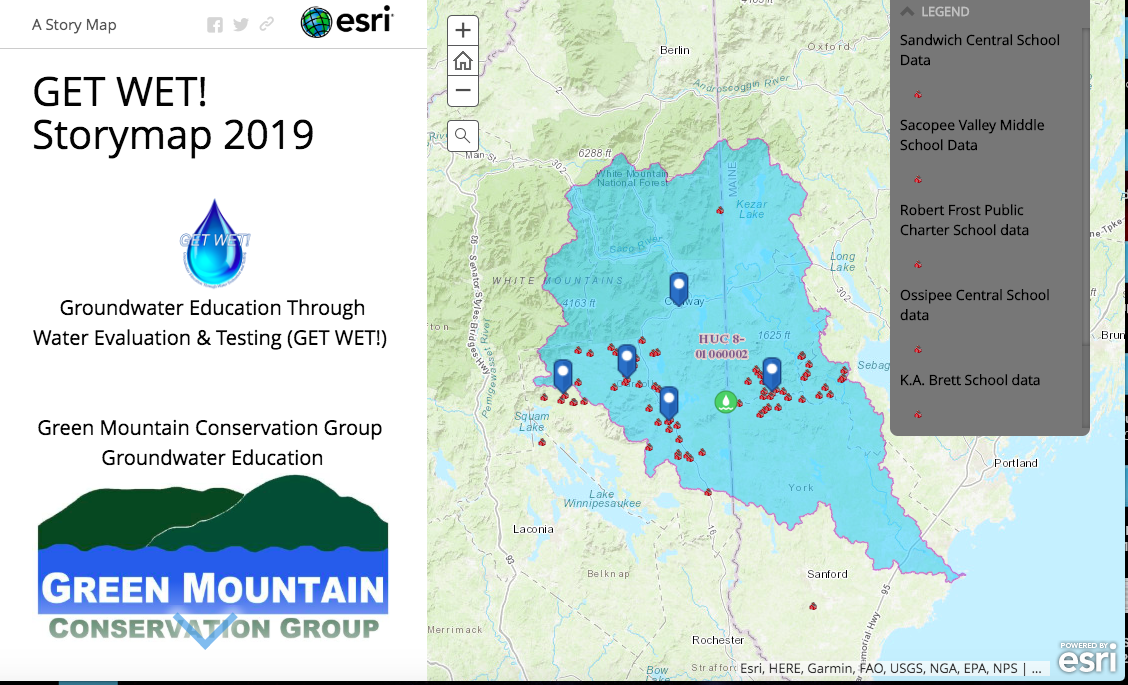
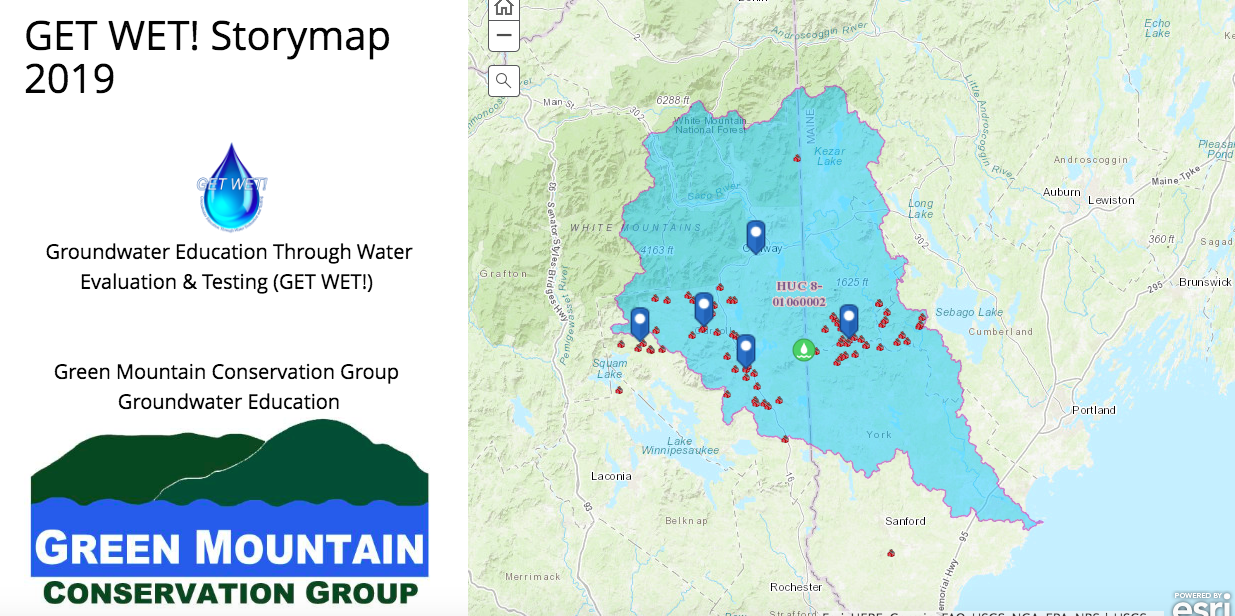
The Green Mountain Conservation Group of Effingham New Hampshire has been running GET WET! since 2008!  They have decided this year to manage their results in an ESRI GIS program!  The drop menu ease of use and differentiation of parameters is incredible and can be used to educate not jus the general public but can now be used by educators in many states!

Hopefully they can add results from all of the years they tested!

The following link shows the 5 towns that encompass both New Hampshire and Maine!  Well done for the multi-state collaboration and excellent representation! New Hampshire MAP!


HOW BAD WILL THE “Dirty Water Rule” BE FOR OUR COUNTRY?

What’s the Clean Water Act, why is it important, and has it been a success?

In the late 1960s, many U.S. waters were little more than liquid waste dumps. The Cuyahoga River famously caught on fire, as did others. We lacked appreciation for the important functions of wetlands, like filtering pollution and curbing flooding, and allowed rampant destruction of them. And we failed to control the discharge of raw or barely-treated sewage all over the country.

These conditions were widely viewed to be unacceptable, so Congress responded and adopted the Clean Water Act. It was so groundbreaking that a prominent Senator described it as “perhaps the most comprehensive legislation that the Congress of the United States has ever developed in this particular field of the environment.”

The Act has helped us make enormous improvements, but we remain far short of achieving its aims. By virtually any measure, our water bodies are better off today than in 1972. Pollution from industrial operations and sewage treatment plants has been curbed significantly. Industry-specific discharge standards prevent more than 700 billion pounds of toxic pollutants every year. EPA has found that thousands of waterways now meet standards after once being too polluted to be used as states wished. And many of our nation’s most treasured waters, like the Chesapeake Bay and the Great Lakes, have substantially improved.

But the U.S. still has a long way to go before Congress’s vision of fishable and swimmable waters everywhere is achieved. Today, more than half of assessed waters still do not meet all goals that states have established for them. And the country continues to lose wetlands, despite their widely-acknowledged ecological benefits.

I.      How does the Clean Water Act work?

The power of the Clean Water Act comes from the “comprehensive” scope it was designed to have. It includes pollution control programs for almost any kind of discharge you can imagine, and virtually every one of the Act’s critical safeguards applies wherever there is a water body that is considered a “water of the United States.” Those protections include:

  • The national goal that pollutant discharges “be eliminated by 1985”;
  • The absolute prohibition on discharging “any radiological, chemical, or biological warfare agent, any high-level radioactive waste, or any medical waste”;
  • The core requirement that if an entity is going to discharge pollutants into waters from a pipe or similar conveyance, it must first apply for and obtain a permit that limits the pollutants allowed to be discharged;
  • The obligation that states develop water quality standards protecting uses—like swimming or fishing—that the waterway should support and that EPA reviews to ensure they are adequately protective;
  • EPA’s review of cleanup targets to restore impaired waters;
  • The requirement to develop water body-specific control strategies to address toxic pollution problems;
  • The obligation that states prepare biennial reports on water quality conditions;
  • Protections against the discharge of oil or hazardous substances;
  • The bar on a vessel that “is not equipped with an operable marine sanitation device” from operating in protected waters;
  • The directive for states to develop management programs for pollution like agricultural runoff, and the related directive that EPA provide grants to assist with the implementation of such programs;
  • The directive that applicants for federal permits (like pipelines) first obtain the state’s okay that the discharge will comply with various requirements; and
  • Restrictions on the disposal of sewage sludge.

The federal law also empowers people affected by water pollution to go to court to enforce its critical safeguards.

Because these protections are triggered by the presence of “waters of the United States,” industrial polluters have long fought to shrink what qualifies for that designation to just the largest rivers and lakes in the country. Thanks to the Trump administration, they might soon get a lot of what they’ve wished for.

II.        What does the Dirty Water Rule proposal say?

The proposal would end decades of protection for several different kinds of water bodies, namely rain-dependent streams, wetlands without specified surface water connections to other waterways, certain ponds, and interstate waters. Although some of these features might be protected under other parts of the rule (for instance, the rule protects waters you can float a boat on), there’s no question that this would be the biggest backtrack on Clean Water Act coverage in the 46 years we’ve had the law.

The justification for this retreat? The administration claims it is making the rules clearer so that it’s easy to figure out what is in and out, but that’s hogwash – the proposal fails to define critical terms (like how often a stream needs to flow to qualify for coverage) and acknowledges that essential facts (like whether a stream is fed by groundwater or what the “typical” flow of a water body is) are either difficult or potentially costly to ascertain.

What’s really going on here, then, is that the proposal is just a giveaway to polluting industry. Fewer water bodies are protected, which means fewer restrictions on polluting and destroying such waters, which means industrial polluters need to devote less resources to complying with pollution limits.

III.       How bad will the Dirty Water Rule be for the country?

Here’s the most bananas part of the whole scheme—the administration claims not to know how many water bodies will be affected and says it’s unable for a variety of reasons to quantify the public health and environmental consequences of the proposal. If that’s true, it’s irrational and reckless.

The Clean Water Act is supposed to protect people from swimming in dangerously contaminated waters, catching fish that are unhealthy to eat, or drinking water supplies fouled by industrial pollution or sewage discharges. It also is a key restriction on wetlands destruction, which helps preserve their flood-protection functions. But the Trump administration wants you to just accept that it doesn’t know how prevalent those public health and safety threats might be if it persists with its plan.

The administration doesn’t even deny that its proposal could hurt people. In fact, they produced the figure below that traces some (but not nearly all) of the scary outcomes that could flow from restricting the coverage of just three Clean Water Act programs.

However, the administration—over and over again—says that it can’t reliably estimate the degree to which the nation’s waters will be affected by the proposal, much less the adverse impacts that will result from their scheme. I suspect that’s not because it can’t be done; my guess is that they’re hiding the ball to try to avoid the public outrage that would come from an honest assessment of the harm the proposal could lead to.

I think that’s also why EPA has assailed estimates of the potential impacts of the proposal and even disavowed prior work that the agency itself did, which indicates that at least 18% of streams and roughly half of the wetlands in the country would lose protection under the law.

Wow, that’s terrible. It couldn’t get worse, right?

The proposal is scary enough on its face, but what’s truly terrifying is that EPA has hidden a bunch of Easter eggs (rotten ones, that is) in the document, which would allow them to adopt a far worse final rule later. For instance, the proposal invites input on whether EPA should also exclude seasonal streams from federal protection, in addition to rain-dependent ones.

And the anti-clean water forces aren’t dumb—you can bet they’ll reinforce this message in their public posturing about the proposal and in their comments on it. In fact, in an opinion piece reacting to the Dirty Water Rule proposal, a senior attorney with the Pacific Legal Foundation—which commonly litigates cases challenging the implementation and enforcement of the Clean Water Act—argues that the proposal isn’t nearly aggressive enough in slashing protections. He claims that the “lackluster proposal” would still give too much authority to “overzealous enforcement bureaucrats” at EPA.

Is all hope lost?

This is not a done deal by any stretch of the imagination. The Trump administration must take public comment on the proposal, respond substantively to those comments, and will undoubtedly face a tidal wave of litigation if it persists.

And there’s a historical precedent for stopping these kinds of attacks. Early in President George W. Bush’s administration, EPA considered weakening these same protections, though far less drastically than the Trump administration’s proposal now. In response to overwhelming opposition from states, hunters and anglers, and other concerned citizens, that initiative was scuttled.

So, please tell the administration what you think—again, NRDC’s comment pagecouldn’t be simpler—and let them know that you don’t want them dumping all over your right to clean water.


FOR MORE INFO: https://www.nrdc.org/experts/jon-devine/lowdown-trumps-lowdown-dirty-water-rule